Vršatec
Vršatské Podhradie Trenčín county Slovakia
castle ruin
Vršatec
Vršatské Podhradie Trenčiansky kraj Slovakia
zrúcanina hradu
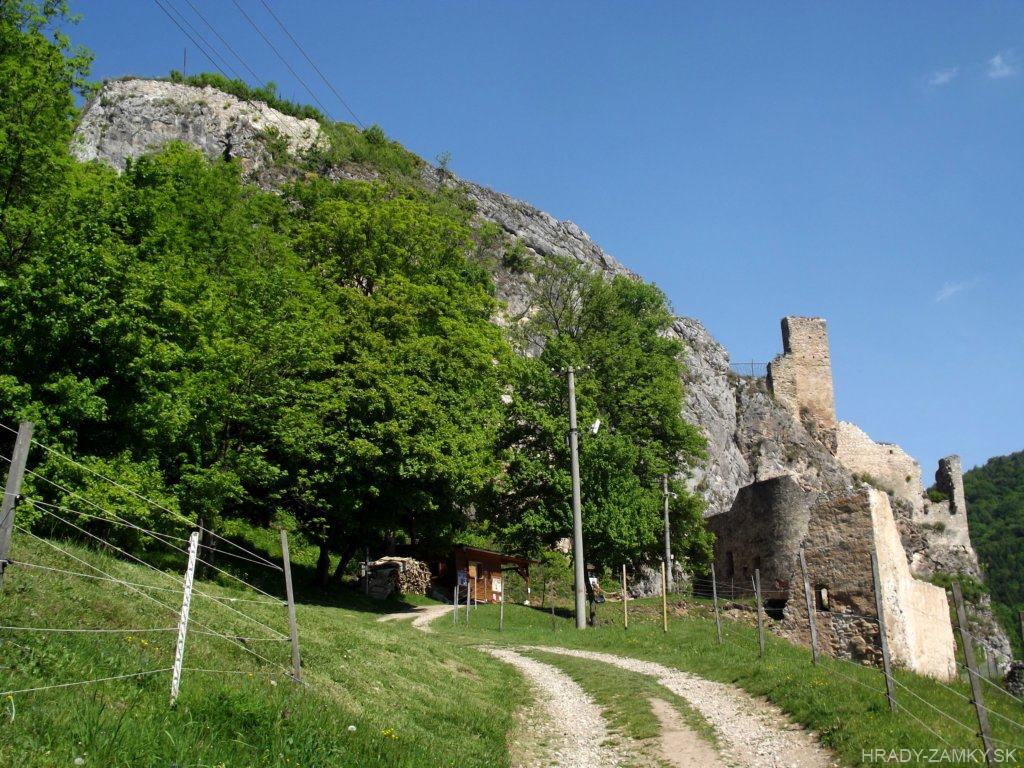
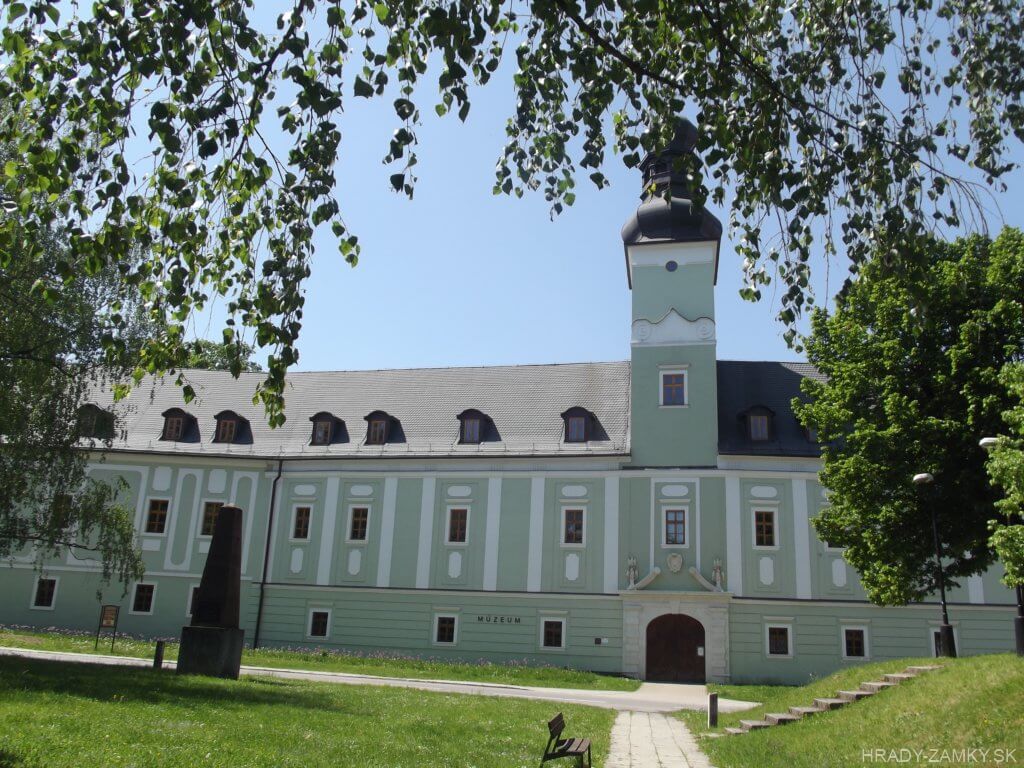
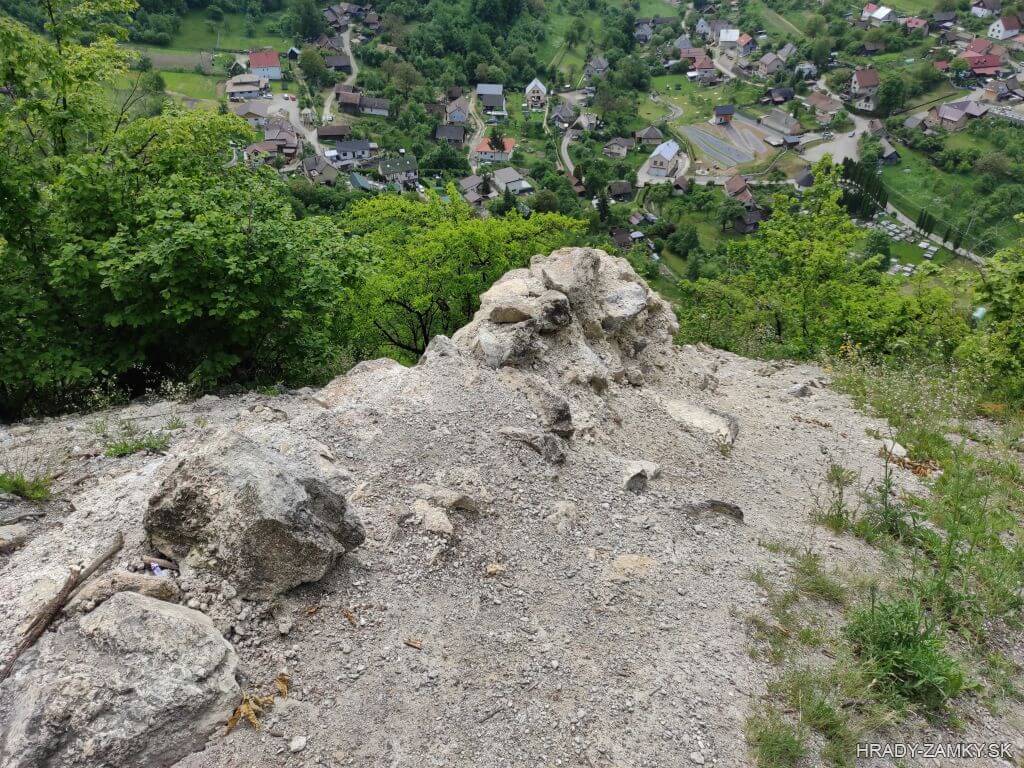
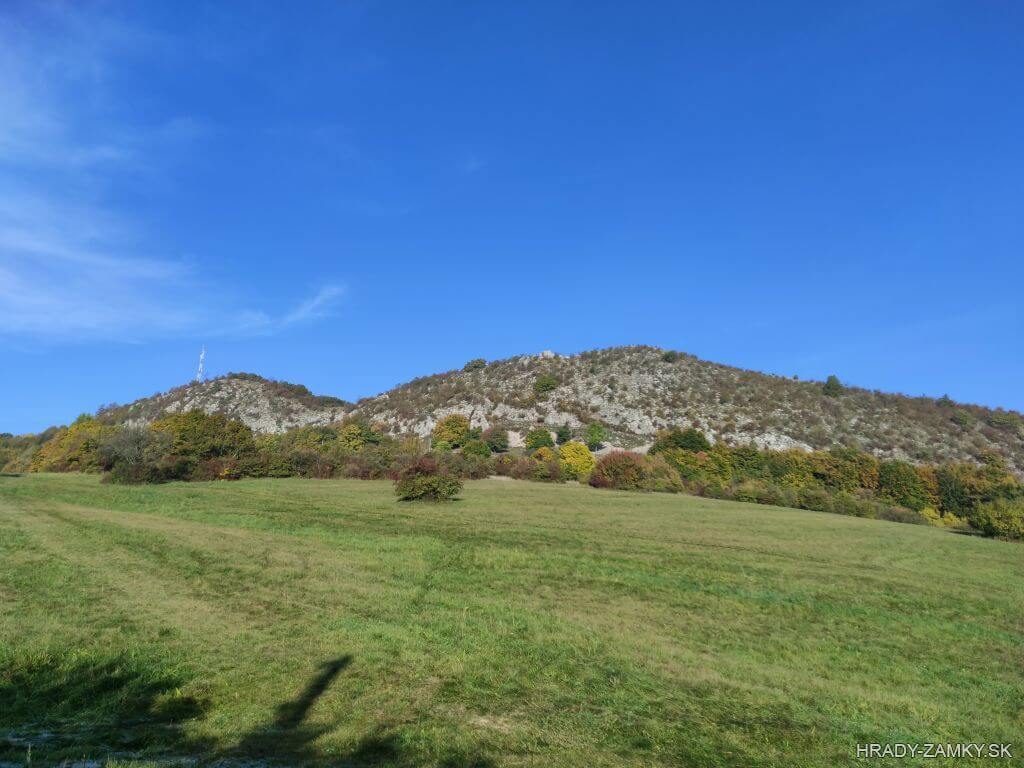
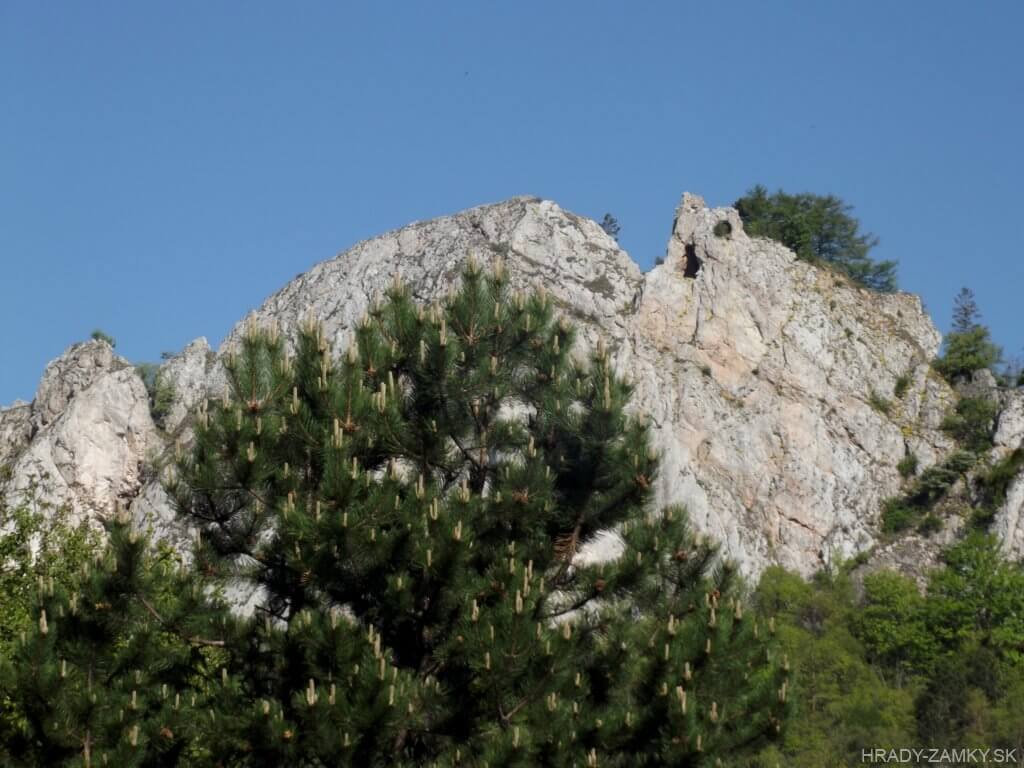
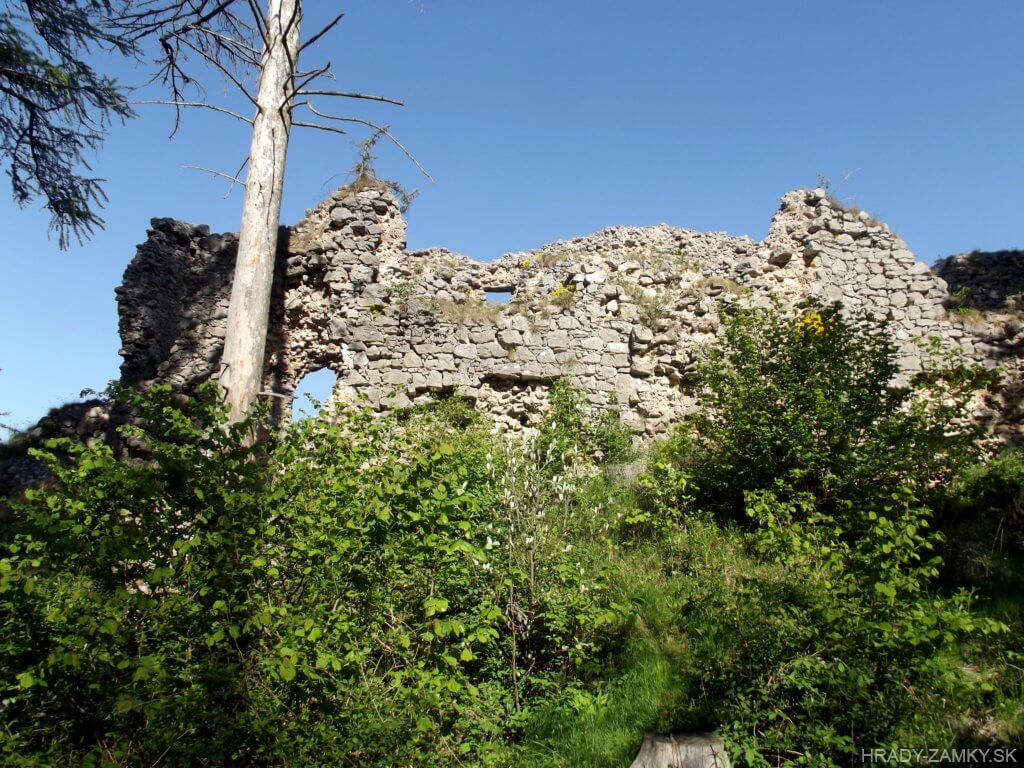
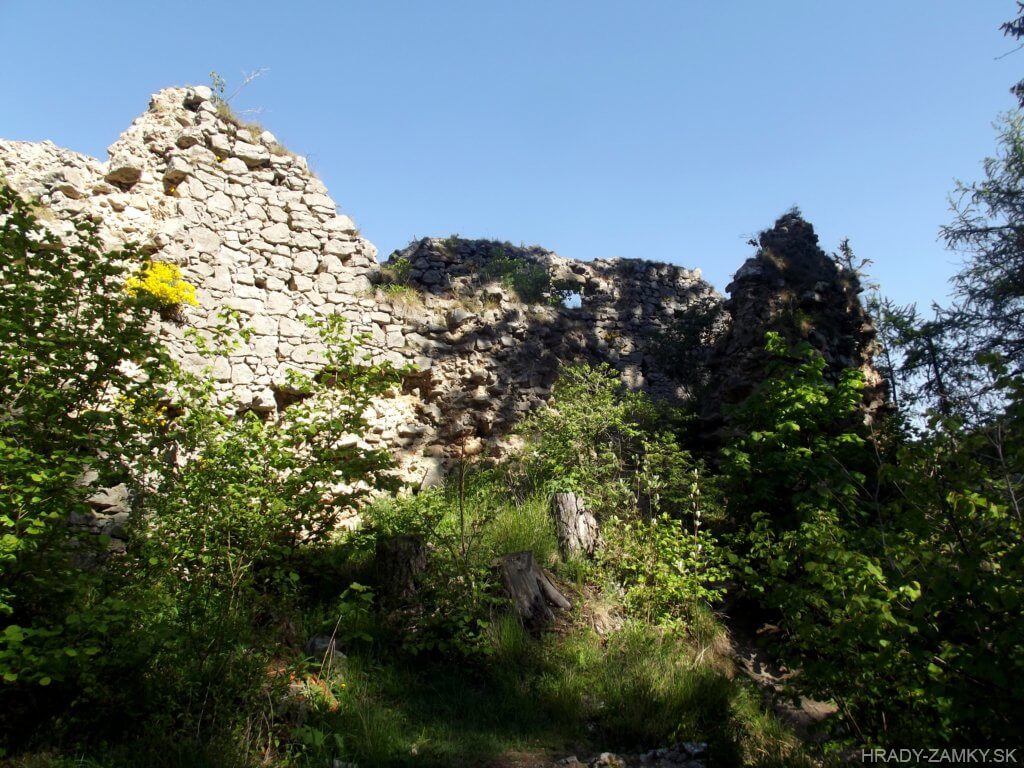
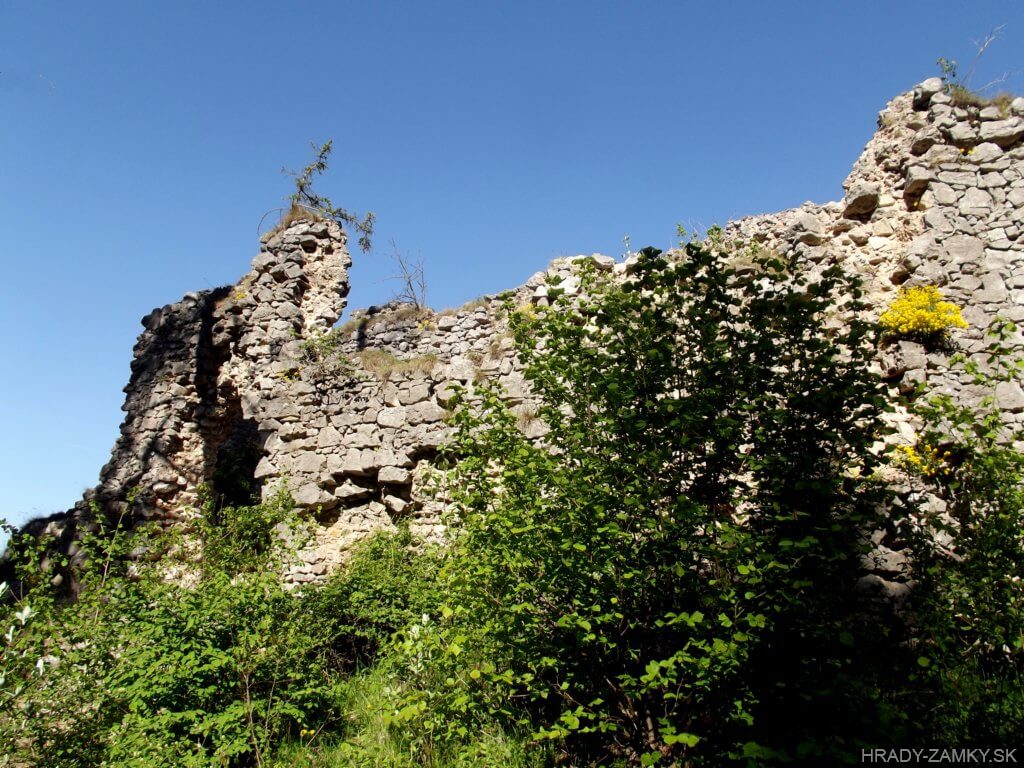
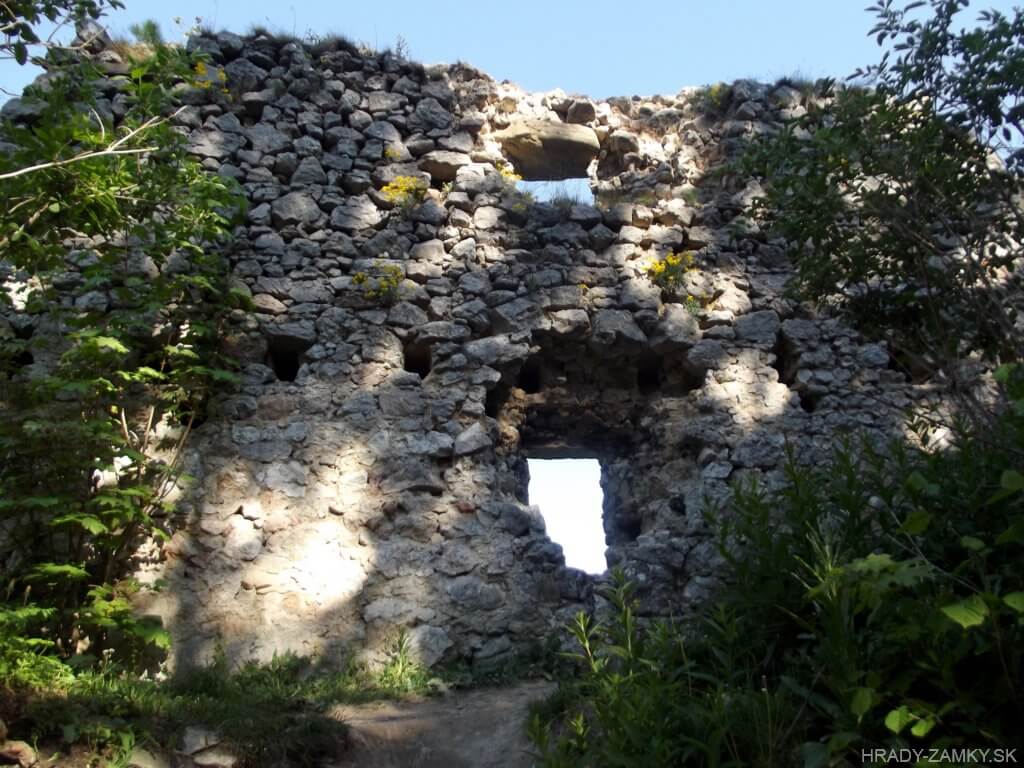
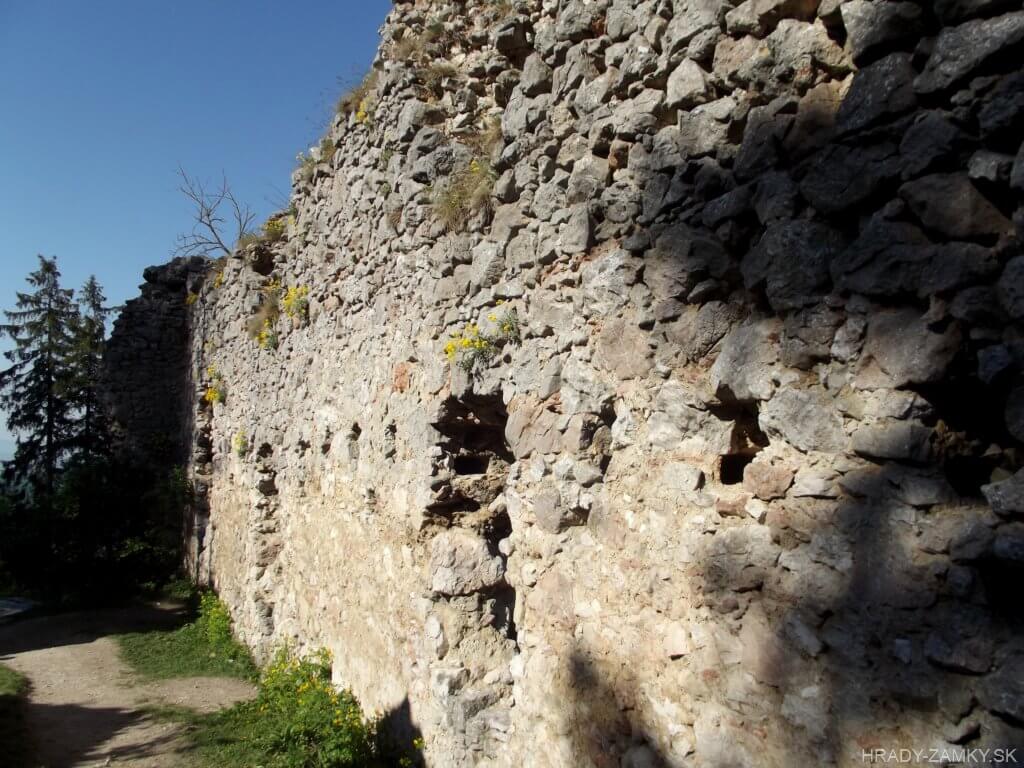
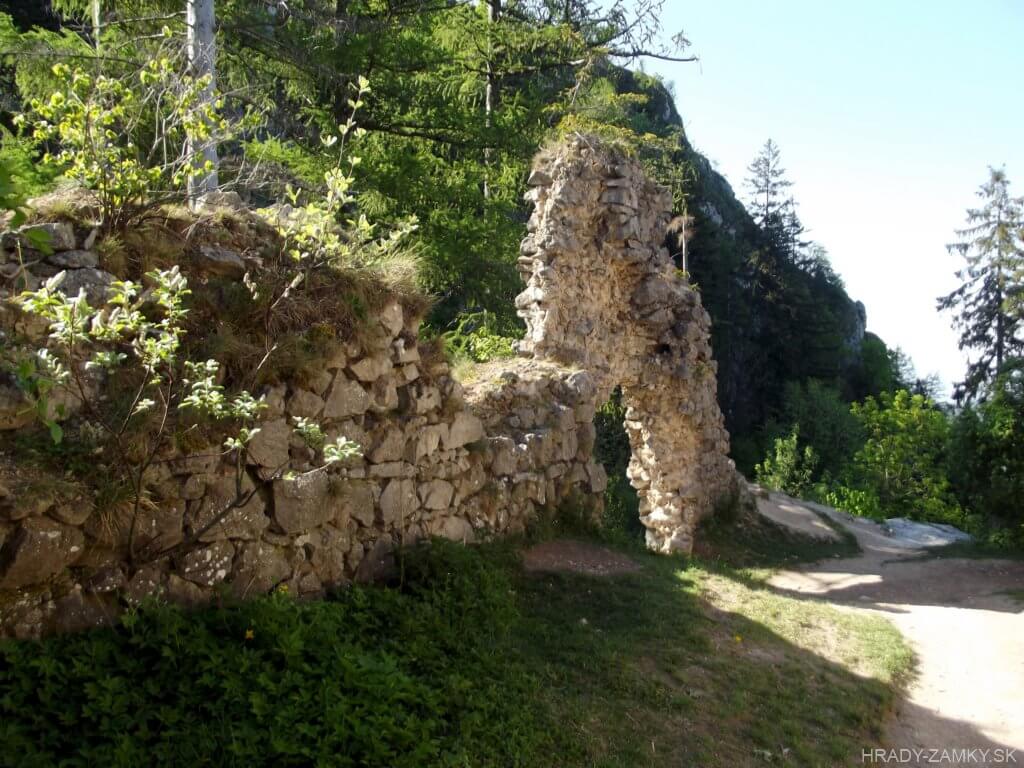
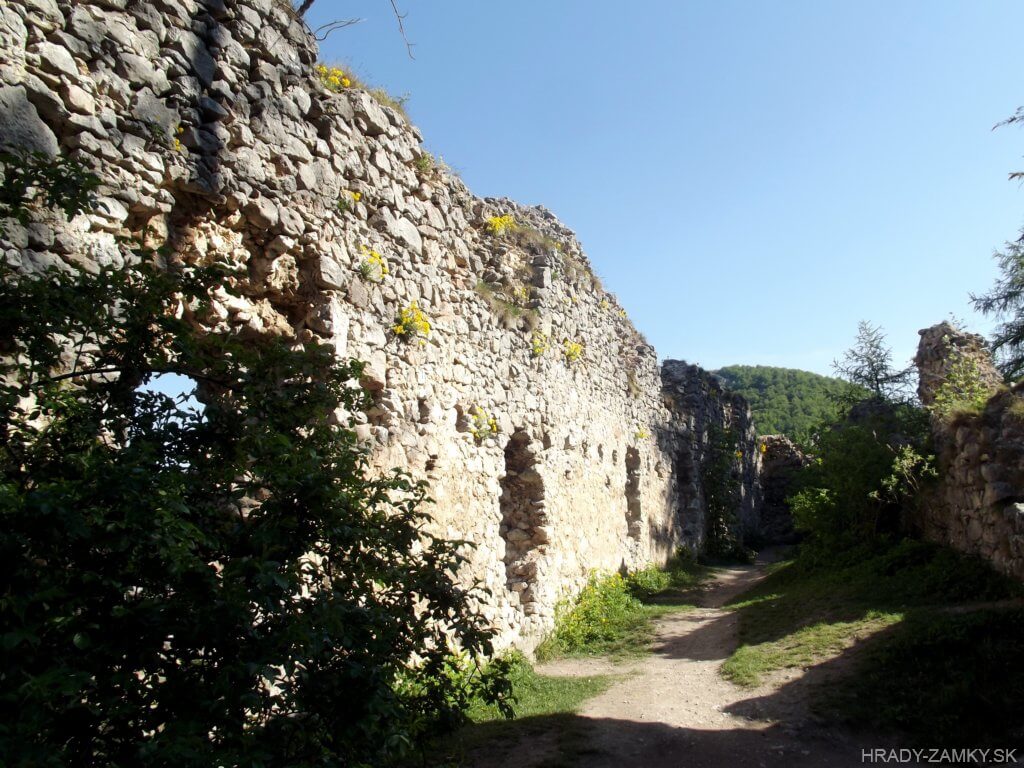
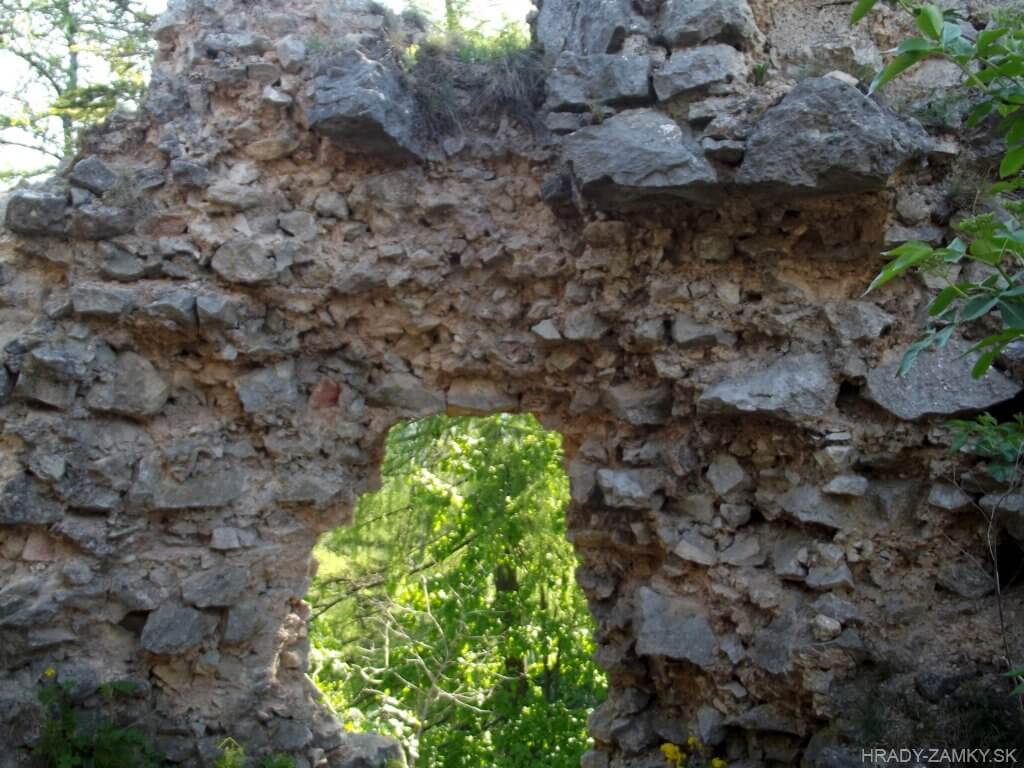
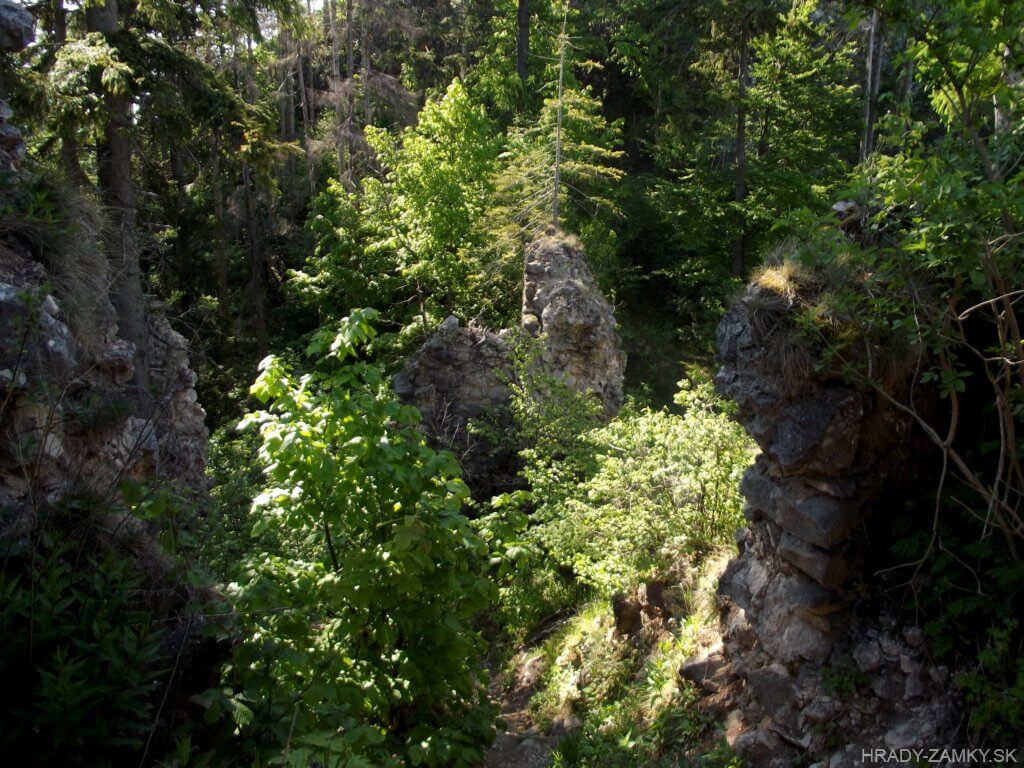
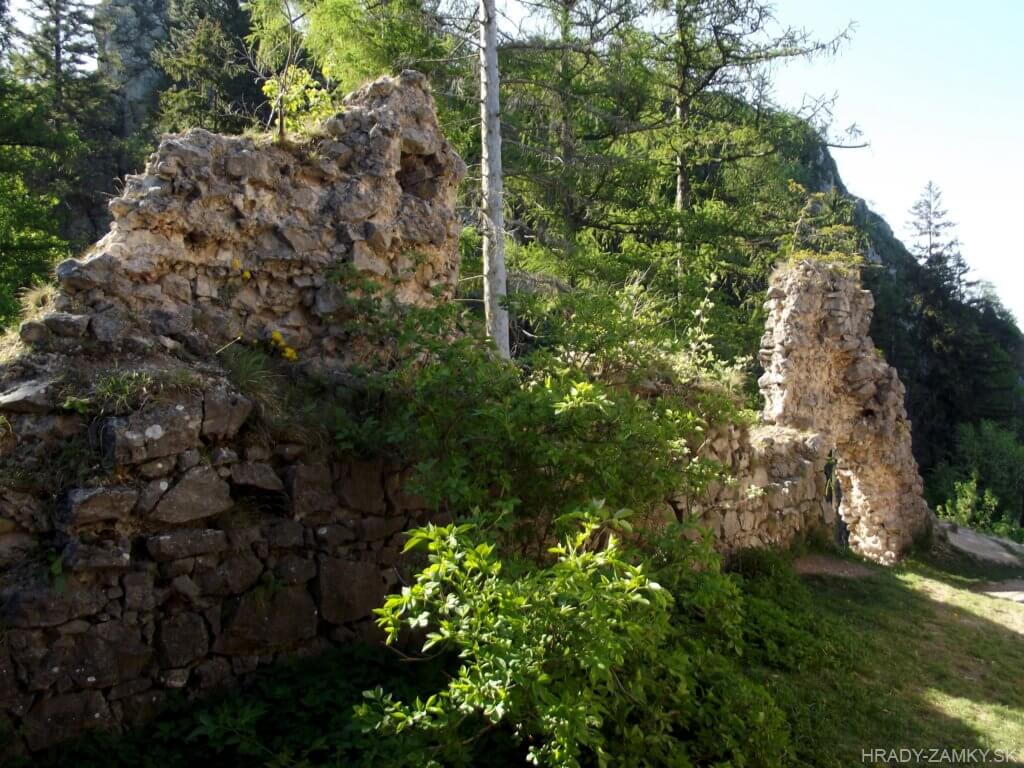
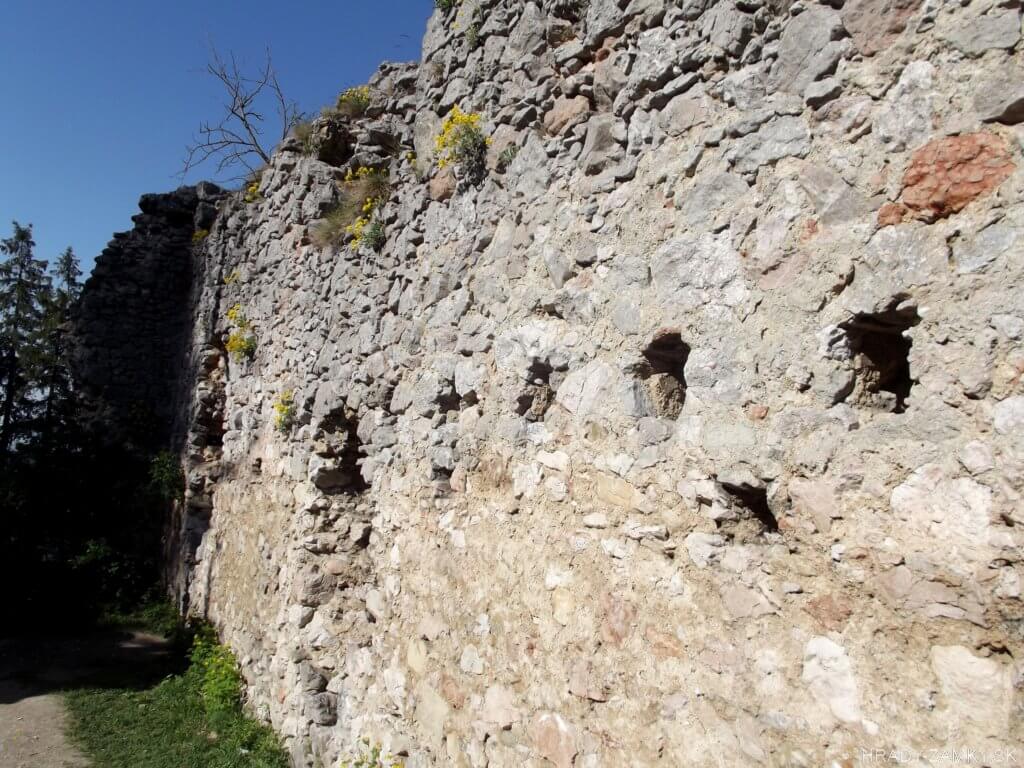
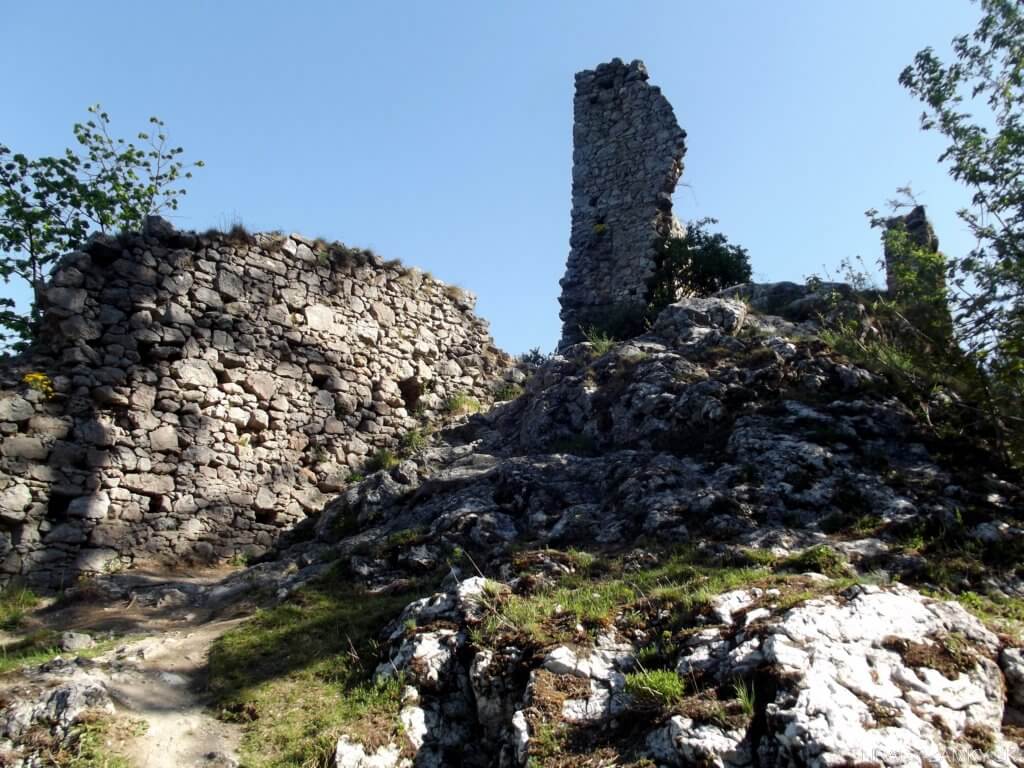
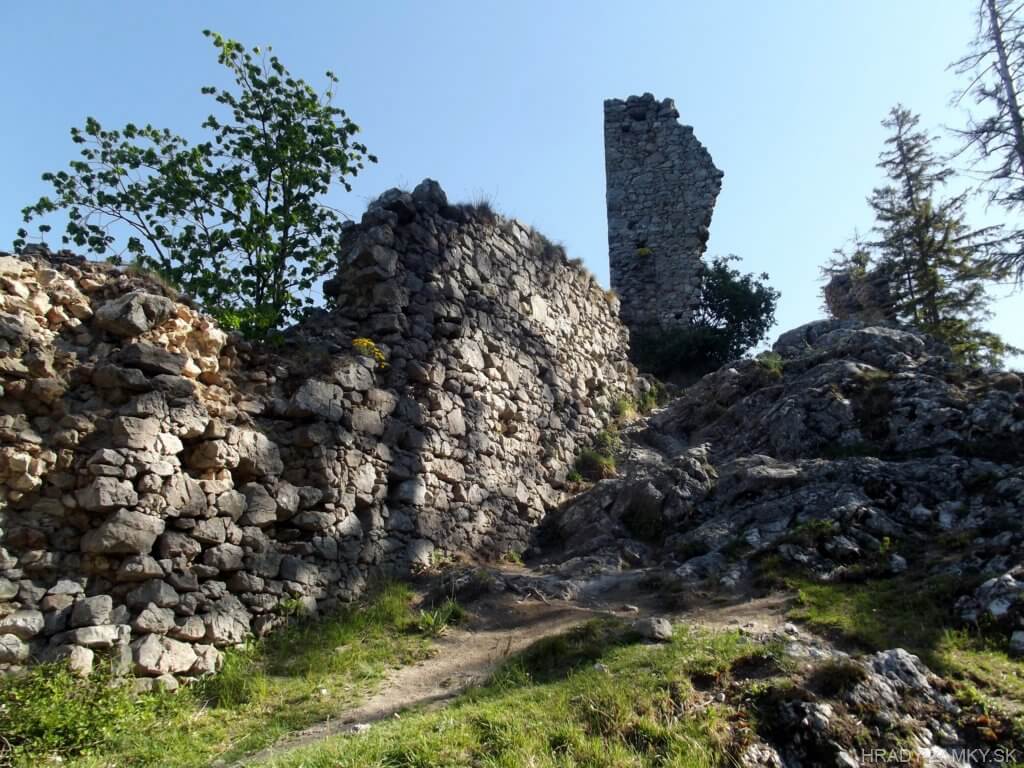
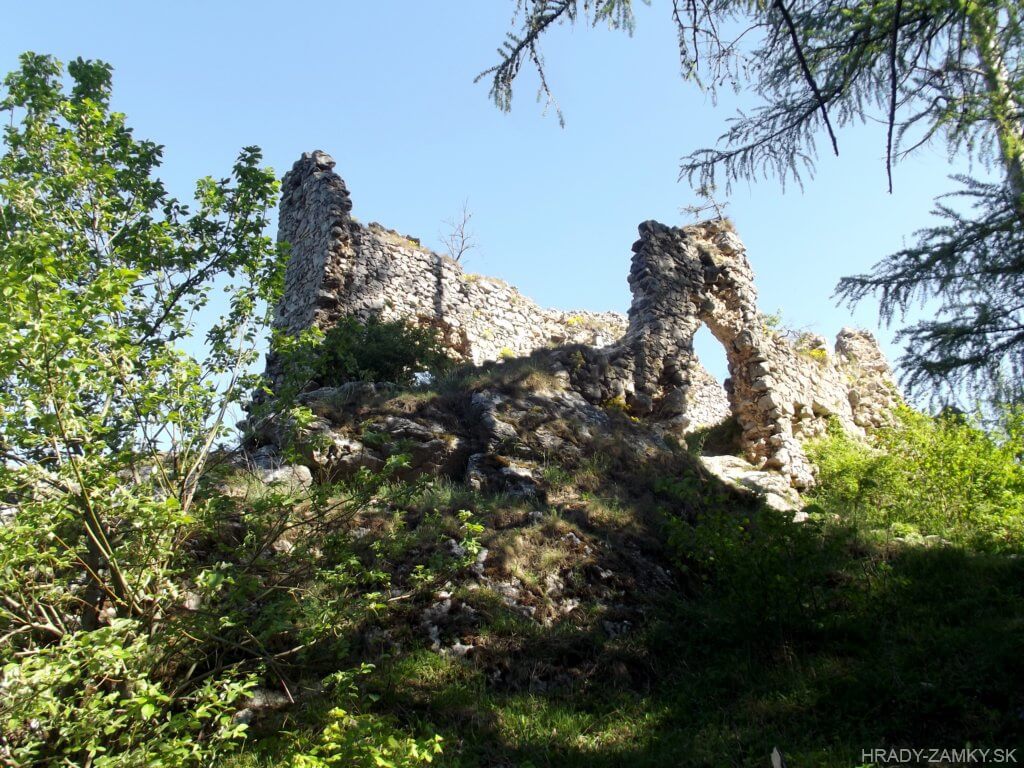
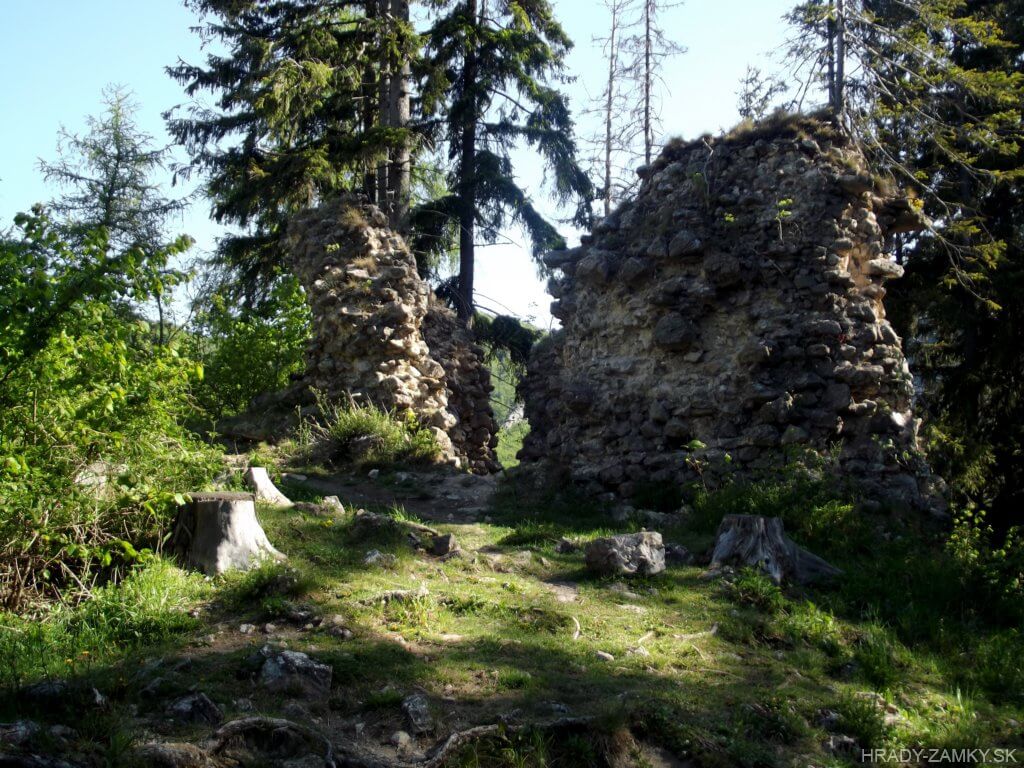
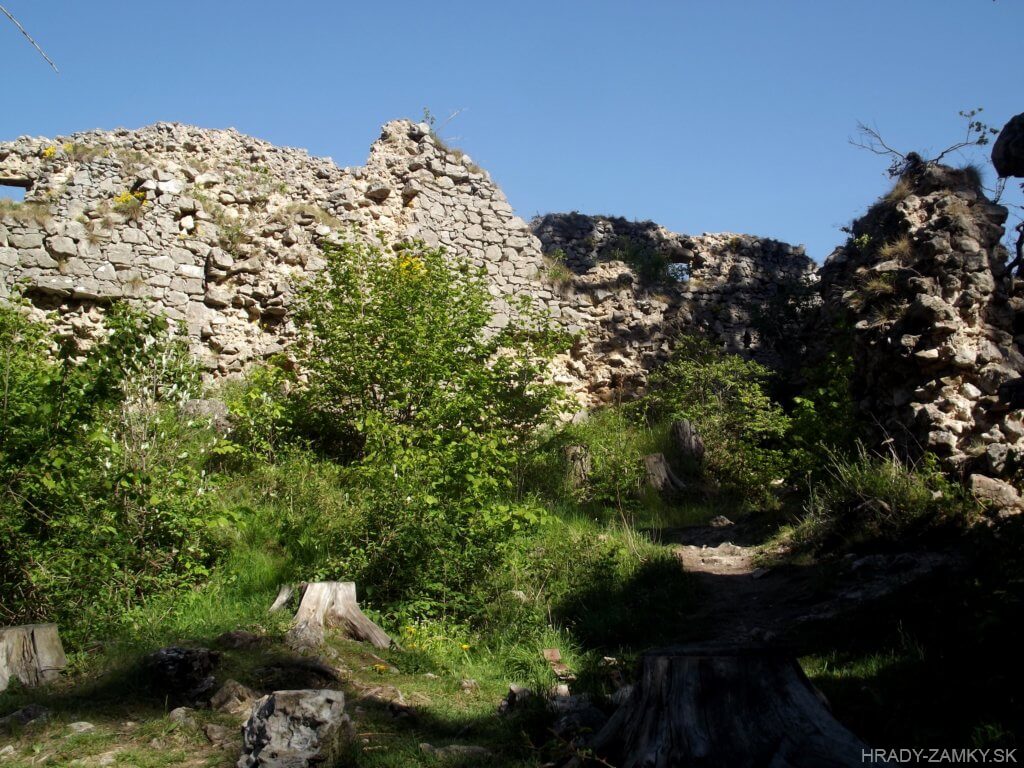
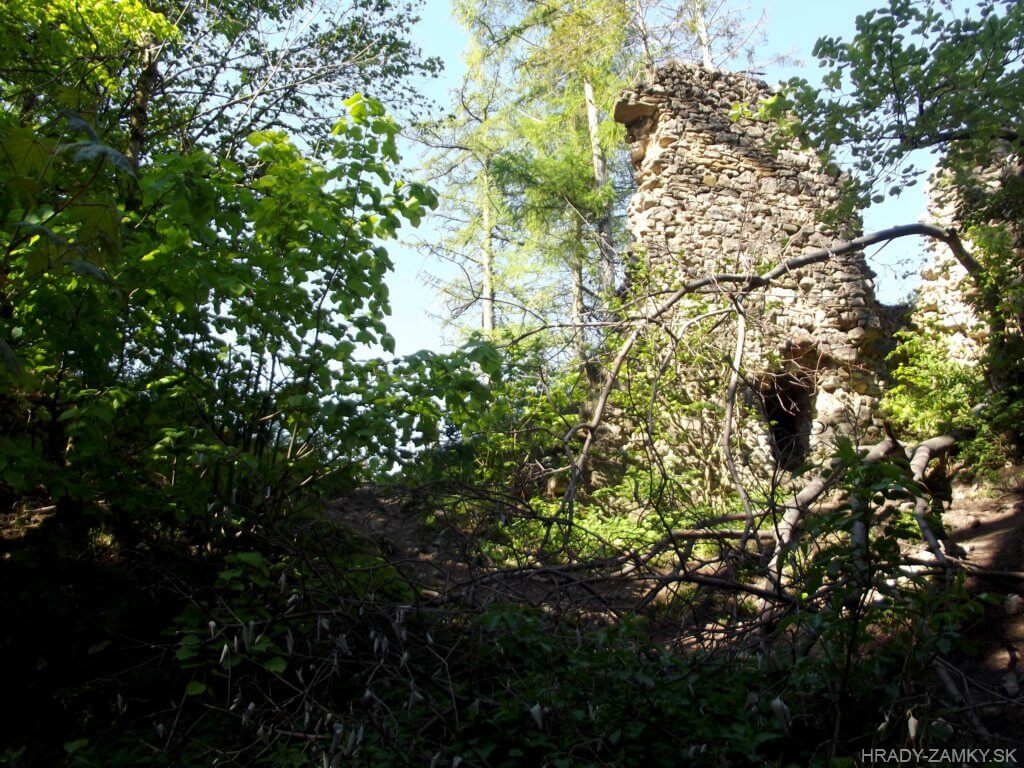
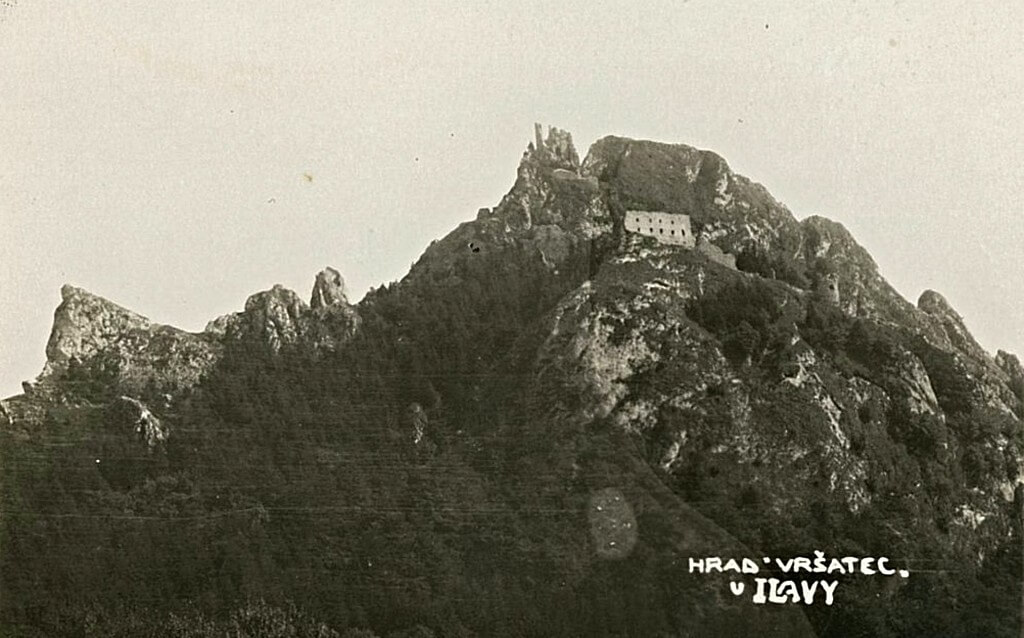
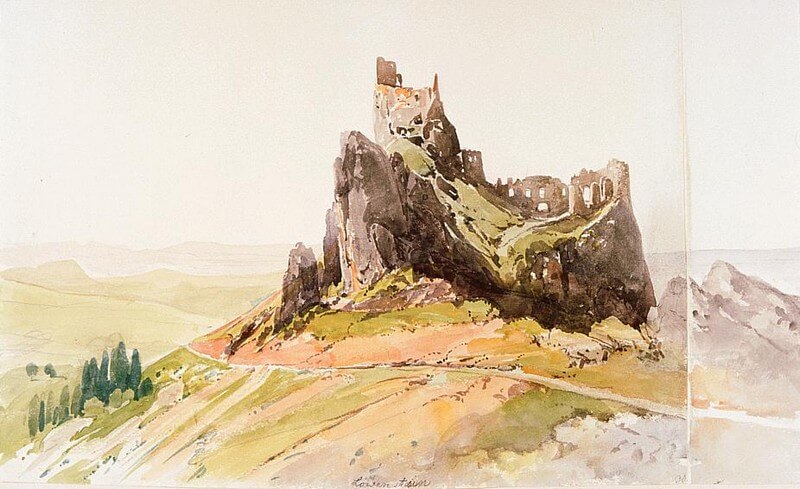
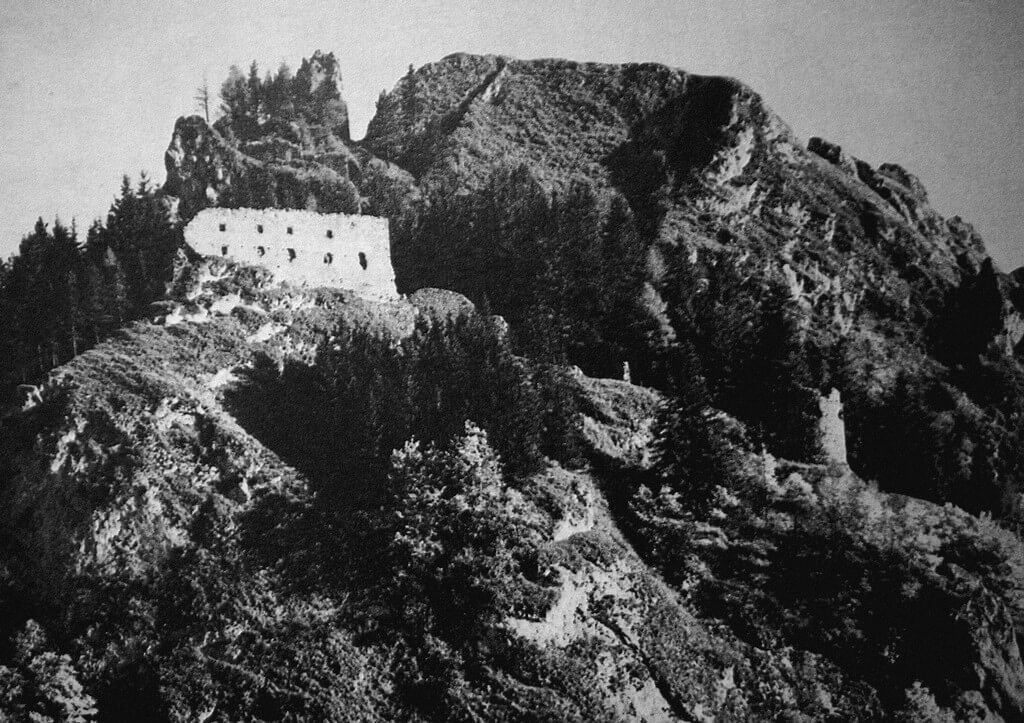
The ruins of a castle situated on the limestone cliffs of Vršatecké bradlá, creating a significant dominance of the White Carpathians above the village of Vršatské Podhradie
Zrúcanina hradu situovaná na vápencových útesoch Vršateckých bradiel, vytvárajúcich výraznú dominantu Bielych Karpát nad obcou Vršatské Podhradie
Previous names
Oruslankw, Orozlankw, Orozlanky, castrum Lebenstein, Wrssatec, Wršatecko, Oršové, Oršovský zámek, Oroszlánkő, Oroszleánykő
Roads
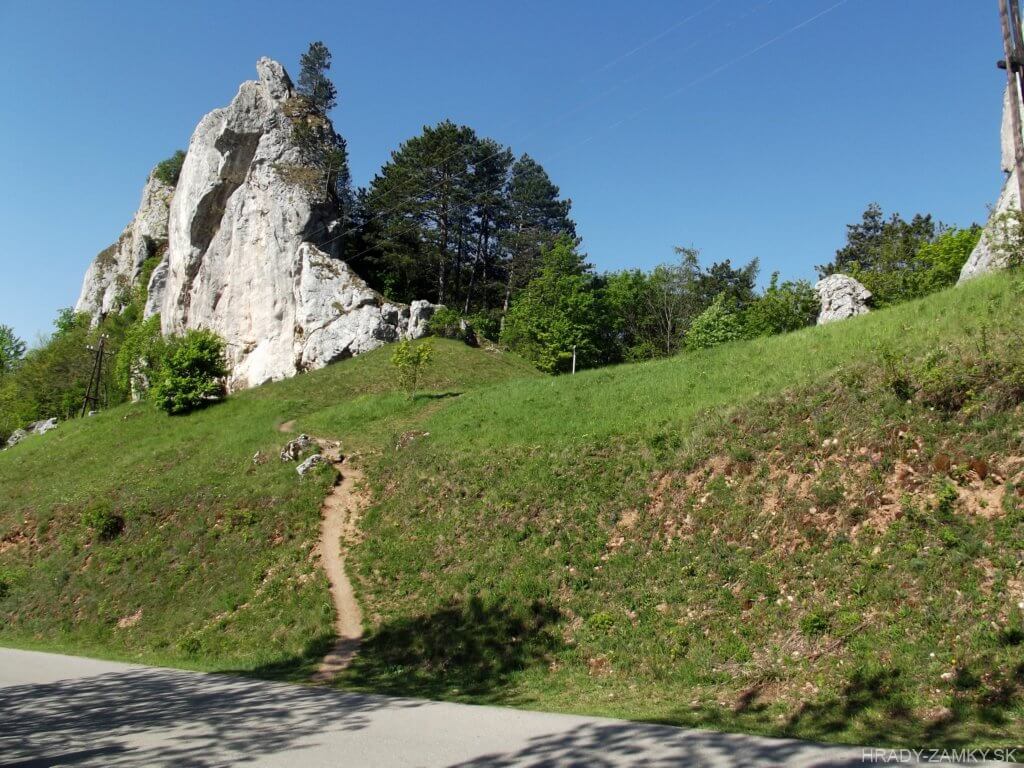
Access to the castle Vršatec is very short and simple. We pass the village of Vršatské Podhradie by car, we continue on a relatively large ascent along a narrow asphalt road. We will soon notice on the right side a small parking place for a couple of cars, just opposite the rock formation. Due to the steep road, we recommend securing the car well. Opposite the car park, on the other side of the road, a short ascent to the castle begins. From the road we ascend to a slight hill and come to a crossroads. The road on the left leads to the upper castle (watchtower), but the sign forbids entry here, so we will not get to the upper castle. We continue straight and within 10 minutes we have a pleasant walk to the lower castle.
Prístup k Vršateckému hradu je veľmi krátky a jednoduchý. Autom prejdeme obcou Vršatské Podhradie, pokračujeme pomerne veľkým stúpaním miernym esíčkom po úzkej asfaltovej ceste ďalej. Čoskoro na pravej strane zbadáme menšie parkovisko popri ceste pre pár áut, hneď oproti skalnému útvaru. Kvôli strmému sklonu odporúčame dobre zaistiť auto. Oproti parkovisku, na druhej strane cesty, začína krátky výstup na hrad. Od cesty vystúpime na mierny kopec a prídeme na rázcestie. Cesta vľavo vedie k hornému hradu (zvyškom strážnej veže), no tabuľa tu zakazuje vstup, takže na horný hrad sa nedostaneme. Pokračujeme rovno a do 10 minút sme príjemnou prechádzkou na dolnom hrade.
Description
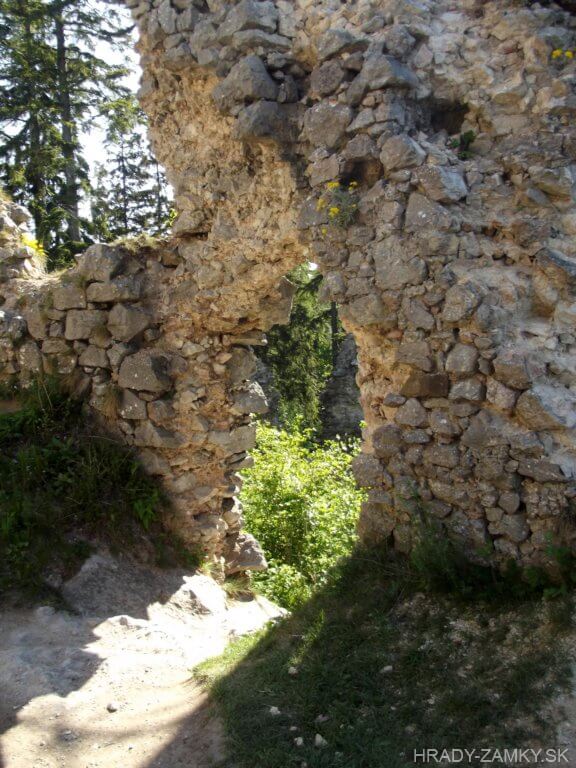
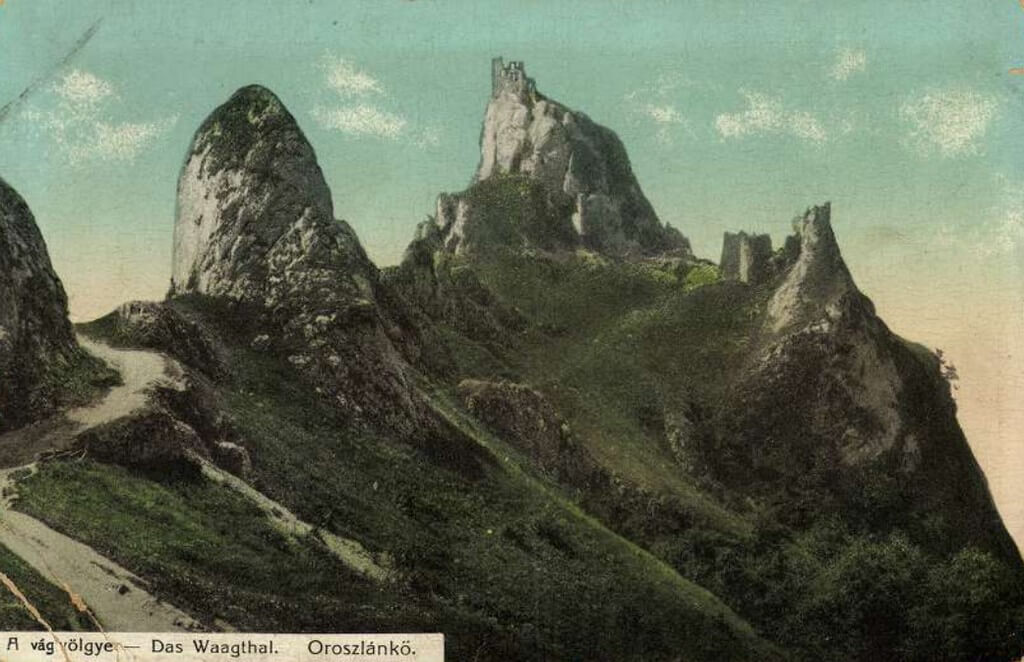
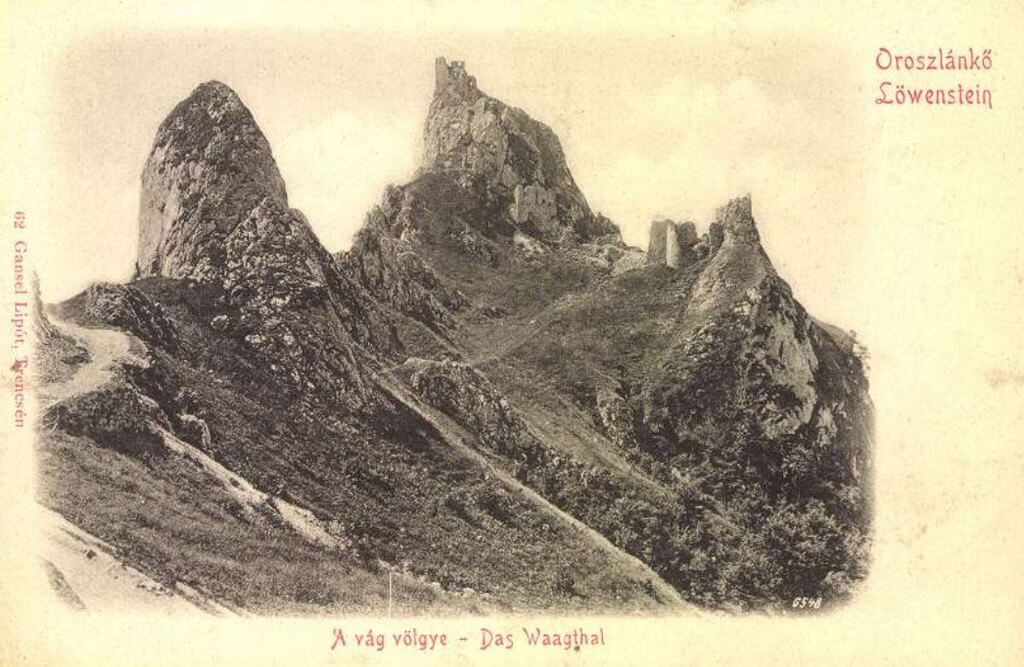
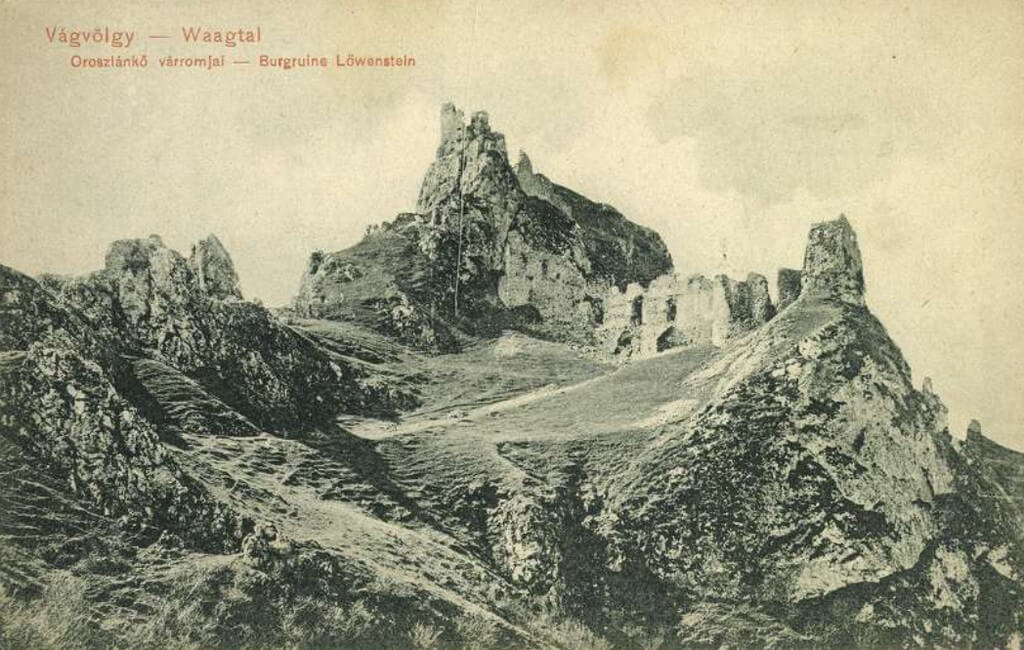
The upper castle was limited by the area of the top of the rock cliff, which could not be used entirety due to the slope. The oldest part of the castle was the watchtower, built on the highest point of the gate. Access to the gate of the upper castle was complicated, as it climbed first up the slope and then through the serpentines of a rocky outcrop, into which the stairs were carved. The upper castle also included living spaces, of which a vaulted cellar has been preserved, partially jammed into the rock. Below the upper castle was a cannon bastion, protecting the castle from access.The most extensive was the lower castle, which played an important role as a forecastle. Above the entrance gate was a guardhouse and rooms for the castle garrison. In addition to extensive cellars, the castle also had a riding hall and a grain warehouse or bakery. A renaissance palace stood on a slightly elevated position. The defense consisted of bastions in the castle wall, a semicircular bastion at the entrance and castle walls.
Horný hrad obmedzovala rozloha vrcholu skalného útesu, ktorý sa kvôli svahovitosti nedal využiť celý. Najstaršou časťou hradu bola strážna veža, postavená na najvyššom bode brala. Prístup k bráne horného hradu bol komplikovaný, nakoľko stúpal najprv svahom a potom serpentínami skalného výbežku, do ktorého vylámali schody. Súčasťou horného hradu boli aj obytné priestory, z ktorých sa zachovala klenbová pivnica zasekaná čiastočne do skaly. Pod horným hradom bola delová bašta, chrániaca hrad od prístupu.Najrozsiahlejší bol kamenný dolný hrad, ktorý zohral dôležitú úlohu predhradia. Nad vstupnou bránou bola strážnica a miestnosti pre hradnú posádku. Okrem rozsiahlych pivníc mal hrad aj koniareň a sklad obilia či pekáreň. Na mierne vyvýšenom mieste stál renesančný palác. Obranu tvorili bašty v hradnom múre, polkruhová bašta pri vstupe a hradné múry.
Plan
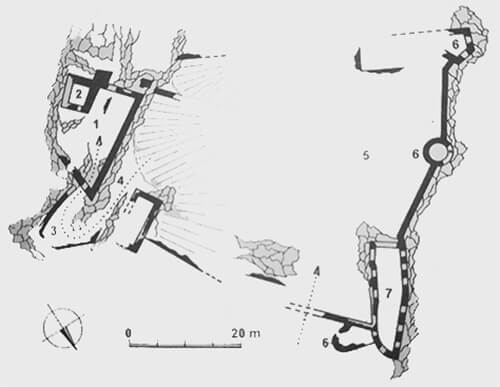
Legend to the ground plan
- 1 - upper castle
- 2 - tower
- 3 - forecourt
- 4 - entrance corridor
- 5 - lower castle
- 6 - bastions of the lower castle fortifications
- 7 - renaissance palaceZdroj: BÁRTA V.
- BARTA V.
- NEŠPOR J. Hrady a zámky na Slovensku. Banská Bystrica : AB ART press
Legenda k pôdorysu
- 1 - horný hrad
- 2 - veža
- 3 - predhradie
- 4 - vstupný koridor
- 5 - dolný hrad
- 6 - bašty opevnenia dolného hradu
- 7 - renesančný palácZdroj: BÁRTA V.
- BARTA V.
- NEŠPOR J. Hrady a zámky na Slovensku. Banská Bystrica : AB ART press
History
The castle hill was inhabited as early as the Bronze Age. The origin of Vršatec Castle can be dated to the middle of the 13th century, when a watchtower belonging to a group of fortifications was built at the highest point of the gate, whose task was to secure the northwestern borders of Hungary and the Vlársky Pass, an important passage from Hungary to Moravia. King Belo IV. in 1244 he donated property in Prussia to his faithful Spanish Bohumír [Bogomér], who probably had the castle built after the danger of the Tartar disappeared. The tower is the oldest part of the castle. Access to the upper castle was originally covered in the manner of a tunnel and was led by stairs carved into the rock.
The castle is mentioned in written records from 1316 as a stone building owned by Matúš Čák. After his death, the castle returned to King Charles Robert and was administered by the Castelians. Gradually, several owners changed here. In 1325 the castle was owned by Alexander Hedervári, after him in 1354 his son Mikuláš Hedervári became the owner. In 1394 the castle belonged to Stibor of Stiborice, in 1407 to the palatine Mikuláš Garai, later to Sigismund's wife Queen Barbora Cejlská. In the first third of the 15th century, he had to resist the Hussite raids, when the Hussite-oriented castellan Mikuláš Soboňa worked here in the years 1432 - 1434. The Hussite garrison allegedly also settled here. During this period there was considerable damage to the building and in such poor condition the castle was handed over to Queen Widow Elizabeth in 1439. In the middle of the 15th century the castle was acquired by Ján Hunyady and even after his death it was still owned by the Hunyady family and their Black Companies.
In 1470, King Matej Korvín donated the castle to the peasants of Slopná, who began to use the surname Vršatský (Oroszlánköi) and the castle was part of their castle estate. In the 16th century, they expanded the castle with another, lower fort, where they built a Renaissance palace with a round bastion. In 1576, the castle passed into the hands of a related family of Jakušič family [Jakusith]. During the operation of the Jakušič family, Vršatec was well fortified, in 1605 it even withstood the attack of Bocskay's insurgents and the Turks did not even attack it in 1663. In the 17th century, the owners moved to a newly built Renaissance mansion in Prussia.
In 1680, however, the castle was burned down by Thököly's followers. The last male descendant of the Jakušič family was Imrich, who died in 1695. The new owner, General Siegfried Krištof Breuner of Stubing, restored the castle at the end of the 17th century, but the rebels of Francis II. Rákóczi was weakened in 1703. In 1708, Vršatec was finally occupied by the imperial army, when the garrison surrendered after a three-day artillery defense of the castle under the command of the castle captain Mikuláš Madocsányi. So that the castle would not become the center of resistance again, the imperial army blew it up. From that period, the castle began to decay.
Hradný kopec bol osídlený už v dobe bronzovej. Vznik hradu Vršatec je možné datovať do polovice 13. storočia, keď na najvyššom bode brala postavili strážnu vežu, patriacu do skupiny fortifikácií, ktorých úlohou bolo zabezpečovať severozápadné hranice Uhorska a Vlársky priesmyk, dôležitý priechod z Uhorska na Moravu. Kráľ Belo IV. v roku 1244 daroval majetky v Pruskom svojmu vernému išpánovi Bohumírovi [Bogomér], ktorý po pominutí tatárskeho nebezpečenstva pravdepodobne dal hrad postaviť. Veža je najstaršou časťou hradu. Prístup do horného hradu bol pôvodne prekrytý na spôsob tunela a viedli k nej schody vytesané do skaly.
Hrad sa v písomných zmienkach z roku 1316 spomína ako kamenný objekt vo vlastníctve Matúša Čáka. Po jeho smrti sa hrad vrátil do rúk kráľa Karola Róberta a bol spravovaný kastelánmi. Postupne sa tu vystriedali viacerí majitelia. V roku 1325 hrad vlastnil Alexander Hedervári, po ňom sa v roku 1354 stal majiteľom jeho syn Mikuláš Hedervári. V roku 1394 hrad patril Stiborovi zo Stiboríc, v r. 1407 palatínovi Mikulášovi Garaiovi, neskôr Žigmundovej manželke kráľovnej Barbore Cejlskej. V prvej tretine 15. storočia musel odolávať husitským výpadom, keď tu v rokoch 1432 – 1434 pôsobil husitsky orientovaný kastelán Mikuláš Soboňa. Údajne sa tu usídlila aj husitská posádka. V tomto období došlo k značnému poškodeniu stavby a v takom zlom stave bol hrad odovzdaný do rúk kráľovnej vdove Alžbete v roku 1439. V polovici 15. storočia získal hrad Ján Hunyady a aj po jeho smrti ho ešte vlastnili Hunyadyovci a ich Čierne roty.
V roku 1470 kráľ Matej Korvín daroval hrad zemanom zo Slopnej, ktorí začali používať prídomok Vršatský (Oroszlánköi) a hrad bol súčasťou ich hradného panstva. V 16. storočí rozšírili hrad o ďalšie, nižšie položené predhradie, kde postavili renesančný palác s okrúhlou baštou. V roku 1576 prešiel hrad do rúk spríbuzneného rodu Jakušičovcov [Jakusith]. Počas pôsobenia Jakušičovcov bol Vršatec dobre opevnený, v roku 1605 dokonca odolal útoku Bocskayových povstalcov a Turci naňho v roku 1663 ani nezaútočili. V 17. storočí sa majitelia presťahovali do novopostaveného renesančného kaštieľa v Pruskom.
V roku 1680 však hrad vypálili Thökölyho stúpenci. Posledným mužským potomkom z rodu Jakušičovcov bol Imrich, ktorý zomrel v roku 1695. Nový majiteľ, generál Siegfried Krištof Breuner zo Stubingu, síce hrad koncom 17. storočia obnovil, ale povstalci Františka II. Rákócziho ho v roku 1703 oslabili. V roku 1708 nakoniec Vršatec obsadilo cisárske vojsko, keď sa posádka po trojdňovej delostreleckej obrane hradu pod velením hradného kapitána Mikuláša Madocsányiho hradu vzdala. Aby sa hrad opäť nestal centrom odporu, cisárske vojsko ho vyhodilo do povetria. Od toho obdobia hrad začal chátrať.
Myths and legends
The rumor says
The fear of the whole area was the snake, nesting in Vršatec. The king called on the knights to destroy the monster, which one bachelor succeeded in doing. When he freed the region from tribulation, the ruler gave him the whole area with permission to build a castle on the rocks.
Lion's rock
It was named after a legend about the fate of two children of one of the castle lords. Although his name does not mention the reputation, he says of him that he was a brave warrior and an avid hunter. He used to wear various trophies from combat and hunting expeditions home to the castle. Thus, a cage with a living lion found itself in Vršatec. After the death of the lord of the castle, his wife quickly followed him to the Heavenly Gate, and after the death of both parents, their aunt and children were to be taken care of by their aunt. However, the vision of the title of the castle lady was closer to her than the desire to take care of the children. Therefore, one morning she decided to open the door on the cage with the lion, and when the children come to the lion in the morning, he will devour them and she will be the only universal heiress. However, it is unhappy with the hungry lion to play the game on the open door. She didn't even open them properly and she had already become the breakfast of the animal king. The rich lion fled to the nearby forests and for a long time diluted the numbers of cattle and the local population. In a state of worst danger, a brave young man was found, whom the lovely lion almost ate. The young man - faster and wiser - killed the lion in time. The young man had a lion skin, a bride and a castle new name.
Faithful castellan
Vršatec Castle stands on a rock three thousand feet high. It is said to be the oldest in Považie. But it was not important because he had no drinking water, only rainwater. When the Tatars approached in 1241, King Belo IV called. the lord of Vršatec, Imrich, to join the royal army. Imrich took with him the old castellan Ondrej Budiač, who then fought valiantly at the lord's side. In the battle of Shayeva, both were captured by the Tatars, and both, chained to each other, became the property of the Tatar leader Kadan. They were locked in a hole and found an ax there, but they couldn't cut the chain. So the Awakener cut off his leg, which was attached to the master. So the lord could run away and happily got home. When the Tartan duke Kadan learned of this, he was astonished at the faithfulness of the servant, had him healed, then released him, and presented him extensively. So did Budiač happily cover Vršatec. King Belo donated the village of Mikušovce to the faithful castellan, promoted it to the status of a peasant, put a lion in Vršat and put a severed leg in a chain. The emblem is said to have been kept to this day in the village.
Povráva sa
Postrachom celého okolia bol šarkan, hniezdiaci na Vršatci. Kráľ vyzval rytierov na zmárnenie netvora, čo sa jednému mládencovi podarilo. Keď oslobodil kraj od súženia, vladár mu daroval celý chotár s povolením vystavať si na skalinách hrad.
Levia skala
Toto meno dostal podľa povesti hovoriacej o osude dvoch detí jedného z hradných pánov. Hoci jeho meno povesť nespomína, hovorí o ňom, že bol udatným bojovníkom a náruživým poľovníkom. Z bojových aj loveckých výprav zvykol domov na hrad nosiť rôzne trofeje. Tak sa na Vršatci ocitla klietka so živým levom. Po smrti hradného pána ho k Nebeskej bráne rýchlo v žiali nasledovala jeho manželka a po smrti oboch rodičov sa o ich osirelé deti, dcéru a syna, mala postarať ich teta. Tej bola však bližšia vidina titulu hradnej pani ako túžba starať sa o deti. Preto sa v jedno ráno rozhodla, že na klietke s levom otvorí dvere a keď ráno prídu deti za levom, tento ich zožerie a z nej bude jediná univerzálna dedička. Neradno však s lačným levom hrať hru na otvorené dvere. Ani ich poriadne neotvorila a už stala raňajkami kráľa zvierat. Sýty lev utiekol do neďalekých lesov a dlho ešte riedil počty dobytku i tunajšieho obyvateľstva. V stave najhoršieho ohrozenia našiel sa statočný mládenec, ktorého milú lev skoro zožral. Mládenec – rýchlejší a múdrejší – leva včas zabil. Mladý muž mal leviu kožu, nevestu a hrad nové meno.
Verný kastelán
Hrad Vršatec stojí na skale vysokej tritisíc stôp. Je vraj najstarší na Považí. Ale dôležitý nebol preto, že nemal pitnej vody, iba dažďovú. Keď sa roku 1241 priblížili Tatári, vyzval kráľ Belo IV. tamojšieho pána na Vršatci, Imricha, aby sa spojil s kráľovským vojskom. Imrich vzal so sebou starého kastelána Ondreja Budiača, ktorý potom udatne bojoval po boku pánovom. V bitke pri Šajeve oboch zajali Tatári a obaja, za nohy k sebe prikovaní, stali sa majetkom tatárskeho vodcu Kadána. Zatvorení boli do akejsi diery a našli tam sekeru, ale nemohli preťať reťaz. Odťal teda Budiač svoju nohu, ktorá bola pripútaná k pánovej. Tak mohol pán utiecť a šťastlivo sa dostal domov. Keď sa to dozvedel tatársky vojvodca Kadán, užasol nad vernosťou sluhovou, dal ho vyliečiť, potom ho prepustil na slobodu a hojne ho obdaroval. Tak i Budiač dokríval šťastlivo na Vršatec. Kráľ Belo daroval vernému kastelánovi dedinu Mikušovce, povýšil ho do stavu zemianskeho, do erbu dal mu položiť vršatského leva a odťatú nohu reťazou spätú. Znak ten vraj dodnes podržali v menovanej dedine Budiačovci.
Useful information
The castle is accessible to public, except for the upper castle (watchtower). It is located in the Protected Landscape Area.
Hrad je verejnosti prístupný, okrem horného hradu (strážnej veže). Nacháda sa v CHKO.
Nearby castles