Košeca
Košecké Podhradie Trenčín county Slovakia
castle ruin
Košeca
Košecké Podhradie Trenčiansky kraj Slovakia
zrúcanina hradu
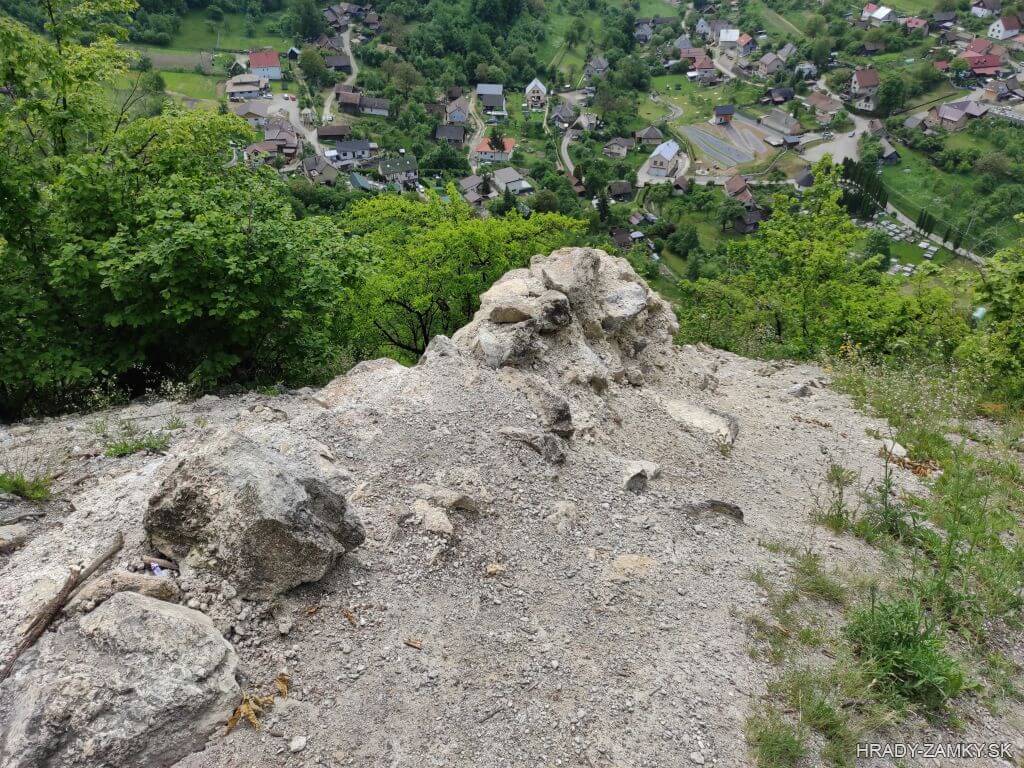
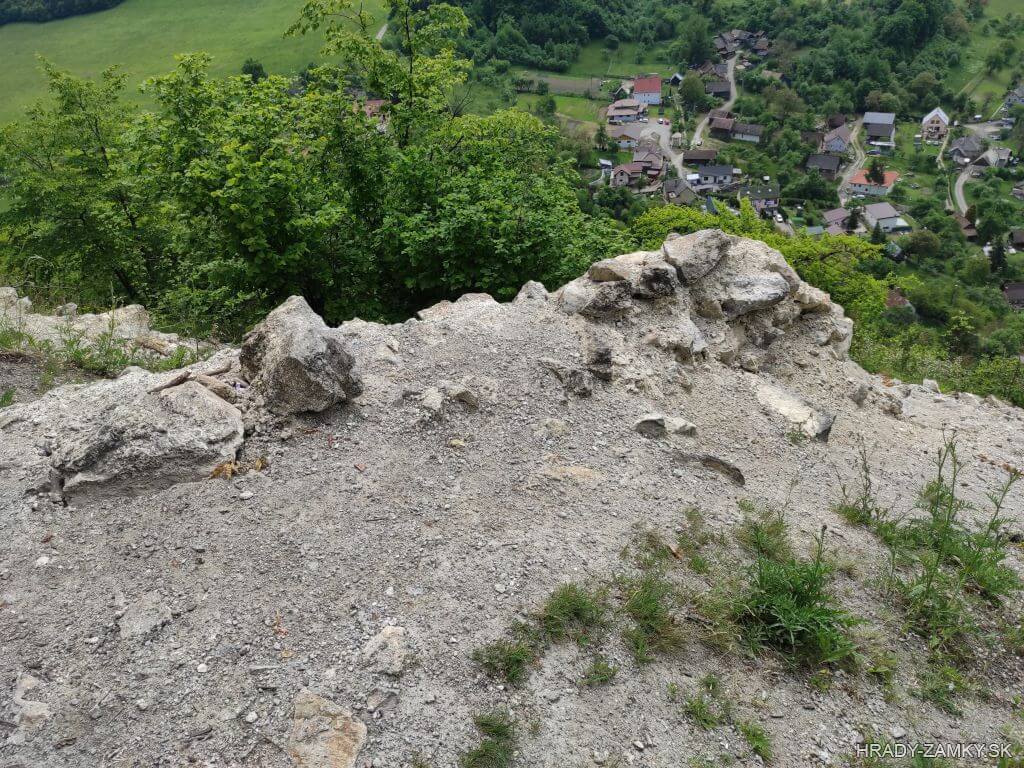
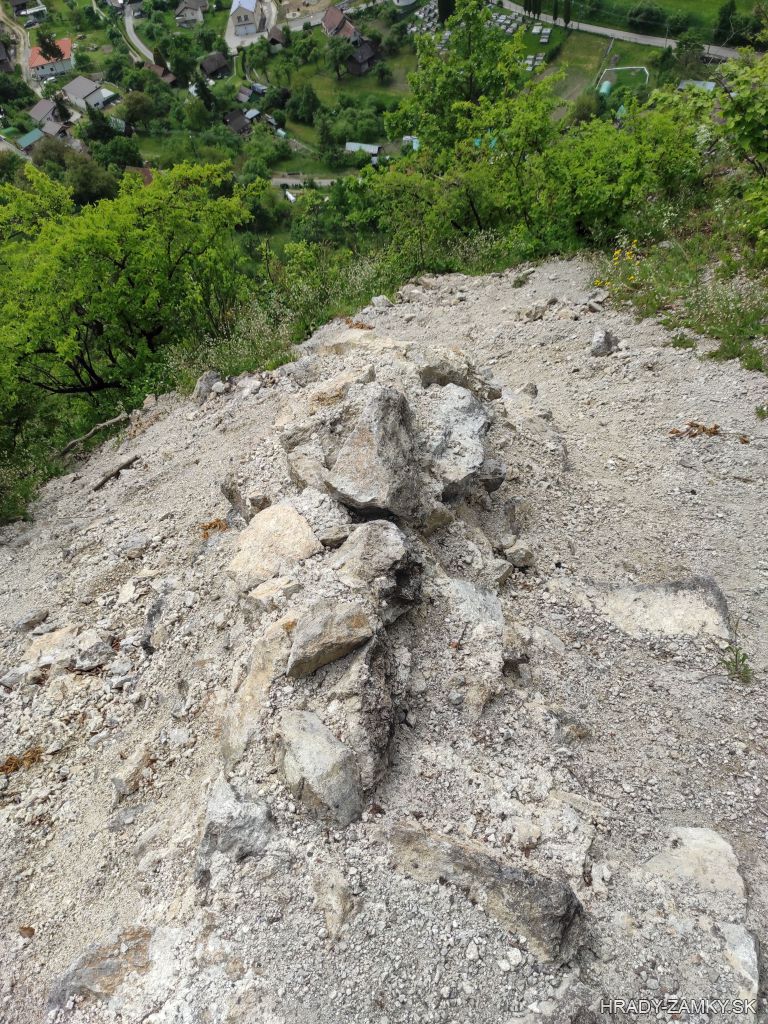
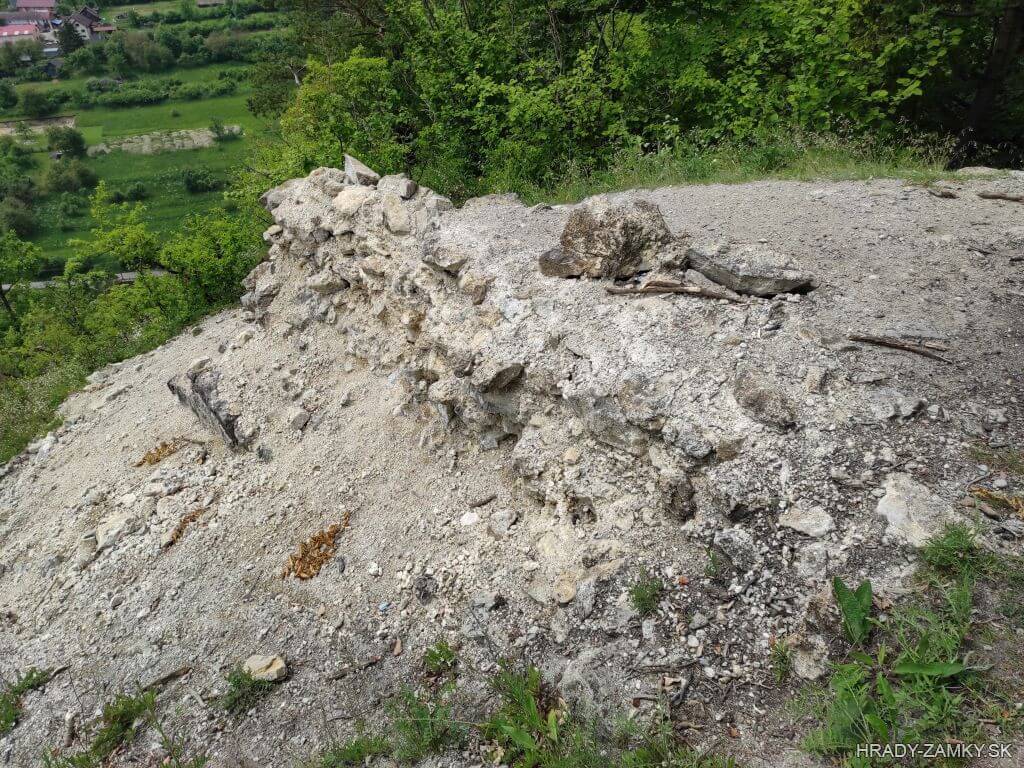
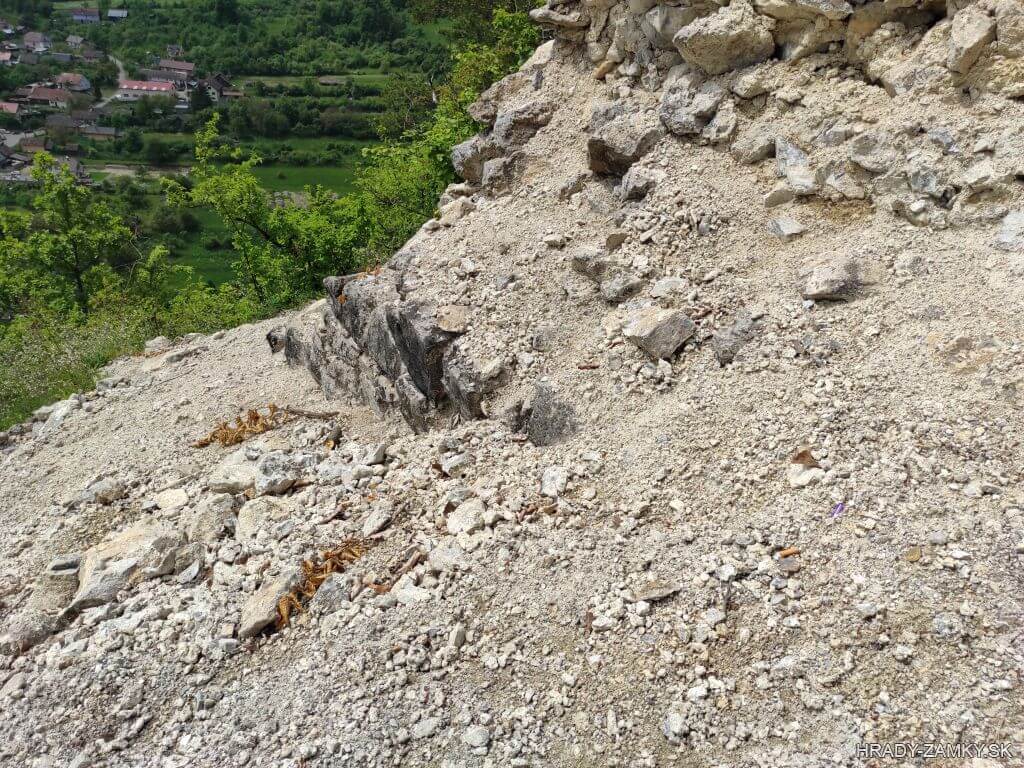
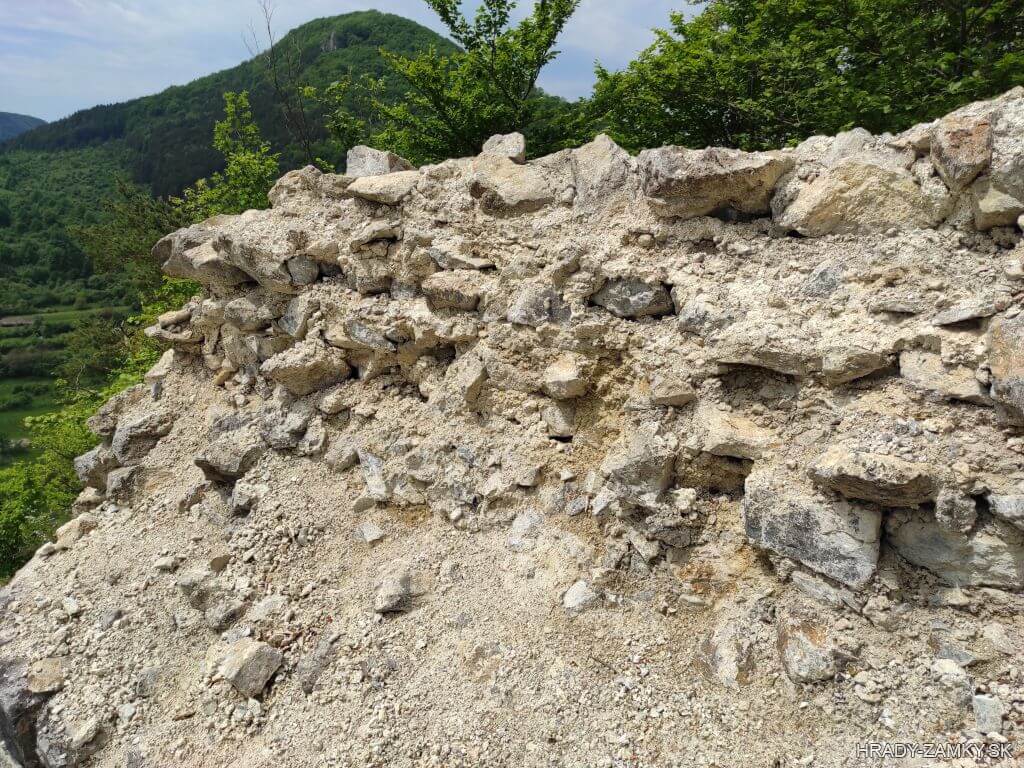
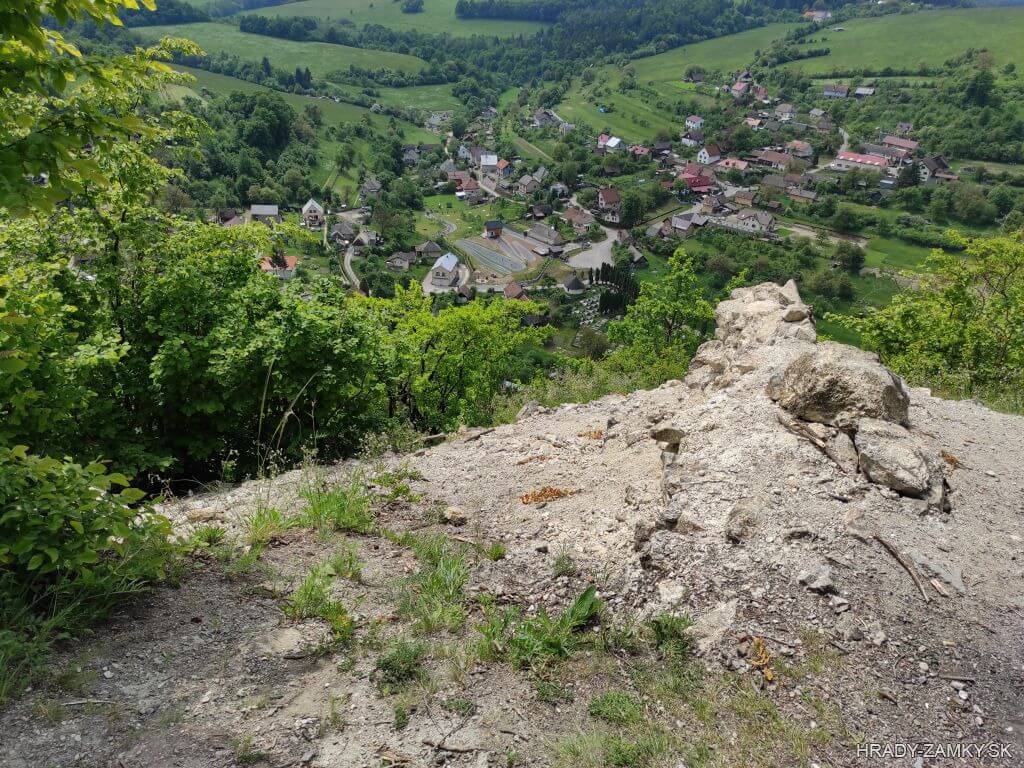
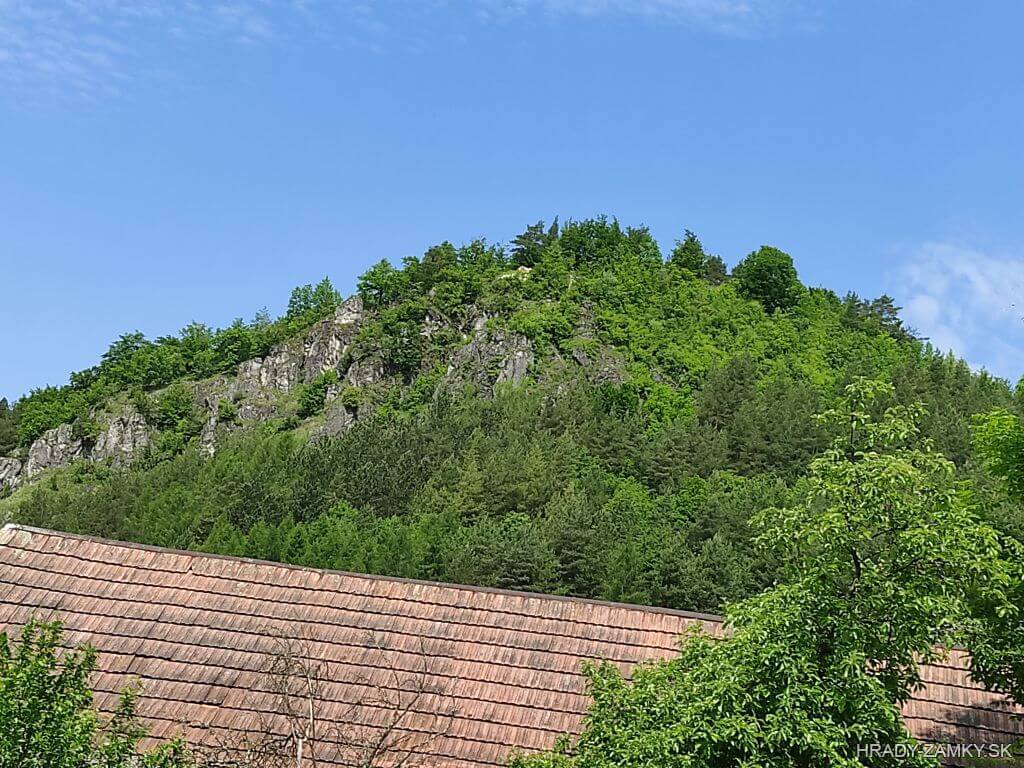
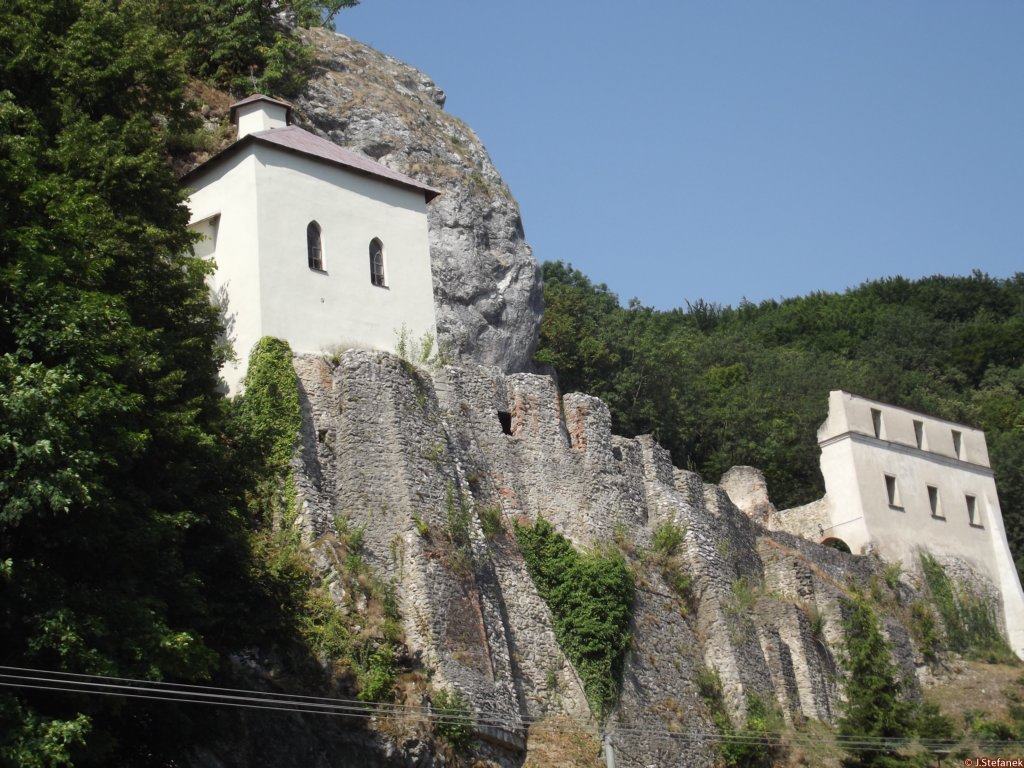
The small remains of the castle walls are located on a hill above Košecké Podhradie, east of Ilava
Neveľké zvyšky múrov hradu sa nachádzajú na návrší nad Košeckým Podhradím, východne od Ilavy
Previous names
Košatec, Kaza, Kosycz, Kassa, Kazcha, Coscha, Kossatecz, Kaszanagyváralja
Roads
South of Košecké Podhradie is a part of the village Malé Košecké Podhradie, where we get to the bell tower. In front of it is a smaller space next to the road where we can park. From there we go straight on foot and after a while we turn right. We continue with a slight ascent along the resting place through the forest to the remains of the walls.
Na juh od Košeckého Podhradia je časť obce Malé Košecké Podhradie, kde sa dostaneme k zvonici. Pred ňou je menší priestor popri ceste, kde môžeme zaparkovať. Odtiaľ sa vyberieme peši a po chvíli odbočíme vpravo. Pokračujeme miernym stúpaním popri oddychovom mieste cez les až k zvyškom múru.
Description
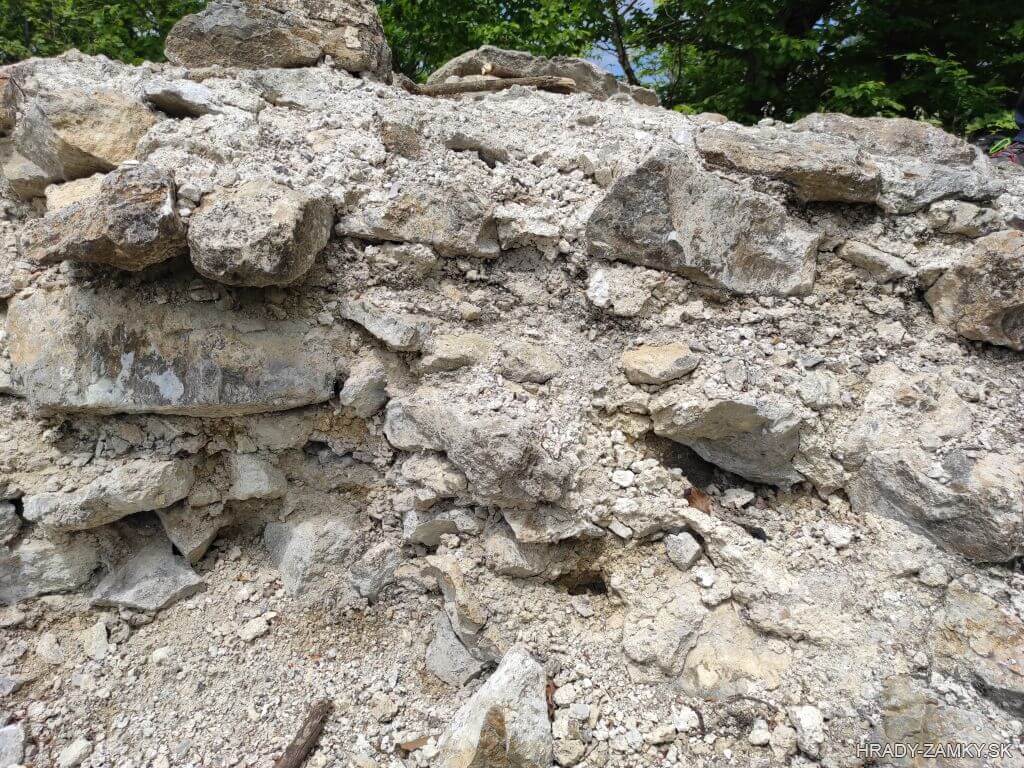
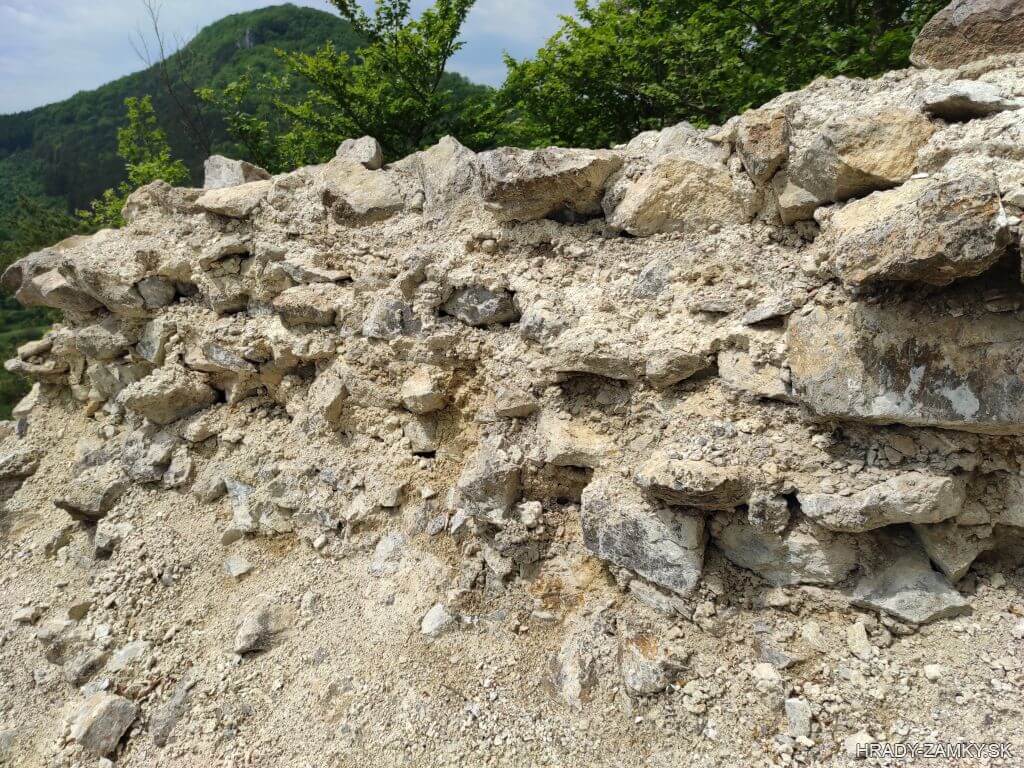
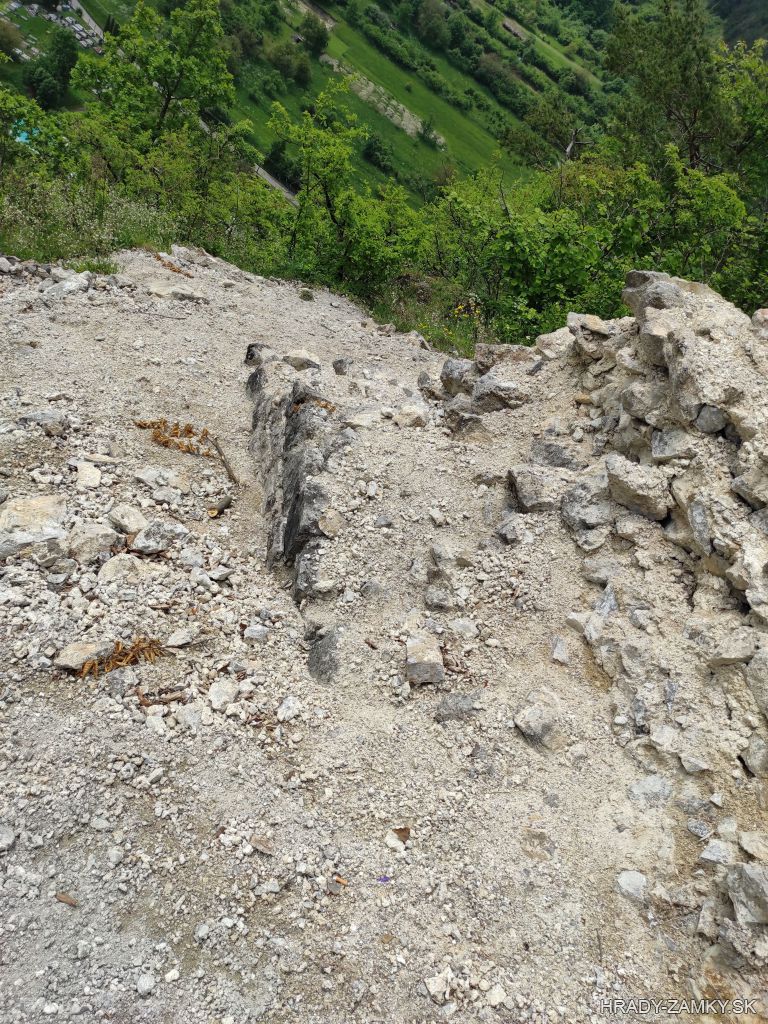
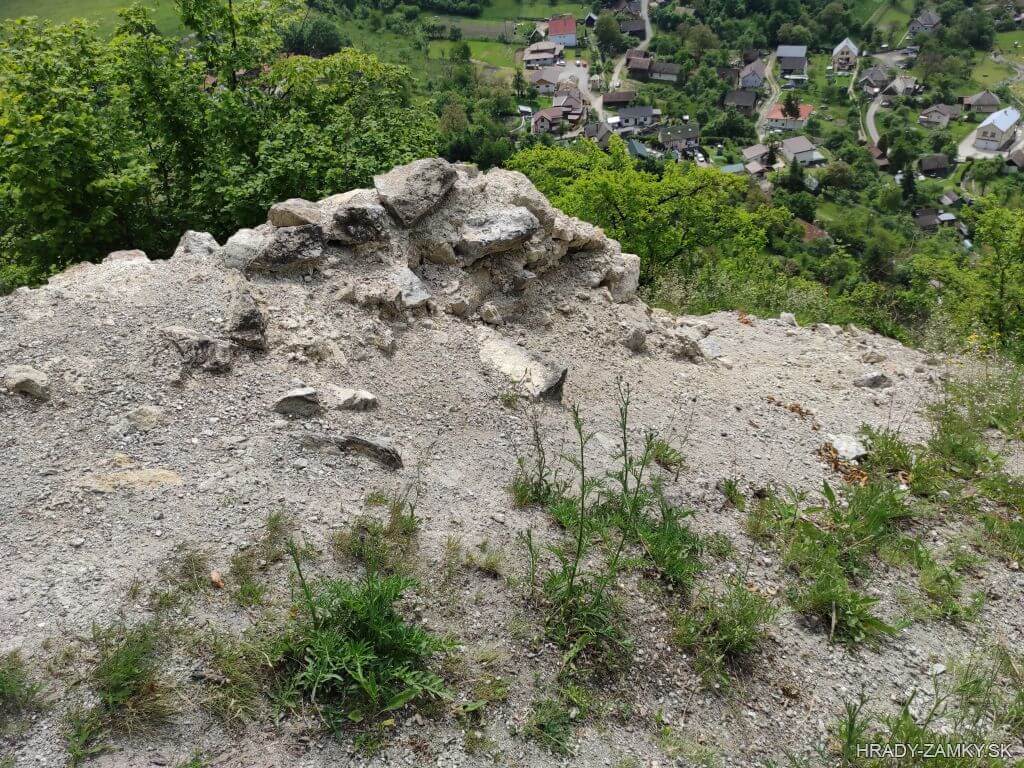
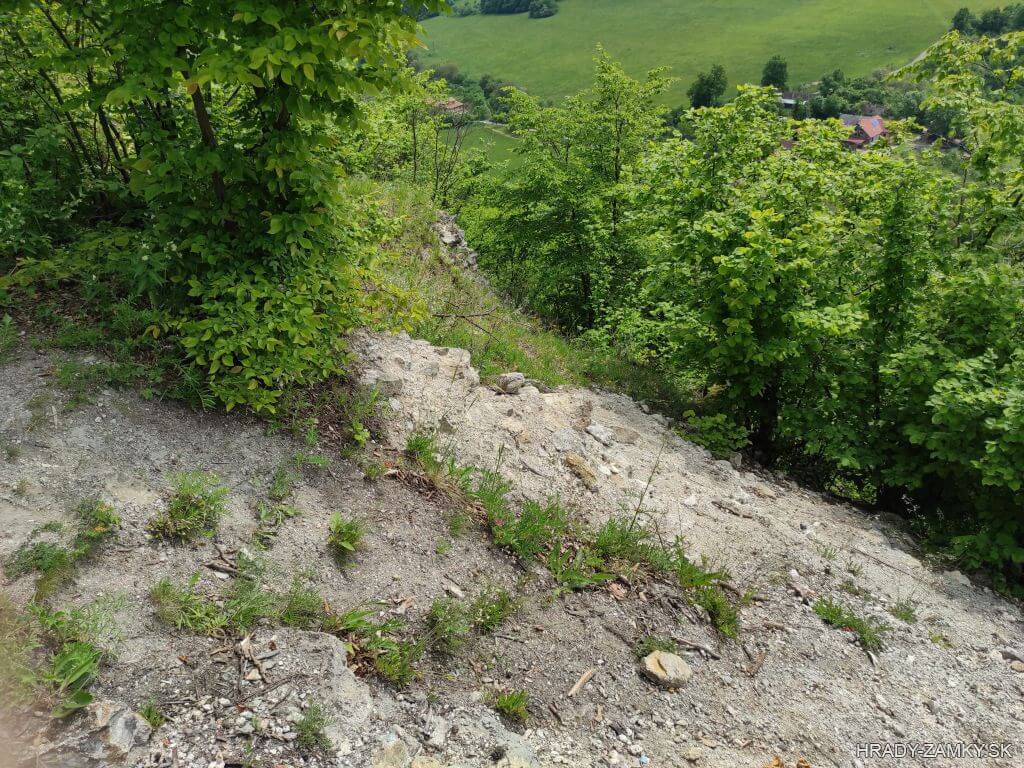
Only earth dams have been preserved from the castle, which were probably perimeter walls up to 2 m thick and a hint of an arch, which is probably the remnant of a cannon bastion. There is no moat or rampart in front of the walls, because the steep hill did not even allow it, but it was also an advantage in defending against attackers.Traces on the south side indicate the existence probably of a castle gate.
Z hradu sa zachovali už len zemné hrádze, ktoré boli pravdepodobne obvodovými múrmi s hrúbkou až 2 m a náznak oblúku, ktorý je pravdepodobne zvyškom delovej bašty. Pred múrmi sa nenachádza žiadna priekopa ani val, pretože strmý kopec to jednak ani neumožnil, ale bol zároveň aj výhodou pri obrane pred útočníkmi.Stopy na južnej strane poukazujú pravdepodobne na existenciu hradnej brány.
Plan
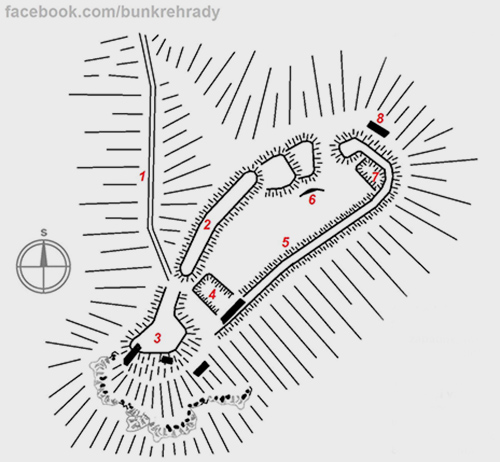
Legend to the ground plan
- 1 - sidewalk to the castle
- 2 - ramparts on the site of the western wall
- 3 - southern plateau with the remains of walls
- 4 - southern depression
- 5 - smaller rampart on the site of the eastern wall
- 6 - excavated wall
- 7 - northern depression
- 8 - northern wall Source: https://www.facebook.com/bunkrehrady/
Legenda k pôdorysu
- 1 - chodník na hrad
- 2 - val trosiek na mieste západnej hradby
- 3 - južná plošina so zvyškami múrov
- 4 - južná priehlbina
- 5 - menší val na mieste východnej hradby
- 6 - odkopaný múr
- 7 - severná priehlbina
- 8 - severný múr Zdroj: https://www.facebook.com/bunkrehrady/
History
Historians believe that the castle probably stood as early as 1272, but the first certain mention is from 1312, when it belonged to the estate of Matúš Čák. Despite the fact that the castellan was a royal official of Lóránd and he is designated as a royal property by a charter of Karol Róbert. According to legend, the first owner was Count Smaragdus, and in 1323 the castle was owned by Demeter de Nechte and then by Tomas Kazima.
In 1397, Mikuláš, Brother of Stibor of Stiborice, acquired the Košice estate. From 1407 the castle was owned by the Košecký family from Lieskov, but in 1462 Matej Korvín took the castle from them for their alliance with their brothers and gave it to Blažej Magyar. However, they had to fight for the castle and eventually won it militarily.
After Blažej's death, the castle fell into the hands of the Zápoľskýs. The castle later belonged to the Rožňovec family and after the death of Ľudovít Jagelovský in 1526 the castle was conquered by General Katzianer and the castle was acquired by Pavol Petrőczy, who for a long time tried the castle with the descendants of the previous owner.
Paul's successor, Štefan Petrőczy, took part in the Wesselényi Uprising, and therefore the imperial army led by Pavel Eszterházy occupied the castle in 1670 and blew it up.
There is no mention of his next fate, until in 1676 the castle of Košice fell to the Lipaj family, then to the Illésházy family and later to the Motešice family. However, the mentioned owners no longer inhabited the castle, because after its destruction it was not restored. Banker Schenk is mentioned as the last of the owners at the end of the 19th century.
Today, only slight remnants of the walls are visible.
Historici usudzujú, že hrad pravdepodobne stál už v roku 1272, no prvá istá zmienka je až z roku 1312, keď patril k panstvu Matúša Čáka. Aj napriek tomu, že kastelánom bol kráľovský úradník Lóránd a ako kráľovský majetok ho určuje listina Karola Róberta. Prvým jeho majiteľom bol podľa povesti gróf Smaragdus a v roku 1323 hrad vlastnil Demeter de Nechte a po ňom Tomas Kazima.
V roku 1397 získal košecké panstvo Mikuláš, brat Stibora zo Stiboríc. Od roku 1407 hrad vlastnil rod Košeckých z Lieskova, avšak v roku 1462 im za ich spojenectvo s bratríkmi hrad odobral Matej Korvín a dal ho Blažejovi Magyarovi. O hrad však museli bojovať a nakoniec ho získali vojensky.
Po smrti Blažeja hrad pripadol do rúk Zápoľských. Hrad ešte neskôr patril Rožňovcom a po smrti Ľudovíta Jagelovského v roku 1526 hrad dobyl generál Katzianer a získal ho Pavol Petrőczy, ktorý sa ale dlho súdil o hrad s potomkami predchádzajúceho vlastníka.
Pavlov nasledovník, Štefan Petrőczy, sa zúčastnil Wesselényiho povstania a preto cisárske vojsko na čele s Pavlom Eszterházym v roku 1670 hrad obsadilo a vyhodilo do povetria.
O jeho ďalšom osude nie sú zmienky, až v roku 1676 hrad Košeca pripadol Lipajovcom, potom Illésházyovcom a neskôr Motešickým. Spomínaní majitelia však hrad už neobývali, lebo po jeho zničení nebol obnovený. Ako posledný z majiteľov sa koncom 19. storočia uvádza bankár Schenk.
Dnes sú viditeľné už len nepatrné zvyšky múrov.
Myths and legends
There are no myths available.
K tomuto objektu nie sú dostupné žiadne povesti
Useful information
The remains of the castle are freely accessible
Zvyšky hradu sú voľne prístupné
Nearby castles
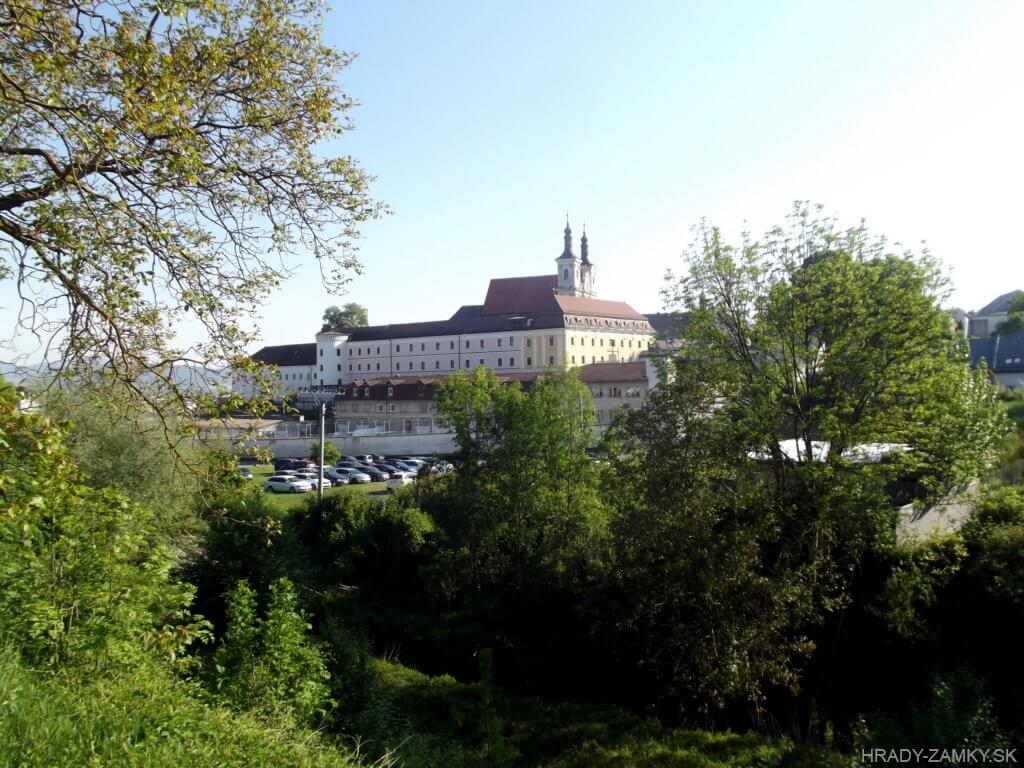
Ilava castle
Ilava
6.0km
castle, chateau
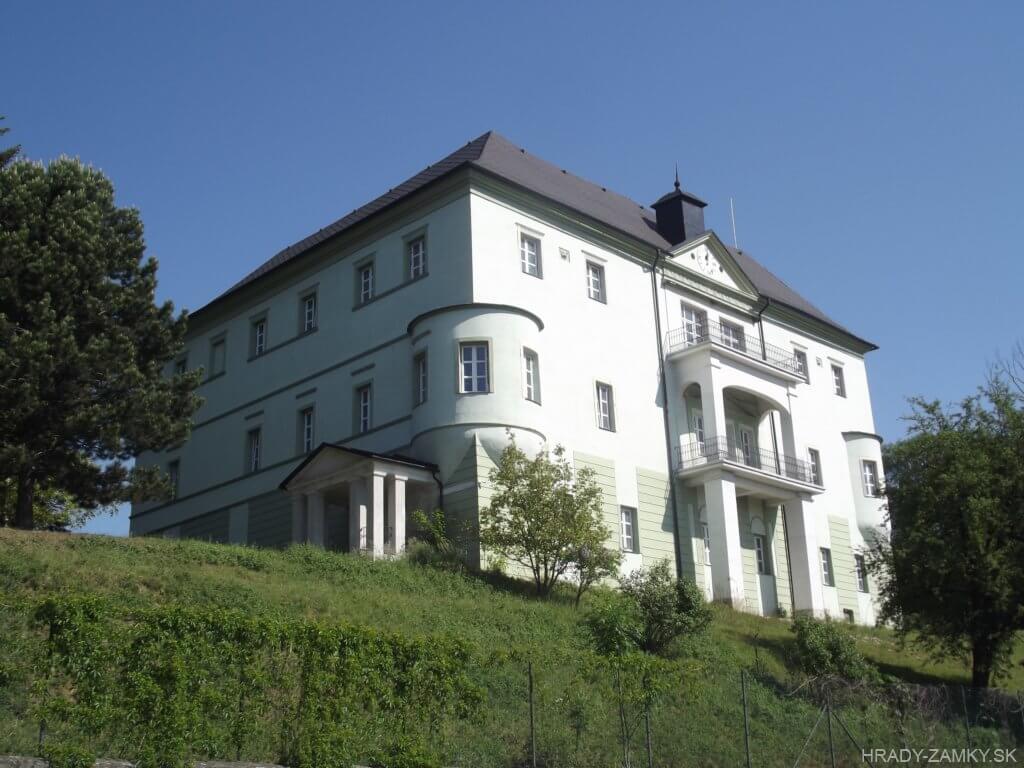
Horovce mansion
Horovce
8.9km
manor, mansion
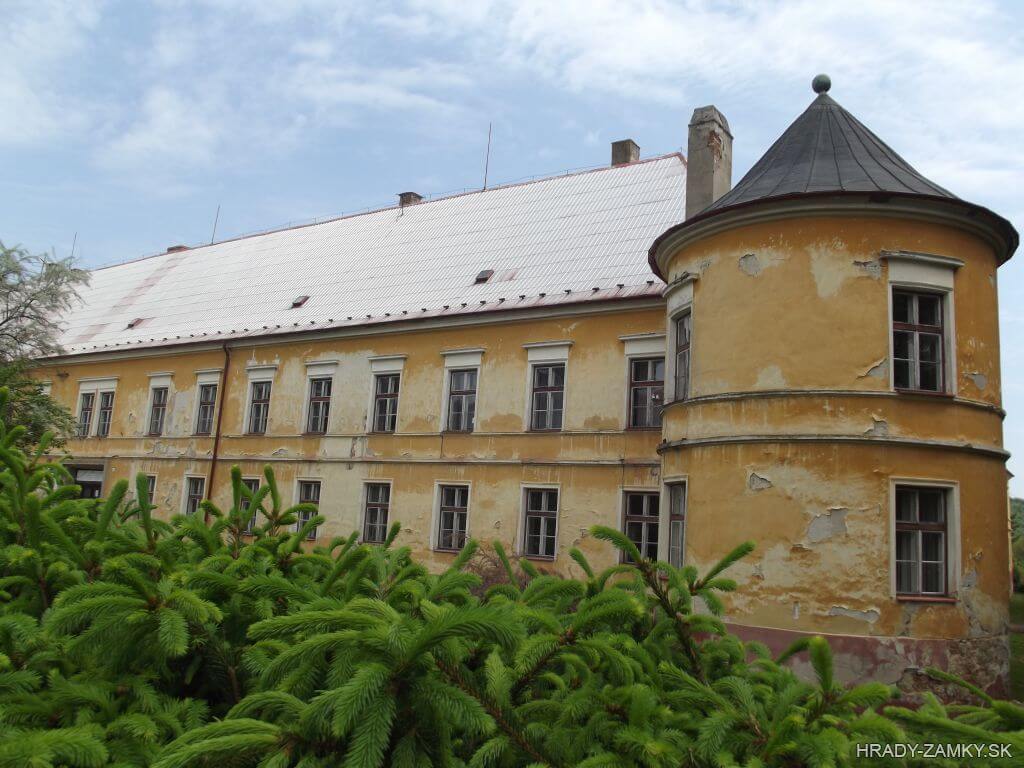
Pruské manor
Pruské
9.2km
manor, mansion
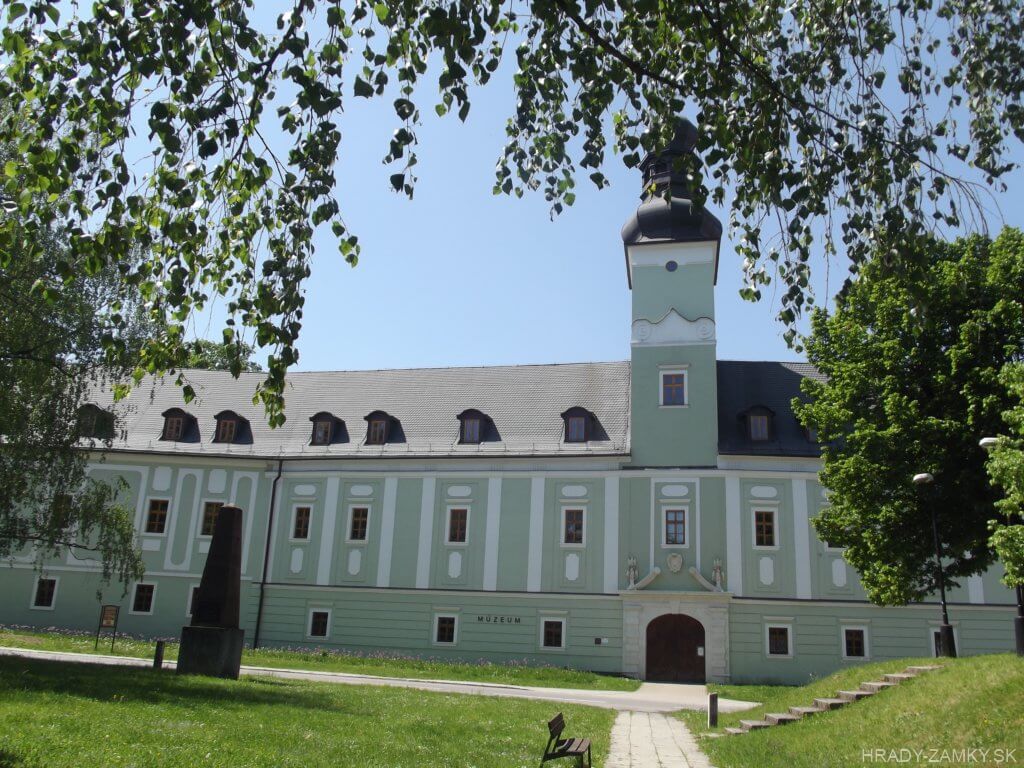
Dubnica mansion
Dubnica nad Váhom
10.2km
manor, mansion
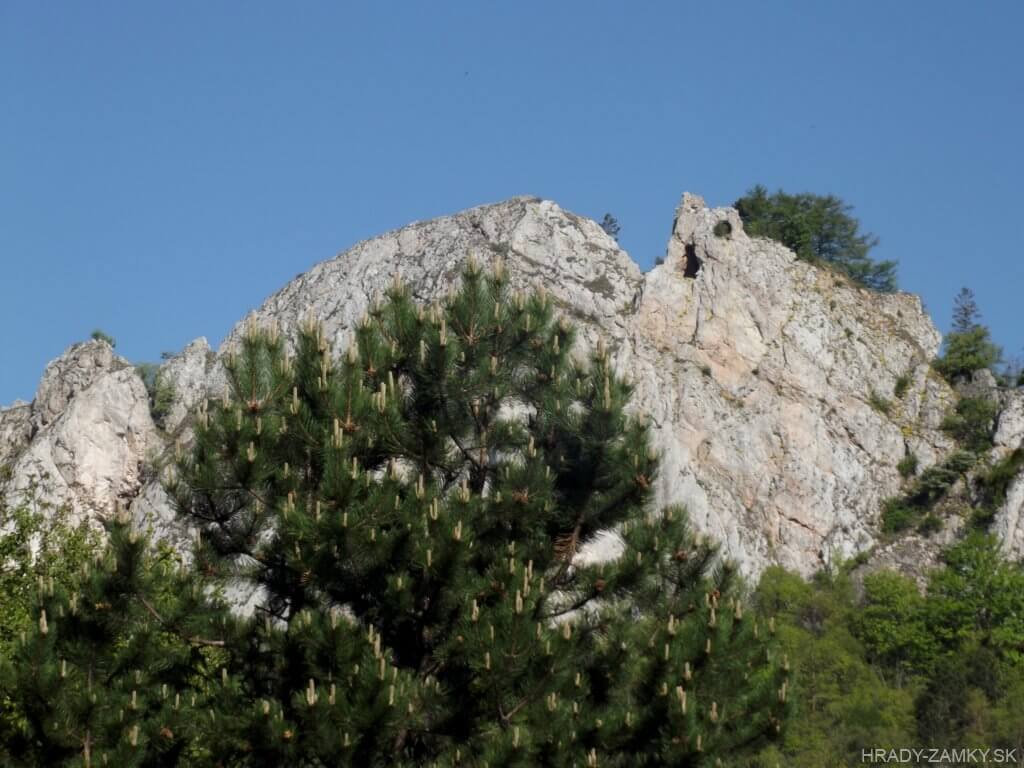
Vršatec
Vršatské Podhradie
15.2km
castle ruin
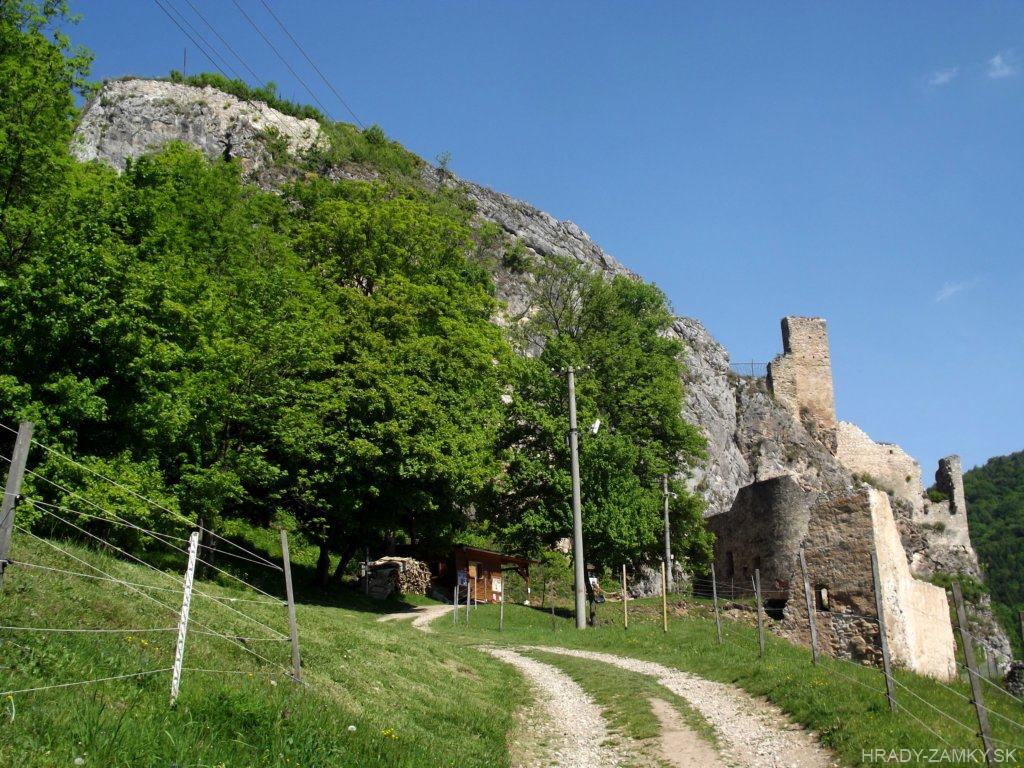
Lednica
Lednica
16.5km
castle ruin
Skalka
Skalka nad Váhom
18.4km
monastery