Červený Kameň
Častá Bratislava county Slovakia
castle, chateau
Červený Kameň
Častá Bratislavský kraj Slovakia
hrad, zámok
The castle is situated on a quartzite rock above the village of Píla in Malé Karpaty, near the village Častá
Hrad je situovaný na kremencovom brale nad osadou Píla v Malých Karpatoch, neďaleko obce Častá. Hrad je zrekonštruovaný a je vo veľmi dobrom stave.
Previous names
Oldruh, Biberstein, Bibersburg
Roads
Trasa 1: Červený Kameň castle is accessible by a road connecting the villages Častá and Píla through the castle hill. From the village of Častá we get a relatively short drive by car to the parking lot right next to the castle.
Trasa 1: Hrad Červený Kameň je dostupný po ceste spájajúcej obce Častá a Píla cez hradné návršie. Z obce Častá sa dostaneme pomerne krátkou cestou autom až na parkovisko priamo pri hrade.
Trasa 2: Access from the settlement of Píla, where we follow the yellow sign between the houses and a steeper forest road will lead us directly to the castle.
Trasa 2: Prístup z osady Píla, kde sa vyberieme po žltej značke pomedzi domy a strmšia lesná cesta nás zavedie priamo k hradu.
Description
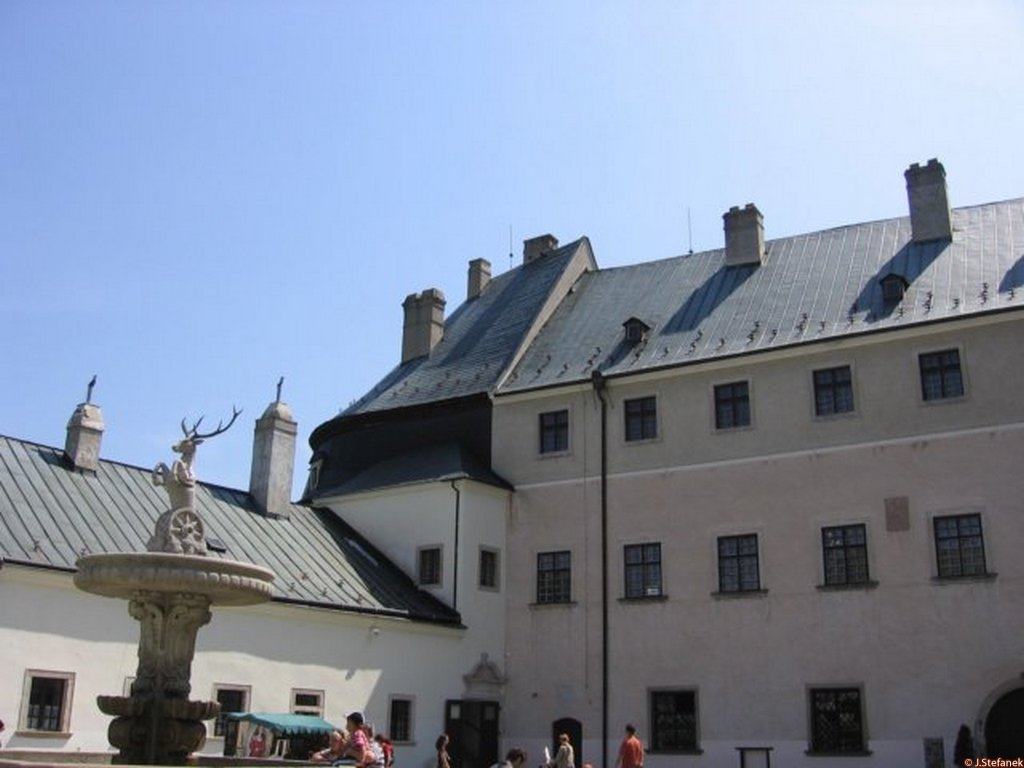
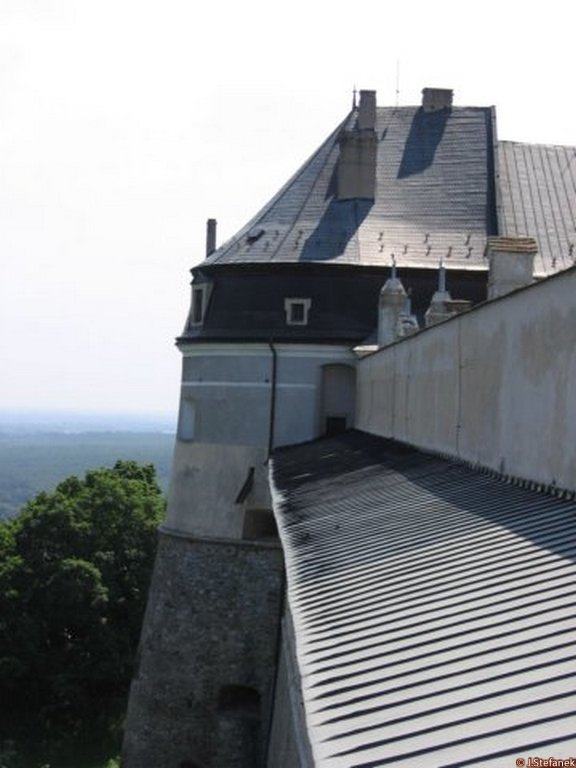
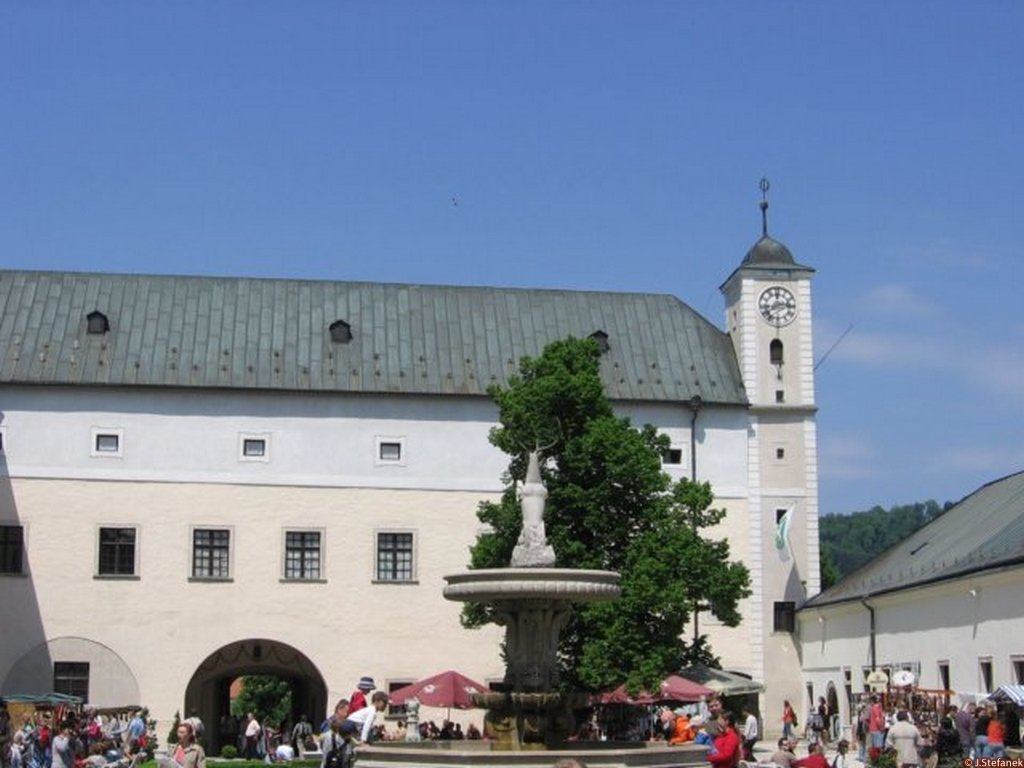
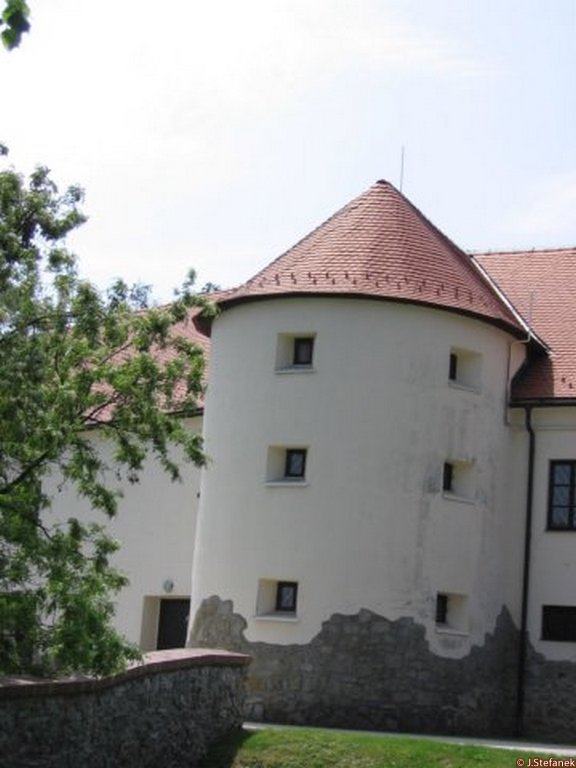
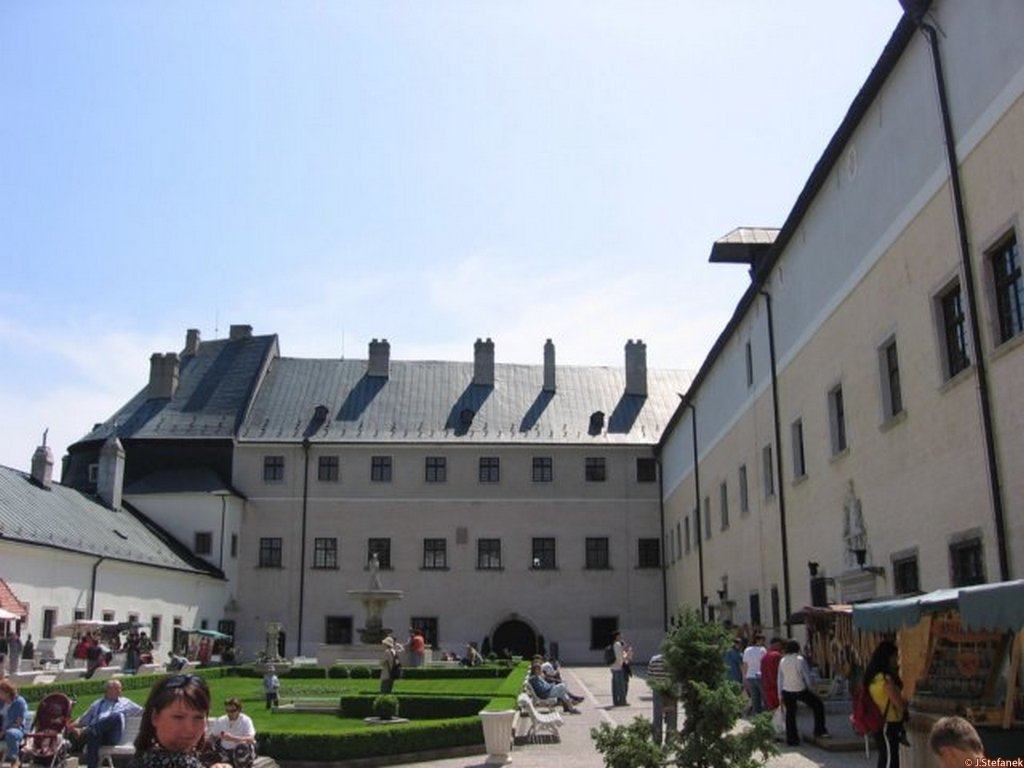
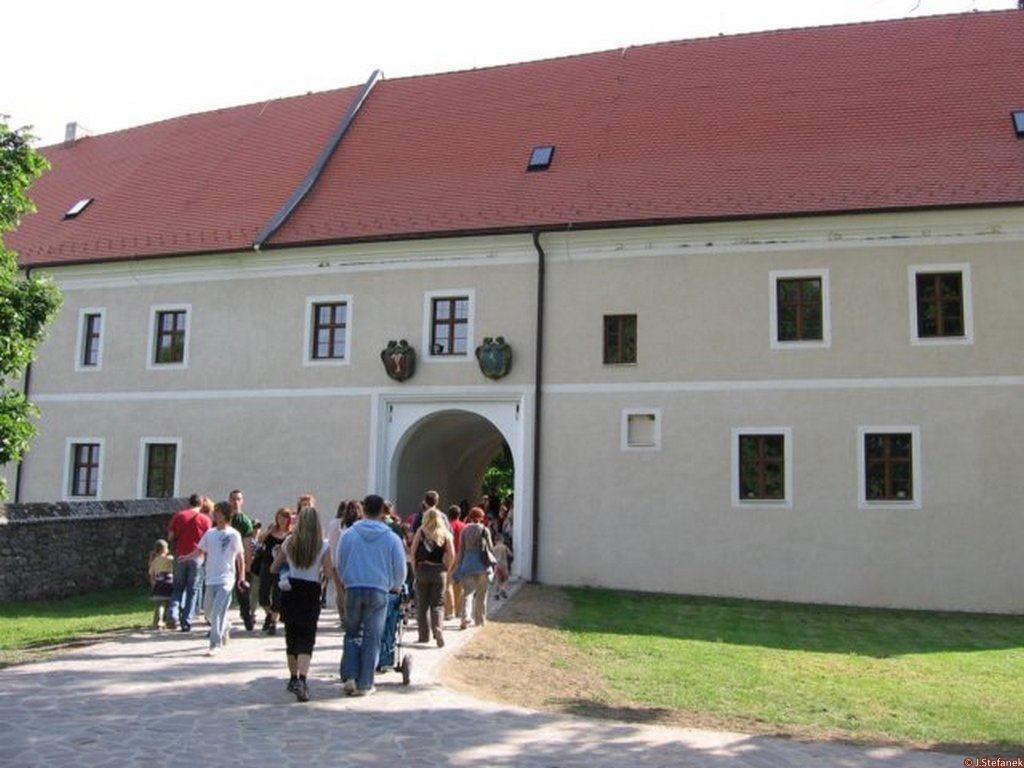
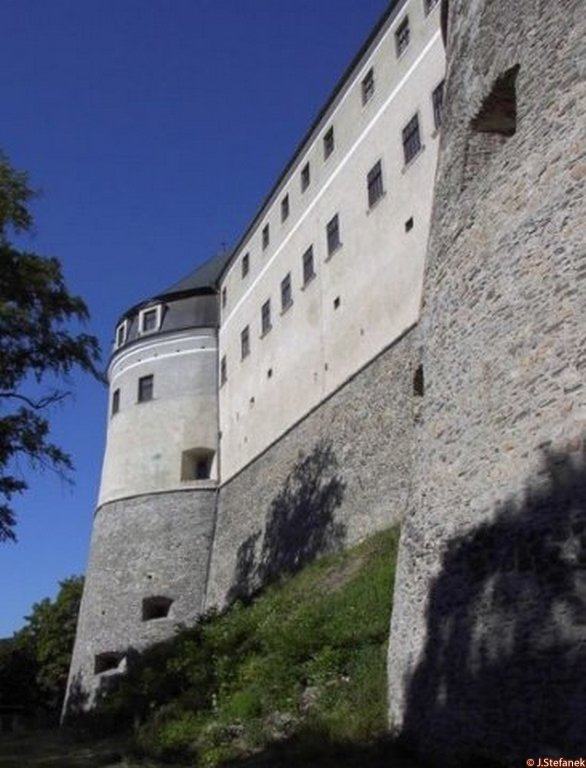
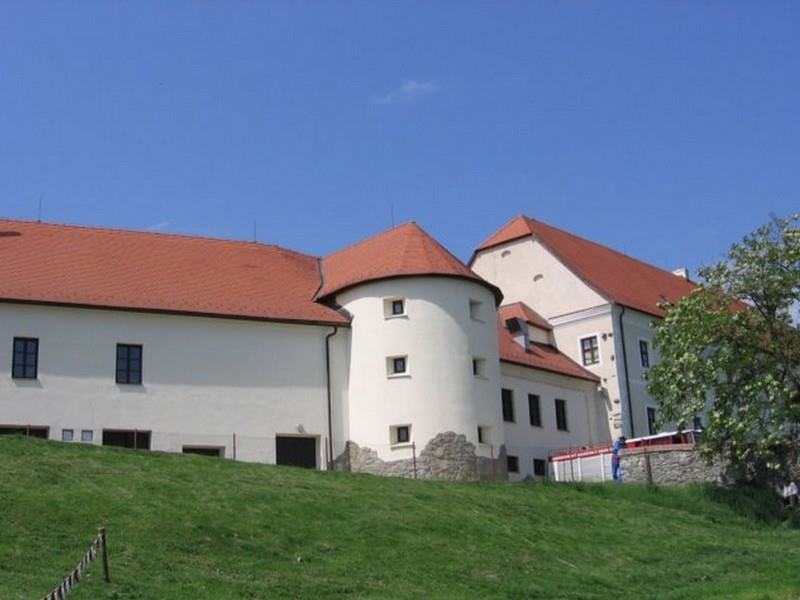
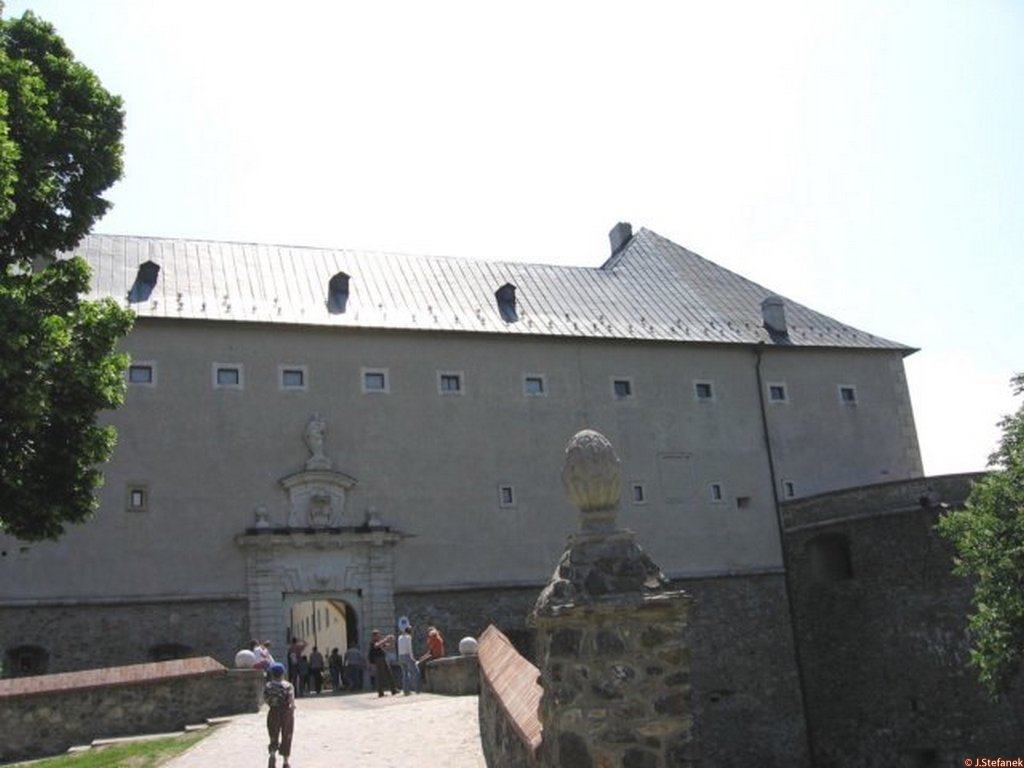
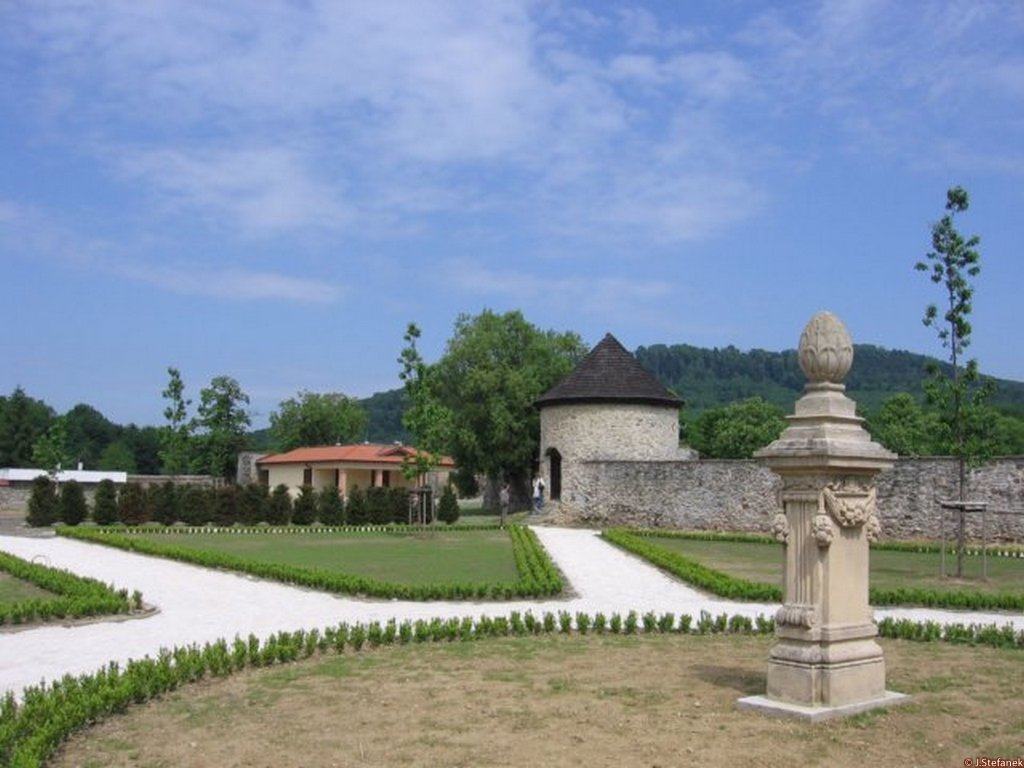
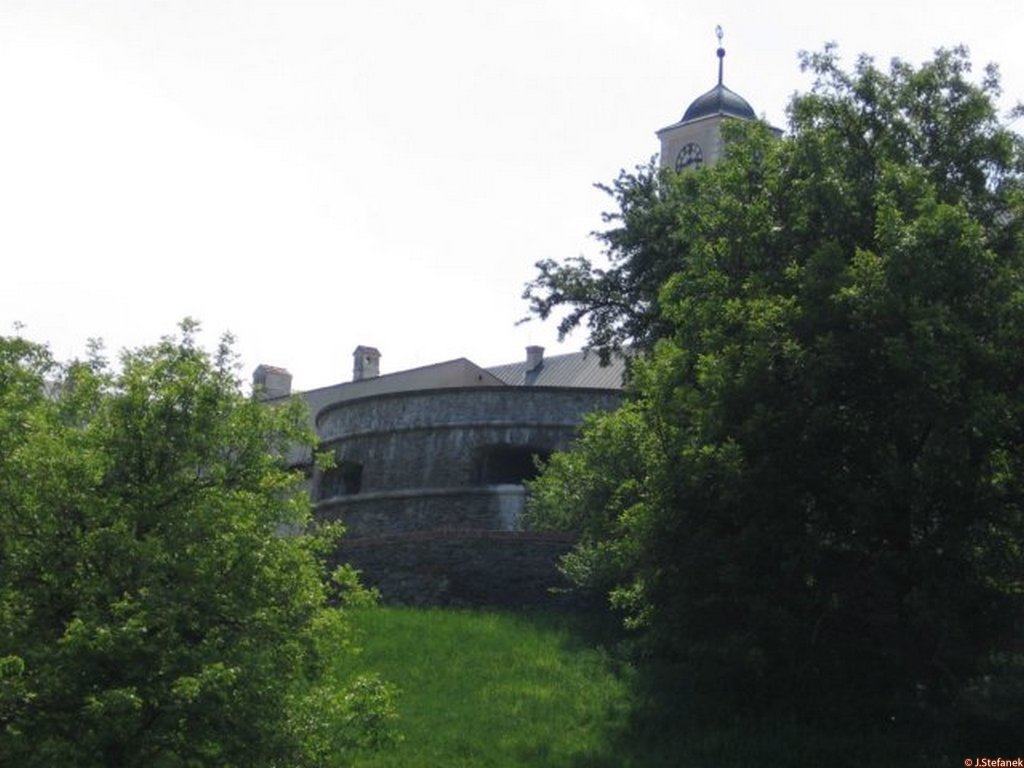
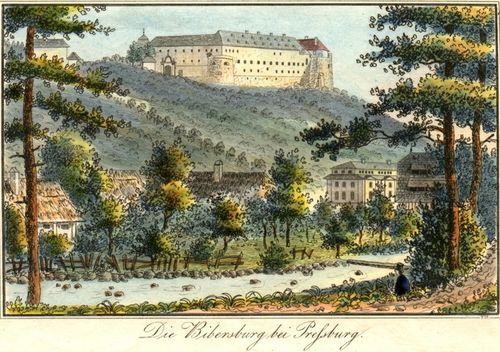
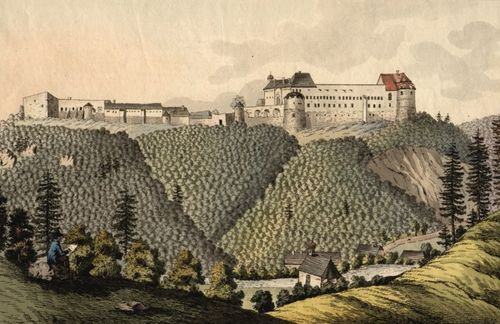
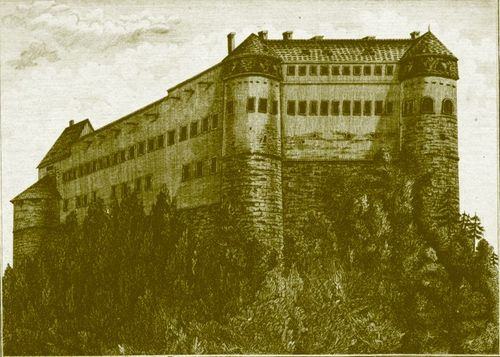
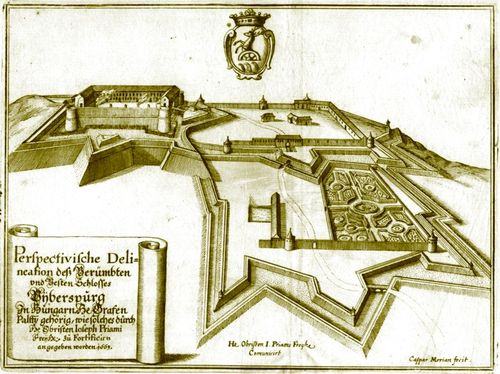
The castle is renovated and is in very good condition. The castle was opened to the public in 1997. In the castle is located a branch of the Slovak National Museum. There are still expositions of historical furniture and period living nobility, historical weapons. The castle gallery and underground cellars are also open to the public.It is worth noting the sophisticated sala terrena / room on the ground floor of the palace open to the garden / from 1656 by master Tencall with various figures filled with figural scenes of apotheoses and mythological scenes. Also a wide range of chandeliers, mirrors, precious art-historical objects, furniture and a picture gallery are examples of historical living accessories.As for the exterior, the castle is a massive two-storey building with four corner round bastions connected by a defensive wall. In the basement there are castle cellars with a sophisticated ventilation system. The castle buildings are centered around a large courtyard, the center of attention being a stone fountain with a sculpture of a prancing deer - a symbol of the Palffy family. The unequal tall buildings with bastions are the result of adjustments to the entrance areas, residential palaces and economic parts, which they gradually moved to the area of the bailey.
Hrad je zrekonštruovaný a je vo veľmi dobrom stave. Verejnosti bol celý hrad sprístupnený až v roku 1997. Na hrade je umiestnená pobočka Slovenského národného múzea. Sú tu stále expozície historického nábytku a dobového bývania šľachty, historických zbraní. Verejnosti je prístupná aj hradná obrazáreň a podzemné pivnice.Za povšimnutie stojí náročne vybavená sala terrena /miestnosť na prízemí paláca či zámku otvorená do záhrady/ z r.1656 od majstra Tencalla, s rôznymi obrazcami vyplnenými figurálnymi výjavmi apoteóz a mytologických scén. Celý rad lustrov, zrkadiel, vzácnych umeleckohistorických predmetov, nábytok a obrazová galéria sú ukážkami doplnkov historického bývania.Čo sa exteriéru týka, hrad je mohutná dvojposchodová stavba so štyrmi nárožnými okrúhlymi baštami, ktoré sú spojené obranným múrom. V suteréne sa nachádzajú hradné pivnice, s dômyselným vetracím systémom. Hradné budovy sa sústreďujú okolo veľkého nádvoria, ktorého centrom pozornosti je kamenná fontána s plastikou vzpínajúceho sa jeleňa - symbolu Pálffyovcov. Nerovnako vysoké budovy s baštami sú výsledkom úprav vstupných priestorov, obytných palácov a hospodárskych častí, ktoré postupne presúvali do priestorov predhradia.
Plan
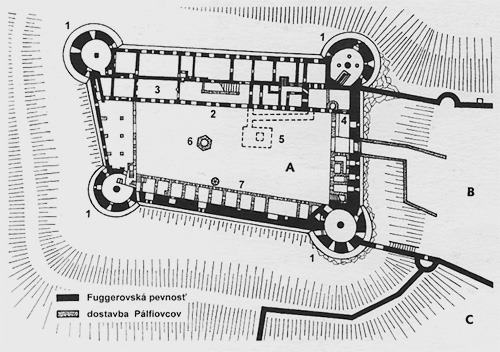
Legend to the ground plan
- A-castle
- B-fort
- C-gardens
- 1-corner cannon bastions
- 2-residential wing
- 3-salla terrain
- 4-entrance to the cellars
- 5-well
- 6-baroque fountain
- 7-farm wing
Legenda k pôdorysu
- A-hrad
- B-predhradie
- C-záhrady
- 1-nárožné delové bašty
- 2-obytné krídlo
- 3-salla terena
- 4-vstup do pivníc
- 5-studňa
- 6-baroková fontána
- 7-hospodársky trakt
History
According to some historians, the castle was built by the Spaniard Tibor Nagy from the Kartalov family before the invasion of the Tatars. The first written mention, however, is from 1271, when the Czech King Otakar II. occupied this castle. The Red Stone was a royal castle and many owners changed in its possession. In 1296, the peasant Martin Devecseri sold half of the fortress together with the surrounding estates to Matúš Čák. After his death, in 1321, the troops of King Charles Robert occupied the castle. In the years 1348 - 1350, King Louis the Great led the war with Queen John I and conquered Naples. However, as the plague broke out, he was forced to retreat, retaining only the Principality of Salerno. The king then donated the castle in 1352 to a knight of German origin Wolfurt, who helped him during this Naples War. In the following century, the owners of the castle changed frequently. These included e.g. Ákos - Mikčov's son, Queen Elizabeth, Count Prokop. In 1390, King Sigismund seized the castle, but soon after, the castle was given a deposit to Baron Ulrich von Wolfurt, Eglof's son. In 1438, after Ulrich's death, the castle fell back into royal hands. However, Albrecht of Habsburg soon dedicated the castle to Lőrincz Hédervárim. From 1414 the castle belonged to the most powerful count of St. Jura and Pezinka (genus Bazini and Szentgyörgyi). The castle belonged to them until 1522, when their families disappeared. King Louis II after their death he donated the castle to his bride Maria Habsburg together with the adjoining villages. However, the following year the ruler handed over the castle to the Thurz family. Brothers Alexej and Ján Thurzo were Spiš magnates who already belonged to the richest nobility in the 15th century. The Fugger family received the castle from them in 1535 and later inherited it.
During the time of the Fuggers, the castle was significantly rebuilt from the ground up. Anton Fugger initiated an extensive reconstruction into a fortress with massive basement storage spaces. It was to be a transhipment point for goods on a trade route to Western Europe. However, the castle never served as a warehouse. Despite thoughtful plans, the construction of the fortress took 20 years and the administrative-residential southwest wing was not completed until 1556. The smooth continuation of the construction of the fortress was hindered by the mass of a medieval castle, which was gradually liquidated during the construction of the fortress. During the years of construction, the castle also served as a temporary seat of the manor administration and also provided accommodation for craftsmen working on the construction of a new fortress. Part of the older building material was used in the new construction. The last buildings of the medieval castle were not demolished until 1555. The construction was completed in 1556. At that time, the Červený kameň castle basically acquired the form it has today. An unexpected historical turning point was the withdrawal of the Fuggers from the Thurzov-Fugger Mediation Company in 1546, at a time when the Červený Kameň fortress had not yet been completed. A great change was brought about by the sudden death of Anton Fugger in 1560. In 1581, the Fuggers succeeded in acquiring the advantageous merchant Mikuláš Pálffy, the Baron of Erdöd, who bought part of the property from Marek Fugger. Meanwhile, in 1583, the Fuggers definitively left Slovakia.
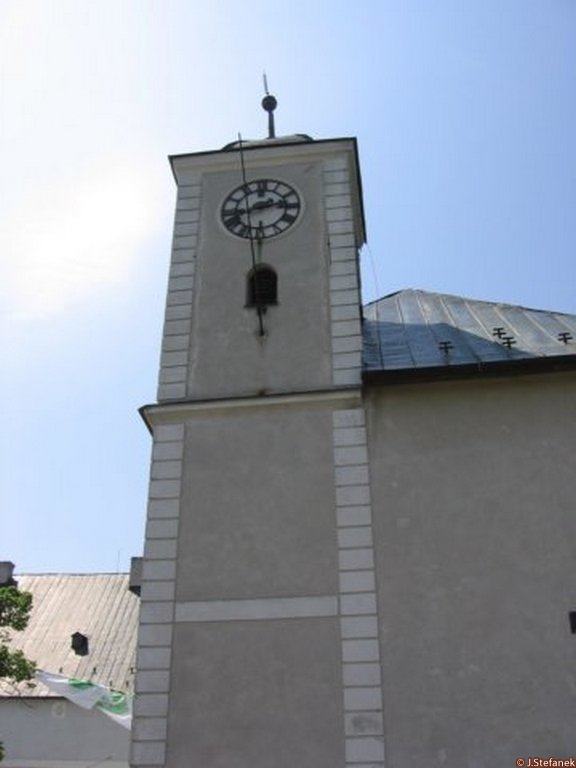
The new owner of the castle thus became Mikuláš Pálffy in 1583, who married Mária Magdaléna Fuggerová and thus acquired the castle. Until the purchase of the Červený Kamen estate, Mikuláš Pálffy did not have the representative seat that the then nobility built in the countryside at the end of the 16th and the beginning of the 17th century. Therefore, he began to rebuild the inhospitable, little-adapted fortification. The aim of the extensive reconstruction was to transform this fortress architecture into a comfortable representative Renaissance castle. Pálffy died here in April 1600 and his vast estate was inherited by his sons. In 1605, however, the troops of Štefan Bocskaya and in 1619 the troops of Gabriel Bethlen attacked and occupied the castle. In July 1683, after the conquest of Bratislava Castle and the occupation of the whole of Bratislava, the Kuruk troops, led by Imrich Thököly, also reached the Red Stone and occupied it. Since the Pálffy family was loyal to the Habsburgs, the Red Stone Fortress was not affected by the order to demolish the castles issued by Emperor Leopold in 1701. During the Rákóczi uprising, in 1703, the Kuruk rebels wanted to get the castle into their own hands. In 1705, Červený Kameň Castle was severely damaged. The great-grandson of Nicholas IV began the repair and further reconstruction of the castle. Rudolf Pálffy. He first repaired the damaged parts of the castle, especially the mantle masonry and cannon bastions, which at that time still served their purpose. In August 1705, the imperial troops defeated Rákóczi's Kuruk rebels. The rebels tried to attack the castle again in a few months, but suffered another defeat. In 1710 a fire broke out, during which the roof part of the castle completely burned down. After the end of the war, the castle became habitable again. After the first renovations in 1758, a fire broke out again in the northwest wing above the entrance gate of the castle, which destroyed the living quarters and the clock tower. During the restoration of the fire-destroyed part of the castle, they continued with the addition of another floor above the south-eastern wing. Although it was no longer the Pálffy headquarters, they continued to keep the buildings in good condition. The Pálffy family transformed the austere fortress into a Renaissance-Baroque mansion with beautiful interior decoration. After 1850, the roof of the castle was restored. The rooms and large halls remained empty. The castle has maintained a similar condition to this day. The Pálffy family lived here until 1945. In 1970, the castle was declared a national cultural monument. In 1992, the first exhibition from the collections of the Red Stone Museum was opened. In 1993 the southwest wing of the castle was opened and in 1997 the southeast wing.
Podľa niektorých historikov hrad postavil išpán Tibor Nagy z rodu Kartalovcov ešte pred vpádom Tatárov. Prvá písomná zmienka je však z roku 1271, keď český kráľ Otakar II. obsadil tento hrad. Červený Kameň bol kráľovským hradom a v jeho držbe sa vystriedalo veľa majiteľov. V r.1296 zeman Martin Devecseri predal polovicu pevnosti spolu s okolitými statkami Matúšovi Čákovi. Po jeho smrti, v r.1321, vojská kráľa Karola Roberta obsadili hrad. Kráľ Ľudovít Veľký v rokoch 1348 – 1350 viedol vojnu s kráľovnou Janou I. a získal Neapolsko. Avšak ako vypukla morová epidémia, bol donútený ustúpiť a ponechal si iba Salernské kniežatstvo. Kráľ potom v r.1352 daroval hrad rytierovi nemeckého pôvodu Wolfurtovi, ktorý mu pomohol počas tejto Neapolskej vojny. V nasledujúcom storočí sa majitelia hradu často menili. Medzi nich patrili napr. Ákos - Mikčov syn, kráľovná Alžbeta, gróf Prokop. V r.1390 sa hradu zmocnil kráľ Žigmund, no onedlho na to dal hrad do zálohu barónovi Ulrichovi von Wolfurt, Eglofovmu synovi. V roku 1438 sa hrad po smrti Ulricha opäť dostáva do kráľovských rúk. Albrecht Habsburgský však zakrátko venoval hrad Lőrinczovi Hédervárimu. Od r.1414 patril hrad najmocnejším grófom zo Sv. Jura a Pezinka (rod Bazini a Szentgyörgyi). Hrad im patril až do roku 1522, keď ich rody zanikli. Kráľ Ľudovít II. daroval po ich smrti hrad svojej neveste Márii Habsburgskej spolu s priliehajucimi obcami. Panovníčka však už nasledujúci rok odovzdala hrad rodine Thurzovcov. Bratia Alexej a Ján Thurzo boli spišskí magnáti, ktorí už v 15.storočí patrili k najbohatšej šľachte. Od nich dostali hrad v r.1535 do zálohu Fuggerovci a neskôr ho zdedili.
Za čias Fuggerovcov bol hrad vo významnej miere takmer od základov prestavaný. Anton Fugger inicioval rozsiahlu prestavbu na pevnosť s mohutnými suterénnymi skladovacími priestormi. Mala byť prekladiskom tovaru na obchodnej ceste do západnej Európy. Hrad však funkciu skladov nikdy neplnil. Napriek premysleným plánom výstavba pevnosti trvala 20 rokov a administratívno-obytné juhozápadné krídlo bolo dokončené až v roku 1556. Plynulému pokračovaniu výstavby pevnosti bránila hmota stredovekého hradu, ktorú počas výstavby pevnosti postupne likvidovali. V rokoch výstavby hrad slúžil aj ako dočasné sídlo správy panstva a poskytoval aj ubytovanie remeselníkom pracujúcim na stavbe novej pevnosti. Časť staršieho stavebného materiálu sa použila pri novej výstavbe. Posledné objekty stredovekého hradu boli zbúrané až v roku 1555. Stavba bola dokončená v roku 1556. Vtedy hrad Červený kameň v podstate nadobudol podobu, akú má dnes. Nečakaným historickým zvratom bolo vystúpenie Fuggerovcov z Thurzovsko-fuggerovského mediarskeho podniku v r.1546, v čase keď pevnosť Červený Kameň nebola ešte dostavaná. Veľkú zmenu priniesla náhla smrť Antona Fuggera v roku 1560. V roku 1581 sa Fuggerovcom podarilo získať výhodného kupca Mikuláša Pálffyho, baróna z Erdödu, ktorý kúpil časť majetku od Marka Fuggera. Medzitým, v roku 1583, Fuggerovci definitívne odchádzajú zo Slovenska.
Novým majiteľom hradu sa teda v r.1583 stal Mikuláš Pálffy, ktorý sa oženil s Máriou Magdalénou Fuggerovou a tak získal aj hrad. Do kúpy červenokamenského panstva nemal Mikuláš Pálffy reprezentačné sídlo, aké si koncom 16. a začiatkom 17.storočia stavala na vidieku vtedajšia šľachta. Preto začal nehostinnú, na bývanie len málo uspôsobenú fortifikáciu prestavovať. Cieľom rozsiahlej prestavby bolo premeniť túto pevnostnú architektúru na pohodlný reprezentačný renesančný zámok. V apríli 1600 tu Pálffy umrel a jeho obrovský majetok zdedili jeho synovia. V roku 1605 však vojská Štefana Bocskaya a v r.1619 vojská Gabriela Bethlena napadli a obsadili hrad. V júli 1683 sa po dobytí Bratislavského hradu a obsadení celej Bratislavy dostali kurucké vojská na čele s Imrichom Thökölym aj na Červený kameň a obsadili ho. Keďže rod Pálffyovcov bol verný Habsburgovcom, červenokamenskej pevnosti sa netýkal rozkaz o búraní hradov vydaný cisárom Leopoldom v r.1701. Počas Rákócziho povstania, chceli v r.1703 kuruckí povstalci získať hrad do svojich rúk. V roku 1705 bol hrad Červený Kameň značne poškodený. S opravou a ďalšími prestavbami hradu začal až pravnuk Mikuláša IV. Rudolf Pálffy. Najprv opravil poškodené časti hradu, a to predovšetkým plášťové murivá a delové bašty, ktoré v tomto čase ešte slúžili svojmu účelu. V auguste 1705 cisárske vojská porazili Rákócziho kuruckých povstalcov. Povstalci sa o pár mesiacov pokúsili opäť napadnúť hrad, ale utrpeli ďalšiu porážku. V r.1710 vypukol požiar, pri ktorom úplne zhorela strešná časť hradu. Po skončení vojnového obdobia sa hrad stal znovu obývateľným. Po prvých obnovách v roku 1758 vypukol v severozápadnom krídle nad vstupnou bránou hradu opäť požiar, ktorý zničil obytné priestory a hodinovú vežu. Pri obnove požiarom zničenej časti hradu pokračovali nadstavbou ďalšieho podlažia nad juhovýchodným krídlom. I keď to už nebolo hlavné sídlo Pálffyovcov, udržiavali budovy v dobrom stave aj naďalej. Pálffyovci premenili strohú pevnosť na renesančno-barokové sídlo s nádhernou vnútornou výzdobou. Po r.1850 bola obnovená strešná časť hradu. Izby a veľké sály zostali prázdne. Obdobný stav si hrad zachoval až dodnes. Pálffyovci tu sídlili až do r.1945. V r.1970 bol hrad vyhlásený za národnú kultúrnu pamiatku. V roku 1992 bola sprístupnená prvá výstava Zo zbierok Múzea Červený Kameň. V roku 1993 bolo sprístupnené juhozápadné krídlo hradu a v roku 1997 aj krídlo juhovýchodné.
Myths and legends
The legend of the castle
An interesting legend has been preserved about the construction of the Červený Kameň castle. Twelve sages were advised where to build it. Eleven designed the Kukla hill, which is located opposite the castle today. Only one - the youngest suggested the current place, because according to him, ghosts and ghosts meet on the hill Kukla and they will certainly not like the construction activity in their nest. However, the majority opted for Kukla. And so the workers built a large part of the foundations and walls on the first day. But strange things happened at night. The good fairies lifted the castle and carried it to the neighboring hill. How big was the surprise of the workers when they found nothing in the original place the next day. So the council of elders met again and agreed with its youngest member and left the castle in a new place. So he could exhibit undisturbed in his beautiful form.
Povesť o hrade
O stavbe hradu Červený Kameň sa zachovala zaujímavá povesť. Dvanásť mudrcov sa radilo, kde ho postaviť. Jedenásti navrhli vrch Kukla, ležiaci dnes naproti hradu. Iba jeden - najmladší navrhol terajšie miesto, pretože podľa neho na vrchu Kukla sa stretávajú duchovia a strašidlá a určite sa im nebude páčiť stavebný ruch v ich hniezde. Väčšina však rozhodla pre Kuklu. A tak robotníci už v prvý deň postavili veľkú časť základov a múrov. V noci sa však diali čudné veci. Dobré víly nadvihli hrad a preniesli ho na susedný kopec. Aké veľké bolo prekvapenie robotníkov, keď na druhý deň už na pôvodnom mieste nič nenašli. Tak znova zasadla rada starších a dala za pravdu svojmu najmladšiemu členovi a hrad nechala na novom mieste. Tak sa mohol nerušene vystavať do svojej krásnej podoby.
Useful information
Opening hours and admission
Otváracia doba a vstupné
External links
Nearby castles
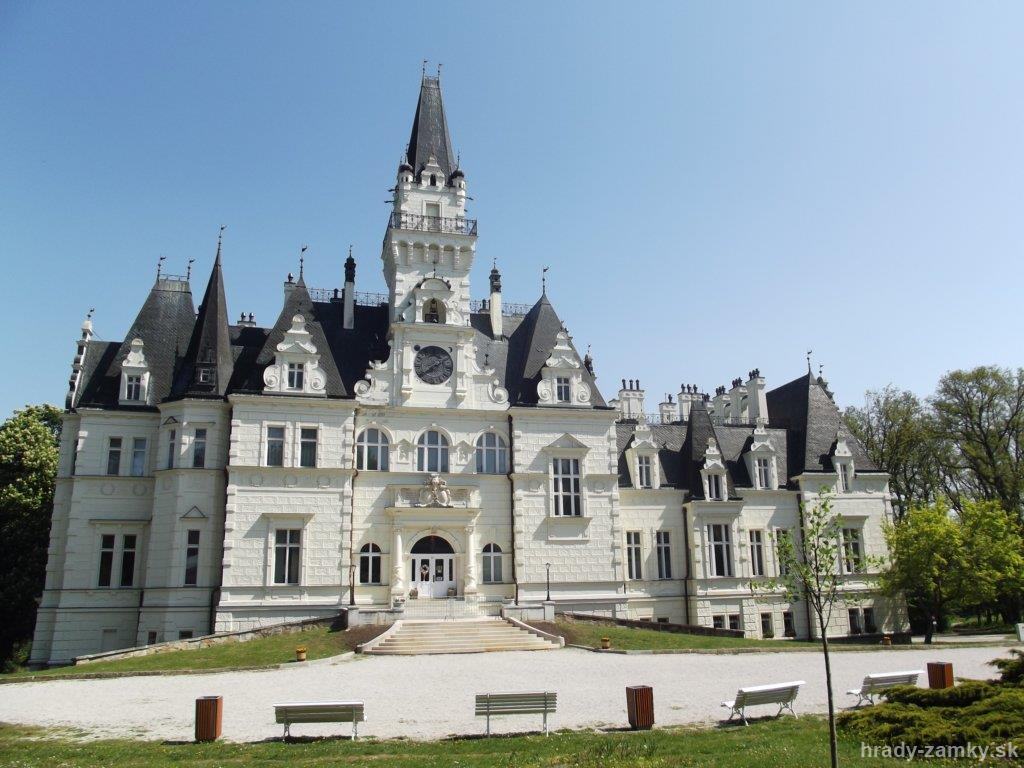
Budmerice
Budmerice
5.5km
manor, mansion
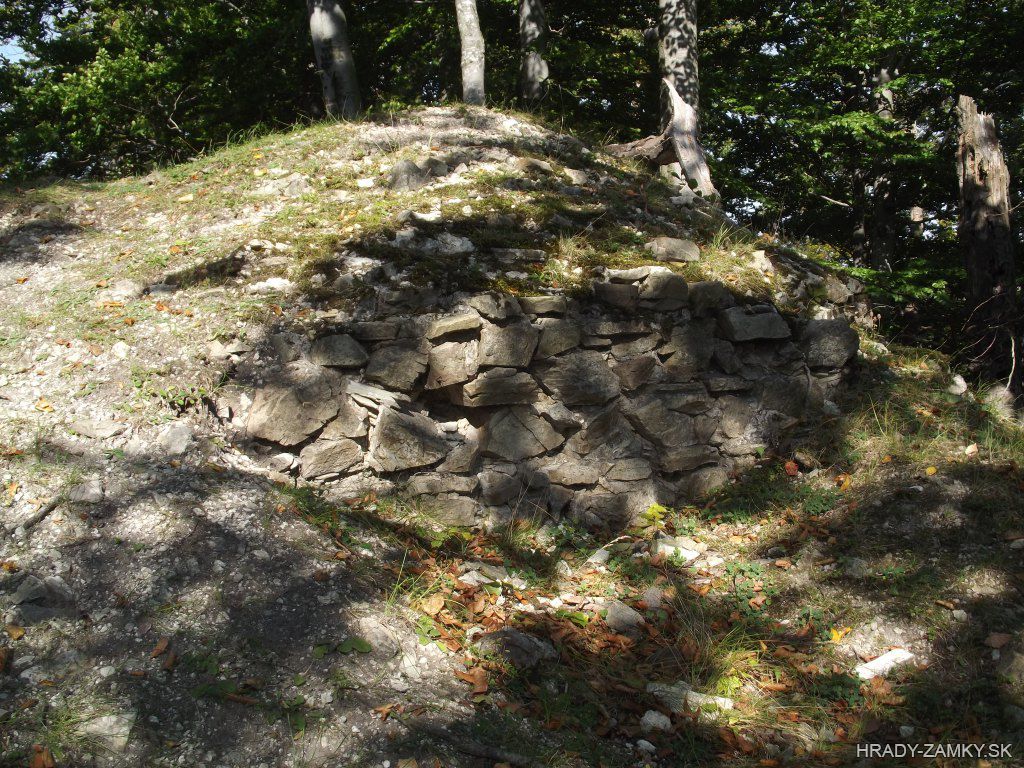
Kuchyňa castle
Kuchyňa
10.7km
castle ruin
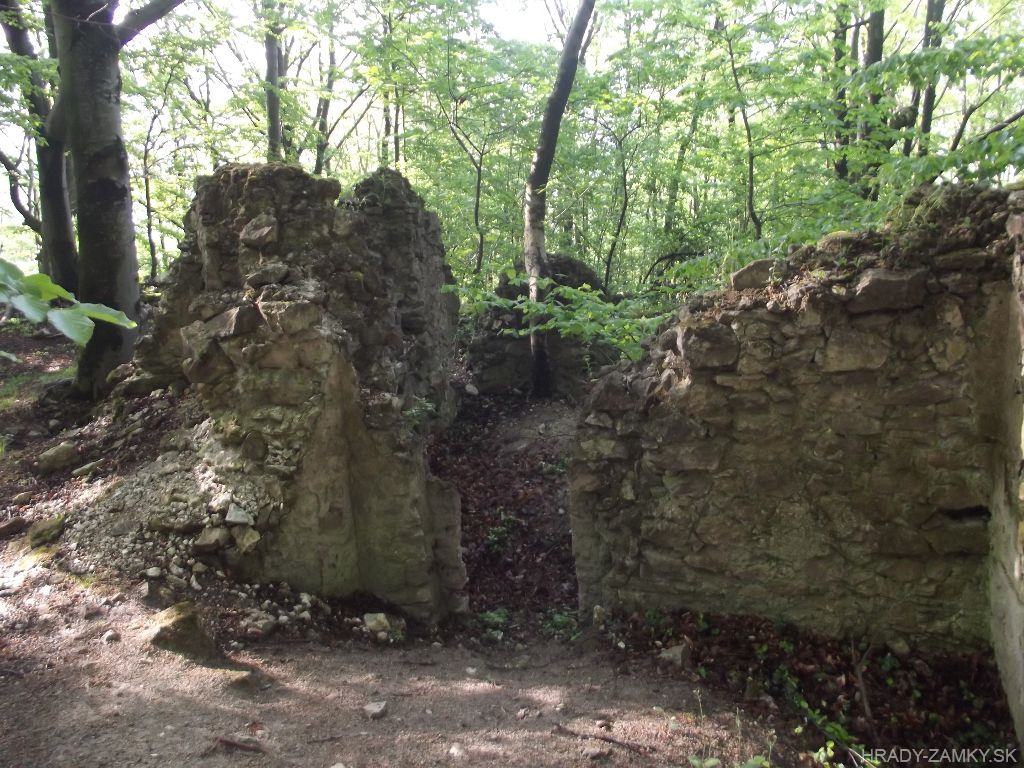
Plavecké Podhradie
Plavecké Podhradie
11.5km
monastery
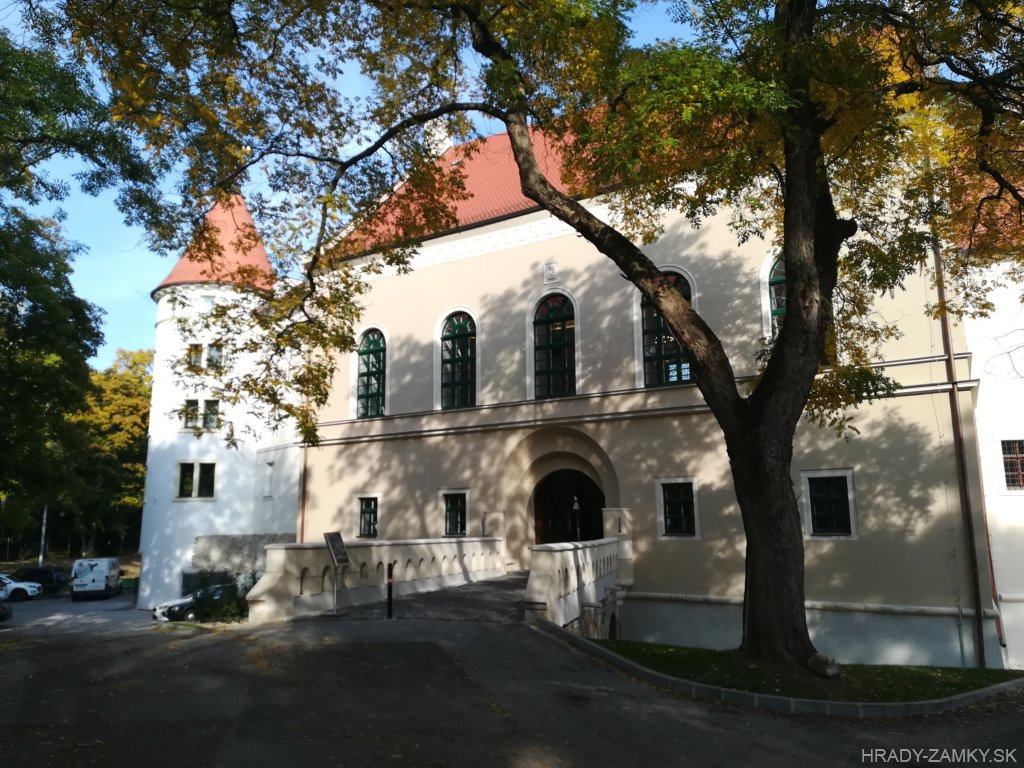
Pezinok chateau
Pezinok
12.3km
castle, chateau
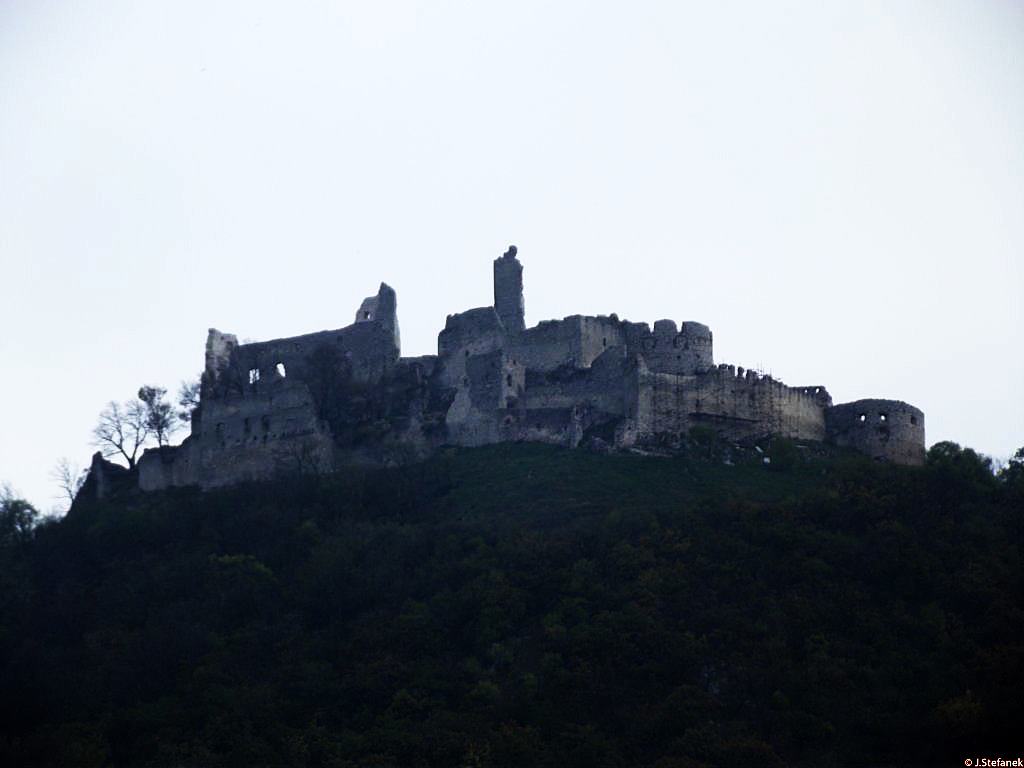
Plavecký castle
Plavecké Podhradie
12.4km
castle ruin
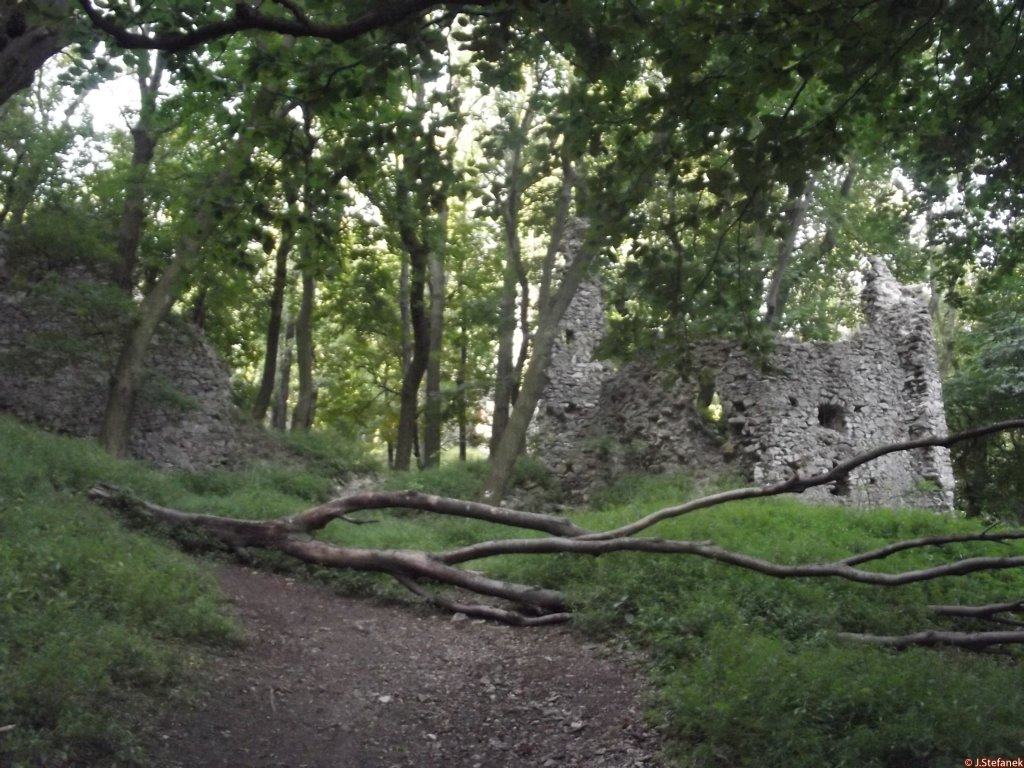
Ostrý Kameň
Buková
14.7km
castle ruin
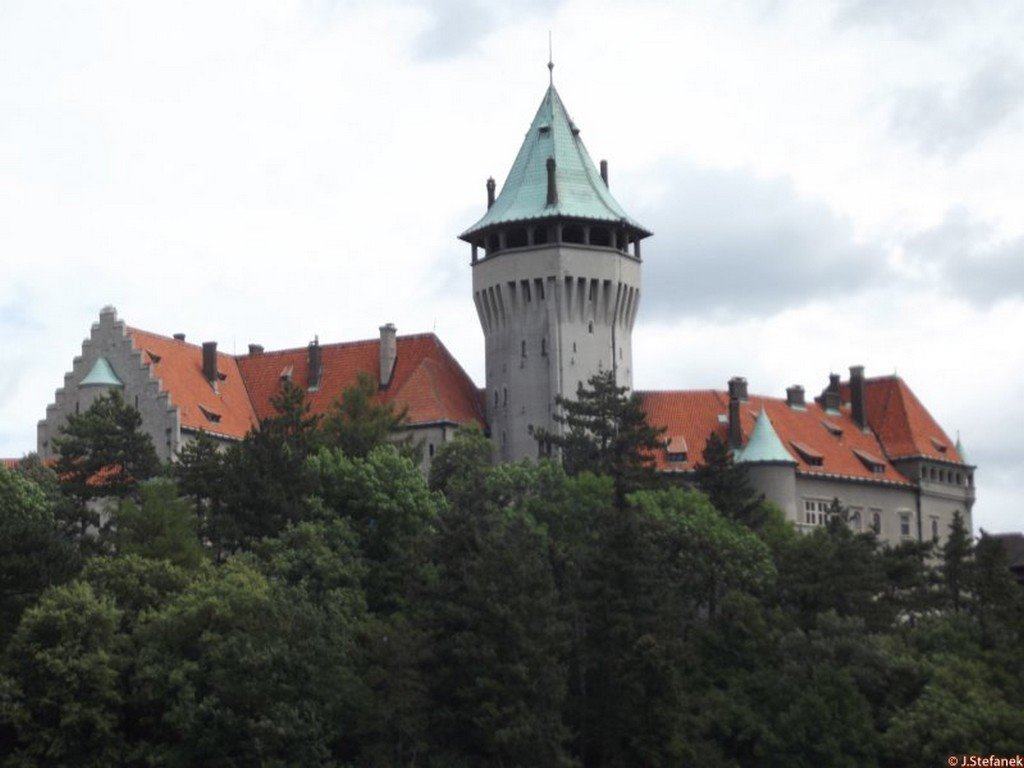
Smolenice chateau
Smolenice
15.3km
castle, chateau