Nitra castle
Nitra Nitra county Slovakia
castle, chateau
Nitriansky hrad
Nitra Nitriansky kraj Slovakia
hrad, zámok
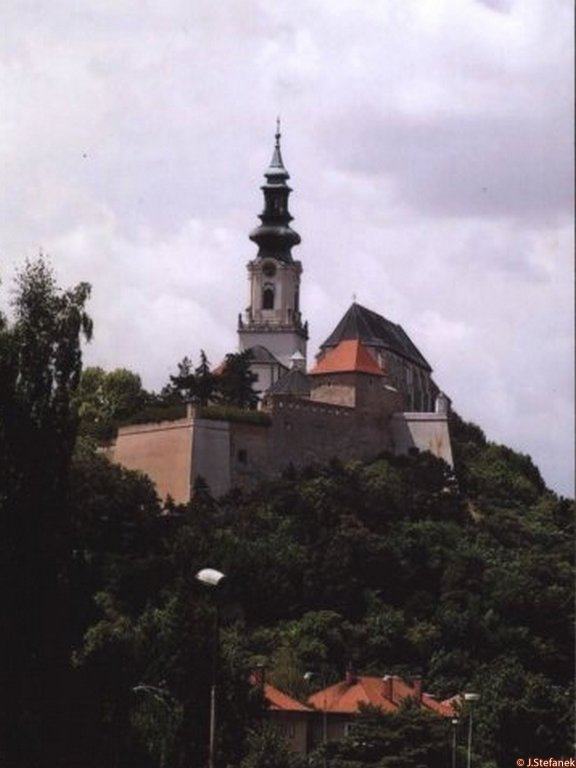
The castle is located in the city of Nitra, on a limestone hill in the Nitra hills, near the hill Zobor at the end of the mountain Tríbeč
Nitriansky hrad sa nachádza priamo v meste Nitra, na vápencovom kopci v Nitrianskej pahorkatine, neďaleko vrchu Zobor pri konci pohoria Tríbeč
Previous names
castrum Nitra, Nitria, Nitriense
Roads
Trasa 1: In Nitra we get to Župné námestie, where there is a smaller paid parking lot in front of the roundabout. From there, we will walk along the Royal Route with a slight ascent to the castle complex.
Trasa 1: V Nitre sa dostaneme na Župné námestie, kde je menšie spoplatnené parkovisko pred kruhovým objazdom. Odtiaľ pôjdeme peši po Kráľovskej ceste miernym stúpaním až k objektu hradného komplexu.
Trasa 2: From the north side we have the possibility of access from the large parking lot in front of the winter stadium at Podzámocka Street and through the sidewalks stretching along the northern slope of the castle hill to the castle.
Trasa 2: Zo severnej strany máme možnosť prístupu z rozsiahleho parkoviska pred zimným štadiónom pri Podzámockej ulici a cez chodníky tiahnuce sa po severnom svahu hradného kopca až k hradu.
Description
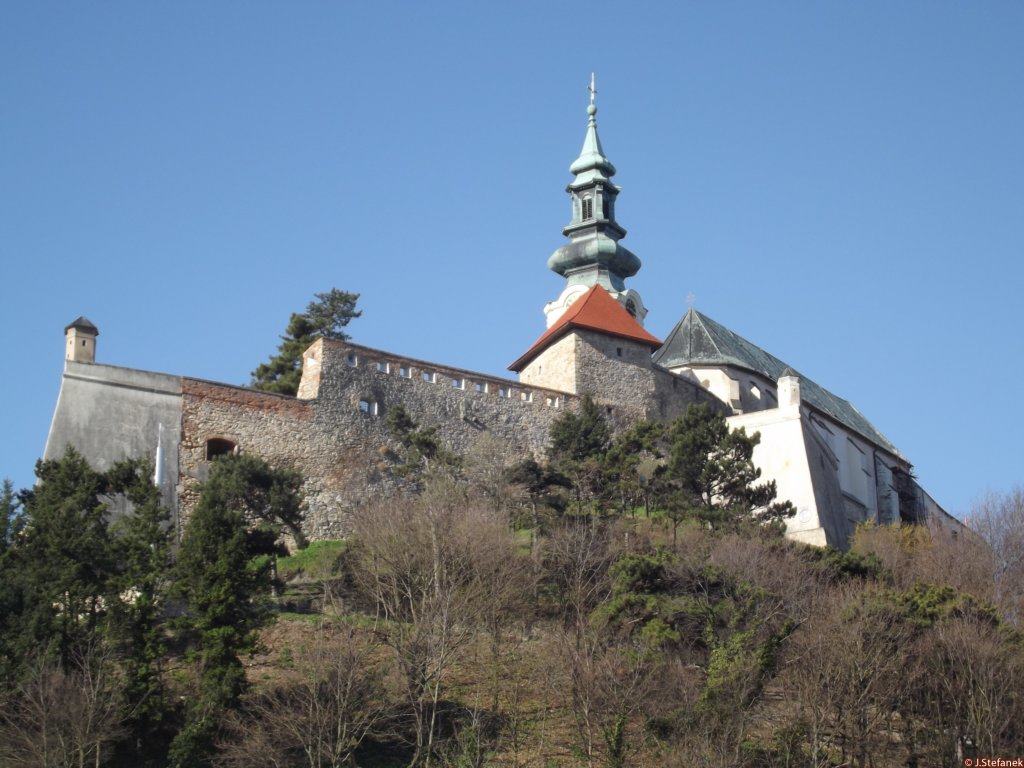
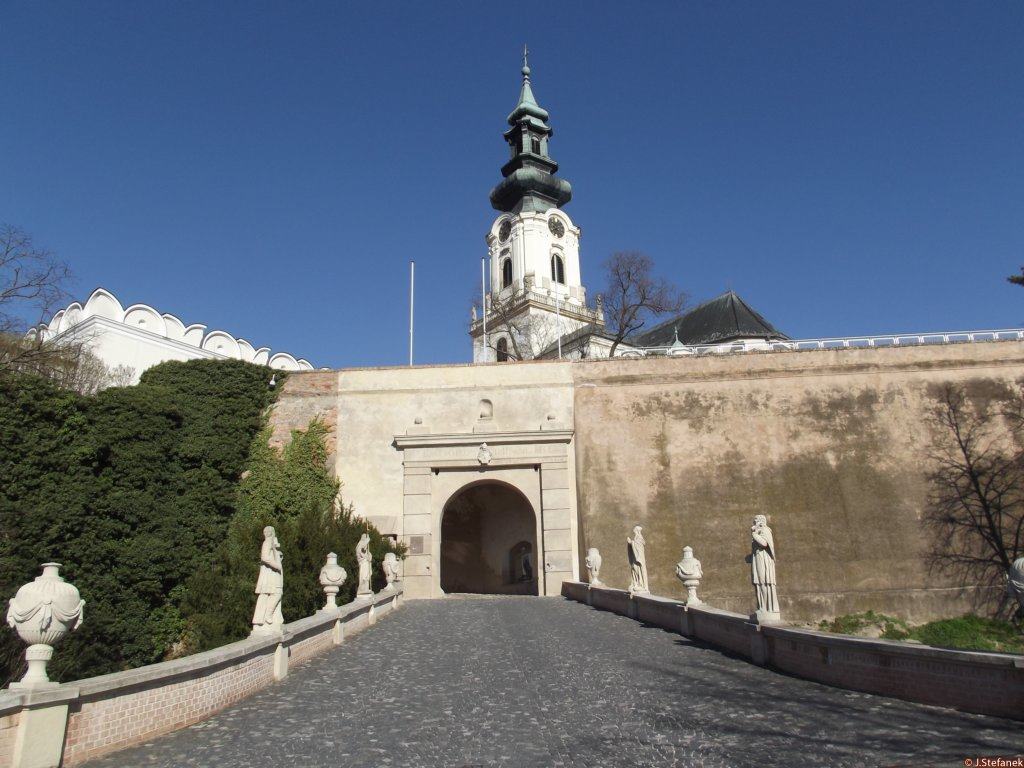
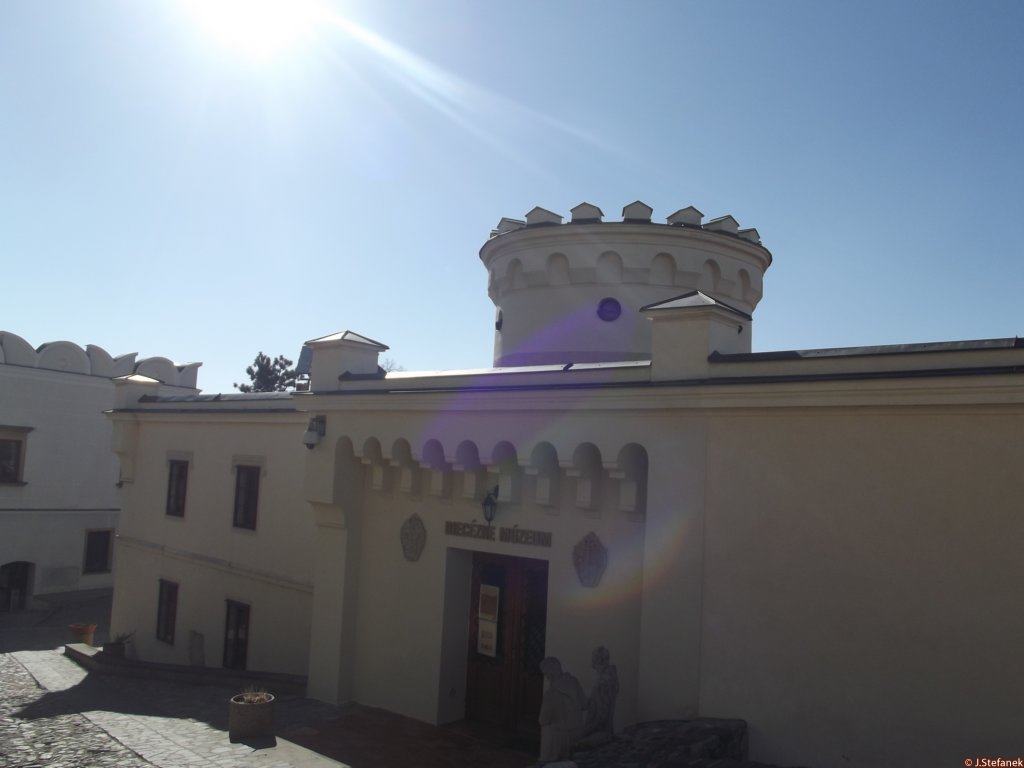
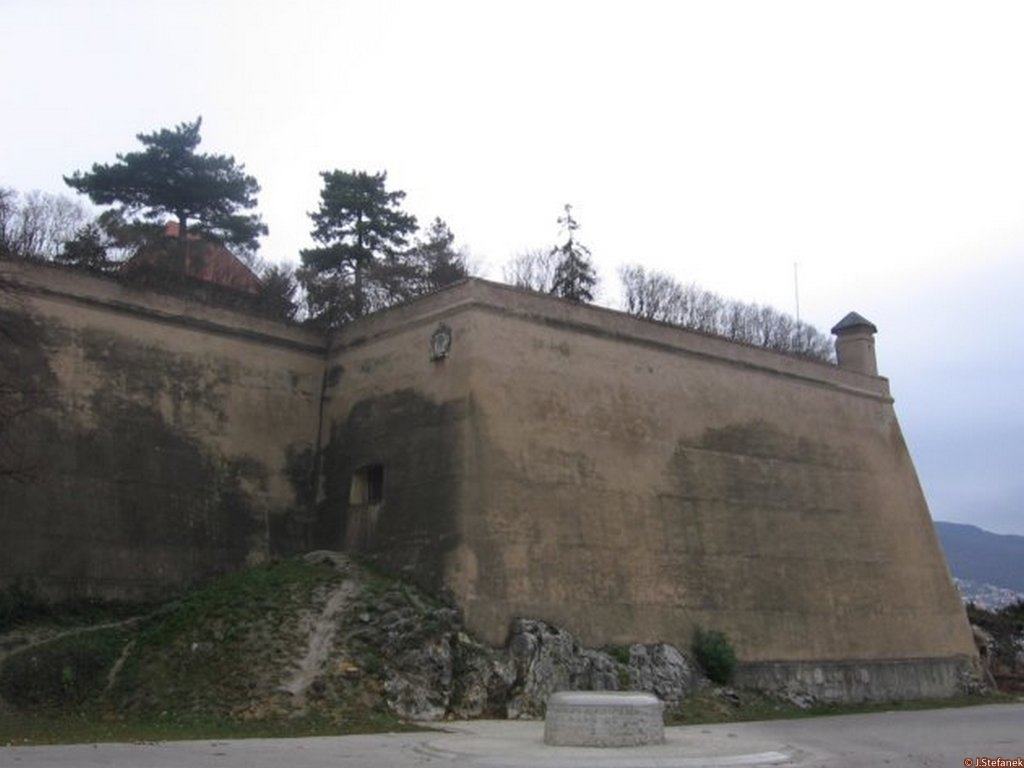
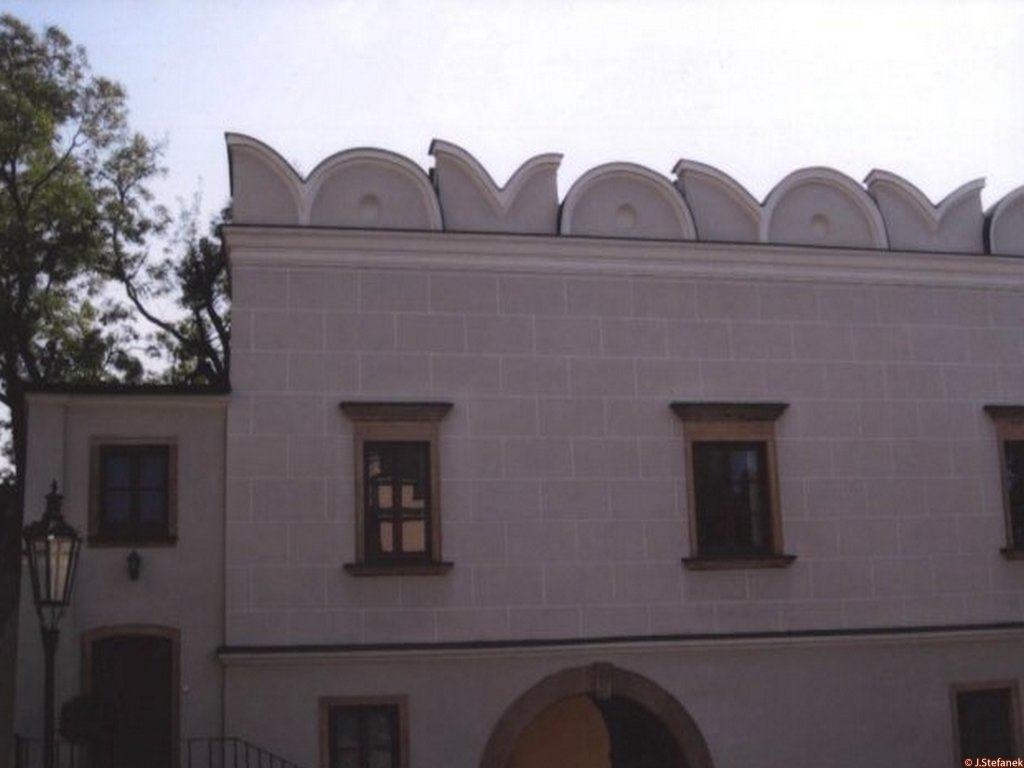
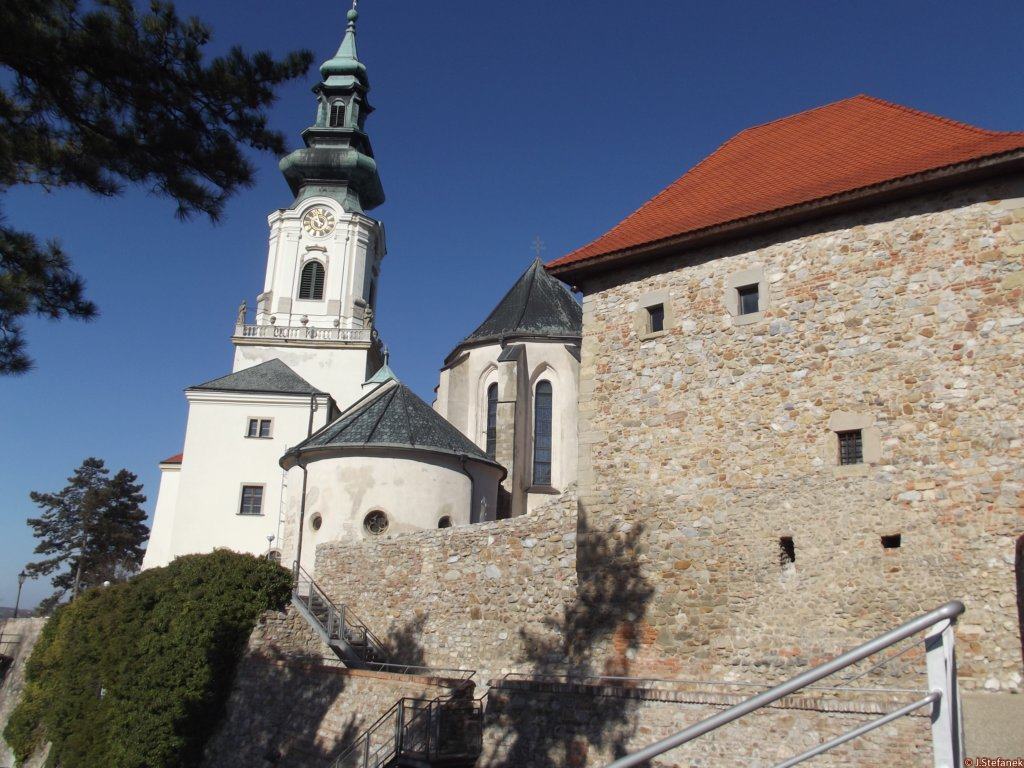
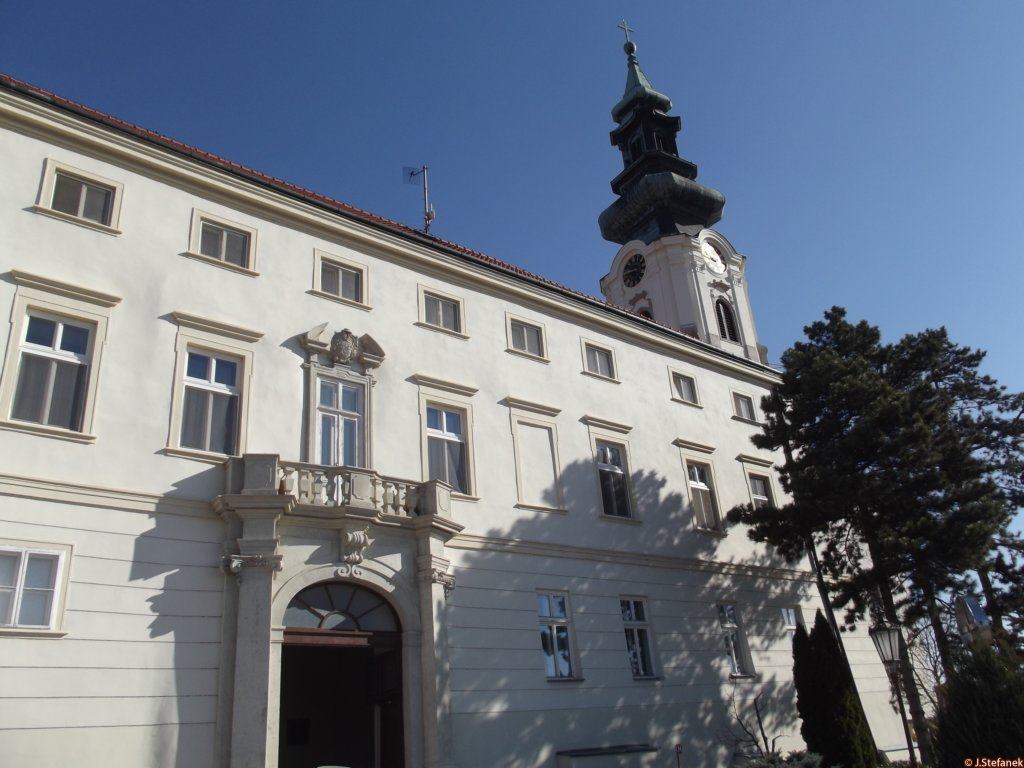
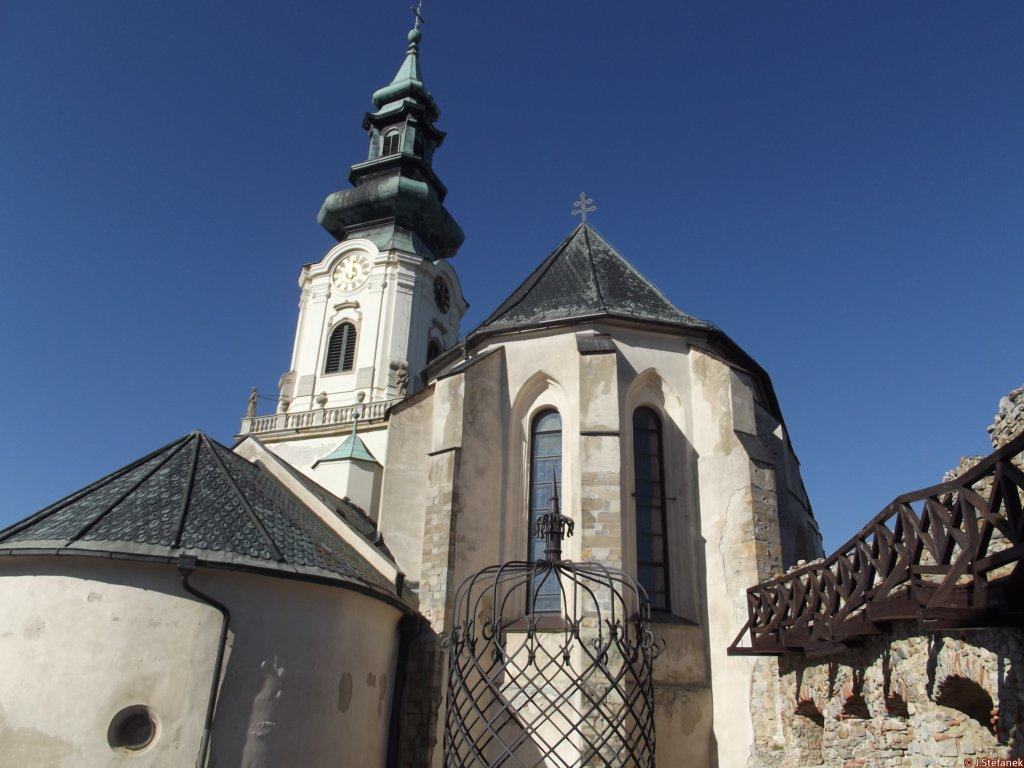
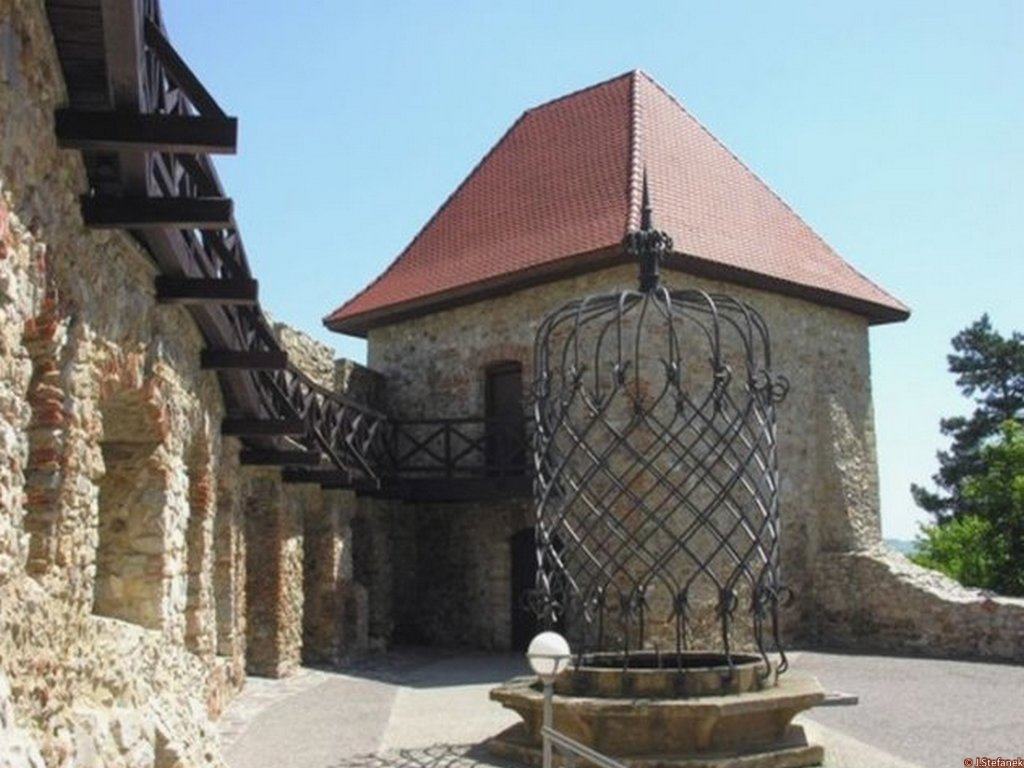
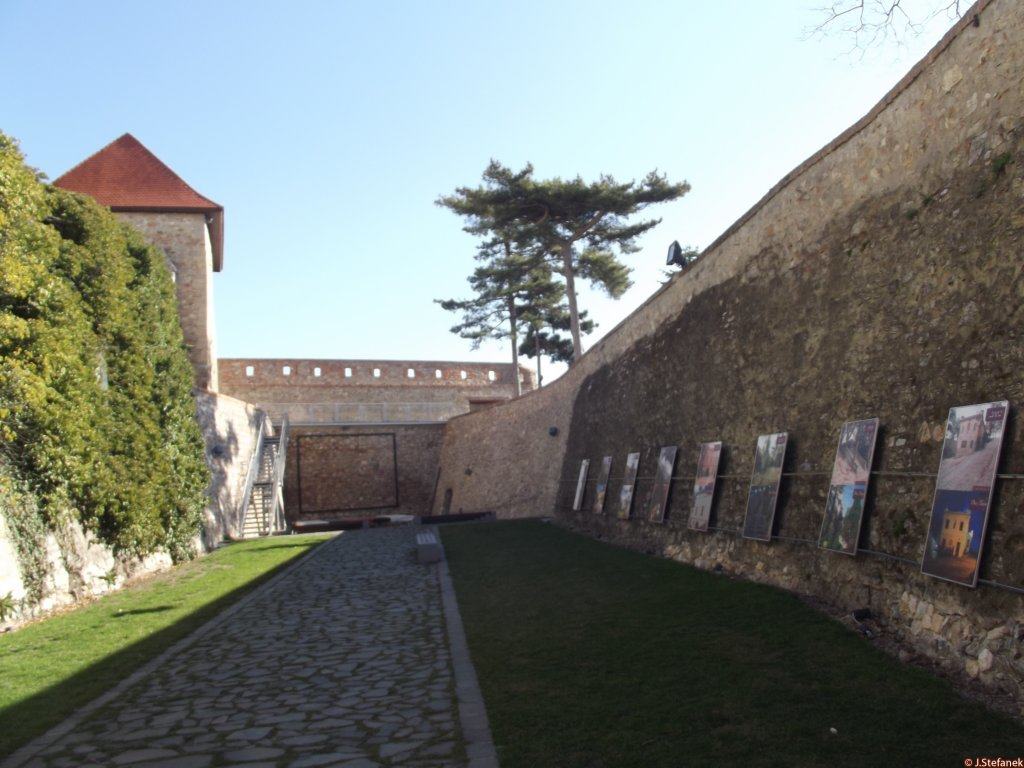
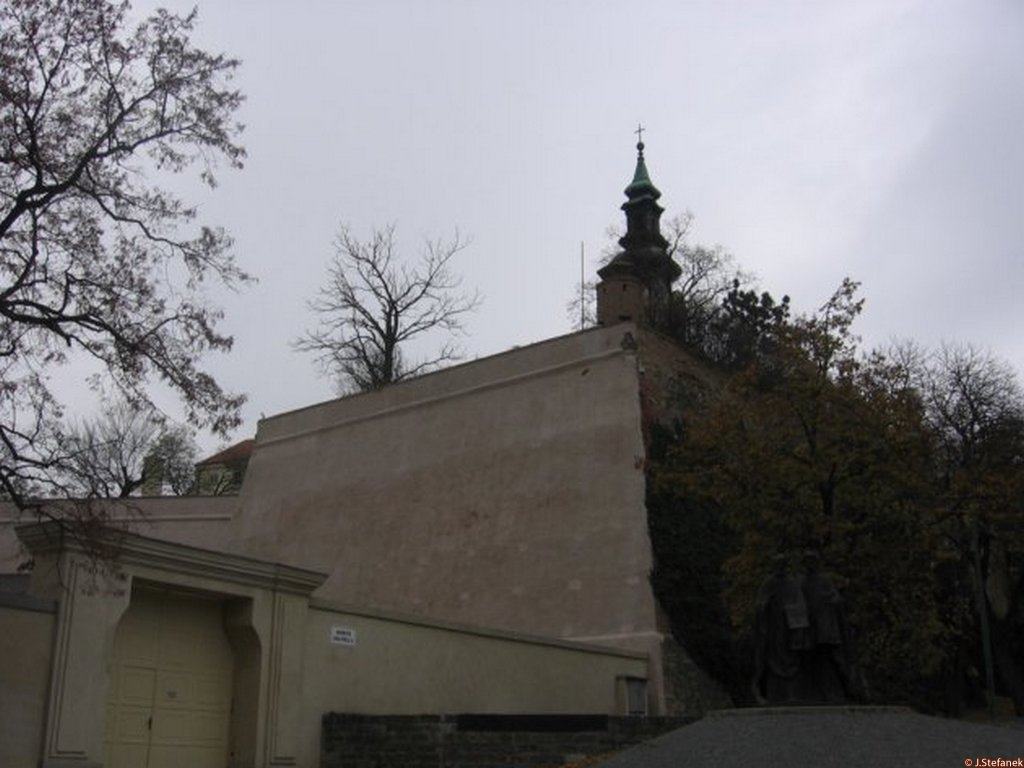
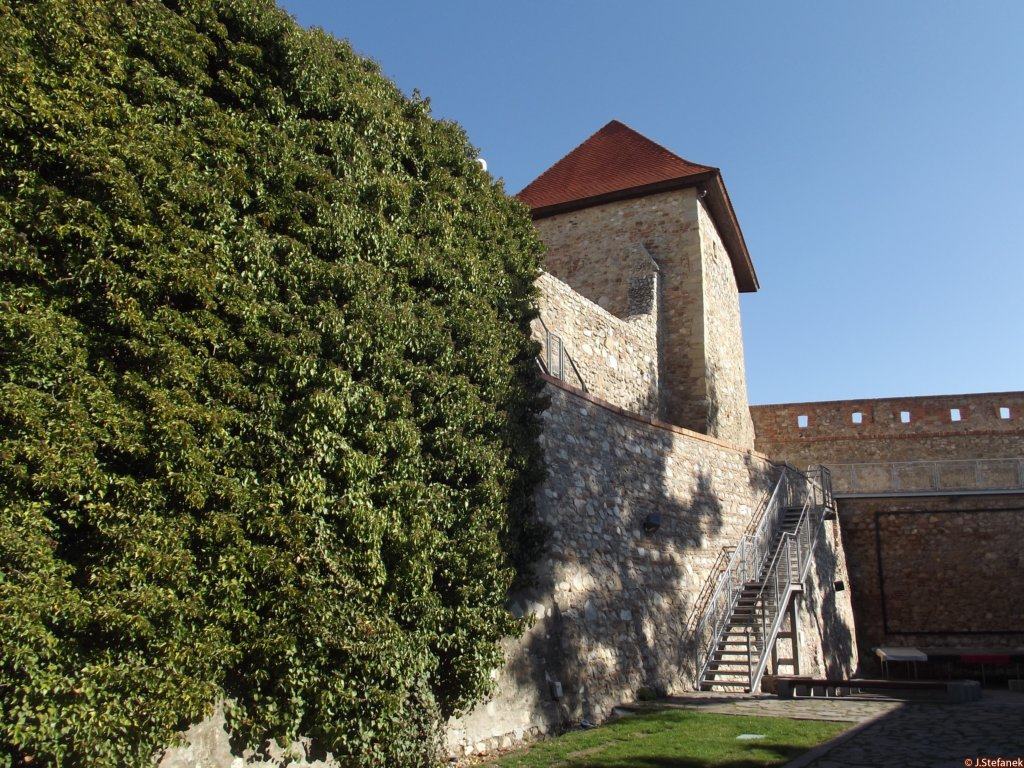
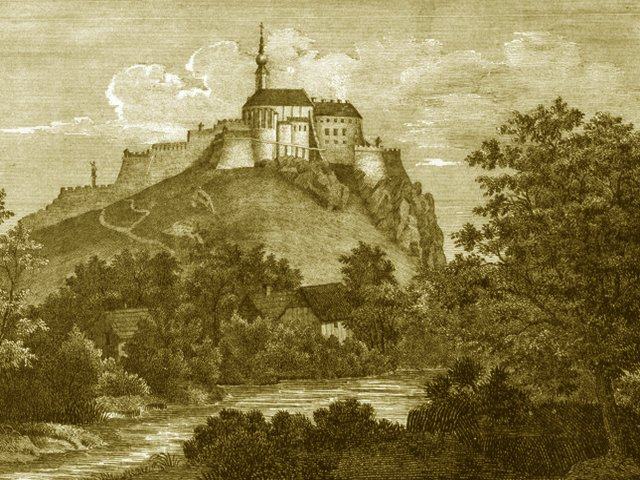
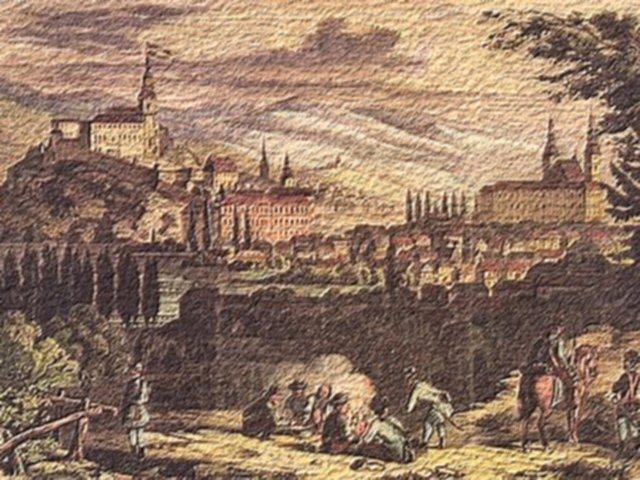
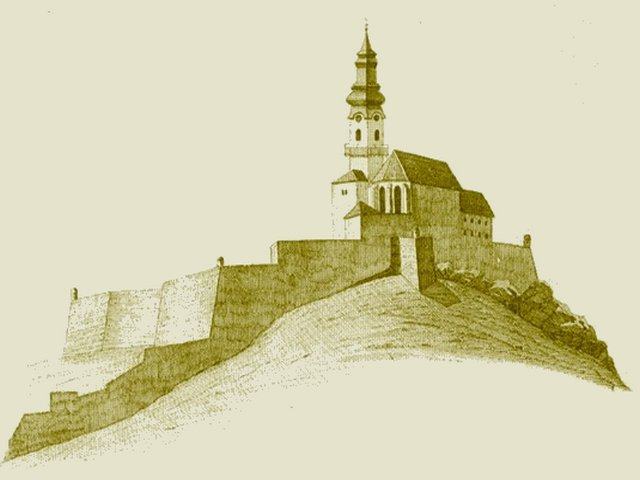
The castle is in a well-preserved state, it is the seat of the Archaeological Institute of the Slovak Academy of Sciences and the bishop's office is located in its area.At the highest point of the castle there is a one-nave Gothic Upper Church with supporting pillars on the northern side. On the eastern side of the Upper Church, there are remnants of Gothic trusses with a barreled Prussian vault with lunettes behind the altar. The four-winged Baroque palace, originally surrounded by open arcades, joins the church. It is accessible through the Baroque portal from the south side of the courtyard. On the northern side of the palace there is a Gothic window with tracery. Baroque barrel vaults with lunettes and stucco ornaments have been preserved inside the palace.The dominant feature of the castle is a high, originally Renaissance tower with the last Baroque reconstruction. Between the tower and the palace, there is an extension of the staircase. From the east side is attached to the tower two-storey building, on the ground floor is the sacristy, on the floors capitular and bishop's archive.The Lower Church, situated between the Upper Church and the Renaissance Tower, has preserved the oldest architecture of the castle - the Romanesque chapel with a horseshoe shrine and part of the nave. In the Lower Church there are Renaissance tombstones of the Nitra bishops and a number of remarkable altars. The area of the buildings was originally fortified. Only part of the fortification, connected to the Gothic sanctuary, has been preserved. On the southeast corner stood a Gothic Vazul (Vasilova) tower, later rebuilt. The Renaissance-Baroque fortifications are mainly developed on the southern side, from where attacks on the castle may have occurred. In addition to ditches and walls to fortify the castle include large bastions, which are also on the northeast and northwest.
Hrad je v zachovanom stave, je sídlom Archeologického ústavu SAV a v jeho areáli sídli aj biskupský úrad.Na najvyššom bode hradného brala stojí jednoloďový gotický Horný kostol s opornými piliermi na severnej strane. Na východnej strane v Hornom kostole sa za oltárom nachádzajú zvyšky gotických prípor s valenou pruskou klenbou s lunetami. Ku kostolu sa pripája štvorkrídlový barokový palác, pôvodne obklopený otvorenými arkádami. Prístupný je barokovým portálom z južnej strany nádvoria. Na severnej strane paláca sa zachovalo dnes už zamurované gotické okno s kružbou. Vo vnútri paláca sa zachovali barokové valené klenby s lunetami a klenby so štukovou ornamentikou.Dominantou hradu je vysoká, pôvodne renesančná veža s poslednou barokovou prestavbou. Medzi vežou a palácom, je prístavba schodišťa. Z východnej strany je k veži pristavaná dvojposchodová budova, na prízemí je sakristia, na poschodiach kapitulárny a biskupský archív.Dolný kostol, situovaný medzi Horným kostolom a renesančnou vežou, má zachovanú najstaršiu architektúru hradu - románsku stavbu kaplnky s podkovovitou svätyňou a časťou lode. V Dolnom kostole sa nachádzajú renesančné náhrobky nitrianskych biskupov a množstvo pozoruhodných oltárov. Areál budov bol pôvodne opevnený. Z opevnenia sa zachovala iba časť, pripájajúca sa ku gotickej svätyni. Na juhovýchodnom nároží stála gotická Vazulova (Vasilova) veža, neskôr prestavaná. Renesančno-barokové opevnenie je rozvinuté hlavne na južnú stranu, odkiaľ mohlo dôjsť pravdepodobne k útokom na hrad. Okrem priekop a hradieb k opevneniu hradu patria aj veľké bastióny, ktoré sú aj na severovýchodnej a severozápadnej strane.
Plan
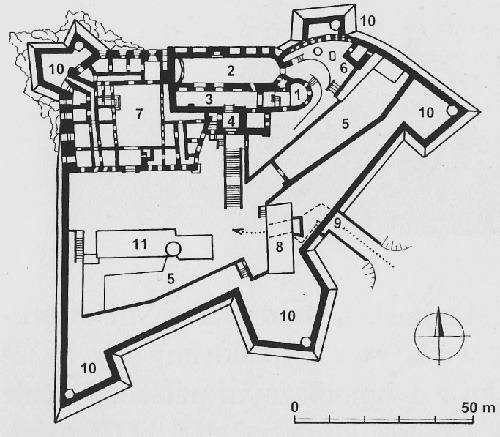
Legend to the ground plan
- 1-Romanesque church of St. Emeram
- 2-Upper church
- 3-lower church
- 4-Renaissance tower
- 5-Gothic moat
- 6-courtyard with a well and Vase tower
- 7-inner courtyard of the bishop's palace
- 8-building of the Renaissance entrance gate
- 9-baroque entrance gate
- 10-baroque fortifications
- 11-farm building
Legenda k pôdorysu
- 1-románsky kostol sv.Emeráma
- 2-Horný kostol
- 3-dolný kostol
- 4-renesančná veža
- 5-gotická priekopa
- 6-nádvorie so studňou a Vazulovou vežou
- 7-vnútorné nádvorie biskupského paláca
- 8-budova renesančnej vstupnej brány
- 9-baroková vstupná brána
- 10-bastióny barokového opevnenia
- 11-hospodárska budova
History
Hradný vrch was probably part of the Nitrava agglomeration - Conservio Bagoariorum et Carantanorum: Nitrawa as early as 830, during the time of Prince Pribin. Even in 828, Bishop Adalram of Salzburg consecrated the church here. After 833, Prince Mojmír got to Nitra and expelled Pribina. In the period of Great Moravia, Prince Svätopluk stayed in Nitra and in the years 880 - 892 there was also a bishop's residence. At the beginning of the 11th century, King Stephen declared his son Imrich his successor, which provoked the disapproval of Vazul, who was considered the legal successor of the throne. However, the monarch locked up the opposing Vazul in the Nitra Castle. However, in 1031, Imrich died during the hunt - it is said that he was assassinated by Vazul's father-in-law Tonuzoba. When the monarch, when he learned that his only son had been murdered, he took immense revenge on Tonuzob - he and his wife buried them alive. Vazula tortured him brutally until he was blind and deaf. It is not known whether Vazul survived this torture, but it is no longer mentioned in history. In 1042 the imperial troops of Henry III. the castle was set on fire. In the years 1064 - 1070, the castle is mentioned in the basilica of St. Emeram, in which the remains of St. Ondrej and Beňadik.
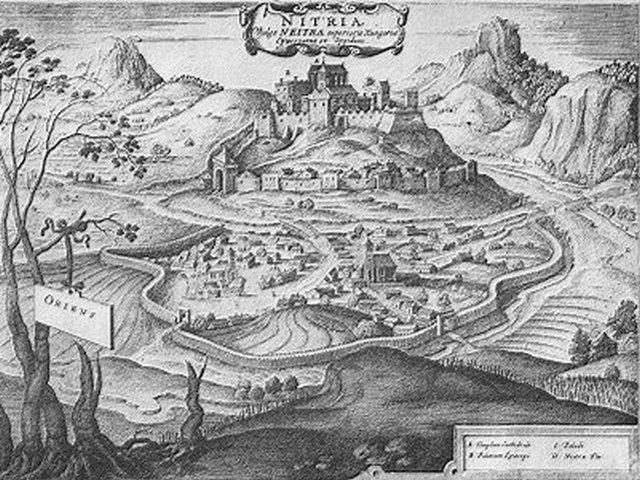
During the Tartar invasion in 1241, the castle bravely resisted and was not damaged until 1271 by a fire during the siege by Přemysl Otakar II. After the fire, they restored not only the church, but probably also the castle fortifications. In 1288, the fortress, surrounded by a Romanesque stone wall, became the property of the Nitra diocese. The Romanesque complex was rebuilt in the years 1333-1355, when they probably built a Gothic church on the site of an older Romanesque building. To the west stood a Gothic palace. The old Romanesque chapel was partially bridged by a Gothic vault. Under King Sigismund, they built a new castle fortification in the first half of the 15th century, but little of it has been preserved, because in 1465 the castle was ravaged again by the army of King Matej Korvín.
Other fortifications on the castle took place in the 16th century, at a time of Turkish danger, when they built a Renaissance castle palace and a new inner castle gate. In the years 1622-1644, the Gothic church was rebuilt and the Romanesque church was expanded. However, Turkish troops again damaged the buildings. After many war conflicts, the castle gradually regained its final form. The bastion fortification, built in 1673-1674, initiated by Bishop Tomáš Pálffy, is significant. However, great construction and restoration activities took place at the castle only after the end of the uprising of František Rákóczi at the beginning of the 18th century, when they rebuilt the so-called upper church and built a new bishop's palace. The constant reconstruction of the castle almost completely erased its original appearance. Only a part of the Romanesque church of St. Emeram from the first half of the 13th century. Part of the wall and a large Gothic (upper) church from the first half of the 14th century remain from the Gothic period. The inner castle gate from the 16th century has been preserved. Only buildings from the end of the 17th and 18th centuries have been preserved in relatively good condition.
Hradný vrch bol pravdepodobne súčasťou aglomerácie Nitrava - Conservio Bagoariorum et Carantanorum: Nitrawa už okolo r.830, za čias kniežaťa Pribinu. Dokonca už vraj v r.828 tu salzburský biskup Adalram svätil kostol. Po r.833 sa do Nitry dostal knieža Mojmír, ktorý Pribinu vyhnal. V období Veľkej Moravy sa v Nitre zdržiaval knieža Svätopluk a v rokoch 880 - 892 tu bolo aj biskupské sídlo. Začiatkom 11.storočia kráľ Štefan vyhlásil za svojho následníka syna Imricha, čo vyvolalo nesúhlas Vazula, ktorý sa pokladal za právneho následníka trónu. Odporujúceho Vazula však panovník zavrel do Nitrianskeho hradu. V r.1031 však pri poľovačke Imrich zomrel - hovorí sa, že na neho spáchal atentát Vazulov svokor Tonuzoba. Panovník, keď sa dozvedel, že jeho jediný syn bol zavraždený, vykonal nesmiernu pomstu na Tonuzobovi - spolu s jeho manželkou ich za živa pochoval. Vazula surovo mučil až kým neoslepol a neohluchol. Nie je známe, či Vazul toto mučenie prežil, ale viac o ňom v histórii zmienka nie je. V r.1042 cisárske vojská Henricha III. hrad podpálili. V rokoch 1064 - 1070 sa spomína na hrade bazilika sv. Emeráma, do ktorej uložili pozostatky sv. Ondreja a Beňadika.
Počas tatárskeho vpádu v roku 1241 hrad statočne odolával a poškodil ho až v r.1271 požiar počas obliehania Přemyslom Otakarom II. Po požiari obnovili nielen kostol, ale pravdepodobne aj opevnenie hradu. V r.1288 sa pevnosť, obohnaná románskou kamennou hradbou, stala vlastníctvom nitrianskeho biskupstva. K prestavbe románskeho areálu došlo v rokoch 1333-1355, keď pravdepodobne na mieste staršej románskej stavby postavili gotický kostol. Západne od neho stál gotický palác. Starú románsku kaplnku čiastočne preklenuli gotickou klenbou. Za kráľa Žigmunda vybudovali v prvej polovici 15.storočia nové hradné opevnenie, aj z toho sa však zachovalo málo, pretože v roku 1465 znovu spustošilo hrad vojsko kráľa Mateja Korvína.
K ďalším opevňovacím stavbám na hrade došlo v 16. storočí, v čase tureckého nebezpečenstva, keď postavili renesančný hradný palác a novú vnútornú hradnú bránu. V rokoch 1622-1644 bol prestavaný gotický kostol a bol rozšírený románsky kostolík. Turecké vojská však objekty opätovne poškodili. Hrad po mnohých vojnových konfliktoch postupne nadobúdal svoju konečnú podobu. Významné je bastiónové opevnenie, vybudované v r.1673-1674, iniciované biskupom Tomášom Pálffym. K veľkej stavebnej a obnovnej činnosti došlo na hrade však až po skončení povstania Františka Rákócziho na začiatku 18.storočia, keď prestavali tzv. horný kostol a vybudovali nový biskupský palác. Stále prestavby hradu takmer úplne zotreli jeho pôvodnú podobu. Zachovala sa z nej iba časť románskeho kostola sv. Emeráma z prvej polovice 13.storočia. Z gotického obdobia ostala časť múru a veľký gotický (horný) kostol z prvej polovice 14.storočia. Zo 16.storočia sa zachovala vnútorná hradná brána. V relatívne dobrom stave sa zachovali len stavby z konca 17. a 18. storočia.
Myths and legends
The legend of the castle
The tower in the eastern courtyard of the castle is called Vazilova. Although there was a nice view of the abode of the subjects from its windows, the one who was trapped in it could not see the castle. Although the birdsong sang through her windows, the bound man in the tower heard nothing. They blinded him and poured lead into his ears. This is how Vazil, the nephew of King Stephen I of Hungary, who was to succeed the throne, suffered in the 11th century. The monk Fulgentius then uttered a curse: for the two extinct eyes of Prince Vazil, which shone like two suns, there will be darkness in the city for two days. According to old records, the city was indeed flooded with darkness in the form of huge swarms of locusts, which completely destroyed the crop. Who knew what was at the site of the castle well at the time when Vazila was dragged into the tower through the eastern courtyard. The current well carved into a huge rock dates back to the Gothic fortifications. At a depth of 62 meters, which is at the level of the river Nitra, rippled water.
Legend about Svätopluk
In the beautiful hall of the Nitra castle lay the old king Svätopluk on the bed. His eyes went out like the rays of the sun before sunset. Svätopluk felt that his forces were leaving him quickly. He looked at his most faithful court and ordered him to bring his three sons to the bed: Mojmír, Svätopluk and Predslav. - My children, - Svätopluk said in a solemn voice as the sons stood before him proudly as three meals, - the candle of my life is over. I will say goodbye to you soon. I will go before the throne of the Most High to answer from my earthly life. But before I leave you, listen to my father's lesson and plant it in my heart. He got out of bed, took a bundle of rods in his shaking hands, handed them first to Mojmír, then to Svätopluk and Predslav, to break them on their knees. Neither of the sons could break the bundle of rods. The sons looked at their father's actions incomprehensibly, astonished. "Don't be surprised," said his father. He untied the rods and gave each son one of them.
- Break them now - The sons broke the rods without much effort. A triumphant smile flew across his father's face. He shot himself in bed and said:
- Learn from this example, my children. For just as you did not manage to break the rods in a bundle, even when you had strained all your young forces, the enemy will not overwhelm you when you hold together, and as easily as you have broken each stream separately, so will your enemies overwhelm you when you are between quarrel and beat yourself and when you don't fight together. This is what your father is referring to! Be united, love yourself together, and then there will be no power to overcome you. In this way, the king demonstrated to his descendants the need for unity, because only that could guarantee their invincibility and prosperity for the country. After Svätopluk's death in 894, his sons Mojmír, Svätopluk and Predslav divided Great Moravia, despite his father's warning. The war-torn country collapsed in 906.
Povesť o hrade
Vežu na východnom nádvorí hradu volajú Vazilova. Hoci bol z jej okien pekný výhľad na príbytky poddaných, ten, kto v nej bol uväznený, podhradie vidieť nemohol. Hoci do jej okien prenikal spev vtákov, spútaný človek vo veži nič nepočul. Oslepili ho a do uší mu naliali olovo. Takto trpel v 11. storočí Vazil, synovec uhorského kráľa Štefana I., ktorý mal byť následníkom trónu. Mních Fulgentius vtedy vyslovil kliatbu: za dve vyhasnuté oči kniežaťa Vazila, ktoré svietili ako dve slnká, bude v meste dva dni tma. Podľa starých záznamov naozaj zaplavila mesto tma v podobe obrovských rojov kobyliek, ktoré úplne zničili úrodu. Ktovie čo bolo na mieste hradnej studne v časoch, keď cez východné nádvorie vliekli Vazila do veže. Súčasná studňa vytesaná do obrovskej skaly, totiž pochádza až z čias gotického opevnenia. V hĺbke 62 metrov, ktorá je na úrovni hladiny rieky Nitry, žblnká voda.
Povesť o Svätoplukovi
V nádhernej dvorane nitrianskeho hradu ležal na posteli staručký kráľ Svätopluk. Oči mu zhasínali ako lúče slnca pred západom. Svätopluk cítil, že ho rýchlo opúšťajú sily. Pozrel na svojho najvernejšieho dvorana a prikázal mu, aby priviedol k posteli jeho troch synov: Mojmíra, Svätopluka a Predslava. - Deti moje, - hovoril Svätopluk slávnostným hlasom, keď si synovia stali pred ním pyšne ako tri jedle, - svieca môjho života dohára. Zanedlho sa rozlúčim s vami. Poputujem pred trón Najvyššieho zodpovedať sa zo svojho pozemského života. Ale prv, než by som vás opustil, čujte moje otcovské ponaučenie a vštepte si ho do sŕdc. Nahol sa z postele, vzal do trasúcich rúk zväzok prútov, podal ich najprv Mojmírovi, potom Svätoplukovi a Predslavovi, aby ich na kolenách polámali. Ani jeden zo synov zväzok prútov polámať nevládal. Synovia pozerali na otcovo počínanie nechápavo, udivení. - Nedivte sa, - povedal otec. Rozviazal prúty a dal každému synovi jeden z nich.
- Polámte ich teraz!- Synovia bez veľkej námahy prúty polámali. Po otcovej tvári preletel víťazoslávny úsmev. Vystrel sa na posteli a povedal:
- Učte sa na tomto príklade, deti moje. Lebo tak, ako ste nevládali polámať prúty vo zväzku ani vtedy, keď ste napäli všetky svoje mladé sily, nepremôže vás nepriateľ, keď budete spolu držať, a ako ľahko ste polámali každý prúd osobitne, tak ľahko vás premôžu vaši nepriatelia, keď sa budete medzi sebou hašteriť a biť a keď nebudete svorne spolu bojovať. Toto vám odkazuje váš otec! Buďte svorní, milujte sa vospolok a potom nebude moci, ktorá by vás premohla. Týmto spôsobom kráľ svojim potomkom demonštroval potrebu svornosti, pretože len tá im mohla zaručiť neporaziteľnosť a krajine blahobyt. Po Svätoplukovej smrti v roku 894 si jeho synovia Mojmír, Svätopluk a Predslav napriek otcovmu varovaniu Veľkú Moravu rozdelili. Vojnami oslabená krajina sa v roku 906 rozpadla.
Useful information
Opening hours and admission
Otváracia doba a vstupné
External links
Nearby castles