Nové Sady
Nové Sady Nitra county Slovakia
manor, mansion
Nové Sady
Nové Sady Nitriansky kraj Slovakia
kaštieľ
The renaissance manor house of the Ghyczy family, built on the site of a medieval castle, is located in the village of Nové Sady, lying on both sides of the Radošinka stream in the northwestern part of the Nitra Region
Renesančný kaštieľ rodiny Ghyczy, postavený na mieste stredovekého hrádku, sa nachádza v obci Nové Sady, ležiacej po oboch stranách potoka Radošinka v severozápadnej časti Nitrianskeho kraja.
Previous names
Assakürt, Ašakert, Kürth, Kurt, Ghyczyovský kaštieľ
Roads
Nové Sady mansion is located in the center of the village Nové Sady in the area of elementary school. The village lies near Nitra and through the village leads the main road 1678, from which roughly in the middle turn to road 1679, which will get to the Municipal Office, where you can park. In opposite, there is a grocery store where there is also enough space for parking.From here we continue straight to the Primary School, but we will not go to its premises from this side, but a little further is the road on the left (dead end) and before the apartment houses turn left again until we reach the mansion directly.
Kaštieľ Ghyczyovcov sa nachádza v centre obce Nové Sady v areáli základnej školy. Obec leží blízko Nitry a prechádza ňou hlavná cesta 1678, z ktorej zhruba v strede obce odbočíme na cestu 1679, ktorou sa dostaneme k Obecnému úradu, kde je možné zaparkovať. Oproti je obchod s potravinami, kde je tiež dostatok miesta na parkovanie. Odtiaľ pokračujeme peši rovno popri Základnej škole, nepôjdeme však do jej areálu z tejto strany, ale o kúsok ďalej je cesta vľavo (slepá ulička), ktorou to obídeme a ešte pred obytnými domami odbočíme opäť vľavo až dôjdeme priamo ku kaštieľu.
Description
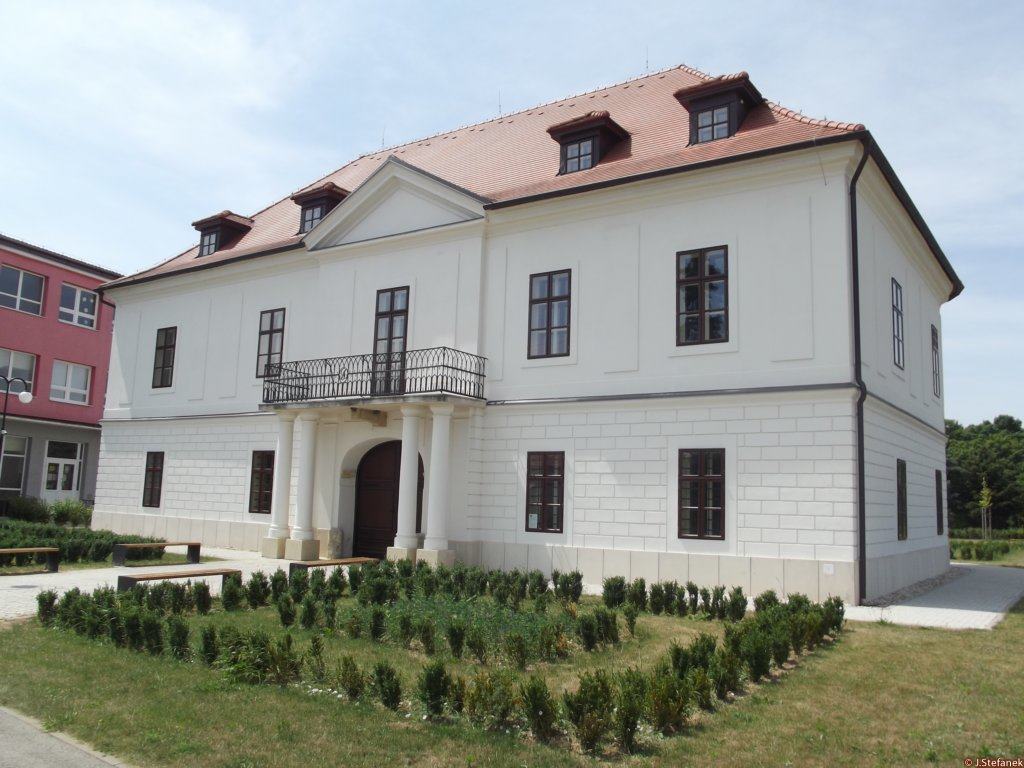
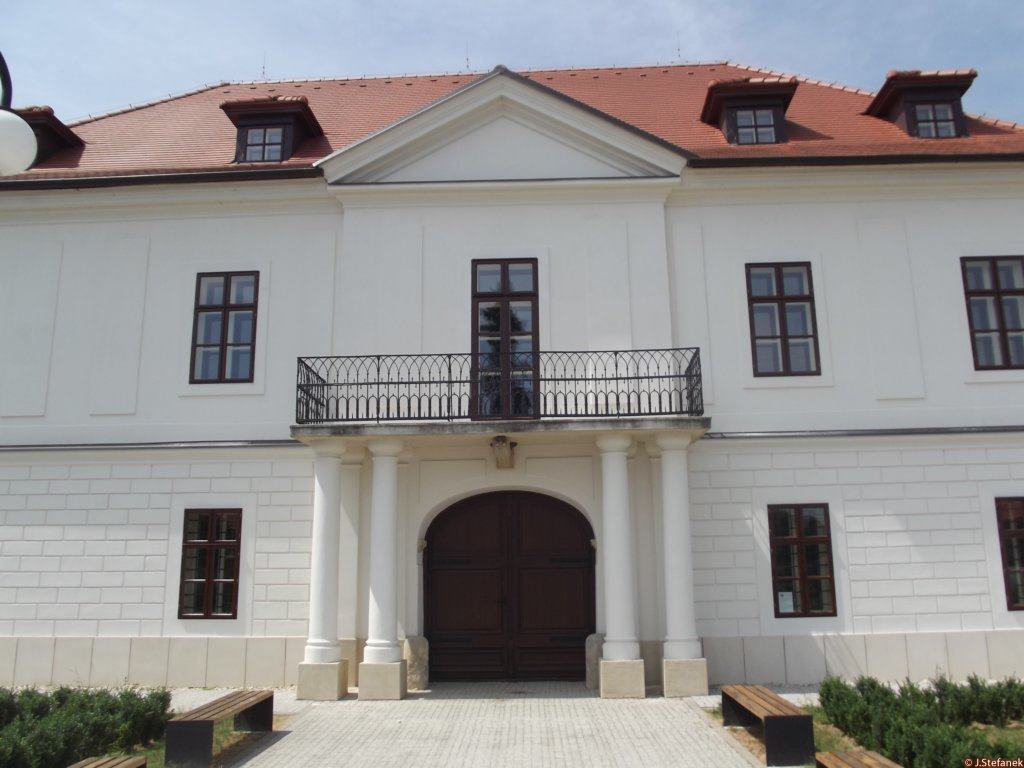
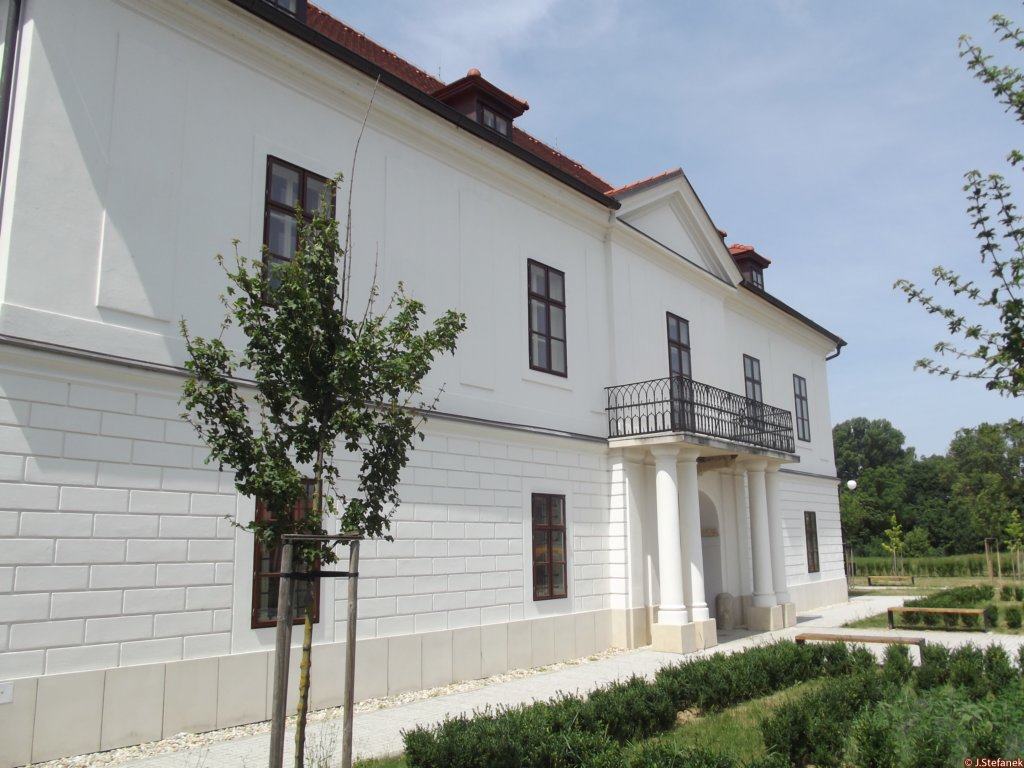
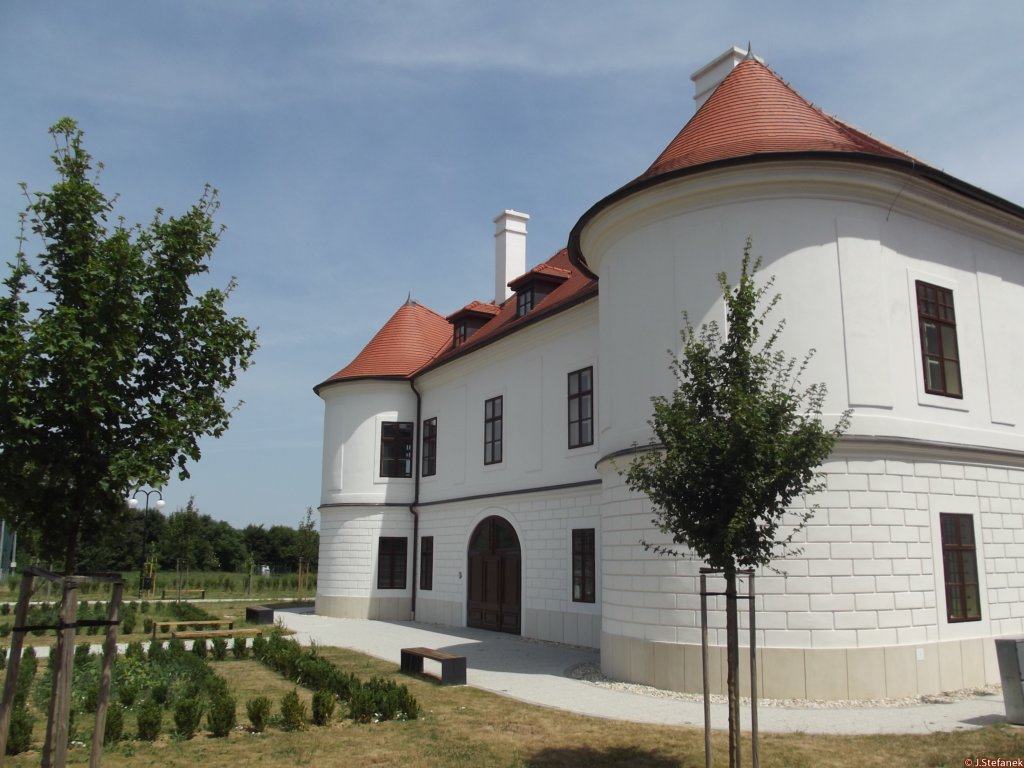
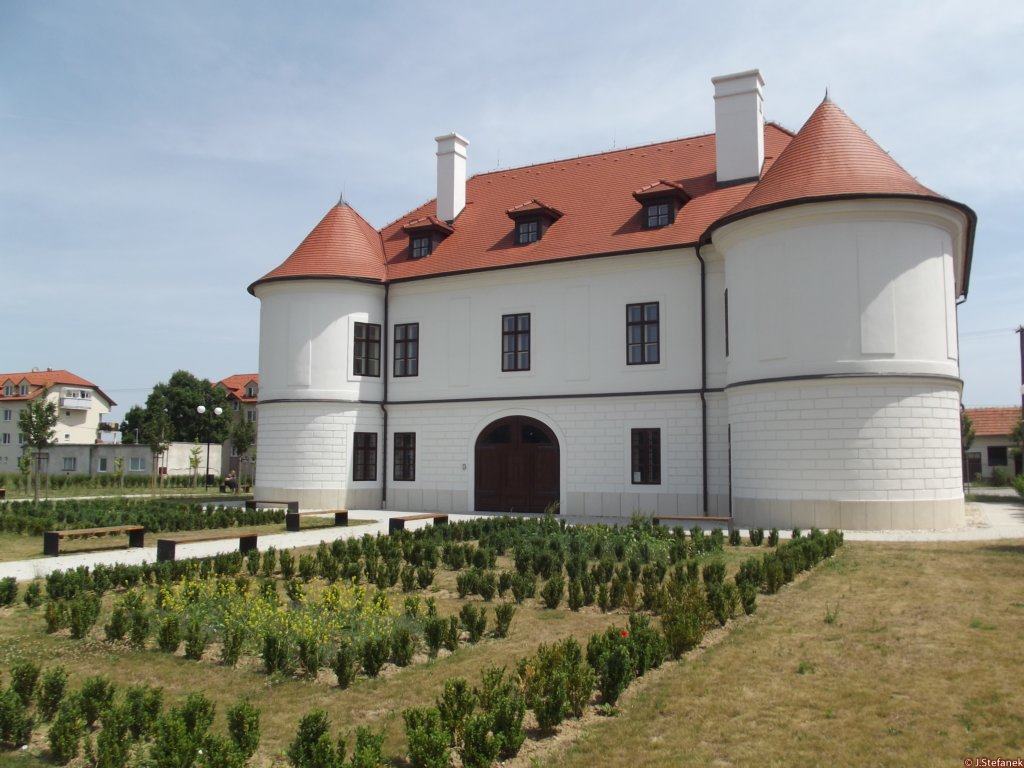
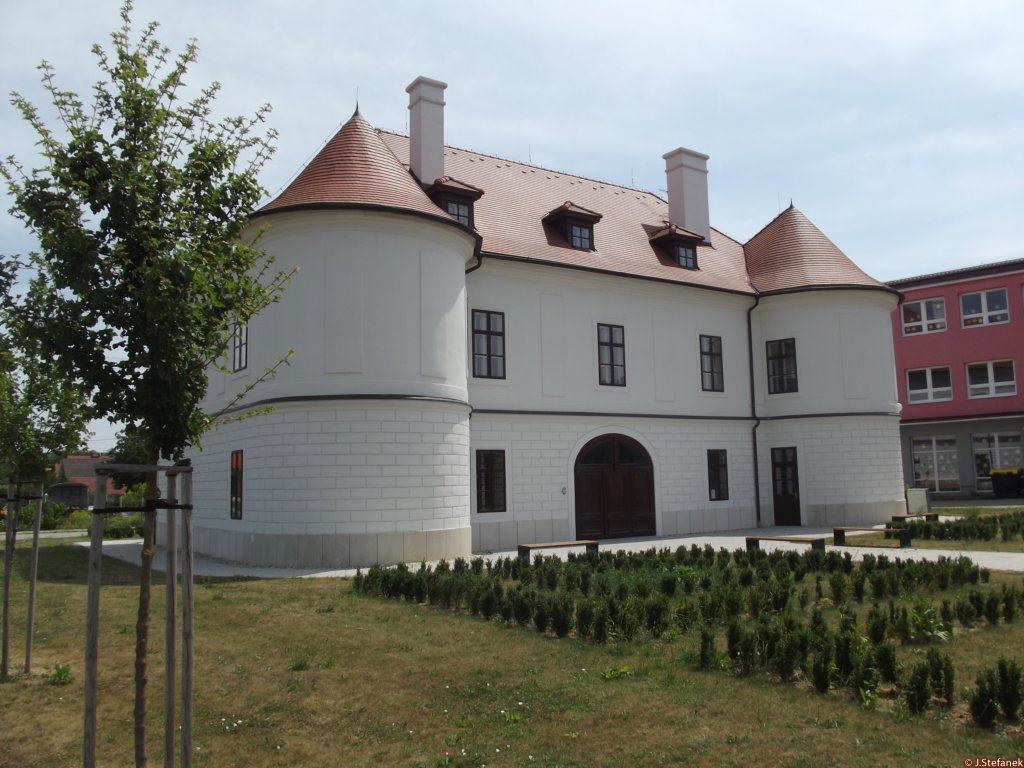
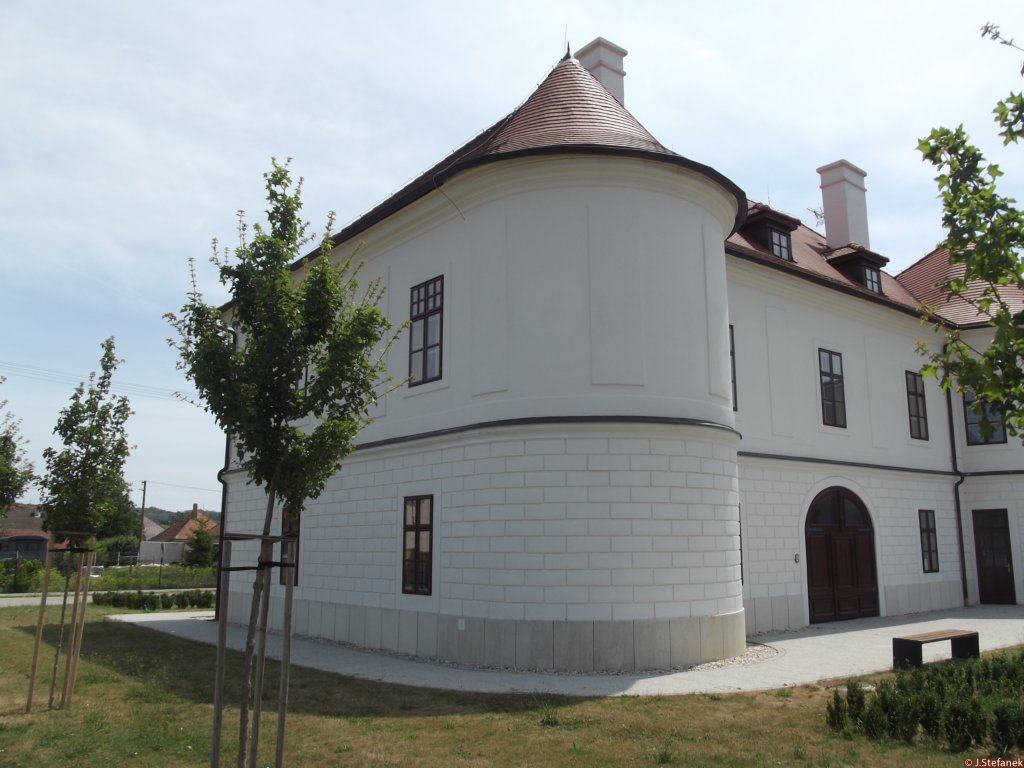
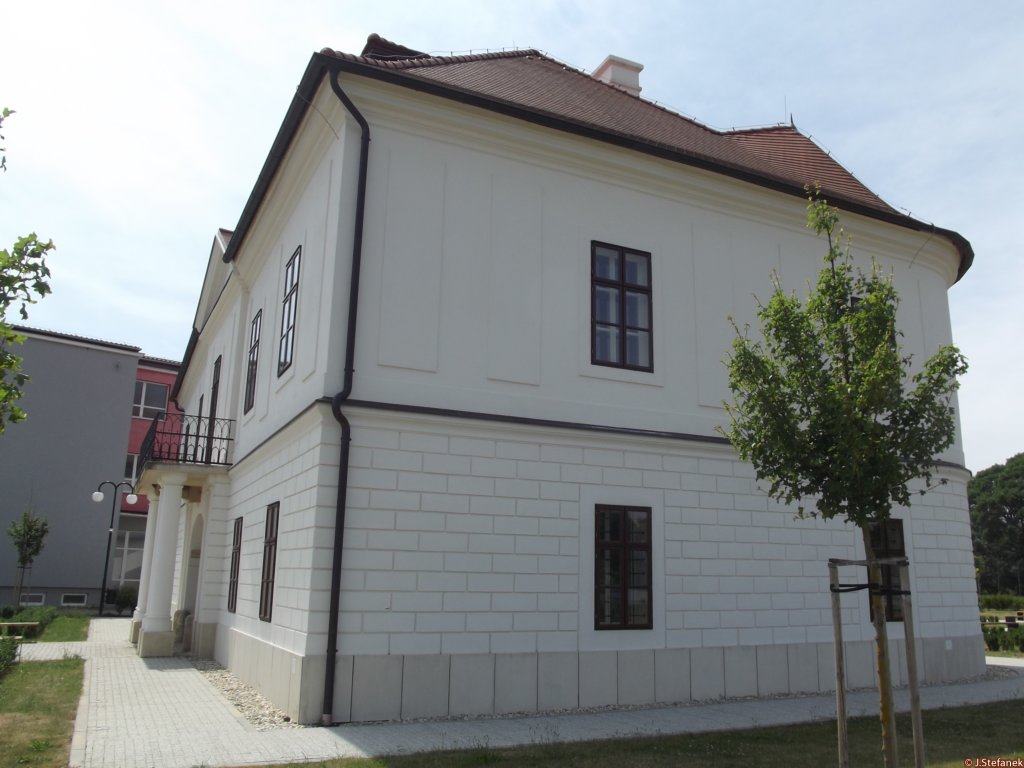
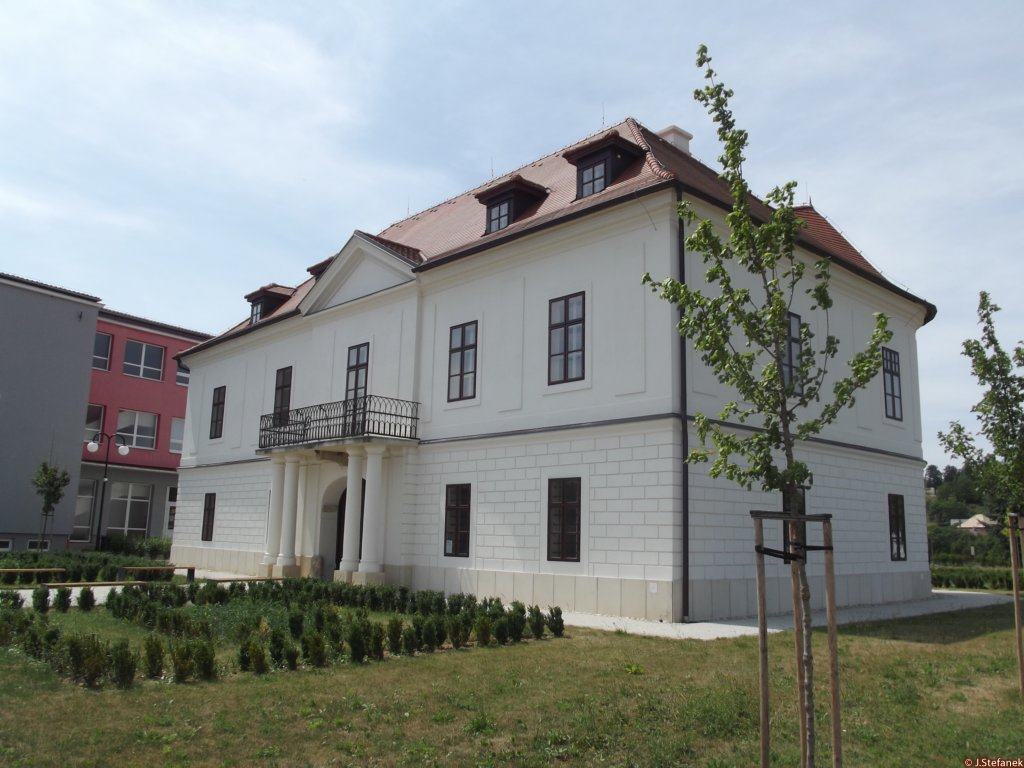
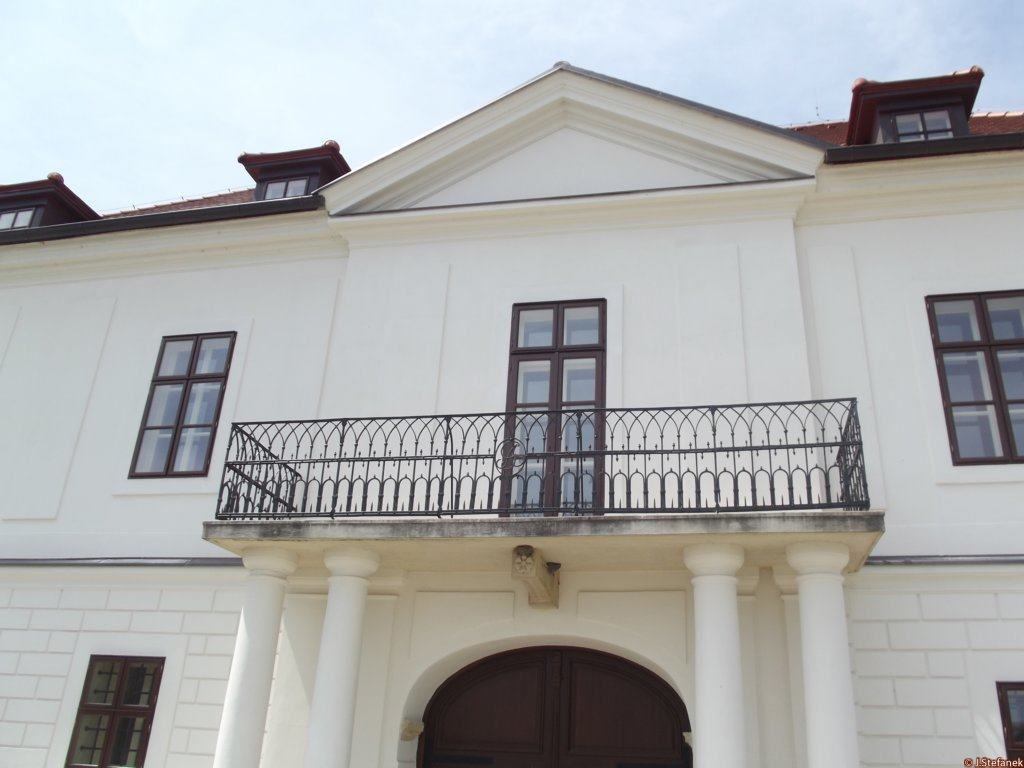
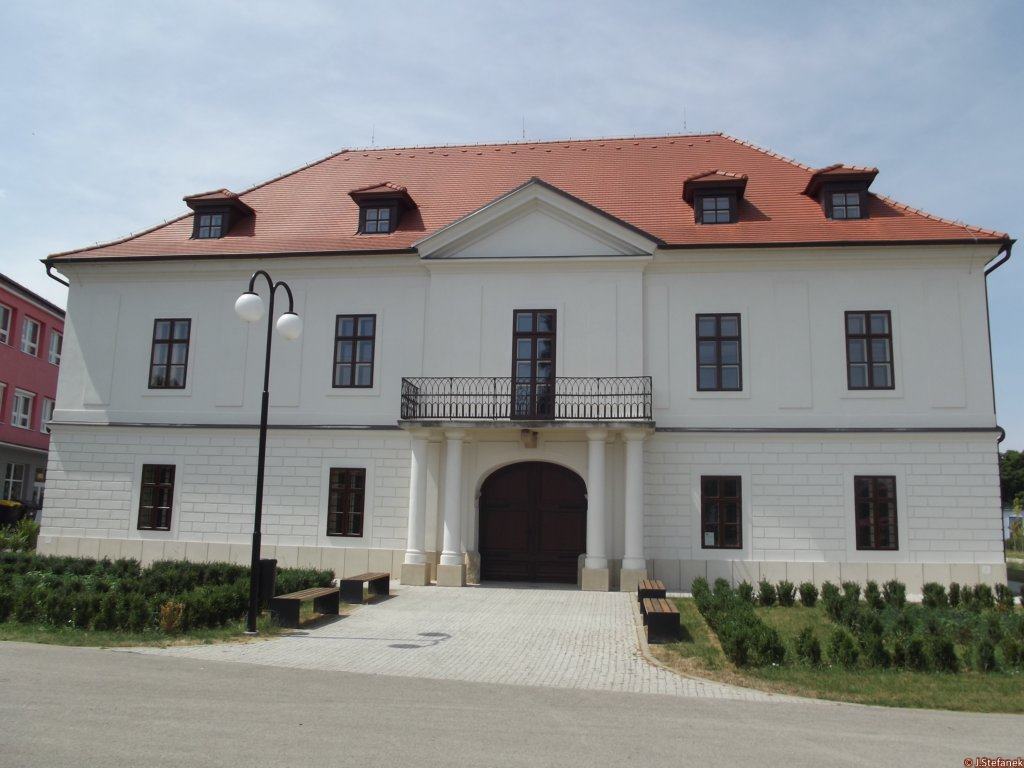
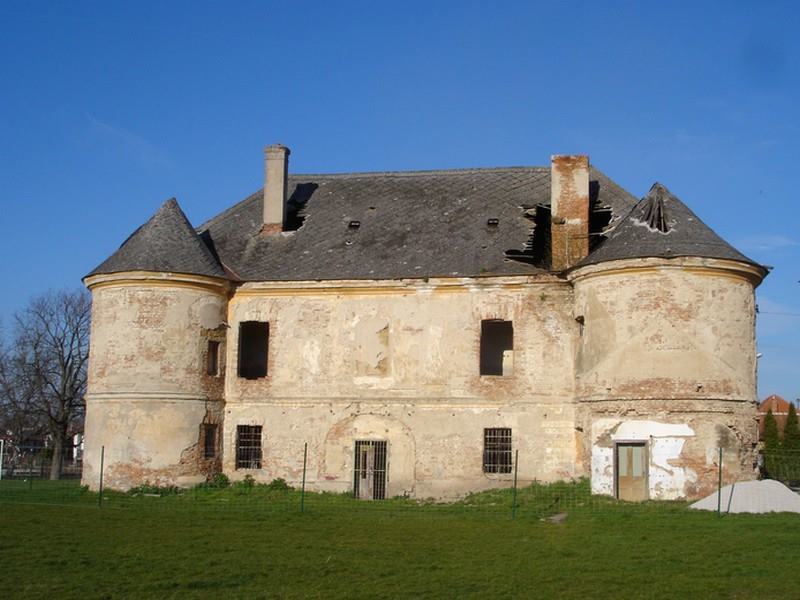
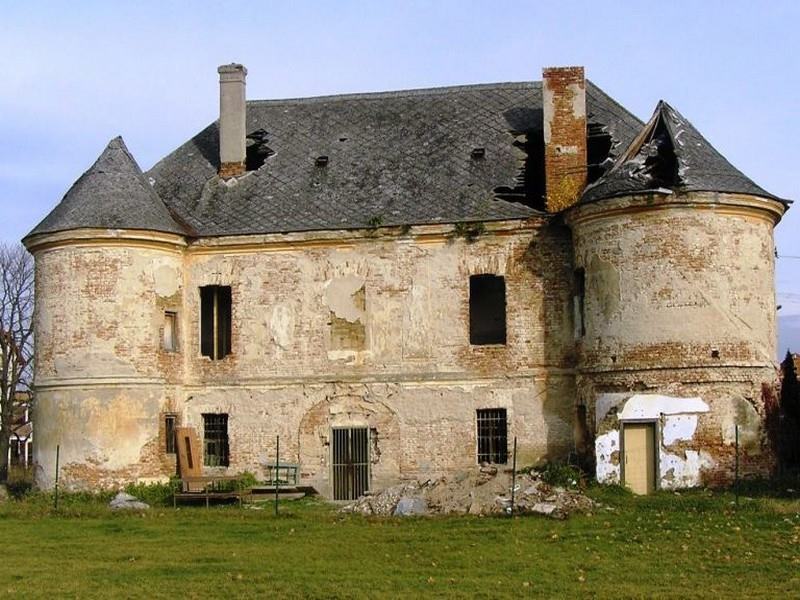
From the beginning of the 17th century, when the mansion was built on the basis of a medieval castle, the vaulting system and continuous areas of Renaissance plaster were preserved. The floor was rebuilt and minor reconstructions were carried out, within which the facade was also restored.The mansion is a rectangular two-storey non-cellared building with a simple ground plan and two corner semicircular bastions. The basic layout of the building consists of a constructional and layout two-wing in the north-south direction. On the facade, facing the already defunct park, there is a central bay with a triangular gable from the Renaissance reconstruction. In front of it is a balcony with a forged lattice, supported by a console on two pairs of Tuscan columns.In December 2010, its reconstruction began, financed from the Regional Operational Program, in order to improve the quality of services of the unused cultural monument through its reconstruction and procurement of equipment. At present there is a museum.
Zo začiatku 17.storočia, keď bol kaštieľ postavený na základe stredovekého hrádku, sa zachoval klenbový systém a súvislé plochy renesančnej omietky. Došlo k prestavbe poschodia a boli vykonané menšie prestavby, v rámci ktorých bola obnovená i fasáda.Kaštieľ predstavuje obdĺžnikovú dvojpodlažnú nepodpivničenú budovu s jednoduchým pôdorysom a dvoma nárožnými polkruhovými baštami. Základná dispozícia stavby je tvorená konštrukčným a dispozičným dvojtraktom v severojužnom smere. Na priečelí, orientovanom do už zaniknutého parku, je centrálny rizalit s trojhranným štítom z obdobia renesančnej prestavby. Pred ním je umiestnený predstavaný balkón s kovanou mrežou, podopretý konzolou na dvoch dvojiciach toskánskych stĺpoch.V decembri 2010 sa začalo s jeho rekonštrukciou, ktorá bola financovaná z Regionálneho operačného programu, s cieľom zvýšiť kvalitu poskytovaných služieb nevyužívanej kultúrnej pamiatky prostredníctvom jej rekonštrukcie a obstarania vybavenia. V súčasnosti sa v objekte nachádza múzeum.
History
Originally a Renaissance manor house, it was built on the foundations of a medieval castle, mentioned in 1550. It was probably a late medieval three-room building. This medieval building belonged to a member of the Assa family from Kürth (now Nové Sady). The Assa family settled in and around the village of Kürth during the 13th century. At the end of the 1930s, the family died out by Ladislav Assom. During his life he bequeathed his villages Assa Kürth and Výčapky to Matúš Hencz. The loyalty of Matúš Hencz and Jozef (I.) Ghyczy († 1561) to King Ferdinand I. brought them confirmation of the joint gain of the property of the extinct family of Assa.
The Ghyczy family came from the village of Gic, which was located in the Veszprém capital in what is now Hungary, where it has had its property since the 13th century. Of the members of this family, only Jozef (I.) Ghyczy got to the Nitra capital, who acquired the local property thanks to a marriage to Žofia Henczová, the heiress of property in Assa Kürthe. Jozef (I.) Ghyczy thus became the founder of the Nitra branch of the family. Joseph was the builder of the fortified manor. In 1550 he received permission to build the building from King Ferdinand I. In addition to permission to build a fortified mansion, the Ghyczy family also received a significant royal privilege - the right to sword, the right to prosecute serious crimes by death, which the family applied until its abolition in 1848. diplomat Jozef Ghyczy ensured that the village became the center of the manor, from which the landowning family administered 15 serf villages.
After the death of Jozef (I.) Ghyczy, riots broke out between his two sons - Štefan (II.) Ghyczy from his first marriage and Juraj (II.) Ghyczy from his second marriage to Dorota Győrödyová. In these mutual disputes, the fortified manor house in Assa Kürthe also served as a defense, and therefore in 1567 King Maximilian I ordered that the manor house be demolished, which, however, never took place.
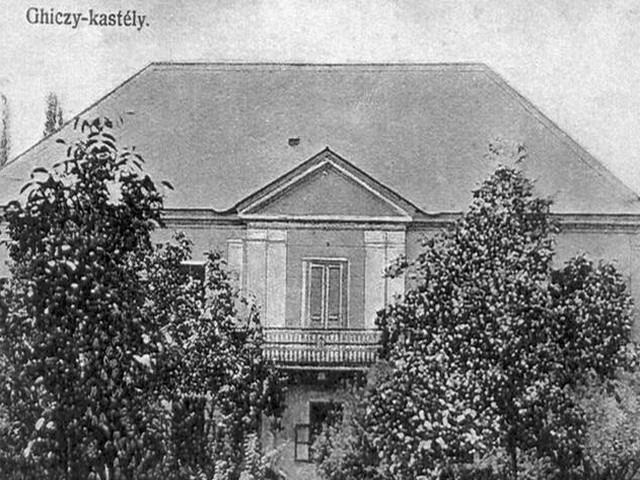
In the first half of the 19th century, a significant reconstruction took place, which was undertaken by Andrej (III.) Ghyczy. He rebuilt the half-dilapidated manor house into a two-storey tower manor house. The last survivors of the family were Imrich († 1910) and Mária († 1922) Ghyczyovci. At the end of the first half of the 20th century, the manor house was part of the estate of the Szmrecsányi family. In modern history, the manor house was used as a school, hospitality, warehouse, but also a dining room for a primary school. Reconstruction carried out in the years 2010 to 2012 brought the manor to its current state, which defined the purpose of using the manor for the museum.
Pôvodne renesančný kaštieľ bol postavený na základoch stredovekého hrádku, spomínaného v roku 1550. Pravdepodobne išlo o neskorostredoveký trojpriestorový objekt. Táto stredoveká stavba patrila členom rodu Assa z Kürthu (dnes Nové Sady). Rod Assa sa v dedine Kürth a okolí usadil už v priebehu 13.storočia. Koncom 30.rokov 16.storočia rod vymrel Ladislavom Assom. Počas svojho života odkázal svoje dediny Assa Kürth a Výčapky Matúšovi Henczovi. Vernosť Matúša Hencza a Jozefa (I.) Ghyczyho (†1561) kráľovi Ferdinandovi I. im priniesla potvrdenie spoločného zisku majetku vymretého rodu Assa.
Rod Ghyczy pochádzal z dediny Gic, ktorá sa nachádzala vo Vesprémskej stolici na území dnešného Maďarska, kde mal svoje majetky už od 13.storočia. Z členov tohto rodu sa do Nitrianskej stolice dostal až Jozef (I.) Ghyczy, ktorý získal tunajšie majetky vďaka sobášu so Žofiou Henczovou, dedičkou majetkov v Assa Kürthe. Jozef (I.) Ghyczy sa tak stal zakladateľom nitrianskej vetvy rodu. Jozef bol staviteľom opevneného kaštieľa. V r.1550 získal povolenie na stavbu objektu od kráľa Ferdinanda I. Okrem povolenia na stavbu opevneného sídla dostali Ghyczyovci aj významné kráľovské privilégium – právo meča, právo stíhať ťažké zločiny trestom smrti, ktoré si rod uplatňoval až do jeho zrušenia v roku 1848. Skvelý diplomat Jozef Ghyczy zabezpečil, že sa obec stala centrom panstva, z ktorého zemepánska rodina spravovala 15 poddanských obcí.
Po smrti Jozefa (I.) Ghyczyho vypukli nepokoje medzi jeho dvomi synmi – Štefanom (II.) Ghyczym z prvého manželstva a Jurajom (II.) Ghyczym z druhého manželstva s Dorotou Győrödyovou. V týchto vzájomných sporoch plnil funkciu obrany aj opevnený kaštieľ v Assa Kürthe, a preto v roku 1567 nariadil kráľ Maximilián I., aby bol kaštieľ zbúraný, čo sa však nikdy neuskutočnilo.
V prvej polovici 19. storočia došlo k významnej rekonštrukcii, ktorej sa ujal Andrej (III.) Ghyczy. Polorozpadnutý kaštieľ prestaval na poschodový vežový kaštieľ. Poslednými žijúcimi z rodu boli manželia Imrich (†1910) a Mária (†1922) Ghyczyovci. Kaštieľ bol ku koncu prvej polovice 20.storočia súčasťou veľkostatku rodiny Szmrecsányiovcov. V novodobej histórii bol kaštieľ využívaný ako škola, pohostinstvo, sklad, ale aj jedáleň pre základnú školu. Do súčasného stavu uviedla kaštieľ rekonštrukcia uskutočnená v rokoch 2010 až 2012, čím bol zadefinovaný účel využitia kaštieľa na múzeum.
Myths and legends
There are no myths available.
K tomuto objektu nie sú dostupné žiadne povesti
Useful information
Opening hours and admission
Otváracia doba a vstupné
External links
Nearby castles
Lukáčovce mansion
Lukáčovce
4.1km
manor, mansion
Rišňovce
Rišňovce
8.1km
manor, mansion
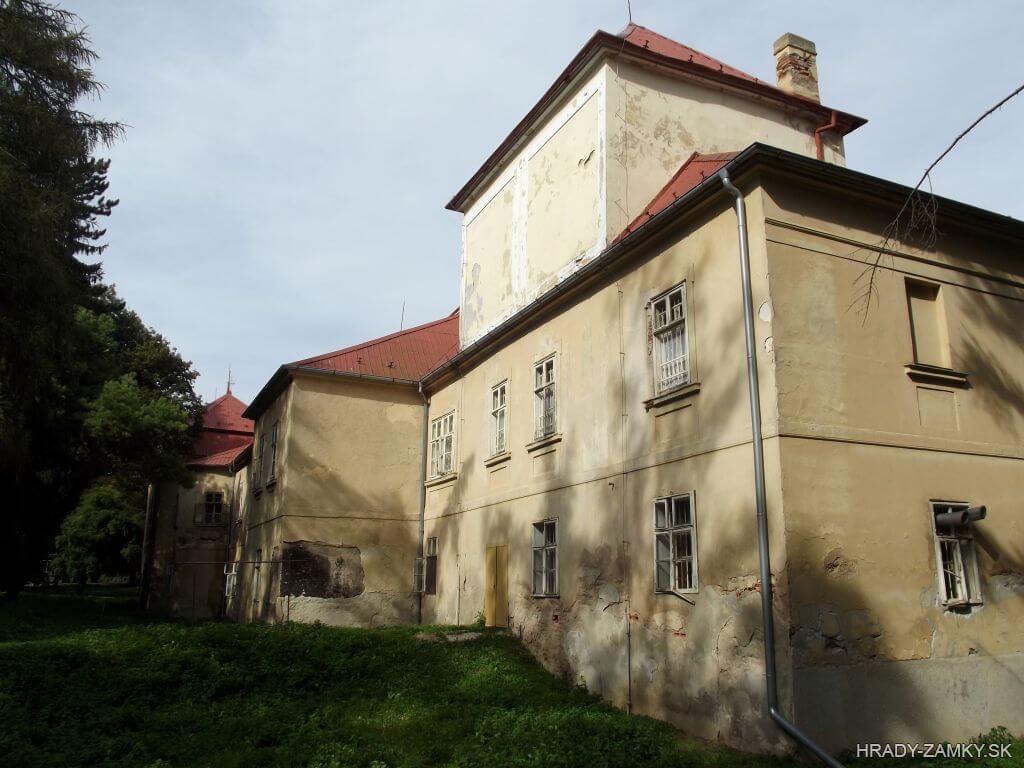
Horné Obdokovce
Horné Obdokovce
10.2km
manor, mansion
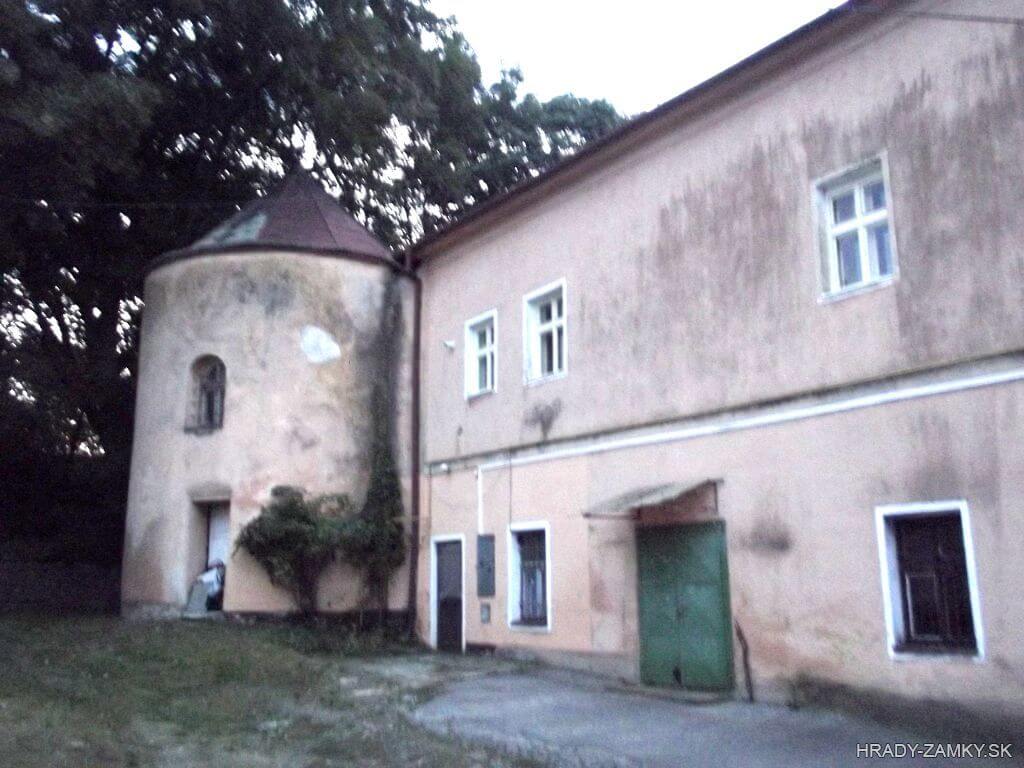
Horné Trhovište
Horné Trhovište
10.3km
manor, mansion
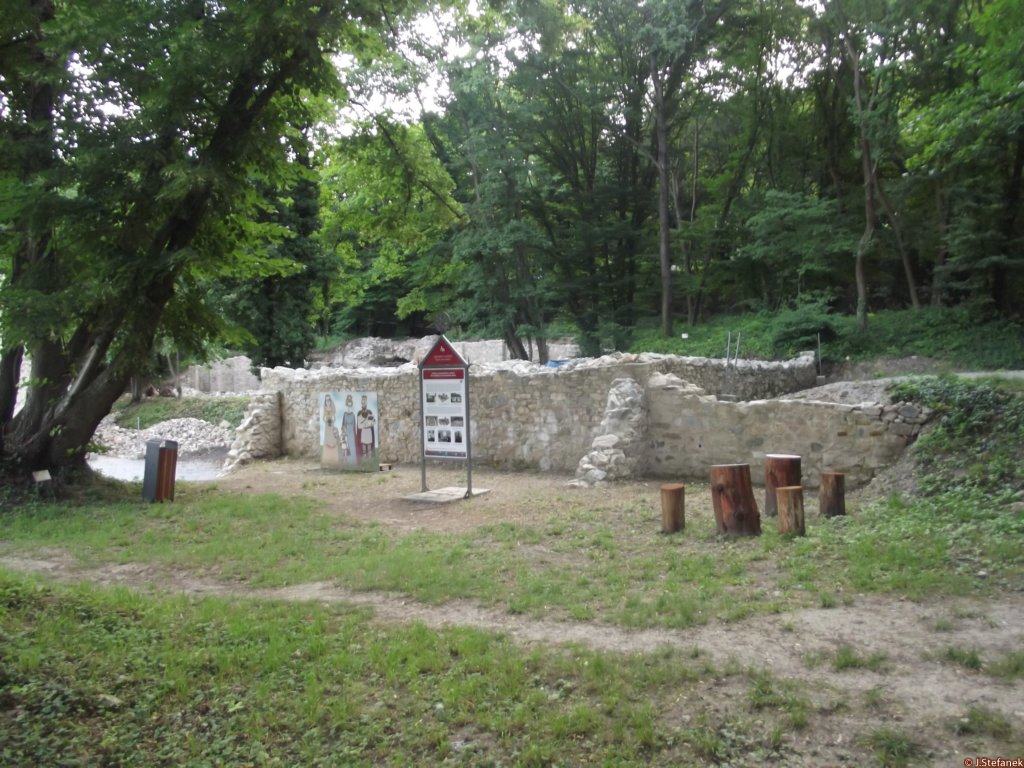
Zobor
Nitra
11.4km
monastery
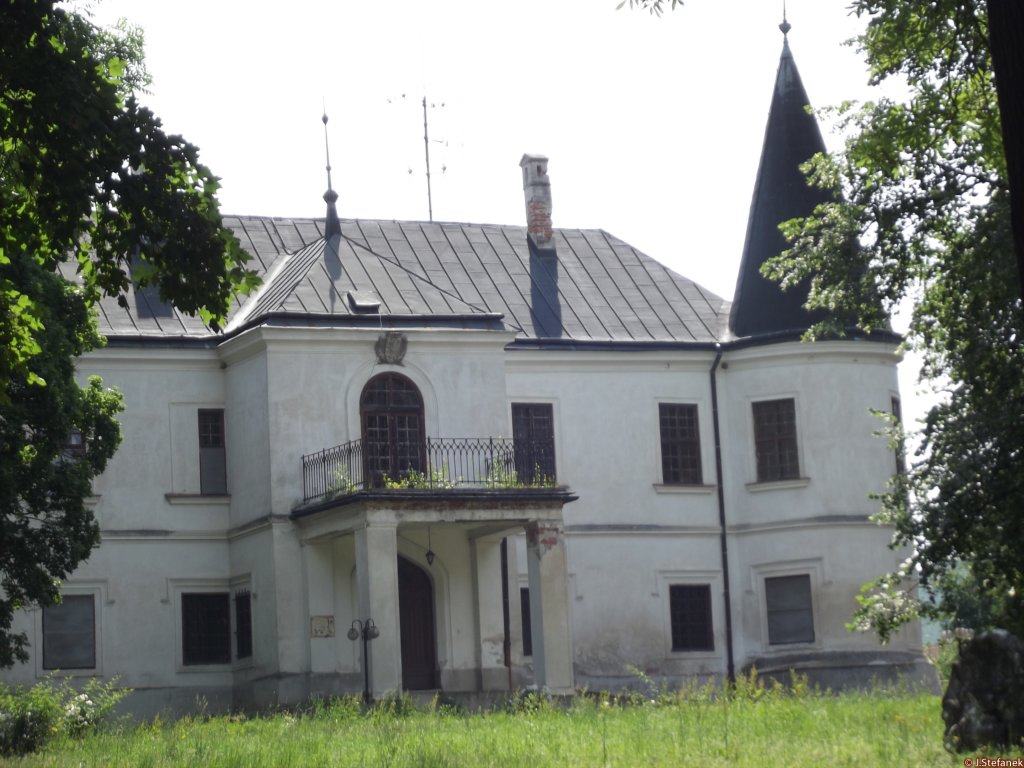
Horné Lefantovce
Horné Lefantovce
12.4km
manor, mansion
Oponice
Oponice
13.4km
castle ruin