Starhrad
Nezbudská Lúčka Žilina county Slovakia
castle ruin
Starhrad
Nezbudská Lúčka Žilinský kraj Slovakia
zrúcanina hradu
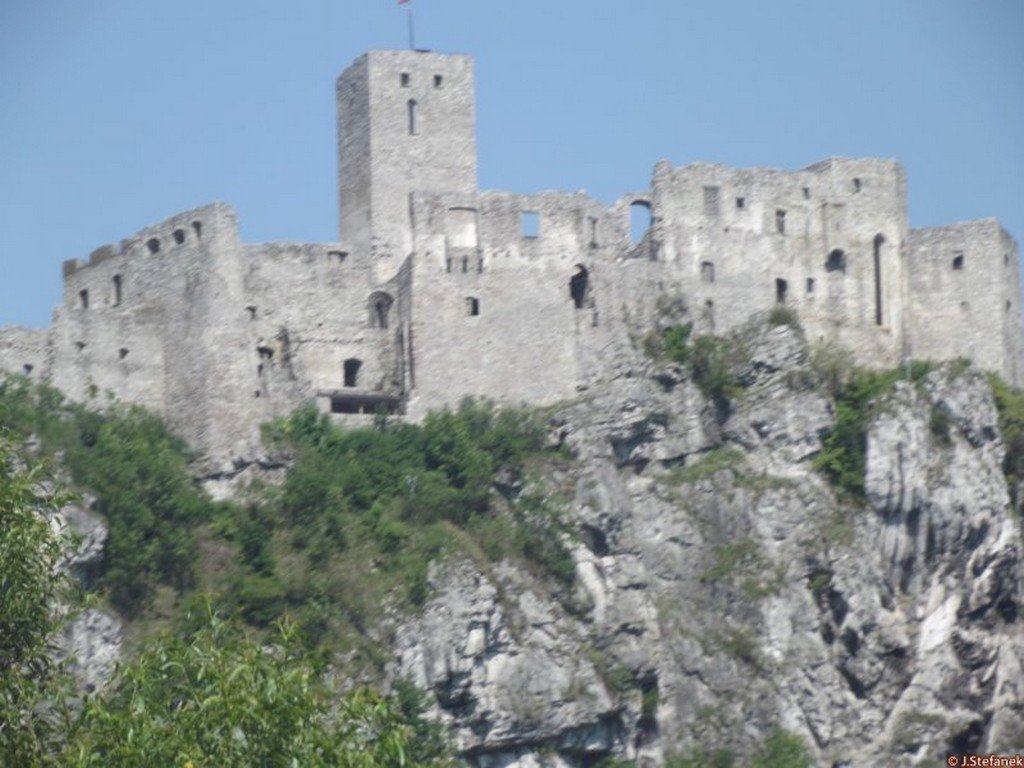
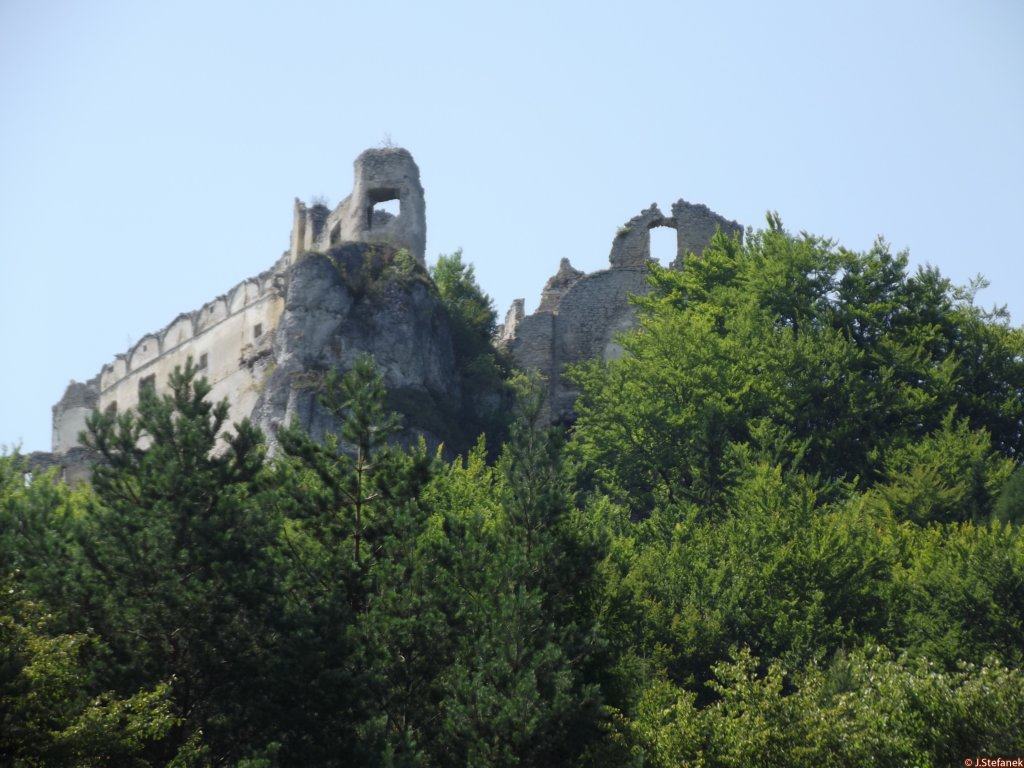
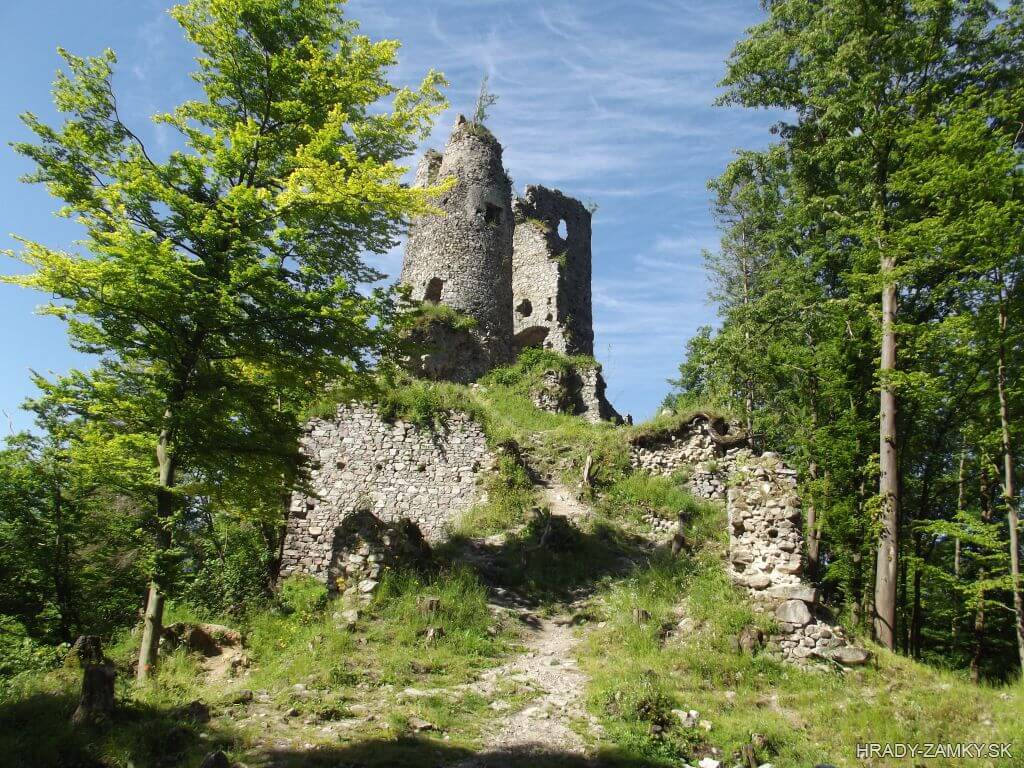
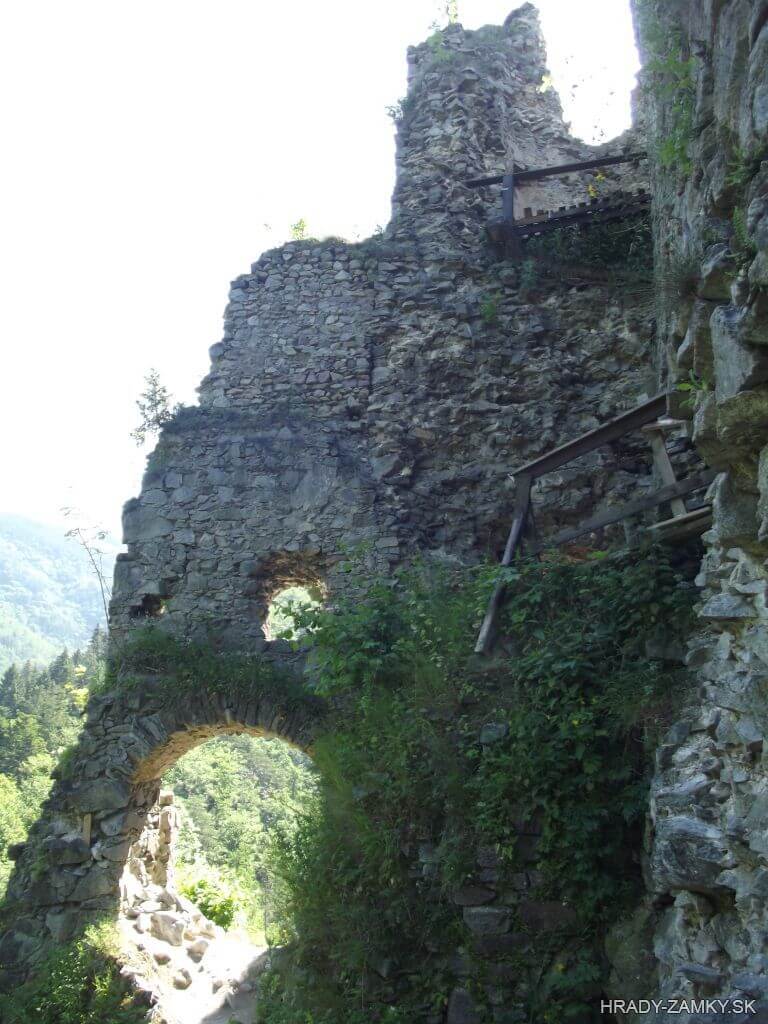
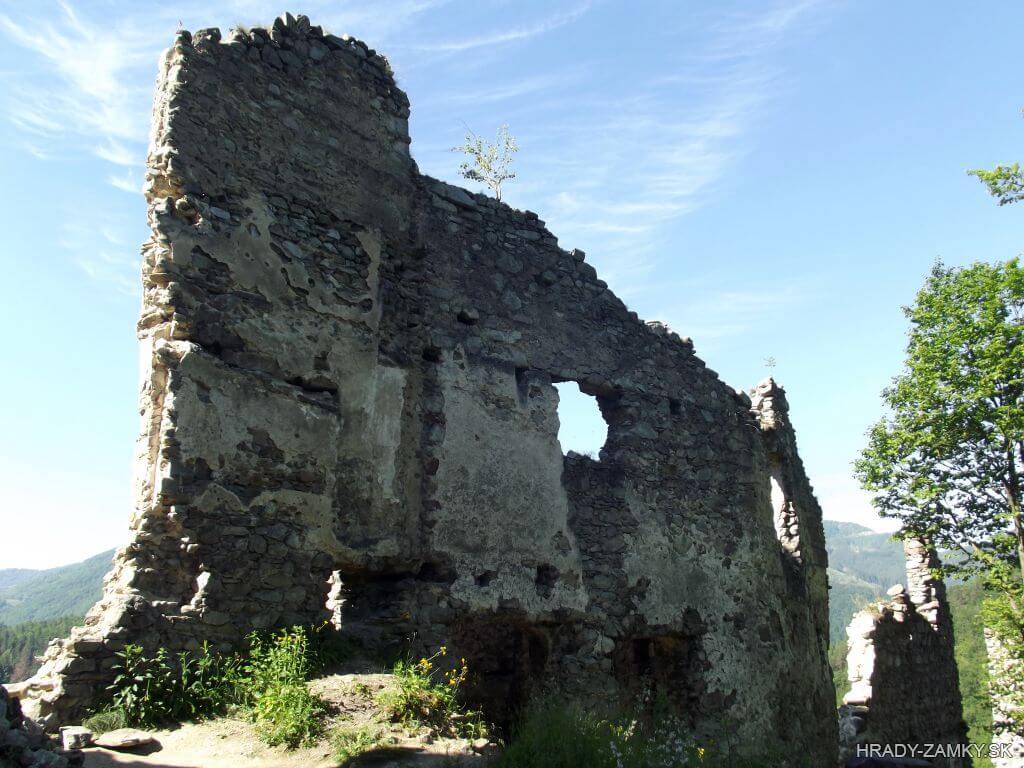
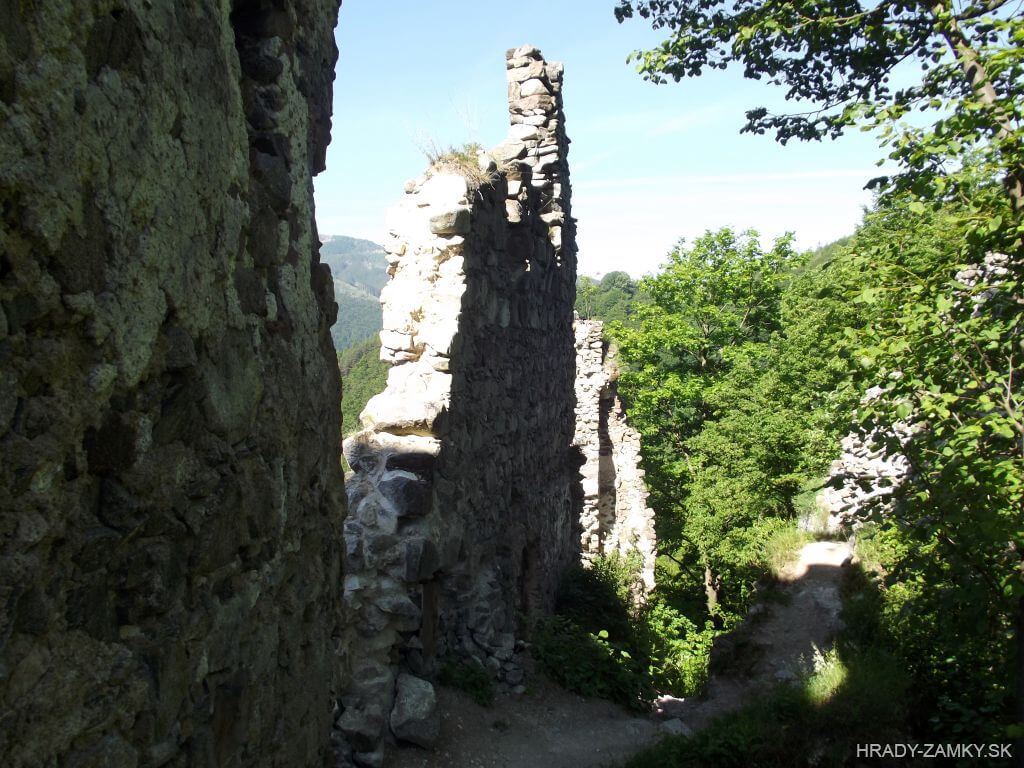
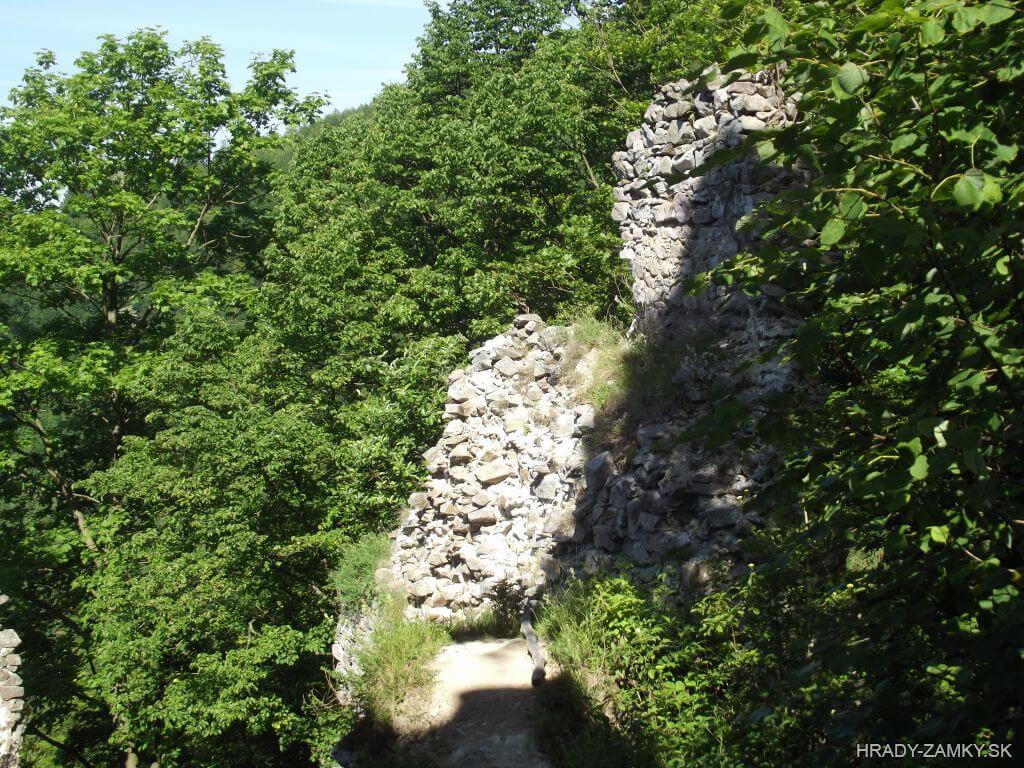
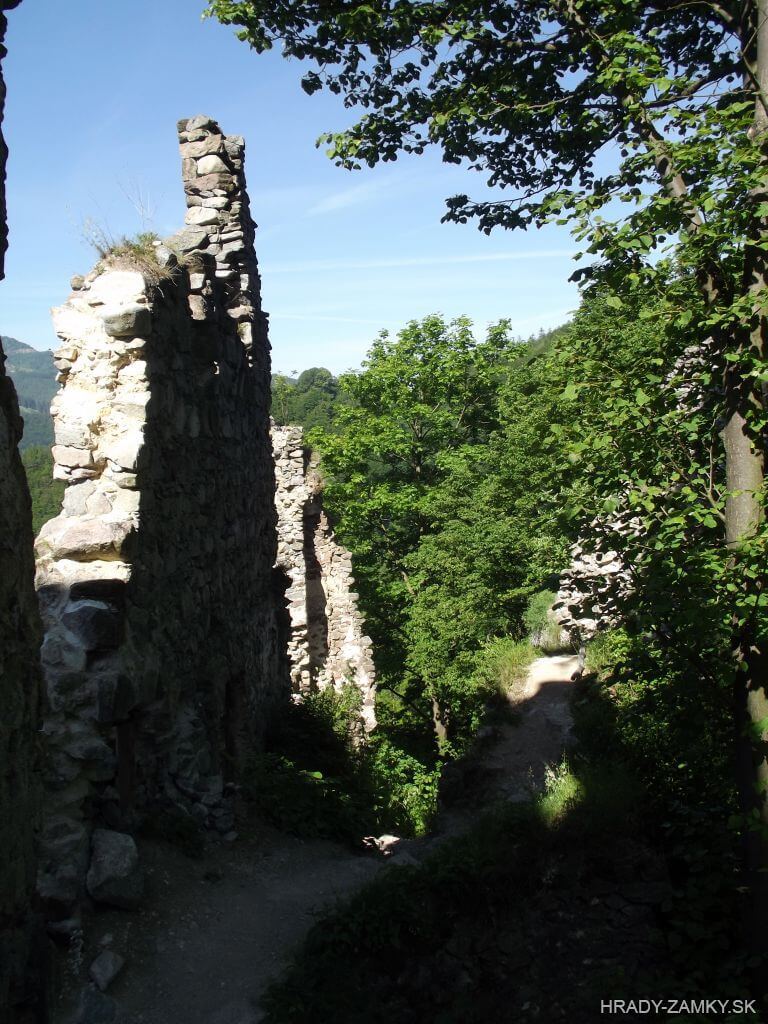
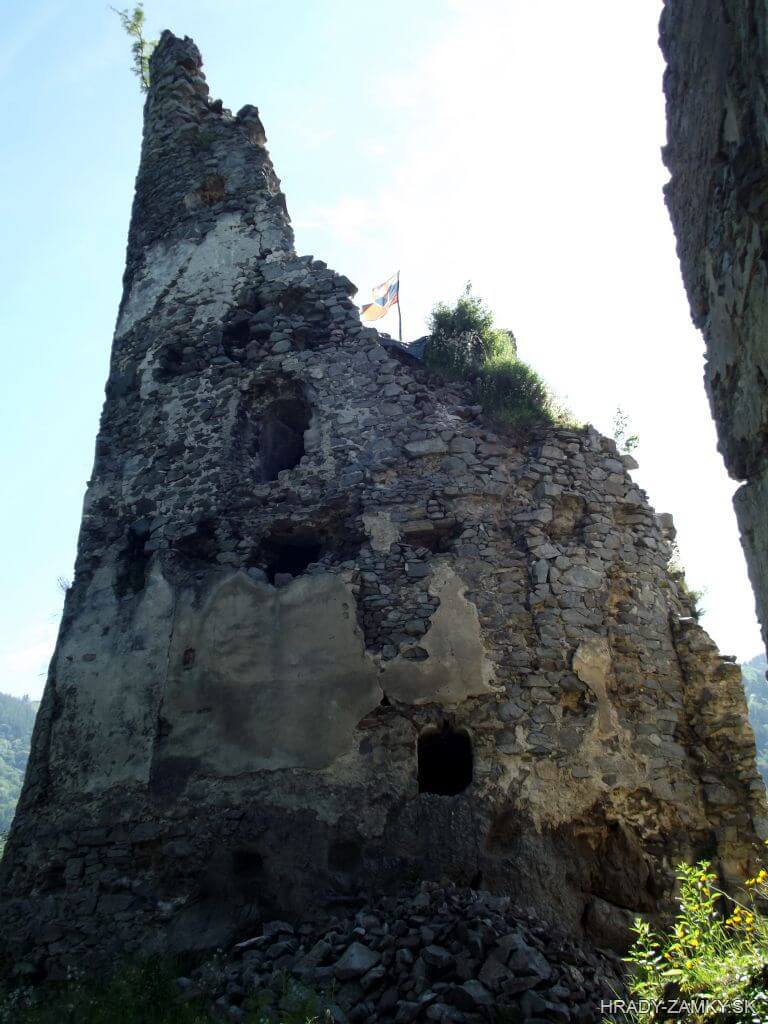
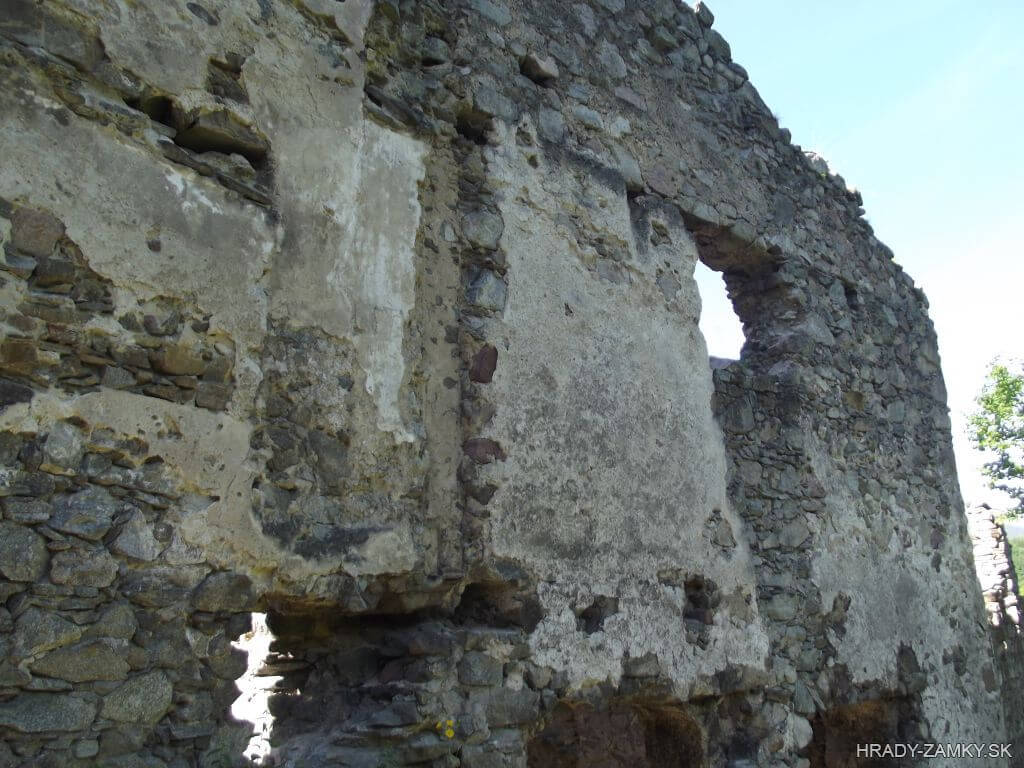
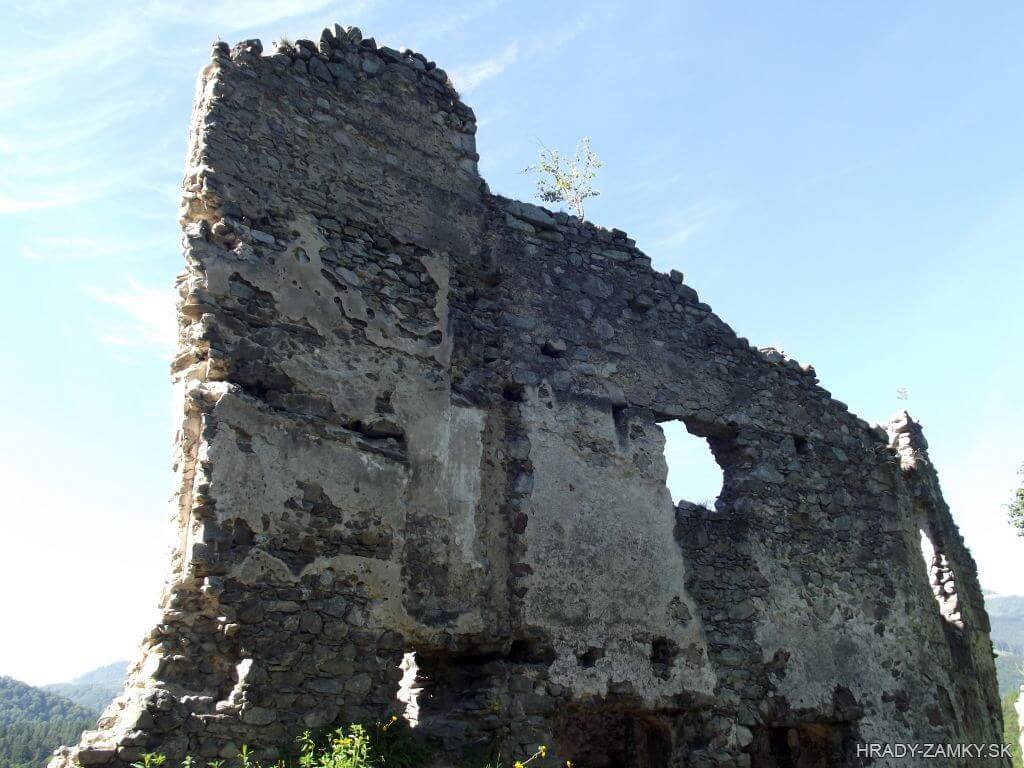
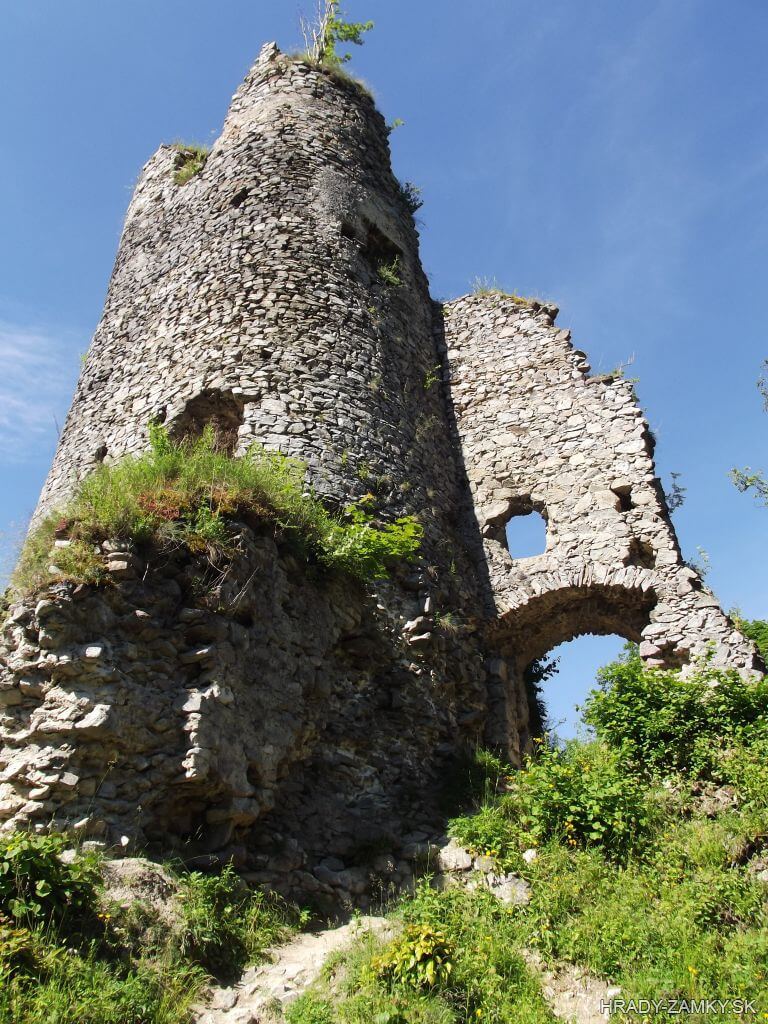
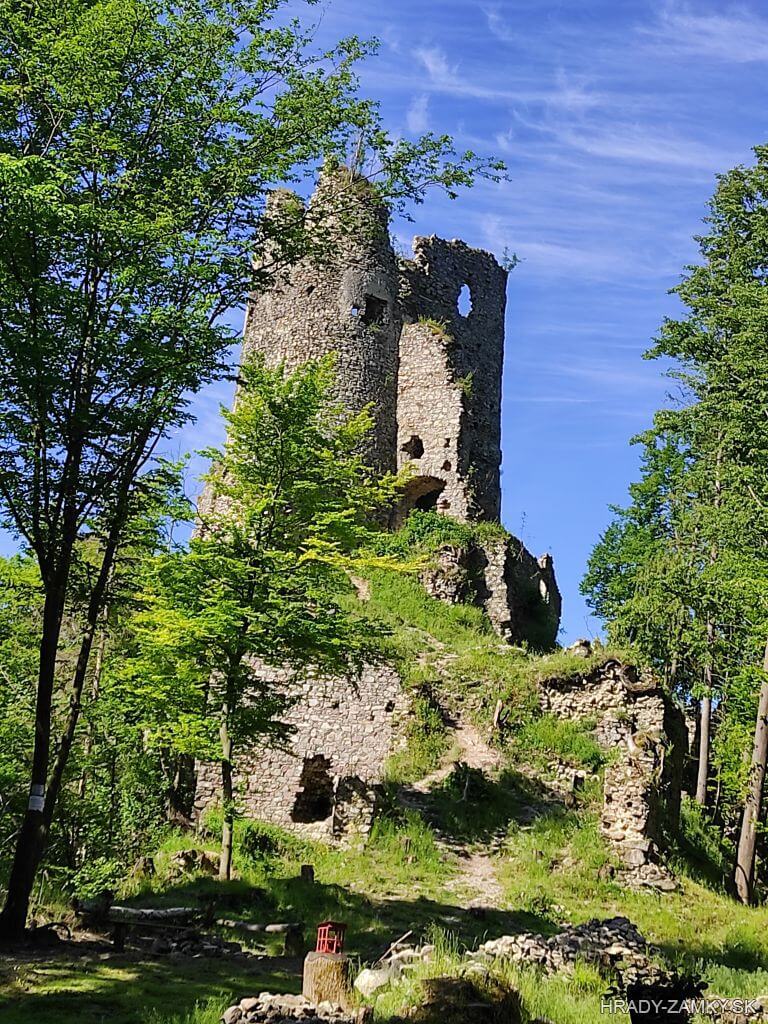
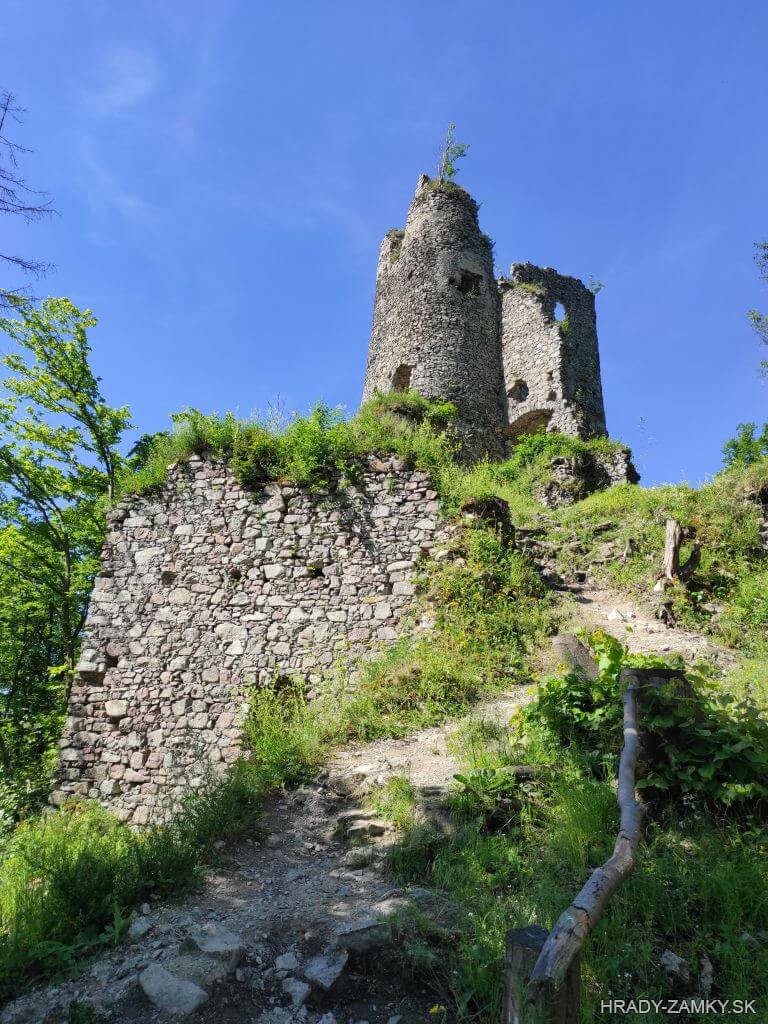
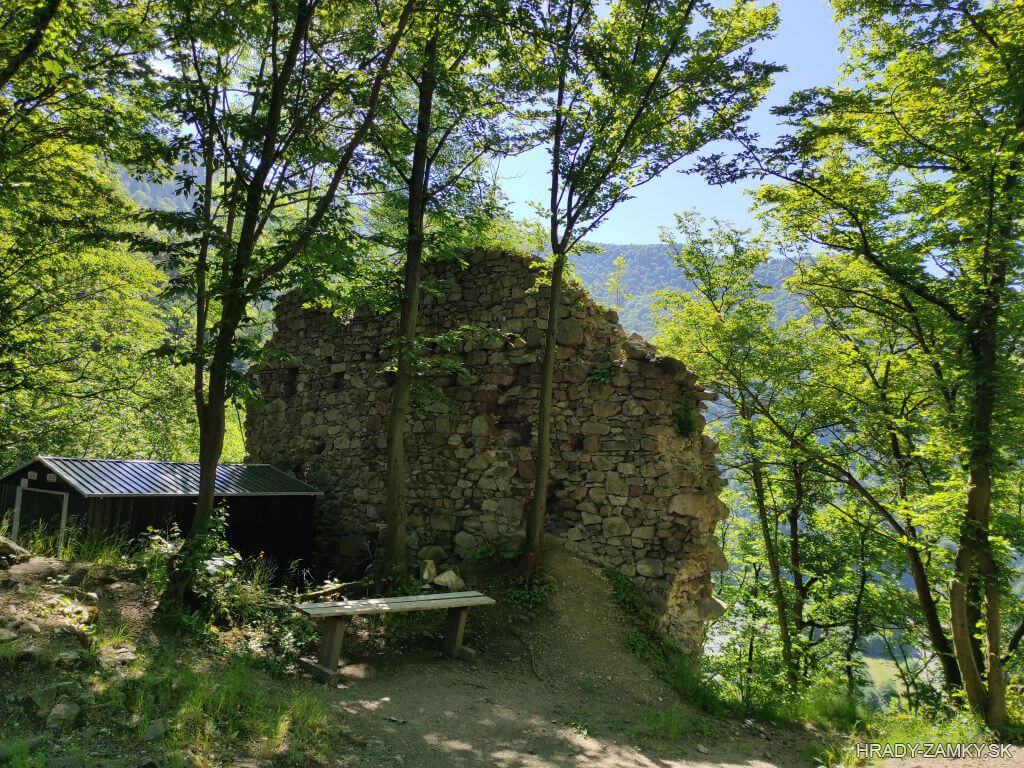
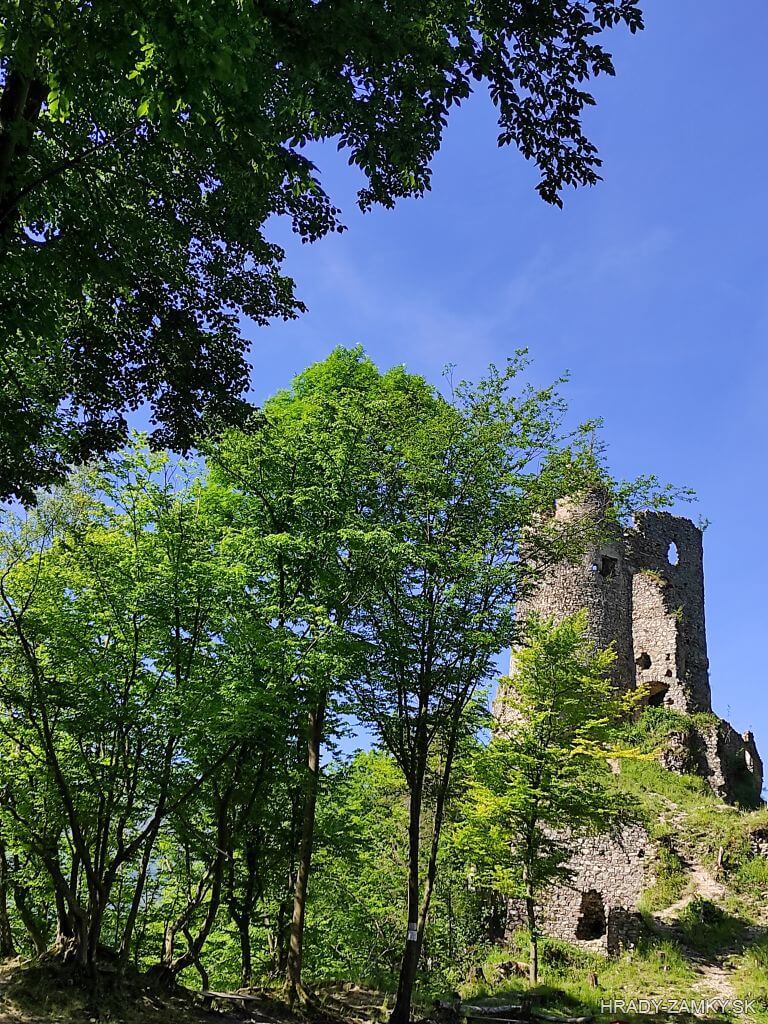
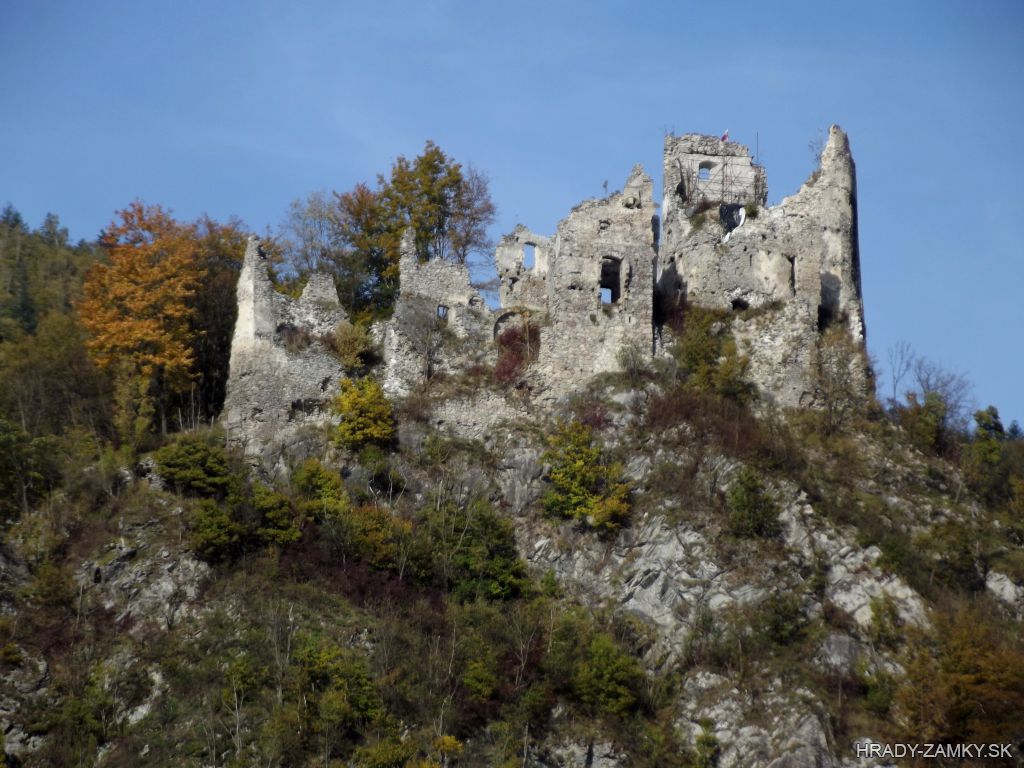
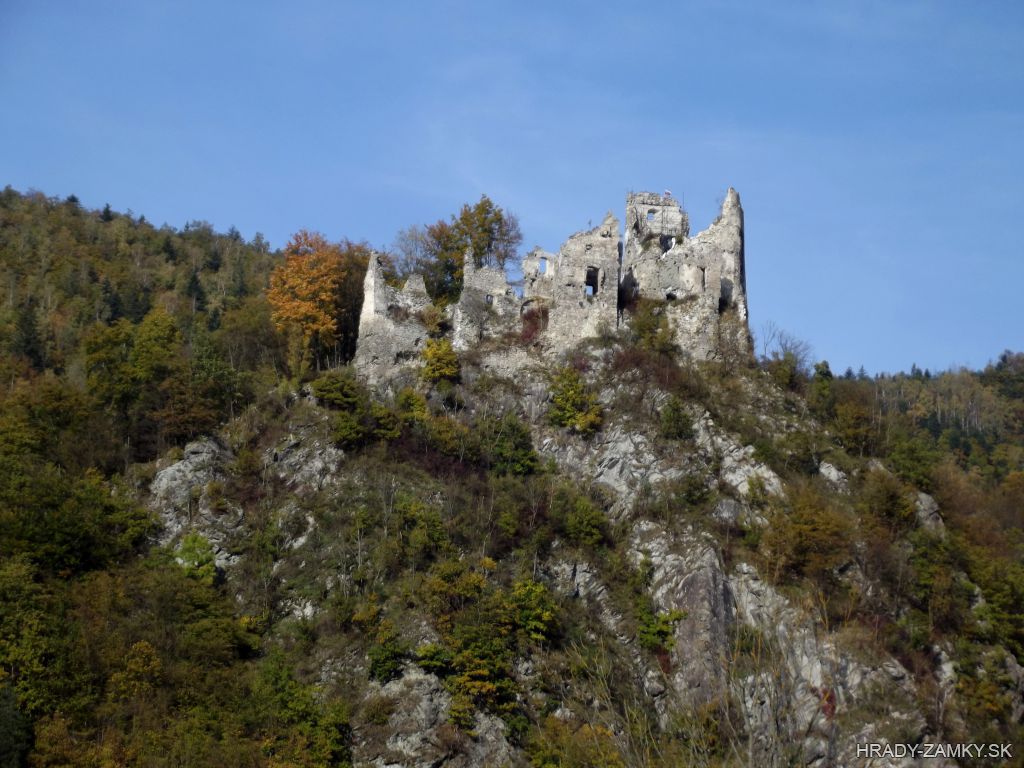
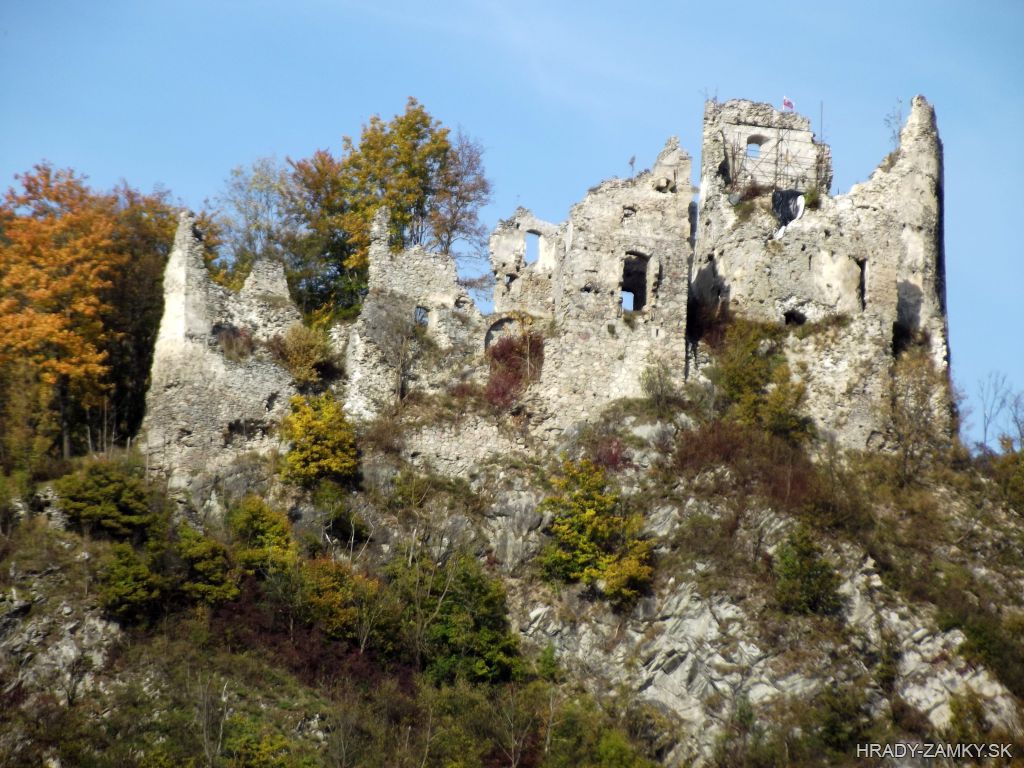
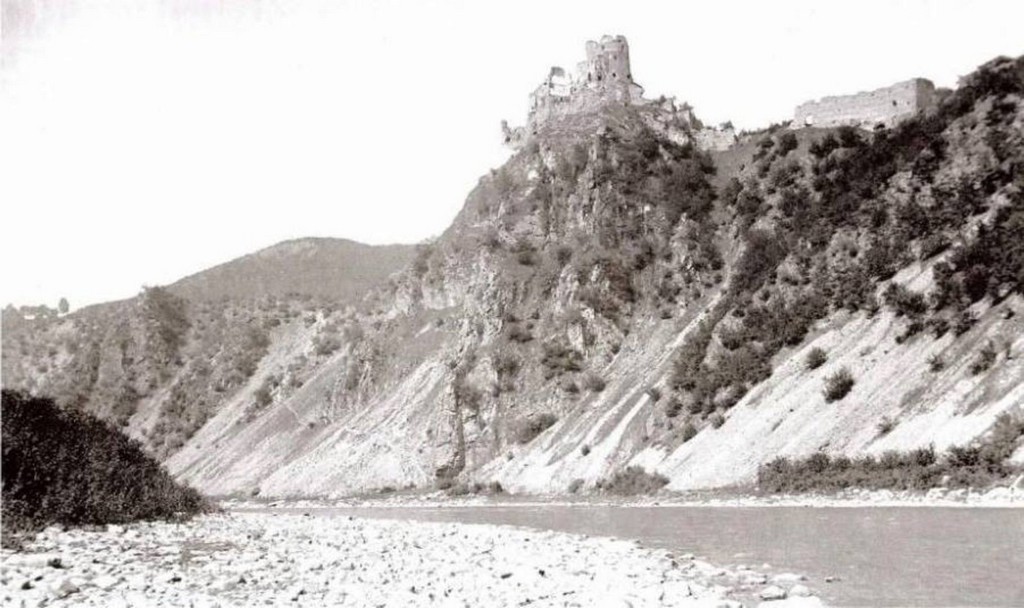
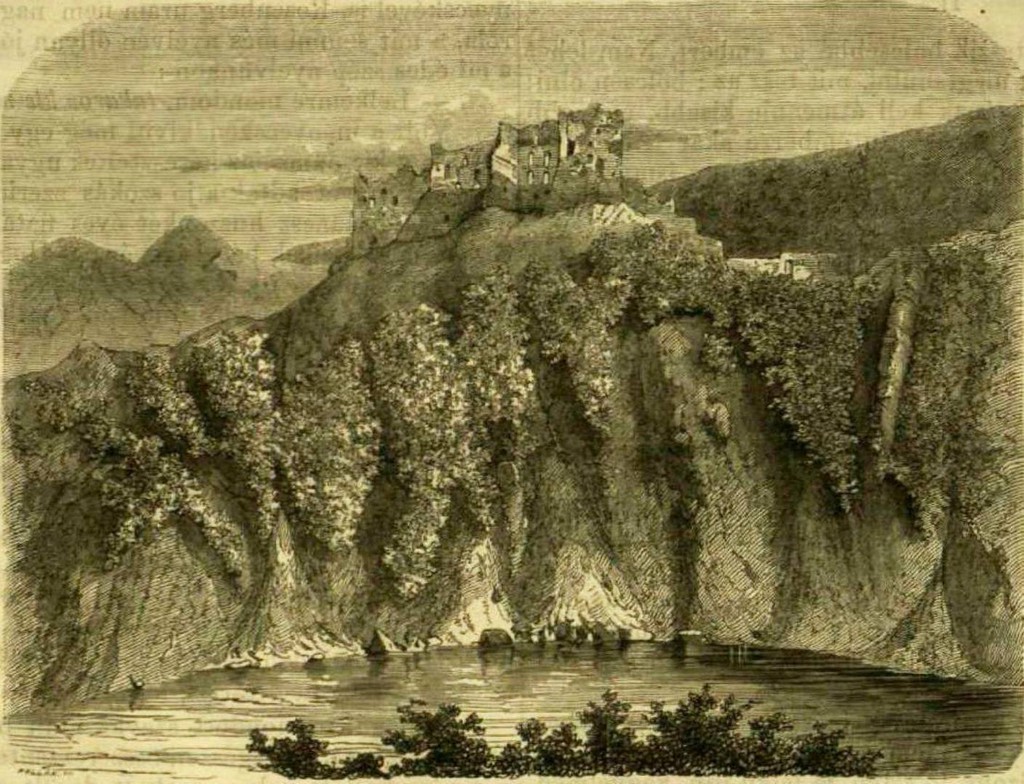
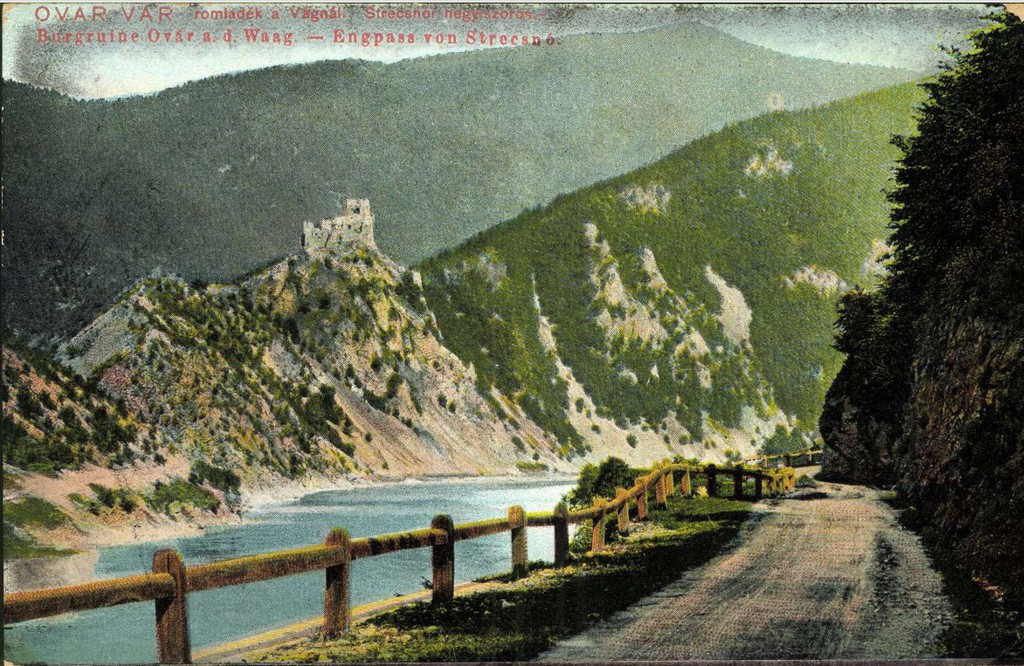
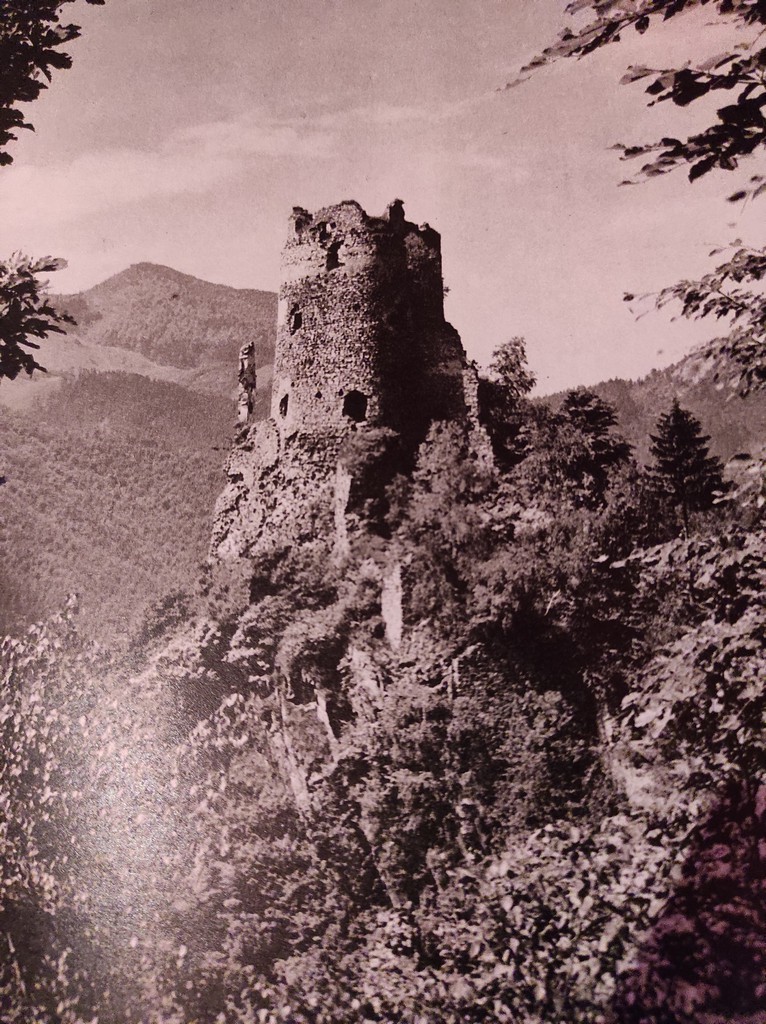
The ruins of the castle on a limestone promontory are a significant dominant over the Domašín meander of Váh river in Malá Fatra, over Nezbudská Lúčka village.
Zrúcanina hradu na vápencovej ostrožine, je výraznou dominantou nad Domašínskym meandrom Váhu v Malej Fatre, nad Nezbudskou Lúčkou.
Previous names
Warna, Varna, Owar, Owaar, Starigrad, Starý hrad, Staré Strečno, Óvár
Roads
Trasa 1: We can park the car in a large parking lot under the castle Strečno and from there we go towards the bridge over Váh. You can also park around the bridge. We cross the bridge over Váh on foot to Nezbudská Lúčka and continue along the red route along the river to the castle.
Trasa 1: Auto môžeme zaparkovať na veľkom parkovisku pod hradom Strečno a odtiaľ sa vyberieme smerom k mostu cez Váh. Zaparkovať sa dá aj v okolí mosta. Peši prejdeme mostom cez Váh do Nezbudskej Lúčky a pokračujeme červenou trasou popri rieke až k hradu.
Trasa 2: We will come directly to Nezbudská Lúčka by car, but if we do not use the ferry through Váh, it is necessary to bypass the whole area through Žilina and Varín to Nezbudská Lúčka. In the village we continue by car along the river, we pass the mentioned bridge and soon we come to the parking lot in the village on the right side. From there, continue walking along Váh, under the railway bridges to the castle.
Trasa 2: Autom prídeme priamo do Nezbudskej Lúčky, avšak ak nevyužijeme kompu cez Váh, je potrebné obísť celú oblasť cez Žilinu a Varín až do Nezbudskej Lúčky. V obci pokračujeme autom cestou popri rieke, minieme spomínaný most a onedlho prídeme k parkovisku v obci na pravej strane. Odtiaľ ďalej peši popri Váhu popod železničné mosty až k hradu.
Trasa 3: For comfortable people, it is possible to come by car in Nezbudská Lúčka beyond the railway bridges, or even further up to the no entry sign, but the road is very narrow and rocky. From there, follow the same path as the other routes to the castle.
Trasa 3: Pre pohodlných je možnosť prísť autom v Nezbudskej Lúčke až za železničné mosty, prípadne ešte ďalej až po samotný zákaz vjazdu, no cesta je tu veľmi úzka a kamenistá. Odtiaľ rovnakou cestou ako pokračujú aj ostatné trasy k hradu.
Description
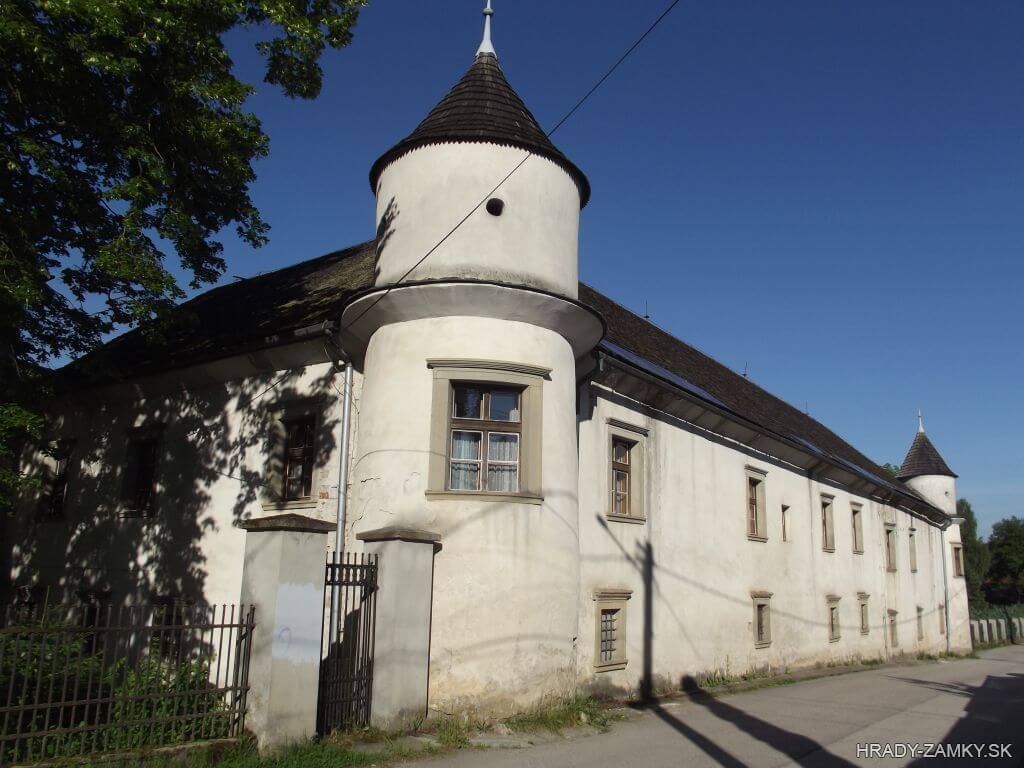
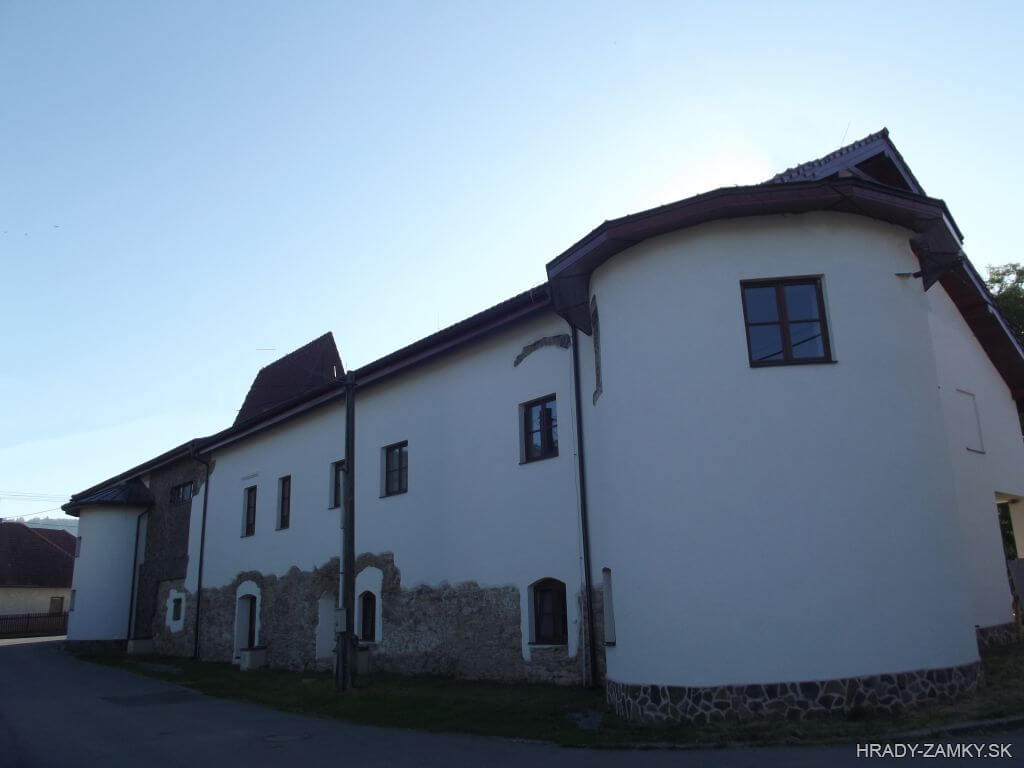
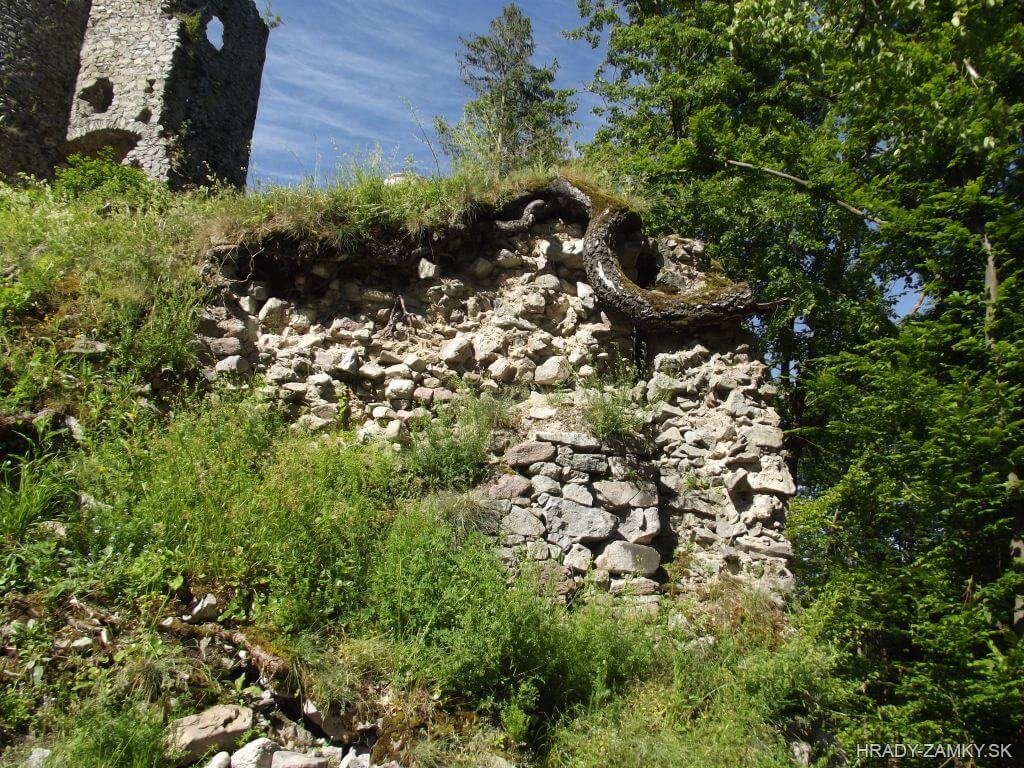
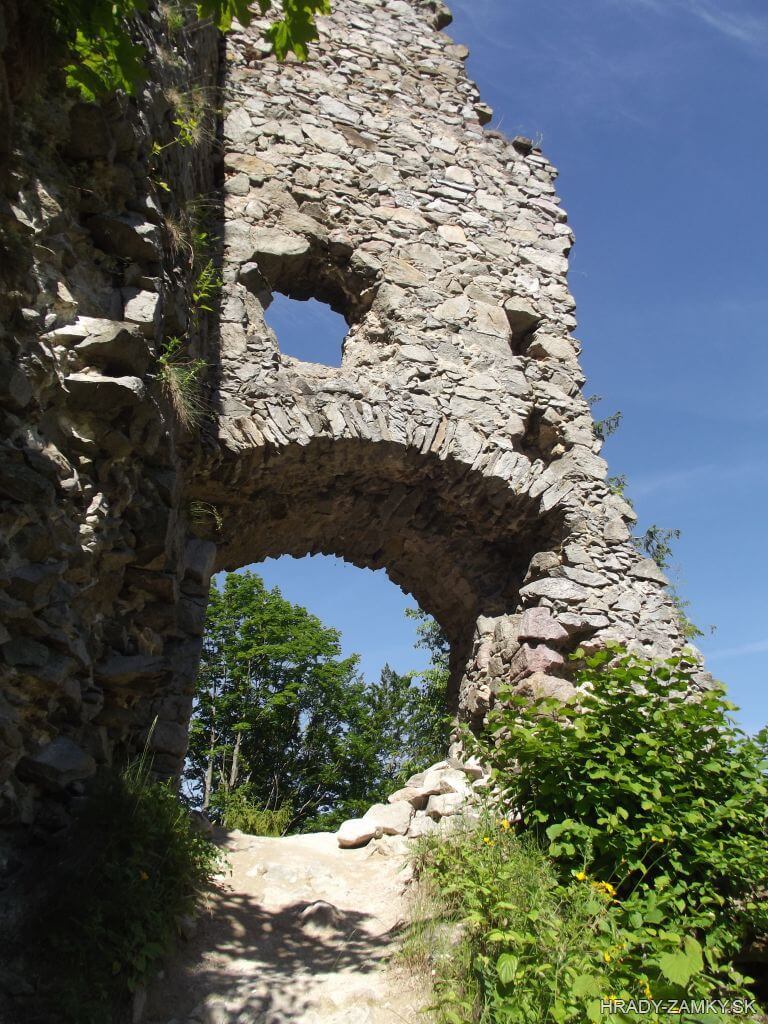
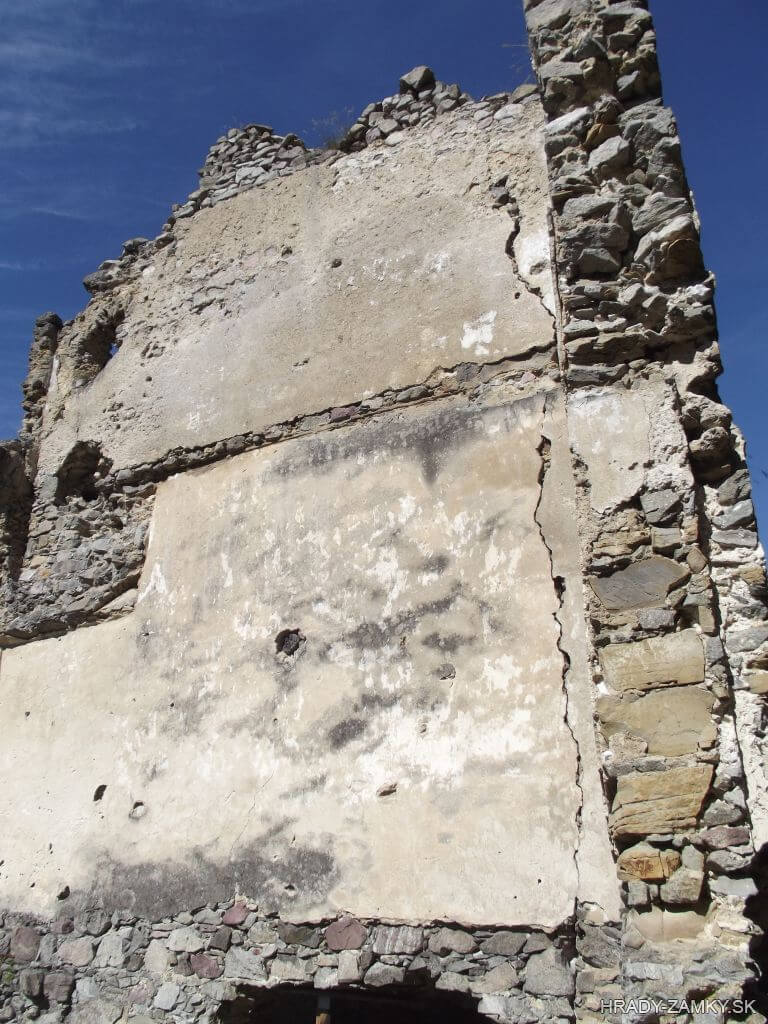
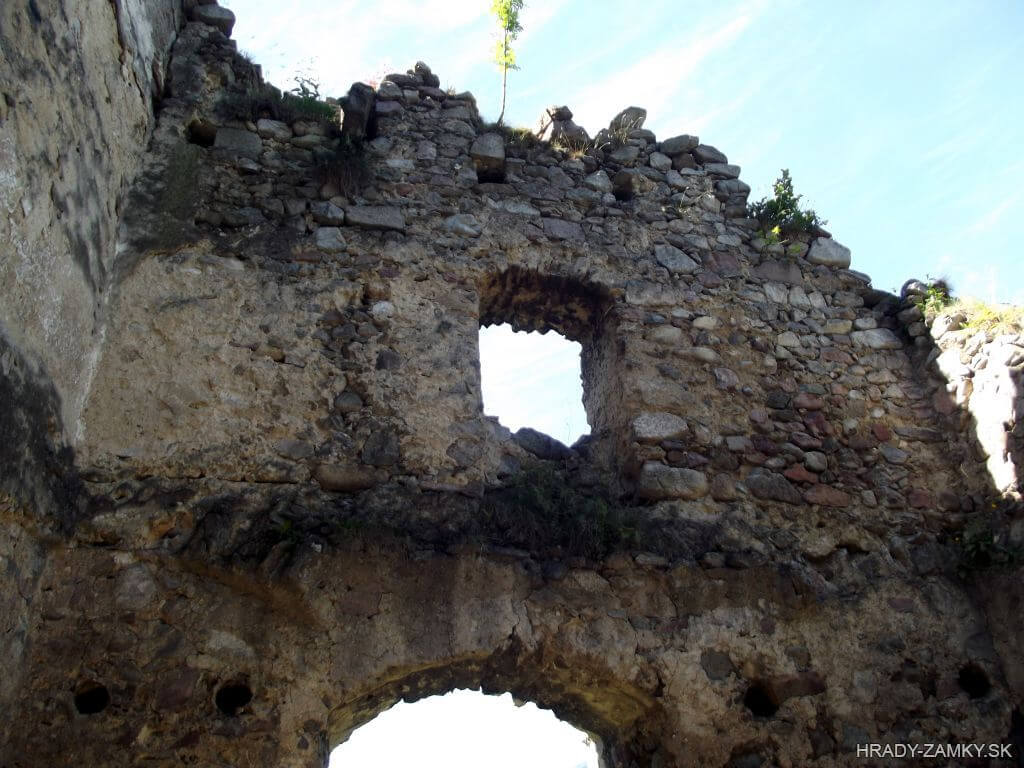
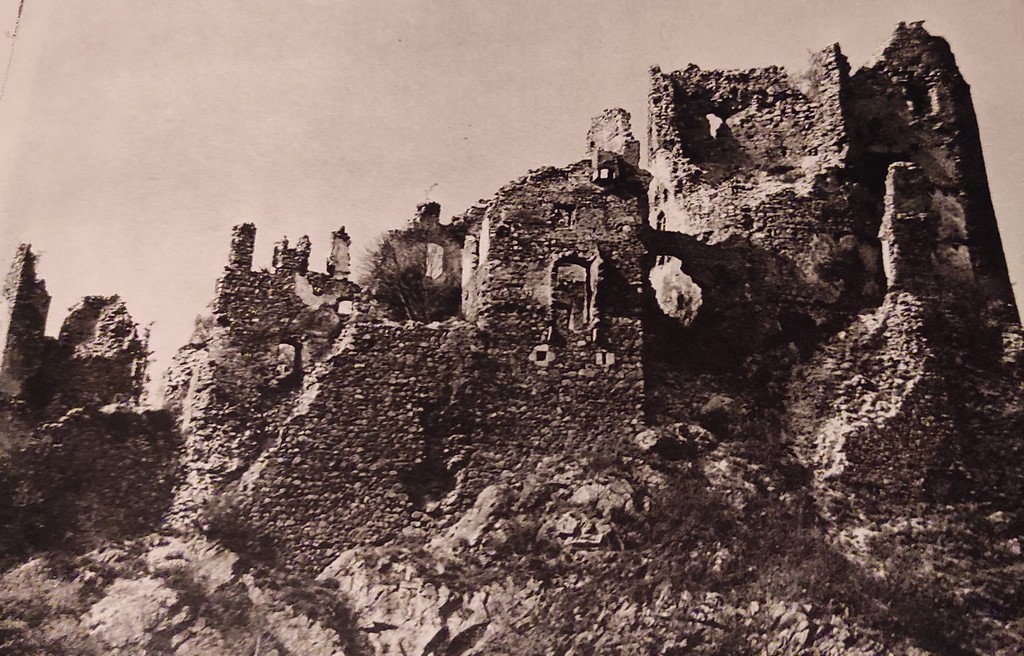
Traces of the medieval castle are probably located under the ruins of the manor house, although the original castle is hardly identifiable without exploring the site. The manor house, built on these foundations, had a rectangular ground plan. On the south side there were two towers and an entrance terrace with a staircase. There were even smaller rooms on the sides of the towers, in the interior of one of them is a Baroque niche. Given the size of the object, it is quite likely that the object did not have a courtyard.Masonry is combined with bricks, in some cases pure brick. It can be a late renaissance disposition of the building with baroque interiors, but also a baroque building.
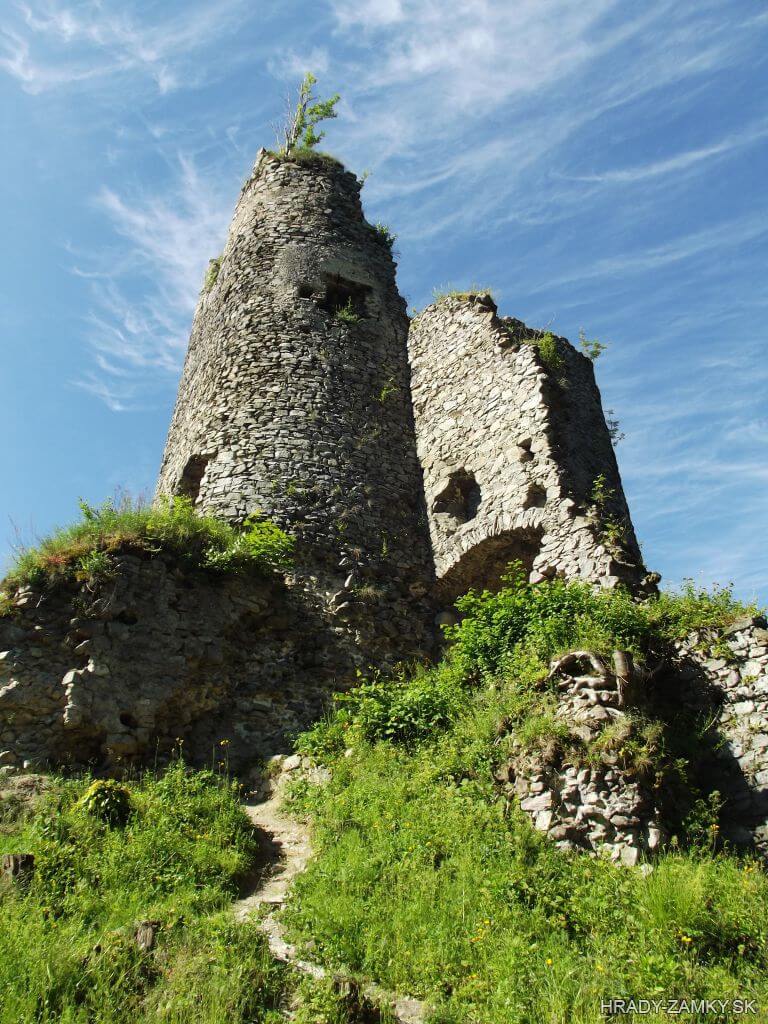
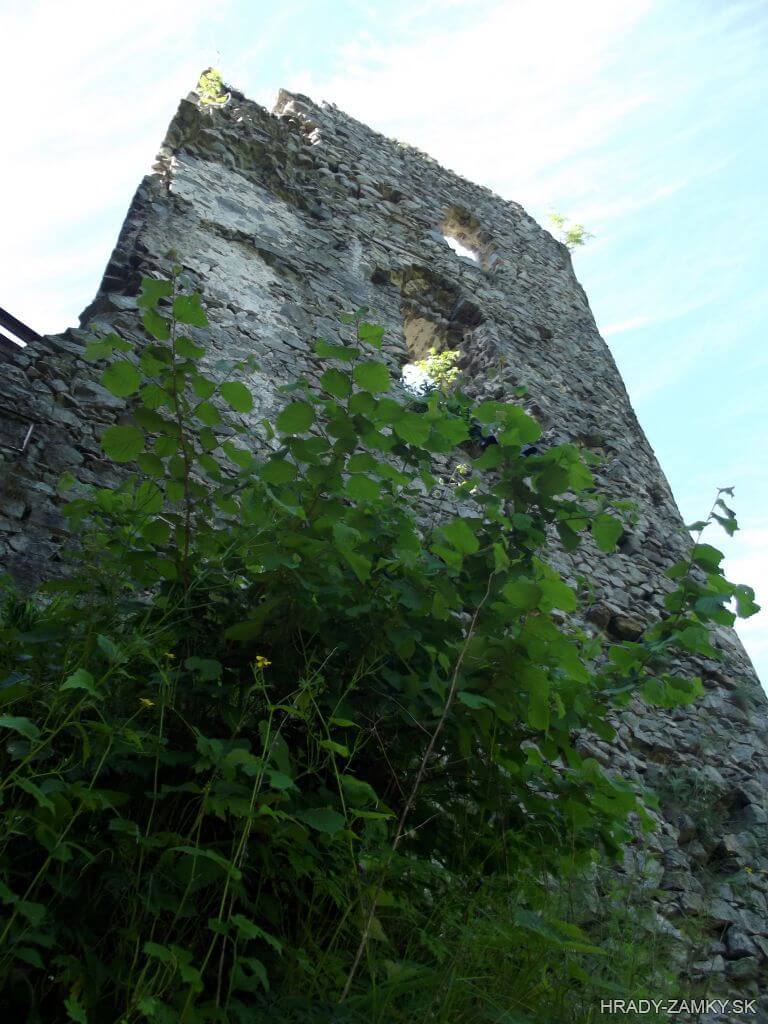
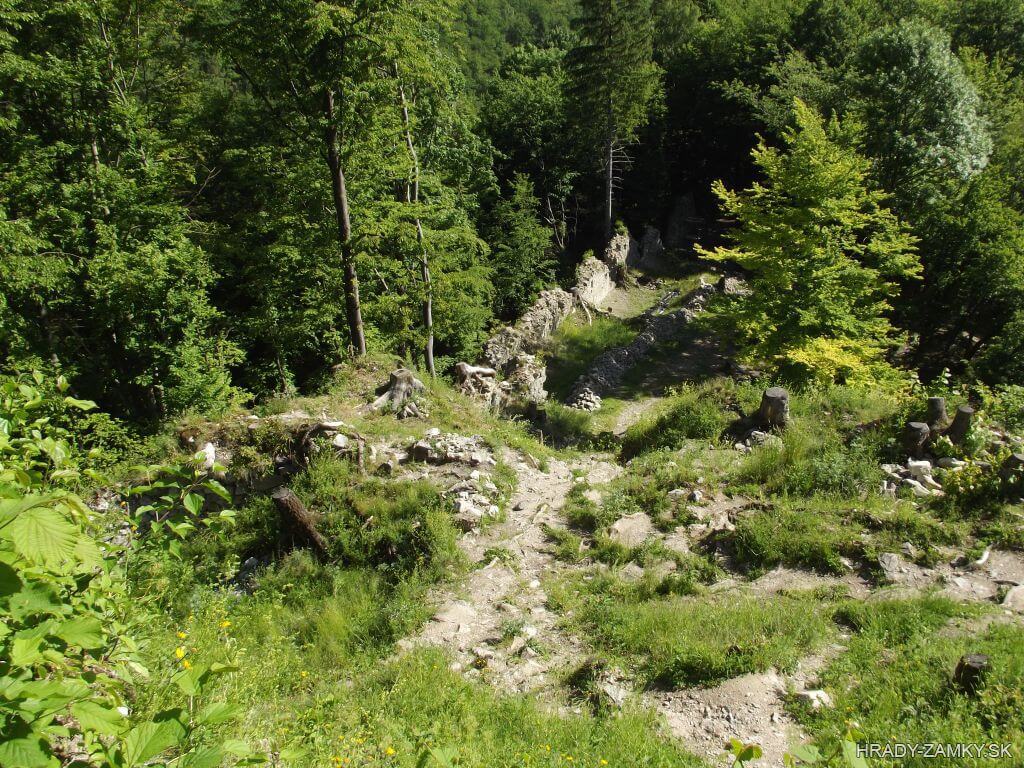
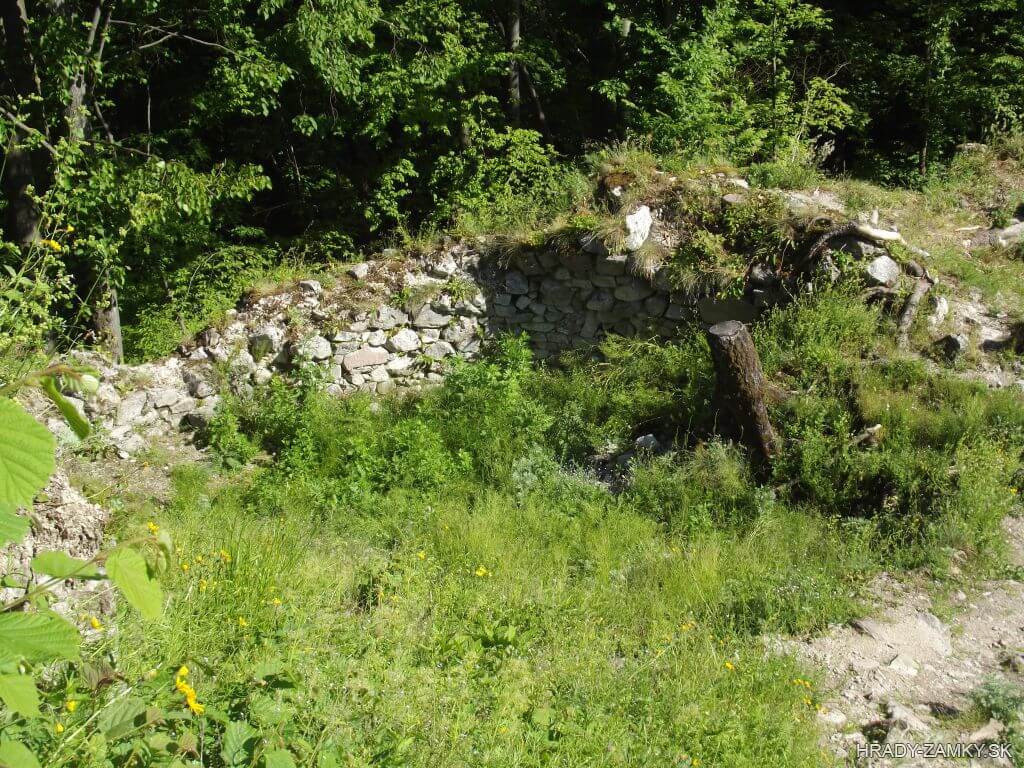
Vyvýšenému jadru hradu dominuje pravidelne zaoblená, v hornej časti zúžená veža, ktorej interiér bol v minulosti rozšírený do zaklenutého tvaru. Na prístupovej strane bola podnož veže vyplnená masívnou baštou, vedľa ktorej sa nachádzala brána. Na jej JZ konci sa nachádzajú zvyšky pravdepodobne obytnej veže, prípadne paláca. Vežu s palácom spájalo úzke nádvorie.V 15. storočí vystavali neskorogotický palác, z ktorého sa zachoval zvyšok arkiera. Zrejme v tomto období vzniklo aj predbránie a predhradie v sedle na SV od horného hradu.
Plan
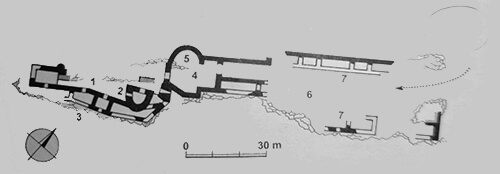
Legend to the ground plan
- 1 - upper castle
- 2 - horseshoe-shaped tower
- 3 - late Gothic palaces
- 4 - first fortification
- 5 - cannon bastion
- 6 - second fortification
- 7 - outbuildingsSource: BÁRTA V.
- BARTA V.
- NEŠPOR J. Hrady a zámky na Slovensku
Legenda k pôdorysu
- 1 - horný hrad
- 2 - podkovovitá veža
- 3 - neskorogotické paláce
- 4 - prvé predhradie
- 5 - delová bašta
- 6 - druhé predhradie
- 7 - hospodárske budovyZdroj: BÁRTA V.
- BARTA V.
- NEŠPOR J. Hrady a zámky na Slovensku
History
The first mention of Warna Castle is from 1241, where it is mentioned as the property of King Bela IV. The castle was to protect the old road through Považie. The origin of the castle itself is not exactly known, but it was probably built around 1235, during the reign of Andrew II.
In 1244, the king donated it to Bohumír for participating in the battle of Šajava against the Tatars. The castle was later owned by the Balass family and then in 1297 it was forcibly acquired by Matúš Čák. After his death (1321) the castle was regained by the Balassovs. In 1323, Master Donč acquired the manor with the castle in exchange for property at Ipli. In the years 1336-1338, the pronotary Pavol Ugali is mentioned as the backup holder of the castle. The castle then fell into the royal hands and was administered by the castellans commissioned by the rulers. One of them was Peter Wangel. After the construction of Strečno Castle, the Old Castle remained only the center of the manor.
At the end of the 14th century, the castle was acquired by the Polish dignitary Sedziwoj of Szubin, who lived in the castle until 1408. In the years 1408-1424, the Stiborovci were the backup owners of the castle. In 1424, King Sigismund dedicated the castle to his wife Barbora. After his death, King Albert donated Starhrad to Queen Elizabeth in 1439. In the years 1442 - 1446, the castle was in reserve by the Hussite captain Ján Čapek from Topoľčany.
From 1443 it belonged mostly to the Pongrácz family, except for short periods when the castle was fought for, such as in the years 1529-1553 in the land war with Mikuláš Kostek of Sedlec. In 1525, King Louis ordered the Pongrácz family to repair and fortify the castle against possible Ottoman invasions. The Pongrácz family fortified the castle with turnover for benefits in the form of non-payment of taxes. At that time, they also built a semicircular bastion, which controlled the slope and the road in the valley. The Pongrács lived here until they built a comfortable Renaissance manor house in Krasňany. However, the fire of the newly built manor house in Krasňany also forced the re-use of the castle.
The castle then defended itself against Thököly's insurgents, although in 1663 the Turkish wrecker almost set fire to the castle, but was prevented from doing so. At the beginning of the 18th century, the castle provided facilities for the section of Francis II. Rákoczi, when a substantial part of the castle was owned by Alexander Lužinský, Rákóczi's colonel, son of Juliana Pongrácz. In 1708, the castle was occupied by the imperial army and his property was confiscated.
Until the beginning of the 18th century, only its guards lived in the castle. After their departure, the castle gradually began to decay.
During the Slovak National Rising, the castle became a place of fighting when it was occupied by a German battalion in August 1944. The castle was registered as a cultural monument with a delay until 2017, and since 2018 the Association for the Rescue of the Old Castle - Castrum Warna has been trying to save it.
Prvá zmienka o hrade Warna je z roku 1241, kde sa spomína ako majetok panovníka Bela IV. Hrad mal chrániť starú cestu cez Považie. Vznik samotného hradu nie je presne známy, no pravdepodobne vznikol okolo roku 1235, v časoch panovania Ondreja II.
V roku 1244 ho kráľ daroval Bohumírovi za účasť na bitke pri Šajave proti Tatárom. Hrad neskôr vlastnil rod Balassovcov a potom ho v roku 1297 násilne získal Matúš Čák. Po jeho smrti (1321) hrad opäť získali Balassovci. V roku 1323 získal panstvo s hradom magister Donč výmenou za majetky pri Ipli. V rokoch 1336-1338 sa ako záložný držiteľ hradu spomína pronotár Pavol Ugali. Hrad potom pripadol do kráľovských rúk a spravovali ho panovníkom poverení kasteláni. Jedným z nich bol Peter Wangel. Po výstavbe hradu Strečno, zostal Starý hrad už iba centrom panstva.
Koncom 14. storočia hrad získal poľský hodnostár Sedziwoj z Ostrorogu, ktorý na hrade sídlil do roku 1408. V rokoch 1408-1424 boli záložnými vlastníkmi hradu Stiborovci. V roku 1424 král Žigmund venoval hrad svojej manželke Barbore. Po Žigmundovej smrti panovník Albrecht II. daroval v roku 1439 Starhrad manželke kráľovnej Alžbete. V rokoch 1442 - 1446 mal hrad v zálohe topoľčiansky husitský kapitán Ján Čapek.
Od roku 1443 patril väčšinou Pongráczovcom, okrem krátkych období, keď sa o hrad bojovalo, ako napríklad v rokoch 1529-1553 v zemepanskej vojne s Mikulášom Kostkom zo Sedlce. V roku 1525 kráľ Ľudovít II. nariadil Pongráczovcom, aby hrad opravili a opevnili proti možným osmanským nájazdom. Pongráczovci hrad opevnili obratom za výhody vo forme neplatenia daní. V tom čase postavili aj polkruhovú baštu, ktoráý ovládala svah i cestu v doline. Pongráczovci tu bývali až kým si v Krasňanoch postavili pohodlný renesančný kaštieľ, no opätovné používanie hradu si vynútil aj požiar novovybudovaného kaštieľa v Krasňanoch.
Hrad sa potom ubránil Thökölyho povstalcom, hoci v roku 1663 turecký záškodník takmer podpálil hrad, no zabránili mu v tom. Začiatkom 18. storočia hrad poskytol zázemie oddielom Františka II. Rákócziho, keď podstatnú časť hradu vlastnil Alexander Lužinský, rákócziovský plukovník, syn Juliany Pongrácz. V roku 1708 preto hrad obsadilo cisárske vojsko a majetky mu skonfiškovali.
Do začiatku 18. storočia sídlili na hrade už len jeho strážcovia. Po ich odchode začal hrad postupne chátrať.
Počas SNP sa hrad stal miestom bojov, keď ho v auguste 1944 obsadil nemecký prápor. Hrad bol s oneskorením až v roku 2017 zapísaný ako kultúrna pamiatka a od roku 2018 sa o jeho záchranu snaží Združenie na záchranu Starého hradu – Castrum Warna.
Myths and legends
The rumor says
In the abandoned chambers of the Old Castle, a kind of villainous knight was scared. People canter. The dying hermit cursed the villain so that he would not have peace after his death, until by ruining the castle and taking Váh untouched. In the rapist's repentance, the castle has already turned into a ruin, and the walls, cut by rocks falling into the river, are unstoppably declining.
Povráva sa
V opustených komnatách Starého hradu sa zapelešil akýsi zlodušný rytier. Ľudí kántril. Hynúci pustovník krutáňa preklial, aby po smrti pokoja nemal, kým rúcaním hradu a brál Váh nezahatá. V pokání násilníka sa hrad už zmenil na ruinu a z múrov, podťatých vypadávaním skál do rieky, nezadržiteľne ubúda.
Useful information
The ruins are freely accessible
Zrúcanina je voľne prístupná
Nearby castles