Lietava
Lietava Žilina county Slovakia
castle ruin
Lietava
Lietava Žilinský kraj Slovakia
zrúcanina hradu
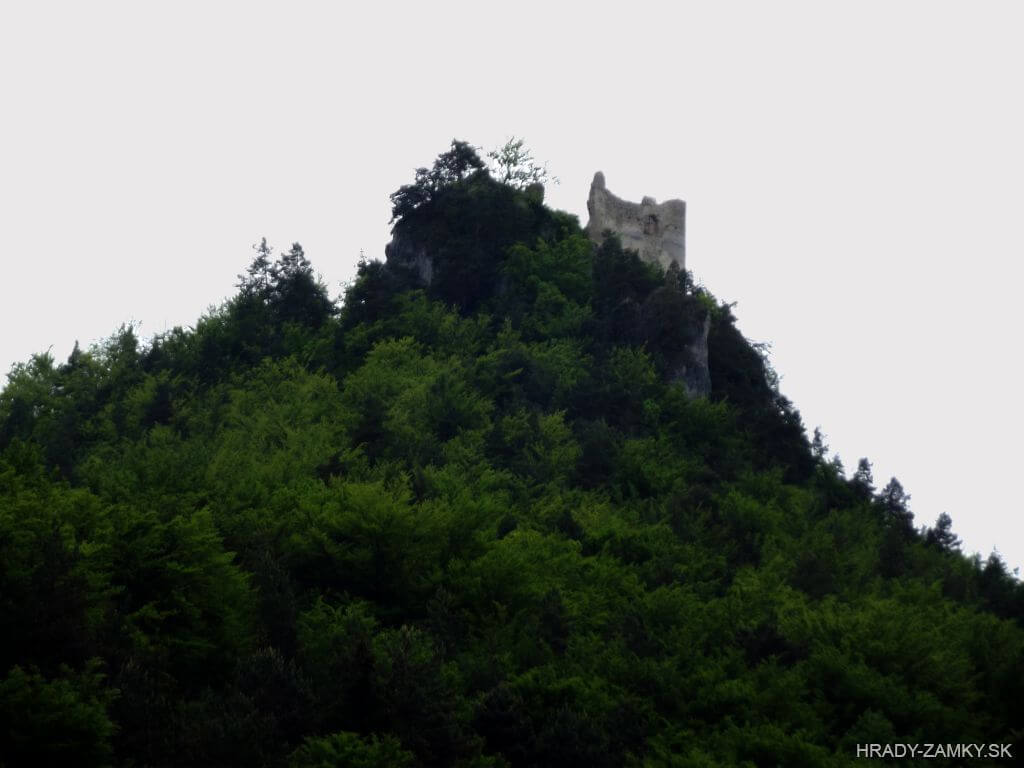
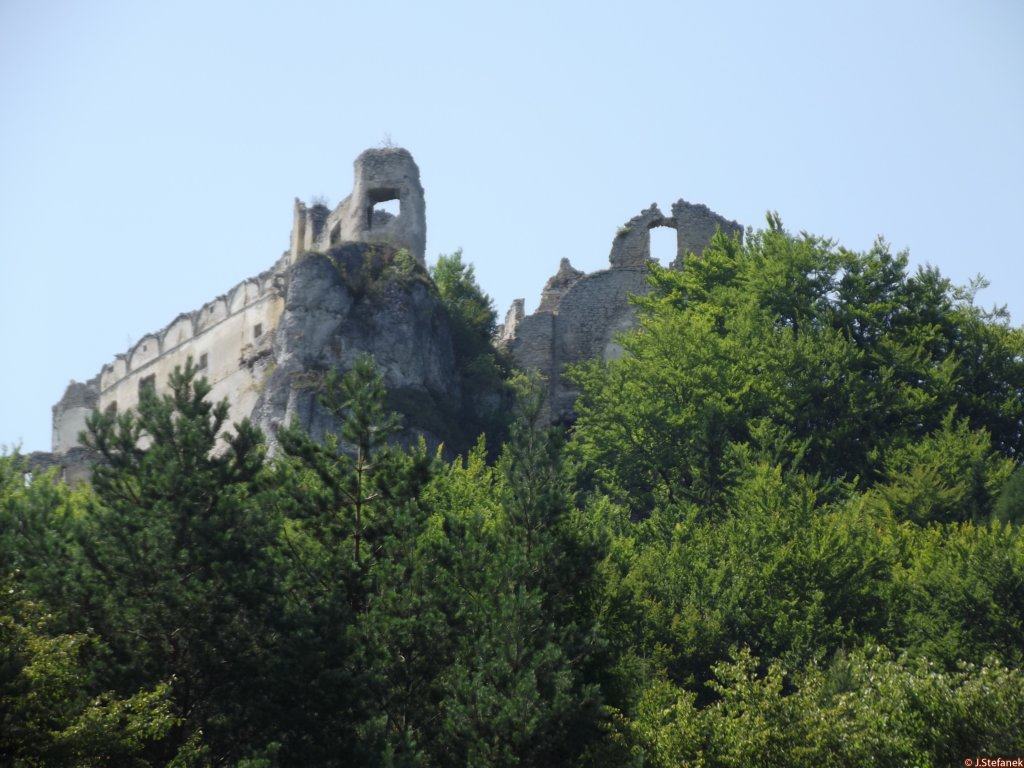
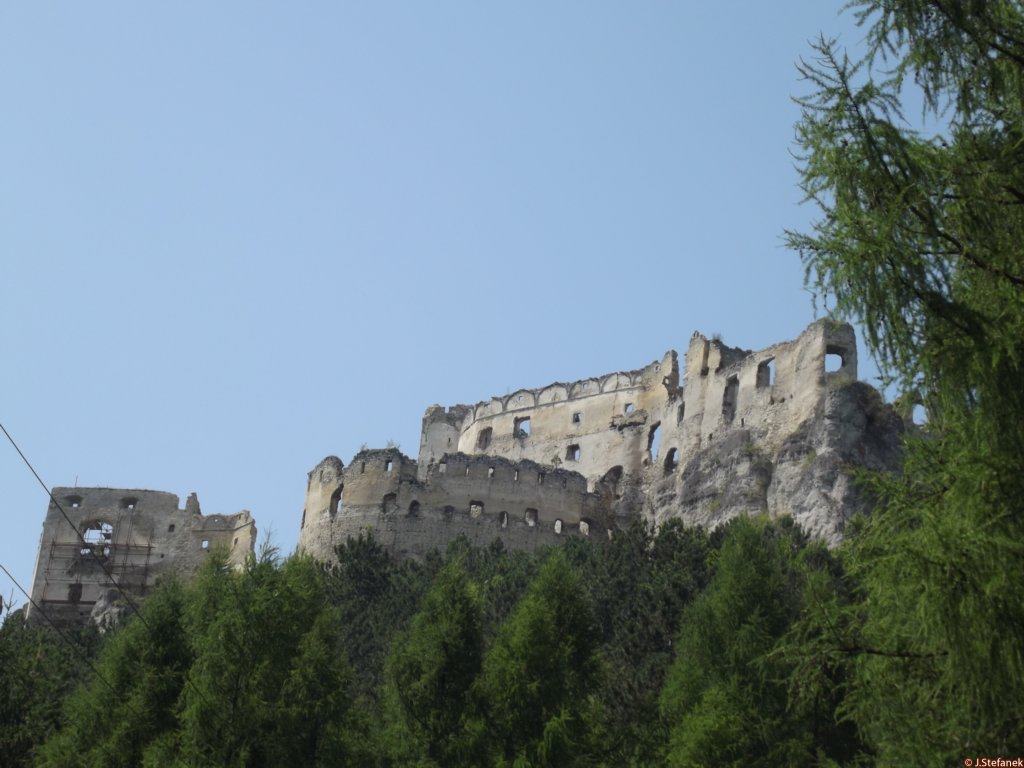
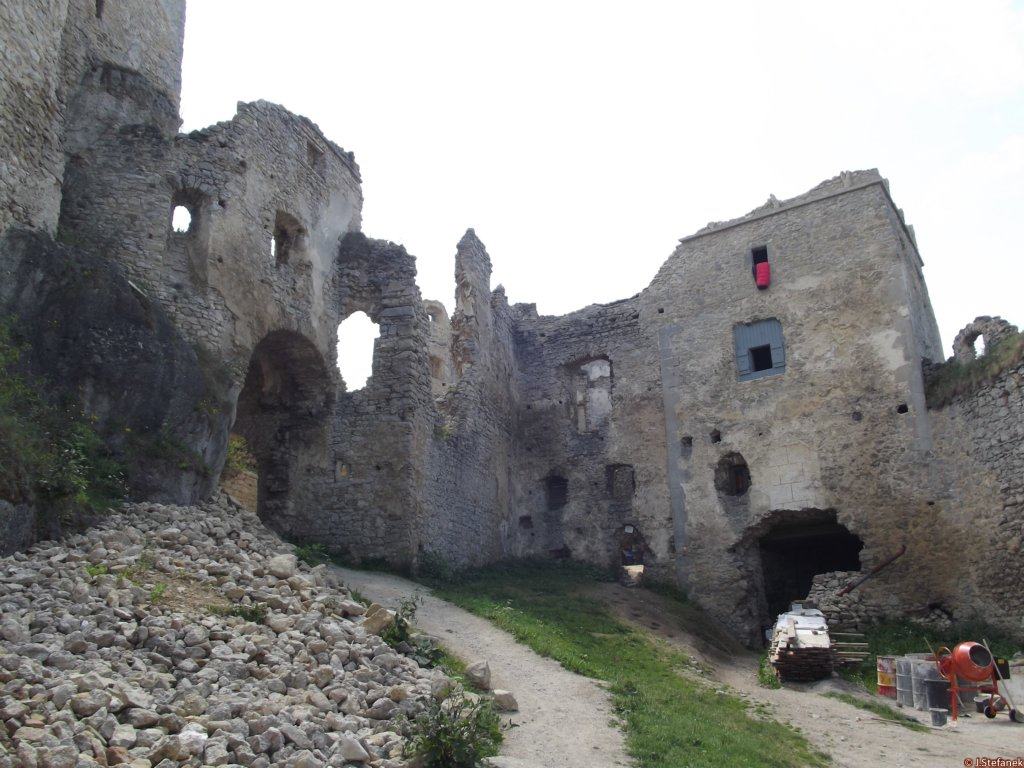
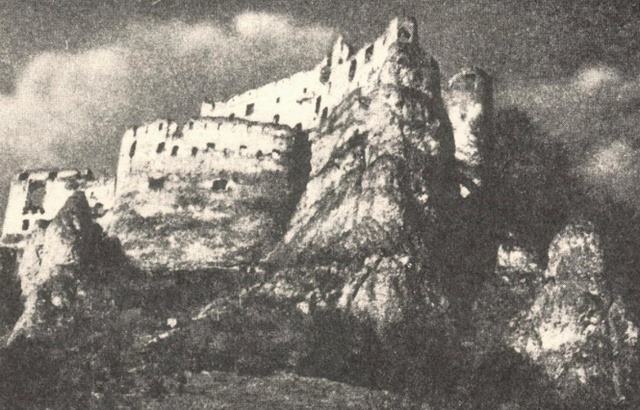
Extensive castle ruins on the rock ridge of Skalky in Súľov Mountains, belonging to the village of Lietava
Rozsiahla zrúcanina hradu na bralnom hrebeni Skaliek v Súľovských vrchoch, prislúchajúca obci Lietava.
Previous names
Lytwa, Litwa, Lethawa, Liptua, Letavia, Lietawa, Lethavka, Lejtava, Zsolnalitva
Roads
Trasa 1: In the direction from Žilina we cross Lietavská Lúčka and in the direction of Lietava before the village there is a part of Lietava-Majer. Here we turn left onto a path where there is a narrow bridge over the stream. We cross the bridge and on the left side we find a smaller parking lot. From there, we continue on foot along the road (blue route), which turns into a dirt road behind the last house. After it we go through the meadow valley to the saddle below the castle. A narrow sidewalk leads slightly to the right from the saddle. Take a slight climb over the wooded slope and come to a crossroads below Cibuľník, under which a steep sidewalk marked with a green sign joins from the left side. From this place a less demanding forest road leads to the castle.
Trasa 1: V smere od Žiliny prejdeme cez Lietavskú Lúčku a v smere na Lietavu ešte pred obcou sa nachádza časť Lietava-Majer. Tu odbočíme doľava na cestičku, kde je úzky mostík ponad potok. Prejdeme mostíkom a na ľavej strane nájdeme menšie parkovisko. Odtiaľ potom peši pokračujeme ďalej po ceste (modrá TZT), ktorá sa za posledným domom mení na poľnú cestu. Po nej sa vydáme lúčnou dolinou do sedla pod hradom. Zo sedla vedie mierne doprava úzky chodník. Miernym stúpaním pretneme zalesnený svah a prídeme na rázcestie pod Cibuľníkom, pod ktorým sa z ľavej strany pripája strmý chodník označený zelenou značkou. Z tohto miesta vedie na hrad menej náročná lesná cesta.
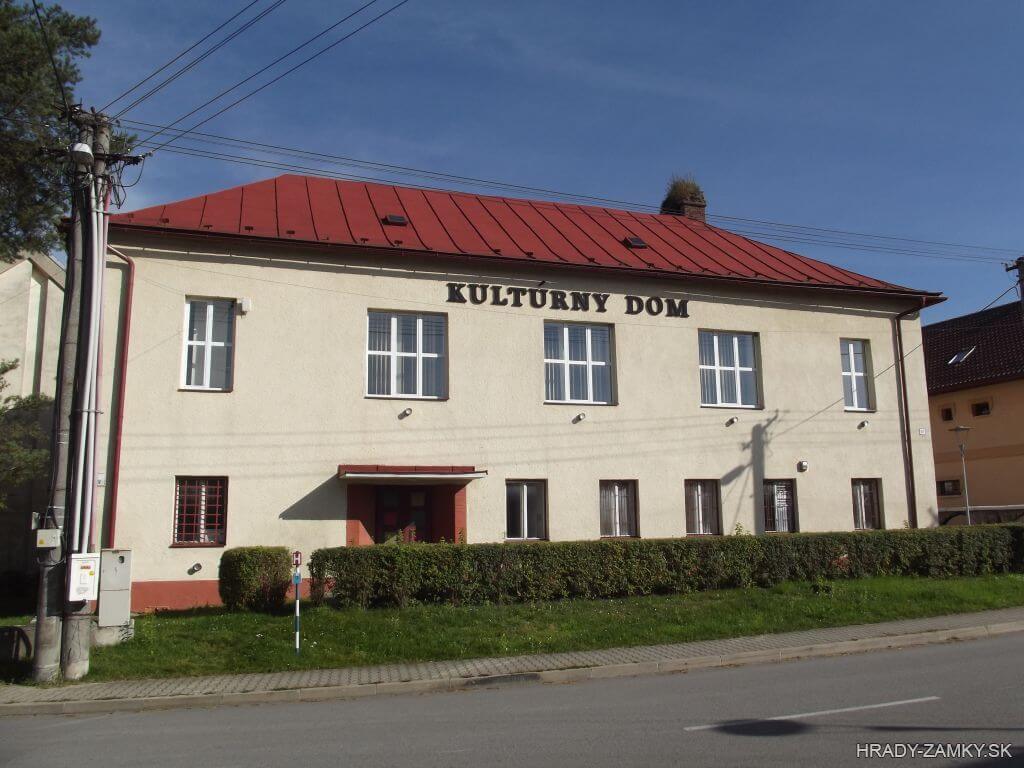
Trasa 2: From the opposite side, from Lietavská Svinná on the green route, which is partly quite steep. We can park at the culture house near the Municipal Office, from there straight on the road (we have the church on the left side). After a while we turn right and then left across the meadow, later across the forest to the castle.
Trasa 2: Z opačnej strany, z Lietavskej Svinnej po zelenej TZT, ktorá je sčasti pomerne strmá. Zaparkovať môžeme pri kultúrnom dome blízko Obecného úradu, odtiaľ rovno po ceste (kostol máme po ľavej strane). Po chvíli odbočíme vpravo a vzápätí vľavo cez lúku, neskôr cez les až na hrad.
Trasa 3: A longer route from Podhorie, where we can park on the square by the shop and from there along the blue route to the castle.
Trasa 3: Dlhšia trasa z Podhoria, kde môžeme zaparkovať na námestí pri obchode a odtiaľ po modrej trase až na hrad.
Description
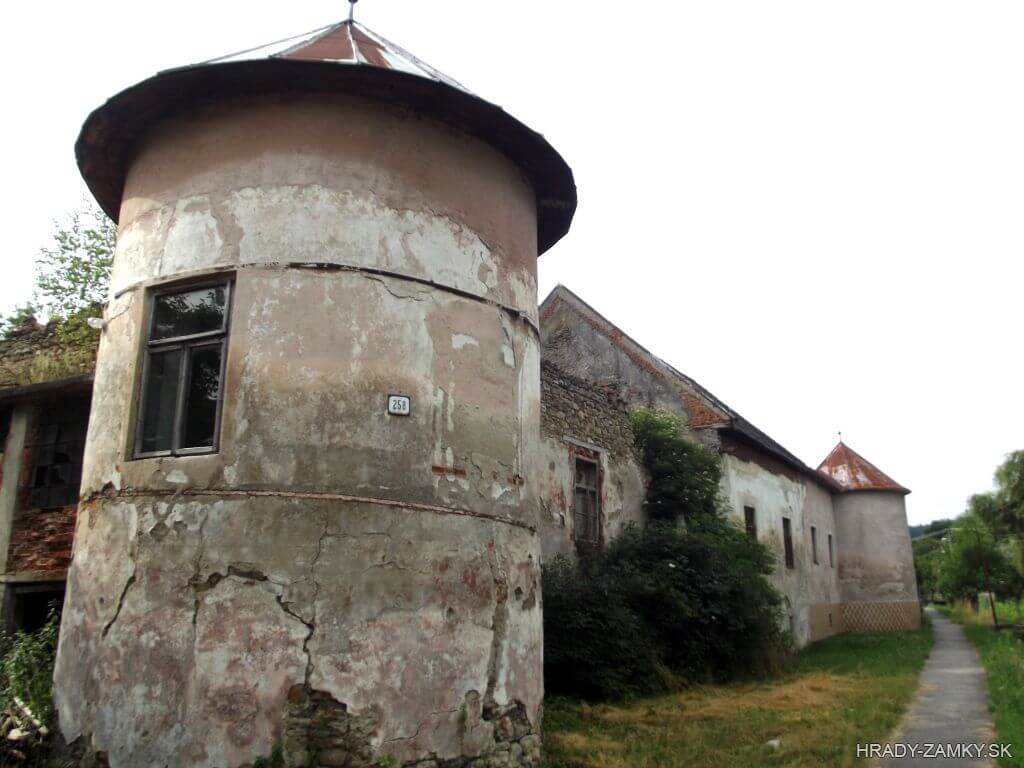
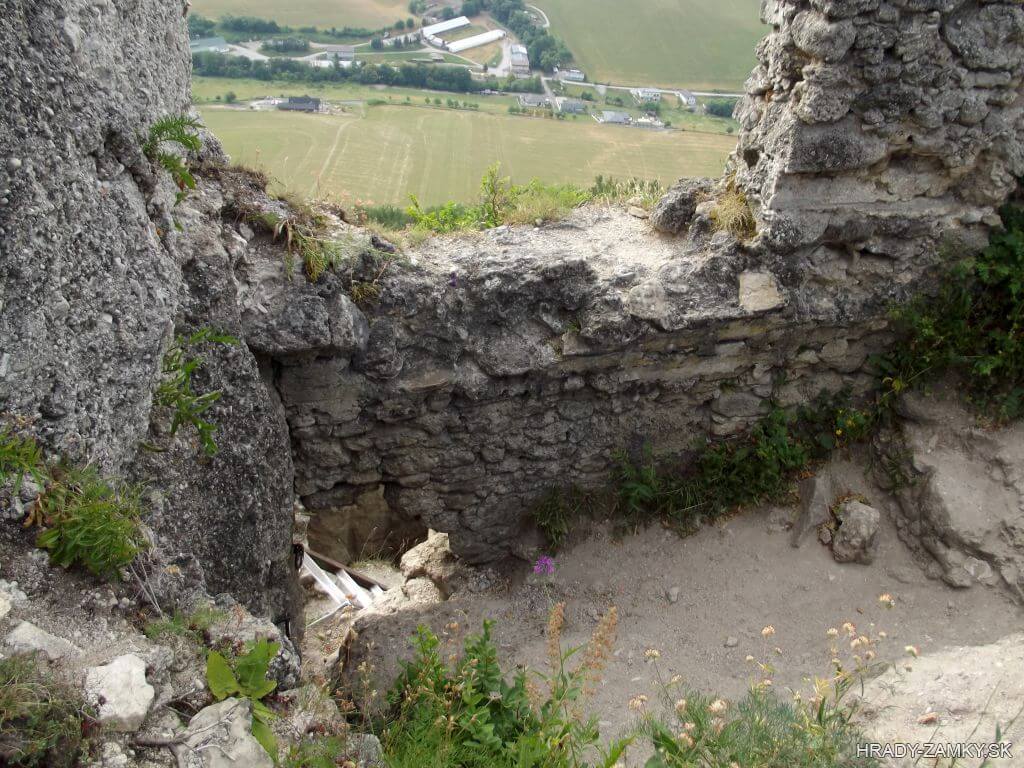
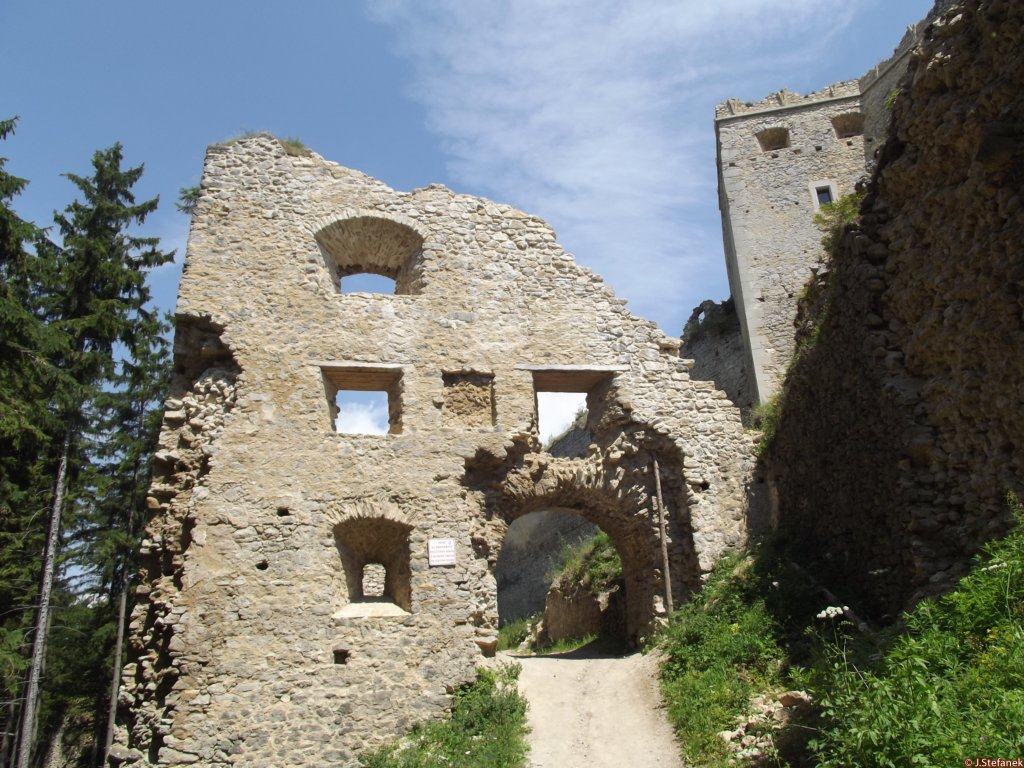
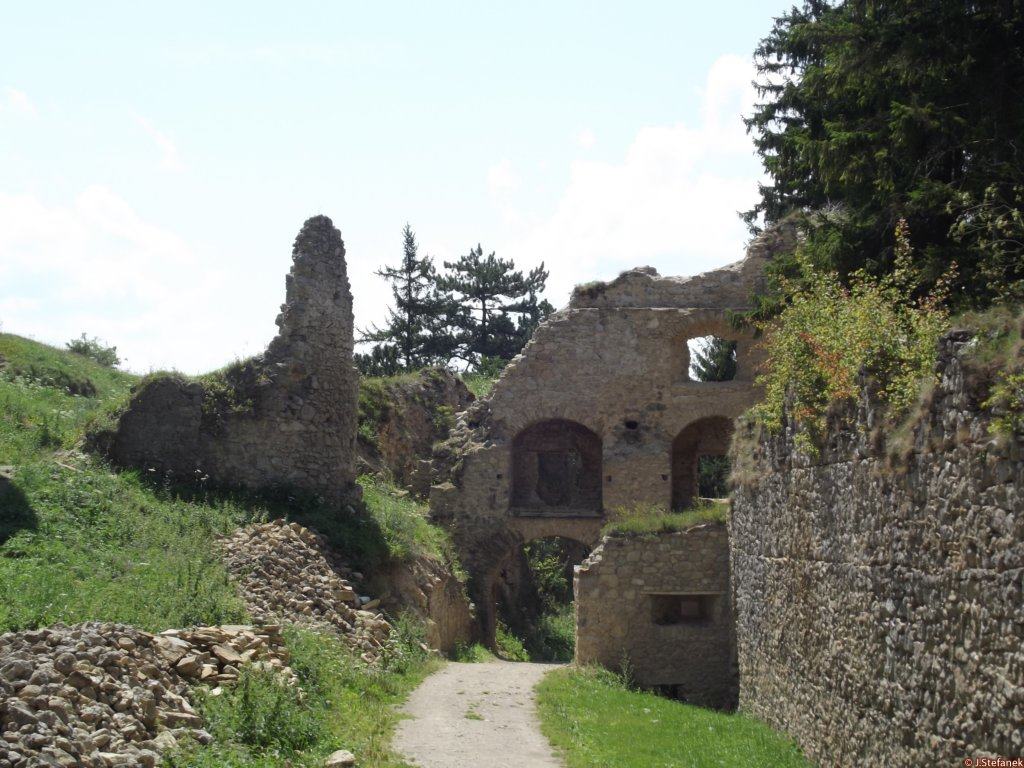
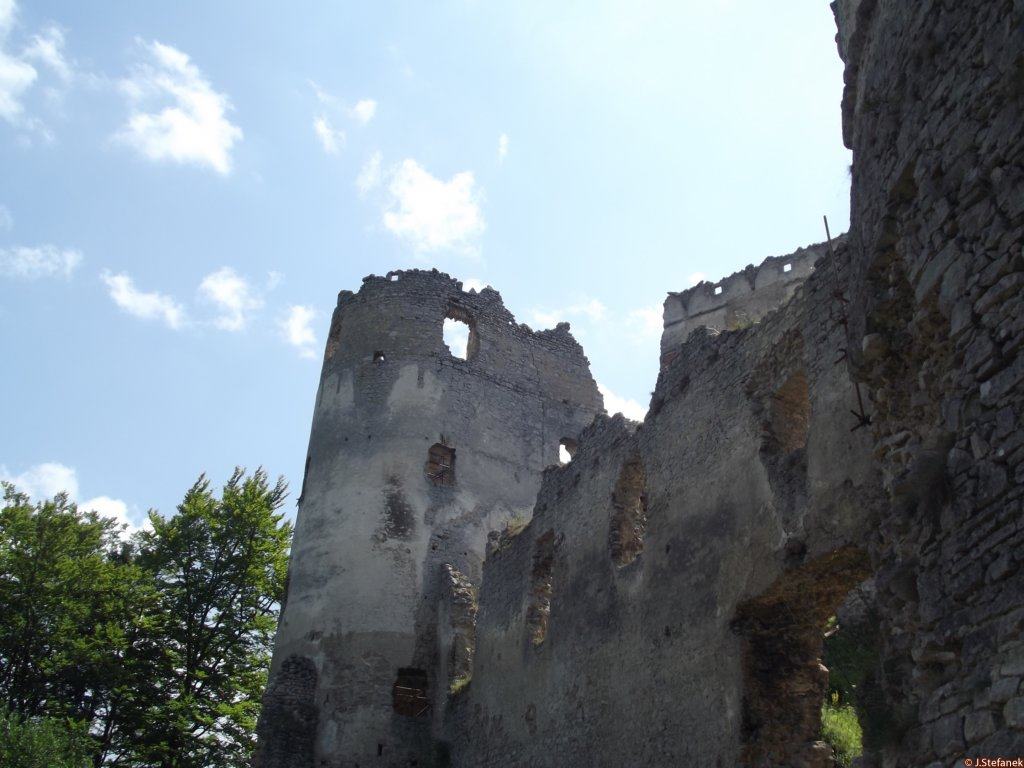
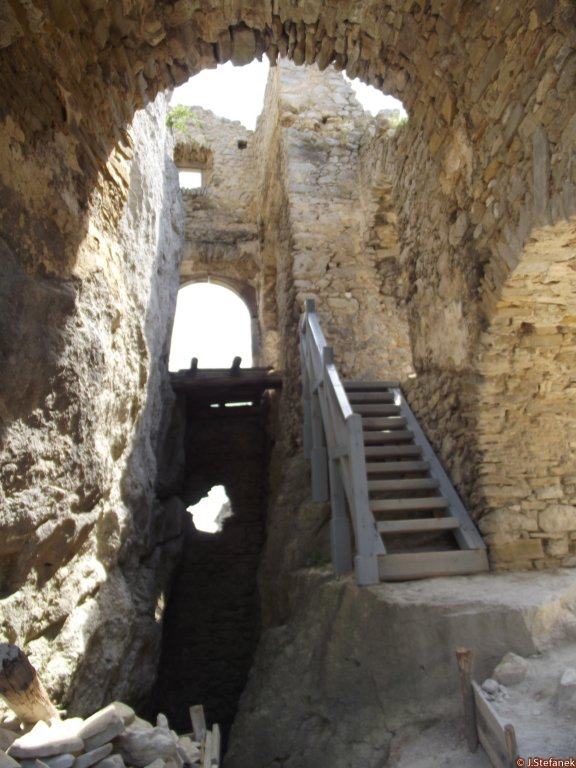
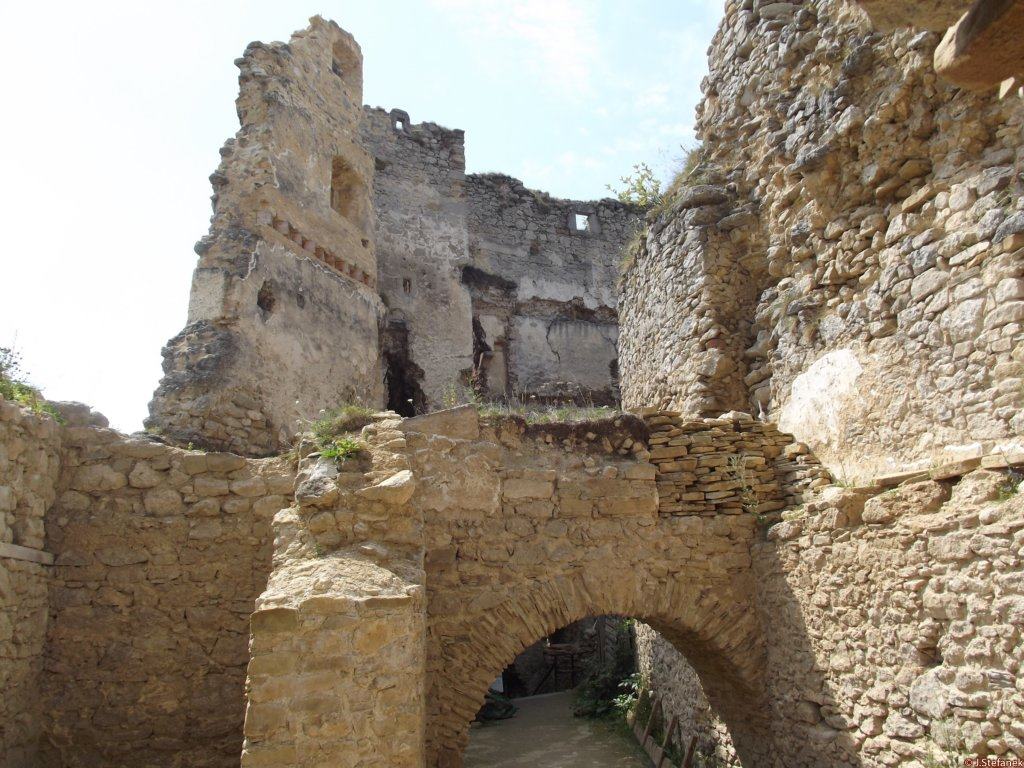
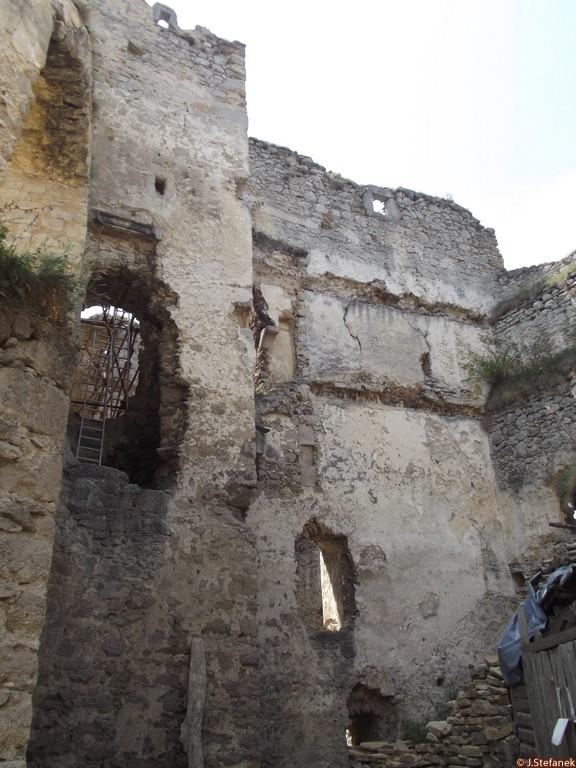
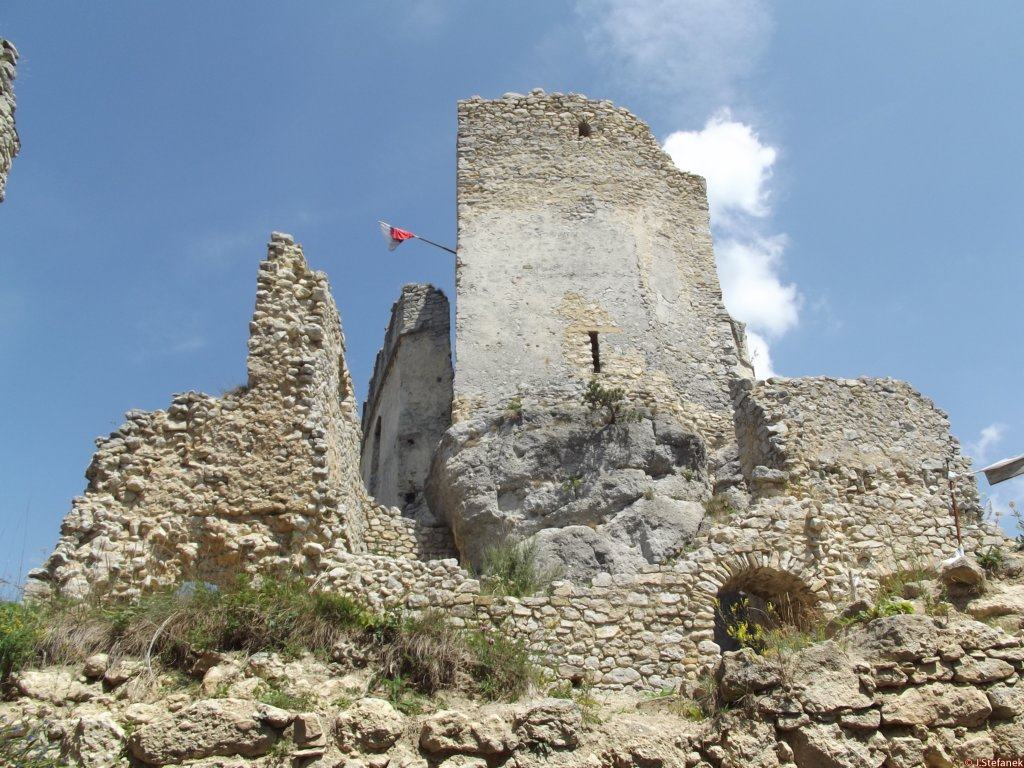
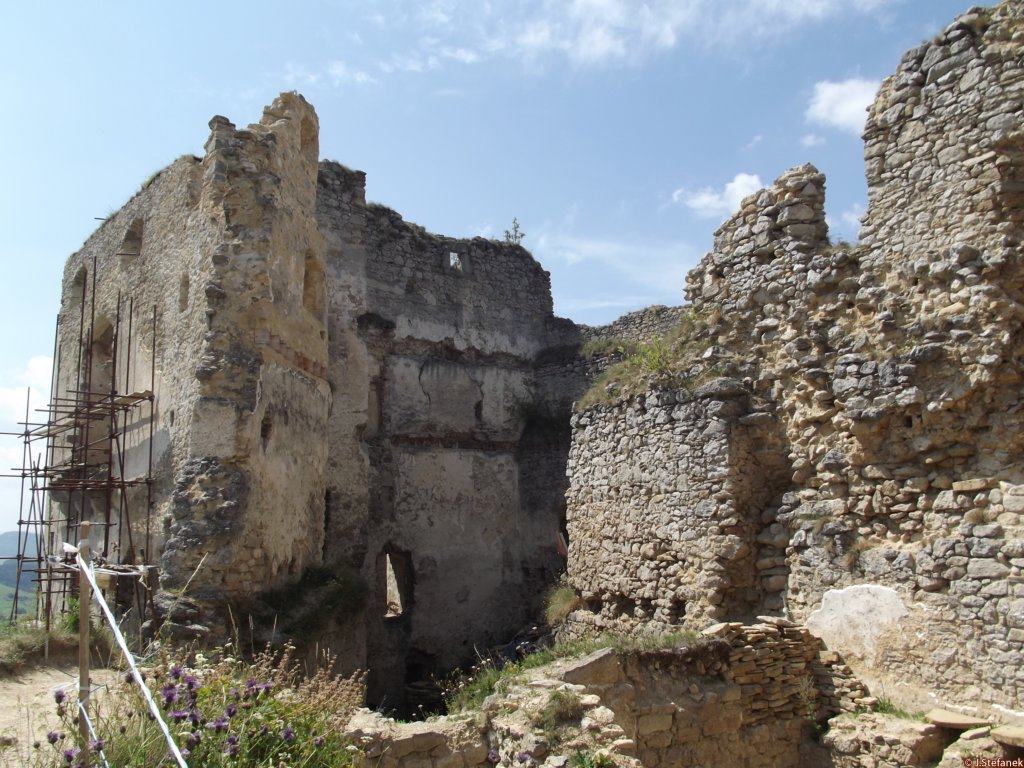
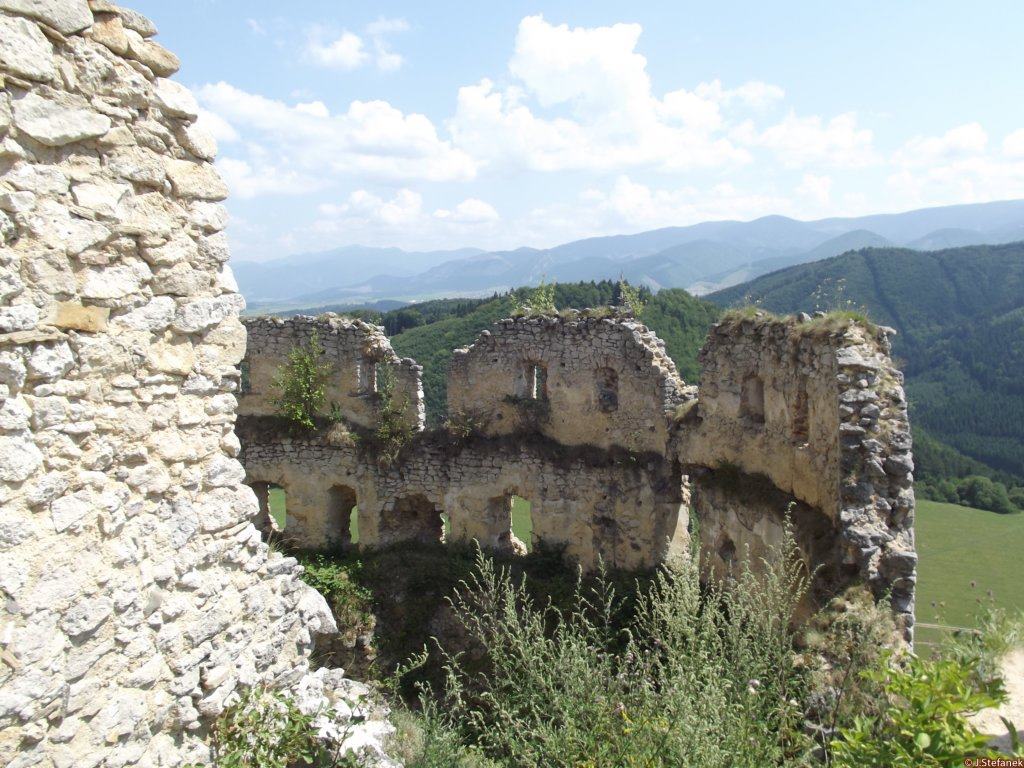
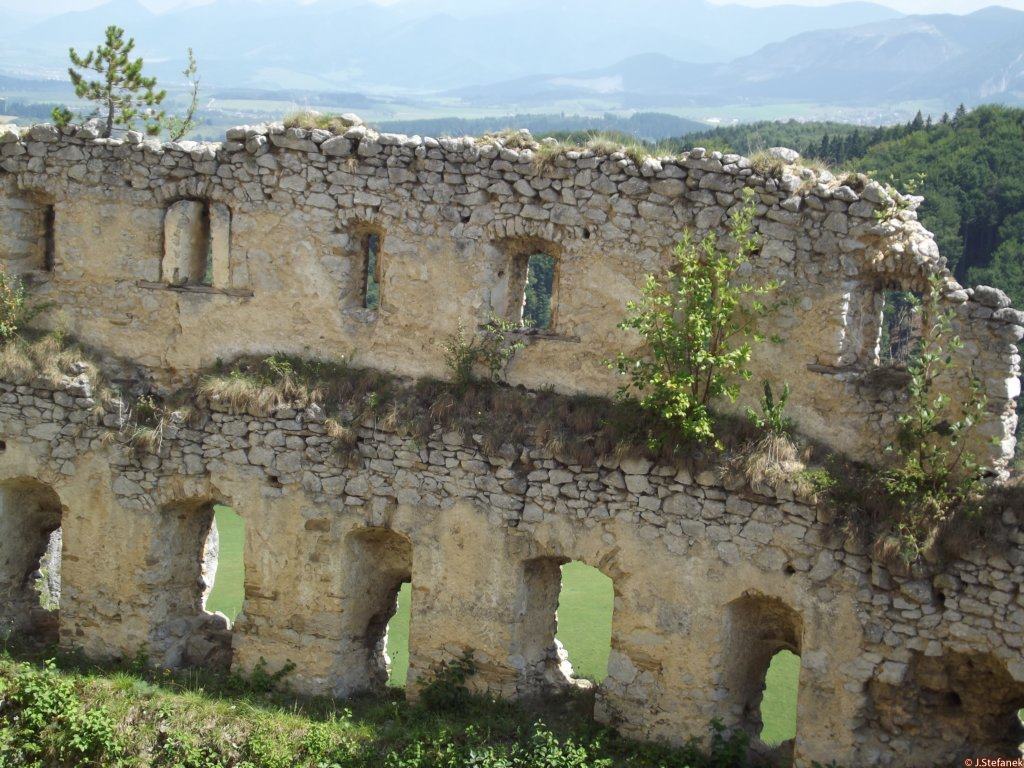
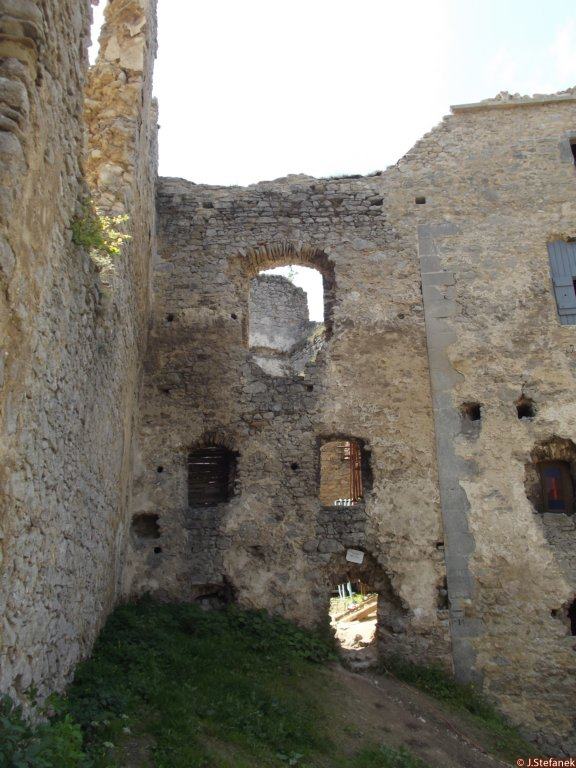
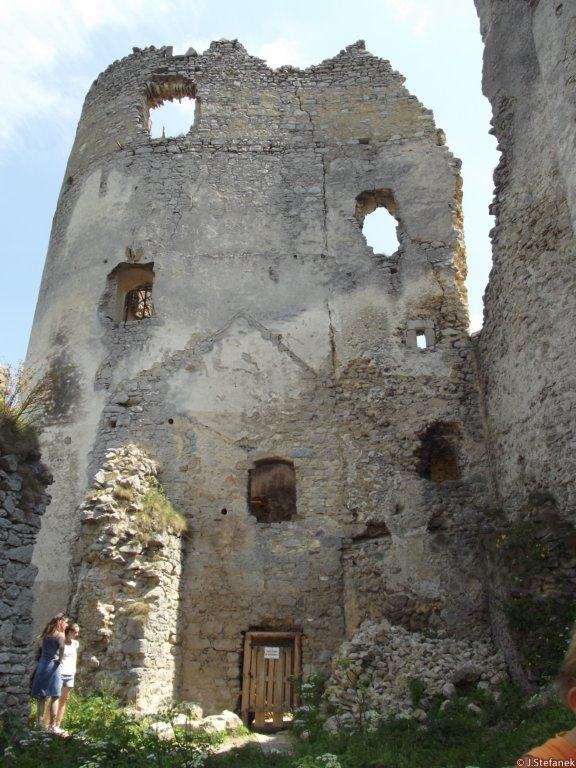
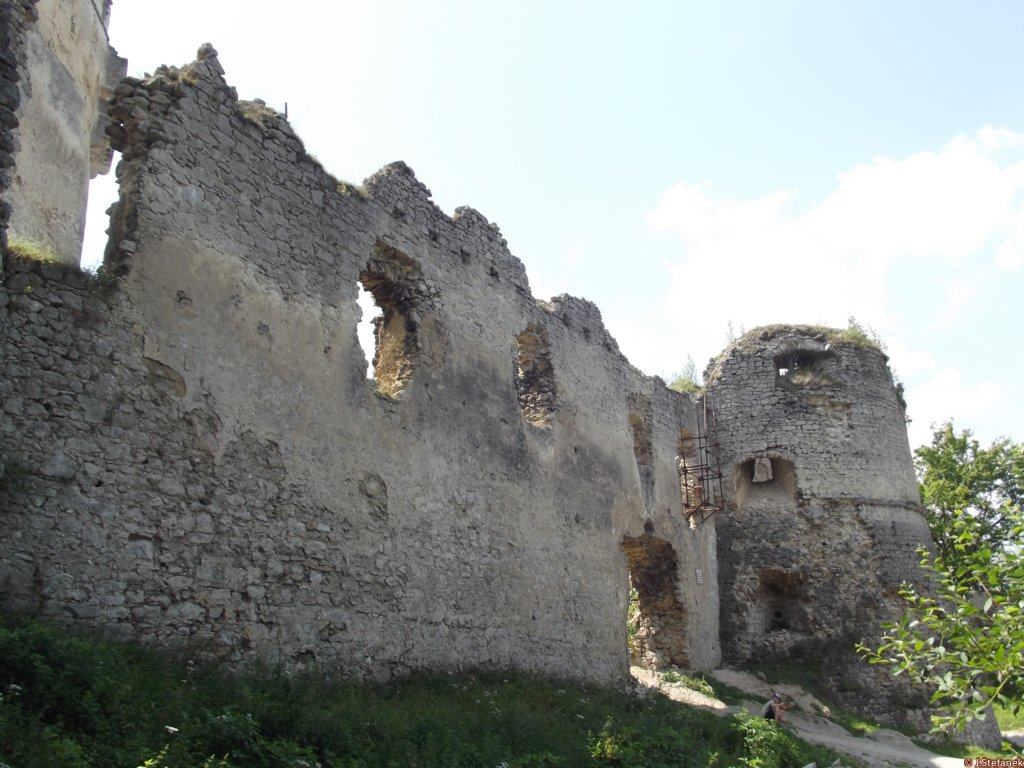
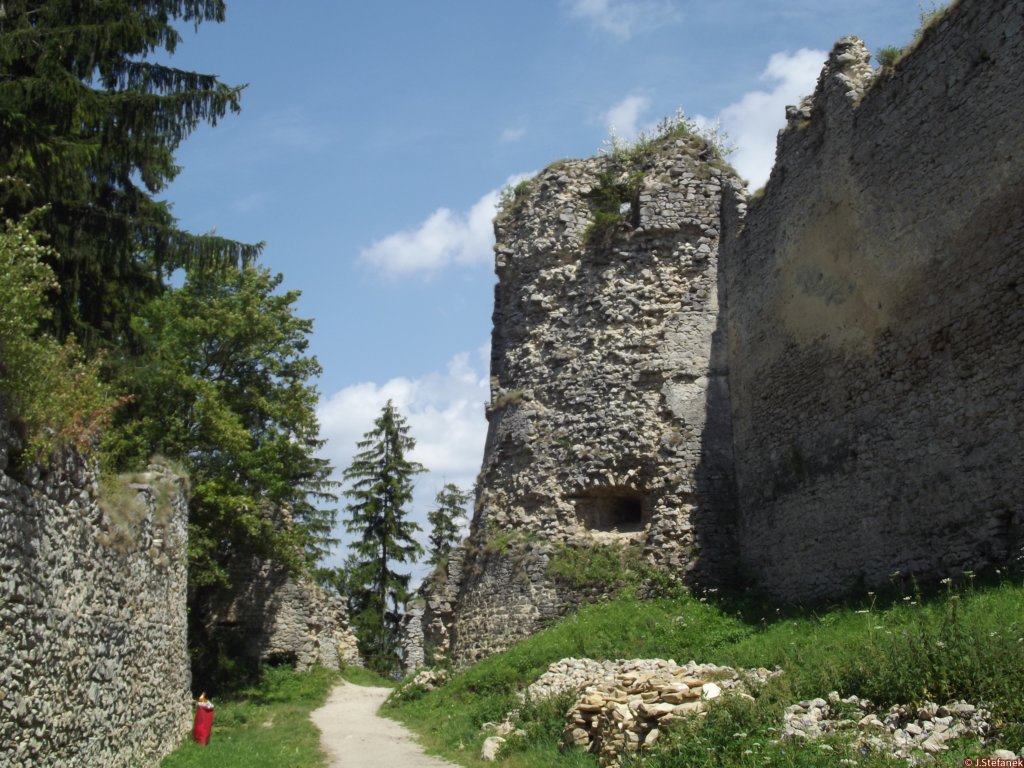
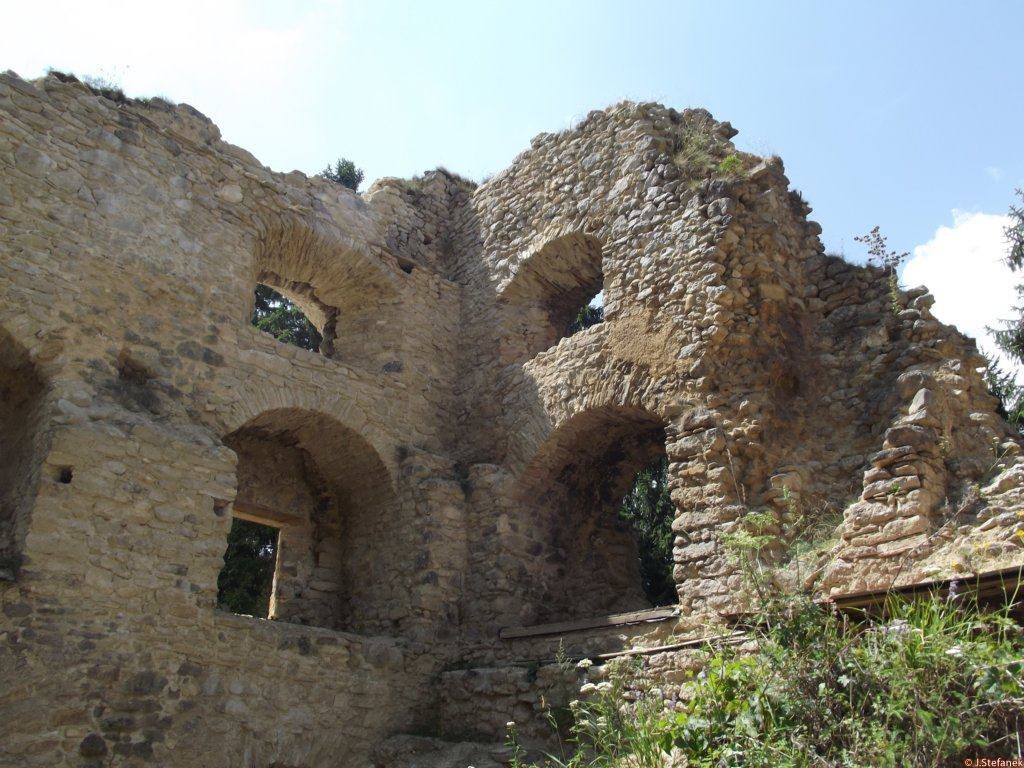
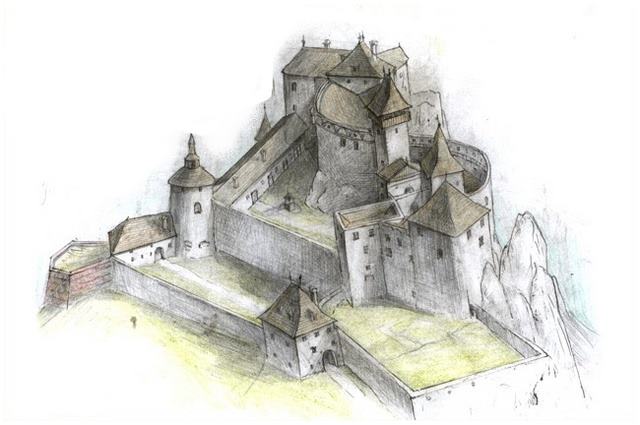
The core of the castle was a large prismatic tower, facing the neck of the access ridge. North of it was the fortified courtyard of the upper castle with a palace and other buildings. The castle fortifications followed the rugged shape of the terrain. On its eastern side they placed a Gothic chapel. The core of the castle is surrounded by the first large bailey on the north and west. It was accessible by a prismatic entrance tower with a gate. On the southeast is a large residential building with a rounded corner with stone framing and embossed coat of arms. They built a large round bastion on the northwest corner and a cylindrical tower on the NE. This courtyard housed residential and farm buildings. The second bailey protected the area from north and west. It was accessible by another large prismatic tower with a drawbridge and its moat also increased its safety. The dam was reinforced by a polygonal bastion (NW) and a round tower (NE).Castle walls of individual buildings still stand to a considerable height. They have preserved the openings of windows or entrances and architectural details, stone profiled brackets of the former bay window, arched parapet, cannon and key loopholes, in places and parts of profiled lining. In the premises of the former chapel, there have been preserved ramparts of stone Gothic ribs and on some walls remains of plaster. At least partial restoration and conservation of the castle is attempted by a civic association, which in 2008 acquired the castle into ownership.
Jadro hradu tvorila veľká hranolová veža, situovaná čelom k šiji prístupového hrebeňa. Severne od nej bolo opevnené nádvorie horného hradu s palácom a ďalšími objektmi. Hradné opevnenie sledovalo členitý tvar terénu. Na jeho východnej strane umiestnili gotickú kaplnku. Jadro hradu obklopuje prvé veľké predhradie na S a Z. Prístupné bolo hranolovou vstupnou vežou s bránou. Na JV od nej stojí veľká obytná budova s oblým nárožím s kamenným rámovaním a reliéfom erbu. Na severozápadnom nároží postavili veľkú okrúhlu baštu a na SV valcovitú vežu. Na tomto nádvorí sa nachádzali obytné a hospodárske budovy. Druhé predhradie chránilo areál od S a Z. Prístupné bolo ďalšou veľkou hranolovou vežou s padacím mostom a jeho bezpečnosť zvyšovala i priekopa. Predhradie spevňovala polygonálna bašta (SZ) a oblá veža (SV).Hradné múry jednotlivých objektov stoja dodnes do značnej výšky. Majú zachované otvory okien, prípadne vstupov a architektonických detailov, kamenné profilované konzoly bývalého arkiera, oblúčikové atiky, delové a kľúčové strieľne, miestami aj časti profilovaných ostení. V priestoroch bývalej kaplnky sa zachovali nábehy kamenných gotických rebier a na niektorých múroch zvyšky omietok. O aspoň čiastočnú sanáciu a konzerváciu hradu sa pokúša občianske združenie, ktoré v roku 2008 získalo hrad do vlastníctva.
Plan
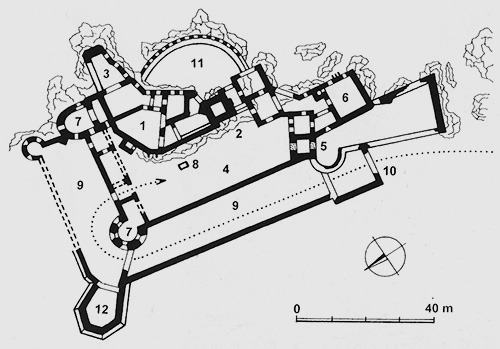
Legend to the ground plan
- 1 - upper castle
- 2 - tower at the entrance to the upper castle
- 3 - chapel
- 4 - first fort
- 5 - originally tower gate
- 6 - residential tower
- 7 - bastions of the first fort
- 8 - well
- 9 - second fort
- 10 - entrance tower
- 11 - semicircular bastion
- 12 - polygonal bastion
Legenda k pôdorysu
- 1 - horný hrad
- 2 - veža pri vstupe do horného hradu
- 3 - kaplnka
- 4 - prvé predhradie
- 5 - pôvodne vežovitá brána
- 6 - obytná veža
- 7 - bašty prvého predhradia
- 8 - studňa
- 9 - druhé predhradie
- 10 - vstupná veža
- 11 - polkruhový bastión
- 12 - polygonálny bastión
History
The castle was probably built by the Balass family in the second half of the 13th century as an administrative and military center. In the years 1300-1321 the castle was occupied by Matúš Čák Trenčiansky and after his death it was occupied by the royal army. In 1360, the castle was donated by King Ľudovít Veľký Štefan Bebek, a regional judge, for his military service. However, in 1393, the new King Sigismund of Luxembourg confiscated Lietava from the Bebek family for treason. In the following period, several holders changed on the castle estate. They were mainly Stiborors and related Polish nobles. In 1474, King Matej Korvín donated the castle to his military commander Pavel Kinizsi, who substantially fortified and expanded Lietava.
Around 1490, the castle was deposited by Štefan Zápoľský, who in 1445 acquired it as hereditary property. His son Ján Zápoľský donated the inherited castle to his brothers Peter and Mikuláš Kostkovec, who defended Lietava from the attacks of the troops of the second king Ferdinand I of Habsburg. Mikuláš Kostka further improved the castle and saved it from the claims of the Báthory family. After his death in 1558, the entire castle estate passed into the ownership of Mikuláš's son-in-law František Thurz. Thurzo had the castle generously rebuilt in the Renaissance style. In 1621, a branch of the Thurz family died by the sword. The heirs in the women's line divided the Lietava estate, but the castle began to fall into disrepair due to the discord and unwillingness of the co-owners to participate in its maintenance.
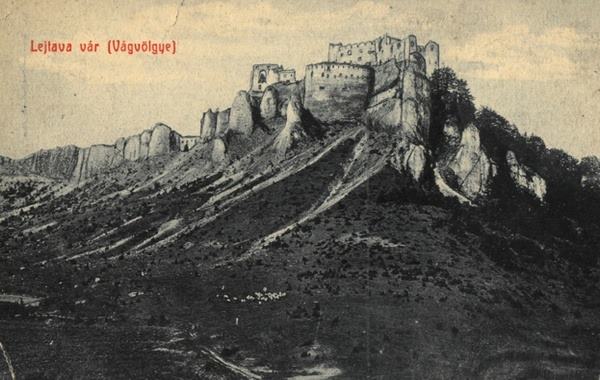
Already at the end of the 17th century, the castle served mostly the economic administration and as a grain warehouse. Therefore, it was very easily occupied by the rebel army of Francis II. Rákóczi. The insurgents stayed at the castle until 1708 and finally left it without a fight. The castle inventory from 1729 already documents the slowly decaying castle, while after 1760 the archive was taken away. The castle was subsequently demolished and its depiction from the end of the 18th century now shows only its ruins without roofs. At present, the castle for the rescue of Lietava Castle takes care of saving the castle.
Hrad pravdepodobne postavil rod Balassovcov v druhej polovici 13.storočia ako administratívne a vojenské centrum. V rokoch 1300-1321 hrad obsadil Matúš Čák Trenčiansky a po jeho smrti ho obsadilo kráľovské vojsko. V r.1360 dostal hrad do daru od kráľa Ľudovíta Veľkého Štefan Bebek, krajinský sudca, za jeho vojenské služby. Nový kráľ Žigmund Luxemburský však v r.1393 Bebekovcom pre zradu Lietavu odobral. V nasledujúcom období sa na hradnom panstve vystriedalo niekoľko držiteľov. Boli to predovšetkým Stiborovci a spríbuznení poľskí šľachtici. V r.1474 kráľ Matej Korvín daroval hrad svojmu vojenskému veliteľovi Pavlovi Kinizsimu, ktorý Lietavu podstatne opevnil a rozšíril.
Okolo r.1490 dostal hrad do zálohu Štefan Zápoľský, ktorý ho v r.1495 získal do dedičného vlastníctva. Jeho syn Ján Zápoľský daroval zdedený hrad bratom Petrovi a Mikulášovi Kostkovcom, ktorí Lietavu ubránili pred útokmi vojsk druhého kráľa Ferdinanda I. Habsburského . Mikuláš Kostka hrad ešte zlepšil a uchránil ho aj pred nárokmi Báthoryovcov. Po jeho smrti v r.1558 celé hradné panstvo prešlo do vlastníctva Mikulášovho zaťa Františka Thurzu. Thurzo dal hrad veľkoryso prestavať v duchu renesancie. V r.1621 vetva Thurzovcov vymrela po meči. Dedičia v ženskej línii si lietavské panstvo rozdelili, no hrad pre nesvornosť a neochotu spolumajiteľov podieľať sa na jeho údržbe začal pustnúť.
Už na konci 17.storočia hrad slúžil väčšinou hospodárskej správe a ako sklad obilia. Preto ho veľmi ľahko obsadilo povstalecké vojsko Františka II. Rákócziho. Na hrade sa povstalci udržali do r.1708 a nakoniec ho bez boja opustili. Hradný inventár z r.1729 už dokumentuje pomaly chátrajúci hrad, pričom po r.1760 bol odtiaľto odvezený aj archív. Hrad následne spustol a jeho vyobrazenie z konca 18.storočia už znázorňuje iba jeho zrúcaninu bez striech. V súčasnosti sa o záchranu hradu stará Združenie na záchranu Lietavského hradu.
Myths and legends
The rumor says
On the west side of the rounded gate, on which the tower of the upper castle stands, signs of a mysterious font are to be carved into the rock. They are said to date back to the time when the priestesses brought pranks there to the goddess Lade. According to legend, its name has been preserved in the transformed name of the castle.
Lietava priest
When the Tatars attacked the country in the 13th century, there were hard times for the locals. The Lieutenants hiding in the church were dragged by the Tatars to the steep rocks, and those who did not give up their faith were thrown into the abyss. When they went to throw the old priest out of the rock, the storm came and the convict suddenly disappeared after the fall, and his cry could not be heard. The Tatars took their feet on their shoulders in the valley above the miracle. However, people found the priest caught in the bush and in this miraculous place the king had a castle built to protect it from the enemy.
Jánošík on Lietava
At the Lietava castle, a manor of three chairs gathered once to advise on how to catch the bandit captain Juraj Jánošík. The best proposal was submitted by an unknown nobleman whom no one knew. He mentioned the upcoming fair in Žilina, where Jánošík will certainly come and the pandurs will easily catch him there and tie him up. All the castle lords from the area wanted to see the capture of the most famous bandit, so they went to Žilina next Saturday. However, what was their surprise when they did not see Jánošík, but on the contrary, after returning home, they found all the looted castles. The cunning advisor was Jánošík himself disguised as an unknown nobleman, and while the lords were waiting for him in Žilina, during that time his upper boys "visited" all the castles in the area.
Povráva sa...
Na západnej strane oblého brala, na ktorom stojí veža horného hradu, majú byť do skaly vytesané znaky tajomného písma. Pochádzajú vraj z čias, keď tam kňažky prinášali žertvy bohyni Lade. Jej meno sa podľa povesti zachovalo aj v pretvorenom pomenovaní hradu.
Lietavský kňaz
Keď Tatári v 13.storočí zaplavili krajinu ako povodeň, nastali krušné chvíle pre miestnych obyvateľov. Lietavčanov ukrývajúcich sa v kostole tatári vyvliekli na strmé skaly a kto sa nevzdal viery, toho vrhli do priepasti. Keď išli vrhnúť zo skaly starého kňaza, strhla sa búrka a odsúdenec zrazu po páde zmizol a nebolo počuť ani jeho výkrik. Tatári v údese nad zázrakom zobrali nohy na plecia. Kňaza zachyteného ba kríku v strmine však ľudia našli a na tomto zázračnom mieste dal kráľ vystavať hrad na ochranu pred nepriateľom.
Jánošík na Lietave
Na hrade Lietava sa raz zišlo panstvo z troch stolíc, aby sa poradilo, ako zlapať zbojníckeho kapitána Juraja Jánošíka. Najlepší návrh predložil neznámy šľachtic, ktorého nik nepoznal. Spomenul nadchádzajúci jarmok v Žiline, kam Jánošík naisto príde a pandúri ho tam ľahko chytia a poviažu. Všetci hradní páni z okolia chceli vidieť zlapanie najslávnejšieho zbojníka, a tak sa najbližšiu sobotu vybrali do Žiliny. Aké bolo však ich prekvapenie, keď Jánošíka neuvideli, ale naopak, po návrate domov našli všetci vylúpené hrady. Prefíkaný radca bol totiž sám Jánošík preoblečený za neznámeho šľachtica a zatiaľ čo páni na neho čakali v Žiline, za ten čas jeho hôrni chlapci "navštívili" všetky hrady v okolí.
Useful information
The ruins are freely accessible
Zrúcanina je voľne prístupná
Nearby castles