Divinka
Divinka Žilina county Slovakia
manor, mansion
Divinka
Divinka Žilinský kraj Slovakia
kaštieľ
Renaissance manor house in the village of Divinka, a few km north-west of Žilina, by the Hričov reservoir
Renesančný kaštieľ v obci Divinka, pár km na SZ od Žiliny, pri vodnej nádrži Hričov
Previous names
Kysdywyne, Kysdyuyne, Cleyne Dywyna, Mala Divinka, Diwinka, Kiss Divinae, Mala Diwinka, Divina Klein, Kisdivény
Roads
The village of Divinka is located just a short distance from NW of Žilina. The manor is located directly in the village in a fenced area next to the municipal office. From the main road that passes through the village, we turn onto road No. 2093, which will take us to the manor house. Parking is quite problematic, as there is busy traffic and narrow roads. It is possible to park temporarily at the Kindergarten or supermarket near the manor, or at the municipal office. In case of emergency, if the gate of the manor house area is open, we can park inside.
Obec Divinka sa nachádza len kúsok na SZ od Žiliny. Kaštieľ sa nachádza priamo v obci v oplotenom areáli vedľa obecného úradu. Z hlavnej cesty, ktorá obcou prechádza odbočíme na cestu č.2093, ktorou sa dostaneme k areálu kaštieľa. Parkovanie je pomerne problematické, nakoľko je tu rušná premávka a úzke cesty. Dočasne je možné zaparkovať pri Materskej škole či supermarkete blízko kaštieľa, prípadne pri obecnom úrade. V prípade núdze, ak je brána areálu kaštieľa otvorená, môžeme zaparkovať i vo vnútri.
Description
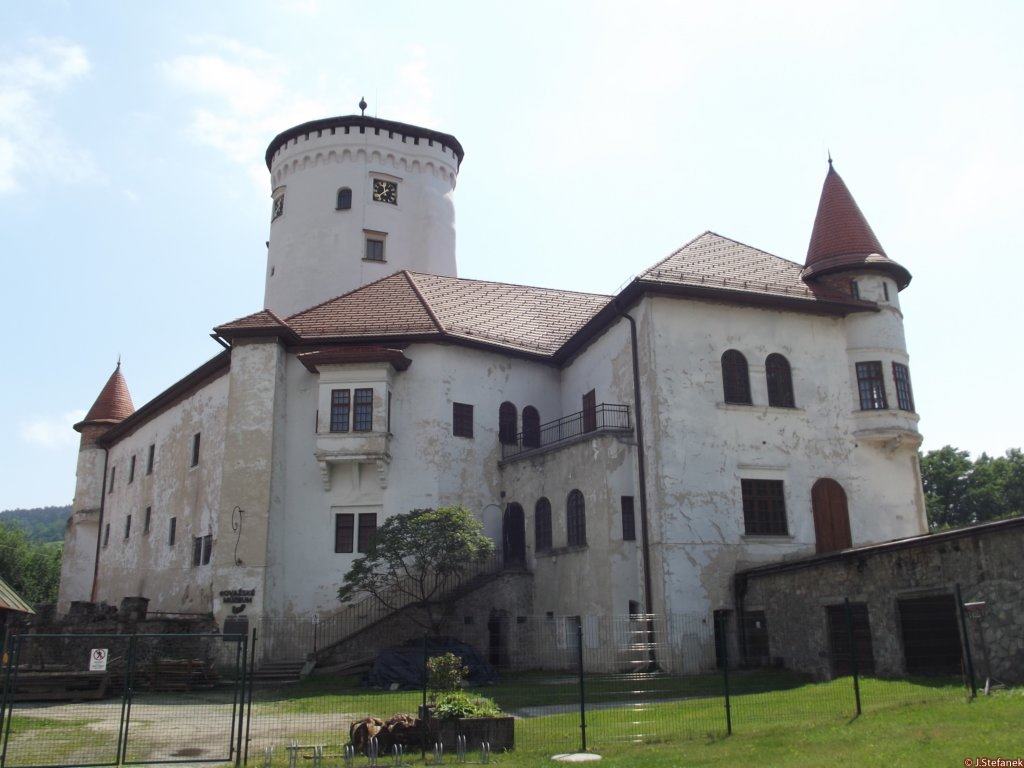
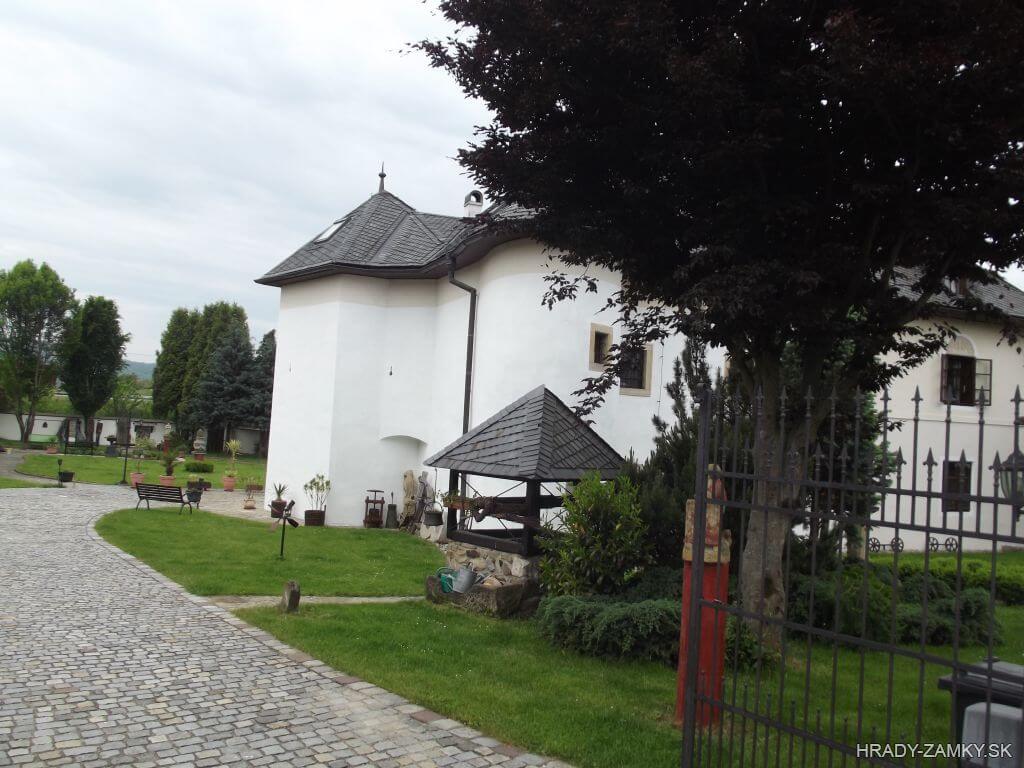
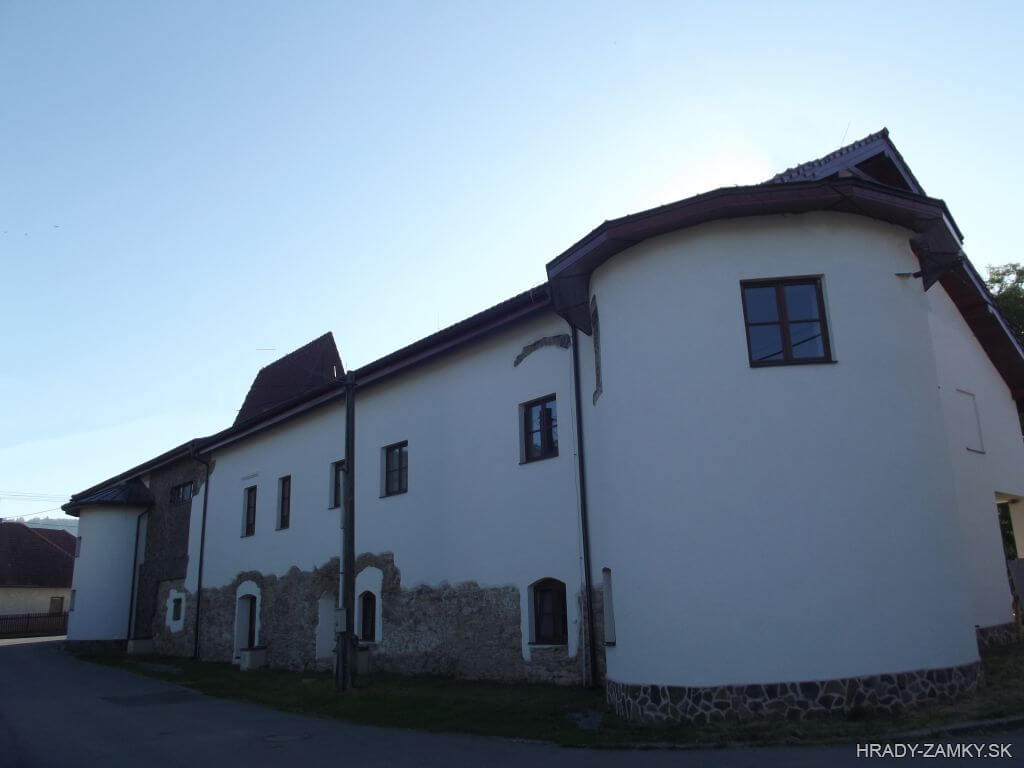
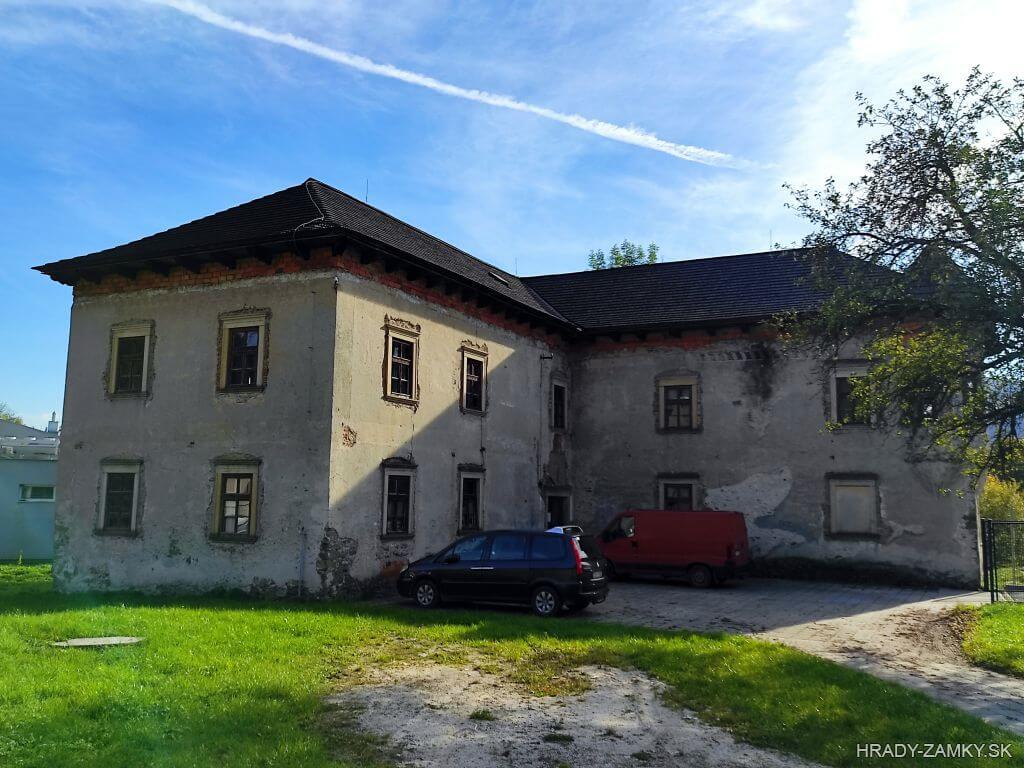
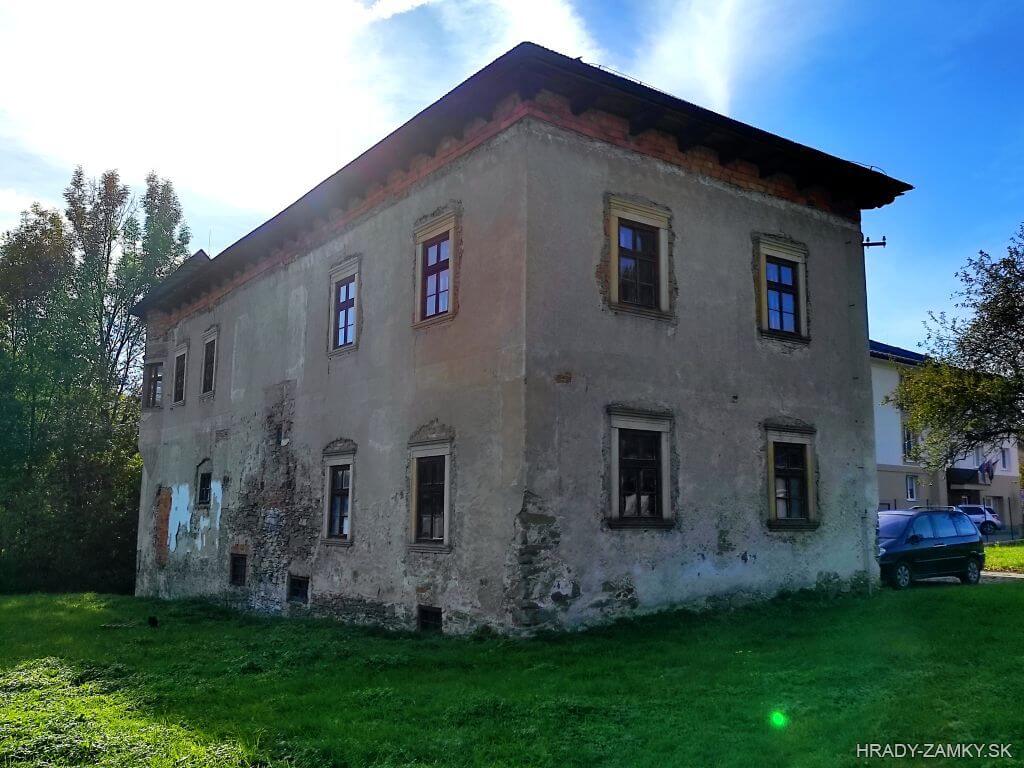
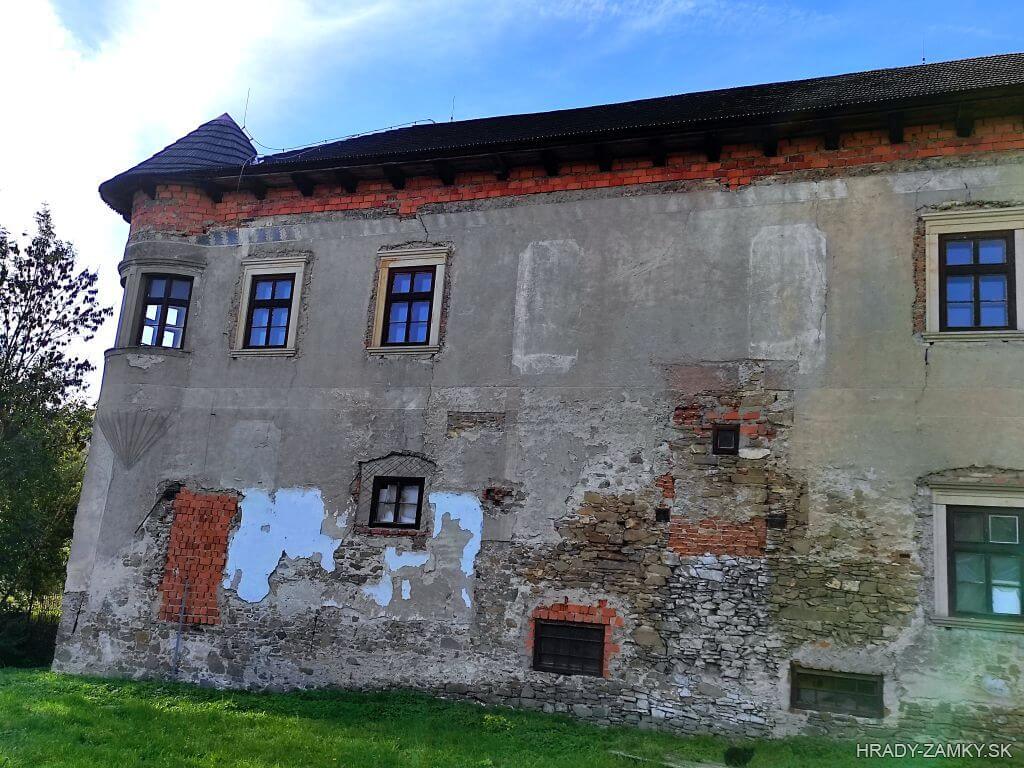
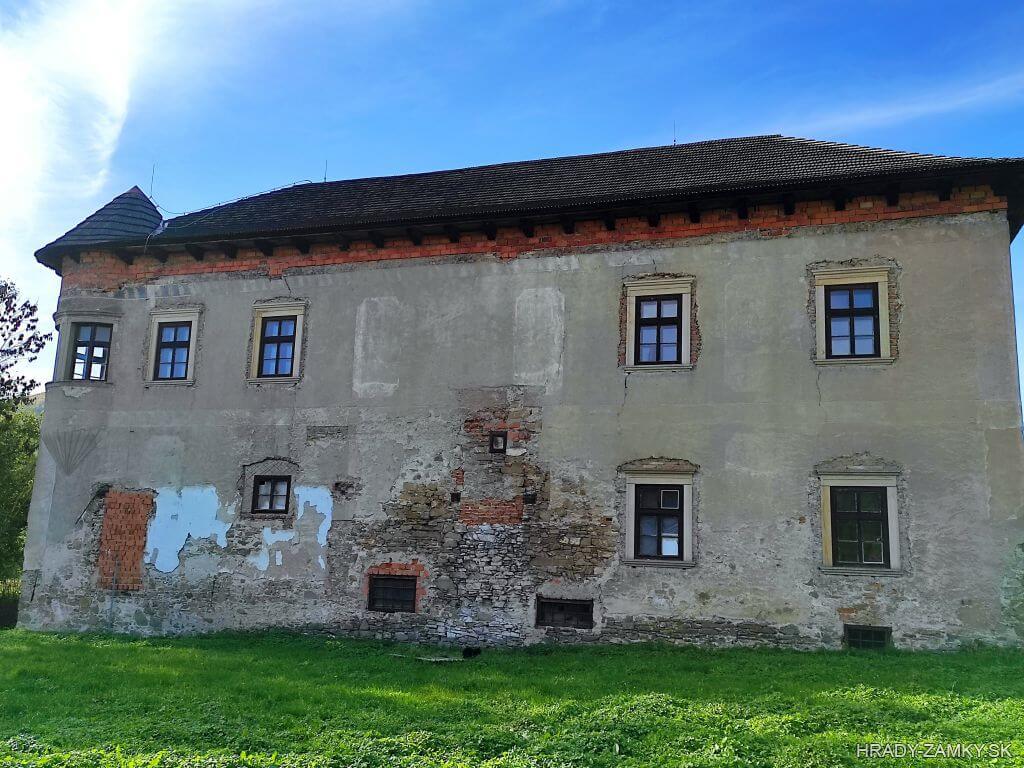
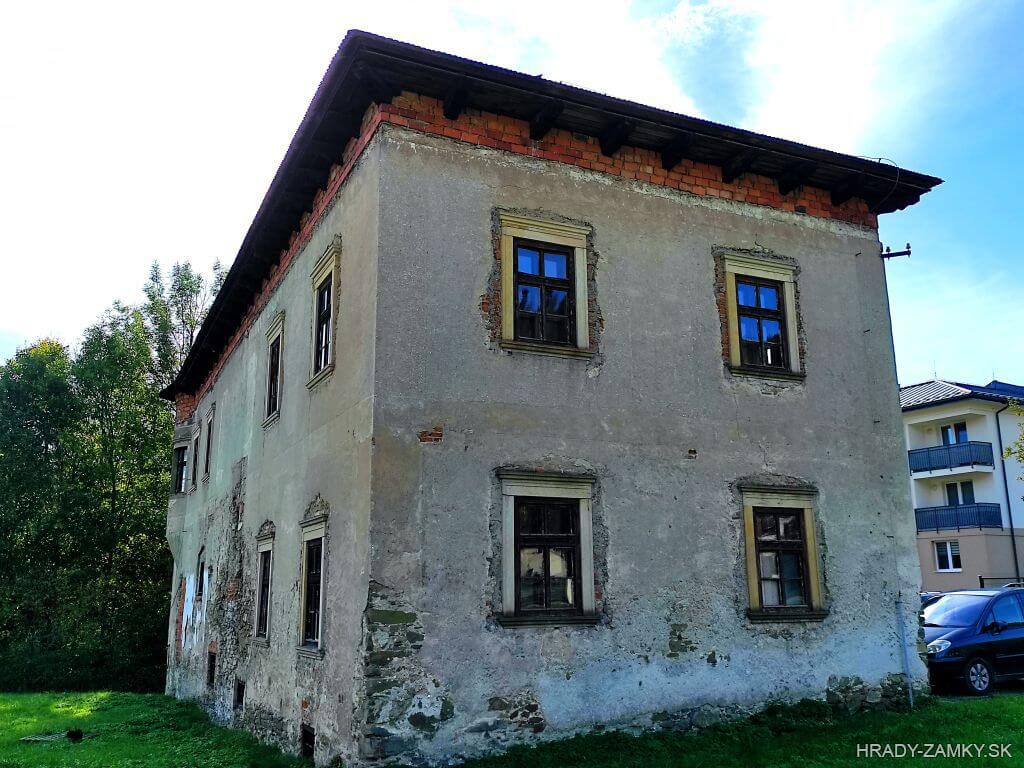
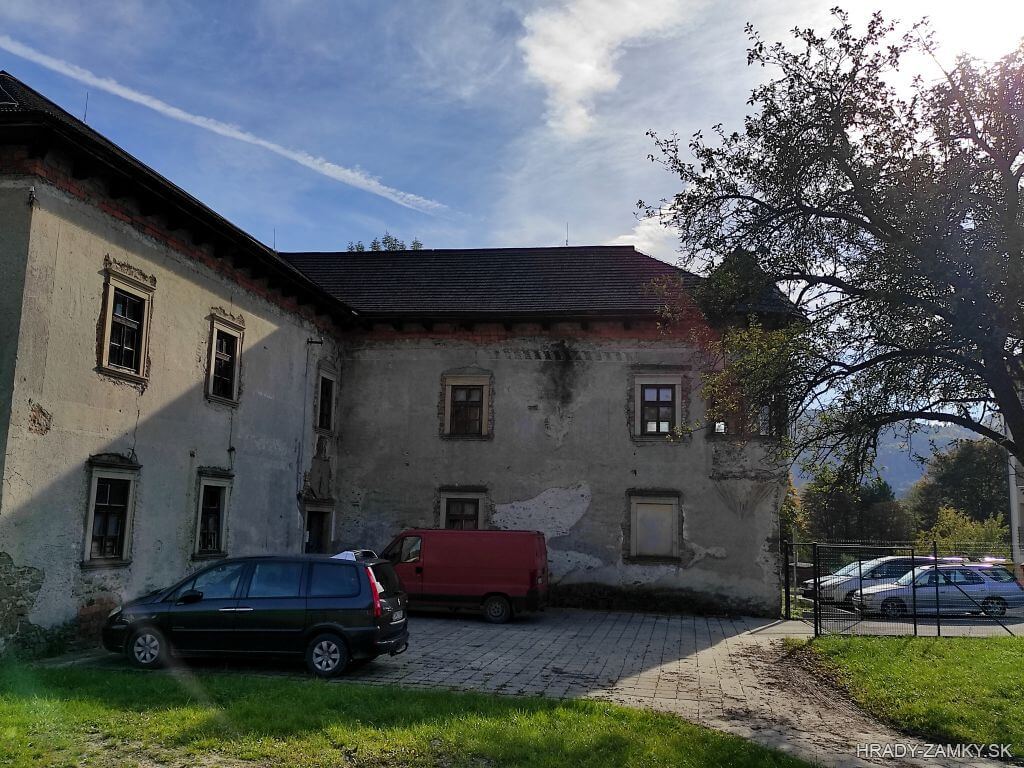
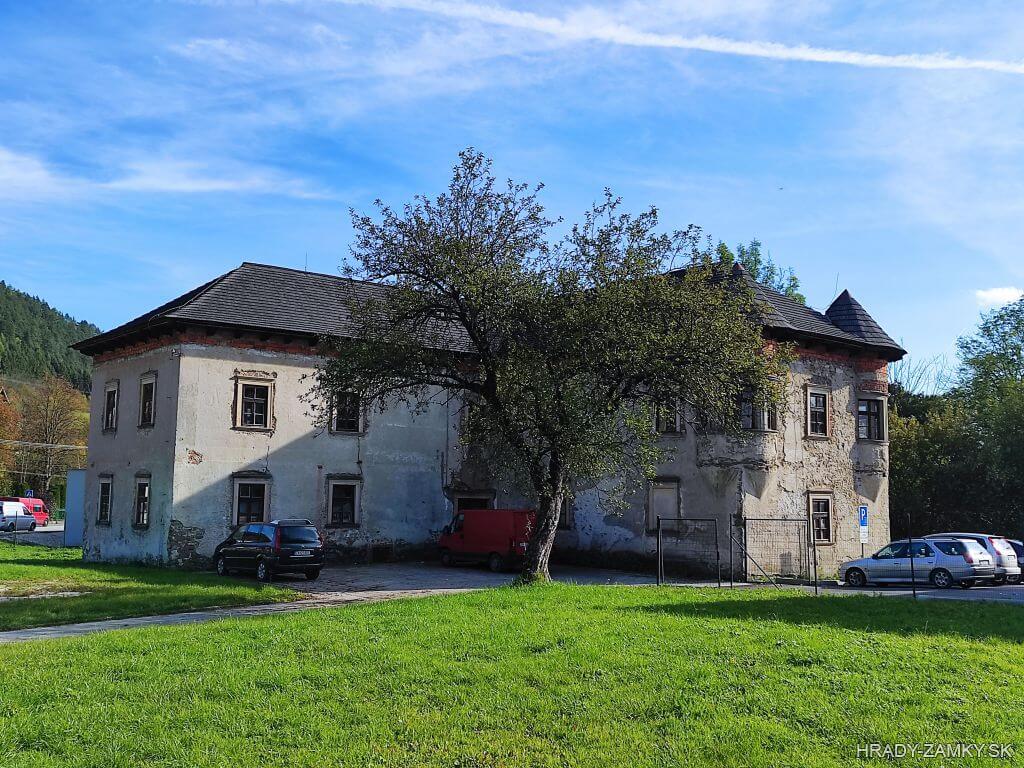
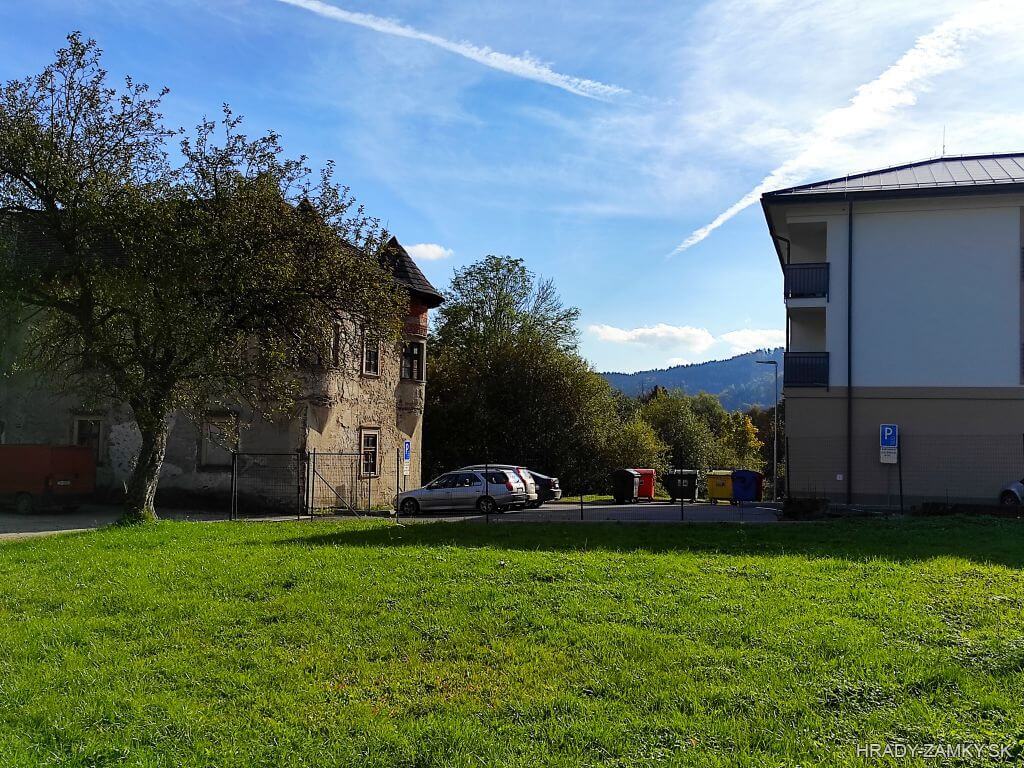
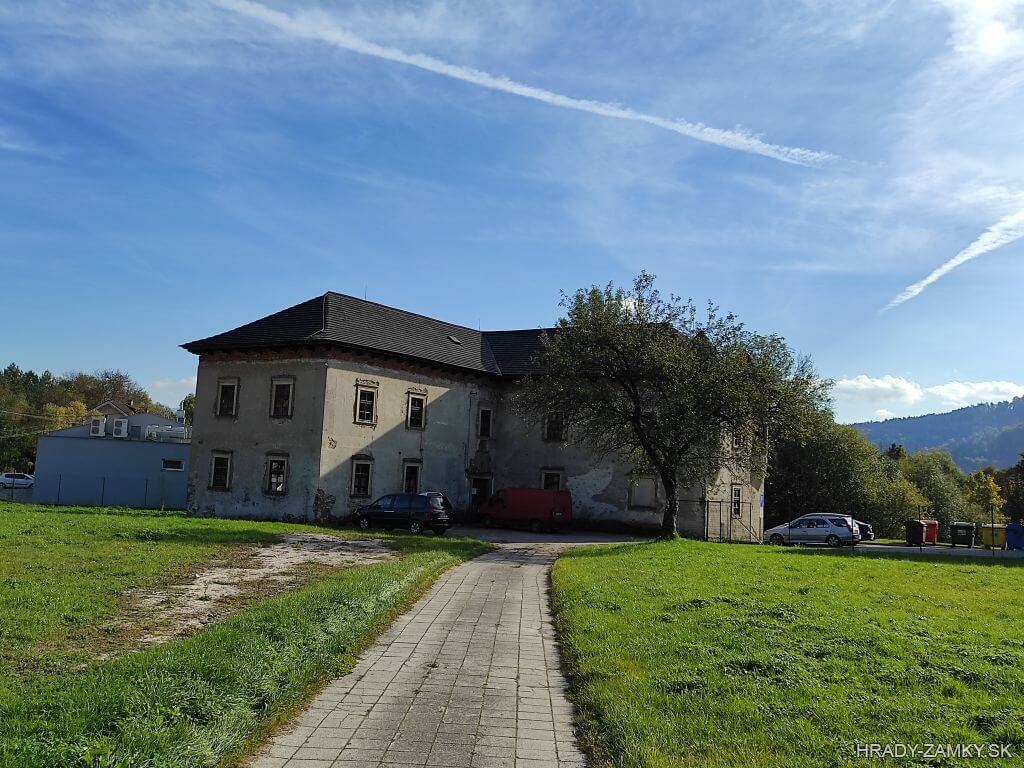
The manor is currently a partially basemented, two-storey building, with an L-type floor plan. At the corners there are round bay windows fitted into the wall with a shell ornament. The renaissance stone lining has been preserved on the windows and the remains of horizontal sgraffito strips on the façade. The entrance portal has a stone shambrane and above it was originally a stone relief of a double arch (Szunyogh's and Kadas's) with an inscription and year 1723, when the reconstruction was carried out.The individual rooms on the ground floor and first floor have cross ridge and barrel vaults with a bezel. However, the main room on the first floor has a wooden beamed ceiling. The manor house underwent reconstruction in the 1980s and housed a museum and a library. In the years 2007-2008, the wooden truss was preserved and covered with new shingles. In 2016, the new fencing was repaired and built, and the terrain around the building was modified. Nevertheless, the overall condition of the manor is poor and the building is dilapidated.
Kaštieľ je v súčasnosti čiastočne podpivničená, dvojpodlažná budova, s pôdorysom typu L. Na nárožiach sú okrúhle arkiere dosadajúce do steny mušľovým ornamentom. Na oknách sa zachovalo renesančné kamenné ostenie a na fasáde zvyšky horizontálnych sgrafitových pásov. Vstupný portál má kamennú šambránu a nad ním bol pôvodne kamenný reliéf dvojerbu (Szunyoghovský a Kádasovský) s nápisom a letopočtom 1723, kedy bola vykonaná prestavba.Jednotlivé miestnosti na prízemí i na poschodí majú krížové hrebienkové a valené klenby s lunetou. Hlavná miestnosť na poschodí má však drevený trámový strop. Kaštieľ prešiel v osemdesiatych rokoch 20. storočia rekonštrukciou a sídlilo v ňom múzeum a knižnica. V rokoch 2007-2008 bol zakonzervovaný drevený krov a pokrytý novou šindľovou krytinou. V roku 2016 sa zrealizovala oprava a výstavba nového oplotenia a upravil sa terén okolo objektu. Napriek tomu je celkový stav kaštieľa zlý a budova chátra.
History
Although records of the origin of the Renaissance manor house in Divinka have not been preserved, it is believed that it was built by the Szunyoghs sometime at the turn of the 16th to 17th centuries. Brothers Daniel and Erazmus Szunyog grew up in their native Renaissance manor house in Jasenica, and thanks to the preserved text of the agreement, we know that Erazmus was the sole owner of the estates in Divinka and he built an unspecified residence there, probably this manor house. The manor probably also had a defensive function at first, and it was assumed that there was an older block building at its core, but recent research has not confirmed this theory.
In 1723, the manor house was partially renovated by Mikuláš Szunyogh (de Jeszenicze) and his wife Barbora (Borbála) Kádas, when the new north wing was added. Their initiative was evidenced by a stone sign above the main entrance with the text (translated) „Dear and noble Mr. Mikuláš Szunyogh of Jasenica and Divinka, a member of the Seven Lords of the Most Holy Imperial and Royal Majesty with the native Mrs. Barbara Kadas of Tassnad, his wife, had the heirs and his descendants of the Lord 1723 built at his own expense”.
The manor was later inhabited by their son František and his descendants. The Szunyogh family lived in the manor house at least until 1816. Further information about the manor house has not been preserved after that year, so it is not clear whether the Szunyogh family resided in Divinka even after that and who acquired the residence after them. Since then, the manor has fallen into disrepair and its other owners have not been known. Information is known from a later period, when after the Second World War the manor belonged to the state.
Since 1963, it has been listed as a national cultural monument. In 1974, it was bought from the owners by the Local National Committee in Divinka. Shortly afterwards, the restoration of the truss and roofing began, followed by a comprehensive reconstruction, which was not completed. After the reconstruction, the manor house was used as a museum. In the 1980s, it belonged to the District Library in Žilina (later the Regional Library), but was used only for storing books. For several years, the manor house housed the local library, which was later abolished due to property disputes.
In the early 1990s, the two lower rooms were used as a meeting room for the municipal council or polling station. The original complex has completely disappeared, cut only to the area in the immediate vicinity of the manor.
In the years 2007 to 2008, the manor house was repaired again when the shingled roof was replaced. In 2014, restoration research and a proposal for restoration were carried out, and in 2015, a new fencing was repaired and built, and the terrain around the building was modified.
At present, the manor is owned by the Žilina self-governing region. The mansion is dilapidated and requires a complete reconstruction. Although the municipality prepared a renovation project in 2009, there is still a lack of funding for its implementation.
Hoci sa záznamy o pôvode renesančného kaštieľa v Divinke nezachovali, predpokladá sa, že ho postavili Szunyoghovci niekedy na prelome 16. až 17. storočia. Bratia Daniel a Erazmus Szunyoghovci vyrastali v rodnom renesančnom kaštieli v Jasenici a vďaka zachovanému textu dohody vieme, že Erazmus bol jediným vlastníkom usadlostí v Divinke a vybudoval v nej zatiaľ písomne bližšie neurčenú rezidenciu, pravdepodobne tento kaštieľ. Kaštieľ plnil pravdepodobne spočiatku aj obrannú funkciu a predpokladalo sa, že v jeho jadre existuje staršia bloková stavba, najnovšie výskumy však túto teóriu nepotvrdili.
V roku 1723 dal kaštieľ čiastočne upraviť Mikuláš Szunyogh (de Jeszenicze) s manželkou Barborou (Borbála) Kádas, keď pristavali nové severné krídlo. O ich iniciatíve svedčila kamenná nápisová doska nad hlavným vchodom s textom (v preklade) „Vážený a urodzený pán Mikuláš Szunyogh z Jasenice a Divinky, prísediaci sedmipanskej tabule Najsvätejšieho cisárskeho a kráľovského Veličenstva s urodzenou pani Barborou Kadas z Tassnadu, svojou manželkou, dal od základov postaviť na svoje náklady dedičom a svojim potomkom roku Pána 1723“.
Kaštieľ neskôr obýval ich syn František a jeho potomkovia. Szunyoghovci sídlili v kaštieli minimálne do roku 1816. Ďalšie údaje sa o kaštieli po tomto roku nezachovali, preto nie je zrejmé, či Szunyoghovci zotrvali v Divinke i potom a kto po nich rezidenciu získal. Od tohto obdobia kaštieľ chátral a neboli známi ani jeho ďalší vlastníci. Informácie sú známe až z neskoršieho obdobia, keď po druhej svetovej vojne pripadol kaštieľ štátu.
Od roku 1963 bol vedený ako národná kultúrna pamiatka. V roku 1974 ho od vtedajších majiteľov odkúpil Miestny národný výbor v Divinke. Krátko nato sa začalo s obnovou krovu a strešnej krytiny a následne s komplexnou rekonštrukciou, ktorá však nebola dokončená. Po rekonštrukcii boli priestory kaštieľa využívané ako múzeum. V 80. rokoch 20. storočia patril Okresnej knižnici v Žiline (neskôr Krajská knižnica), ale využíval sa len na uskladnenie kníh. Niekoľko rokov potom sídlila v priestoroch kaštieľa obecná knižnica, ktorú neskôr pre spory o vlastníctvo zrušili.
Začiatkom 90. rokov 20. storočia sa dve dolné miestnosti využívali ako zasadačka pre obecné zastupiteľstvo či volebná miestnosť. Úplne zanikol pôvodný areál, oklieštený len na plochu v bezprostrednom okolí kaštieľa.
V rokoch 2007 až 2008 došlo k opätovnej oprave kaštieľa, keď sa podarilo vymeniť šindľovú strechu. V roku 2014 bol spracovaný reštaurátorský výskum a návrh na reštaurovanie a v roku 2015 sa zrealizovala oprava a výstavba nového oplotenia a upravil sa terén okolo objektu.
V súčasnosti je kaštieľ vo vlastníctve Žilinského samosprávneho kraja. Kaštieľ chátra a vyžaduje si kompletnú rekonštrukciu. Hoci obec pripravila projekt obnovy už v roku 2009, stále chýbajú financie na jeho realizáciu.
Myths and legends
There are no myths available.
K tomuto objektu nie sú dostupné žiadne povesti
Useful information
The manor is not accessible to the public
Kaštieľ nie je prístupný verejnosti
Nearby castles