Rudno
Rudno nad Hronom Banská Bystrica county Slovakia
castle ruin
Rudno
Rudno nad Hronom Banskobystrický kraj Slovakia
zrúcanina hradu
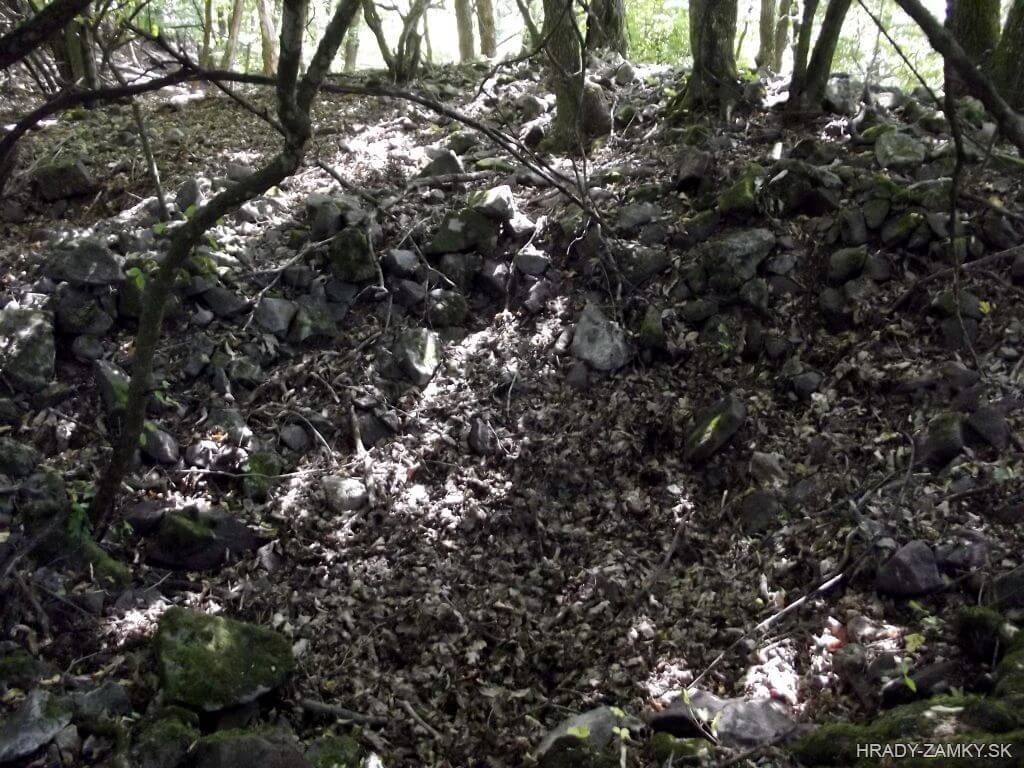
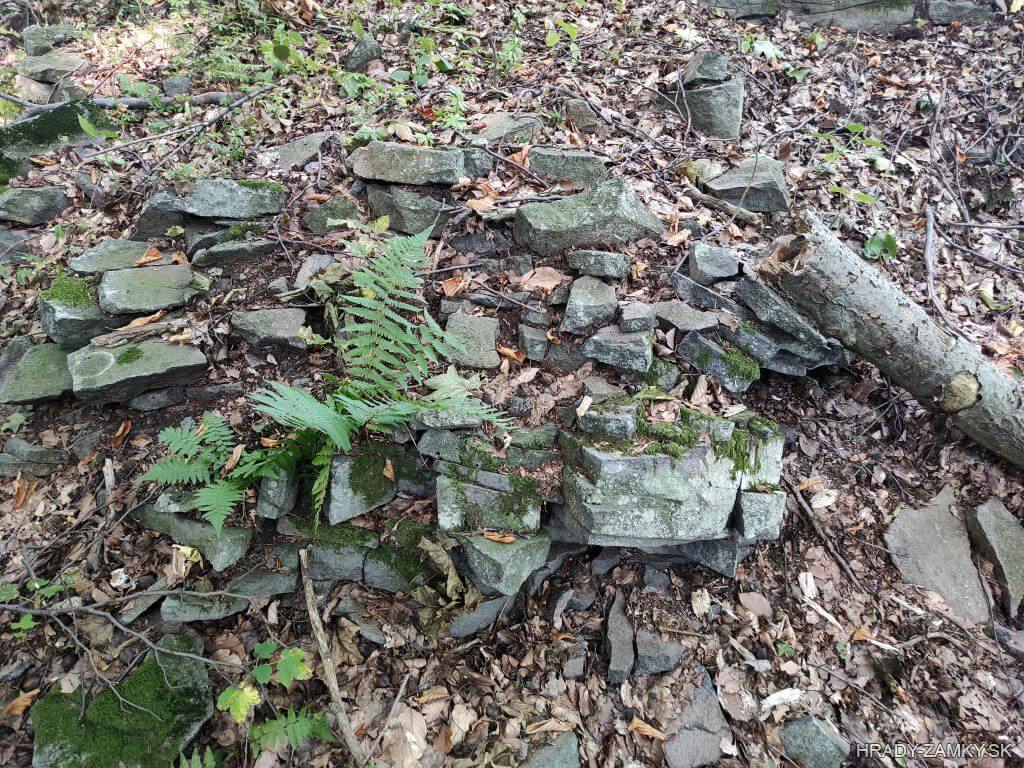
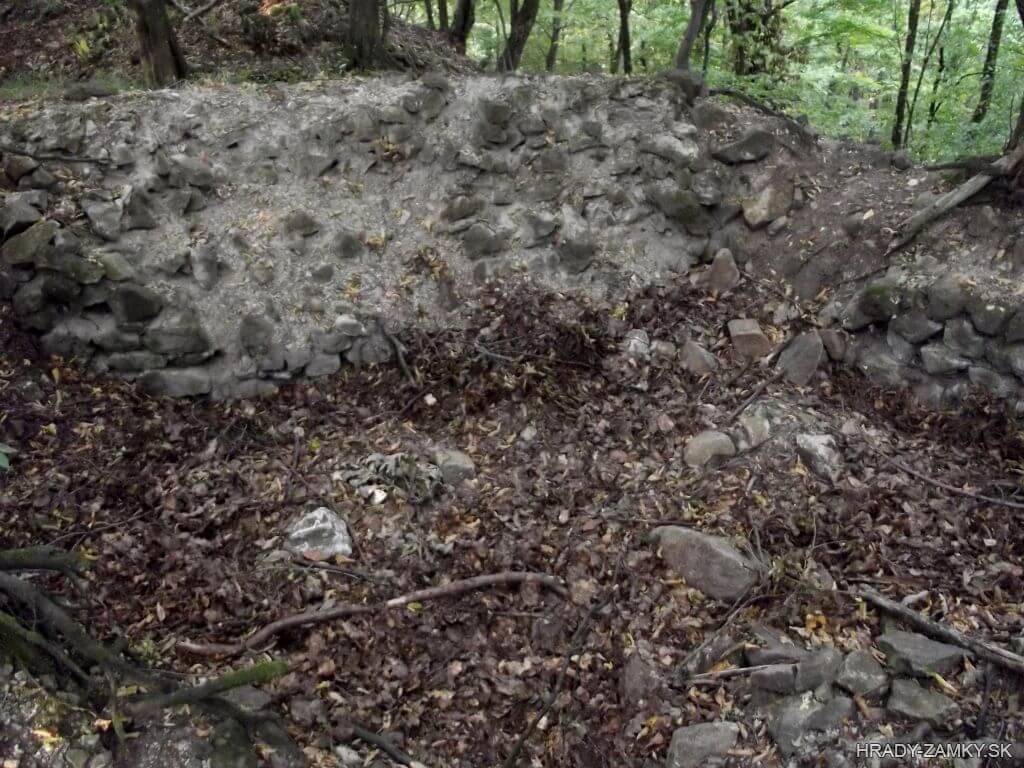
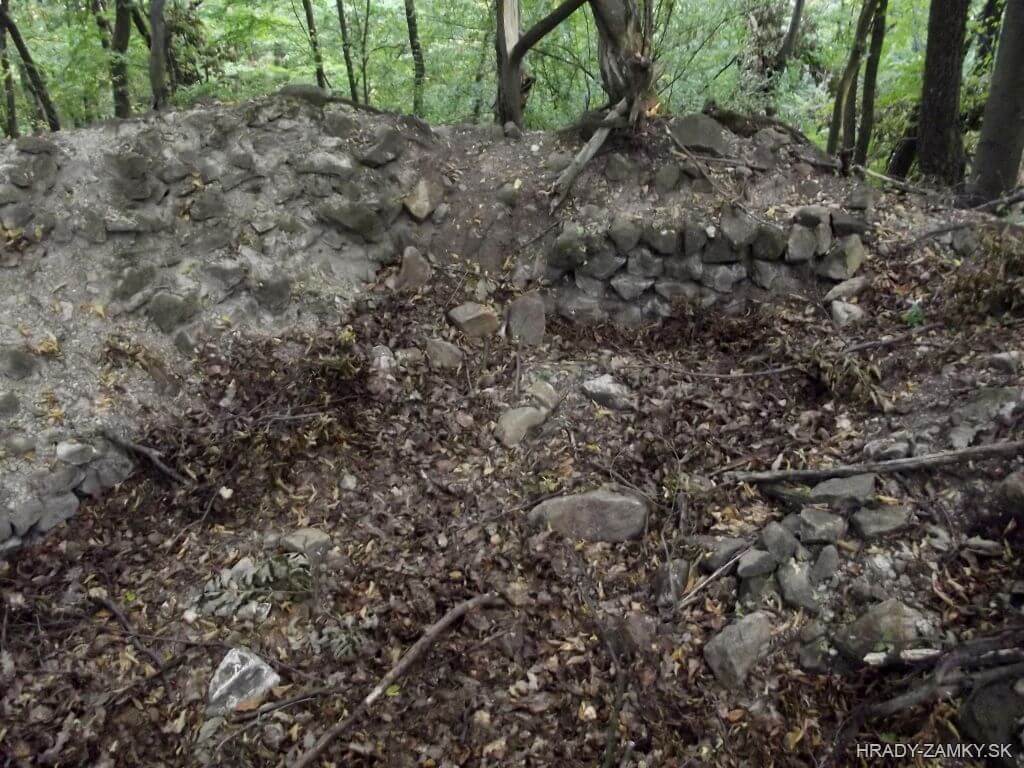
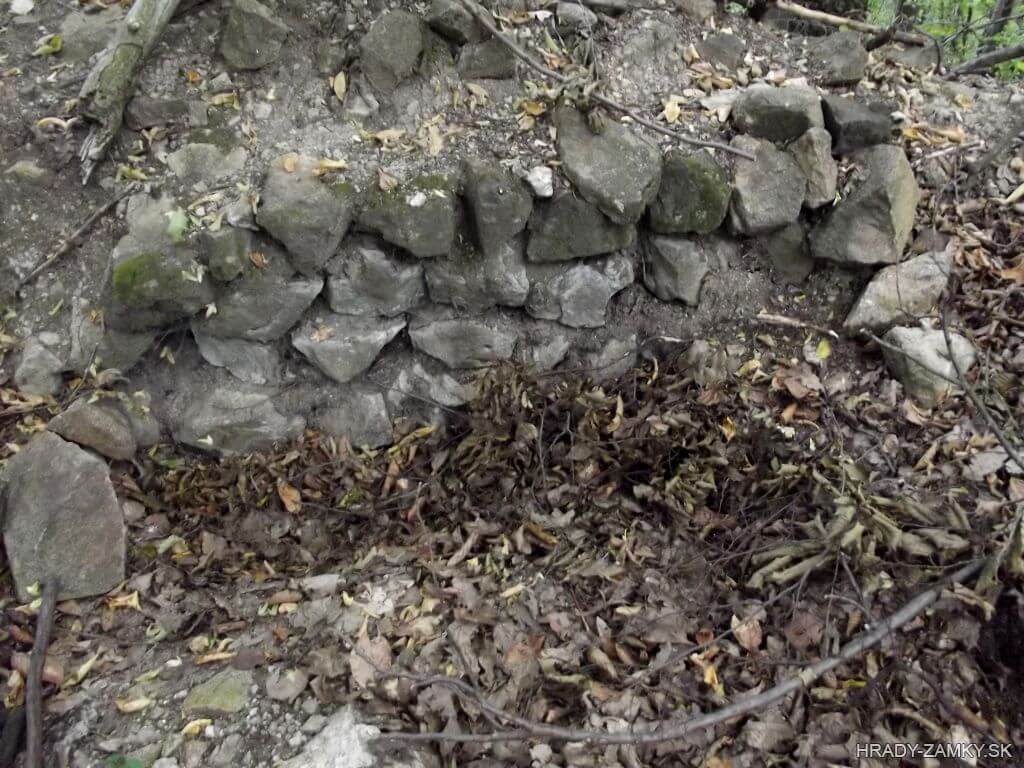
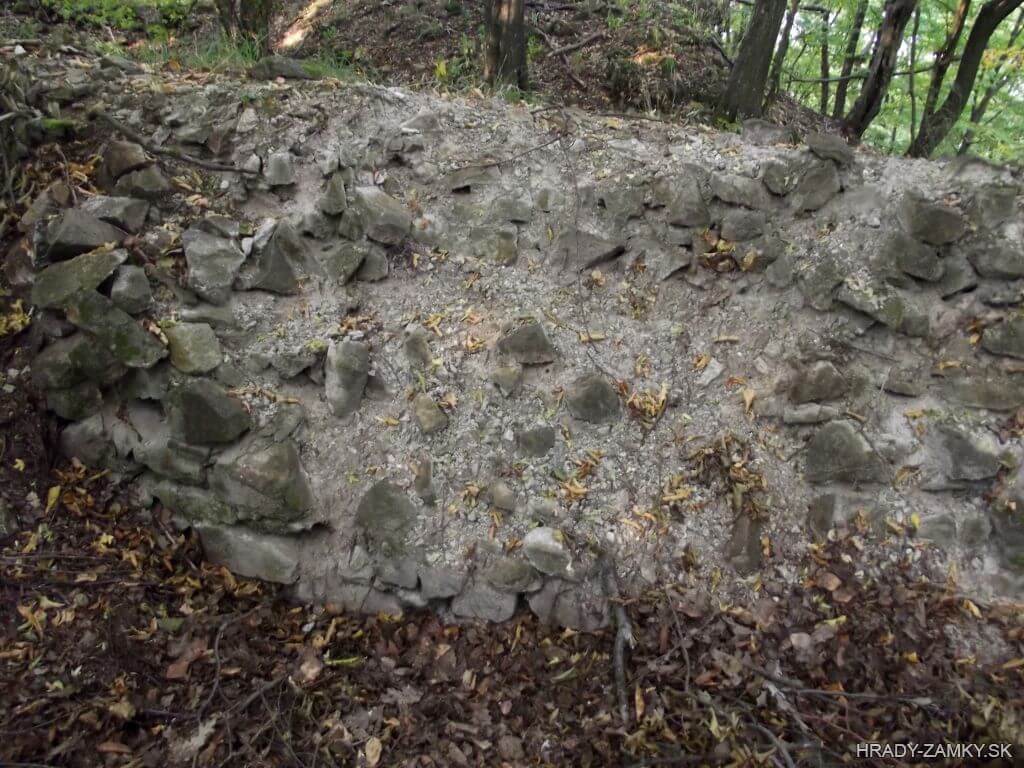
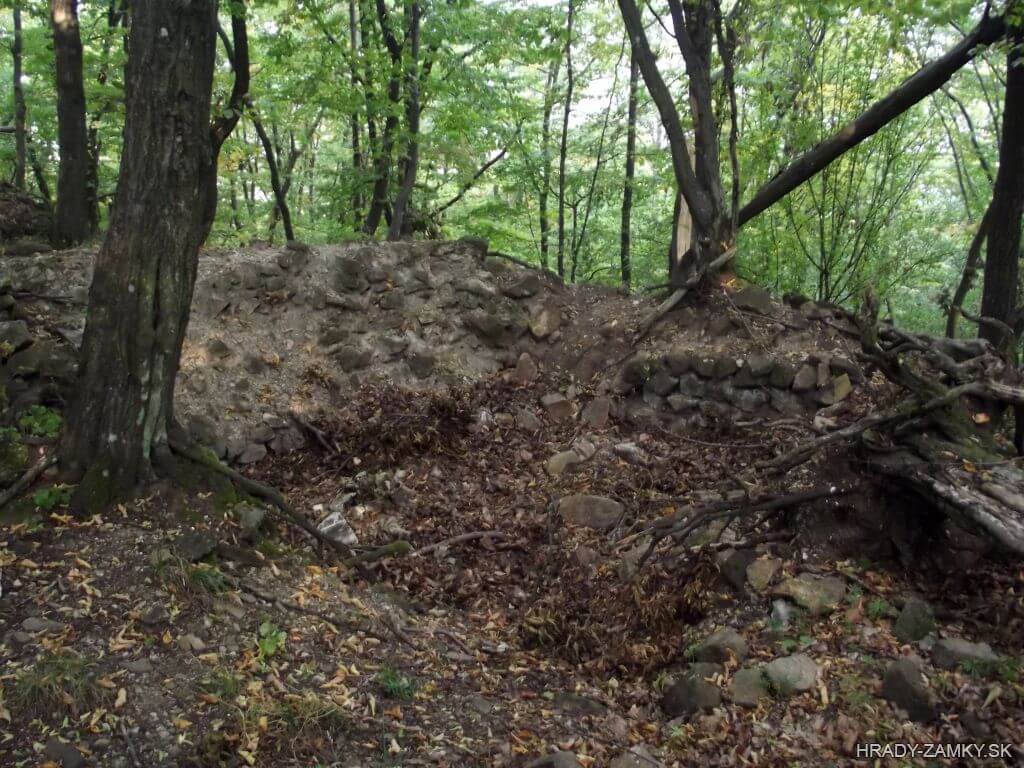
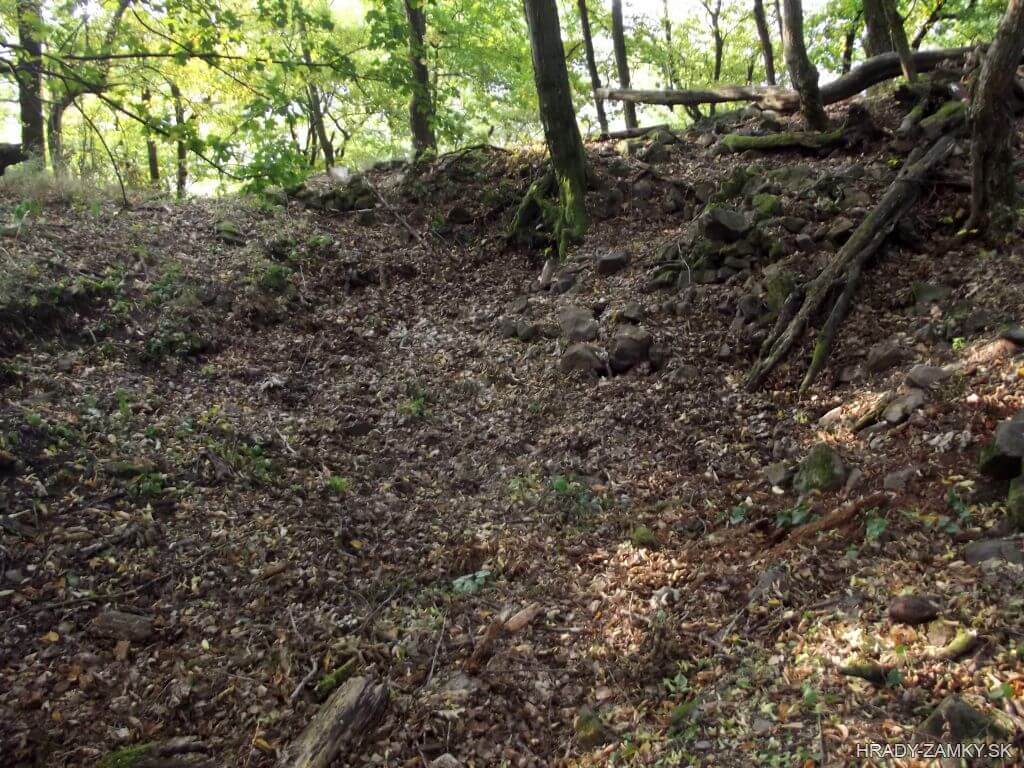
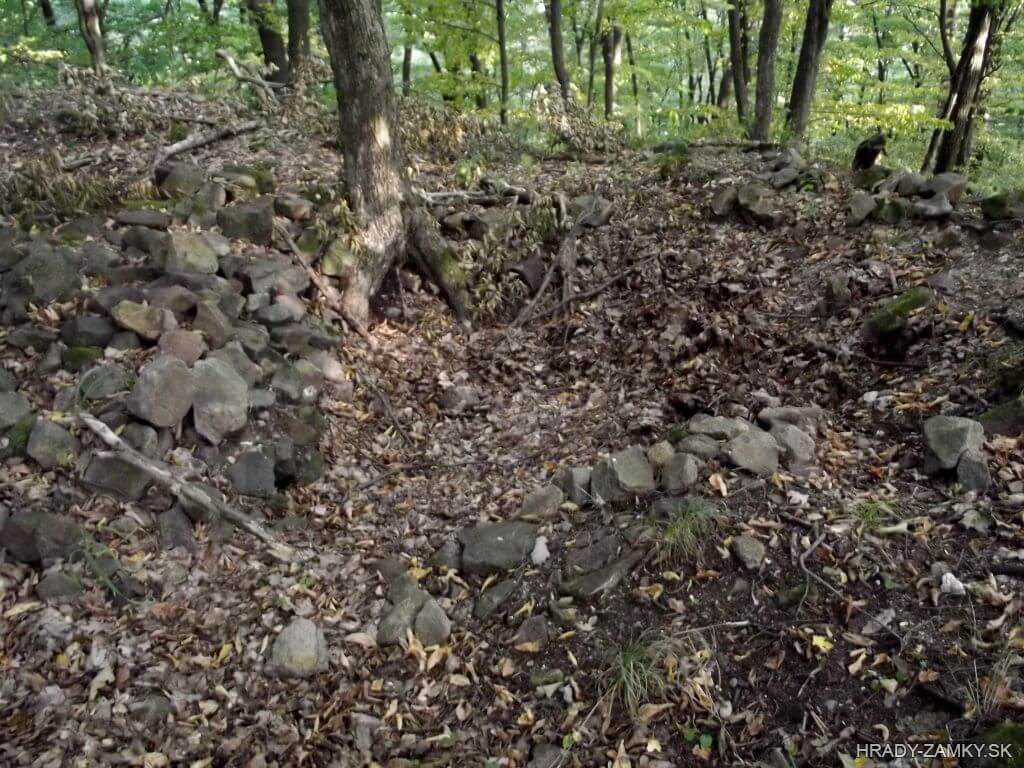
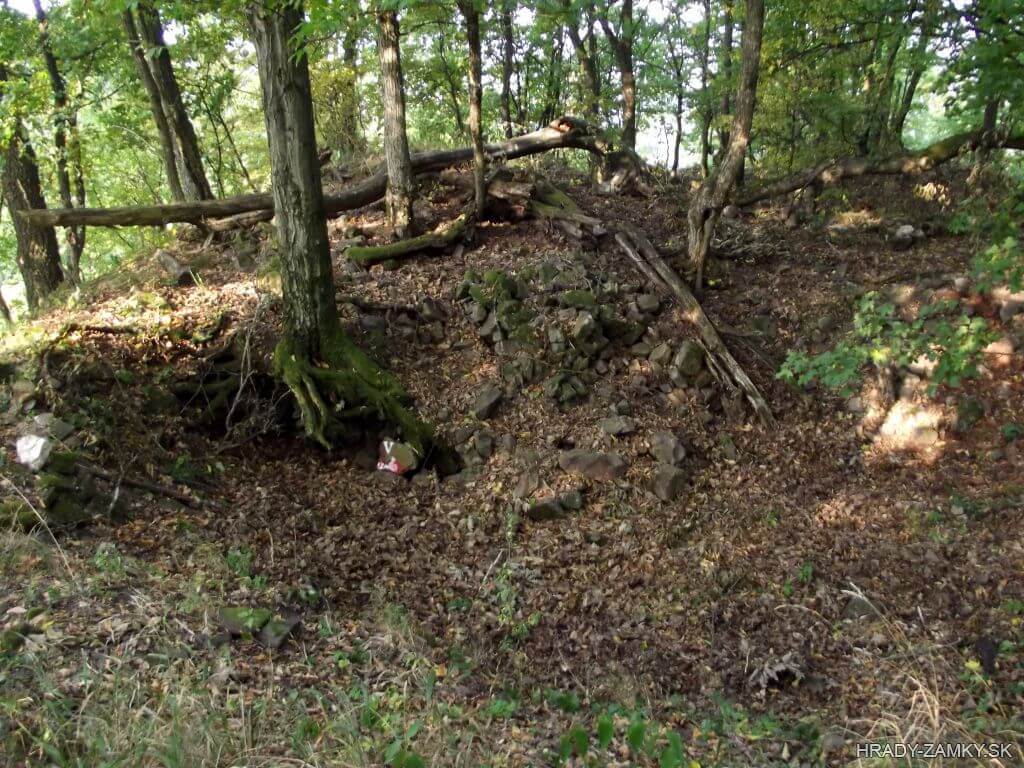
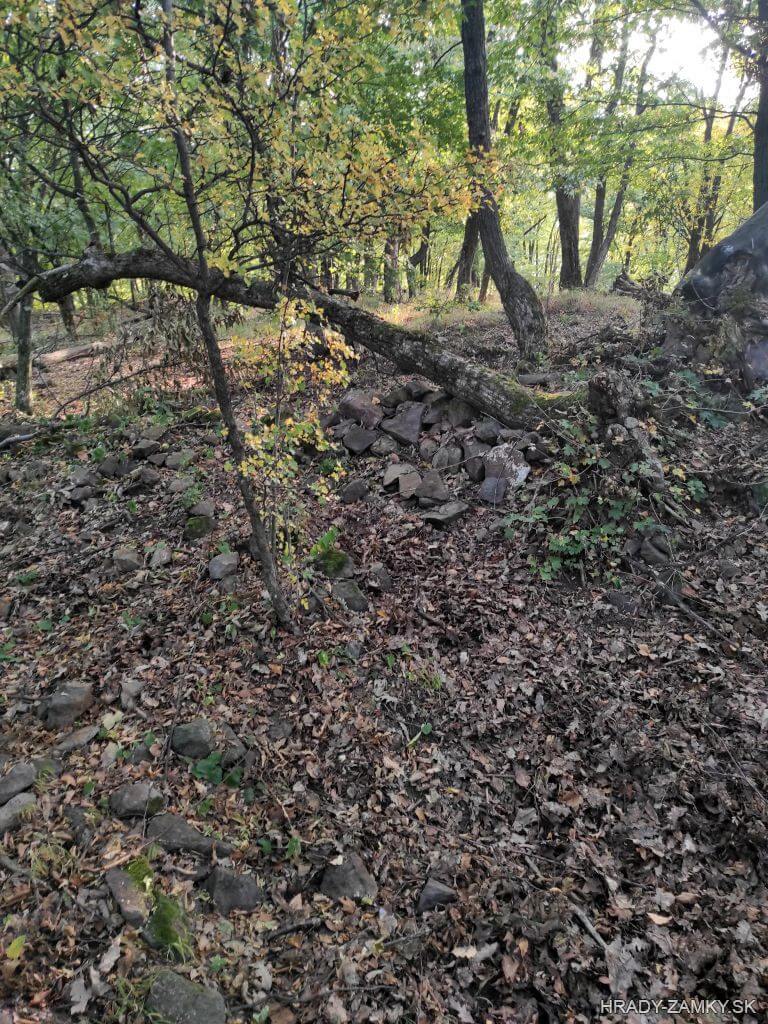
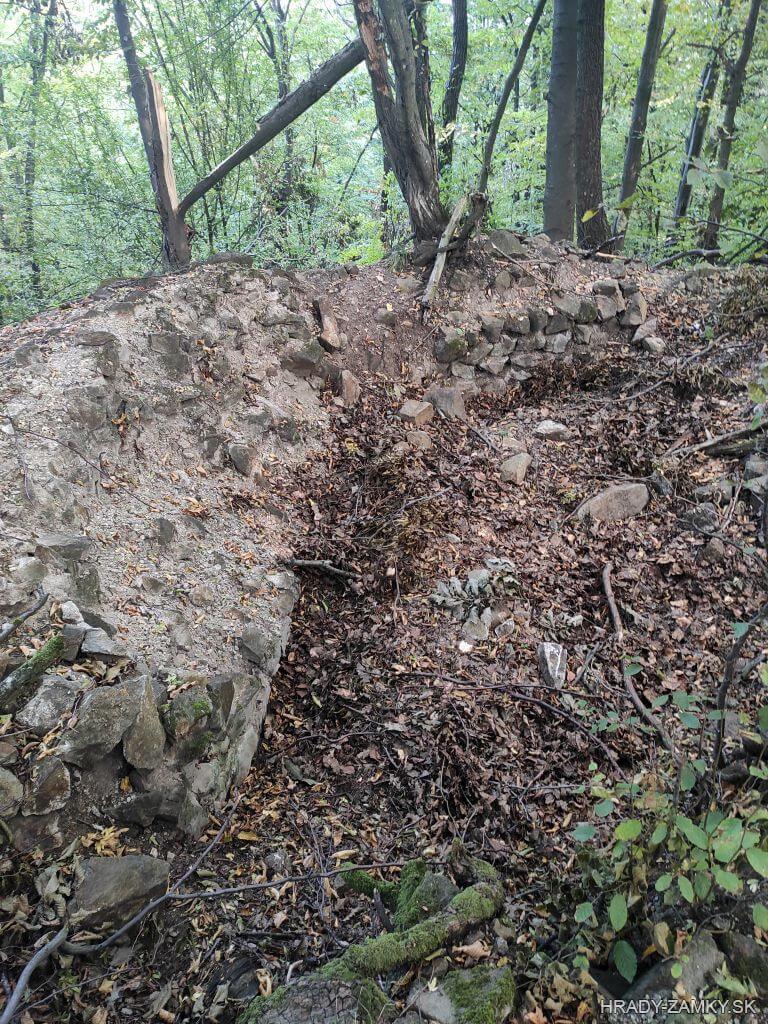
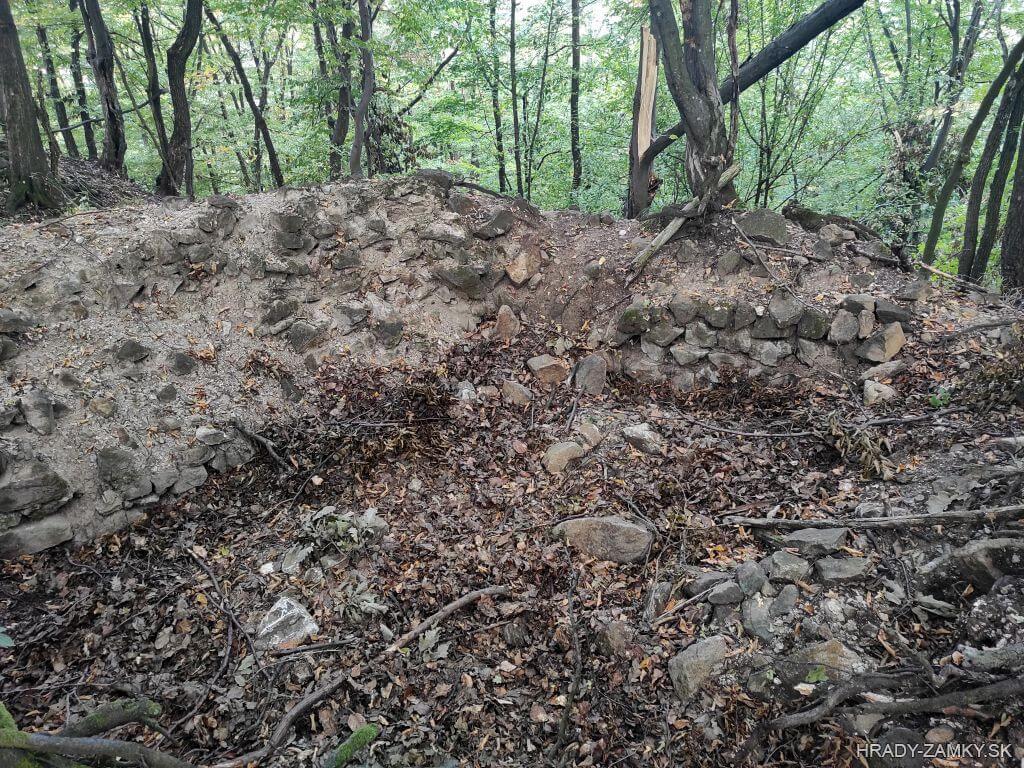
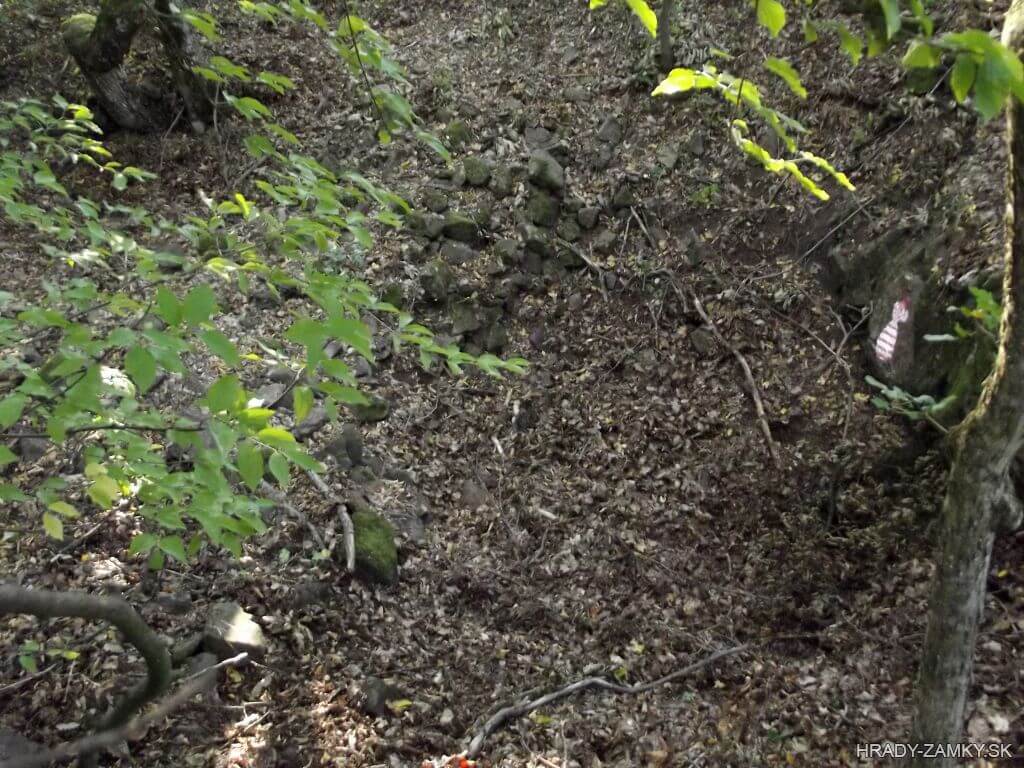
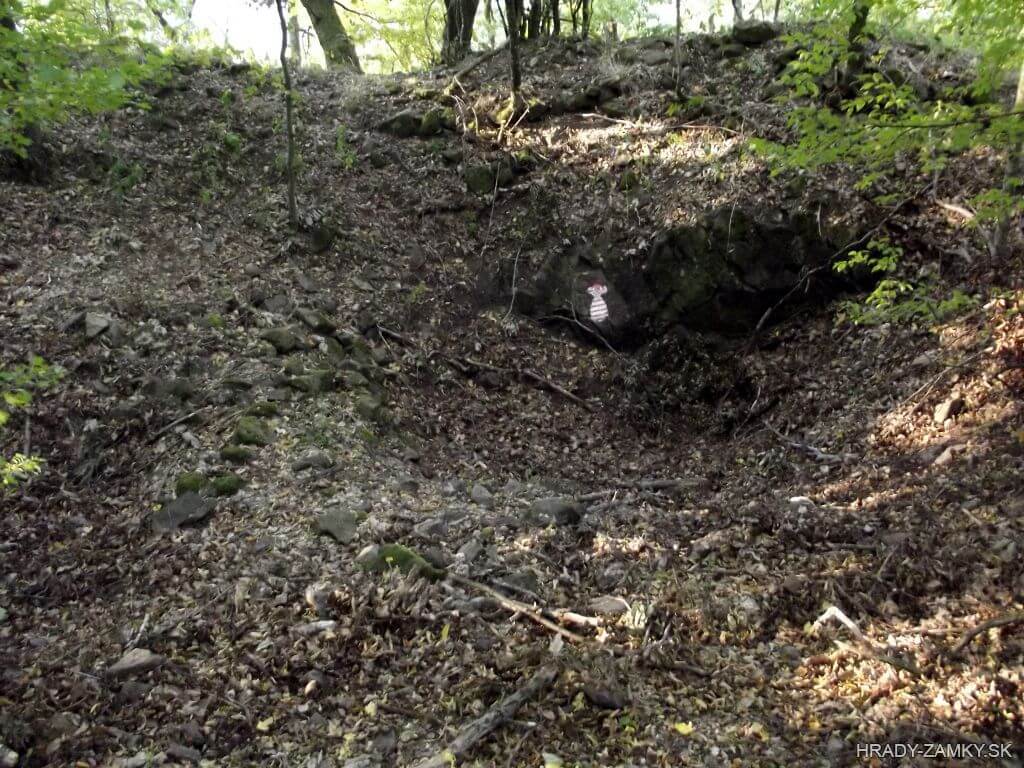
Slight above-ground remains of the castle walls on a hill called Hrádok (Ivankov vrch, Ivankovo), above the village of Rudno nad Hronom, in the marginal position of the Štiavnické Hills above the valley of the Rudno brook
Nepatrné nadzemné zvyšky múrov hrádku na návrší s názvom Hrádok (Ivankov vrch, Ivankovo), nad obcou Rudno nad Hronom, v okrajovej polohe Štiavnických vrchov nad dolinou Rudnianskeho potoka
Previous names
Barsrudnó, Tekovské Rudno, Ruda, Garamrudnó
Roads
Trasa 1: After entering the village of Rudno nad Hronom, we cross the bridge over the river Hron and continue straight on. We will soon come to the church and the Municipal Office on the right. We continue straight along the narrow asphalt road until we come to a small bridge on the right side above the Rudniansky stream. Just in front of it is a smaller lawn on the right side of the road, where we can park the car. However, if you want to park more comfortably, you can park at the mentioned Municipal Office at the beginning of the village. In that case, you have to walk the entire way to the bridge.Access to the castle begins almost opposite the bridge. We will go back a few meters and between the houses we will reach a meadow with a slight climb. The red route leads here - Rudná Magistrála, which will lead us along the meadow to the entrance to the forest, where there is a bench. Here, the red route deviates to the right and bypasses the castle hill, but the markings are lost, it is necessary to go intuitively around the hill, then at the crossroads to the left, later a 180-degree turn back to the castle hill.
Trasa 1: Po vstupe do obce Rudno nad Hronom prejdeme mostom ponad rieku Hron a pokračujeme stále rovno. Čoskoro prídeme ku kostolu a Obecnému úradu na pravej strane. Pokračujeme stále rovno po úzkej asfaltke, až prídeme k malému mostíku na pravej strane nad Rudnianskym potokom. Práve kúsok pred ním je menšia trávnatá plocha na pravej strane cesty, kde môžeme auto odstaviť. Ak však chcete parkovať pohodlnejšie, môžete zaparkovať pri spomínanom Obecnom úrade na začiatku obce. V tom prípade ale musíte celý kus cesty k mostíku absolvovať peši.Prístup na hrad totiž začína takmer oproti mostíku. Vrátime sa pár metrov späť a pomedzi domy sa miernym stúpaním dostaneme na lúku. Vedie tadiaľ červená TZT - Rudná Magistrála, ktorá nás dovedie po lúke až po vstup do lesa, kde sa nachádza lavička. Tu sa červená trasa odkláňa doprava a obchádza hradný vrch, no značenie sa stráca, je potrebné ísť intuitívne okolo kopca, potom na rázcestí vľavo, neskôr 180 stupňovou otočkou naspäť na hradný kopec.
Trasa 2: The starting point of this route is the same point as in route No. 1, so we will go across the meadow to the entrance to the forest, where the red route deviates. The shortest, but also the most challenging route is the path directly up through the forest. The road is not marked in any way, but you can't get lost, we will go steeply straight all the way to the castle hill. We recommend this ascent only to able-bodied tourists, as it is necessary to overcome a considerable elevation gain on a short section (approx. 500 m), but the ascent does not take long. Soon we come to the ramparts and the remains of the wall on the castle hill.
Trasa 2: Východiskovým bodom tejto trasy je rovnaký bod ako v trase č.1, pôjdeme teda cez lúku až k vstupu do lesa, kde sa červená trasa odkláňa. Najkratšou, ale i najnáročnejšou trasou je cesta priamo hore cez les. Cesta nie je nijako značená, no nedá sa zablúdiť, pôjdeme strmo neustále rovno až na hradný kopec. Tento výstup odporúčame len zdatným turistom, keďže je potrebné zdolať značné prevýšenie na krátkom úseku (cca. 500m), no výstup netrvá dlho. Onedlho prídeme k valom a zvyškom múru na hradnom vrchu.
Description
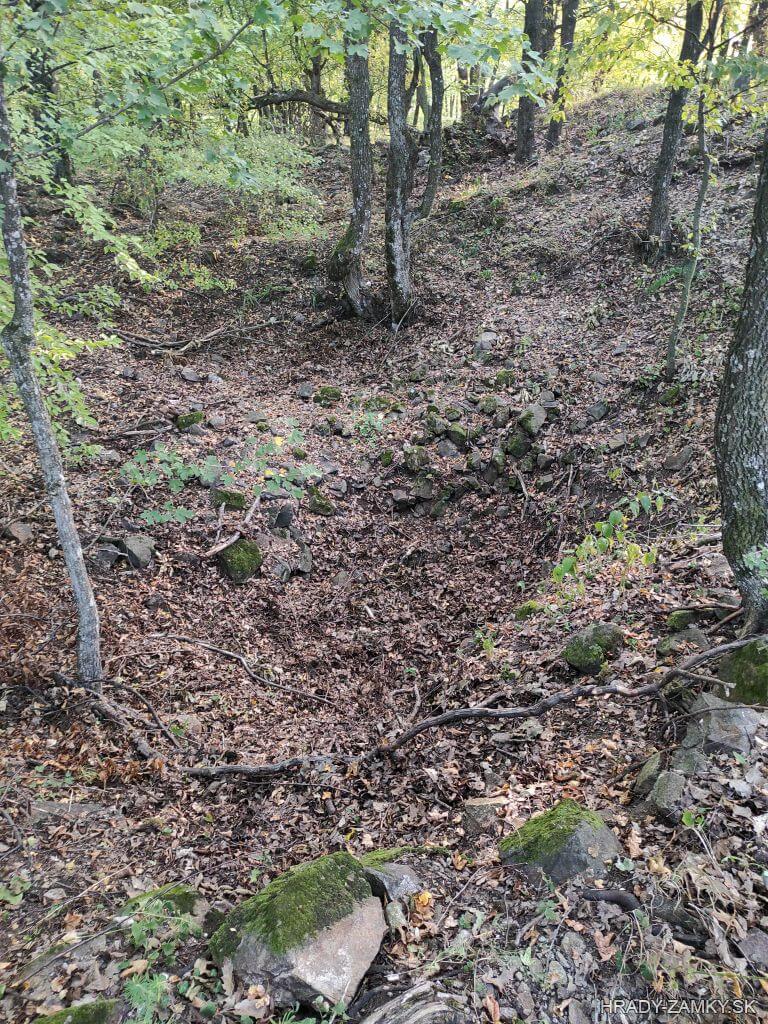
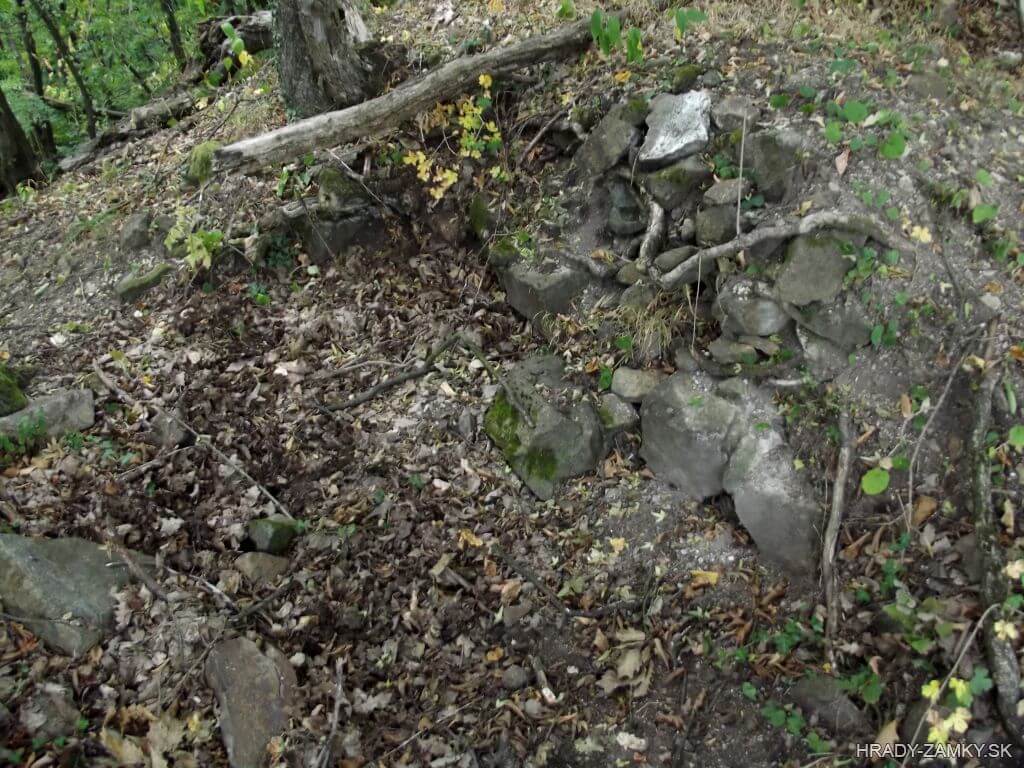
The elliptical area of the castle was bordered by an earthen rampart, which was reinforced with stones. The longitudinal core of the castle, located centrally, was delimited by a stone wall. The eastern part was dominated by a prismatic tower with dimensions of 9.8m x 9.8m, which protected the entrance gate. In the western part of the core, a palace with a rectangular floor plan was transversely situated. The space of the longitudinal courtyard was completed by a cistern. It is assumed that another cistern was also in a smaller area behind the palace. In the northern slope there is still a recognizable remnant of the access road to the castle.Archaeological research in 1985-86 brought various finds that date life to the castle to the 13th century. At present, the slight remains of the defensive tower and palace and the earthen rampart with a moat have been preserved.
Elipsovitý areál hradu bol ohraničený zemným valom, ktorý bol spevnený kameňmi. Pozdĺžne jadro hradu umiestnené centrálne vymedzovala kamenná hradba. Na východnej časti dominovala hranolová veža s rozmermi 9.8m x 9.8m, ktorá chránila vstupnú bránu. Na západnej časti jadra bol priečne situovaný palác obdĺžnikového pôdorysu. Priestor pozdĺžneho nádvoria dopĺňala cisterna. Predpokladá sa, že ďalšia cisterna bola aj v menšom priestore za palácom. V severnom svahu je ešte rozoznateľný pozostatok prístupovej cesty k hradu.Archeologický výskum v rokoch 1985-86 priniesol rôzne nálezy, ktoré datujú život na hrádku do 13. storočia. V súčasnosti sa zachovali nepatrné zvyšky obrannej veže a paláca a zemný val s priekopou.
Plan
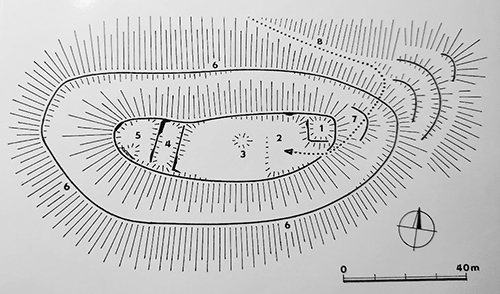
Legenda k pôdorysu
- Zdroj: NEŠPOR J.
- Za tajomstvami zrúcanín II. Zrúcaniny Stredného Slovenska
History
A smaller fortified castle was built sometime in the 12th-13th century. It was almost certainly a guard castle that controlled the road from Pohronie to Pukanec and Krupina. No written mentions have been preserved about this castle. Information about the castle comes more or less from the archaeological research of A. Ruttkay from 1985-86. It was this research that brought knowledge about the origin and disposition of the fortified seat. The obtained archaeological material does not deviate from the 13th century, which allows to determine not only the period of its origin, but also to point out the short time of its existence.
The castle was probably built by nobles from Kalná, who in 1283 were also the owners of Rudno. This year, the property of Rudno is mentioned for the first time as possessio Ruda, but there is no mention of the castle in the document, which could indicate its demise before this year.
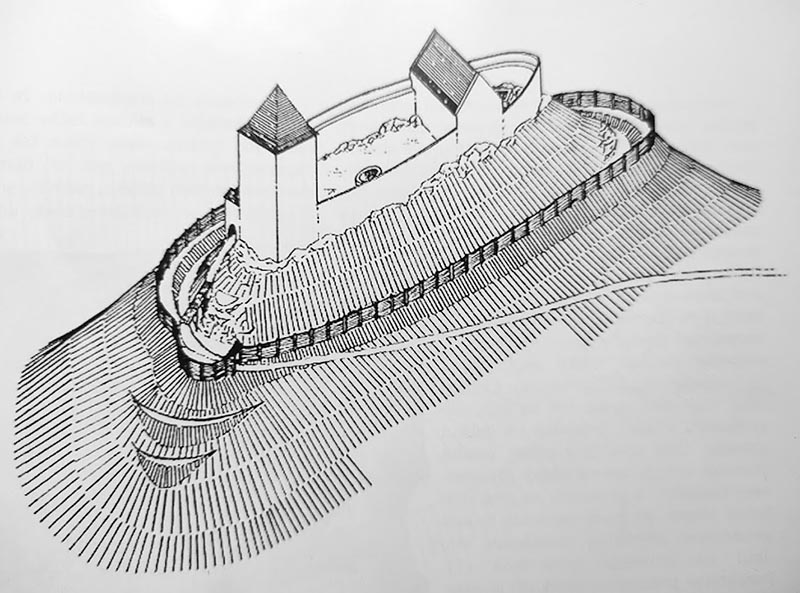
The castle had the shape of an ellipse and its outer fortification was formed by an earthen rampart reinforced with stones. The very core of the castle consisted of a prismatic defense tower and a residential palace in a protected position. There were also two rainwater tanks in the castle grounds.
Although the history of the castle was examined by the teacher Ján Bornemisza (Bojmír) in 1934, the first more professional research was carried out by the archaeologist A. Habovštiak in 1964. 1985-86 under the leadership of A. Ruttkay and later the research was supplemented in 1998-99 by the research of Gutek, Matejka and others. Archaeological finds of pottery, bone or metal objects confirm the existence of the castle until the 13th century.
It is interesting that although andesite was used to build the castle, there is no andesite quarry anywhere in the vicinity. The material was carried by hand to the top of the castle hill and even today it remains a considerable amount on the site of the castle.
At present, the slight remnants of the defensive tower and palace and the earthen rampart with a moat are visible.
Menší opevnený hrad bol vybudovaný niekedy v 12.-13. storočí. Takmer určite išlo o strážny hrad, ktorý kontroloval cestu z Pohronia do Pukanca a Krupiny. O tomto hrádku sa nezachovali žiadne písomné zmienky. Informácie o hrade pochádzajú viacmenej z archeologického výskumu A. Ruttkaya z rokov 1985-86. Práve tento výskum priniesol poznatky o vzniku a dispozícii opevneného sídla. Získaný archeologický materiál nevybočuje z 13. storočia, čo umožňuje rámcovo určiť nielen obdobie jeho vzniku, ale zároveň aj poukázať na krátky čas jeho existencie.
Hrad dali postaviť pravdepodobne šľachtici z Kalnej, ktorí v roku 1283 boli aj vlastníkmi Rudna. V tomto roku sa spomína majetok Rudno prvýkrát ako possessio Ruda, avšak o hrade v listine nie je žiadna zmienka, čo by mohlo poukazovať na jeho zánik ešte pred týmto rokom.
Hrad mal tvar elipsy a jeho vonkajšiu fortifikáciu tvoril zemný val spevnený kameňmi. Samotné jadro hradu sa skladalo z hranolovej obrannej veže a obytného paláca v chránenej polohe. V areáli hradu sa nachádzali aj dve cisterny na zachytávanie dažďovej vody.
Hoci sa v roku 1934 históriou hradu zaoberal učiteľ Ján Bornemisza (Bojmír), prvý odbornejší výskum vykonal až archeológ A. Habovštiak v roku 1964. Súvislý zisťovací archeologický výskum však prebehol až v r. 1985-86 pod vedením A. Ruttkaya a neskôr bol výskum doplnený v rokoch 1998-99 výskumom Guteka, Matejku a ďalších. Archeologické nálezy keramiky, kostených či kovových predmetov potvrdzujú existenciu hrádku do 13. storočia.
Zaujímavosťou je, že hoci na stavbu hradu bol použitý andezit, nikde v bližšom okolí sa andezitový lom nenachádza. Materiál bol ručne vynášaný na vrchol hradného kopca a aj dnes ho zostalo na mieste hradu značné množstvo.
V súčasnosti sú viditeľné nepatrné zvyšky obrannej veže a paláca a zemný val s priekopou.
Myths and legends
The rumor says
On the Rudnian estate, ore mining was the most profitable. Therefore, the bile's foams became swollen when the job stopped. The heads broke off at two thicknesses of the stupa, which shattered the mined mineral. Everyone knew they wouldn't last long, but there was never a fix for the hustle and bustle. Now they blamed Paľ and Joža, because they allegedly didn't want to do it and they damaged the equipment on purpose. They both locked each other in a dungeon at the castle to hang them in the morning because of the great damage. For free, Melanka prayed to the great man for an innocent brother and his friend, whom she carried in her heart. She begged, promised, fell to her knees in front of him. However, her pleas were as if he were throwing peas at the wall. At that time, the unhappy girl succumbed to a desperate act. Melanka set fire to the stupa, the mill and the mine. With arms and legs, she ran to put out the fire as the arson slid unnoticed into the empty castle. She was released by a prisoner and all three were lost in the mountain. The mine burned down, the manor moved out, the castle fell into disrepair. All that was left was the meager banging of Melanka on the dungeon door, which is said to be heard at the castle today on the anniversary.
Ivanko's hill
It is said that the hill on which the castle once stood was named after soldier Ivanko, who petrified here when he forgot to change on guard.
Povráva sa
Na Rudnianskom panstve najviac vynášala ťažba rudy. Preto sa urodzenému spenila žlč, keď práca zastala. Na dvoch tĺkoch stupy, ktoré rozbíjali vydolovaný nerast, sa odlomili hlavy. Každý vedel, že už dlho nevydržia, ale pre samý zhon ich nebolo kedy opraviť. Teraz zvalili vinu na Paľa a na Joža, lebo sa im vraj nechcelo robiť a zariadenie poškodili naschvál. Obidvoch zatvorili na hrade do temnice, že ich pre tú prevelikú škodu budú ráno vešať. Darmo Melanka orodovala u veľkomožného za nevinného brata a jeho kamaráta, ktorého nosila v srdci. Prosíkala, sľubovala, padala pred ním na kolená. Jej prosby boli však akoby hrach na stenu hádzal. Vtedy sa nešťastné dievča podobralo zúfalému činu. Melanka stupy, mlyn i baňu podpálila. Čo malo ruky, nohy, bežalo hasiť oheň, zatiaľ čo podpaľačka nebadane vkĺzla do prázdneho hradu. Oslobodila väzňou a všetci traja sa stratili v hore. Baňa vyhorela, panstvo sa odsťahovalo, hrad spustol. Ostalo len nástojčivé búchanie Melanky na žalárne dvere, ktoré sa vraj vo výročný deň ozýva na hrade podnes.
Ivankov vrch
Traduje sa, že vrch, na ktorom sa hrad kedysi týčil, dostal meno podľa vojaka Ivanka, ktorý tu skamenel, keď ho zabudli vymeniť na stráži.
Useful information
Slight remnants of the walls are freely accessible
Nepatrné zvyšky múrov sú voľne prístupné
Nearby castles