Breznica
Tekovská Breznica Banská Bystrica county Slovakia
castle ruin
Breznický hrad
Tekovská Breznica Banskobystrický kraj Slovakia
zrúcanina hradu
Remains of a castle on the wooded andesite hill Hrádok in the marginal part of the Štiavnica Mountains, above the village of Tekovská Breznica
Zvyšky hradu na zalesnenom andezitovom vrchu Hrádok v okrajovej časti Štiavnických vrchov, nad obcou Tekovská Breznica
Previous names
Berzenche, Berzencze, Breznitz, Březnice, Berzence, Barsberzence
Roads
Trasa 1: In the village Tekovská Breznica we get to the local cemetery, which has a spacious parking lot. From there we walk along the path next to the cemetery (green route), when we enter the forest soon. Here the green route continues to the right and straight is the old original road to the castle, which is very steep and unmaintained. Therefore, we follow the green route on the right along the edge of the forest, which will take us to a crossroads with a shelter in about half an hour. From there we climb the green route to the left through the forest for about another 15-20 minutes to the Hrádok position. From there, only a few meters to the right and we notice the remains of the walls of Breznica Castle.
Trasa 1: V obci Tekovská Breznica sa dostaneme k miestnemu cintorínu, pri ktorom je priestranné parkovisko. Odtiaľ sa peši vyberieme cestou popri cintoríne (zelená TZT), až onedlho vstúpime do lesa. Tu zelená trasa pokračuje vpravo a rovno je stará pôvodná cesta k hradu, ktorá je veľmi strmá a neudržiavaná. Preto nasledujeme vpravo zelenú trasu po okraji lesa, ktorá nás asi za polhodinku dovedie k rázcestiu s prístreškom. Odtiaľ stúpame zelenou trasou vľavo lesom ešte zhruba 20 minút až k polohe Hrádok. Odtiaľ už len pár metrov vpravo a všimneme si pozostatky múrov Breznického hradu.
Trasa 2: From the car park by the cemetery, as in route no. 1, we continue along the green route almost to the crossroads with the shelter, but before it we enter the forest on the left. At first we climb almost parallel to the green route, then this unmarked route deviates to the left and zigzag path leads us to the Breznický hrad crossroads, where we connect to the green route and continue a few meters to the right to the Hrádok position and to the remains of the castle walls.
Trasa 2: Od parkoviska pri cintoríne, rovnako ako v trase č.1, pokračujeme po zelenej trase takmer až k rázcestiu s prístreškom, avšak ešte pred ním vstúpime do lesa vľavo. Spočiatku stúpame takmer rovnobežne s vedľajšou zelenou trasou, potom sa táto neznačená trasa odkláňa doľava a cik-cakovite nás privedie až k rázcestiu Breznický hrad, kde sa napojíme na zelenú trasu a pokračujeme ešte pár metrov vpravo k polohe Hrádok a k pozostatkom múrov.
Description
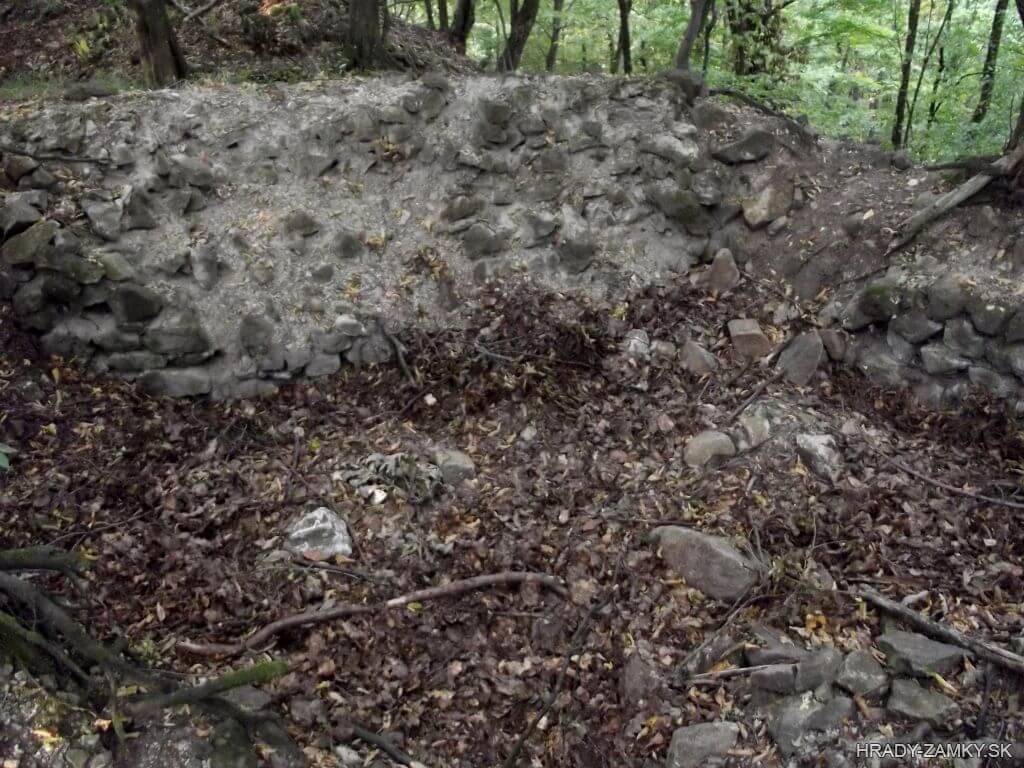
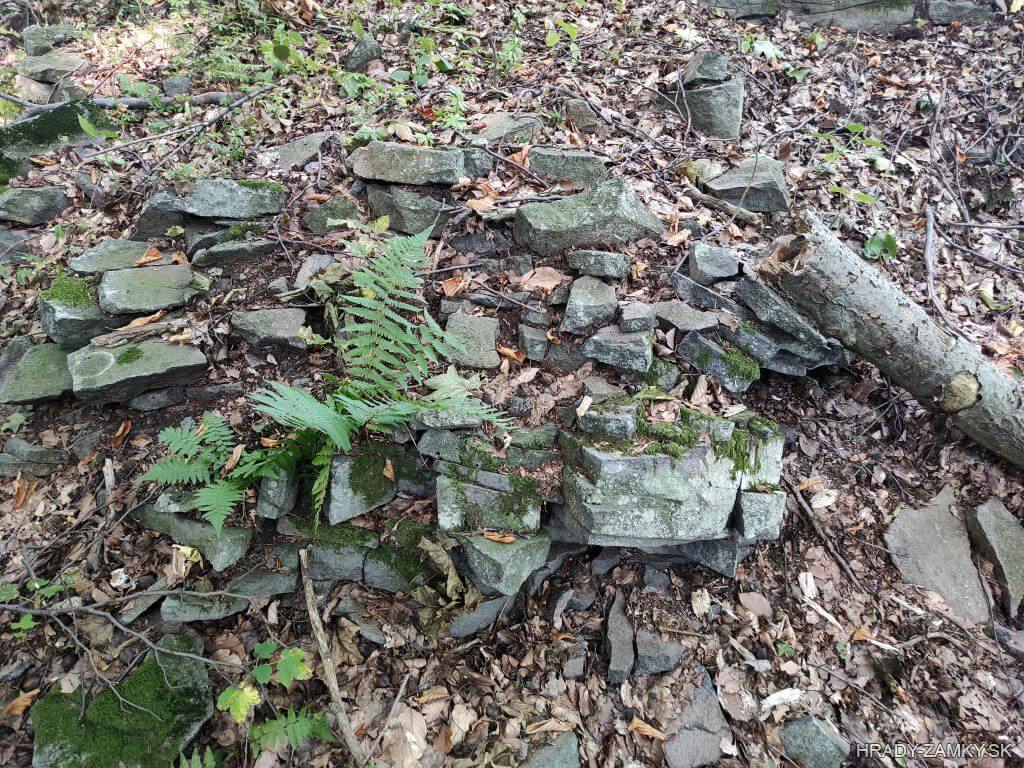
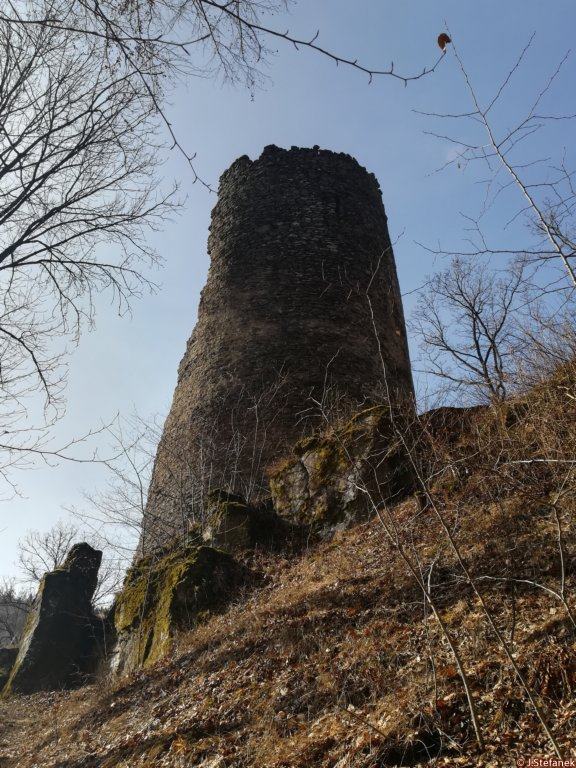
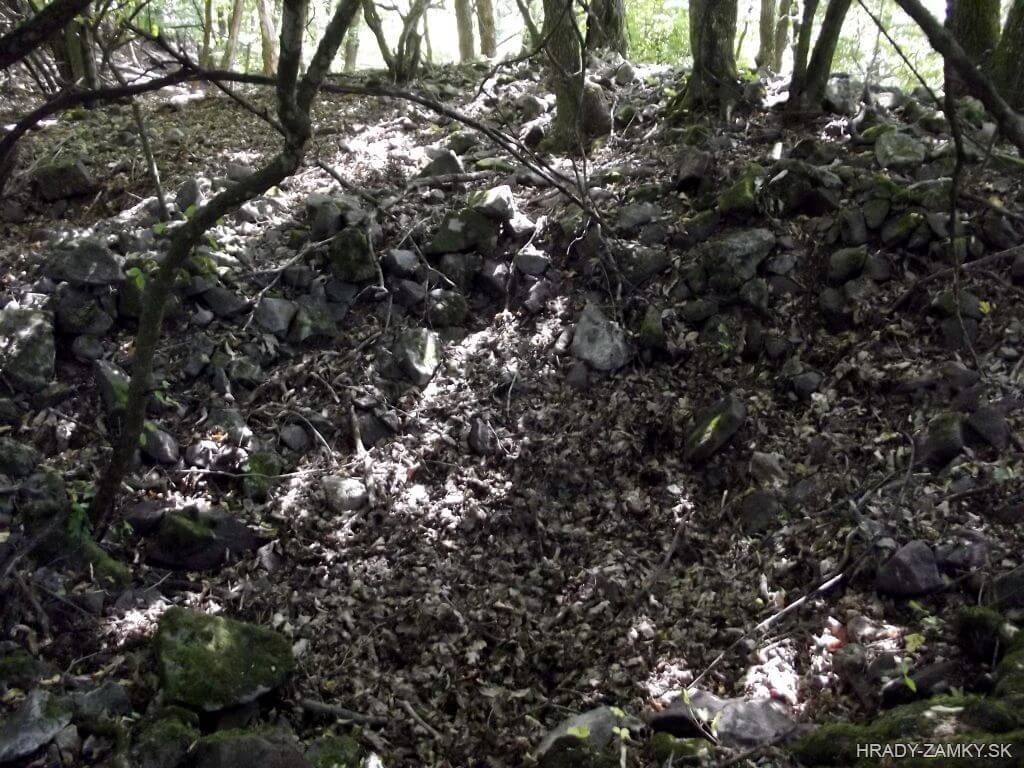
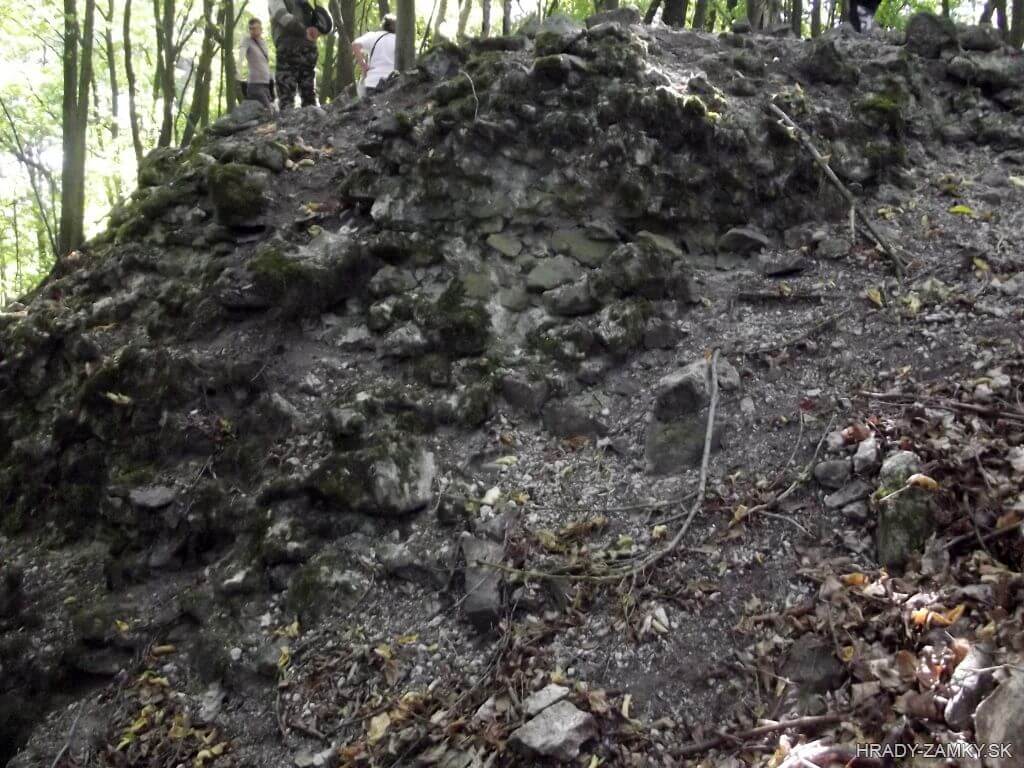
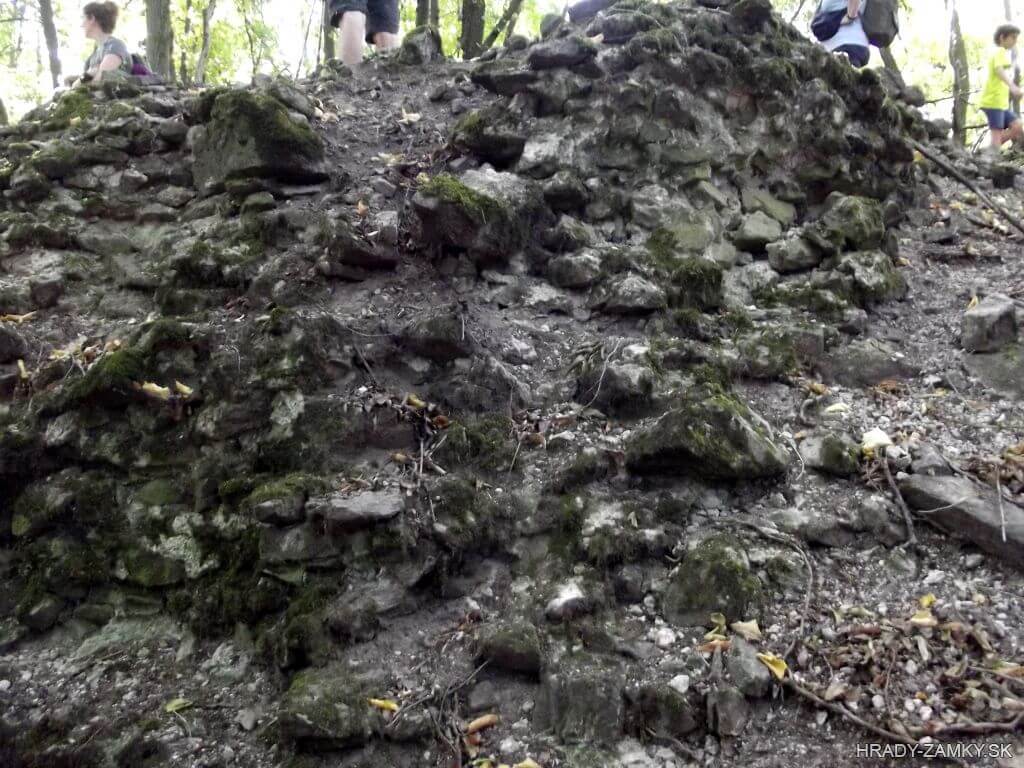
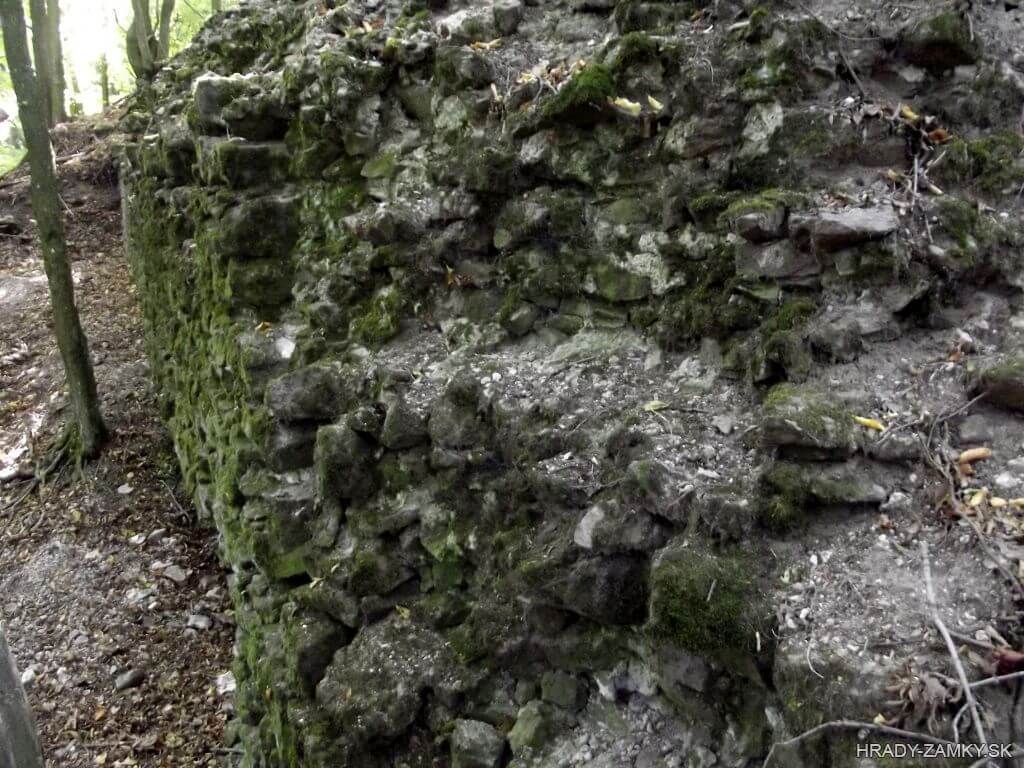
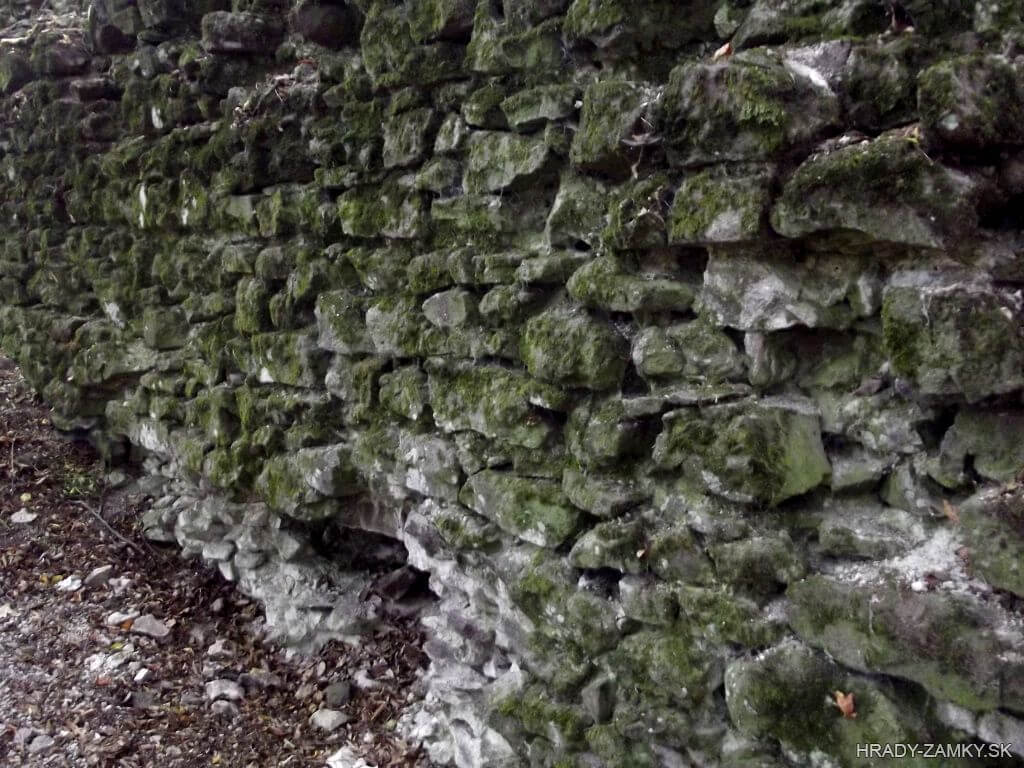
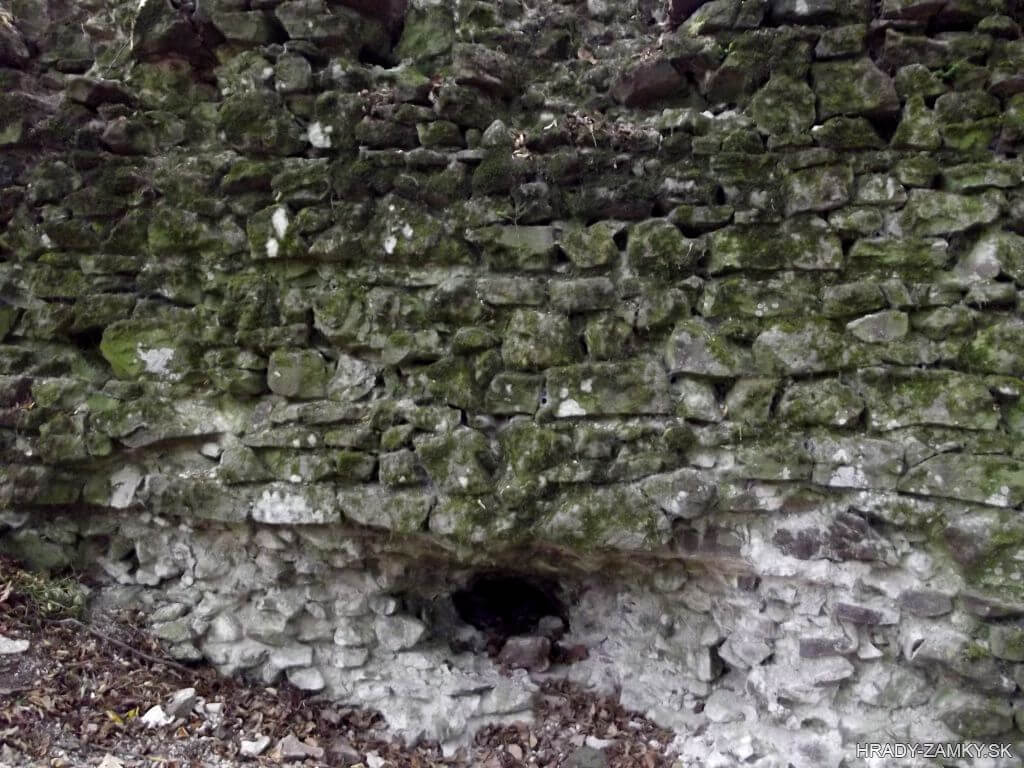
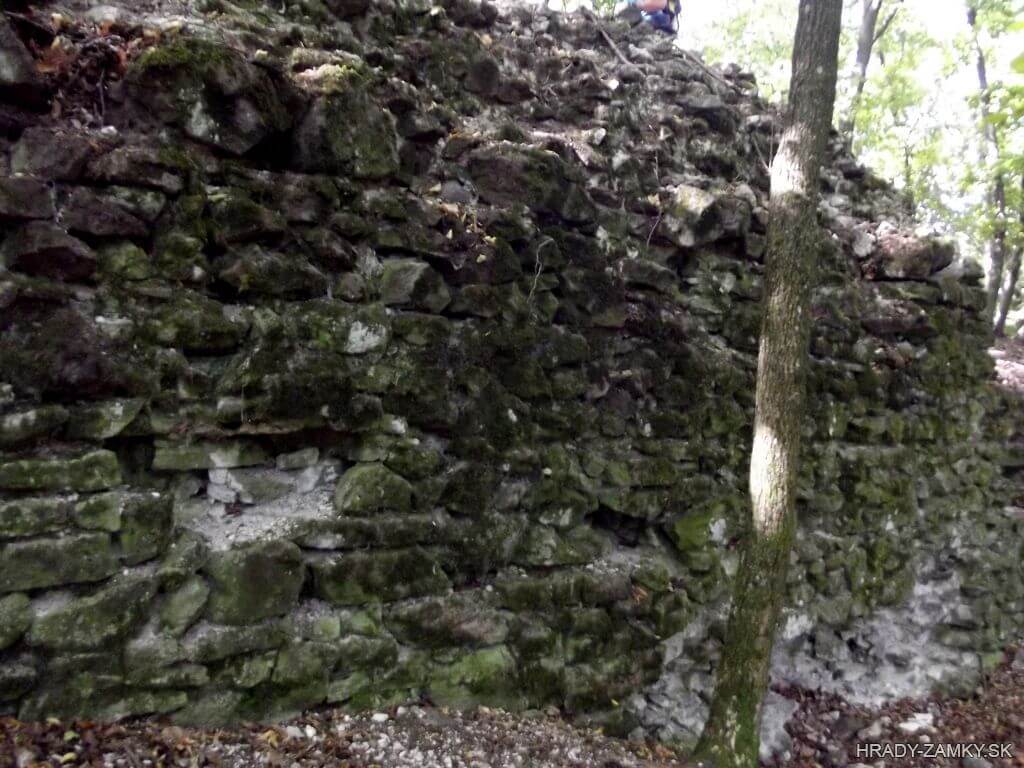
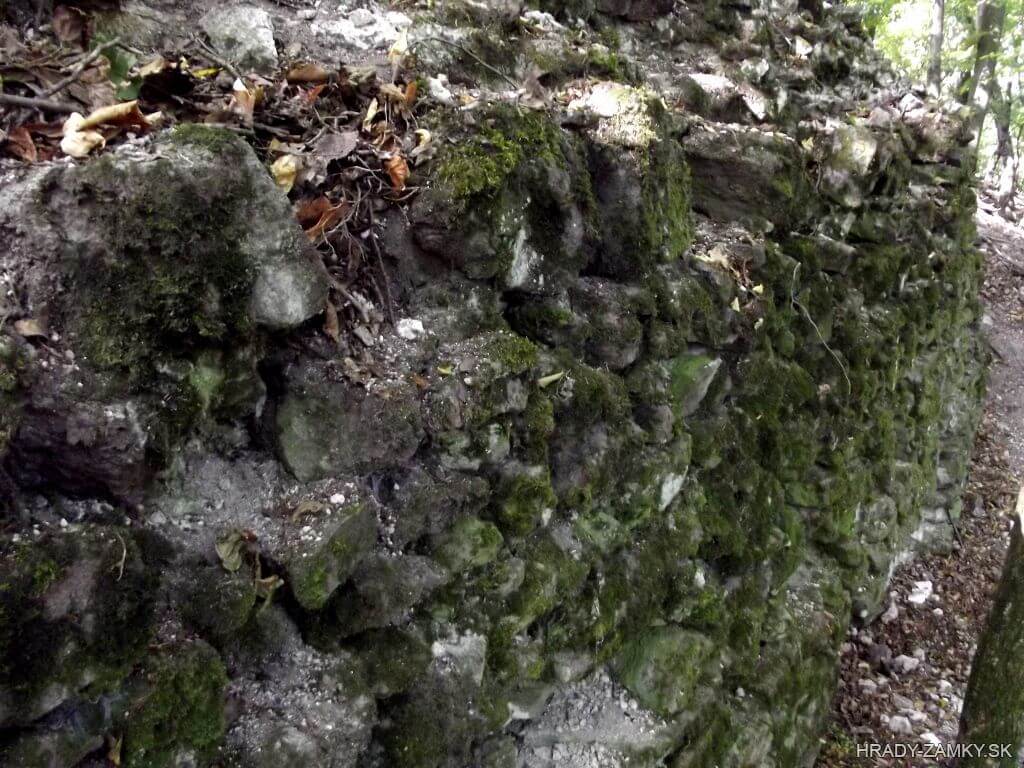
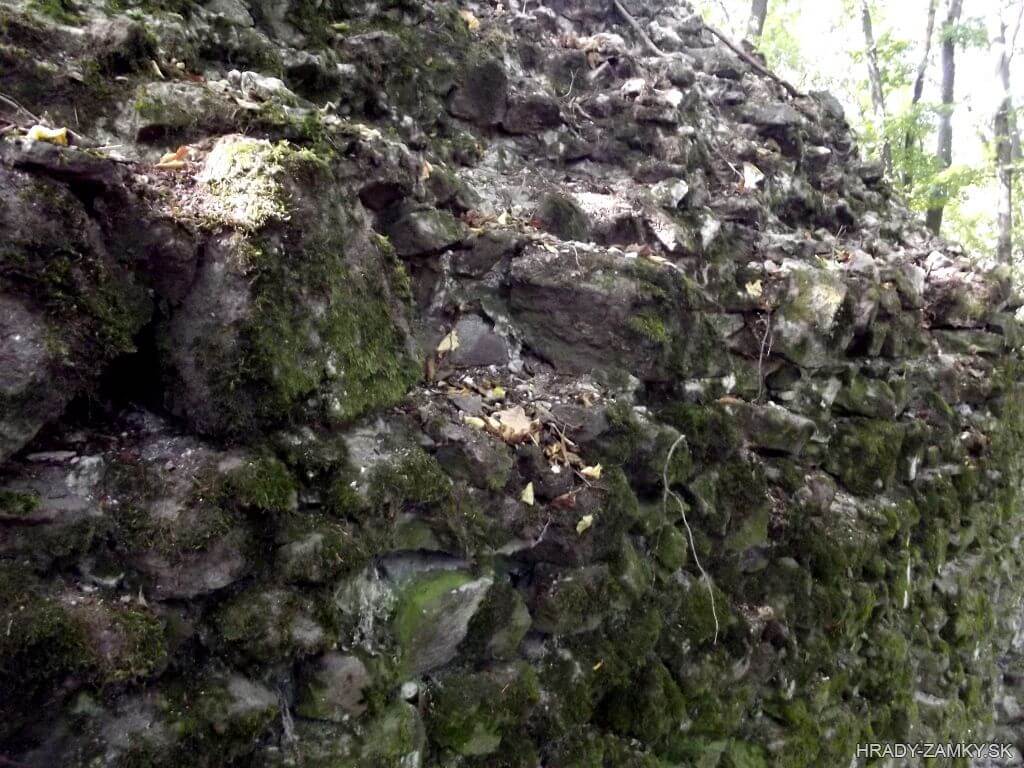
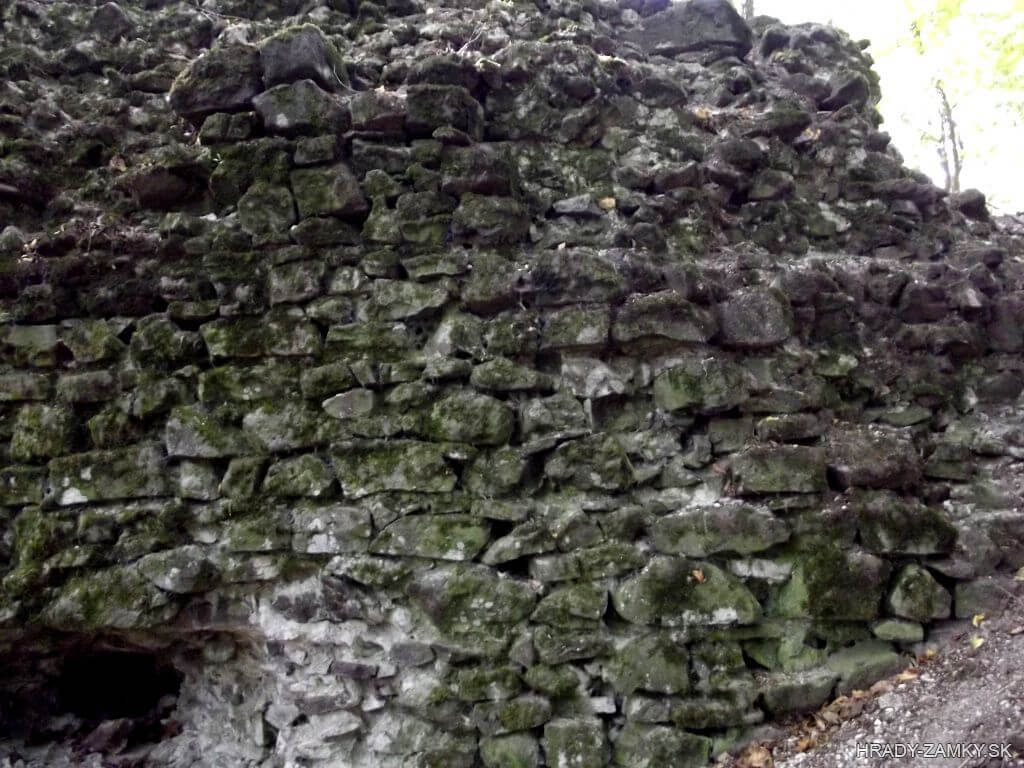
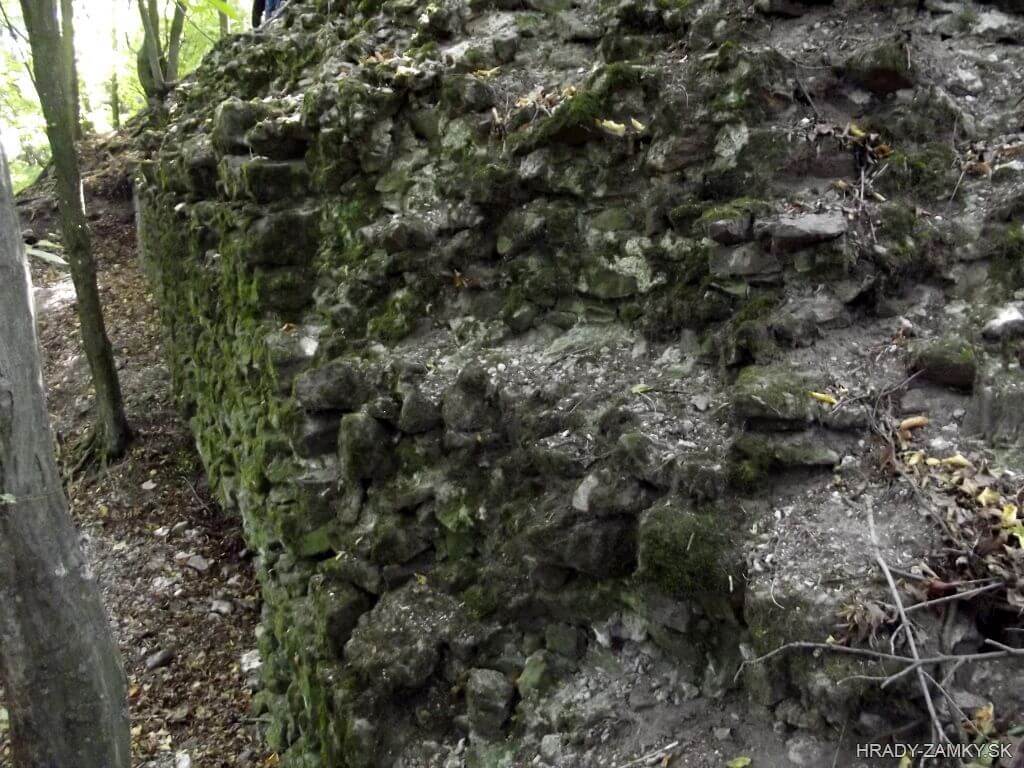
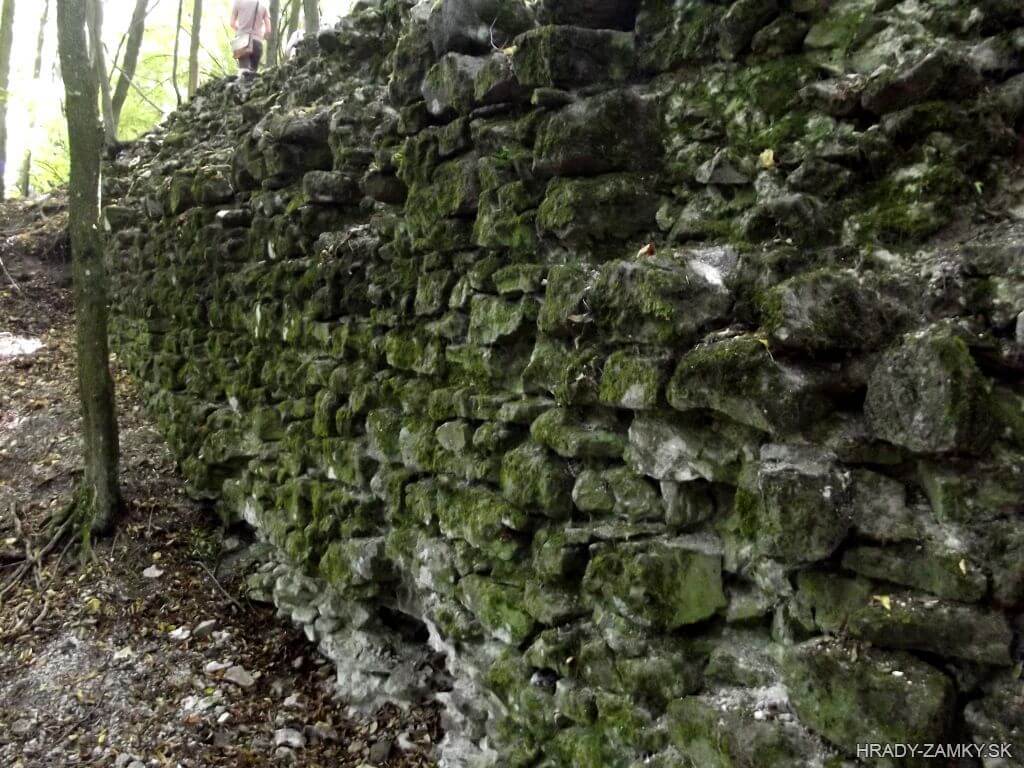
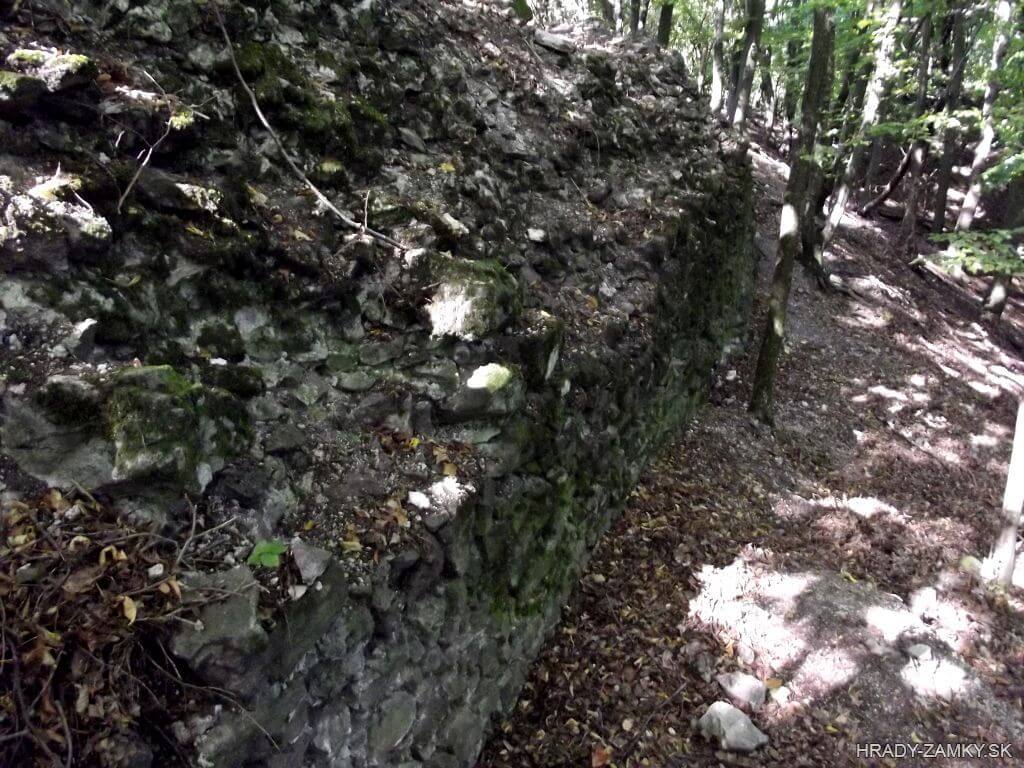
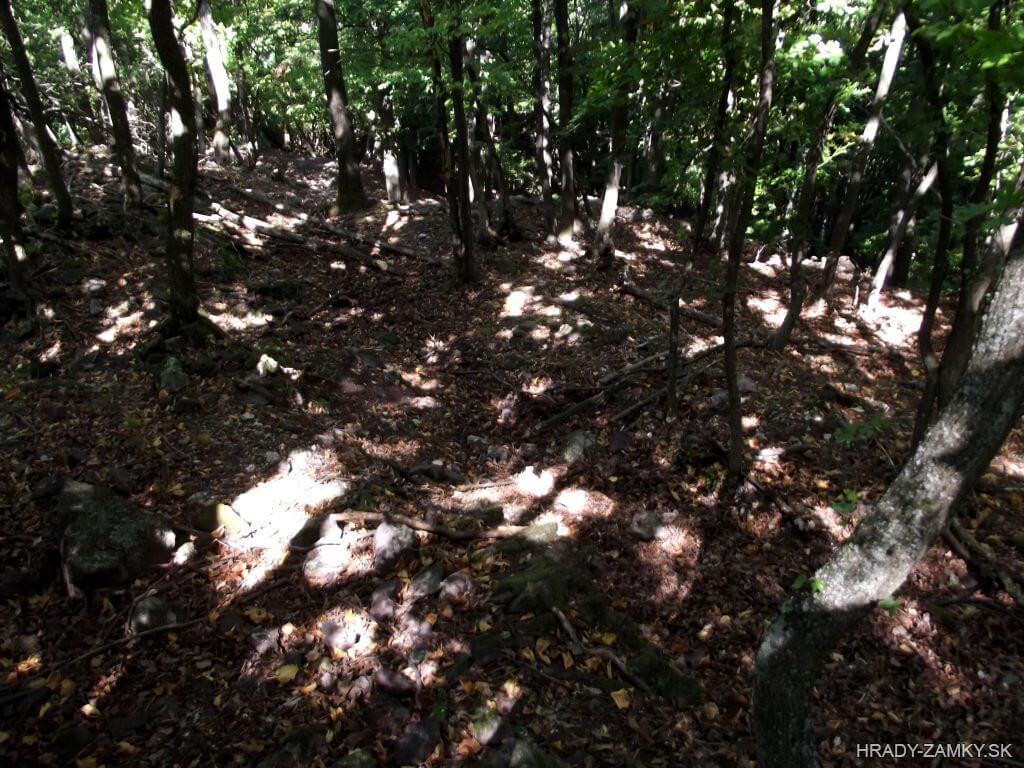
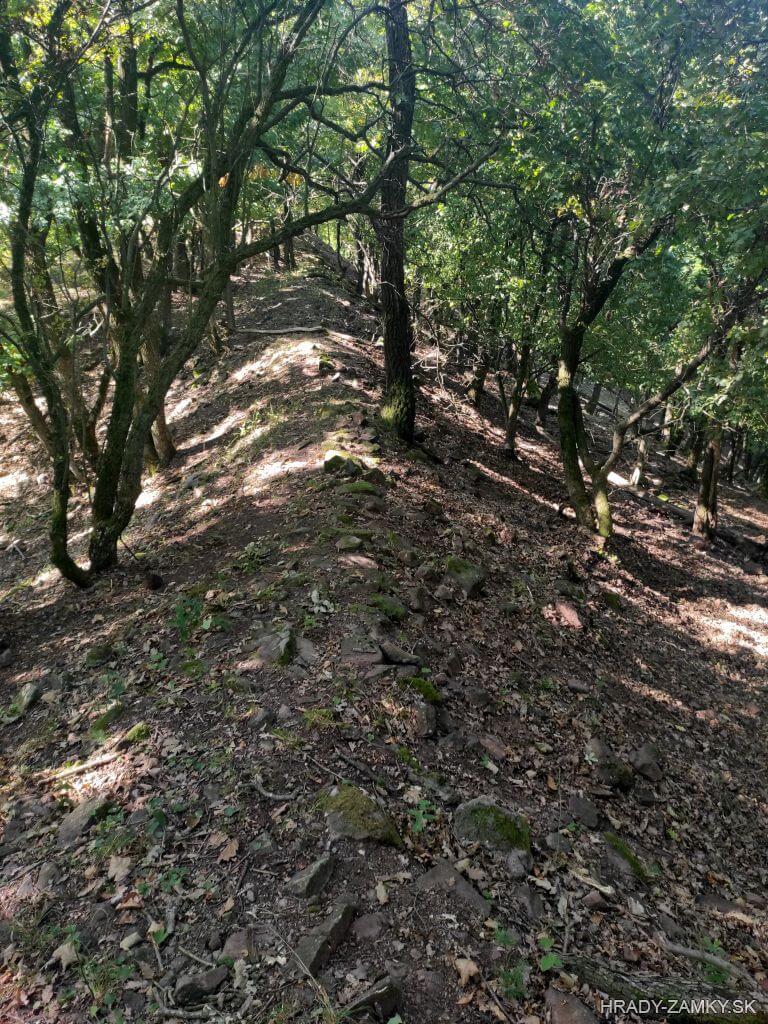
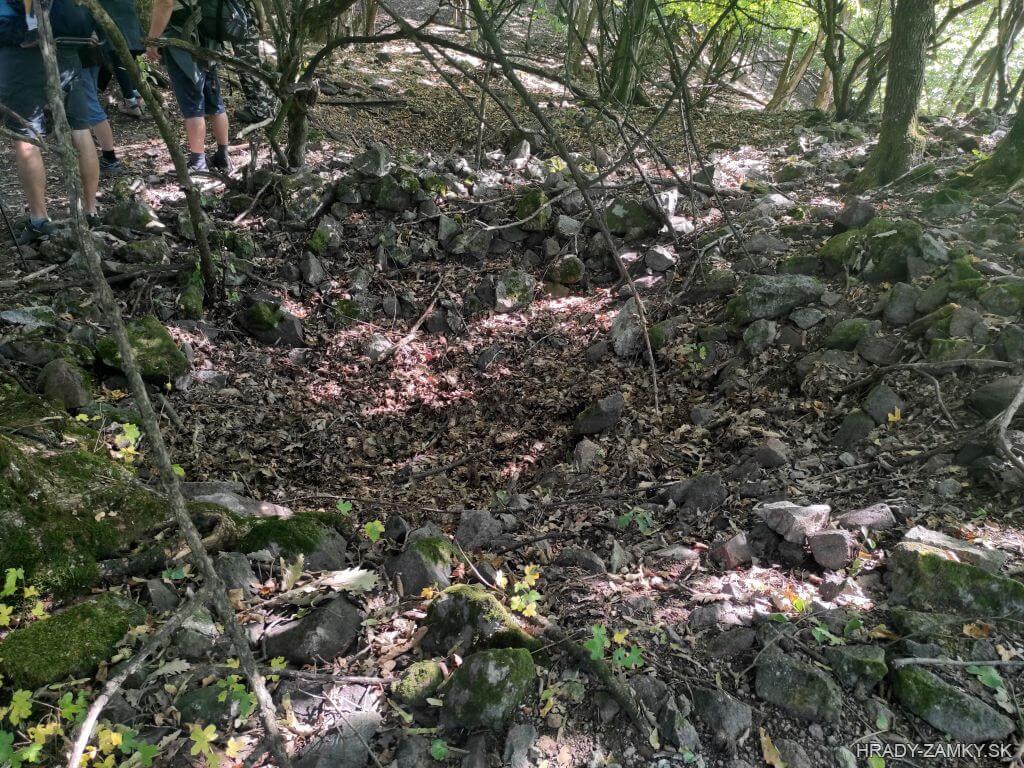
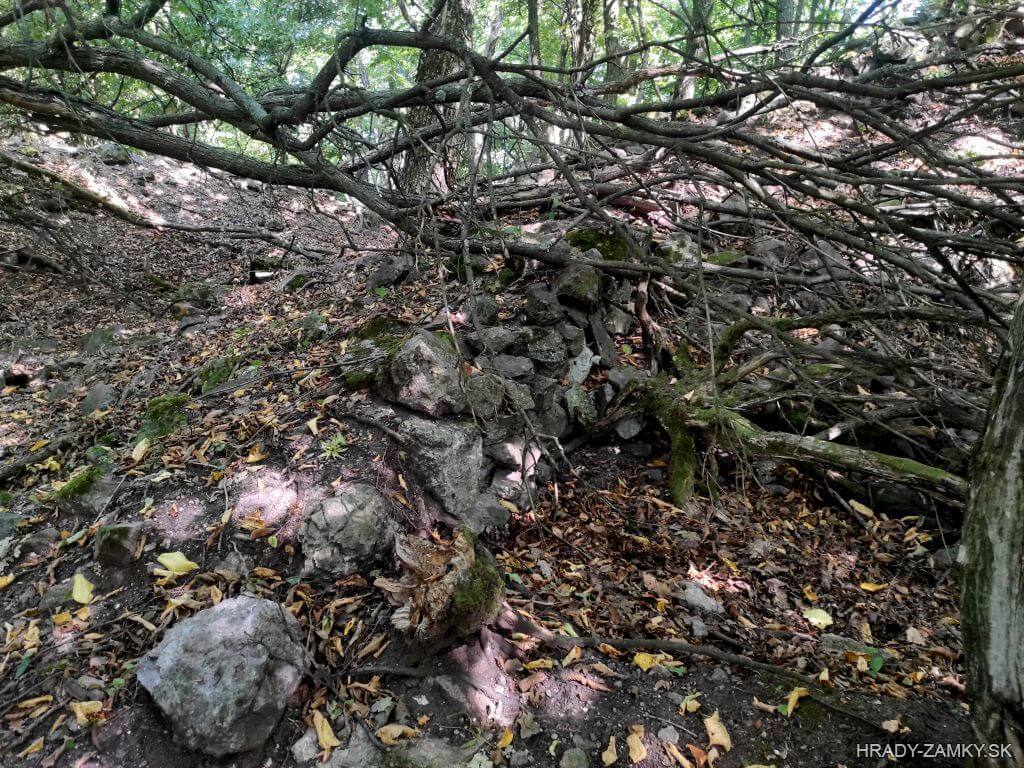
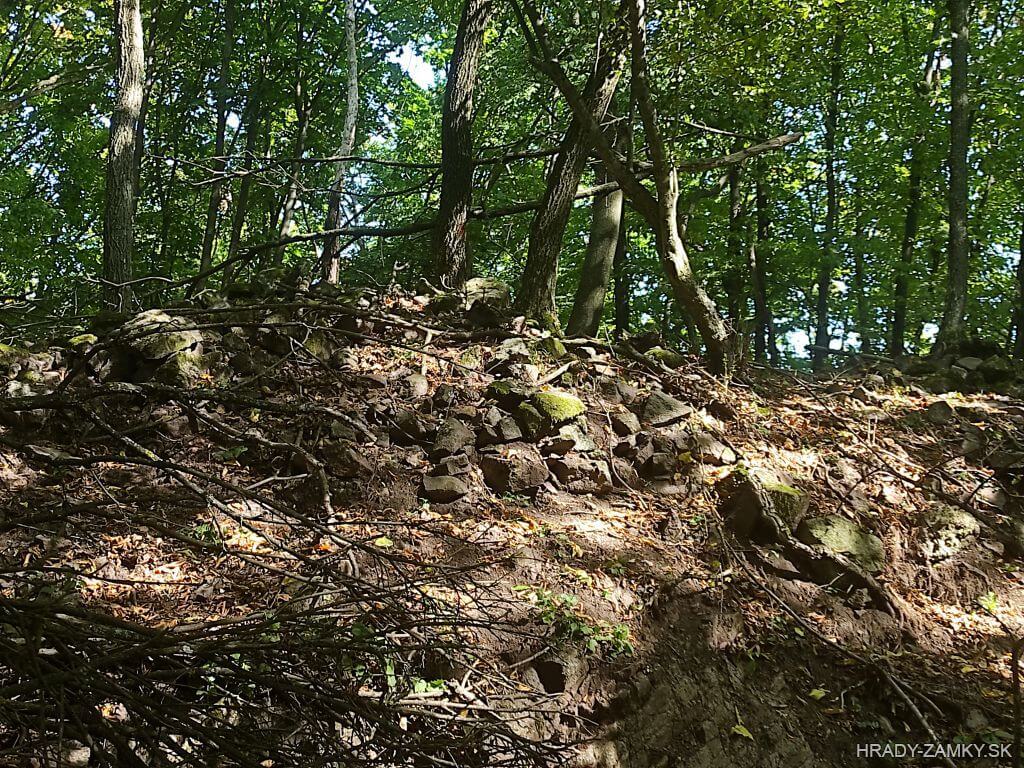
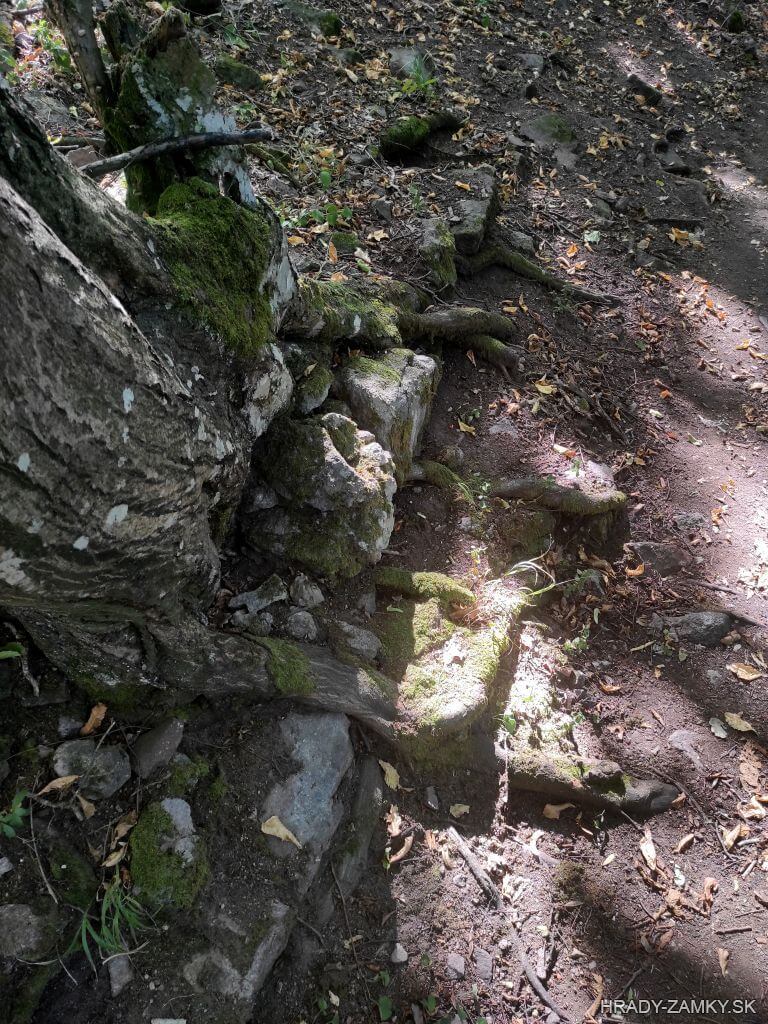
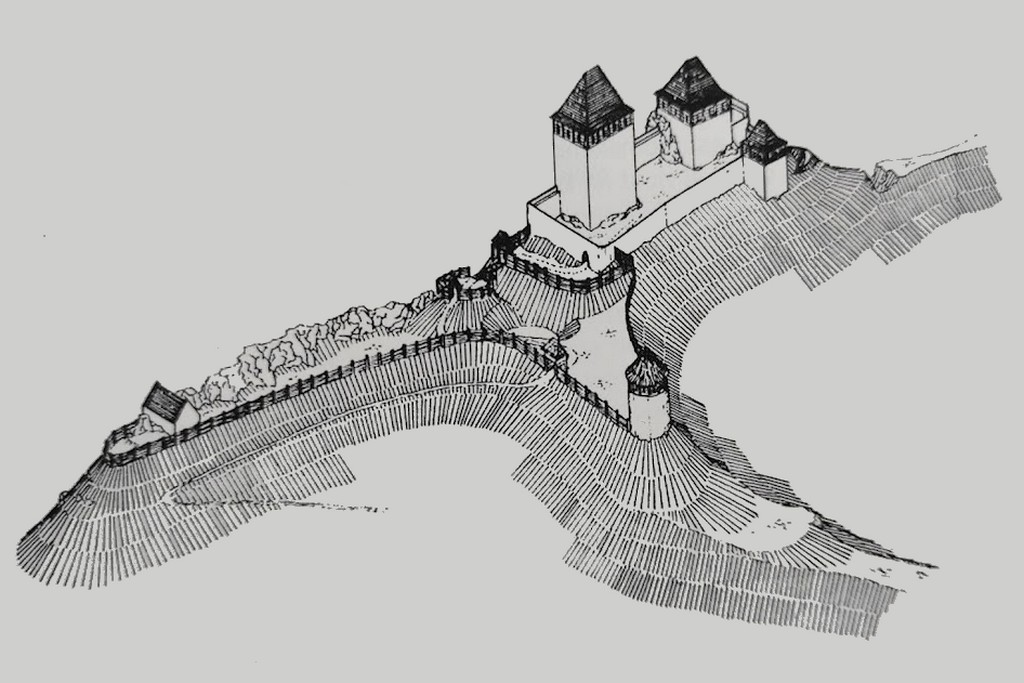
The castle was quite large and its shape was adapted to the reef on which it was located. It consisted of two main parts. The original castle core was located on the highest SE part of the ridge and had dimensions of approximately 50 x 30 m. Small discontinuous remains of above-ground walls have been preserved, but the remnant of a regularly shaped building is clear. Access to the core was from the NW through the neck ditch, which separates it from the fort, which occupied the entire remaining area of the top ridge in the length of almost 130 m.Towards the SW, the rest of the prismatic bastion has been preserved. NW in the direction from the upper castle stretches a lingual rocky outcrop, on which artificial interventions can be seen. There is a moat at the NW end of this fort. Another lingual promontory stretches south-west and was fortified by a wall with a cylindrical bastion at the end of the promontory, which controlled the entrance to the castle. The lower SW extends from the cylindrical bastion to a tongue-shaped outcrop, where parallel ramparts that are three times transversely divided are noticeable. The whole system extends to the end of the protrusion, where it ends in the form of a platform. The protection of this unit on the western side was further strengthened by the now insignificant rampart.At present, in addition to the ramparts, the disposition of the castle in the terrain is visible and the relic of the access road in the bend below the NW fort is partially preserved. A fragment of the masonry of the NE wall, the adjacent northern corner and the destroyed SE masonry - which formed the tower - was also preserved. The ground floor fragment of the masonry is probably the remnant of a prismatic bastion.
Hrad bol pomerne rozsiahly a jeho tvar bol prispôsobený bralu, na ktorom sa nachádzal. Pozostával z dvoch hlavných častí. Pôvodné hradné jadro sa nachádzalo na najvyššie položenej JV časti hrebeňa a malo rozmery približne 50 x 30 m. Zachovali sa drobné nesúvislé zvyšky nadzemných múrov, no zreteľný je pozostatok pravidelne tvarovanej stavby. Prístup do jadra bol od SZ cez šijovú priekopu, ktorá ho delí od predhradia, ktoré zaberalo celú zvyšnú plochu vrcholového hrebeňa v dĺžke takmer 130 m.Smerom na JZ sa zachoval zvyšok hranolovej bašty. SZ smerom od horného hradu sa tiahne jazykovitý skalný výbežok, na ktorom sú badateľné umelé zásahy. Na SZ konci tohoto predhradia sa nachádza priekopa. Ďalší jazykovitý výbežok sa tiahne JZ smerom a bol opevnený múrom s valcovou baštou na konci výbežku, ktorá kontrolovala vstup do hradu. Nižšie JZ smerom od valcovej bašty sa tiahne jazykovitý výbežok, kde sú badateľné trikrát priečne delené paralelné valy. Celý systém sa tiahne až na koniec výbežku, kde končí vo forme plošinky. Ochranu tohoto útvaru na západnej strane ešte posilňoval teraz už nevýrazný val.V súčasnosti je okrem valov viditeľná dispozícia hradu v teréne a čiastočne zachovaný relikt prístupovej cesty v ohybe pod SZ predhradím. Zachoval sa aj fragment muriva SV steny, priľahlého severného nárožia a deštruované JV murivo - ktoré tvorili vežu. Prízemný fragment muriva je zrejme zvyškom hranolovej bašty.
Plan
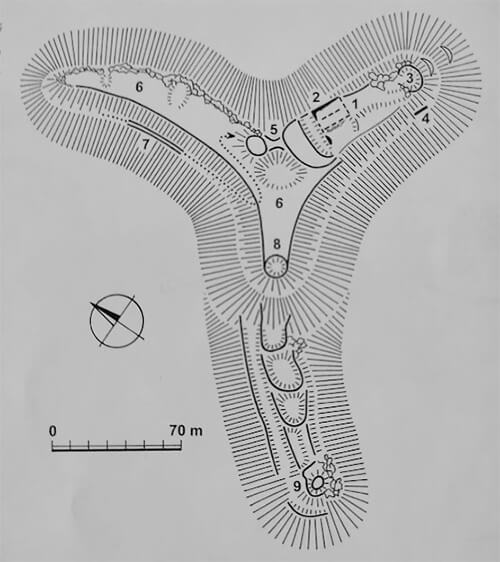
Legend to the ground plan
- 1 - upper castle
- 2 - stone wall
- 3 - courtyard
- 4 - rest of masonry (bastion)
- 5 - sewing ditch
- 6 - fortification platforms
- 7 - relic of the access road
- 8 - cylindrical tower
- 9 - sections with ramparts
- finished with a platformSource: NEŠPOR J.
- Za tajomstvami zrúcanín II. Zrúcaniny Stredného Slovenska
Legenda k pôdorysu
- 1 - horný hrad
- 2 - kamenná hradba
- 3 - dvorček
- 4 - zvyšok muriva (bašta)
- 5 - šijová priekopa
- 6 - plošiny predhradia
- 7 - relikt prístupovej cesty
- 8 - valcová veža
- 9 - úseky s valovým opevnením
- zakončené plošinkouZdroj: NEŠPOR J.
- Za tajomstvami zrúcanín II. Zrúcaniny Stredného Slovenska
History
Historians differ on the time of the castle's founding. According to P. Križko, the origin of the castle can be dated before 1240, when there was a village and a castle called Brezinche, while after the Tartar invasion only Berzenche Castle is mentioned. According to this theory, the foundation of the castle can be attributed to the Archbishop of Esztergom, who in 1260 took over the village of Breznica from the abbot of St. Benedict, and because of this, disputes arose.
Another source (Vlastivedný slovník obcí na Slovenskou, p. 153) considers the first credible report on Breznica Castle to a document from 1311 and the Hungarian historian E. Fügedi marked the origin of the castle in the range of 1283 to 1311, because in 1283 the castle is not yet mentioned.
The castle then became the property of Matúš Čák, who occupied it in 1311. The advantageous location of the castle enabled the control of the Hron valley, where important roads led, especially to the mining areas. It is said that Čák used the sapper technique, which consisted in the attacker undermining the castle walls, which then collapsed. However, the castle then had to be repaired relatively quickly, as in 1313 it is already mentioned as a castrum egregium, ie an important castle. Čák held the castle for about 10 years and after his death he returned to the archbishop.
It is believed that the archbishop's disputes with the abbey continued, which is probably related to the damage to the castle, which is mentioned in 1411 as a castrum fractum, ie damaged.
In 1423, the castle was rebuilt into a Gothic fortress. It had a prismatic tower with a residential palace, with external fortifications, which enclosed the castle courtyard.
After the death of King Albrecht II. the castle was occupied by the troops of Ján Jiskra in 1441 and later, in 1471 by the army of the Polish king Kazimir. According to other sources, however, Mikuláš Bodok, the captain of Breznica, invited the Czechs to the castle in 1464, ravaging the area with them. It was at the time of the conspiracy against Matej Korvín. After the suppression of the uprising by king Matej, the castle fell into royal hands, led by the castellan Bartoš of Hertvikoviec (Barhos de Herthquikovyer). Probably due to military events, however, the importance of the castle has declined. This follows from the record from 1475, when it is mentioned as a fortress - forthalitium.
The complete demise of the castle can be expected at the end of the Middle Ages, because when planning the anti-Turkish defense in the parliament in 1564, only one of the proposed guard posts is mentioned as the site of the old castle above Breznica.
Despite this information, Ján Bornemisza, without specifying the source of the information, claims that in In 1660 the castle still stood. Although it was damaged, but was still habitable. Slovak list of monuments (Súpis pamiatok) states that the castle lasted until the beginning of the 18th century and that after 1711 did not even demolish. At that time, however, the castle was probably in ruins. Later, the stones were used to build houses in the village, which significantly accelerated the process of demise of the building.
At present, in addition to the ramparts, the layout of the castle in the terrain is visible, the relic of the access road, a fragment of the masonry of the north-eastern wall and the destroyed SE masonry are partially preserved. A fragment of masonry has also been preserved, which is probably the remnant of a prismatic bastion.
O dobe vzniku hradu sa názory historikov odlišujú. Podľa P. Križka možno vznik hradu datovať ešte pred rok 1240, keď existovala obec aj hrad pod názvom Brezinche, pričom po tatárskom vpáde sa spomína iba hrad Berzenche. Podľa tejto teórie teda možno pripísať založenie hradu ostrihomskému arcibiskupovi, ktorý v roku 1260 zabral obec Breznicu od svätobeňadického opáta a kvôli tomu sa viedli spory.
Ďalší zdroj (Vlastivedný slovník obcí na Slovensku, s. 153) považuje za prvú hodnovernú správu o hrade Breznica až listinu z r. 1311 a maďarský historik E. Fügedi označil vznik hradu v rozmedzí 1283 až 1311, pretože v roku 1283 sa hrad ešte nespomína.
Hrad sa potom stal majetkom Matúša Čáka, ktorý ho v roku 1311 obsadil. Výhodná poloha hradu umožňovala kontrolu údolia Hrona, kadiaľ viedla významná komunikácia, predovšetkým do banských oblastí. Traduje sa, že Čák použil sapérsku techniku, ktorá spočívala v tom, že podkopali hradné múry, ktoré sa potom zrútili. Hrad však musel byť potom relatívne rýchlo opravený, keďže sa v roku 1313 už spomína ako castrum egregium, čiže významný hrad. Čák mal hrad v držbe asi 10 rokov a po jeho smrti sa vrátil späť do rúk arcibiskupa.
Predpokladá sa, že sa aj naďalej viedli spory arcibiskupa s opátstvom, čo zrejme súvisí s poškodením hradu, ktorý sa spomína v roku 1411 ako castrum fractum, teda poškodený.
V roku 1423 bol hrad prestavaný na gotickú pevnosť. Mal hranolovú vežu s obytným palácom, s vonkajším opevnením, ktoré uzatváralo hradné nádvorie.
Krátko po smrti kráľa Albrechta II. Habsburského obsadili hrad v roku 1441 vojská Jána Jiskru a neskôr, v roku 1471 vojsko poľského kráľa Kazimíra. Podľa iných prameňov však Mikuláš Bodok, breznický kapitán, prijal do hradu Čechov v r. 1464, pričom pustošil okolie spolu s nimi. Bolo to v čase sprisahania proti Matejovi Korvínovi. Po potlačení povstania kráľom Matejom sa hrad dostal do kráľovských rúk, na čele s kastelánom Bartošom z Hertvikoviec (Barhos de Herthquikovyer). Zrejme vplyvom vojenských udalostí však už význam hradu poklesol. Vyplýva to zo záznamu z roku 1475, keď sa spomína ako tvrdza - fortalitium.
Úplný zánik hradu možno predpokladať už na sklonku stredoveku, pretože pri plánovaní protitureckej obrany sa na sneme v roku 1564 ako jedno z navrhovaných strážnych miest uvádza len miesto starého hradu nad Breznicou.
Napriek týmto informáciám, Ján Bornemisza bez udania zdroja informácie tvrdí, že v r. 1660 hrad ešte stál. Bol síce poškodený, ale k bývaniu ešte súci. Súpis pamiatok uvádza, že hrad pretrvával do začiatku 18. storočia a že ho po r. 1711 ani nezbúrali. Vtedy však už asi bol hrad v ruinách. Neskôr boli kamene používané na stavbu domov v obci, čo výrazne urýchlilo proces zániku objektu.
V súčasnosti je okrem valov viditeľná dispozícia hradu v teréne, čiastočne zachovaný relikt prístupovej cesty, fragment muriva severovýchodnej steny a deštruované JV murivo. Zachoval sa aj fragment muriva, ktorý je zrejme zvyškom hranolovej bašty.
Myths and legends
How Breznica Castle was conquered by Matúš Čák
Once, when enemy troops were recharging Breznica Castle, a handsome soldier, a spy, seduced the castle maid. He promised her a marriage for her help in recharging the castle. With a vision of a free future, the girl agreed and did as her soldier told her. To launch the attack, she lit a candle in a clearly visible place and hid well so that nothing would happen to her. The attackers began to undermine the castle. Suddenly a terrible explosion erupted and part of the wall collapsed. The castellan and his family and party escaped an underground passage. The attackers defeated the castle garrison and became masters of the castle.The handsome soldier almost found the dragon girl. When he left, he took him with him, according to the military word. However, the act did not go unpunished. A quarrel broke out between them, in which the soldier became so angry that he killed the girl. Perhaps that is why it is not recommended to visit this place after dark today, as the cursed girl is allegedly haunting here. Was she the traitor herself?
Ako bol dobytý hrad Breznica Matúšom Čákom
Raz keď nepriateľské vojská dobíjali hrad Breznica, pekný vojak, vyzvedač, zviedol hradnú slúžku. Za jej pomoc pri dobíjaní hradu jej prisľúbil manželstvo. Dievčina s vidinou slobodnej budúcnosti privolila a urobila, ako jej kázal vojak. Na zahájenie útoku zažala sviečku na dobre viditeľnom mieste a dobre sa ukryla, aby sa jej nič nestalo. Útočníci začali podkopávať hrad. Naraz zahrmel strašný výbuch a časť múra sa zvalila. Kastelán so svojou rodinou a družinou ušli podzemnou chodbou. Posádku hradu útočníci premohli a stali sa pánmi hradu.Pekný vojak skoro našiel driečne dievča. Pri odchode ho vzal so sebou, podľa daného vojenského slova. Avšak čin neostal nepotrestaný. Strhla sa medzi nimi hádka, v ktorej sa vojak tak rozhneval, že dievča zabil. Azda preto sa dnes neodporúča navštevovať toto miesto po zotmení, údajne tu totiž straší zakliata dievčina. Žeby to bola samotná zradkyňa?
Useful information
The ruins are freely accessible
Zrúcanina je voľne prístupná
Nearby castles