Katarínka monastery
Dechtice Trnava county Slovakia
monastery
Katarínka
Dechtice Trnavský kraj Slovakia
kláštor
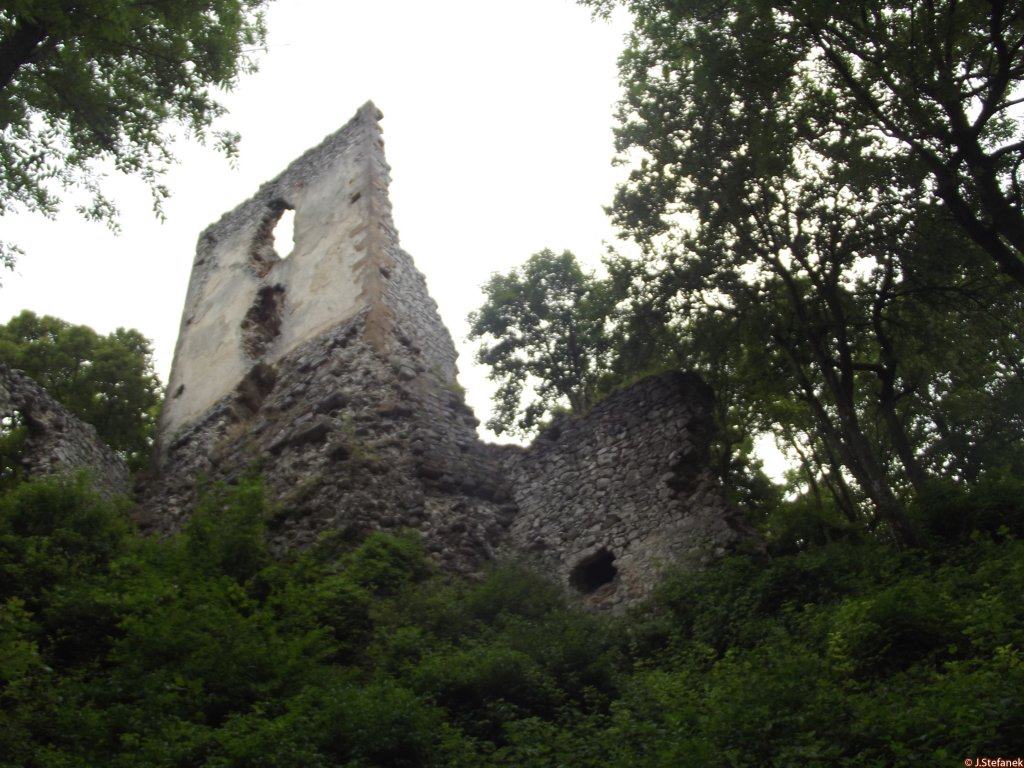
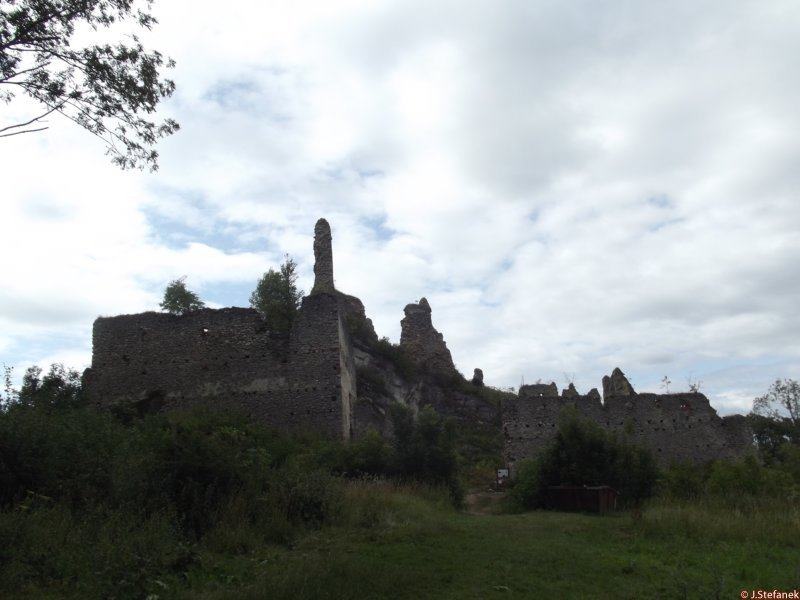
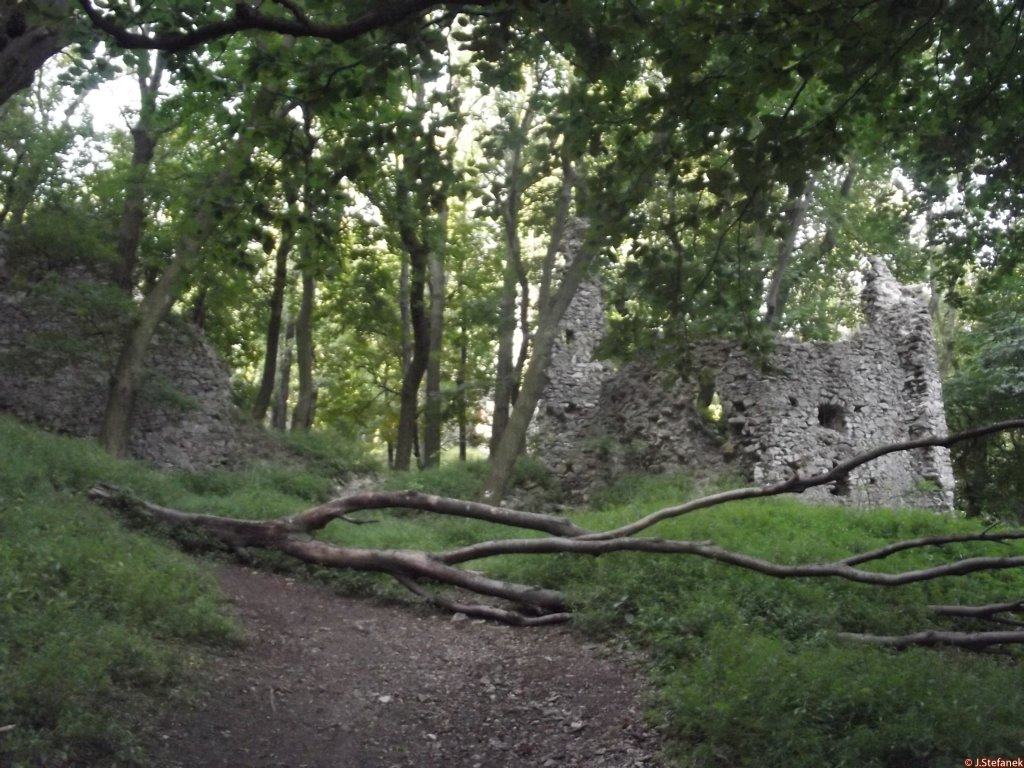
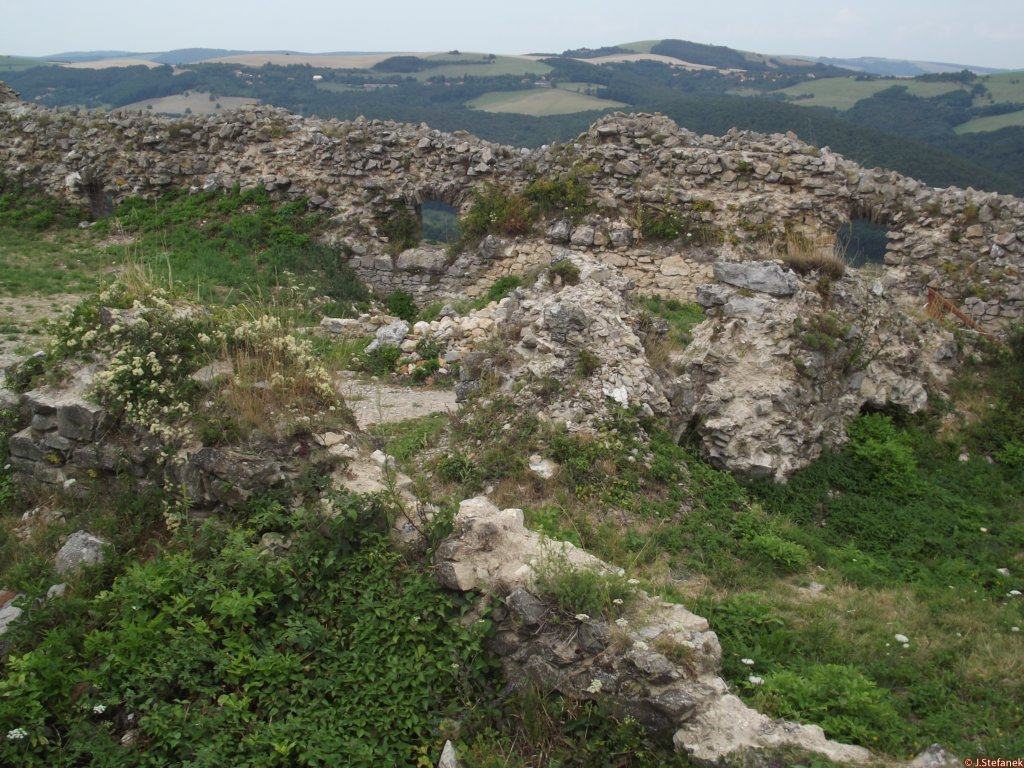
The ruins of the Franciscan early-Baroque monastery complex of St. Catherine are located in the cadastre of the village Dechtice, 23 km north of Trnava in the Little Carpathians - on Kátlovská mountain
Ruiny františkánskeho ranobarokového kláštorného komplexu Sv. Kataríny Alexandrijskej sa nachádzajú v katastri obce Dechtice, 23km severne od Trnavy v Malých Karpatoch – na Kátlovskej hore
Previous names
kláštor Sv. Kataríny Alexandrijskej
Roads
Trasa 1: Approximately in the middle of the road between the villages of Naháč and Dechtice is a turnoff, which will take us to a temporary parking lot. The road is rocky and uneven, but also accessible by ordinary car. From the parking lot, we continue on foot for about 1.5 km on a completely relaxing forest path along the yellow trail without any major ascent. After a while we come to a crossroads, where we turn left onto the blue trail. Here we will even descend a few more meters to the ruins of Katarínka.
Trasa 1: Približne v strede cesty medzi obcami Naháč a Dechtice je odbočka, ktorou sa dostaneme na provizórne parkovisko. Cesta je kamenistá a nerovná, avšak schodná i bežným autom. Od parkoviska pokračujeme peši asi 1,5km úplne pohodovou lesnou cestou po žltej TZT bez nejakého väčšieho stúpania. Po čase prídeme na rázcestie, kde odbočíme vľavo na modrú trasu. Tu dokonca budeme klesať ešte pár metrov až k ruinám kláštora Katarínka.
Trasa 2: An alternative is an access from the village of Naháč, where we will go next to the memorial house of J. Fándly along the blue trail, further along the stream and through the forest to Katarínka.
Trasa 2: Alternatívou je prístup z obce Naháč, kde pôjdeme popri pamätnom dome J. Fándlyho po modrej TZT, ďalej popri potoku a cez les až ku Katarínke.
Trasa 3: From the bus stop in Dechtice on foot along the yellow trail, which continues through the aforementioned temporary parking lot and further copies the route 1. There is a possibility of arriving by car in Dechtice to the forest border. Next is the entry ban.
Trasa 3: Od autobusovej zastávky v Dechticiach peši po žltom náučnom chodníku, ktorý pokračuje cez spomínané provizórne parkovisko a ďalej kopíruje trasu 1. Možnosť príjazdu autom v Dechticiach až po hranicu lesa. Ďalej je zákaz vjazdu.
Trasa 4: From the southwestern part of the village Dobrá voda, from the crossroads Dobrá voda spring. We follow the relatively long blue route, initially through open terrain, later through the forest to the ruins.
Trasa 4: Z juhozápadnej časti obce Dobrá voda, z rázcestia Dobrá voda prameň. Nasledujeme modrú pomerne dlhú trasu spočiatku otvoreným terénom, neskôr cez les k ruinám.
Description
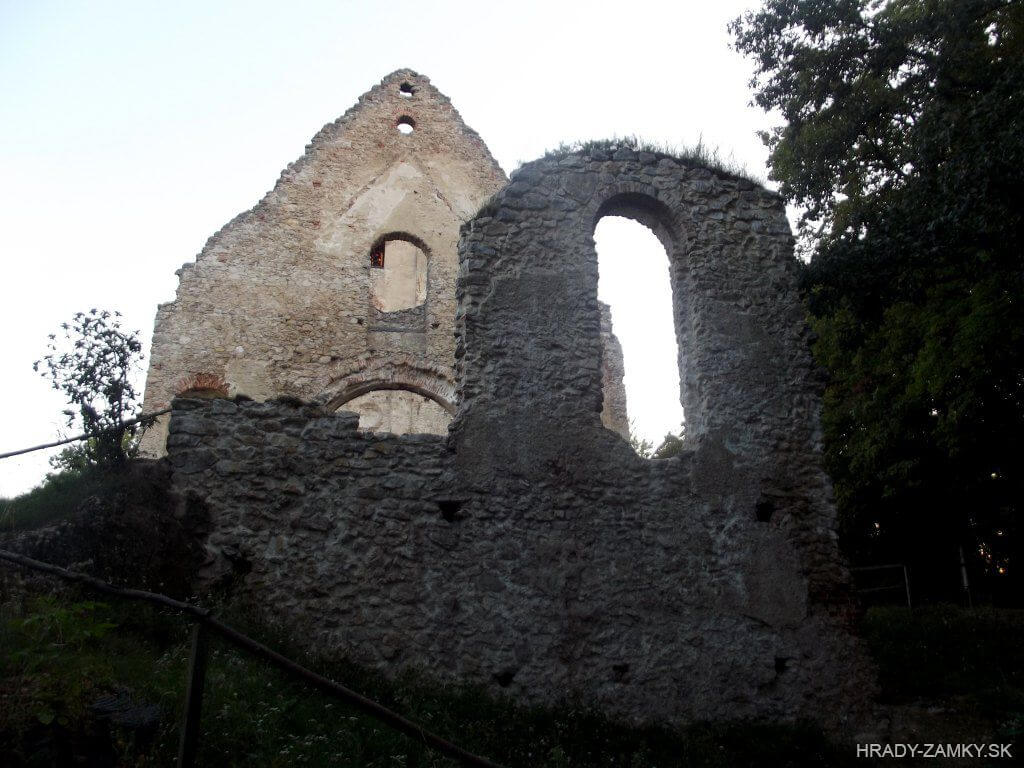
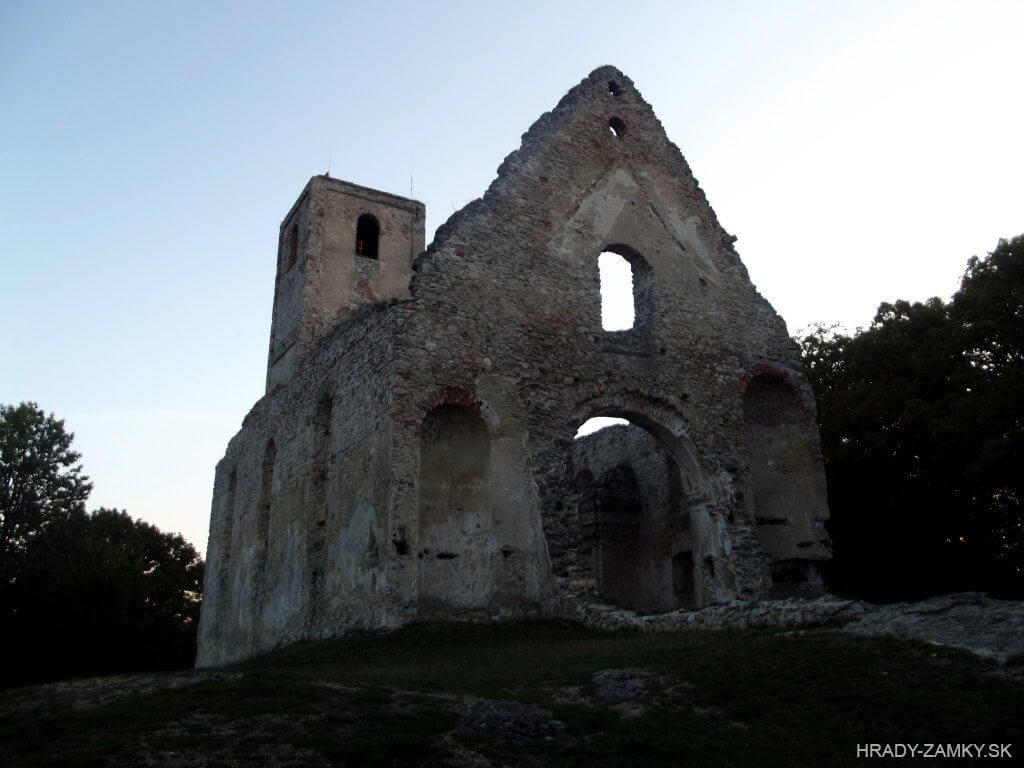
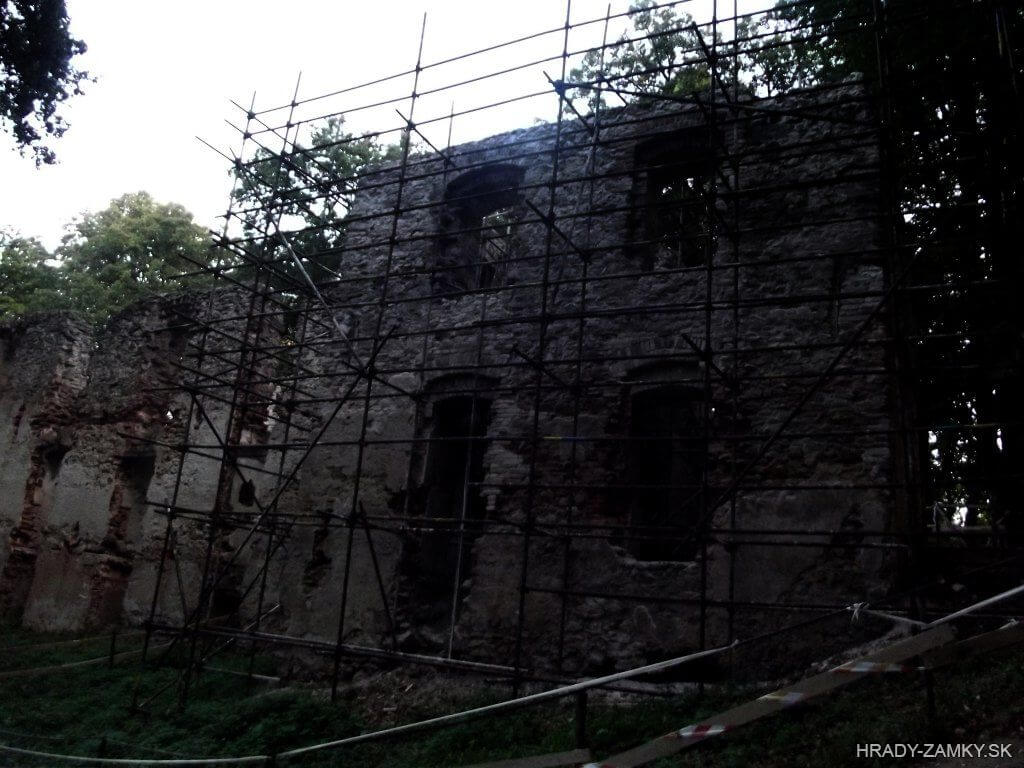
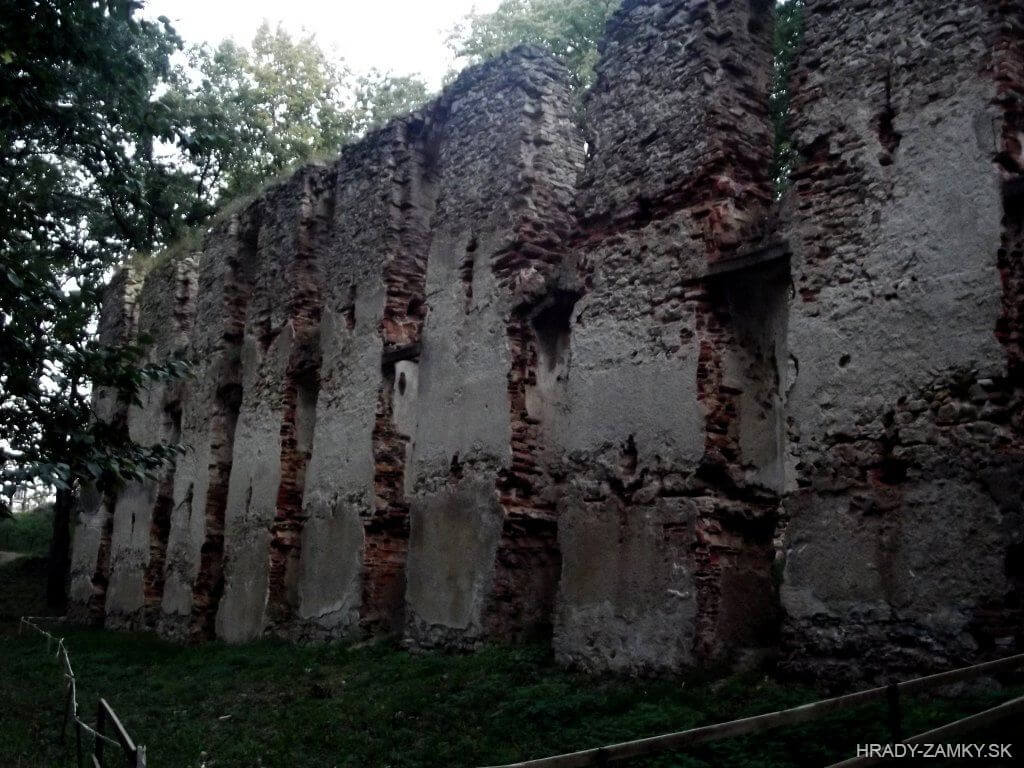
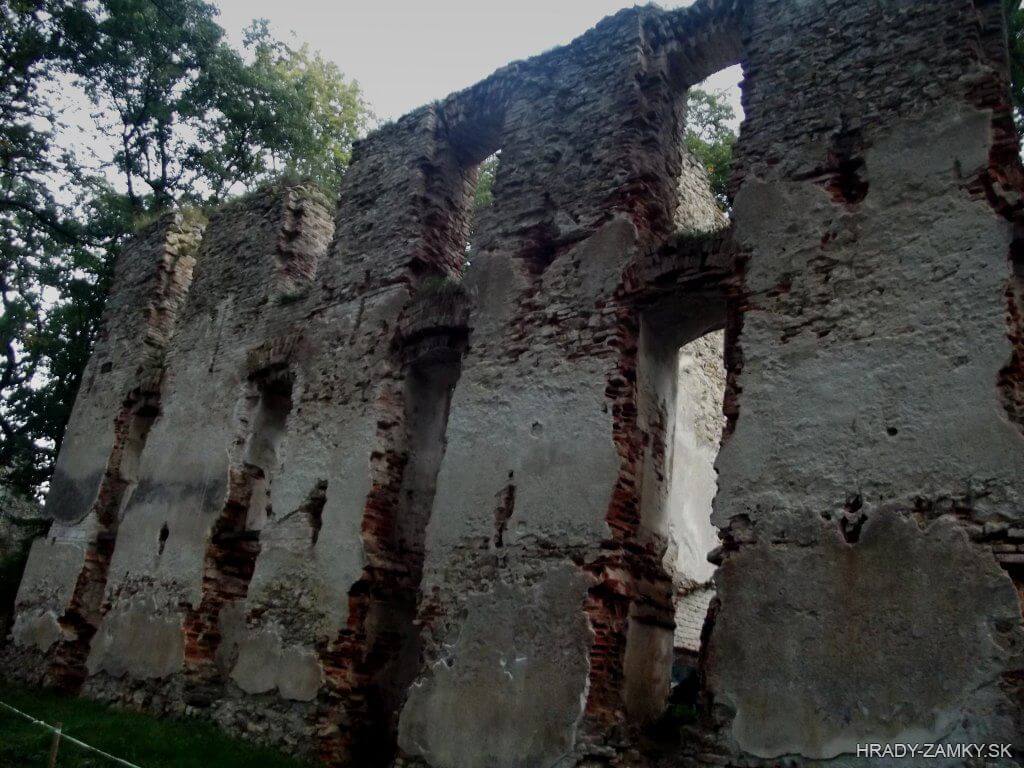
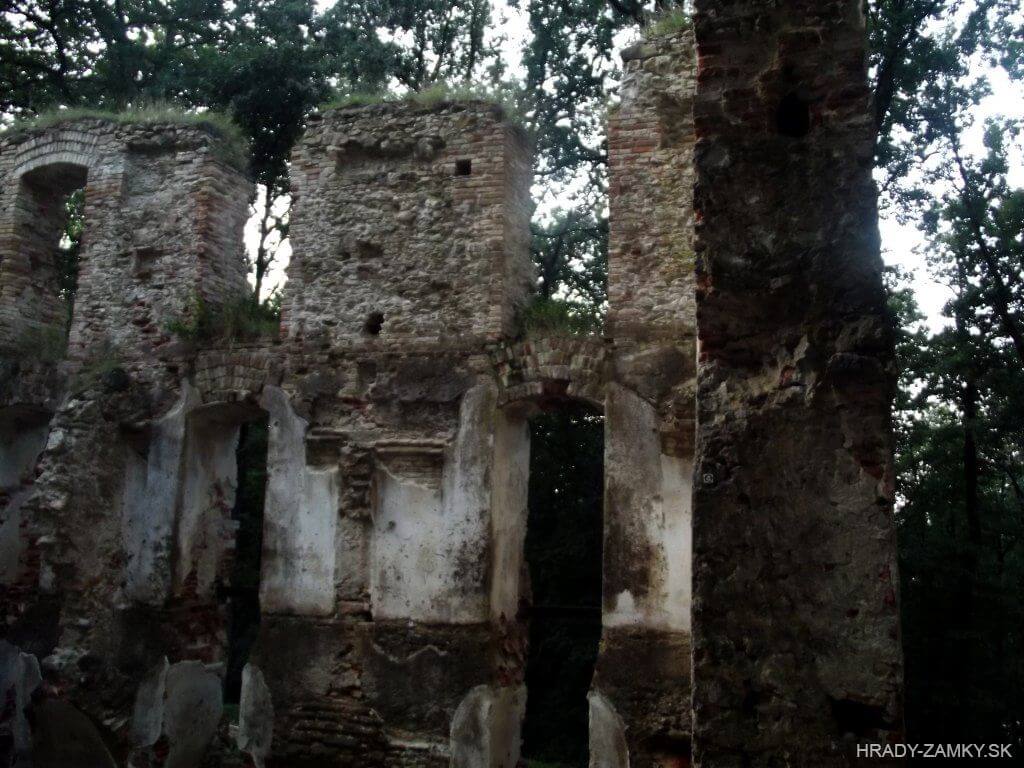
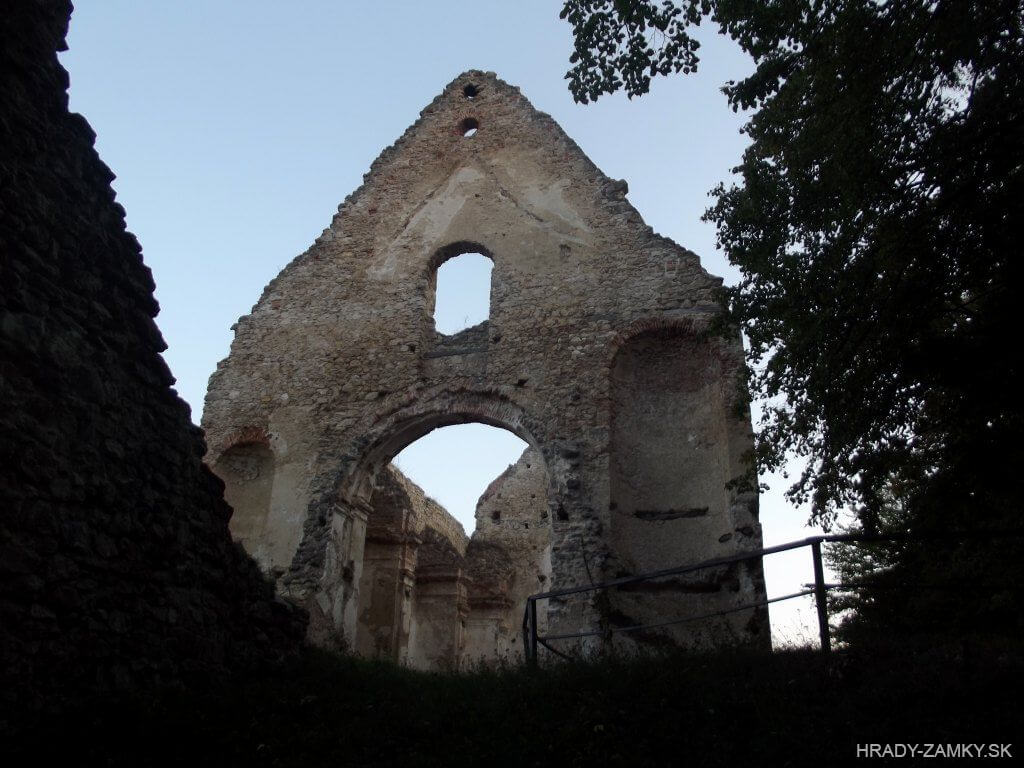
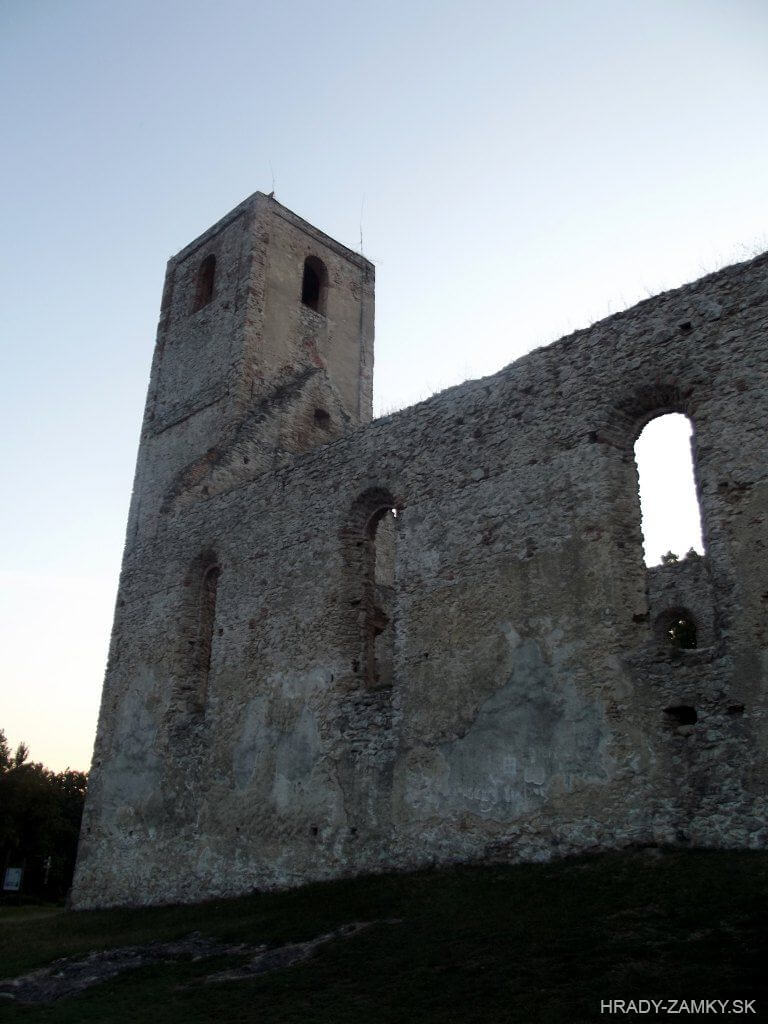
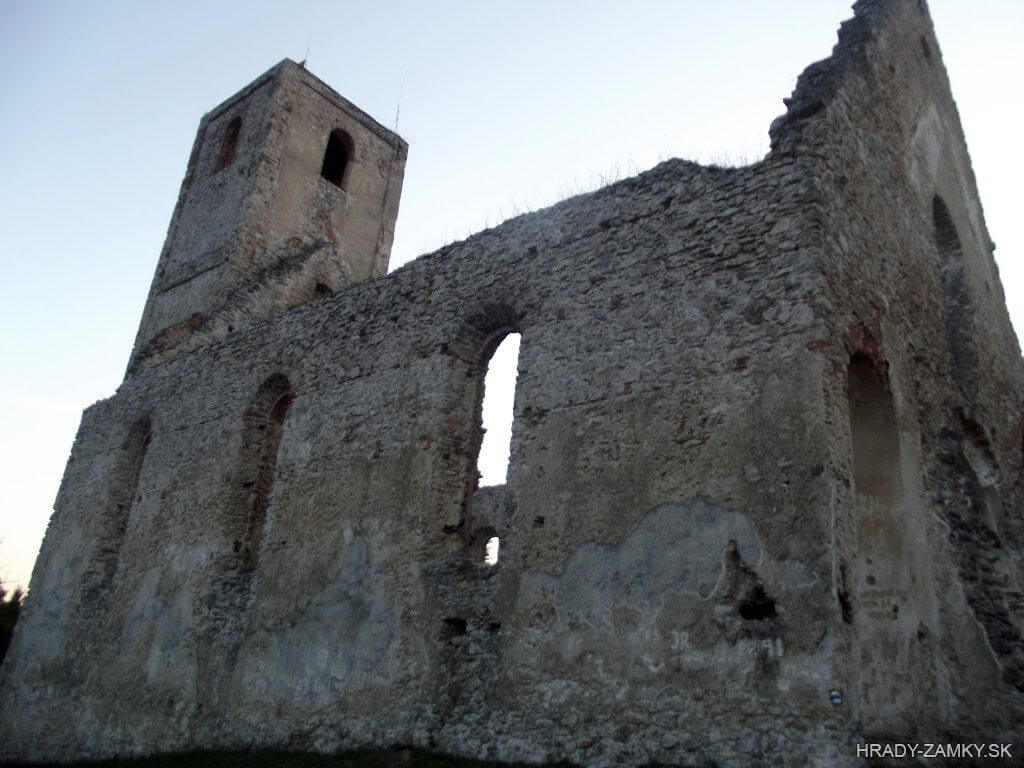
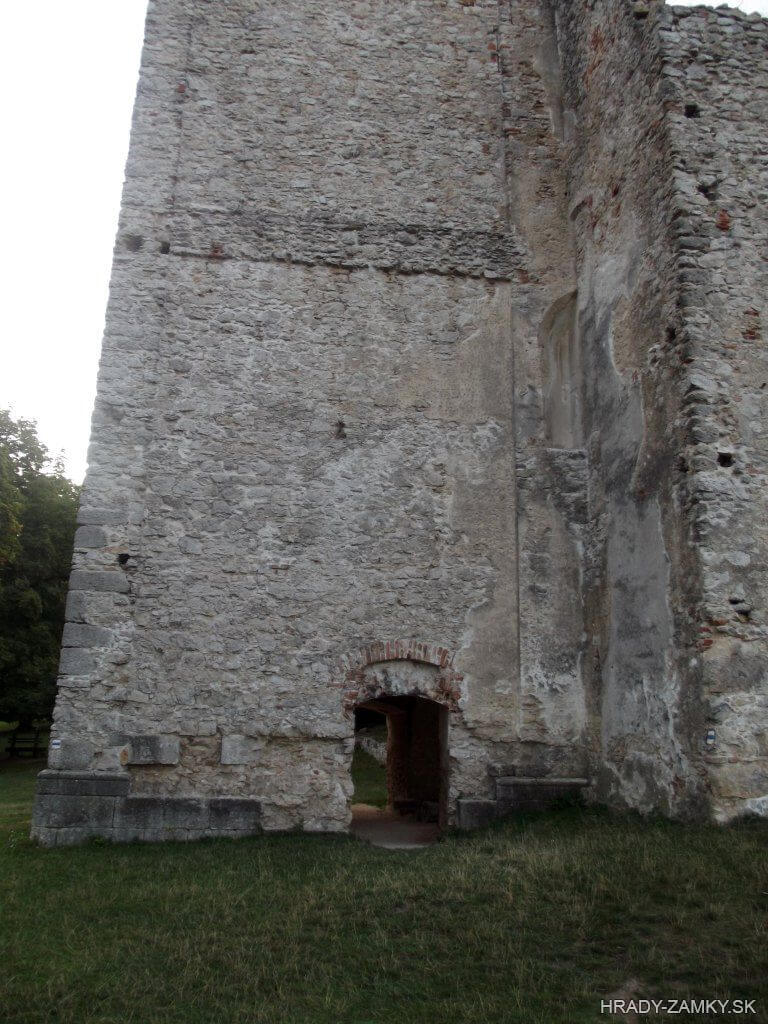
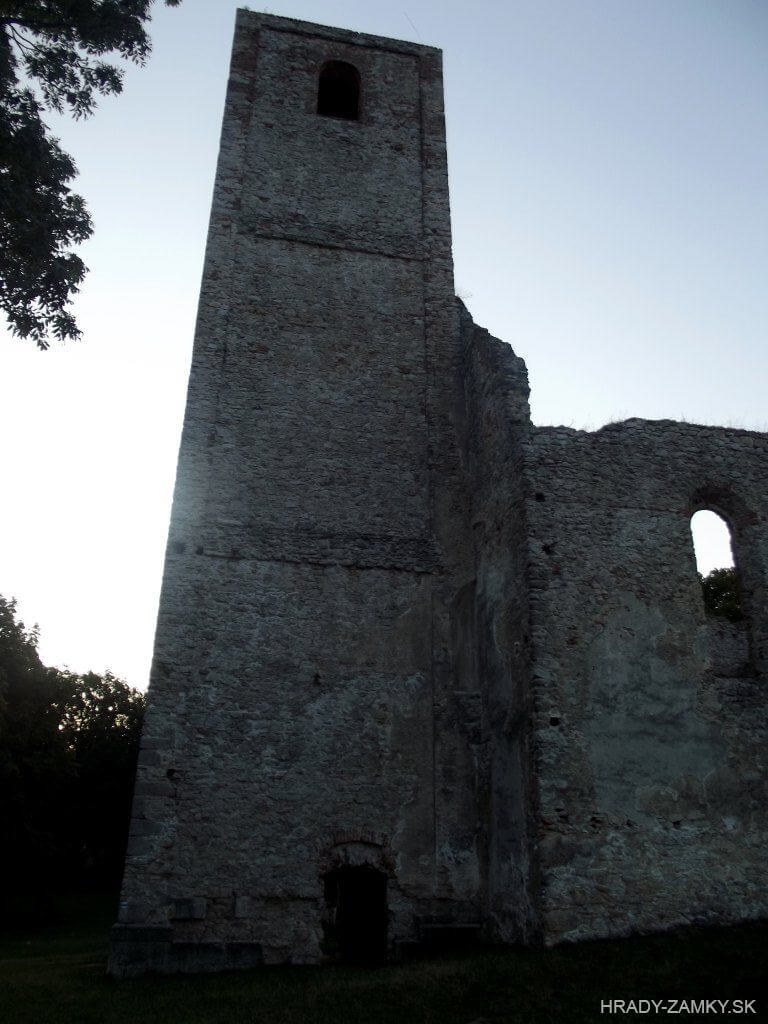
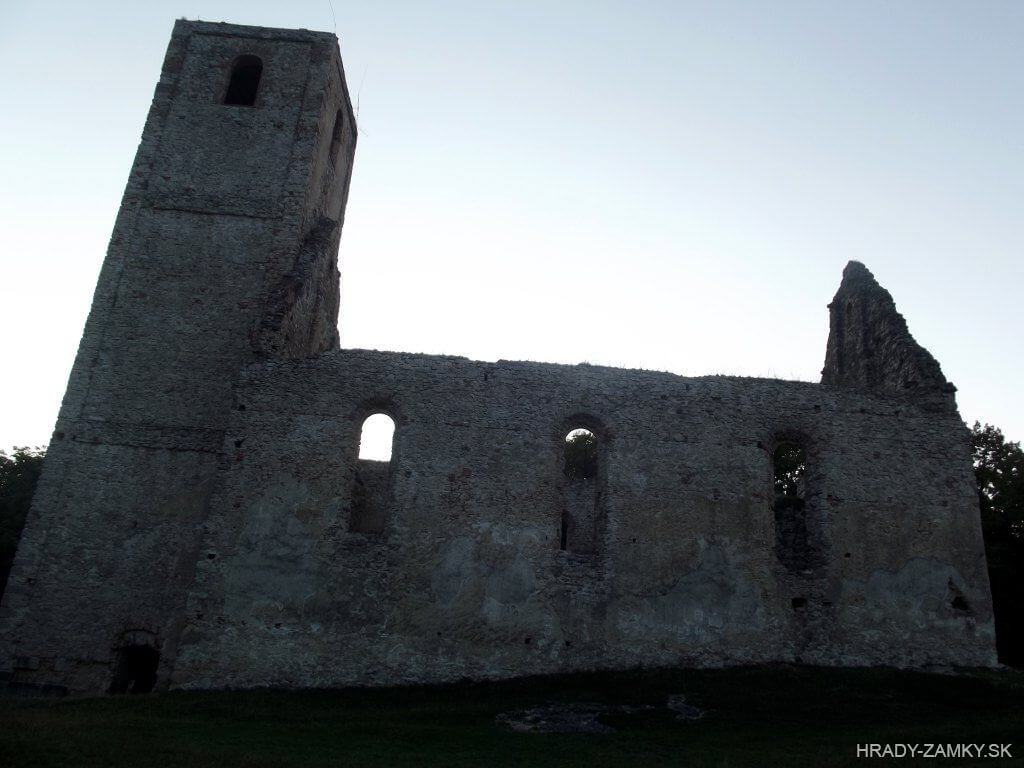
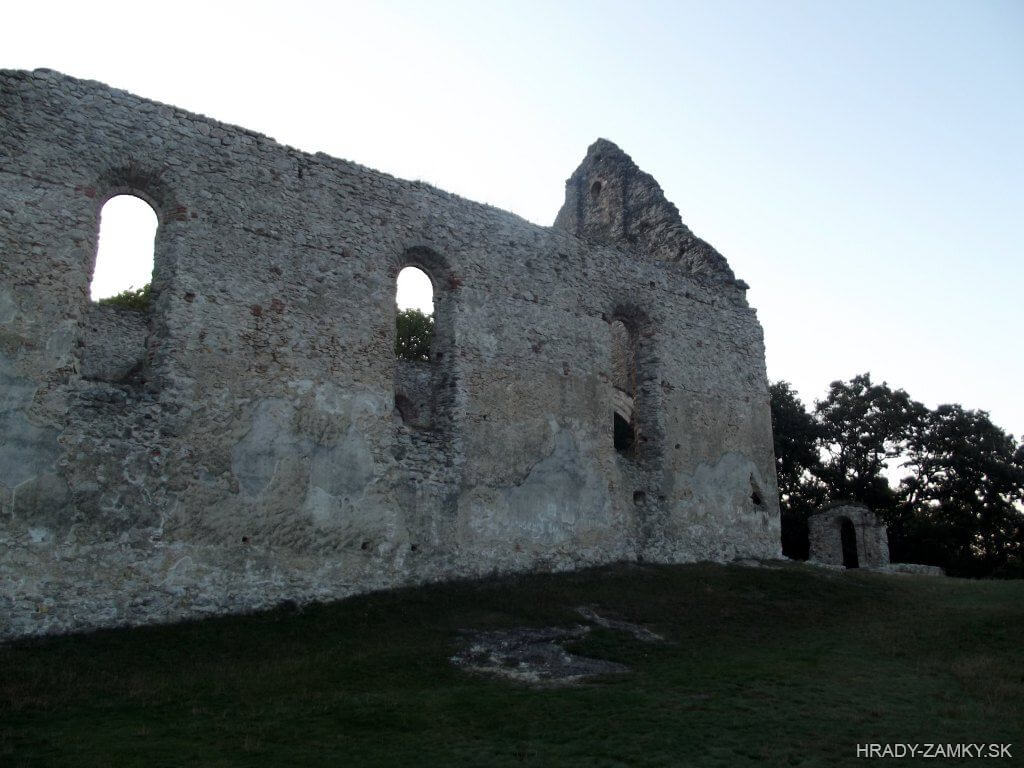
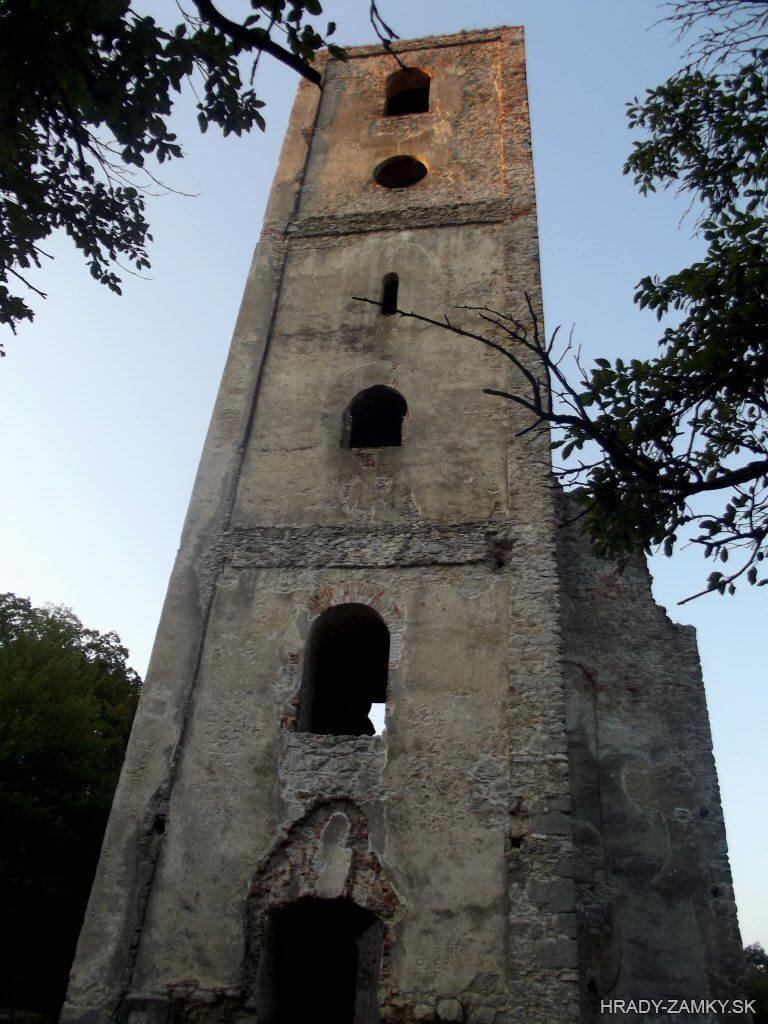
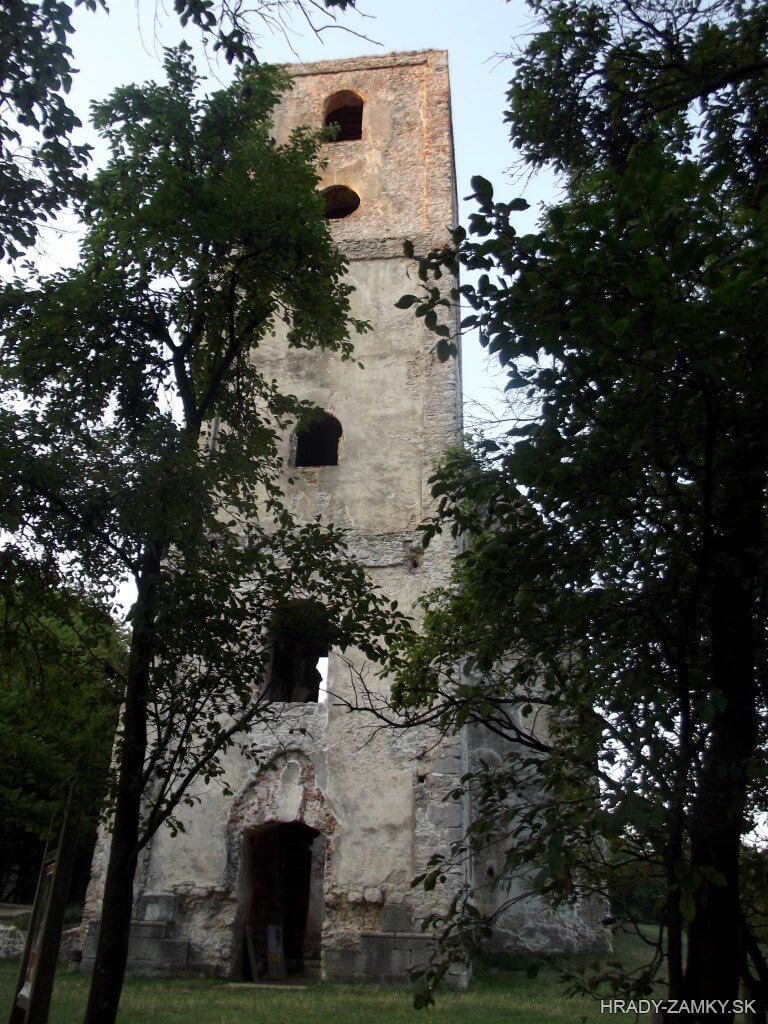
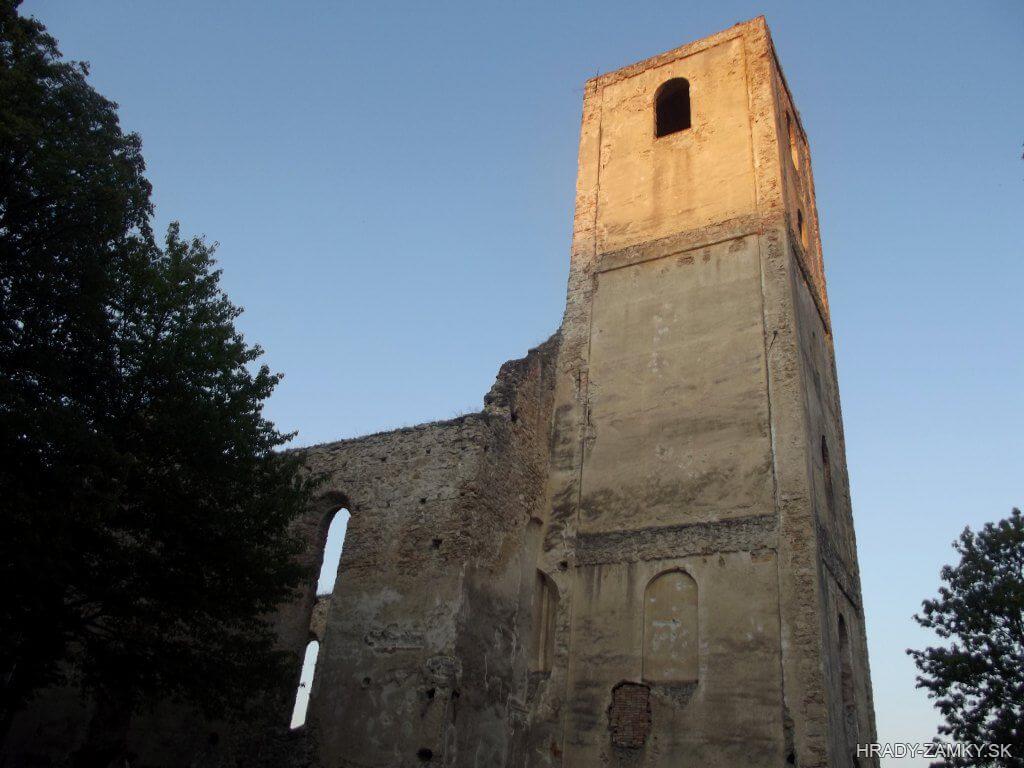
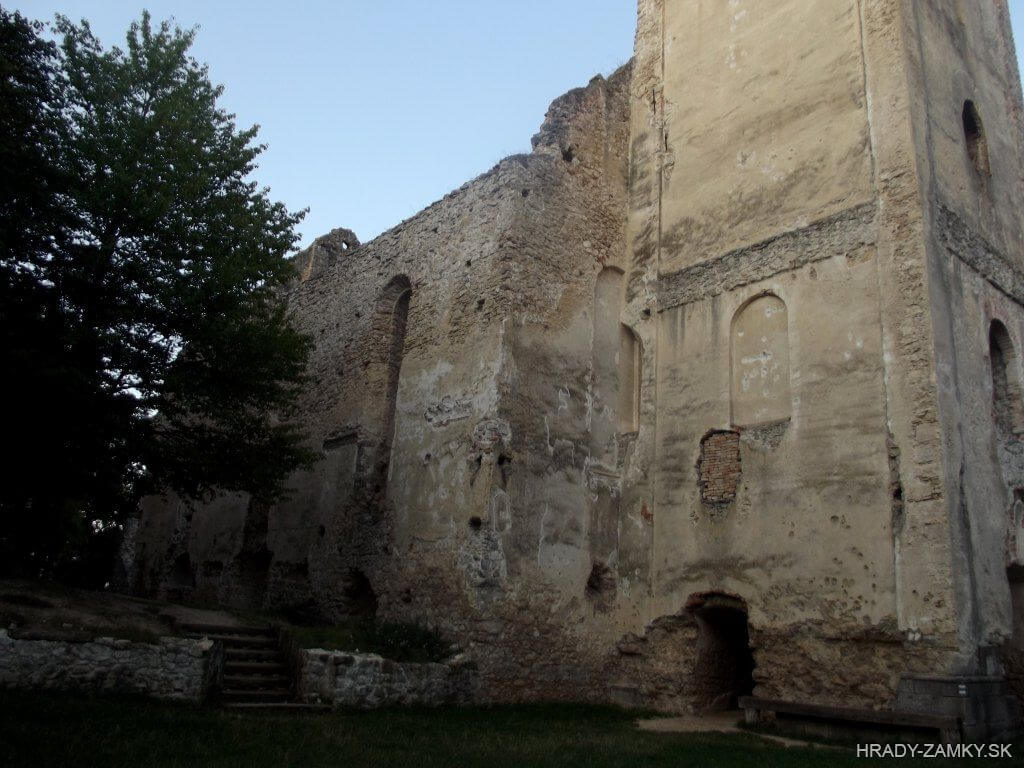
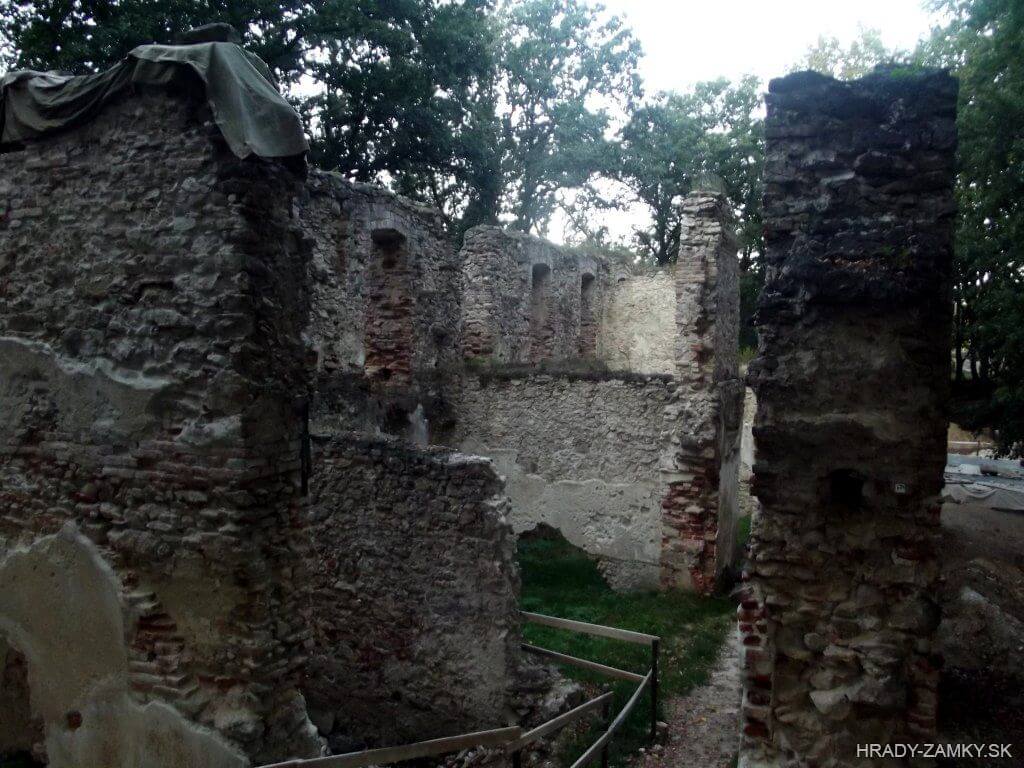
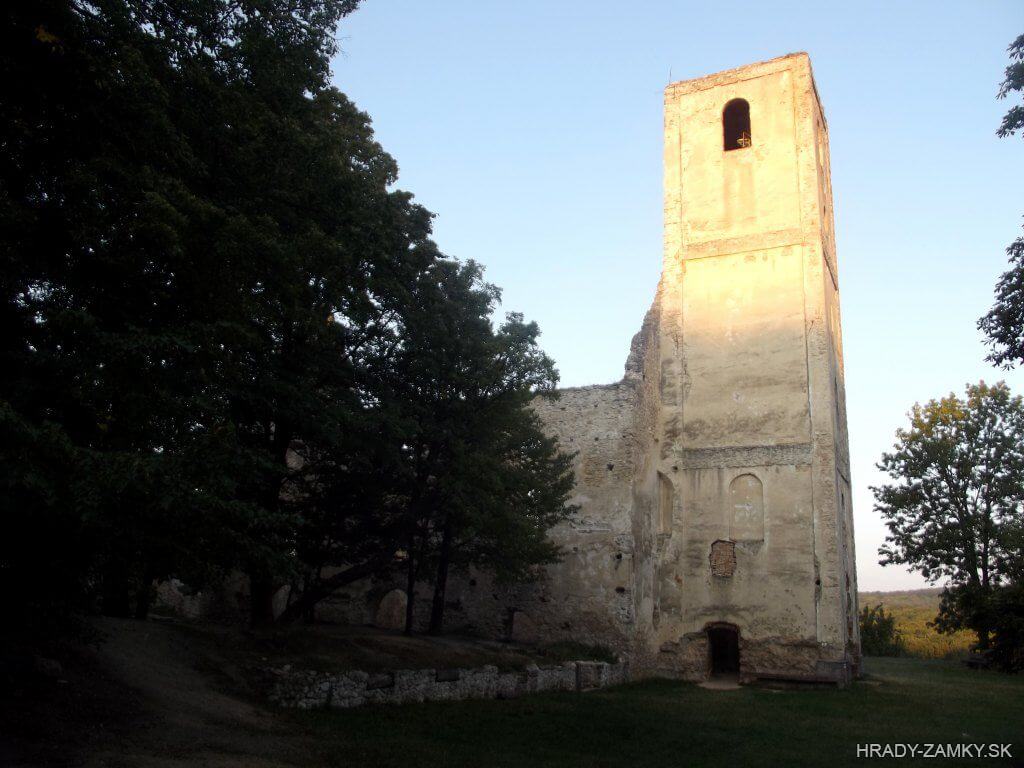
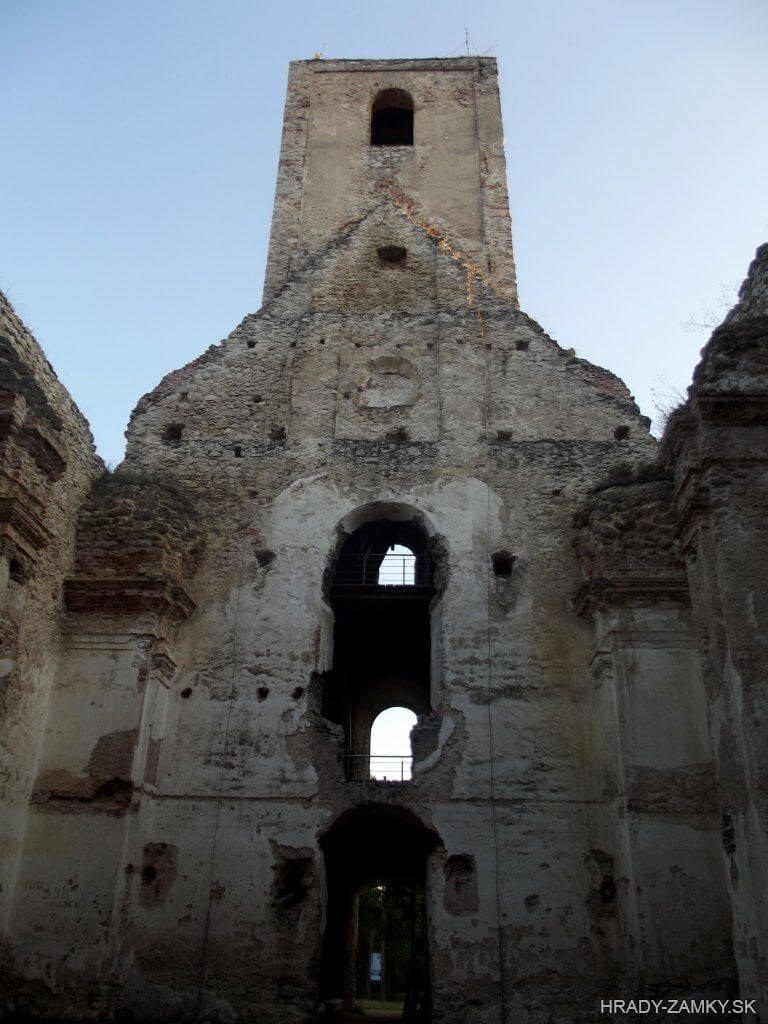
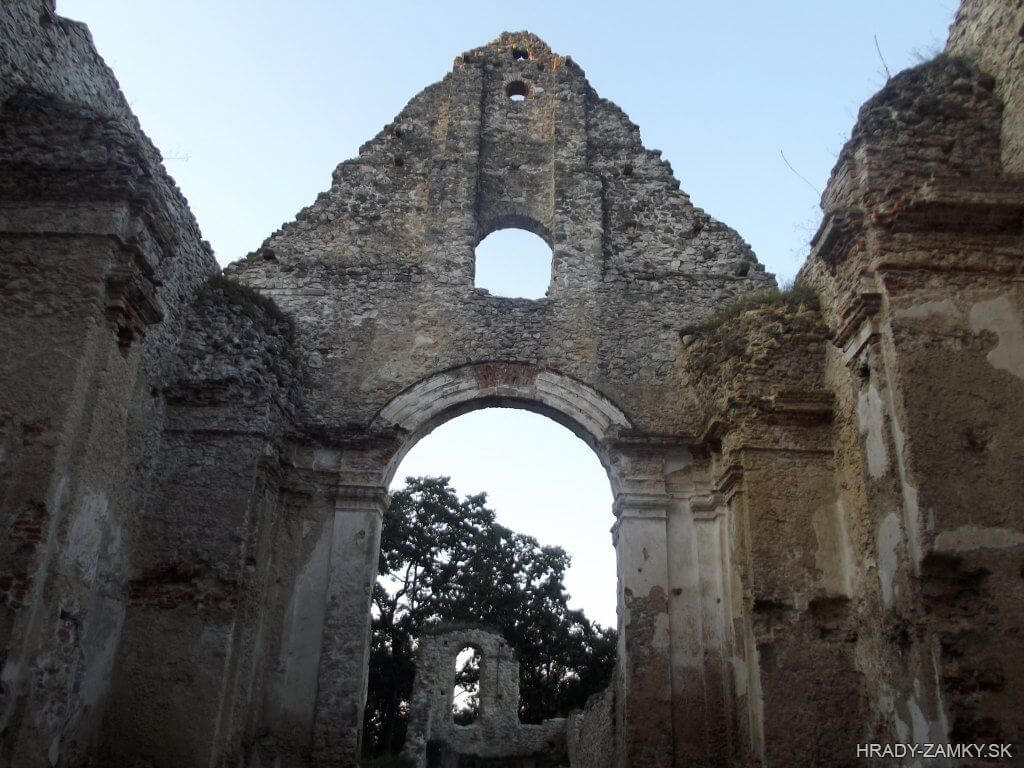
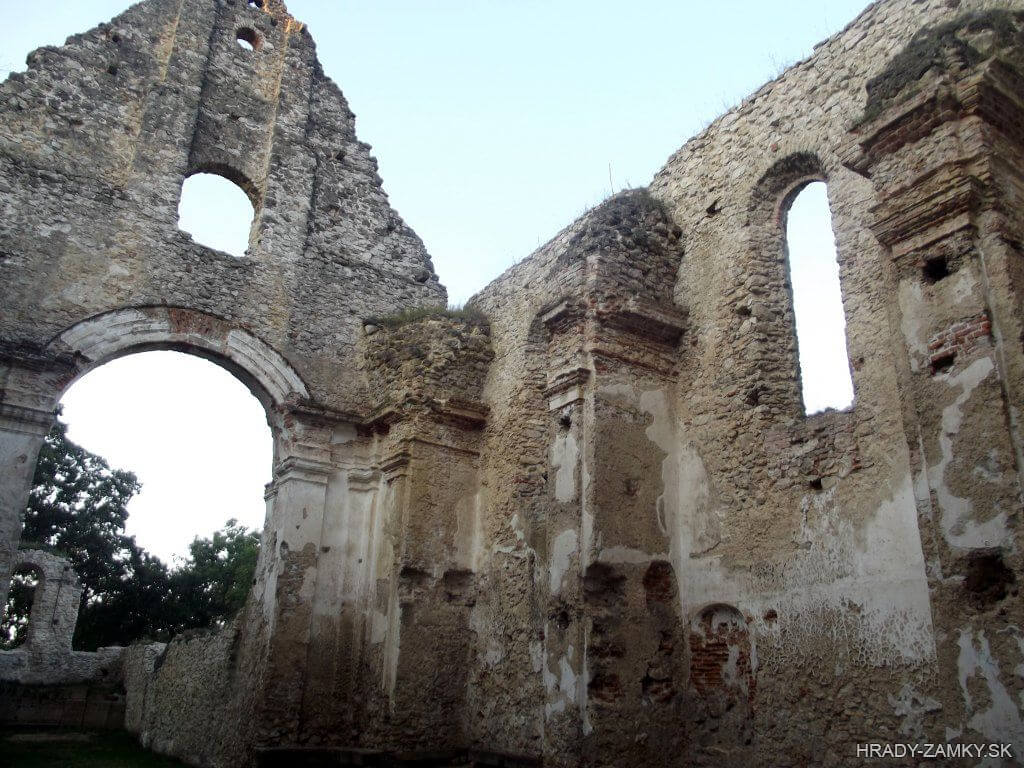
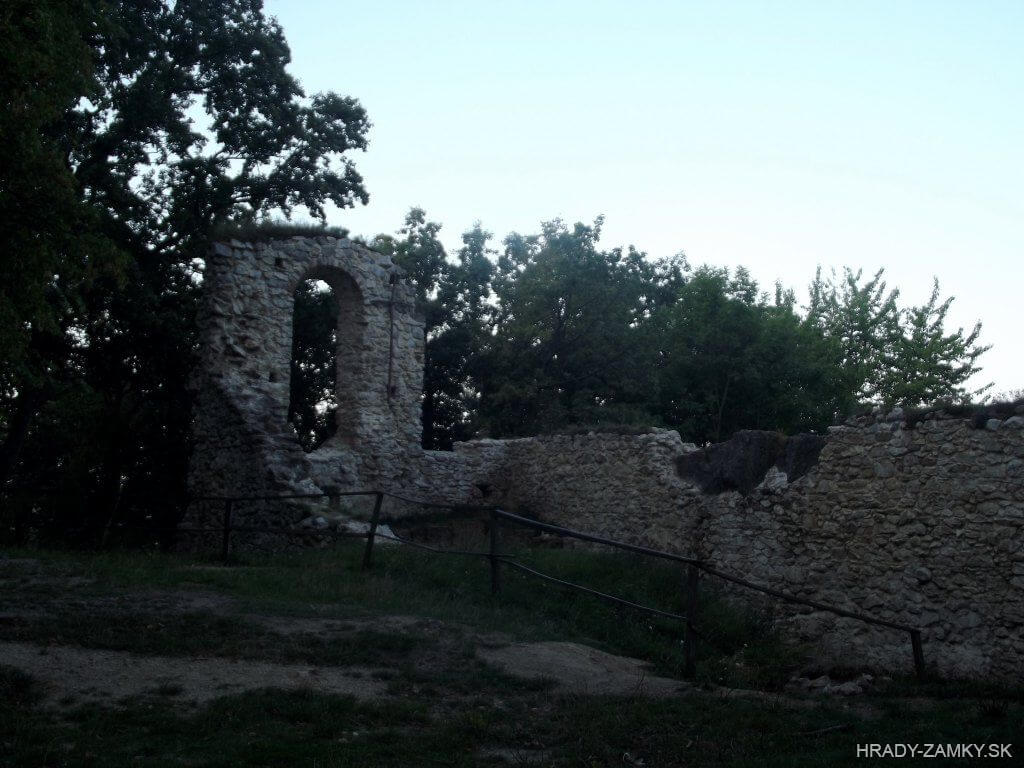
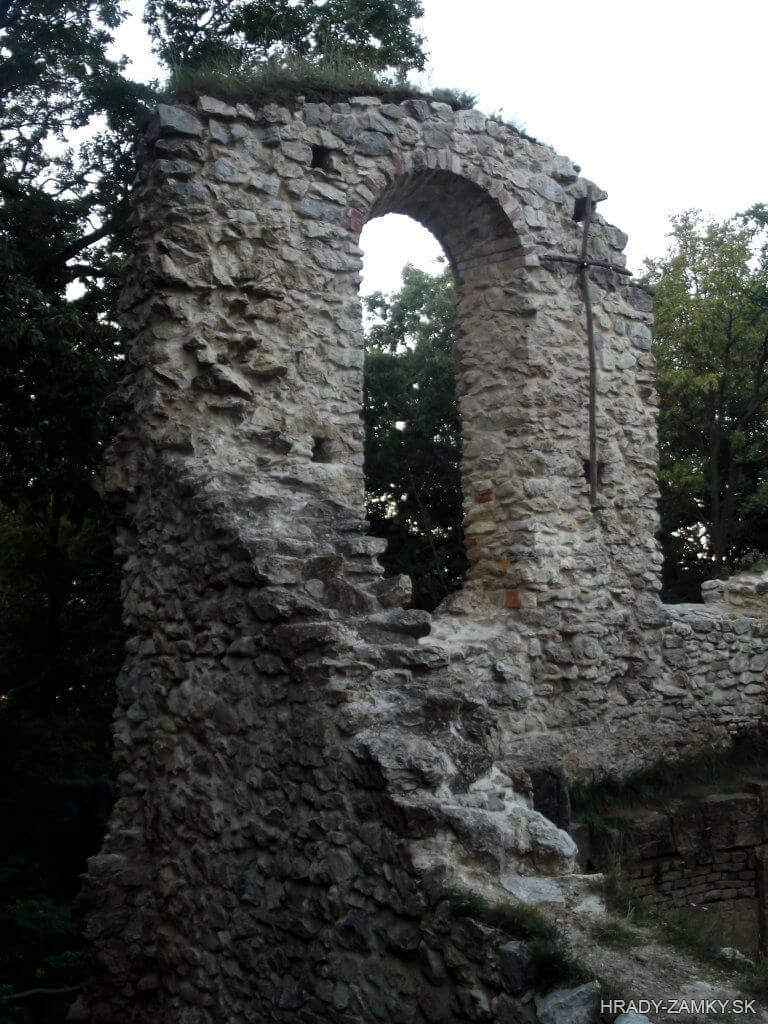
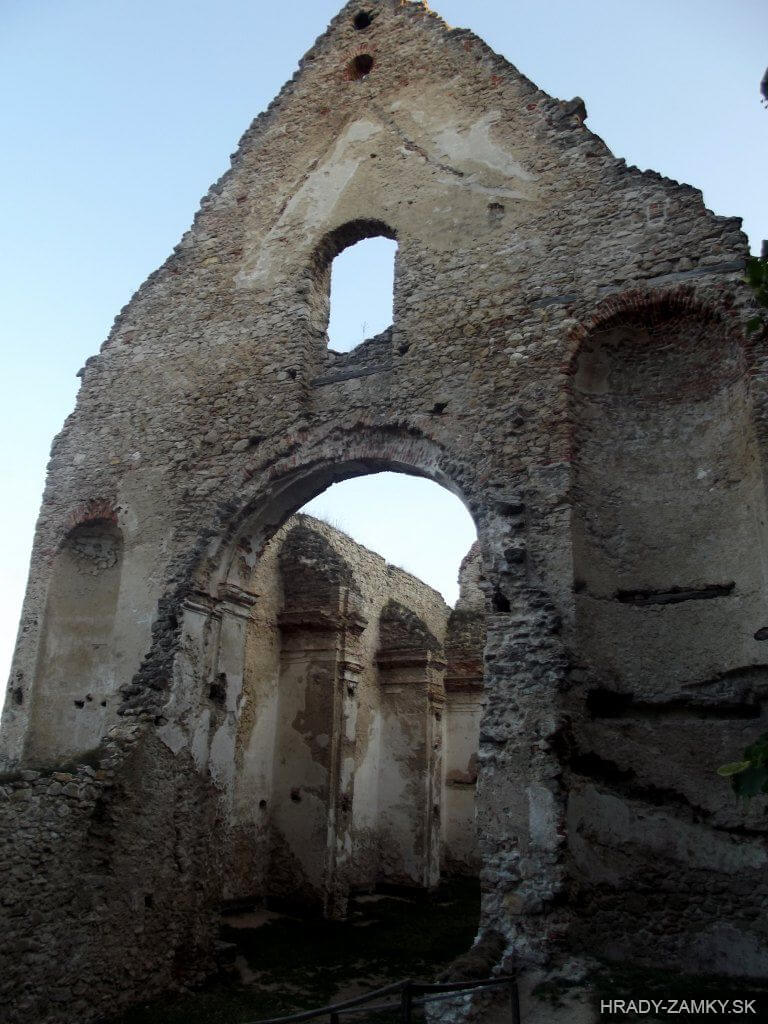
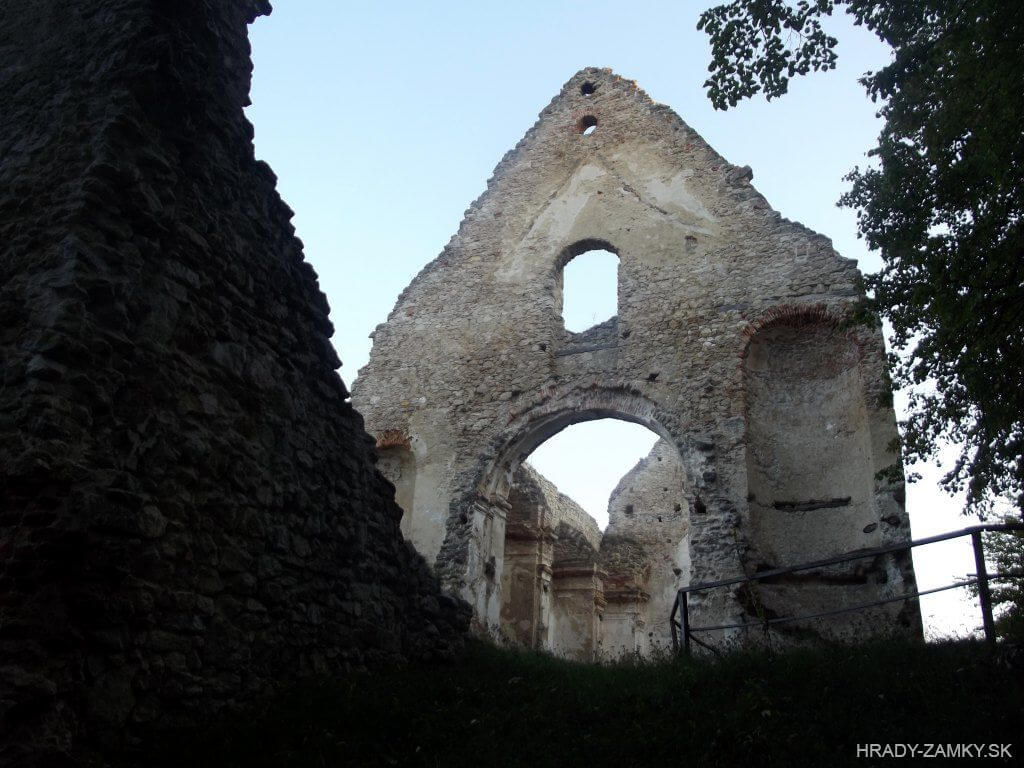
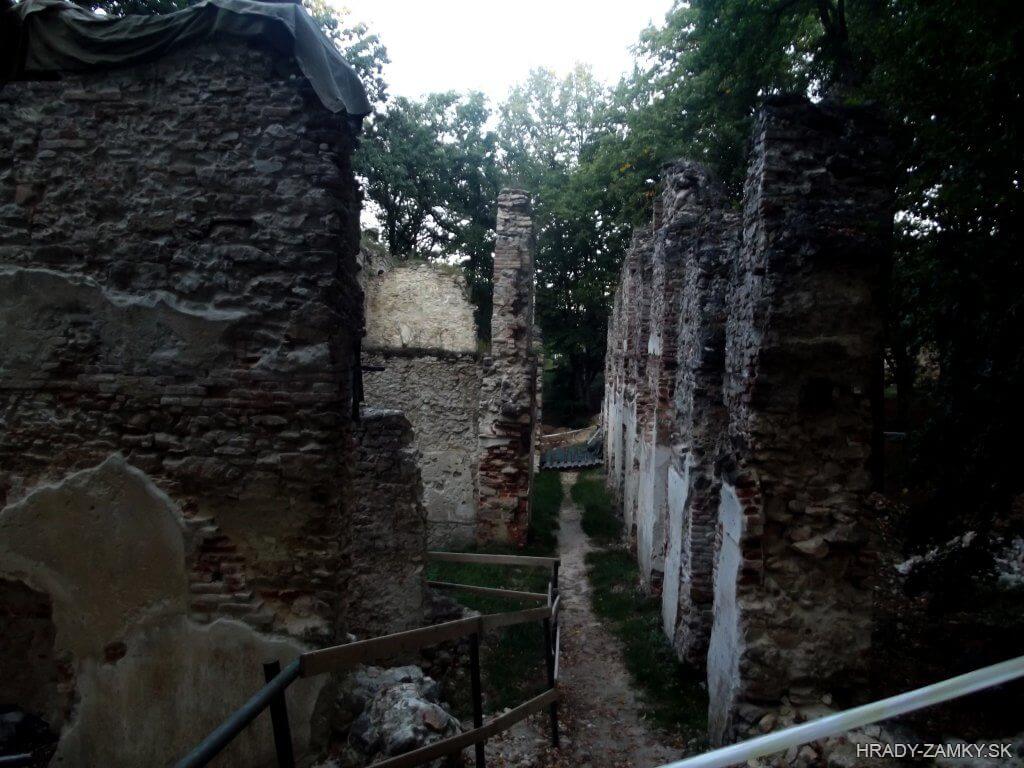
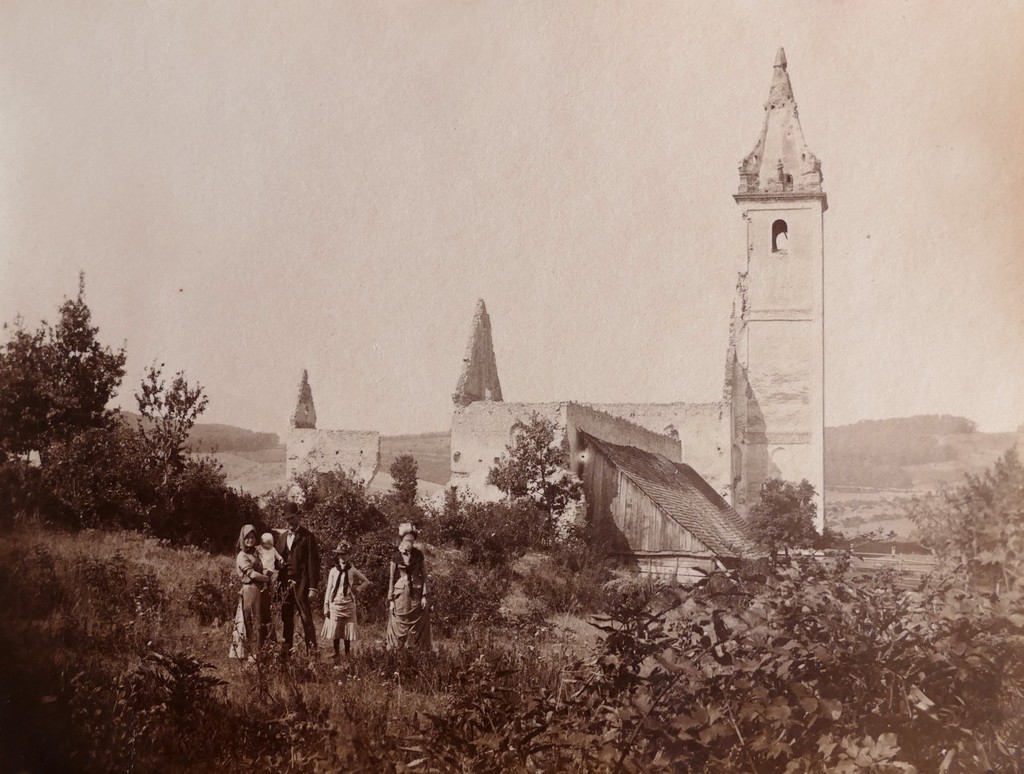
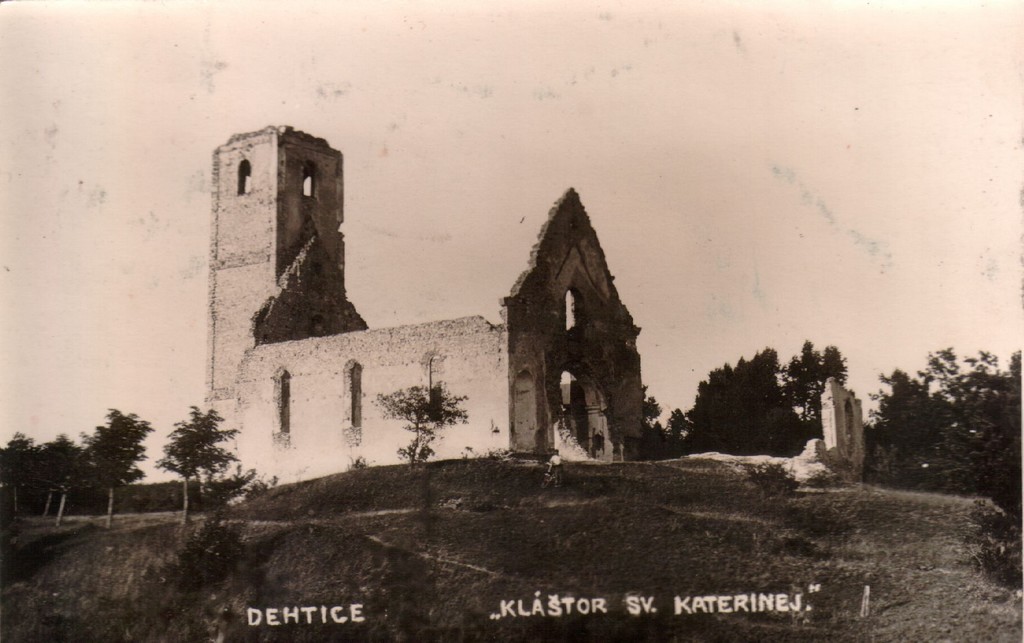
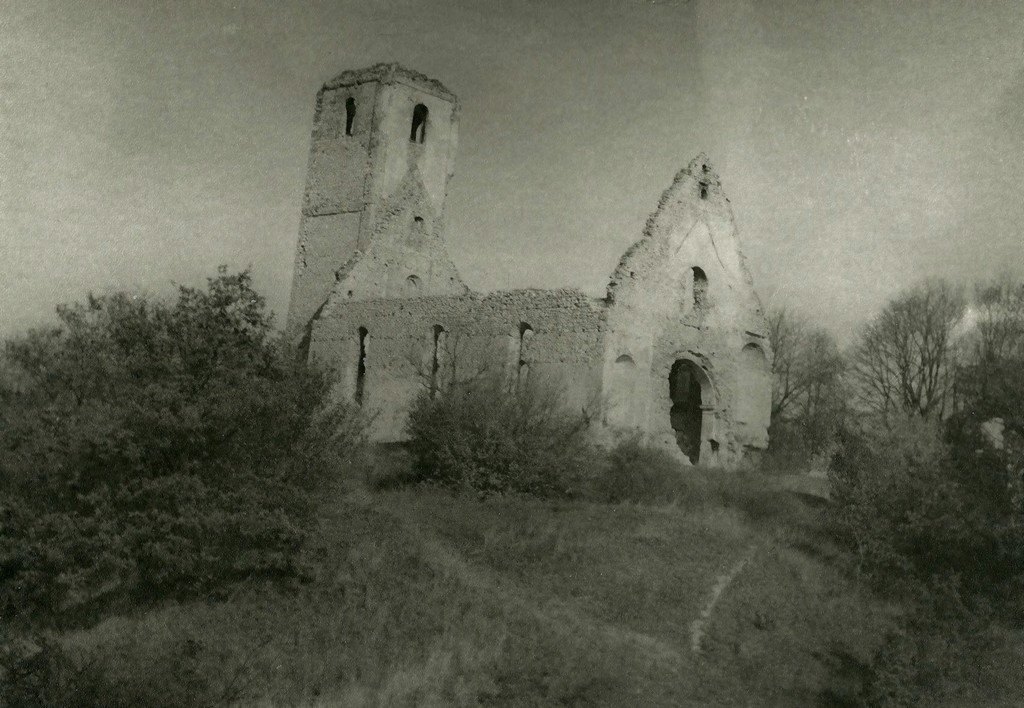
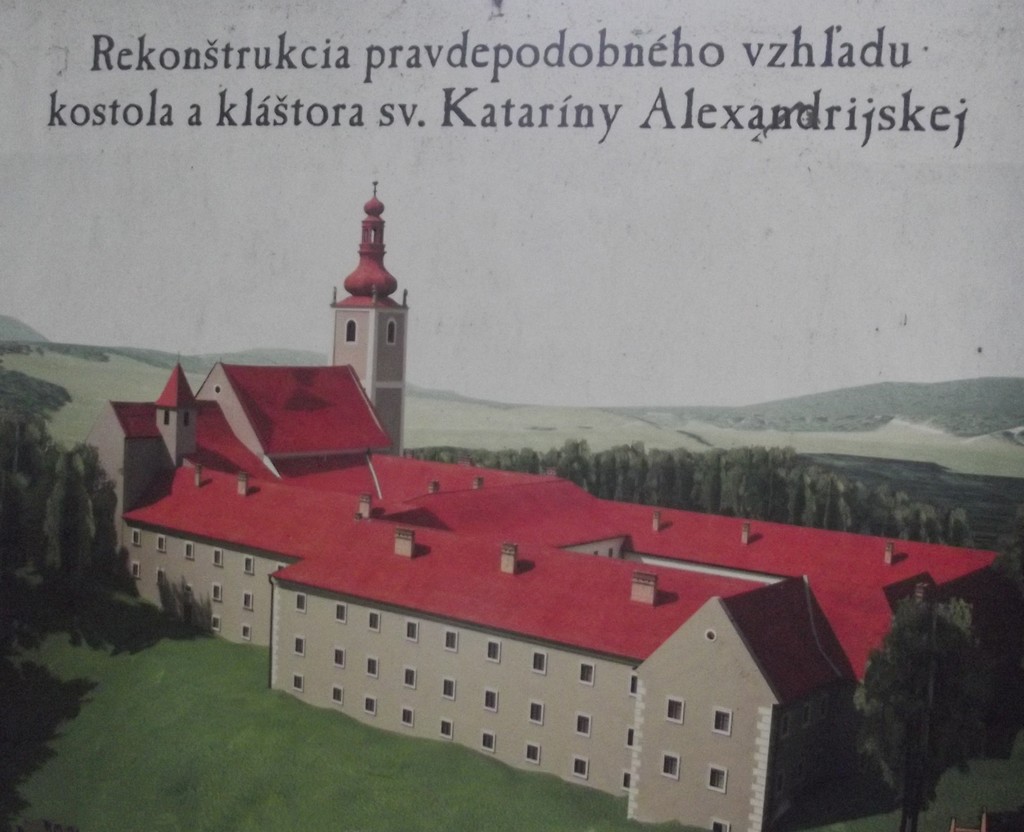
The church has an atypical north-south orientation (tower - shrine). The probable cause was the terrain itself, which did not allow to maintain the typical orientation of the sacral building. The subsoil of the church is quite rocky, especially in the area of the sanctuary, under which there is a large cavity or cave, which has not been thoroughly explored to this day. The massive tower of the temple was originally finished with a pyramidal roof and covered with shingles. In r. 1738 was rebuilt. The entrance to the temple was provided by three entrances in the lower part of the tower - the main larger portal was located on the north side. Two smaller opposite each other on the east and west walls of the tower. The church was single-nave, the nave was divided in thirds by two pillars on both sides into three vertical fields. The triumphal arch, set on two massive pillars, formed a majestic transition to the elevated presbytery. The presbytery had a rectangular shape, characteristic of all monastic churches. The end of the sanctuary was rectangular, today only a fragment of one of the two windows has been preserved.Church ruins with a tower and the remains of the southern part of the wing of the monastery building have been preserved from the monastery complex. The remaining parts of the complex were dismantled in the past into building material. Since 1995, the ruins have been taken care of by Katarínka civic association.
Kostol má netypickú severo-južnú orientáciu (veža – svätyňa). Pravdepodobnou príčinou bol samotný terén, ktorý nedovoľoval dodržať typickú orientáciu sakrálnej stavby. Podložie kostola je totiž značne skalnaté, najmä v oblasti svätyne, pod ktorou sa nachádza dodnes dôkladnejšie nepreskúmaná rozsiahla dutina či jaskyňa. Masívna veža chrámu bola pôvodne zakončená ihlanovitou strieškou a pokrytá šindľom. V r.1738 bola prestavaná. Vstup do chrámu umožňovali tri vchody v dolnej časti veže – hlavný väčší portál sa nachádzal na severnej strane. Dva menšie oproti sebe rovnako na východnej a západnej stene veže. Kostol bol jednoloďový, loď bola delená v tretinách dvoma piliermi po oboch stranách na tri vertikálne polia. Triumfálny oblúk, zasadený na dvoch mohutných pilieroch, tvoril majestátny prechod do vyvýšeného presbytéria. Presbytérium malo obdĺžnikový tvar, charakteristický pre všetky kláštorné kostoly. Záver svätyne bol pravouhlý, dnes sa z neho zachoval len fragment jedného z dvoch okien.Z kláštorného komplexu sa zachovali kostolné ruiny s vežou a zvyšky južnej časti krídla kláštornej budovy. Zvyšné časti komplexu boli v minulosti rozobrané na stavebný materiál. Od r.1995 sa o ruiny stará OZ Katarínka.
Plan
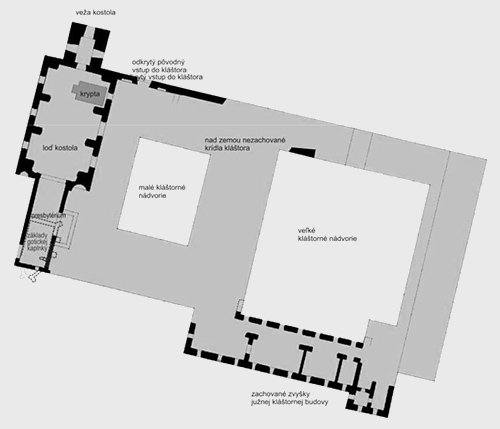
Legend to the ground plan
- Source: Peter Herceg (o.z. Katarínka)
Legenda k pôdorysu
- Zdroj: Peter Herceg (o.z. Katarínka)
History
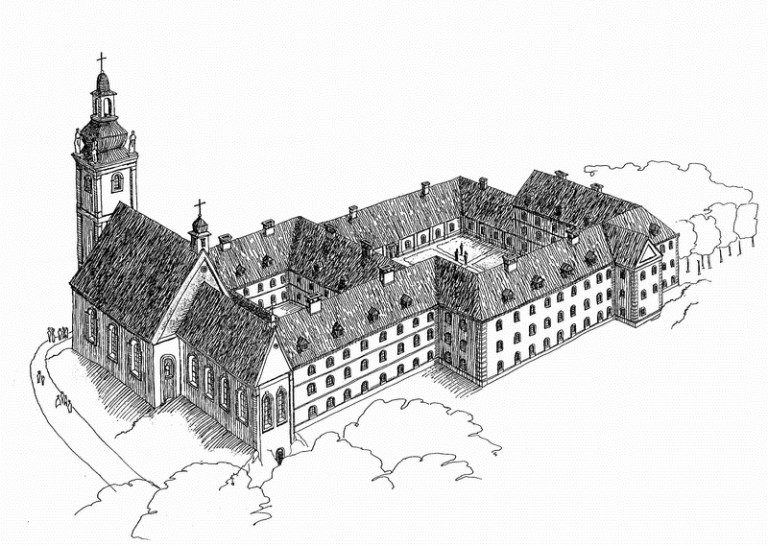
According to archaeological research, a stone Gothic chapel was located in the forests of the Little Carpathians on a rocky hill above the Dubovský brook at the beginning of the 15th century. In 1618, the Franciscan monastery was founded by issuing a charter by Count Krištof Erdődy. A year later, the monastery was inhabited by monks. The builder of the monastery was Pietro Spazzo and the monastery complex was built in the early Baroque style with late Gothic elements.
During the uprising of Juraj Rákóczi I, the monastery was looted in 1645 and set on fire by the insurgents. In 1646, Gabriel Erdődy had the buildings rebuilt and restored. The church was extended to a larger temple. In 1663, however, the monastery did not resist the Turkish invasion and was later looted by the imperial troops, who murdered the hiding nobles here. The monastery was later damaged in 1683 by Thőkoly's troops. In 1697 there was a clash between the people and the Liechtenstein army, which wanted to recruit people here.
By order of Emperor Joseph II. in 1786 the monastery of St. Catherine abolished, like many others, who did not engage in charitable or pedagogical activities. The monks had to leave this place, the inventory was taken over by the surrounding monasteries and villages and the building began to fall into disrepair. In the meantime, in 1793, the family tombs under the church were looted. Count Jozef Erdődy still tried to save the abandoned monastery, who bought the buildings, but did not prevent their further disintegration.
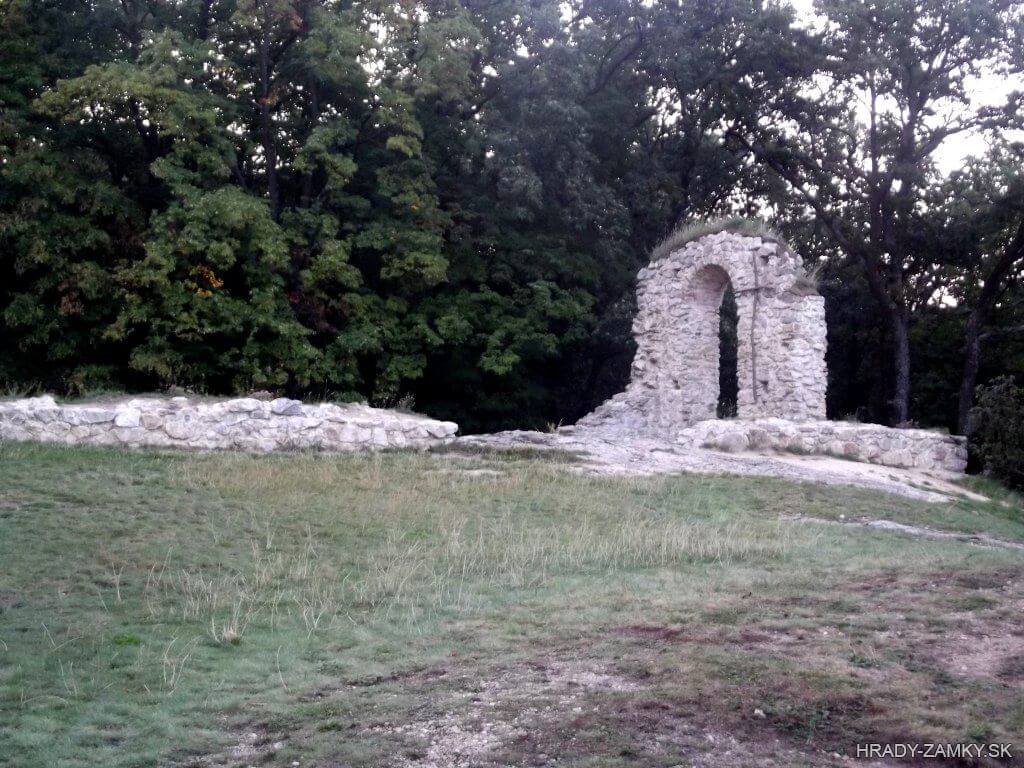
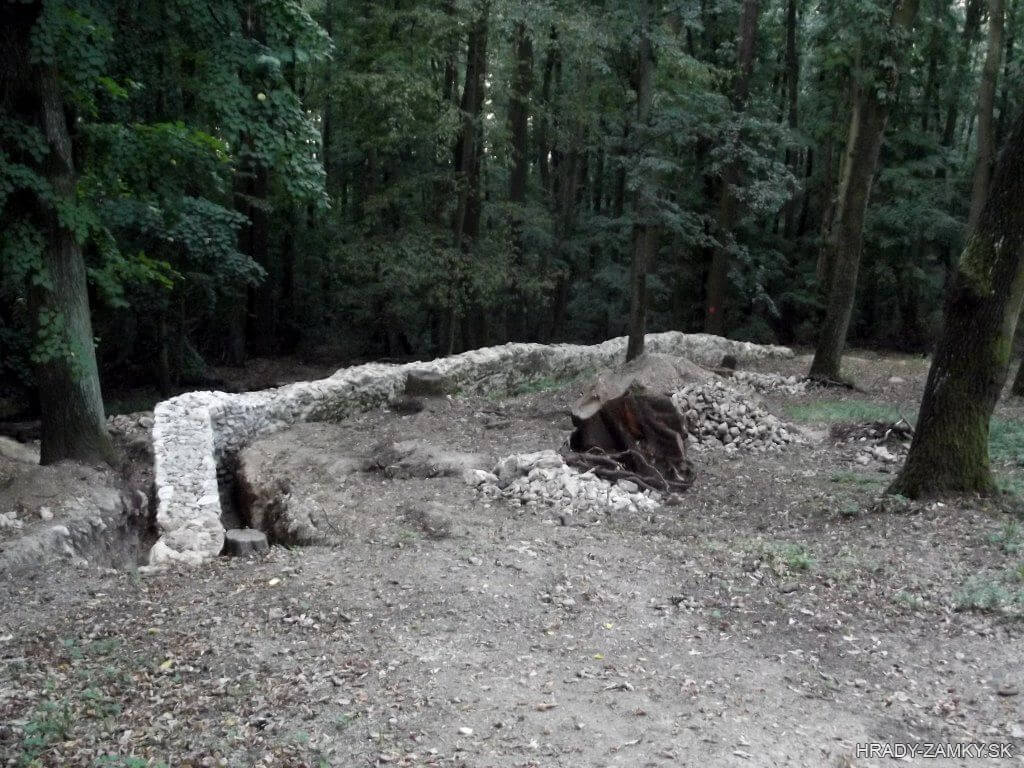
In the second half of the 20th century, the monastery fell into oblivion; historians Hadrián Radváni and especially Jozef Šimončič try to cross its history. In 1995, the "Order of St. Catherine ”to save the monastery. In 1996, conservation work began on the walls of the monastery. In the years 1997 - 2000, archaeological research and conservation of the foundations of the Baroque chapel in front of the church took place.
In order to prevent the further release and collapse of Katarínka, the Katarínka project was created, which in the form of summer youth camps in the medieval spirit works on the preservation and reconstruction of the remains of the former church and monastery. Comprehensive archaeological, historical, monumental and geophysical research is underway.
Podľa archeologického výskumu sa v lesoch Malých Karpát na skalnatom návrší nad Dubovským potokom ešte na začiatku 15. storočia nachádzala kamenná gotická kaplnka. V roku 1618 bol založený kláštor františkánskeho rádu vydaním zakladacej listiny grófom Krištofom Erdődym. O rok neskôr bol už kláštor obývaný mníchmi. Staviteľom kláštora bol Pietro Spazzo a kláštorný komplex bol postavený v ranobarokovom štýle s neskorogotickými prvkami.
Počas povstania Juraja Rákócziho I. bol kláštor v roku 1645 vyrabovaný a podpálený povstalcami. V roku 1646 dal Gabriel Erdődy objekty prestavať a obnoviť. Kostol bol rozšírený na rozsiahlejší chrám. V roku 1663 však kláštor neodolal tureckým nájazdom a neskôr ho vyplienili cisárske vojská, ktorí tu zavraždili ukrývajúcich sa šľachticov. Kláštor neskôr, v roku 1683, poškodili aj Thőkolyho vojská. V roku 1697 došlo k potýčke medzi ľudom a lichtenštajnskou armádou, ktorá tu chcela verbovať ľudí.
Nariadením cisára Jozefa II. v roku 1786 bol kláštor sv. Kataríny zrušený, podobne ako mnoho iných, ktoré sa nevenovali charitatívnej alebo pedagogickej činnosti. Mnísi museli toto miesto opustiť, inventár prevzali okolité kláštory a obce a stavba začala chátrať. Medzitým v roku 1793 boli vykradnuté aj rodinné hrobky pod kostolom. Opustený kláštor sa ešte pokúsil zachrániť gróf Jozef Erdődy, ktorý objekty odkúpil, no nezabránil ich ďalšiemu rozpadu.
V 2. polovici 20. storočia kláštor upadá do zabudnutia, jeho históriu sa pokúšajú kriesiť historici Hadrián Radváni a predovšetkým Jozef Šimončič. V roku 1995 bol založený „Rád sv. Kataríny“ na záchranu kláštora. V roku 1996 sa začali konzervačné práce na múroch kláštora. V rokoch 1997 – 2000 prebehol archeologický výskum a konzervácia základov barokovej kaplnky pred kostolom.
S cieľom zabrániť ďalšiemu pustnutiu a rúcaniu Katarínky vznikol projekt Katarínka, ktorý formou letných mládežníckych táborov v stredovekom duchu pracuje na zakonzervovaní a rekonštrukcii pozostatkov niekdajšieho kostola a kláštora. Prebieha komplexný archeologický, historický, pamiatkový aj geofyzikálny výskum.
Myths and legends
There are no myths available.
Povesť o KatarínkeVoláký Manca z Dechtíc orav a boli tam žírné lány. Nehav volky odpočívat a išóv sa prejdzit. Jako išóv, v tých miestách zbadav zavalený vchod do pivnice. Dostav sa po schodoch núter a v pivnici zbadav dva sudy: v jenném zlatté a v druhém stréberné penáze. Dav sa ty sudy vyvaluvat ven.
Vygúlil prvý a vrácil sa pre druhý. Len čo vešóv do pivnice naspátky, ten prvý sud sa s velkým rachotom zgúliv po schodoch, – a tak si pomyslev, to preto, že ho nepodloživ. Dav sa ozznova vyguluvat, aj ho vygúlav, podeprel a jak išóv pre ten druhý, ten prvý sa mu zas s velkým rachotom zgúlav naspátky.
Ozjérav sa a kukóv do pivnice: zbadav tam stát andela z roztáhnutýma krílláma, kerý mu povedav, že tý penáze mosí nehát tam, a len ten ich bude moci ottád zebrat, gdo obnoví Katerinku.
Useful information
The ruins are freely accessible, but access to the tower is limited.Tower opening hours
Zrúcaniny sú voľne prístupné, avšak vstup do veže je obmedzený.Otváracia doba veže
External links
Nearby castles