Jelšava
Jelšava Banská Bystrica county Slovakia
castle ruin
Jelšava
Jelšava Banskobystrický kraj Slovakia
zrúcanina hradu
The ruins of a castle on a wooded hill in the Starý hrad position, in Železnický foothills of the Revúcka Highlands, near the town of Jelšava
Zrúcanina hradu na zalesnenom vrchu v polohe Starý hrad, v Železnickom predhorí Revúckej vrchoviny, blízko mesta Jelšava
Previous names
Illswa, Elswa, Ilsua, Jelssawa, Jelsowa, Josuach, Jalssowa, Jelssawa, Jolsva, Starý Jelšavský hrad
Roads
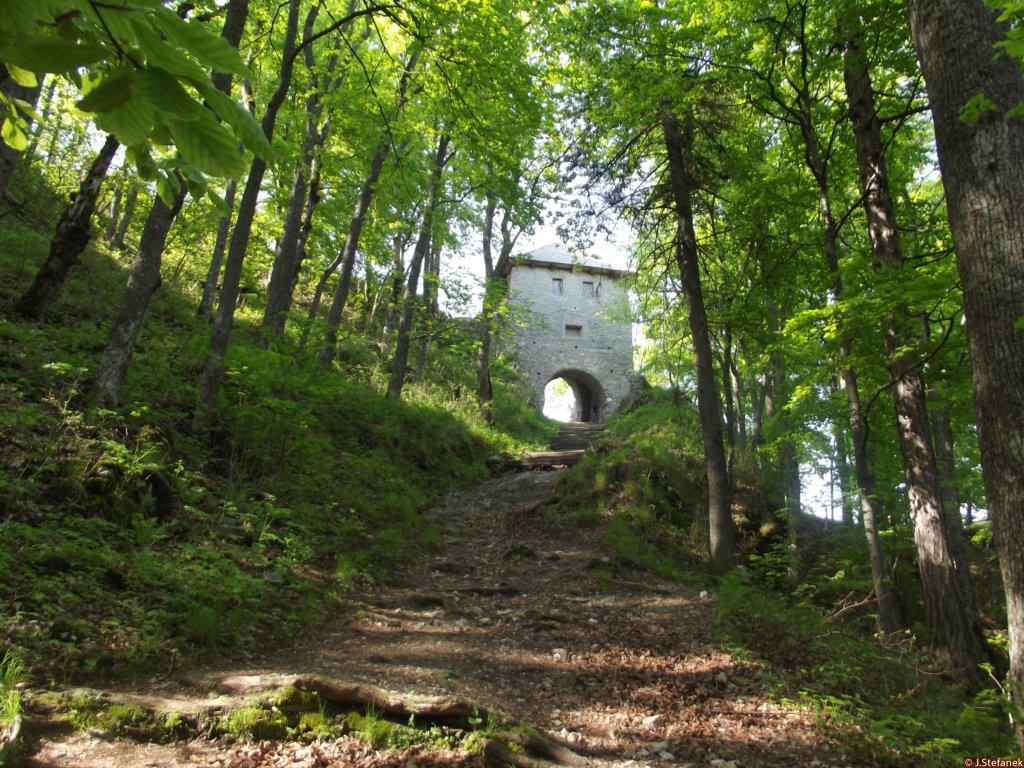
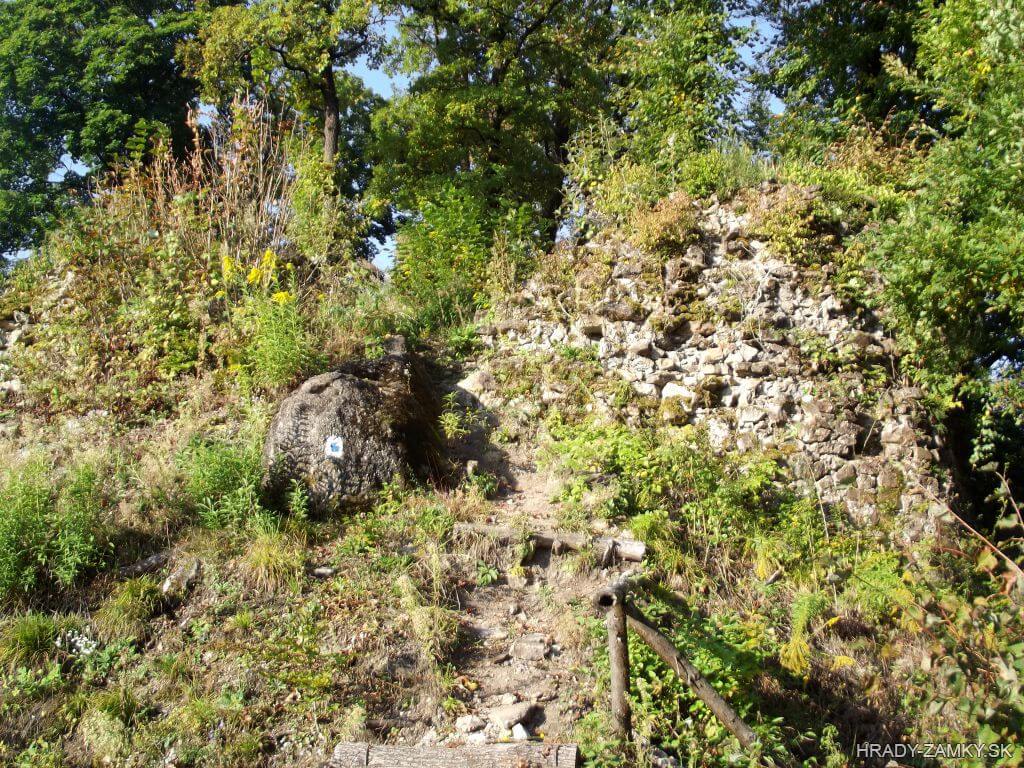
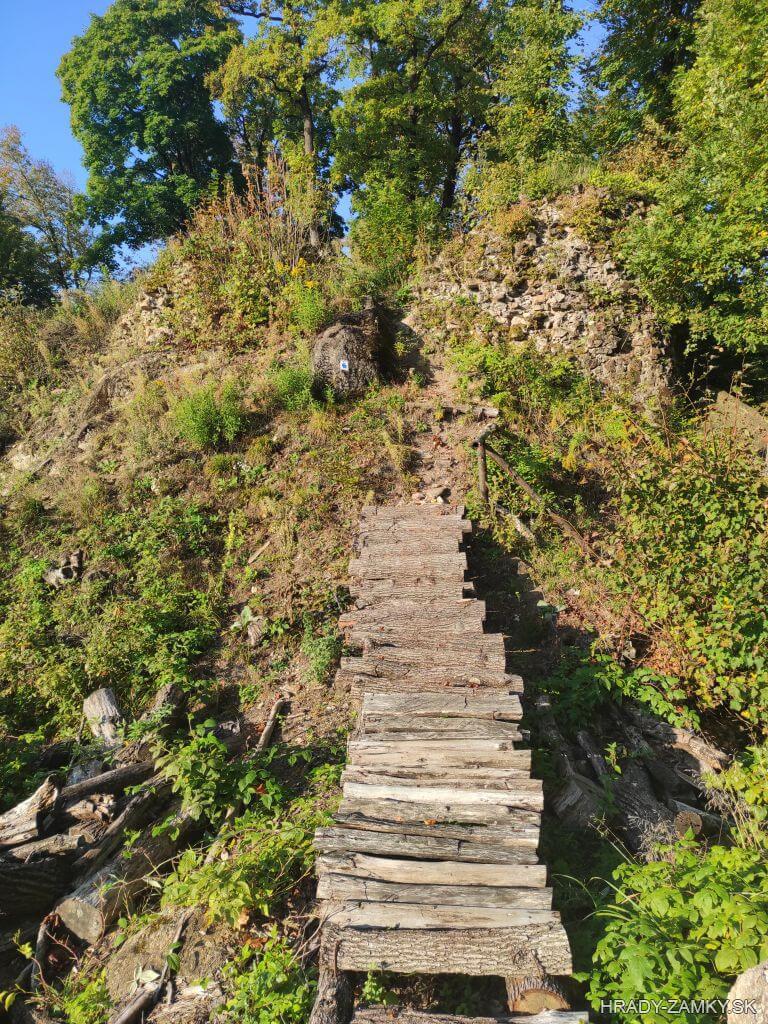
Trasa 1: We will reach Jelšava Castle via the blue route. We leave the town of Jelšava in the direction of Revúca and just before the Magnesite company we turn left into the alley. We cross the bridge and continue carefully for about 1 km along an uneven road through the railway crossing to the place where the road branches off. We will park here on the side of the road. From there we continue on foot to the left, the blue markings are quite common and visible. At the next crossroads we continue to the right and then we come under the castle hill, where we do not turn off, but we go up a climb straight up to a wooden bridge, through which we go to the remains of the castle.
Trasa 1: K Jelšavskému hradu sa dostaneme po modrej TZT. Opustíme mesto Jelšava v smere na Revúcu a tesne pred Magnezitovými závodmi odbočíme do uličky vľavo. Prejdeme cez mostík a ďalej opatrne pokračujeme asi 1km po nerovnej ceste cez železničné priecestie až na miesto, kde sa cesta rozvetvuje. Tu na okraji cesty zaparkujeme. Odtiaľ pokračujeme peši vľavo, modré značenie je pomerne časté a viditeľné. Pri ďalšom rázcestí pokračujeme vpravo a ďalej už prídeme pod hradný kopec, kde neodbáčame, ale pôjdeme miernym stúpaním rovno nahor až k drevenému mostíku, ktorým prejdeme k zvyškom hradu.
Trasa 2: The mentioned blue route starts right on the square, by the church next to the Coburg manor house in Jelšava, in front of which we can park. However, for safety reasons, we recommend using this route only for hikers and, if we come by car, use route no.1. From the church, we will walk along the blue route until we reach the railway tracks. We turn right and all the time we go next to the tracks until we reach the crossing, through which we pass and continue to the crossroads, from there to the left the same way as described in route no.1.
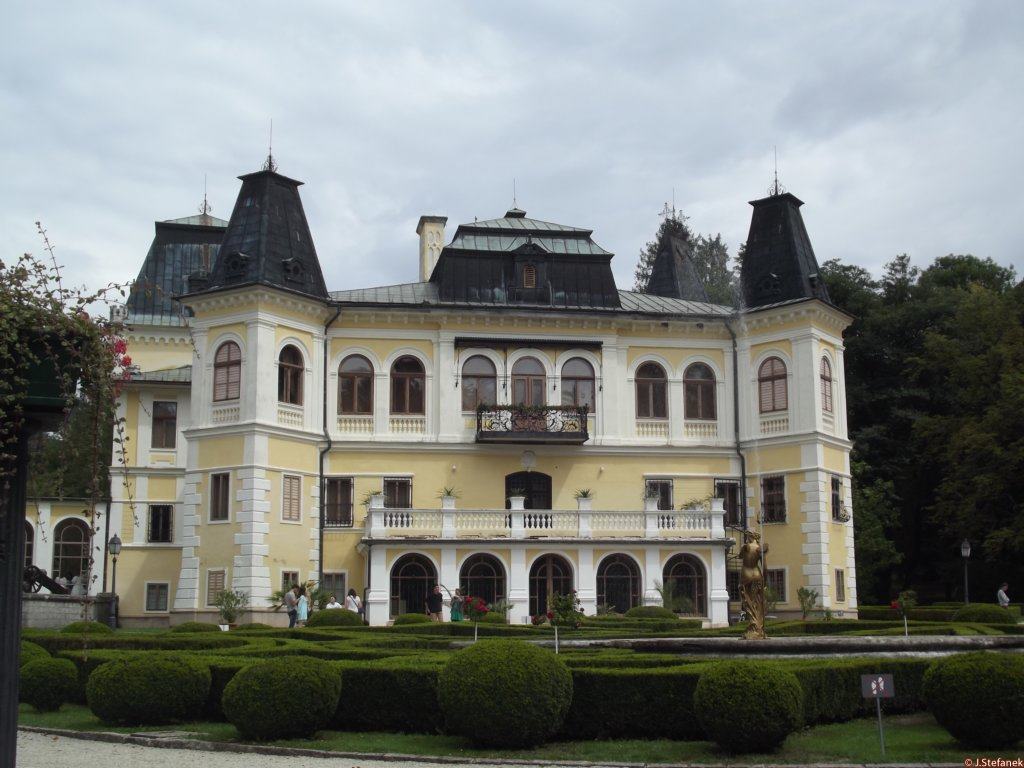
Trasa 2: Spomínaná modrá trasa začína priamo na námestí, pri kostole vedľa Coburgovského kaštieľa v Jelšave, pred ktorým môžeme zaparkovať. Z bezpečnostných dôvodov však odporúčame túto trasu využiť len pre peších turistov a v prípade, že prichádzame autom, využiť trasu č.1. Od kostola sa teda peši vydáme po modrej trase až prídeme k železničným koľajam. Odbočíme vpravo a celý čas pôjdeme vedľa koľají, kým neprídeme k priecestiu, cez ktoré prejdeme a pokračujeme ďalej k rázcestiu, odtiaľ doľava rovnakou cestou ako je popísaná v trase č.1.
Description
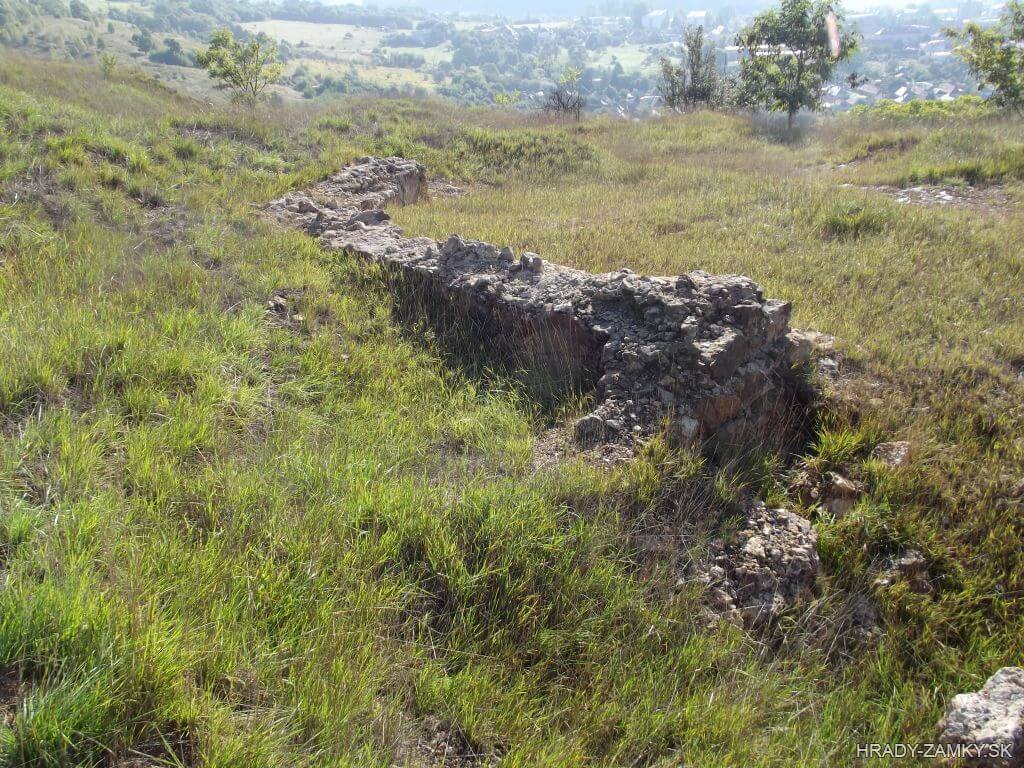
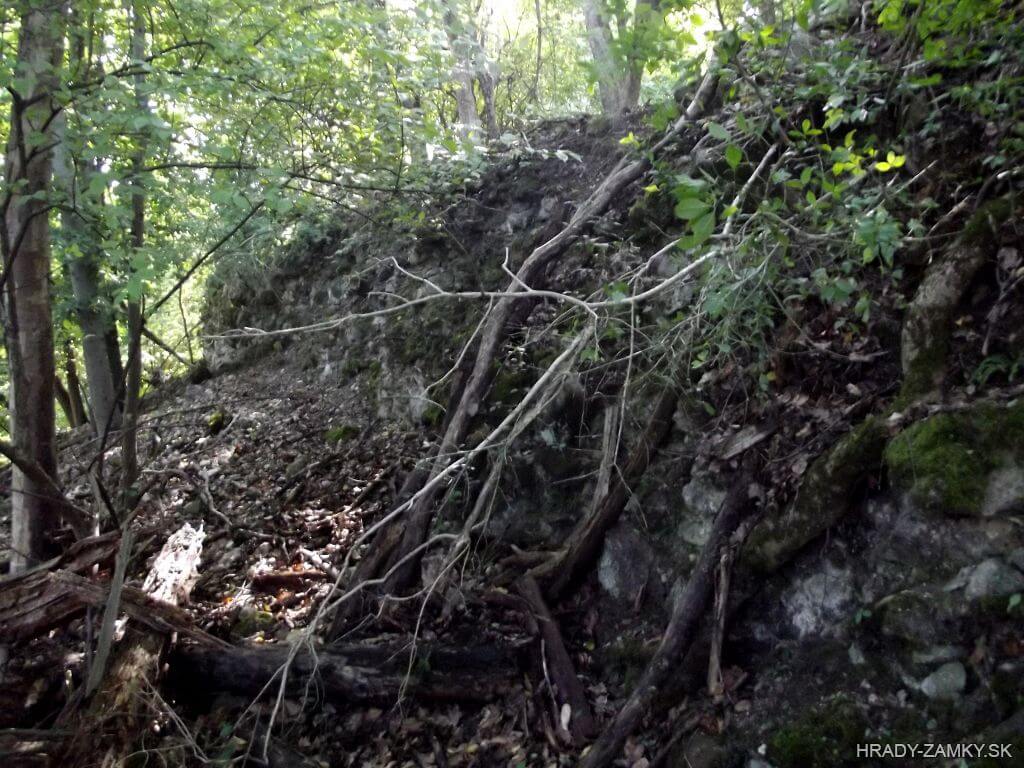
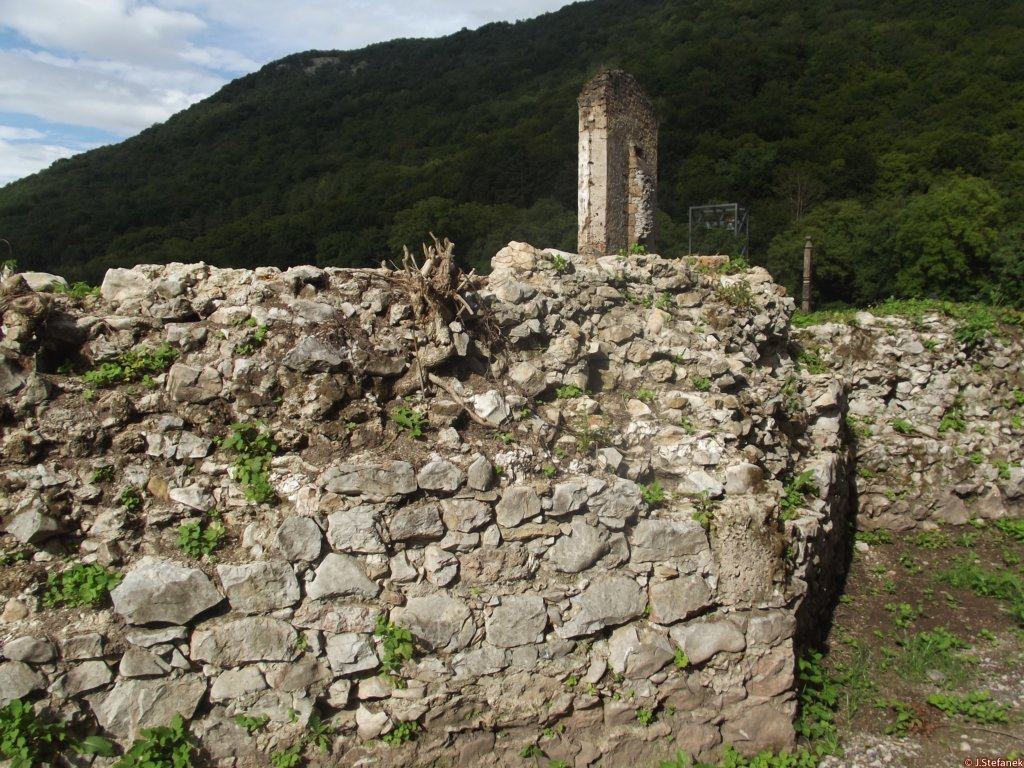
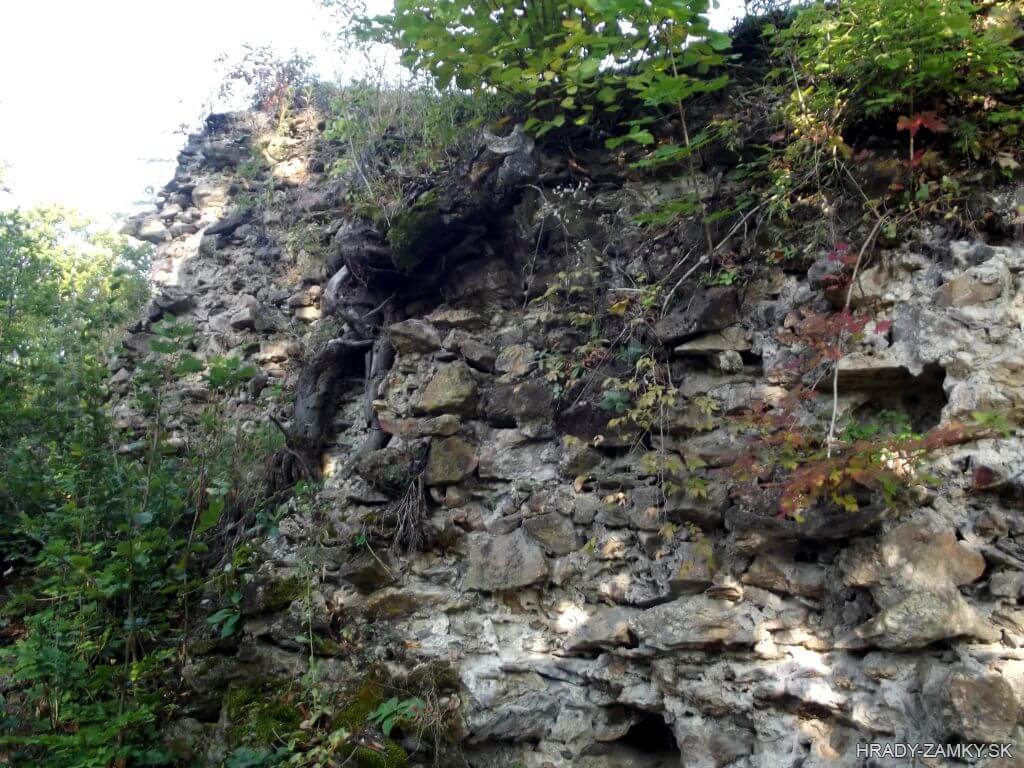
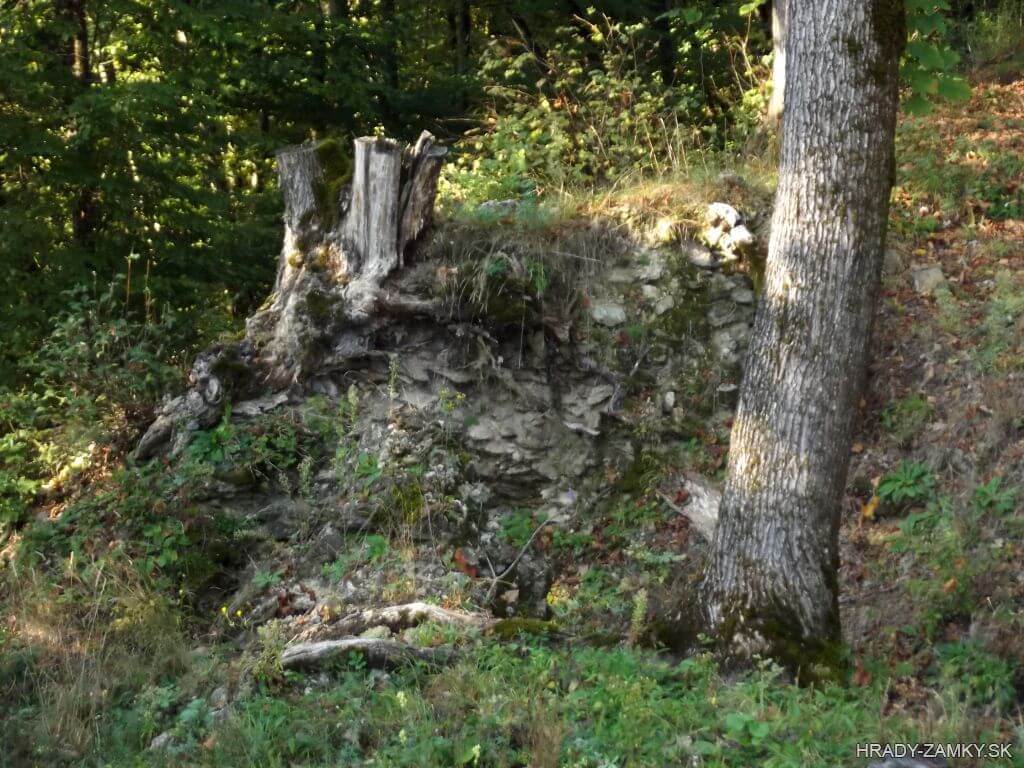
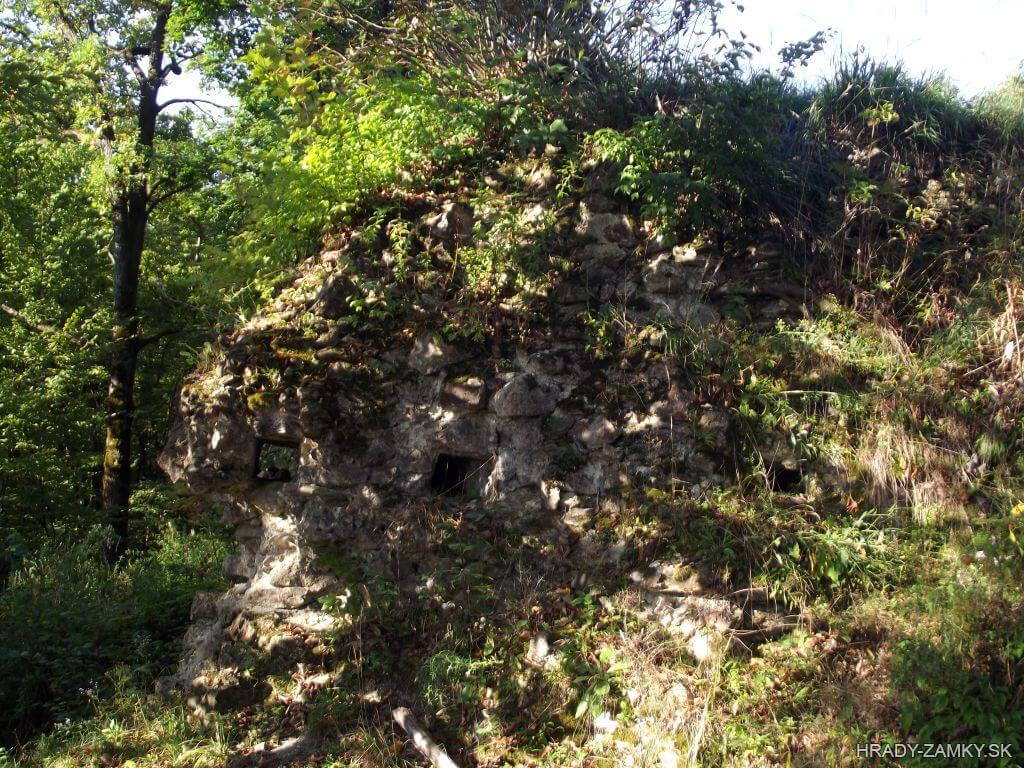
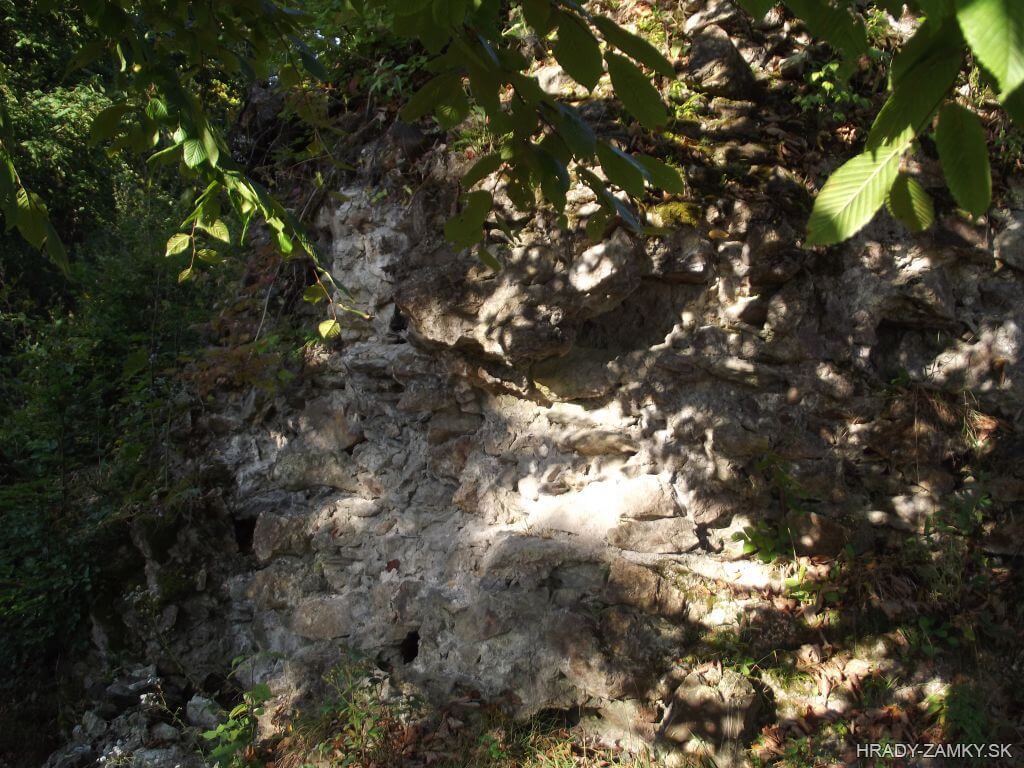
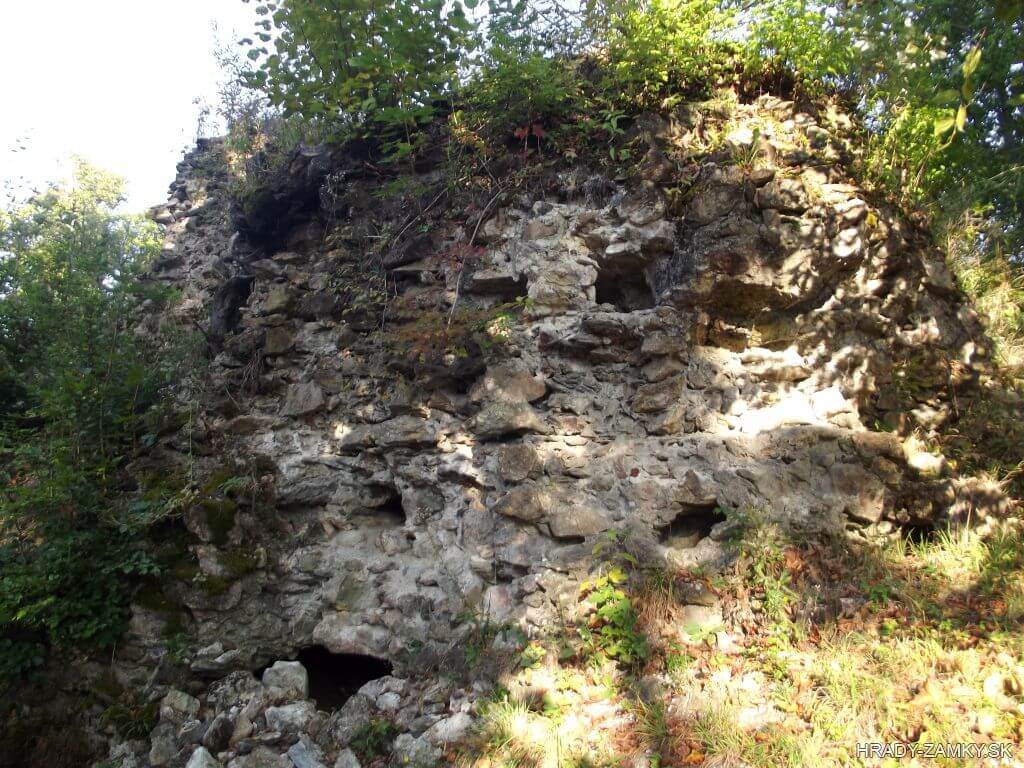
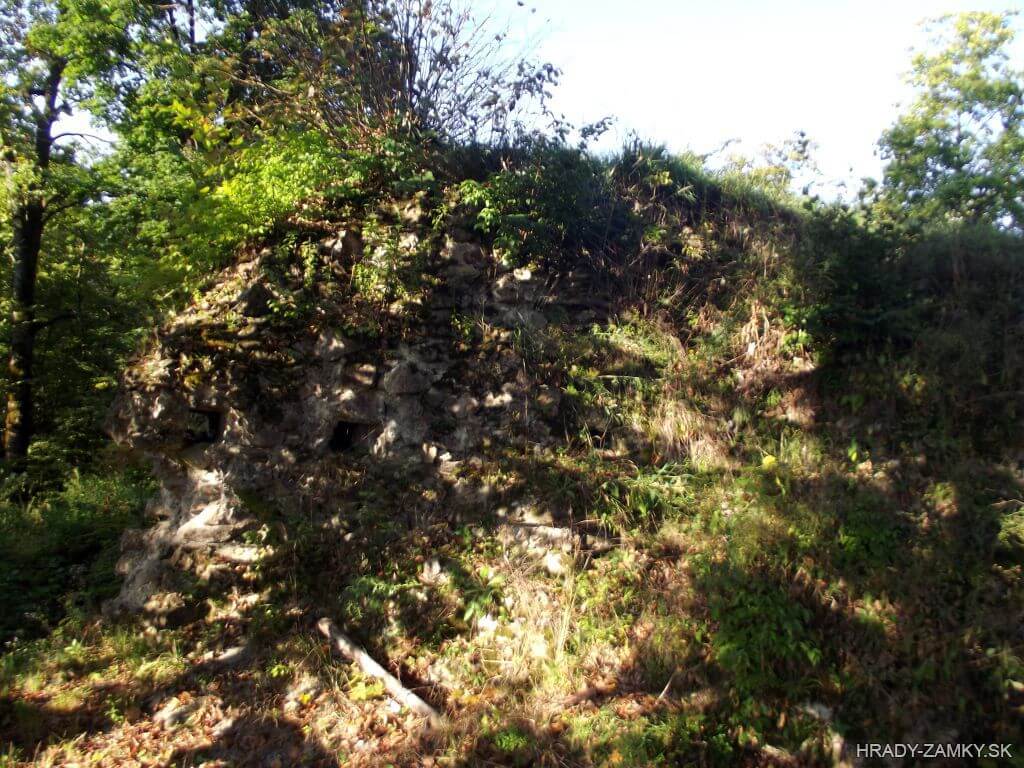
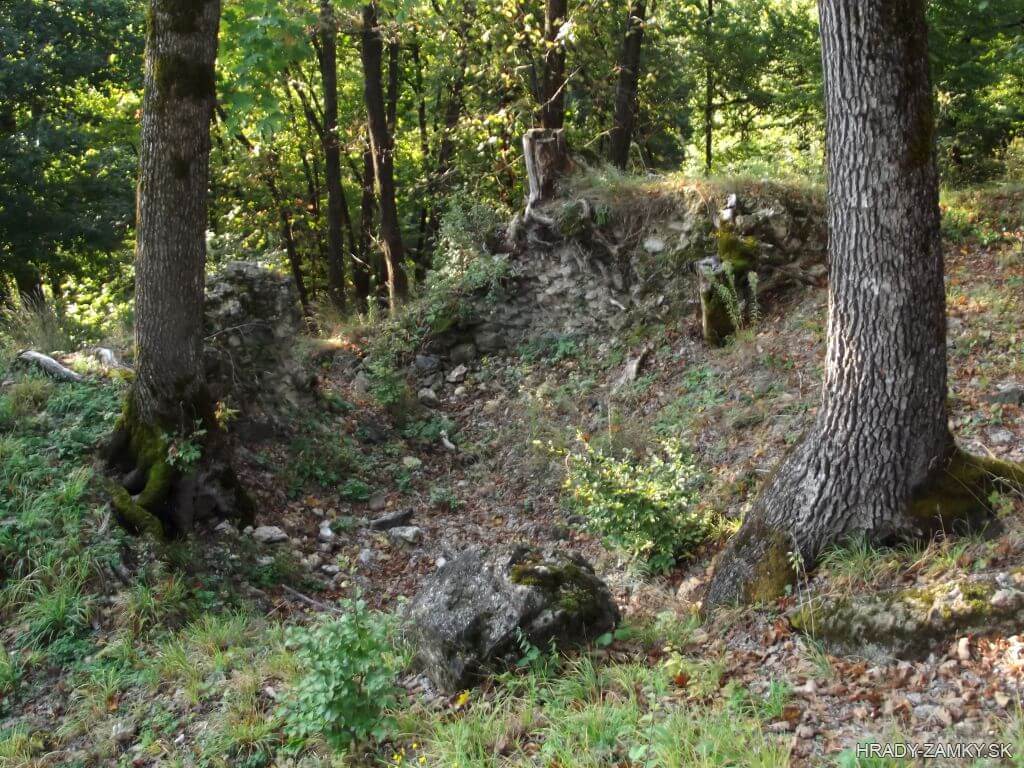
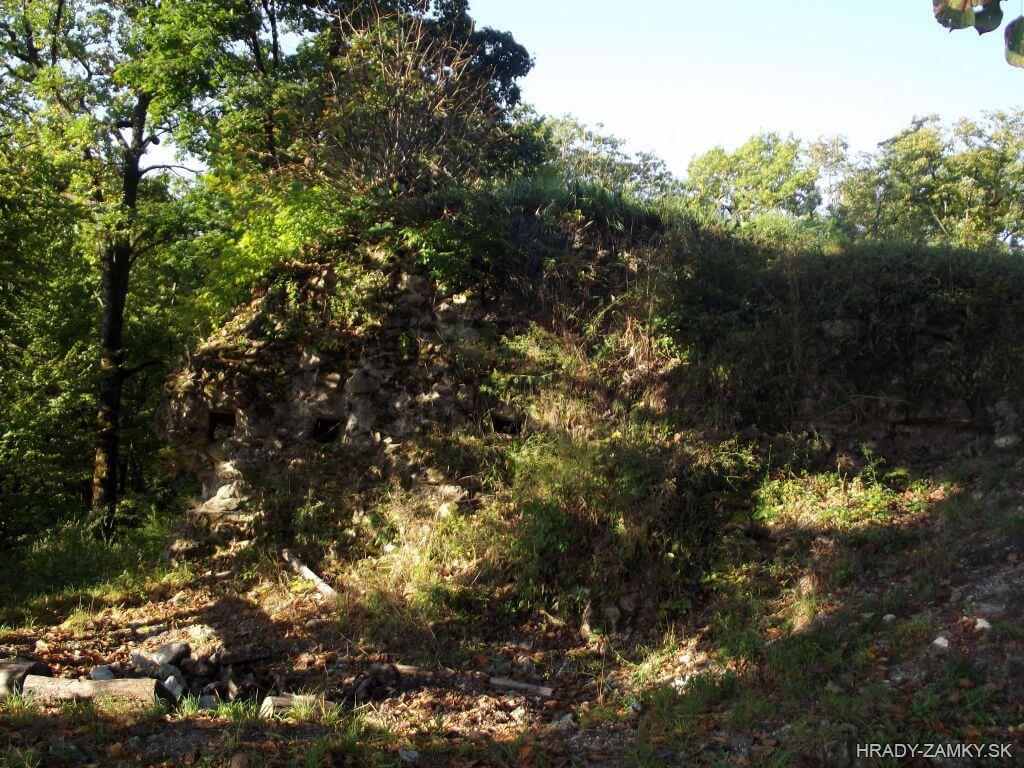
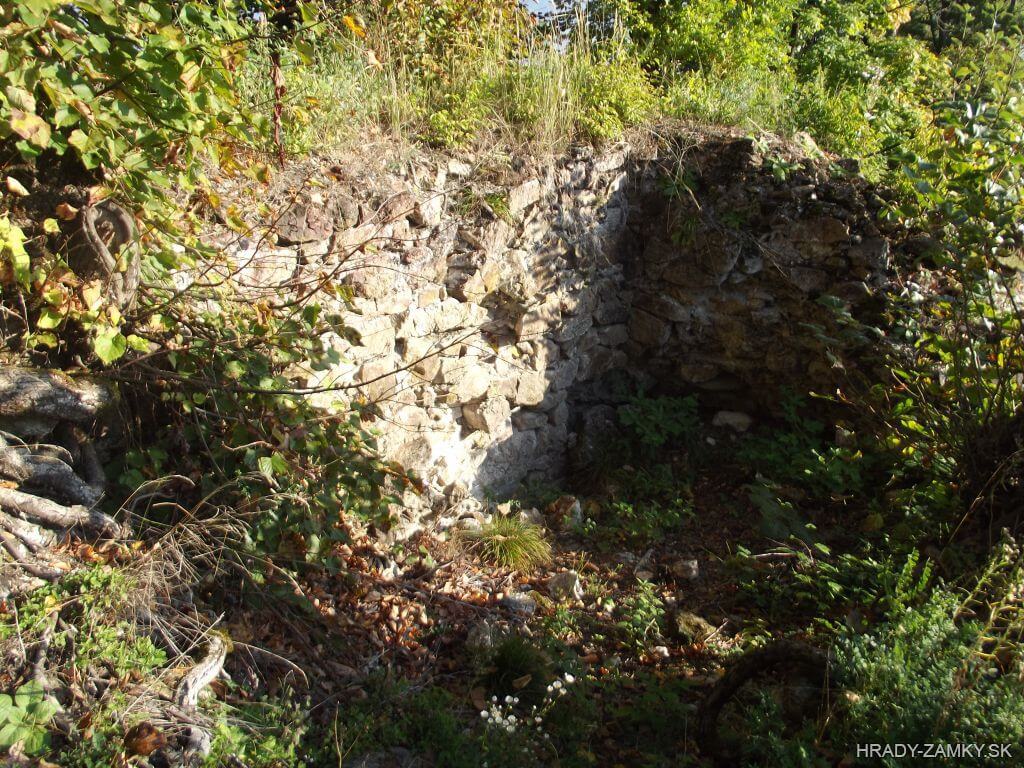
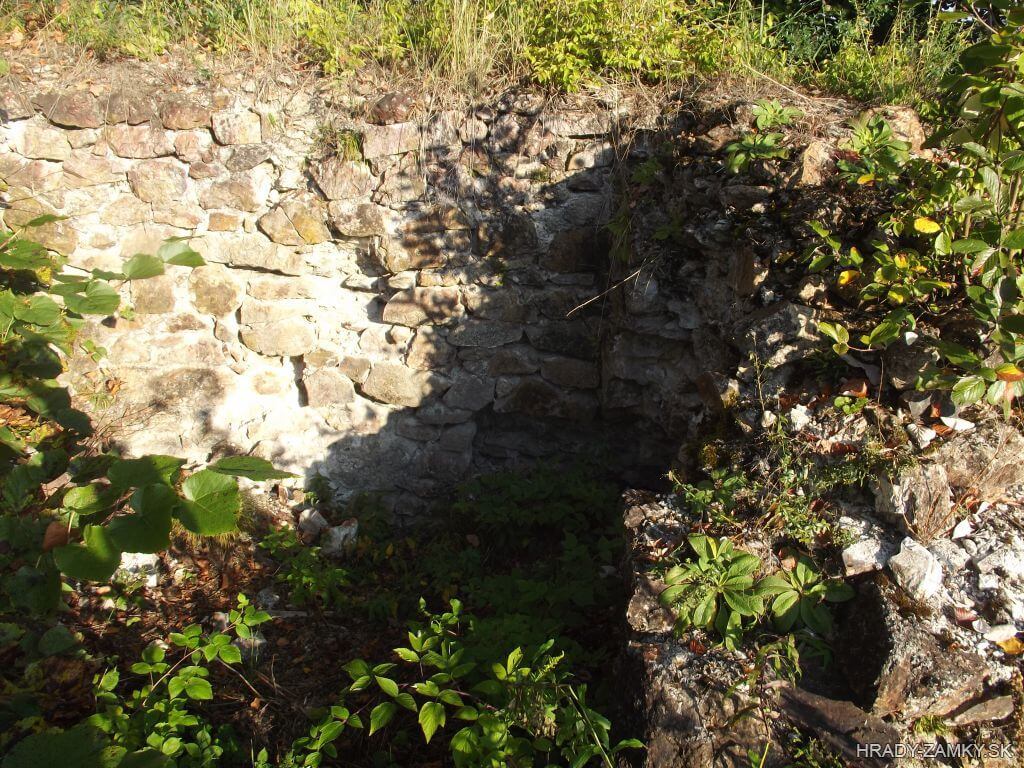
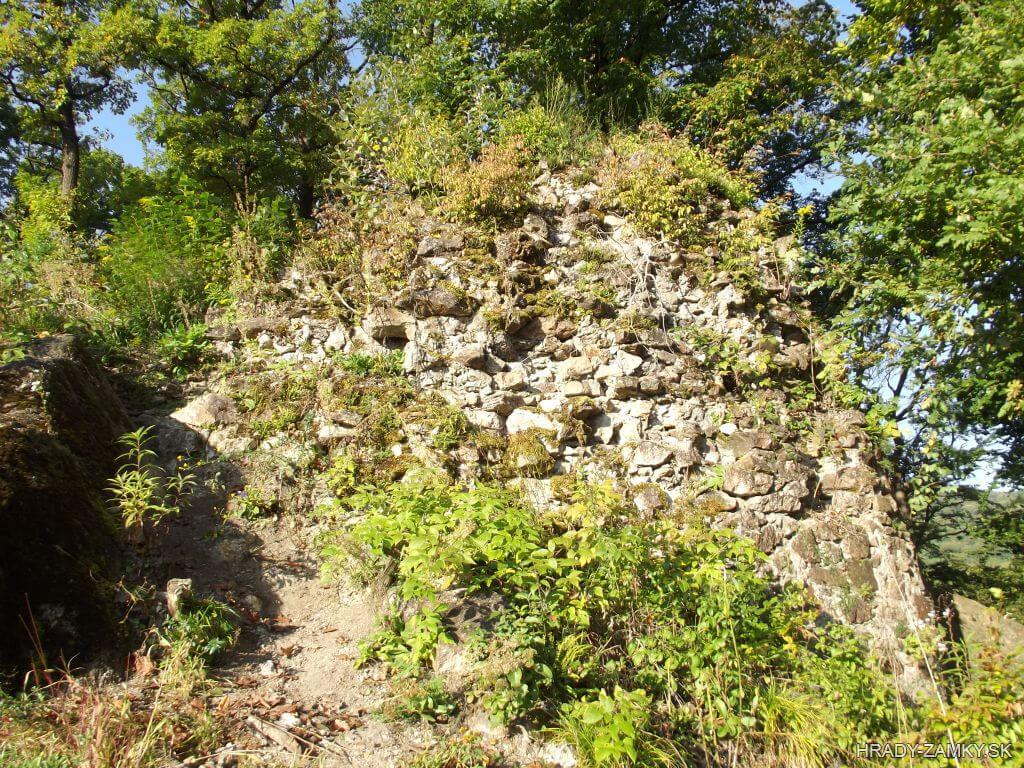
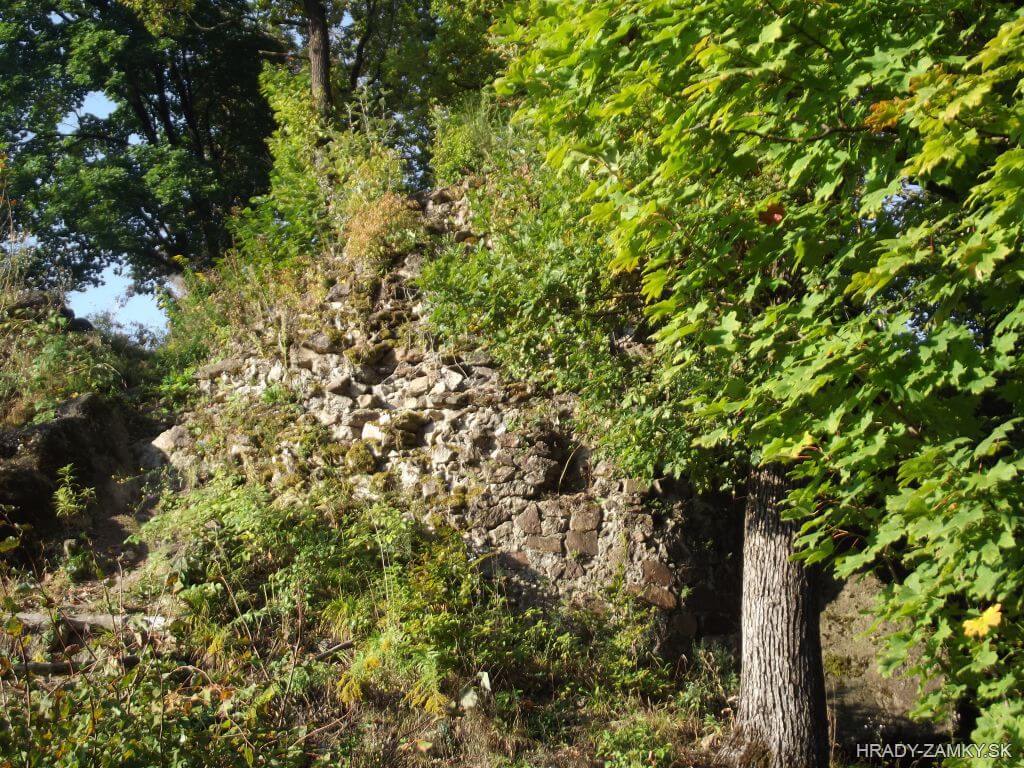
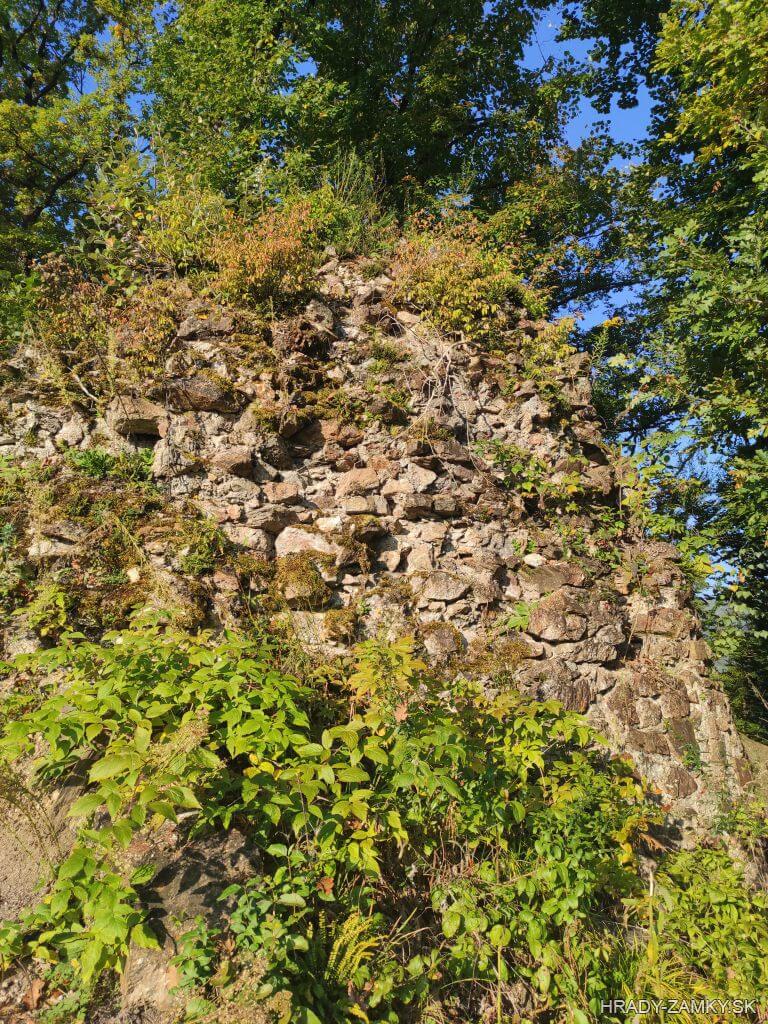
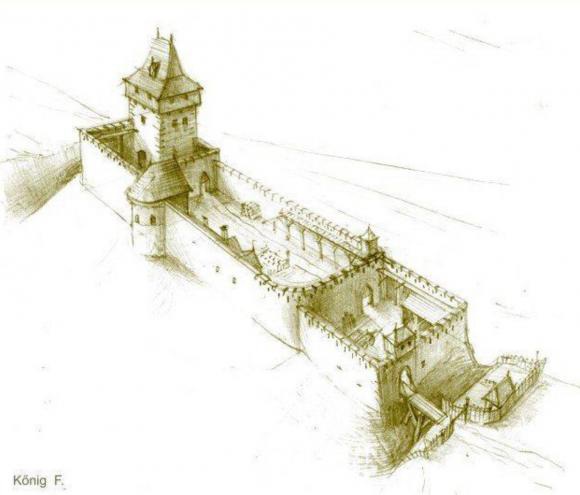
The floor plan of the castle consists of a trapezoid with dimensions of 57.5 x 20 m. In the vicinity of the castle was a perimeter fortification made of quarry stone, which was complemented by a semicircular turret with a diameter of 3 meters. The corner on the northeast side is slightly rounded. The fortification around the tower was 42 meters long. At the beginning of the construction, a large square tower with dimensions of 10 x 10 m and 3 m thick walls was built on the northwest corner of the courtyard. The road to the complex led over the castle moat and was protected by palisades. A gate was built into the palisade fortifications.Not much of the original building has been preserved, but the walls and especially the floor plan in the form of a stone subsoil are still visible.
Pôdorys hradu tvorí lichobežník s rozmermi 57,5 x 20m. V okolí hradu bolo obvodové opevnenie z lomového kameňa, ktoré dopĺňala polkruhová vežička s priemerom 3 metre. Nárožie na severovýchodnej strane sa mierne zaobľuje. Opevnenie okolo veže malo dĺžku 42 metrov. Na začiatku výstavby bola vystavaná na severozápadnom rohu nádvoria veľká štvorcová veža s rozmermi 10 x 10 m a múrmi hrubými 3 m. Ponad hradnú priekopu viedla cesta do areálu a bola chránená palisádami. V palisádovom opevnení bola zabudovaná brána.Z pôvodného objektu sa veľa nezachovalo, ale viditeľné sú ešte múry a najmä pôdorys v podobe kamenného podložia.
Plan
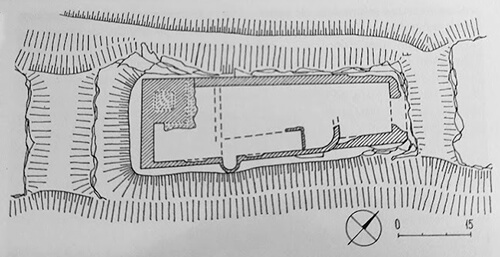
Legend to the ground plan
- Source: PLAČEK M.
- BÓNA M.
- Encyklopédia slovenských hradov
Legenda k pôdorysu
- Zdroj: PLAČEK M.
- BÓNA M.
- Encyklopédia slovenských hradov
History
Jelšava Castle, known as the Old Castle, is paradoxically, despite its name, newer than the castle in the Hradovisko position above the town of Jelšava. The castle was built by the Ratold family de Ilswa in the mountains more than two kilometers west of the city, probably at the end of the 14th century. The builder was probably the palatine Lenstach (Leustak) Jolsvai of the Ratold family (Ratót de Ilswa - Jolsvai). The castle was smaller in size and can be classified more as an aristocratic residence.
The first written mention of the castle dates from 1421. Around 1427, when the last descendant of the Jolsvai family, Juraj, died, the castle fell into the hands of King Sigismund. In 1430 it was put in advance by Queen Barbora Celjská and in 1435 the castle was acquired by Peter Bebek and his family.
In the 15th century, many military events took place in the vicinity of Jelšava, especially in the presence of the troops of Ján Jiskra, Polish soldiers and brothers, which probably caused that in 1453 the castle was already in ruins. In the same year, King Ladislav Pohrobok donated the ruined castle to his treasurer Ján Perényi.
In 1461, however, it is already mentioned as a castellum - a castle, when it was probably repaired by the Perényi family. But in the years 1466 to 1526 it was again in the hands of the Bebek family.
We have no information about the final destruction of the castle, but it could have happened at the latest during the plundering of Jelšava by the Turks in 1566. According to the census from 1573, the castle is already mentioned as a ruin.
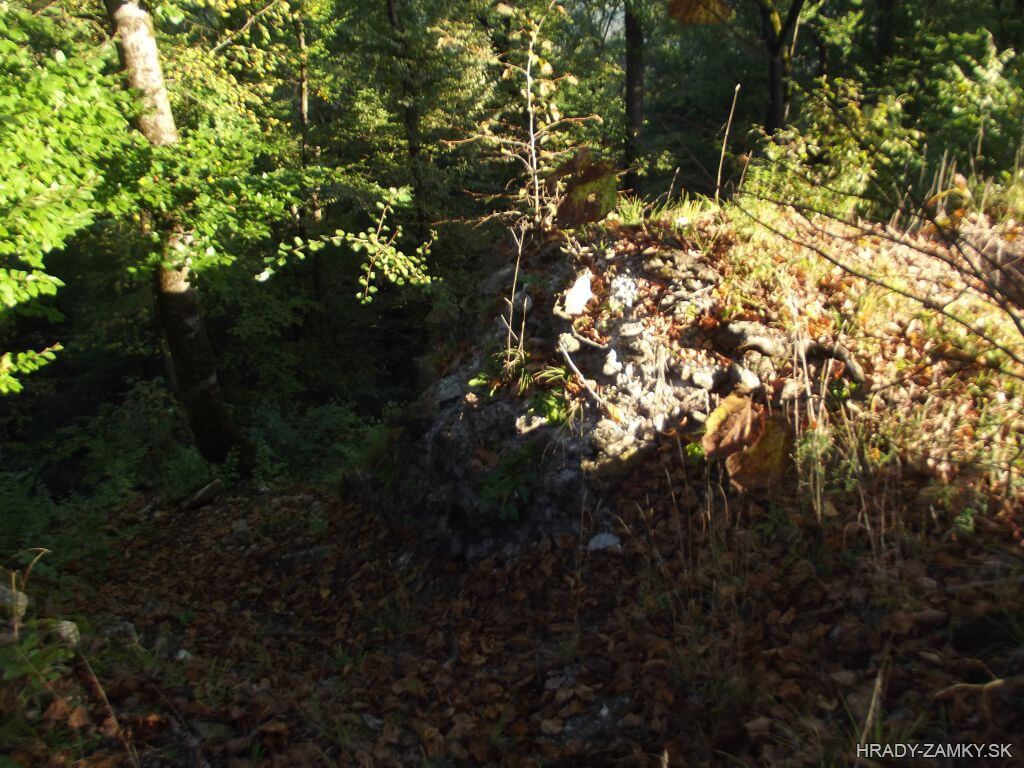
Not much of the castle has been preserved, but the remains of the walls and the floor plan in the form of a stone subsoil are visible.
Jelšavský hrad, známy ako Starý hrad, je paradoxne napriek svojmu názvu novší ako bol hrad v polohe Hradovisko nad mestom Jelšava. Hrad postavili Ratoldovci de Ilswa v horách vyše dva kilometre západne od mesta zrejme koncom 14. storočia. Staviteľom bol pravdepodobne palatín Lenstach (Leustak) Jolsvai z rodu Ratoldovcov (Ratót de Ilswa - Jolsvai). Hrad bol menších rozmerov a možno ho zaradiť skôr ku šľachtickým sídlam.
Prvá písomná zmienka o hrade pochádza z roku 1421. Okolo roku 1427, keď zomrel posledný potomok Jolsvaiovcov, Juraj, hrad sa dostal do rúk kráľa Žigmunda. V roku 1430 ho dostala do zálohu kráľovná Barbora Celjská a v roku 1435 hrad od nej získal Peter Bebek s rodinou.
V 15. storočí sa v okolí Jelšavy udiali mnohé vojenské udalosti, hlavne za prítomnosti vojsk Jána Jiskru, poľských vojakov a bratríkov, čo zrejme spôsobilo, že v roku 1453 bol hrad už v ruinách. V tom istom roku kráľ Ladislav Pohrobok daroval zničený hrad svojmu pokladníkovi Jánovi Perényimu ako odúmrť po Jurajovi Jolsvaiovi.
V roku 1461 sa však už spomína ako castellum - hrádok, keď ho pravdepodobne Perényiovci opravili. Avšak v rokoch 1466 až 1526 bol opäť v rukách Bebekovcov.
O definitívnom zničení hradu nemáme informácie, no najneskôr k nemu mohlo dôjsť pri vydrancovaní Jelšavy Turkami v roku 1566. Podľa súpisu z roku 1573 je hrad spomínaný už ako ruina.
Z hradu sa veľa nezachovalo, no viditeľné sú zvyšky múrov a pôdorys v podobe kamenného podložia.
Myths and legends
There are no myths available.
K tomuto objektu nie sú dostupné žiadne povesti
Useful information
The ruins are freely accessible
Zrúcanina je voľne prístupná
Nearby castles