Blh
Veľký Blh Banská Bystrica county Slovakia
castle ruin
Blh
Veľký Blh Banskobystrický kraj Slovakia
zrúcanina hradu
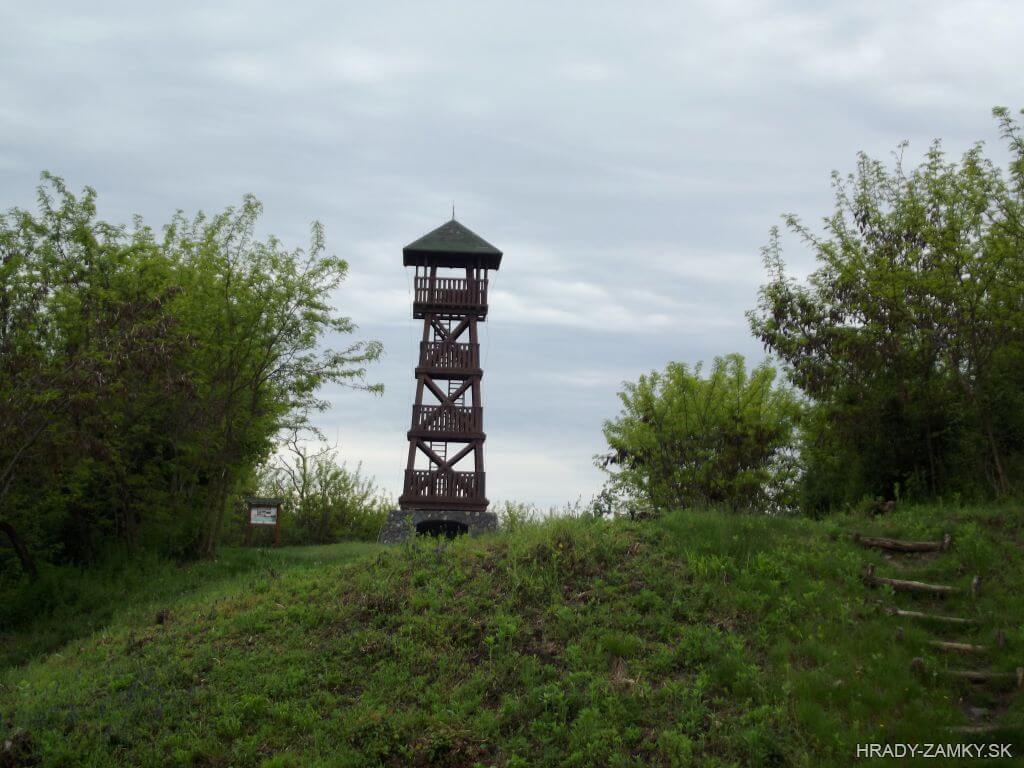
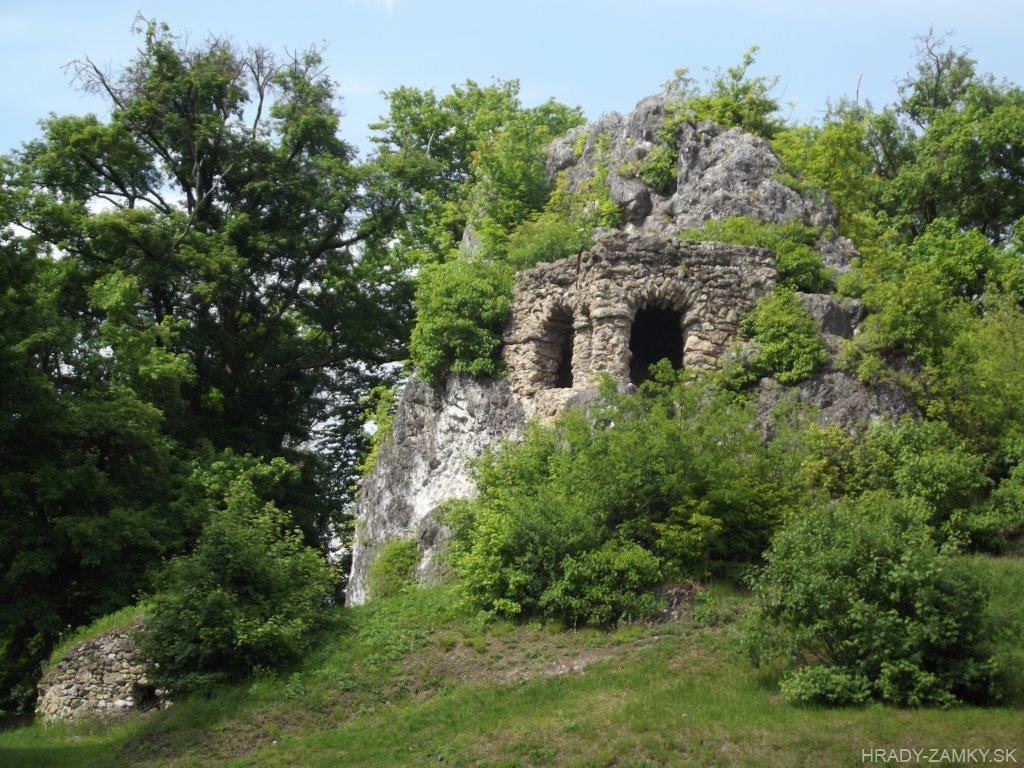
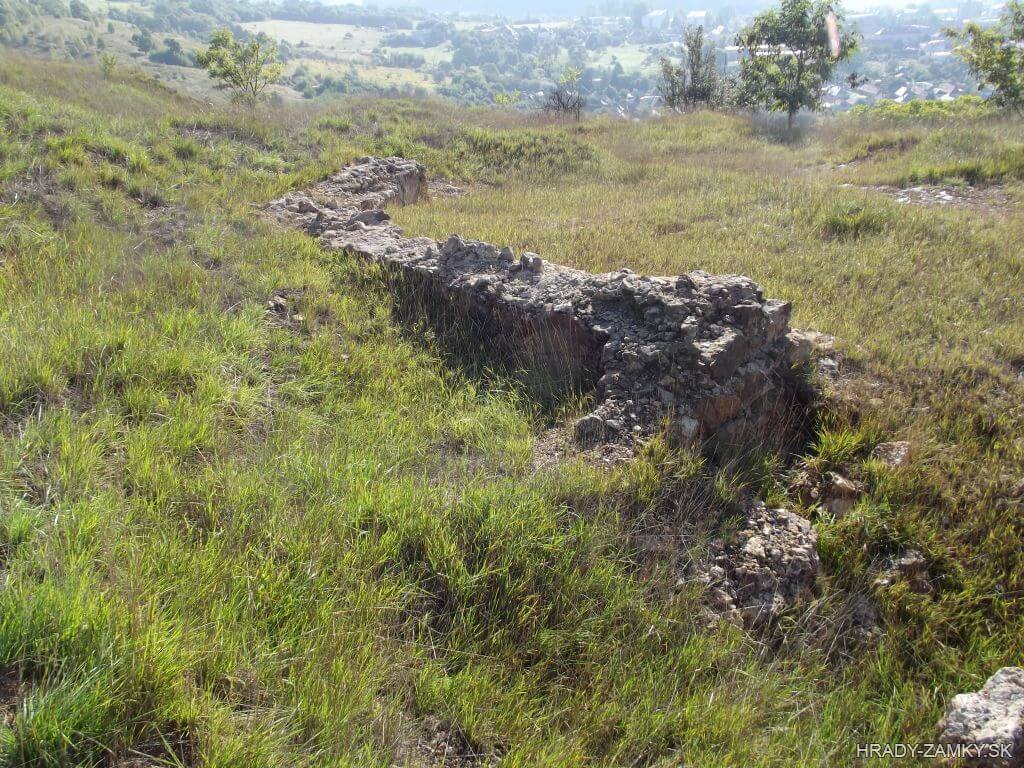
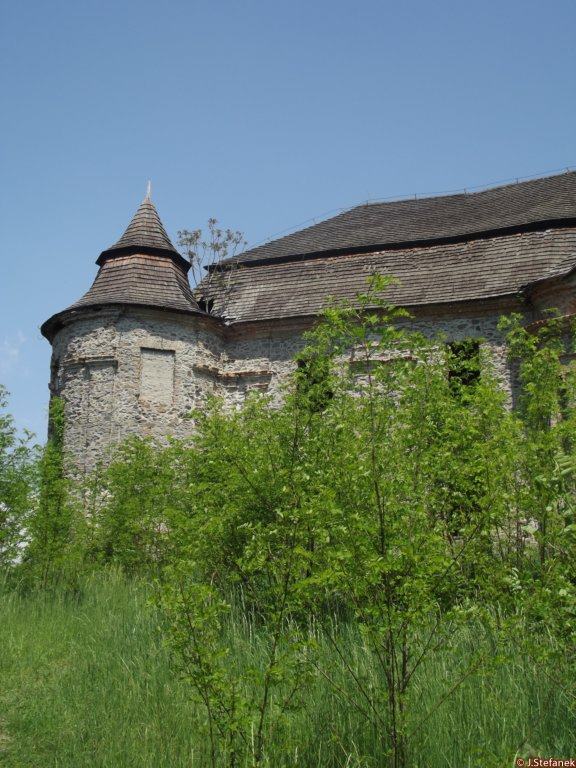
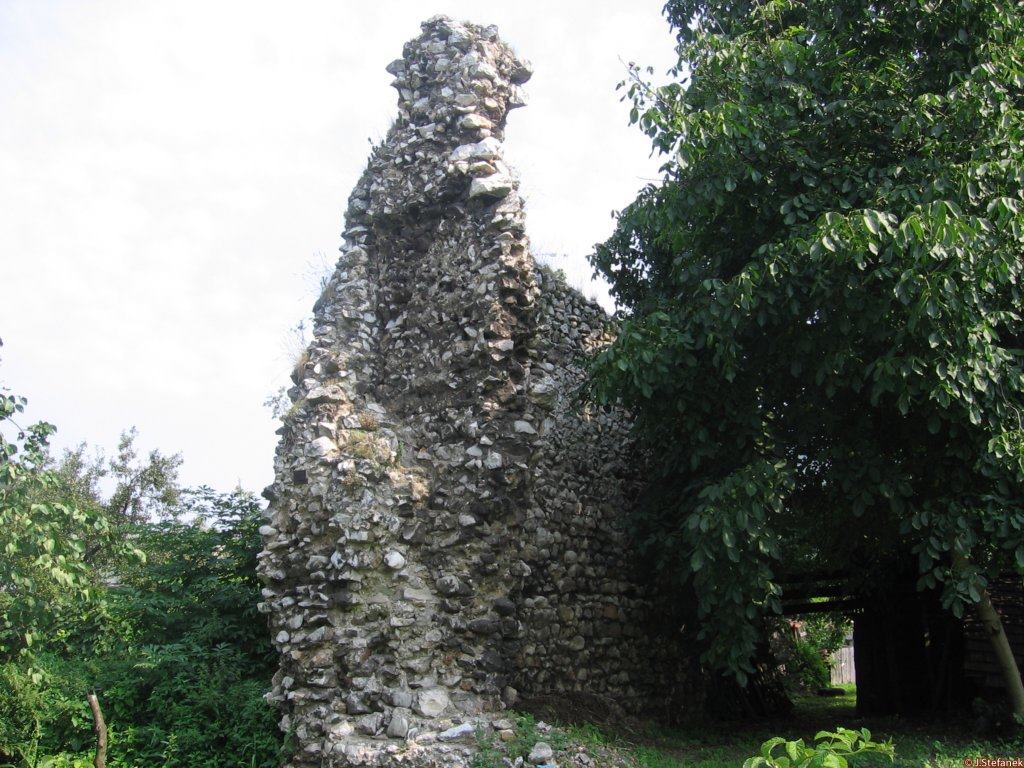
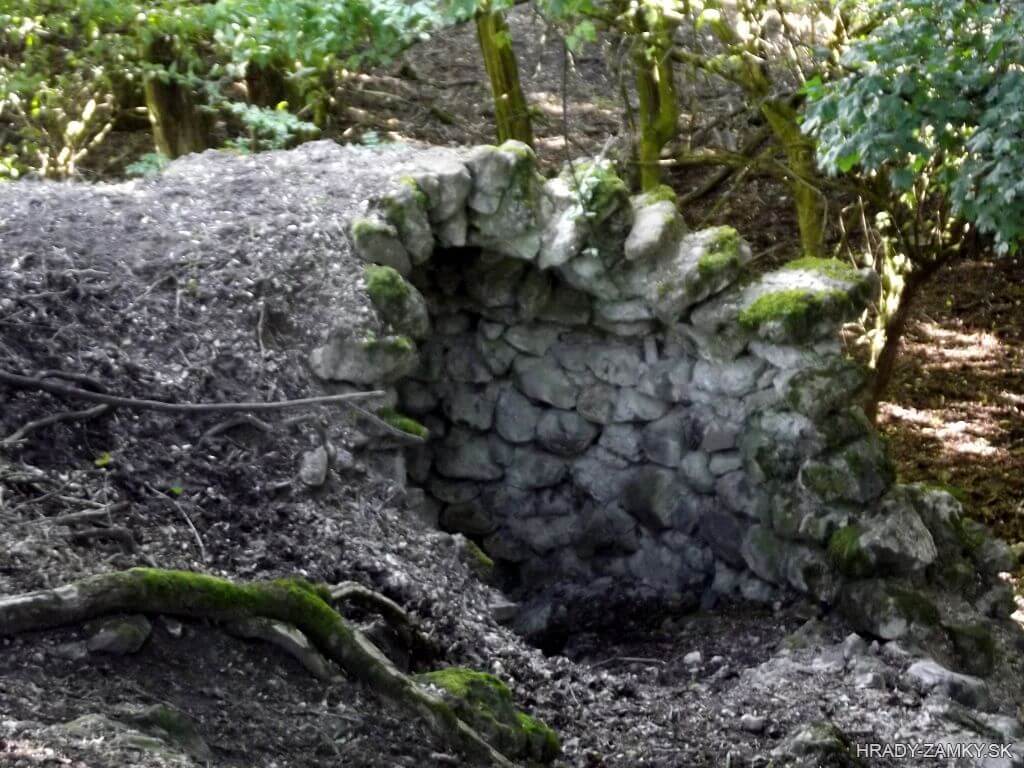
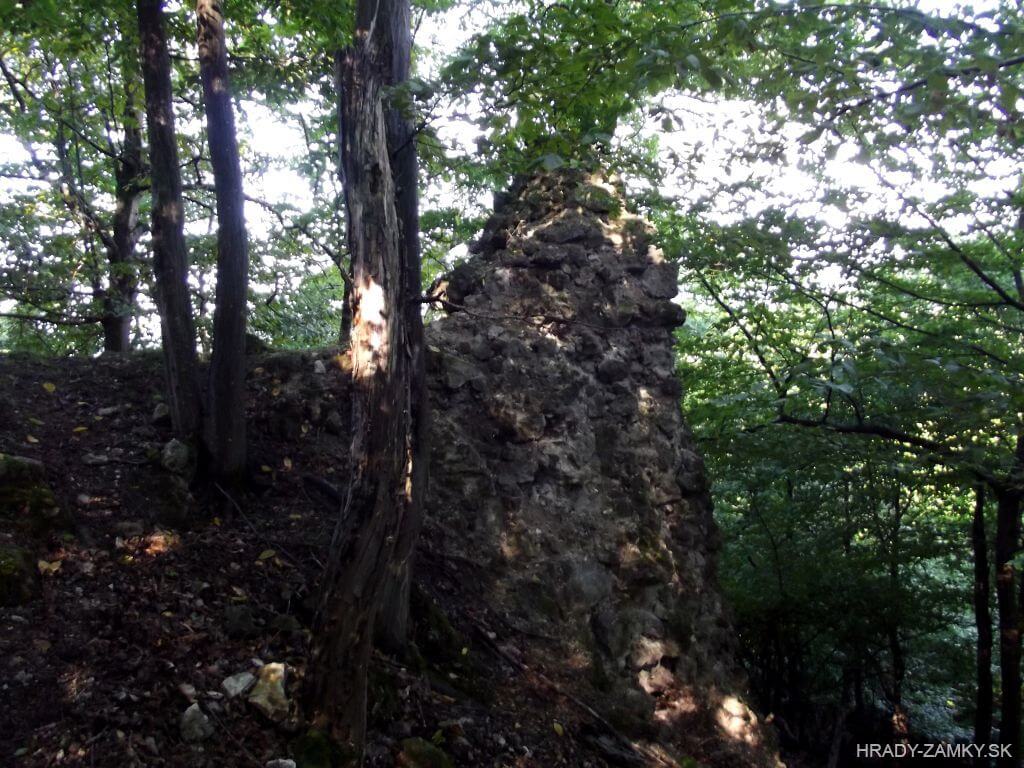
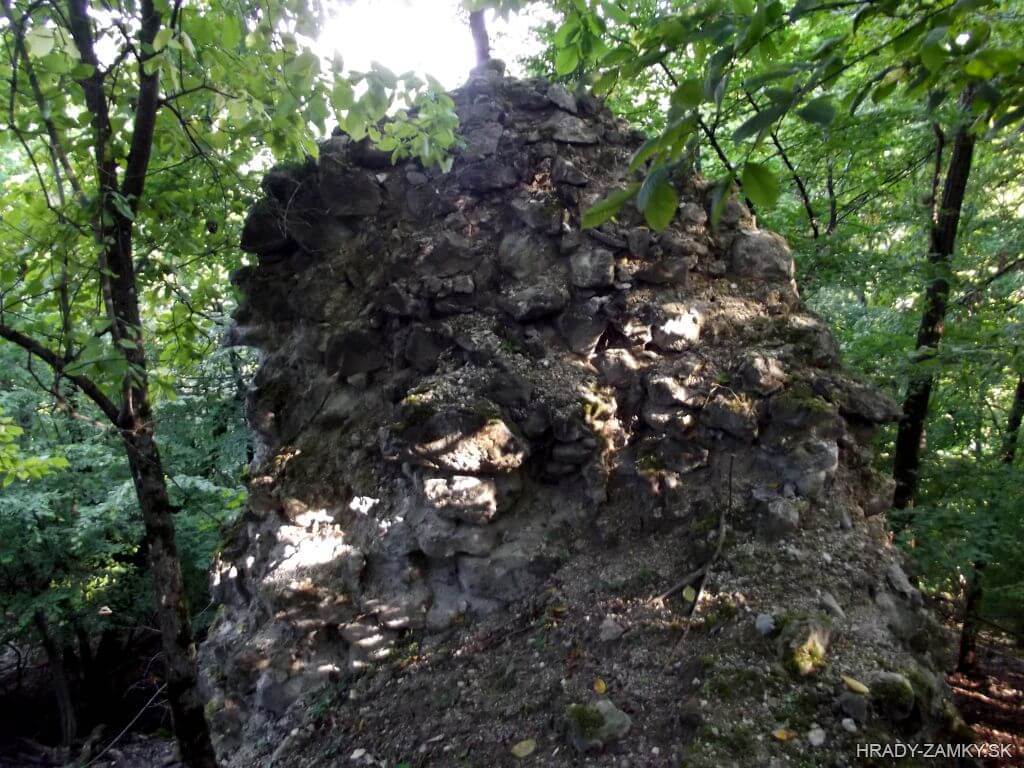
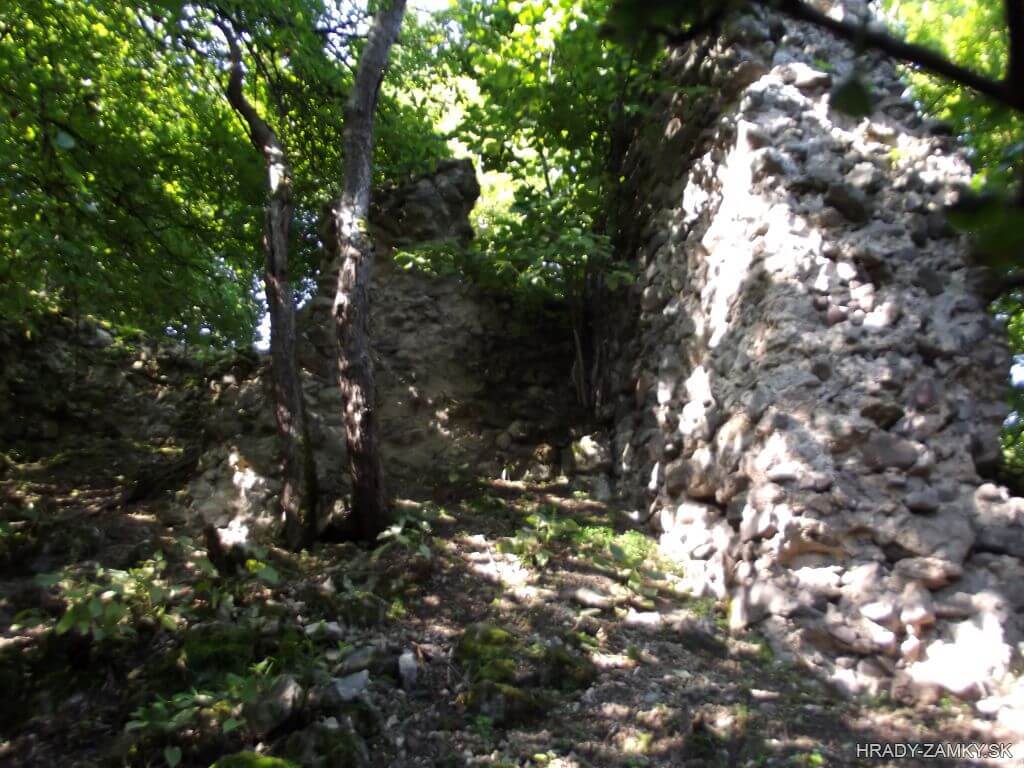
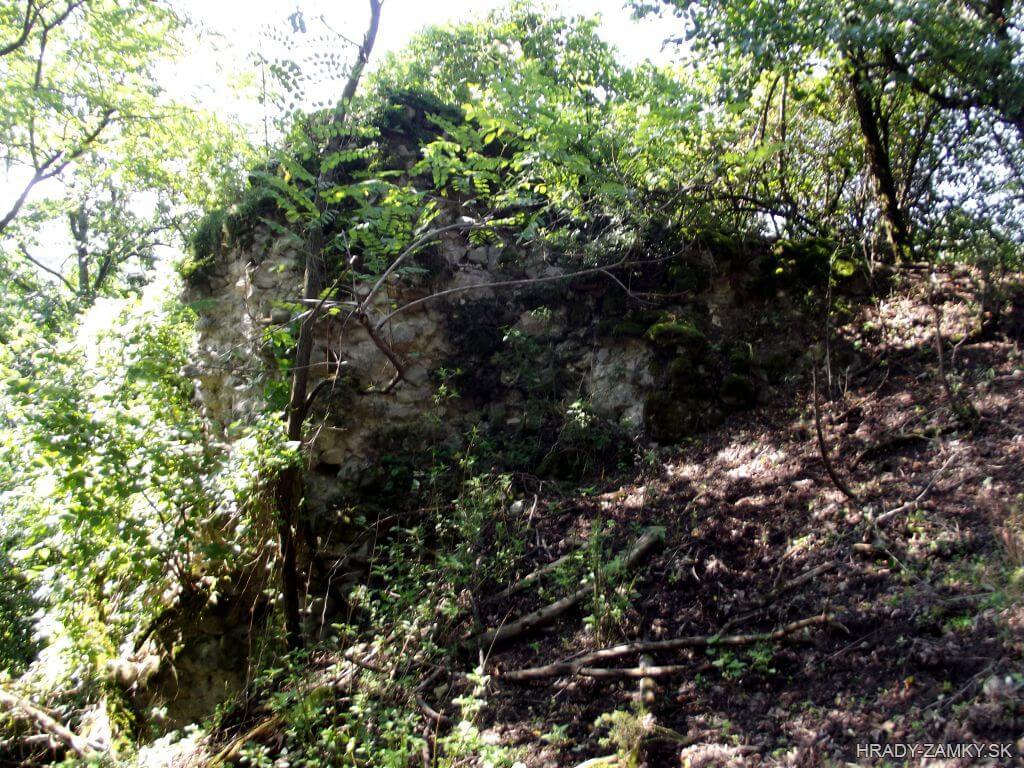
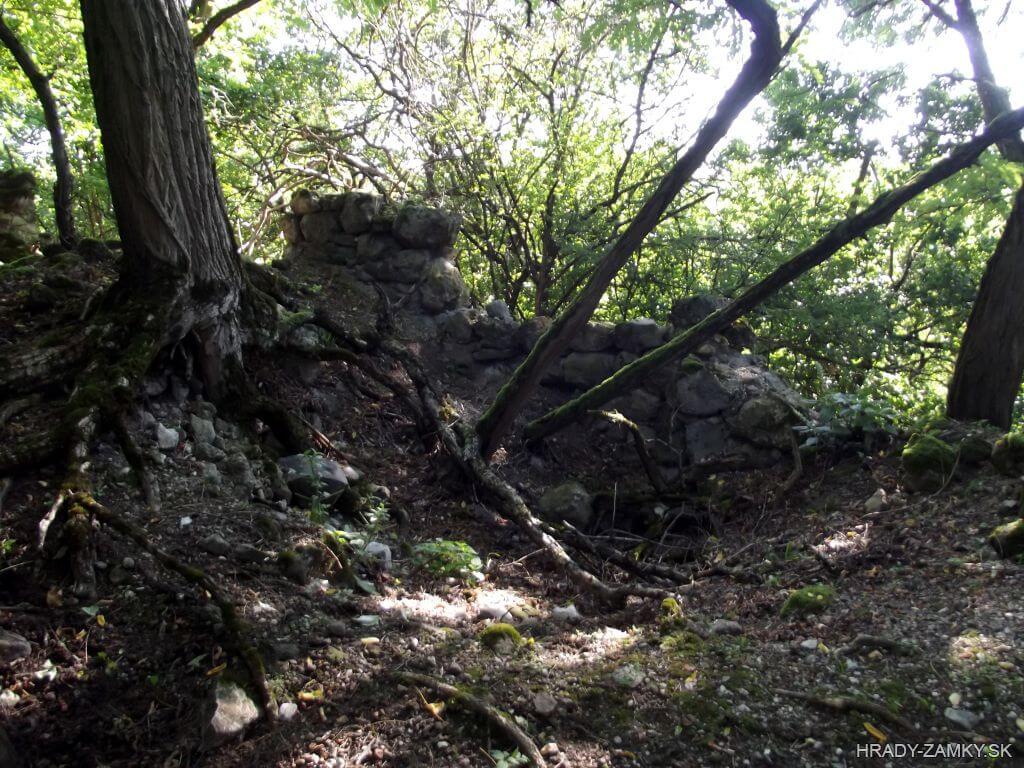
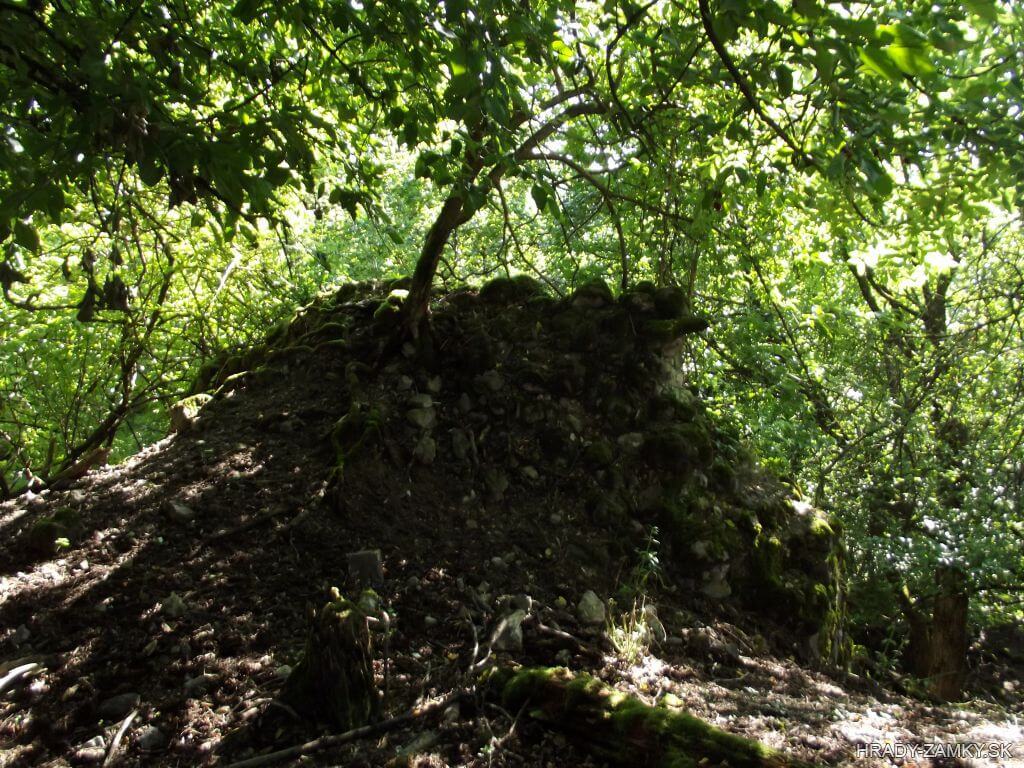
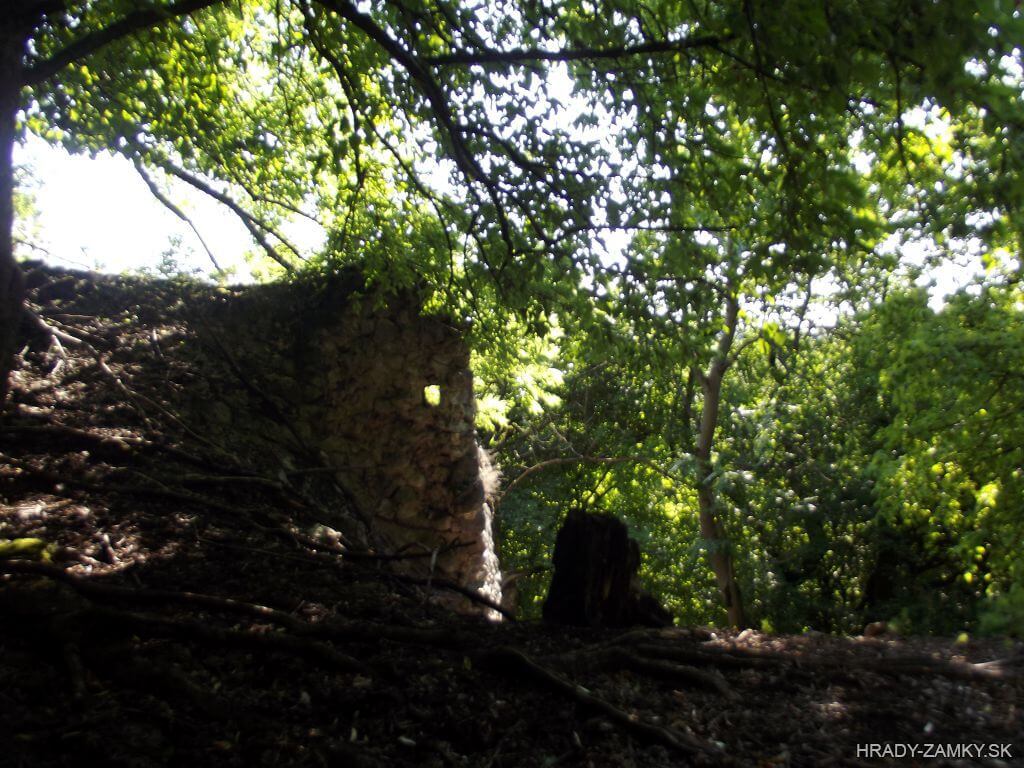
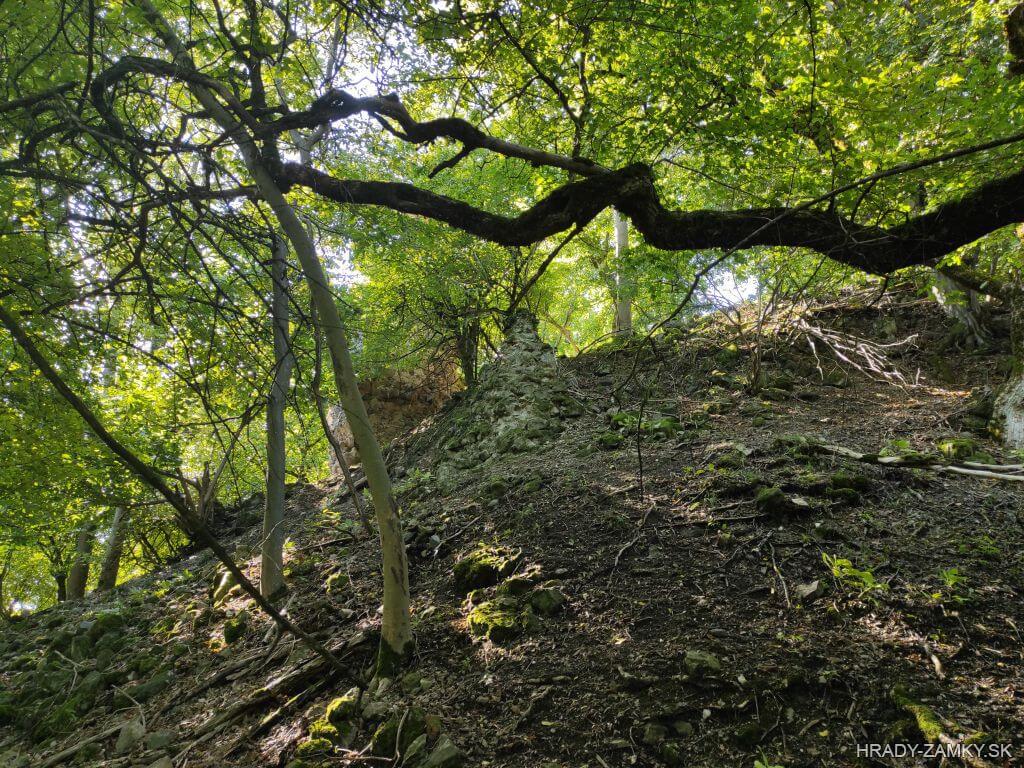
The ruins of the castle in the game reserve above the village of Veľký Blh, at the top of the extended ridge between Dlhý Vrch and Hradište
Zrúcanina hradu v danielej obore nad obcou Veľký Blh, na vrcholku predĺženého výbežku hrebeňa medzi Dlhým Vrchom a Hradišťom
Previous names
Balog, Bolug, Bolugh, Bolock, Balogwara, castrum Balogh, Balogvár
Roads
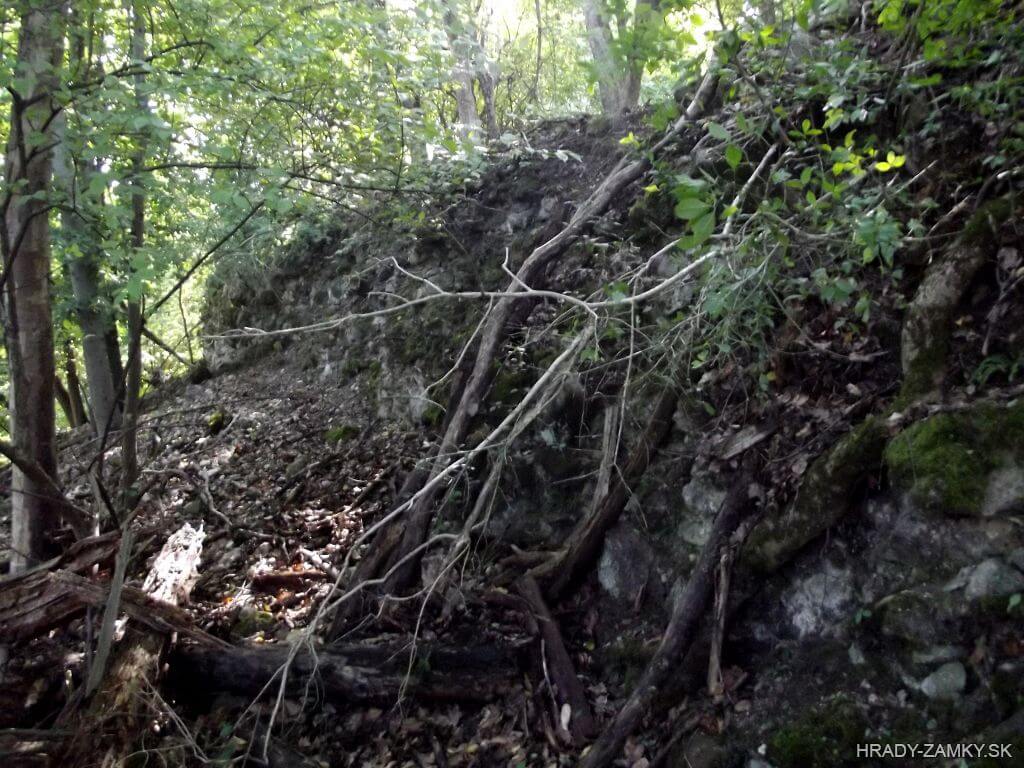
Trasa 1: Between the villages of Veľký Blh and Teplý Vrch, we turn right onto a narrow asphalt road that will lead us to the gate of the game reserve - the Teplý Vrch. If we want to enter the field by car, it is necessary to obtain a permit to enter the complex in advance. We recommend a permit even if we leave the car in front of the gate and complete the entire route on foot. This is mainly for your safety, as it is a hunting ground and hunting can take place around the castle. So we leave the car in front of the gate. We will open the gate and walk from it on the asphalt road. After about 30 minutes we come to a small crossroads, from where we continue a few meters to the right along the road and from there we go right again to the edge of the forest. We walk about 100 m along the edge and enter the forest on the right. Here we already notice a wooden railing and a relatively short ascent to the ruins of the castle follows, but about 40 meters of elevation gain on such a short section will test our skills.
Trasa 1: Medzi obcami Veľký Blh a Teplý Vrch odbočíme vpravo na úzku asfaltovú cestu, ktorá nás dovedie až k bráne danielej obory - zvernice Teplý Vrch. Ak chceme do obory vojsť autom, je nutné si vopred zaobstarať povolenie na vstup do areálu. Povolenie odporúčame aj v prípade, ak auto necháme pred bránou a celú trasu absolvujeme peši. Je to hlavne kvôli vašej bezpečnosti, keďže je to poľovnícky revír a v okolí hradu môže prebiehať poľovačka. Pred bránou teda necháme auto. Otvoríme si bránu a od nej sa vyberieme peši po asfaltke. Zhruba po 30 minútach prídeme na menšiu križovatku, odkiaľ pokračujeme ešte pár metrov vpravo po ceste a z nej zídeme opäť vpravo až k okraju lesa. Popri okraji prejdeme asi 100 m a vpravo vstúpime do lesa. Tu už zbadáme drevené zábradlie a nasleduje relatívne krátky výstup k zrúcaninám hradu, avšak asi 40 metrové prevýšenie na takom krátkom úseku dá zabrať.
Trasa 2: We will save a considerable part of the route if we complete the journey from the gate to the crossroads mentioned in route no. 1 by car (entry permit required). We then park the car at the edge of the road junction, from where we continue on foot as well as on route no. 1 in a few minutes to the castle ruins.
Trasa 2: Značnú časť trasy ušetríme, ak cestu od brány ku križovatke, spomínanej v trase č.1, absolvujeme autom (povolenie na vstup nutné). Auto potom odstavíme na okraji križovatky ciest, odkiaľ už pokračujeme peši rovnako ako v trase č.1 za pár minút až k zrúcaninám hradu.
Description
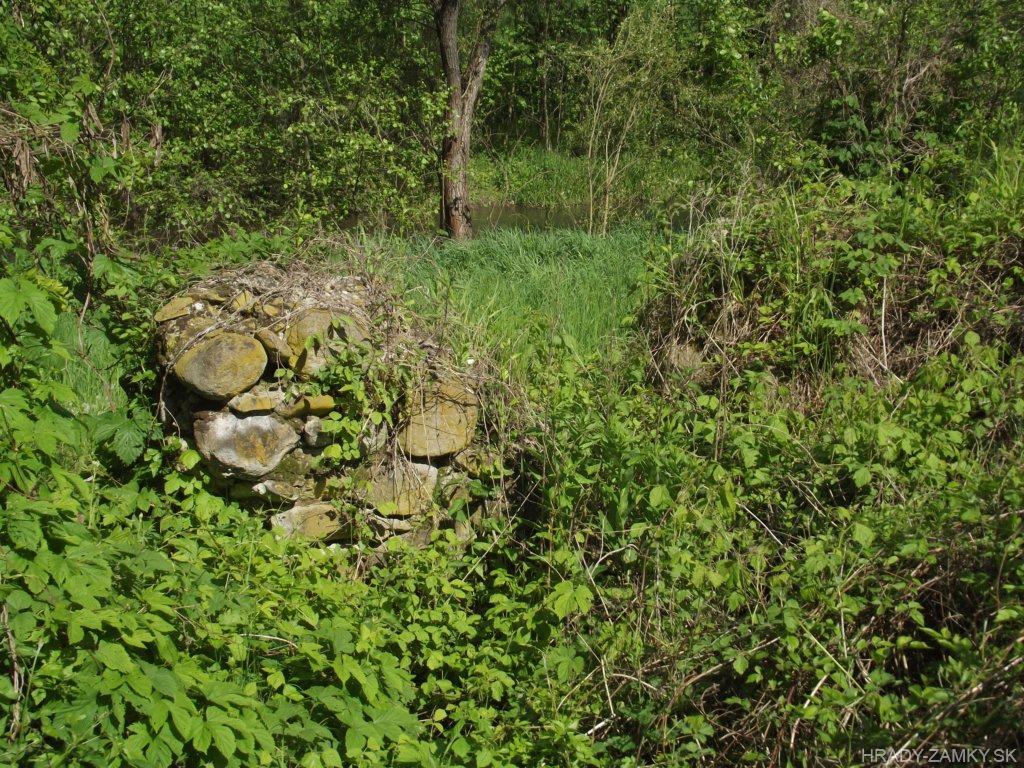
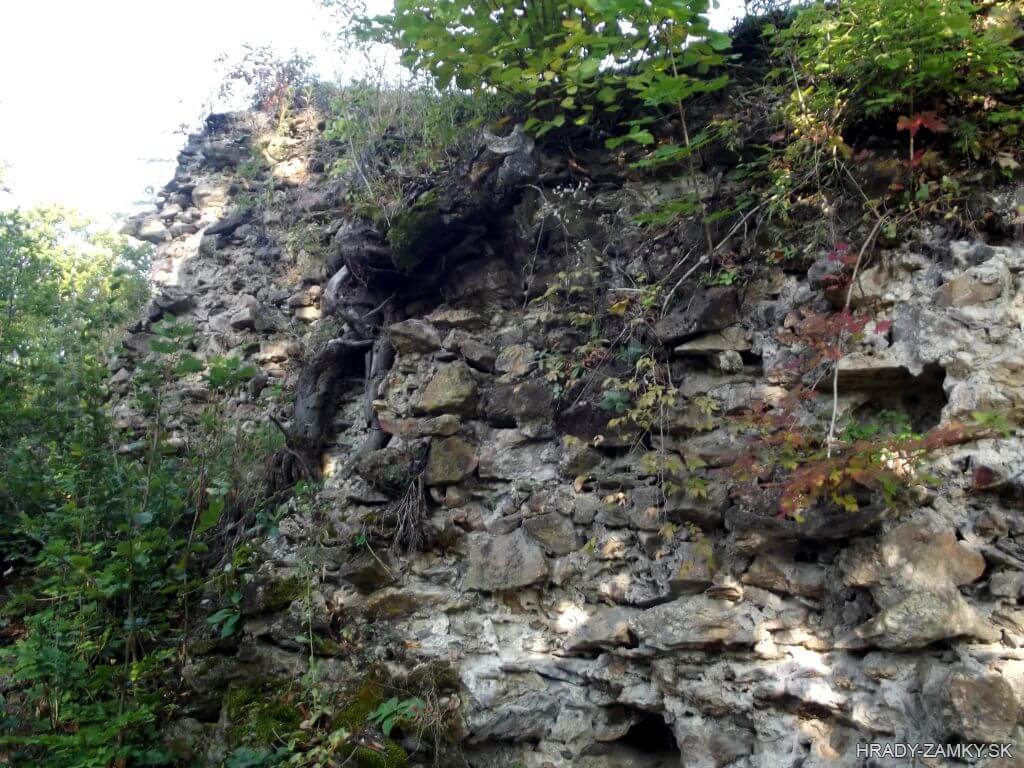
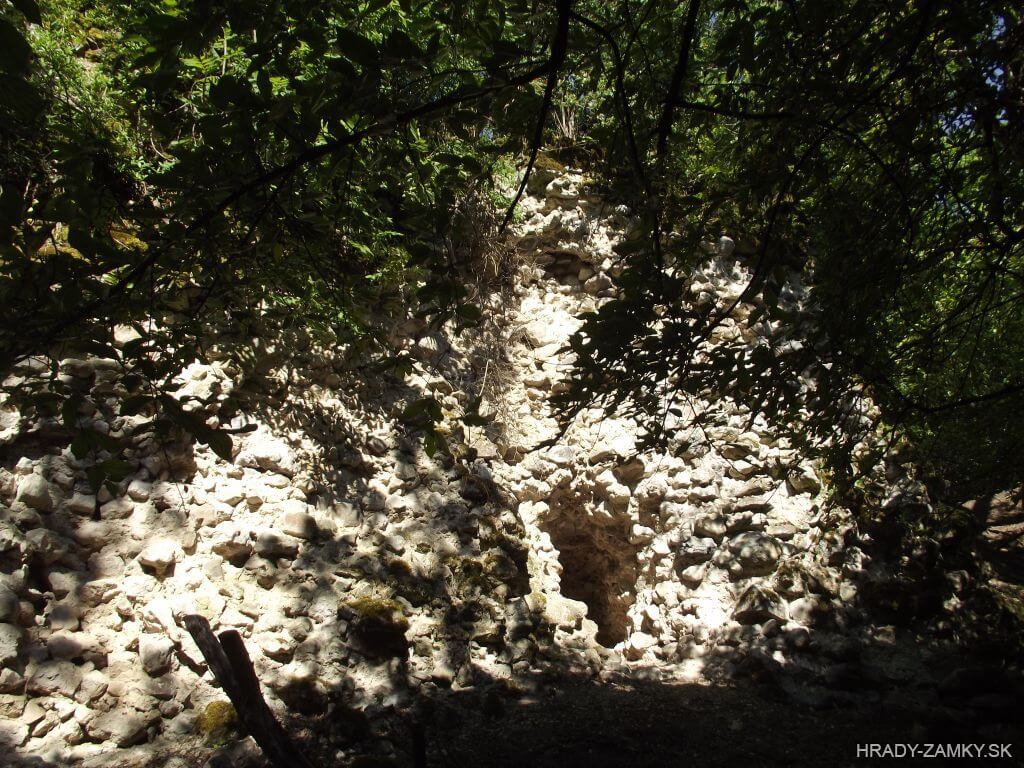
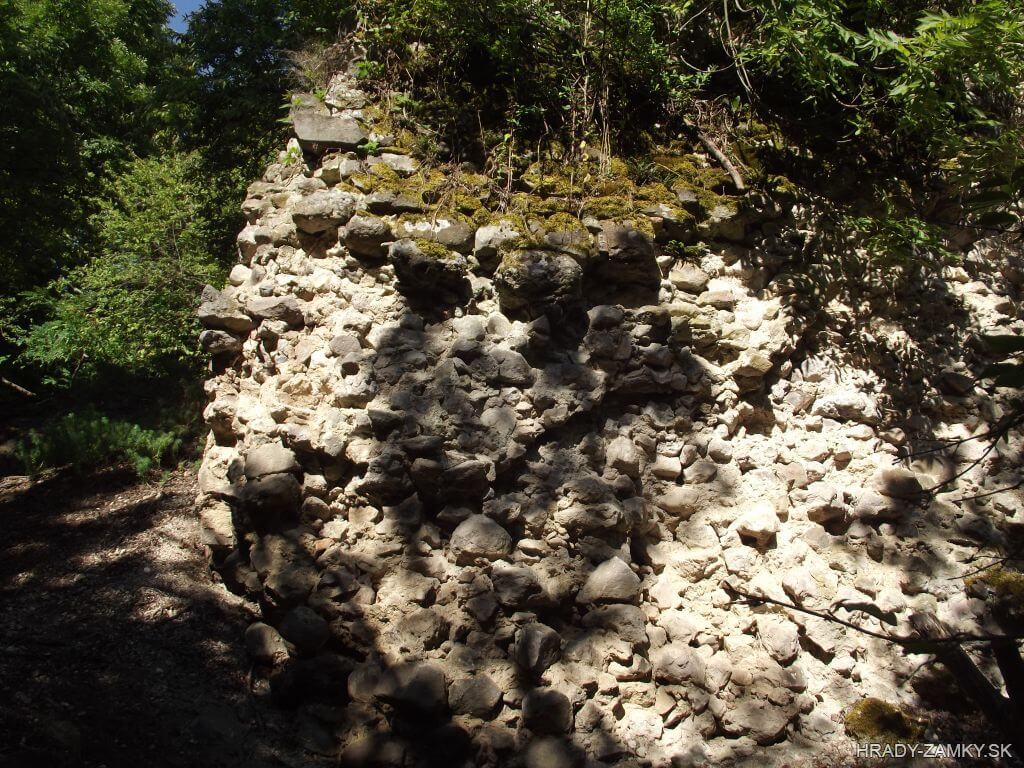
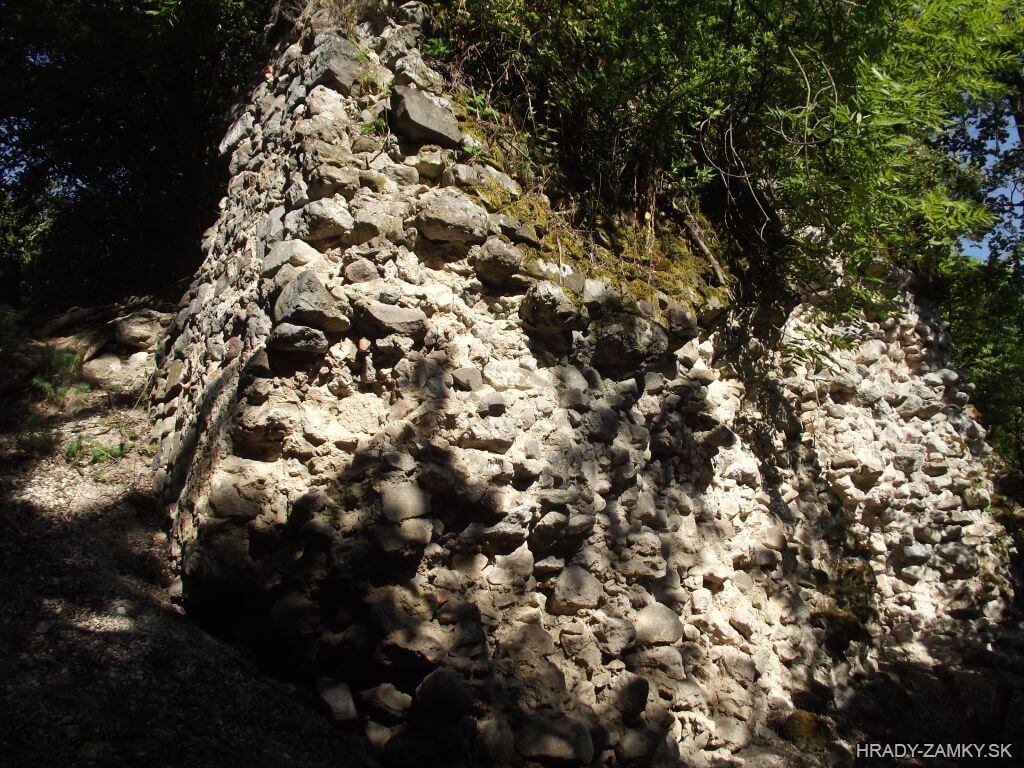
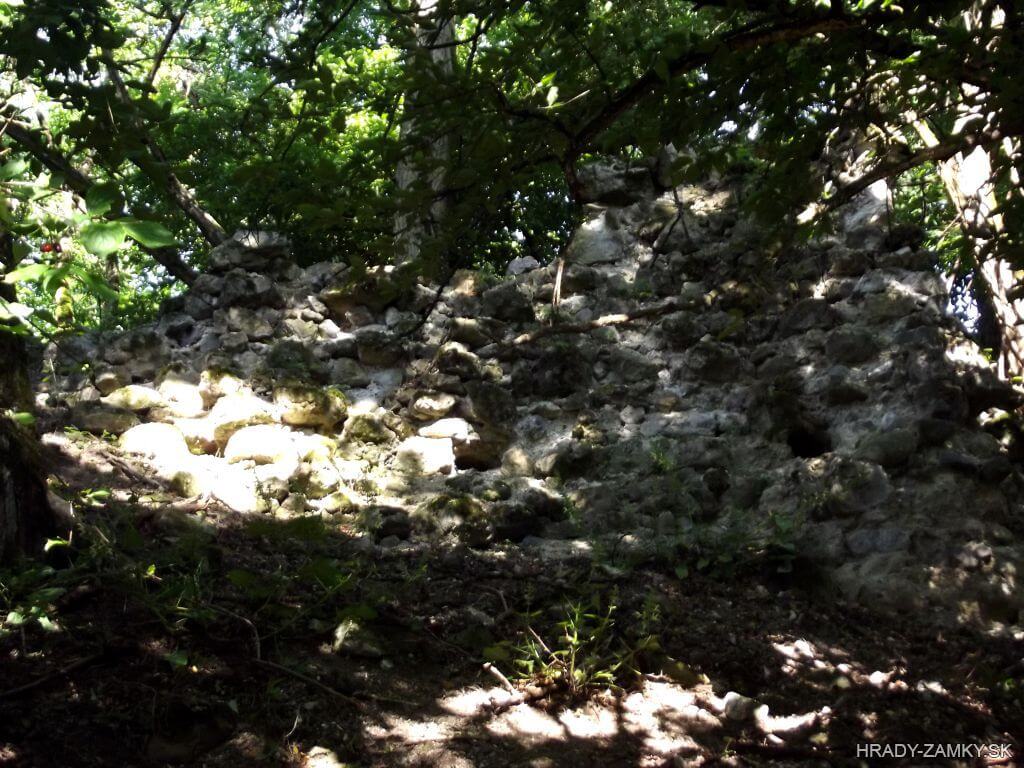
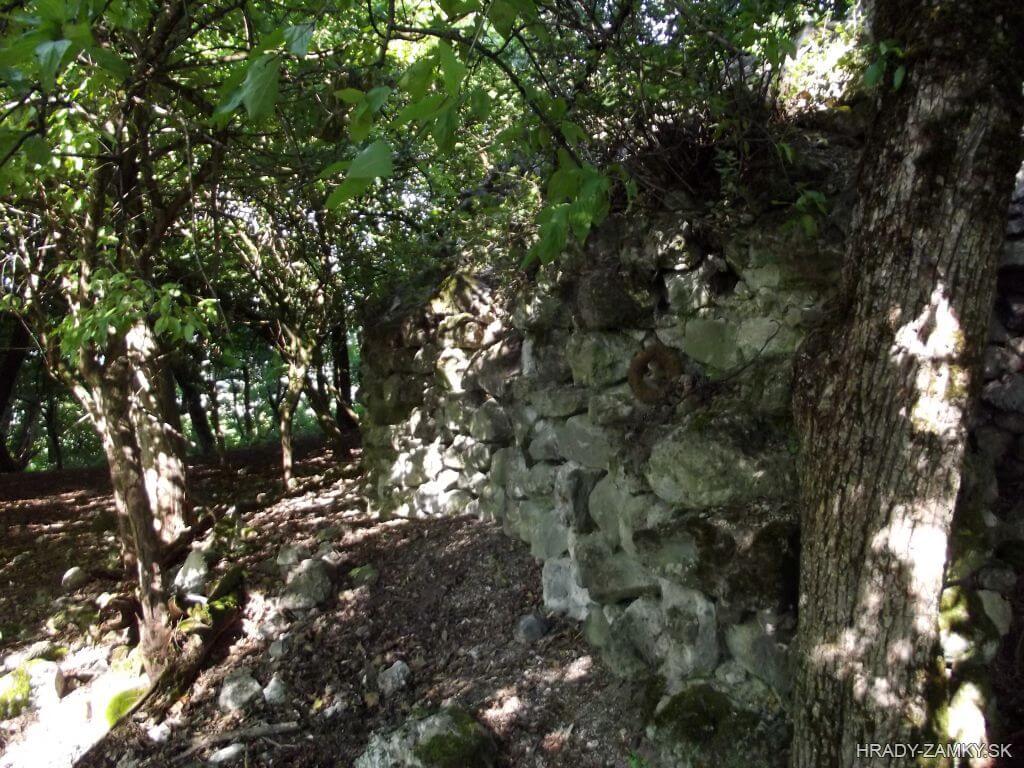
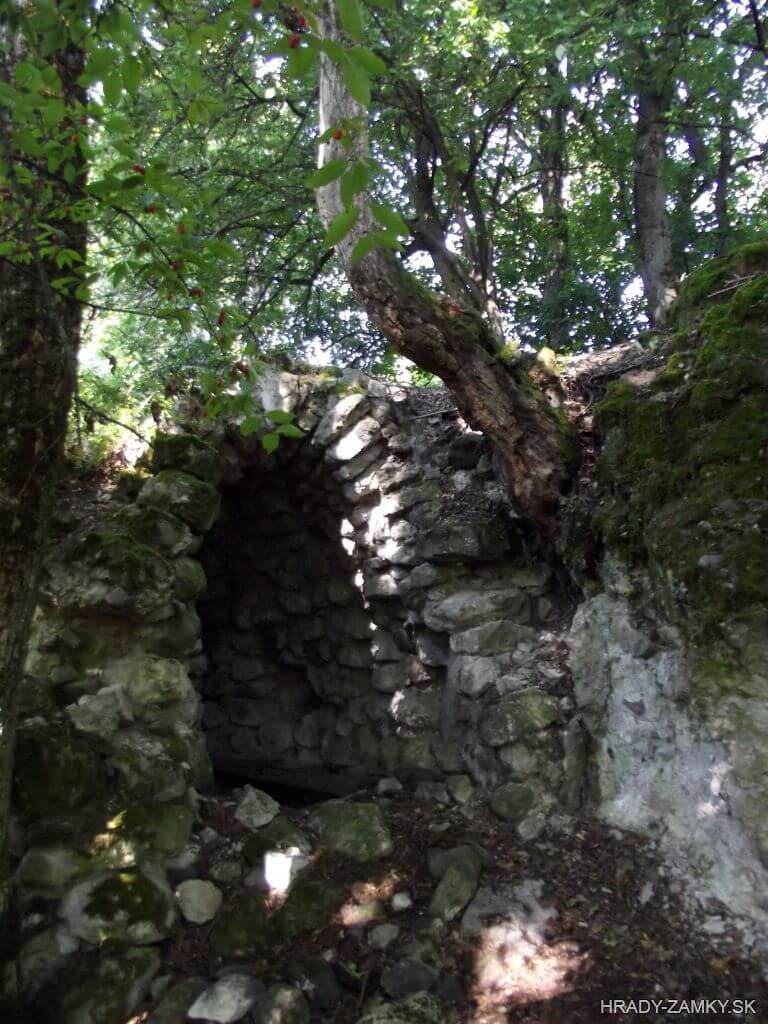
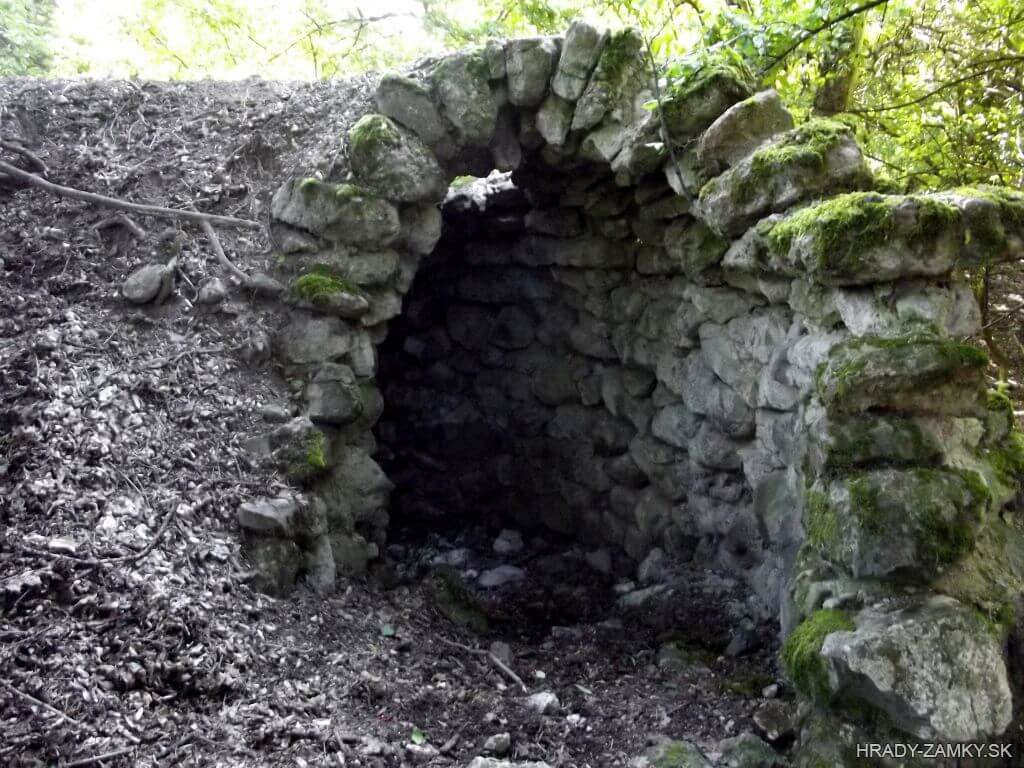
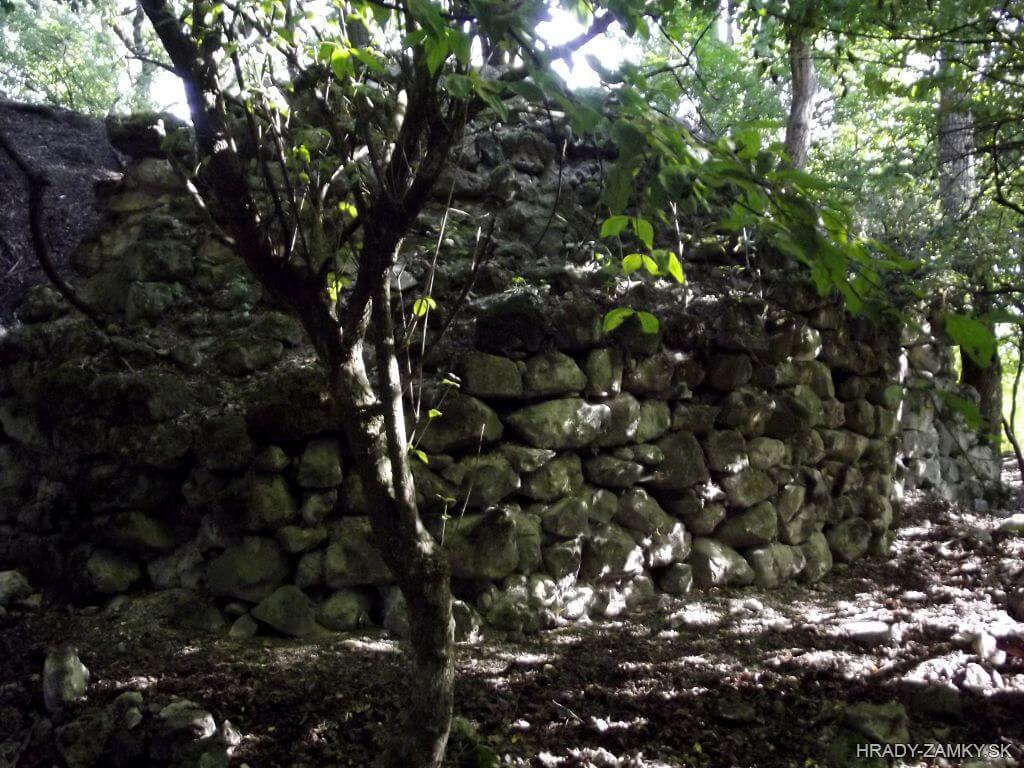
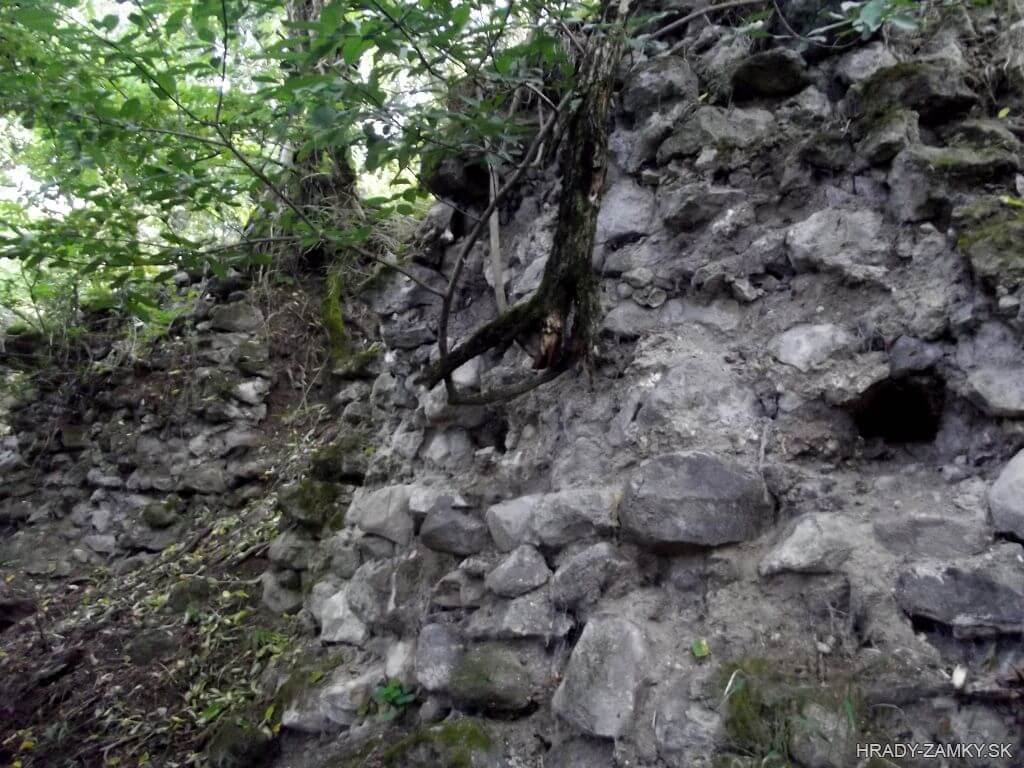
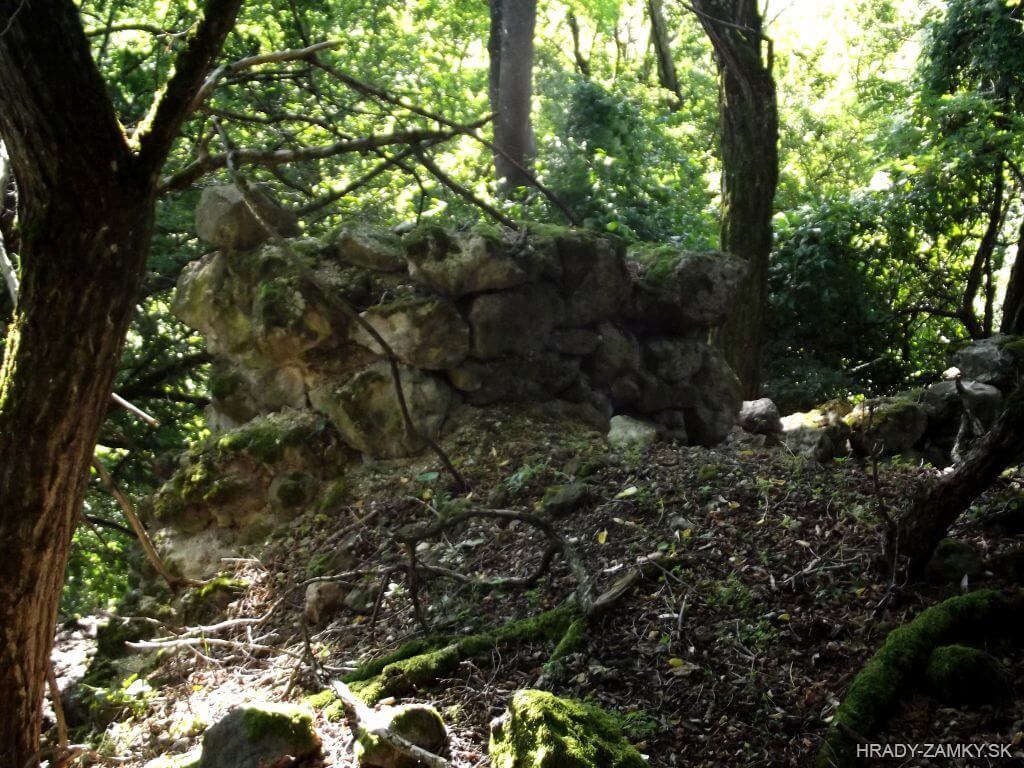
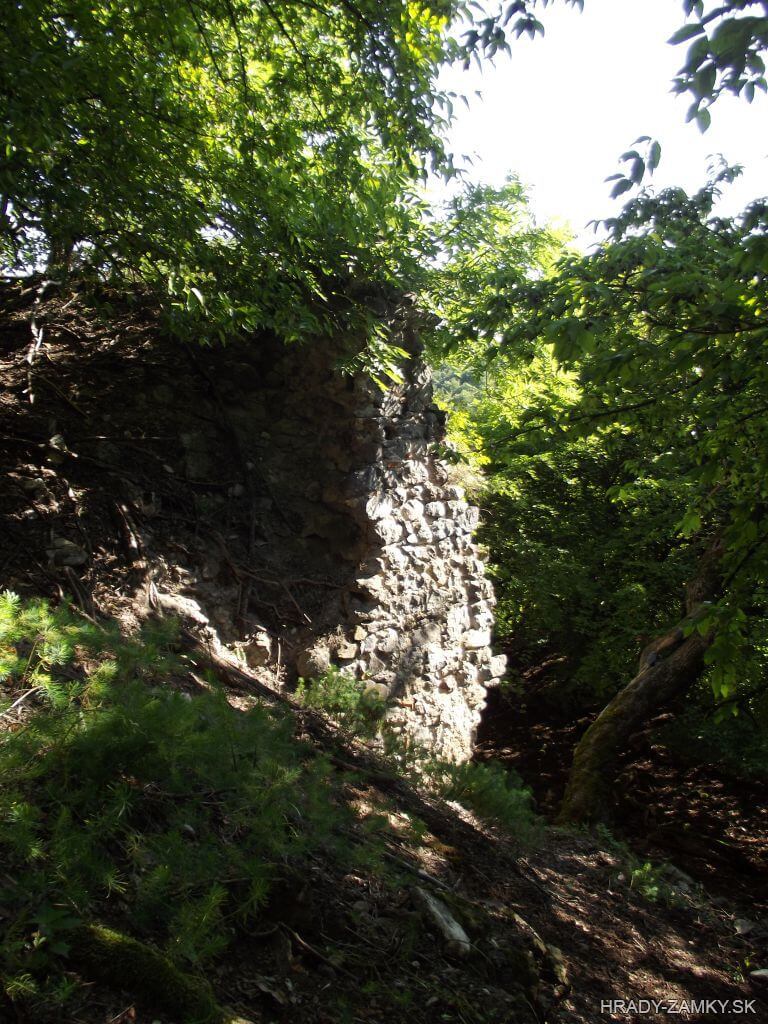
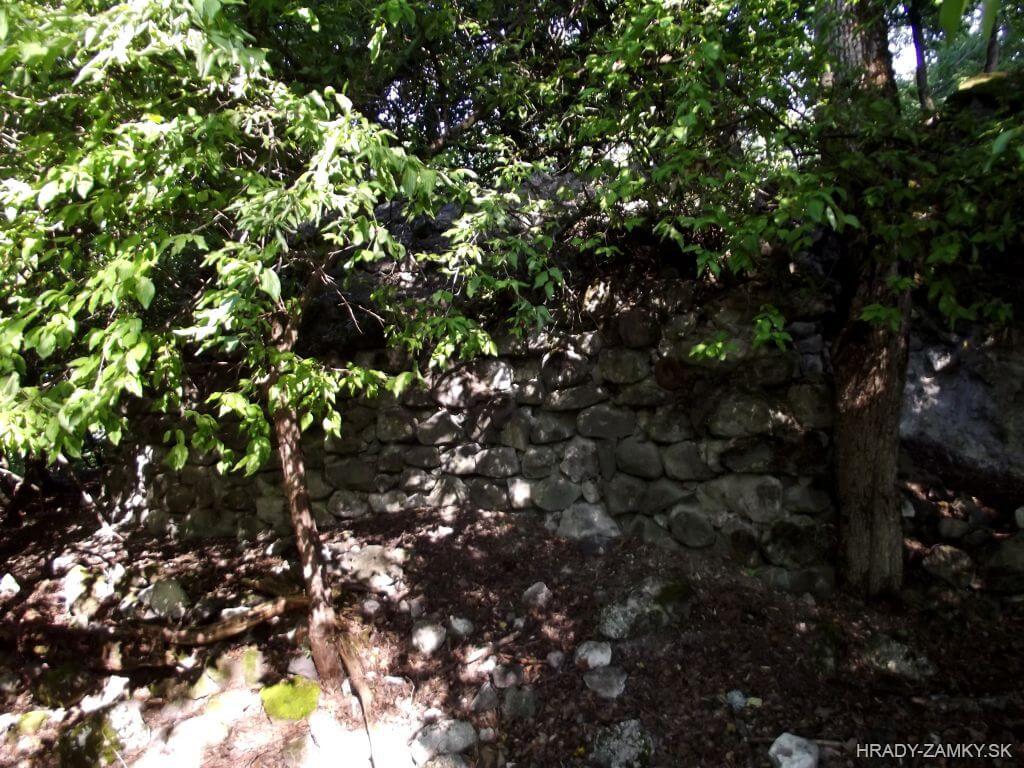
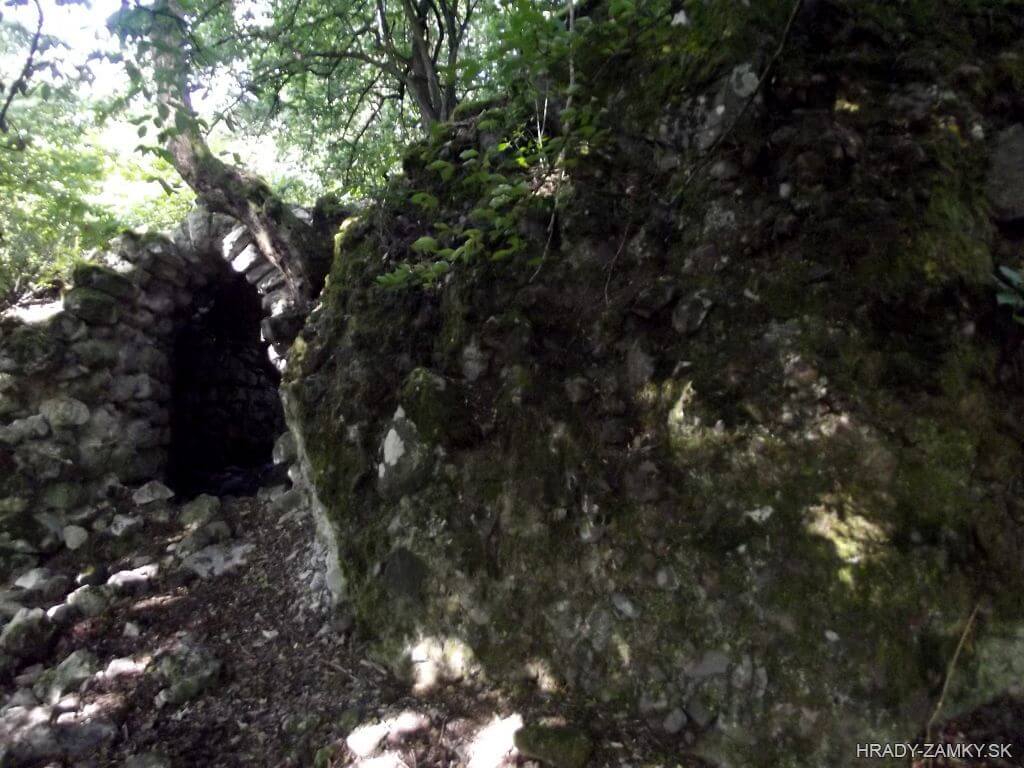
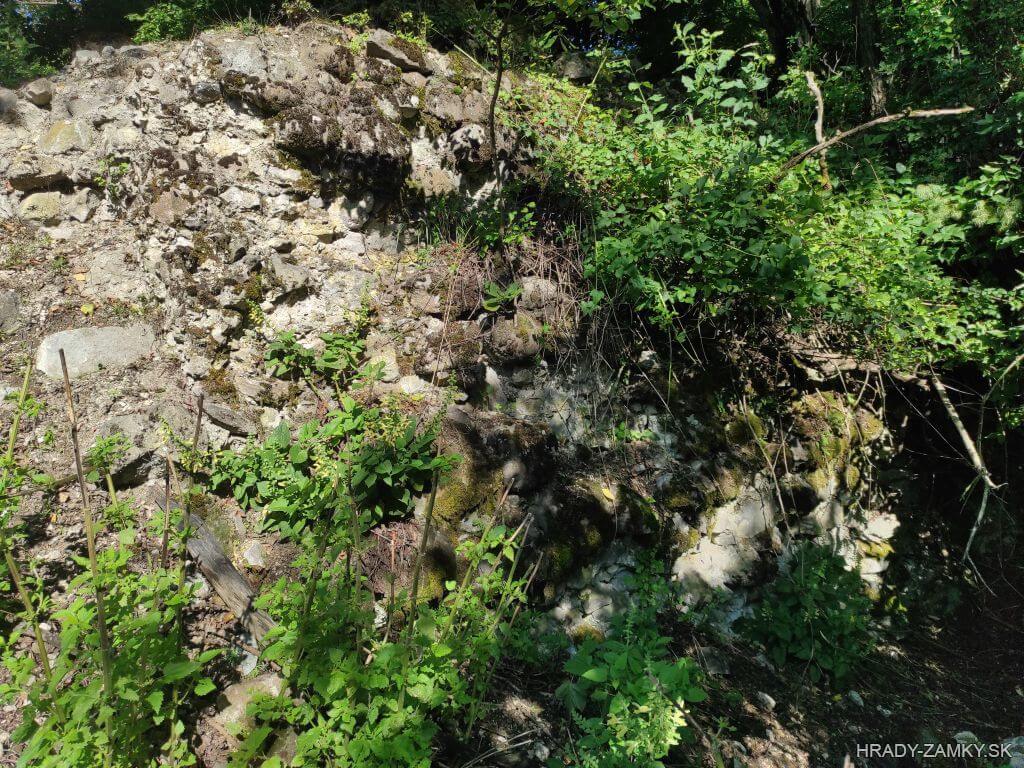
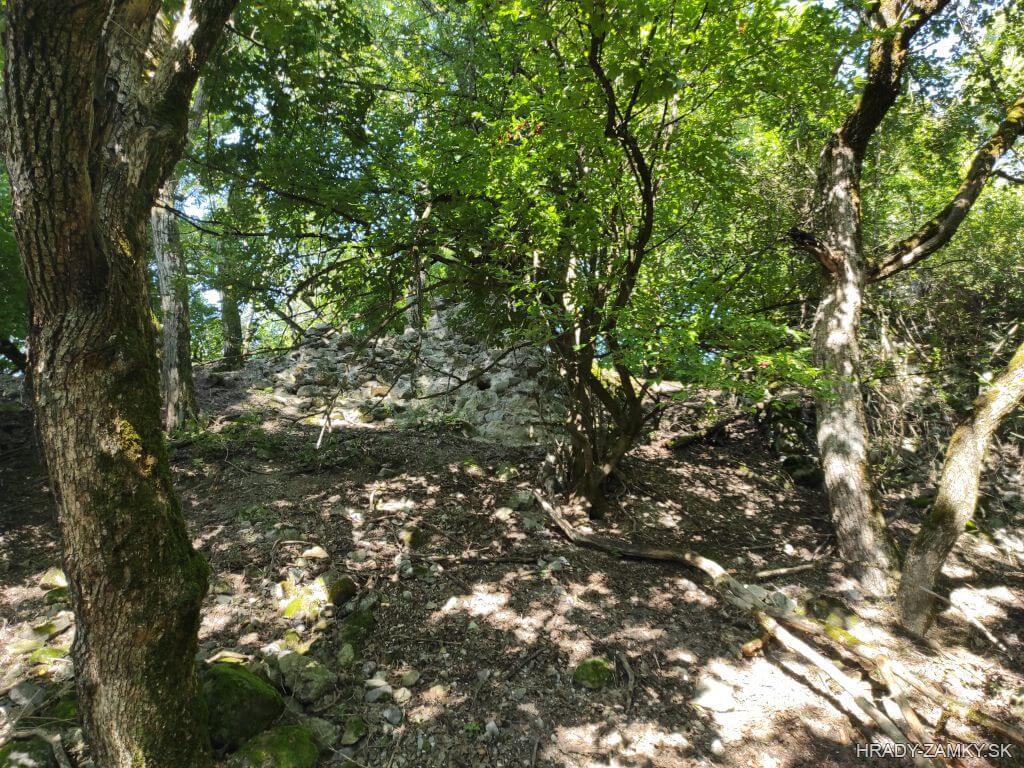
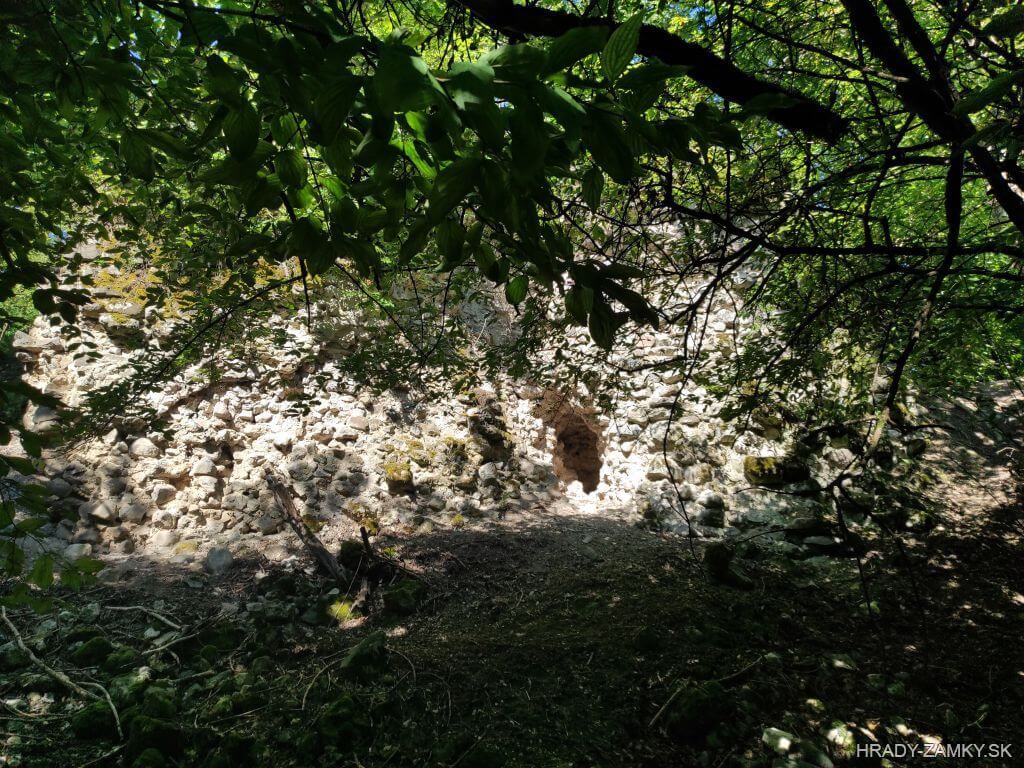
The relatively large castle with dimensions of approximately 150x70 m had a small core, which partially occupied the top plateau of the central rock. Two stone walls stretched around the core. In the middle of the courtyard there is a cliff, which was used for the construction of the palace, which was entered by a partially preserved staircase, which had a barrel vault. Apart from the massive wall of the 1.8 m thick perimeter wall, practically nothing of the above-ground development of the courtyard has been preserved. Signs of construction can be seen only SE of the core and the large building on the north side was apparently pushed up the slope. A square tank is carved into the subsoil under the rock of the core.From the outside, the castle was protected on three sides by a fortification with a ditch, which probably replaced the older rampart. During the later modifications, the moat was filled in and the castle was extended a bit.
Pomerne rozsiahly hrad s rozmermi približne 150x70 m mal malé jadro, ktoré čiastočne zaberalo vrcholovú plošinu centrálnej skaly. Okolo jadra sa tiahli dve kamenné hradby. V strede nádvoria vystupuje útes, ktorý bol využitý na stavbu paláca, do ktorého sa vchádzalo sčasti zachovalou schodiskovou chodbou, ktorá mala valenú klenbu. Okrem masívneho múru obvodovej hradby hrúbky 1.8 m sa už prakticky z nadzemnej zástavby nádvoria nič nezachovalo. Náznaky stavby vidieť len JV od jadra a rozmerná budova na severnej strane bola zrejme dodatočne vysunutá do svahu. Pod skalou jadra je do podložia vytesaná štvorhranná cisterna.Z vonkajšej strany chránila hrad z troch strán fortifikácia so šijovou priekopou, ktorá pravdepodobne nahradila starší val. Pri neskorších úpravách priekopu zasypali a hrad o niečo predĺžili.
Plan
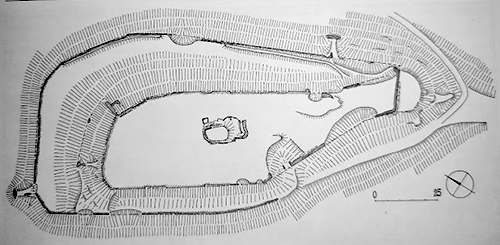
Legend to the ground plan
- Source: PLAČEK M.
- BÓNA M.
- Encyklopédia slovenských hradov
Legenda k pôdorysu
- Zdroj: PLAČEK M.
- BÓNA M.
- Encyklopédia slovenských hradov
History
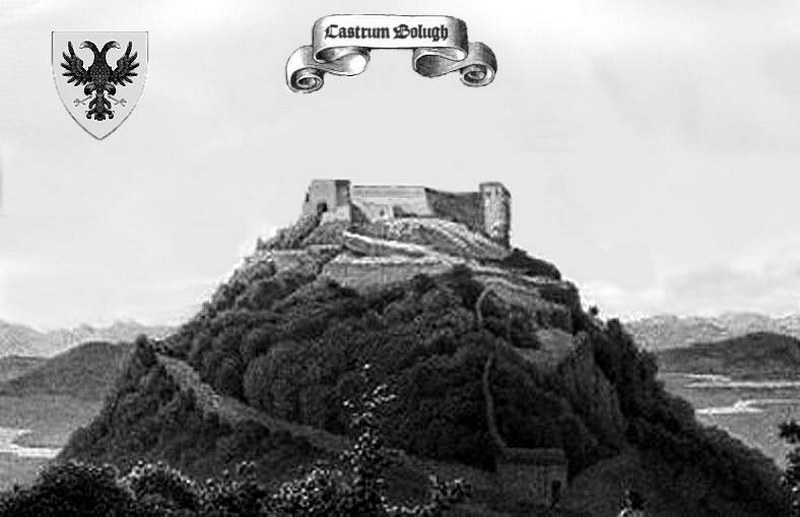
The castle was probably built around 1290. It was built by Henrik, the son of Oth of the Balogh family, who was the royal counselor of Andrew III. In 1309, Matúš Čák seized the castle, as evidenced by a later document from 1312, when the castle is mentioned as his property.
After Matúš's death, King Karol Róbert returned the castle to the Balogh family for a short time, as evidenced by the archaeological material obtained by surface collection. However, due to the resistance of the Balogh family towards the king, the king eventually removed the castle from them, and from 1323 until the second half of the 15th century the castle belonged to the Széchy family, who were loyal to the king. However, they sympathized with Ján Jiskra of Brandýs and in 1456 lent the castle to his warriors, later brothers. However, this was the reason why the castle was conquered by Sebastián Rozgonyi in 1460 and he received the castle from the king as a reward.
In 1481, however, the Széchy family returned to the castle and their family remained there until 1646, when Maria Széchy (Muráň Venus), married the later palatine František Wesselényi. František had the castle fortified in 1664, but in 1677 Thököly's rebels conquered it and it has been in ruins ever since. The remains of the castle walls were dismantled by the local population for building materials, but nevertheless the visible above-ground remains of the castle have been preserved.
Hrad bol postavený zrejme okolo roku 1290. Postaviť ho dal Henrik, syn Otha z rodu Baloghovcov, ktorý bol kráľovským radcom Ondreja III. V roku 1309 sa hradu zmocnil Matúš Čák, o čom svedčí neskoršia listina z roku 1312, keď sa hrad spomína ako jeho majetok.
Po Matúšovej smrti hrad na krátky čas vrátil kráľ Karol Róbert do rúk Baloghovcov, o čom svedčí archeologický materiál získaný povrchovým zberom. Kvôli odporu Baloghovcov voči kráľovi im však kráľ hrad nakoniec odobral a od roku 1323 až do druhej polovice 15. storočia patril hrad Széchyovcom, ktorí boli kráľovi lojálni. Tí však sympatizovali s Jánom Jiskrom z Brandýsa a v roku 1456 zapožičali hrad jeho bojovníkom, neskorším bratríkom. To bol však dôvod na to, aby hrad v roku 1460 dobyl Sebastián Rozgonyi a získal ho od kráľa ako odmenu.
V roku 1481 sa na hrad už ale vrátili Széchyovci a ich rod tu zotrval až do roku 1646, keď polovicu spolu s Máriou Széchy (Muránska Venuša) vyženil neskorší palatín František Wesselényi. František dal hrad v roku 1664 ešte opevniť, avšak v roku 1677 ho Thökölyho povstalci dobyli a odvtedy je v ruinách. Zvyšky múrov hradu boli rozobraté miestnym obyvateľstvom na stavebný materiál, no napriek tomu sa z hradu zachovali viditeľné nadzemné zvyšky.
Myths and legends
There are no myths available.
K tomuto objektu nie sú dostupné žiadne povesti
Useful information
The ruins of the castle are located in the game reserve. To enter, it is necessary to obtain a permit from the administrator, or directly through Lesy SR.More info
Zrúcanina hradu sa nachádza v danielej obore. Pre vstup je nutné vybaviť si povolenie u správcu, prípadne priamo prostredníctvom Lesov SR.Viac informácií
External links
Nearby castles