Muráň
Muráň Banská Bystrica county Slovakia
castle ruin
Muráň
Muráň Banskobystrický kraj Slovakia
zrúcanina hradu
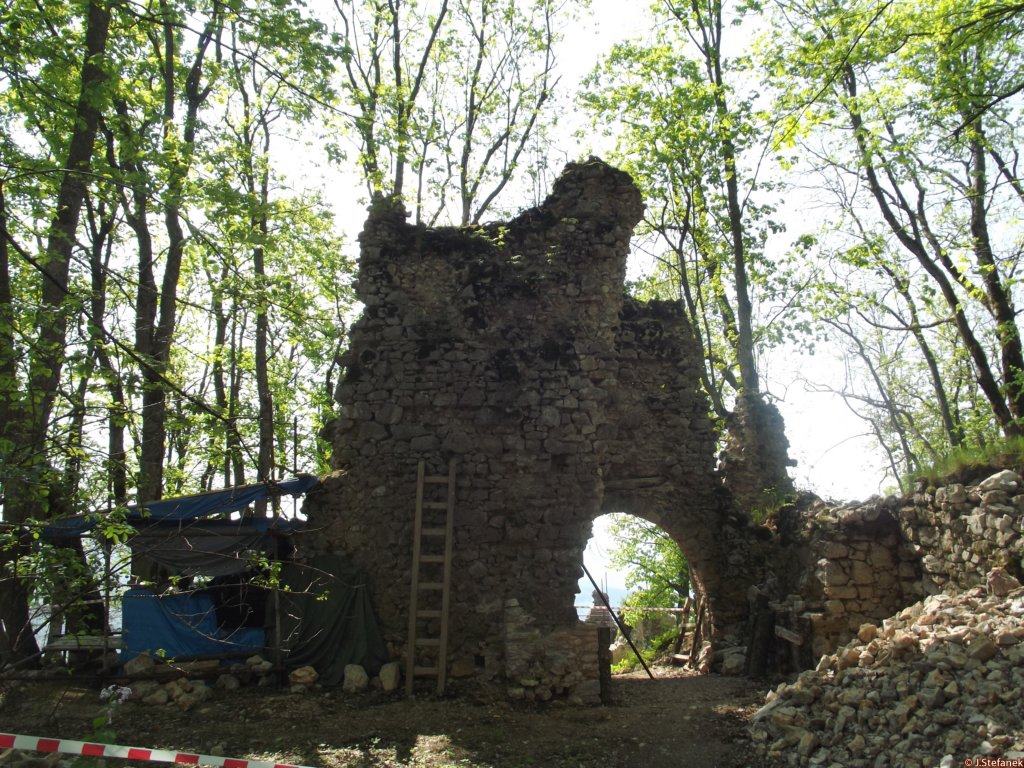
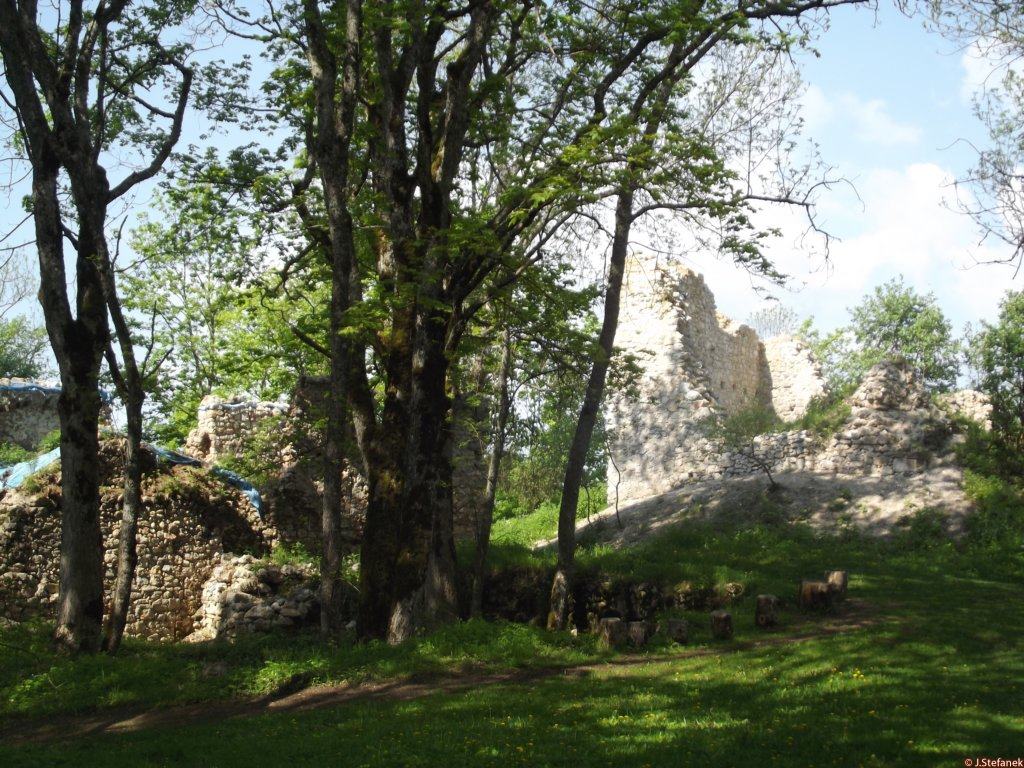
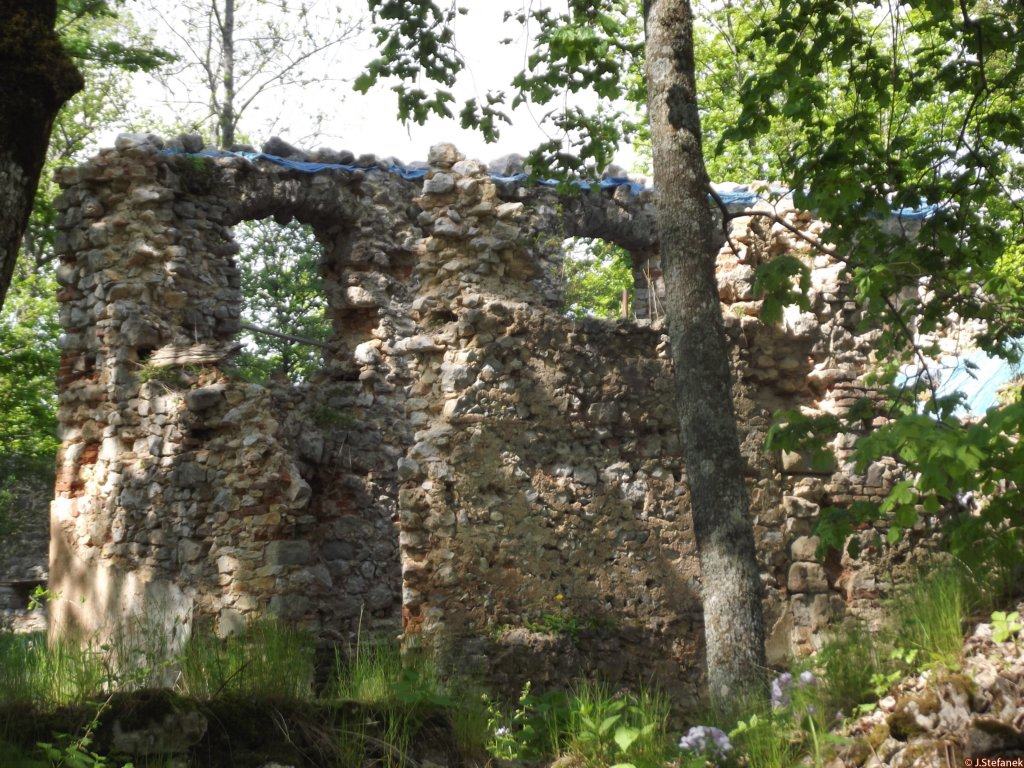
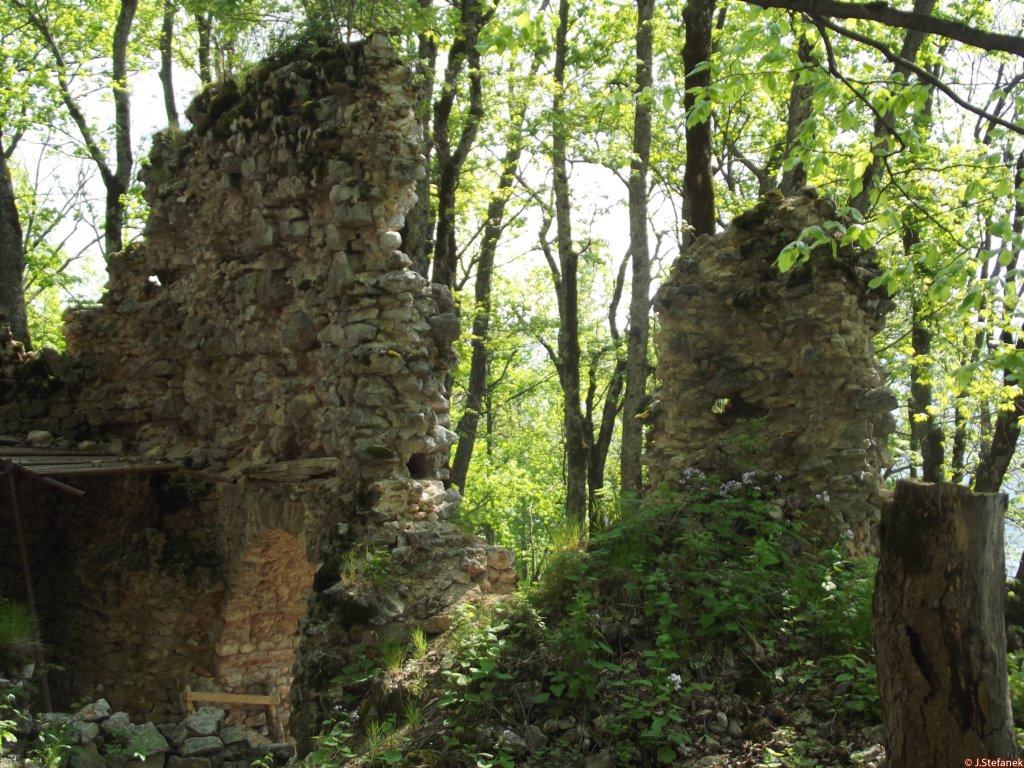
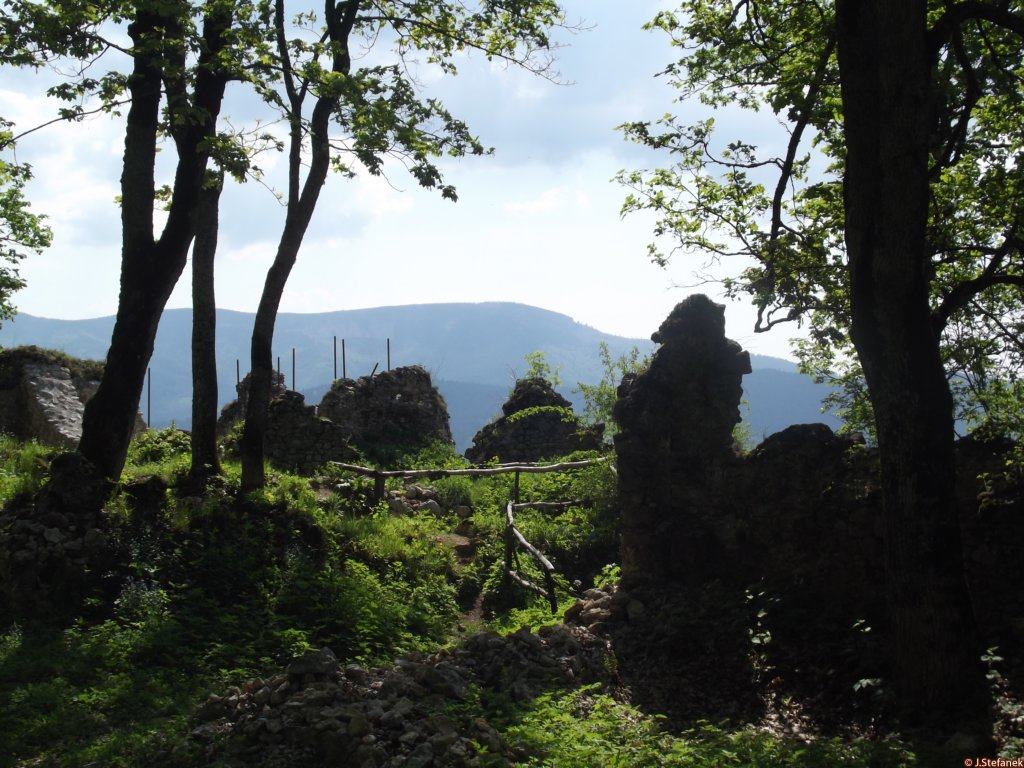
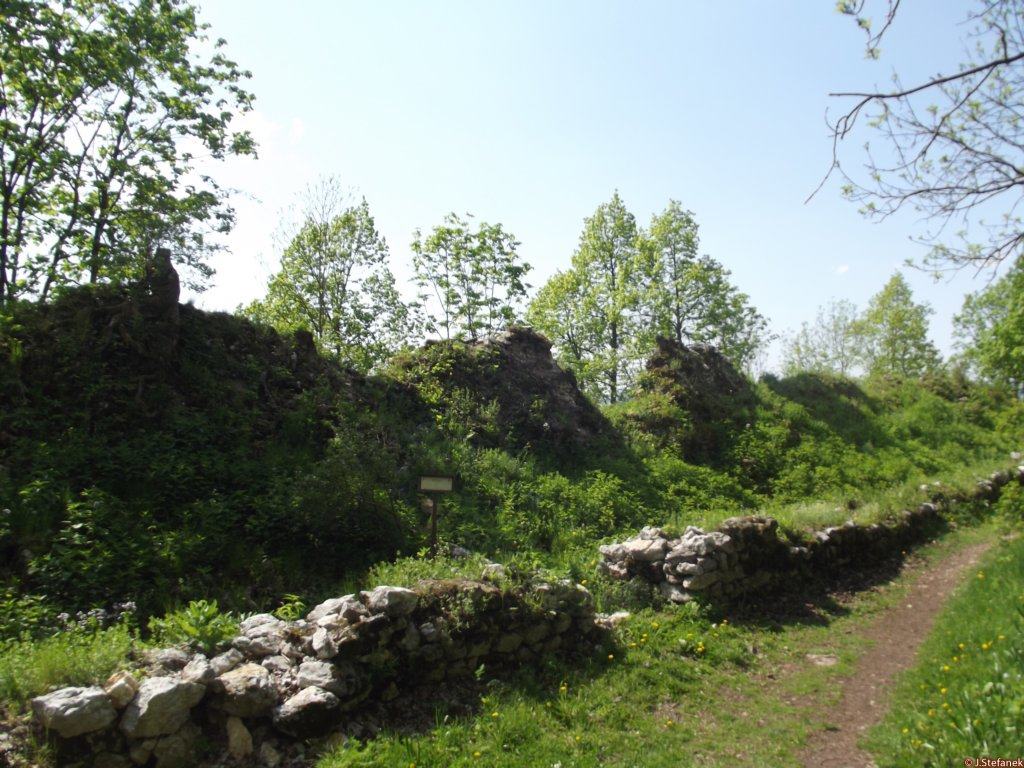
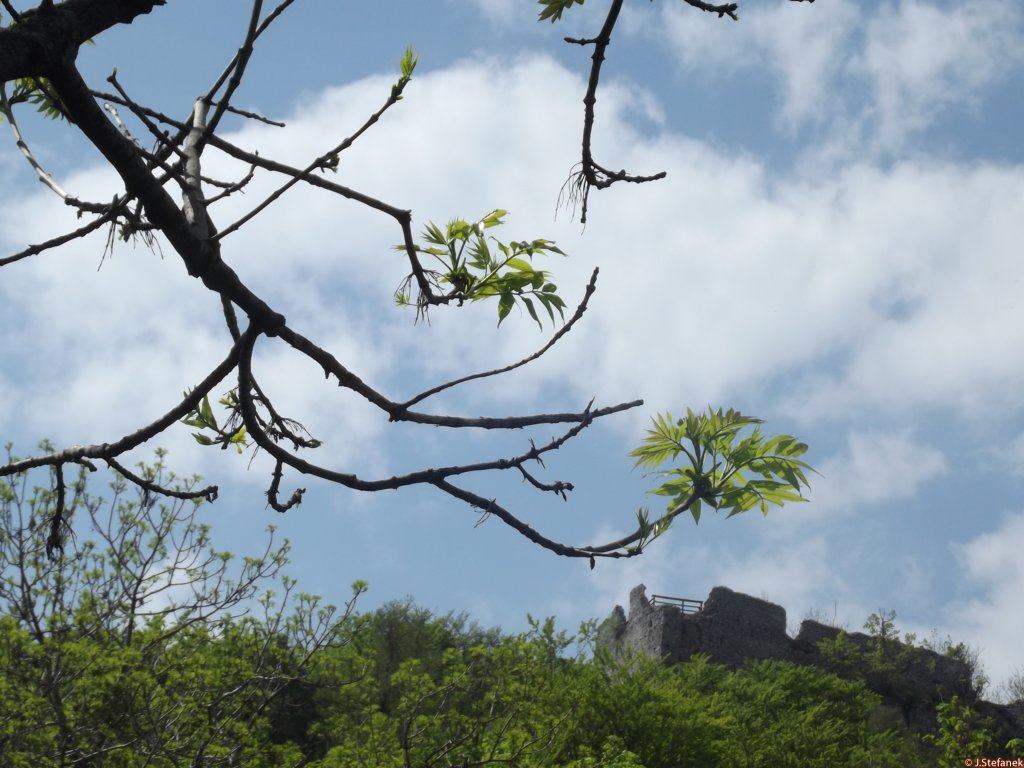
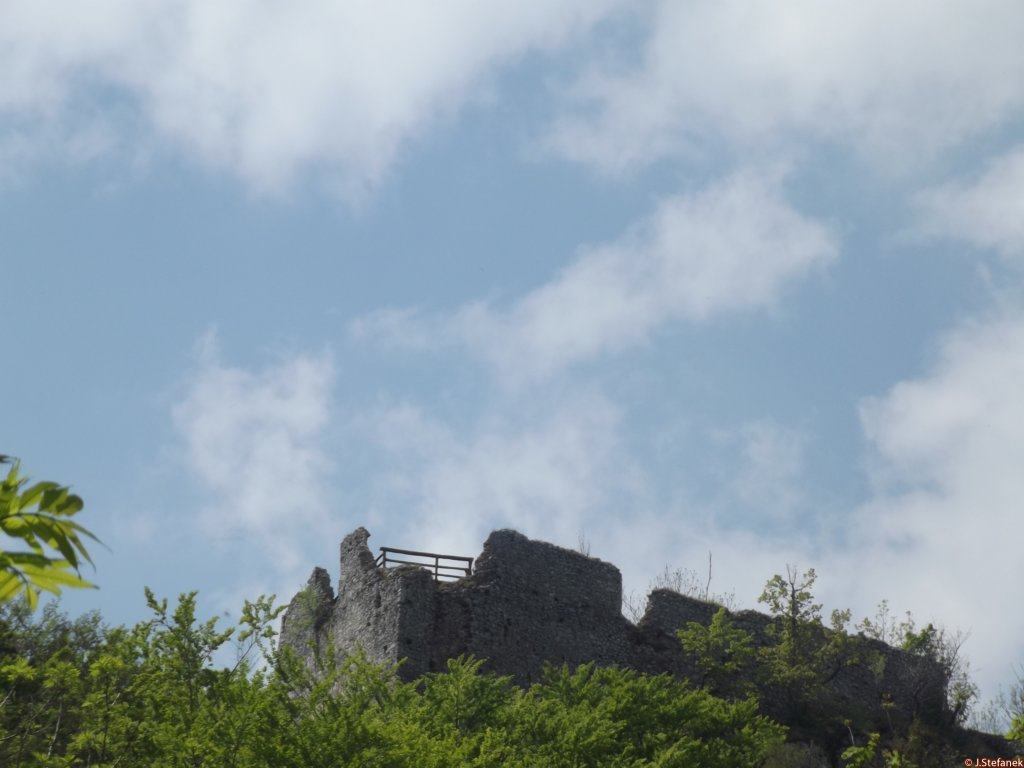
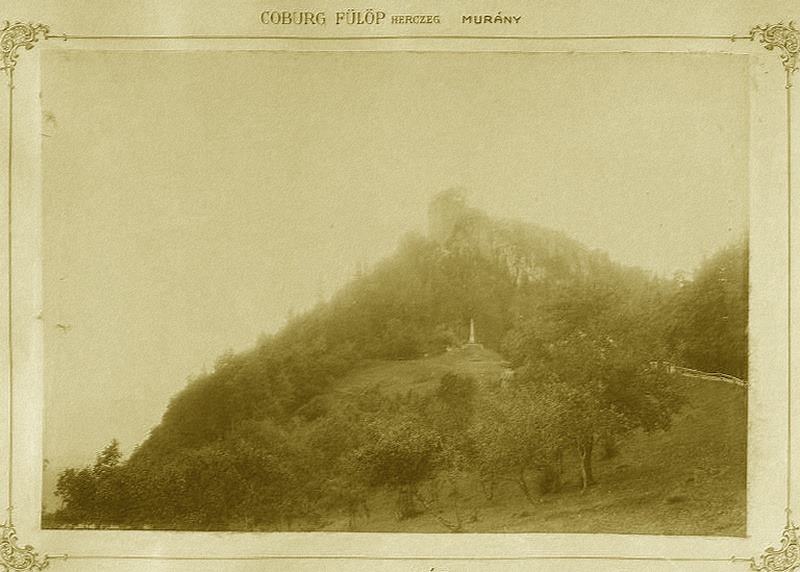
The ruins of the castle on a significant hill Cigánka with a brilliant cap of dolomitic limestones, in the Murán Plain of the Spiš-Gemer Kras, situated above the village of Muráň
Zrúcanina hradu na výraznom vrchu Cigánka s bralnou čiapkou dolomitických vápencov, v Muránskej planine Spišsko-gemerského krasu, situovaný nad obcou Muráň.
Previous names
Mwran, Muran, Moranalya, Podmurany, Muráňy, Muráňyalja, Unter-Muran
Roads
Trasa 1: From the center of the village Muráň, right next to the municipal office, where there is a signpost to the castle, we will go by car to the parking lot at the beginning of the Nature Trail, which is near the cemetery. From there, we will walk a short distance along the asphalt road and then turn right onto the forest path to the red route (Mária Széchy Road). We continue along the red route, which is also part of the Nature Trail to Muráň Castle to the crossroads Chata pod Muránskym hradom, where we can refresh ourselves during the season. From there, the arch on the right follows a more challenging ascent of about 15-20 minutes to the castle gate.
Trasa 1: Z centra obce Muráň, hneď vedľa obecného úradu, kde je smerová tabuľa k hradu, pôjdeme autom až k parkovisku na začiatku Náučného chodníka, ktoré je blízko cintorína. Odtiaľ pôjdeme peši kúsok po asfaltke a potom odbočíme doprava na lesnú cestičku na červenú TZT (Cesta Márie Széchy). Pokračujeme stále po červenej trase, ktorá je zároveň aj súčasťou Náučného chodníka k Muránskemu hradu až k rázcestiu Chata pod Muránskym hradom, kde sa môžeme počas sezóny občerstviť. Odtiaľ oblúkom vpravo nasleduje náročnejšie asi 15-20 minútové stúpanie až k hradnej bráne.
Trasa 2: In case we want to shorten a large part of the journey, it is possible to get to the Veľká Lúka crossroads by car, but it is necessary to obtain a permit either at the municipal office or in the information center in the village. In that case, we take a narrow asphalt road from the mentioned parking lot by the cemetery, but where the red route deviates to the right, we continue by car along the asphalt road by climbing to the left. Especially care must be taken, as the road is relatively narrow and the traffic is two-way. We will park at the Veľká Lúka crossroads and from there we only have to walk along a forest path - a blue tourist route. Surprisingly, we will descend almost the whole way, until after about 30 minutes we reach the cottage - Chata pod Muránskym hradom, where we connect to the red TZT and, as in route no. 1, we continue by climbing to the castle gate.
Trasa 2: V prípade, že si chceme veľký kus cesty skrátiť, je možné sa autom dostať až k rázcestiu Veľká Lúka, no je potrebné si vybaviť povolenku buď na obecnom úrade, alebo v infocentre v obci. V tom prípade sa vydáme úzkou asfaltovou cestou od spomínaného parkoviska pri cintoríne, avšak tam kde sa červená trasa odkláňa vpravo, autom pokračujeme po asfaltke stúpaním vľavo. Hlavne treba byť opatrný, keďže cesta je pomerne úzka a premávka je obojsmerná. Na rázcestí Veľká Lúka zaparkujeme a odtiaľ musíme ísť už len peši po lesnej cestičke - modrej turistickej trase. Kupodivu, takmer celú cestu budeme klesať nadol, až zhruba po 30 minútach dôjdeme k Chate pod Muránskym hradom, kde sa napojíme na červenú TZT a rovnako ako v trase č.1 pokračujeme stúpaním až k hradnej bráne.
Trasa 3: Another possibility of ascent is the route along the red route from Muránská Huta. We will overcome the only significant ascent on the first section from Huta to the crossing with the blue sign Pod Skalou. We continue along a forest road and take a wavy plain to the northern edge of Veľká Lúka. From there, we continue as described above.
Trasa 3: Ďalšou z možností výstupu je trasa po červenej TZT z Muránskej Huty. Jediné výraznejšie stúpanie prekonáme na prvom úseku z Huty po kríženie s modrou značkou Pod Skalou. Ďalej pokračujeme po lesnej ceste a zvlnenou rovinkou sa dostaneme na severný okraj Veľkej Lúky. Odtiaľ už pokračujeme tak, ako to bolo opísané vyššie.
Description
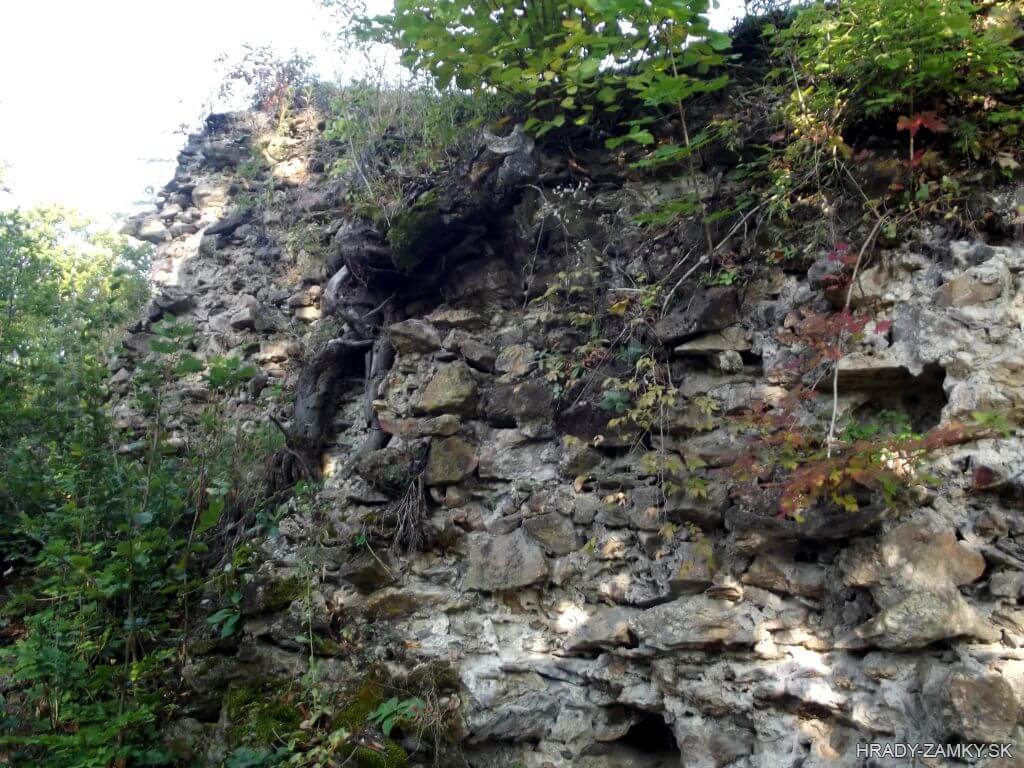
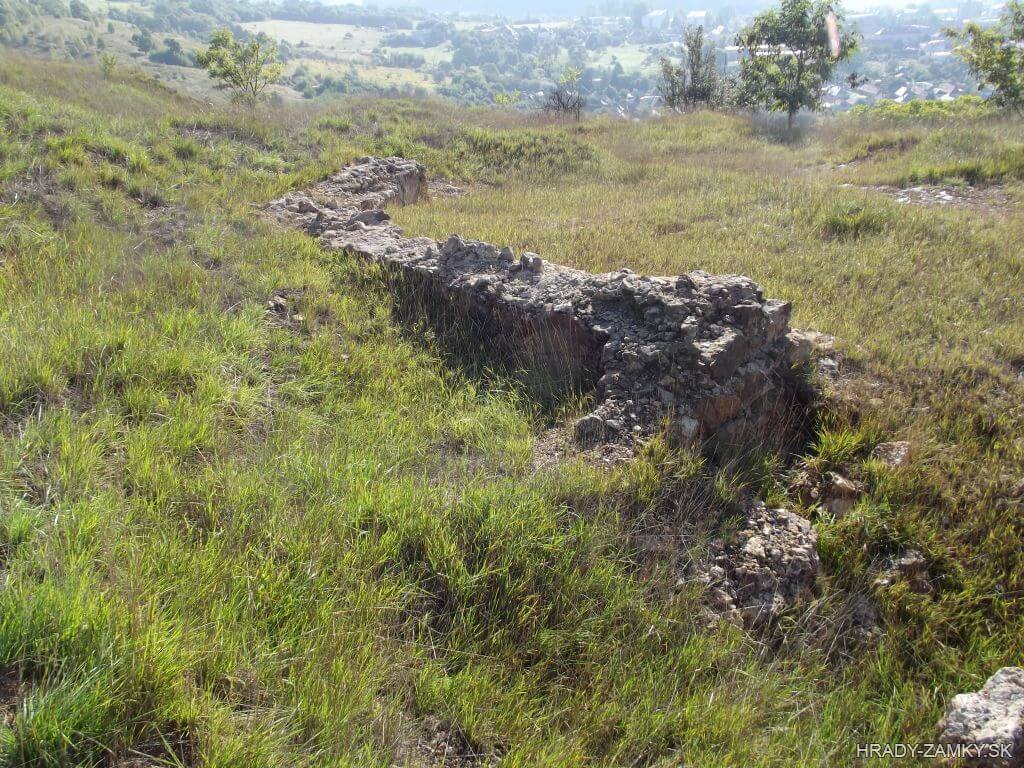
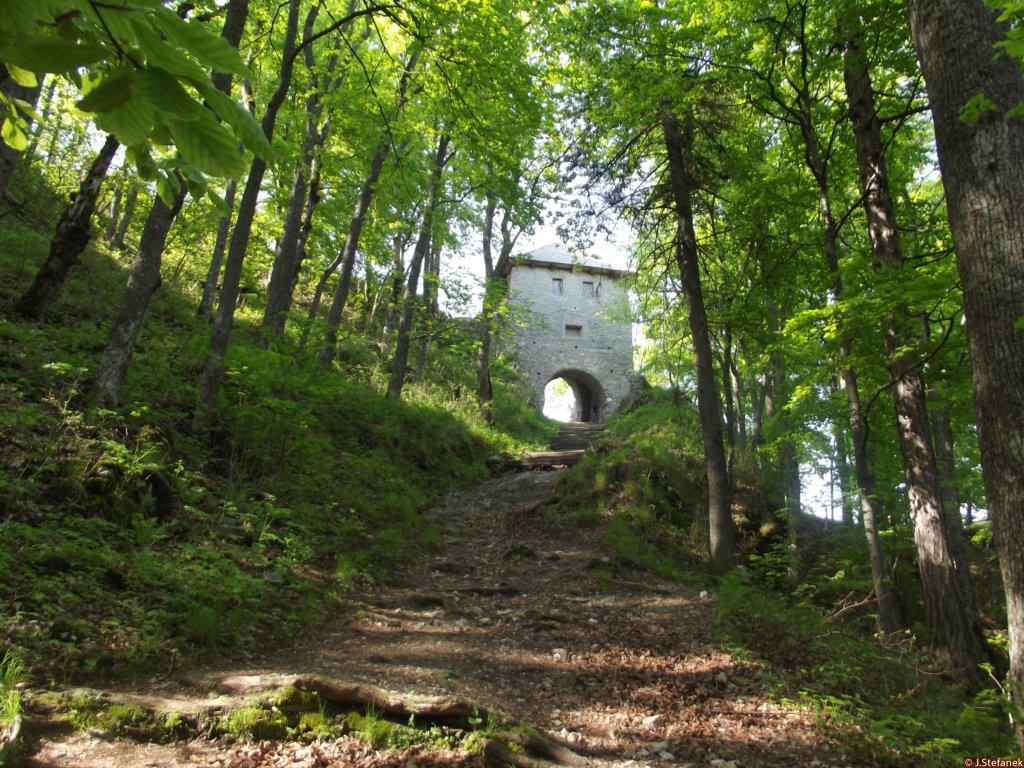
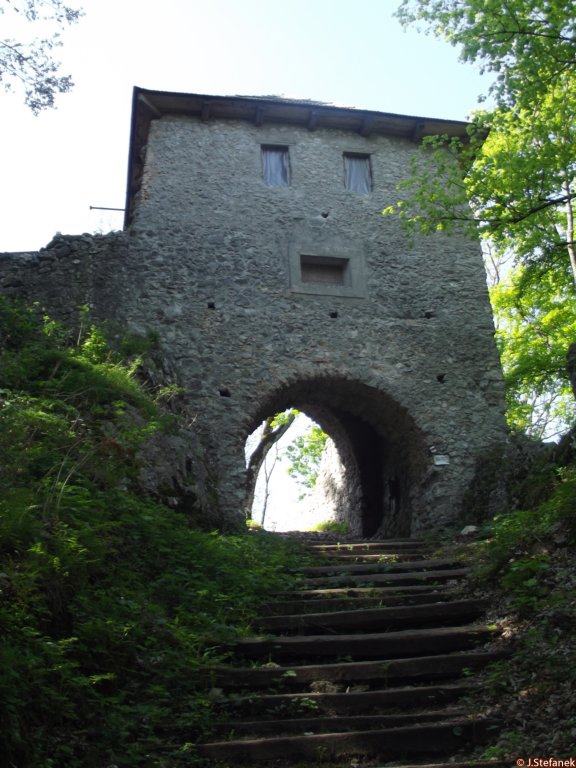
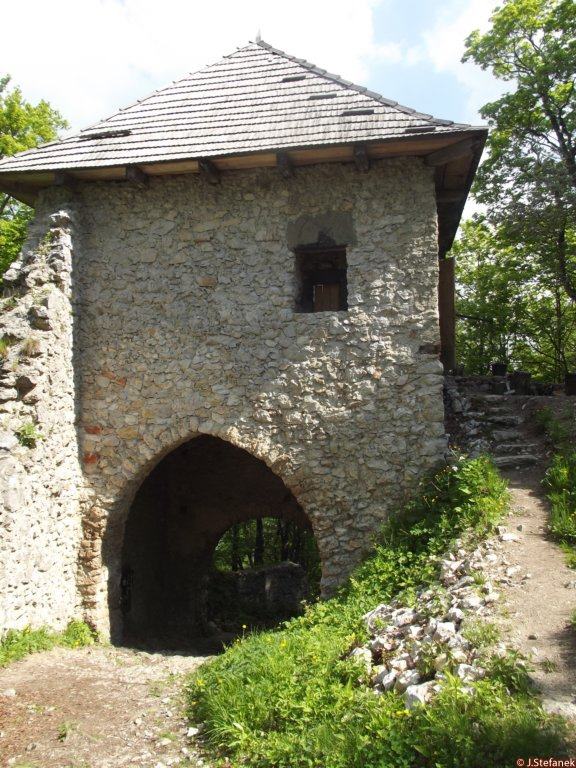
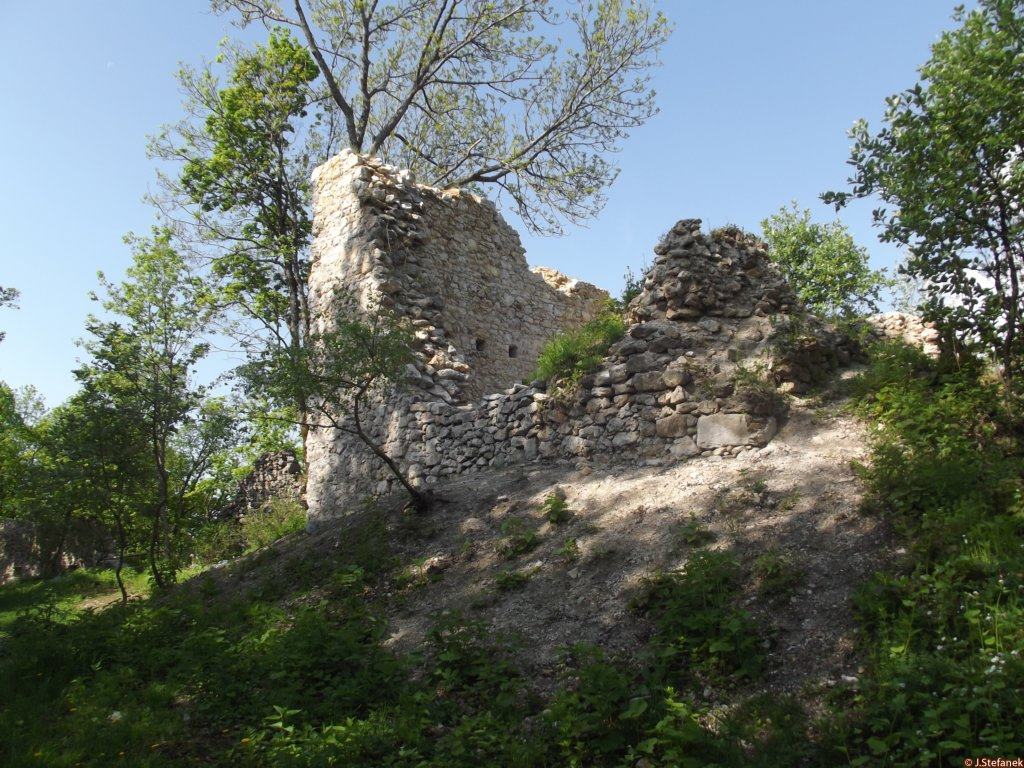
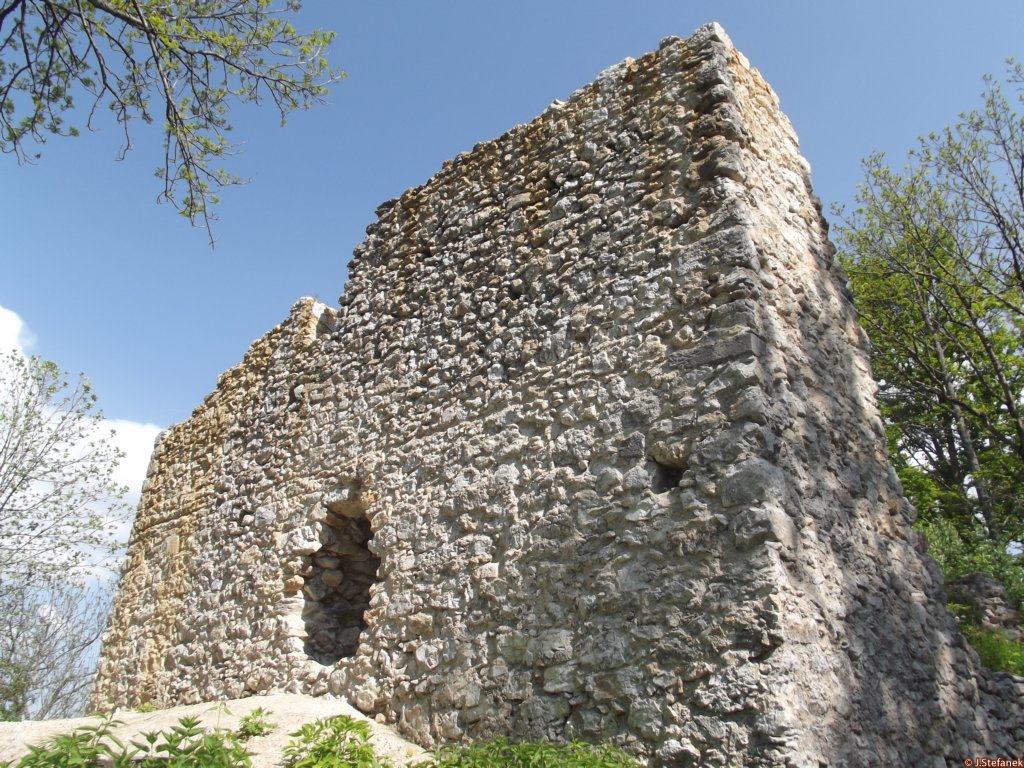
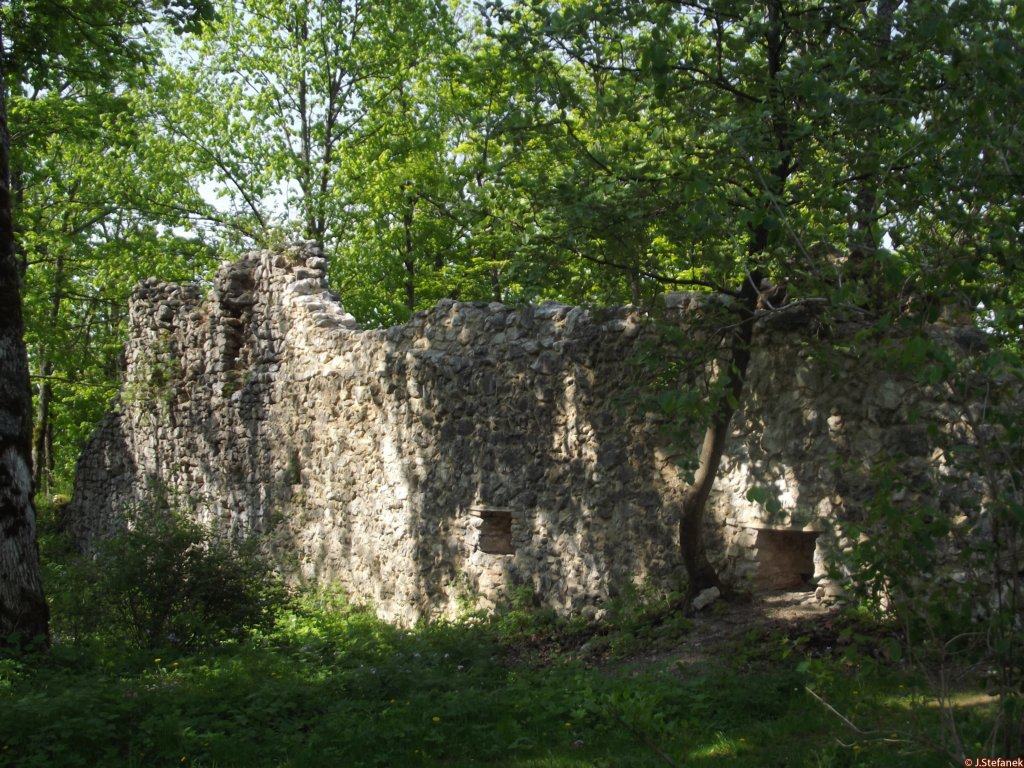
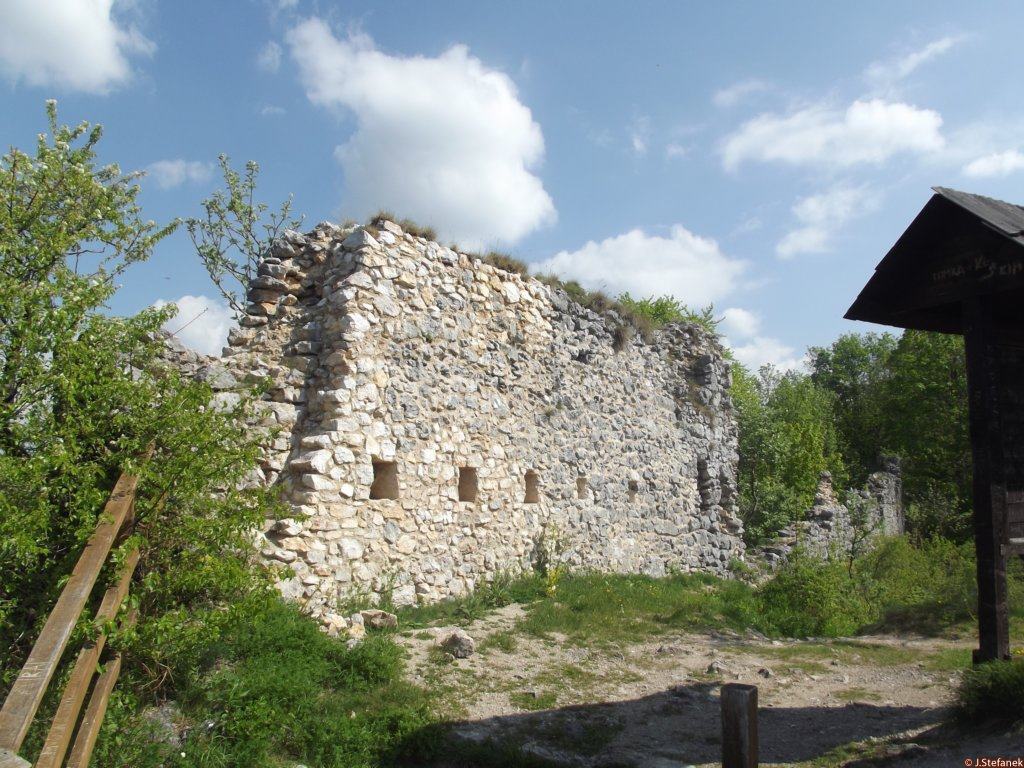
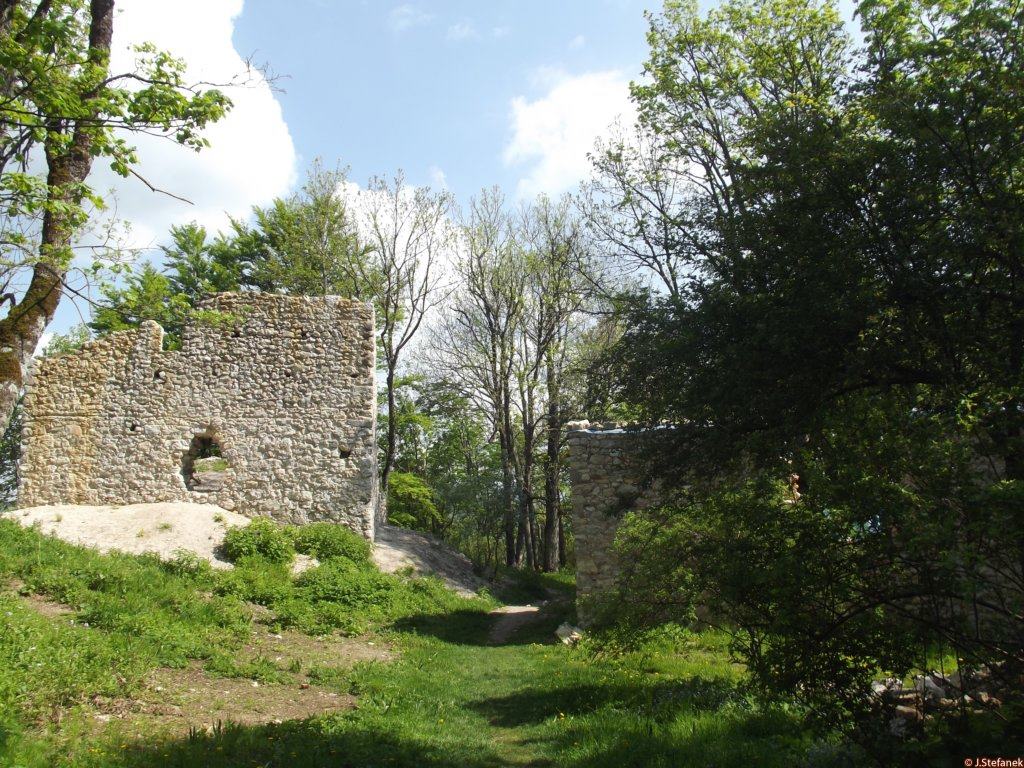
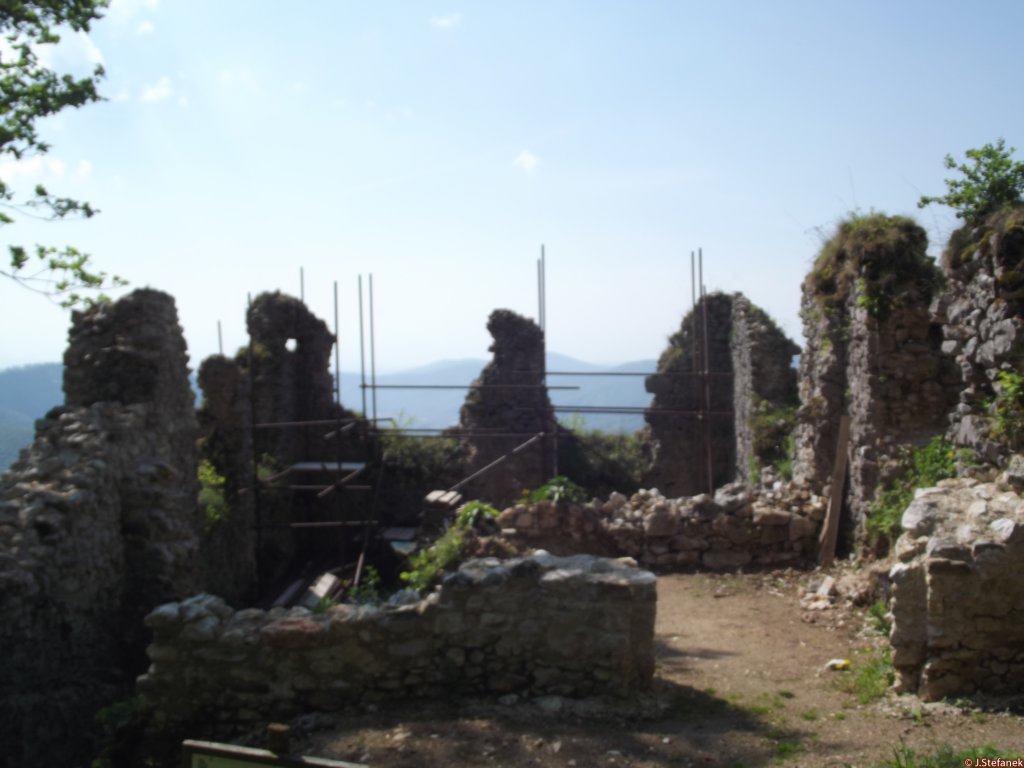
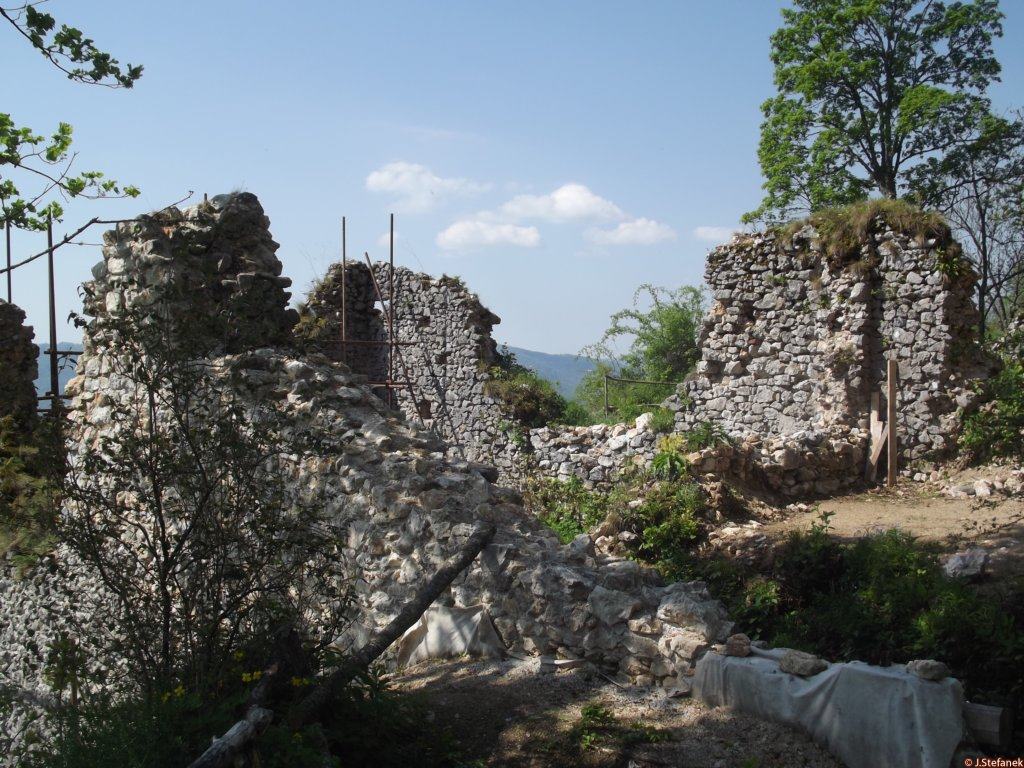
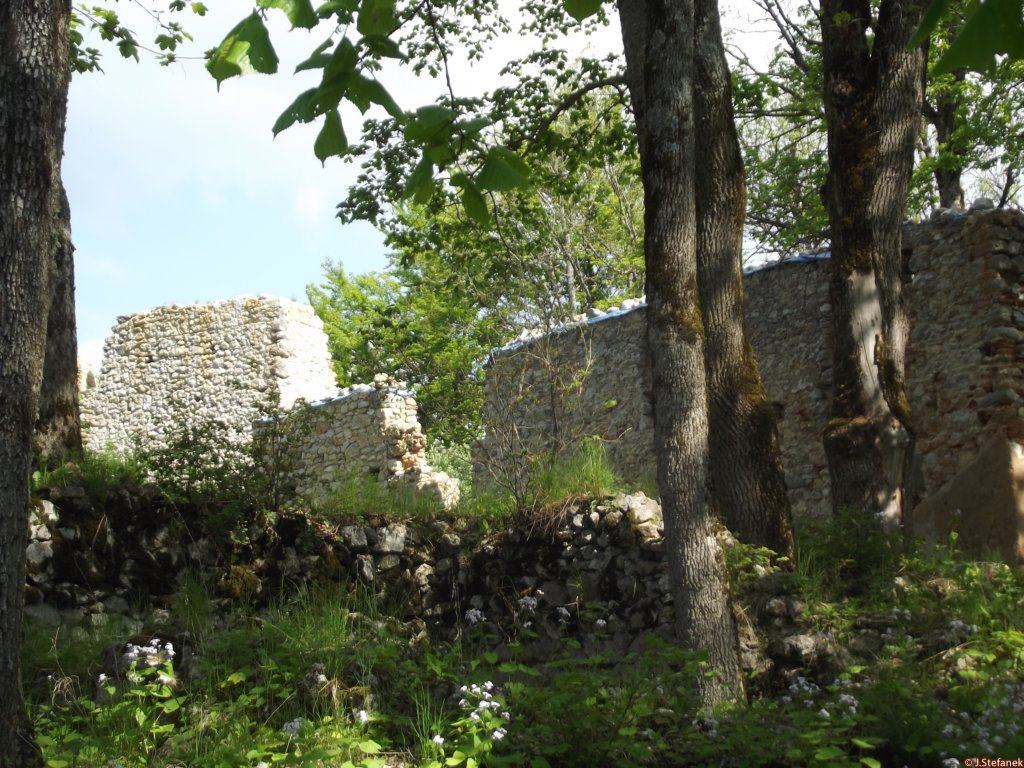
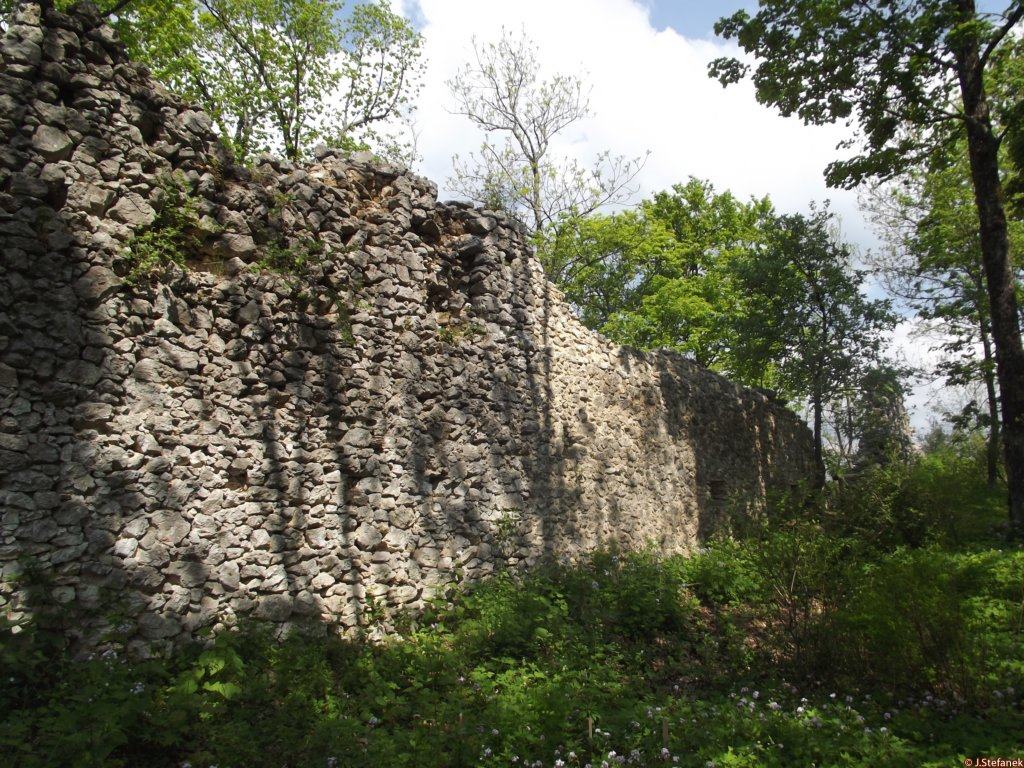
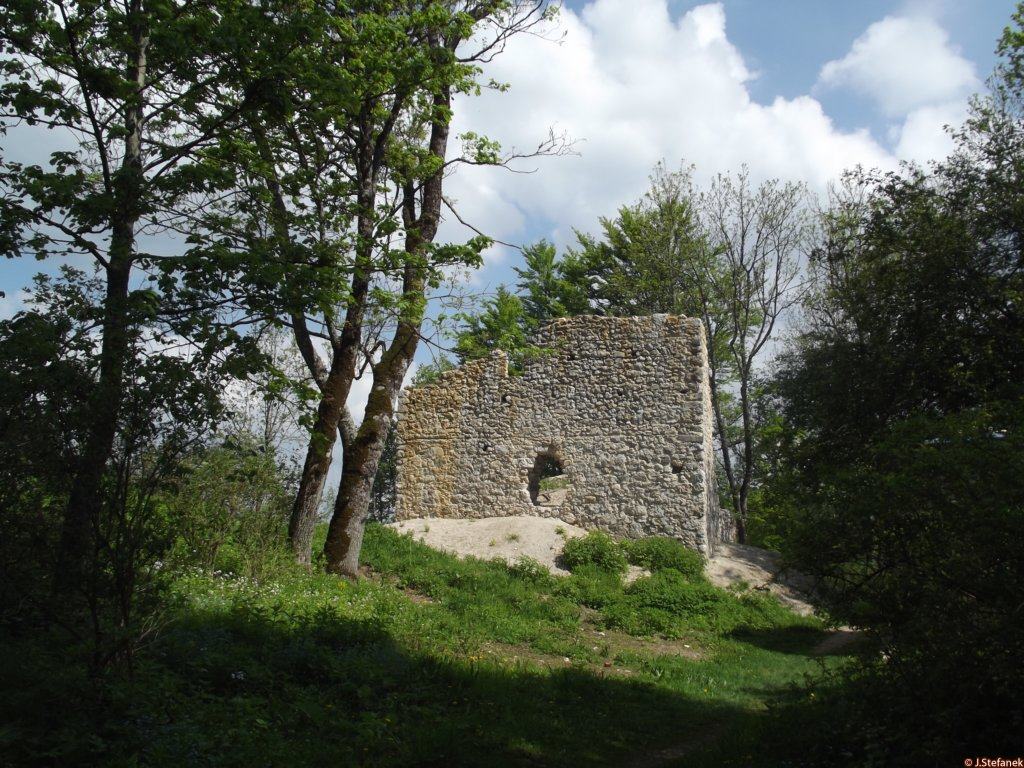
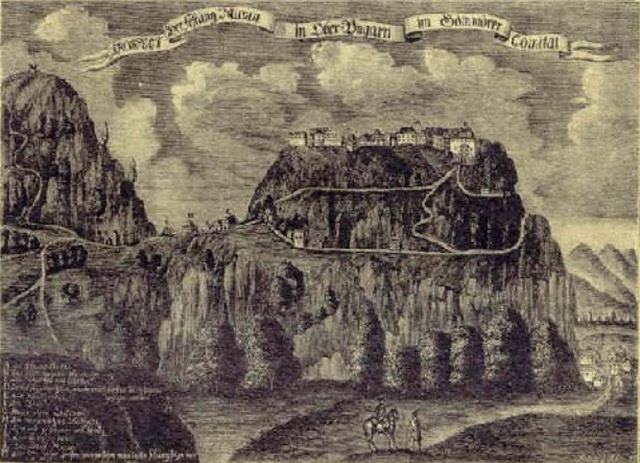
The original medieval castle occupied the southeast part of the summit plateau protected from three sides by rock walls obscured by the wall. Several buildings stood in the large courtyard. A large courtyard surrounded the fortifications that followed the shape of the terrain. On its northeast side were several circular bastions, on the west side were prismatic bastions. Because the castle was difficult to access, they built a mechanical elevator in a prismatic bastion, which they also used to transport works and other loads. The entrance tower is gothic, in its interior is a stone seat (seat). The main residential function was a palace with a chapel. The second residential building is located by the southern wall and there is a second chapel. The remnants of the farm building, the scalp and other objects are also recognizable. On one of the walls you can see a renaissance corner letter and sgraffito ornamentation.Landscaping and attempts to preserve the castle ruins contributed to the legibility of the individual buildings located along the large courtyard. In 2005, a relatively extensive reconstruction of the castle took place, in which two lookout platforms were built. The castle gate was also reconstructed.
Pôvodný stredoveký hrad zaberal JZ výbežok vrcholovej plošiny chránený z troch strán skalnými stenami obmurovanými hradbou. Na rozsiahlom nádvorí stálo niekoľko budov. Veľké nádvorie obklopovalo opevnenie, ktoré sledovalo tvar terénu. Na jeho severovýchodnej strane bolo niekoľko kruhových bášt, na západnej strane boli hranolové bašty. Keďže hrad bol ťažko prístupný, vybudovali v jednej hranolovej bašte mechanický výťah, ktorý využívali aj na dopravu diel a iných bremien. Vstupná veža je gotická, v jej interiéri je kamenná sedília (sedadlo). Hlavnú obytnú funkciu plnil palác s pristavanou kaplnkou. Druhá obytná budova sa nachádza pri južnej hradbe a tam je aj druhá kaplnka. Rozoznateľné sú aj zvyšky hospodárskej budovy, gápľa a ďalších objektov. Na jednom z múrov je viditeľná renesančná nárožná listová a esovitá sgrafitová ornamentika.Úprava okolia a pokusy o konzerváciu hradných ruin prispeli k čitateľnosti jednotlivých budov rozmiestnených po rozsiahlom nádvorí. V roku 2005 sa uskutočnila pomerne rozsiahla rekonštrukcia hradu, v rámci ktorej boli postavené dve vyhliadkové plošiny. Tiež bola zrekonštruovaná hradná brána.
Plan
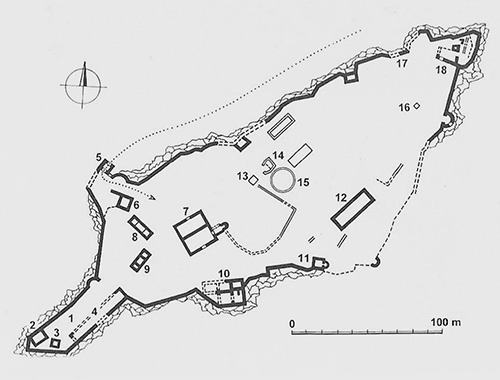
Legend to the ground plan
- 1 - early Gothic castle
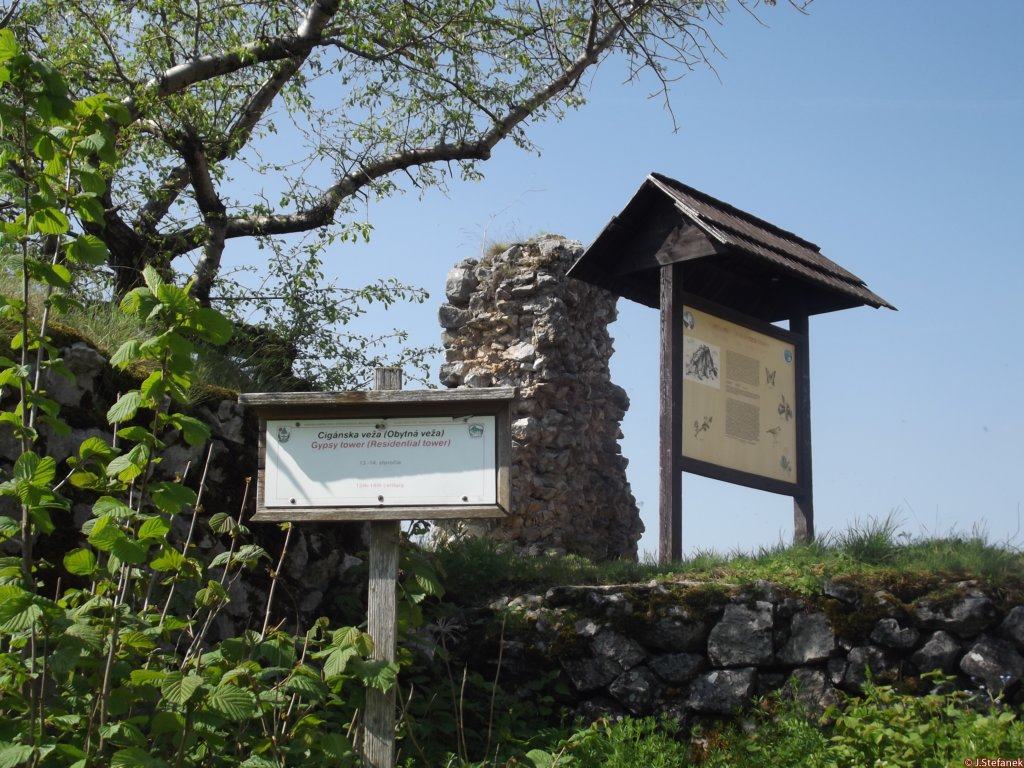
- 2 - residential tower
- 3 - cistern
- 4 - stables
- 5 - entrance tower gate
- 6 - guard building
- 7 - main palace
- 8 - officer's apartment building
- 9 - iceberg
- 10 - south palace
- 11 - chapel
- 12 - warehouse
- 13 - cistern
- 14 - bakery
- 15 - mill
- 16 - well
- 17 - place of machine lift
- 18 - bastion
Legenda k pôdorysu
- 1 - včasnogotický hrad
- 2 - obytná veža
- 3 - cisterna
- 4 - stajne
- 5 - vstupná vežovitá brána
- 6 - strážny objekt
- 7 - hlavný palác
- 8 - budova dôstojníckych bytov
- 9 - čeľadník
- 10 - južný palác
- 11 - kaplnka
- 12 - skladisko
- 13 - cisterna
- 14 - pekáreň
- 15 - mlyn
- 16 - studňa
- 17 - miesto strojového výťahu
- 18 - bastión
History
The oldest written information about the castle Mwran (Muráň) dates back to 1271, when Štefan V. donated it to the landscape judge - comes Mikuláš Gunic as a part of the Jelšava estate. The castle has been owned by the Rátol family since 1321. Around 1429, the lords of the Jelšava family and the descendants of Roland died out and the castle passed into the royal hands. Around 1440, Muráň was occupied by mercenaries Ján Jiskra, who stayed here for almost two decades and built several fortifications. In 1461, during the liquidation of the fraternal movement, King Matej Korvín sent an army against Jiskra, led by Sebastian Rozgonyi. Spark with the help of Emperor Frederick III. - in 1461 he once again rebelled against King Matthew, but in 1462 he surrendered and the castle became a royal property.
The king donated the Muráň Castle to Štefan Zápoľský. He released it to his faithful follower Juraj Tornali, after his death his four-year-old son Ján inherited the property and Matej Bašo became the administrator. Matej Bašo became sadly famous as a robber knight. As soon as he got to the stewardship, he tried to secure the castle for himself, so he sent young Ján to Poland, from where he never returned. He occupied the castle and declared himself its master.
In order to bear the great costs associated with maintaining the army, he undertook robberies in a wide area, looted and killed. He stole the church in Rimavská Sobota, looted the monastery in Hrabušice. The plundering of the Lapis Refugii monastery is attributed to him. He minted counterfeit coins in the castle. In 1548, King Ferdinand issued an order to capture and imprison him. He entrusted this task to the landscape assembly of Mr. Krásná Hôrka - František Bebek. The royal criminal expedition led by Count Nicholas of Salm occupied the castle in 1549 with the help of the castle garrison, but Baš managed to escape. In Telgárt, however, he was captured by shepherds, getting to know the famous robber knight - the lord of the Muráň castle and the fear of the surrounding area. He was brought back to the castle, where he was sentenced to death and the sentence was carried out immediately.
With the uprooting of the Bašov family, Muráň and its surroundings came to safety. The royal army remained at the castle, Melchior Maschko became the appointed captain in the years 1565 - 1585 and in the years 1585 - 1594 Július Herberstein, then Ján Rotthal. According to the capital records, in 1610 the Rotthal family ruled in Muráň.
Count Tomáš Széchy, the main governor of the Gemer chair, was the castle in 1612, along with all the adjacent land. After Tomáš, his son Juraj ruled at the castle, and he and his wife Mária Drugeth de Homonnay had nine children: Ján, Petra, Samuel, Juraj, Mária, Barbara, Katarína, Eva and Magdaléna. None of the sons reached adulthood, nor did Magdalena's daughter. Of the children, the eldest daughter, Maria, known as the Venus of Muráň, became most famous. Its name is most closely associated with the history of the castle. At a very young age, she married Štefan Bethlen, the castle captain, in Jelšava. They lived together for a short time, their two children, and he himself died. Mária Széchy was only 22 years old when she remarried.
Štefan Kún could not match her appearance or intelligence. Maria was beautiful, with a penchant for poetry, but also an excellent rider with a passion for housework. She said she knew Slovak. Shortly after Kun, she went to the castle of Déva, where her own husband besieged her with the army. She resisted him and let him disperse with him, which was an extraordinary event at the time.
Mária Széchy lived in the castle with her younger sister Eva and her husband Illésházy, supporters of the estate uprising of Juraj Rákóczi. Mary was a supporter of the king. When she met Captain František Wesselényi from Fiľak, they both prepared a plan to acquire the castle. They managed to do this with a cunning. There was already a relationship between Maria and Wesselényi during his marriage to Štefan Bethlen. Wesselényi lived in a marriage with the rich Žofia Bosnyáková - the youngest daughter of Tomáš Bosnyák, the lord of Fiľak Castle. Mary's father defended the relationship between his daughter and Wesselényi, who was determined to abandon his faith and divorce Zofia. The adventurous beginning of a new era began with a rope that Mary threw out of the castle window. Wesselényi and the selected companions had a hard time finding the rope and began to climb to the lighted candle in the castle window. They happily got into the room, where they were caught and locked in the room.
Thus, the Murano castle fell out of the hands of Rákóczi. When Wesselényi acquired the castle, he got married to Maria in 1644 and thus became the lord of Muráň. King Ferdinand supported him and in 1655 appointed him palatine of the country. This period was the peak of the glory of the Muráň Castle, the golden period of the Muráň estate began. Shortly afterwards, Wesselényi was promoted to the rank of count, at that time he was the second most important person after the king, and Venus of Murano was the first woman in Hungary after the queen.
The castle was rebuilt with unprecedented pomp and splendor. At that time, all Baroque buildings were erected here and the Renaissance Széchy Palace was extensively rebuilt.
Ferdinand's successor, King Leopold I, because he did not observe the Golden Bull issued by King Andrew II, rebelled against the nobility of the whole country. Wesselényi himself organized a conspiracy against the king, but this was revealed. Wesselényi moved to Slovenská Ľupča, and died in 1667. Leopold I issued an order to occupy Muráň Castle in 1670, and the king's troops occupied it in August 1670. The castle commander was Juraj Móric Kotulinský, who treated Mary cruelly and recklessly, later imprisoned her and her property was looted. In the years 1671 - 1676 she was interned in Vienna, freed from prison, Maria went to Kőszeg to her brother-in-law Ladislav Csáky, where she lived the last three years of her life and died on July 18, 1679. The star of Muráň Castle went out with her death.
In 1678 and 1683, the castle was conquered by Imrich Thököly. In 1677 he allied with Abalfy and defeated the imperial army several times: After the defeat of the Turks at Vienna in 1684 with the help of King Sobieske of Poland, the castle fell into the hands of the emperor again. After 1688, the power of the Thököly family ended with the appointment of Krištof Breiner and Pavol Medňanský to the royal commissioners in Muráň.
A cruel fate struck the castle when, in 1702, a fire completely destroyed all the dwellings. However, the documents show that it was repaired again in 1706. In 1710, the Kuruk rule over the castle ended. It was later occupied by František Rákóczi II, who donated it to his loyal general Mikuláš Berčéni.
Emperor Charles VI in 1720 he donated the castle to Štefan Koháry with eternal rights for services, as the last of this family had no son and so his only daughter Mária-Antónia married Ferdinand Juraj - Prince of Saxony-Coburg-Gotha in 1816. The whole property belonged to the prince Coburg-Koháry.
The last inhabitant of the castle was an 84-year-old retired soldier. He lived in the house in 1820. The house was preserved in the 60s of the 20th century. In 1928, the state land office of the Czechoslovak Republic took over the property for consideration.
Najstarší písomný údaj o hrade Mwran (Muráň) sa viaže k roku 1271, keď ho Štefan V. daroval krajinskému sudcovi – comesovi Mikulášovi Gunicovi ako súčasť jelšavského panstva. Od roku 1321 vlastní hrad rod Rátol. Okolo roku 1429 páni z jelšavského rodu a potomkovia Rolanda vymreli a hrad prešiel do kráľovských rúk. Asi v r.1440 obsadili Muráň žoldnieri Jána Jiskru, ktorí tu zotrvali takmer dve desaťročia a postavili niekoľko fortifikačných objektov. V roku 1461 pri likvidácii bratríckeho hnutia kráľ Matej Korvín vyslal proti Jiskrovi vojsko na čele so Sebastianom Rozgonyim. Jiskra s pomocou cisára Fridricha III. – v roku 1461 ešte raz povstal proti kráľovi Matejovi, ale v roku 1462 sa vzdáva a hrad sa stáva kráľovským majetkom.
Kráľ daroval Muránsky hrad Štefanovi Zápoľskému. Ten ho prepustil svojmu vernému prívržencovi Jurajovi Tornalimu, po smrti zdedil majetok jeho štvorročný syn Ján a správcom sa stáva Matej Bašo. Matej Bašo sa smutne preslávil ako lúpežný rytier. Hneď ako sa dostal ku správcovstvu, snažil sa hrad zaistiť pre seba, preto poslal mladého Jána do Poľska, odkiaľ sa už nikdy nevrátil. Hrad obsadil a vyhlásil sa za jeho pána.
Aby mohol znášať veľké náklady spojené s vydržiavaním vojska podnikal lúpežné výpravy do širokého okolia, drancoval a zabíjal. Vykradol kostol v Rimavskej Sobote, vyraboval kláštor v Hrabušiciach. Jemu sa pripisuje vyplienenie kláštora Lapis Refugii. Na hrade razil falošné mince. Kráľ Ferdinand v roku 1548 vydal rozkaz na jeho chytenie a uväznenie. Touto úlohou poveril krajinský snem pána Krásnej Hôrky – Františka Bebeka. Kráľovská trestná výprava pod vedením grófa Mikuláša zo Salmu hrad v roku 1549 za pomoci hradnej posádky obsadila, ale Bašovi sa podarilo utiecť. V Telgárte ho však chytili pastieri, spoznajúc v ňom presláveného lúpežného rytiera – pána hradu Muráň a postrach širokého okolia. Spútaného ho priviedli späť na hrad, tu bol odsúdený na smrť a rozsudok sa hneď aj vykonal.
S vykorenením Bašovského rodu sa Muráň a jeho okolie dostalo do bezpečia. Na hrade zostalo kráľovské vojsko, menovaným kapitánom sa v rokoch 1565 – 1585 stal Melchior Maschko a v rokoch 1585 – 1594 Július Herberstein, potom Ján Rotthal. Podľa stoličných zápisníc ešte v roku 1610 rodina Rotthalovcov vládla na Muráňi.
Gróf Tomáš Széchy, hlavný župan gemerskej stolice hrad v roku 1612 aj so všetkými priľahlými pozemkami. Po Tomášovi vládol na hrade jeho syn Juraj, ktorý s manželkou Máriou Drugeth de Homonnay mali deväť detí: Jána, Petra, Samuela, Juraja, Máriu, Barbaru, Katarínu, Evu a Magdalénu. Zo synov sa ani jeden nedožil dospelosti, ako aj dcéra Magdaléna. Z detí sa najviac preslávila najstaršia dcéra Mária, známa ako Muránska Venuša. Jej meno je najviac späté s históriou hradu. Ako veľmi mladá sa v Jelšave zosobášila so Štefanom Bethlenom, hradným kapitánom. Žili spolu krátko, ich dve deti, aj on sám zomreli. Mária Széchy mala iba 22 rokov, keď sa opäť vydala.
Štefan Kún sa jej vzhľadom ani inteligenciou nemohol rovnať. Mária bola krásna, so sklonom k poézii, ale aj výborná jazdkyňa so záľubou v domácich prácach. Vraj vedela po slovensky. Zakrátko od Kuna ušla na hrad Déva, kde ju vlastný manžel obliehal s vojskom. Odolala mu a dala sa s ním rozsobášiť, čo bolo v tom čase výnimočná udalosť.
Mária Széchy žila na hrade so svojou mladšou sestrou Evou a jej manželom Illésházym, prívržencami stavovského povstania Juraja Rákócziho. Mária bola prívrženkyňa kráľa. Keď sa zoznámila s fiľakovským kapitánom Františkom Wesselényim, obaja pripravili plán na získanie hradu. Tento sa im úskokom podarilo uskutočniť. Medzi Máriou a Wesselényim už počas manželstva so Štefanom Bethlenom bol vzťah. Wesselényi žil v manželstve s bohatou Žofiou Bosnyákovou – najmladšou dcérou Tomáša Bosnyáka, pána fiľakovského hradu. Otec Márie bránil pomeru medzi jeho dcérou a Wesselényim, ktorý bol odhodlaný opustiť svoju vieru a rozviesť sa so Žofiou. Dobrodružný začiatok novej éry sa začal povrazom, ktorý Mária vyhodila z okna hradu. Wesselényi s vybranými spoločníkmi horko ťažko našli povraz a začali sa šplhať k zažatej svieci v okne hradu. Štastlivo sa dostali do svetnice, kde ich pochytali a zatvorili do temnice.
Takto Muránsky hrad vypadol z rúk Rákócziho. Keď Wesselényi získal hrad, dal sa s Máriou v r.1644 zosobášiť a tým sa stal pánom Muráňa. Kráľ Ferdinand ho podporoval a v roku 1655 ho vymenoval za palatína krajiny. Toto obdobie bolo vrcholom slávy Muránskeho hradu, nastalo zlaté obdobie Muránskeho panstva. Zakrátko bol Wesselényi povýšený do grófskeho stavu, bol v tom čase druhá najvýznamnejšia osoba po kráľovi a Muránska Venuša bola v Uhorsku prvou ženou po kráľovnej.
Hrad bol prestavaný s nebývalou pompou a nádherou. V tom čase tu vznikli všetky barokové stavby a nákladne bol prestavaný aj renesančný Széchyovský palác.
Ferdinandov nástupca, kráľ Leopold I., pretože nedodržiaval Zlatú bulu vydanú kráľom Ondrejom II., si pobúril proti sebe šľachtu celej krajiny. Wesselényi sám zorganizoval sprisahanie proti kráľovi, to však bolo prezradené. Wesselényi sa utiahol do Slovenskej Ľupče, v r.1667 zomrel. Leopold I. vydal v roku 1670 nariadenie na obsadenie Muránskeho hradu a kráľove vojská ho obsadili v auguste roku 1670. Veliteľom hradu bol Juraj Móric Kotulinský, ktorý surovo a bezohľadne zaobchádzal s Máriou, neskôr ju uväznil a jej majetok bol zrabovaný. V rokoch 1671 – 1676 bola internovaná vo Viedni, vyslobodiac sa z väzenia odchádza Mária k svojmu švagrovi Ladislavovi Csákymu do Kőszegu, kde prežila posledné tri roky svojho života a 18. Júla 1679 zomrela. Jej smrťou zhasla hviezda Muránskeho hradu.
V r.1678 a 1683 si hrad podmanil Imrich Thököly. V r.1677 sa spojil s Abalfym a viac krát zvíťazil nad cisárskym vojskom: Po porážke Turkov pri Viedni 1684 za pomoci poľskeho kráľa Sobieskeho sa hrad znovu dostal do rúk cisára. Po roku 1688 končí moc Thökölyovcov tým, že na Muráňi boli vymenovaní za kráľovských komisárov Krištof Breiner a Pavol Medňanský.
Krutý osud zasiahol hrad, keď v roku 1702 požiar úplne zničil všetky obydlia. Avšak písomnosti svedčia o tom, že už roku 1706 bol znovu opravený. Rokom 1710 sa končí aj kurucká vláda nad hradom. Neskôr ho obsadil František Rákóczi II., ktorý ho daroval svojmu vernému generálovi Mikulášovi Berčénimu.
Cisár Karol VI. v roku 1720 s večným právom daroval hrad Štefanovi Kohárymu za služby, ako posledný z tohoto rodu nemal syna a tak jeho jediná dcéra Mária-Antónia sa vydala za Ferdinanda Juraja – knieža zo Sasko-Coburg-Gothy v roku 1816. Tým celý majetok pripadol kniežaťu Coburg-Koháry.
Posledným obyvateľom hradu bol 84 ročný vyslúžilý vojak. Býval v dome ešte v roku 1820. Dom bol v 60-tich rokoch 20. Storočia zachovaný. Rokom 1928 prevzal majetky za protihodnotu do vlastníctva štátny pozemkový úrad ČSR.
Myths and legends
Gypsy woman
According to legend, the castle captain fell in love with the gypsy and married her. But she couldn't get used to her previous life, and whenever the man wasn't home, she called her family to the castle. She dressed in gypsy clothes, lit a fire, baked the gypsy, and had fun. After a while, the captain found out. He told his wife that he would not return to the castle until late at night, but did not leave the castle. He caught the woman in the act and threw his wife into the abyss. Since then, the castle rock is called Cigánka (Gypsy woman).
Muráň Venus
Mária Széchy, also nicknamed the Venus of Muráň for her beauty, was also an extraordinarily brave woman. The castle under her command resisted all attacks by imperial troops. Their leader, František Wesselényi, did not speak to Maria at the surrender or in a personal meeting. Enchanted by her appearance, however, he attacked the impregnable fortress with Cupid's arrows. He offered his heart to Mary. After the answer, he was to lose the castle at midnight with a lowered rope ladder. Here he fell into captivity and was faced with the choice of death or eternal union with an admired woman, but on condition of betrayal of the emperor. By choosing this option, he passed the test, winning the hand of Venus of Muráň and with it the castle, which was occupied that night by his army.
Cigánka
Podľa povesti sa hradný kapitán zaľúbil do cigánky a vzal si ju za ženu. No ona si nevedela odvyknúť od predošlého života a vždy, keď muž nebol doma, privolala na hrad svoju rodinu. Preobliekla sa do cigánskych šiat, nakládla oheň, po cigánsky piekla a zabávala sa. Po čase sa o tom kapitán dozvedel. Povedal svojej žene, že sa na hrad vráti až neskoro v noci, ale z hradu neodišiel. Ženu prichytil pri čine a manželku hodil do priepasti. Od toho času sa hradná skala volá Cigánka.
Muránska Venuša
Mária Széchy, pre svoju krásu prezývaná aj Muránska Venuša, bola aj mimoriadne odvážna žena. Hrad pod jej velením odolával všetkým útokom cisárskych vojsk. Ich vodca František Wesselényi Máriu nenahovoril na kapituláciu ani pri osobnom stretnutí. Očarený jej zjavom však zaútočil proti nedobytnej pevnosti amorovým šípom. Ponúkol Márii svoje srdce. Po odpoveď mal prísť o polnoci na hrad spusteným povrazovým rebríkom. Tu padol do zajatia a bol postavený pred voľbu smrti alebo večného zväzku s obdivovanou ženou, avšak pod podmienkou zrady cisára. Výberom tejto možnosti obstál v skúške, získal ruku Muránskej Venuše a s ňou i hrad, ktorý ešte tej noci obsadilo jeho vojsko.
Useful information
The castle is open to the public, but if you want to get to the Veľká lúka by car, it is necessary to obtain a permit in the information center.Infocentre
Hrad je verejnosti prístupný, no ak sa chcete dostať na Veľkú lúku autom, je potrebné si vybaviť povolenku v infocentre. Infocentrum
External links
Nearby castles