Živánska veža
Jedľové Kostoľany Nitra county Slovakia
watchtower
Živánska veža
Jedľové Kostoľany Nitriansky kraj Slovakia
strážna veža
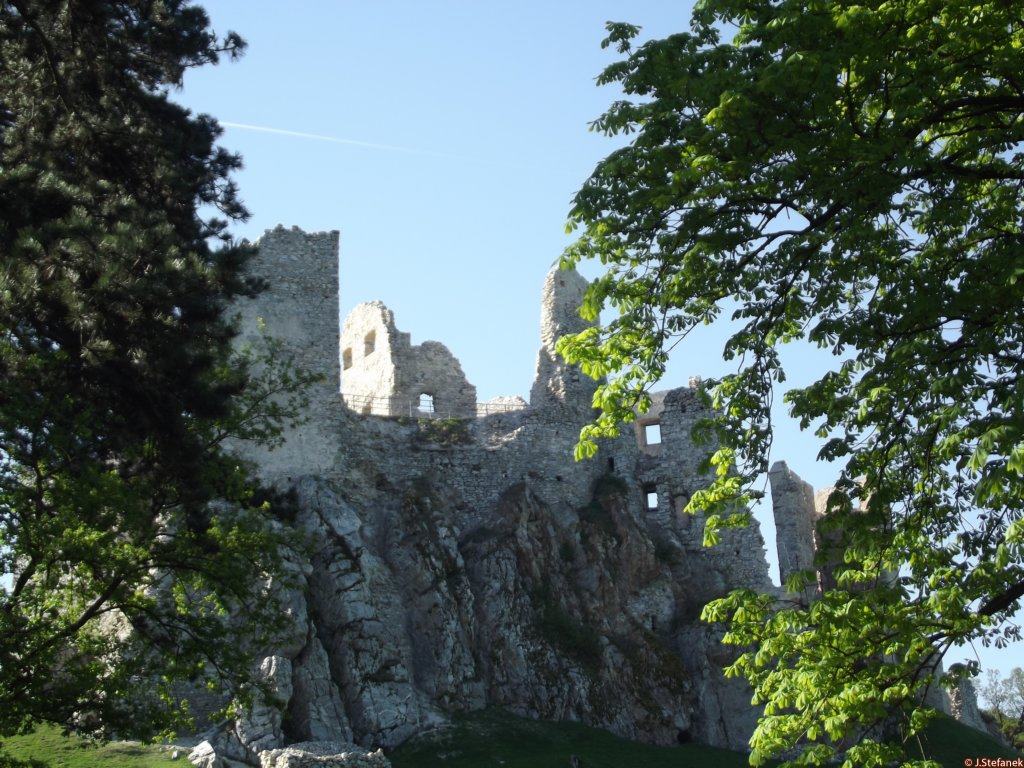
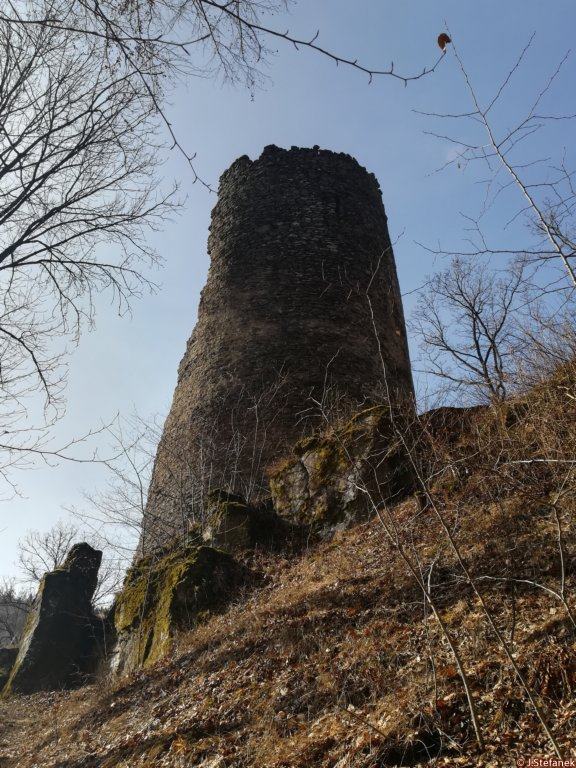
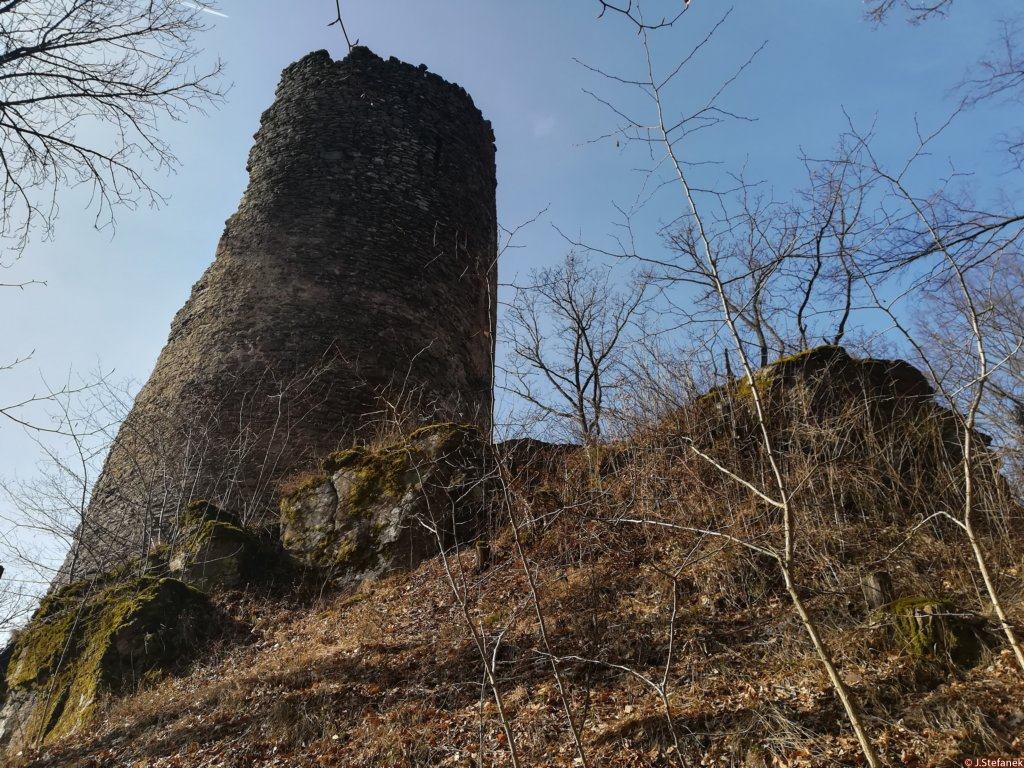
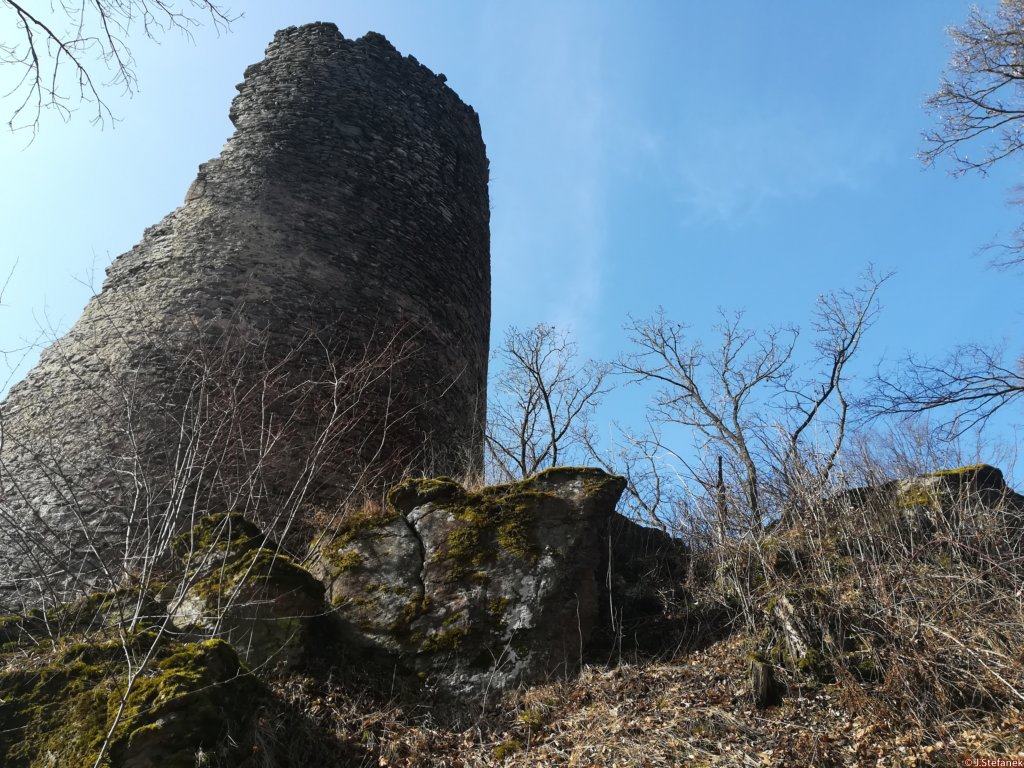
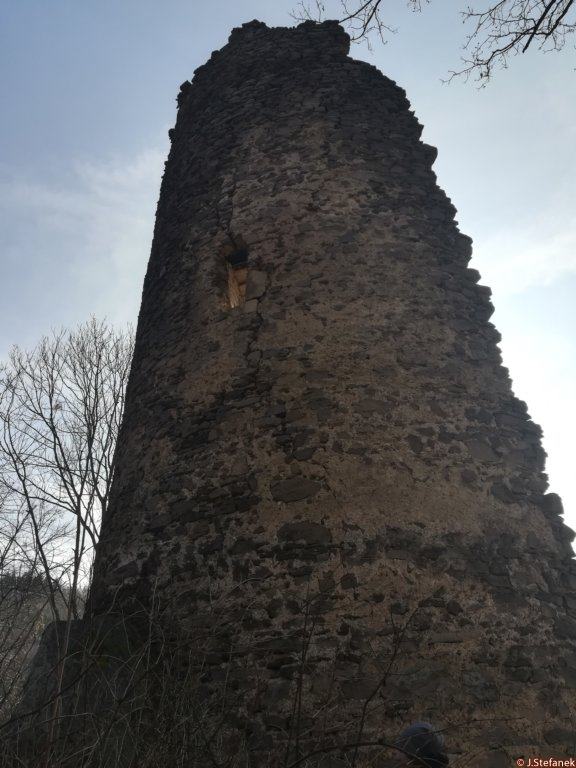
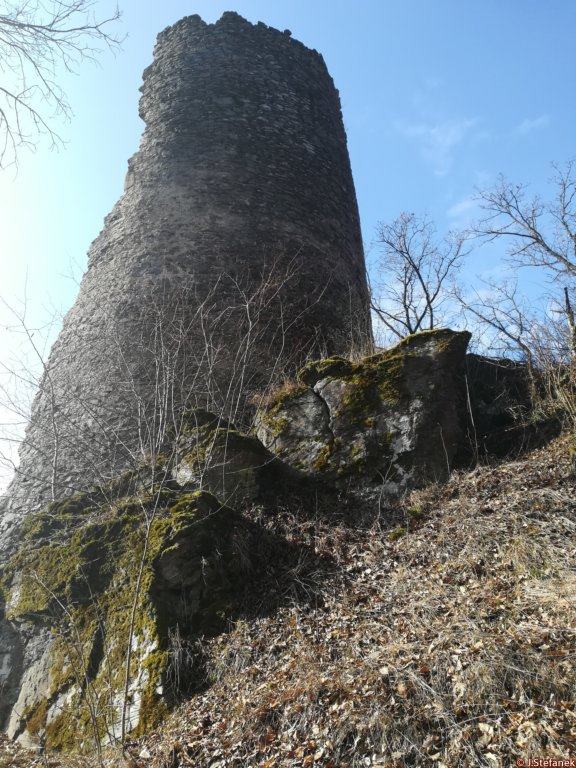
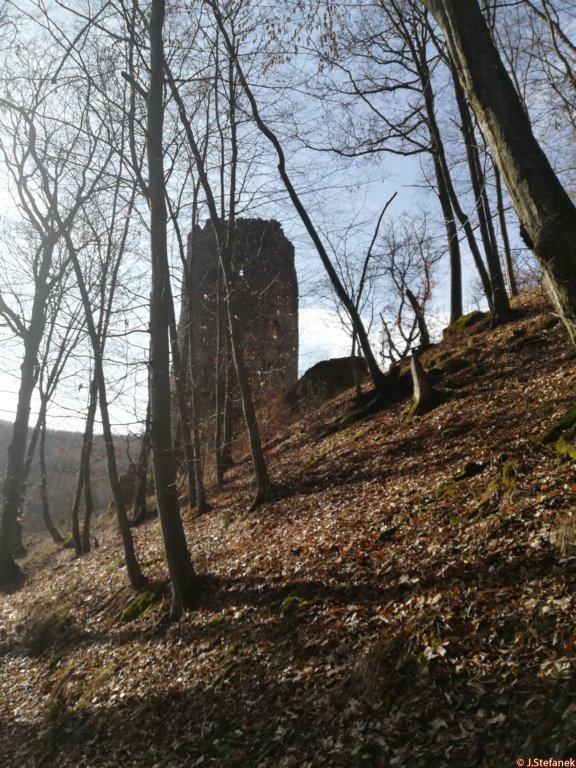
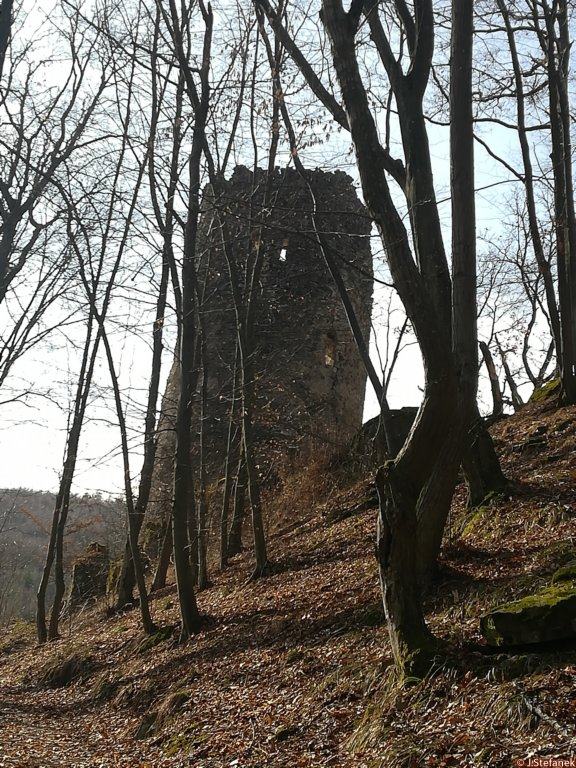
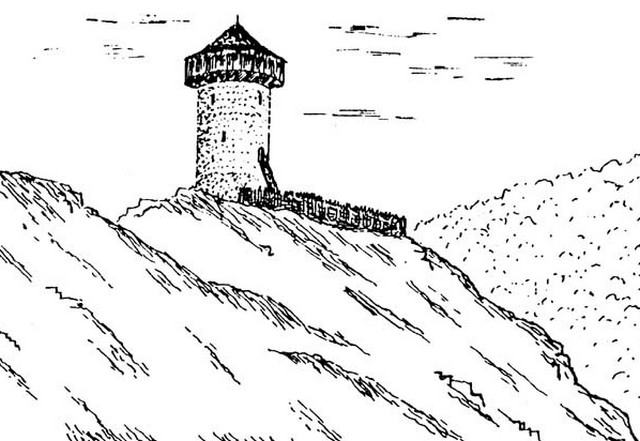
Ruins of a medieval watchtower in western Slovakia in the district of Zlaté Moravce, on the western edge of the Pohronský Inovec mountains near the village Jedľové Kostoľany
Zrúcanina stredovekej strážnej veže na západnom Slovensku v okrese Zlaté Moravce, na západnom okraji pohoria Pohronský Inovec pri obci Jedľové Kostoľany
Previous names
Zbojnícka veža, Veža Turná, Turňa, Zsiványtorony
Roads
Remains of Živánska tower are located in the forest along the road 1622 behind the Jedľové Kostoľany in the direction of Malá Lehota. Approximately 2km from the turning to Jed. Kostoľany is located along the road a smaller space suitable for parking. From there, we take a few meters back and on the opposite side of the road, we will see stone stairs and an ascent to the tower. The climb is moderately challenging, but takes no more than 5 minutes, as the tower is almost next to the road.
Zvyšky Živánskej veže sa nachádzajú v lesnom poraste popri ceste 1622 za Jedľovými Kostoľanmi v smere na Malú Lehotu. Zhruba 2km od odbočky k Jed. Kostoľanom sa nachádza popri ceste menší priestor vhodný na parkovanie. Odtiaľ sa vyberieme pár metrov naspäť a oproti informačnej tabuli, na protiľahlej strane cesty, už uvidíme kamenné schodíky a výstupovú cestu k veži. Stúpanie je mierne náročné, no netrvá viac ako 5 minút, keďže veža je takmer hneď pri ceste.
Description
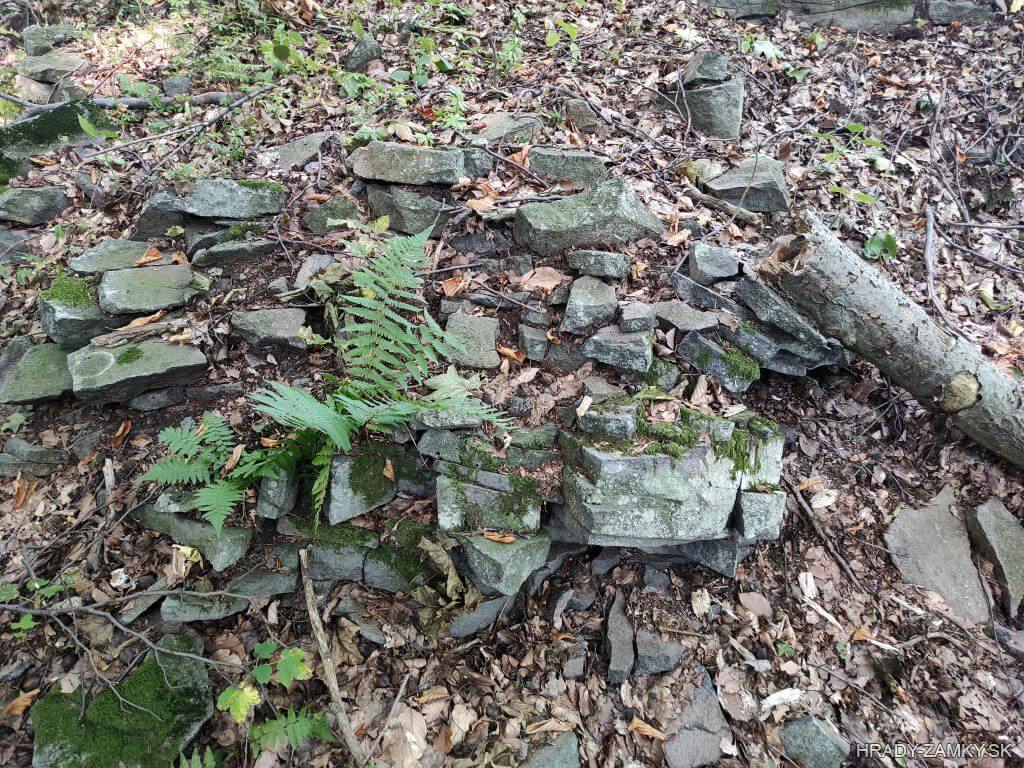
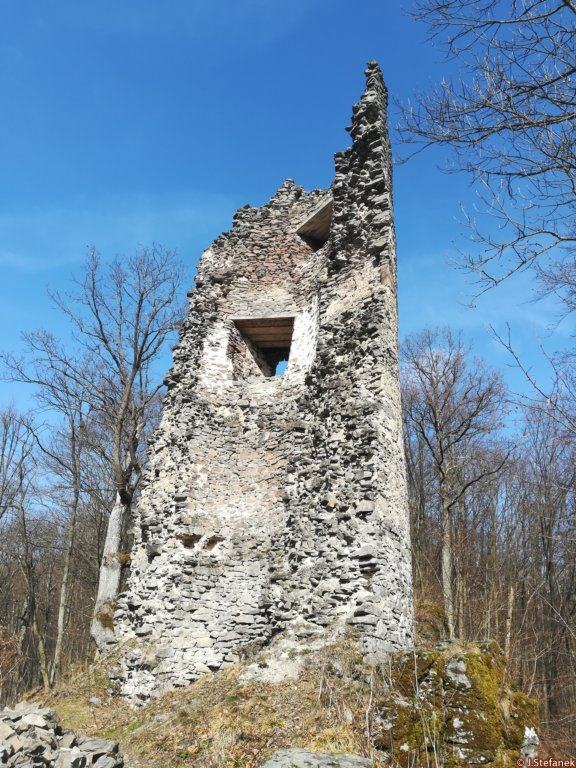
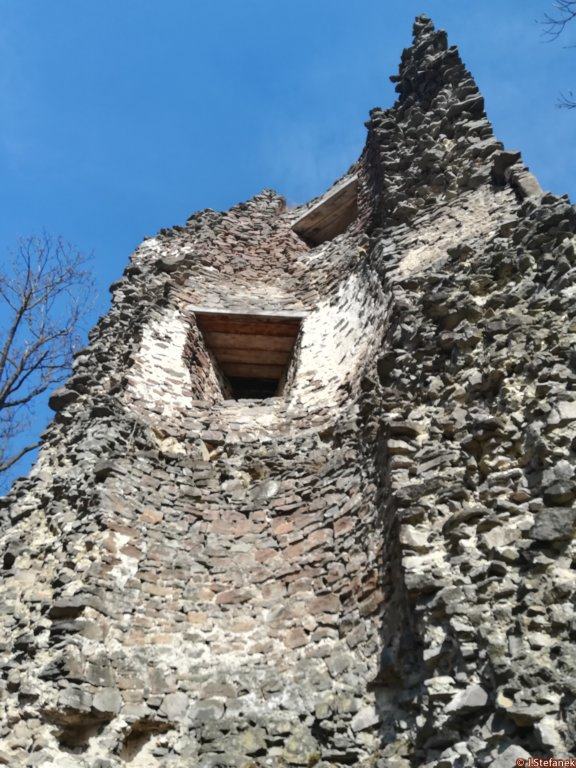
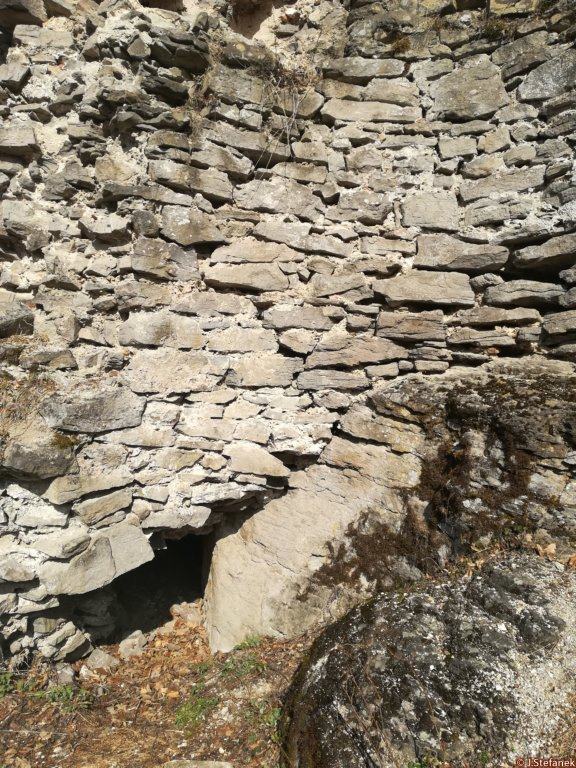
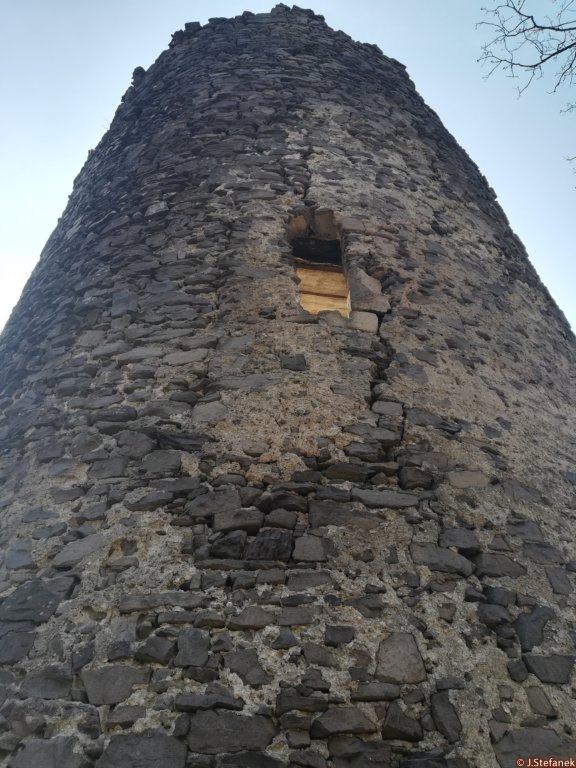
The tower consisted of several floors, featuring varying from four to six floors; in other sources, there is a 40 m high, six-storey tower with an entrance on the first floor. As a building material they used broken andesite, the binder was lime mortar and river gravel. This material coincides qualitatively with the building material of Hrušov Castle, and even with its building technique, suggesting that it originates in the 13th century. There are also unconfirmed rumors that the tower was underground connected to the Hrušov Castle.The northern part is still preserved, where we can also read the original thickness of the masonry and the location of the windows. The thickness of the underground wall is 2.70 m. Each floor is 4 m high and on them a 10 cm drain was gradually built, on which pavement castles were laid. The entrance to the tower was on the first floor for defense reasons. It was accessed by a ladder which was then pulled out. On the second floor were preserved two fired and smoothed interior plaster. On the third floor there is a crevice with dimensions of approximately 1 m x 15 cm. It is assumed that a defensive gallery was accessible from the last floor, as there were remains of holes in the wooden beams.
Veža sa skladala z niekoľkých podlaží, uvádza sa rôzne od štyroch až po šesť podlaží, v iných zdrojoch sa hovorí o veži 40 m vysokej, šesťposchodovej s vchodom na prvom poschodí. Ako stavebný materiál používali lámaný andezit, spojivom bola vápenná malta a riečny štrk. Tento materiál sa kvalitatívne zhoduje so stavebnou hmotou Hrušovského hradu, ba aj s jeho stavebnou technikou, čo nasvedčuje, že pochádzajú z 13. storočia. Jestvujú aj nepotvrdené dohady, že veža bola podzemne spojená s hradom Hrušov.Dodnes je zachovaná severná časť, kde môžeme odčítať aj pôvodnú hrúbku muriva a umiestnenie okien. Hrúbka podzemného múra je 2,70 m. Každé podlažie je 4 m vysoké a na nich nechaný postupne 10 cm výpust, na ktorom boli položené dlážkové hrady. Vstup do veže bol na prvom poschodí a to z obranných dôvodov. Vchádzalo sa po rebríku, ktorý sa potom vytiahol. Na druhom poschodí sa zachovali dve strieľne a vyhladená interiérová omietka. Na treťom poschodí je štrbinová strieľna o rozmeroch približne 1 m x 15 cm. Predpokladá sa, že z posledného poschodia bola prístupná obranná pavlač, pretože sa našli zvyšky otvorov po drevených hradách.
Plan
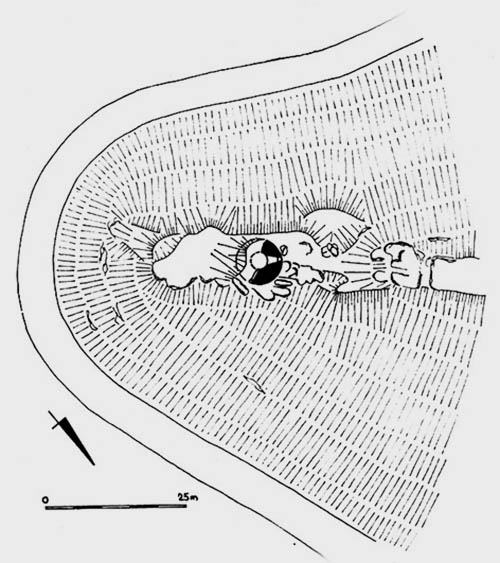
-
History
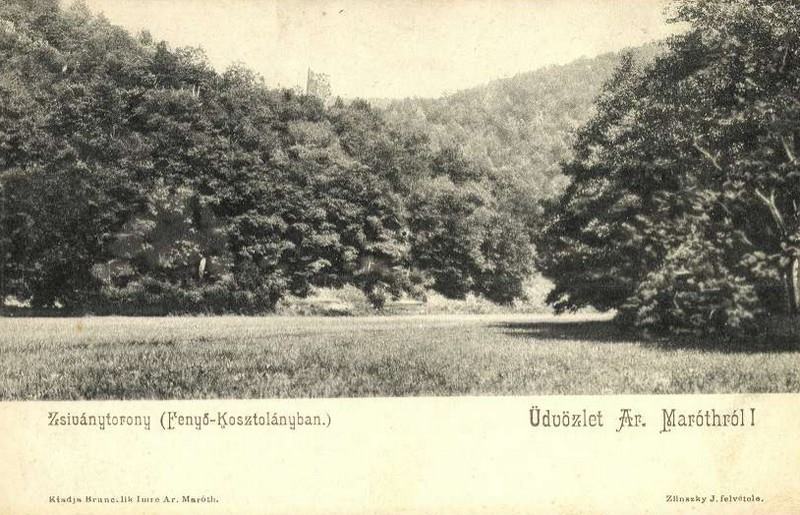
The tower is expected to be built at the beginning of the 13th century, around 1280. It was probably built by Matúš Čák Trenčiansky. The fact that the tower was built just above the road suggests its guard function and at the same time draws attention to the former importance of communication. The increase in the importance of this road can be expected during the first half of the 14th century, when large gold deposits were discovered on the territory of today's Nova Bana. And so already in 1387, when the royal castle Hrušov became the aristocratic property of Master Ladislav, we learn about three customs offices (Jedľové Kostoľany, Hostie and Žitava), which belonged to the castle. The documents make it possible to identify the Živánská Tower with the aforementioned customs station, while also informing us about its active activities at least until the end of the 15th century.
By synthesizing the existing knowledge, we can therefore include the Živánská Tower among the watchtowers intended for the protection of roads and the collection of fees. The watchtower was launched after the destruction of Hrušov Castle after 1708.
Vznik veže sa predpokladá už na začiatku 13. storočia, okolo r.1280. Pravdepodobne ju dal postaviť Matúš Čák Trenčiansky. Skutočnosť, že veža bola vybudovaná tesne nad cestou, napovedá jej strážnu funkciu a súčasne upozorňuje na niekdajšiu dôležitosť komunikácie. Vzrast významu tejto cesty možno predpokladať v priebehu prvej polovice 14. storočia, keď došlo na území dnešnej Novej Bane k objavu veľkých ložísk zlata. A tak už v roku 1387, keď sa kráľovský hrad Hrušov stáva šľachtickým majetkom majstra Ladislava, dozvedáme sa o troch colniciach (Jedľové Kostoľany, Hostie a Žitava), ktoré patrili k hradu. Listiny umožňujú stotožniť Živánsku vežu práve so spomínanou colnou stanicou, pričom nás tiež informujú o jej aktívnej činnosti minimálne do konca 15. storočia.
Syntézou doterajších poznatkov môžeme teda Živánsku vežu zaradiť ku strážnym vežiam určeným na ochranu komunikácií a vyberanie poplatkov. Strážna veža spustla po zničení Hrušovského hradu po roku 1708.
Myths and legends
The rumor says
The legend of bandits, otherwise known as "animals", who allegedly settled here says: They were not just any bandits, but influential, especially their bandit captain. He had everything, but not and not to find the right woman - the housewife. But once a beautiful girl caught his eye, but she was unbreakable and not a rock. Her heart already belonged to another - the rider on the black horse, who came to her window under the cover of night. However, the captain was still in it, so she refused him more and more. So he ordered his men to kidnap the girl. However, fear did not overwhelm her, so she escaped the tower several times. However, the captain ran out of patience, so he chained her. So long that she reached the creek so she could at least wash him. And one day a well-known black horse appeared in front of her and a seamstress from Skýcov appeared on it. He untangled the chain and landed the beauty on his father. However, they did not escape to safety, but headed straight for the tower. Here the bright girl placed candles under the barrels of gunpowder, and soon the wound sounded like a cannon. Half the tower fell apart and buried wild robbers.
This is what the legend says about the demise of the Živánská Tower. However, it is assumed that its breaking into its current form was caused by gravity, but earthquakes or robbery and military campaigns are not ruled out. Fortunately, the remnants of it were saved thanks to volunteers who are not indifferent to the fate of the mysterious ruin.
Povráva sa
Povesť o zbojníkoch, inak známych ako "živáni", ktorí sa tu vraj usalašili, hovorí: Neboli to len takí hocijakí zbojníci, ale vplyvní, a to predovšetkým ich zbojnícky kapitán. Všetko mal, len nie a nie nájsť tú správnu ženu - gazdinú. Raz mu však padla do oka nádherná dievčina, no tá bola nezlomná ani skala. Jej srdce už totiž patrilo inému - jazdcovi na čiernom koni, ktorý k jej okienku prichádzal pod rúškom noci. Kapitán však stále do nej dobiezdal, a tak ho odmietala čoraz viac. Prikázal teda svojim chlapom, aby dievčinu uniesli. Strach ju však neopantal, a tak niekoľko ráz z veže ušla. Došla však kapitánovi trpezlivosť, a tak ju spútal reťazou. Takou dlhou, že sa až k potoku dostala, aby mu mohla aspoň prať. A jedného dňa sa pred ňou zjavil známy čierny kôň a na ňom švárny šuhaj zo Skýcova. Reťaz rozťal a krásavicu vysadil na svojho tátoša. Neušli však do bezpečia, ale zamierili rovno smerom k veži. Tu bystrá dievčina položila sviečky pod sudy s pušným prachom a zanedlho ozvala sa rana ako z dela. Polovica veže rozpadla sa a pochovala divých zbojníkov.
Tak vraví povesť o zániku Živánskej veže. Predpokladá sa však, že jej rozlomenie do dnešnej podoby spôsobila gravitácia, no nevylučuje sa ani zemetrasenie či lúpežné a vojenské ťaženia. Našťastie, zvyšky z nej sa podarilo zachrániť vďaka dobrovoľníkom, ktorým nie je ľahostajný osud tajomnej zrúcaniny.
Useful information
The ruins are freely accessible
Zrúcanina je voľne prístupná
Nearby castles