Castle of Alvor
Alvor Faro Portugal
castle, chateau
Castelo de Alvor
Alvor Faro Portugal
castle, chateau
The Castle of Alvor is a medieval castle in the civil parish of Alvor, in the Portuguese district of Faro: considered to be a significant military monument associated with the nearby Castle of Silves
O Castelo de Alvor, também denominado como Castelo de Albur ou Forte de Alvor, localiza-se na vila e freguesia de Alvor, Concelho de Portimão, Distrito de Faro, em Portugal
Previous names
Castle of Alvor, Castelo de Alvor
Description
The Castle of Alvor is a medieval castle in the civil parish of Alvor, in the Portuguese district of Faro: considered to be a significant military monument associated with the nearby Castle of Silves.
History
The establishment of the first fortress was constructed in the 7th century B.C.E., from the remains of Phoenician, Greek and Carthaginian remnants that were built on a Lusitanian castro settlement. The Carthaginian fort was conquered by Hannibal in 436, who renamed the fortification Portus Annibalis, which would later be re-christened Barcínia. From excavations completed by Teresa Gamito, the author determined that Alvor was an ancient populational and commercial centre during the pre-Roman colonization. Roman conquest did not alter significantly Alvor's role. The Moors finally conquered Alvor in 716, but the settlement retained its important political and commercial role that it acquired during the earlier cultures.
King Sancho I of Portugal destroyed the fort in 1189, when his forces swept away resistance from Moorish forces. It was a temporary success: the region was retaken in 1191 by the Moors. In 1250, King Afonso III finally settled this territorial dispute by sacking Alvor. In order to maintain their conquest, King Denis ordered the reconstruction of the castle in 1300.
Successively, Alvor was elevated to the status of town by King John II on 29 February 1495, which later allowed its deannexation from the municipality of Silves (on 28 December 1498). Within ten years, on 13 December 1505, King Manuel issued a foral (charter) to the parish of Alvor.
The apparent simplicity of the structure that survived to this day contrasts with the importance of the location during the Middle Ages. Current thinking suggests that the actual Castle of Alvor corresponded to the primitive square, that sheltered a garrison. Outside this redoubt circled the primitive settlement, which was itself circled by walls (which have not survived). At the time of the first conquest of Silves (in 1189), Alvor was referred to as a dependent town, suffering from Christian incursions (including deaths and considerable destruction to the settlement).
Within the Christian sphere, Alvor became one of the principal localities of the Algarve. Yet, the few notices survive to this day of the military preparedness of the castle or its garrison. It was in Alvor that King John II died, his body eventually transferred to the Sé Cathedral in Silves, before being interred in the Monastery of Batalha.
It was only in the 17th century that a further understanding of the structure can be determined. In 1621, during a period of intense reform carried out after the Portuguese Restoration War, Alexandre Massaii first referred to Alvor castle as a " small, square fort". The preoccupation with the defense of the Algarve suggested that this fort was abandoned in favor of concentrating forces in large, complex forts in strategic points along the coast. Left in abandon, the castle was successively threatened by the encroachment of the town, as a number of residences were constructed within and without its walls.
The 1755 Lisbon earthquake was responsible for the destruction of the castle, resulting in its current vestiges.
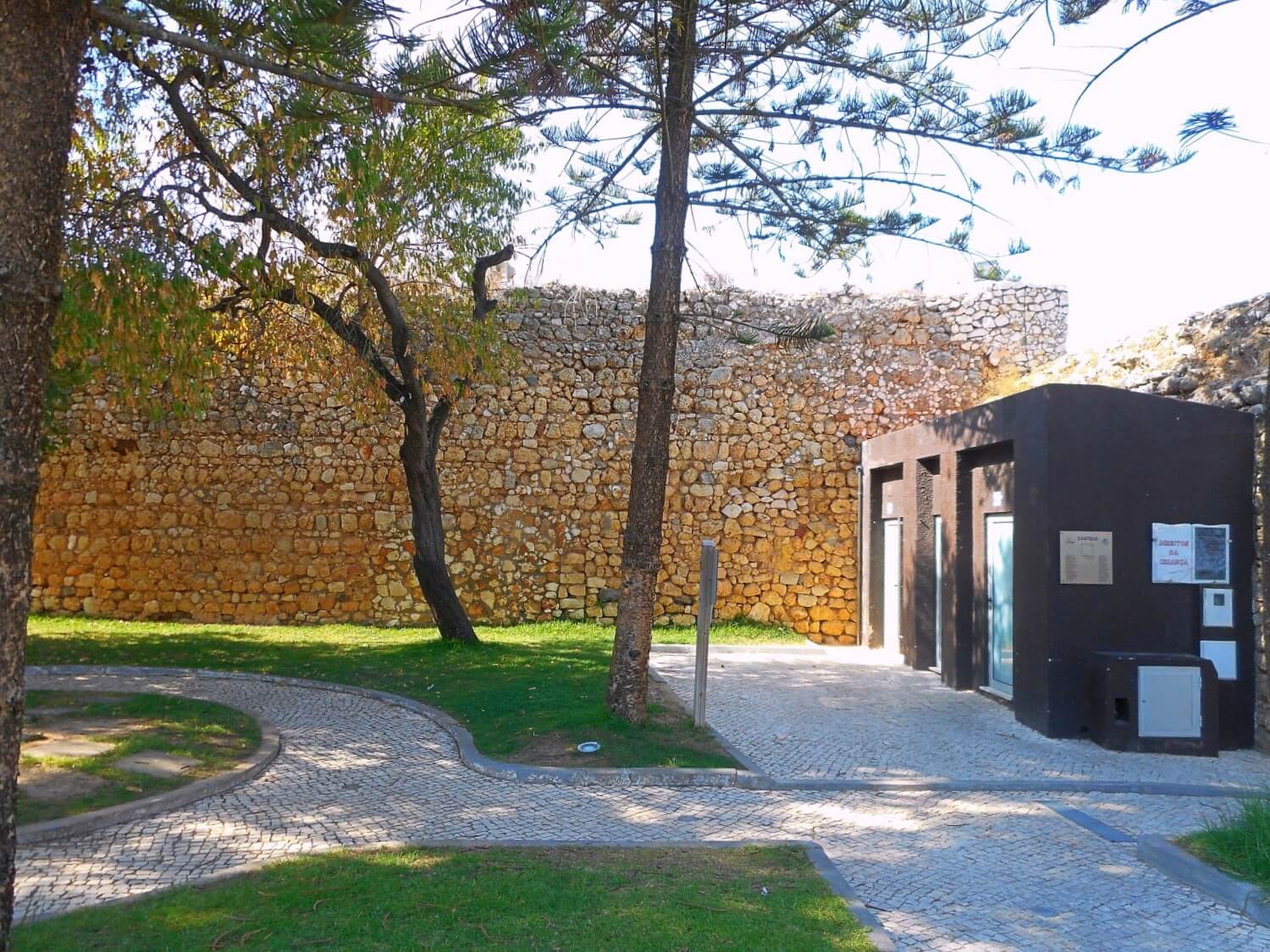
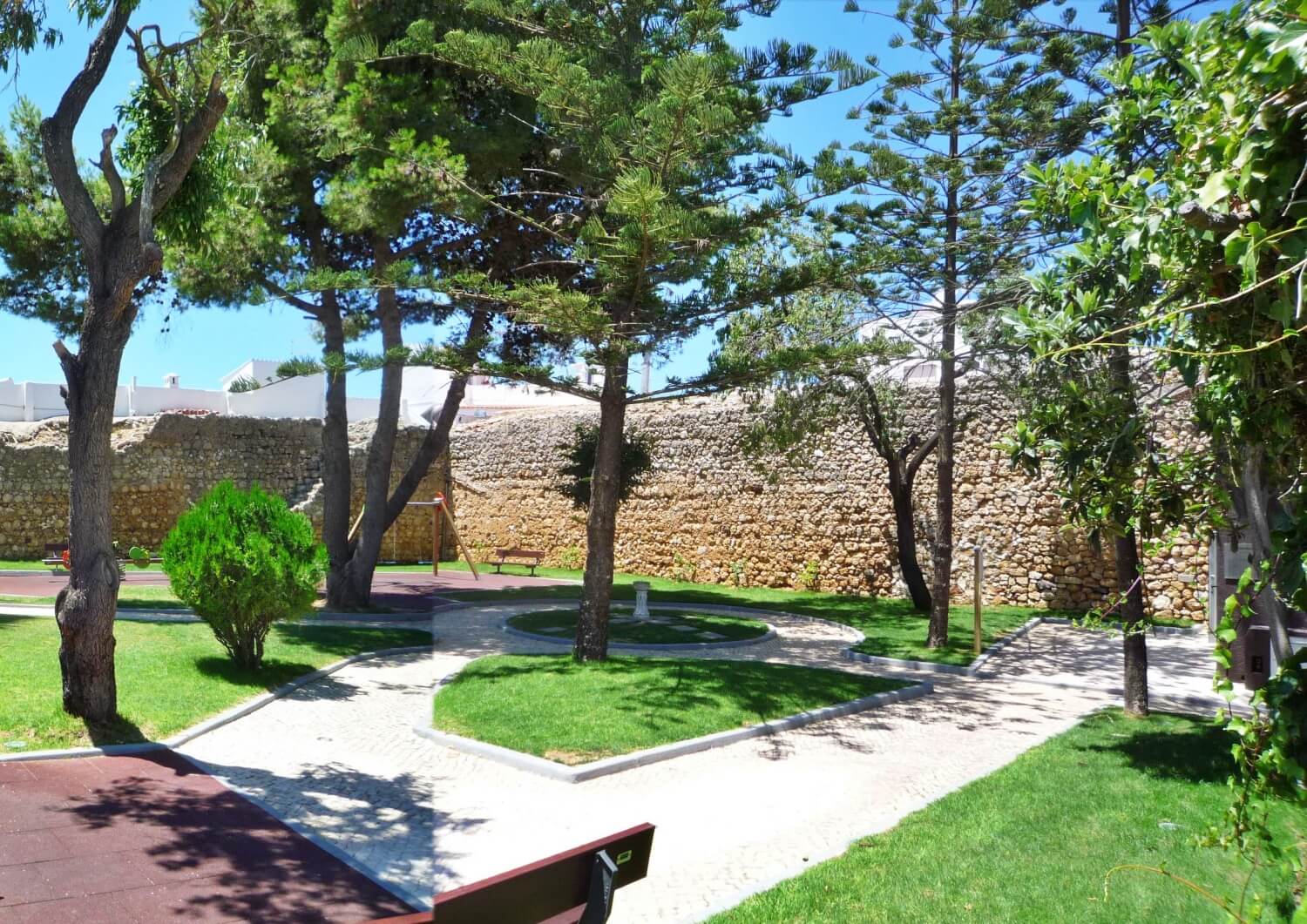
At the end of the 20th century, a children's playground was constructed in the interior of the main square, an act that was seen as a commemoration of the Christian conquest of the town.
The attempt to identify the hidden defensive systems of Alvor continues. An archaeological excavation of the hill discovered the remnants of the fortress of Ipses (or old city), located in front of the matriz church, revealing levels of Moorish occupation. These excavations revealed that the castle of Alvor was actually complemented by other secondary redoubts, located closer to the coast.
Architecture
As an ancient river community, the region was conditioned by a privileged position: it had access to the sea and interior territory, across many of the ravines and rivers that cross the region and protected by a dominant mountain. Alvor was, since this early period, a reference for many of the smaller populations that developed along the eastern maritime coast east of the River Arade.
The structure was installed on a 5-metre (5.5 yd) hilltop: a rectangular plan, the castle's walls continue to exist after many years of wear and ruin, comprising many blocks of irregular forms. A perceptible path still circles this structure, identifiable by a staircase located along the southern wall, but the vertical extent of this wall is clouded by limited vestiges.
The main gate, aligned to the north, was constructed during the Renaissance, defended by a tower. On the eastern wall is the remnant of another tower, with a panoramic view of the sea.
O Castelo de Alvor, também denominado como Castelo de Albur ou Forte de Alvor, localiza-se na vila e freguesia de Alvor, Concelho de Portimão, Distrito de Faro, em Portugal.
Em posição dominante sobre uma elevação, fronteiro ao oceano Atlântico, é considerado um expressivo monumento militar no Algarve, tendo a sua história associada ao do vizinho Castelo de Silves.
História
Antecedentes
A recente pesquisa arqueológica evidenciou que a primitiva ocupação humana deste local é muito antiga, aqui tendo se localizado Ipses, um importante centro comercial pré-romano fortificado, que manteve a sua atividade durante a ocupação Romana e após. À época da ocupação Muçulmana, o sistema defensivo deste povoado se adensou, embora não esteja ainda totalmente compreendido pelos estudiosos: a defesa proporcionada pelo castelo Mouro era reforçada por redutos complementares, entre este e o mar.
O castelo medieval
No contexto da campanha da conquista de Silves, Sancho I de Portugal (1185-1211), tentou a tomada de Alvor desde 1187. Mais tarde, com o reforço de uma armada de Cruzados oriundos da Dinamarca e da Frísia, assaltaram e conquistaram o Castelo de Alvor (1189), antecipando o cerco e tomada do Castelo de Silves, na dependência de quem se inscrevem. A posição de Silves foi mantida pelos cristãos até 1191.
Embora tenha se mantido como uma das principais povoações do Algarve, devido à excelência de sua enseada, aqui tendo falecido o rei D. João II (1481-1495), não foram localizadas informações acerca da evolução da arquitectura militar da vila e seu castelo.
À época da Dinastia Filipina, na passagem do século XVI para o XVII, no contexto dos conflitos entre a Espanha e as potências do Norte, as fortificações marítimas algarvias foram modernizadas e reforçadas. Sobre Alvor, Alexandre Massai, engenheiro-militar napolitano a serviço da Espanha, referiu a sua defesa como um fortezinho pequeno, quadrado (Descripção do Reino do Algarve..., 1621), ineficaz diante da capacidade da artilharia da época. Esse motivo contribuiu para o abandono da estrutura, em favor de novas fortificações, concentradoras de forças em pontos-chaves do litoral sul de Portugal.
Diante da perda de sua função defensiva, o castelo foi progressivamente sendo envolvido pelo crescimento da povoação ao longo dos séculos, vindo a cair em ruínas.
Do século XX aos nossos dias
Em fins do século XX, o castelo foi considerado como Imóvel de Interesse Público, por Decreto de 25 de Junho de 1984, tendo sido transformado em um jardim infantil, em comemoração à conquista cristã da vila.
Características
O castelo apresenta planta quadrangular, com as suas muralhas, à moda islâmica, erguidas com blocos de pedra irregulares dispostos horizontalmente, elevando-se a mais de cinco metros de altura em diversos trechos. A existência de um adarve é deduzida pela existência de uma escada adossada ao setor sul da muralha, embora o estado atual do monumento não permita afirmar se os muros eram ameados.
A porta principal de acesso, em cotovelo, é o último elemento original remanescente, acreditando-se que tenha sido originalmente defendida por uma torre albarrã. A leste, observam-se os restos de uma torre que, conforme a sua altura, teria permitido a observação do movimento na enseada.
Acredita-se que o atual Castelo de Alvor corresponda apenas à primitiva alcáçova islâmica. A vila também deve ter sido originalmente cercada por uma cintura de muralhas, que não chegou até aos nossos dias.
Useful information
Free
2.00 EUR
- Playground
- WC
- Castle Park
Ruins of the castle
-
Nearby castles

Forte de Santa Catarina (Portimão)
Portimão
5.8km
fortress
Forte de São João do Arade
Ferragudo
6.4km
fortress
Forte da Ponta da Bandeira
Lagos
7.4km
fortress
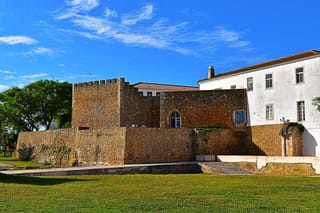
Castle of Lagos
Lagos
7.5km
castle, chateau
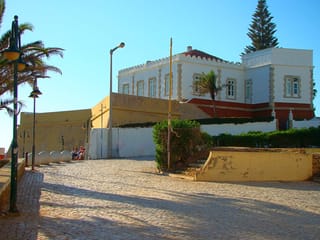
Castle of Senhora da Luz
Luz
13.1km
castle, chateau
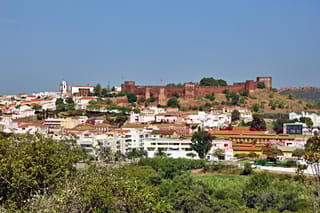
Castle of Silves
Silves
15.4km
castle, chateau
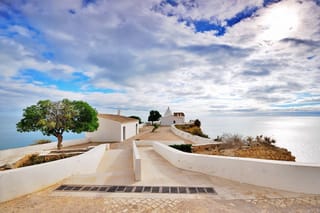
Fort of Nossa Senhora da Rocha (Porches)
Porches
18.7km
fortress