Uhrovec
Uhrovské Podhradie Trenčín county Slovakia
castle ruin
Uhrovec
Uhrovské Podhradie Trenčiansky kraj Slovakia
zrúcanina hradu
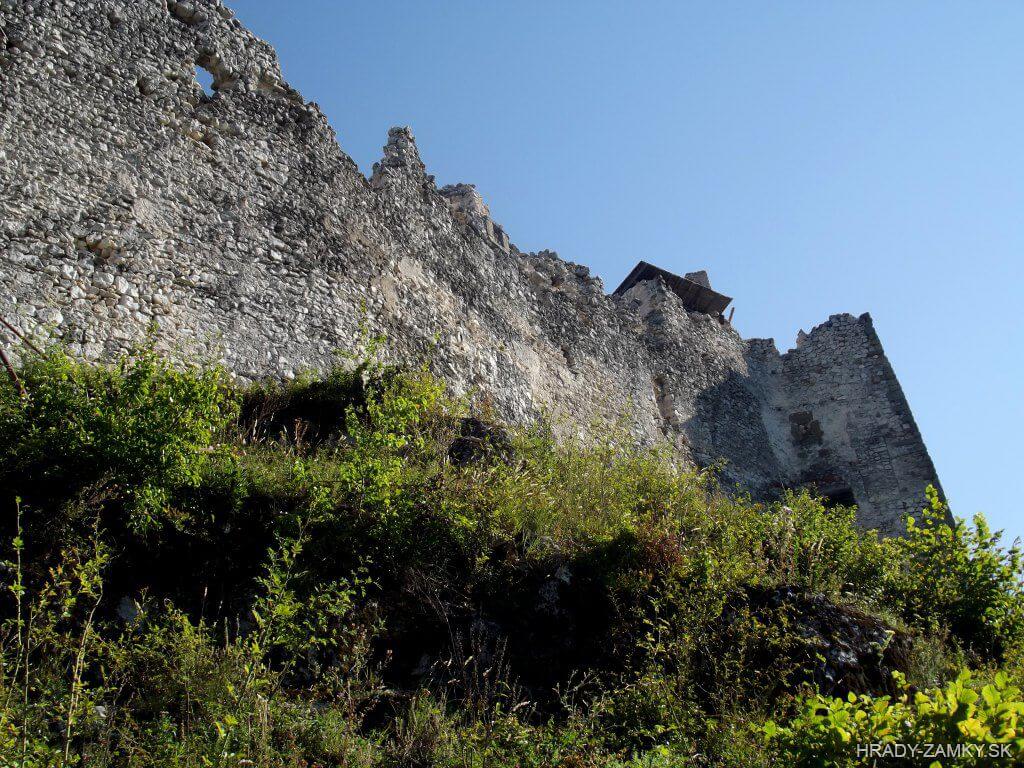
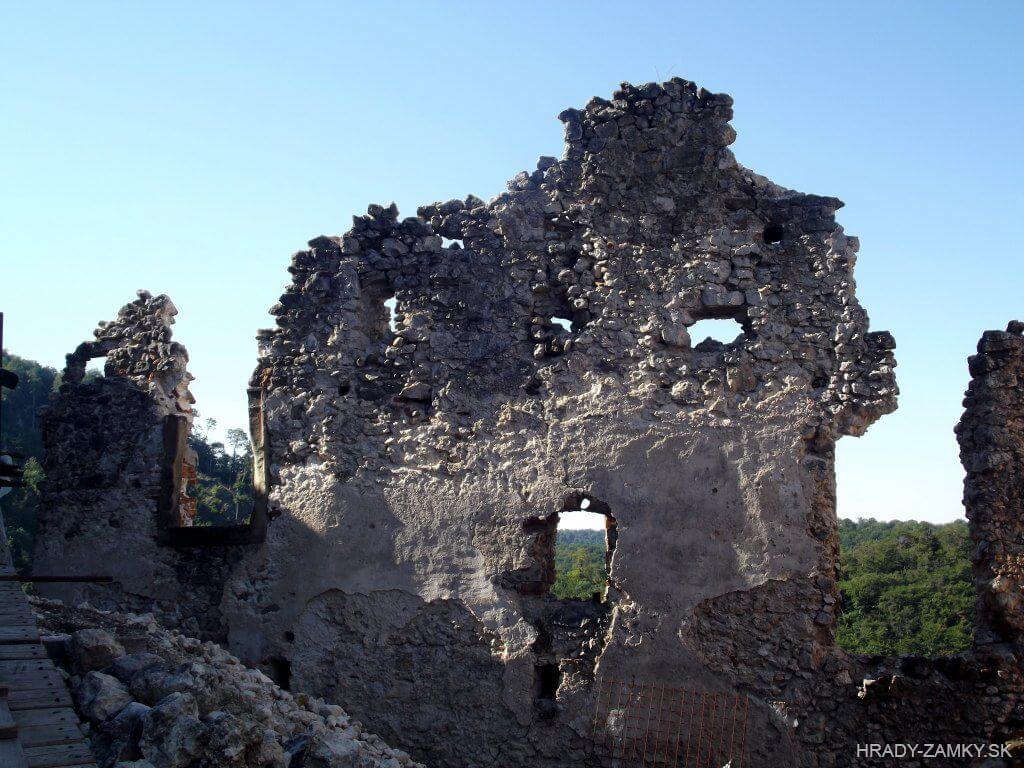
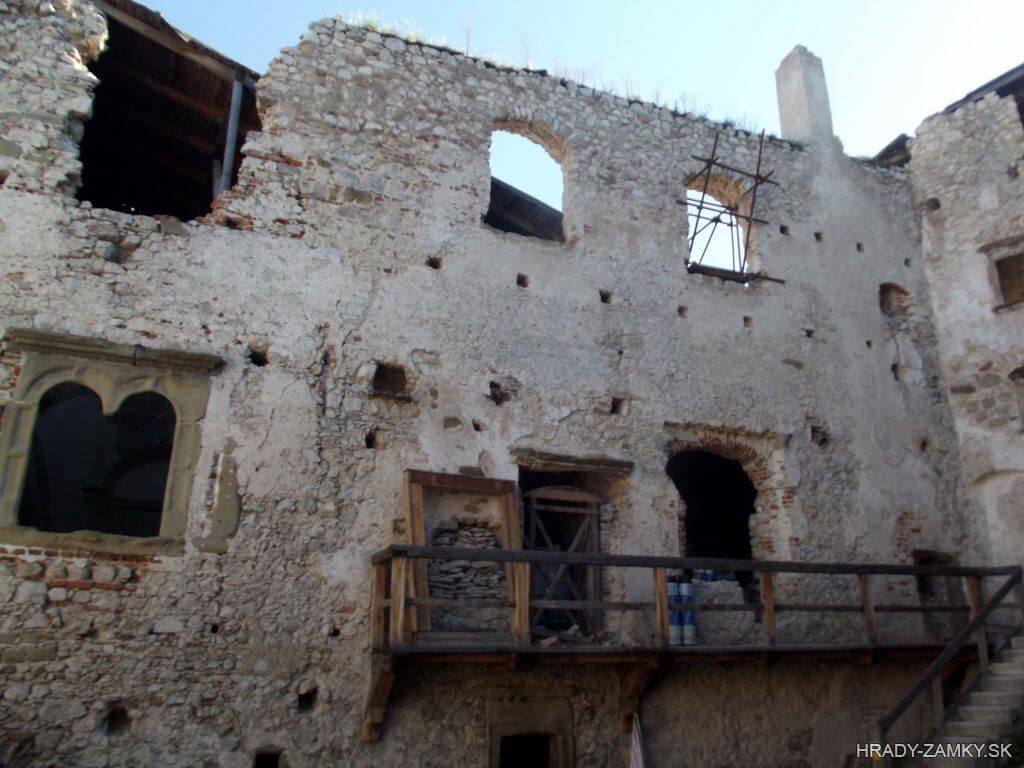
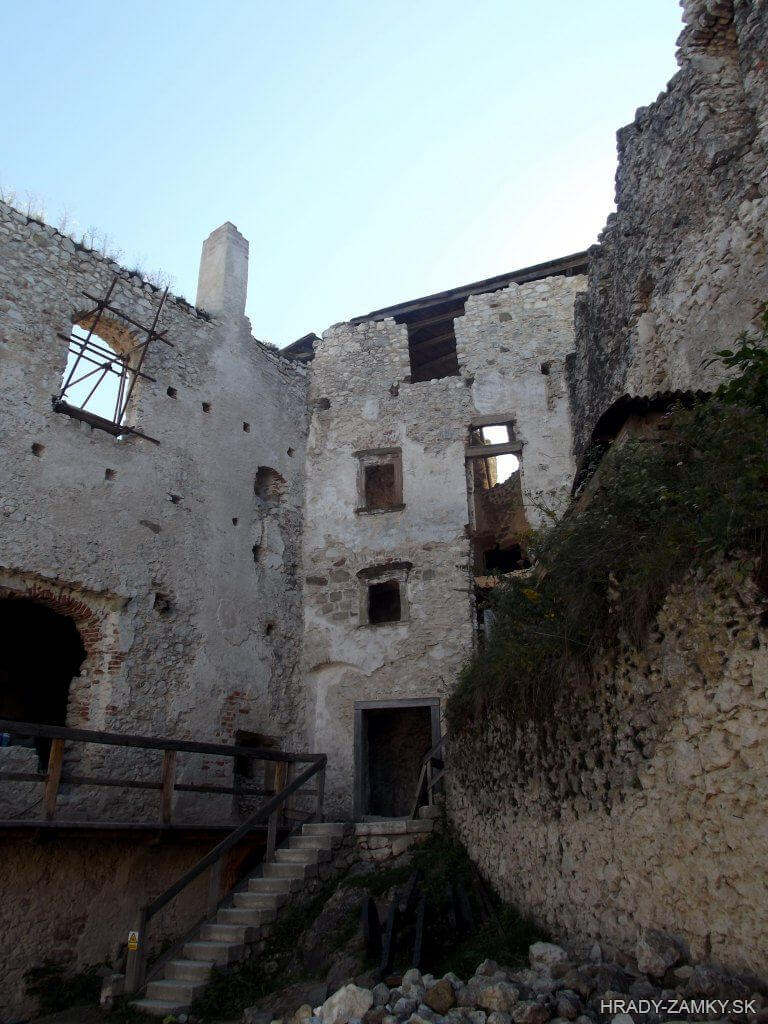
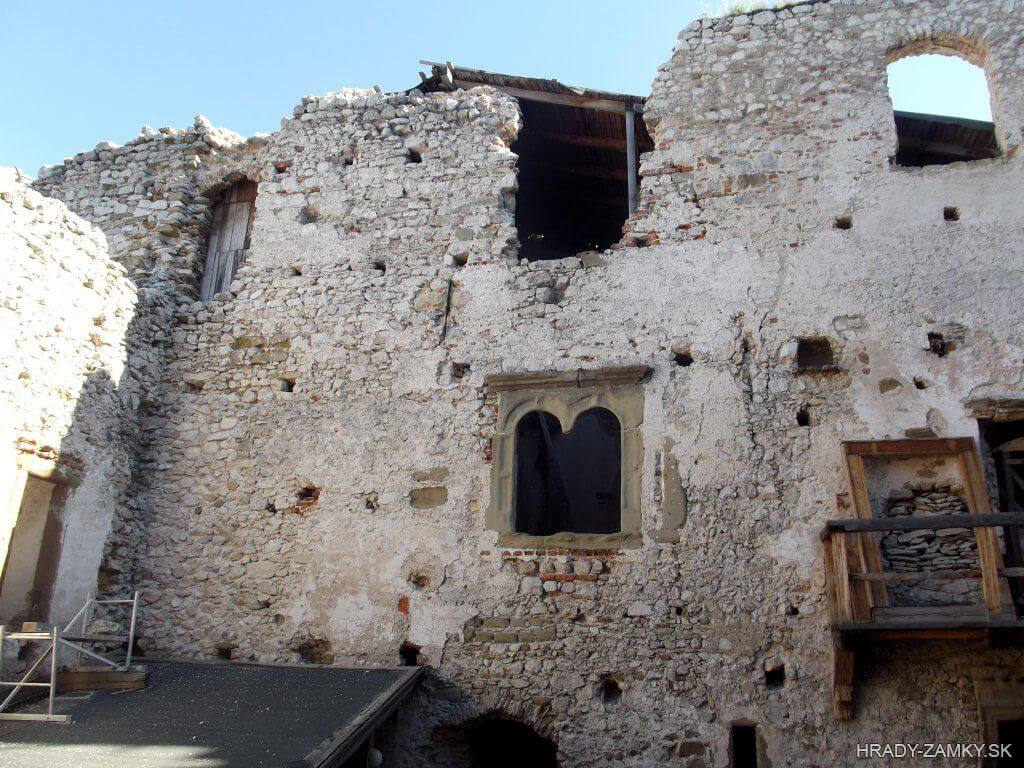
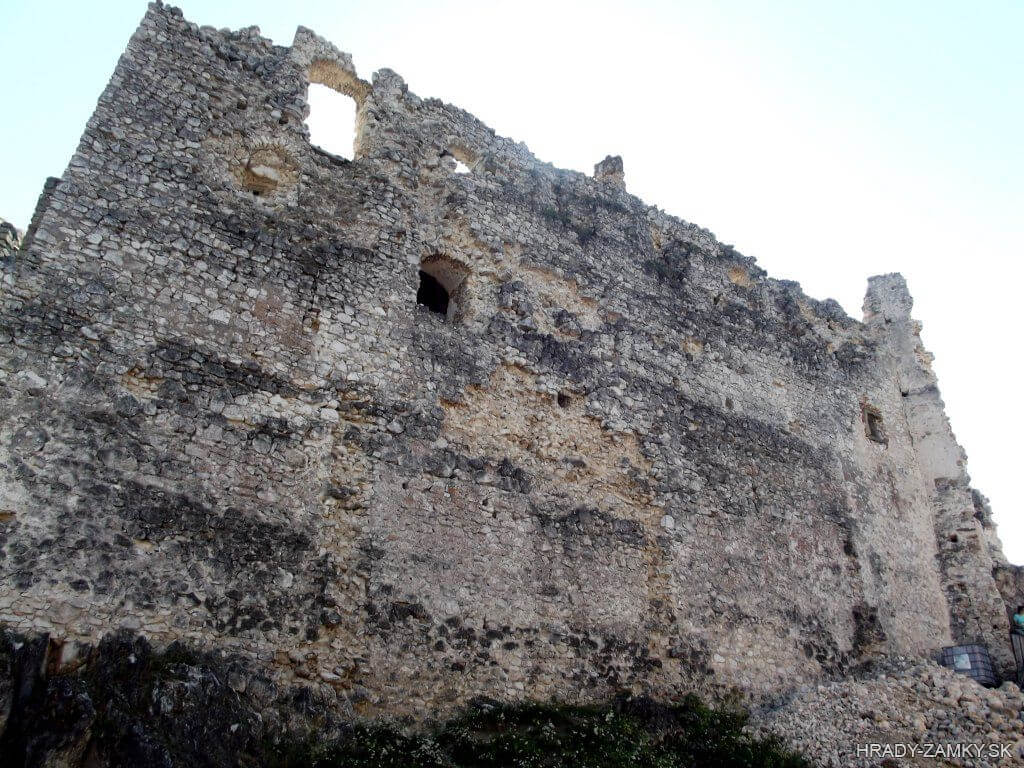
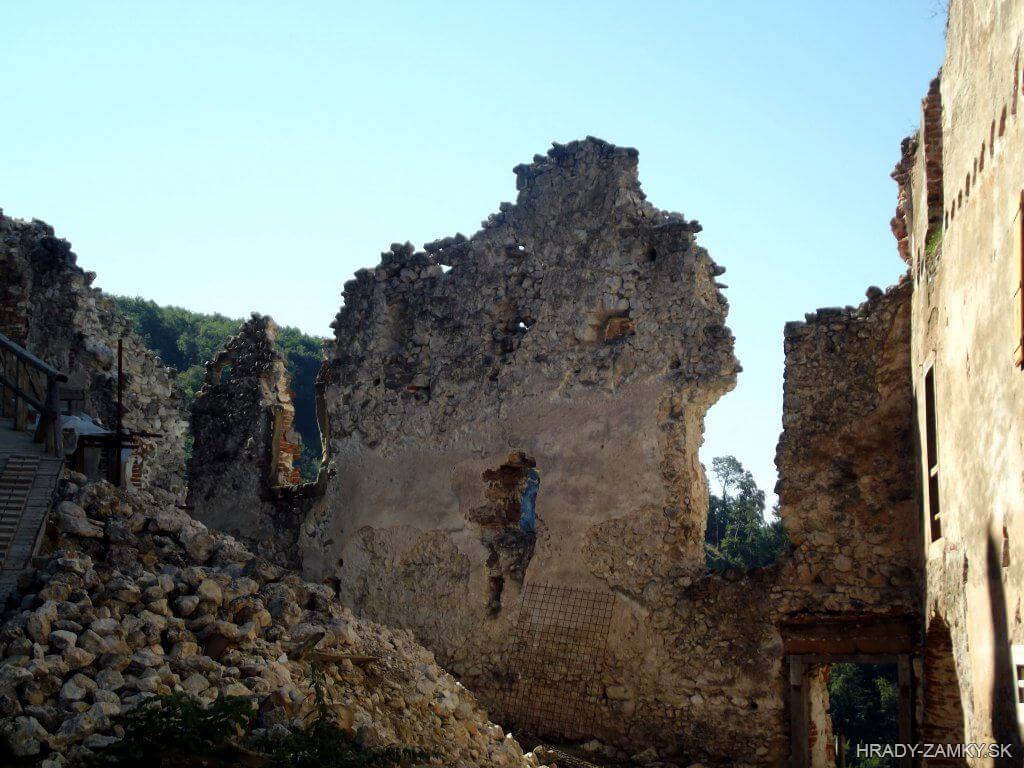
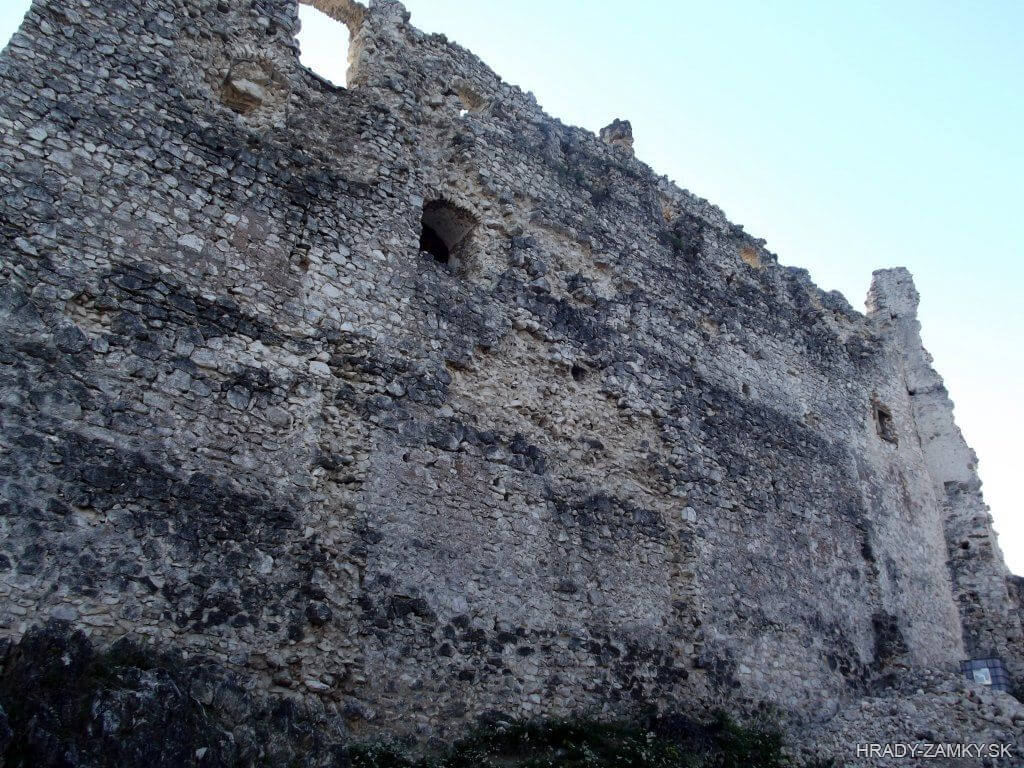
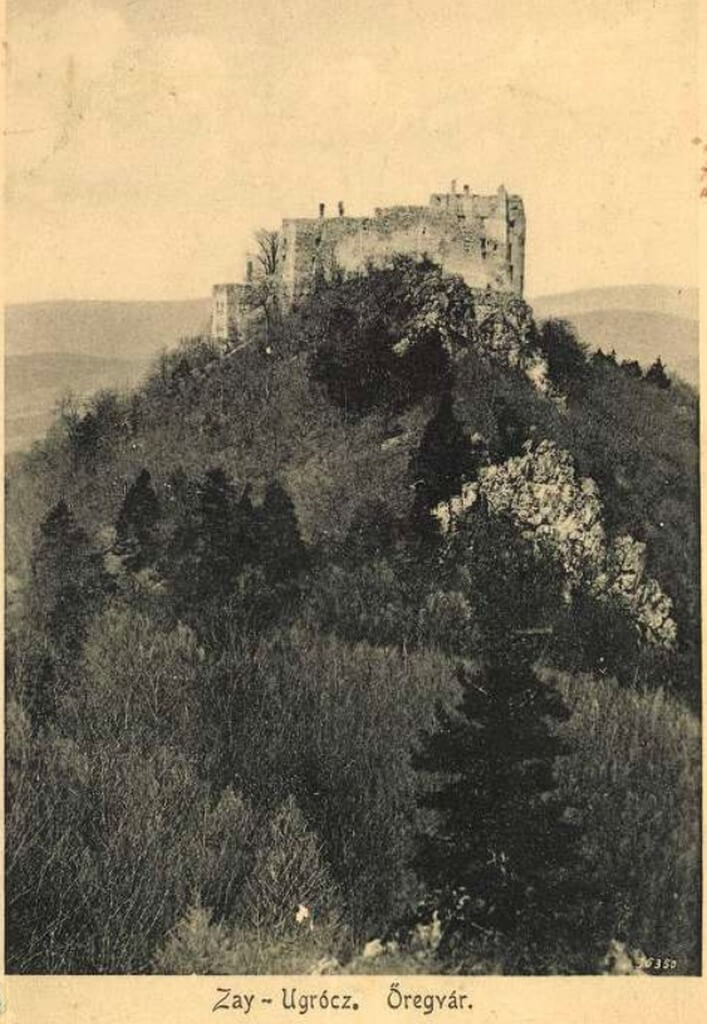
The ruins of the castle on a wooded hill of the Strážovské hills, on the side ridge of the Nitrické mountains, near the village of Uhrovské Podhradie
Zrúcanina hradu na zalesnenom bralnom kopci Strážovských vrchov, na bočnom hrebeni Nitrických vrchov, neďaleko obce Uhrovské Podhradie

Previous names
Vgroug, Ugroug, Grogh, Vgrog, Vgroch, Wgrowg, Vhurocz, Uhrowecz, Uhrovský hrad, Ugróc
Roads
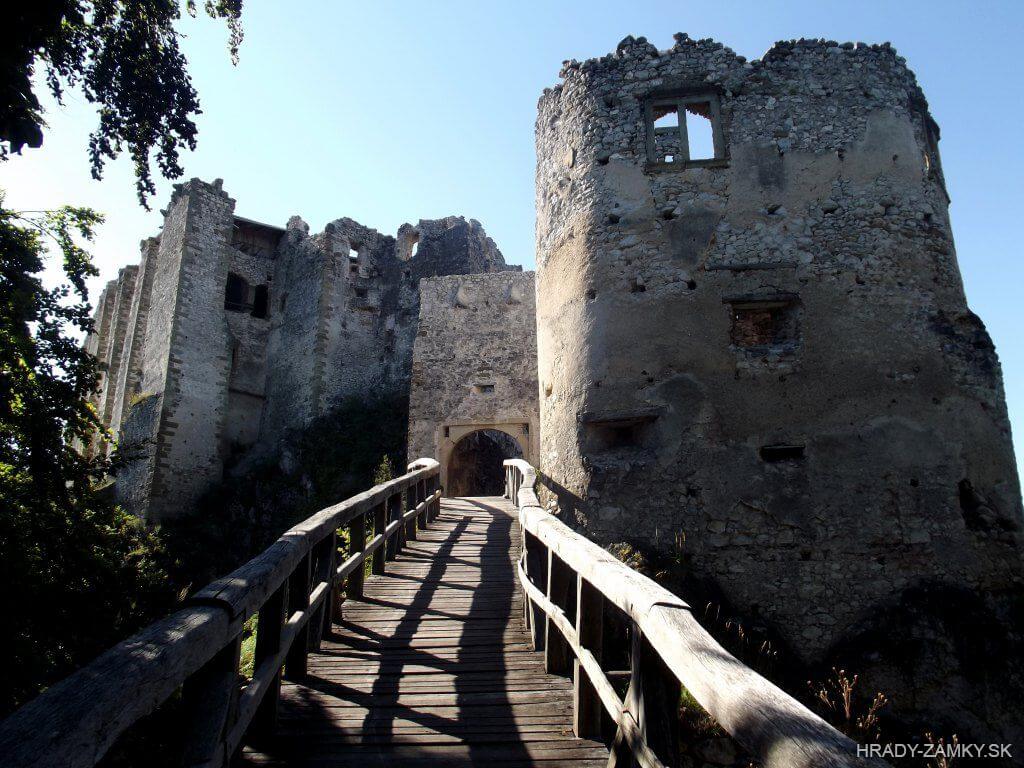
Trasa 1: We can get to Uhrovec castle from Uhrovské Podhradie. We will walk through the village to its end to the quarry, where it is spacious parking place. From there, we will walk a short distance to the information board.From the information board, continue to the right across the bridge. If we decide to go on a shorter but steep route, we must not miss an inconspicuous turn to the left between the fences next to the building. This green route passes through the forest all the time, but it is necessary to prepare for a constant, relatively demanding climb along the tree roots, here and there with some obstacle in the form of fallen trees. About 300m below the castle, the route feeds the blue route from the valley and leads directly to the access bridge to the castle.
Trasa 1: Na hrad Uhrovec sa dostaneme z Uhrovského Podhradia. Prejdeme obcou až na jej koniec k bývalému kameňolomu, kde je priestranné parkovisko. Odtiaľ pôjdeme peši kúsok ďalej až k informačnej tabuli.Od informačnej tabule pokračujeme vpravo cez mostík. Ak sa rozhodneme ísť po kratšej ale strmej trase, nesmieme minúť nenápadnú odbočku doľava medzi plotmi popri budove. Táto zelená trasa prechádza celý čas lesom, no treba sa pripraviť sa na neustále, pomerne náročné stúpanie po koreňoch stromov, sem tam s nejakou prekážkou vo forme padnutých stromov. Asi 300m pod hradom sa trasa napája na modrú trasu z doliny a vedie priamo k prístupovému mostu na hrad.
Trasa 2: The longer, but somewhat more comfortable route starts where the mentioned green one, but after the bridge we do not turn left next to the fences, but we continue straight along the unmarked path until we join the blue route on the left at the end.
Trasa 2: Dlhšia, ale o čosi pohodlnejšia trasa začína tam, kde spomínaná zelená, avšak za mostíkom neodbočíme vľavo popri plotoch, ale pokračujeme neznačenou cestičkou ďalej rovno, až sa pri konci napojíme na modrú trasu vľavo.
Description
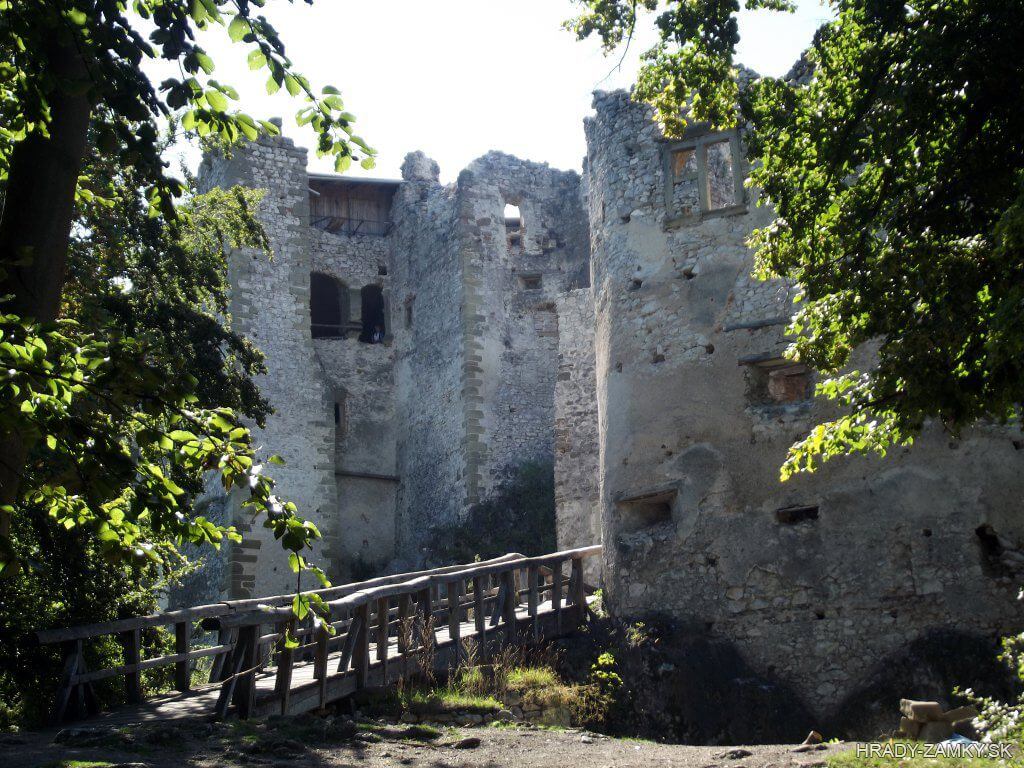
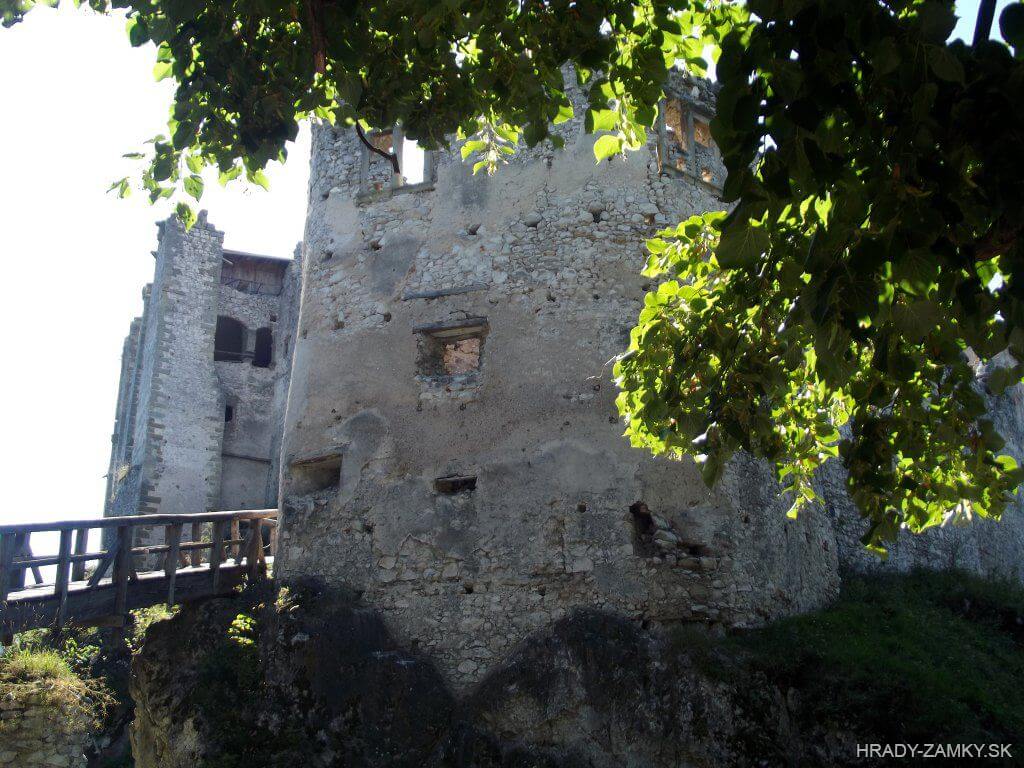
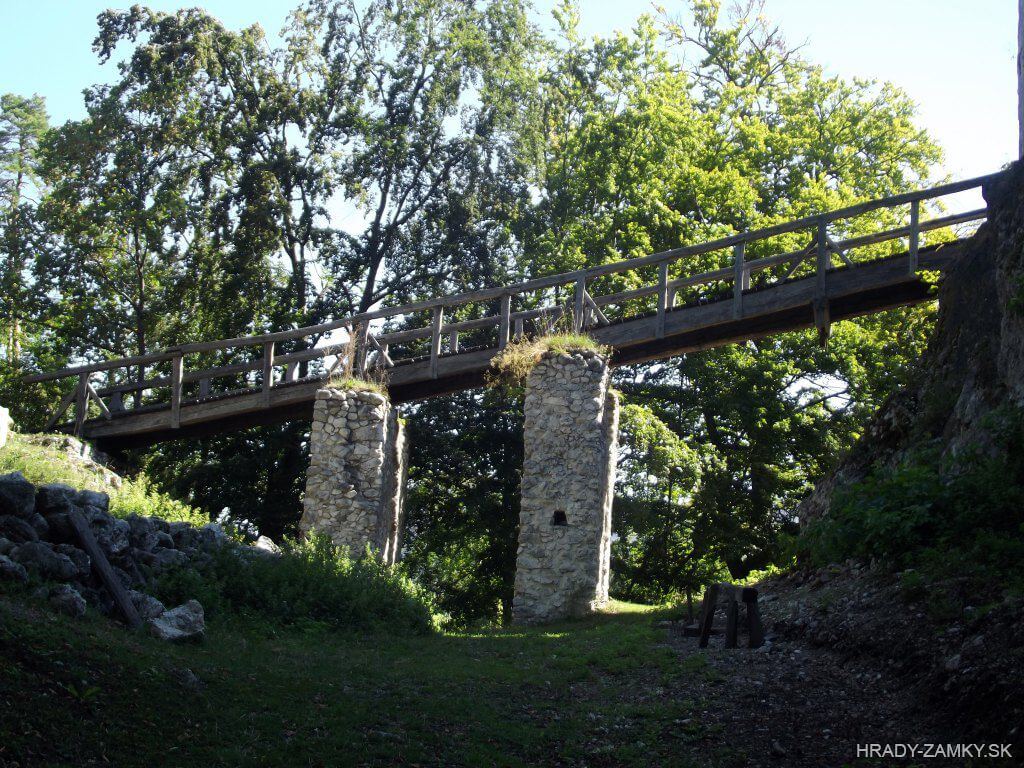
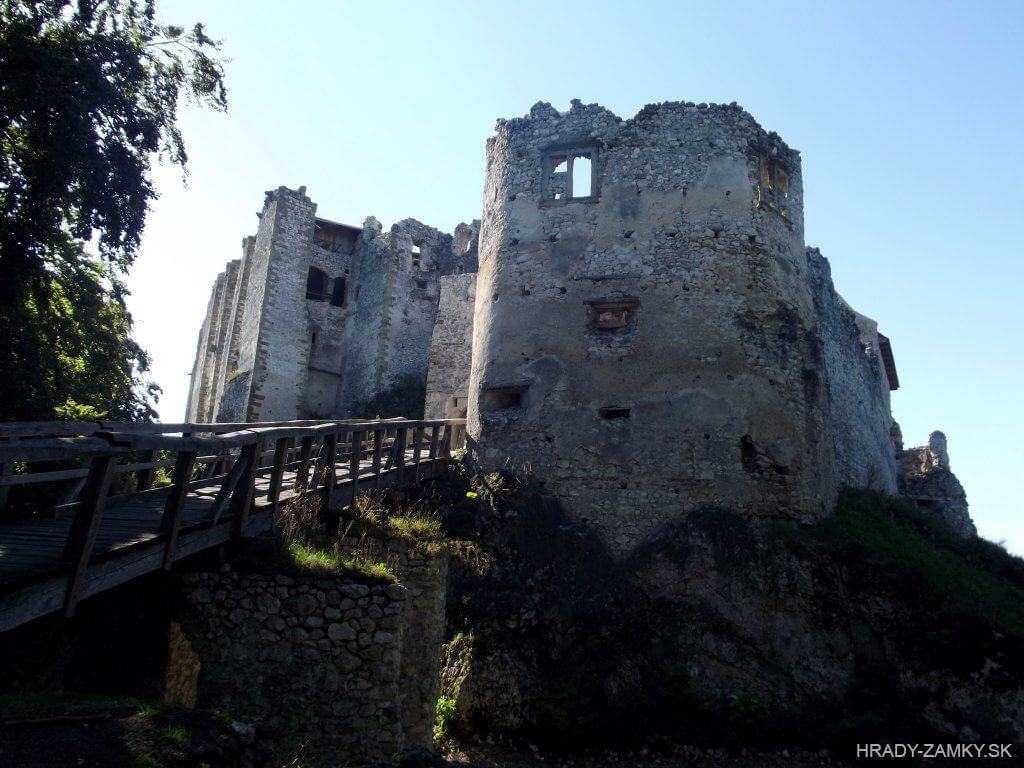
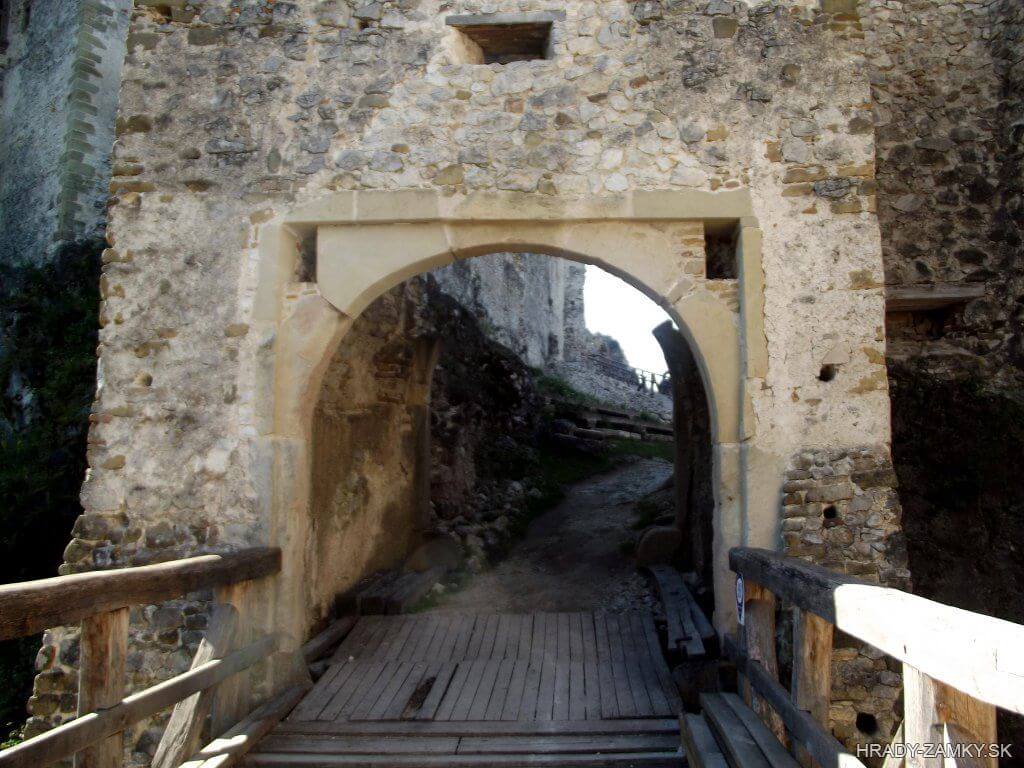
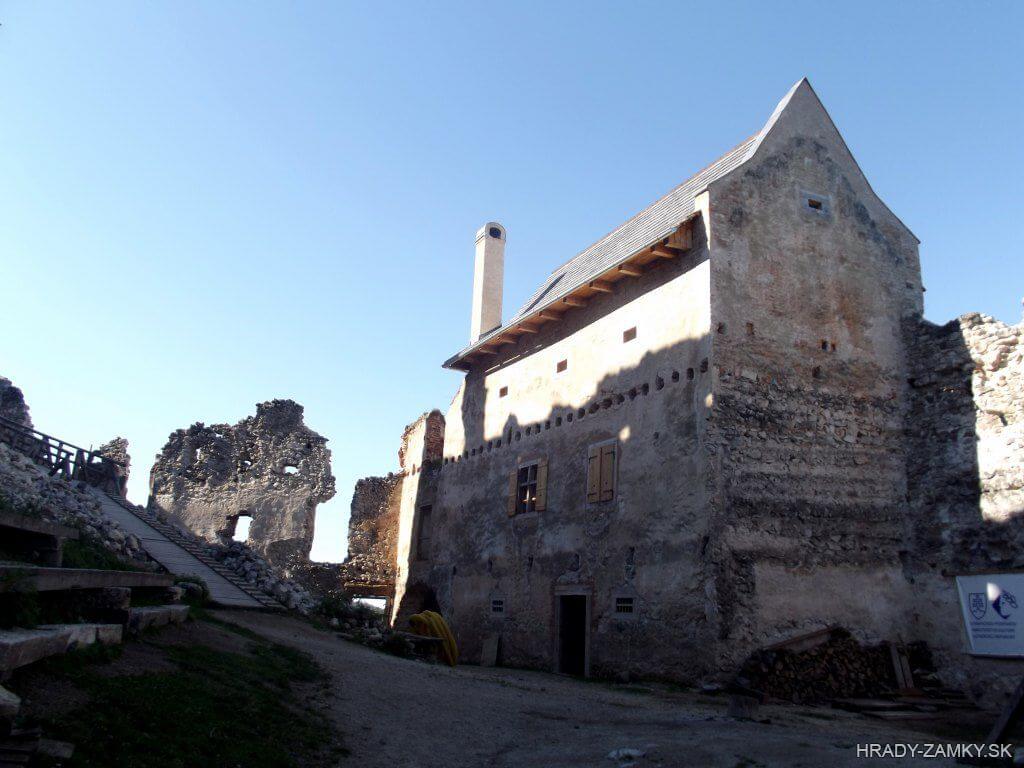
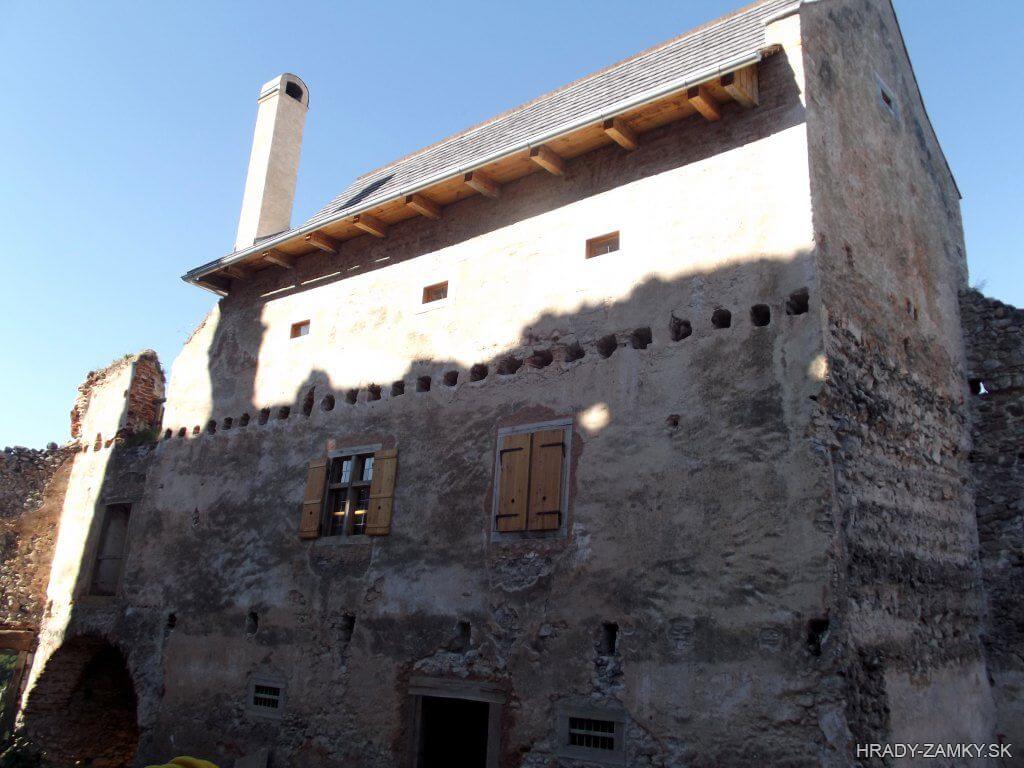
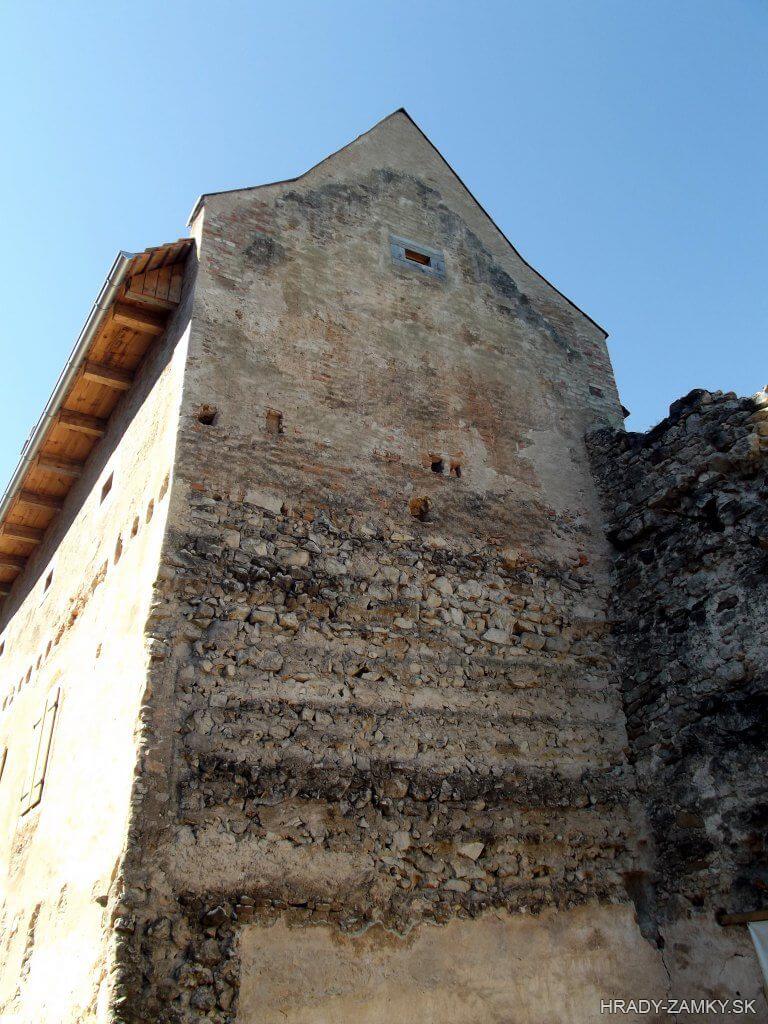
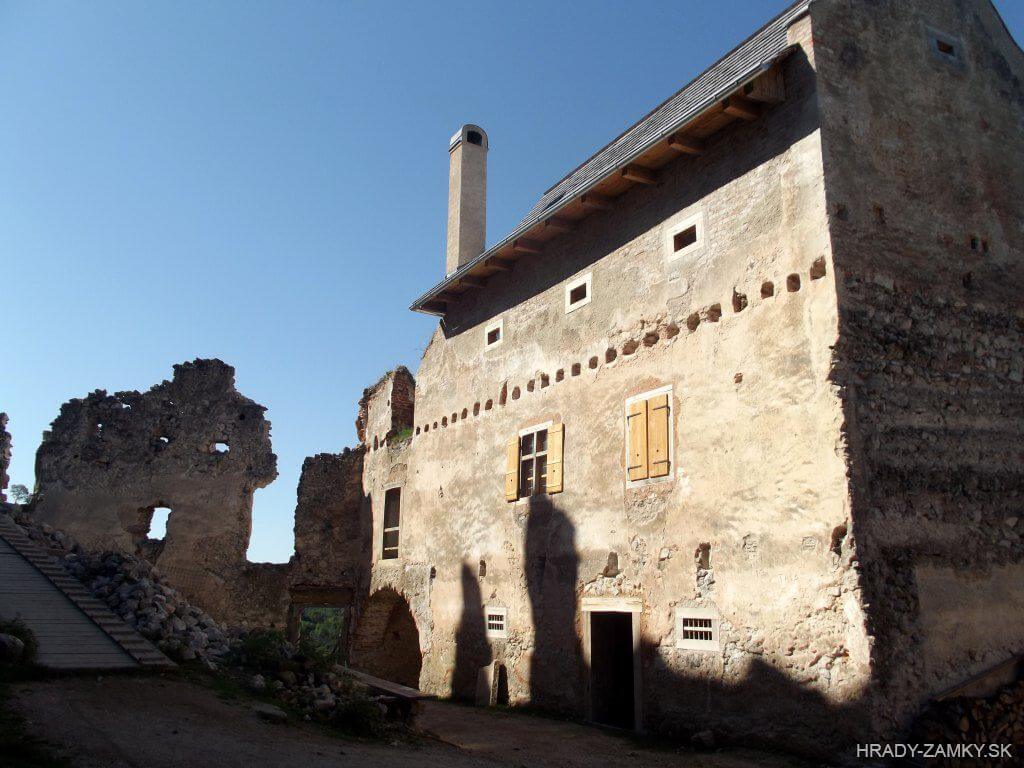
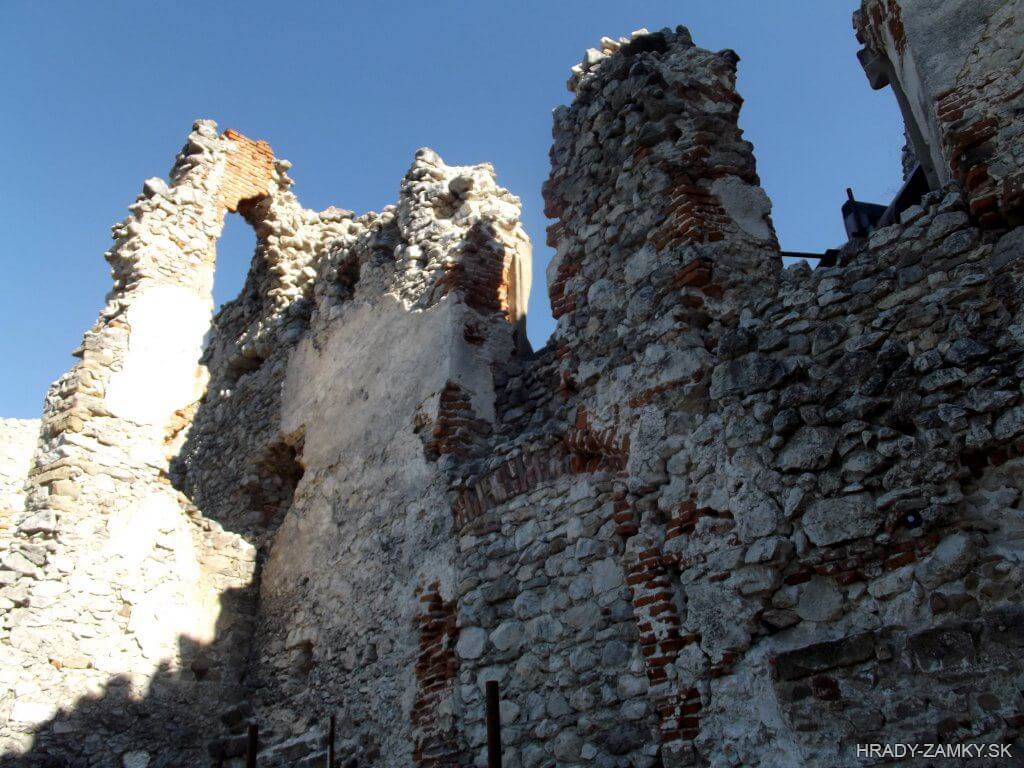
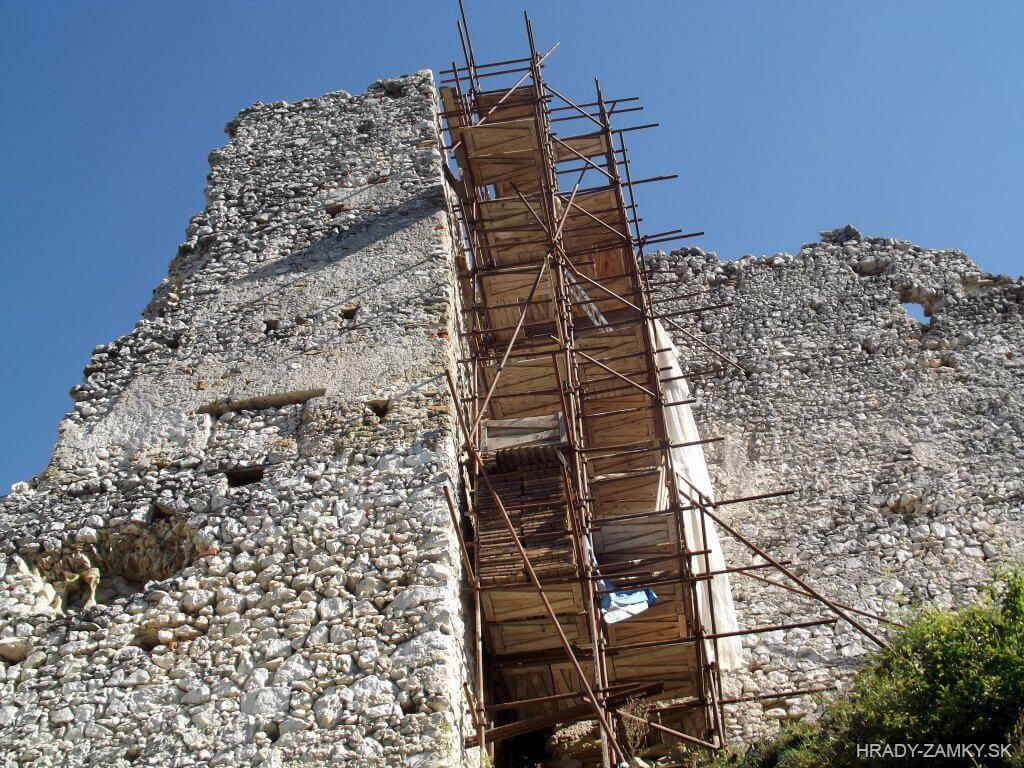
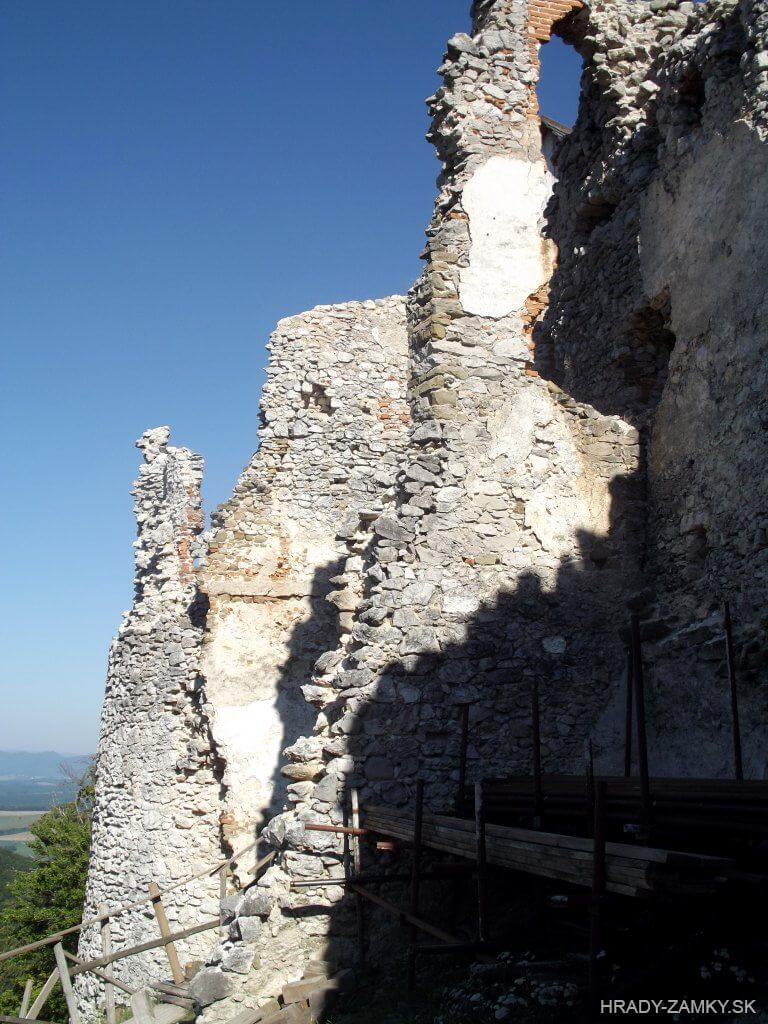
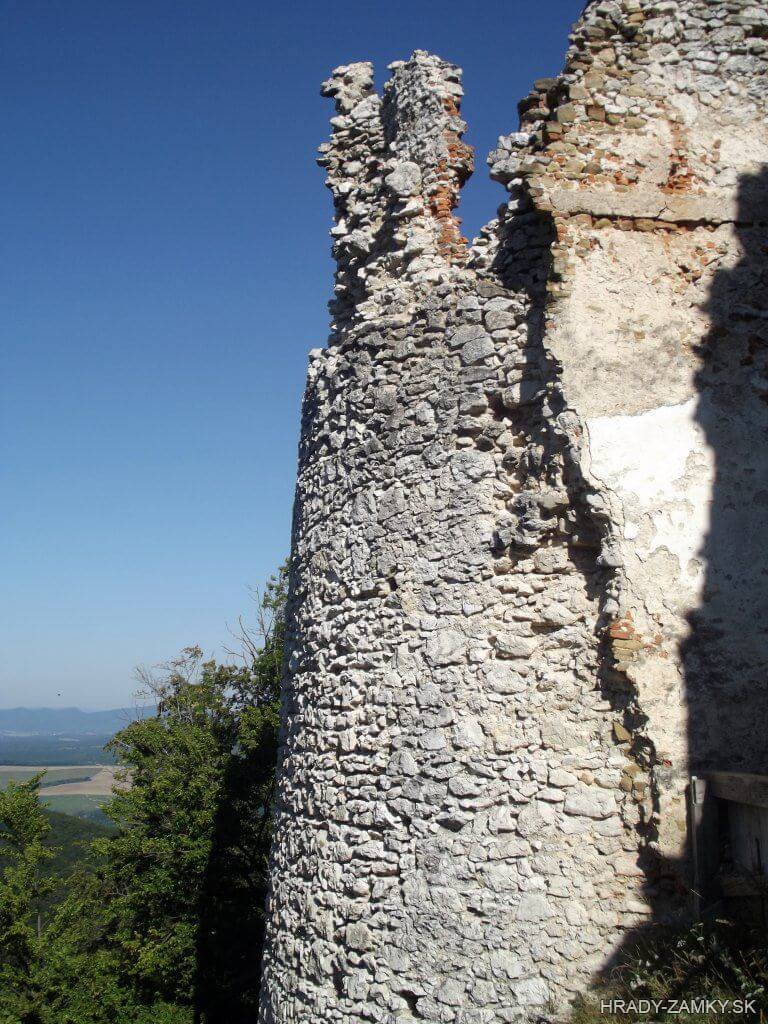
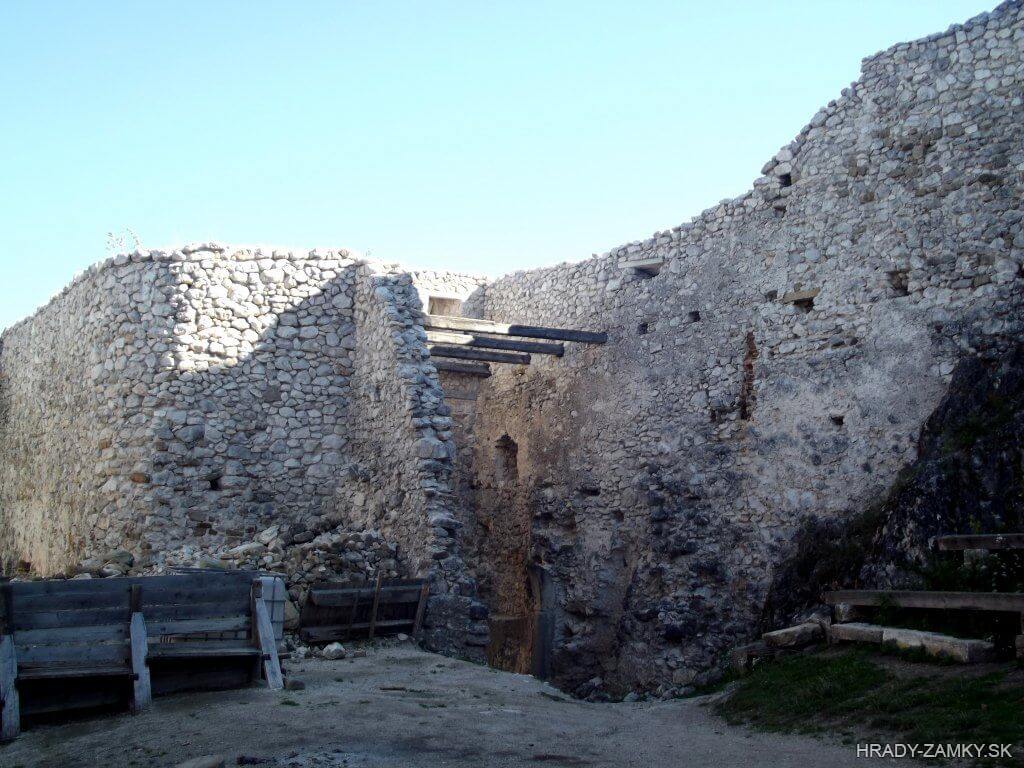
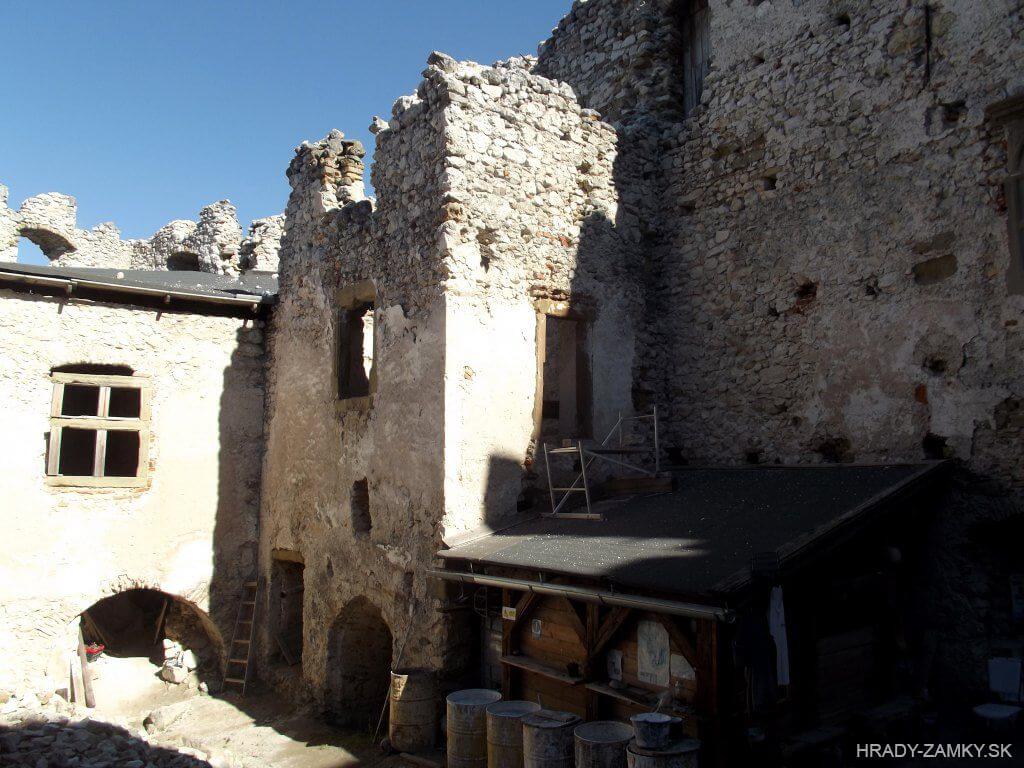
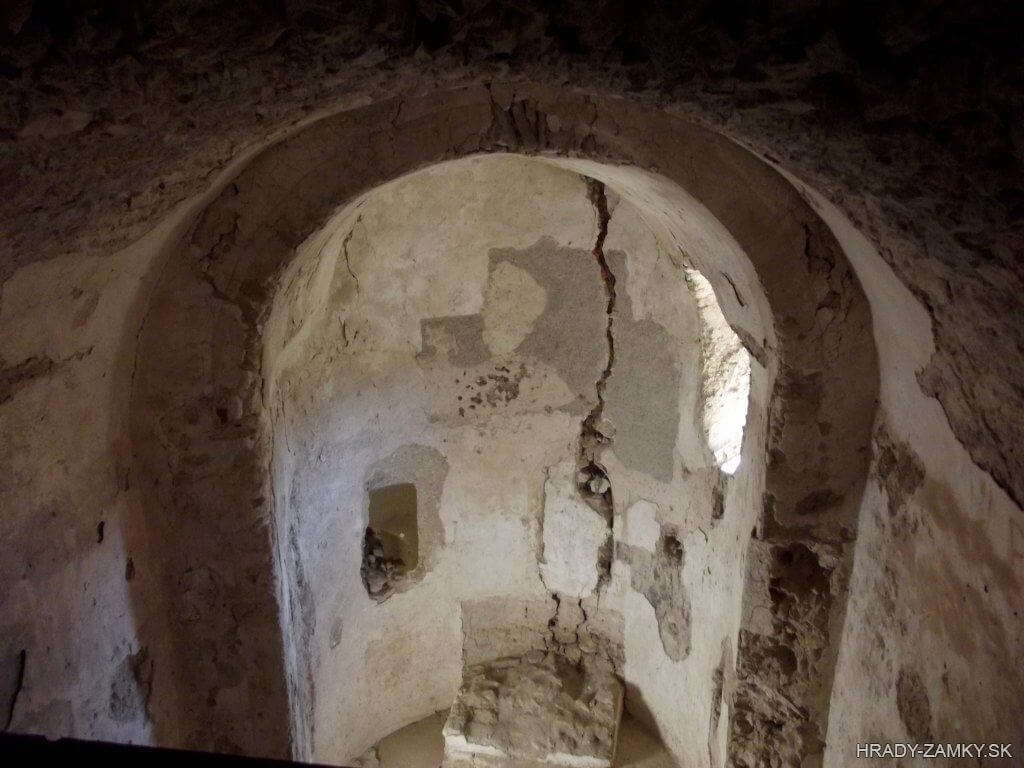
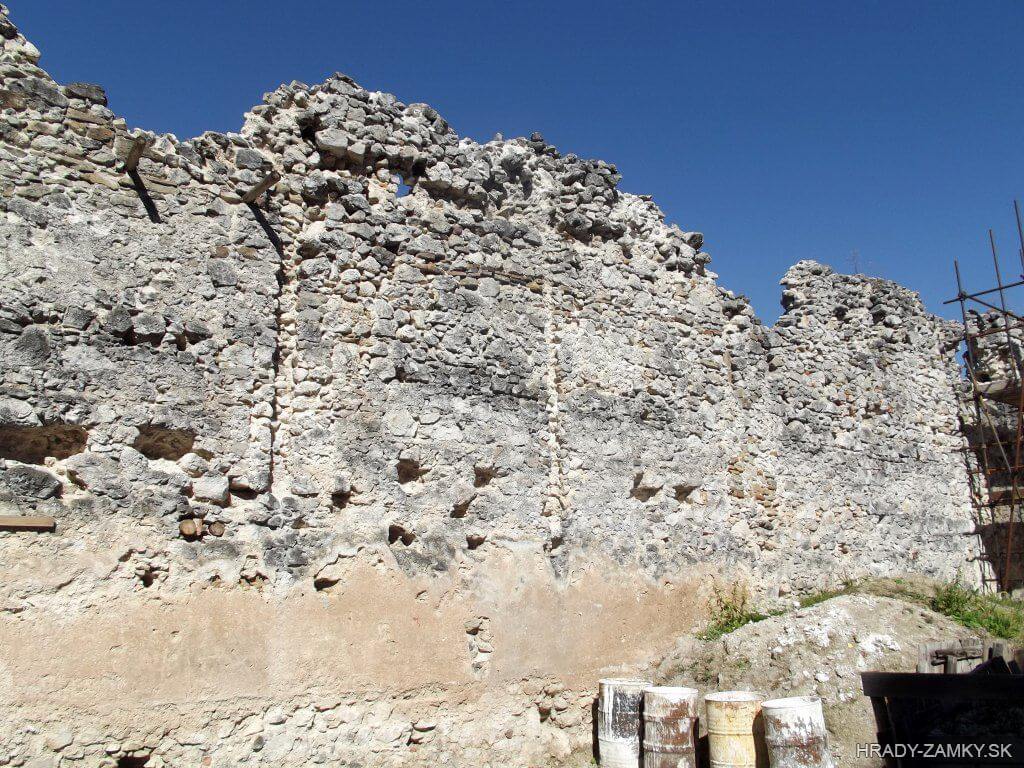
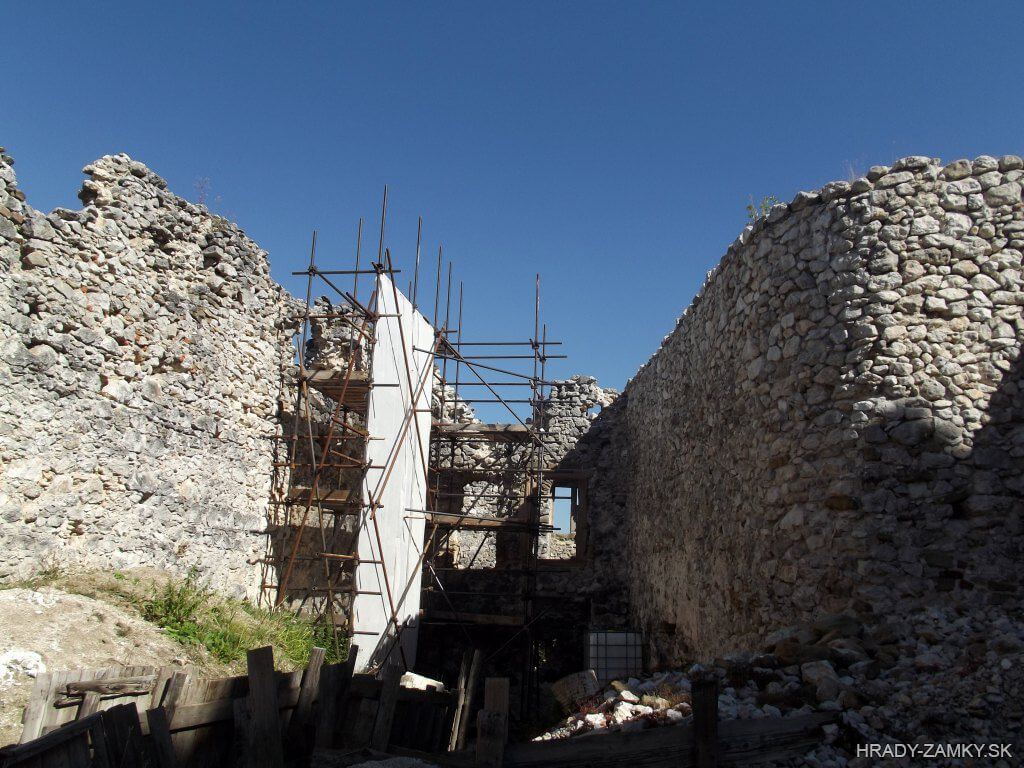
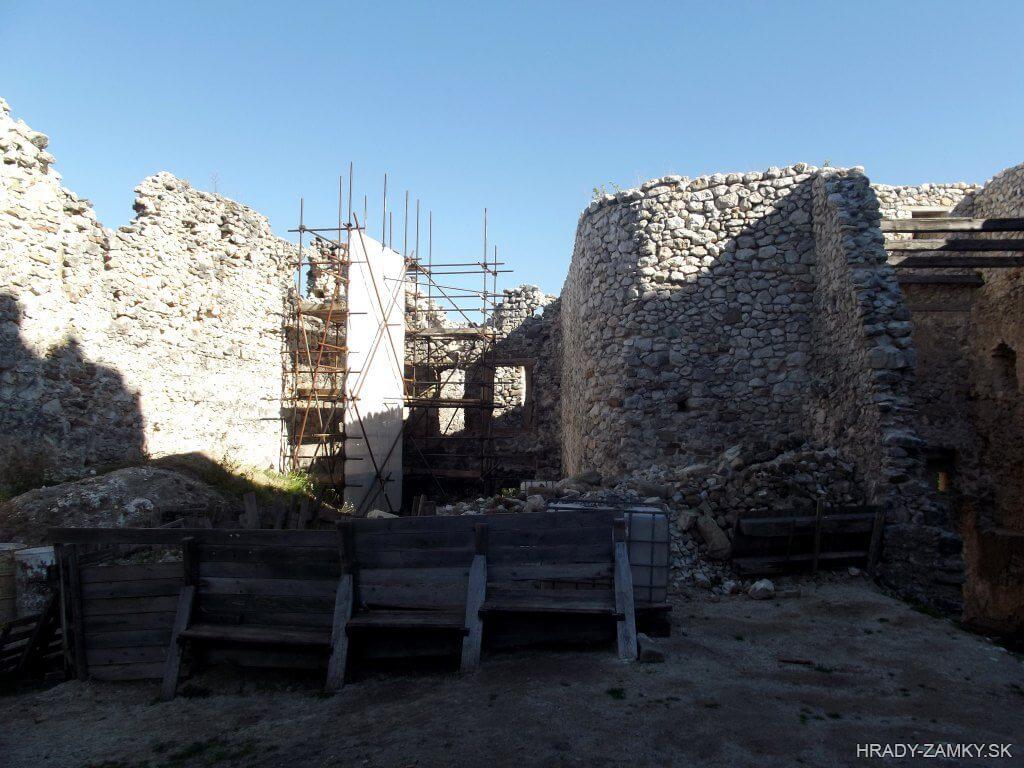
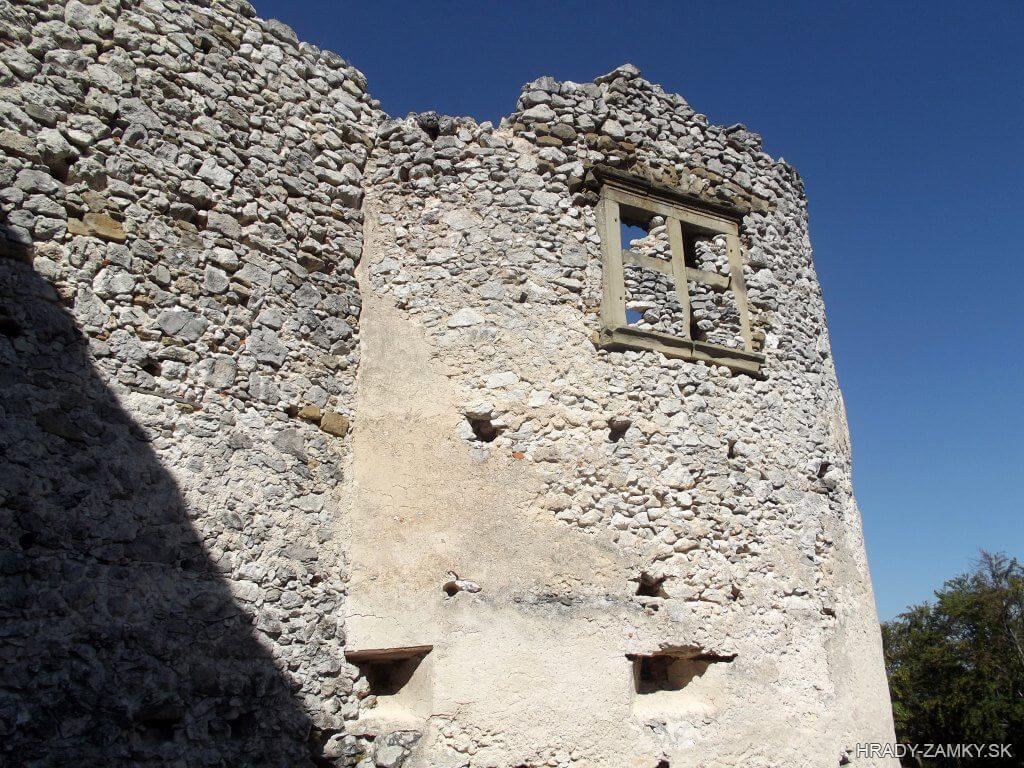
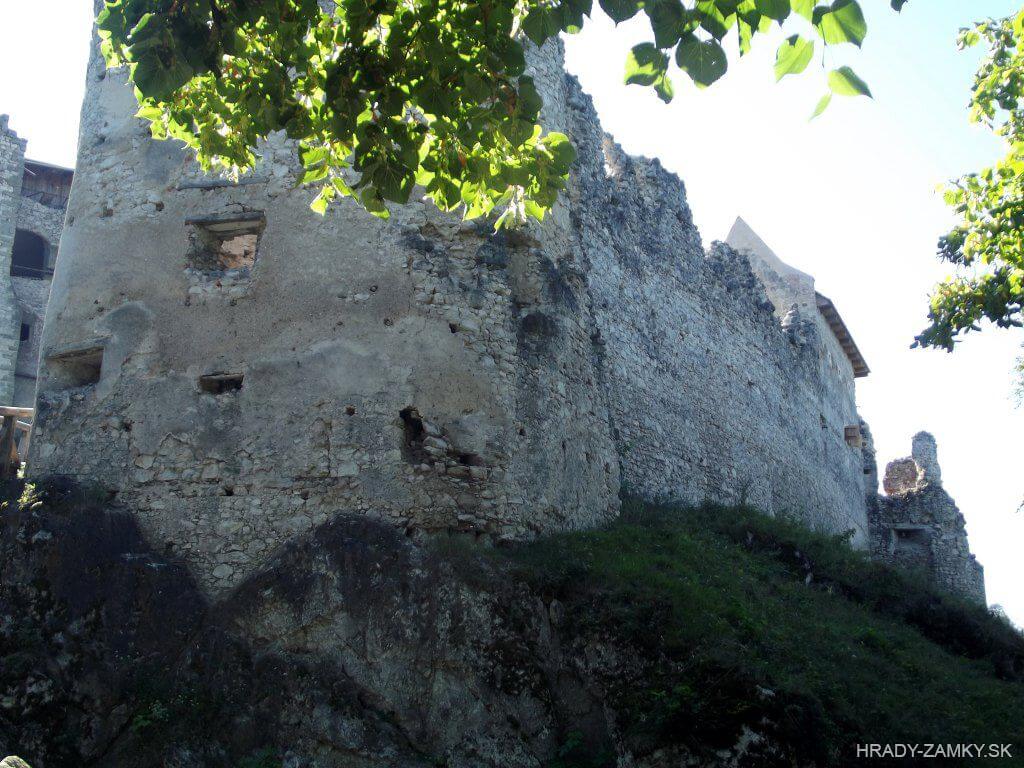
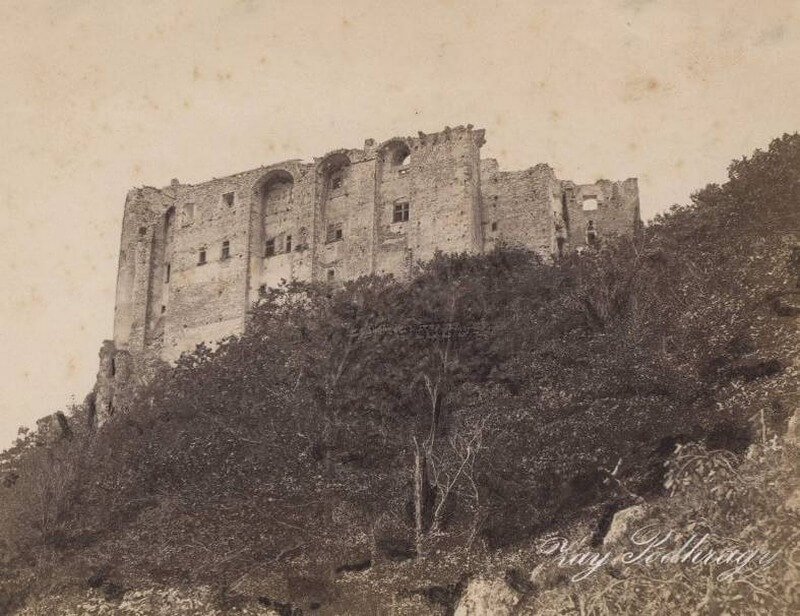
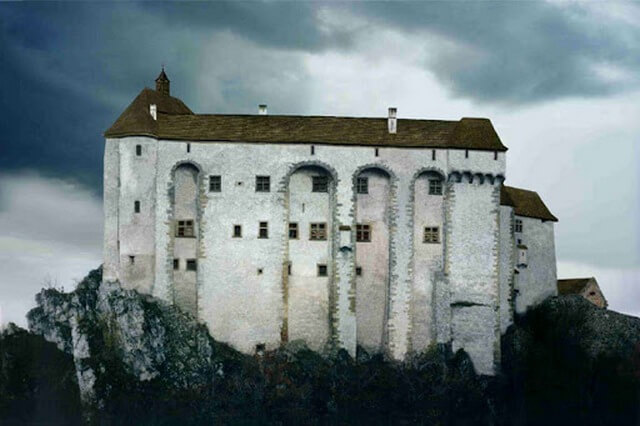
The castle with a triangular floor plan was delimited by a stone wall with three corner bastions. It was a tall triangular tower at the front, a smaller prismatic tower in the southwest and at the highest point stood the supposed tower-like residential building - the donjon. Later, a late Romanesque chapel with an emporium was added. In the 15th century, a new palace was added along the NE wall and a cistern in the courtyard. At the end of the Middle Ages, a brick forecourt was built and only then was the castle expanded by an extensive fortification. Access to the castle was provided by a bridge over the moat and the gate was protected by an oval cannon bastion. During further renaissance reconstructions of the castle, the late Gothic palace was increased, residential tracts were added, which lost the tower dominants and a height-balanced complex was created. The defensive capacity of the castle was increased by the defensive porch. The castle was a reliable refuge in times of Turkish danger, but it was destroyed by fire in the 18th century.In 1995, the cleaning of the castle began, later archaeological research was carried out, and gradually from the beginning of the 21st century, the statics and strengthening of the walls were provided. The original entrance to the castle by the bridge was restored, the cistern was cleaned, the farm building was completed and reconstructed, the palace was roofed, the collapsed vault in the palace was reconstructed and a huge piece of work was done there. Since 2015, the Uhrovec Castle Civic Association has been operating at the castle, and it still performs reconstruction work at the castle in an exceptional way and using original methods.
Hrad trojuholníkového pôdorysu vymedzovala kamenná hradba s troma nárožnými baštami. Jednalo sa o vysokú trojbokú vežu na čele, menšiu hranolovú vežu na juhozápade a na najvyššom mieste stála predpokladaná vežovitá obytná stavba - donjon. Neskôr bola pristavaná neskororománska kaplnka s emporou, ktorá vďaka úplnej zachovalosti patrí k unikátom svojho druhu u nás. V 15.storočí pribudol nový palác pozdľž SV hradby a cisterna na nádvorí. Na konci stredoveku bolo vybudované murované predbránie a až potom došlo k rozšíreniu hradu o rozsiahle predhradie. Prístup do podhradia zabezpečoval most cez priekopu a brána bola chránená oválnou delovou baštou. Počas ďalších renesančných prestavieb hradu došlo k zvýšeniu neskorogotického paláca, dostavali sa obytné trakty, čím sa vytratili vežové dominanty a vznikol výškovo vyrovnaný komplex. Obranyschopnosť hradu zvyšovala obranná pavlač. Hrad bol spoľahlivým útočiskom v časoch tureckého nebezpečenstva, no zničil ho požiar v 18.storočí.V roku 1995 sa začalo s čistením hradu, neskôr došlo aj k archeologickému výskumu, a postupne od začiatku 21.storočia došlo k zabezpečovaniu statiky a spevňovaniu múrov. Obnovil sa pôvodný vstup do hradu po moste, vyčistila sa cisterna, dostavala a zrekonštruovala sa hospodárska budova, zastrešil sa palác, zrekonštruovala sa zrútená klenba v paláci, portál bránovej budovy a prebehlo mnoho ďalších opráv. Od r.2015 na hrade pôsobí Občianske združenie Hrad Uhrovec, ktoré tu výnimočným spôsobom a pôvodnými metódami naďalej vykonáva rekonštrukčné práce na hrade.
Plan
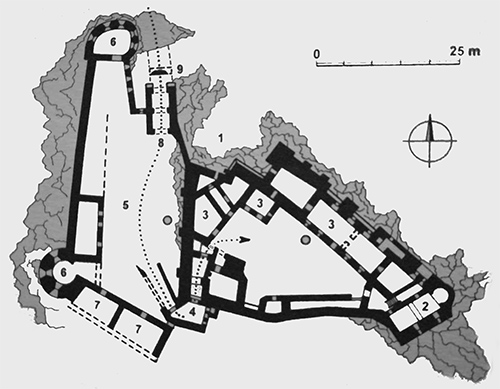
Legenda k pôdorysu
- 1 - trojboká obranná veža
- 2 - románska kaplnka
- 3 - obytné trakty
- 4 - predbránie horného hradu
- 5 - predhradie
- 6 - bašty
- 7 - renesančný palác
- 8 - objekt hlavnej brány
- 9 - pilier prístupového mostaZdroj: BÁRTA V.
- BARTA V.
- NEŠPOR J. Hrady a zámky na Slovensku
History
Uhrovec Castle was probably built sometime between 1251 and 1293 and was built by the Trenčín county Báš from the Hunt-Poznanov family. After his death, the castle and manor were inherited by his son Peter. In 1285, Matúš Čák obtained the castle from Petr by pressure and exchanged it for several worthless Tek villages. However, Matúš Čák did not become the owner, so the status did not take place, as was the custom. It happened only in 1295 in the presence of representatives of the Esztergom Chapter. The document of the Esztergom Chapter, where the castle is first mentioned, also comes from this year. Despite later complaints from Peter's son Mikuláš, Matúš Čák maintained the Uhrovec castle estate until his death in 1321, when the castle passed into the ownership of King Karol Róbert and remained in royal hands until 1389. At that time, King Sigismund of Luxembourg donated it to Stibor of Stiborice and his brothers, to whom the manor belonged until 1434. After the death of Stibor the Younger, the castle returned to King Sigismund, who disrespected Stibor's last will for his daughter Katarína to inherit the castle, and in 1435 he assigned the castle to his wife Barbora Celjská.
In 1439, the new King Albrecht of Habsburg confiscated all his property from Barbora and assigned it to his wife Elizabeth. Around 1440, Elizabeth handed over the castle to Pongrácz of St. Mikuláš to support the claims to the throne of her underage son Ladislav Pohrobek. In 1453, therefore, Ladislav V. Pohrobok granted him the castle in hiseditary possession. Pongrácz released the castle to his brother Ján. Many construction activities can be attributed to the Pongrácz family, especially increasing the castle's defenses. In 1477, however, Matej Korvín took the castle from the daughters of Ján Pongrácz and gave it in advance to Friedrich Tetauer of Tetov. However, after a while he stopped showing interest in the castle and in 1483 Ondrej Dánffy from Doboz, later Ondrej Kolár from Výčapov and from 1506 Vavrinec Salczer from Záblatia are mentioned as the owner of the castle.
During the conflict between the supporters of the Hungarian kings Ferdinand I of Habsburg and Ján Zápoľský, the Salczer family was forcibly expelled from the castle. Around 1530, Ferdinand I occupied the Uhrovec castle militarily, and for his siege of the castle, the castle was taken over by three nobles - Peter Silágyi (de Zylagy) called the Doctor, his relative Michal Silágyi and Žigmund Forgách. The doctor then also acquired Forgách's part of the property and caused a significant reconstruction of the castle. In the years 1533-1546 he completed the lower castle and access to the castle under the cannon bastion.
In 1547, after the Doctor's death without leaving any descendants, King Ferdinand I granted the castle to František Zay of Čemer, against which, however, the widow of Doctor Brigit and many nobles protested. The judge acknowledged her claims and ordered František to compensate her for a relatively large sum, as there had been extensive reconstruction during the Doctor's lifetime. However, František also objected to such a high amount. Brigita married Mikuláš Kostka to increase her position, but instead of supporting him, he took Brigita for property, tortured her locked up at Lietava Castle and wanted to get Uhrovec for himself. However, after the decision of Ferdinand I in 1555, the Uhrovské estate was no doubt in the hands of František Zay.
After the death of Francis (1570), the castle and the manor were divided among his sons. This is confirmed by two donations of Maximilian II. from 1574 and 1576. The Zay family completed the castle in the form of a monolithic, height-balanced whole. In the 17th century, at the time of the uprising and the Turkish threat, the castle served as a refuge for the Zayas and the surrounding nobility. Due to its location, the castle did not find itself in the center of great fighting, it was not even destroyed by Turkish troops during their raids. In the end, the Zay family themselves contributed to its destruction, concentrating their lives in a more comfortable manor house in Uhrovec and maintaining only guard and farm buildings at the castle. In addition, in the second half of the 17th century, disputes arose between them over the maintenance of the castle.
During the 18th century, the castle slowly lost its defensive capacity and was used as a prison. At the beginning of the 18th century, a fire broke out, which destroyed the lower castle. Back in 1802, the Zay family had an emergency repair of part of the roofs of the castle destroyed by the wind, but in 1848 the castle was set on fire by the local insurgent divisions of the Hurbanovci family and since then it has been deserted.
The cleaning of the castle began in 1995, later archaeological research took place and from the beginning of the 21st century the castle was gradually restored. Since 2015, the Uhrovec Castle Trademark has been operating at the castle, which also participates in the reconstruction of the castle.
Hrad Uhrovec vznikol pravdepodobne niekedy medzi rokmi 1251 až 1293 a dal ho postaviť trenčiansky župan Báš z rodu Hunt-Poznanovcov. Po jeho smrti hrad a panstvo zdedil jeho syn Peter. V roku 1285 Matúš Čák nátlakom získal hrad od Petra a vymenil ho za niekoľko bezcenných tekovských dedín. Matúš Čák sa však nestal vlastníkom, teda neprebehla štatúcia, ako to bolo zvykom. Stalo sa tak až v roku 1295 v prítomnosti zástupcov Ostrihomskej kapituly. Z tohto roku pochádza aj listina Ostrihomskej kapituly, kde sa hrad prvýkrát spomína. Napriek neskorším sťažnostiam Petrovho syna Mikuláša, si Matúš Čák udržal hradné panstvo Uhrovec až do svojej smrti v roku 1321, kedy hrad prešiel do vlastníctva kráľa Karola Róberta a zostal v kráľovských rukách až do roku 1389. Vtedy ho kráľ Žigmund Luxemburský daroval Stiborovi zo Stiboríc a jeho bratom, ktorým panstvo patrilo až do roku 1434. Po smrti Stibora mladšieho sa hrad vrátil do rúk kráľa Žigmunda, ktorý nerešpektoval Stiborovu poslednú vôľu, aby hrad zdedila jeho dcéra Katarína, a v roku 1435 hrad pridelil svojej manželke Barbore Celjskej.
Nový kráľ Albrecht Habsburský v roku 1439 skonfiškoval Barbore všetky majetky a pridelil ich svojej manželke Alžbete. Okolo roku 1440 Alžbeta odovzdala hrad Pongráczovi zo Sv. Mikuláša, aby podporil nároky na trón jej maloletého syna Ladislava Pohrobka. V roku 1453 mu preto Ladislav V. Pohrobok hrad udelil do dedičnej držby. Pongrácz prepustil hrad svojmu bratovi Jánovi. Pongráczovcom možno pripísať mnohé stavebné aktivity, najmä zvyšovanie obranyschopnosti hradu. V roku 1477 však Matej Korvín hrad odobral dcéram Jána Pongrácza a dal ho do zálohu Fridrichovi Tetauerovi z Tetova. Ten však po čase o hrad prestal javiť záujem a v roku 1483 sa už ako vlastník hradu spomína Ondrej Dánffy z Dobozu, neskôr Ondrej Kolár z Výčapov a od roku 1506 Vavrinec Salczer zo Záblatia.
Počas konfliktu medzi stúpencami uhorských kráľov Ferdinanda I. Habsburského a Jána Zápoľského boli Salczerovci násilím vyhnaní z hradu. Okolo roku 1530 potom Ferdinand I. vojensky obsadil hrad Uhrovec a za zásluhy pri obliehaní hradu prevzali do zálohy hrad traja šľachtici - Peter Silágyi (de Zylagy) zvaný Doktor, jeho príbuzný Michal Silágyi a Žigmund Forgách. Doktor potom získal aj Forgáchovu časť majetkov a pričinil o významnú prestavbu hradu. V rokoch 1533-1546 dobudoval dolný hrad a prístup do hradu popod delovú baštu.
V roku 1547, po Doktorovej smrti bez zanechania potomkov, kráľ Ferdinand I. udelil hrad Františkovi Zayovi z Čemeru, proti čomu však protestovala vdova po Doktorovi Brigita a mnohí šľachtici. Sudca uznal jej nároky a prikázal Františkovi odškodniť ju pomerne vysokou sumou, keďže počas Doktorovho života došlo k rozsiahlej prestavbe. Proti takej vysokej sume sa však ohradil aj František. Brigita sa vydala za Mikuláša Kostku, aby tak zvýšila svoje postavenie, avšak ten namiesto podpory obral Brigitu o majetok, týral ju uzavretú na hrade Lietava a chcel získať Uhrovec pre seba. Po rozhodnutí Ferdinanda I. však v roku 1555 bolo už Uhrovské panstvo bez pochýb v rukách Františka Zaya.
Po smrti Františka (1570) sa hrad a panstvo rozdelilo medzi jeho synov. Potvrdzujú to dve donácie Maximiliána II. z roku 1574 a 1576. Zayovci dobudovali hrad do podoby jednoliateho, výškovo vyrovnaného celku. V 17. storočí, v časoch povstaní a tureckej hrozby, hrad slúžil ako útočisko pre Zayovcov a okolitú šľachtu. Hrad sa vďaka svojej polohe neocitol v centre diania veľkých bojov, dokonca ho nezničili ani turecké vojská pri svojich nájazdoch. K jeho deštrukcií prispeli napokon samotní Zayovci, ktorí život sústredili do pohodlnejšieho kaštieľa v Uhrovci a na hrade udržiavali iba strážne a hospodárske objekty. Navyše v druhej polovici 17. storočia vznikli medzi nimi spory o údržbu hradu.
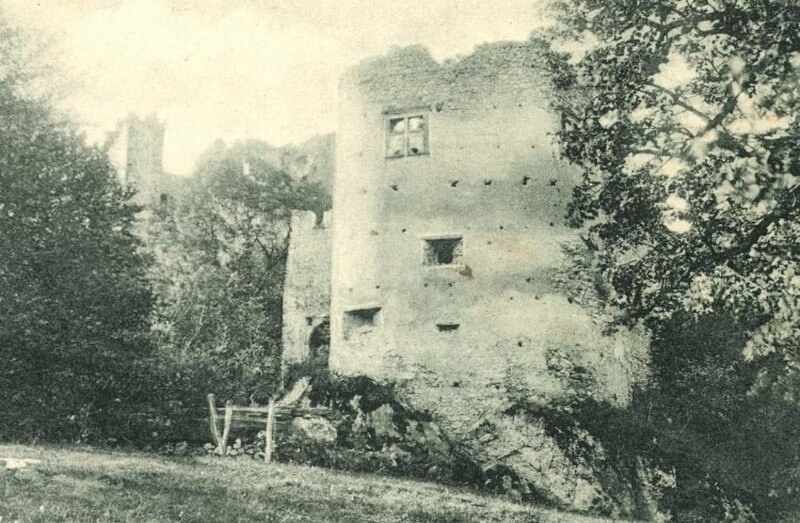
Počas 18. storočia už hrad pomaly strácal svoju obrannú schopnosť a využíval sa ako väznica. Na začiatku 18. storočia vypukol požiar, ktorý zničil dolný hrad. Ešte v roku 1802 dali Zayovci núdzovo opraviť časť striech hradu zničeného vetrom, no v roku 1848 bol hrad podpálený miestnymi povstaleckými oddielmi Hurbanovcov a odvtedy začal pustnúť.
V roku 1995 sa začalo s čistením hradu, neskôr došlo aj k archeologickému výskumu a od začiatku 21. storočia postupne prebiehala obnova hradu. Od roku 2015 na hrade pôsobí OZ hrad Uhrovec, ktoré sa ďalej podieľa na rekonštrukcii hradu.
Myths and legends
Death of the castle lord
The castle lord's wife died and he raised his daughter Lucia himself. Once, as an adult, she looked at Tomáš - the commander of the castle guard. Lucia was not indifferent to Tomáš either, but he knew very well that the girl's father would never bless their relationship because they were not equal. Once on a hunt, together with the lord of the castle, they chased the wounded wild boar and Tomáš could not resist the temptation. He shot his companion, who stood in the way of his happiness. Everyone thought the death on the hunt was an unfortunate accident, only the young man was more restless from day to day. He disappeared from the castle a few days later, and was later found dead on the spot where he had ruined his master. Lucia sold the castle, but no one found out where she went.
Fearless castle lady
Below Uhrovec, once on the banks of the stream, there was a sight of Turks preparing to attack the castle. However, the brave castle lady looked out of the walls of their commander bathing in the stream and hit him with an accurate intervention. The clear water of the creek grieved with Turkish blood. The Turks were embarrassed by the effect of the grandmother's bullet and immediately imagined what would happen when the men started shooting at them. They didn't wait a minute and ran so hard that they wouldn't catch up with them even on a hundred horses. Blood spots have appeared on the moonlit night since the Turkish commander died.
Smrť hradného pána
Hradnému pánovi zomrela žena a sám vychovával svoju dcéru Luciu. Tá sa raz ako už bola dospelá zahľadela do Tomáša - veliteľa hradnej stráže. Ani Tomášovi nebola Lucia ľahostajná, ale dobre vedel, že otec dievčiny ich vzťahu nikdy nepožehná, lebo si neboli rovní. Raz na poľovačke spolu s hradným pánom prenasledovali poraneného diviaka a Tomáš neodolal pokušeniu. Svojho spoločníka, ktorý stál v ceste jeho šťastia, zastrelil. Smrť na poľovačke všetci považovali za nešťastnú náhodu, len mládenec bol zo dňa na deň nepokojnejší. O niekoľko dní sa vytratil z hradu a neskôr ho našli mŕtveho na mieste, kde zmárnil svojho pána. Lucia hrad predala, ale kam sa podela, to sa nik nedozvedel.
Nebojácna hradná pani
Pod Uhrovcom sa raz na brehoch potoka zjavila záľaha Turkov, ktorí pripravovali útok na hrad. Odvážna hradná pani si však vyhliadla z hradieb ich veliteľa kúpajúceho sa v potoku a presným zásahom ho trafila. Číra voda potoka zmútnela tureckou krvou. Turci stŕpli nad účinkom babskej strely a hneď si predstavili, čo sa asi bude diať, keď po nich začnú strieľať muži. Nečakali ani minútu a zutekali tak, že ani na sto koňoch by ich nedohonili. Na mieste, kde turecký veliteľ zahynul, sa od tých čias za mesačných nocí zjavujú krvavé škvrny.
Useful information
The ruins are freely accessible. Reconstruction work is underway.
Zrúcanina je voľne prístupná. Prebiehajú rekonštrukčné práce.
Nearby castles
Diviacka Nová Ves
Diviacka Nová Ves
7.3km
manor, mansion
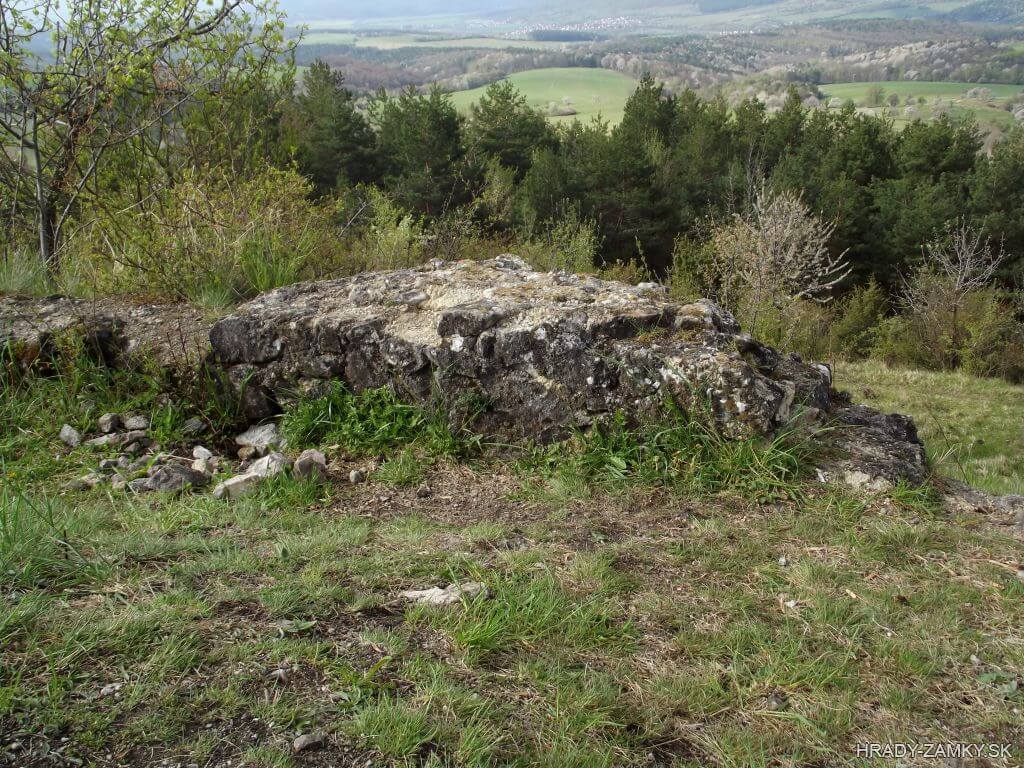
Dlžín
Dlžín
11.7km
castle ruin
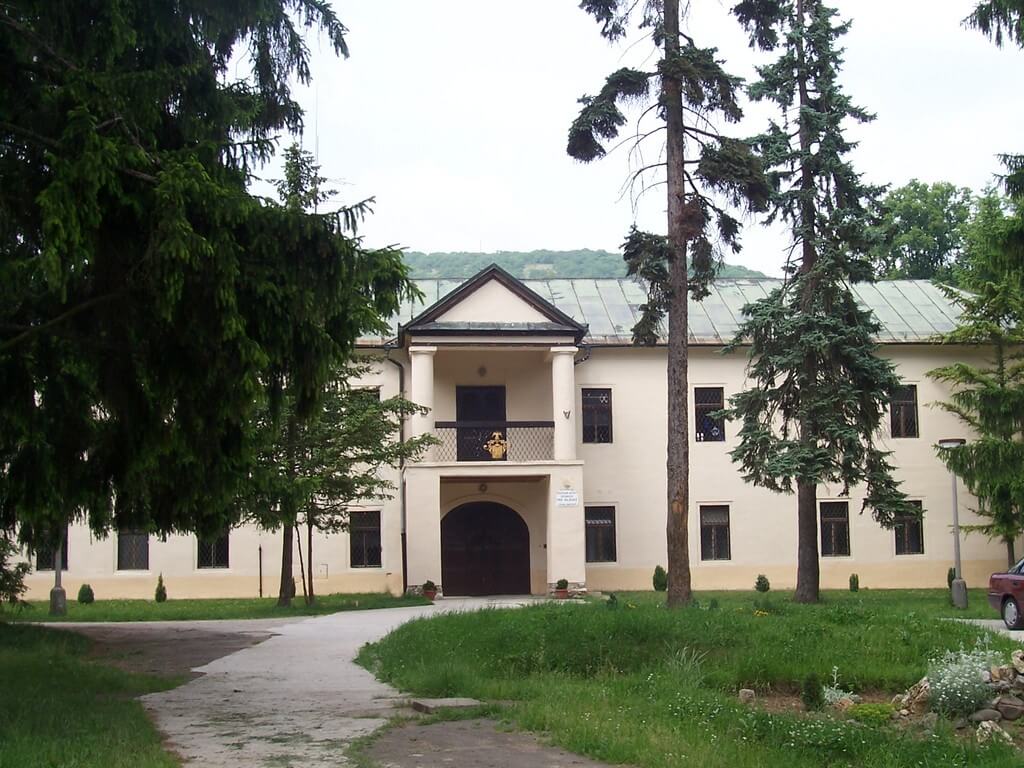
Chalmová
Bystričany-Chalmová
11.9km
manor, mansion
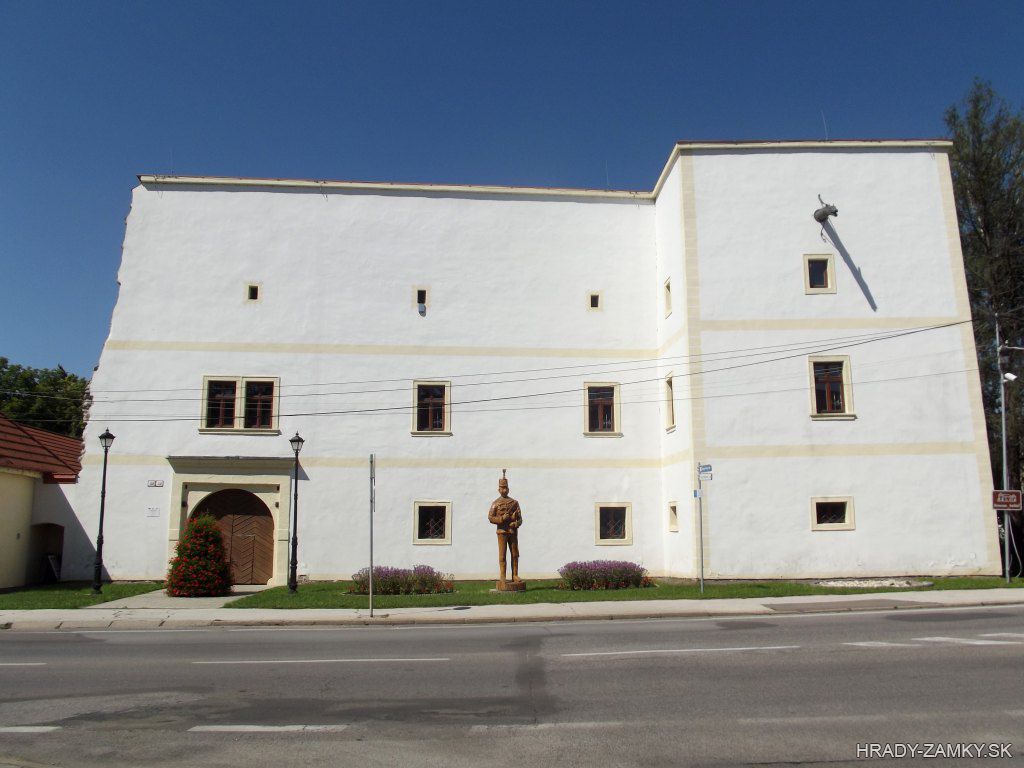
Zemianske Kostoľany
Zemianske Kostoľany
12.4km
manor, mansion
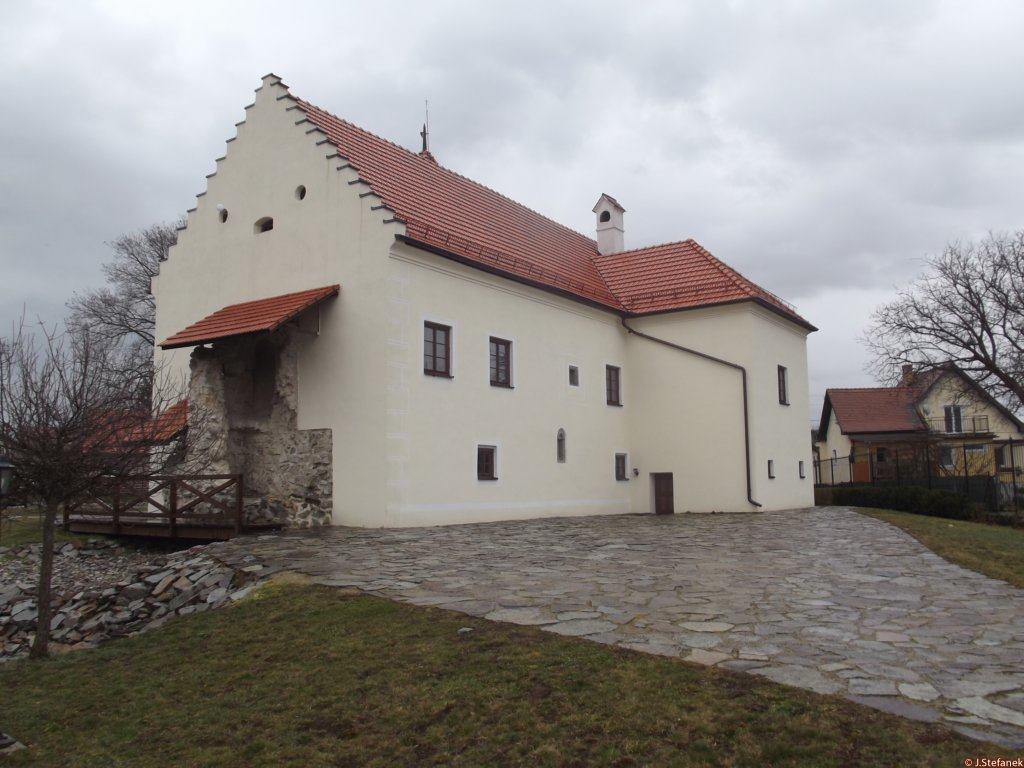
Šimonovany
Partizánske
13.7km
manor, mansion
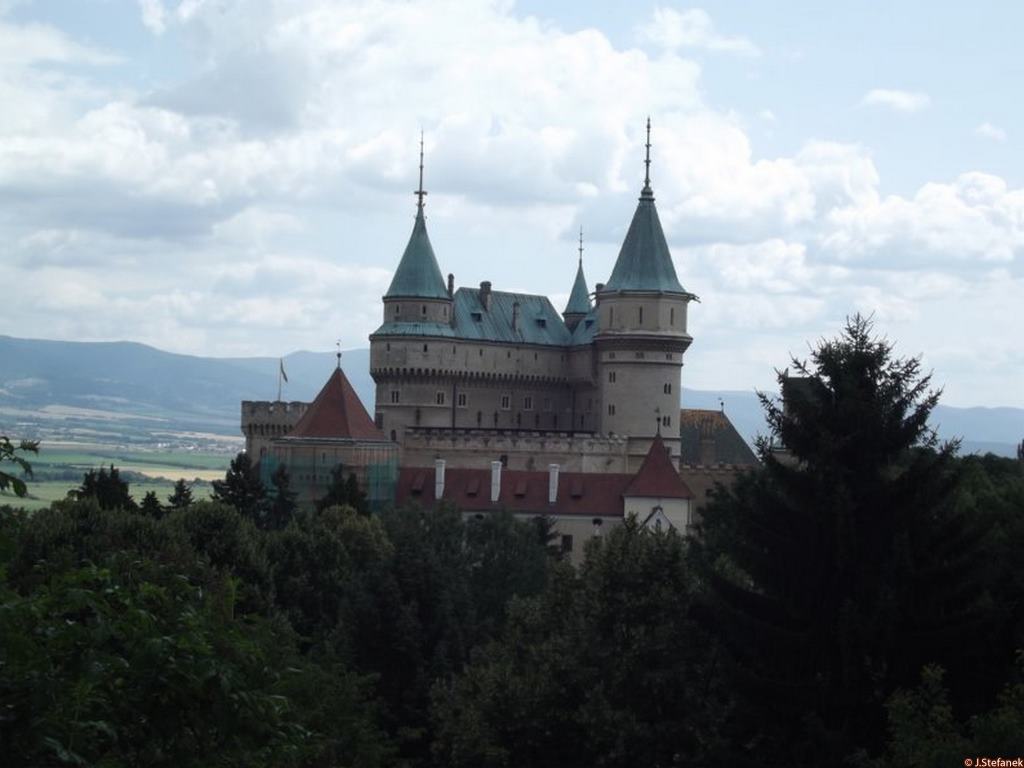
Bojnice castle
Bojnice
14.0km
castle, chateau

Čereňany
Čereňany
14.3km
manor, mansion