Hlohovec
Hlohovec Trnava county Slovakia
castle, chateau
Hlohovský zámok
Hlohovec Trnavský kraj Slovakia
hrad, zámok
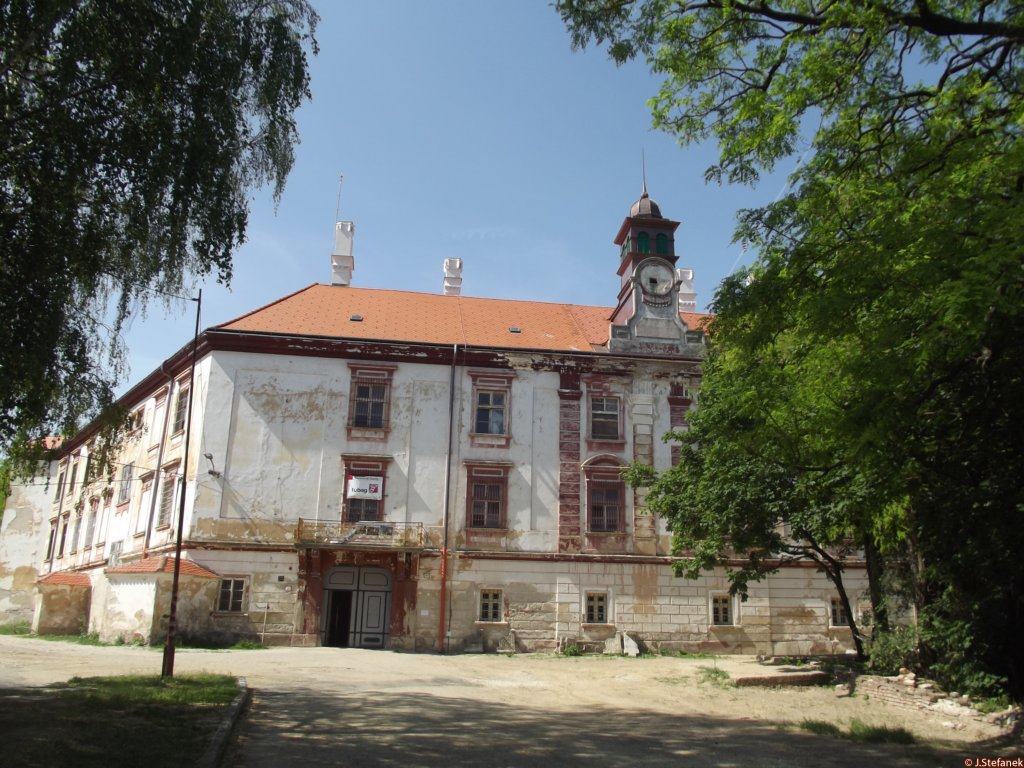
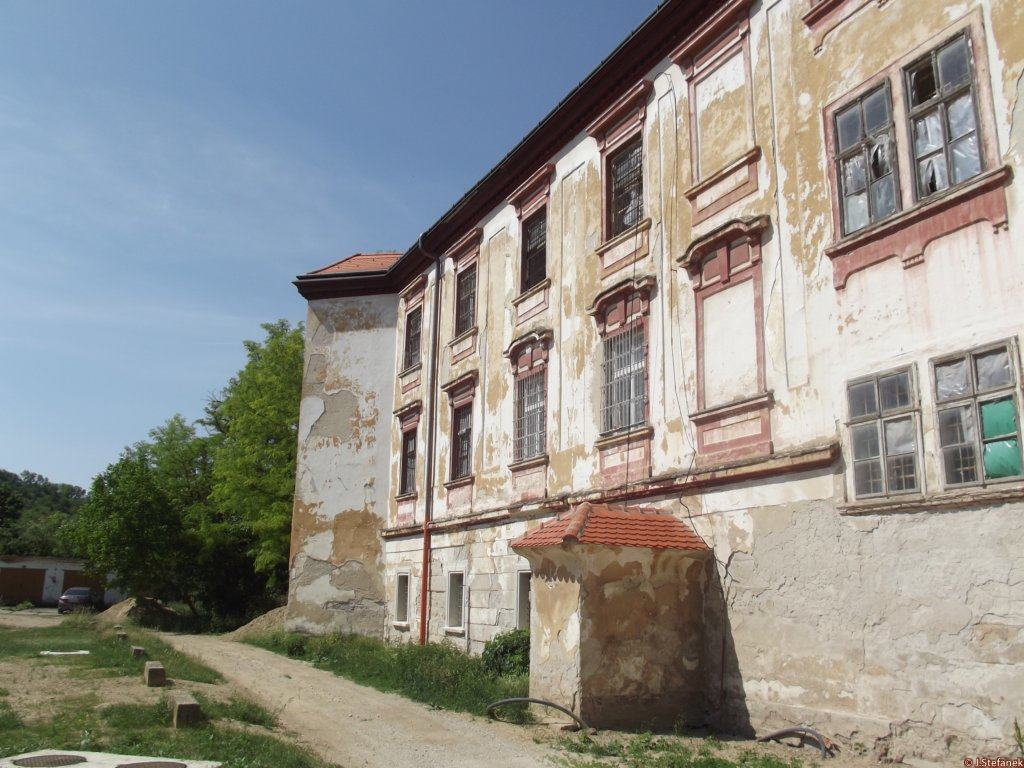
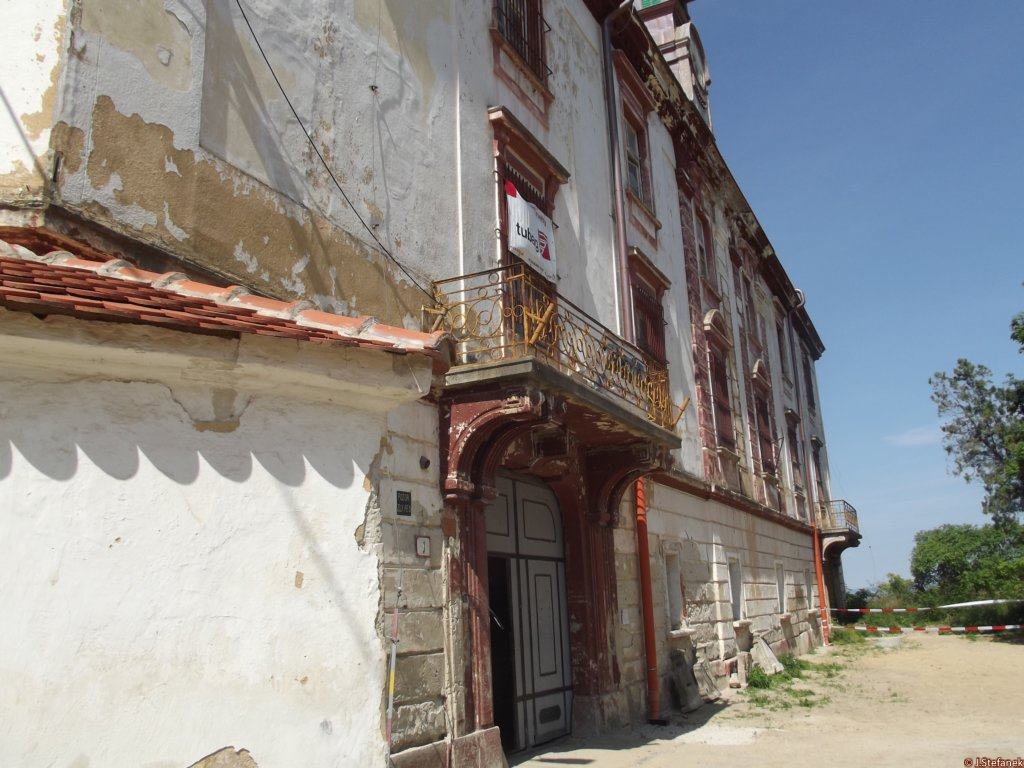
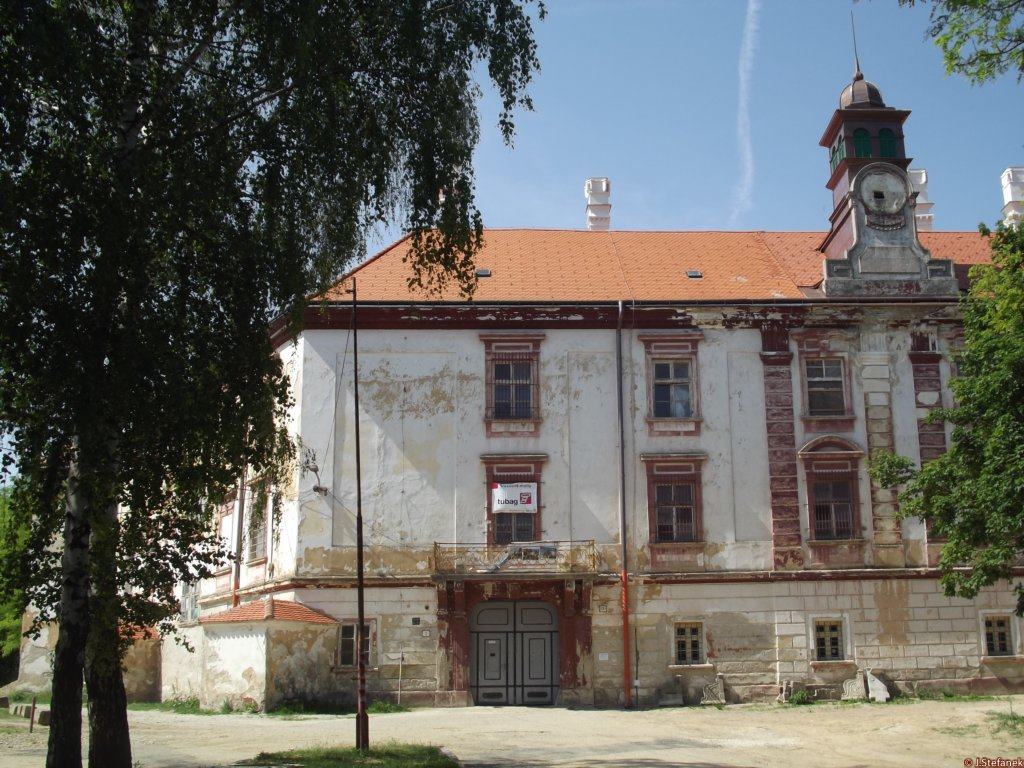
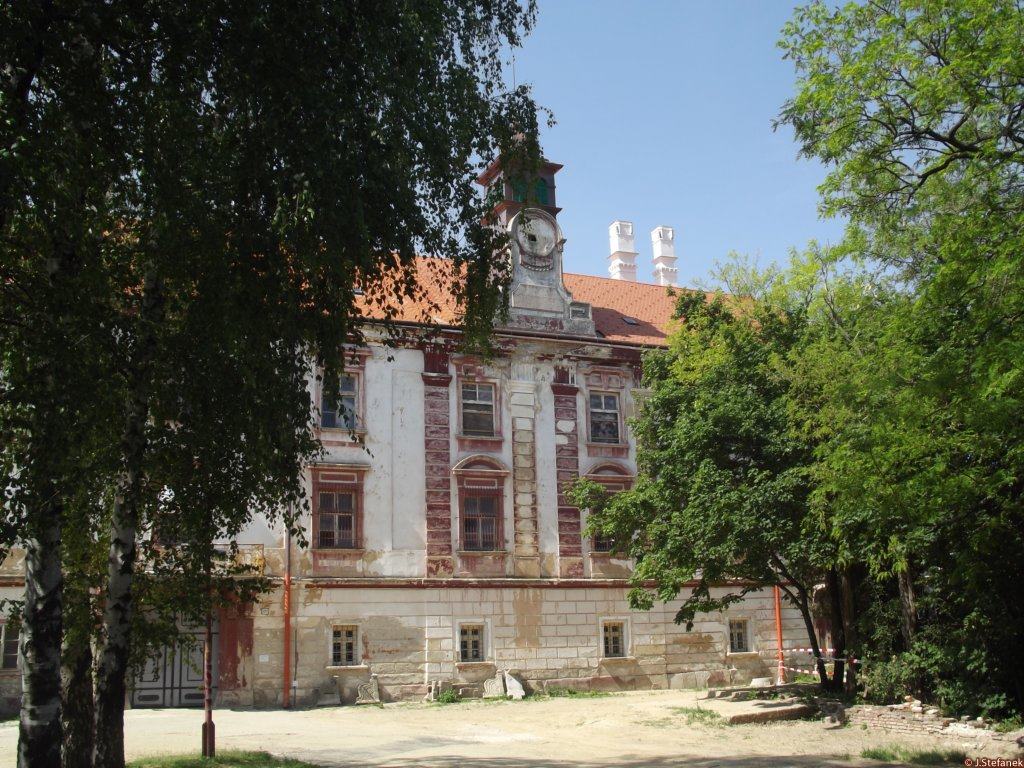
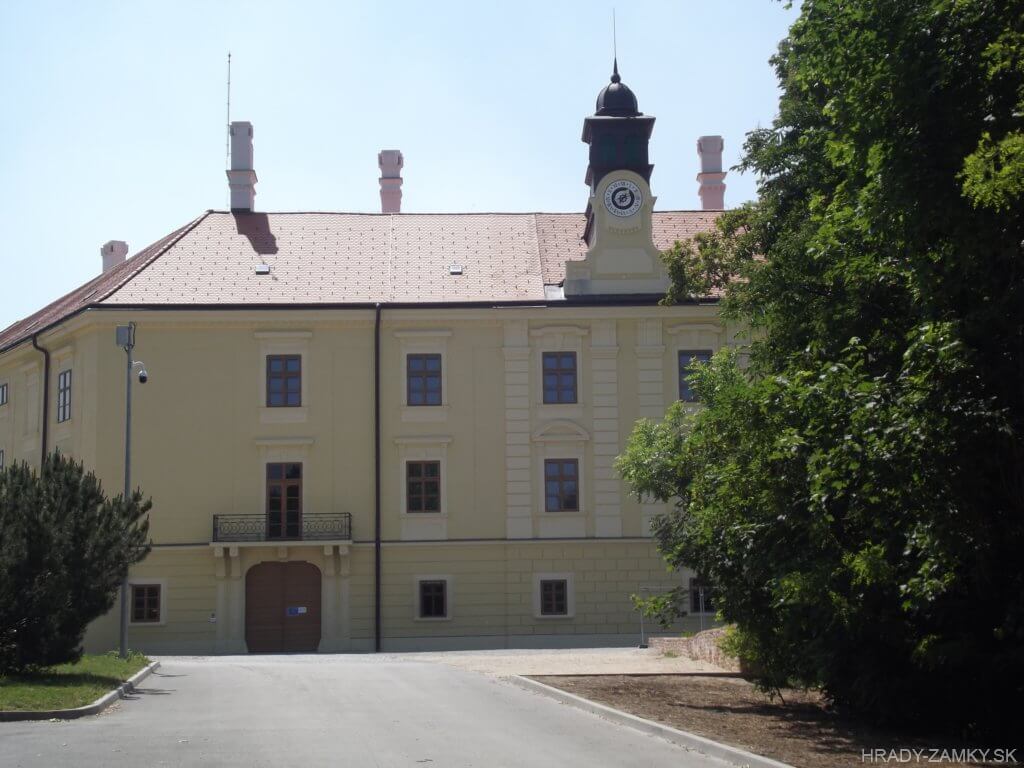
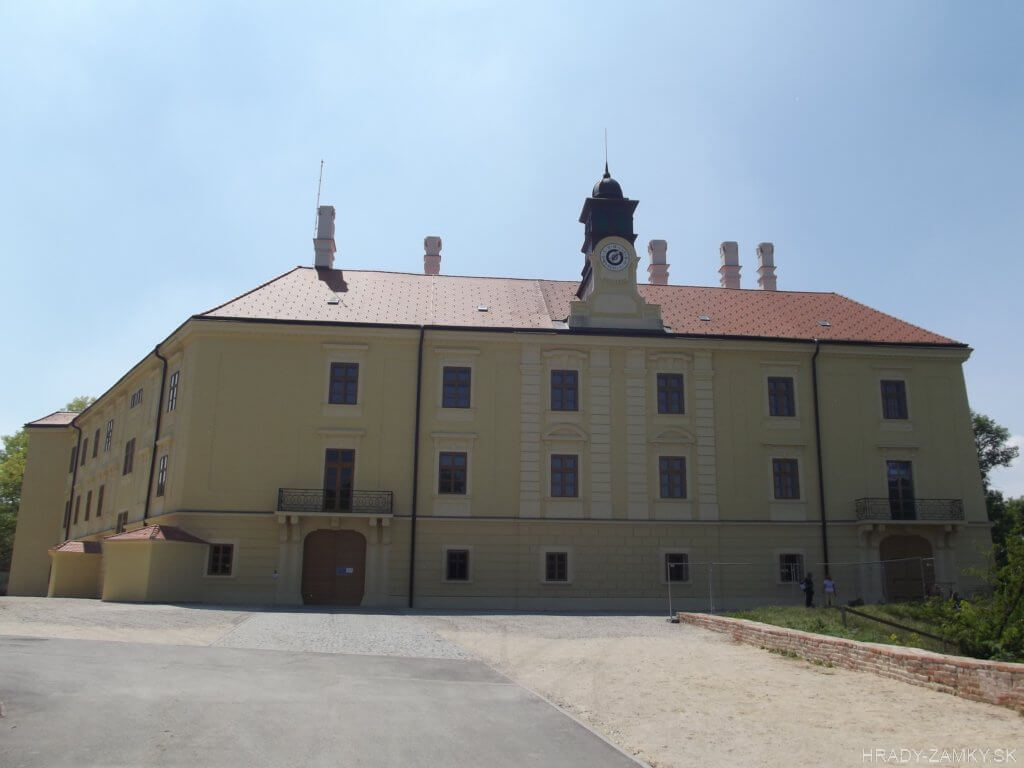
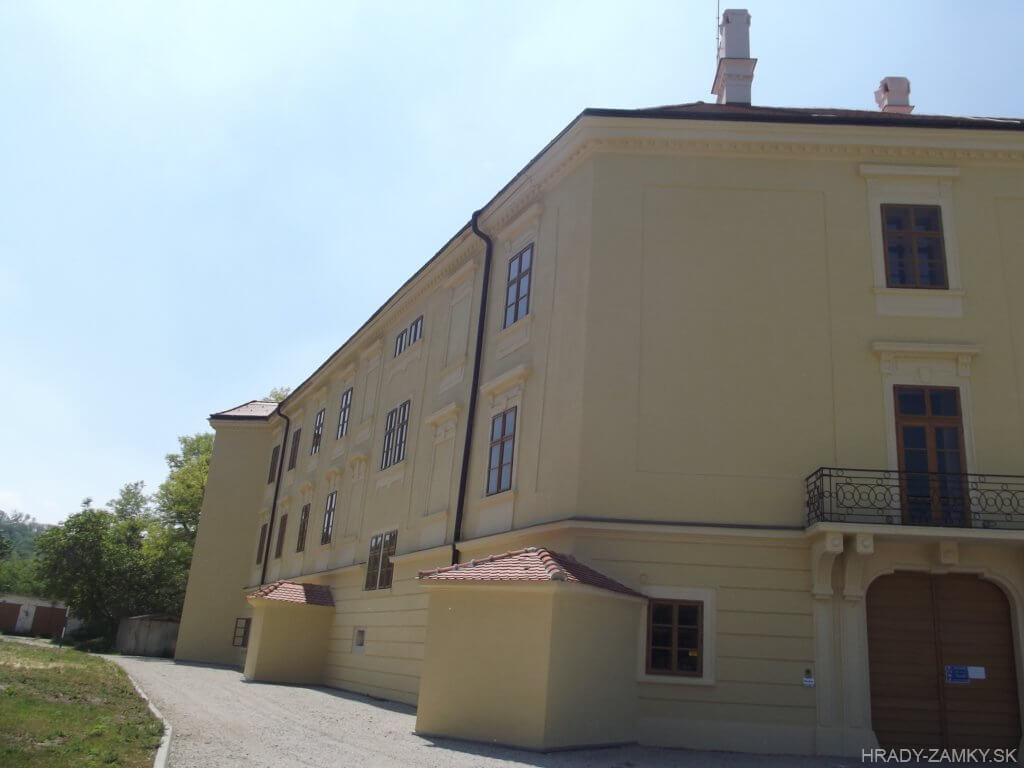
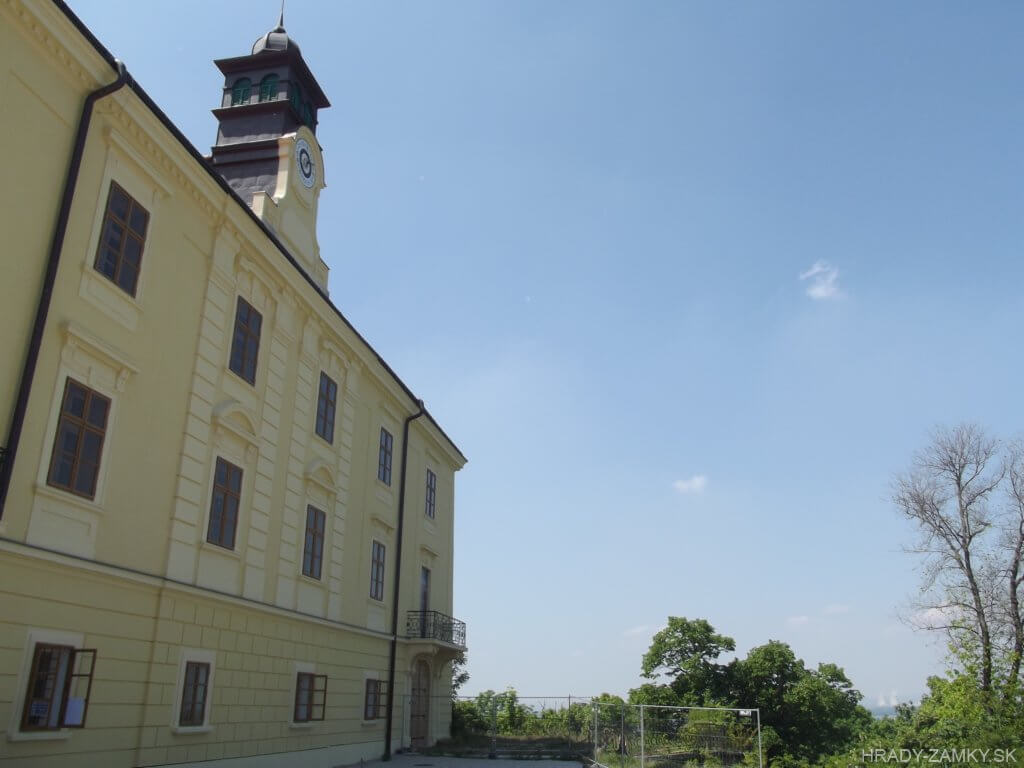
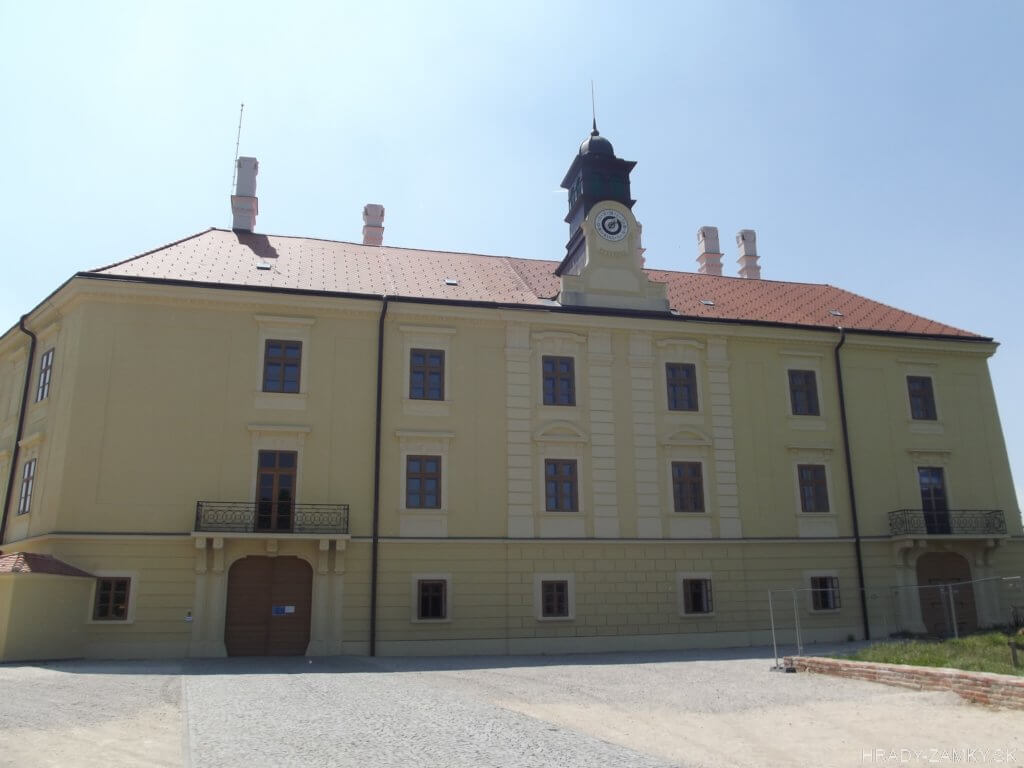
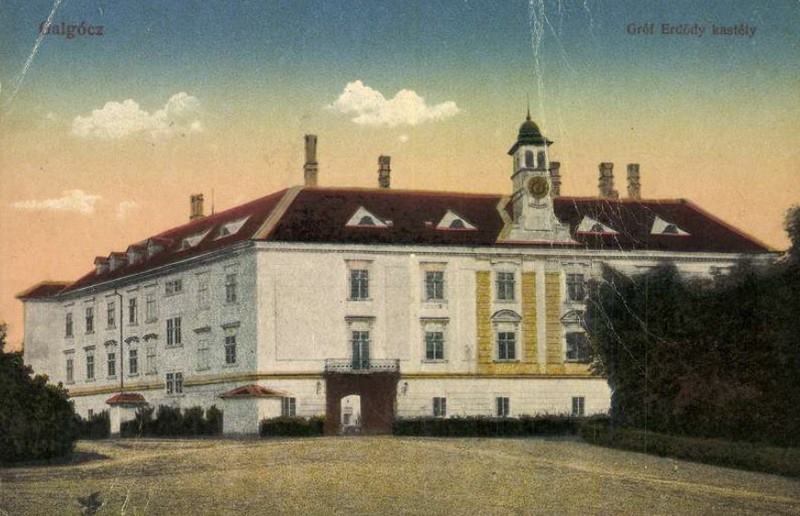
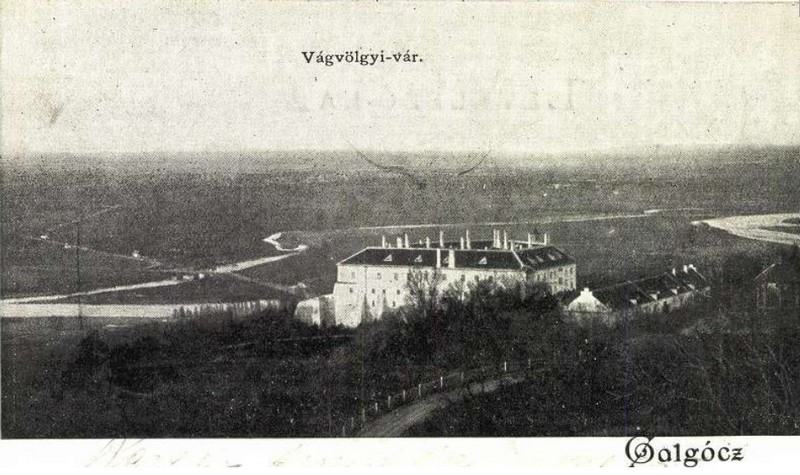
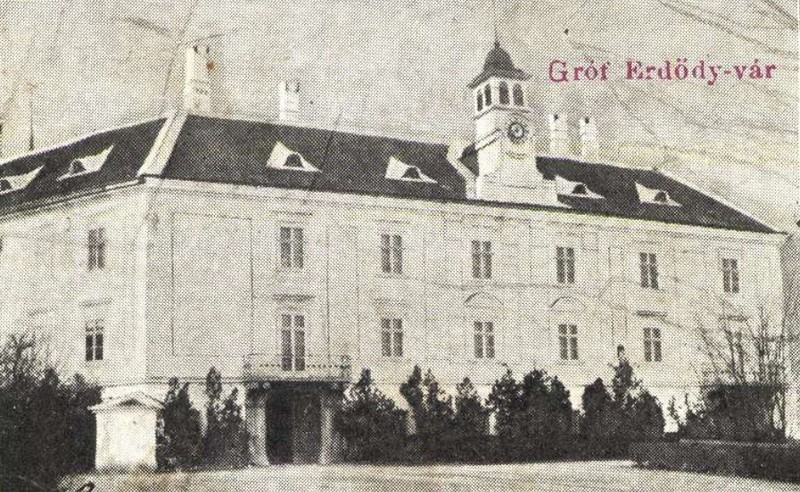
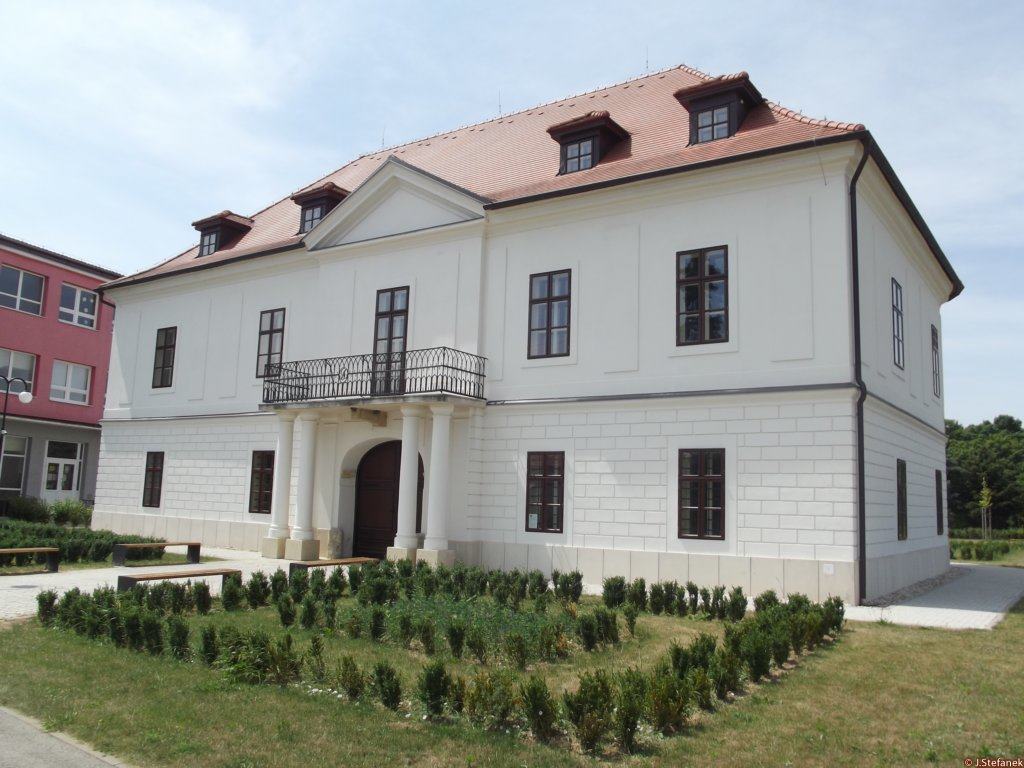
The Hlohovec Castle, built in the baroque - classicist style, is located on the site of the original castle on a hill above the town of Hlohovec
Hlohovský zámok, postavený v barokovo - klasicistickom slohu, sa nachádza na mieste pôvodného hradu na návrší nad mestom Hlohovec. Objekt bol postavený na mieste bývalého hradu.
Previous names
Golguz, Golgoc, castrum Golgociensis, castrum Golgouch, Galgoc, Galgóc, Galgócz
Roads
Trasa 1: Hlohovec chateau is located in the area of the castle park with a lake.
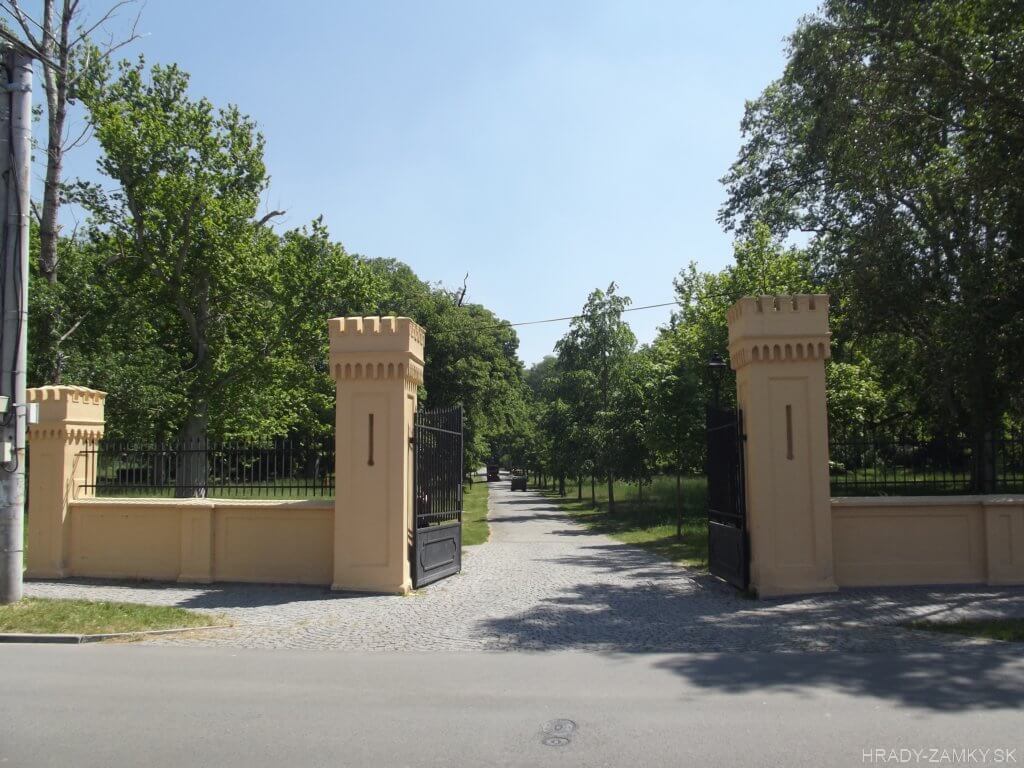
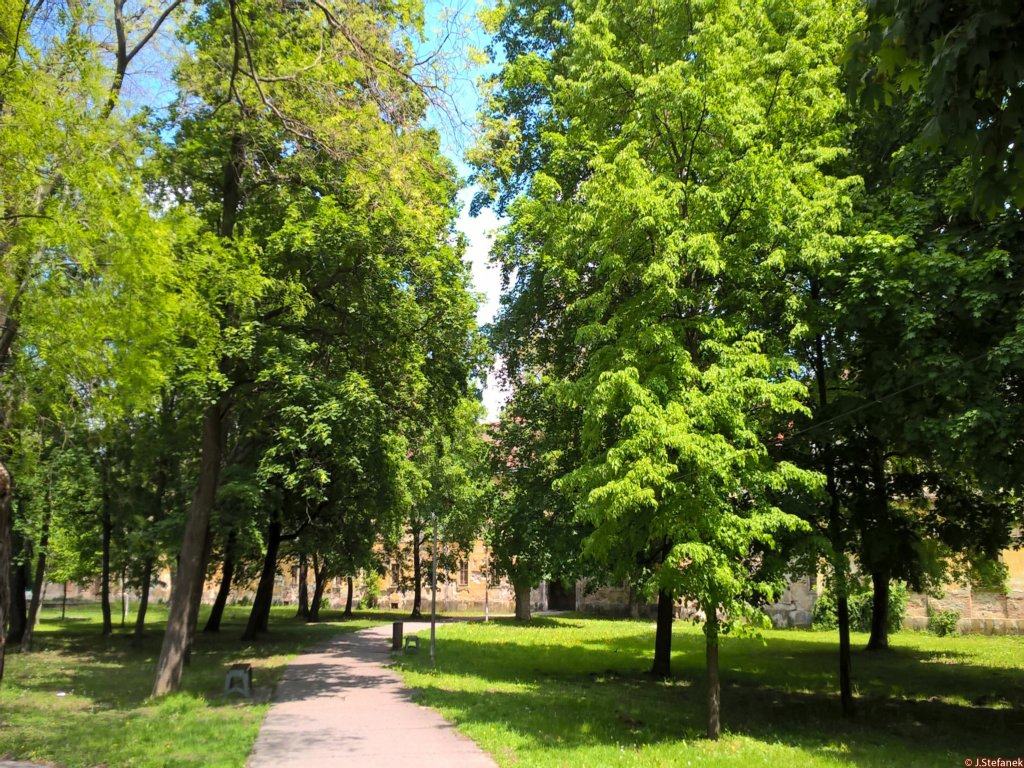
Route 1: From SNP Street, along the Váh river, we turn to Andrej Hlinka street. We continue straight until we come to a large parking lot along the right side of the road, where we can park the car. Opposite the fence is an old hospital. We walk a few meters further along the road, and through the historic gate to the castle park. The castle park is extensive, in the park there is a pond, an Empire theater, a riding hall, a garden pavilion and the remains of romantic buildings. We will get to the castle if, after entering the park, we will continue straight on and then slightly to the left. After a big curve, the path continues to the right and ascends us to the castle.
Trasa 1: Hlohovský zámok sa nachádza v areáli zámockého parku s jazierkom.Z ulice SNP popri rieke Váh odbočíme na Nábrežie Andreja Hlinku. Pokračujeme rovno, až prídeme k rozsiahlemu parkovisku pozdĺž pravej strany cesty, kde môžeme auto odstaviť. Oproti za plotom je stará nemocnica. Peši sa vyberieme pár metrov ďalej po ceste, a cez historickú bránu do zámockého parku. Zámocký park je rozsiahly, v areáli parku sa nachádza jazierko, empírové divadlo, jazdiareň, záhradný altánok a zvyšky romantických stavieb. K zámku sa dostaneme ak po vstupe do parku budeme pokračovať stále rovno a potom mierne doľava. Veľkým oblúkom potom cesta pokračuje vpravo a stúpaním nás dovedie až k zámku.
Trasa 2: The shortest way is the access from Šomodská street, where there is a parking lot right next to the park from the opposite side. From there it is only a few minutes to the castle.
Trasa 2: Najkratšou cestou je prístup zo Šomodskej ulice, kde je parkovisko priamo pri parku z opačnej strany. Odtiaľ je to len pár minút k zámku.
Description
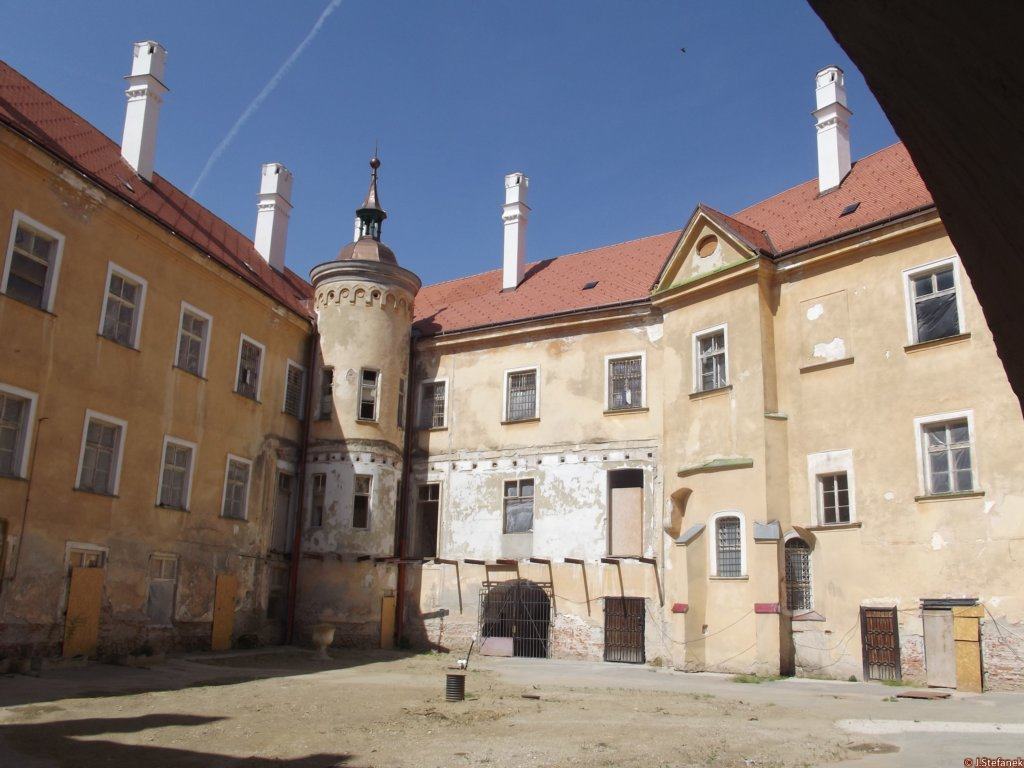
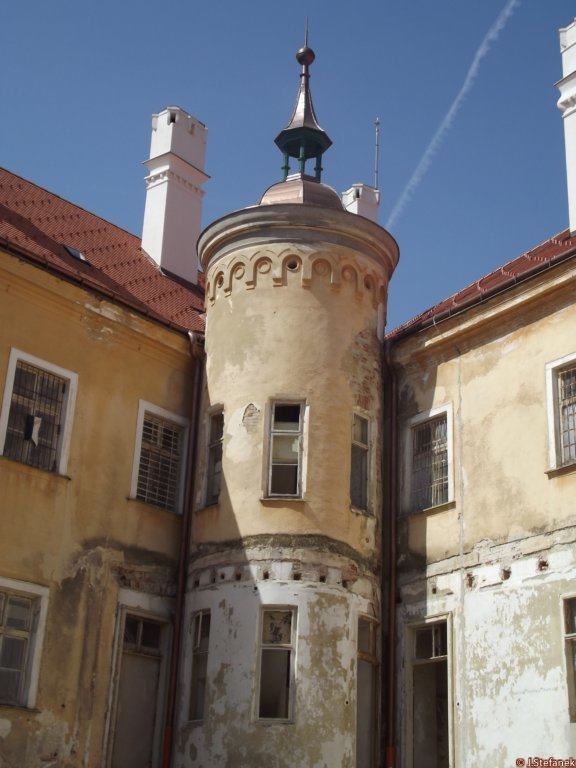
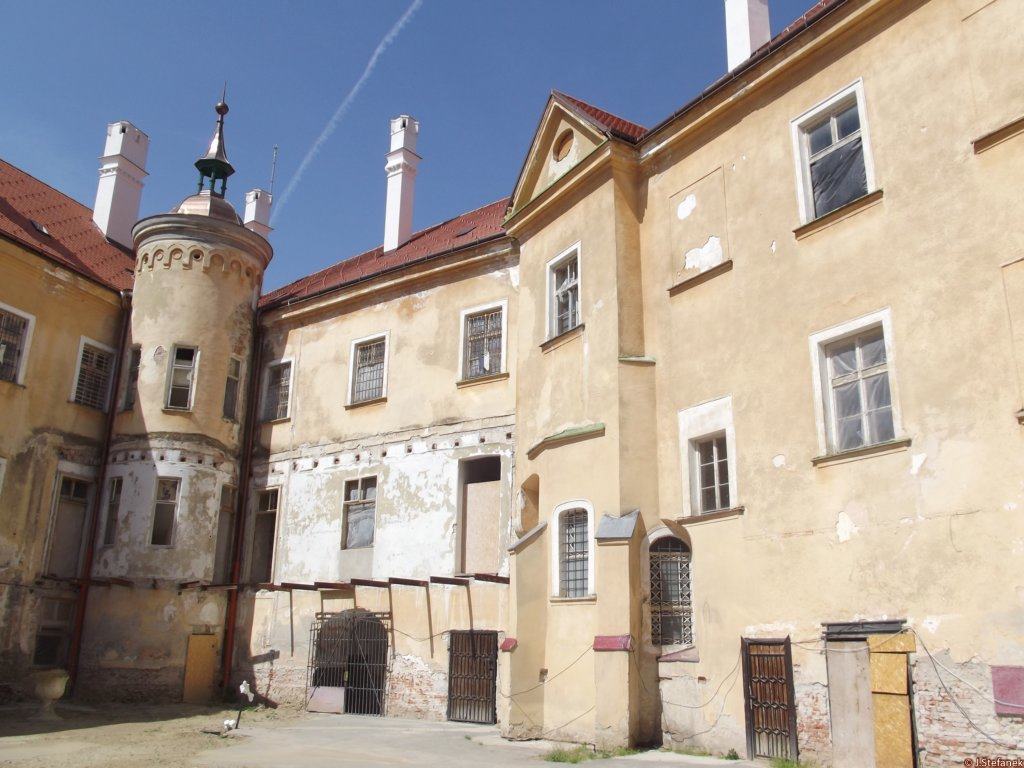
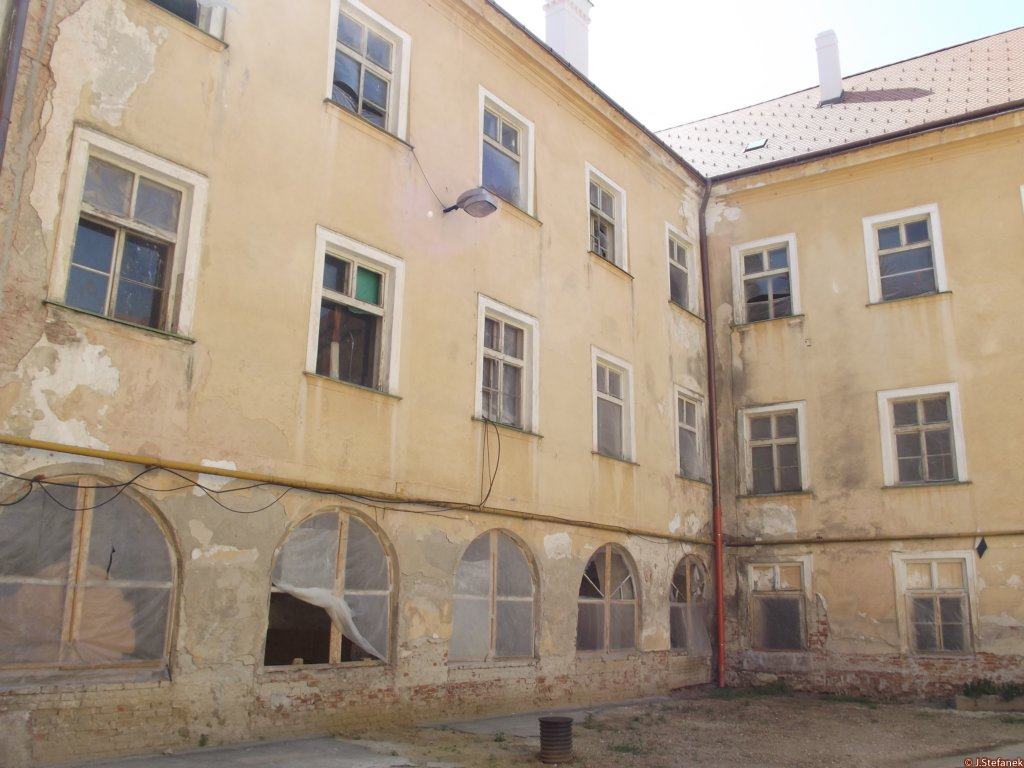
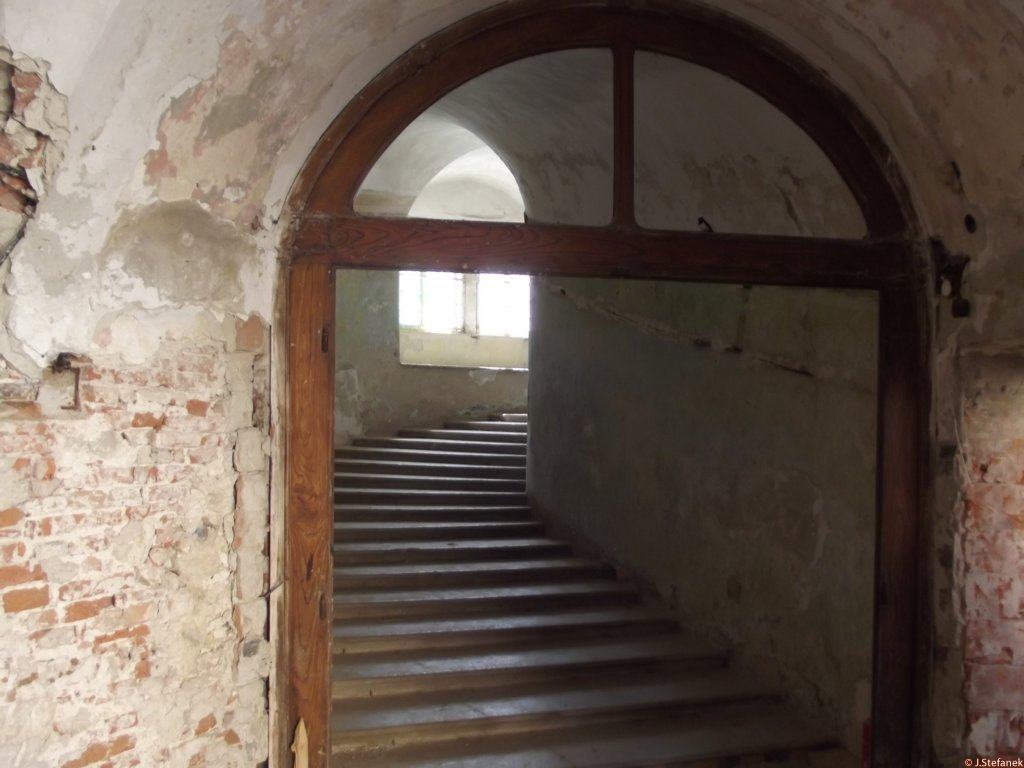
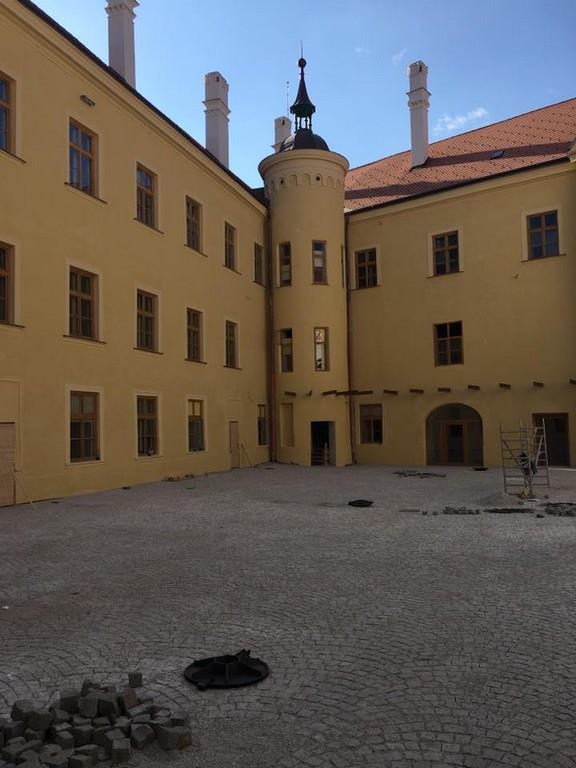
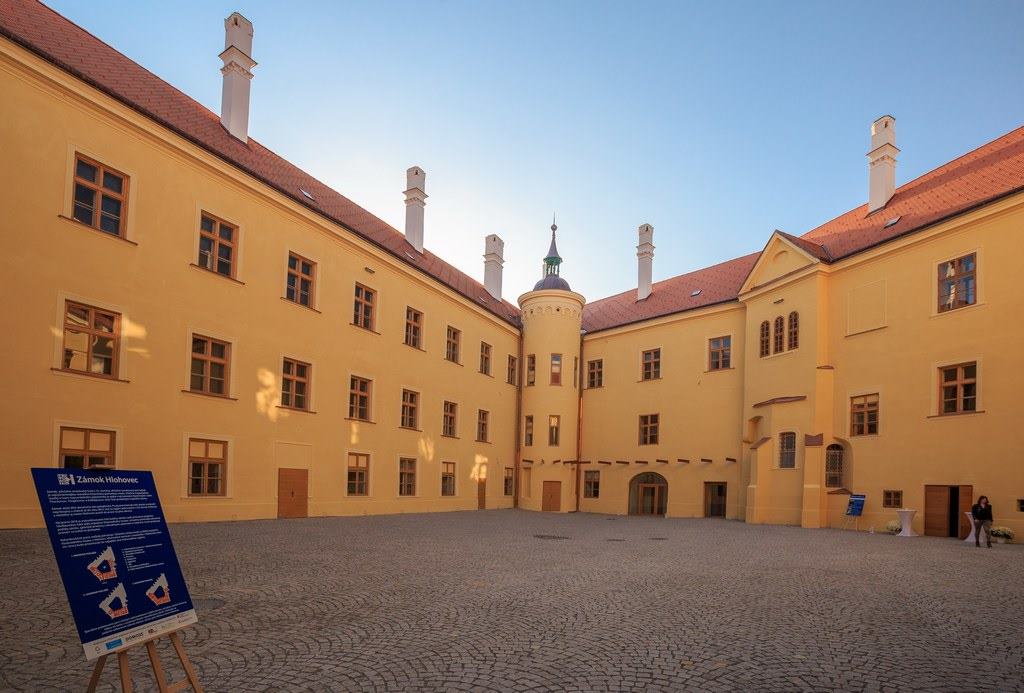
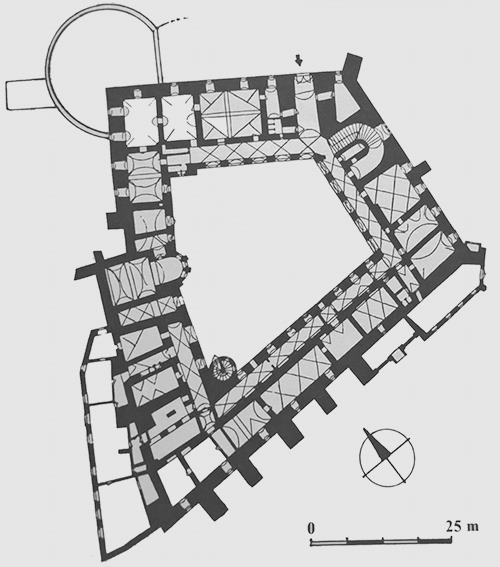
There is no doubt that the original wood-clay building was replaced in the 13th century by a stone castle. Research revealed fragments of the medieval wall at the southern perimeter of the castle and later research proved the presence of medieval structures in the mass of the castle itself.The castle has an irregular five-sided plan. The castle consisted of an old inner and outer castle. The inner castle was probably a two-story building with a gable roof and a dominant tower. In the foreground, it was covered by a wall of outer fortifications with corner towers. The rest of the cannon bastion in the northern corner of the castle has been preserved from the Renaissance fortification of the castle.The entrance through the underpass leads to the central courtyard, whose distinctive element is the staircase cylinder. Despite a large reconstruction into a Baroque representative residence, the chateau has preserved the essence of a medieval, Renaissance-extended castle. In the rooms on the ground floor there are comb, barrel and Prussian vaults, documenting the medieval and Renaissance appearance of the interiors in the 16th and 17th centuries. They have preserved wall cladding, paintings and stucco decorations.
Je nepochybné, že pôvodný drevohlinitý objekt nahradil v 13.storočí kamenný hrad. Výskumom sa zistili fragmenty stredovekého múru pri južnom obvode zámku a neskorší výskum dokázal prítomnosť stredovekých konštrukcií aj v hmote samotného zámku.Zámok má nepravidelný päťboký pôdorys. Hrad sa skladal zo starého vnútorného a vonkajšieho hradu. Vnútorný hrad bol pravdepodobne poschodová budova so sedlovou strechou a dominujúcou vežou. V popredí ho prekrývala hradba vonkajšieho opevnenia s nárožnými vežami. Z renesančnej fortifikácie hradu sa dodnes zachoval zvyšok delovej bašty v severnom nároží zámku.Vstup podchodom vedie na ústredné nádvorie, ktorého výrazným prvkom je valec schodišťa. Zámok si napriek veľkej prestavbe na barokové reprezentačné sídlo zachoval podstatu stredovekého, renesančne rozšíreného hradu. V miestnostiach na prízemí sú hrebienkové, valené a pruské klenby, dokumentujúce stredoveký a renesančný vzhľad interiérov v 16. a 17. storočí. Zachovalo sa v nich empírové obloženie stien, maľby a štuková výzdoba.
Plan
-
History
The original medieval castle was built on the old Slavic fortified settlement in the 11th century, documented in 1113 in the so-called zoborská list. A strategically important guard castle was in the 12th-13th century seat of the castle county. In 1275 King Ladislav IV. he donated the castle to the first feudal owner of the Abov family and from 1294 he shared it with Abraham Rúfus. After the death of Abu Krásný in 1312, the castle temporarily belonged to Matúš Čák, later in the period 1349-1524 to the Kontovce family and their descendants, the Ujlaky family. It is probable that during the ownership of the castle by Mikuláš Kont, the castle was extensively rebuilt.
In the 15th century, the castle was also occupied by the Hussites, and after the extinction of the Ujlaky family, the castle fell into the hands of the Thurz family for more than a century. It thus became the seat of the royal treasurer Alexei Thurz. Due to Turkish threats, the Thurz family had the castle fortified together with the town. In 1639, the Forgách family became the owners, but during their time in 1663, the castle was occupied by the Turks, who created a border fortress here until 1668. The castle was later ravaged and burned in 1706 during the uprising of František Rákóczi. From 1720 the castle belonged to the Erdődy family until 1945. Their name is associated with the reconstruction of the original castle into a Baroque mansion. Older buildings, structures and the vault system have been adapted to the new floor plan. The reconstruction created a two-storey four-winged building around an irregular courtyard with a ceremonial staircase leading to a corridor running around most of the courtyard. A significant element of the layout is a chapel in the northeastern part of the manor.
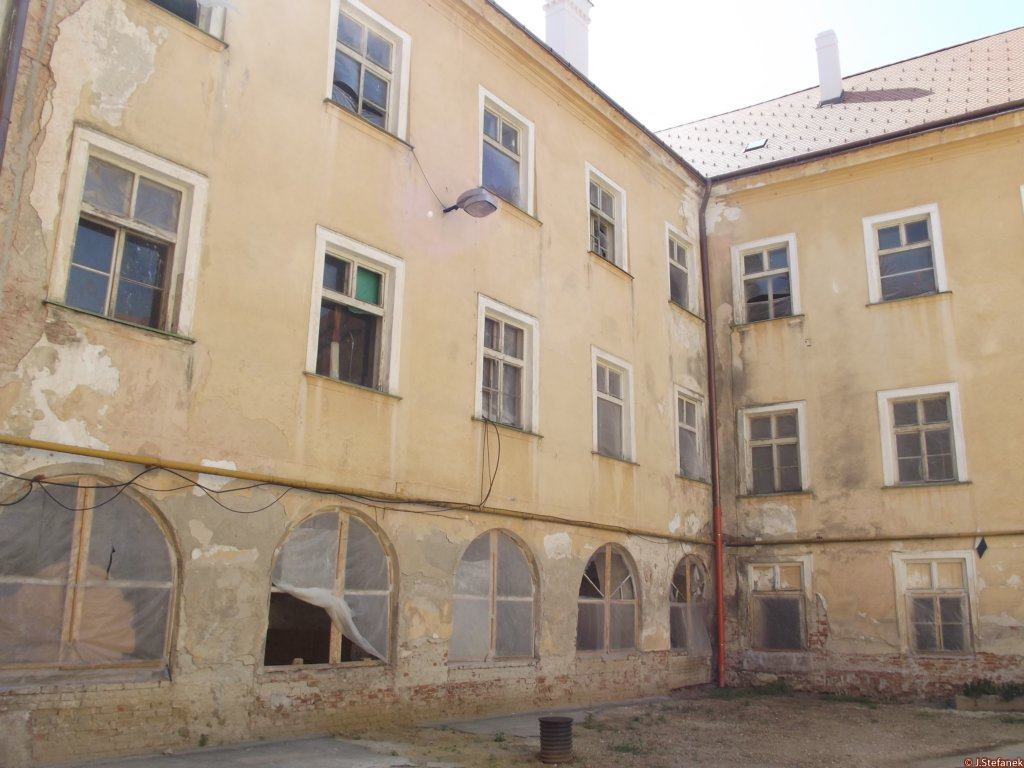
After 1945, when Soviet troops entered the city, a hospital for Soviet soldiers was established at the chateau. After their departure, the crew of the Czech-Slovak army resided in the castle for some time. Since 1951, Hlohovec chateau has housed living rooms and classrooms at an educational institute for young people. The castle has been unused since the 1990s. It fell into disrepair until 2014, when first volunteers from OZ Zámok Hlohovec and then the town of Hlohovec embarked on its gradual reconstruction. Since June 2019, the castle is open to the public.
Pôvodný stredoveký hrad bol postavený na starom slovanskom hradisku v 11.storočí, listinne doložený v r.1113 v tzv. zoborskej listine. Strategicky dôležitý strážny hrad bol v 12.-13. storočí sídlom hradného županstva. V roku 1275 kráľ Ladislav IV. daroval hrad prvému feudálnemu vlastníkovi z rodu Abovcov a od r.1294 sa s ním delil s Abrahamom Rúfusom. Po smrti Abu Krásneho v r.1312 hrad prechodne patril Matúšovi Čákovi, neskôr v období 1349-1524 Kontovcom a ich potomkom Ujlakyovcom. Je pravdepodobné, že za čias vlastníctva hradu Mikulášom Kontom došlo k rozsiahlejšej prestavbe hradu.
V 15.storočí hrad obsadili i husiti a po vymretí rodu Ujlaky sa hrad na viac ako storočie dostal do rúk Thurzovcov. Stal sa tak sídlom kráľovského pokladníka Alexeja Thurzu. Kvôli tureckým hrozbám dali Thurzovci hrad spolu s mestom opevniť. V r.1639 sa vlastníkmi stávajú Forgáchovci, no za ich čias v r.1663 hrad obsadili Turci, ktorí tu až do r.1668 vytvorili pohraničnú pevnosť. Hrad bol neskôr v r.1706 spustošený a vypálený počas povstania Františka Rákócziho. Od r.1720 patril hrad Erdődyovcom až do roku 1945. S ich menom je spojená prestavba pôvodného hradu na barokový kaštieľ. Staršie budovy, konštrukcie a systém klenieb prispôsobili novému pôdorysnému riešeniu. Prestavbou vznikol dvojposchodový štvorkrídlový objekt okolo nepravidelného nádvoria so slávnostným schodišťom, vedúcim na chodbu obiehajúcu okolo väčšej časti nádvoria. Výrazným prvkom dispozície je kaplnka v severovýchodnej časti kaštieľa.
Po r.1945, kedy sa do mesta dostali sovietske vojská, bola na zámku zriadená nemocnica pre sovietskych vojakov. Po ich odchode sídlila v priestoroch zámku určitý čas posádka česko-slovenskej armády. Od roku 1951 boli na Hlohovskom zámku obývacie priestory a učebne výchovného ústavu pre mládež. Od 90-tych rokov bol zámok nevyužitý. Chátral až do roku 2014, keď sa najprv dobrovoľníci z OZ Zámok Hlohovec a následne aj mesto Hlohovec pustili do jeho postupnej rekonštrukcie. Od júna 2019 je zámok otvorený pre verejnosť.
Myths and legends
There are no myths available.
K tomuto objektu nie sú dostupné žiadne povesti
Useful information
Opening hours and admission
Otváracia doba a vstupné
External links
Nearby castles
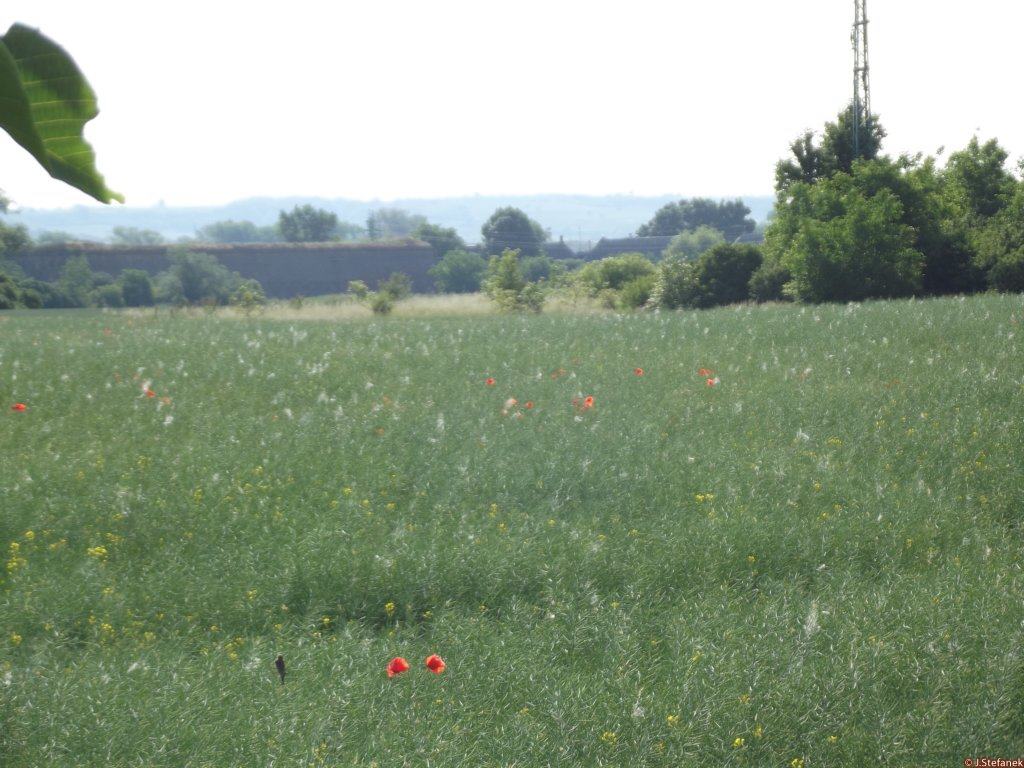
Leopoldov fort
Leopoldov
2.9km
fortress
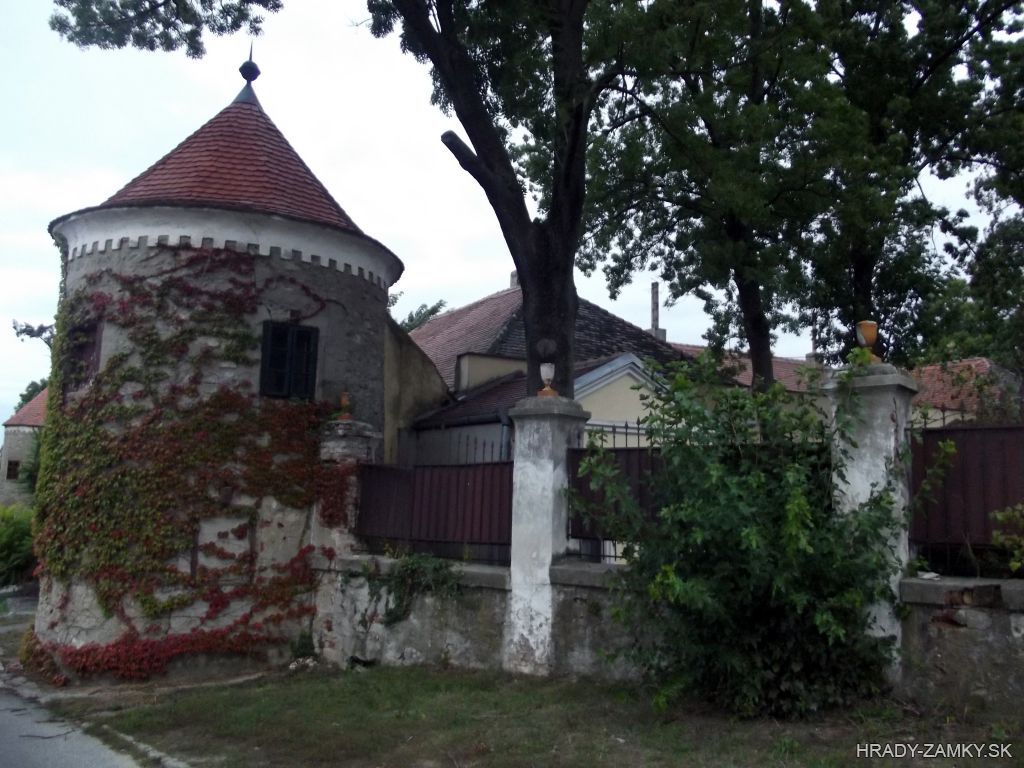
Koplotovce
Koplotovce
6.5km
manor, mansion
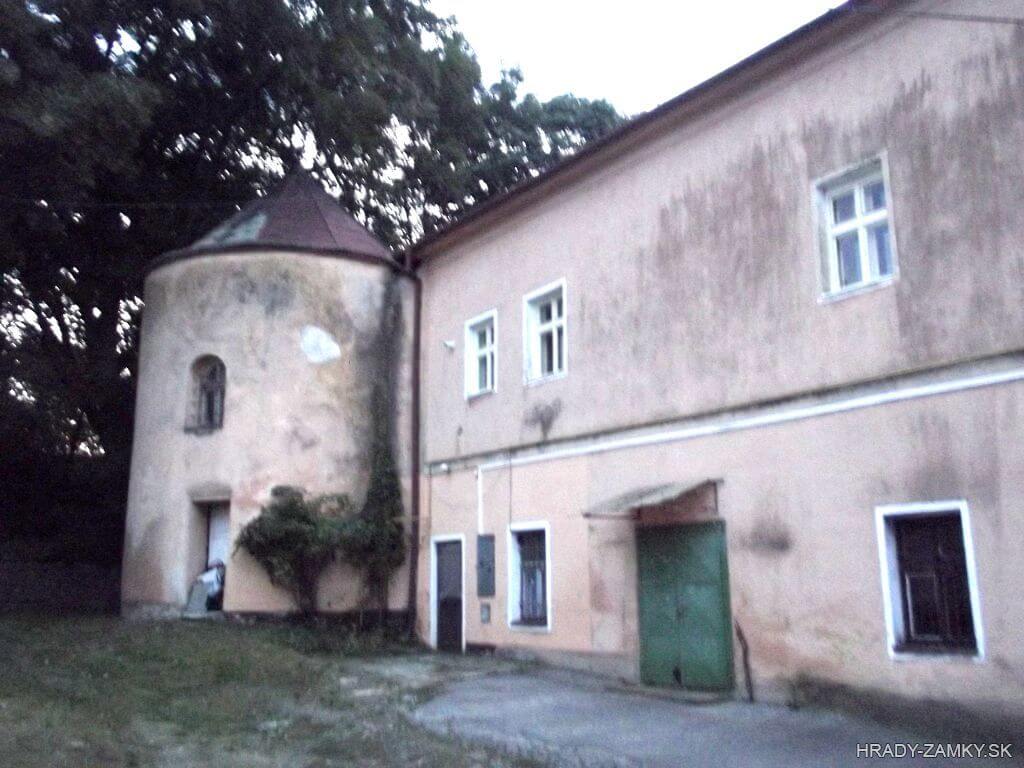
Horné Trhovište
Horné Trhovište
8.2km
manor, mansion
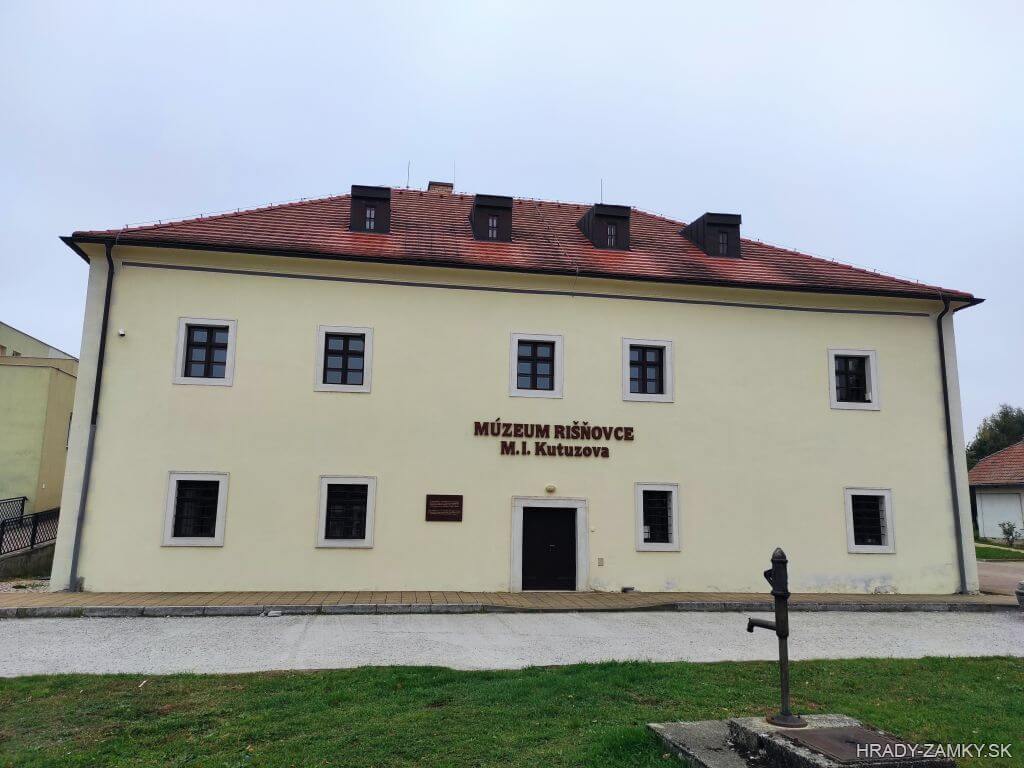
Rišňovce
Rišňovce
10.0km
manor, mansion
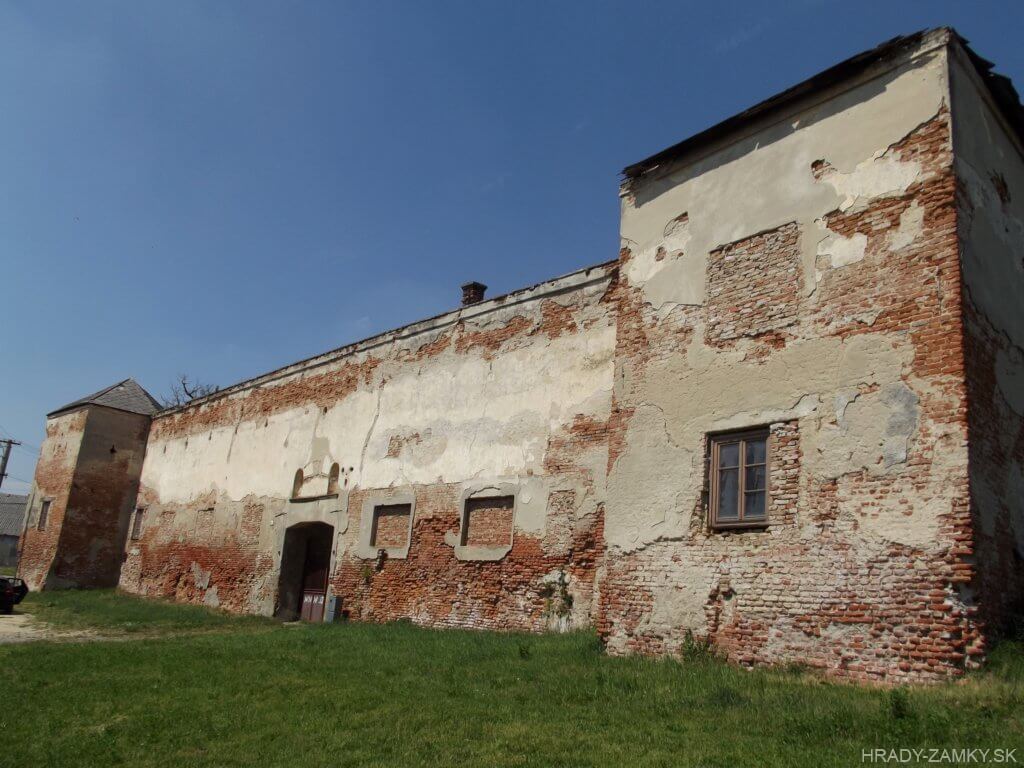
Lukáčovce mansion
Lukáčovce
11.0km
manor, mansion
Nové Sady
Nové Sady
14.3km
manor, mansion
Šintava
Sereď
15.0km
manor, mansion