Čabraď
Čabradský Vrbovok Banská Bystrica county Slovakia
castle ruin
Čabraď
Čabradský Vrbovok Banskobystrický kraj Slovakia
zrúcanina hradu
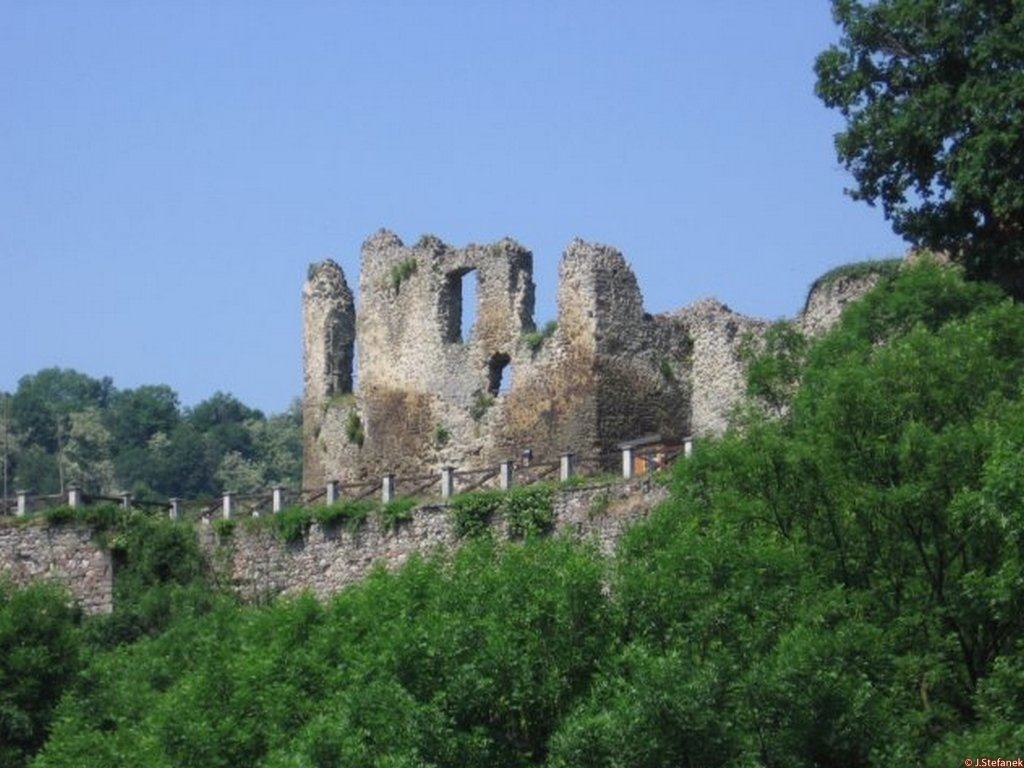
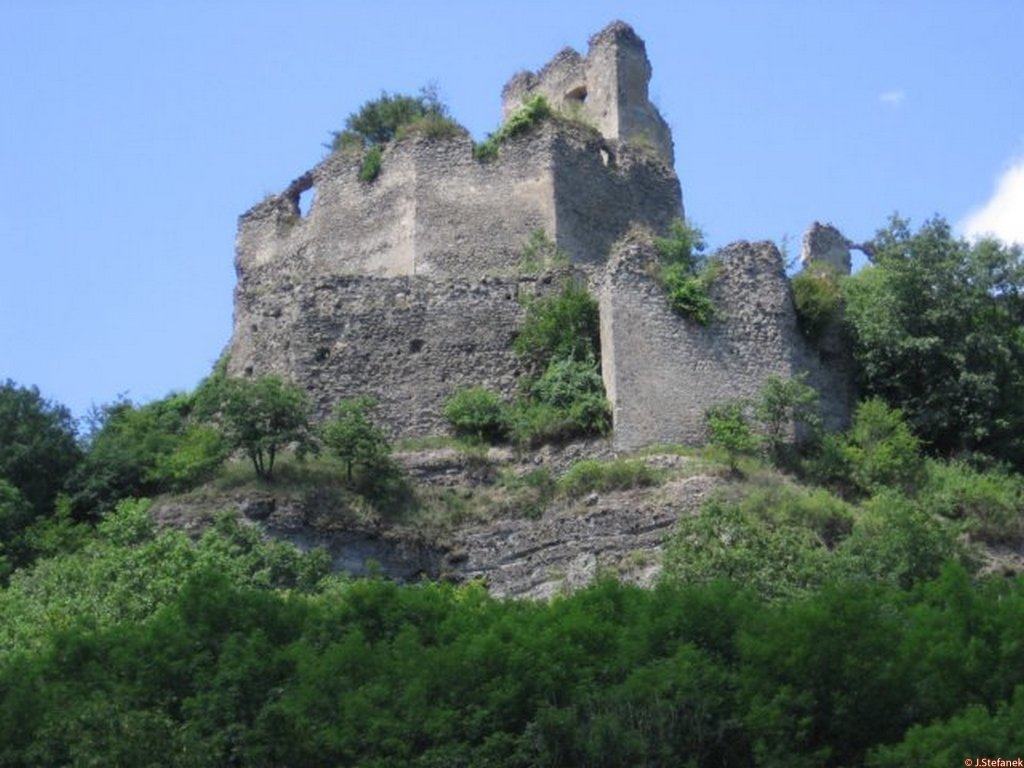
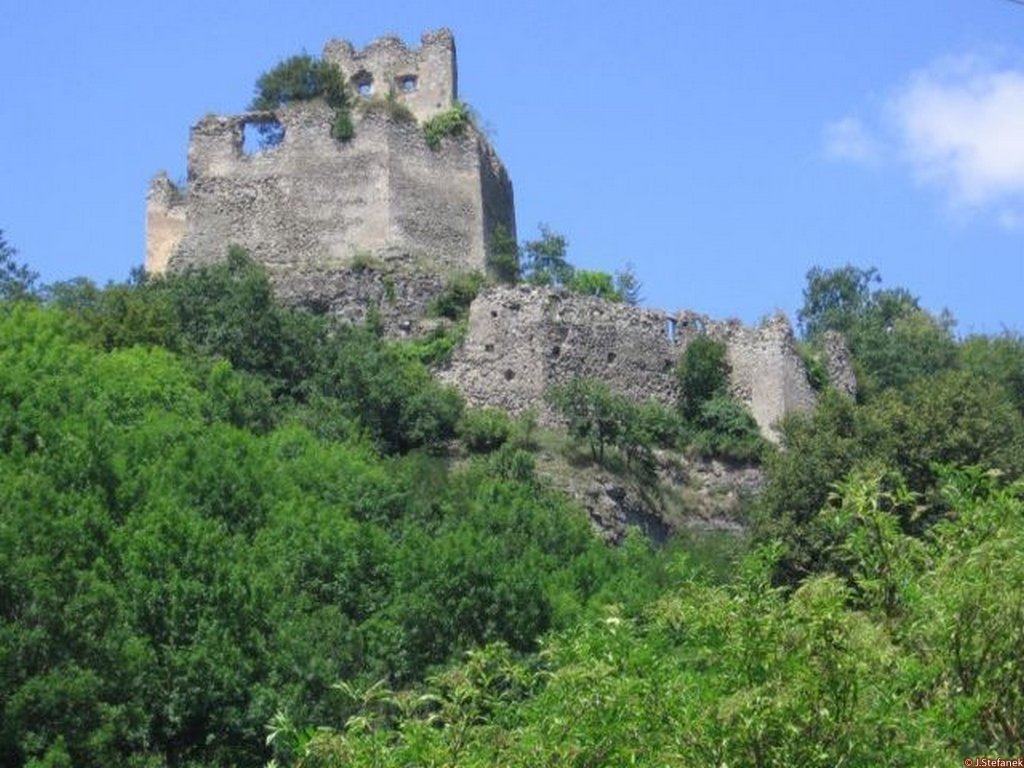
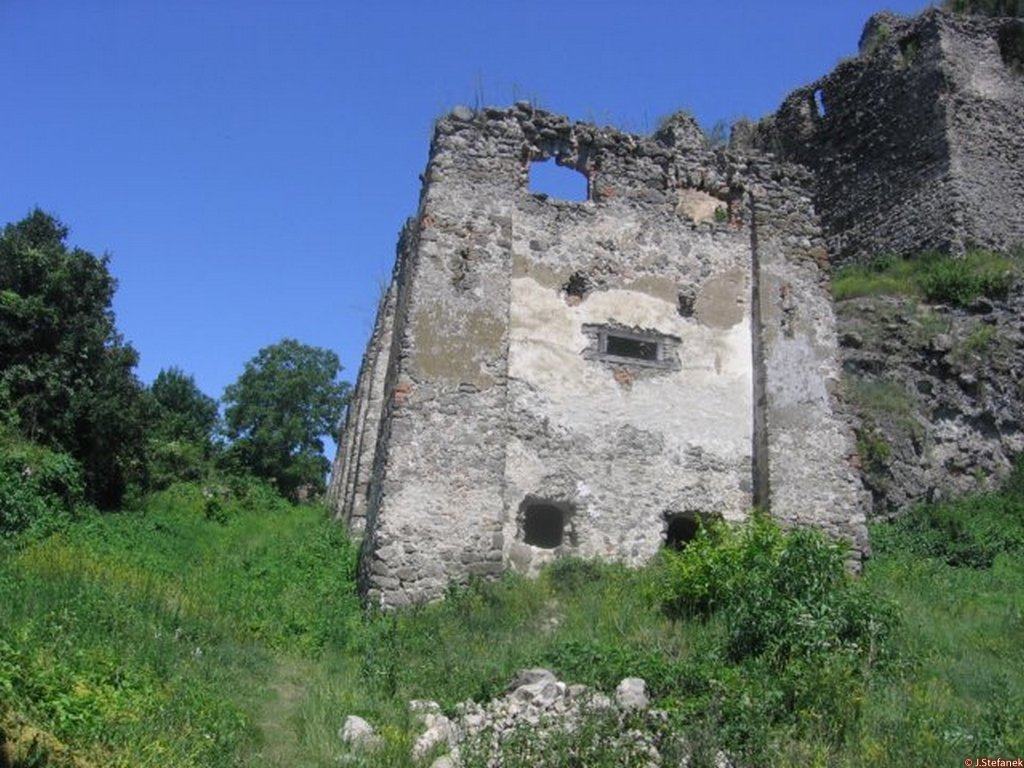
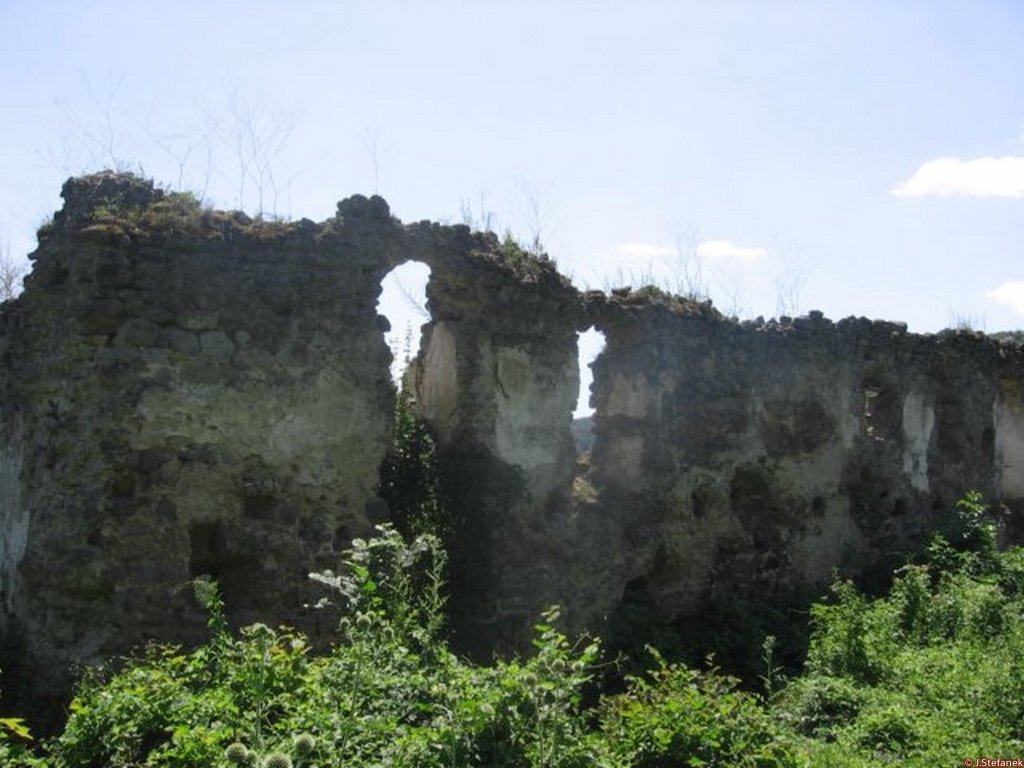
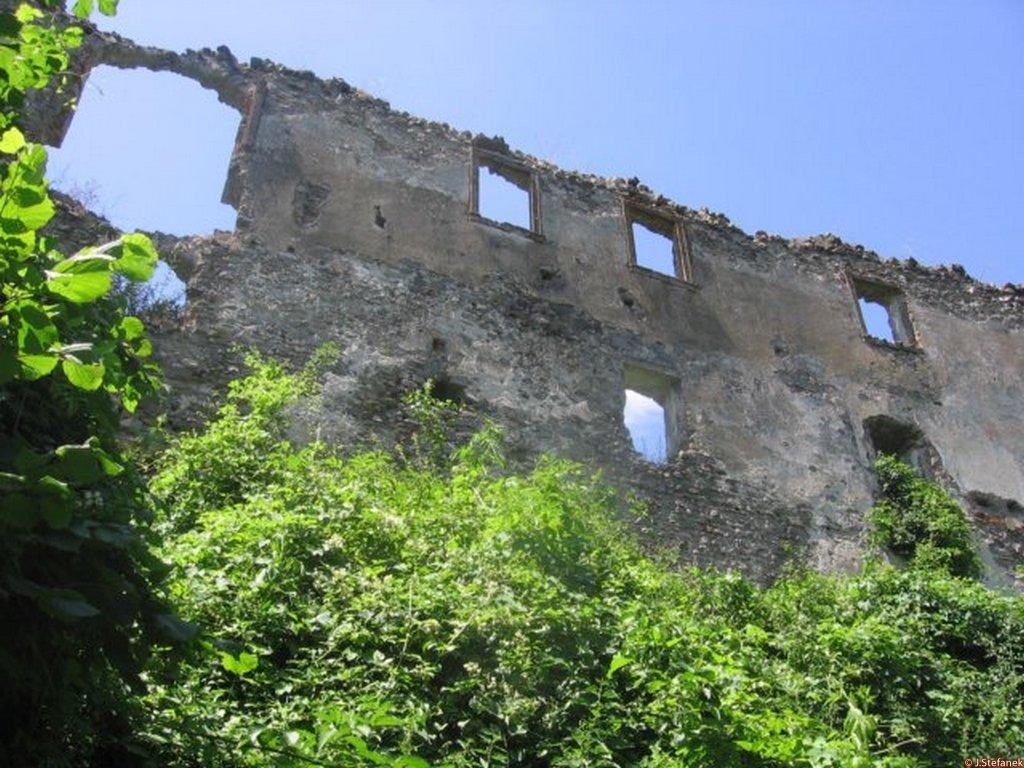
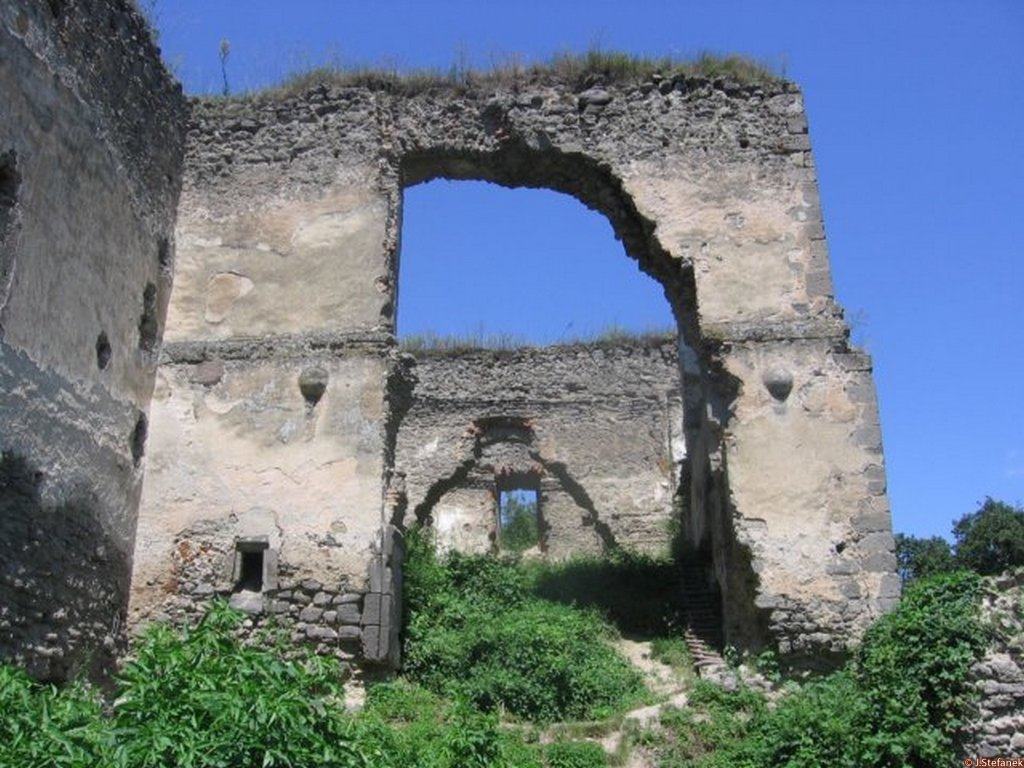
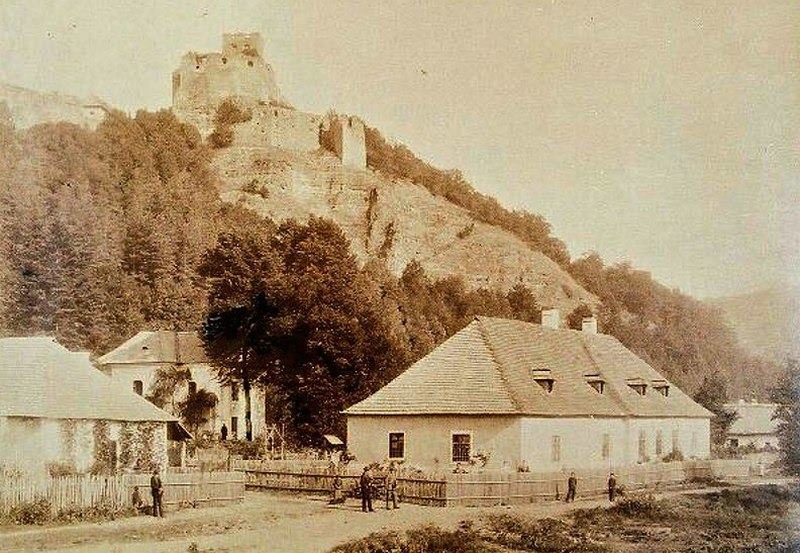
The ruins of a gothic castle at the end of a rock promontory on three sides of the Litava river, situated in the Krupina Plain, southeast of the village of Čabradský Vrbovok
Zrúcanina gotického hradu na konci skalného ostrohu z troch strán obtekaného riečkou Litavou, situovaná v krupinskej planine, juhovýchodne od obce Čabradský Vrbovok
Previous names
Litava, Haradnuk, Lytua, Haradnok, Litva, Lythua, desolatum castrum Lyta, Puztalythwa, Chabrad, Lythwa, Chabragh, Pustha Lythwa, Chabraag
Roads
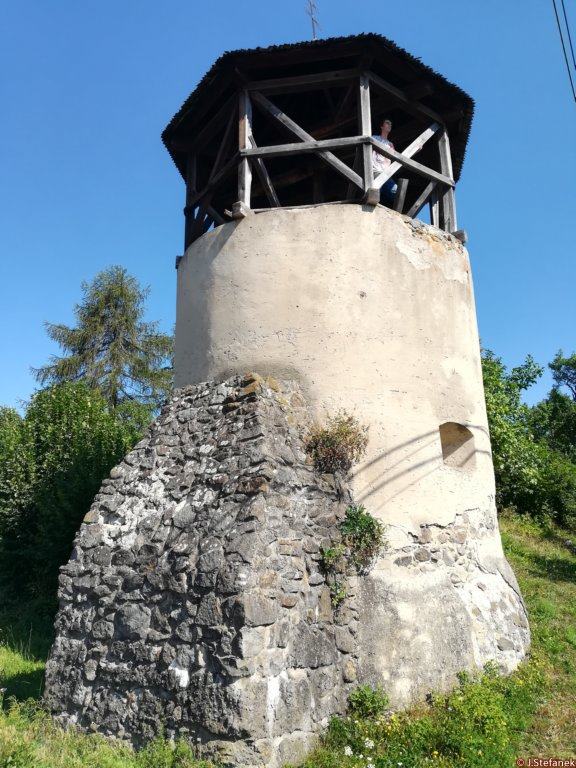
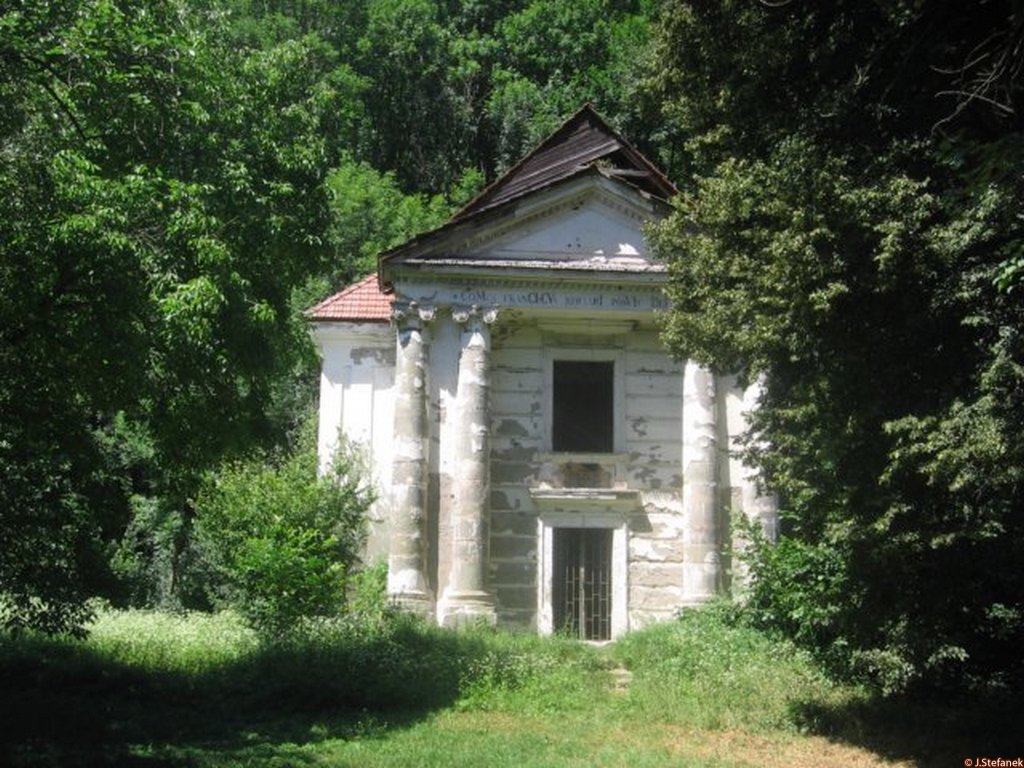
Trasa 1: By car we get to the village Čabradský Vrbovok (near the village Bzovík, near Krupina). From Čabradský Vrbovok, next to the church, we reach the nearby settlement of Konské, where the asphalt road ends. We recommend parking your car here, as it is followed by a rocky, broken road through the forest. It follows, apart from the quality of the path, not so demanding as a rather long, but pleasant walk through the forest. Don't be confused, the road continues down into the valley, so we continue straight on. After about 40 minutes via the blue tourist route we come to the Litava river, which we can easily cross, or go around the bridge on the left until we get directly under the castle. We will see the building and the chapel of the Koháry family. We will go around the building on the left side and after the already paved path we will reach the castle in 10-15 minutes.
Trasa 1: Autom sa dostaneme do obce Čabradský Vrbovok (neďaleko obce Bzovík, pri Krupine). Z Čabradského Vrbovku sa popri kostole dostaneme až k blízkej osade Konské, kde asfaltová cesta končí. Odporúčame tu auto odstaviť, nakoľko nasleduje kamenistá, rozbitá cesta lesom. Nasleduje, od kvality cesty odhliadnuc, ani nie tak náročná ako skôr dlhá, no príjemná prechádzka lesom. Nech vás nemýli, že cesta pokračuje smerom dole do doliny, pokračujeme stále rovno. Asi po 40 minútach po modrej TZT prídeme k riečke Litava, ktorú môžeme jednoducho prebrodiť, alebo obísť po mostíku zľava až sa dostaneme priamo pod hrad. Uvidíme tu budovu a kaplnku Koháryovcov. Obídeme budovu z ľavej strany a po už vyšľapanom chodníku sa za 10-15 minút dostaneme k hradu.
Trasa 2: Access from the south - from the main road between the village Plášťovce and Veľký Krtíš, about 250 m before the turn to the village Hrušov, there is a blue-marked tourist route on the left with the information board ČABRAĎSKÝ HRAD, which will take us to the castle.
Trasa 2: Prístup z južnej strany - z hlavnej cesty medzi obcou Plášťovce a Veľkým Krtíšom, asi 250m pred odbočkou na obec Hrušov, je vľavo modroznačená turistická trasa s informačnou tabuľou ČABRAĎSKÝ HRAD, ktorá nás zavedie k hradu.
Description
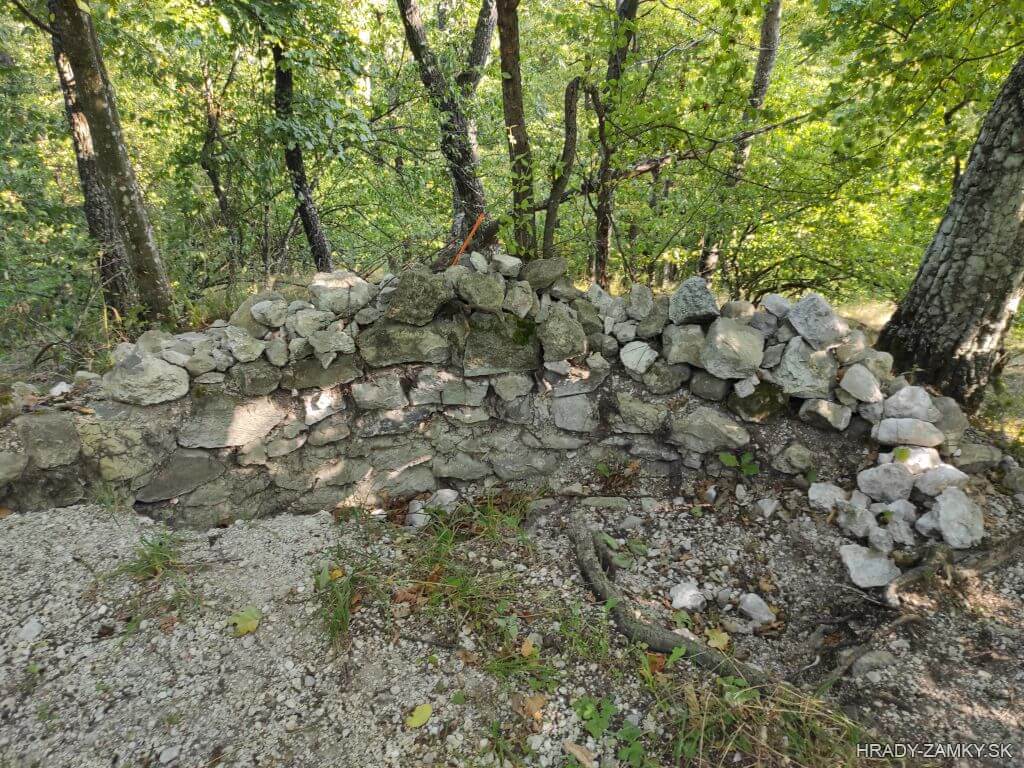
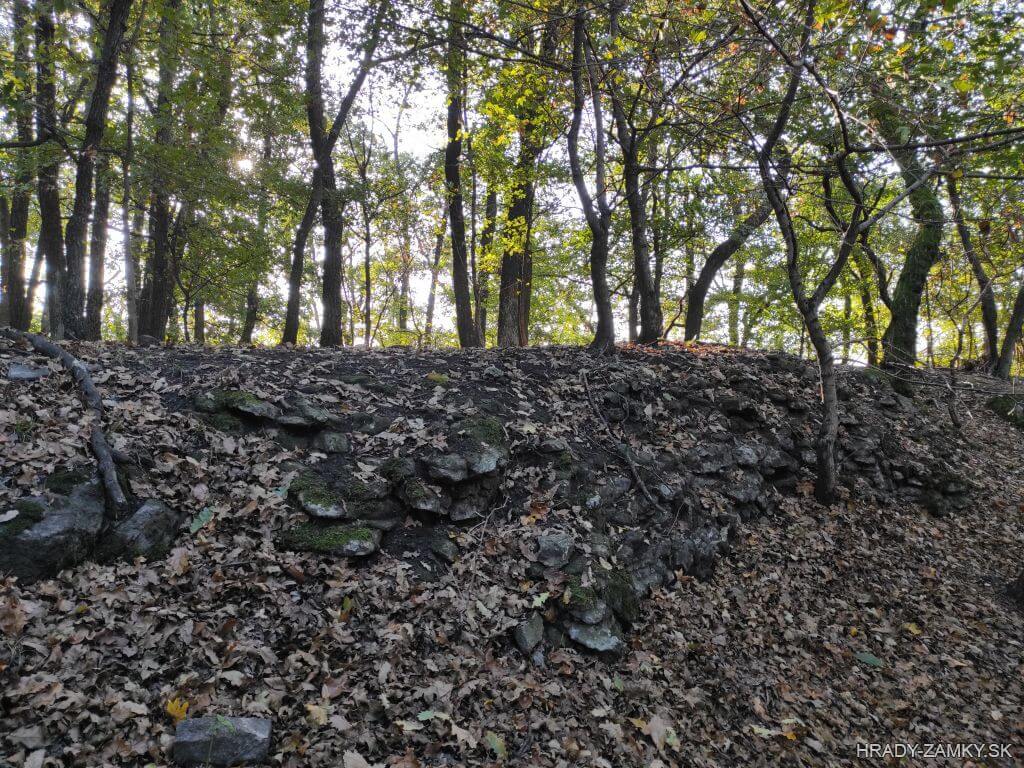
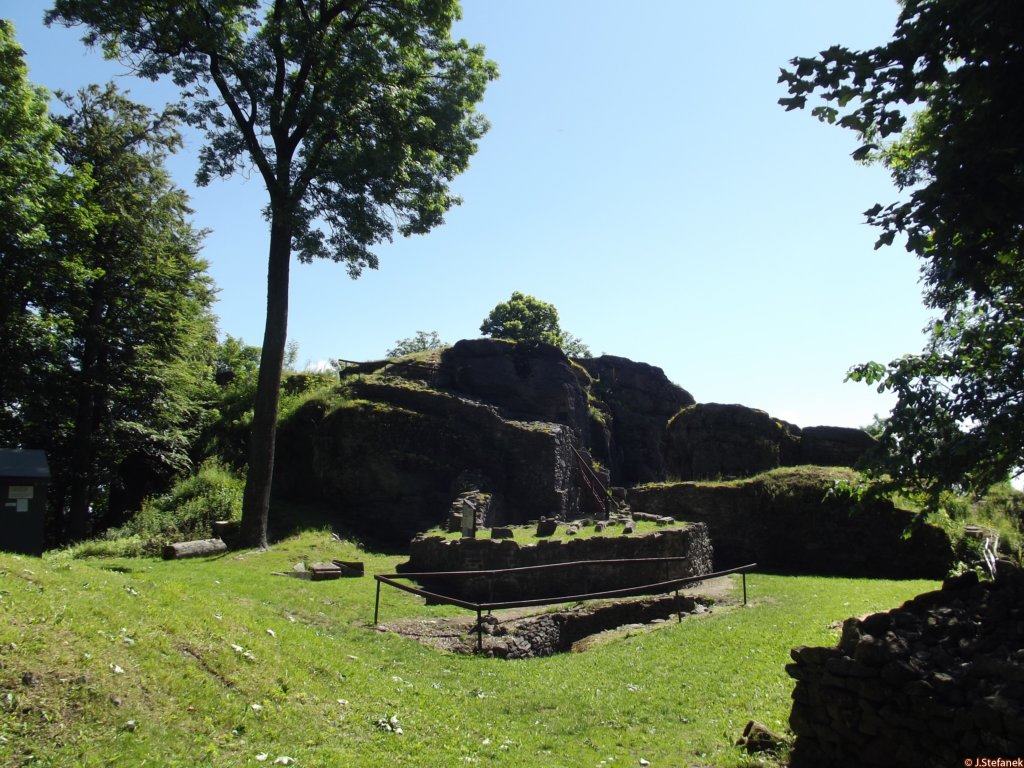
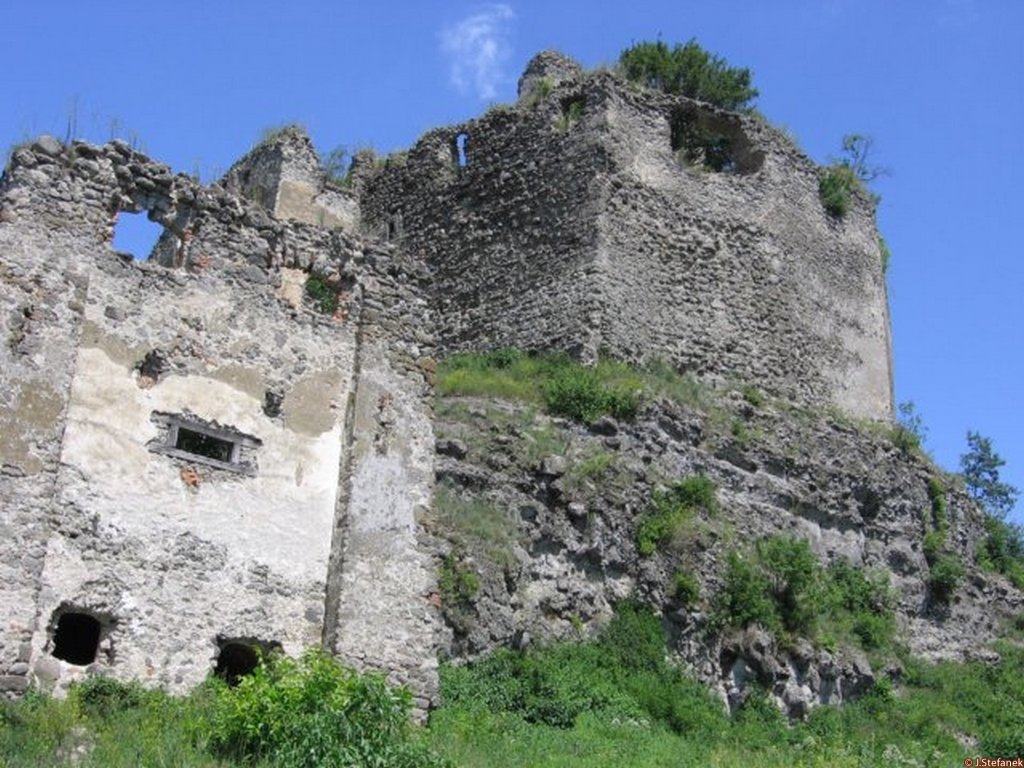
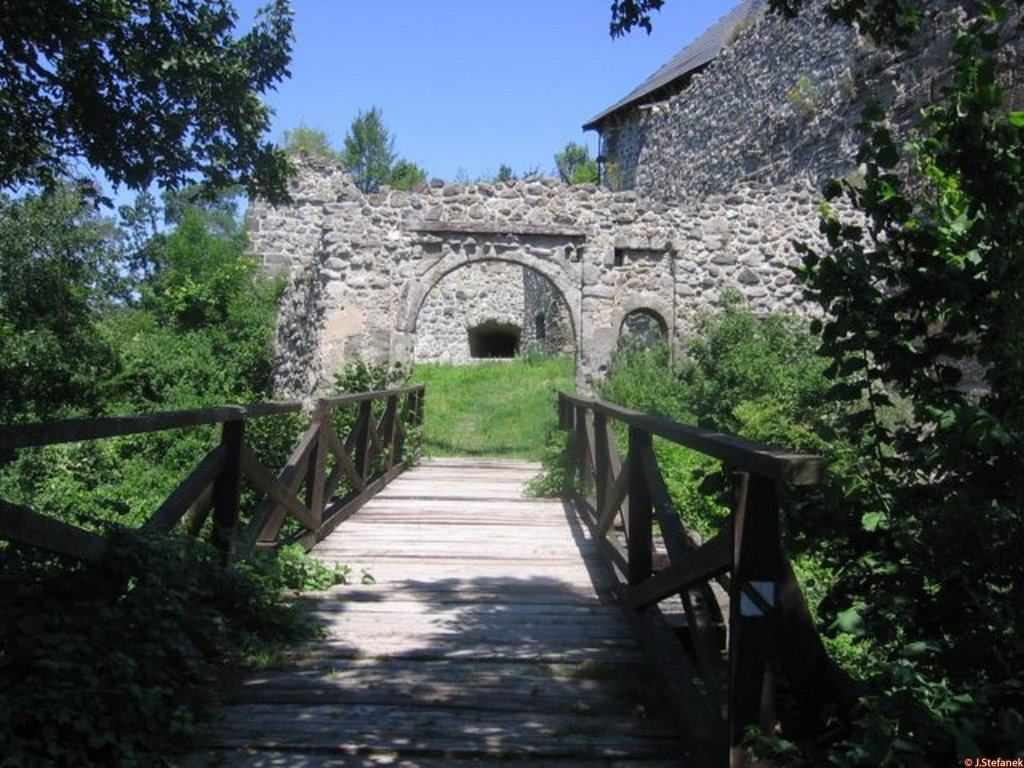
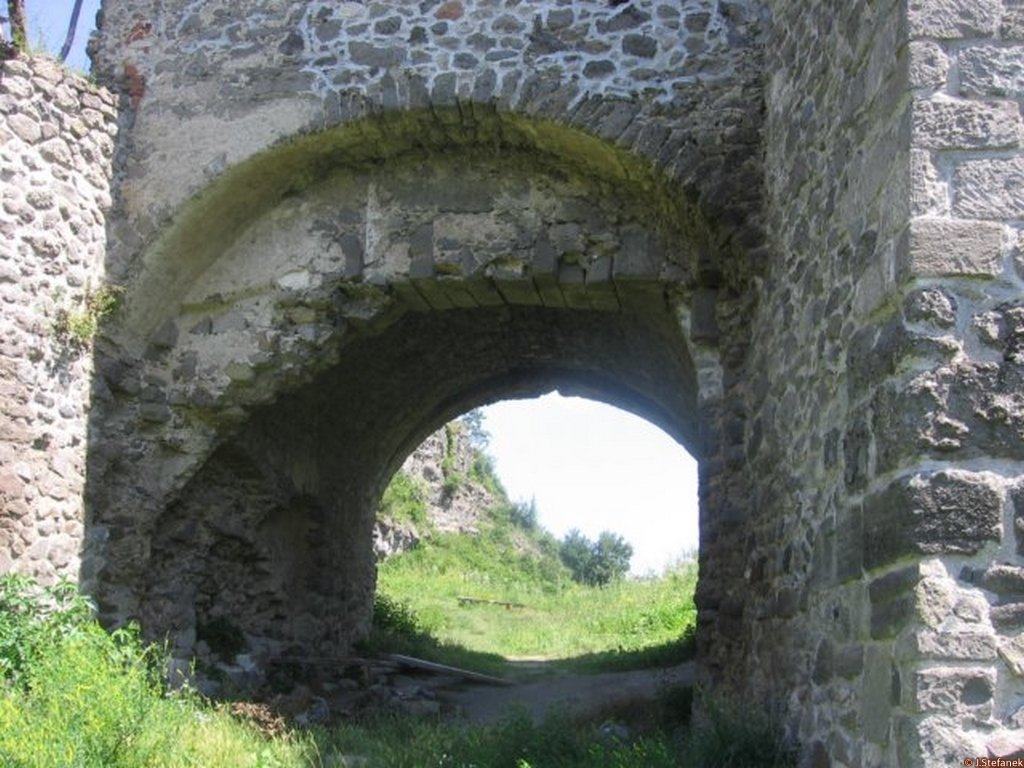
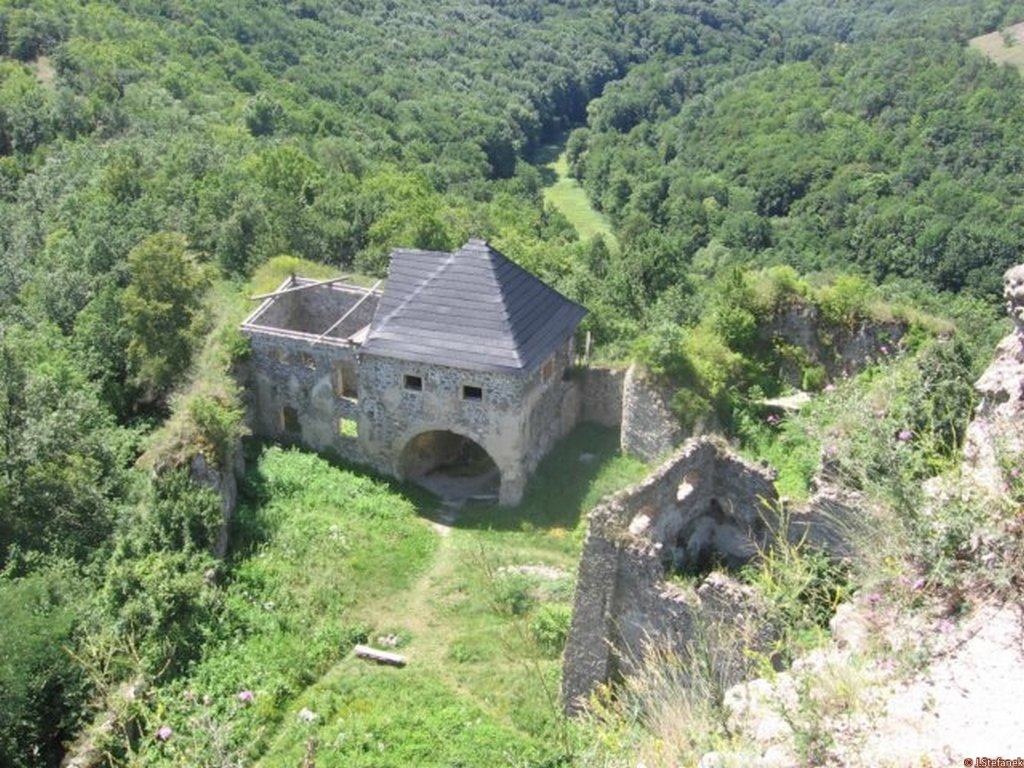
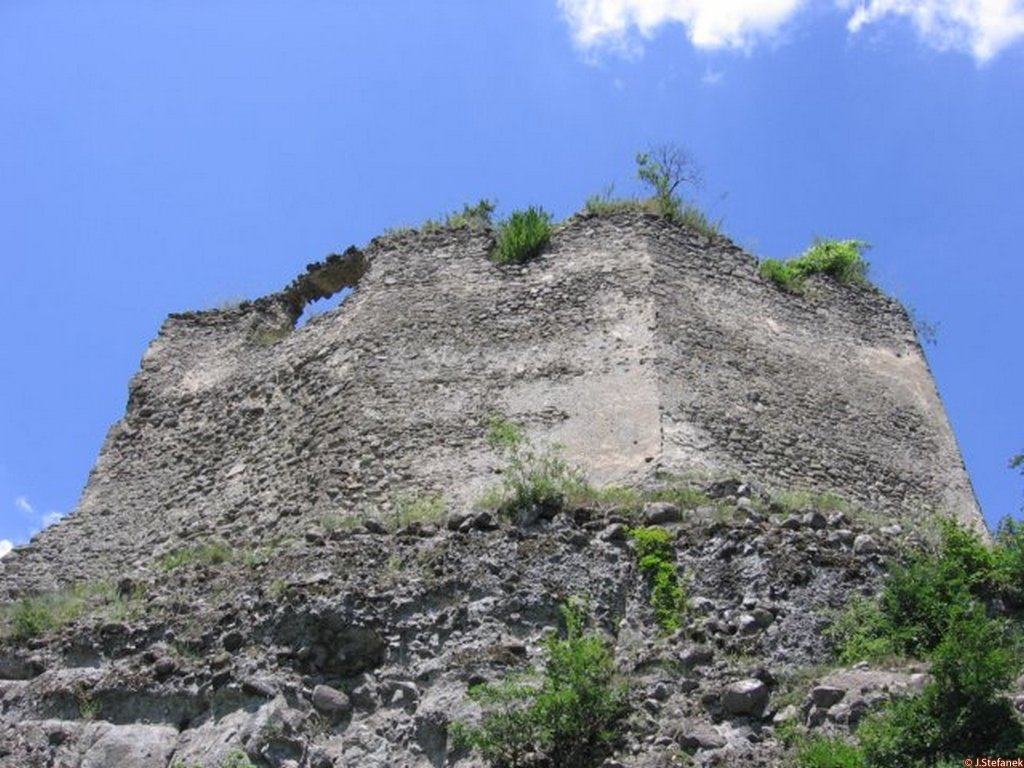
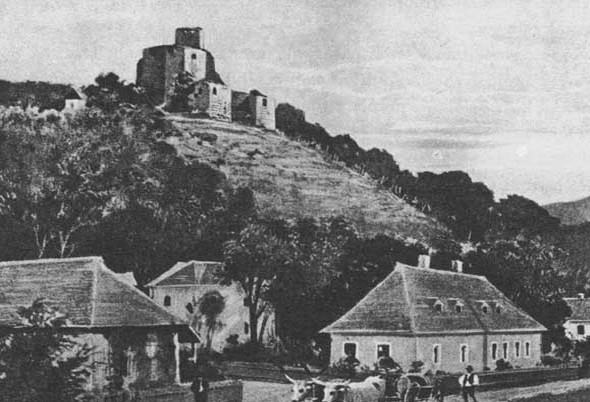
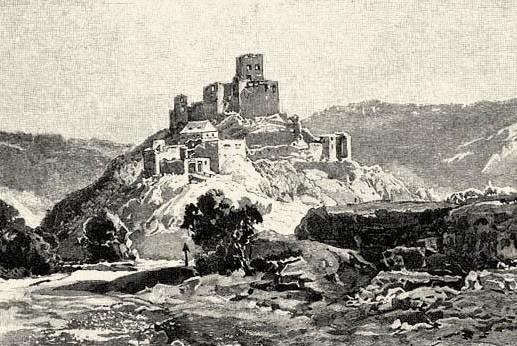
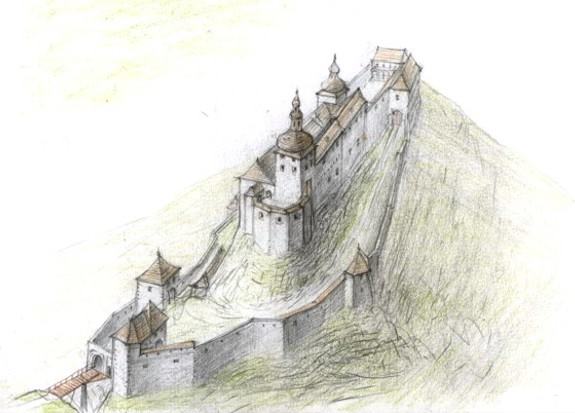
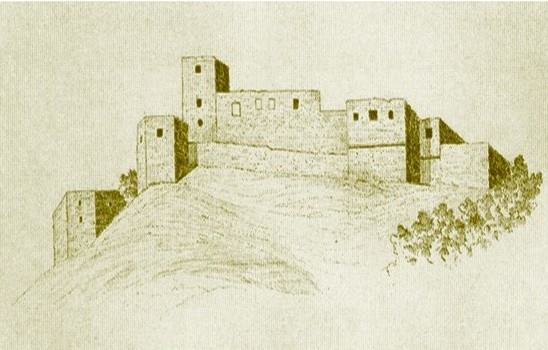
Despite being a ruin, the castle is impressive. It is surrounded by the Litava River from three sides. The Rondel Association is in charge of preserving the castle and cleaning its surroundings. Thanks to them, we do not have to worry about the high occurrence of snakes and wild jungle in the castle.The upper castle was once a tower, a large courtyard with palace buildings and farm buildings. The entrance to the upper castle was from the north side through the gate probably with a drawbridge. Bastions, which formed a system of peripheral fortifications, were located on the western side. On the east side was a residential building, in the southwest gate with a bastion and in the south entrance gate with a tower and a forward gate with loopholes and drawbridge. Remains of external fortifications and parts of structures and perimeter walls of residential buildings have been preserved.
Hrad je napriek tomu, že je ruinou, impozantný a mohutný. Obteká ho riečka Litava z troch strán. Konzerváciu hradu i čistenie jeho okolia má na starosti združenie Rondel. Aj vďaka nim sa nemusíme obávať veľkého výskytu hadov a divokej džungle priamo na hrade.Horný hrad kedysi tvorila veža, rozľahlé nádvorie s palácovými stavbami a hospodárskymi budovami. Vstup do horného hradu bol zo severnej strany cez bránu pravdepodobne s padacím mostom. Bastióny a bašty, ktoré tvorili sústavu obvodového opevnenia, sa nachádzali na západnej strane. Na východnej strane bola obytná budova, na juhozápade brána s baštou a na juhu vstupná brána s vežou a predsunutou bránou so strieľňami a padacím mostom. Zachovali sa zvyšky vonkajšieho opevnenia a časti konštrukcií i obvodových múrov obytných budov.
Plan
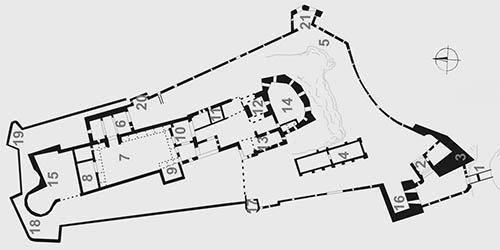
Legend to the ground plan
- 1 - 1st entrance gate
- 2- 2nd entrance gate
- 3-gable wall
- 4-former granary
- 5-residential buildings
- 6 - 3rd entrance gate
- 7-upper castle - courtyard
- 8-north palace
- 9- bakery
- 10- 4th gate
- 11-east palace
- 12-dwelling tower
- 13-west palace
- 14-bastion of the upper castle
- 15-north courtyard
- 16-I. bastion
- 17-II. bastion
- 18-III. bastion
- 19-IV. bastion
- 20-V. bastion
- 21-VI. bastion
Legenda k pôdorysu
- 1-I.vstupná brána
- 2-II.vstupná brána
- 3-štítová hradba
- 4-bývalá sýpka
- 5-obytné budovy
- 6-III.vstupná brána
- 7-horný hrad - nádvorie
- 8-severný palác
- 9-pekáreň
- 10-IV.brána
- 11-východný palác
- 12-obytná veža
- 13-západný palác
- 14-bastión horného hradu
- 15-severný dvor
- 16-I.bašta
- 17-II.bašta
- 18-III.bašta
- 19-IV.bašta
- 20-V.bašta
- 21-VI.bašta
History
The castle is ingeniously situated on a place that flows around the river Litava from three sides. The castle directly controlled the road connection that passed to the castle from Šahy, bifurcated at Bzovík and continued to Krupina, and to Banská Štiavnica. History is silent about the origin of the castle, but many historians associate two castles with the beginnings of Čabraď Castle, for which the springs used partly the same names. The older castle called Litava (Lithuania), about 3 km to the SE of Čabraď Castle, disappeared in about 1320. Thanks to partly the same name, the history of these two castles is often mistaken.
During the existence of the already launched old castle called Litava, a new castle Litava was built near it, since the late Middle Ages also called Čabraď. Its origins date back to 1342. The castle then fell under the royal administration - Karl Robert. At the beginning of Sigismund's reign, Luxembourg Castle often changed owners. In previous years, the Hungarian Queen Mary gave the castle in advance to Master Frank of Sečany. In 1387, however, King Sigismund took the castle from Frank and granted him the castle of Šášov as a replacement. In 1390, Sigismund donated the castle to his court Leustach of Jelšava. He immediately exchanged it with Ján z Pásztó (in Hevešská stolica) and Ladislav Kakaš for Sivý Kameň Castle located in Horná Nitra. During the division of property in 1394, the castle belonged to Ladislav. Since this period, members of the Kakašov family, originally from the village of Kaza in Boršodská stolica, have become the sole owners of Litava Castle. In addition to the name Litava, the springs in 1394 also use the designation Pustá Litava (Puztalithwa). Since the documents already mention only one castle and we meet with the connection Pustá Litava even later, it is possible to consider transferring the name of the older abandoned castle Hrádok-Litava to the newer castle Litava-Čabraď. The attribute desolate could also describe the state in which the castle was after frequent changes of owners.
In 1415, King Sigismund donated the castle and property to Július (called Ďula) and Loranda, the son of Ladislav Kakaš. The castle was later controlled by the troops of Ján Jiskra and in 1461 the castle was besieged by the royal army. Around 1460, the Horváth family acquired the castle. In 1469 King Matej assigned the castle to Damián Horváth. After Damian's death in 1476, the manor was divided by his brother Peter Horváth and his widow Fružina (Euphrosine). In 1511, the then owner of the Urban Fánchy castle sold Čabraď and the whole estate to Archbishop Tomáš Bakócz. The castle was rebuilt under his ownership and fortified by a fort. According to the will of the archbishop, his relatives Erdődy became the owners of the castle. In 1547 the castle was occupied by Melchior Balassa. Čabraď got Peter Pálffy back two years later. The castle, together with other fortresses from the robber knights, was conquered by the commander of the royal army, Mikuláš Salm. After 1558, the castle in the possession of Ján Krušič, later strengthened by a modern external fortification with artillery bastions, withstood all the onslaught of Ottoman troops.
After the death of Ján Krušič, his widow Katarína Pálffy married Štefan Illésházy, who in 1582 became the new owner of the Čabrad and Sitno estates. A more permanent change in ownership relations occurred in 1622. King Ferdinand II. he then agreed to buy both estates from the then owner Barbora Balassa from the sub-captain of Nové Zámky, Peter Koháry. The new owner did not accept the Turkish presence on the Čabraď estate. He prevented the Turks from collecting taxes and punished the municipalities that submitted to them. In the years 1629 - 1632, he repeatedly came into conflict with the Ottoman governors in Esztergom. The castles and manors were then inherited by Peter's son Štefan Koháry. Koháry's life was ended by injuries sustained in the battle of Levice in 1664. His relatives buried him at Čabraď Castle. Later, the body was transported to the family tomb in Hronský Beňadik. Later, during the estate uprisings, Čabraď was repeatedly occupied by insurgents led by František Rákóczi. It was not until 1709 that the Koháry family regained the castle, after the suppression of the uprising. After the conditions calmed down, the castle gradually lost its original function. In the years 1744 - 1755, Ondrej Koháry had a modern manor house built in Svätý Anton, where he also transferred the administration of family property.
The maintenance-intensive castle was finally set on fire by František Koháry in 1812. As he died without male descendants, the connection of the Koháry family with the history of Čabrad also ends in this period. Prince Ferdinand Coburg became the owner of the manor through his marriage to František Koháry's daughter Mária Antónia. Even after the castle became inoperable, the Čabraďské manor formed a single unit, managed by the landowner. Despite the devastating fire, the castle did not completely start even after several decades. However, the castle fell into oblivion for many years. In the 90s of the 20th century, the conservation of the first courtyard took place. Since 2000, there has been a civic association for the rescue of the Čabraď castle - the Rondel Association, which in cooperation with the Čabradský Vrbovok municipality gradually cleans the castle of raid vegetation, focuses castle buildings, promotes the castle to the public and is dedicated to its conservation.
Hrad je dômyselne situovaný na mieste, ktoré riečka Litava obteká z troch strán. Hrad priamo kontroloval cestné spojenie, ktoré prechádzalo k hradu zo Šiah, pri Bzovíku sa rozdvojovalo a ďalej pokračovalo do Krupiny, a do Banskej Štiavnice. O vzniku hradu história mlčí, avšak mnohí historici spájajú s počiatkami hradu Čabraď dva hrady, pre ktoré pramene používali sčasti rovnaké názvy. Starší hrad s názvom Litava (Litva), asi 3 km na JV od hradu Čabraď, zanikol asi v r.1320. Vďaka sčasti rovnakým názvom sa často mylne prelína história týchto dvoch hradov.
Počas existencie už spustnutého starého hradu s názvom Litava bol vybudovaný neďaleko neho nový hrad Litava, od neskorého stredoveku nazývaný aj ako Čabraď. Jeho počiatky siahajú pred rok 1342. Hrad vtedy spadal pod kráľovskú správu - Karlovi Róbertovi. Na začiatku vlády Žigmunda Luxemburského hrad často menil majiteľov. Uhorská kráľovná Mária ešte v predchádzajúcich rokoch dala hrad do zálohu magistrovi Frankovi zo Sečian. V roku 1387 však kráľ Žigmund hrad Frankovi odobral a ako náhradu mu udelil hrad Šášov. V r.1390 daroval Žigmund hrad svojmu dvoranovi Leustachovi z Jelšavy. Ten ho vzápätí vymenil s Jánom z Pásztó (v Hevešskej stolici) a Ladislavom Kakašom za hrad Sivý Kameň ležiaci na Hornej Nitre. Počas deľby majetku v roku 1394 pripadol hrad Ladislavovi. Od tohto obdobia sa stali jedinými majiteľmi hradu Litava členovia rodu Kakašovcov, pôvodom z obce Kaza v Boršodskej stolici. Okrem názvu Litava používajú pramene v roku 1394 aj označenie hradu Pustá Litava (Puztalithwa). Nakoľko listiny už spomínajú len jeden hrad a so spojením Pustá Litava sa stretávame i neskôr, uvažovať možno o prenesení názvu staršieho opusteného hradu Hrádok-Litava na novší hrad Litava-Čabraď. Prívlastok pustý mohol zároveň opisovať aj stav, v akom sa hrad po častom striedaní majiteľov nachádzal.
V r.1415 kráľ Žigmund daroval hrad a majetky Júliusovi (zvanému Ďula) a Lorandovi, synom Ladislava Kakaša. Hrad neskôr ovládli vojská Jána Jiskru a v r.1461 preto došlo k obliehaniu hradu kráľovským vojskom. Okolo r.1460 získali hrad Horváthovci. V roku 1469 kráľ Matej priradil hrad Damiánovi Horváthovi. Po Damiánovej smrti si v roku 1476 panstvo rozdelili jeho brat Peter Horváth a vdova Fružina (Eufrozína). V roku 1511 už vtedajší vlastník hradu Urban Fánchy predal Čabraď s celým panstvom arcibiskupovi Tomášovi Bakóczovi. Hrad bol za jeho vlastníctva prestavaný a opevnený predhradím. Majiteľmi hradu sa podľa závetu arcibiskupa stali jeho príbuzní Erdődyovci. V r.1547 hrad obsadil Melchior Balassa. Čabraď získal Peter Pálffy späť až o dva roky. Hrad spolu s ďalšími pevnosťami od lúpežných rytierov vydobyl veliteľ kráľovského vojska Mikuláš Salm. Po r.1558 hrad v držbe Jána Krušiča, neskôr posilnený moderným vonkajším opevnením s delostreleckými bastiónmi, odolal všetkým náporom osmanských vojsk.
Po smrti Jána Krušiča sa jeho vdova Katarína Pálffyová vydala za Štefana Ilésházyho, ktorý sa v r.1582 stal novým majiteľom panstiev Čabrade aj Sitna. Trvalejšia zmena vo vlastníckych vzťahoch nastala v r.1622. Kráľ Ferdinand II. dal vtedy súhlas, aby obidve panstvá od vtedajšej majiteľky Barbory Balassa odkúpil novozámocký podkapitán Peter Koháry. Nový majiteľ sa nezmieril s tureckou prítomnosťou na Čabraďskom panstve. Bránil Turkom vo výbere daní a postihoval obce, ktoré sa im podriadili. V rokoch 1629 – 1632 sa tak opakovane dostal do konfliktu s osmanskými miestodržiteľmi v Ostrihome. Hrady a panstvá potom zdedil Petrov syn Štefan Koháry. Život Koháryho ukončili zranenia utŕžené v bitke pri Leviciach v r.1664. Príbuzní ho pochovali na hrade Čabraď. Neskôr telo previezli do rodovej hrobky v Hronskom Beňadiku. Neskôr, počas stavovských povstaní Čabraď opakovane obsadzovali povstalci na čele s Františkom Rákóczim. Až v r.1709 získali Koháryovci hrad späť, po potlačení povstania. Po upokojení pomerov hrad postupne strácal svoju pôvodnú funkciu. V rokoch 1744 – 1755 dal Ondrej Koháry postaviť vo Svätom Antone moderný kaštieľ, kam preniesol aj správu rodových majetkov.
Hrad náročný na údržbu dal nakoniec František Koháry v roku 1812 podpáliť. Nakoľko zomrel bez mužských potomkov, v tomto období končí aj spojenie Koháryovcov s dejinami Čabrade. Majiteľom panstva sa prostredníctvom sobáša s dcérou Františka Koháryho Máriou Antóniou stal knieža Ferdinand Coburg. Aj po znefunkčnení hradu tvorilo Čabraďské panstvo jednotný celok, riadený zemepanským správcom. Hrad napriek zničujúcemu požiaru ani po niekoľkých desaťročiach úplne nespustol. Hrad však už potom upadol na dlhé roky do zabudnutia. V 90-tych rokoch 20.storočia prebehla konzervácia prvého nádvoria. Od roku 2000 funguje občianske združenie pre záchranu hradu Čabraď - Združenie Rondel, ktoré v spolupráci s obcou Čabradský Vrbovok postupne čistí hrad od náletovej vegetácie, zameriava hradné objekty, propaguje hrad pre verejnosť a venuje sa jeho konzervácii.
Myths and legends
The legend of the castle
When the aging field marshal Štefan Kohári withdrew into the privacy of his birthplace in 1709 and exchanged the saber for a pen, Čabraď became the seat of the poet's lyrical muses, who wrote more than 2,000 verses here at the end of his life.
Rumor of a donkey and an observer
Life was cheerful at Čabrad Castle. Everything was abundant. Every day the castellan played with its halls. Merry songs were still heard in the chateau and lush dances roared ... The Čabrad castellan had everything that his eyes demanded in abundance. The people feared him and were humbly subject to him, also because the castellan was fierce, unyielding. He was an avid hunter, so he cared a lot about always knowing the weather in advance. And here was what he didn't have ... He didn't have a reliable observer who could predict the weather with confidence.
I figured she'd find him whatever it was. He set out to search hard, but even though there were still enough learned people, he was unable to find an educated observer. He began to regret the thing, but he didn't want to let go. He sent his people around a wide-distant region to find him and bring him to the castle a sought-after scholar. But his people were returning alone. They found no star. Not him and not! Kastelán was furious. - And I have to have an observer anyway! - he shouted in a powerful voice and sent his servants back to the world. - Where you can get it, you can get it from there, but you have to bring it to my castle.
But the attempts failed ... That's why the servants gathered for a meeting and wondered how to appear before a relentless castellan without a star. Well, they didn't invent anything reasonable. And they were about to break up when the oldest and most experienced of them hit their foreheads and said: For a long time he was also a gelding, who knows the stars. He looked at them enough over the long nights! He was also a soldier, he marched the world! He knows a few words and is otherwise clever, wise and cunning! Let's go to him and make him an observer!
The servants of the wolves and the slaves agreed to a saving but at the same time dangerous proposal, and turned to Philip. Philip immediately liked the idea, but he was still afraid that the lie would come to light and the matter would not end sadly, because he knew that the castellan was fleeing and relentless. But when the servants assured him and swore an oath to him not to tell anyone a word about the whole thing, he landed. The lord of the castle was cheering and in honor of the found starmaker he organized a great feast that day, which lasted for several days. Philip began to live well. He became a lord at the castle, whose orders everyone had to obey. Read more...
He was hasty and almost forgot that he had only recently grazed sheep. He didn't even talk to the servants. Even for those who made him a great master, he had only a contemptuous smile. It went badly to the servants and I would like to somehow take revenge on him. But how? ... For when they betray him, they also reveal themselves, and they cast the wrath of the castellan only on themselves! They had to be silent and endure the tyranny of the inflated fake star, who in the meantime was already fully versed in his craft. Kastelán respected him, and there was nothing he could not discuss with him at first. Once before the hunt, he went to Philip to discuss the weather. Filip was just asleep after a wasted night, but he really didn't want to get up and go and see what the weather would be like. I mumbled that hey, the weather would be great that he could go hunting. Then he turned to the other side and snored stiffly. Satisfied with the answer, Kastelán set out with his retinue into the mountain without thinking. He had a very good will, and when he saw a servant in front of the castle, who was tormented by the donkey, because he did not want to pull his cart, he shouted at him: - Hey! "But, that's always the way it is with him when a storm is coming," the servant replied meekly. Kastelán laughed. - What? A storm? ... Ha-ha-ha ... - I believe so, - said the servant. - When the donkey has its ears fully lowered, it is certain that a storm will come. But the castellan did not want to believe that an ordinary donkey was better acquainted with the weather than his experienced starter. "Well," he said jokingly, - if there's a storm today, wait for me here and I'll trade your donkey for one he knows in Latin. The servant did not understand what the master meant, but he bowed deeply and waited. As soon as the castellan went to the edge of the mountain, the sky clouded, thunder shook, and a terrible downpour began. The party scattered in all directions. Kastelán was left alone. The rain was pouring in and the thunder was beating wildly ... To top it all off, the castellan's horse broke his leg, so the castellan had to walk to the castle.
He finally got home half dead. The servants were already shaking with fear of his anger. But - wonder-savage! - the castellan did not stumble or curse, he just summoned a servant to whom he had ordered to wait with the donkey in front of the castle. The servant came scared and looked at the stern master incomprehensibly. - Do you know what I promised you before the storm? - the castellan asked him. The servant just looked and watched. How was he supposed to know when he didn't understand a word from the gentleman's speech? - Cut the donkey! - the castellan ordered. - From now on, he will graze here under the castle. But in order not to blame you, my learned observer will pull your cart ...! And so it happened. He had Philip dragged into a cart, and made a donkey out of an ass. From that time on, the donkey at Čabrad Castle foretold the weather and - as the legend says - the lord was always satisfied with the divination. But Filip did not last long in his new craft, he ran away the next day ... And since then there has been no rumors about him...
Povesť o hrade
Keď sa starnúci poľný maršal Štefan Kohári v r.1709 utiahol do súkromia svojho rodiska a zamenil šabľu za pero, Čabraď sa stal sídlom lyrických múz básnika, ktorý tu na sklonku života napísal vyše 2000 veršov.
Povesť o somárovi a hvezdárovi
Na čabradskom zámku sa žilo veselo. Všetkého bolo hojnosť. Kastelán deň čo deň hýril so svojimi dvoranmi. Na zámku sa stále ozývali veselé pesničky a duneli bujné tance... Čabradský kastelán mal v hojnej miere všetkého, čo si len jeho oči zažiadali. Ľud sa ho bál a bol mu pokorne poddaný, už i preto, že kastelán bol prudkej povahy, neústupčivý. Bol náruživý poľovník, preto mu veľmi záležalo na tom, aby vždy vopred vedel, aké bude počasie. A tu to bolo, čo nemal... Nemal spoľahlivého hvezdára, ktorý by vedel s istotou predpovedať počasie.
I zaumienil si, že si ho nájde, čo by čo bolo. Usilovne sa pustil do hľadania, ale hoci sa i vtedy našlo dosť učených ľudí, vzdelaného, súceho hvezdára sa mu nájsť nepodarilo. Vec ho začala už i mrzieť, ale nechcel popustiť. Rozposlal svojich ľudí po širokom-ďalekom kraji, aby mu našli a priviedli na zámok hľadaného učenca. Ale jeho ľudia sa vracali sami. Nijakého súceho hvezdára, vraj, nenašli. Niet ho a niet! Kastelán sa rozzúril. - A jednako musím mať hvezdára! - zakričal mocným hlasom a znova rozposlal svojich sluhov do sveta. - Odkiaľ ho dovediete, odtiaľ ho dovediete, ale doviesť mi ho na zámok musíte.
No pokusy sa nedarili... Preto sa sluhovia zišli na poradu a lámali si hlavy, ako predstúpiť pred neúprosného kastelána bez hvezdára. No nič rozumného nevymysleli. A už-už sa chceli rozísť, keď najstarší a najskúsenejší z nich sa udrel do čela a povedal: - V dedine pod hradom žije všetkými masťami mazaný prefíkanec, akýsi Filip, ktorý podľa letu vtákov a iných znamení s istotou predpovedá počasie. Za dlhý čas bol aj valachom, nuž pozná aj hviezdy. Veď cez dlhé noci sa dosť na ne nahľadel! Bol aj vojakom, pochodil svet! Vie niekoľko rečí a je aj ináč vycibrený, múdry a prefíkaný! Poďme k nemu a spravme z neho hvezdára!
Sluhovia voľky-nevoľky pristúpili na spásonosný, ale zároveň aj nebezpečný návrh, a pobrali sa k Filipovi. Filipovi sa myšlienka hneď zapáčila, ale predsa sa bál, aby klamstvo nevyšlo na svetlo božie a vec sa neskončila žalostne, lebo vedel, že kastelán je prchký a neúprosný. Ale keď ho sluhovia ubezpečili a prísahou sa mu zaviazali, že o celej veci nikomu ani slova nepovedia, pristal. Hradný pán až jasal a na počesť nájdeného hvezdára usporiadal ešte toho dňa skvelú hostinu, ktorá sa pretiahla na niekoľko dní. Filipovi sa začalo dobre žiť. Stal sa na hrade pánom, ktorého rozkazy musel každý bezpodmienečne poslúchnuť. Čítaj ďalej...
Spyšnel a skoro zabudol, že len pred nedávnom pásaval ovce. So služobníctvom sa ani do reči nepúšťal. Ba ešte aj pre tých, ktorí spravili z neho veľkomožného pána, mal len pohrdlivý úsmev. Zle to padlo sluhom a veru radi by sa mu boli nejako pomstili. Ale ako?... Veď keď ho prezradia, prezradia aj seba, a hnev kastelána uvalia len na seba! Museli mlčať a znášať tyranstvo nafúkaného nepravého hvezdára, ktorý sa medzitým už celkom vžil do svojho remesla. Kastelán si ho vážil a nebolo veci, o ktorej by sa najprv s ním nebol neporadil. Raz pred poľovačkou šiel sa k Filipovi poradiť o počasí. Filip práve spal po prehýrenej noci, nuž veru nijako sa mu nechcelo vstávať a ísť skúmať, aké bude počasie. I zamrmlal, že hej, počasie bude skvelé, že sa môže ísť poľovať. Potom sa obrátil na druhý bok a tuho chrápal. Kastelán, uspokojený odpoveďou, bez rozmýšľania sa pustil so svojou družinou do hory. Mal veľmi dobrú vôľu a keď videl pred zámkom sluhu, ktorý sa trápil so somárom, lebo mu nechcel ťahať káru, zakričal na neho: - Hej!...A akého to máš múdreho somára, keď ťa nechce poslúchať?! - Ale, to vždy s ním tak býva, keď má prísť búrka, - odpovedal sluha pokorne. Kastelán sa zasmial. - Čože? Búrka?...Ha-ha-ha... - Veru tak, - prisvedčil sluha. - Keď somár má celkom spustené uši, je isté, že príde búrka. Ale kastelán nechcel veriť, že by sa obyčajný somár lepšie vyznal v počasí ako jeho vyskúšaný hvezdár. - Nuž teda, - vravel žartom, - ak bude dnes búrka, počkaj ma tu a ja tvojho somára vymením za takého, čo vie aj po latinsky. Sluha nerozumel, čo pán tým myslí, ale zato sa hlboko poklonil a čakal. Len čo kastelán zašiel na kraj hory, obloha sa zatiahla, treskol hrom a spustil sa strašný lejak. Družina sa rozutekala na všetky strany. Kastelán ostal sám. Dážď sa lial neprestajne a hromy divo bili... Na dovŕšenie všetkého ešte si kastelánov kôň zlomil nohu, takže kastelán sa musel pobrať pešky do zámku.
Konečne ukoňovaný, polomŕtvy sa dostal domov. Služobníctvo sa už triaslo strachom pred jeho hnevom. Ale - div-divúci! - kastelán nehromžil, ani neklial, len si dal predvolať sluhu, ktorému kázal čakať so somárom pred zámkom. Sluha prišiel celý prestrašený a uprel na prísneho pána nechápavý pohľad. - Či vieš, čo som ti bol sľúbil pred búrkou? - opýtal sa ho kastelán. Sluha sa len díval a díval. Veď akože to mal vedieť, keď z pánovej reči ani slova nerozumel? - Vypriahni somára! - rozkázal kastelán. - Oddnes sa bude pásavať tu pod hradom. Ale aby sa ti nestala krivda, káru ti bude ťahať môj učený hvezdár...! A tak sa aj stalo. Filipa dal zapriahnuť do káry a zo somára si spravil hvezdára. Od tých čias somár na čabradskom zámku veštieval počasie a - ako povesť hovorí - pán bol s veštbou vždy spokojný. Ale Filip pri svojom novom remesle dlho nevydržal, hneď na druhý deň zutekal... A od tých čias ani chýru o ňom...
Useful information
The ruin is freely accessible
Zrúcanina je verejnosti voľne prístupná
Nearby castles