Litava
Cerovo Banská Bystrica county Slovakia
castle ruin
Litava
Cerovo Banskobystrický kraj Slovakia
zrúcanina hradu
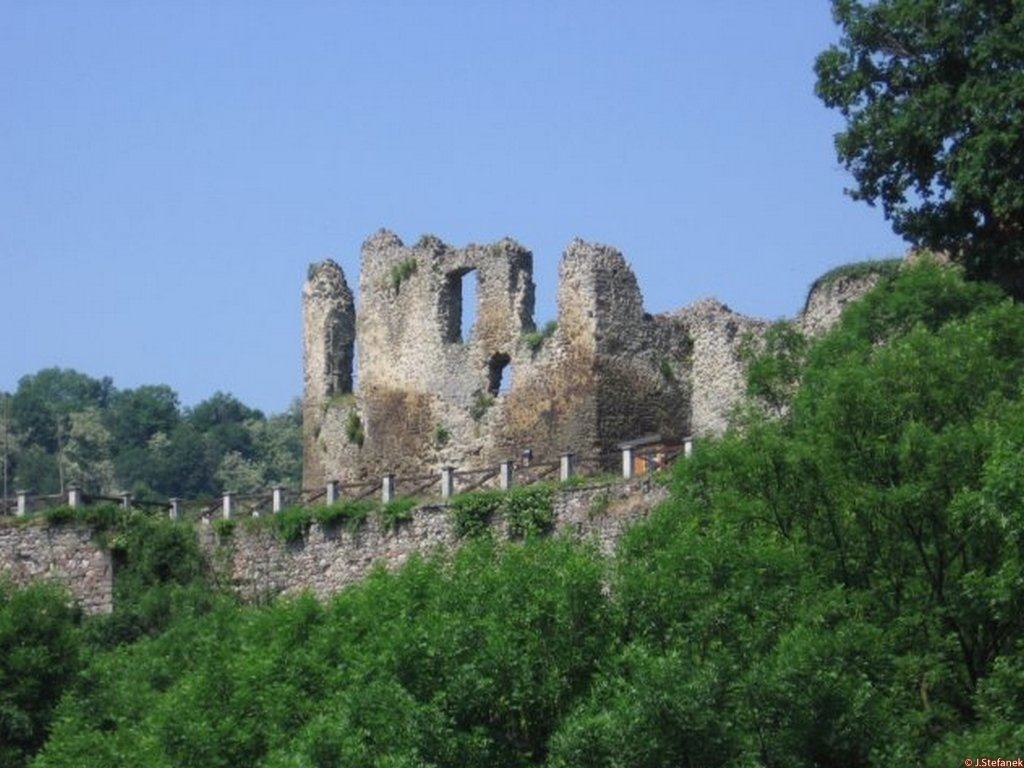
Slight remnants of the castle, the predecessor of Čabraď Castle, about 20 km southeast of Krupina, between the hills of the Krupina Forest at the northern end of the long-stretching Pustý vrch hill
Nepatrné zvyšky hradu, predchodcu hradu Čabraď, asi 20 km juhovýchodne od Krupiny, medzi kopcami Krupinského lesa na severnom konci dlho sa tiahnuceho vrchu Pustý vrch
Previous names
Lythwa, Litva, Lythua, Lytua, Haradnok
Roads
From the road No. 75, which leads from the village Plášťovce to Veľký Krtíš, we turn left to the village Cerovo. After a short while, just behind the road barriers, we turn left onto a narrow forest path, cross an open ramp and continue with a careful drive, still straight. The road deviates to the right to a smaller settlement, but we recommend leaving the car on the grass next to the road right at this turn and not continuing to the settlement due to the condition of the mentioned road. From there we walk in the direction of the settlement, from there we continue straight on until we enter the forest and along an unmarked route on a relatively relaxed path, more or less descending, we come to the rest of the castle on the ridge. The route is sometimes complicated by fallen trees, which are sometimes difficult to get around, but otherwise the whole route is hassle-free.
Z cesty č.75, ktorá vedie od obce Plášťovce na Veľký Krtíš, odbočíme vľavo na obec Cerovo. Po malej chvíli hneď za zvodidlami odbočíme vľavo na úzku lesnú cestu, prejdeme otvorenou rampou a pokračujeme opatrnou jazdou stále rovno. Cesta sa tu odkláňa doprava až k menšej usadlosti, no odporúčame auto nechať na tráve vedľa cesty hneď pri tejto odbočke a nepokračovať ďalej k usadlosti kvôli stavu spomínanej cesty. Odtiaľ peši v smere k usadlosti, od nej pokračujeme ďalej stále rovno, až vstúpime do lesa a po neznačenej trase relatívne pohodovou cestou, viacmenej klesaním, prídeme k zvyškom hradu na hrebeni. Trasu nám občas skomplikujú popadané stromy, ktoré je niekedy obtiažne i obísť, no inak je celá trasa bezproblémová.
Description
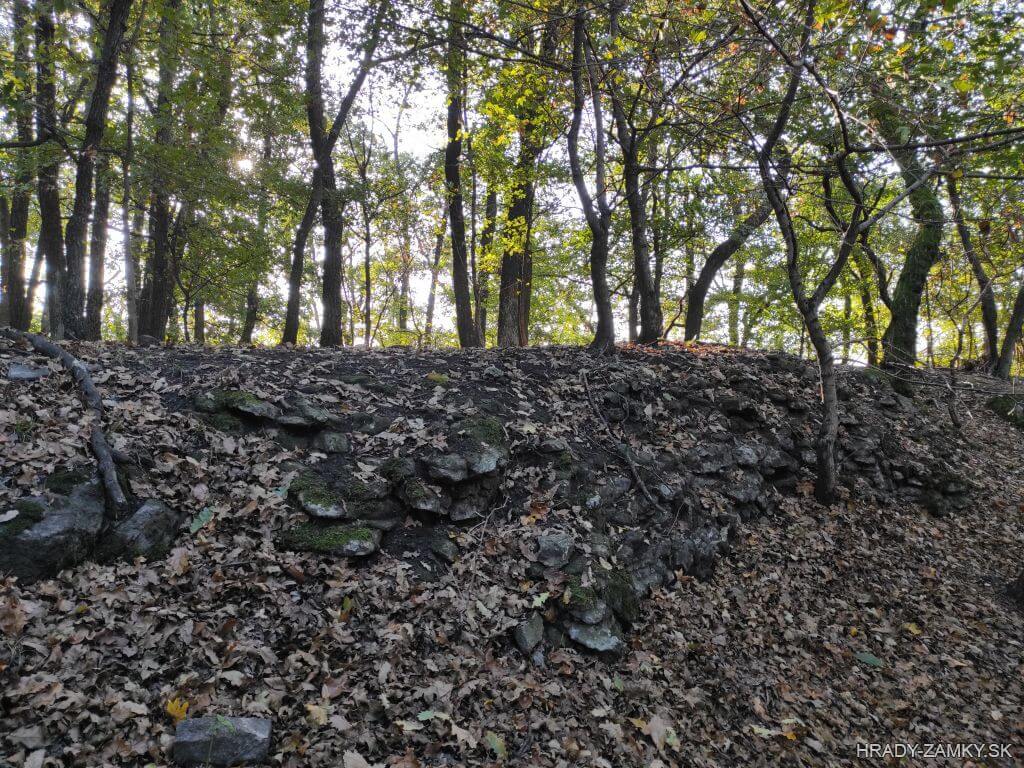
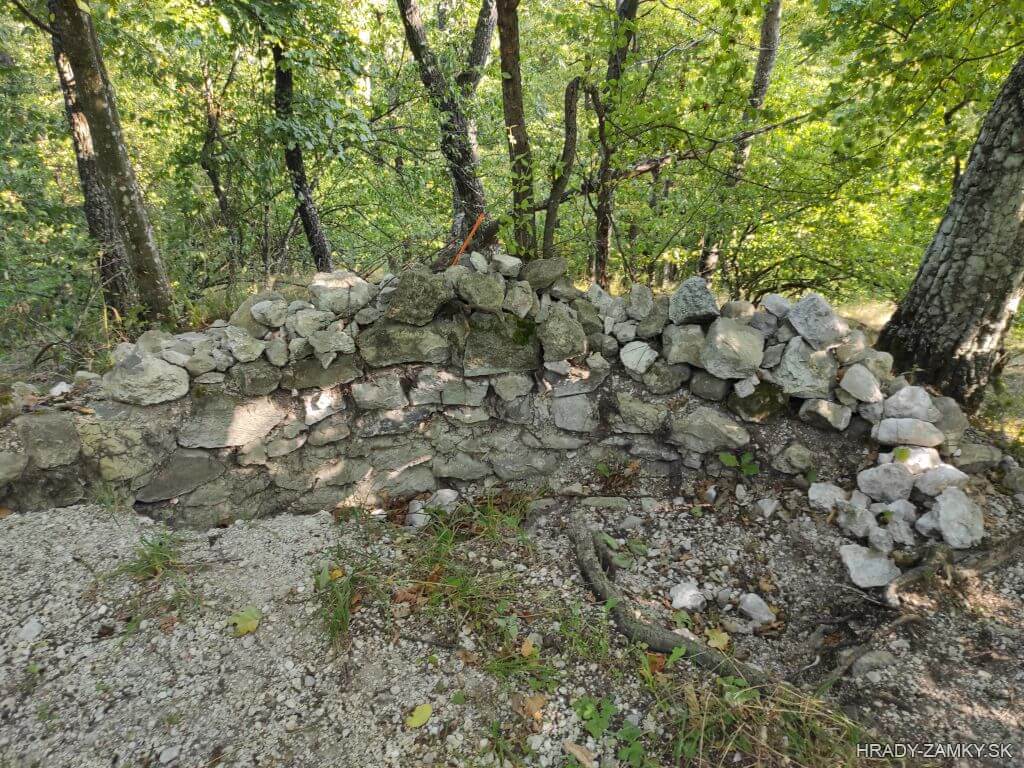
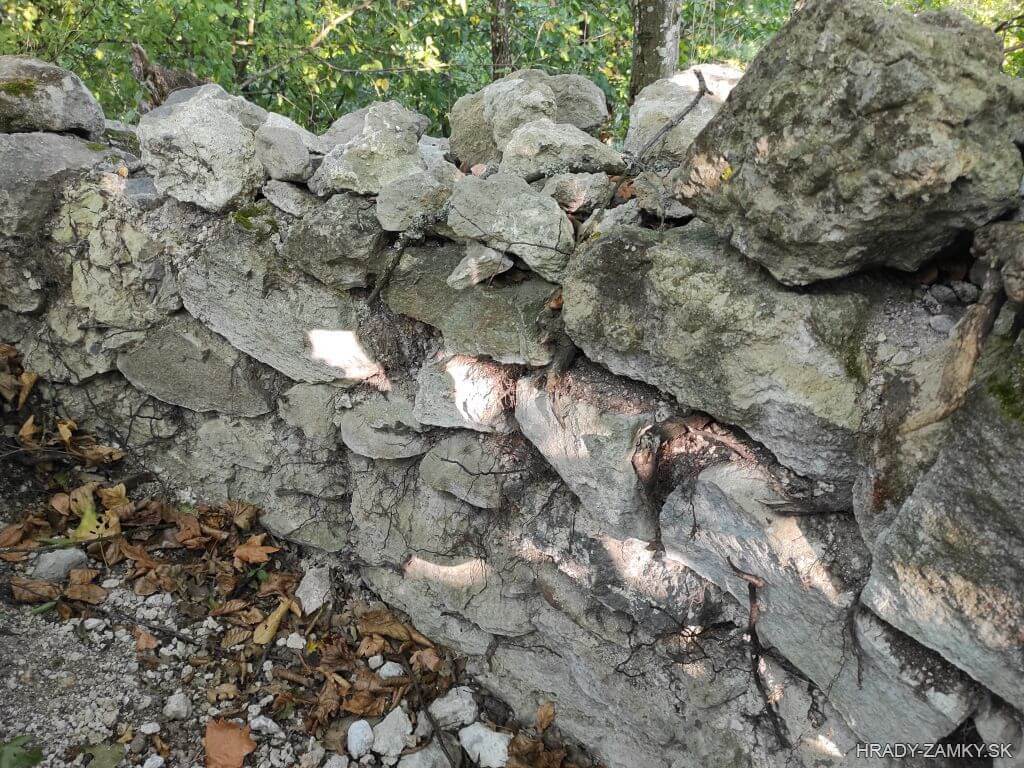
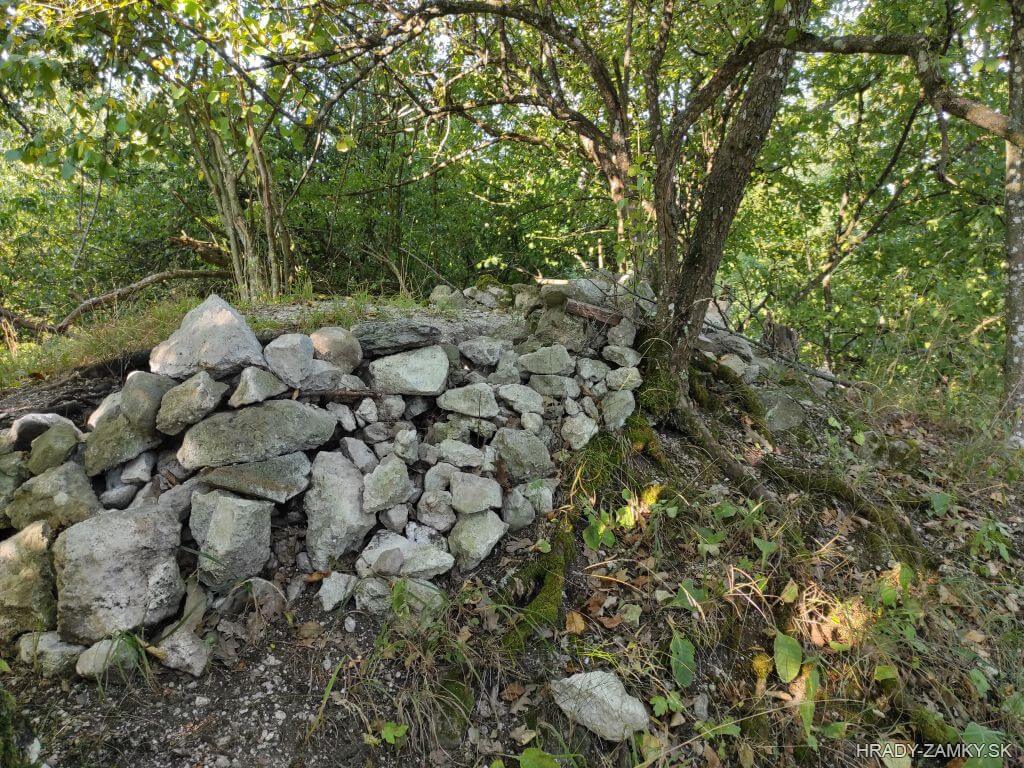
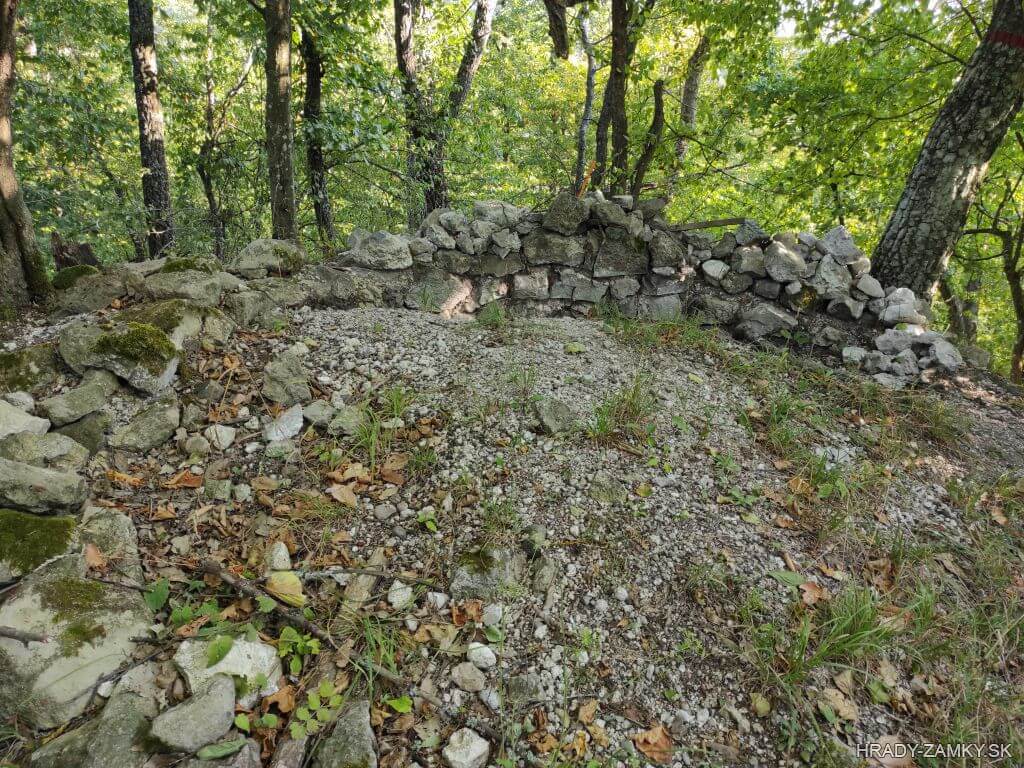
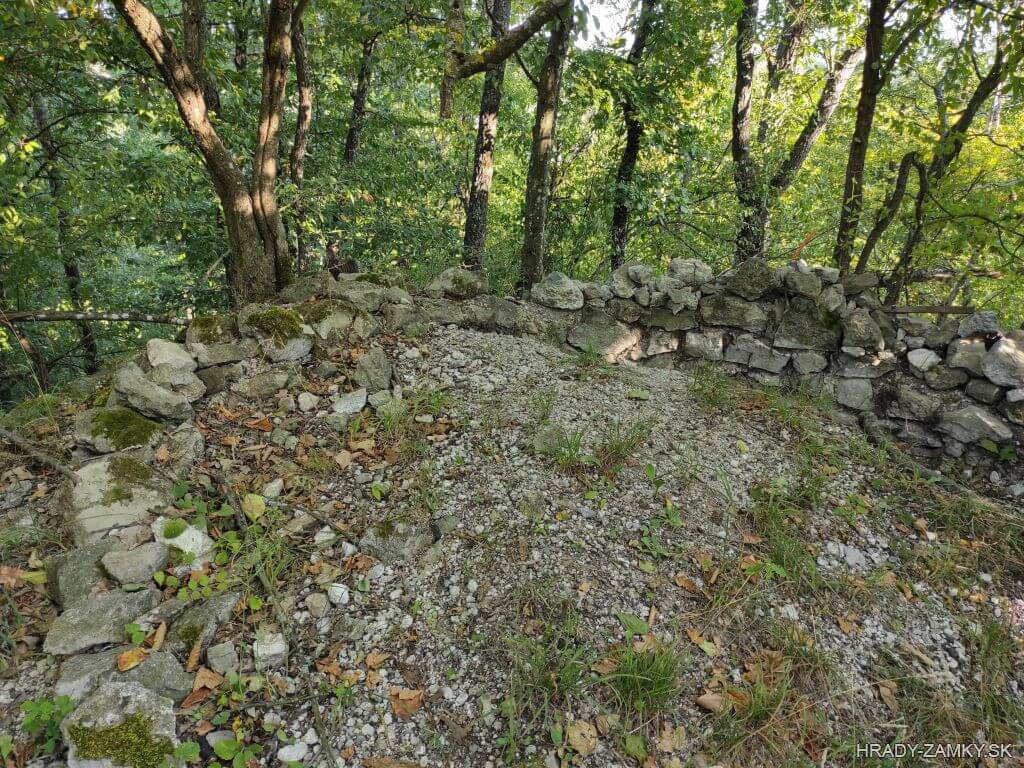
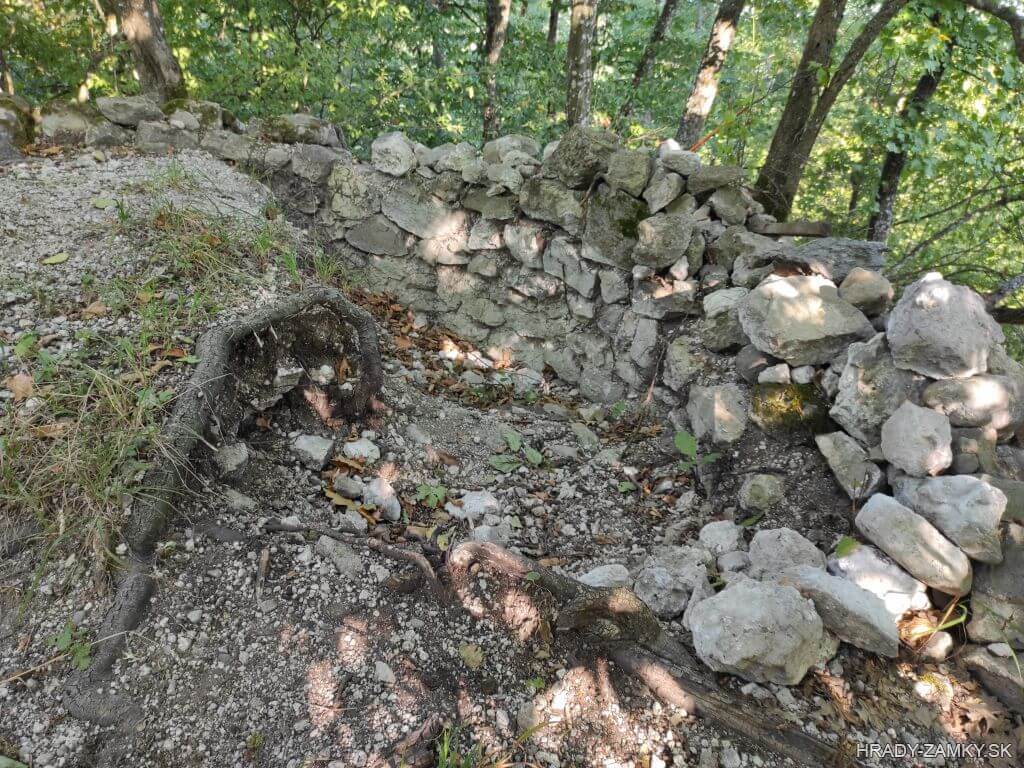
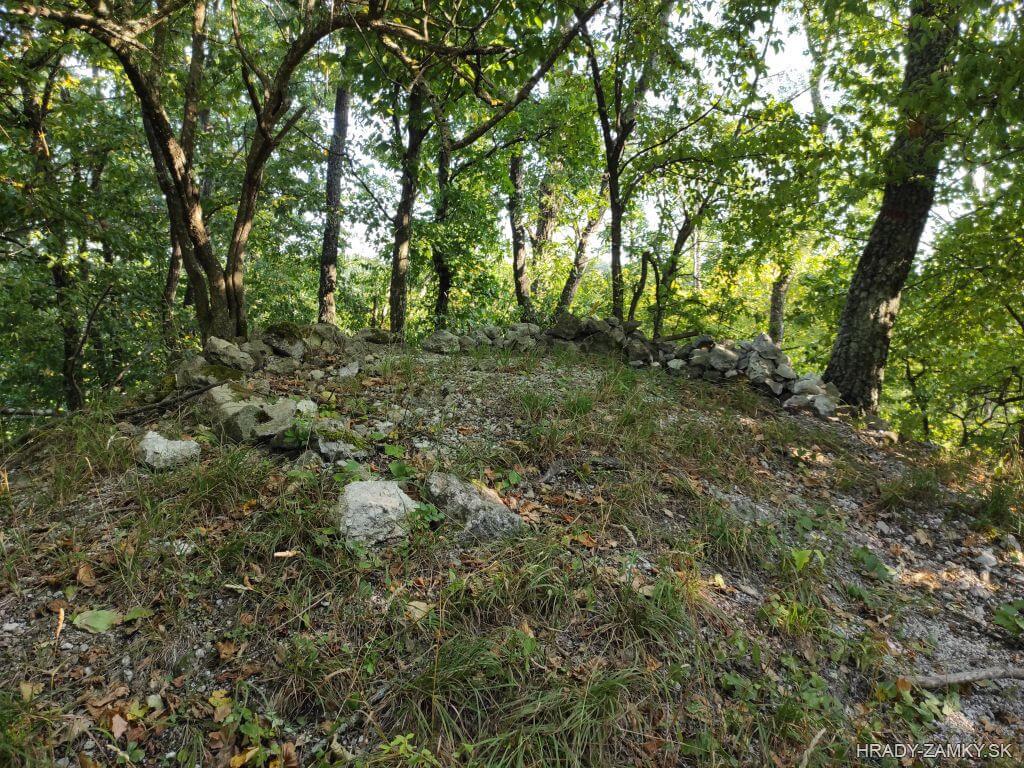
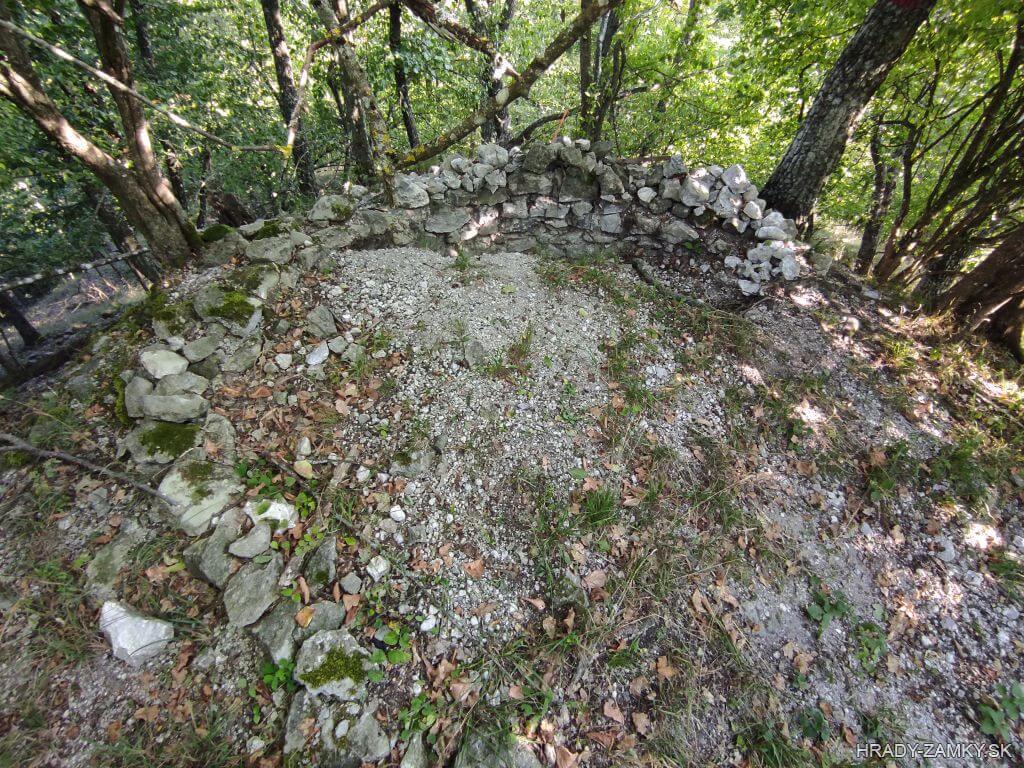
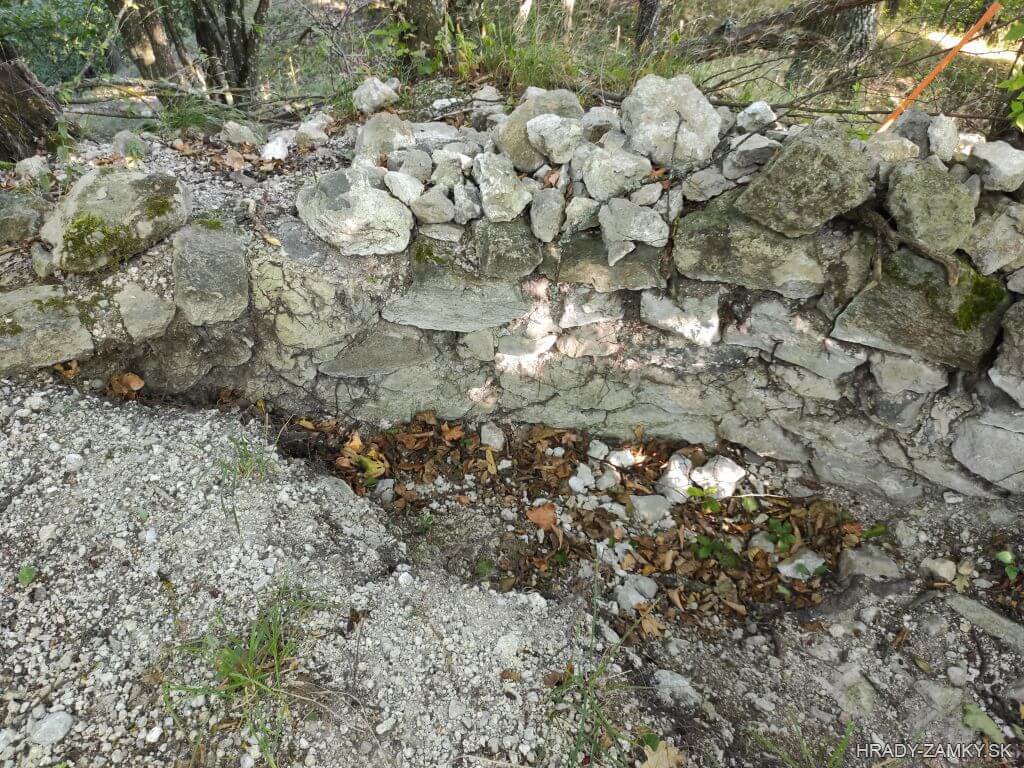
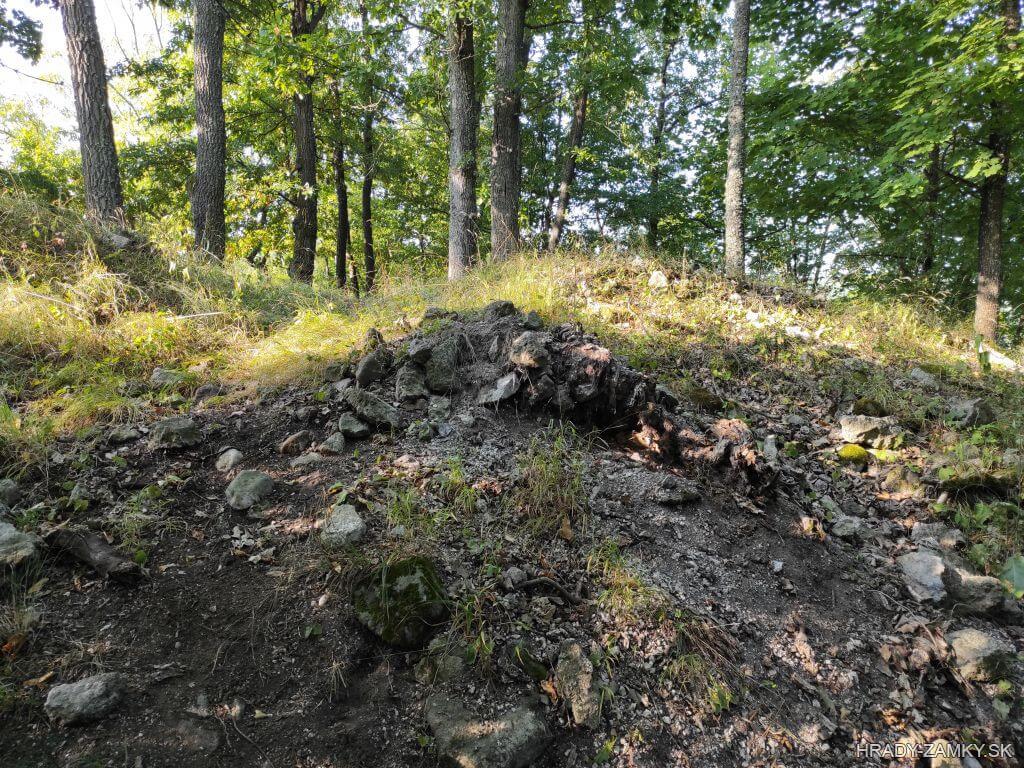
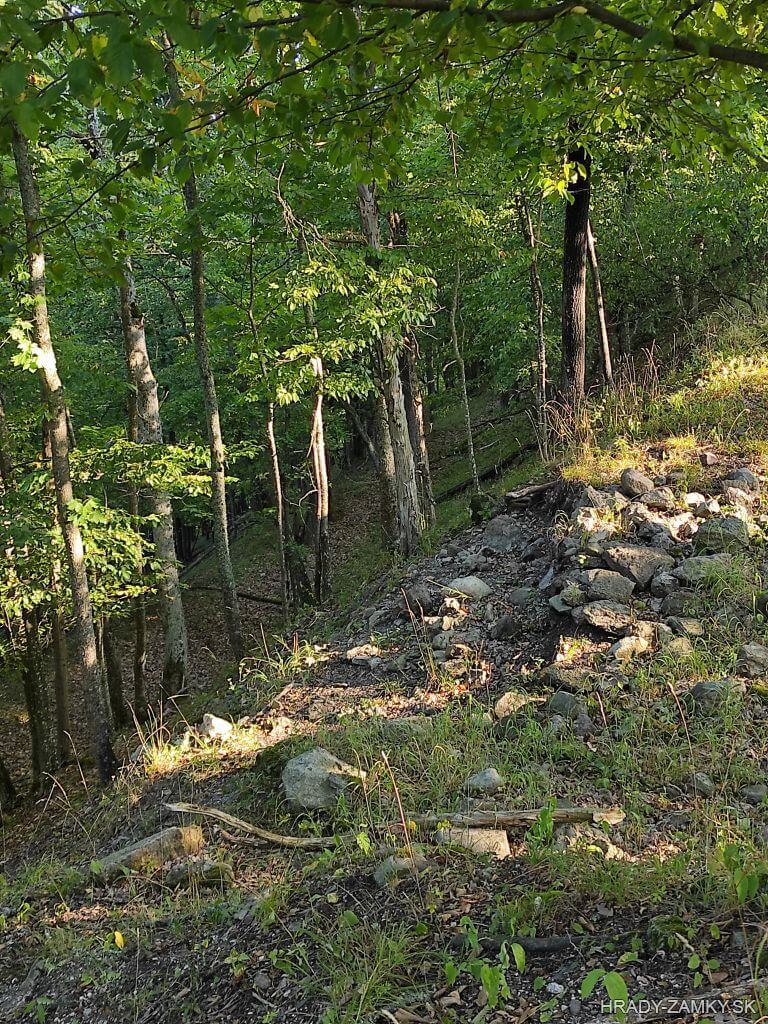
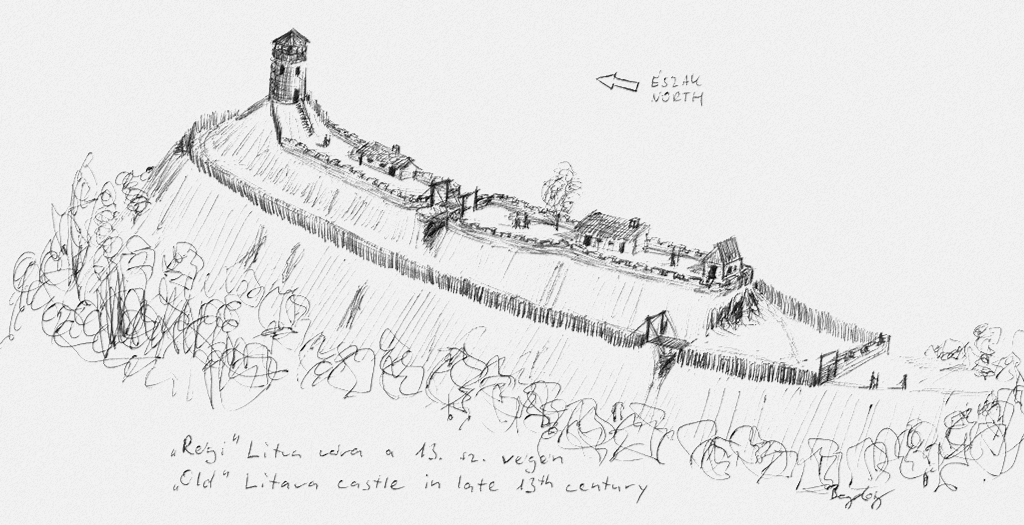
Although the area of the castle is forested, the terrain relics point to a two-part layout of the castle, separated from each other by a ditch carved into the rock. The total dimensions of the castle were about 110 x 32 m. The northern part of the castle measured approximately 40 x 15 m and has a rubble cone at the highest end, which probably hides the rest of the main residential tower. The southern part of the castle measures approximately 43 x 15 m and fragments of a stone wall have been preserved along the western edge. In the front part there is another rubble cone, probably the rest of another tower - defensive.Both castle parts from the west and north were protected by a moat and embankment. The southern access side of the fort was separated from the continuing ridge by a ditch carved into the rock. According to these elements, the castle was quite large.
Plocha hradu je síce zalesnená, ale terénne relikty poukazujú na dvojdielnu dispozíciu hradu, oddelené od seba priekopou vytesanou do skaly. Celkové rozmery hradu boli zhruba 110 x 32 m. Severná časť hradu mal rozmer približne 40 x 15 m a na najvyššie položenom konci má sutinový kužeľ, ktorý pravdepodobne ukrýva zvyšok hlavnej obytnej veže. Južná časť hradu má rozmery približne 43 x 15 m a pozdĺž západného okraja sa zachovali fragmenty kamenného múru. V prednej časti vyčnieva ďalší sutinový kužeľ, zrejme pozostatok ďalšej veže - obrannej.Obe hradné časti zo západu i severu chránila priekopa a násyp. Južnú prístupovú stranu predhradia od pokračujúceho hrebeňa oddeľovala priekopa vytesaná do skaly. Hrad bol podľa týchto prvkov značne rozľahlý.
Plan
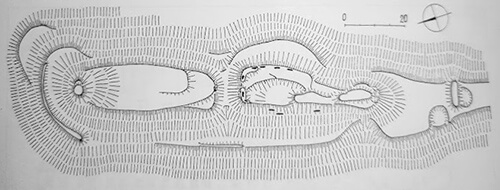
Legend to the ground plan
- Source: PLAČEK M.
- BÓNA M.
- Encyklopédia slovenských hradov. Bratislava : SLOVART 2007
Legenda k pôdorysu
- Zdroj: PLAČEK M.
- BÓNA M.
- Encyklopédia slovenských hradov. Bratislava : SLOVART 2007
History
The castle was probably built after the Tartar invasion after 1241 by Hunt of the Hunt-Pázmány family, or his son Derš Nagy (Great). The first mention of the castle is from 1276, when it was still called Haradnok, and it probably replaced the early medieval fortified site. The castle was immediately occupied by the grandchildren of Lambert Hunt-Pázmány, Derš Kis and Demeter. They also seized property worth 3,000 marks and various deeds. However, the king took away their property and they fell back to Derš Nagy. Even before 1307, Derša Nagy's son, Túri Mikuláš Kövér, gave the castle Litava (Cerovo) to Hunt's sons Demeter and Derš in exchange.
In 1318, the castle was occupied by Matúš Čák, who expelled Derš's son Tomáš from the castle. Soon, probably at the time of the fighting between the robes, the castle was destroyed.
Since 1342, it has been listed as desolatum castrum Lytwa. Its role was then probably taken over by the newly built nearby castle, also called Litava, which, however, has been called Čabraď since the 15th century. History does not recognize them and often the history and mentions of both castles intersect.
Based on a document from 1342, Ákos Karczag discovered in 2002 the remains of the first castle on the Pustý hrad hill, south of the village of Cerovo. Remains of walls and ditches in the wooded terrain are now visible.
Hrad postavil pravdepodobne po tatárskom vpáde po roku 1241 Hunt z rodu Hunt-Pázmányovcov, alebo jeho syn Derš Nagy (Veľký). Prvá zmienka o hrade je z roku 1276, keď sa ešte nazýval Haradnok, a pravdepodobne nahradil ranostredovekú opevnenú lokalitu. Hrad vzápätí obsadili vnukovia Lamberta Hunt-Pázmánya, Derš Kis a Demeter. Ukoristili aj majetok v hodnote 3000 mariek a rôzne listiny. Kráľ im však majetky odobral a pripadli naspäť Deršovi Nagyovi. Ešte pred rokom 1307 syn Derša Nagya, Túri Mikuláš Kövér, dal za výmenu hrad Litavu (Cerovo) Huntovým synom Demeterovi a Deršovi.
V roku 1318 hrad obsadil Matúš Čák, ktorý z hradu vyhnal Deršovho syna Tomáša. Zakrátko, pravdepodobne v čase bojov medzi županmi, bol hrad zničený.
Od roku 1342 sa už uvádza ako desolatum castrum Lytwa. Jeho úlohu potom pravdepodobne prevzal novovybudovaný blízky hrad tiež pod názvom Litava, ktorý však od 15. storočia nazývajú Čabraď. História ich nerozoznáva a často sa dejiny a zmienky oboch hradov prelínajú.
Na základe listiny z roku 1342, Ákos Karczag objavil v roku 2002 pozostatky prvého hradu na vrchu Pustý hrad, južne od obce Cerovo. V súčasnosti sú viditeľné zvyšky múrov a priekopy v zalesnenom teréne.
Myths and legends
There are no myths available.
K tomuto objektu nie sú dostupné žiadne povesti
Useful information
The remains of the walls are freely accessible
Zvyšky múrov sú voľne prístupné
Nearby castles