Nopcsa Castle (Săcel)
Santamaria - Orlea Hunedoara Romania
castle, chateau
Castelul contelui Nopcsa din Săcel
Santamaria - Orlea Hunedoara Romania
castle, chateau
Nopcsa–Pallavicini-kastély
Santamaria - Orlea Hunedoara Romania
castle, chateau
The Eclectic castle was built around 1872
Castelul Nopcsa a fost reședința familiei nobiliare Nopcsa din localitatea hunedoreană Săcel
A historizáló szacsali kastély 1872 körül épült
Previous names
Nopcsa Castle (Săcel), Castelul contelui Nopcsa din Săcel, Nopcsa–Pallavicini-kastély
Description
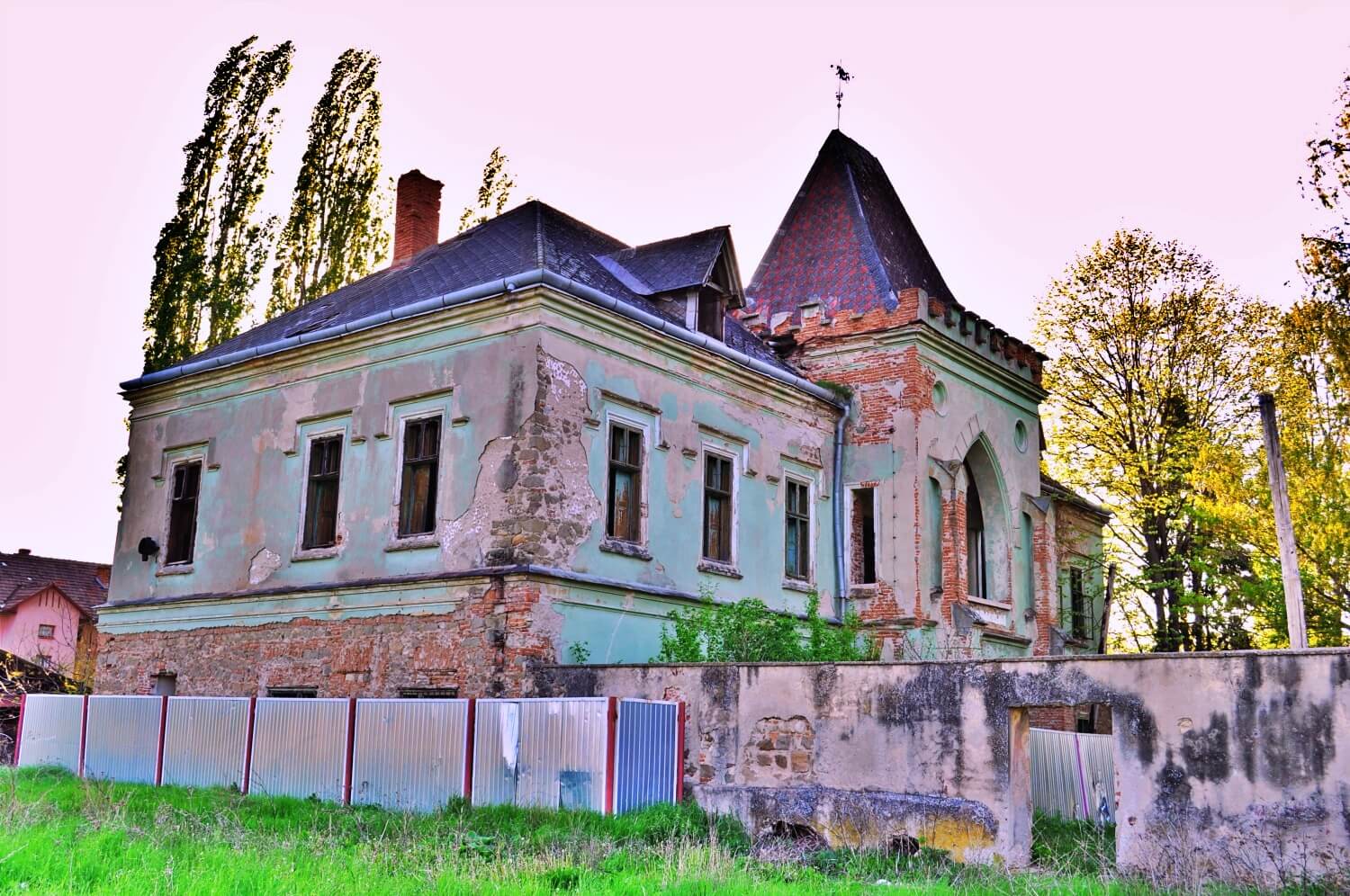
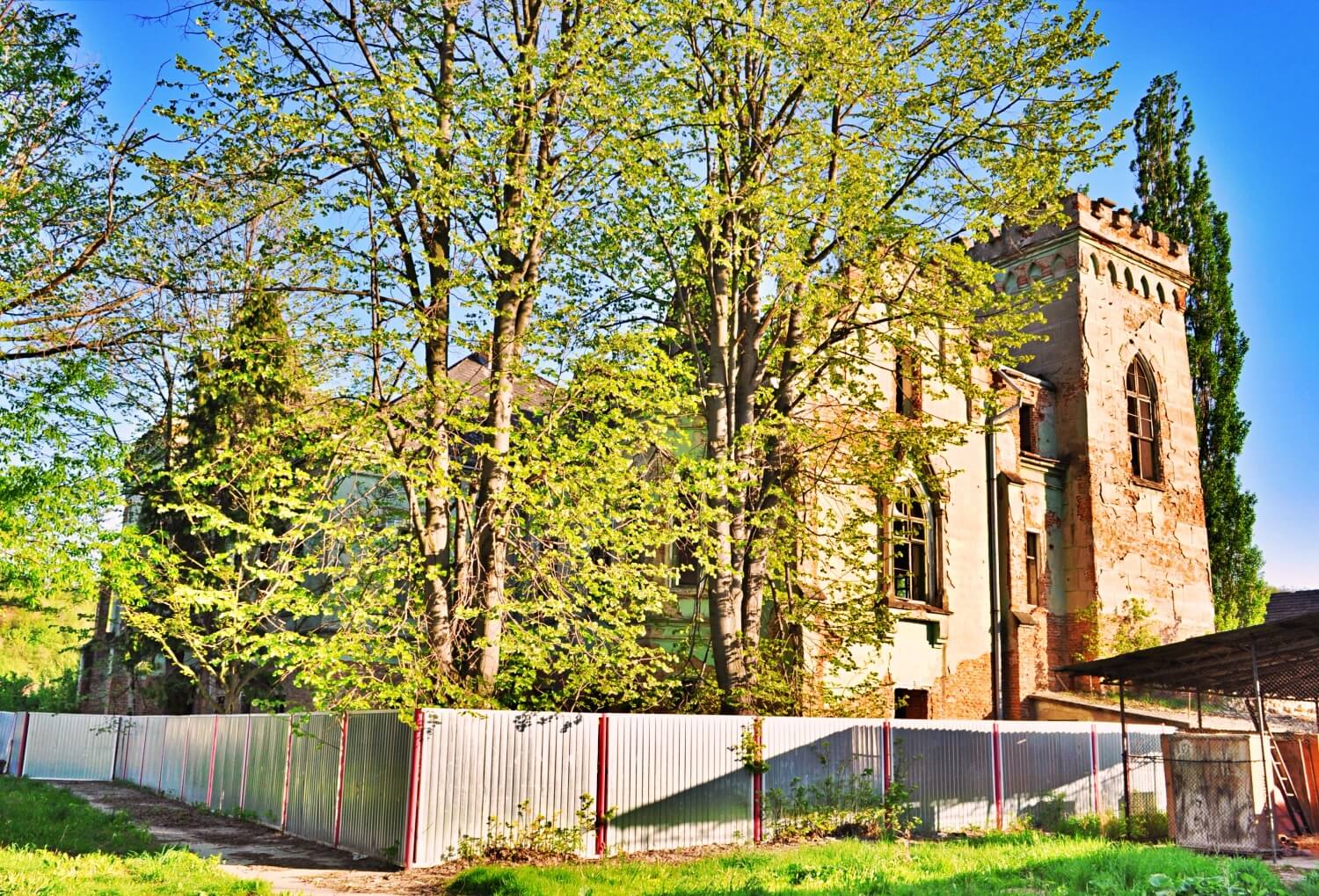
The Eclectic castle was built around 1872. The two-storey building has an oblong ground plan. Its design was inspired by the medieval knight’s castles, as reflected by the scalloped pediment on its west façade. For several decades, the castle was owned by the Naláczy family, but according to the legend, the Naláczy family had so many debts to the Nopcsa family von Felső-Szilvás that in return, this estate was sequestered by the defamed Baron Nopcsa (III.) László (Fatia Negra - "Black Face").
In 1872, the administration of the property was taken over by the Baron's younger son, (IV) Elek. He was the one who built the castle, moved here and performed modern agricultural works, for example he was the first to bring a threshing machine to Hunedoara County. Elek's first son, the adventurer (V.) Ferenc, whose name is linked to the attempts of becoming a king or spy abroad, thanks to his significant results in the field of paleontology, was considered to be a great scientist. Besides being the one who discovered the fossils of the dinosaur Magyarosaurus dacust, in 1903 he became a member of the Austro-Hungarian espionage services. While working on arming the tribes of Albania, he wrote an ethnography of Albania, in four volumes. In 1923, at the Conference in Trieste, he appeared self-proclaiming heir to the Albanian throne, but this was not accepted by the Great Powers who did not want a Nopcsa family member to take over the throne, nor the Monarchy. In 1916, he finished his mission in Albania, continuing its well-known activity in Romania. Thus, disguised in a nomad shepherd, he established a spy ring. He was unveiled by his supervisor, who was a double agent. At the time of proclamation of the Soviet Republic, Baron Nopcsa hijacked an airplane and left the country.
In 1920, the Geological Institute of Romania proposed him to join them, but the baron rejected this offer and returned to Săcel, where the rebel peasants beat him almost to death. The head wound he obtained at that time was not healed, this being the time when he began to suffer from neurological disorders. Between 1925-1929, Nopcsa Ferenc became the director of the Institute of Geology in Budapest. In 1933 he suffered a severe depression, after which he shot his friend and secretary Bajazid Elmaz Doda. After committing this fact, the baron committed suicide and being no data about his brother, (V.) Elek, it is supposed that all the male descendants of the family disappeared. In 1908, his sister Ilona (1883-1963) became the wife of Count Albert Pallavicini and moved to Italy. The heirs do not request the restitution of the castle. The main façade is defined by a central, bastion-like avant-corps, whose supporting walls and pillars, respectively crenels, refer, as well as the western façade, to historical times. The main entrance is under the arcade on the ground floor, and the arcade from upstairs leads from the porch into the park. On the pyramid roof, located above the avant-corps, there is a dragon-shaped weather vane. The main façade contains jack arched windows and above the upstairs windows there are Tudor-style eyebrow arch lintels.The western façade and the octagonal tower has broken arched windows.
Today, the building is deserted, looted, with falling plaster, broken windows and no furniture. The castle is owned by the Hunedoara County Council, and although, not a long time ago, it was used as a special school, today it is no longer in use.
https://castleintransylvania.ro/
Castelul Nopcsa a fost reședința familiei nobiliare Nopcsa din localitatea hunedoreană Săcel. Figurează pe noua listă a monumentelor istorice sub codul LMI: cod LMI HD-II-a-B-03439. Din cauza stării avansate de degradare (în trecut au mai căzut bucăți din tavan și fațada clădirii), accesul a fost interzis de Consiliul Județean Hunedoara, proprietarul clădirii, pentru evitarea unor accidente.
Istoric și trăsături
Castelul a fost construit, pe două nivele, în jurul anului 1872. Are forma în plan alungită, cu fronton zimțat la fațada vestică, turn de colț impozant, cu forma în plan dreptunghiulară, cu creneluri, și turnuleț octogonal în partea de est. Fațada principală este accentuată de un rezalit central, de forma unui bastion.
Timp de mai multe decenii, castelul a fost în proprietatea familiei Naláczy, dar conform tradiței orale, aceasta ar fi avut atât de multe datorii la familia Nopcsa din Silvașu de Sus, încât în schimbul datoriei, baronul Nopcsa László (poreclit Fatia Negra - „Față neagră”) a pus sechestru pe acest domeniu. În anul 1872, administrarea proprietății a fost preluată de către fiul mai mic al baronului, Elek. Acesta a reconstruit castelul, s-a mutat în el și a practicat o agricultură modernă pe acest domeniu, fiind primul care a adus o mașină de treierat în județul Hunedoara.
Primul fiu al lui Elek a fost aventurierul Ferenc (Franz), considerat și om de știință datorită rezultatelor semnificative obținute în domeniul paleontologiei. În toamna anului 1920 baronul Franz Nopcsa a revenit la reședința sa, însă în urma unei altercații cu țăranii localnici a trebuit să se retragă cu o fractură craniană la Sântămărie Orlea, pentru îngrijiri medicale. Rămas cu sechele în urma acestui incident, în 1933 a suferit o depresie severă, în urma căreia și-a împușcat prietenul și secretarul Bajazid Elmaz Doda. După comiterea acestei fapte, baronul s-a sinucis, iar descendenții de sex masculin ai familiei au dispărut. În 1908, sora sa, Ilona (1883-1963) a devenit soția contelui Albert Pallavicini și s-a mutat în Italia. Moștenitorii nu au solicitat restituirea castelului.
Din toamna anului 2019, Castelul Nopcsa din satul Săcel a intrat în renovare. Investiția se ridică la două milioane de euro. Până acum au fost realizate lucrări de tencuire a fațadei, de turnare a șarpantei la parter, turnare a plăcii de beton la etaj, curățare a pereților, montajul scheletului la acoperiș, lucrări la șarpantă și tencuieli interioare.
A historizáló szacsali kastély 1872 körül épült. A kétszintes, hosszúkás alaprajzú épület tervezőjét a középkori lovagvárak ihlették, erre utal a nyugati homlokzat csipkézett oromfala, a négyszög alaprajzú, lőréses pártázattal, szuroköntőkkel kialakított impozáns saroktorony és az észak felől három oldalával csatlakozó nyolcszögű tornyocska, továbbá a lőréses párkányú kapu, amelyektől regényessé válik az épületegyüttes.
Szacsalon sokáig a Naláczy-családnak volt nagy birtoka, de a hagyomány szerint a Naláczyak annyira eladósodtak a felszőszilvási Nopcsák felé, hogy az adósság fejében a hírhedt Nopcsa (III.) László (Fatia Negra) az adósság fejében lefoglalta a birtokot.
A jószág igazgatását László kisebbik fia, (IV.) Elek vette át 1872-ben. Ő építette fel a kastélyt is, ideköltözött, és modern gazdálkodást hajtott itt végre, például elsőként hozott Hunyad megyébe cséplőgépet. Elek elsőszülött fia (V.) Ferenc hírhedt kalandor volt, nevéhez trónszerzési és repülőgép-eltérítési kísérlet is fűződik, külföldön azonban tudósként tartják számon, a paleontológia terén elért jelentős eredményei miatt. Ferenc, amellett hogy például felfedezte a Magyarosaurus dacust 1903-ban a bécsi Udvar titkos ügynöke lett, miközben az albán törzsek felfegyverzésén dolgozott, megírta Albánia néprajzát is négy kötetben. Az 1913-as trieszti Albán Konferencián önjelölt trónörökösként lépett fel, azonban sem a nagyhatalmak nem látták volna szívesen Nopcsát mint albán királyt, sem a Monarchia nem tartotta a tervet kivitelezhetőnek. 1916-ban befejezte albániai küldetését, de hírszerző tevékenységét Romániában folytatta, úgy, hogy nomád pásztornak álcázva kémhálózatot hozott létre. Felettese leplezte le, aki kettős ügynök volt.
A Tanácsköztársaság kikiáltásakor Nopcsa báró eltérített egy repülőgépet, és ezzel hagyta el az országot. 1920-ban a Román Földtani Intézet kérte fel munkatársnak, ezt azonban visszautasította, és inkább hazatért Szacsalra, ahol a lázongó parasztok majdnem agyonverték. Ekkor szerzett fejsebe sosem gyógyult be, és ekkor jelentkeztek idegproblémái is. 1925-1929 között Nopcsa Ferenc a budapesti földtani intézet igazgatója lett. 1933-ban súlyos depresszióba esett, és egy válságos pillanatban agyonlőtte az albán Bajazid Elmaz Dodát, aki ifjúkori barátja és titkára volt. A báró tette után öngyilkos lett, és mivel öccséről (V.) Elekről nincsenek információk, elképzelhető, hogy vele a család férfiágon kihalt. Húga, Ilona (1883-1963) 1908-ban Pallavicini Albert őrgróf felesége lett, és Olaszországba költözött. A leszármazottak nem igénylik vissza a kastélyt.
A historizáló szacsali kastély 1872 körül épült. A kétszintes, hosszúkás alaprajzú épület tervezőjét a középkori lovagvárak ihlették, erre utal a nyugati homlokzat csipkézett oromfala, a négyszög alaprajzú, lőréses pártázattal, szuroköntőkkel kialakított impozáns saroktorony és az észak felől három oldalával csatlakozó nyolcszögű tornyocska, továbbá a lőréses párkányú kapu, amelyektől regényessé válik az épületegyüttes. A főhomlokzatot egy igencsak masszív, bástyaszerű középrizalit uralja, amely támíveivel és pilléreivel, valamint lőréses koronázópárkányával, a nyugati homlokzathoz hasonlóan, történelmi időkre emlékeztet. A földszinti csúcsív alatt a kastély főbejáratához jutunk, míg az emeleti csúcsív a nagyerkélyről enged kitekintést a kastélyparkba. A rizalit fölötti meredek sátortető egyik sarkán még egy eredeti, sárkányos szélvitorla lengedez. A főhomlokzat ablakai egyenes záródásúak, az emeleti ablakok fölött Tudor stílusú, szögletes szemöldökpárkányok húzódnak. A nyugati homlokzat, és a nyolcszögű torony ablakai csúcsívesek.
Ma gazdátlanul, kifosztva áll, vakolata málladozik, ablakai ki vannak törve, bútorzata hiányzik.
A kastély a Hunyad Megyei tanács tulajdonában van, jelenleg használaton kívül, nemrég még kisegítőiskola működött benne.
https://kastelyerdelyben.ro/
Useful information
Free
Closed for restoration
-
-
Nearby castles
Nalatzi-Fay Castle
Hateg
3.3km
castle, chateau
Pogány Castle in Păclișa
Comuna Totești
3.7km
castle, chateau
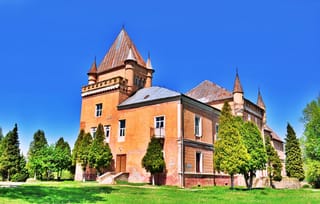
Kendeffy Castle
Santamaria - Orlea
4.3km
castle, chateau
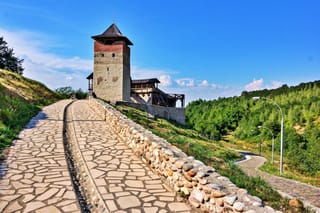
The Mălăiești Fortress
Salasu de Sus
8.8km
fortress
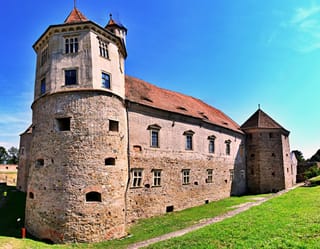
Colț Fortress
Comuna Râu de Mori
10.2km
fortress
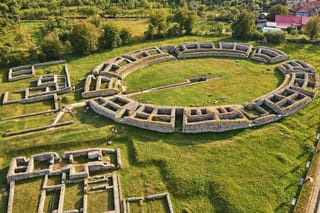
Ulpia Traiana Sarmizegetusa
Comuna Sarmizegetusa
12.0km
castle, chateau
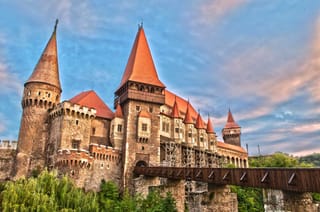
Corvin Castle
Municipiul Hunedoara
21.1km
castle, chateau