Ocna Sibiului fortified church
Orașul Ocna Sibiului Județul Sibiu Romania
fortress
Biserica fortificată din Ocna Sibiului
Orașul Ocna Sibiului Județul Sibiu Romania
fortress
Vízakna református templom
Orașul Ocna Sibiului Județul Sibiu Romania
fortress
The Reformed church in Ocna Sibiului is a fortified church, with three naves, in the Roman style
Biserica reformată-calvină din Ocna Sibiului a fost construită în sec
A település közepén, a Vizapatak jobb partja felett enyhén emelkedő dombon áll a védőfalakkal övezett református templom, amely középkori elődjének patinás épületét örökölte
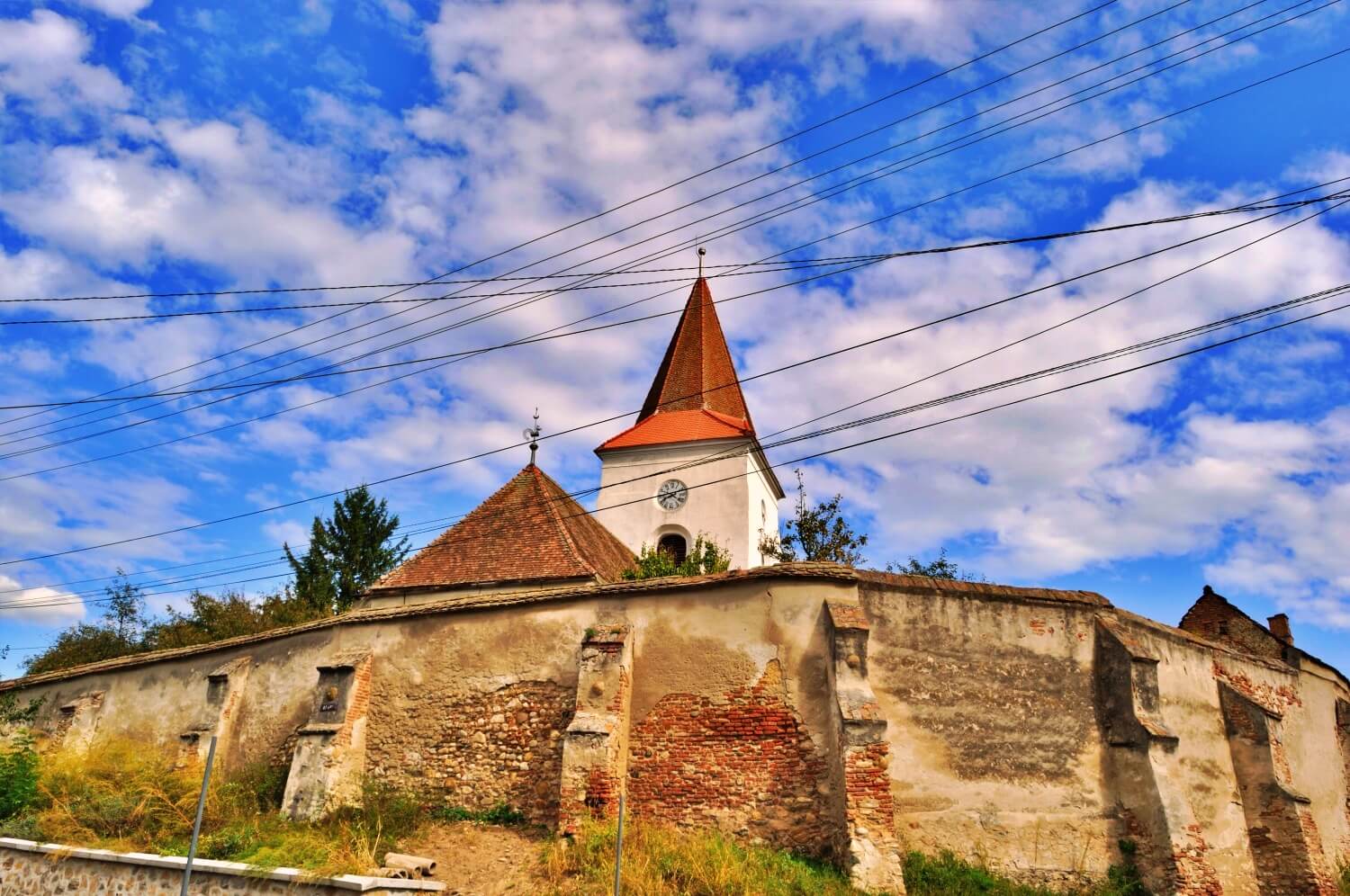
Previous names
Ocna Sibiului fortified church, Biserica fortificată din Ocna Sibiului, Vízakna református templom
Description
The Reformed church in Ocna Sibiului is a fortified church, with three naves, in the Roman style. It began being built in 1240, but the construction was interrupted by the Tatar invasion in Transylvania, which is why it was finished as late as 1280. The city wall was built later, in the early 1300, to defend the church from the second wave of Tatar invaders. The oldest and most precious element of the church is the bas-relief above the south entrance, dating back to the early 1200s. A few frescoes were uncovered in 1910. The most important is the fresco above the central nave made by a painter from Sibiu called Vincentius in 1522, portraying the last days in the life of Jesus. It was initially a Roman Catholic church, and became a Reformation church in 1596, when the Hungarian community converted. For hundreds of years, the church was used by Evangelical Saxons.
The south wing of the church houses a small museum, as Father Lorand told us:
"The oldest exhibit here is the archbishop's chair built in 1515. We also have chalices, platters and fonts used from the 17th to the 18th centuries, but also clay pots made by salt mine workers between the 18th and 20th centuries. You can visit the church at any time. We have guided tours in several languages. We also have fliers telling you about the church in Hungarian, English and German. The church is visited annually by people from all corners of Europe, Germany, Slovenia, Hungary, England and France. In my opinion, if you visit Sibiu, Ocna Sibiului is a must, not just for the treatment, but also for the history, which comes alive between these walls. Which is why we welcome you here with open heart."
https://www.rri.ro/
Biserica reformată-calvină din Ocna Sibiului a fost construită în sec. al XIII-lea. Este monument istoric, cod LMI SB-II-a-A-12493.
Istoric și trăsături
Se poate presupune că în prima epocă a creștinismului, cavalerii din ordinul Sfântul Gheorghe au posedat o mănăstire la Ocna Sibiului. Din ruinele acestei mănăstiri s-a construit, între anii 1240-1280, actuala biserică reformată, situată în centrul localității, înzestrată cu zid de cetate. Construită în stil romanic, îmbunătățită cu elemente de arhitectură gotică, biserica adăpostește un complex de tunele și un cavou. Piesele de valoare istorică din interior sunt:
strana preotului și coronamentul amvonului din anul 1515
cocoșul deasupra acoperișului cu semilună, din secolul al XVI-lea
strana curatorului din anul 1767
frescele și pictura interioară, o parte de la construcția bisericii, cel mai bine conservată este Scena Răstignirii, din stânga amvonului, datată 1522
elemente de înscrisuri medievale din interiorul și exteriorul bisericii, precum și pe zidul cetății
basorelieful de la intarea sudică, datând din secolul al XIII-lea
obiecte de ceramică, fabricate de meșteșugarii olari unguri ai urbei, începând din secolul al XVIII-lea.
Mișcarea reformei a pătruns printre locuitorii maghiari în secolul al XVI-lea. Poporul devenind în întregime reformat, și biserica, care până atunci era romano-catolică, a intrat în proprietatea bisericii reformate. Parohia a aparținut Consistoriului Suprem al Bisericii Evanghelice din Sibiu până în anul 1862, având, din secolul al XVI-lea, doi preoți: un preot principal, de religie reformată și un capelan (inițial sas, mai apoi maghiar) de religie evanghelică.
În prezent numărul credincioșilor este în continuă scădere, lucrările de restaurare, consolidare și amenajare fiind suportate de fundații și organizații din străinătate.
A település közepén, a Vizapatak jobb partja felett enyhén emelkedő dombon áll a védőfalakkal övezett református templom, amely középkori elődjének patinás épületét örökölte. A templom keletelt, háromhajós bazilika, szentélynégyzettel és félköríves apszisával, zömök toronnyal a szentélynégyzet fölött, valamint a mellékhajók félköríves záradékaival. Bejáratai, később emelt portikuszokból a főhajó nyugati és a szentély északi oldalán, valamint a déli mellékhajó közepén nyílnak. A hajók enyhe csúcsívben záródó ablakai a templom gótikus korszakának emlékei. A főszentély három keskeny, félköríves záródású résablaka románkori. A déli mellékhajó kapujának lapos domborművű lunettájában középen egy életfa látható, szélső levelei félköríves mezőket határolnak, s bennük két oldalt egy-egy nagykarmú, szembeforduló oroszlán. Az igényes kialakítású, Szűz Mária tiszteletére szentelt, bazilikális elrendezésű románkori plébániatemplom patrónusai a településen kitemelt sóból meggazdagodott Alárd-fi család tagjai lehettek, legalábbis az 1241. évi tatárjárást követő újjáépítés évtizedeiben. A déli kapuzat románkori archaikus lunetta dísze ismeretében nem kizárt, hogy a templom építése a tatárdúlást megelőzően, a 13. század első évtizedére keltezhető. A 15. században az Alárdfiaktól származó Vízaknai gerébcsalád birtokolta a település nagy részét, majd 1519-32 között birtokaik egy része Verbőczi Istvánra szállt, míg a templom patrónusaiként a vízaknai kamarai számvevők valószínűsíthetők a templomi feliratok alapján. Az költségükön újulhatott meg a templom a 16. század elején. A templom átalakításának, megerősítésének oka valószínűleg a 15. századi állandó török beütések miatt megromlott állapota lehetett. Ekkor készültek a mellékhajók csillagboltozatra emlékeztető, valamint a főhajó bonyolultabb geometriájú hálóboltozatai. A főhajó déli oldalán az egyik ívbélletben található Szent Márton miséjét ábrázoló falkép 14. századi, míg az északi oldalon, egy ívmezőben a keresztrefeszítést ábrázoló 15. századi falkép maradt fenn töredékesen. Értékesek a templom 18. század második feléből származó berendezései is, egy festett előlapú, kétüléses pad, s a falazott szószék, illetve a felette magasodó szószékkorona.
https://www.muemlekem.hu/
Useful information
Free
Free
-
-
Nearby castles
The peasant fortress from Slimnic
Comuna Slimnic
9.3km
fortress
The fortified church from Cristian
Comuna Cristian
10.8km
fortress
Brukenthal Palace
Municipiul Sibiu
11.9km
manor, mansion
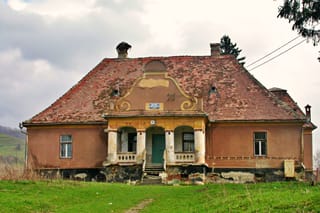
Tobias Boarta Castle
Seica Mare
18.0km
castle, chateau
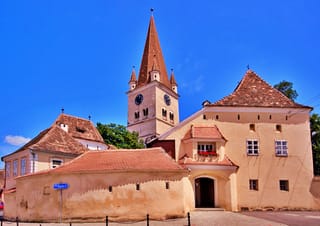
Evangelical church in Cisnadioara
Orașul Cisnădie
20.0km
castle, chateau
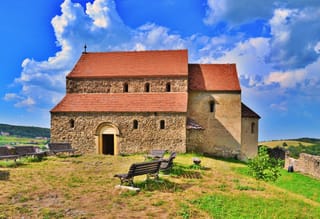
The fortified church from Cisnădioara
Orașul Cisnădie
20.2km
fortress
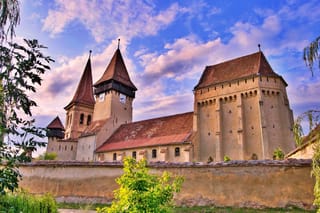
Șeica Mică Evangelical fortified church
Comuna Șeica Mică
20.3km
fortress