Moșna Evangelical fortified church
Comuna Moșna Județul Sibiu Romania
fortress
Biserica fortificată din Moșna
Comuna Moșna Județul Sibiu Romania
fortress
Muzsnai erődtemplom
Comuna Moșna Județul Sibiu Romania
fortress
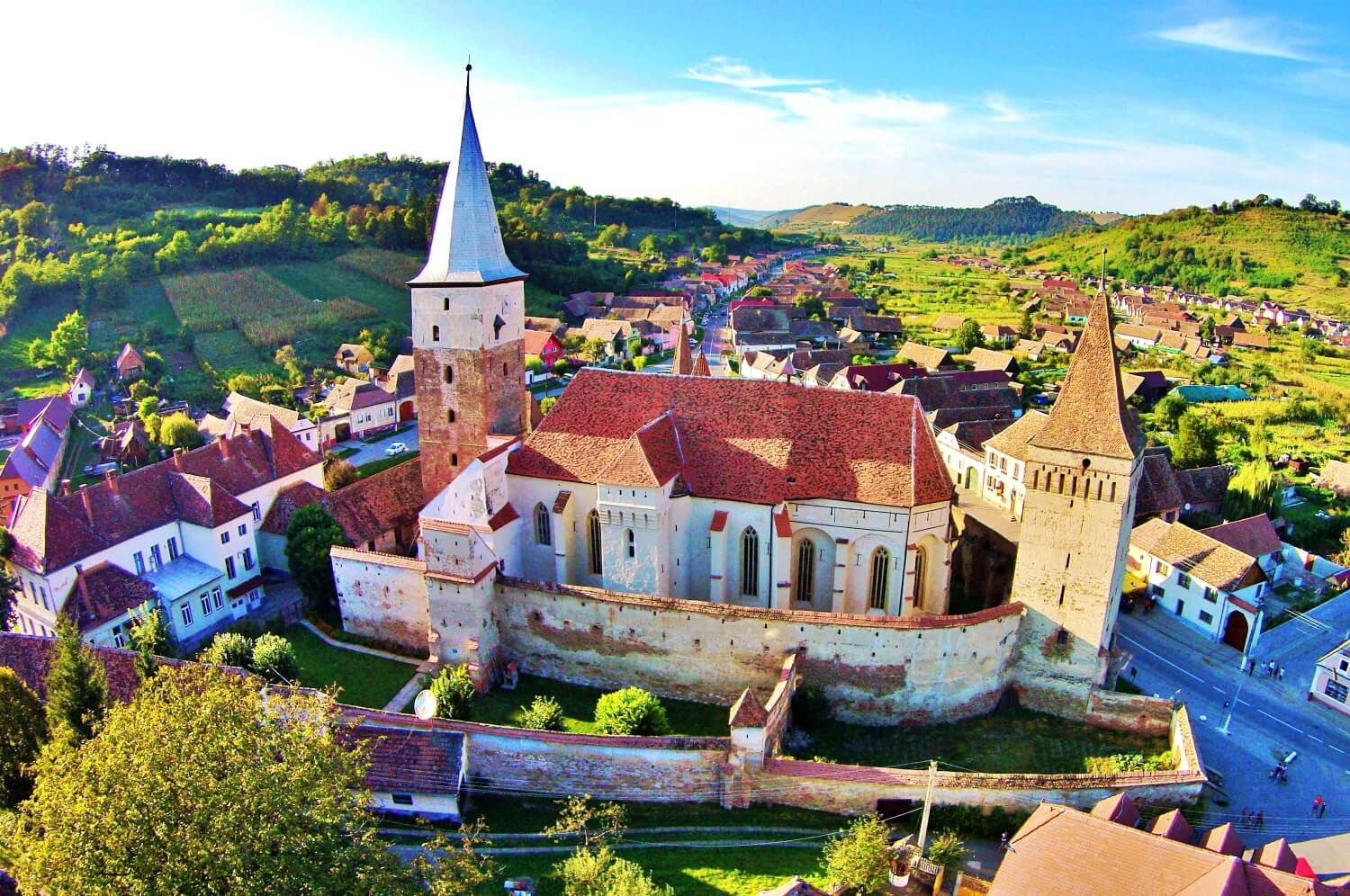
The Saxon settlement, certified since 1283, builds in 1480-1486 one of the most beautiful evangelical-Lutheran churches in Transylvania
Biserica fortificată din Moșna este un ansamblu de monumente istorice aflat pe teritoriul satului Moșna; comuna Moșna
A már 1283-ban jegyzett település központjában látható Erdély egyik legszebb evangélikus-lutheránus temploma, amely 1480-1486 között épült
Previous names
Moșna Evangelical fortified church, Biserica fortificată din Moșna, Muzsnai erődtemplom
Description
The Saxon settlement, certified since 1283, builds in 1480-1486 one of the most beautiful evangelical-Lutheran churches in Transylvania. The size of the church mirrors the well-being of Moșna, which until 1533 was in competition with Medias and Biertan to become a seat of residence, a title obtained by Mediaș.
The current Gothic church built under the guidance of the Siberian stonecutter Andreas Lapicida was erected on the structure of the outer walls of a previous church of the 15th century. It's a three-aisle-lined hall. In 1520 it was built on its fortification, consisting of five towers, walls of 9 meters high, doubled on the southern side and with a guard road. The actual tower of the church houses three bells, the oldest of which dates back to 1515. The gate tower is south-east. On the southern side is the Slany Tower, which was used to store the bacon.
The bell tower was built in the 14th century, its height reached 7 levels and a guard road. To the south, there is another shorter tower, with three levels, which protects the pedestrian entrance. In the north-west and south-west corners were built bastions. On the northern side there is a four-level tower that protects pedestrian traffic. The church has three ships separated by four pairs of columns.
To the north and south are two chapels, which can be reached by spiral staircase turret attached to the church. The original altar made by Vincentius in 1521 is in the church of Cincu.The pulpit is the work stonecutter Andreas.
https://www.welcometoromania.eu/
Biserica fortificată din Moșna este un ansamblu de monumente istorice aflat pe teritoriul satului Moșna; comuna Moșna.
Ansamblul este format din următoarele monumente:
Biserica evanghelică fortificată, cu turn-clopotniță și încăpere pentru provizii (cod LMI SB-II-m-A-12471.01)
Incintă fortificată cu turnuri, bastioane, capelă, încăperi pentru provizii, turn de poartă, zwinger (cod LMI SB-II-m-A-12471.02)
Biserica
Edificiul, unul dintre cele mai frumoase biserici gotice târzii, a fost construit între 1480-1486. De construcție s-a ocupat celebrul pietrar sibian Andreas Lapicida. Actualul lăcaș se ridică pe structura pereților exteriori ai bazilicii anterioare. Este o hală cu 3 nave, boltită cu nervuri în rețea. Are remarcabile ancadramente și un tabernacol monumental. Este înconjurată de o amplă fortificație țărănească și întărită cu turnuri, care înglobează și o veche capelă gotică, probabil din sec. XIV. Are un turn-clopotniță masiv, situat la circa 2 m vest de biserică, clopotul fiind turnat în anul 1515. Altarul poliptic, executat de Vincentius (1521), se află azi la Biserica Evanghelică-Lutherană din Cincu.
Lucrări de renovare, transformare și adăugire au fost făcute în anii 1575, 1630, 1658, 1698, 1701,1718, 1763, 1791, 1824, 1878, 1919, 1998 și 2000.
Orga bisericii a fost realizată de meșterul vienez Carl Hesse. Instrumentul a fost repus în funcțiune în anul 2014.
Fortificația
În 1520 au început și lucrările de construire a incintei fortificației. Zidurile aveau o înălțime de 9 metri și descriau un traseu dreptunghiular. Turnul de poartă se află la sud-est (inițial era la est).
A már 1283-ban jegyzett település központjában látható Erdély egyik legszebb evangélikus-lutheránus temploma, amely 1480-1486 között épült. A templom méretei híven tükrözik a hajdani Muzsna gazdasági erejét, amely 1533-ig Medgyessel és Berethalmával vetélkedett a széki központ cím megszerzéséért, amelyet végül Medgyes kapott meg.
A jelenlegi, gótikus stílusú templom felépítésével Andreas Lapicida, szebeni mestert bízták meg, aki a templom külső falait egy XV. századi templom falszerkezetére emelte. Három hajója és erezett boltíves mennyezete van. Védelmi rendszerét 1520-ben kezdték el építeni. Öt tornyot emeltek és 9 m magas védőfalat, amelyet a déli oldalon meg is dupláztak, a falak tetején őrszolgálati folyosók vannak. A templom tornyában 3 harang van, a legrégebbit 1515-ben öntötték. A kapu-torony a délkeleti oldalon látható, a déli oldalon pedig a Szalonnás torony áll, amely a falu éléskamrája volt.
A harangtornyot a XIV. században építették, 7 emelet magas, tetején strázsafolyosóval. Délen alacsonyabb, 3 szintes torony látható, amelyet a gyalogosok bejáratának védelmére építettek. A várfal ÉNY-i és DNY-i sarkában bástyát emeltek. Az északi oldalon lévő 4 emeletes torony a gyalogosok bejáratát védte. A templom oldalhajóit 4 pár oszlopsor választja el a középső hajótól.
Az északi és déli oldalon egy-egy kápolnát emeltek, amelyekhez, a templomhoz tapadó torony csigalépcsője vezet. A templom eredeti oltárát Vincentius mester 1521-ben építette, jelenleg Nagysink templomában látható. A szószéket ugyancsak Andreas építette.
https://www.welcometoromania.eu/
Useful information
Free
8.00 RON
- Lookout point
- WC
- Information tables
The Church has a museum
-
-
Nearby castles
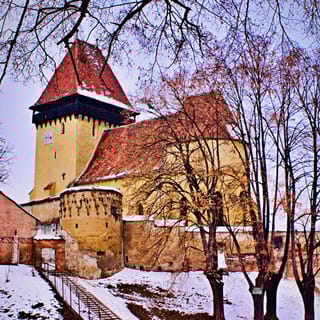
Ighișu Nou Evangelical fortified church
Municipiul Mediaș
4.5km
fortress
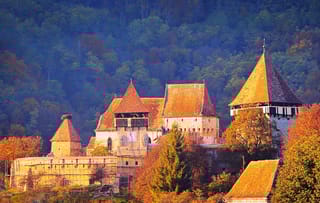
Alma Vii Evangelical fortified church
Mosna
5.7km
fortress
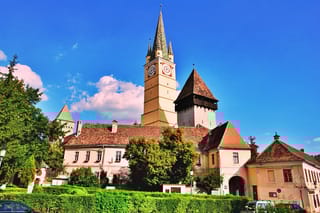
St. Margaret's Church (Mediaș)
Municipiul Mediaș
8.8km
castle, chateau
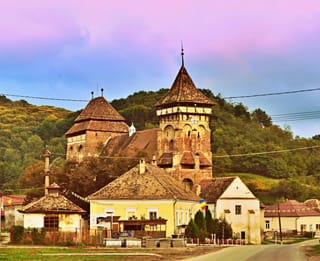
Valea Viilor fortified church
Comuna Valea Viilor
9.2km
fortress
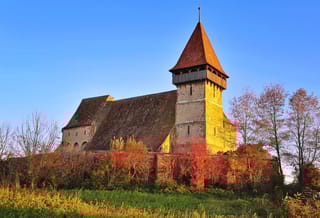
Brateiu Evangelical fortified church
Comuna Brăteiu
9.4km
fortress
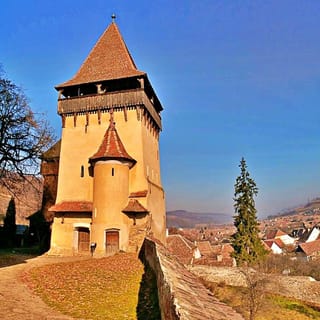
Biertan fortified church
Biertan
10.8km
fortress
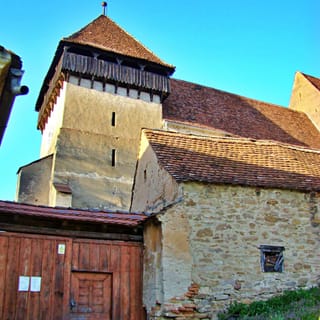
Copșa Mare Evangelical fortified church
Comuna Biertan
12.8km
fortress