St. Margaret's Church (Mediaș)
Municipiul Mediaș Județul Sibiu Romania
castle, chateau
Biserica fortificată din Mediaș
Municipiul Mediaș Județul Sibiu Romania
castle, chateau
Medgyesi erődtemplom
Municipiul Mediaș Județul Sibiu Romania
castle, chateau
St
Biserica Sf
A város legvonzóbb látnivalója a külön várfallal és tornyokkal körülvett gótikus erődtemplom
Previous names
St. Margaret's Church (Mediaș), Biserica fortificată din Mediaș, Medgyesi erődtemplom
Description
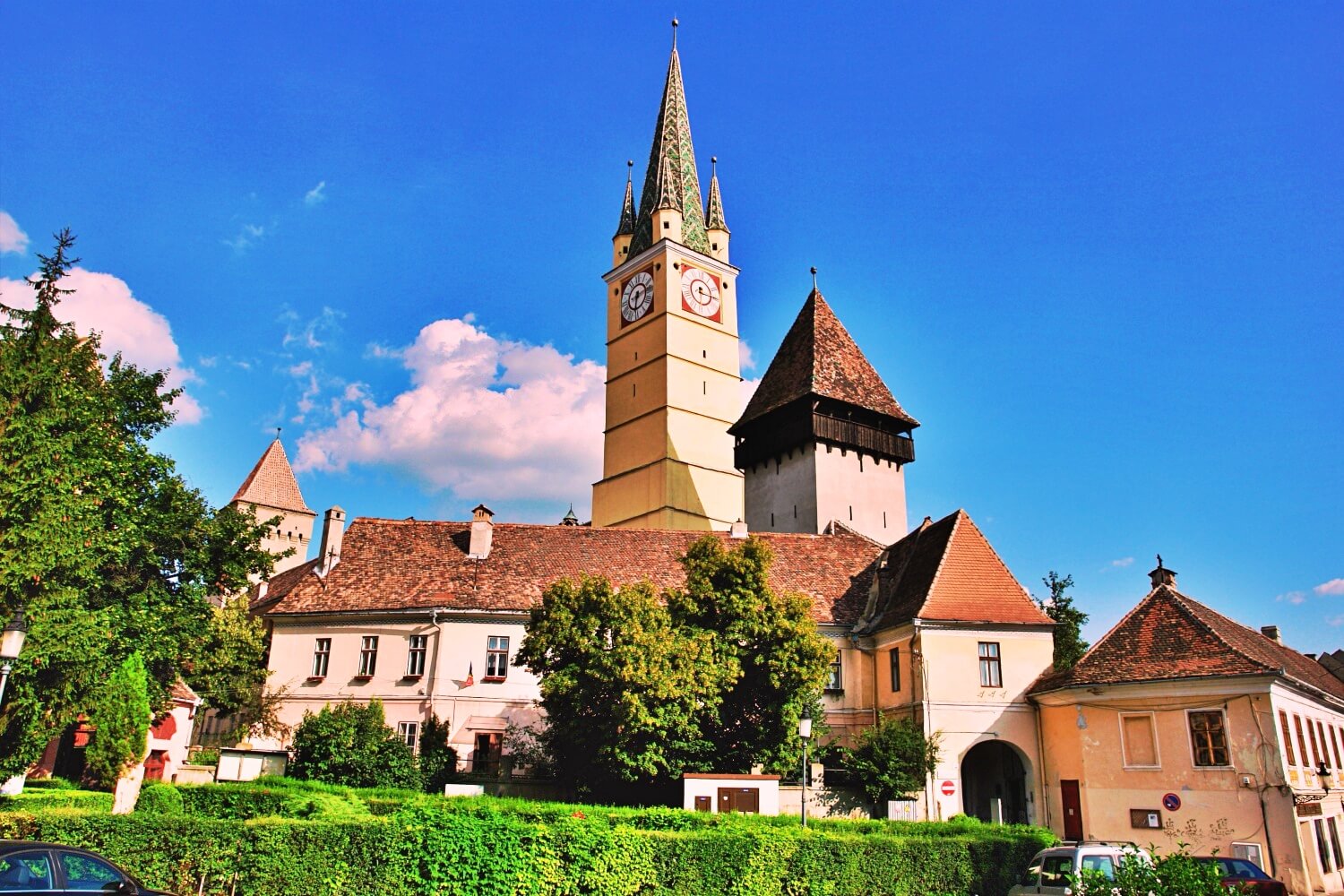
St. Margaret's Church (Romanian: Biserica Sfânta Margareta; German: Margarethenkirche) is a Lutheran church, located at 1 Piața Castelului in the historic town center of Mediaș (Mediasch), Sibiu County, in the Transylvania region of Romania.
The present, late Gothic structure was built between 1437 and 1488 by the ethnic German Transylvanian Saxon community at a time when the area belonged to the Kingdom of Hungary. Consecrated as a Roman Catholic church, with St Margaret of Antioch as its patron saint, it became Lutheran following the Reformation.
St. Margaret's church is located at the center of a large church fortress. About 150 of these buildings still exist in Transylvania. Seven of these villages with fortified churches are listed as UNESCO World Heritage Sites. It is listed as a historic monument by Romania's Ministry of Culture and Religious Affairs.
History
Archaeological surveys conducted in 1971–2 have shown that a church building had already existed at the site of the current church by the second half of the 13th century. Human burials were unearthed which were attributed to the German sepulchral culture of this time. Already by the beginning of the 15th century, this building was replaced by a second, which took the form of an aisleless church with an unusually long nave. Parts of this structure survived in the northern nave of the current building.
St. Margaret's church was first documented in 1414. The construction of the present building probably started after a devastating Ottoman raid in 1438. The church registry of 1447 relates that a Father Christian from Mettersdorf (Dumitra) had filed a public protest against the Bishop of Weissenburg (Alba Iulia) "in porta ecclesiae parochialis beatae Margarethae virginis et martyris in oppido Medyes – at the door of the parochial church of the blessed virgin and martyr Margaret". The oldest church bell has an inscribed date of 1449. During the second half of the 15th century, the choir, nave, and south aisle were modified. According to the 18th century historian Georg Soterius, an inscription was found on the walls of one of the towers relating its date of completion as 1484, and that the building was completed in 1488.
Some fortification works were already documented in 1453. The fortress with its triple encircling walls, moat and five defensive towers, was likely completed later.
In 1545, the first Evangelical Synod of Transylvania assembled in St. Margaret's church. In the wake of the reformatory iconoclastic fury, all side altars and religious statues and images were removed, the frescoes on the north wall of the nave and north aisle were painted over in white. Further renovation works are documented for 1584, 1606, 1636 and 1668. In 1732, the organ was restored on the western gallery. In 1832, the pillars on the northern side of the nave were reinforced. Major restorations were also conducted from 1888–1892. In 1927–1930, the foundations of the main tower, the Trumpeter's tower, were stabilized. An archaeological survey of the building and its surroundings was conducted by the Romanian scientists Vasile Crişan and Mariana Beldie-Dumitrache in 1971 and 1972. In 1973–1974, the foundations of the Trumpeter's tower had to be reinforced again. This time, the two lower floors were mantled in prestressed concrete. Further restorations were conducted from 1973–1986.[5] From 1976–1982, the late Gothic winged altarpiece, one of the masterpieces of Transylvanian art, was thoroughly cleaned and restored.
Interior
The main altar, located in the choir of St. Margaret's church, is a late Gothic winged altarpiece, dated between 1480 and 1520. Its work-day (closed) view is adorned with eight painted panels depicting the passion of Christ. On the northern walls of the nave and north aisle, frescoes were discovered under layers of white paint, and partly restored. In the choir, eight grave slates are on display today, one of them commemorating the pastor, poet and humanist Christian Schesaeus (1535–1585). Various wooden and painted epitaphs adorn the interior of the church. St. Margaret's church also harbours one of the largest collections of the so-called "Transylvanian" rugs, 16th–18th century Anatolian rugs in Europe.
Biserica Sf. Margareta este biserica evanghelică orășenească (în germană Evangelische Stadtpfarrkirche) din Mediaș. Edificiul este cunoscut, printre altele, pentru turnul său înclinat. Este una dintre cele mai importante biserici din Transilvania construite în stil gotic târziu. Biserica se află sub patronajul sfintei Margareta de Antiohia.
Biserica fortificată este construită din anul 1488 în stil gotic, fiind înconjurată de un zid de apărare cu turnuri (Turnul Clopotniță, Turnul Școlii, Turnul Frânghierilor/Bibliotecii, Turnul Sf.Maria, Turnul Croitorilor). Turnul bisericii, din cauza structurii solului, s-a înclinat de-a lungul timpului. A fost construit în anul 1460 și supraînălțat cu 3 niveluri în anul 1550. În anul 1551, a atins înălțimea de 68,5 m și astfel a mai primit patru turnulețe, reliefând faptul că orașul avea pe atunci judecătorie și drept de a pronunța sentința capitală (jus gladii). În anul 1783, acoperișul este refăcut și cele patru turnuri sunt reparate. În același an, globul aurit care a fost montat în anul 1550 în vârf de turn este coborât, iar cu această ocazie, ținându-se cont de obiceiul timpului, a fost citită „corespondența” strămoșilor. Turnul reprezenta un punct ideal de observație al tuturor împrejurimilor. În vremuri nesigure, cum erau pe atunci, trâmbițașul orașului avea importanta misiune de a alarma cu trompeta în caz de nevoie. Greșelile acestuia erau foarte aspru sancționate, ajungându-se chiar la aruncarea acestuia din turn, în cazul în care ar fi pus orașul în pericol. Din acele vremuri provine numele de Turnul Trompeților. Imaginea trâmbițașului din turn (Turrepitz) este reprezentată de o statuie din lemn, plasată pe una dintre muchiile turnului bisericii, și care marchează sferturile de oră prin tragerea unui clopot exterior. În turn a fost reținut Vlad Țepeș, în anul 1476, după conflictul cu regele Matia Corvin. Pe pereții interiori pot fi admirate picturi murale executate în sec. XIV-XV.
Altarul de la Mediaș este compus din trei părți, iar tripticul a fost realizat probabil cândva între anii 1480- 1490. Pe partea cotidiană (extrados) a acestuia ciclul picturilor redă suferințele lui Isus începând cu scena prinderii în Grădina Ghetsimani și până la scena învierii din mormânt. În cea cu imaginea lui Isus crucificat, sub brațul drept se poate observa imaginea Vienei, fapt prin care se dovedește că autorul tablourilor s-a format în Austria. Partea festivă a altarului a fost probabil înlăturată în totalitate odată cu Reforma și probabil că făcea trimitere la hramul bisericii (Sf.Margareta). Pe aripile predelei se observă portretele a doi donatori (un laic și un preot). Pe pereții interiori sunt expuse mai multe covoare orientale, donațiile credincioșilor existând din sec. XVI. În biserică se poate admira de asemenea cea mai veche cristelniță de bronz din țară, realizată la sfârșitul sec. XIV, baldachinul amvonului fiind construit în 1679, de meșterul Sigismund Moess.
Orga a fost construită de Johannes Hahn, originar din Levoča și stabilit la Sibiu. Abia în anul 1983, au fost găsite semnătura constructorului de orgi, în lada pneumatică a orgii, și un document al predicatorului Martin Fay (cunoscut azi ca un important compozitor). Este vorba despre o scrisoare din data de 9 mai 1756, către: „Wohl Ehren Vesten Herrn Johannes Hann Wohlbestelten Orgelbauer Meistern in Hermannstadt”. Așadar, construcția orgii a avut loc în anii 1755-56. În 1873, a fost restructurată de Wilhelm Hörbiger, după modelul romantic. Sub conducerea constructorului de orgi Hermann Binder, în anii 1983 și 2005 au avut loc două ample renovări ale orgii. Orga conține în prezent 24 de registre. În biserică se organizează frecvent concerte, ocazie cu care se pot întoarce spătarele băncilor din biserică, astfel ca spectatorii să stea cu fața spre orgă.
Stagiunea de concerte Orgelsommer Mediaș se desfășoară anual în biserică, în perioada lunilor mai-octombrie, cu concerte săptămânale, în fiecare luni, de la ora 19:00, la care se adaugă și numeroase concerte extraordinare. Muzica de orgă este preponderentă, dar stagiunea include adesea concerte camerale, corale sau vocal-instrumentale, recitaluri solo, precum și improvizații sau proiecții nocturne în aer liber cu muzică live. Stagiunea este completată cu o serie de concerte care au loc la Casa Schuller și la Grădina Traube, din imediata apropiere a castelului bisericesc, dar se poate extinde pe toată durata anului, cu alte evenimente organizate sau găzduite de biserică, așa cum sunt concertele speciale de Crăciun, concertele corale ecumenice, musicalurile pentru copii, turneele unor formații muzicale din străinătate sau cursurile de instrumente muzicale. Începând din anul 1999, organizatorul stagiunii muzicale „Orgelsommer Mediaș” este Edith Hajnalka Toth, cantor și organist al bisericii.
A város legvonzóbb látnivalója a külön várfallal és tornyokkal körülvett gótikus erődtemplom. A templom 1488-ben épült gótikus stílusban, az idők folyamán több alakításon ment át. A talaj szerkezete miatt kissé ferde tornya 1460-ban épült, 1550-ben három emelettel megemelték és 1551-ben négy sarok tornyocskát kapott annak jeléül, hogy a városban bíróság működik. Akkor nyerte el a mai 68,5 méteres magasságát. 1783-ban kicserélték a tetőszerkezetet, és megjavították a tornyocskákat. Akkor vették le a torony csúcsáról az 1550-ben feltett aranyozott gömböt.
Akkor a hagyományok szerint felolvasták az ősök üzenetét. A torony jó megfigyelőállásnak bizonyult. Azokban a bizontalan időkben a trobitásnak igen nagy szerepe volt, a torony tetjéből "kitrombitálva" hírdette a veszélyt. Esetleges hibájáért, amely a falu szenvedését okozta, kidobták a toronyból.Innen származik a Trobitások tornya elnevezés. Mátyás király ebbe a toronyban záratta be 1476-ban a Drakula néven ismert Vlad Țepeșt. A templom belső falain XIV-XV.századi freskók láthatóak. A késő gótikus szárnyas oltár 1480-ban készült. Képei Jézus szenvedéseit ábrázolják.
Mivel a keresztre feszített Jézus jobb karja alatt Bécs látképe látható, feltételezik, hogy a táblaképek Ausztriában készültek. A hívők adományozta keleti szőnyegek, némelyike XVI századi, a bronz keresztelőmedence pedig XIV századi. A szószék baldachinját Sigismund Moess készítette, 1679-ben. 1755-ben épült orgonáján hangversenyeket szerveznek, ilyenkor a templompadok háttámláját átdöntik, hogy a jelenlévők az orgona felé ülhessenek.
https://www.welcometoromania.eu/
Useful information
Charge
10.00 RON
Children: 5.00 RON
0 - 6 years: free
WC
kastellmediasch@yahoo.de
- Guided tours in foreign languages
- Gift shop
-
-
External links
Nearby castles
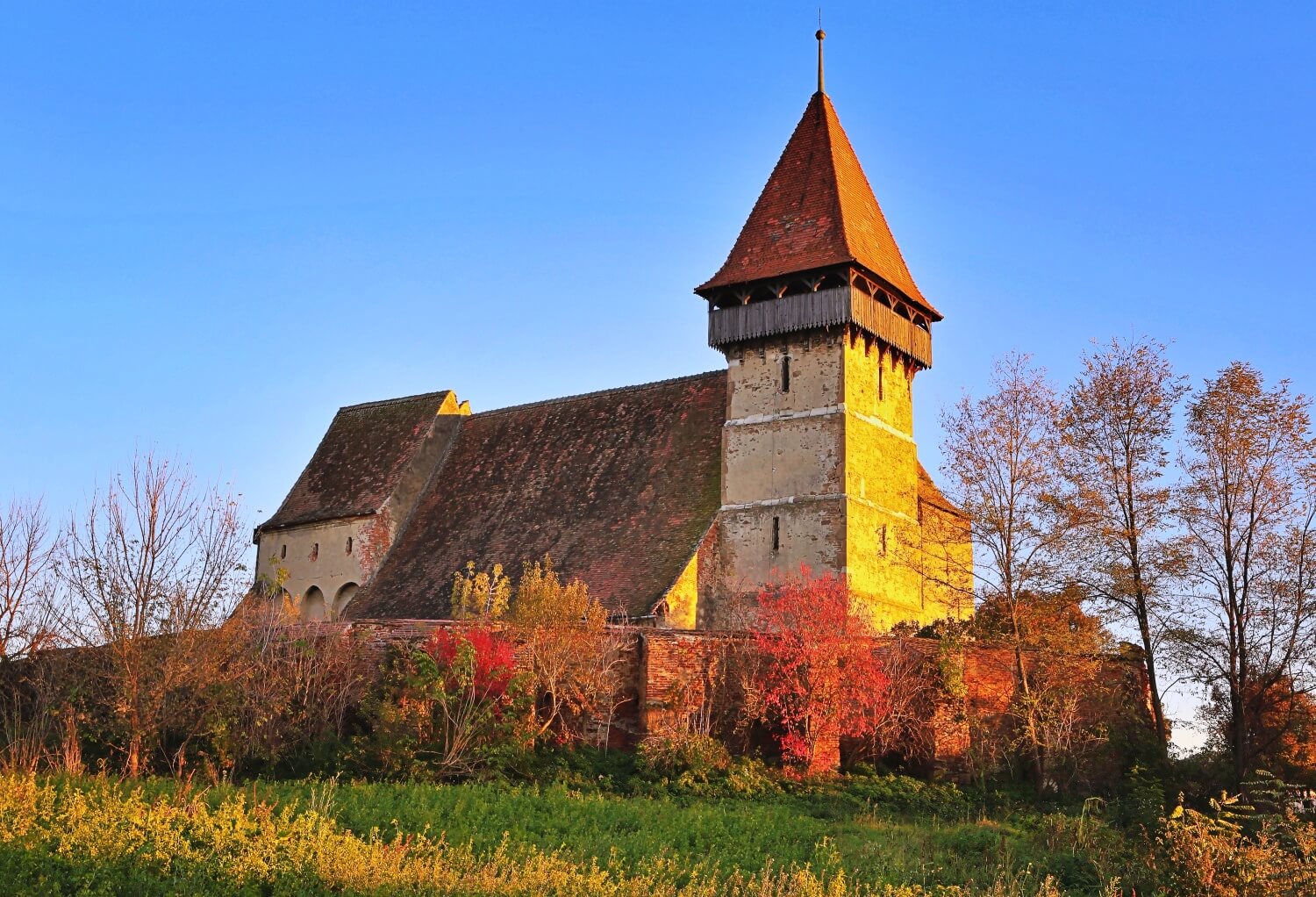
Brateiu Evangelical fortified church
Comuna Brăteiu
5.6km
fortress
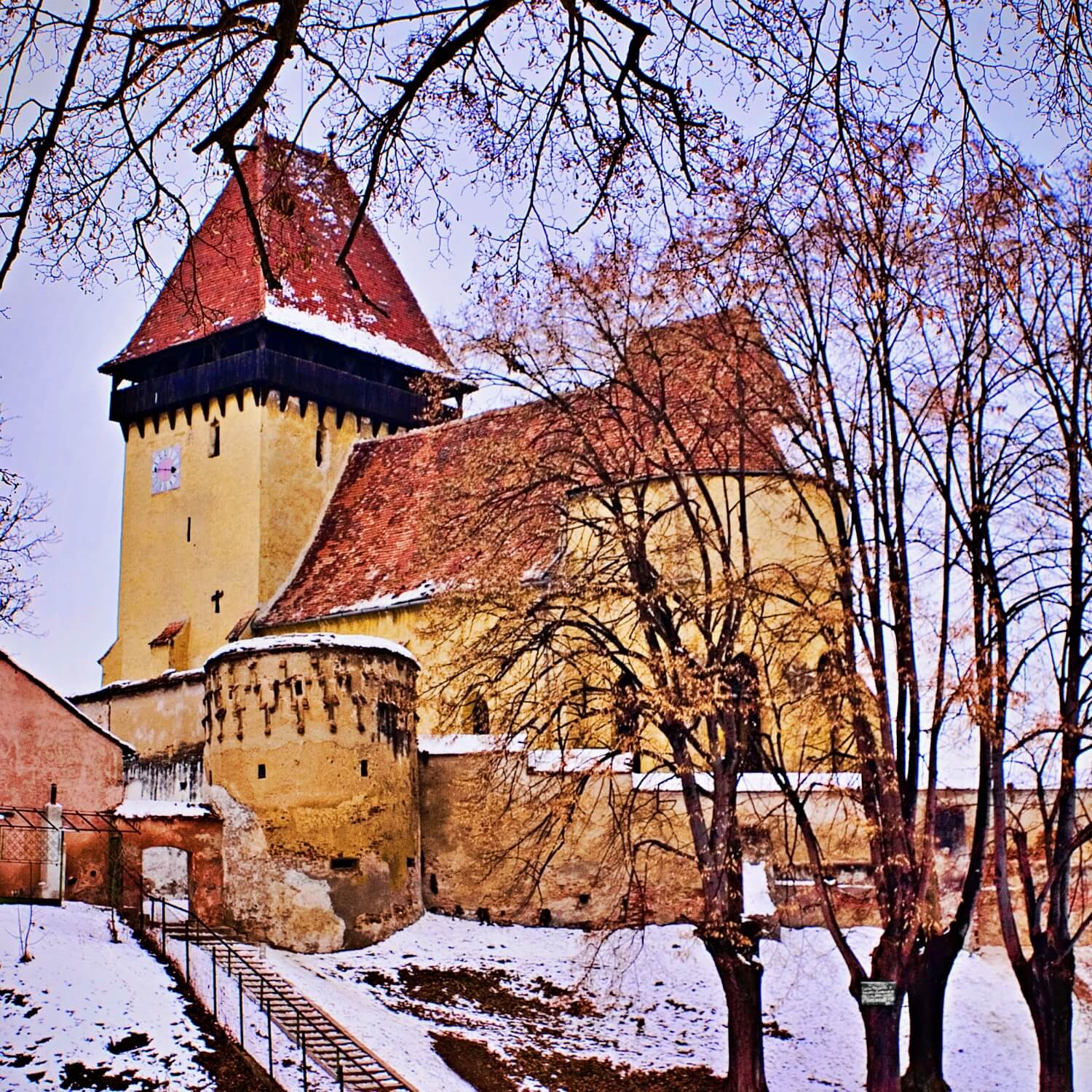
Ighișu Nou Evangelical fortified church
Municipiul Mediaș
5.8km
fortress
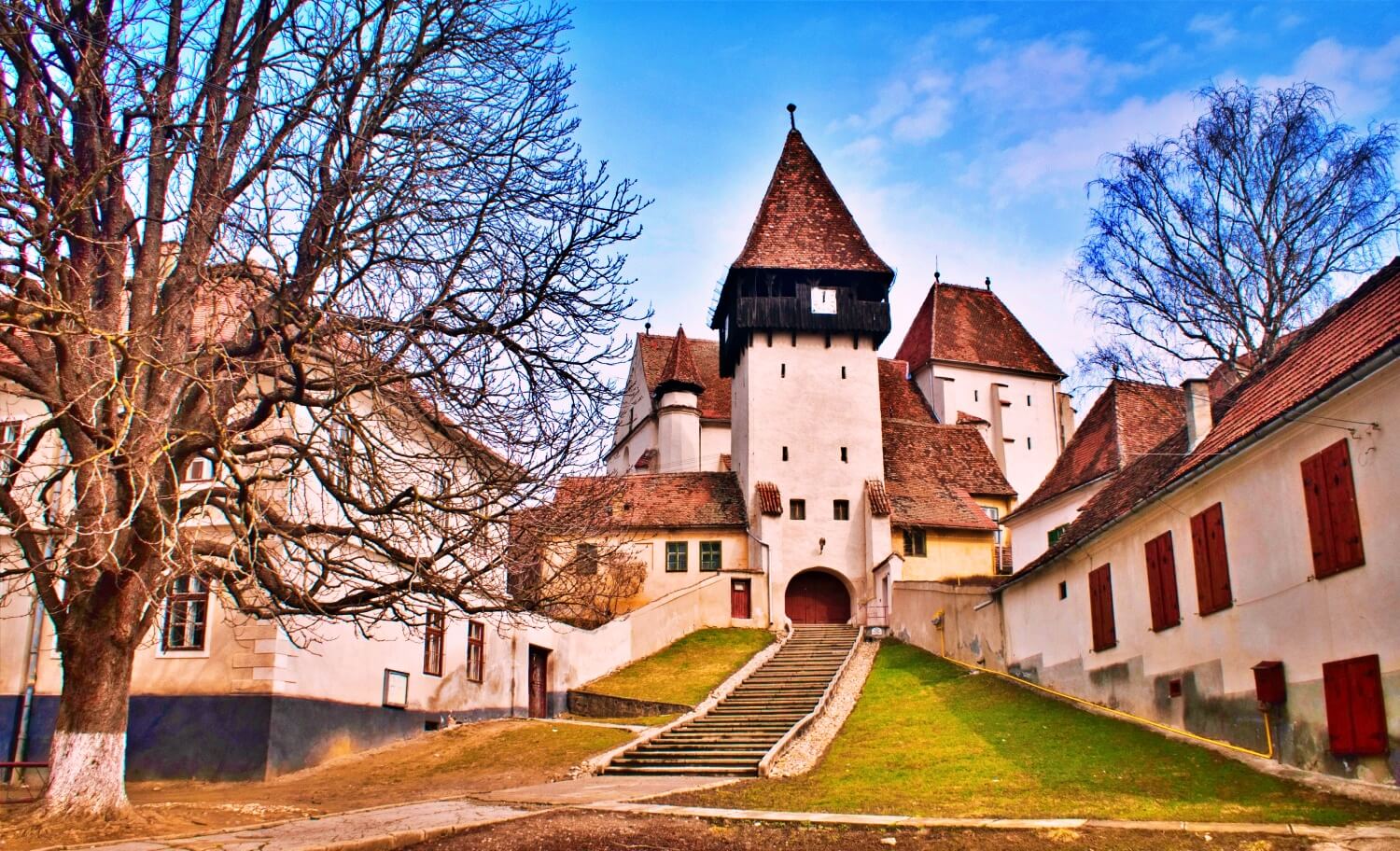
The fortified church from Bazna
Comuna Bazna
6.6km
fortress
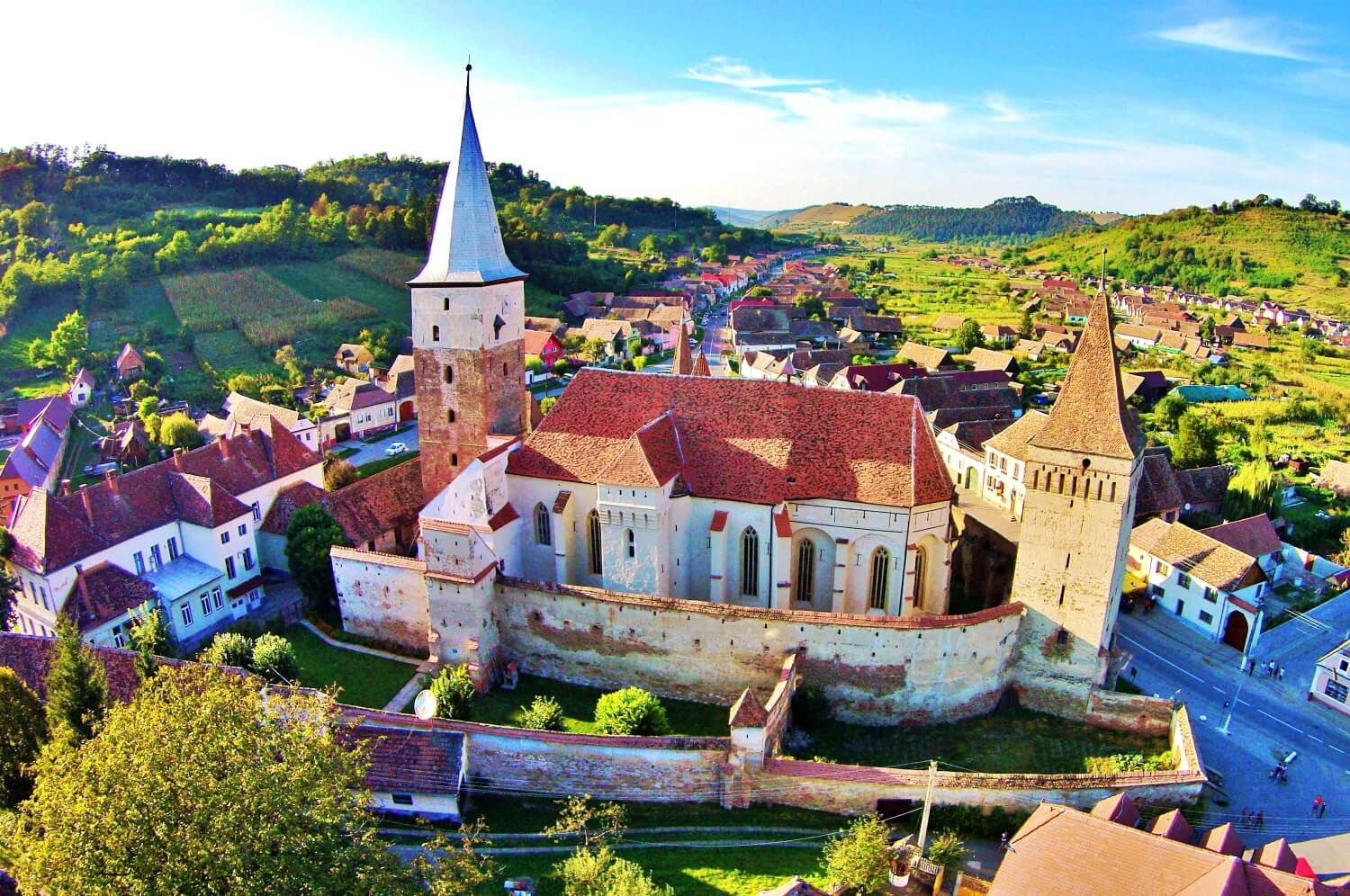
Moșna Evangelical fortified church
Comuna Moșna
8.8km
fortress
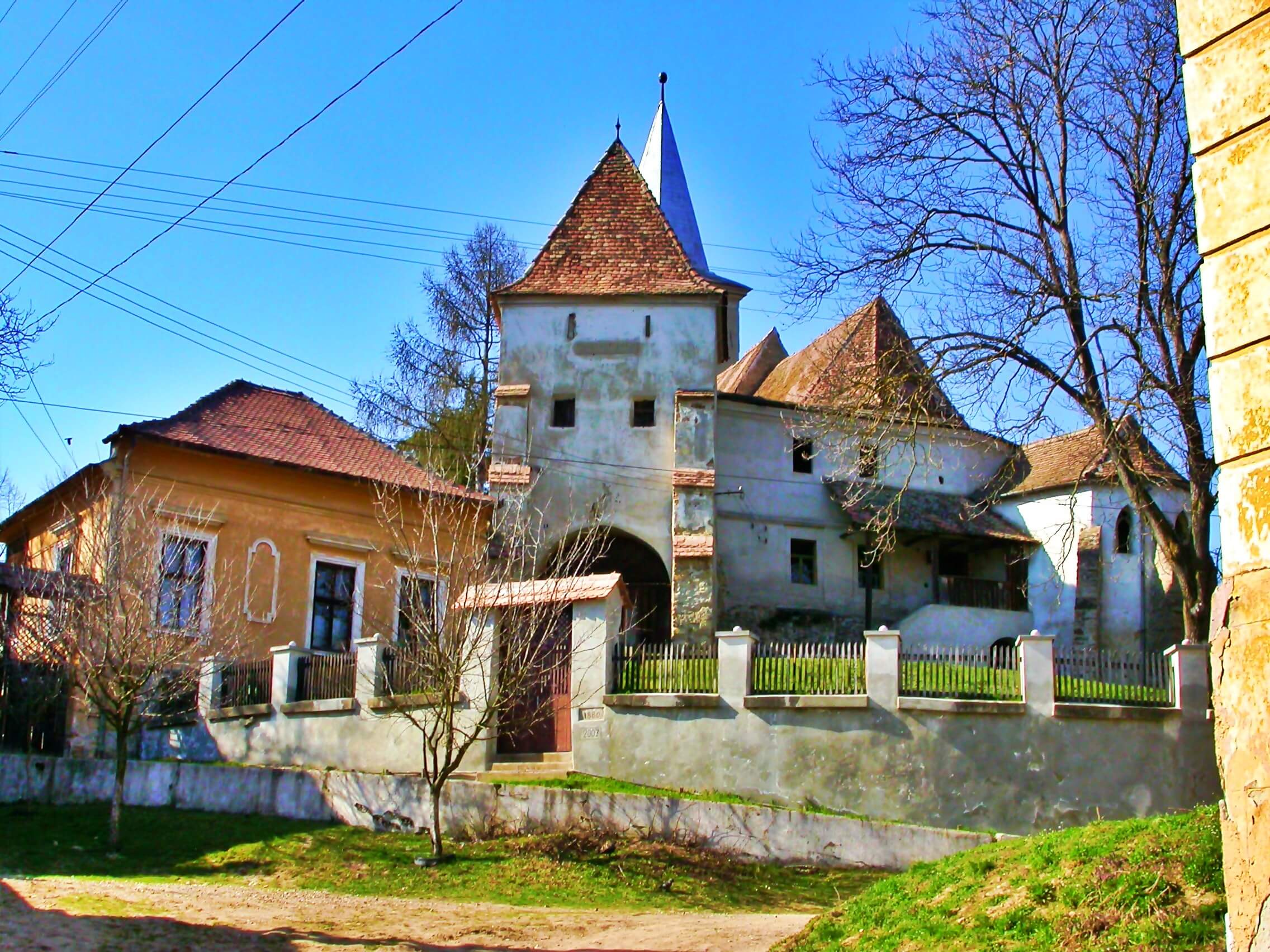
Curciu fortified church
Comuna Dârlos
9.6km
fortress
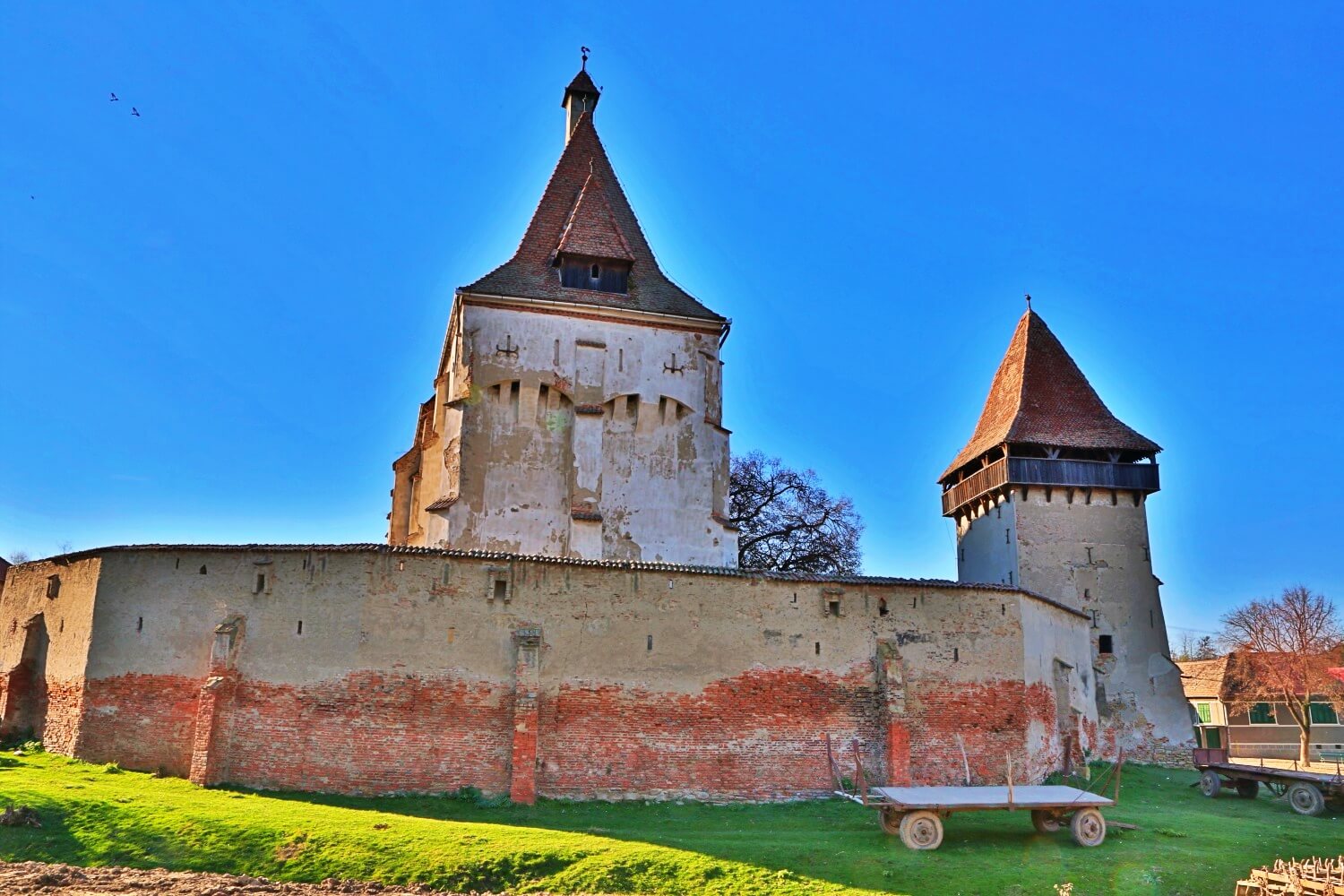
Boian fortified church
Bazna
10.4km
fortress
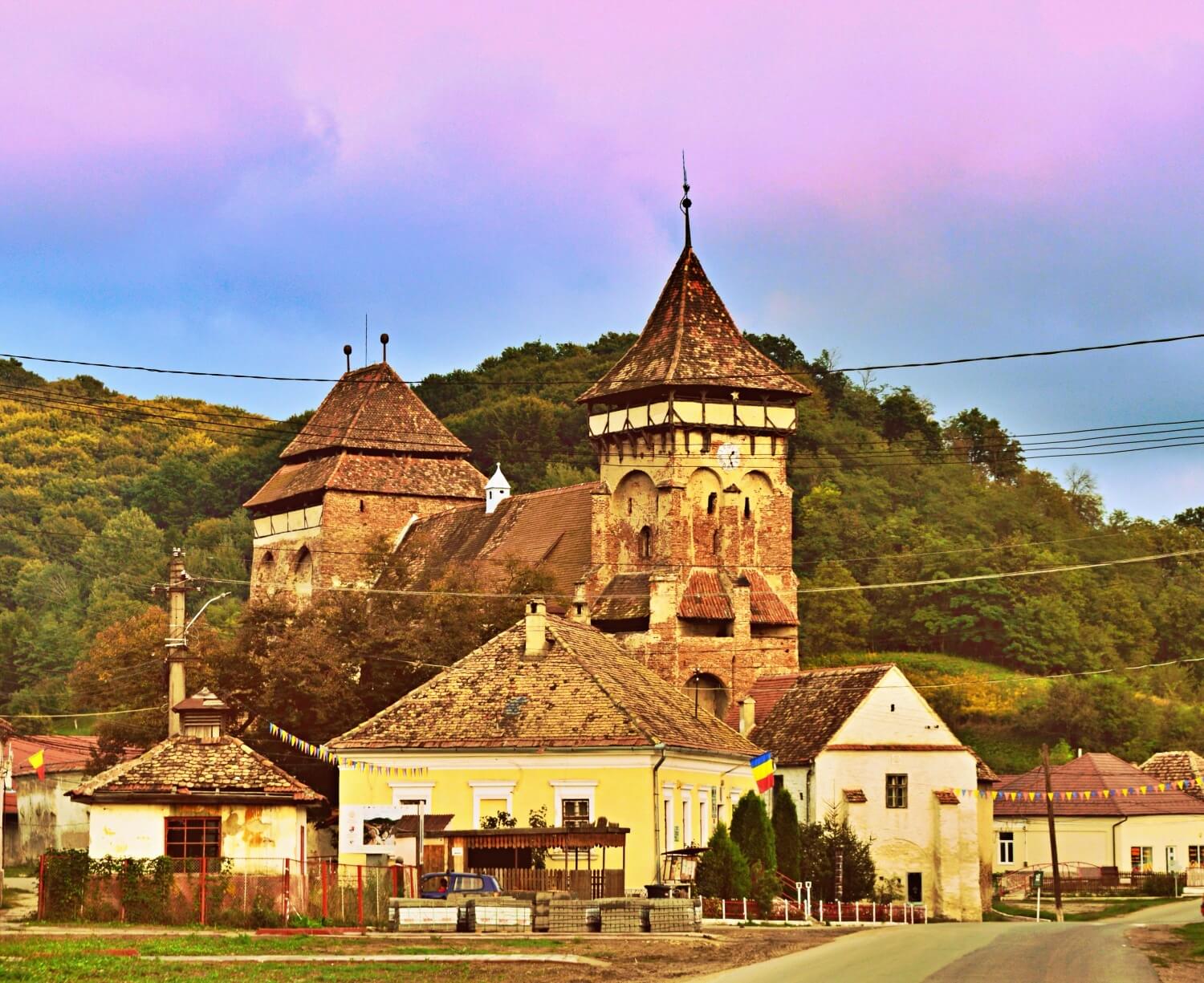
Valea Viilor fortified church
Comuna Valea Viilor
10.8km
fortress