Fortified Church Agnita
Orașul Agnita Județul Sibiu Romania
fortress
Biserica fortificată din Agnita
Orașul Agnita Județul Sibiu Romania
fortress
Szentágotai Erődített Templomegyüttes
Orașul Agnita Județul Sibiu Romania
fortress
The point of maximum attraction is the fortress city Agnita peasant fortified church housed therein
Punctul de maximă atracţie turistică al oraşului Agnita îl constituie Cetatea ţărănească cu Biserica fortificată adăpostită de aceasta
A szentágotai erődtemplom egy régi római kori bazilika alapjára épült
Previous names
Fortified Church Agnita, Biserica fortificată din Agnita, Szentágotai Erődített Templomegyüttes
Description
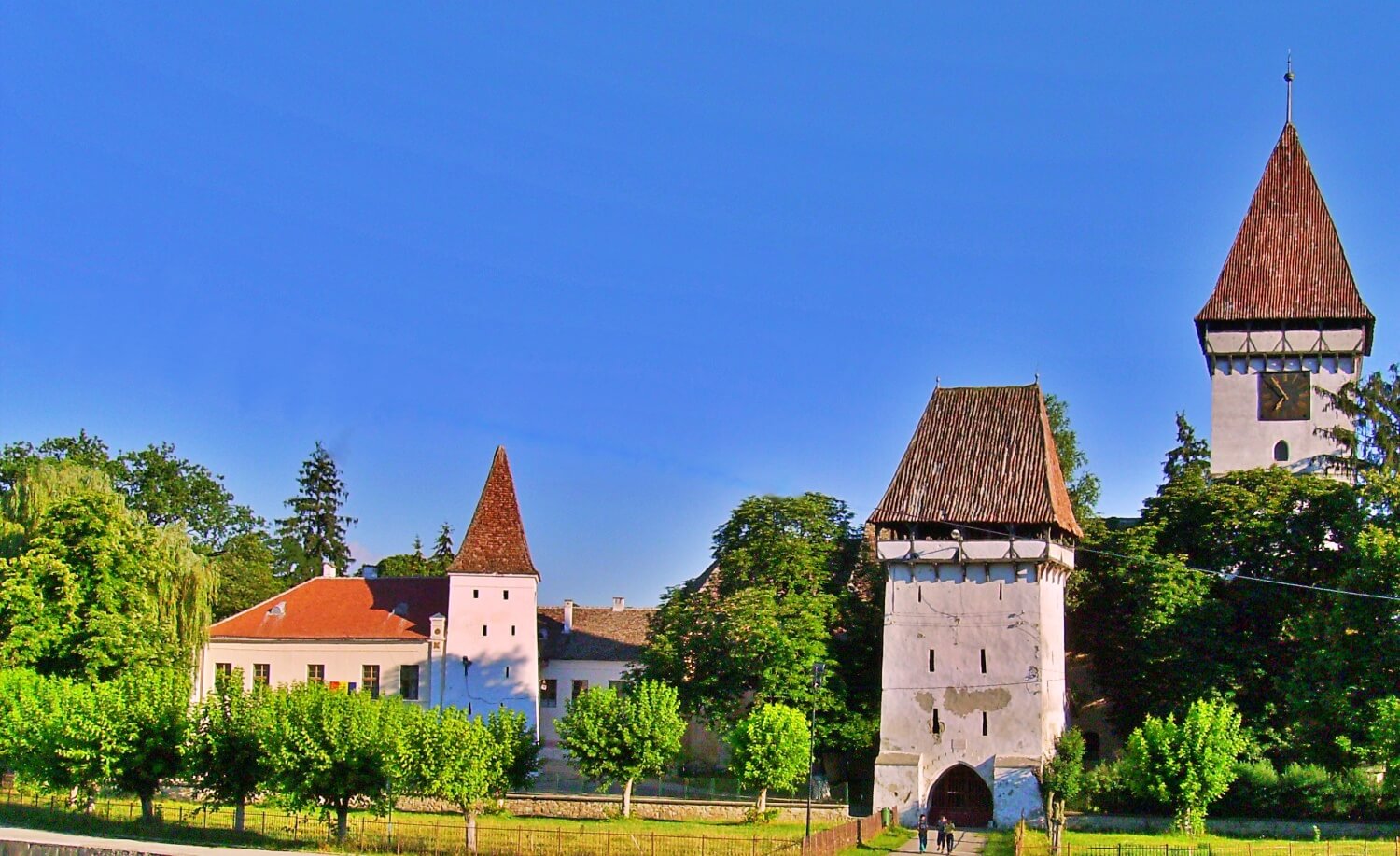
The point of maximum attraction is the fortress city Agnita peasant fortified church housed therein. Confirm the existence of royal privileges Agnita city in 1466, it was probably built with the church - the Gothic hall, built on the foundations of a Roman basilica, without the tower of the thirteenth century, fortified in the first quarter of the XVI century. In a document preserved in the church until 1948, it was shown that of 1409 as the current building.
The fortress consists of a triple-chamber, was built in several stages, as was later changed at different intervals. The four defense towers built of river rock and quarry belonged interior curtains. In the center of the northern side of the tower carpenters, with an entrance arch provided with hers, looking over the gate. In the east tower rises in the southeast tower blacksmith tailors and shoemakers in the southwest tower. Among the latter there are old wooden shed.
Towers owe their names to the fact that their defense was the duty of care and the various guilds, which kept their bacon in their tower and hanging from wooden beams of the platforms. Towers with five tiers are all provided with small buttresses, passable only for firearms, being vaulted niches with arches covered stone slabs placed vertically stacked or marginal.
Curtin included inside an oval courtyard with a diameter of 55-65 m - if we take the inner corners of the towers as reference points - the second defense wall connecting the outer corners of the towers. Between these two curtains are "Zwinger's" yard animals housed there in case of danger, and the third Curtin, irregular polygonal shape, included a moat, the outer defense wall was protected by the brook and wetlands near . In 1845, the third was demolished Curtin, in 1867 the stores were demolished chambers surrounding the inner chamber, so that in 1870 the last vestiges of fall and curtains triple cord, leaving the towers completely isolated from material obtained by demolishing the building new school.
The core of the city it was a Gothic hall church. Her choir elongated, closed on three sides east and central nave with semicircular arches radial bearing, once decorated with terracotta fins arranged stellate shaped, painted red, as proven by the traces on the southwest corner. Above the small arches in the northern cross of collateral amounted to a stand, while collateral south central nave reaches a height, covered with cross vaults, arches separate dublou broken arch.
On the northern side were originally preserved by square pillars, but adosându them the columns supporting the vault of the central nave. Romanesque arches, these pillars to open between north collateral, have been raised and closed in spring broke, keep a cornice placed below the point before the birth of a Roman arch, thus representing a trace of the Romanesque basilica. Western side as Portals portal located on the same axle, the narrow entrance of the priest in the southern wall of the choir, and all windows are finished in the spring broke, their profiles with a rustic character and cumbersome. The proportions are not too happy church resolved that implementation can be attributed to local craftsmen and some not qualified in any of the major urban sites. Only the south wall of the tabernacle of the present forms of late Gothic choir, more graceful, revealing a definite Oriental influence in the design details.
A bell tower 44 meters high, with six storeys and a railing of the gallery was placed in front paiantă western side, free on three sides, so that its ground floor, opening three large arches broken arch, forming a portico in front of the church main entrance. With the consolidation begun in 1500, the tower was surrounded by a coat of stone, rising to the height of the second neck, consciously shaped roof console. Called Tower potters, this body of defense was provided with battlements, divided into two storeys by a platform of planks, higher sin is accessible through a narrow staircase that ascends the north wing. A corridor crossing the western side of the bell tower in link with the north wing of the south tower. This portico was closed to the bell tower, whose upper storeys were also furnished with battlements, paiantă gallery using the base defense tower, wearing a pyramid roof with tiles.
Strengthen this powerful western side corresponds to the east, high above the choir bastion, with beat guard, flat arches resting on buttresses around the choir joining. In the shadow of these arches are wide opened holes for pouring hot liquids. The devastation of the village in 1600 by mercenary troops, the church was burned and renovated in 1614. In 1890, they renewed the southern parts of the collateral vault. In 1892, the bastion above the choir, became unstable, was demolished, and in 1908, the church received a new roof.
Over the centuries, both Cetaţiii walls and towers and church itself was refortificate, recămăşuite and raised to meet evolving technique for fighting the besiegers. Today the figure rises with its towers above City rooftops of the city, as evidence of ancient existence.
https://www.directbooking.ro/
Punctul de maximă atracţie turistică al oraşului Agnita îl constituie Cetatea ţărănească cu Biserica fortificată adăpostită de aceasta. Privilegiile regale confirma existenta cetatii din Agnita in 1466, ea fiind construita probabil odata cu biserica - hala gotica, inaltata pe fundamentul unei bazilici romane, fara turn, din secolul al XIII-lea, fortificata in primul sfert al secolului al XVI-lea. Intr-un document pastrat pana in 1948 in biserica, era indicat anul 1409 ca fiind acela al constructiei actuale.
Cetatea, alcatuita dintr-o tripla incinta, a fost ridicata in mai multe etape, asa cum mai tarziu a fost modificata la diferite intervale. Cele patru turnuri de aparare construite din piatra de rau si de cariere apartineau curtinei interioare. In centrul laturii nordice, turnul dulgherilor, cu o intrare boltita prevazuta cu hersa, veghea deasupra portii. In est se inalta turnul faurarilor in sud-est turnul croitorilor, iar in sud-vest turnul cizmarilor. Intre acestea din urma mai exista sopronul vechi din lemn.
Turnurile isi datoreaza denumirile faptului ca ingrijirea si apararea lor era datoria diferitelor bresle, care isi pastrau in turnul lor si slanina agatata de barnele platformelor de lemn. Turnurile cu cate cinci caturi sunt toate prevazute cu metereze mici, practicabile exclusiv pentru arme de foc, nisele fiind boltite prin arcade de piatra asezate vertical sau acoperite de lespezi suprapuse marginal.
Curtina interioară cuprindea o curte de formă ovală având un diametru de 55-65 m - dacă luăm colţurile interioare ale turnurilor drept puncte de reper - curtina a doua legând colţurile exterioare ale turnurilor. Între aceste două curtine se afla "Zwinger-ul", curtea animalelor, adăpostite acolo în caz de pericol, iar a treia curtină, de formă poligonală neregulată, includea un şanţ cu apă, în exterior curtina fiind protejată de pârâul apropiat şi de terenul mlăştinos. În 1845 a fost demolată a treia curtină, în 1867 au fost demolate cămările de provizii ce înconjurau incinta interioară, pentru ca în 1870 să cadă şi ultimele vestigii ale triplului cordon de curtine, lăsând turnurile complet izolate, din materialul obţinut prin demolare construindu-se noua şcoală.
Nucleul cetăţii îl constituia biserica-hală în stil gotic. Corul ei alungit, închis spre est pe trei laturi, precum şi nava centrală poartă bolţi semicilindrice cu penetraţii, ornamentate odinioară cu nervuri de teracotă dispuse în formă stelată, vopsite în roşu, după cum o dovedesc urmele din colţul sud-vestic. Deasupra micilor bolţi în cruce ale colateralei nordice s-a ridicat o tribună, pe când colaterala sudică atinge înălţimea navei centrale, acoperită cu bolţi în cruce, separate de arcuri dublou în arc frânt.
Pe latura de nord s-au conservat stâlpii originari de secţiune pătrată, adosându-li-se însă colonete pentru susţinerea bolţii navei centrale. Arcadele romanice, deschise între aceşti stâlpi spre colaterala nordică, au fost înălţate şi închise în arc frânt, păstrează o cornişă plasată mai jos, în punctul naşterii unui arc romanic anterior, reprezentând deci o urmă a bazilicii romanice. Portalul apusean ca şi portalurile laterale dispuse pe acelaşi ax, îngusta intrare a preotului în peretele de sud al corului, ca şi toate ferestrele sunt terminate în arc frânt, profilurile lor având un caracter rustic şi greoi. Proporţiile bisericeşti nu sunt prea fericit rezolvate, încât execuţia poate fi atribuită unor meşteri locali şi nu unora calificaţi la vreunul din marile şantiere citadine. Doar tabernacolul din peretele de sud al corului prezintă forme ale goticului târziu, mai graţioase, vădind o certă influenţă orientală în desenul detaliilor.
O clopotniţă de 44 m înălţime, cu şase caturi şi o galerie cu balustradă din paiantă a fost aşezată în faţa laturii apusene, liberă pe trei laturi, aşa încât parterul ei, deschizând trei arcade mari în arc frânt, forma un portic al bisericii în faţa intrării principale. Odată cu fortificarea începută pe la anul 1500, turnul a fost înconjurat de o cămaşă de piatră, ridicându-se până la înălţimea catului al doilea cu acoperiş în formă de pupitru. Numit turnul olarilor, acest corp de apărare era prevăzut cu metereze, despărţit în două caturi printr-o platformă din bârne, catul superior fiind accesibil printr-o scară îngustă ce urcă din aripa nordică. Un coridor trecând in faţa laturii apusene a clopotniţei leagă aripa de nord cu cea de sud a acestui turn. Acesta nu era închis faţă de porticul clopotniţei, ale cărei caturi superioare erau de asemeni amenajate cu metereze, galeria de paiantă folosind la apărarea bazei turnului, care poartă un acoperiş în piramidă cu olane.
Acestei puternice fortificări a laturii apusene îi corespundea, în est, bastionul ridicat deasupra corului, cu parapet devansat, aşezat pe arcadele plate ce unesc contraforturile din jurul corului. În umbra acestor arcade se deschideau largi guri de turnare pentru lichide fierbinţi. La devastarea comunei în 1600 de către trupe de mercenari, a fost arsă şi biserica, renovată în 1614. În 1890, s-au reînnoit părţi ale bolţilor colateralei sudice. În 1892, bastionul de deasupra corului, devenit şubred, a fost demolat, iar în 1908, biserica a primit un acoperiş nou.
In decursul veacurilor, atât zidurile şi turnurile Cetaţiii, cât şi biserica propriu-zisă au fost refortificate, recămăşuite şi supraînălţate, pentru a face faţă evoluţiei tehnicii de luptă a asediatorilor. Astăzi silueta Cetăţii răsare cu turnurile sale deasupra acoperişurilor caselor din oraş, ca mărturie a unei străvechi existenţe.
https://www.directbooking.ro/
A szentágotai erődtemplom egy régi római kori bazilika alapjára épült. A többi templomhoz viszonyítva a gótikus elemek mellett reneszánsz és barokk stíluskeveréket is találunk. Jól megőrződtek a Szabók, Cipészek és Ácsok céheiről elnevezett bástyák, de a harangtornyot is érdemes meglátogatni, mert belőle gyönyörű táj nyílik a környékre.
http://www.sibiu-turism.ro/
Useful information
Free
Free
Information tables
Visiting on a demand
-
-
Nearby castles
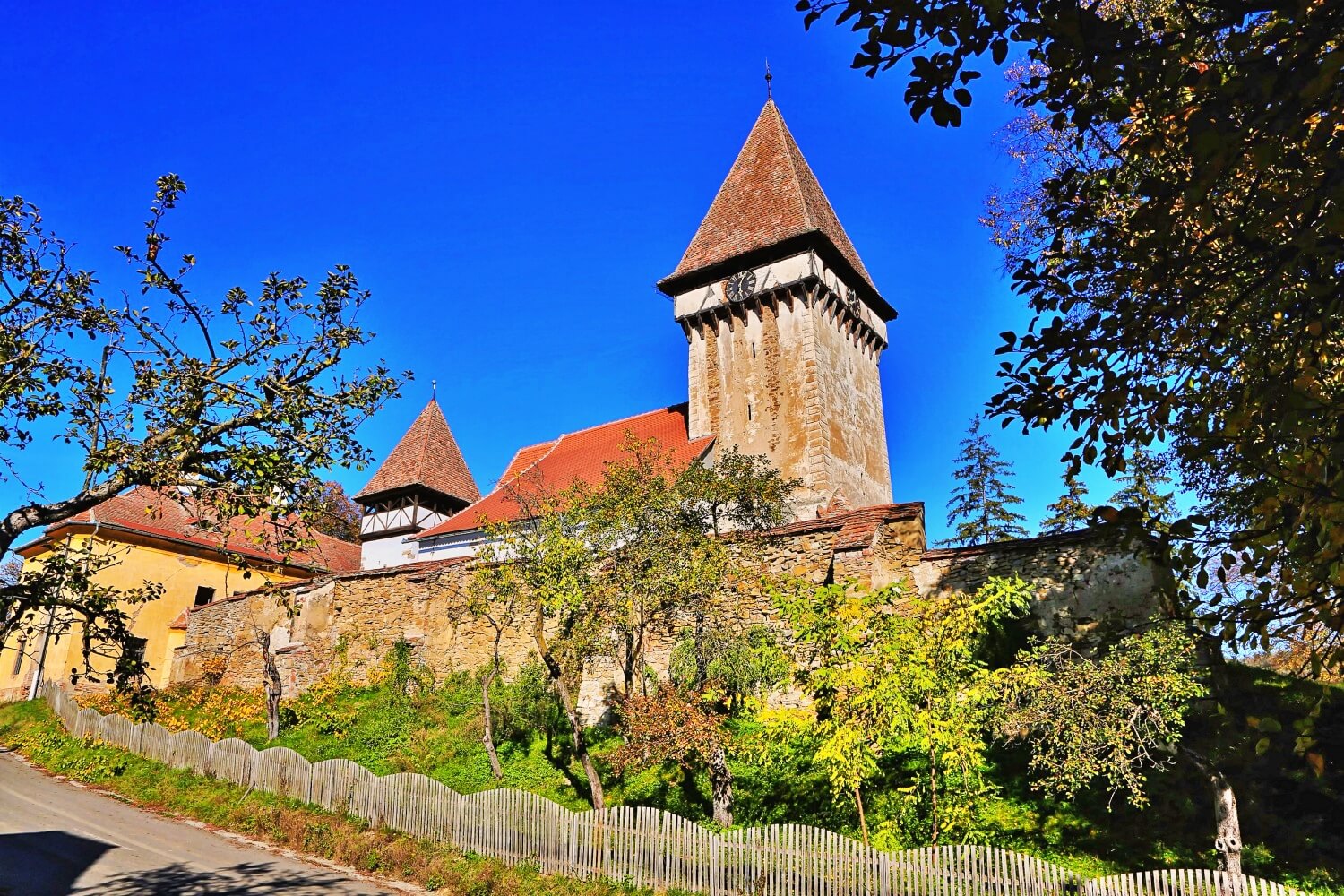
Fortified church in Veseud
Chirpar
5.1km
fortress
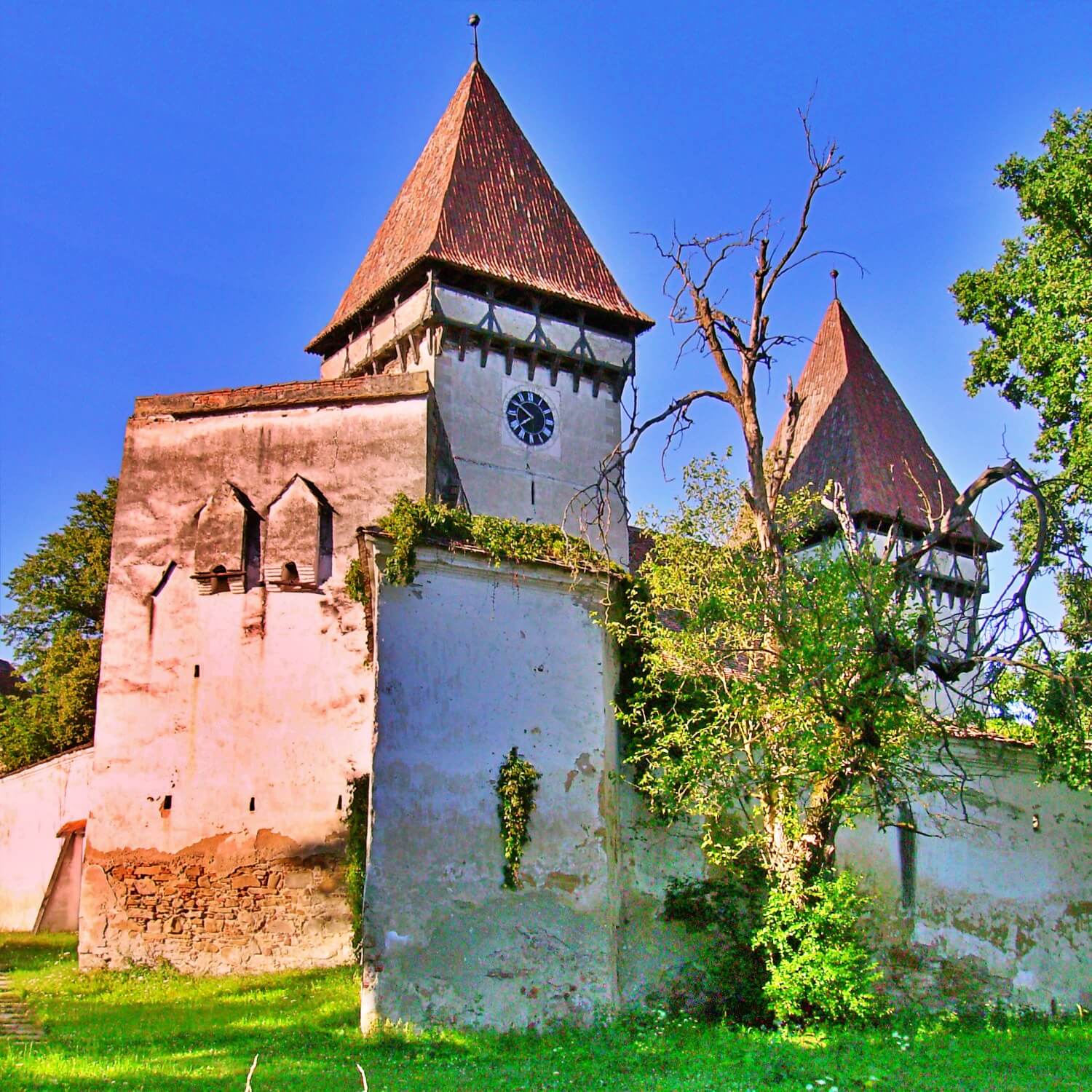
Dealu Frumos fortified church
Comuna Merghindeal
5.7km
fortress
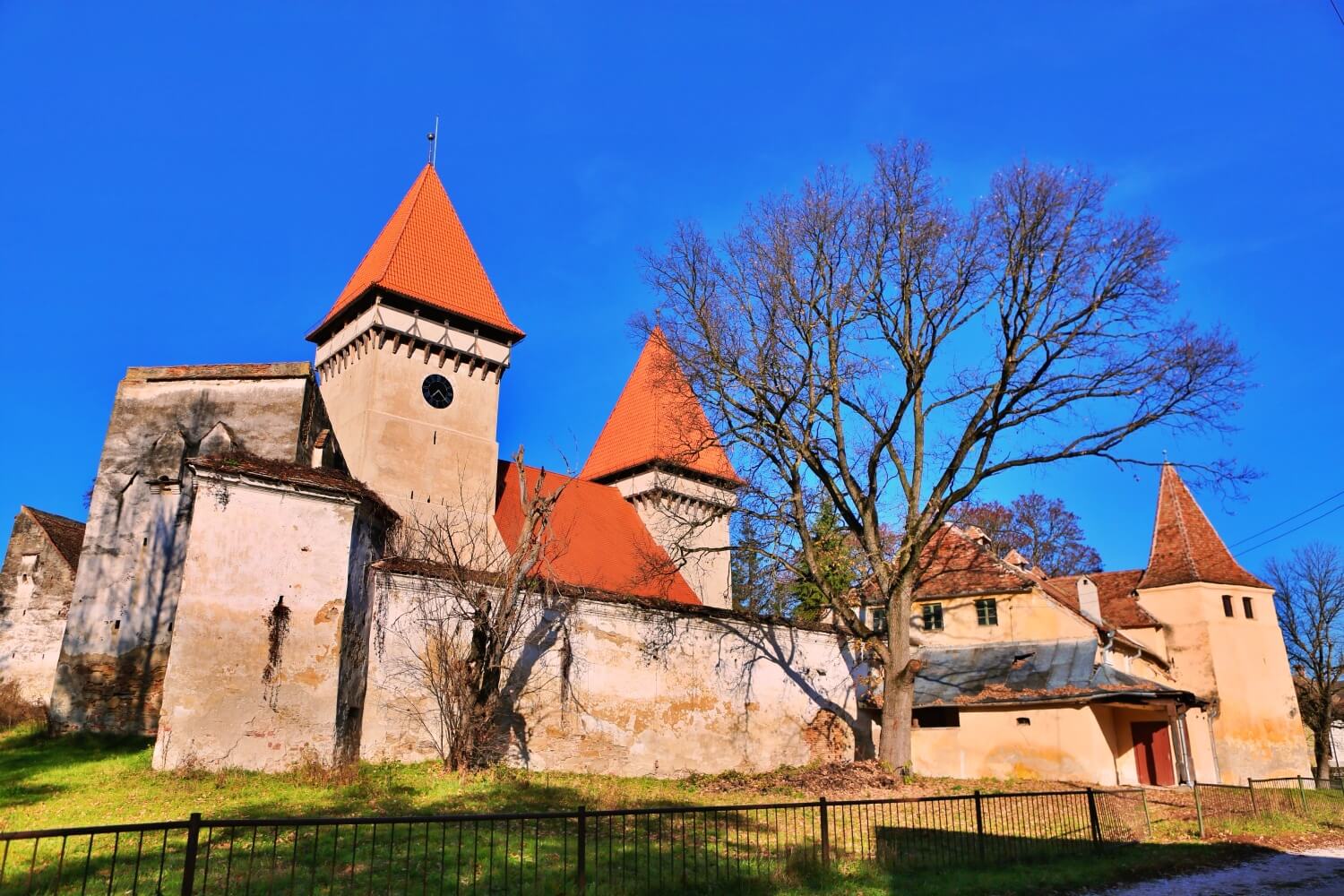
The fortified church from Merghindeal
Comuna Merghindeal
7.9km
fortress
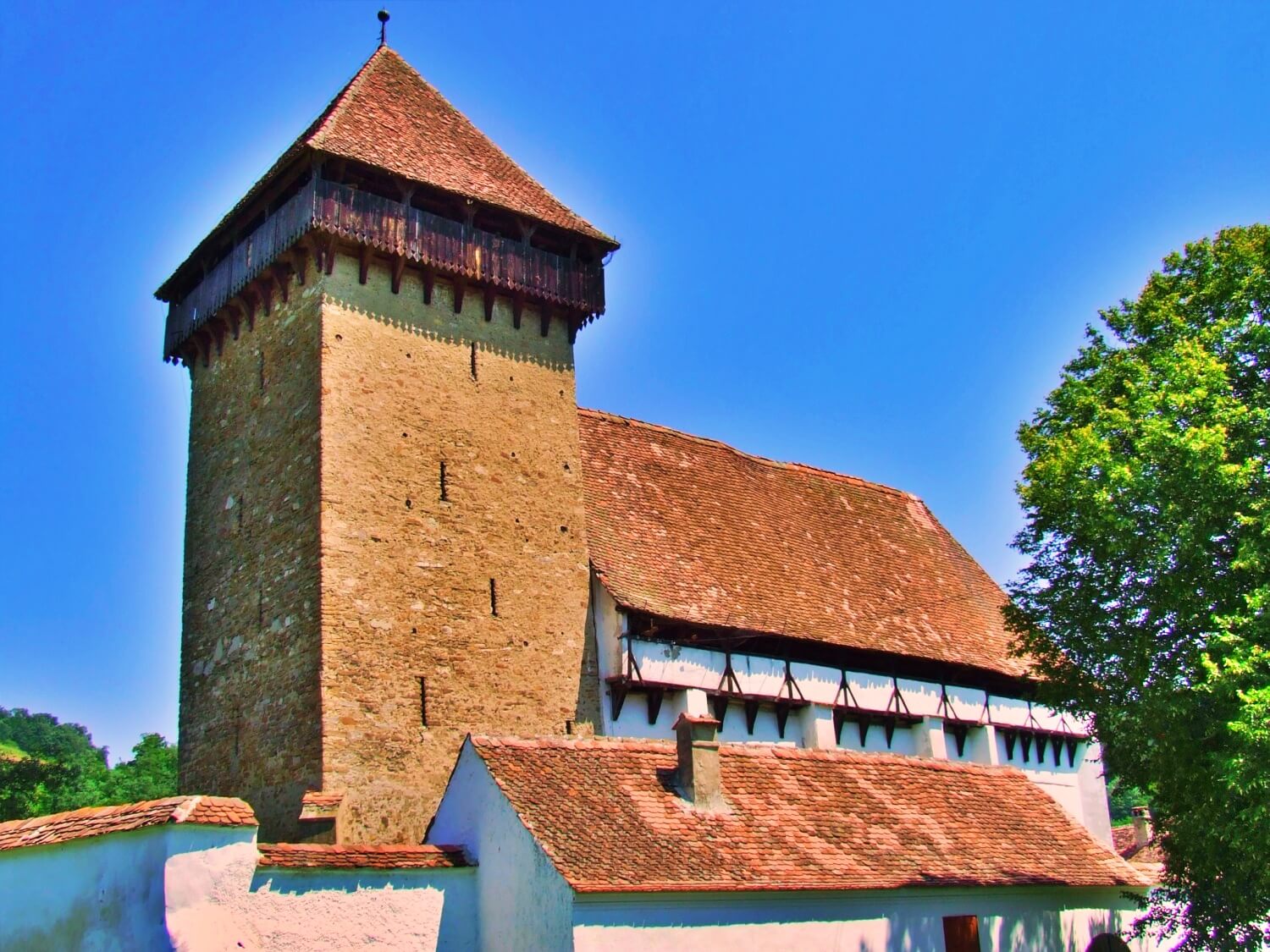
The fortified church from Stejărişu
Comuna Iacobeni
8.3km
fortress
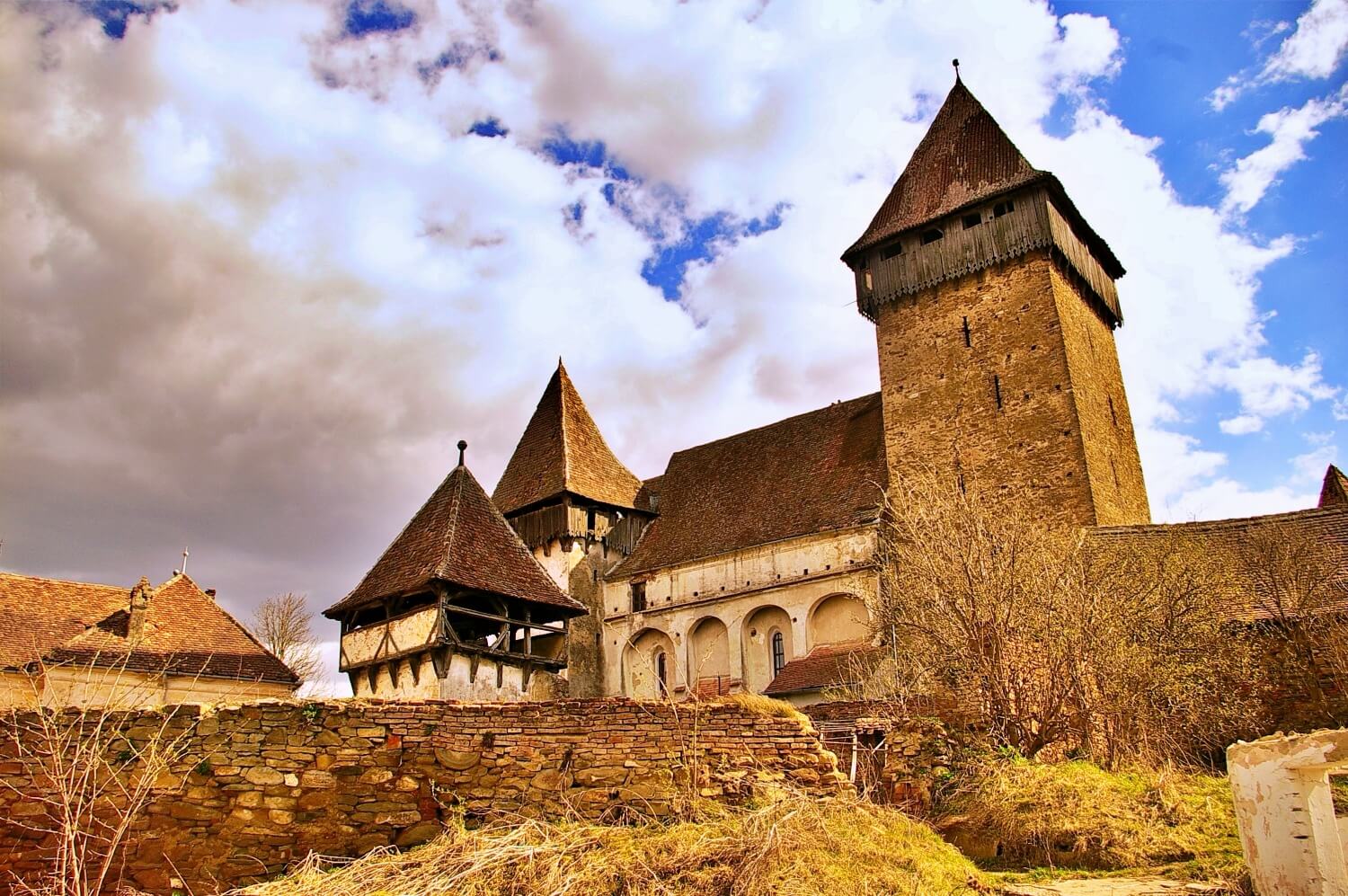
Iacobeni fortified church
Iacobeni
11.0km
fortress
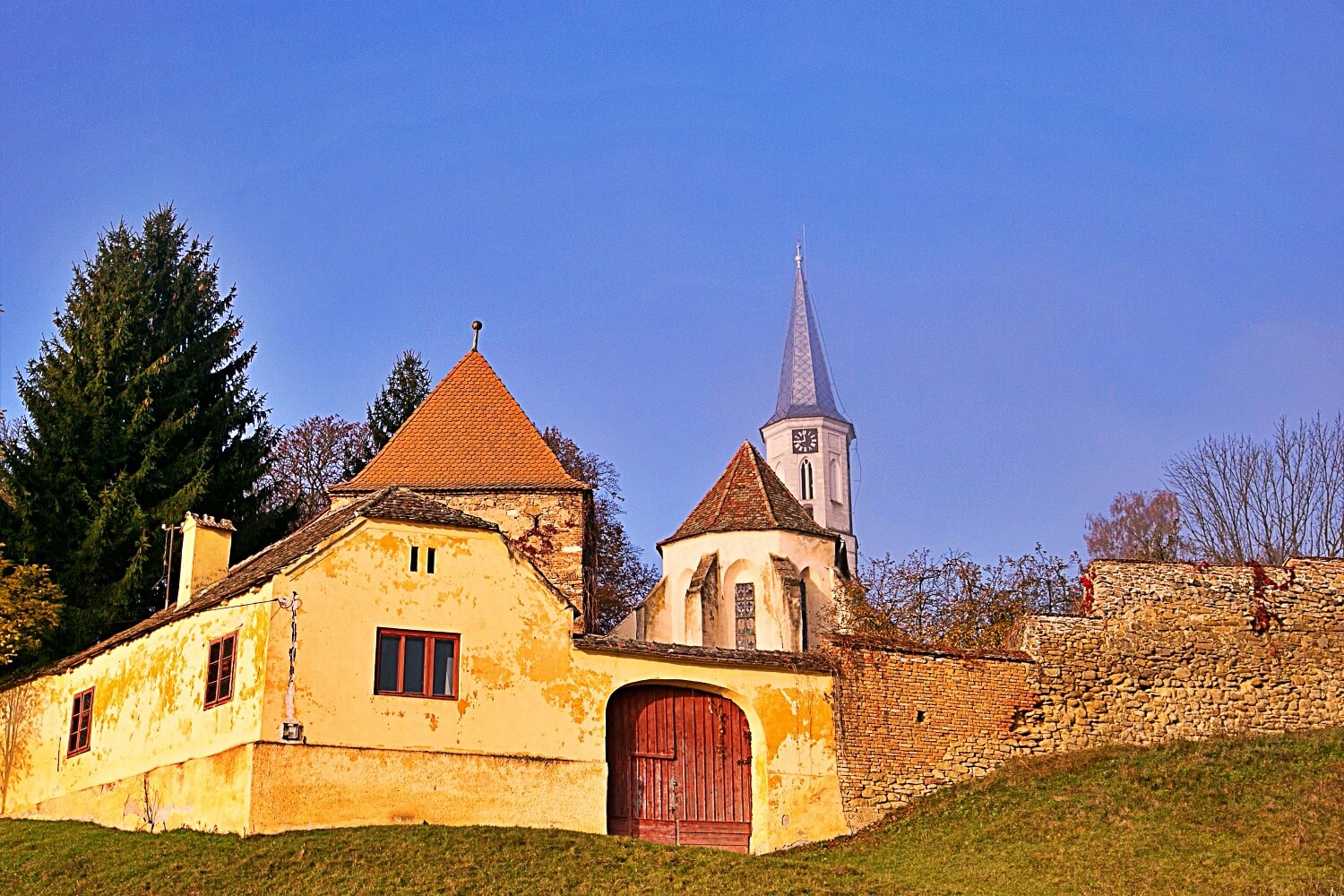
The fortified church from Alţâna
Altina
13.5km
fortress
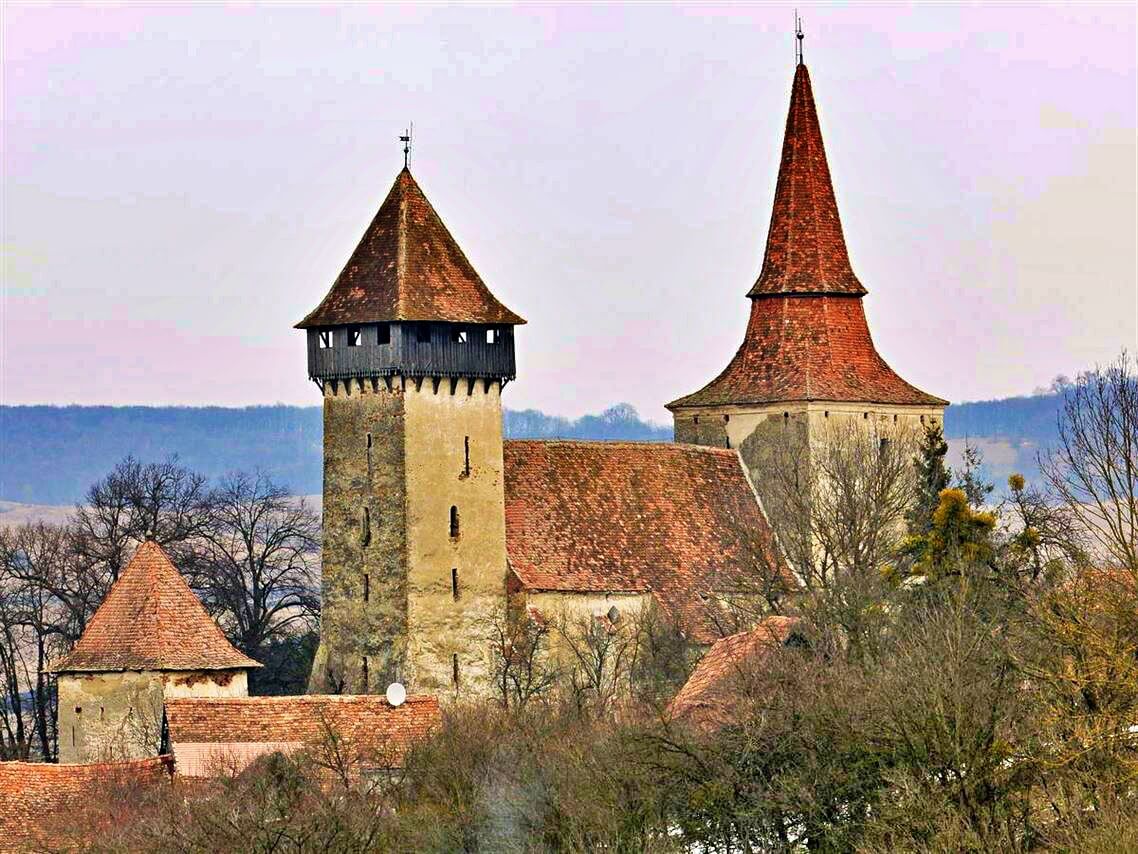
Movile fortified church
Iacobeni
14.1km
fortress