Daneş fortified church
Comuna Daneș Județul Mureș Romania
fortress
Biserica fortificată Daneș
Comuna Daneș Județul Mureș Romania
fortress
Dános erődtemplom
Comuna Daneș Județul Mureș Romania
fortress
The small tower-less late Gothic church in Daneş was built in 1506
Biserica fortificată din Daneș, inițial cu hramul Sfântul Dionisie (St
Középkori templomáról nem ismerünk adatokat, mivel azonban ezen a környéken már a 13
Previous names
Daneş fortified church, Biserica fortificată Daneș, Dános erődtemplom
Description
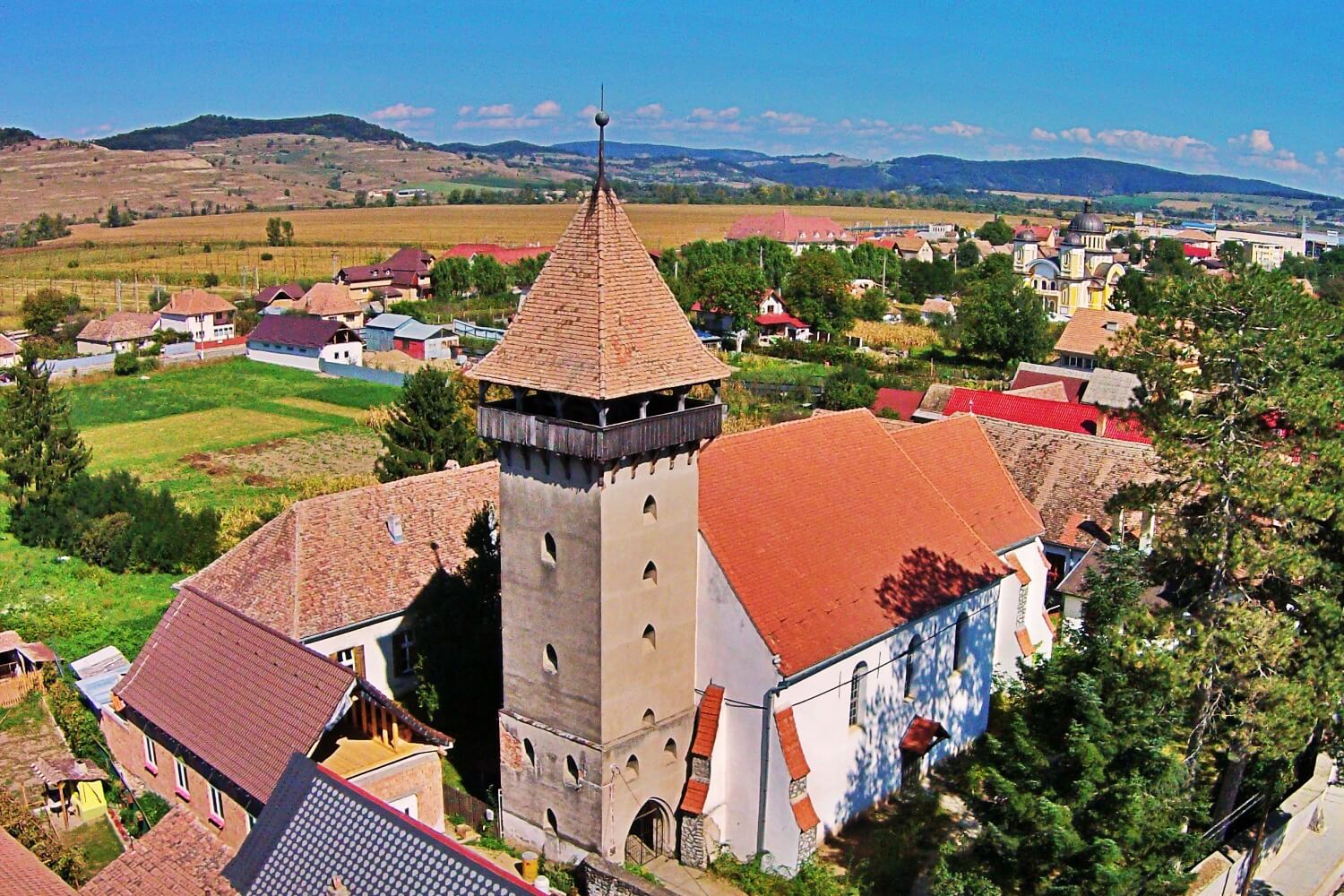
The small tower-less late Gothic church in Daneş was built in 1506. The tower was much later erected in 1927, as well as its defence levels, probably as a sign of self-assertion towards the 1918 new Romanian state and as a symbol for the 800 years of Saxon history in Transylvania. From the original defence wall only a few remains on the south side and a gate tower with a small watchtower are still preserved. The inner furniture dates back to different time periods: the baptismal font and the pulpit are Baroque, the altar is from 1878 and the organ from 1920. The vault covering the church’s hall was built in 1868.
Place and surroundings
The village of Daneş, located few miles west from Sighişoara was documented for the first time mid-14th Century. The reports from the following years describe many difficulties and misery. Due to the great poverty of the place, between 1503 and 1507 a tax rebate was documented. Around 1507 the village burned down completely. Less than 50 years later, the unfortunate happening occurred again in 1555. At the beginning of the 17th Century the place got broke as result of civil wars and the number of the local farmers fell in just 15 years from 90 to 7. Because of the slow development of the village, tax exemption and other benefits were offered starting with 1656 to any colonist willing to settle here, but the success was only moderate. In 1658 the Ottoman troops attacked and destroyed the village once more. Only from 1665 colonists coming from Sighişoara were able to revive the place. Despite all the problems, the fortified church wrote its own history, as regular worship services are still regularly held today, as it has always been starting with the 16th Century.
https://kirchenburgen.org/
Biserica fortificată din Daneș, inițial cu hramul Sfântul Dionisie (St. Denis), este un ansamblu de monumente istorice aflat pe teritoriul satului Daneș, comuna Daneș.
Ansamblul este format din două monumente:
Biserica evanghelică fortificată (cod LMI MS-II-m-A-15649.01)
Fragment de incintă fortificată cu turn clopotniță (cod LMI MS-II-m-A-15649.02)
Localitatea
Daneș (în dialectul săsesc Dunesdref, în germană Dunesdorf, Dansdorf, în maghiară Dános) este satul de reședință al comunei cu același nume din județul Mureș, Transilvania, România.
Satul a fost atestat documentar în anul 1343 cu numele de Danus.
Biserica
Biserica, împreună cu tot satul Daneș (villa Sti. Dyonisii), a fost inițial posesiune a Abației Cluj-Mănăștur.[2] În anul 1532 comunitatea locală a aderat la Reforma Protestantă și a devenit parte a Scaunului Sighișoarei.
Mica biserică din Daneș a fost construită în 1506 în stil gotic târziu, fără turn. Acesta a fost construit în partea de vest a bisericii abia în 1927, inclusiv caturile sale de apărare.
Din zidul de incintă original se mai păstrează doar câteva rămășițe pe partea de sud și un mic turn de strajă.
Mobilarea interioară datează din perioade diferite: cristelnița și amvonul sunt baroce, altarul este din 1878, iar orga din 1920. Bolta care acoperă sala bisericii a fost construită în 1868.
Középkori templomáról nem ismerünk adatokat, mivel azonban ezen a környéken már a 13. században szász telepesek éltek, a falu és a templom keletkezése is alighanem erre az évszázadra tehető. A település 1348-ban a kolozsmonostori apátság birtoka volt. 1506-ban templom építése miatt a község adómentességet kapott. A korábbi templom helyén ekkor egy későgótikus csarnoktemplom épült fel, amelyből mára a sokszögű szentély, az oldalfalak és a támpillérek maradtak meg. A szentélyt hálós boltozat fedi, keleti részén egy hármasívű, kőcsipkés ablakkal.
A plébánia épülete 1794-ből való.
1855-ben a templomot átépítették, 1868-ban elkészült a hajó fölötti boltozat. 1927-ben a segesvári Franz Letz építész tervei alapján a templom nyugati falánál fa gyilokjáróval ellátott új harangtornyot emeltek.
A templomot a 16. század elejétől várfal veszi körbe, amit északnyugaton lebontottak. Délkeleten egy kisebb torony áll, ami egykor kapu és harangtorony volt.
http://muemlekem.hu/
Useful information
Free
Free
The Church can be visited on a demand
-
-
Nearby castles
Hetiur Fortified Church
Sighisoara
7.5km
fortress
Betlen Castle (Criș)
Comuna Daneș
8.8km
castle, chateau
Apafi castle
Orașul Dumbrăveni
9.2km
castle, chateau
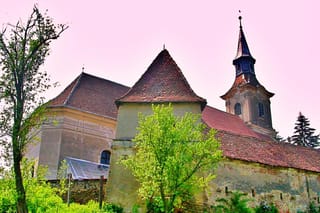
Șaeș fortified church
Comuna Apold
9.3km
fortress
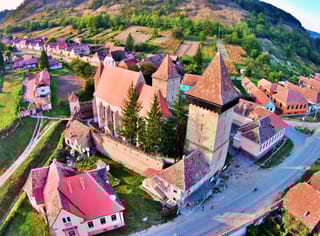
Valchid Evangelical fortified church
Comuna Hoghilag
10.7km
fortress
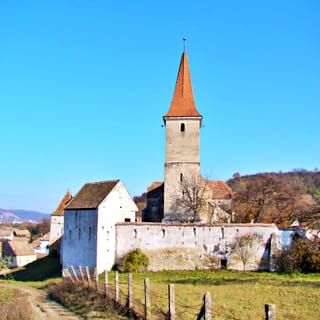
Şaroş pe Târnave Fortified Church
Orașul Dumbrăveni
11.9km
fortress
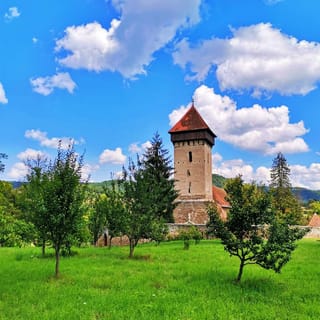
Malâncrav Evangelical fortified church
Comuna Laslea
13.1km
fortress