Castle Bolczów
Powiat karkonoski Dolnośląskie Poland
castle, chateau
Замок Больчув
Powiat karkonoski Dolnośląskie Poland
castle, chateau
Zamek Bolczów w Janowicach Wielkich
Powiat karkonoski Dolnośląskie Poland
castle, chateau
Замок Больчув
Powiat karkonoski Dolnośląskie Poland
castle, chateau
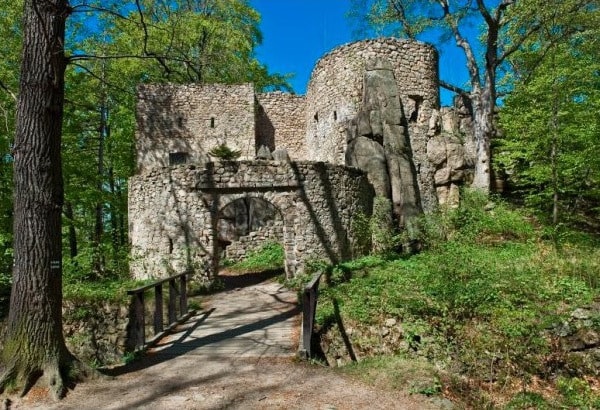
The mediaeval stronghold in Janowice Wielkie is an example of an upland castle extended over several phases and making excellent use of the terrain, including the scenic rock formations found in the Rudawy Janowickie mountains
У ті часи фортеця вважалася дуже сучасною, а зодчі настільки добре використали при будівництві особливості природного рельєфу місцевості, що це уміння захоплює і досі
Początki zamku Bolczów sięgają czasów księcia Bolcza, który wzniósł go na granitowej wysokiej skale przed 1375 rokiem
Замок расположен в горах Рудавы Яновицке, на скалистой возвышенности вблизи ручья Янувка
Previous names
Castle Bolczów, Замок Больчув, Zamek Bolczów w Janowicach Wielkich, Замок Больчув
Description
The mediaeval stronghold in Janowice Wielkie is an example of an upland castle extended over several phases and making excellent use of the terrain, including the scenic rock formations found in the Rudawy Janowickie mountains. The ruins of this knights’ castle are situated on a granite hill at an altitude of 561 m, rising over the surroundings.
It was known from the Middle Ages by the name of Bolko (in 1375 das Bolzenschlos, later Bolkoschlos and Bolzenstein). According to some researchers the castle was built in the second half of the 14th century by the knight Clericus von Boltz, courtier of the Świdnica-Jawor dukes. However, other sources give the castle as being constructed in the years 1163-1201 by Duke Bolesław I the Tall to defend the homes and mines in the neighbourhood.
Clericus Bolze became owner of the nearby village of Mniszków in 1370, buying it together with the mines from Heirich der Baier.
Some historians date the completion of the castle’s construction to probably before 1386, when nearby Falcon Stone castle (Sokolec) entered the possession of the knight Hannos Reinbaben. The lie of the land was made maximum use of here, as were the lone-standing rocks which were connected by stone wall, thereby creating a courtyard. A square tower was built on one of the rocks, and on the opposite side of the courtyard was a residential building connected to the chaplain’s house, the stairs to which were carved into the rock, while the women’s house was located next to the tower. A well was cut into the rock, and a bakery and kitchens were built on the south-eastern side of the courtyard.
Intended from then on as the family’s seat, the building – watching over the trade routes passing nearby – was destroyed in 1433 by Świdnica townsmen representing the interests of the Wrocław bishop; they arrived in arms, their purpose to put an end to the frequent banditry on the roads – because not only did the Bolczów owners sympathise with the Hussites, but they were also involved in “robber knight” activities, attacking merchants’ trains.
On 15 October 1512, the district governor of the Świdnica-Jawor duchy, Konrad von Hochberg, sold the villages of Mniszków, Miedzanka, Janowice and Bolzenstein together with all the mines and mining sites to Hals Diepold von Burghaus.
Following the ravages of war, it took until 1517-1518 for the castle to be rebuilt, probably by Hans Dippold von Burghaus. This was when the courtyard was established, and a defensive tower was raised at the southern corner while numerous embrasures were built into the walls. Natural rocks were used for the rebuilding, creating a monolithic building. It constituted one of the most powerful strategic points, and was particularly important to Silesia due to the stormy times related to frequent battles aimed at keeping the region with the Czech crown.
In 1537 Hans Dippold von Burghaus sold his properties in Mniszków, Miedzianka and Janowice, as well as the Bolczów castle, to the royal secretary Jost Ludwig Dietz. The latter issued a new mining law in 1539, comprising 113 articles – of which number 13 released the mines from taxation. Despite this, after just 4 years in 1543, he sold all his property to the brothers Hans and Franz Hellmann.
At this point the stronghold was strengthened further because of the Turks threatening Silesia. In the years 1520-1550 the castle was once again extended and modernised. A stone wall was raised in front of the gate tower, and a bastion and dry moat were built. The walls were also adapted for artillery weapons by building in inverted keyhole embrasures. The work continued until 1550, which was also probably when the moat was dug out on the side of the barbican and a bridge was built over it.
The castle’s next owners were the Schaffgotsch family, and Daniel von Schaffgotsch carried out a minor conversion of the castle in the years 1608-1609.
During the Thirty Years’ War the castle initially served as shelter for the local population, of various standing, but was soon reinforced and manned with imperial forces, and in 1641 yielded to the pressure of the Swedish forces. Four years later, on 5 December 1645, and presumably as a result of betrayal by one of the defenders, the castle was once again seized and set fire to by the Swedes – when the timber structure as well as the roof truss and covering also burned. Bolczów was never to recover its former splendour after this date. In a state of highly advanced but still beautiful ruins it became a tourist attraction for the region, and for example in 1824 was visited by the King Frederick William III of Prussia, together with his wife the Countess Auguste von Harrach and Empress Consort Alexandra of Russia, and a few years later by the Duke and future Emperor of Germany, William I. Count Wilhelm Stolberg-Wernigerode, who lived in Janowice, bought the castle in 1848 and set about protecting and partially reconstructing the crumbling walls, tidying up the grounds around it, and getting the filled-in well back into working order. Wooden stairs and banisters were built to improve the safety for visitors, and to enable usage of the viewing points overlooking the panorama of the Giant Mountains.
In the late 19th century a small hotel for tourists was built by the wall closing the upper castle’s courtyard; it was said to be housed in the large Knights’ Hall. This was just advertising, and descriptions of the time reveal that it was rather just a modest eatery. At the same time work was carried out on protecting the ruins. The castle hostel ceased to function after 1945, and devoid of any supervision the site began falling into ruin. Only in 1965 was work carried out to protect the site, unnecessary trees were removed, the tops of the walls were cleaned and a new bridge and gate were made.
The oldest section of the complex remains the upper castle, which occupies the area between two rock formations partially included in the defensive periphery. The north-western hill, known as the “Chaplain’s Hill”, used to have a stone residence measuring 7.8 by 20 metres, with cellars and two chambers on the ground floor; its walls have survived to this day. A four-sided defensive bastion was built on the opposite side, and a gate was built into the southern curtain leading to the irregular castle boroughs. In the central part of the courtyard was a water cistern carved out of the rock. The castle’s modern phase of development presents a well-maintained gate system with a tower, bastion and barbican leading to the bridge over the moat.
http://www.rudawyjanowickie.eu/
У ті часи фортеця вважалася дуже сучасною, а зодчі настільки добре використали при будівництві особливості природного рельєфу місцевості, що це уміння захоплює і досі. Вперше замок серйозно зруйнували під час битви городян Свидника і Гродного із гуситами. Фортецю відновили у 1517-1518 роках, тоді ж добудували у південній частині оборонну вежу. У подальші роки стіни замку адаптували для артилерійських перестрілок, укріпили мури, звели вежі та удосконалили рів. Але під час тридцятилітньої війни Больчув зазнав сильного руйнування – шведи спалили все, що могло горіти, після чого замок так ніколи й не відновився. З другої половини XVIII століття замок почали відвідувати туристи, серед них навіть був прусський король Фрідріх Вільгельм III, який навідався сюди у 1824 році.
Найстарішою частиною комплексу є верхній замок. Добре збереглися в’їздні ворота XVI століття з вежею, бастіоном і барбаканом, які ведуть до мосту над ровом. Наразі ці мальовничі руїни є чи не найулюбленішим місцем для екскурсійного відвідування у Нижній Сілезії. З 2008 року замок увійшов до Парку Культури Єлені-Ґури.
http://www.polscha.travel/
Początki zamku Bolczów sięgają czasów księcia Bolcza, który wzniósł go na granitowej wysokiej skale przed 1375 rokiem. Pierwotnie zamek zajmował północno-zachodnią część obecnych ruin. Od wschodu i zachodu tego założenia umocnieniem są wystające wysoko skały, które od południa i północy połączono murami. Na tak powstałym małym dziedzińcu mieściła się studnia-cysterna. Na wyższej skale od wschodu wzniesiono kwadratową wieżę, przy północnym murze stał budynek mieszkalny, z którego jednak pozostały zaledwie fundamenty. W południowym murze była brama wjazdowa.
W 1433 roku mieszczanie świdniccy zniszczyli zamek, podczas odbudowy powiększono założenie wykorzystując skały ciągnące się na południe od wcześniejszej budowli. Powstał wtedy drugi dziedziniec, a główna brama musiała zostać przesunięta do najbardziej na południe wysuniętej części zamku, gdzie wzniesiono w tym celu drugą wieżę przylegającą jedną stroną do skał.
W XVI wieku zamek był własnością Justusa Decjusza z Krakowa. Prawdopodobnie w dwudziestych latach XVI wieku wzniesiono przed wieżą bramną wzmacniający obronność barbakan przylegający do wieży i skały. Możliwe, że podczas tej rozbudowy wzniesiono na skale ponad barbakanem basteję, później przebudowaną.
Zamek stoi w ruinie od wojny trzydziestoletniej, kiedy to w 1645 roku został zniszczony. Zamek pierwotny próbowano jeszcze wykorzystywać w początkach XX wieku jako schronisko turystyczne, jednak obecnie jest nieczynne.
Замок расположен в горах Рудавы Яновицке, на скалистой возвышенности вблизи ручья Янувка. Возведение крепости во II половине XIV века относят к имени рыцаря Клерикуса фон Болц, придворного свидницко-яворских князей. В те времена крепость считалась очень современной, а ее строители настолько хорошо использовали особенности естественного рельефа местности, в которой возвели крепость, что ей восхищаются также и сегодня. Во время тридцатилетней войны замок испытал сильные разрушения и его прежнее великолепие никогда уже не было восстановлено. Со второй половины XVIII века замок начали посещать туристы, в том числе прусский король Фридрих Вильгельм III в 1824 году.
Самой старой частью комплекса является верхний замок. Хорошо сохранились въездные ворота XVI века с башней, бастеей и барбаканом, которые ведут
к мосту над рвом. В настоящее время живописные руины являются одной из наиболее популяр ных мест для экскурсий жителей НижнейтСилезии.
http://www.dolnyslask.info.pl
Nearby castles
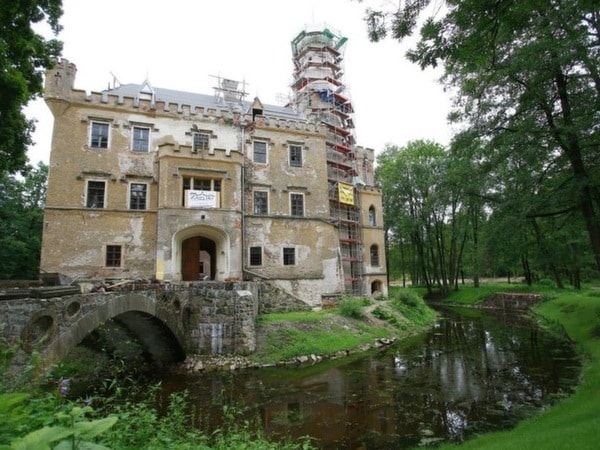
Castle Karpniki
Powiat karkonoski
4.4km
castle, chateau
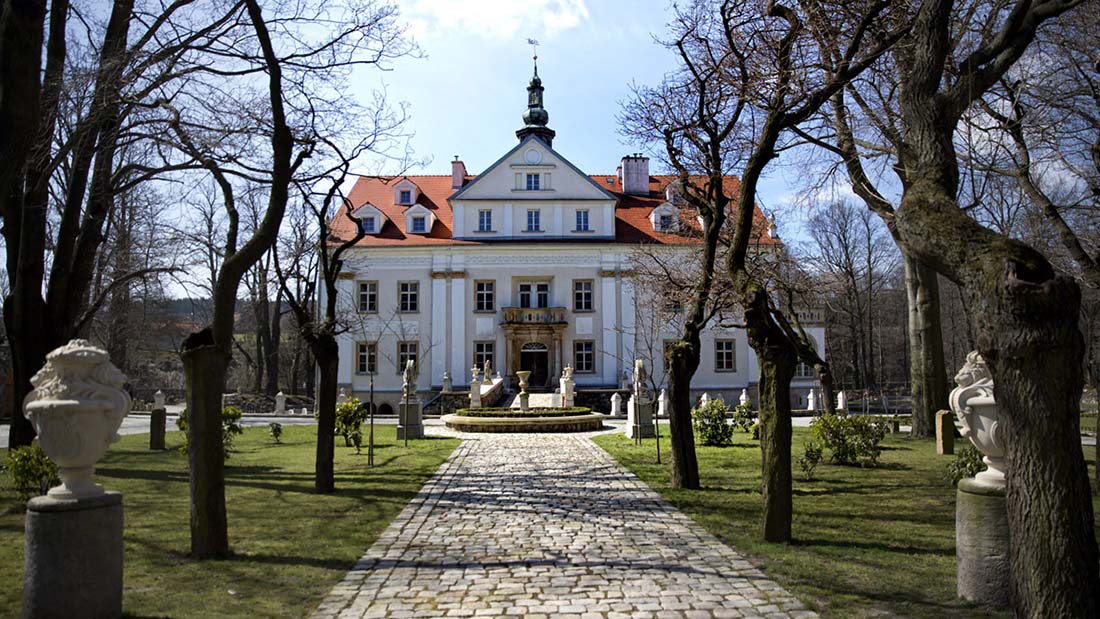
Castle in Ciechanowice
Powiat kamiennogórski
4.6km
castle, chateau
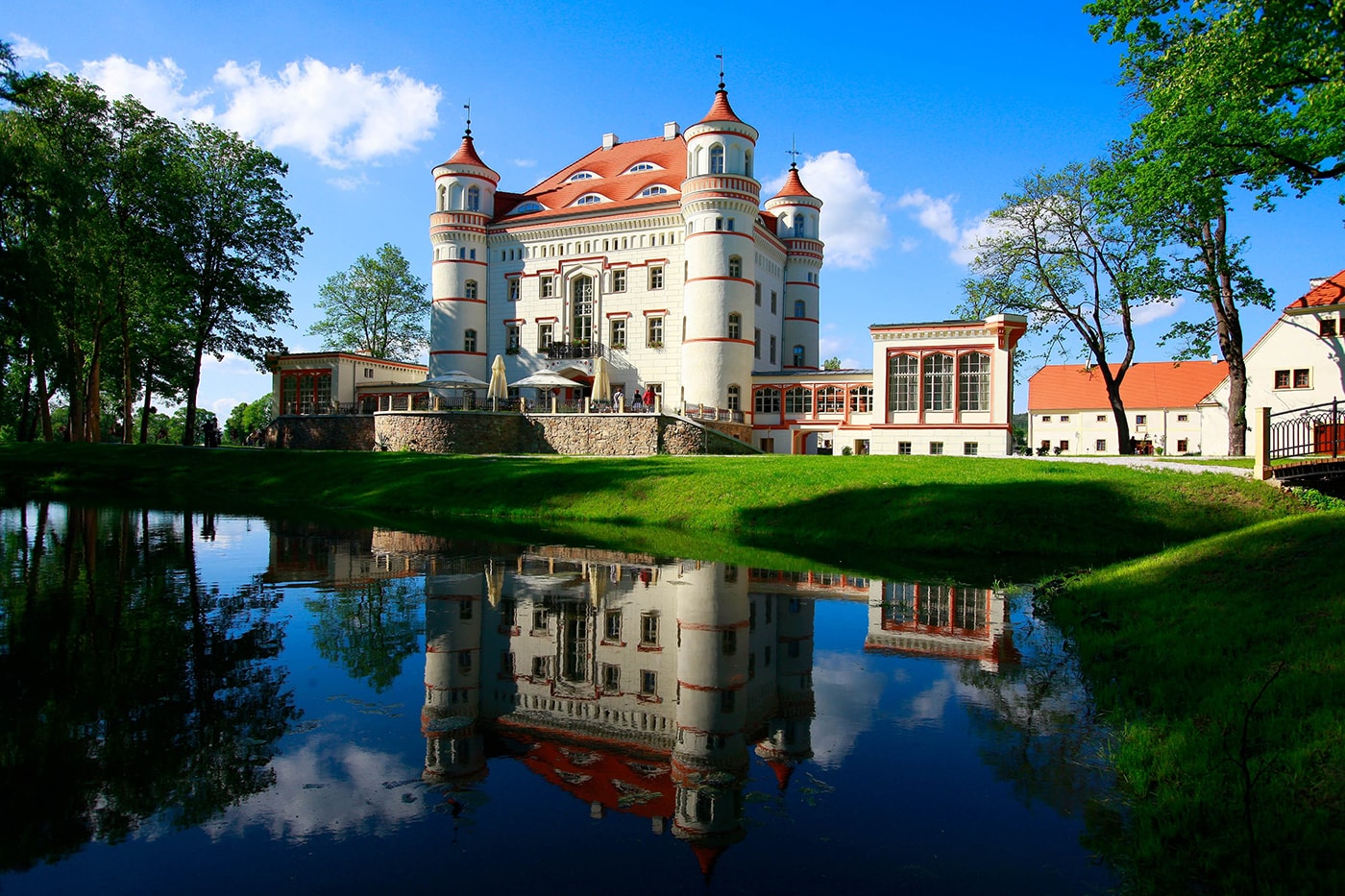
Palace in Wojanow
Powiat karkonoski
7.1km
manor, mansion
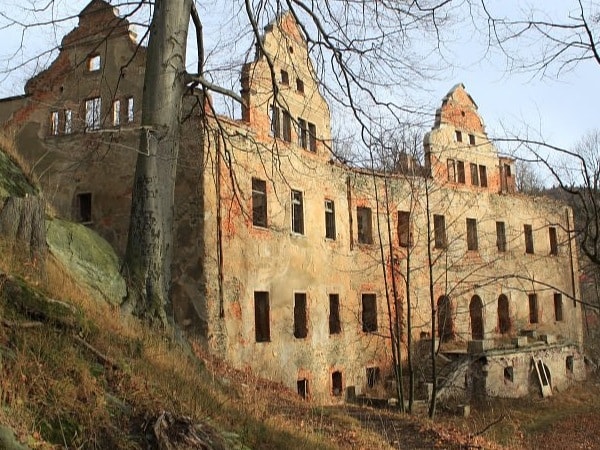
Castle Niesytno in Płonina
Powiat jaworski
8.0km
castle, chateau
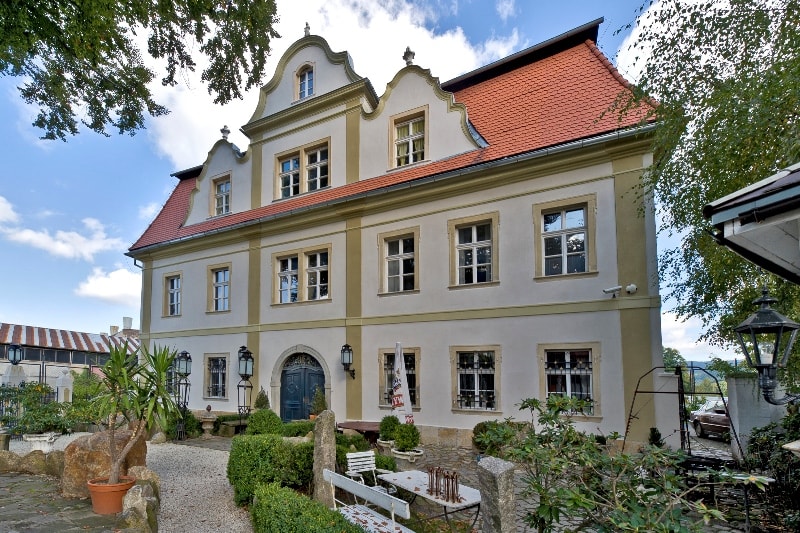
Palace in Kowary
Powiat karkonoski
9.0km
manor, mansion
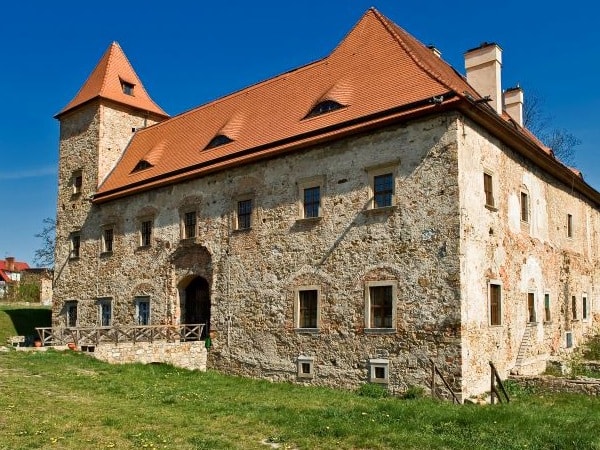
Mansion in Czarne
Jelenia Góra
11.8km
castle, chateau
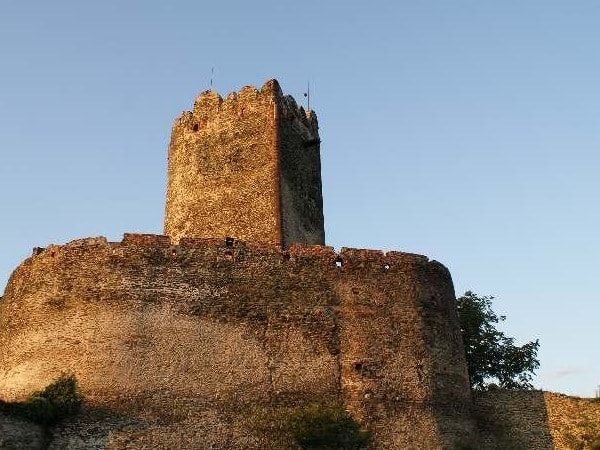
Castle in Bolkowie
Powiat jaworski
14.7km
castle, chateau