Mansion in Czarne
Jelenia Góra Dolnośląskie Poland
castle, chateau
Особняк в Чарне
Jelenia Góra Dolnośląskie Poland
castle, chateau
Dwór w Czarnem
Jelenia Góra Dolnośląskie Poland
castle, chateau
Усадьба Чарна в Зеленой Гуре
Jelenia Góra Dolnośląskie Poland
castle, chateau
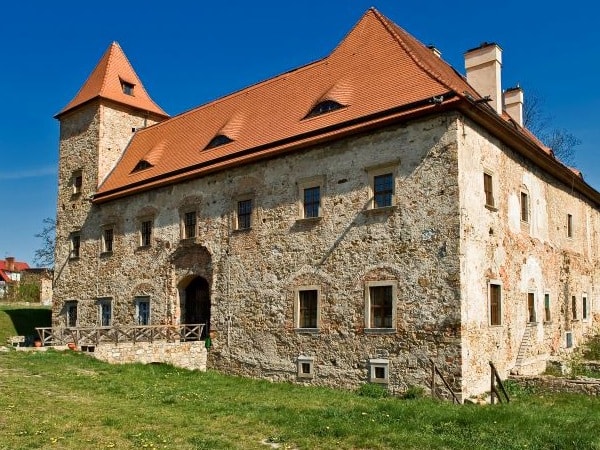
Residents of Black Manor, during the first 60 years of the XX century in the former state farms visited the street Strumykowa, recorded in their memory they could see the richly carved, sandstone portal, which adorned the central part of the facade of the mansion
Садиба Чорна в Зеленій Гурі - побудована в 1559 році в давньому приміському селі Чорне, включена до Зеленої Гури в 1973 році, розташована в долині струмка Піявніка
Dwór Czarne w Jeleniej Górze – wybudowany w 1559 r
Усадьба Чарна в Зеленой Гуре - построена в 1559 году в древнем пригородном селе Чарне, включена в Зеленую Гору в 1973 году, расположена в долине ручья Пиявника
Previous names
Mansion in Czarne, Особняк в Чарне, Dwór w Czarnem, Усадьба Чарна в Зеленой Гуре
Description
Residents of Black Manor, during the first 60 years of the XX century in the former state farms visited the street Strumykowa, recorded in their memory they could see the richly carved, sandstone portal, which adorned the central part of the facade of the mansion. It was the very high-class work of an anonymous artist-mason 450 years ago. In addition to an interesting, full of compositional harmonious tectonics, the portal passed on various pieces of information and important messages. This is a topic worthy of deeper analysis, which is waiting for art historians and experts from iconography and heraldry. And also for anyone who likes monuments, because they know that monuments can speak.
Here is a unique picture of the portal, probably taken in the mid-nineteenth century. The original is in the Karkonoskiego Museum. Extremely high quality photographs allowed complete reconstruction of the portal.
In the IX-X century there is an early medieval settlement
1301 - Village history speaks of a noble family - Talkenbergów, and later, families Zedlitz, Stoschen, Rechenberg, Reibnitz, Liebeteller, Hohberg Gotsche ("der von Gotschen", later Schaffgotsch).
dwór 1737a
Sketch from about 17th century by Heinrich Lan
1559 - Kasper II Schoff-Gotsche began construction of the mansion in the style of the early Renaissance, adapting an existing medieval castle defense here.
1623 – During the 30-year war, the manor breaks out in fire, burning a number of peasant buildings and a mill.
1656 - Ernest von Nimptsch (father) completes reconstruction and expansion of the manor.
1679 - Ernst von Nimptsch (son) sold the countryside together with the manor to the city of Hirschberg (Jelenia Góra)
1720-1729 – The manor, after another fire, is in decline; which results in the restoration of the pile of rubble.
1785 - Black Manor belongs to the holdings of the King of Prussia
1801 - Fire destroys farm buildings
1809 - The property is still owned by the Royal holdings, and is leased by the City
1885-1907 - Modernization of the manor, the demolition of the eastern tract, the manor takes its present shape, the interior loses its artistic merits: the eradication of Renaissance paintings, ceramic stoves, and parts of the coverings on the ceiling beams.
1927-1945 - The last tenant of the property is a German engineer. Ludwig Rahm. His family leaves Black Manor in October 1946 (going to Hanover, Germany)
1945-1948 - The property manager is Stanisław Firkowski. who carries out maintenance work outside. After the establishment of the state-owned farm, he goes to Gliwice (?)
Under the ownership of the company "Wojanów" the historic mansion fell into disrepair and in the late 70's it is left deserted and devastated, the owner calls for demolition, which is opposed by the county conservator.
02/06/1981 – A group of members of the Polish Ecological Club visits the manor ruins, it is the beginning of the campaign to save this monument.
From spring 1983 until 1987, renovation continues and security is set in place, archaeological excavations and research on the history of the Manor; financing acquired to form a resort.
In March 1988, the idea was created for a resort here and implementation of environmental practices, which on 11/18/1988 was materialized in the form of the company "Centre for Ecological Culture (ECO)".
01/08/1990 - The Foundation for Ecological Culture (FKE) was formed as a continuation of something that was started 19 years earlier as a civic campaign to save and revitalize the Manor.
09/1992 - FKE, the creator of the idea of the International Centre for Ecological Culture "Manor Black" enters into an agreement with the city of Jelenia Góra and takes on the role of investor to target restoration of the monument.
11/11/2007 - FKE receives honorable mention in the pro bono work competition for the best society in the category "Environment and Regional Development."
04/18/2008 – The Foundation for Ecological Culture receives ownership of Black Manor and the countryside via a notarial act of donation.
05/26/2010 - The International Society for Ecological Culture "Black Manor" was formed and was designed to support the FKE mission.
The restoration of the mansion is part of a comprehensive investment program by the International Centre for Ecological Culture "Black Manor." This will not only be about the historic mansion, but also the land and buildings of the former agricultural property homestead. This comprehensive project with a unique character fits into the vision of the harmonious development of the Jelenia Góra Basin as well as priority targets of the Polish-Czech-German border communities.
http://www.thegenealogyassistant.com/
Садиба Чорна в Зеленій Гурі - побудована в 1559 році в давньому приміському селі Чорне, включена до Зеленої Гури в 1973 році, розташована в долині струмка Піявніка.
Каспар Шот в 1559 році розпочав будівництво мурованого, кам'яного особняка, з внутрішнім двором, оточеного стінами і брамною вежею, що виступає перед периферійними стінами. Вся садиба була оточена наводненим ровом. У 1606 році власником був Фрідріх фон Німпч з Соколовця. У липні 1623 року в особняку спалахнув пожар. Відомо, що в 1656 році Ернст фон Німпч завершив будівництво і розбудову двору, який отримав форму, близьку до нинішньої.
В 1679 році Ернст фон Німпч продав маєток місту Зелена Гура. У 1718 році згоріли деякі частини замку, які завдяки Шольцу були відновлені. Тоді вежа отримала бароковий шолом, а паралельно до східного крила було добудовано будівлю тієї ж висоти. 1885 року відбулася реконструкція і модернізація двору, а саме - скорочено блок східного крила і знесено верхні частини стіни, а дахи отримали сьогоднішній двосхилий вигляд. До XX століття власниками були Веіднер і Маж. З 1921 по 1945 роки тут мешкала сім'я Рахм. Нині особняк використовується Фондом екологічної культури.
Об'єкт заснований на квадратному плані з внутрішнім двором, доступним через міст, ворота і декоративний ренесансовий вхід. Споруду була оточена глибоким ровом, наповненим водою. На осі кам'яного моста знаходилася брамна вежа. Архітектурний дизайн доповнюють профільовані віконні рами з піщаника. На стінах залишилися фрагментів картин епохи Відродження.
Dwór Czarne w Jeleniej Górze – wybudowany w 1559 r. w dawnej wsi podmiejskiej Czarne, włączonej do Jeleniej Góry w 1973 r., położony w dolinie potoku Pijawnika.
Caspar Schoff w 1559 r. rozpoczął budowę murowanego dworu, kamiennego, piętrowego z dziedzińcem, otoczonego murami obronnymi i wieżą bramną, wysuniętą przed lico murów obwodowych. Całość została otoczona nawodnioną fosą. Po Schaffgotschach dwór przejął w 1584 r. Gregorius von Kahlen. W 1606 r. właścicielem Czarnego został Friedrich von Nimptsch z Sokołowca. W lipcu 1623 r. we dworze wybuchł pożar. Z 1656 r. pochodzi wiadomość, że Ernst von Nimptsch ukończył budowę i rozbudowę dworu, który uzyskał kształt zbliżony do obecnego.
Prace remontowe prowadzone w latach 20. XVIII w. spowodowały likwidację renesansowych szczytów. W 1679 r. Ernst von Nimptsch sprzedał majątek Czarne miastu Jelenia Góra. W 1718 r. spłonęły bliżej nieopisane części zamku, które zdaniem Scholzego zostały odbudowane. Wtedy wieża otrzymała barokowy hełm znany z ryciny, a do skrzydła wschodniego dobudowano równoległy budynek o tej samej wysokości. Około 1885 r. nastąpiła przebudowa i modernizacja dworu; zredukowano bryłę o skrzydło wschodnie i rozebrano ściany szczytowe, a dachy otrzymały dzisiejszy wygląd dwuspadowy. Do przełomu wieku dzierżawcami majątku byli panowie Weidner i Marz. Od 1921 do 1945 r. mieszkała tu rodzina Rahm. Obecnie w dwór użytkowany jest przez Fundację Kultury Ekologicznej.
Obiekt jest założony na czworokątnym rzucie z wewnętrznym dziedzińcem dostępnym przez most, bramę i ozdobny renesansowy portal. Założenie obiegała głęboka fosa wypełniona wodą. Na osi kamiennego mostu, znajdowała się wieża bramną. Obiekt 4-skrzydłowy z wewnętrznym dziedzińcem. W jednym z narożników zachowała się wieża z kluczowymi otworami strzelniczymi. Wystrój architektoniczny dopełniają w fasadzie obramienia okienne profilowane w piaskowcu. Z wystroju wnętrza zachowały się sklepienia na parterze oraz bogato profilowane stropy drewniane. Na ścianach pozostały fragmenty renesansowych malowideł.
Усадьба Чарна в Зеленой Гуре - построена в 1559 году в древнем пригородном селе Чарне, включена в Зеленую Гору в 1973 году, расположена в долине ручья Пиявника.
Каспар Шот в 1559 году начал строительство каменного особняка, с внутренним двором, окруженного стенами и башней, что выступает перед периферийными стенами. Вся усадьба была окружена каналом. В 1606 году владельцем был Фридрих фон Нимпч с Соколовца. В июле 1623 в особняке вспыхнул пожар. Известно, что в 1656 году Эрнст фон Нимпч завершил строительство и развитие двора, который получил форму, близкую к нынешней.
В 1679 году Эрнст фон Нимпч продал имение городу Зелена Гура. В 1718 году сгорели некоторые части замка, которые благодаря Шольцу были восстановлены. Тогда башня получила барочный шлем, а параллельно к восточному крылу было достроено здание той же высоты. В 1885 году состоялась реконструкция и модернизация двора, а именно - сокращенно блок восточного крыла и снесено верхние части стены, а крыши получили сегодняшний двускатный вид. До XX века владельцами были Веиднер и Маж. С 1921 по 1945 годы здесь жила семья Рахма. Сейчас особняк используется Фондом экологической культуры.
Объект основан на квадратном плане с внутренним двором, доступным через мост, ворота и декоративный ренесансный вход. Здание было окружено глубоким рвом, наполненным водой. На оси каменного моста находилась башня. Архитектурный дизайн дополняют профилированные оконные рамы из песчаника. На стенах остались фрагменты картин эпохи Возрождения.
Nearby castles
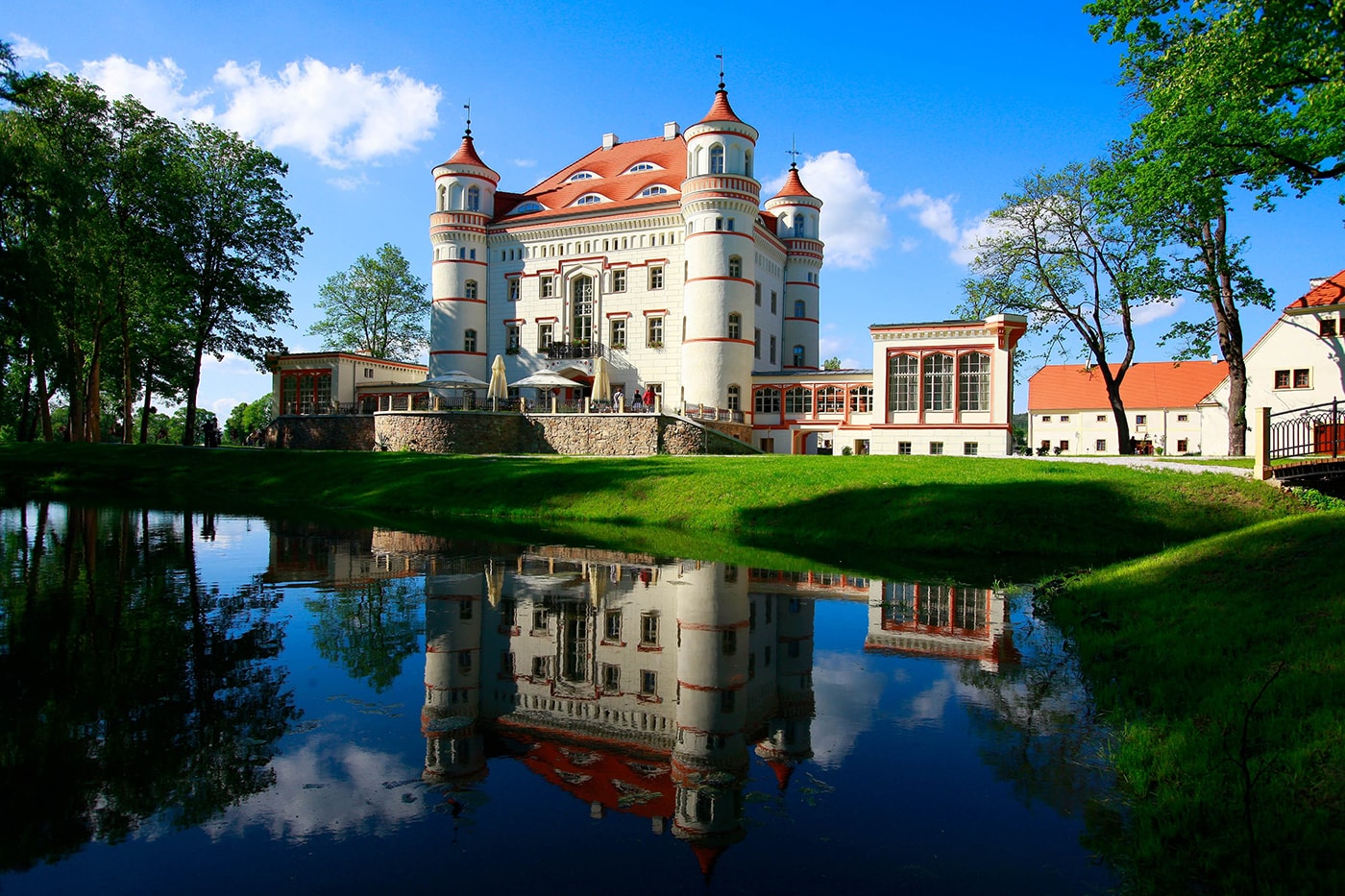
Palace in Wojanow
Powiat karkonoski
4.7km
manor, mansion
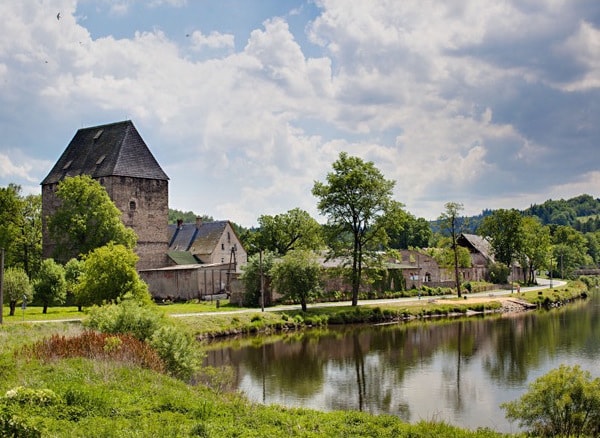
Tower knights in Siedlęcin
Powiat karkonoski
7.5km
castle, chateau
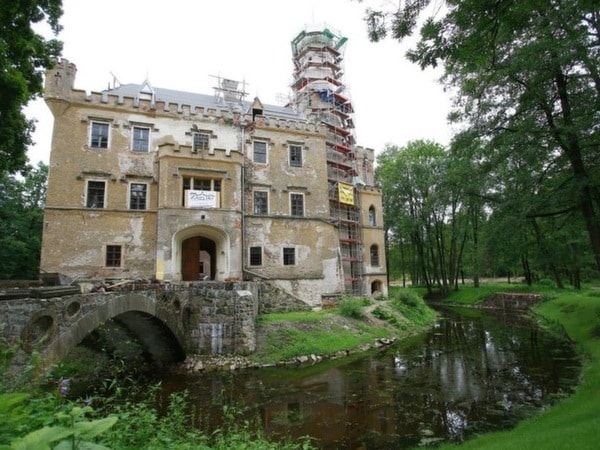
Castle Karpniki
Powiat karkonoski
8.2km
castle, chateau
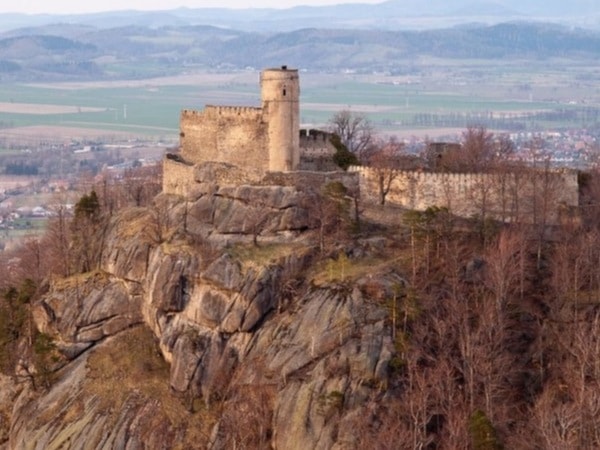
Castle in Sobieszow
Jelenia Góra
8.9km
castle, chateau
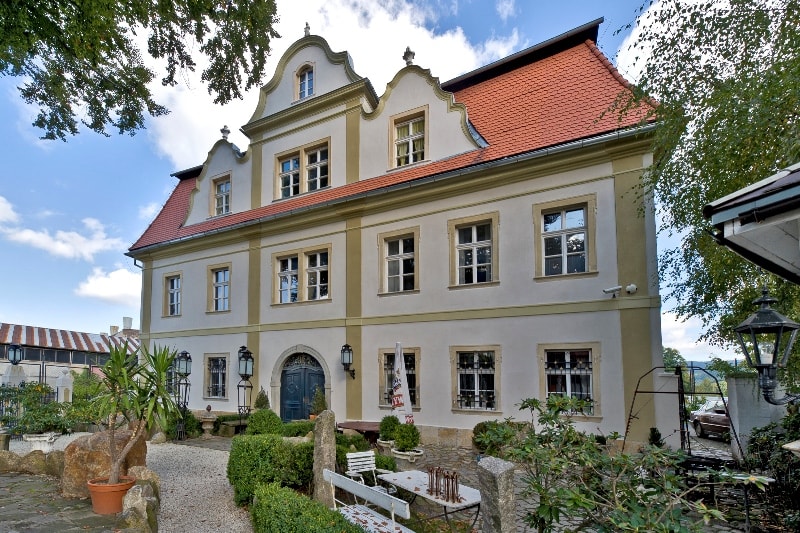
Palace in Kowary
Powiat karkonoski
10.8km
manor, mansion
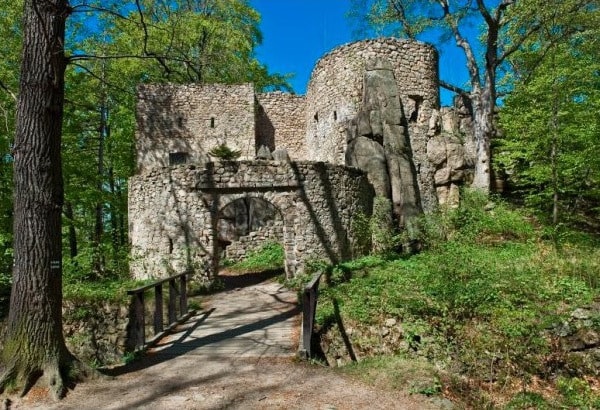
Castle Bolczów
Powiat karkonoski
11.8km
castle, chateau
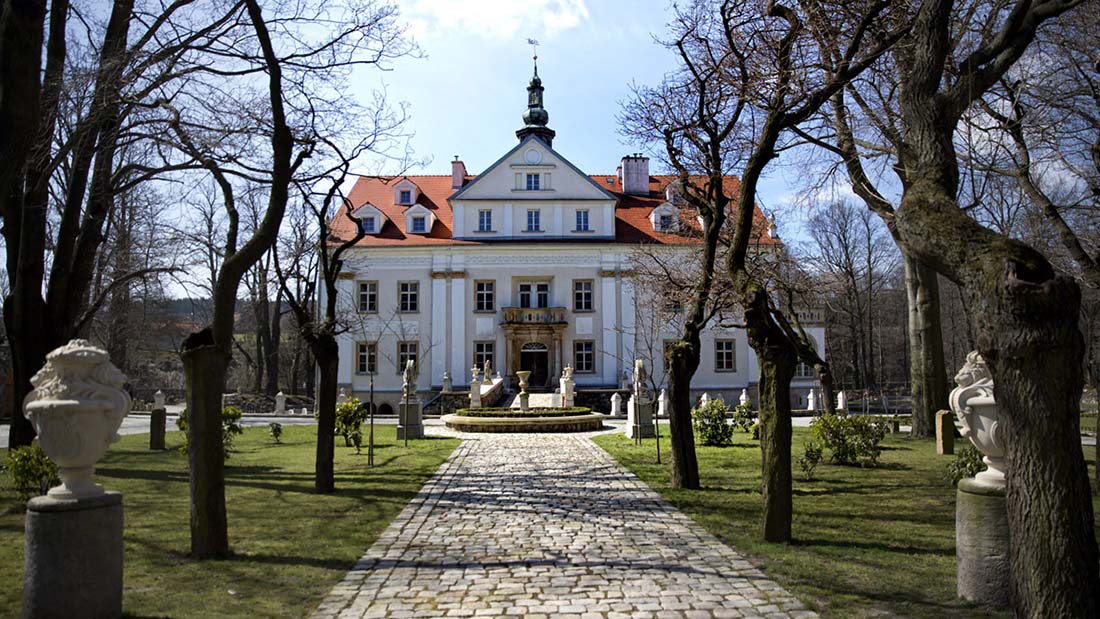
Castle in Ciechanowice
Powiat kamiennogórski
16.2km
castle, chateau