Château de Canon
Calvados Normandie France
castle, chateau
Château de Canon
Calvados Normandie France
castle, chateau
Old History
It is obviously very difficult to retrace several centuries of history in a few mere lines; for this reason a more complete work is available at reception
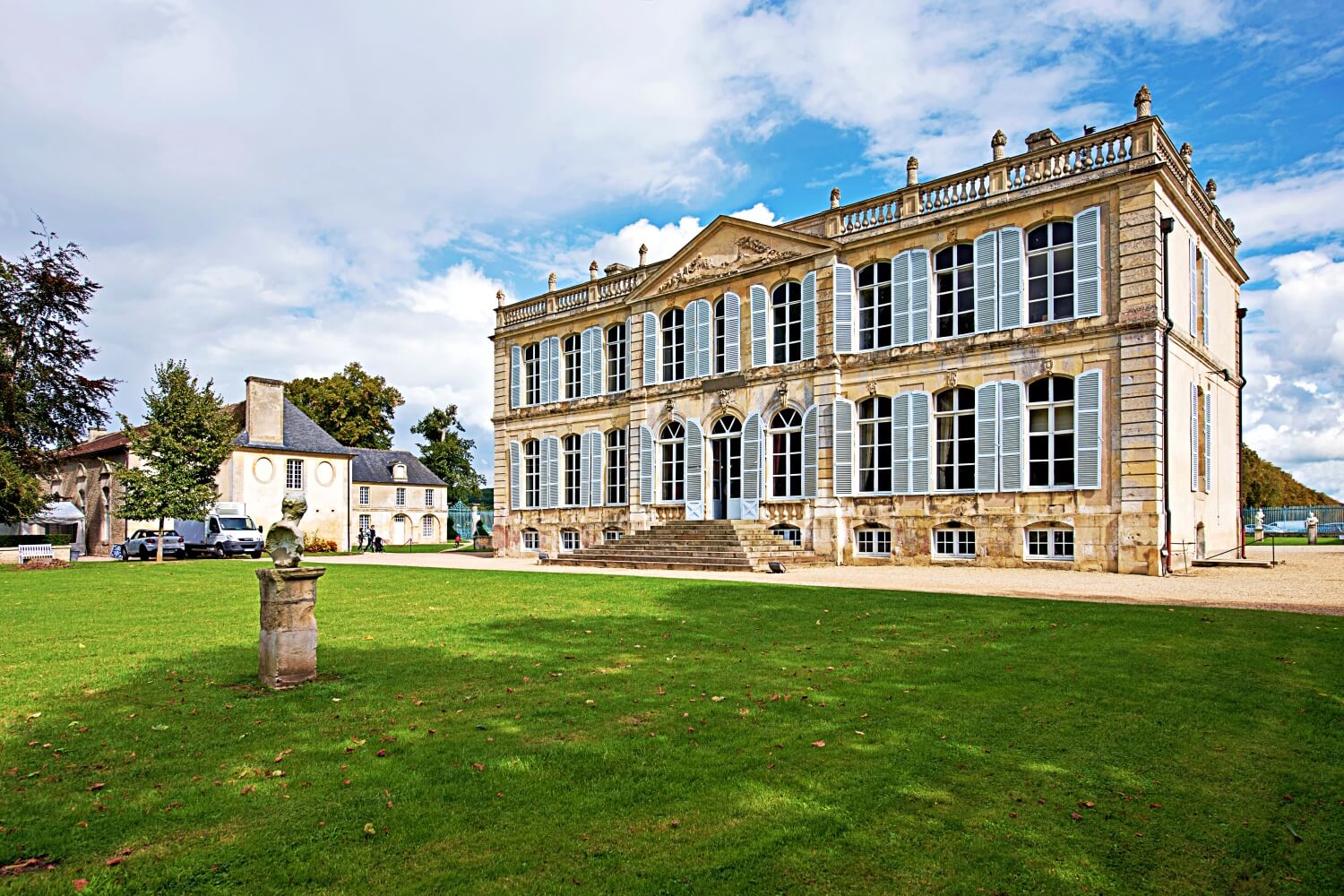
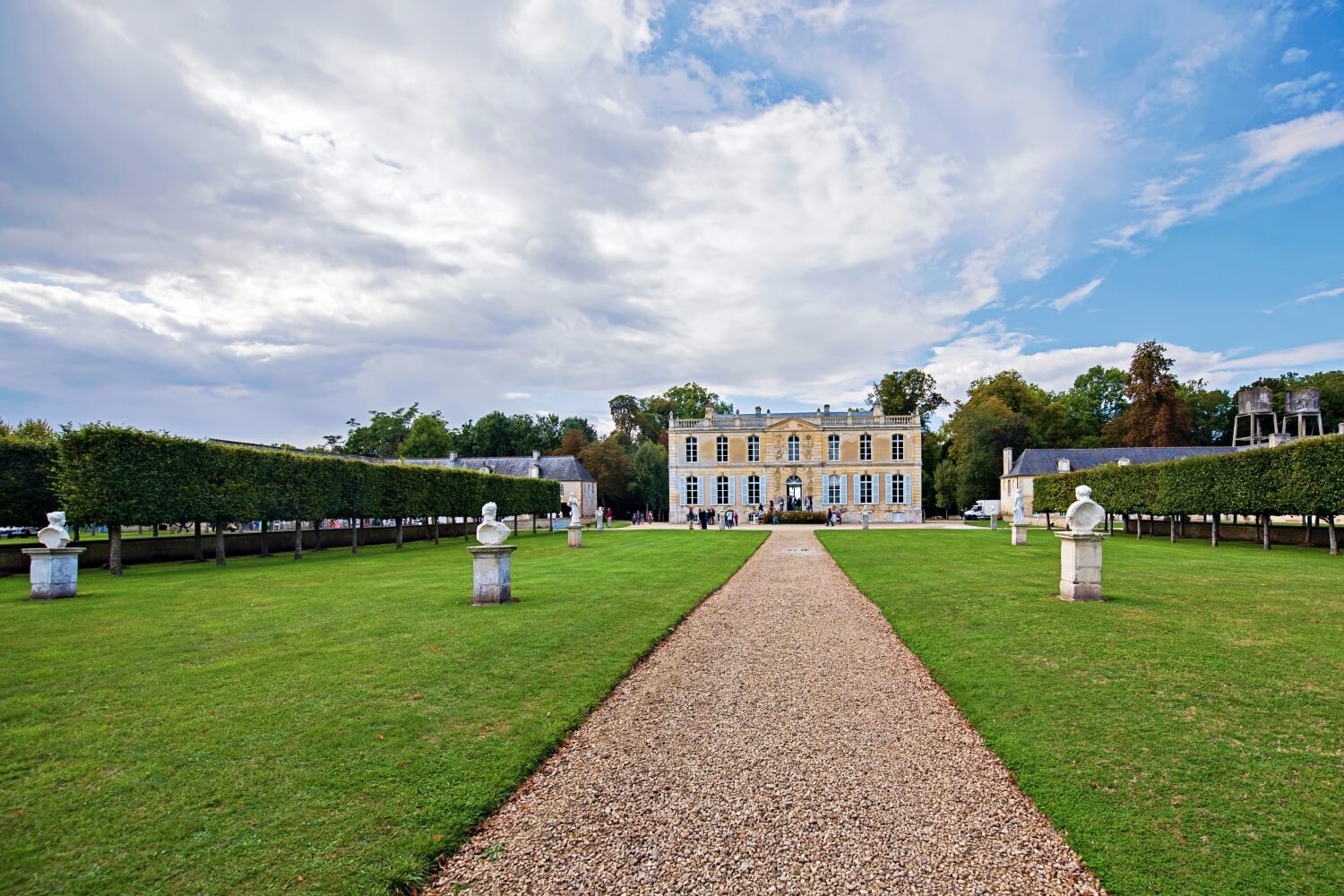
Le château de Canon est un château situé dans la commune de Mézidon-Canon, dans le département français du Calvados, en Normandie
Previous names
Château de Canon, Château de Canon
Description
Old History
It is obviously very difficult to retrace several centuries of history in a few mere lines; for this reason a more complete work is available at reception.
The seigneury of Canon, owned by Eudes de CANON in the Middle Ages, subsequently passed, through marriage and inheritance, notably into the hands of the families FRANQUEVILLE (15th Century), SARCILLY (16th Century), LE SUEUR, then in 1689 to THOMAS de BERENGER, the remains of whose castle are still visible in the grounds.
18th Century
His son, Robert de BERENGER, a protestant, fled the regime and became a refugee in England, selling Canon at a giveaway price in 1727 to a certain honourable Mr de LA ROCQUE, a wealthy tax collector (Receveur des Tailles) from Valognes, who proceeded with the construction of a new residence (a single storey castle with attic space), dug the lake and began planting avenues.
Jean-Baptiste ELIE de BEAUMONT married Anne Louise MORIN du MESNIL, sole heiress of the BERENGER family in 1760 and interested himself, in his quality as a lawyer, in the questionable conditions surrounding the sale of CANON in 1727.
After very lengthy legal proceedings, in which his friend Voltaire took a close interest ("I believed you to be in full possession of Canon but I perceive, if I may play on the word, that you will need the fortitude of cannons to return home… It must be inhabited by eloquence and by wit, after having played host to finance, that it be purified…" 16 January 1768), he won his case before the Conseil des Dépèches (a national administrative court) in 1768 and plunged straightway into a colossal building programme which was to ruin him.
After having reimbursed LA ROCQUE for his expenditure, J.B ELIE de BEAUMONT raised the roof, building a first floor topped with Italian-style balusters and embellished with sculptured vases, screening a slate roof.
The precious archives conserved in the Canon "charterhouse" contain all the details of the works undertaken between 1768 and 1786, notably in the numerous letters that the lawyer addressed to his steward Eutrope SERAIN from Paris, where his court work required his continuous presence.
So it was SERAIN who completed the transformations to the castle, the edification of the various outhouses and ornaments and the creation of the park, under precise instructions from the lawyer, who sent high quality craftsmen (the sculptors Prévost and Stouff, Dropsy, the king's marble mason etc.)
A team of over 30 workmen worked on site every day for more than ten years, using blond limestone from Quilly (near Bretteville-sur-Laize) and beach sand to give a "rustic" effect to the façades.
J.B. ELIE de BEAUMONT himself ordered countless trees of various different species from the Harcourt nurseries that were to adorn the park; he always sought contrasting colours for all seasons (elms, lime trees, chestnut trees, hornbeam, oriental sycamore, beech, yew, boxwood, etc…); furthermore, he paid close attention to "natural sounds" (the waterfalls), and to perspective (preferring canals and rivers to walls for the enclosure of sections).
He also attached considerable importance to his "orchard groves", the "Chartreuses", the thirteen walled gardens joined by a series of rounded arch openings, which he designed himself. He wished to come here and rest, to forget his hectic activities and, according to his correspondence, spend a few days relaxing "without even opening a book".
Finally, Monsieur and Madame ELIE de BEAUMONT created the renowned "fête des Bonnes Gens" (the Good Folk fayre), a grand celebration of virtue, two days of festivities during which were crowned the Good Mother, the Good Old Man or Woman, the Good Head of the Family, and the "Rosière" (a young woman recognised for her virtue), all of whom were elected by universal suffrage by the inhabitants of Canon, Mézidon and Vieux-Fumé.
Many souvenirs of this festival, which brought together thousands of people each year, between the castle, the church and the abbey of Sainte-Barbe de Mézidon, have been conserved and may be found in the castle.
A large proportion of the commons, to the north, were used for this celebration, including a large theatre baptised the "Hall of the Rosières"; the sculpted motifs on the eastern façade of the castle also recall this event.
•••
In 1783, his dear wife and helpmeet, who had contributed so much to the creation and the running of his little kingdom, and who was also author of the famous "Lettres du Marquis de Rosel", died and left him desolate.
From then on, he hardly ever returned to Canon, and hastily finished the works that he was financing with growing difficulty.
Having written that "Canon is a cancer that is gnawing at me" (as it gnaws at his descendants even today!!…), he died, heavily indebted, in 1786, leaving a 13-year-old son, Arnaud, to whom the famous lawyer TARGET was to serve as tutor.
J.B. ELIE de BEAUMONT's regional popularity spared Canon from the havoc caused during the revolution.
19th century
Of his marriage in 1795 with Eléonore du PATY, (sister of the great sculptor whose work includes the beautiful statue of a seated Pomona situated at the end of the alignment of Chartreuses, and the statue in the Place des Vosges in Paris) were born two sons, of whom one, Léonce ELIE de BEAU MONT, rose to fame in the scientific world (permanent secretary of the French Academy) and, with DUFRESNOY, drew the first geological map of France (the Rue Elie de Beaumont in Caen, was named after the geologist, who also lived in Canon).
Consequently, the domain created, respected and maintained by the ELIE de BEAUMONT family was bequeathed, almost intact, to their descendants, despite revolutions, wars and other events.
20th century : Second World War
On the other hand, Canon suffered cruelly during the last war, during which a German hospital was set up within the castle itself in June 1944, alongside the troops of a Panzer tank division, effectively screened from Allied spotter aircraft by the foliage of the two-century-old trees.
Whereas the Beaux-Arts (national fine arts and architecture institution) perfectly rebuilt the farm to the north, which had been hit by an American bomb, under the system of compensation for war damage, a different fate was reserved for the other commons, which were, moreover, requisitioned in 1945 to house refugees working on the restoration of the railways in the region.
Deprived of compensation, as identification of the very severe degradation recorded (occupiers or refugees?) was lacking, the vast commons have remained badly damaged since that period, and gradual restoration is undertaken on a yearly basis.
20th century : Storms and Restoration
While the upkeep of the property constitutes a massive undertaking (the roof area covering more than a hectare in itself), the park was ravaged by a series of storms, notably the Great Storm of October 1987, two further storms in 1990 and 1992 and finally the devastating hurricane of 26th December 1999.
In the 1950s the major work Germaine de Mézerac and her daughter Antoinette devoted to the ‘Chartreuses’ in replanting with hundreds of varieties of perennials has left a spectacular result. In a similar way the park is gradually being restored to its original splendour.
http://www.chateaudecanon.com
Le château de Canon est un château situé dans la commune de Mézidon-Canon, dans le département français du Calvados, en Normandie. Le château fait l’objet d’un classement au titre des monuments historiques depuis le 11 juin 1941.
Histoire
La seigneurie de Canon, propriété d’Eudes de Canon au Moyen Âge, passe ensuite par le jeu d’alliances et de successions, notamment aux familles Franqueville, Sarcilly, Le Sueur puis à Thomas de Berenger en 1689. Son fils, Robert de Berenger, fuit le régime et part se réfugier en Angleterre en 1727, vendant Canon à vil prix à un sieur de La Roque, fortuné receveur des tailles de Valognes, qui construit alors une nouvelle demeure, creuse la pièce d’eau et commence à planter les avenues.
Jean-Baptiste de Beaumont épouse Anne-Louise du Mesnil en 1760, seule héritière de la famille de Berenger, et s’intéresse alors en qualité d’avocat aux conditions critiquables de la vente de Canon menée en 1727. Après dix ans de procédure, à laquelle s’intéresse de près son grand ami Voltaire, il gagne son procès et engage alors immédiatement d’immenses travaux qui le ruineront.
Le domaine créé et entretenu par la famille de Beaumont parvient presque intact à leurs descendants actuels malgré les révolutions, guerres et autres événements. Très apprécié dans la région, Jean-Baptiste de Beaumont évite au domaine de Canon les désordres de la Révolution. Léonce Élie de Beaumont, son petit-fils, fut célèbre et respecté en tant que premier créateur de la carte géologique de France, et donna même son nom à une montagne en Nouvelle-Zélande.
Le château de Canon a souffert gravement de la dernière guerre qui a vu s’installer, au sein même du château, un hôpital allemand en juin 1944, puis les troupes d’une division de chars Panzer que les frondaisons des arbres bicentenaires protégeaient efficacement du repérage des avions alliés. Si les Beaux-Arts ont reconstruit parfaitement, dans le cadre des dommages de guerre, la ferme du nord victime d’une bombe américaine, il n’en a pas été de même pour les autres dépendances qui furent réquisitionnés en 1945 pour y loger des réfugiés travaillant à la restauration des voies ferrées de la région.
Architecture
Le parc et les jardins sont de style franco-anglais, et château suit le modèle dit « à l'Italienne ». La grille d'entrée, achetée par Jean-Baptiste Élie de Beaumont en 1781 à l'architecte Nicolas Lenoir, provient de l'ancien château des Ternes à Paris.
Jardin
Les jardins du château sont classés jardins remarquables, notamment grâce aux treize jardins clos de murs, appelés chartreuses, qui servent d'écrin à des centaines de variétés de fleurs et sont ouverts à la visite.
L’association Vieilles maisons françaises leur décerne le premier prix de sauvegarde en 1985, et la fondation des parcs et jardins de France leur octroie un premier prix en 1987. Après la tempête de 1999, le château a reçu une aide de la fondation des parcs et jardins de France. En mai 2000, les jardins reçoivent le premier prix de la compagnie Art du jardin.
Useful information
Le parking GRATUIT
Adulte: 7 € (visite les jardins)
Enfant (de 6 à 18 ans): 3 € (visite les jardins)
Enfant (moins de 6 ans): gratuit (visite les jardins)
http://www.chateaudecanon.com/visiter-en-groupe/
canon.accueil@gmail.com
-
External links
Nearby castles
Château de Crèvecœur-en-Auge
Calvados
9.2km
castle, chateau
Château de Vendeuvre
Calvados
10.2km
castle, chateau
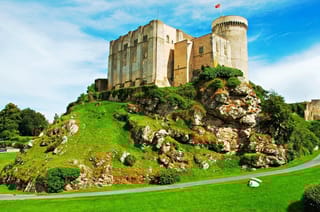
Château de Falaise
Calvados
22.1km
castle, chateau
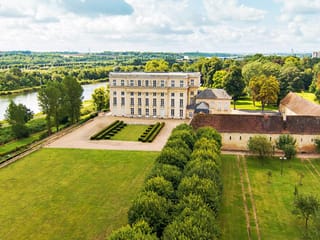
Château de Bénouville
Calvados
22.2km
castle, chateau
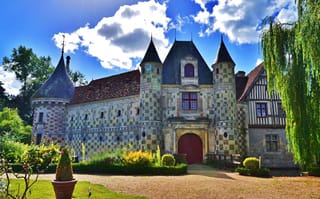
Château de Saint-Germain-de-Livet
Calvados
22.6km
castle, chateau
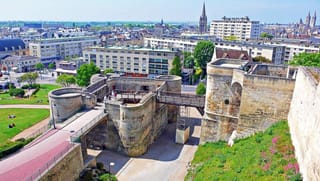
Château de Caen
Calvados
22.9km
castle, chateau