Schloss Kirchheim
Stuttgart Baden-Württemberg Germany
castle, chateau
Schloss Kirchheim
Stuttgart Baden-Württemberg Germany
castle, chateau
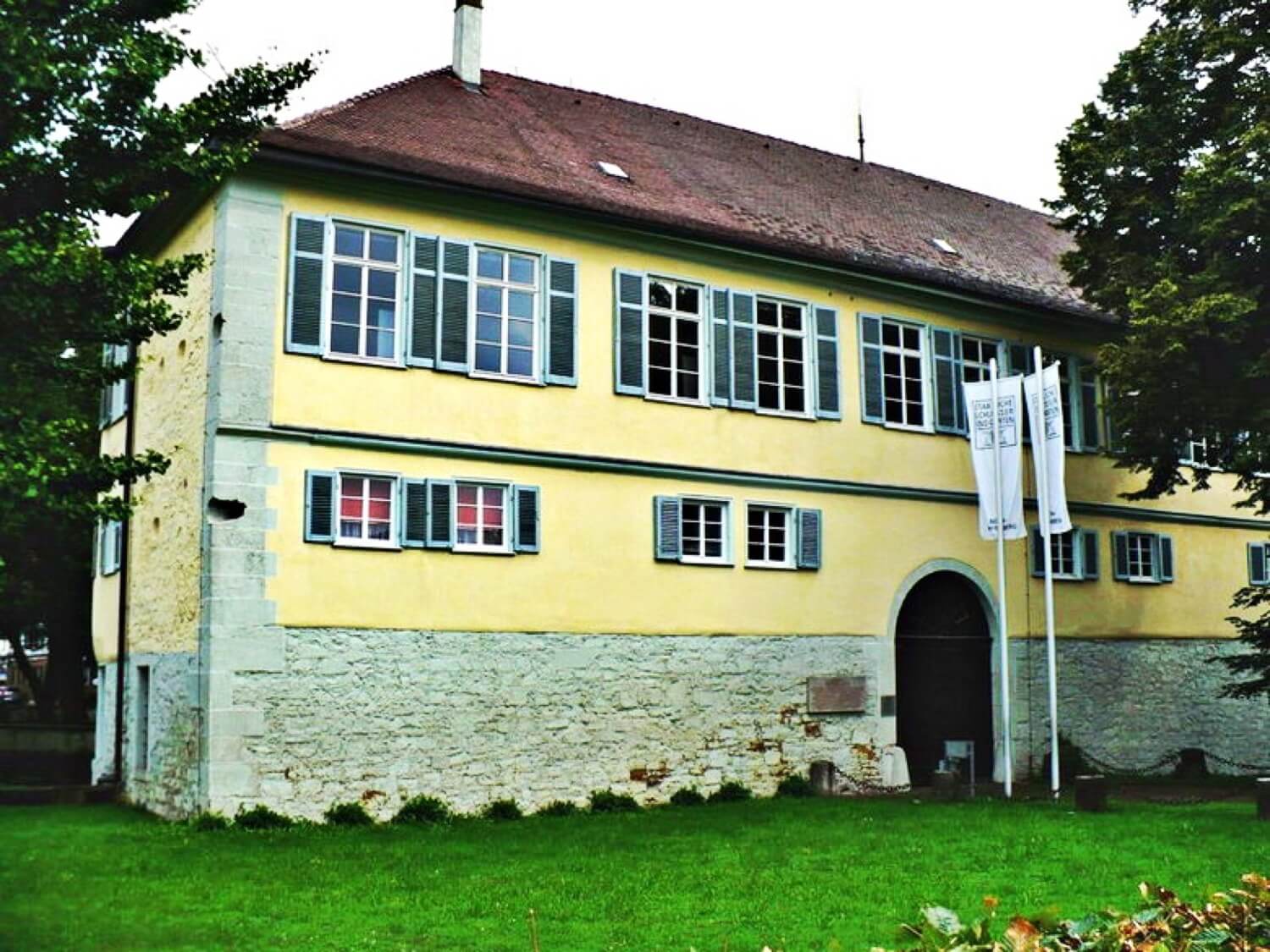
Schloss Kirchheim is a castle and palace in the old town of Kirchheim unter Teck, in the German state of Baden-Württemberg
Schloss Kirchheim liegt am Rande der Altstadt von Kirchheim unter Teck
Previous names
Schloss Kirchheim, Schloss Kirchheim
Description
Schloss Kirchheim is a castle and palace in the old town of Kirchheim unter Teck, in the German state of Baden-Württemberg. The palace was built in the 16th century by Ulrich, Duke of Württemberg as a castle and part of a greater system of defensive works. Over two centuries later, it became the dower house for the Duchy and later Kingdom of Württemberg. The palace's interior is currently arranged and furnished as it was during the residence of its final dowager, Henriette von Nassau-Weilburg.
History
On his return from exile,[citation needed] Duke Ulrich of Württemberg ordered the construction of seven fortresses across the Duchy of Württemberg in order to better protect its territory. Those fortresses were to be the castles of Hohentübingen, Hohenurach, Hohenneuffen, Hohenasperg and Hohentwiel, and the towns of Schorndorf and Kirchheim unter Teck.
Construction of Kirchheim's complex of fortifications began in 1538, and with resources assembled from across the Duchy. This complex was made up deep moats, robust bastions, ramparts, and, at its southwest corner, a castle. This castle was to be the most important part of the complex, acting as a last line of defense and commanding two gates. Ulrich's son and successor, Duke Christoph, completed construction on the complex with the addition of a 75 meters (246 ft) series of casemates called the Erdenberg. This formed a zwinger and base for wall-mounted artillery.
Palace
Over the 17th century, the castle's military importance, and even appearance, eroded. The Dukes of Württemberg began to use it as a jagdschloss, or as a dower house when required, and laid out gardens around it. Underscoring all this, in 1688, during the Nine Years' War, Dowager Duchess Maria Dorothea Sophia von Oettingen secured Kirchheim's protection from destruction by French troops from General Joseph de Montclar. Duke Eberhard Louis's wife, Johanna von Baden-Durlach, moved into Kirchheim Palace in 1735 rather than Leonberg Castle, and she made some modest revisions to the residence.
In the mid-18th century, Duke Charles Eugene in particular made use of Kirchheim Palace and Stuttgart's Schloss Solitude for his hunting trips. His visits to Kirchheim unter Teck were accompanied by retinues of over 400 people who found lodging and services with the town's people. In 1767, Charles Eugene converted the palace's plant nursery into an opera house. Four years later, in 1771, Charles Eugene led a 411-person retinue to Kirchheim for the autumn hunt. Among them was his Chamblerin, the Baron von Leutrum, and his young wife, Franziska von Hohenheim. Charles Eugene fell in love with Franziska over the trip and ended his relationship with his mistress, Catharina Bonafini. Charles Eugene made Franziska his new mistress months later, then later married the Duke in 1785. The two built Hohenheim Palace, which was deeded to Franziska by Charles Eugene in 1772, but when the Duke died in 1791, this was not respected. Charles Eugene's successor, his brother Louis Eugene, also did not recognize Franzisk's status as Dowager Duchess. As such, Franziska was divested of Hohenheim Palace and, in 1795, was exiled to Kirchheim Palace in 1795 without much of her inventory. Finding Kirchheim Palace not to her taste, Franziska tasked Charles Eugene's court architect, Reinhard Heinrich Ferdinand Fischer, with modernizing the palace while she furnished it with what she could bring from Solitude and Hohenheim Palaces. Franziska led a quiet, and at times monotonous, life at Kirchheim and died there on 1 January 1811.
In 1810, the reigning King Frederick I exiled his brother Louis and his family to Kirchheim for Louis's expensive lifestyle and outstanding debts. Louis, his wife Henriette von Nassau-Weilburg, and their five children moved into the palace in 1811 and were to live austerely. Louis's death in 1817 freed the family, and allowed Henriette to renovate the palace once again. Henriette also became very involved in the municipal community after Louis's death, establishing vocational schools and orphanages, and organizing outreach programs. After Henriette's own death in 1857, her furnishings were auctioned off, and all palatial residents except for the groundskeeper left.
In 1922, the municipal history museum moved into the palace's chapel. Under the Nazis, this was turned over to and used by the Nazi Party. After 1947, the palace housed a teacher's college and learning center.
Kirchheim Castle is one of the monuments and maintained by the heritage agency Staatliche Schlösser und Gärten Baden-Württemberg. The grand living spaces on the south side of the second floor are set up as a palace museum and are open to the public. They are dedicated to the last two residents, Franziska and Henriette. Most of Franziska's furniture has been preserved, and this allowed the state of the castle during Franziska's days to be restored when the castle was reconditioned in 1985 and 1997.
Grounds and architecture
Kirchheim Palace was remodeled frequently throughout its usage as a dower house by its residents. The first of these was for Franziska von Hohenheim who, in the 1790s, tasked Reinhard Heinrich Ferdinand Fischer with the expansion of the castle into a palace. Fischer added a garden and two new rooms on the casemates. The final remodeling was by Henriette von Nassau-Weilburg, and it is this arrangement and decor that presently exists at Kirchheim Palace.
The building has an irregular diamond shape with four wings, and a deep moat. The suite for the resident dowager was the apartment on the third floor of the south wing. Past the corner tower, where the dining room is found, is an enfilade of 13 rooms in two rows, separated by a servants' passage. The first of these rooms, just off the stairs and spanning the width of the building, is the summer dining hall. This room was very important to the social life of the resident dowagers. Henriette von Nassau-Weilburg converted the hall into an antechamber while its functions moved into the octagonal tower.
Under Franziska von Hohenheim, the dowager suite was made up of an enfilade of six rooms on its south side, and five rooms, hall, and a staircase on its north end. The southern portion was later expanded with two rooms, the Garden Rooms, built from wood which was then on top of a casemate. A watercolor painting made 14 years after Franziska's death show the walls as being covered by blue wallpaper with white curtains. Henriette von Nassau had the floors covered with vibrant carpets and new furniture, and covered the walls with new wallpaper and framed paintings. Henriette also had the Garden Room rebuilt in brick to make it habitable in the winter, and filled it with keepsakes.
Kirchheim Palace has had several gardens. The first was laid out when the castle became a hunting retreat, but was erased by the construction of a rail line in the 19th century. Franziska von Hohenheim arranged a new garden between the stable and palace, and built a greenhouse there in 1797, but Henriette von Nassau rearranged it into an English landscape garden. Henriette laid out another two gardens where the north-west moat had been and in front of the Garden Rooms.
Schloss Kirchheim liegt am Rande der Altstadt von Kirchheim unter Teck. Dieses Renaissance-Schloss ist eine gut erhaltene Landesfestung im Herzogtums Württemberg.
Geschichte
Herzog Ulrich von Württemberg ließ nach seiner Rückkehr aus dem Exil sieben Landesfestungen ausbauen, um sein Territorium besser nach außen schützen zu können. Im Rahmen dieser Maßnahmen wurde die Stadtbefestigung von Kirchheim/Teck festungsmäßig ausgebaut und das Schloss ab 1538 als Eckbastion der Stadtmauer errichtet. Der schlichte Zweckbau mit zwei Fachwerkstockwerken über einem massiven Sockel wurde 1556 unter Ulrichs Sohn und Nachfolger, Herzog Christoph, fertiggestellt. Zunächst diente das bescheidene Schloss den Landesherren zur Verteidigung und gelegentlich als Jagdquartier. Als 1594 in der Residenzstadt Stuttgart die Pest wütete, verlegte Herzog Friedrich I. den Hof hierher. Mit der abnehmenden Bedeutung als Landesfestung ging der Ausbau zu einem Wohnschloss einher.
Die rautenförmige unregelmäßige Vierflügelanlage ist von einem tiefen Graben umgeben, der heute allerdings trockengelegt ist. An einer Seite schließt sich noch die Stadtmauer an.
Heutige Nutzung
Nach dem Tod von Herzogin Henriette nutzte man das Kirchheimer Schloss für unterschiedliche Zwecke. 1870 und 1871 diente es als Lazarett für Verwundete des deutsch-französischen Krieges. 1876 bis 1908 hielt die junge katholische Kirchengemeinde in der Schlosskapelle ihre Gottesdienste ab. Von 1911 bis 1948 waren die städtische Frauenarbeitsschule, ein Kindergarten und Wohnungen untergebracht. 1947 wird das Schloss vom Land Baden-Württemberg dem 1923 gegründeten Staatlichen Hauswirtschaftlichen Seminar für Unterrichts- und Internatszwecke zugewiesen. 1971 tritt das Pädagogische Fachinstitut und Fachseminar die Rechtsnachfolge des Hauswirtschaftlichen Seminars an und nutzt das Schloss bis heute.
Schloss Kirchheim zählt zu den landeseigenen Monumenten und wird von der Einrichtung Staatliche Schlösser und Gärten Baden-Württemberg betreut. Die herrschaftlichen Wohnräume an der südlichen Außenseite der zweiten Etage sind als Schlossmuseum eingerichtet und für Besichtigungen geöffnet. Sie sind den letzten beiden Bewohnerinnen Franziska und Henriette gewidmet. Viele von Franziskas Möbeln sind erhalten, weshalb bei den Restaurierungen in den Jahren 1985 und 1997 der Zustand zu Zeiten Franziska von Hohenheims wiederhergestellt werden konnte.
Useful information
Gratis
info@alteschulegera.de
- Privateigentum, für Besucher geschlossen
- Besuche sind während Konzerten möglich
-
External links
Nearby castles
Burg Teck
Stuttgart
6.8km
castle, chateau
Hohenneuffen Castle
Stuttgart
11.0km
castle, chateau
Filseck Castle
Stuttgart
12.8km
castle, chateau
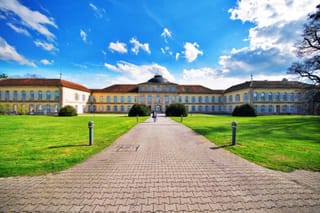
Hohenheim Castle
Stuttgart
18.7km
castle, chateau
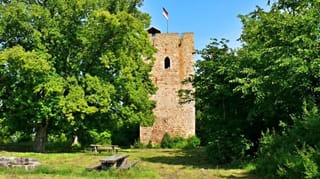
Achalm Castle
Tübingen
22.8km
castle, chateau
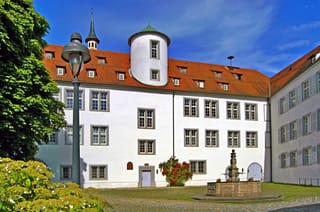
Schloss Waldenbuch
Stuttgart
23.4km
castle, chateau
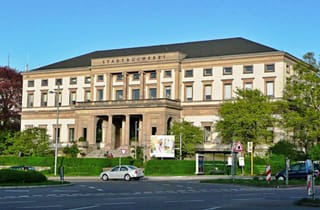
Wilhelm Palais
Stuttgart
24.2km
castle, chateau