Achalm Castle
Tübingen Baden-Württemberg Germany
castle, chateau
Ruine Achalm
Tübingen Baden-Württemberg Germany
castle, chateau
Achalm Castle is a ruined castle located above the towns of Reutlingen and Pfullingen in Baden-Württemberg, Germany
Die Ruine Achalm ist die Ruine einer Höhenburg auf einem Felsen rund 707 Meter über NN auf der Achalm, dem Hausberg der Stadt Reutlingen im Landkreis Reutlingen in Baden-Württemberg
Previous names
Achalm Castle, Ruine Achalm
Description
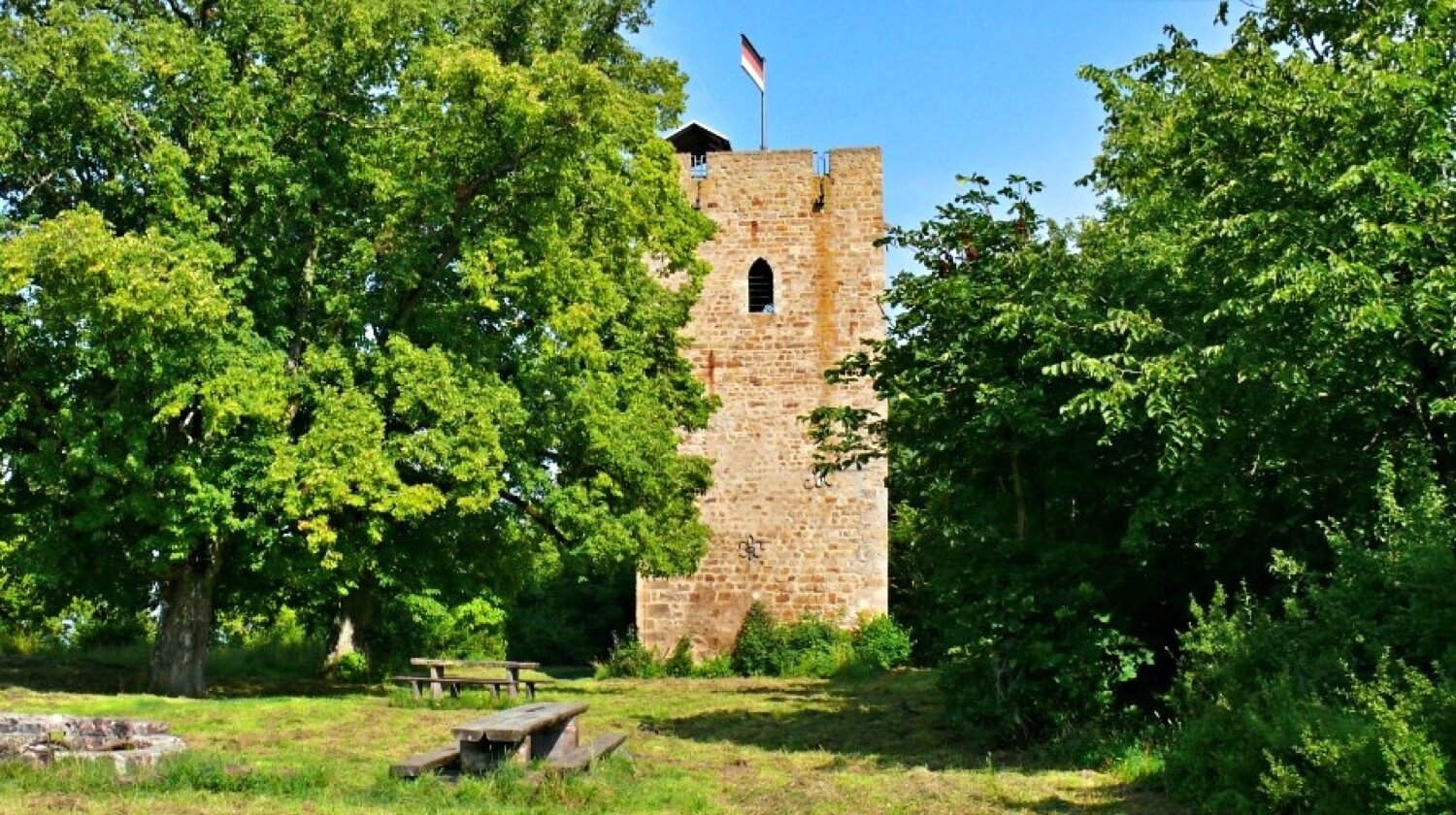
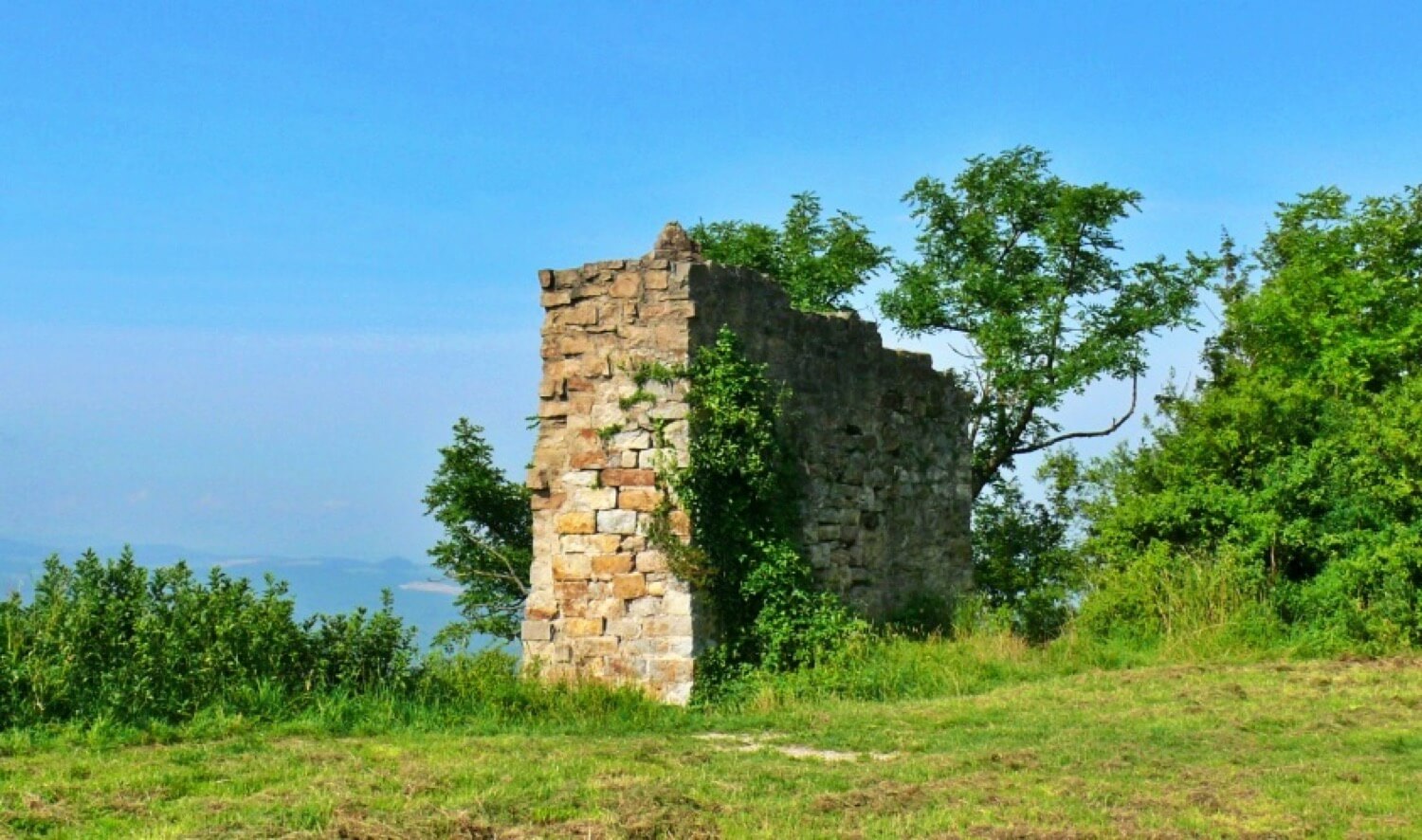
Achalm Castle is a ruined castle located above the towns of Reutlingen and Pfullingen in Baden-Württemberg, Germany. Situated on the top of a hill at the edge of the Swabian Alb the ruins of the 11th-century castle are topped by a look-out tower from 1838.
Achalm Castle was built around 1030 by Gaugraf Egino and Rudolf of Achalm. The name Achalm appears to refer to a nearby stream, the Ach which comes from the River Alm. According to legend, the name of the castle comes from another source. As the castle was under construction two workers began to fight. Egino separated the two and locked one of them in the castle dungeon. The prisoner soon escaped and when he saw Egino, stabbed him. As he lay dying, his last words were Ach Alm meaning to say Ach Allmächtiger (English: Oh! Almighty (God)). His brother, thinking he was honoring his last words named the castle Achalm.
The castle was expanded in the 11th Century with a second tower. However the von Achalm family died out shortly thereafter. The castle passed through several owners including the House of Welf. In 1234 the son of the Holy Roman Emperor Frederick II, King Henry VII, rebelled against his father, the Emperor. The owner of Castle Achalm, Heinrich of Neuffen, sided with the rebellious King Henry VII. Following the Emperor's victory over his son Henry VII, Castle Achalm became the personal property of the Emperor's family, the House of Hohenstaufen. Castle Achalm remained a Hohenstaufen property for a time. The castle then passed into the control of the House of Württemberg. In 1377 Graf or Count Ulrich of Württemberg marched from the castle to attack the town of Reutlingen. While he besieged the city, troops from the Swabian Cities League marched to defend the city. Ulrich's troops were defeated and Reutlingen remained a Free Imperial City.
Over the following centuries, the castle began to lose its military value and began to collapse. During the later years of the Thirty Years' War, in 1650, the castle was partially destroyed to prevent enemy forces from using the castle for shelter. Later the stones were removed to build houses in the village. In 1822 the future king and emperor William I had a stone look-out tower built on the foundation of the old tower. The tower was repaired and renovated in 1932 to prevent it from collapsing.
Die Ruine Achalm ist die Ruine einer Höhenburg auf einem Felsen rund 707 Meter über NN auf der Achalm, dem Hausberg der Stadt Reutlingen im Landkreis Reutlingen in Baden-Württemberg.
Die Burg wurde in der Zeit zwischen den Jahren 1030 und 1050 von den Grafen Egino und Rudolf von Achalm erbaut, und 1090 erstmals urkundlich erwähnt. Noch im 11. Jahrhundert wurde die Burg mit einer Unterburg erweitert. Nachdem die Burg im Besitz der Welfen gewesen war, kam sie 1376 an die Grafen von Württemberg. 1498 war die Burg baufällig und wurde um 1650 abgebrochen. 1822 ließ der württembergische König Wilhelm I. den Bergfried als Aussichtsturm auf den Grundmauern des alten Turmes errichten, der 1932 wegen drohenden Verfalls saniert wurde.
Der 8,70 Meter hohe Bergfried auf einer Grundfläche von 7,20 mal 7,20 Meter hat eine Mauerstärke von 1,75 Meter. Von der ehemaligen Kernburg, sechs Meter über der Vorburg, bestehen noch Reste einer 1,50 bis 1,60 Meter starken Ringmauer.
Gustav Schwab setzte der Burg 1828 ein literarisches Denkmal mit seinem Gedicht Die Achalm. Die ätiologische Sage zur Erklärung des Namens wird hier aufgenommen, aber weder die Sage noch das Gedicht bietet eine historisch zutreffende Erklärung für den Namen Achalm.
Useful information
Free
Free
Free
Free
- Recreation and picnic areas
- Wonderful view
- Walking trails
- Ruins of the castle
- Look-out tower has remained till now
- Inaccessible for wheelchairs
- Hiking tours
-
Nearby castles

Lichtenstein Castle (Württemberg)
Tübingen
9.8km
castle, chateau
Hohenneuffen Castle
Stuttgart
12.9km
castle, chateau

Bebenhausen Abbey
Tübingen
15.4km
castle, chateau
Schloss Waldenbuch
Stuttgart
18.0km
castle, chateau
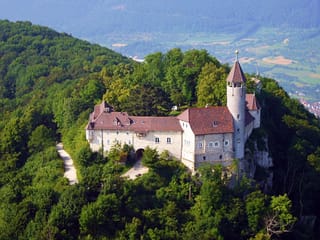
Burg Teck
Stuttgart
19.7km
castle, chateau
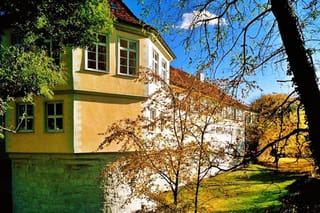
Schloss Kirchheim (Teck)
Stuttgart
22.8km
castle, chateau
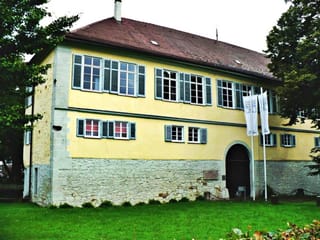
Schloss Kirchheim
Stuttgart
22.8km
castle, chateau