Frankenstein Castle
Darmstadt Hessen Germany
castle, chateau
Burg Frankenstein (Odenwald)
Darmstadt Hessen Germany
castle, chateau
Frankenstein Castle (German: Burg Frankenstein) is a hilltop castle in the Odenwald overlooking the city of Darmstadt in Germany
Burg Frankenstein liegt südöstlich des Darmstädter Stadtteils Eberstadt auf Gemarkung der Gemeinde Mühltal und ist die nördlichste einer Reihe von Burgen und Burgruinen am westlichen Rand des Odenwaldes mit Blick auf die Rheinebene
Previous names
Frankenstein Castle, Burg Frankenstein (Odenwald)
Description
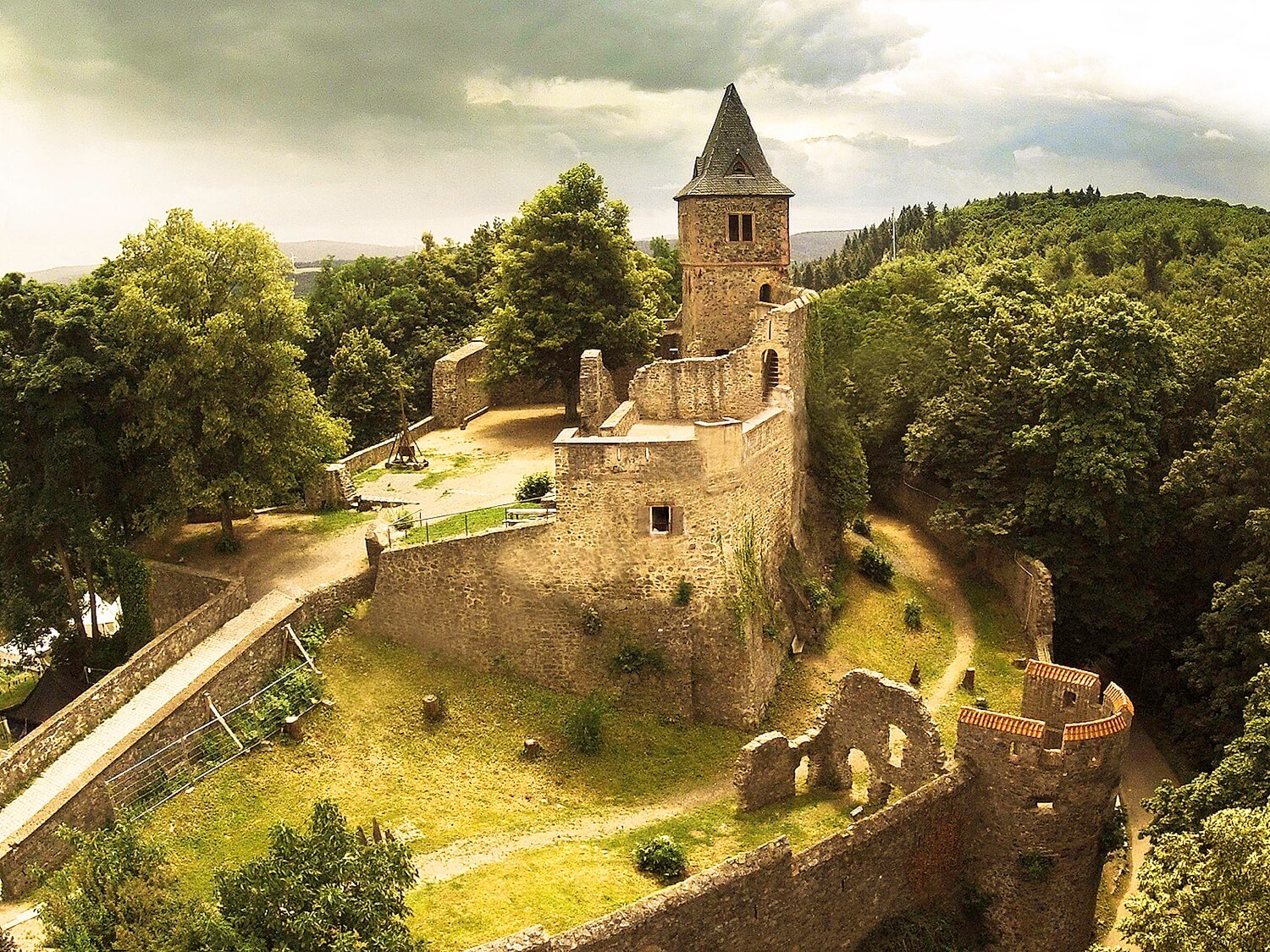
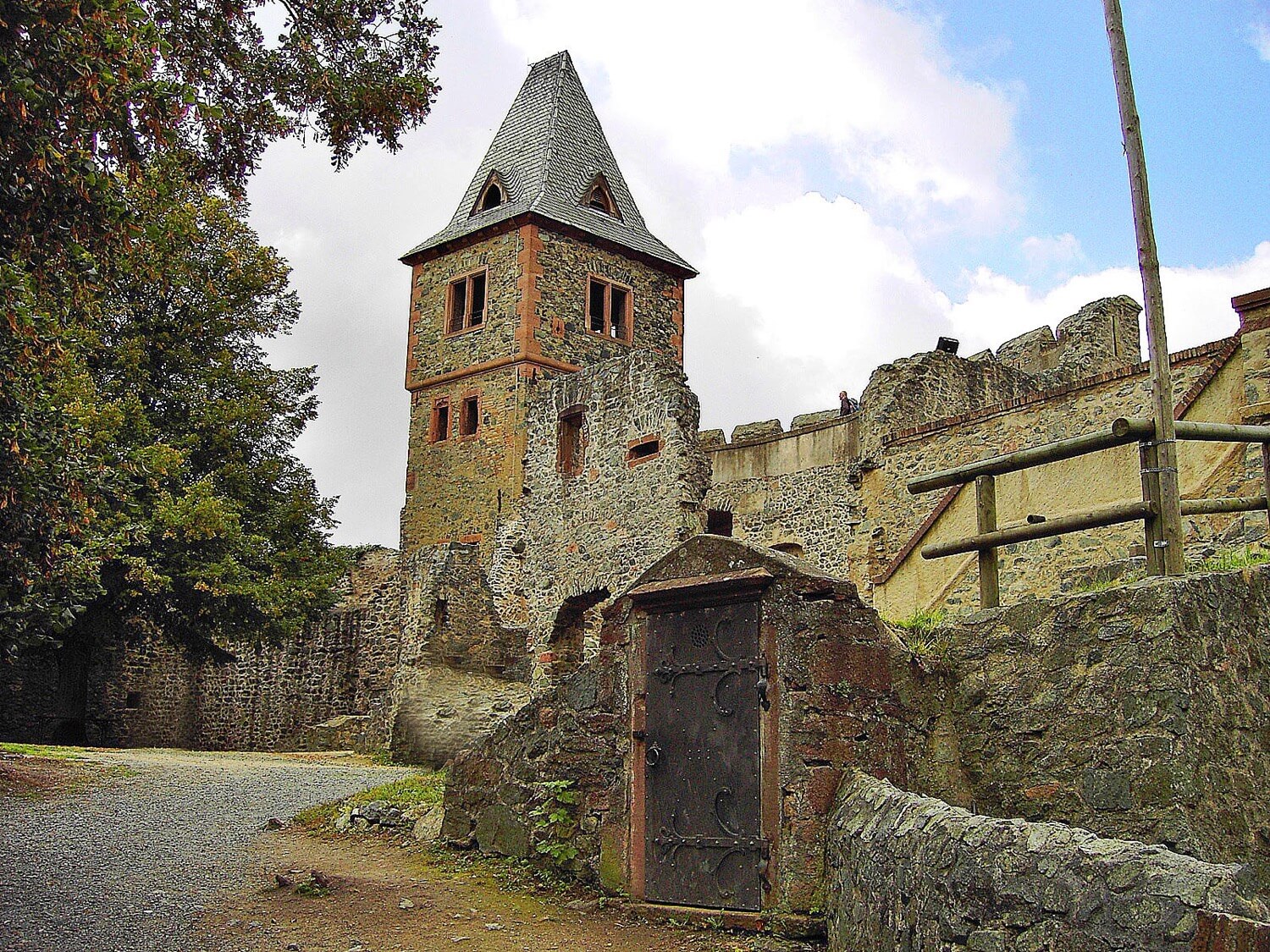
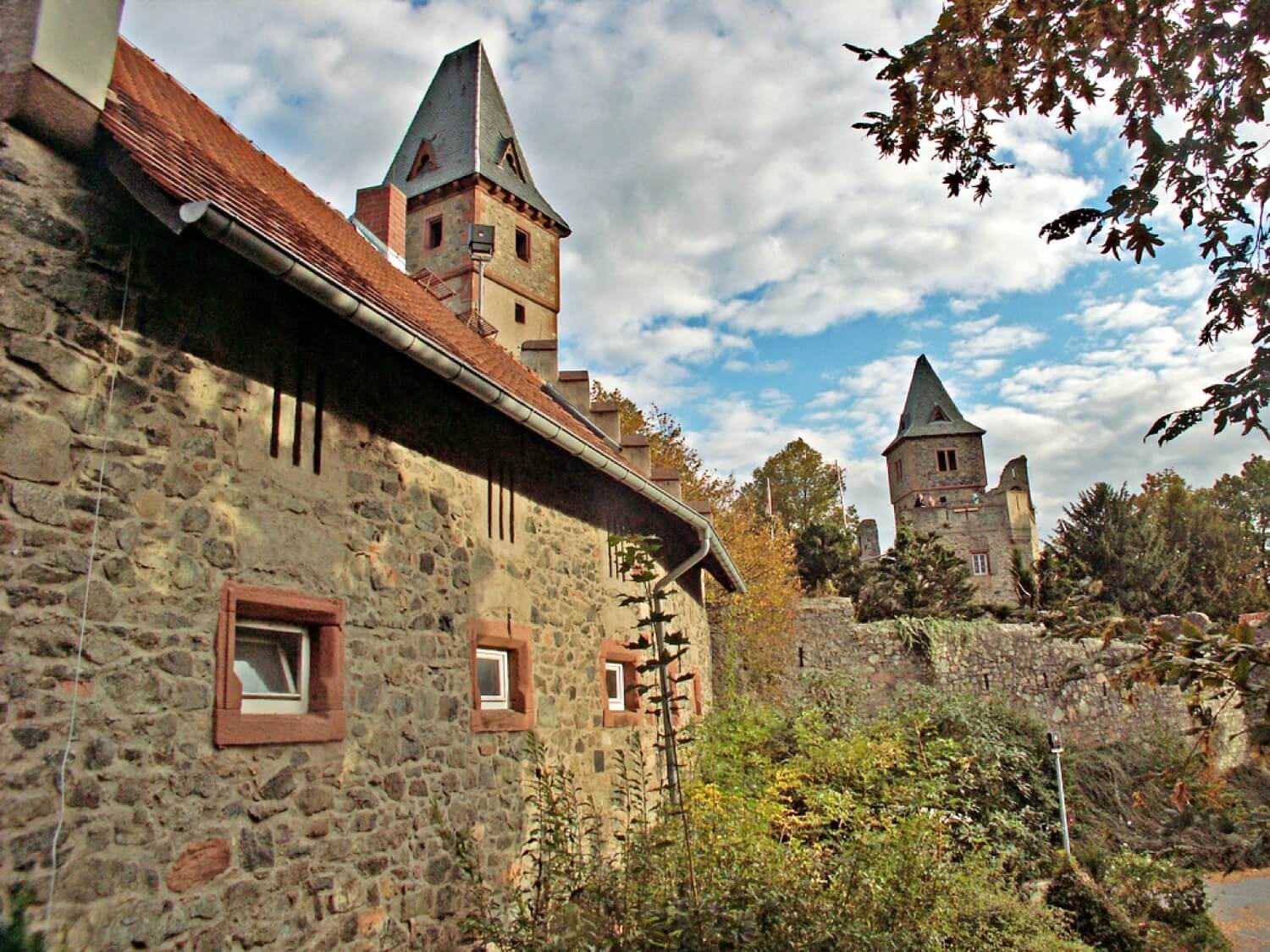
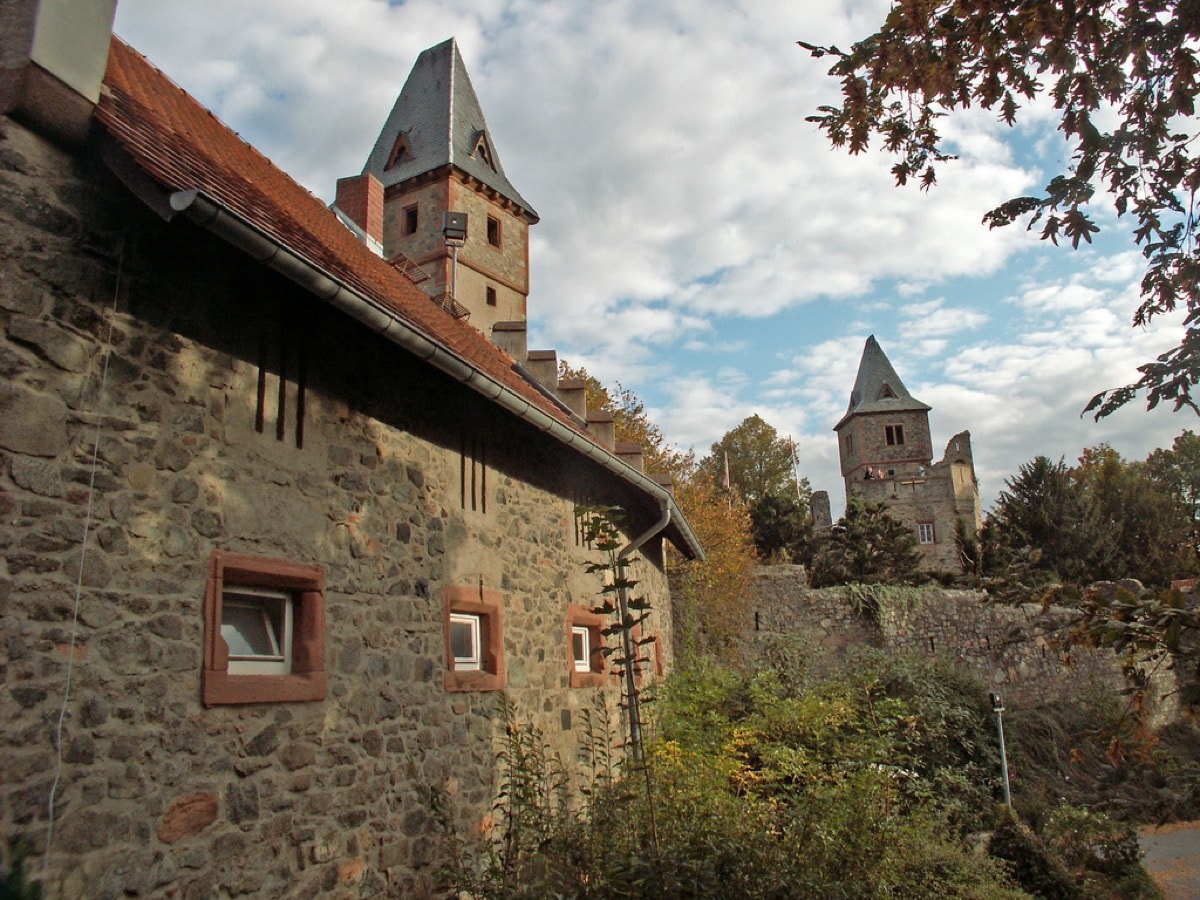
Frankenstein Castle (German: Burg Frankenstein) is a hilltop castle in the Odenwald overlooking the city of Darmstadt in Germany. It is thought that this castle may have been an inspiration for Mary Shelley when she wrote her 1818 Gothic novel Frankenstein.
Frankenstein Castle is located (49°47' 35.84"N, 8°40' 5.58"E) in southern Hesse (Germany) on the spurs of the Odenwald mountain range at an elevation of 370 meter (1,200 ft.) close to the southern outskirts of Darmstadt. It is one of many historic castles along the Hessian Bergstrasse, also famous for its vineyards and its mild climate.
Frankenstein is a German name consisting of two words: The Franks are a Germanic tribe and "stein" is the German word for "stone". Accordingly, the meaning of Frankenstein is "Stone of the Franks". The word "stein" is common in names of landscapes, places and castles in Germany. Consequently, the term "Frankenstein" is a rather ordinary name for a castle in this region.
Before 1250, Lord Conrad II Reiz of Breuberg built Frankenstein Castle and thereafter named himself von und zu Frankenstein. The first document proving the existence of the castle in 1252 bears his name. He was the founder of the free imperial Barony of Frankenstein, which was subject only to the jurisdiction of the emperor, with possessions in Nieder-Beerbach, Darmstadt, Ockstadt, Wetterau and Hesse. Additionally the Frankensteins held other possession and sovereignty rights as burgraves in Zwingenberg (Auerbach (Bensheim)), in Darmstadt, Groß-Gerau, Frankfurt am Main and Bensheim. The hill on which the castle stands was probably occupied by another castle from the 11th century, which fell into ruins after Frankenstein Castle was built a short distance away to the northwest. Claims of an even older predecessor upon the hill are widespread, but historically unlikely.
In 1292 the Frankensteins opened the castle to the counts of Katzenelnbogen (County of Katzenelnbogen) Katzenelnbogen and formed an alliance with them.
In 1363, the castle was split into two parts and owned by two different families of the lords and knights of Frankenstein. At the beginning of the 15th century, the castle was enlarged and modernized. The Frankenstein knights became independent of the counts of Katzenelnbogen again.
Being both strong opponents of the reformation and following territorial conflicts, connected disputes with the Landgraviate of Hesse-Darmstadt, as well as the adherence to the Roman Catholic faith and the associated "right of patronage", the family head Lord John I decided to sell the lordship to the Landgraves of Hesse-Darmstadt in 1662, after various lawsuits at the Imperial Chamber Court.
The castle was used as refuge and a hospital afterward, falling into ruins in the 18th century. The two towers that are so distinctive today are a historically inaccurate restoration carried out in the mid-19th century.
The Odenwald, the mountain range on which Frankenstein Castle is located, is a landscape with dark forests and narrow valleys shrouded in mystery and enshrined in legend. Many folktales and myths exist about Frankenstein Castle. None of them have been verified as fact, but all of them have influenced the culture and traditions of the region.
In 1673 Johann Conrad Dippel was born in the castle, where he was later engaged as a professional alchemist. It is suggested that Dippel influenced Mary Shelley's fantasy when she wrote her Frankenstein novel, though there is no mention of the castle in Shelley's journals from the time. However, it is known that in 1814, prior to writing the famous novel, Shelley took a journey on the river Rhine. She spent a few hours in the town of Gernsheim, which is located about ten miles away from the castle. Several nonfiction books on the life of Mary Shelley claim Dippel as a possible influence.
Dippel created an animal oil known as Dippel's Oil which was supposed to be equivalent to the "elixir of life." Dippel attempted to purchase Castle Frankenstein in exchange for his elixir formula, which he claimed he had recently discovered; the offer was turned down. There are also rumours that during his stay at Frankenstein Castle, Dippel practiced not only alchemy but also anatomy and may have performed experiments on dead bodies that he exhumed. There are rumours that he dug up bodies and performed medical experiments on them at the castle and that a local cleric would have warned his parish that Dippel had created a monster that was brought to life by a bolt of lightning. There are local people who still claim today that this actually happened and that this tale was related to Shelley's stepmother by the Brothers Grimm, the German ethnologists. However, none of these claims have been proven to this date, and some local researchers doubt any connection between Mary Shelley and Frankenstein Castle.
One of the most famous legends is about Lord George and a dragon, by August Nodnagel (1803-1853). It is said that long ago a dangerous dragon lived in the garden near the well at the castle of Burg Frankenstein. The peasants of a neighboring village (Nieder-Beerbach) lived in fear of the mighty dragon. It is said the dragon would creep in at night and eat the villagers and their children in their sleep. One day a knight by the name of Lord George rode into town. The townsfolk were desperate, seeing a brave knight gave them hope, and they poured out their troubles and sorrows as he promised to help them. The next day he put on his armor and rode up to the castle, into the garden and straight to the well where the dragon was taking a rest in the sun. Lord George got off his horse and attacked the dragon. The dragon fought for his life, puffed and spewed out fire and steam. Hours passed as the two continued to battle. Finally, just as the knight was about to drop from exhaustion, and just as the dragon was going to drop from exhaustion, the knight plunged his sword into the underbelly of the beast and was victorious. But as the dragon struggled in agony, it coiled its tail with the poisonous spine around the knight's belly and stung. Lord George and the dragon both fell. The villagers were so happy and relived that the dragon was finally slain they wanted to give the knight a proper, honorable burial. They brought him to the Church of Nieder Beerbach, in the valley on the east side of the castle, and gave him a marvelous tomb. To this day, you can still visit and pay your respects to Lord George, the Knight who slayed the Dragon in the 1200s.
Hidden behind the herb garden of the castle, there is a fountain of youth. The word has it that in the first full-moon night after Walpurgis Night old women from the nearby villages had to undergo tests of courage. The one who succeeded became rejuvenated to the age she had been in the night of her wedding. It is not known if this tradition is still being practiced these days.
In the 18th century, a gold rush caused some turmoil near Frankenstein Castle. It is believed that a legend and visions of fortunetellers caused local residents to believe that a treasure was hidden near the castle. In 1763 chaotic scenes took place which even an intervention of a priest from the neighbouring village Nieder-Beerbach could not stop.
Even though no gold-filled vaults were ever found, fortune-hunters did not abandon the digging until one Johann Heinrich Drott was killed when his dig collapsed on him. He was given a suicide's burial.
In 1770, 1787 and 1788 further attempts were made, but nothing of any value was found. It was then that local authorities banned further gold-digging.
Frankenstein Castle gained international attention when the SyFy TV-Show Ghost Hunters International made a whole episode about the castle in 2008 (Episode 107) and claimed it would show "significant paranormal activity". The investigators met with a Frankenstein expert who guided Robb Demarest, Andy Andrews, Brian Harnois and their colleague through the castle and discussed its legends and paranormal sightings. After discussing their personal experiences, the team used audio and video devices for their investigation. Sounds from the chapel and the entrance tower sounded like words and a ultrasonic recorder picked up signals in the chapel. A recorded sound was identified as a phrase in Old German that means "Arbo is here", which was interpreted as "Arbo" probably meaning "Arbogast", the name of a knight of the castle, announcing his presence and claim over the land. A second sound bite was interpreted to mean "come here". The team left Frankenstein Castle convinced that there is some sort of paranormal activity going on.
In a remote part of the forest behind Frankenstein Castle on 417 meter high Mount Ilbes, compasses do not work properly due to magnetic stone formations of natural origin. Local nature enthusiasts and witchcraft practitioners are said to perform rituals at these magnetic places on special occasions like Walpurgis Night or summer solstice. The magnetic stones can be visited by everyone, but it is advisable not to disturb ongoing ritual activities at any means. Legend has it that Mount Ilbes is the second most important meeting place for witches in Germany after Mount Brocken in the Harz.
Close to Frankenstein Castle, a large felsenmeer ("sea of rocks") near the village of Lautertal is assumed to be a major scene of the Nibelungenlied. Allegedly, the dragon slayer Siegfried, on a hunting trip leading him from the Burgundian city of Worms into the Odenwald, was murdered by Hagen of Tronje at the Felsenmeer's Siegfriedsquelle ("Siegfried's wellspring"). In some stories the region is connected to the apparition of legendary creatures, like knight George fighting against a man-eating lindworm near Frankenstein Castle, or creatures of nature with magic potency (e.g. a water spirit that changed into a fox near Niedernhausen). There is some evidence that even the name of the entire region is a hint to a mystical background: Odenwald means "The Woods of Odin".
Despite being a well-known tourist destination, Frankenstein castle has never been developed into a commercial tourist attraction on a large scale. Local people use the mountain chain on which Frankenstein Castle is located for sport activities like hiking and mountain biking. Normally the castle is open to the public until late at night, on-site parking is possible right at the castle and a restaurant serves food and refreshments. Admission and parking are free except during special occasions like the Halloween festival, when there is a charge for admission. However, there are no further tourist facilities on the site.
Since the year 2000, the chapel at Frankenstein Castle has been in use as a registry office for civil wedding ceremonies handled by the municipality of Mühltal.
In 1978, American airmen from the 435th Transportation Squadron stationed at Rhein-Main Air Base started an annual Halloween festival at the castle, which became one of the biggest Halloween festivals in Europe. In 1977, the 440th Signal Battalion organized a 13 km running competition routed along steep forest trails from Cambrai-Fritsch Army Housing Site in Darmstadt to the castle. The Frankenstein Castle Run was held until 2008 when all American forces left Darmstadt. The city of Darmstadt organized a final race in October 2008.
A restaurant with a sun terrace, located right below the castle towers, offers regular service as well as special events (e.g., Horror Dinner Nights).
The castle is easily accessible via Autobahn A5, exit "Darmstadt-Eberstadt". The site is 35 km (20 mi) from Frankfurt International Airport. The public transport system of Darmstadt serves tram stop "Frankenstein" (located at the foot of the mountain range, a steep 3 km walk from the ruins) with tram lines 1, 6, 7 and 8.
Burg Frankenstein liegt südöstlich des Darmstädter Stadtteils Eberstadt auf Gemarkung der Gemeinde Mühltal und ist die nördlichste einer Reihe von Burgen und Burgruinen am westlichen Rand des Odenwaldes mit Blick auf die Rheinebene. Die das Mittelgebirge flankierende (Alte) hessische Bergstraße verläuft rund 1,5 km westlich und 225 m niedriger.
Berühmtheit verdankt die Burg Frankenstein der Tatsache, dass sie seit einigen Jahren als Namensgeber für Mary Shelleys bekanntes Buch „Frankenstein oder der moderne Prometheus“ dargestellt wird, das auch mehrfach verfilmt wurde. Eine Verbindung Mary Shelleys mit der Burg wird von verschiedenen Autoren aus Gründen der beschriebenen Lokalitäten angezweifelt - zudem wird in dem Roman keine Burg erwähnt.
Die Burg Frankenstein steht auf einem 370 m hohen Ausläufer des Langenbergs. Erstmals erwähnt wurde sie im Jahre 1252 in einer Urkunde Konrad II. Reiz von Breuberg und seine Ehefrau Elisabeth von Weiterstadt betreffend. Aus der Formulierung des Dokuments „super castro in frangenstein“ („auf der Burg auf dem Frankenstein“) geht jedoch hervor, dass die Burg zu dieser Zeit bereits erbaut war und genutzt wurde. Die genaue Entstehungszeit ist ungewiss; Vermutungen reichen bis in fränkische Zeit zurück. Die meisten Historiker gehen von einem Baujahr um 1240 aus.
Das Adelsgeschlecht der Herren von und zu Frankenstein entstand infolge der Heirat von Konrad II. Reiz von Breuberg und Elisabeth von Weiterstadt. Die Frankensteiner stellten in der Folge die Oberherren von Eberstadt, Nieder-Beerbach, Schmalbeerbach (heute zu Lautertal (Odenwald)), Ober-Beerbach, Stettbach (beide heute zu Seeheim-Jugenheim), Allertshofen (heute zu Modautal), Bobstadt (heute zu Bürstadt) und Ockstadt bei Friedberg.
Spätestens 1292 erklärten sich die Frankensteiner durch Friedrich von Frankenstein zu Burgmannen der Grafen Wilhelm I. und Diether VI. von Katzenelnbogen und räumten diesen unbeschränkten Zutritt zur Burg und Unterstützung im Kriegsfalle ein. Zu einem solchen Fall kam es aber nie. Die Burg selbst wurde niemals belagert.
Im Laufe des 14. Jahrhunderts spaltete sich das Frankensteiner Geschlecht in zwei Linien. Sie teilten daraufhin die Burg nach einem peinlich genau beschriebenen Burgfrieden von 1363. Dennoch waren stetige rechtliche Auseinandersetzungen zwischen den beiden Linien die Folge.
Um das Jahr 1400 stieg der Einfluss der Frankensteiner. Die zu klein gewordene Burg wurde um die Vorburg massiv erweitert und modernisiert. 1402 wurde die Burg, zusammen mit Nieder-Beerbach, Reichslehen und damit unabhängig von den mächtigen Grafen von Katzenelnbogen. Die restlichen Gebiete der Frankensteiner Herrschaft blieben aber in gewisser Abhängigkeit von Katzenelnbogen, ab 1479 von Hessen.
Das 16. Jahrhundert war durch eine rege Bautätigkeit geprägt, ein Beleg für die offenkundig gute wirtschaftliche Lage der Herrschaft. Die Burg erreichte in dieser Zeit die auch heute noch vorhandenen Ausmaße. Gleichzeitig verschärften sich aber auch die Konflikte mit den hessischen Landgrafen, vor allem ab 1567, als nach Teilung des Landes Landgraf Georg I. Darmstadt zu seiner Residenzstadt machte. Besonders der Versuch der Frankensteiner, am katholischen Glauben festzuhalten, sorgte für Konflikte. Während Landgraf Georg mit einigem Erfolg große Teile seiner Herrschaft in einem geschlossenen Territorium zusammenzog, blieb die Frankensteiner Herrschaft ein Flickenteppich aus einigen Dörfern. Lediglich das Gebiet in unmittelbarem Umfeld der Burg, vor allem das reichsunmittelbare Dorf Nieder-Beerbach, aber auch die nicht reichsunmittelbaren Dörfer Eberstadt und Ober-Beerbach, kann als geschlossenes Territorium der Frankensteiner betrachtet werden.
Außer auf der Burg selbst und in Nieder-Beerbach hatten die Landgrafen von Hessen zudem das Zentrecht in allen Eberstädter Besitzungen inne. Dies dehnten sie bald auch, trotz rechtlicher Fragwürdigkeit, auf das reichsunmittelbare Nieder-Beerbach aus. Die Frankensteiner strengten daher unzählige Rechtsstreite vor dem Reichskammergericht an, der politische Druck durch die hessischen Landgrafen war aber zu groß, und so mussten die Frankensteiner letztlich die Oberherrschaft Hessen-Darmstadts über ihr Territorium akzeptieren.
Trotz testamentarischer Verfügung durch den damaligen Chef des Hauses Frankenstein, keinesfalls an Hessen zu verkaufen und eher auf die Hilfe von Kurmainz zu hoffen (das sich jedoch an einem Kauf der Frankensteiner Herrschaft nicht interessiert zeigte), verkaufte man 1662 schließlich an Hessen-Darmstadt.
Landgraf Ludwig VI. von Hessen-Darmstadt kaufte für 109.000 Gulden die Burg samt der Frankensteiner Herrschaft. Die Herren von Frankenstein, seit 1670 Freiherren, zogen sich nach Franken (Ullstadt) zurück, wo sie eine neue Herrschaft gekauft hatten. Ihre Nachfahren leben heute noch dort.
Da es dem Landgrafen weniger um die Burg als um den Territorialbesitz der Frankensteiner ging, verfiel die Burg, die sich beim Verkauf noch in gutem Zustand befunden haben muss, in der Folgezeit zusehends. Bis zum 18. Jahrhundert diente sie zwar noch als Invalidenhaus und Zufluchtsort während der Eroberungskriege Ludwigs XIV. von Frankreich, bald danach aufkommende Gerüchte von verborgenen Schätzen sorgten jedoch für erhebliche Zerstörungen, da man, um dieser vermeintlichen Schätze habhaft zu werden, Mauern und Kellerdecken einriss. Mitte des 18. Jahrhunderts war die Vorburg weitgehend verfallen. Endgültig zerstört wurde dann auch die Kernburg in der Folgezeit durch die Ehefrau des damaligen Burgverwalters, die alles zu Geld machte, was zu Geld zu machen war. Dazu zählten neben dem kompletten Inventar auch das Blei von den Dächern, die Ziegel und die Holztreppen. Die Bauern der Nachbardörfer nutzten die Burg zudem als billigen Steinbruch, bis kaum mehr ein Stein auf dem anderen lag.
Erst ab Mitte des 19. Jahrhunderts ließ Großherzog Ludwig III. die Burg im Sinne der damaligen Burgenromantik teilweise restaurieren. Dabei ging man jedoch sehr ungeschickt und ungenau vor und zerstörte mehr als man aufbaute. Die augenfälligsten Restaurierungen, die beiden Türme, wurden zudem fehlerhaft durchgeführt. Der Torturm erhielt ein Stockwerk zu viel, und der innere Wohnturm hatte wohl nie eine Turmhaube.
Im 20. Jahrhundert wurde die Burg zunehmend zum Ausflugsziel. In den 1960ern entstand ein Restaurant auf dem Gelände der Vorburg, das jedoch aufgrund seiner wenig zum Gesamtbild der Burg passenden Architektur kritisiert wurde. In den 1970er Jahren riefen US-Soldaten ein alljährliches Festival zu Halloween ins Leben, das heute als größtes seiner Art in Deutschland gilt.
Seit den 1970er Jahren findet auf der Burg eines der größten Halloweenfeste Deutschlands statt. Begründet wurde dieses Fest von den damals in Darmstadt und Umgebung stationierten US-Amerikanern. Es findet regelmäßig an drei Wochenenden im Oktober/November (rund um Halloween) auf dem Gelände der Burg statt. Dabei werden die zahlreichen Besucher von verkleideten Schauspielern und Spezialeffekten erschreckt und unterhalten. Wegen des großen Besucherandrangs werden die Zufahrtswege zur Burg an den entsprechenden Wochenenden gesperrt und ein Bustransfer eingerichtet.
Bei der Frankenstein-Trophy handelt es sich um eine 2,74 km lange, permanente Zeitfahrstrecke für Radfahrer, auf der 218 Höhenmeter überwunden werden müssen. Sie liegt auf der Eberstädter Seite des Berges. Beginn und Ende der Strecke sind jeweils durch einen roten Strich am Fahrbahnrand markiert.
Seit 1902 findet alljährlich im August/September – südwestlich von Burg und Besucherparkplatz – auf einer eigens ausgewiesenen Wettkampf-Freifläche das turnerisch-leichtathletisch orientierte Frankenstein-Bergturnfest statt. Zahlreiche Wettkämpfe zogen zigtausende von Menschen auf den Langenberg, so zum Beispiel die Langstreckenläufe. Die Erhebung, auf der sich die von Turnern in ehrenamtlicher Arbeit gestaltete Sportanlage befindet, wird auch als Magnetberg bezeichnet.
Useful information
parking free
The entrance ticket is free, except on special occasions as a Halloween festival, when there is an entrance fee.
The entrance ticket is free, except on special occasions as a Halloween festival, when there is an entrance fee.
Free entrance
-
External links
Nearby castles
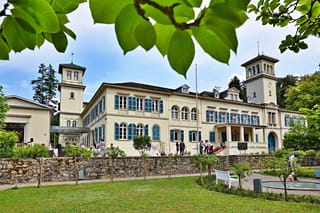
Schloss Heiligenberg (Jugenheim)
Darmstadt
4.9km
castle, chateau
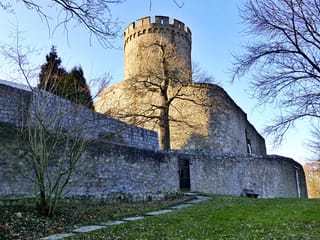
Alsbacher Schloss
Darmstadt
7.3km
castle, chateau
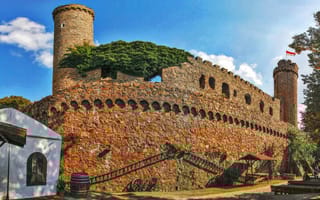
Auerbach Castle
Darmstadt
9.7km
castle, chateau
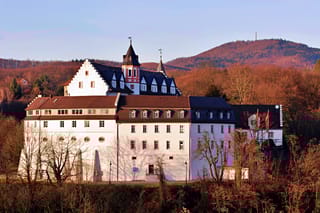
Schloss Schönberg (Bensheim)
Darmstadt
11.3km
castle, chateau
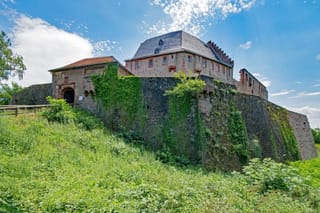
Otzberg Castle
Darmstadt
17.6km
castle, chateau
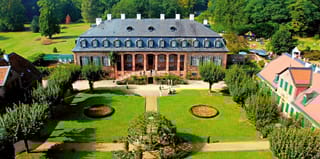
Schloß Wolfsgarten
Darmstadt
20.9km
castle, chateau
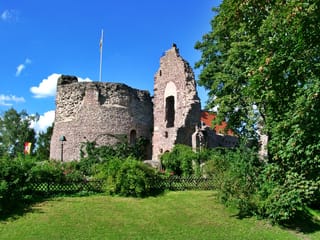
Burg Hayn
Darmstadt
23.4km
castle, chateau