Castle of Silves
Silves Faro Portugal
castle, chateau
Castelo de Silves
Silves Faro Portugal
castle, chateau
The Castle of Silves is a castle in the civil parish of Silves in the municipality of Silves in the Portuguese Algarve
O Castelo de Silves é um castelo localizado na cidade, freguesia e concelho de Silves, no distrito de Faro, no Algarve, em Portugal
Previous names
Castle of Silves, Castelo de Silves
Description
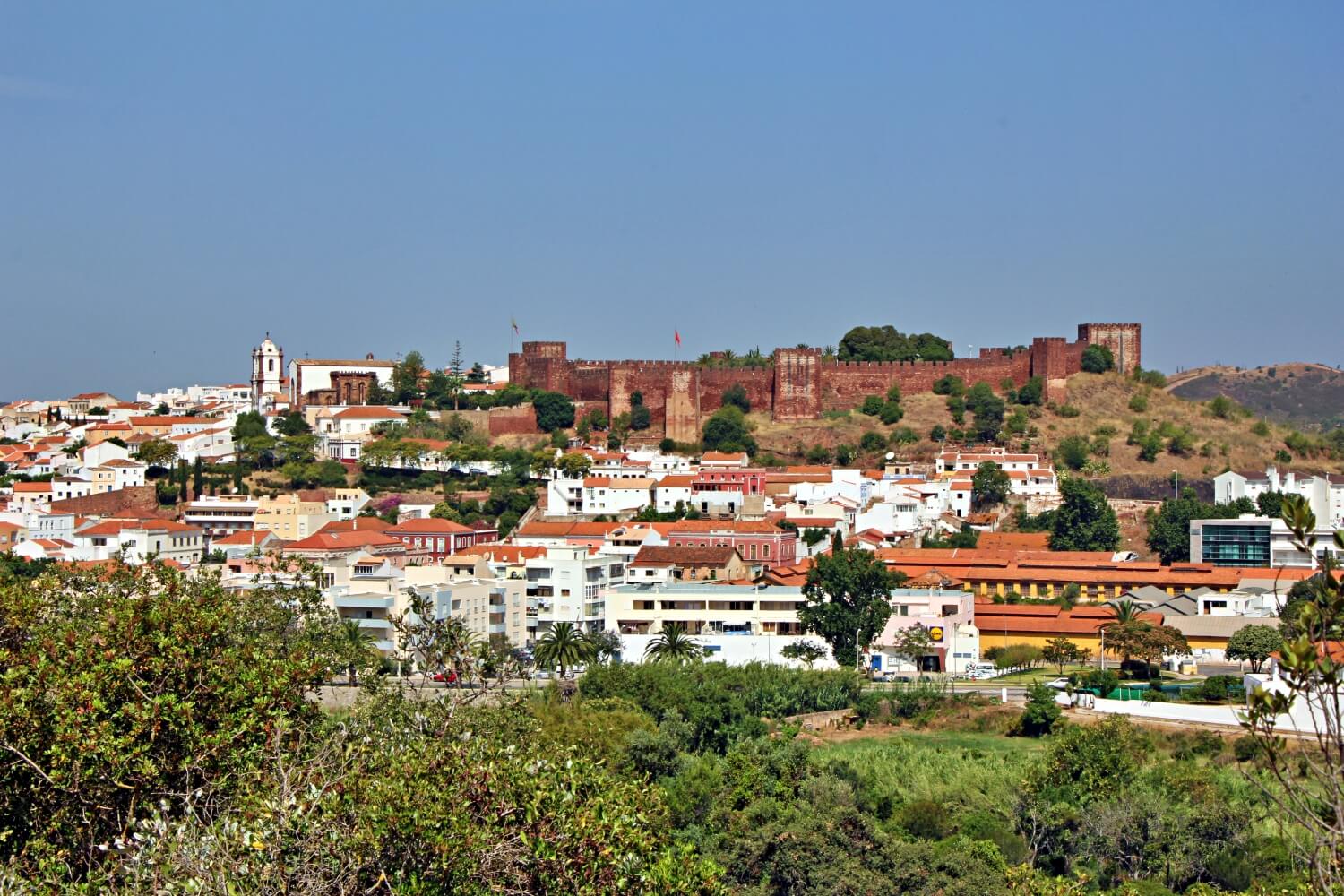
The Castle of Silves is a castle in the civil parish of Silves in the municipality of Silves in the Portuguese Algarve. It's believed that the first fortifications were built upon a possible Lusitanian castro, by the Romans or Visigoths. Between the 8th and 13th centuries, the castle was occupied by the moors who expanded it, making it one of the best preserved Moorish fortifications in Portugal, resulting in its classification as a National Monument in 1910.
History
From archaeological excavations, it is assumed that the first fortress on this site consisted of a Lusitanian castro. It is believed that Phoenicans, Greeks and Carthaginians traversed the site at one time, but that around 201 B.C. the Romans conquered Silves, transforming it into a citadel of their occupation, and commercial center that prospered for the next five centuries.
Around 716 A.D., the Visigothic citadel was conquered by the Umayyad Caliphate who reinforced the existing fortifications with a new series of walls. This new period resulted in a great period of development, under the Moorish occupiers, that include the extensive walls in the west. In 1160, it was sacked by Ferdinand I of León and Castile, but remained only for a short time in the hand of the Christians: it was quickly recaptured by the Moors. King Sancho I of Portugal, supported by the powerful Crusader army, conquered the city, after a prolong encirclement in 1189. But, a grande army, under orders from Amir al-Mu'minin, in 1191, retook the city. The buildings of the Taifa kingdoms of the 11th century, which includes the Palace of Balconies (where Al-Mutamid, lived as the poet Ibn Amarhe) progressed in the 11th century. The walls and towers that today represent the Castle of Silves came from these campaigns and public works by Almoravides and Almohads in the 12th and 13th centuries. The castles internal water catchment, and large rain fed underground cistern were used to provide freshwater for the surrounding dwellings (to as late as the 1920s). It would only be in the 13th century, during the reign of Afonso III of Portugal, that forces under the command of D. Paio Peres Correia, would definitively take the fortress.
Kingdom
A foral was issued in 1266 by King Afonso III of Portugal. In order to expand the influence of Portuguese control, this foral was then supported by residential concessions from King Denis (in 1305), that were later repeated in 1380, under King Fernando I of Portugal. But, even naming Prince Henry the Navigator alcalde for Silves (in 1457), and new concessions in 1487, under King John II, little development occurred in the territory.
On 1 November 1755, the castle was damaged by the Lisbon earthquake, resulting in the "...loss of its cathedral, tower, castle and walls...", as identified by Moreira de Mendonça (1758). Sometime during the 18th century, the dungeons were reconstructed, following the earthquake, and the ceilings repainted.
During the Liberal Wars the walls were repaired by the population, under Remexido, who ignored the foundations of the original castle.
Republic
In excavations beginning on 13 August 2005 and lasting into 2006, archaeologists Rosa and Mário Varela Gomes brought light onto the vestiges of the Muslim ruins, and in particular the 11th century governors palace, occupied by Al-Mutamid (from designs of polychromatic stucco). During the construction of the tea house, vestiges of another building, that was occupied by the Infante Henry, along the southwest of the military square, near the walls. In March 2005, a risk assessment map for the zone was completed for the principal entrance-way by the DGEMN. This resulted in a proposal by the IPPAR and Direção Regional de Cultura de Faro to expand the zone of protection to include the walls and Almedina Gate, on 12 June 2008, and approved on 1 October 2008 by the IGESPAR.
The DGEMN made its first intervention in the decade of 1940, demolishing the buildings annexed to the walls of the castle, and construction to lower the soil surfaces near the entrance to the castle and in the military square. At the same time, the rooftops of the guardhouse was re-tiled; the reconstruction of one of the towers in a degraded state of ruin; recuperation of various walls; consolidation of the keep tower and restoration of the parapets; reconstruction of the battlements; recuperation of the gates; re-plastering in the guardhouse; and the general cleaning of the cistern in the military square.
Two decades later (1965) the walls were repaired following the removal a shed along its flanks, which involved of the repair of the axis. In 1967, work began on a municipal museum within the towers of the castle, resulting in the ornamentation of the towers in regional tile; retouches and reconstruction of spaces; and the installation of electricity.
Starting in 1971, there were a series of demolitions and reconstructions in the castle, that included the 1977 consolidation of the walls; the 1979 re-layering of freestones; replacement of the gate; repairs and cleaning of the rooftops; consolidation of the walls in the north and east (in 1980); consolidation of two towers; and, beginning in 1982 (but also in 1984, 1985, 1986 and 1987) general recuperation of the site. This process was repeated in 1993, then starting in 200 there were a series of public works to recover and recuperate the dungeons, including the installation of new rafters, water protection and improvement of drainage structures. Meanwhile, the Centre for the Studies of Art and Archeology of Tomar (Portuguese: Centro de estudos de Arte e Arqueologia de Tomar) was involved with museum-ification of some of the spaces, using the spaces to establish the administrative and educational services, in addition to creating a botanical garden, related to the Portugueses Discoveries period, within the old Governor's garden.
Further restoration, and excavation are ongoing, with more early buildings being discovered just outside the castle walls.
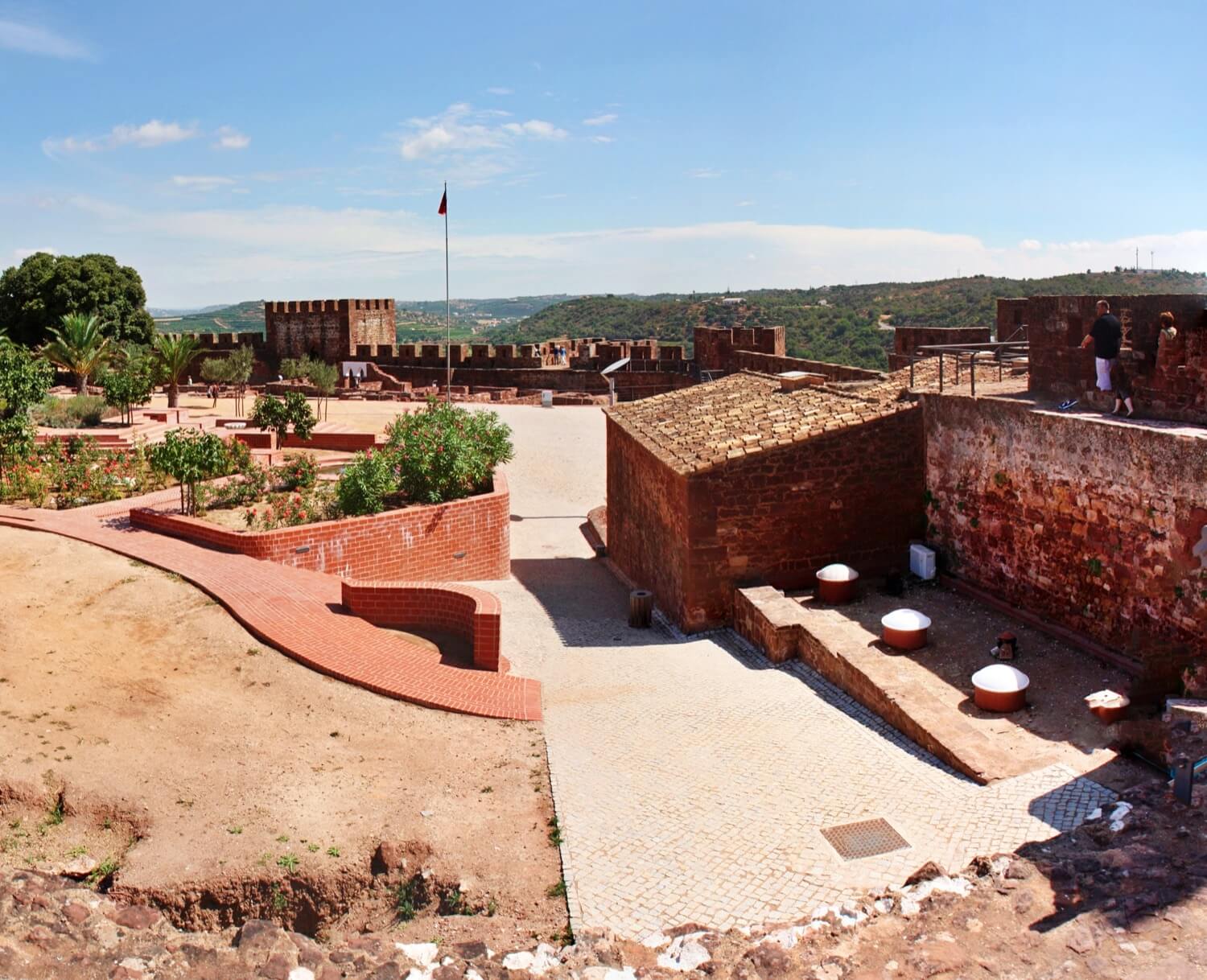
The building in the photograph of the 'interpretive and visitor centre is now a cafe and the rear view is the entrance to the toilets. There is no invitation to enter and gain any information of the castle.
Architecture
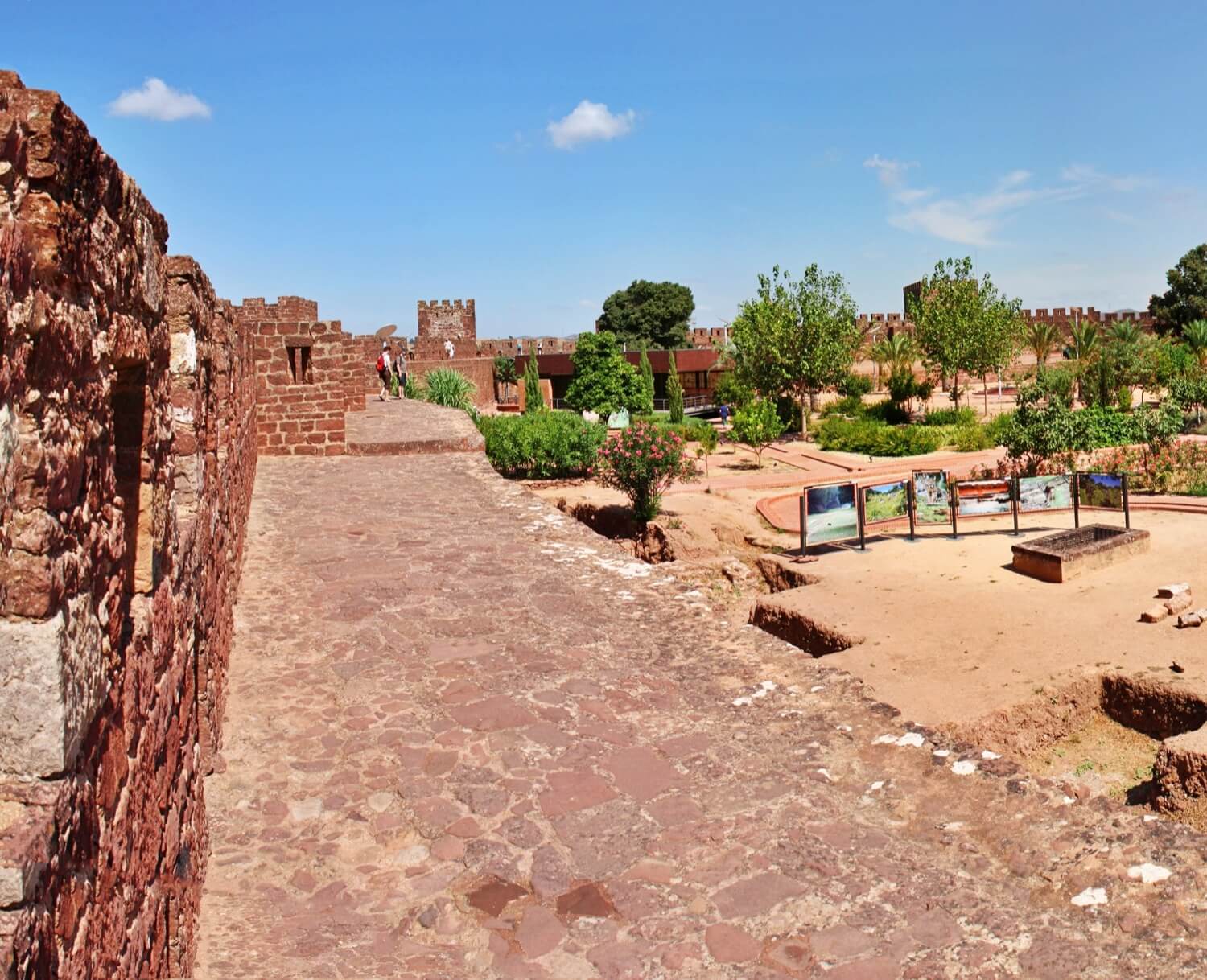
The castle consists of an irregular polygon implanted on a hilltop overlooking the community of Silves, comprising four towers and seven crenellated posts, linked by walls with ardaves.
Two gates, the principal one between two towers and the Traitor's Gate carved into the northern wall. Alongside the principal gate is the guardhouse, constructed with a vaulted ceiling, and covered in tiles.
Within its courtyard are various subterranean structures, with accesses at soil level. The Cistern of Moura, is a 10 metres (33 ft) high, 820 square metres (8,800 sq ft) superficial area, with five naves marked by four orders of columns, interlinked by semi-circular archways. The Cisterna dos Cães, within the courtyard, is a vertical hole of 60 metres (200 ft) depth, that also supported water supply in the castle.
Interior
On the second floor of the Governor's residence, there are two halls covered in painted wood. One of these halls includes a painting of royal arms, framed in shells and acanthus leaves, while on the four lateral panels, are military "trophies" comprising suits of armor, flags, lances, canons, muskets and drums. In the other hall is an allegory of Mars flanked by figurative and floral medallions.
In the military square, and alongside the southwest wall, are the vestiges of a house, presumably the residence of Prince Henry (when he was the alcalde of the Algarve), that includes foundations in dirt, a stone staircase (with a single on one flight), a spacious living room with the remains of a vaulted ceiling, olive oil press and pesto.
O Castelo de Silves é um castelo localizado na cidade, freguesia e concelho de Silves, no distrito de Faro, no Algarve, em Portugal.
Em posição dominante sobre a foz do rio Arade, guarnecendo aquele trecho do litoral, constitui-se no maior castelo da região algarvia, sendo considerado como o mais belo exemplo da arquitectura militar islâmica no País.
História
Antecedentes
A primitiva ocupação humana da colina de Silves remonta à pré-história, acreditando-se que, no primeiro milênio a.C., navegadores Fenícios tenham penetrado no rio Arade, navegável até fins da Idade Média, e que, posteriormente, tenha conhecido a presença Romana, que aqui explorou uma jazida de cobre, conforme os testemunhos arqueológicos. Alguns autores pretendem que teriam sido estes os responsáveis por uma primeira fortificação, entre os séculos IV e V, também atribuída aos Visigodos que se lhes sucederam.
A partir do século VIII, diante da Invasão muçulmana da Península Ibérica, os novos senhores desta região iniciaram a fortificação de Silves (então as-Shilb), como o confirmam as recentes escavações. Graças à posição geográfica privilegiada a povoação cresceu com rapidez. Por volta do século XI, quando conheceu o apogeu, ultrapassando Ossónoba em importância, foi palco de inúmeras disputas entre príncipes muçulmanos vindo a ser conquistada pelo rei-poeta Almutâmide (1052), tornando-se sede de uma taifa. Embora uma historiografia clássica afirme que as forças de Fernando Magno conquistaram e saquearam a povoação em 1060, a realidade desse evento tem sido modernamente questionada.
Acredita-se que data deste período a configuração genérica do perímetro muralhado, envolvendo uma área de cerca de doze hectares. A muralha ameada, rasgada por três portas, era reforçada por torres de planta quadrangular. Internamente a povoação era definida por duas ruas principais, constituindo dois eixos. Junto à porta principal (Porta de Almedina, Porta de Loulé) erguia-se o vasto Palácio da Varandas, hoje desaparecido, que conhecemos pela poesia de Almutâmide.
A povoação encontra-se descrita na crônica de Xelbe, ao final do século XII, como um dinâmico centro urbano, comercial e cultural do mundo islâmico. Data do início do século XIII a reforma almóada das suas defesas, empreendida pelo último rei muçulmano, Ibn al-Mahfur, que lhe conferiu as linhas gerais que, com alterações, chegaram aos nossos dias.
O castelo medieval
À época da Reconquista cristã da Península Ibérica, o monarca português D. Sancho I (1185-1211) também foi atraído pela prosperidade deste enclave. No início do ano de 1189, com o auxílio de uma frota de cruzados Dinamarqueses e Frísios, conquistou preliminarmente o vizinho Castelo de Alvor. No Verão do mesmo ano, com um auxílio de uma nova frota de cruzados, agora de Ingleses e Alemães, intenta, a partir da segunda quinzena de Julho, a conquista de Silves, a quem impos um duro sítio. Deste episódio, chegou até nós a narrativa de um de seus participantes, que descreve a violência do cerco, assim como o emprego de uma variedade de máquinas de guerra, tais como torres de madeira, catapultas e de um "ouriço" (esfera de madeira armada com pontas de ferro), que destruiram várias torres e troços da muralha, conduzindo à rendição da povoação a 2 de Setembro, violentamente saqueada na ocasião.
A povoação e seu castelo mantiveram-se na posse de Portugal até à contra-ofensiva almóada que, sob o comando do califa Iacube Almançor, em 1191, culminou com a perda de todas as conquistas cristãs nos territórios ao sul do rio Tejo, à excepção da cidade de Évora.
No ano de 1242, os cavaleiros da Ordem de Santiago, sob o comando de seu Mestre, D. Paio Peres Correia, intentou a reconquista de Silves que, entretanto, só retornou definitivamente às mãos de Portugal sob o reinado de D. Afonso III (1248-1279), em 1253, quando o seu bispado foi restaurado. O soberano concedeu à povoação o seu Foral (1266), quando terá também determinado a recuperação e reforço das suas defesas.
Porteriormente, D. Fernando (1367-1383) e D. João I (1385-1433) promoveram reparos nessas defesas.
Acredita-se que trabalhos de ampliação e reforço tenham ocorrido sob o reinado de D. Manuel I (1495-1521), que concedeu Foral Novo à Vila (1504), uma vez que datam desse período as obras da Igreja da Sé e da Misericórdia.
Do terramoto de 1755 aos nossos dias
Quando do terramoto de 1755, a sua estrutura foi severamente danificada.
O castelo encontra-se classificado como Monumento Nacional por Decreto publicado em 23 de Junho de 1910. Nas décadas de 1930 e de 1940, foram promovidas intervenções de consolidação e restauro, a cargo da Direcção Geral dos Edifícios e Monumentos Nacionais (DGEMN), desobstruindo-se troços de muralhas e refazendo-se algumas torres, ameaçadas de ruína.
Desde 1984 que decorrem escavações arqueológicas no interior do castelo, coordenadas por Rosa Varela Gomes (FCSH-UNL), docente e investigadora na área da Arqueologia Medieval Islâmica.
Actualmente, este castelo constitui um dos maiores e mais bem conservados monumentos do país.
Características
A fortificação ocupa uma área de cerca de 12.000 m², constituindo-se em um típico exemplar da arquitectura militar islâmica, erguido com o emprego de taipa, revestida com grés (arenito), material abundante na região e que lhe confere uma tonalidade avermelhada.
A área urbana desenvolve-se pelas encostas nascente, sul e poente. As habitações definiam ruas íngremes e irregulares que se estendiam até ao rio Arade. Foi construído na extremidade nascente do topo de um cerro com 56 m de cota máxima, junto à margem direita deste rio, onde o casario era entrecortado por ruas íngremes e irregulares. Nos lados norte e levante da elevação referida, as encostas, muito inclinadas, proporcionavam boas condições naturais de defesa. O Castelo apresenta uma muralha com planta de forma poligonal irregular, composta por 4 torreões e 7 quadrelas, com ameias, ligados por uma cortina de muralhas com adarve, rematadas por ameias com seteiras, ocupando uma área plana.
Quatro das torres, modificadas quando dos trabalhos de reconstrução promovidos no século XIV ou XV, apresentam portas em estilo gótico, salas abobadadas e pedras com as marcas dos pedreiros que as levantaram.
Useful information
Free
2.80 EUR
Castle and Museum: 3.90 EUR
Reduced: 1.40 EUR
20+ pers: 2.20 EUR
- Great view
- Castle Garden
- WC
- Information tables
castelo@cm-silves.pt
- The castle has a museum
- Accessible for wheelchairs
-
External links
Nearby castles
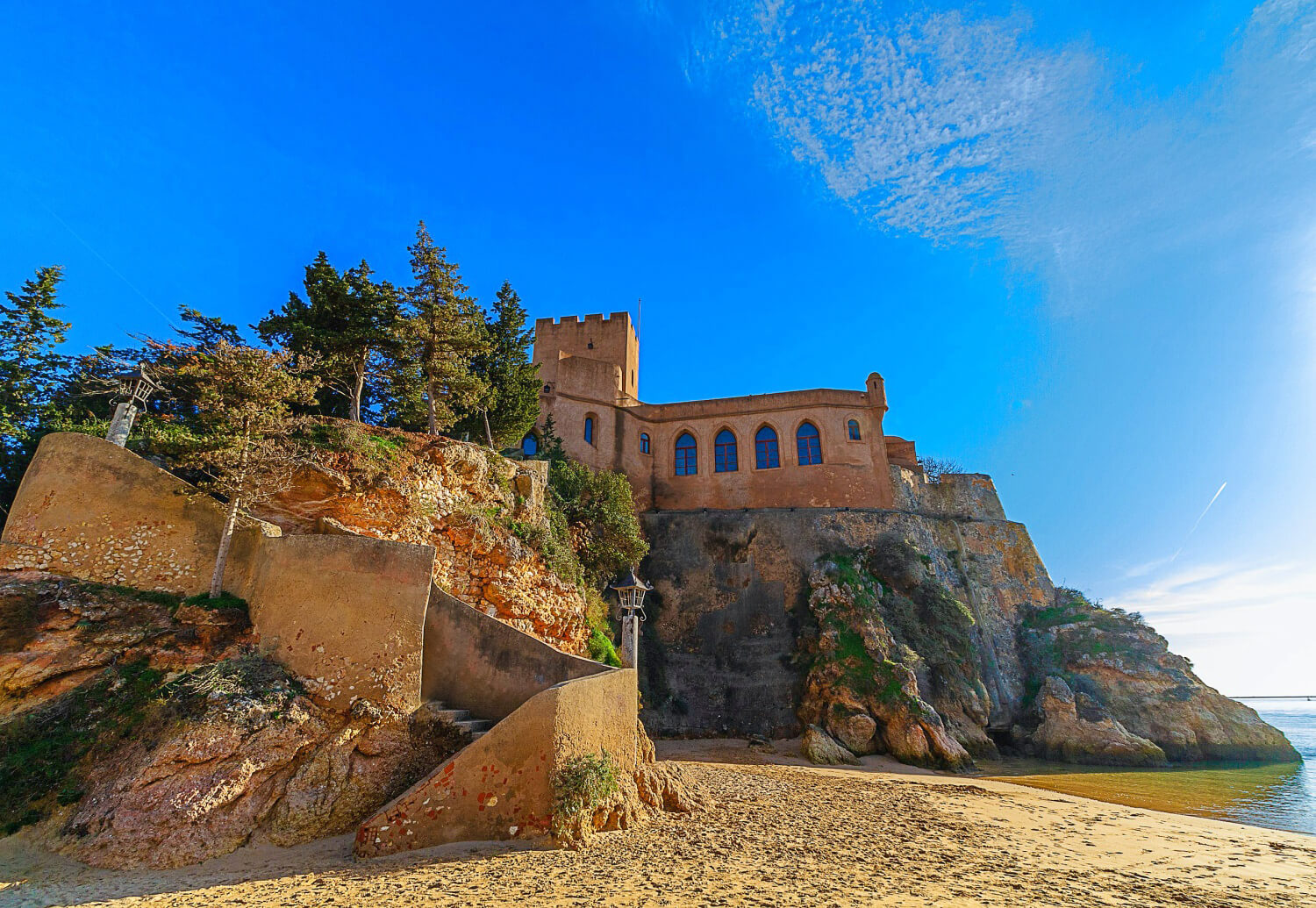
Forte de São João do Arade
Ferragudo
10.8km
fortress
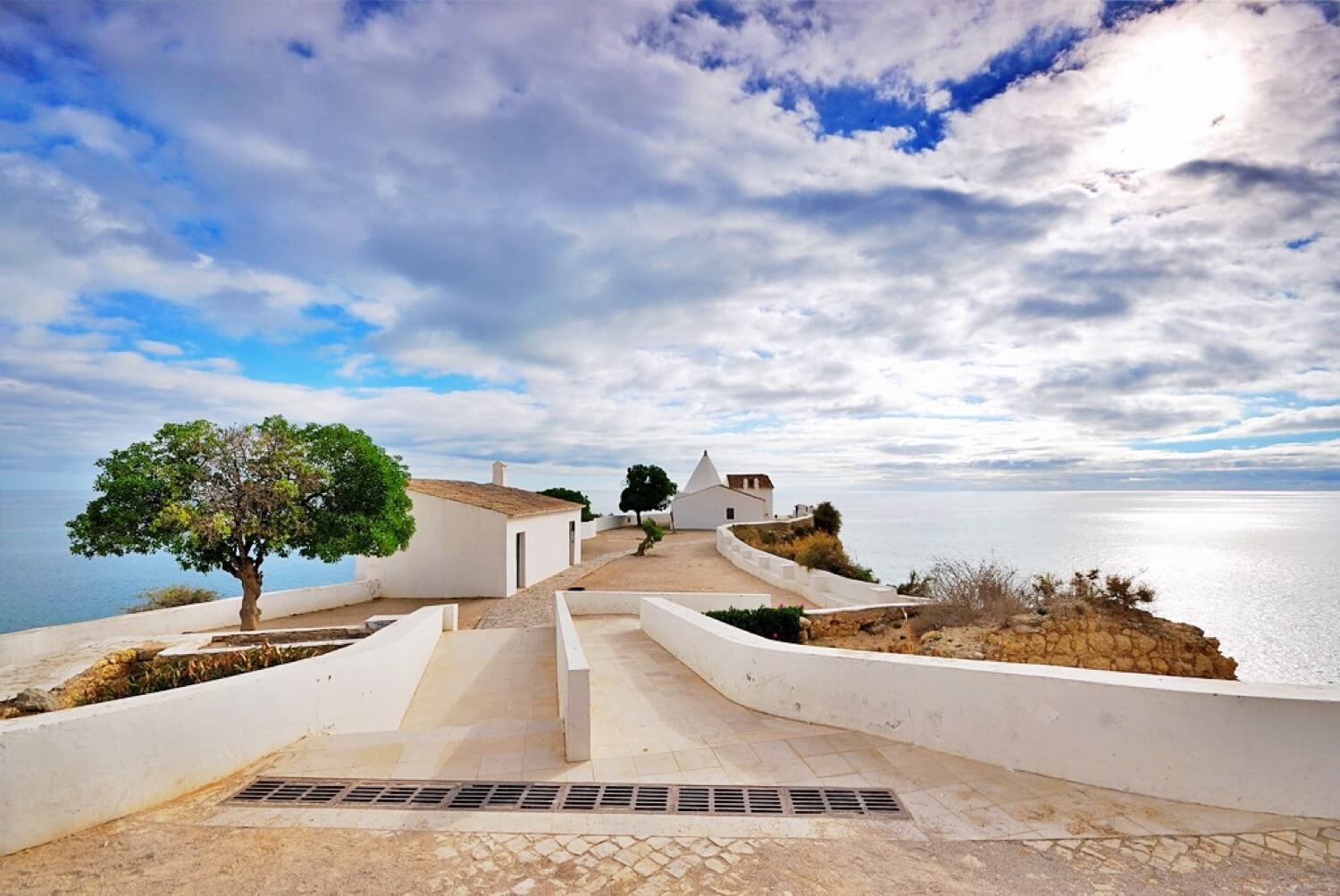
Fort of Nossa Senhora da Rocha (Porches)
Porches
11.5km
fortress
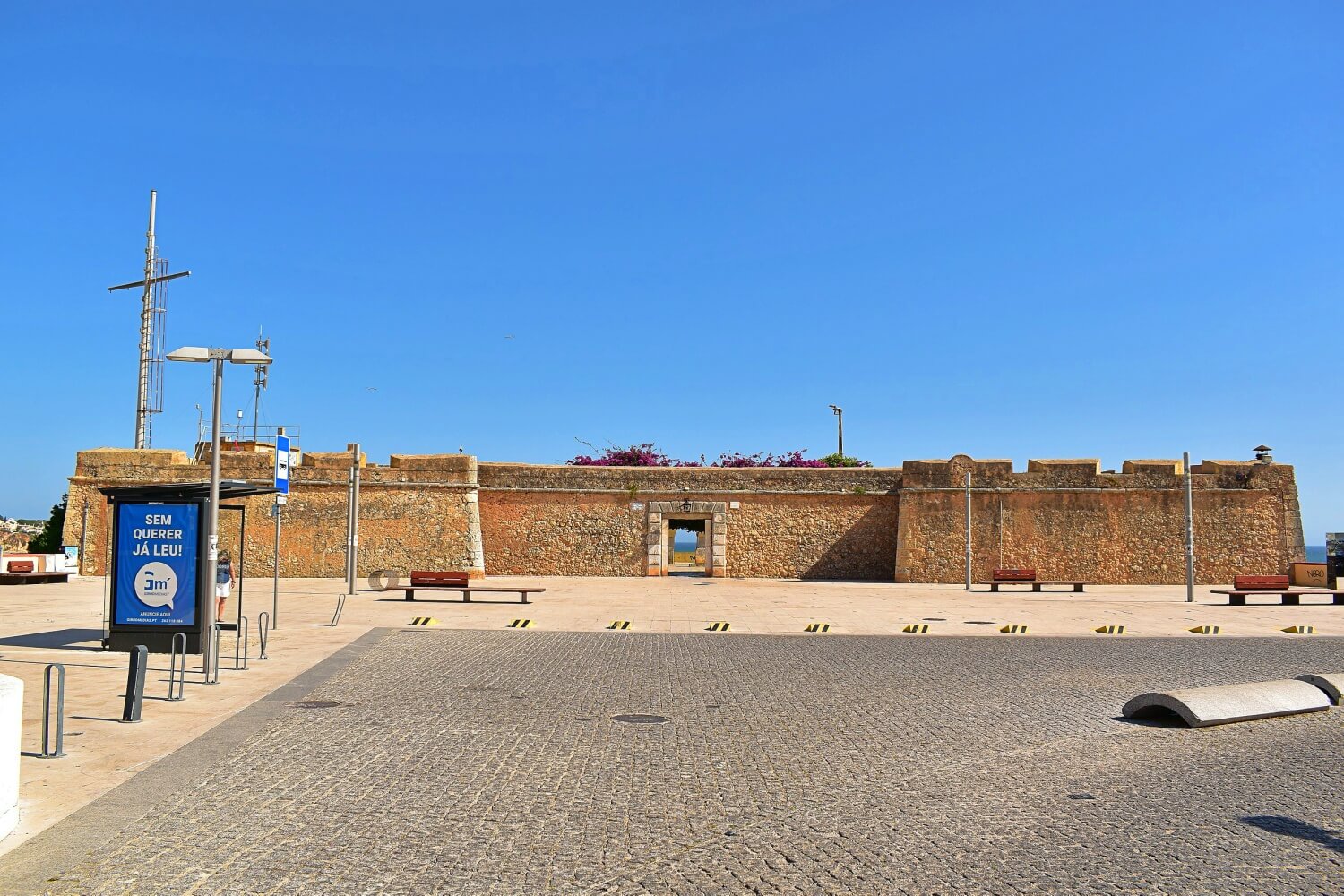
Forte de Santa Catarina (Portimão)
Portimão
11.6km
fortress
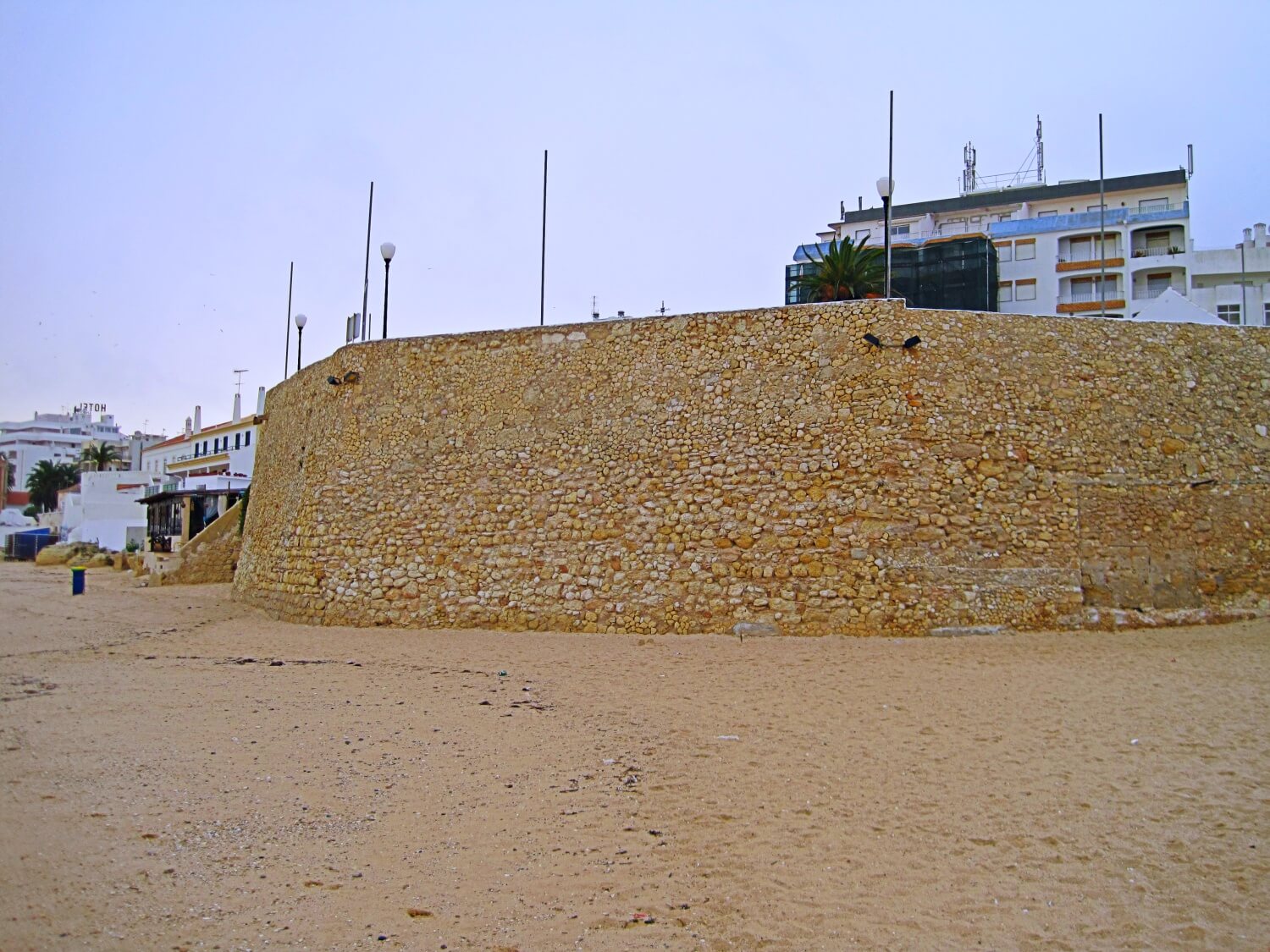
Fortaleza de Armação de Pêra
Armação de Pêra
12.2km
fortress
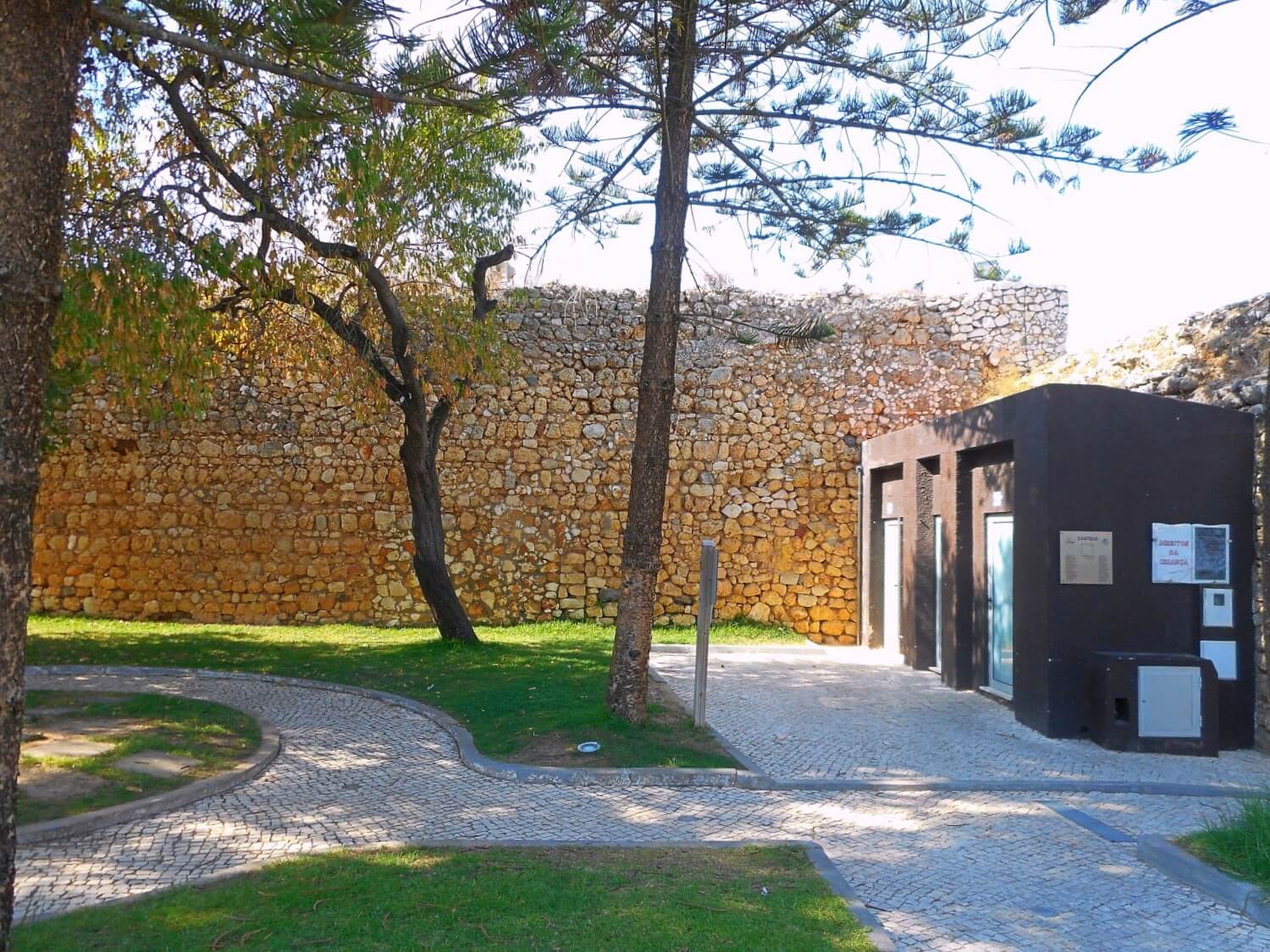
Castle of Alvor
Alvor
15.4km
castle, chateau
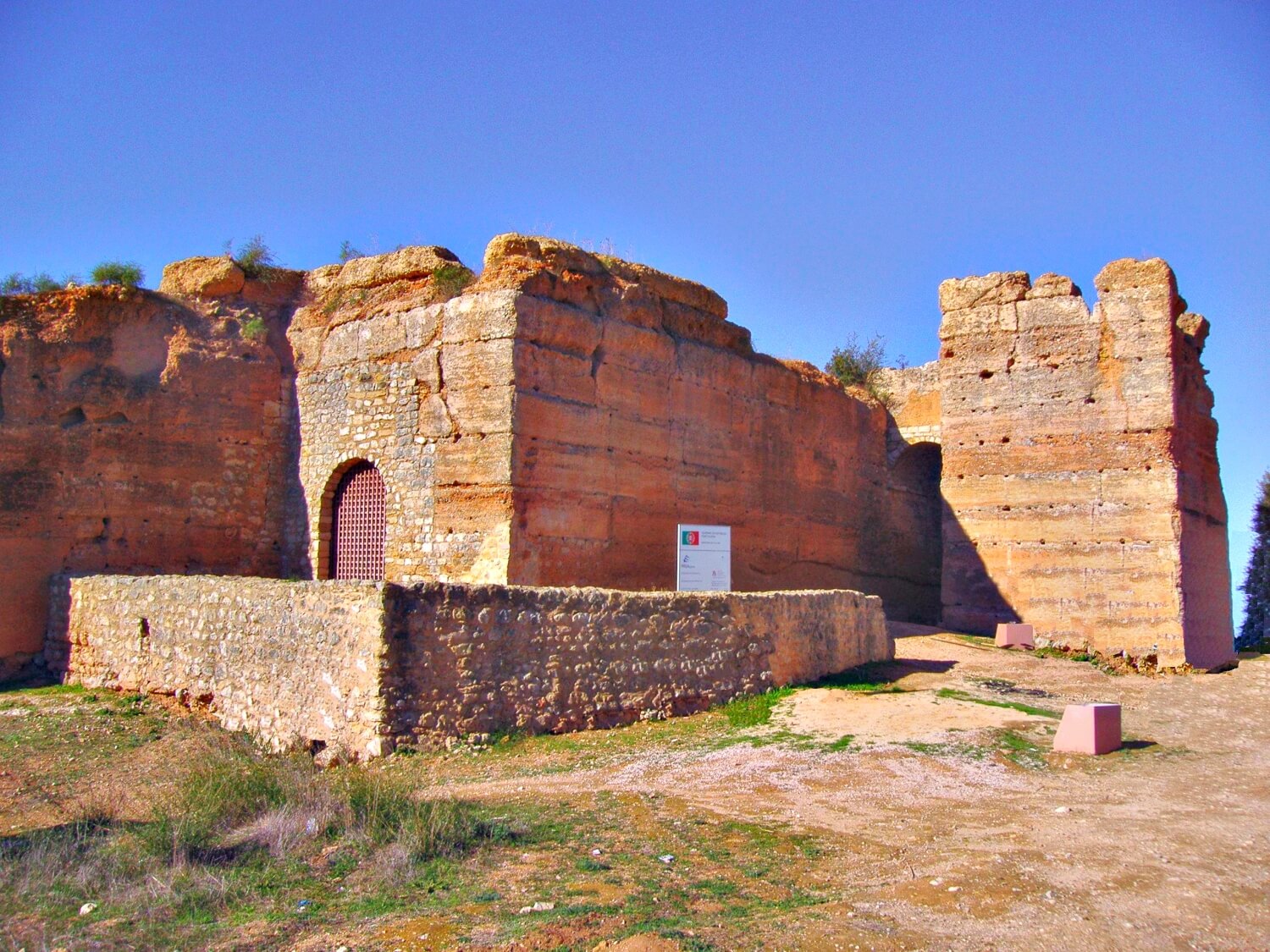
Castle of Paderne
Albufeira
21.4km
castle, chateau
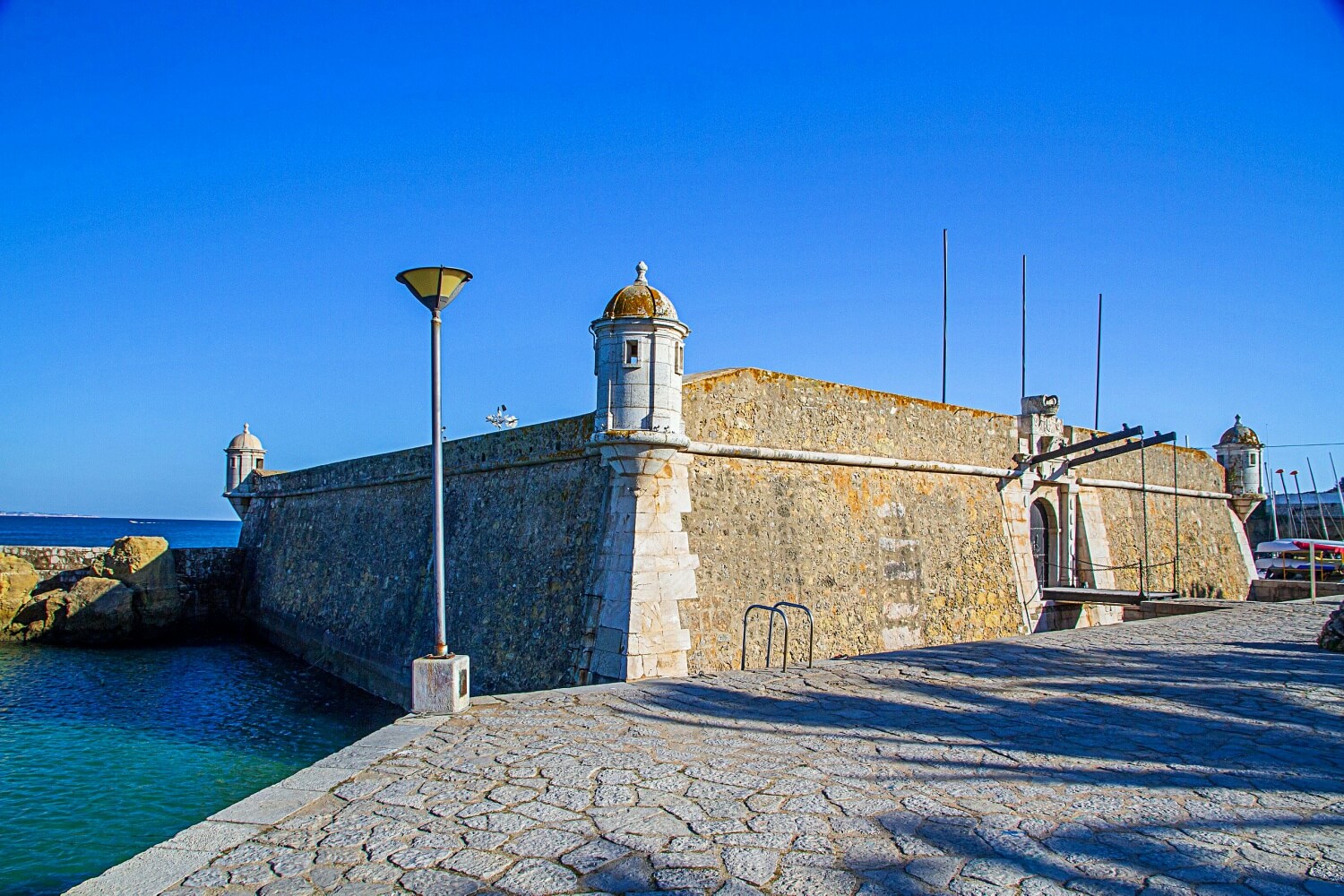
Forte da Ponta da Bandeira
Lagos
22.8km
fortress