Budanivskyy castle
Terebovlyans'kyi district Ternopil Oblast Ukraine
castle, chateau
Буданівський замок
Terebovlyans'kyi district Ternopil Oblast Ukraine
castle, chateau
Zamek w Budzanowie
Terebovlyans'kyi district Ternopil Oblast Ukraine
castle, chateau
Budanivskyy castle lies aside the traditional tourist routes, so his only visit the castle fans
Буданівський замок — фортифікаційна споруда у селі (колишньому містечку) Буданові Теребовлянського району Тернопільської області
Pierwszy drewniany zamek na wzgórzu zbudował Jakub Budzanowski
Previous names
Budanivskyy castle, Буданівський замок, Zamek w Budzanowie
Description
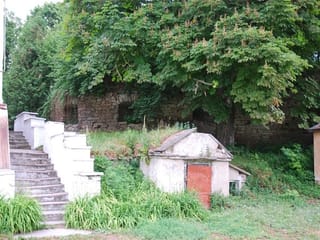
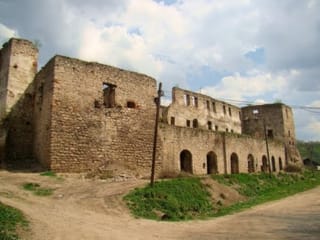
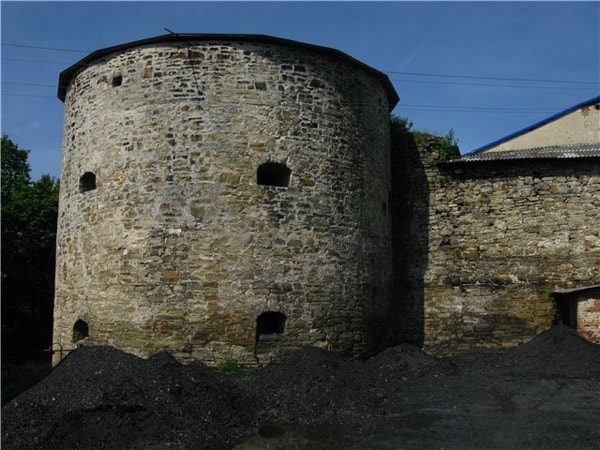
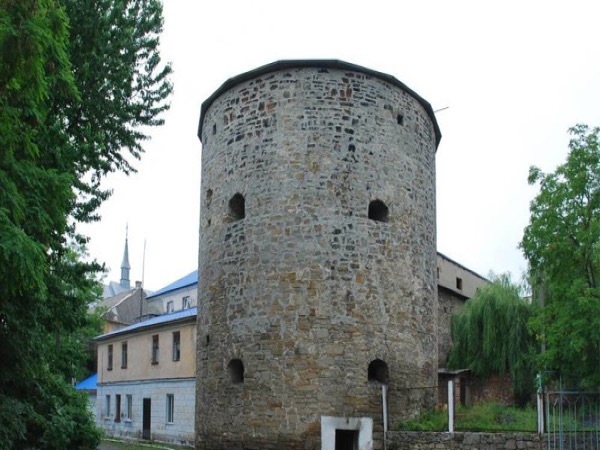
Budanivskyy castle lies aside the traditional tourist routes, so his only visit the castle fans. Although the former fortress located Psychiatric Hospital, the castle is fully available for visits and relatively well preserved.
It is believed that by the middle of the XVI century in modern Budanov was a small settlement Skomros. It has long been held near two ways Horde - Black and Kuchmanskyy. In 1549, King Sigismund Augustus allowed the privilege of his wife Galician magistrates Yakub Budzanivska Catherine of valve rename didychne village Skomorokhy (Skomros) Budzan the city. Sometimes the name associate with the word "bundz" - head of sheep cheese. Around 1550 Galician governor Yacoub Budzanovskyy lifted high left bank of the Seret wooden fortress. In his honor settlement called Budzan, worn until 1946. The wooden castle was soon destroyed by the Tatars.
At the beginning of XVII century and Ian Martin Khodorovsky in place of destroyed wooden fortress built a stone castle. Rock of brownish-gray built from different-sized rough blocks and a raft of local limestone and sandstone. It was rectangular in plan with four round corner towers. It was the tallest building of the former town. Simultaneously with the construction of a new castle was founded in Khodorovsky Budzan Roman Catholic parish. The first stone church of the Holy Cross was probably destroyed by the Turks. In 1631, the new owner was Alexander Budzanova Sinenskyy and later moved to the family settlement Levochynskyh. Castle twice destroyed Cossack Bohdan Khmelnytsky - in 1648 and 1651, respectively. Trying to restore it made the new owner Tomas Luzhetskyy. Luzhetskyy himself heroically died during the defense of the fortress from the Turks in 1672.
The castle was captured and destroyed by cunning the Turks in 1675. According to legend, local residents know in advance the approximation of the Turks from Terebovlia and hid by locking walls to the castle at night knocked a woman with a small child with a request to let the castle even a child. The attackers were still far away, so the defenders opened the gate. It was a catch: the Tatars invaded the castle through the gate of the ambush and massacred all the inhabitants. Defenders of the castle buried in the field "Pohyblytsya" near the castle, near the forest "Semankovym." Women and children buried separately, and men - including three large graves. At the cemetery and 79 graves are still preserved, and one of the three burials of male defenders is a stone with the inscription: "Here in this place called Pohlybytseyu, rest defenders from the Turks and Tatars in 1675 was."
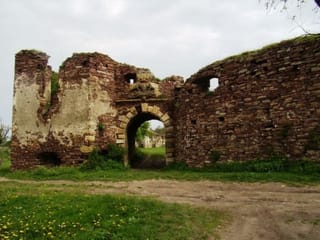
Restored the castle in 1765, Eustace and Mary Potocki. They rebuilt it in the western part of the church. Peredsinok temple priests and arranged with two castle towers. The new church was consecrated in 1838 under the title of the Exaltation of the Holy Cross. In 1846 and restored the northern part of the castle. Through the efforts Kulchytsky priest that same year the castle was given under the convent of mercy, which was at the school and hospital. Then restore one of the towers and part of the walls. This massive stone tower is well preserved until today. The castle suffered greatly during both world wars. Do not preserved entrance gates, the remains of ramparts and ditches. At the tower, which serves as the church wall, miraculously preserved memorial table in honor of the 10th anniversary of restoration of the state. Since 1956 to the present time the castle is psychiatric hospital. The church, which is in a dilapidated condition in 1994 returned to the Roman Catholic community. Continuing its revival. In the former town, and today - the village, which in 1946 called "Budaniv" kept several mansions Austrian period and a couple of churches. http://www.potolkimaker.com/
Буданівський замок — фортифікаційна споруда у селі (колишньому містечку) Буданові Теребовлянського району Тернопільської області.
Замок височить на Замковій горі, підступи до якої утруднюють природні перешкоди.
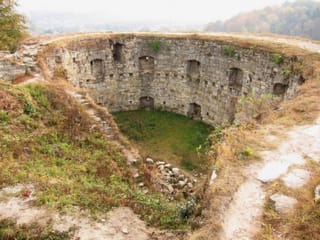
Збереглися дві наріжні конусоподібні башти з двома ярусами гарматних амбразур, що зводяться на висоту п'ятиповерхового будинку. Поряд з баштами збереглися фрагменти замкових мурів та старі келійні корпуси, переобладнані із замкових казарм, що тягнуться до костелу.
Перший дерев'яний замок у Буданові був зведений його власником Якубом Будзановським. На початку XVII століття на місці зруйнованого кримськими татарами дерев'яної, співвласники міста брати Ян та Марцін Ходоровські сприяють спорудженню мурованої фортеці; у 1631 році вони продали замок Александру Сененському (сину Даніеля Сененського та Ельжбети Тарновської[1]).[2] Потім замок перейшов у власність до родини Левочинських.
Під час Національно-визвольної війни українського народу 1648–1653 років. під проводом Богдана Хмельницького козаки кілька разів брали приступом укріплення (замок двічі успішно витримав козацьку облогу в часи Визвольної війни, але під час 3-ої козацької атаки 1651 року був здобутий). Після цих подій замок лежав у напівзруйнованому та розграбованому стані. Опис замку 1661 року свідчить: «тут зогнили дахи та підлога, башти і стіни мали чимало пробоїн, міст і стрілецькі галереї на баштах прогнили, пічки в житлових приміщеннях стояли розваленими».
Замок відбудували, але турецька армія паші Ібрагіма Шишмана в 1675 році потужними артобстрілами вщент його знищила. Оборонців замку місцеве населення поховало на сусідний горі Погибниця. Після цієї руйнації військова комісія визнала недоцільним відновлювати весь фортифікаційний ансамбль. У 1765 році Евстахій Потоцький на догоду своїй дружині Марії з Ковтських подарував Буданівський замок черницям, виділив кошти на його переобладнання під монастир.
У 1846 році монастирські приміщення було реконструйовано, добудовано шпитальний корпус.
Після Другої світової війни, в 1956 році відновлений замковий комплекс запрацював як психіатрична лікарня на 300 ліжок. Вона функціонує тут досі.
Сучасний герб Буданова затверджений 25 березня 1999 року. У лазуровому полі срібна кам'яна стіна з вежею, на якій виникає золотий лев із золотим мечем у лапах. Фортечна стіна вказує на причину виникнення Буданова та його стратегічне значення як укріпленого містечка з оборонним замком.
Pierwszy drewniany zamek na wzgórzu zbudował Jakub Budzanowski. Został on zniszczony podczas najazdów tatarskich[2]. W 1631 r. zamek przeszedł w ręce Aleksandra Sieneńskiego, a potem w ręce rodziny Lewoczyńskich. Kozacy zdobyli i zniszczyli zamek podczas buntów w latach 1648 i 1651[2]. Przeprowadzona w 1661 r. lustracja stwierdza, że stropy i dach pogniły i opadły, ściany i baszty popękały w wielu miejscach, okna potłuczone, piece rozwalone, stajnia zrujnowana a most i ganki strzelnicze zgniły[2]. Obiekt odbudował Tomasz Łużecki. Ponownie zdobyły i częściowo zniszczyły zamek wojska tureckie w latach 1672 i 1675. Prawie sto lat później bo w 1765 r. postanowiono odremontować stojące wieże[2]. Od 1817 r. na mocy darowizny był własnością proboszcza, dlatego skrzydło zachodnie przebudowano na kościół z prezbiterium w miejscu bastei od południa. Skrzydło południowe zamieniono na plebanię. W 1846 r. ksiądz Kulczycki w jednym ze skrzydeł zbudował budynek klasztoru sióstr Miłosierdzia ze szpitalem. Zamek został zniszczony w czasie I wojny światowej. Po 1945 r. klasztor i kościół zamieniono na szpital usuwając zdobienia i wprowadzając betonowe stropy. Z zamku do dzisiaj zachowały się dwie basteje i wschodni odcinek murów.
Czworoboczne murowane założenie z czterema kolistymi bastejami w narożach zbudowano na początku XVII wieku na polecenie Jana oraz Marcina Chodorowskich[2]. Do zamku prowadziła brama przez budynek bramny w narożniku północno-zachodnim i furta od strony miasta.
Nearby castles