Bystrica
Považské Podhradie Trenčín county Slovakia
castle ruin
Považský hrad - Bystrica
Považské Podhradie Trenčiansky kraj Slovakia
zrúcanina hradu
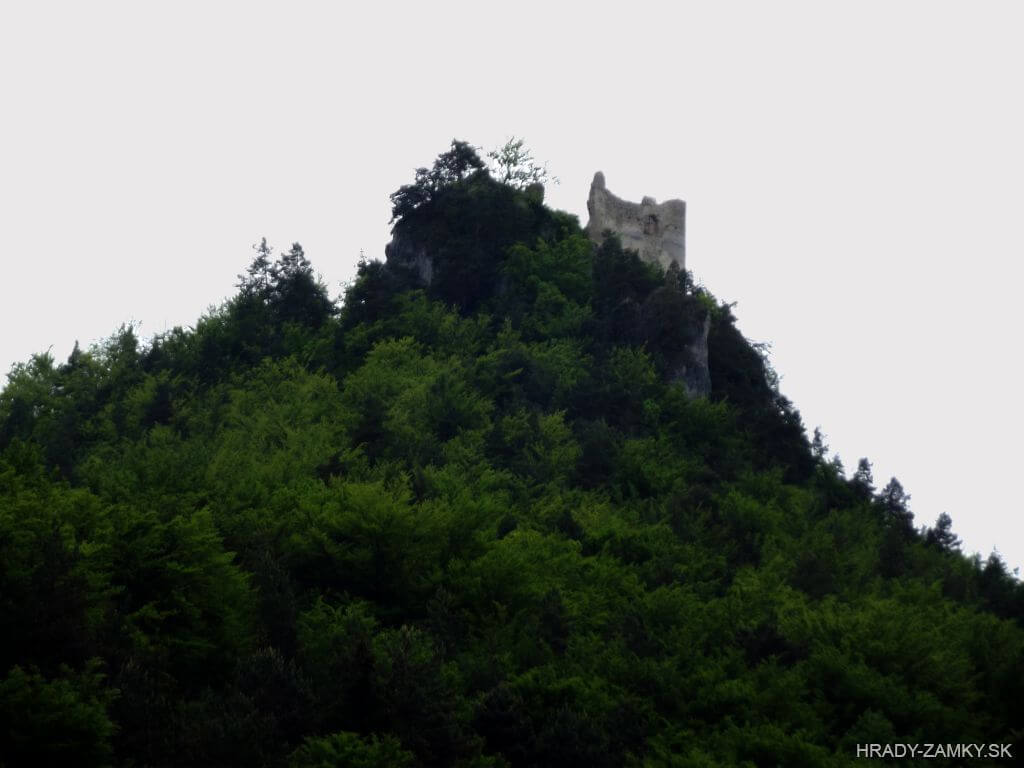
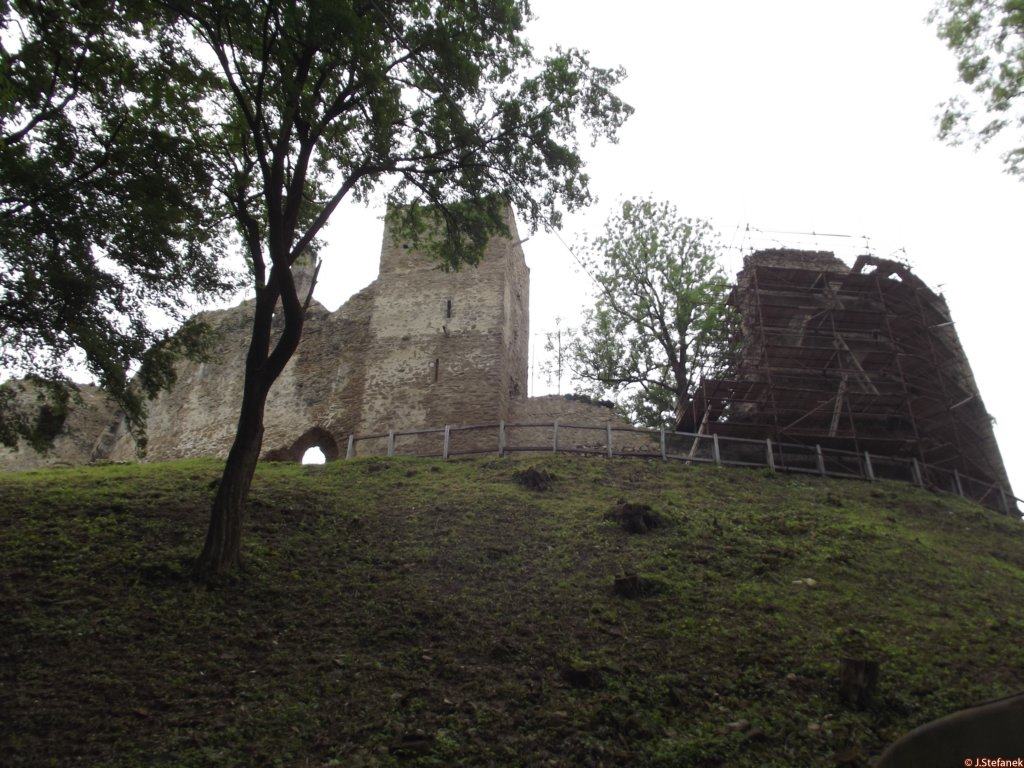
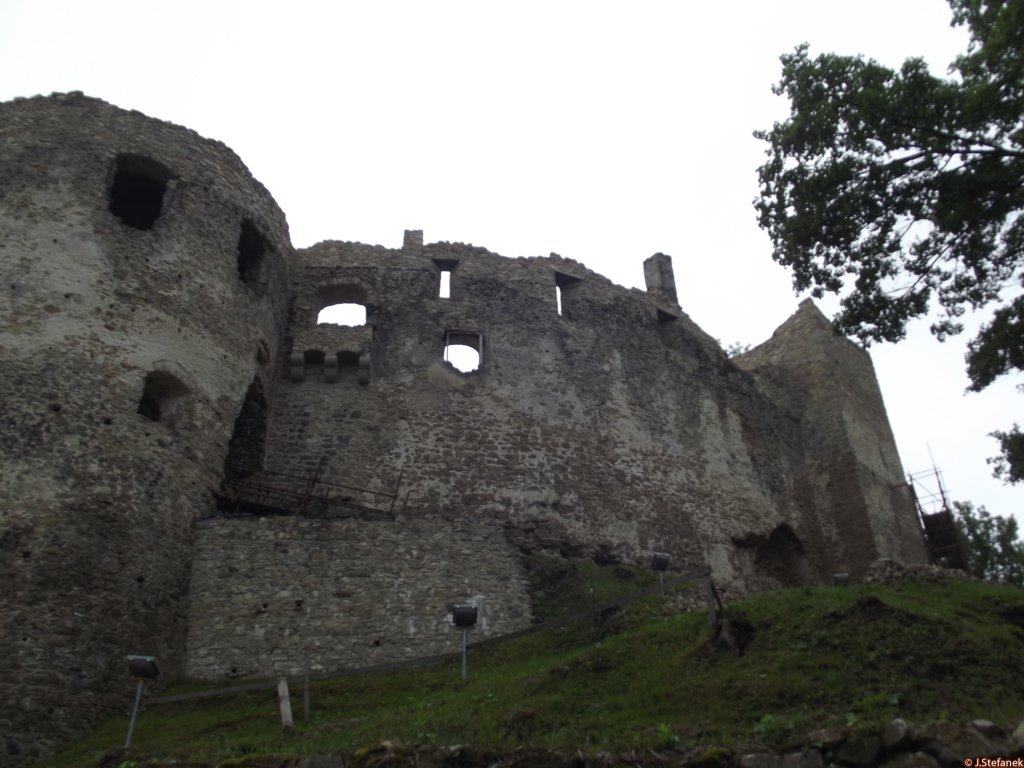
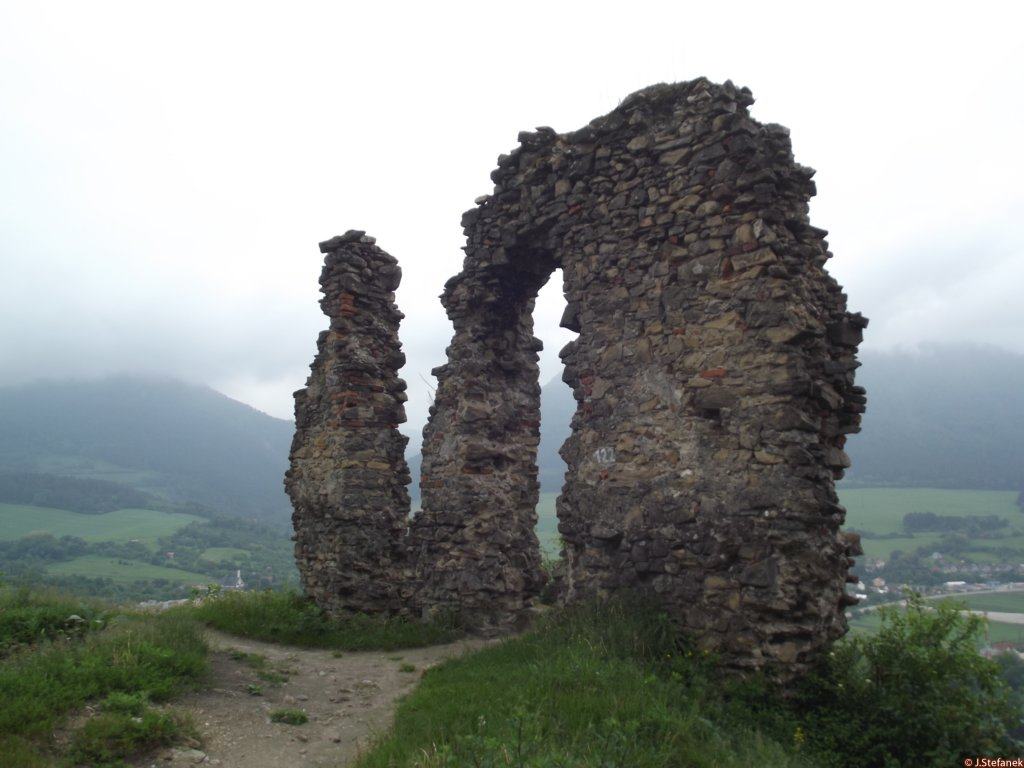
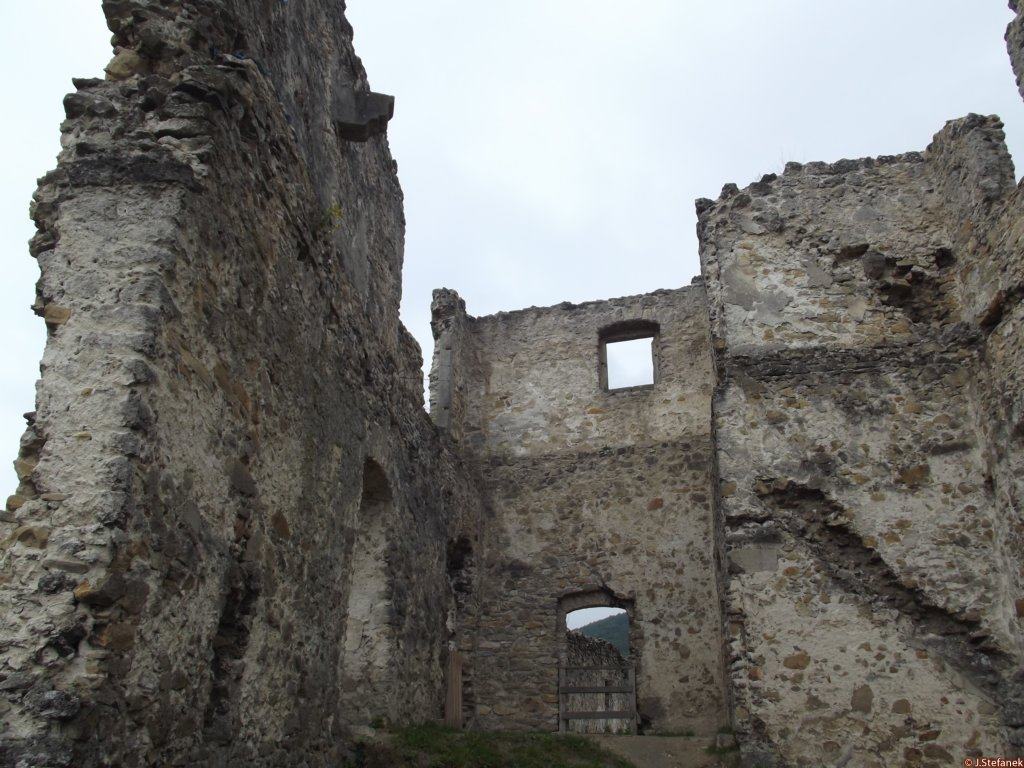
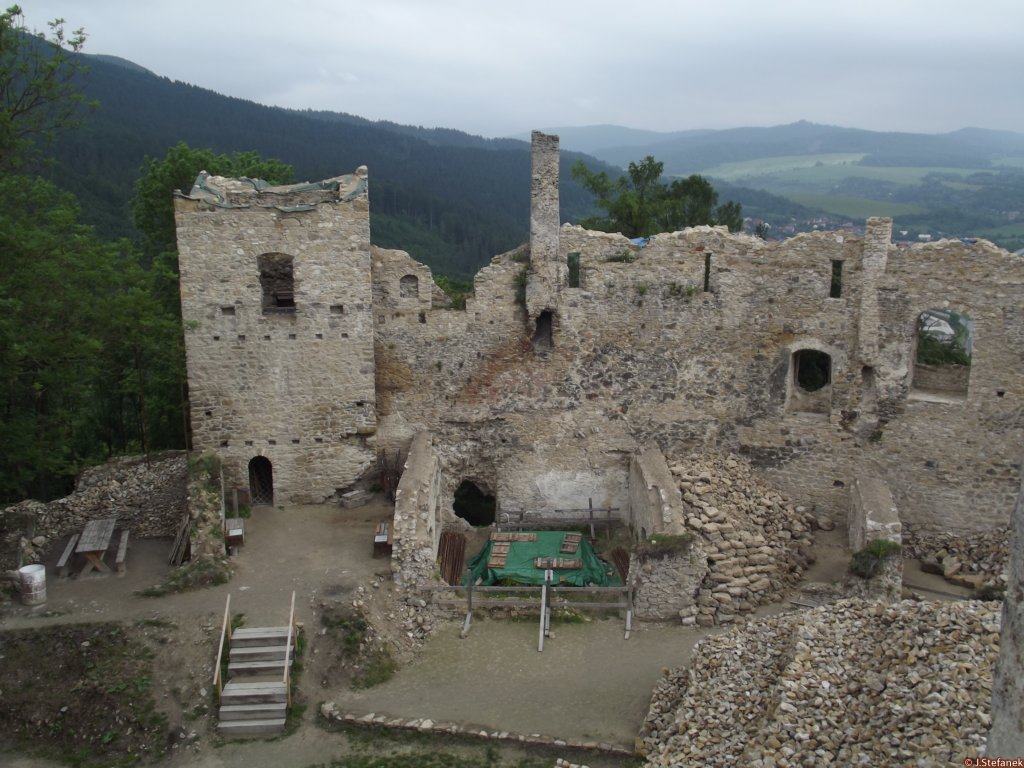
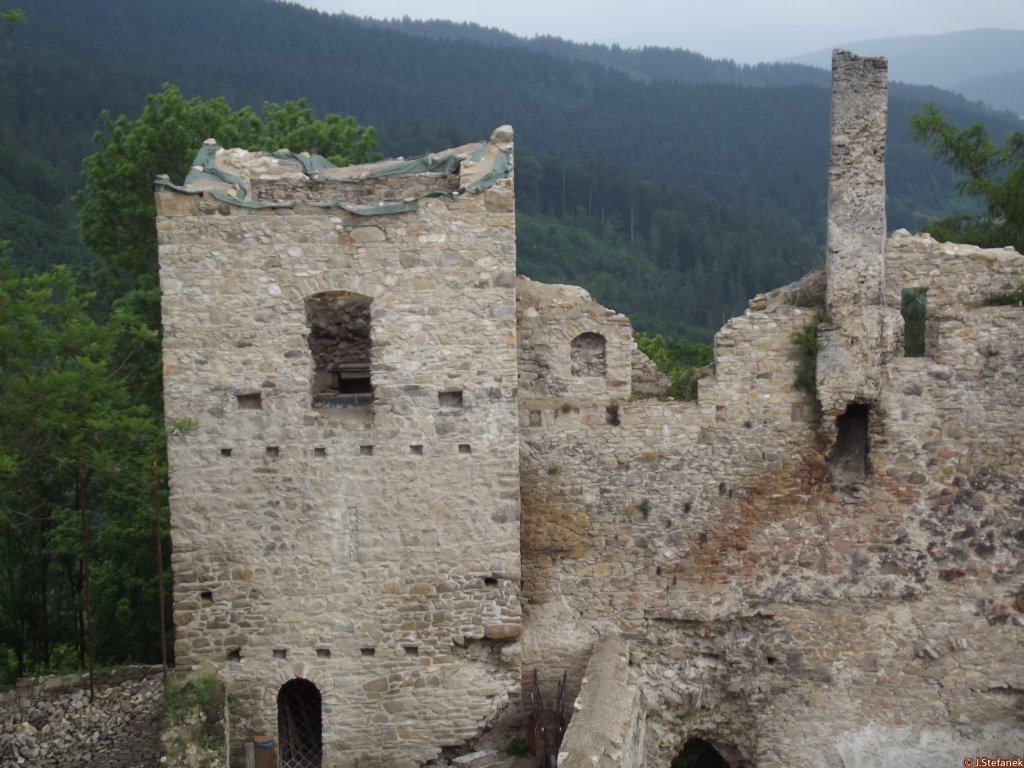
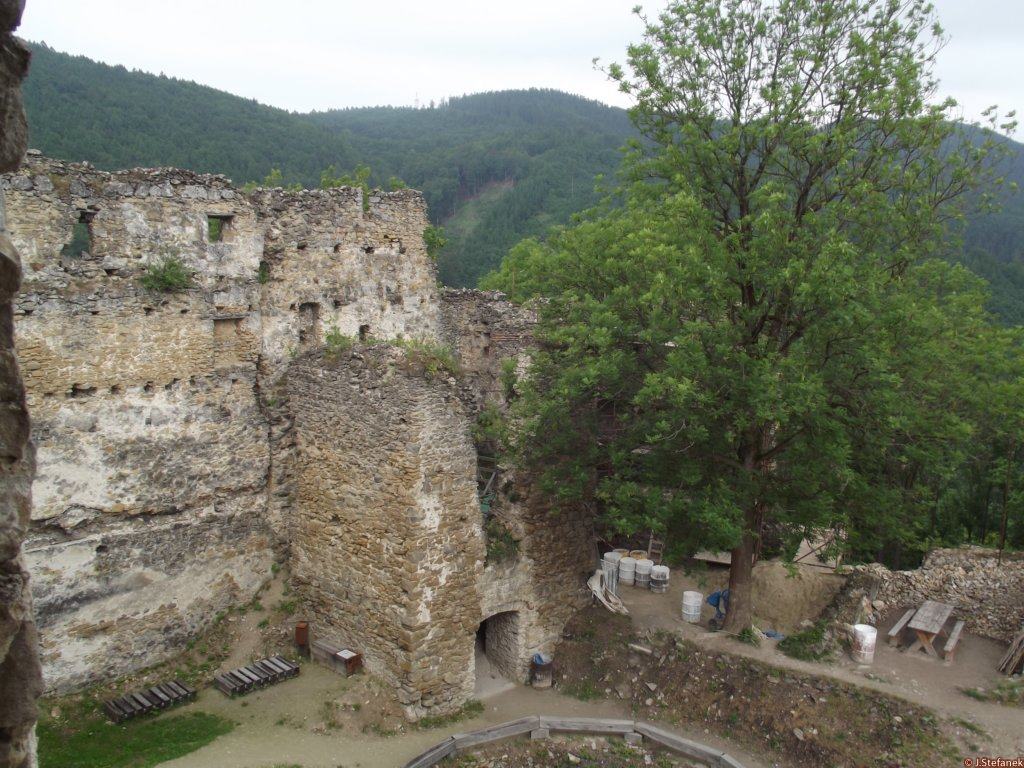
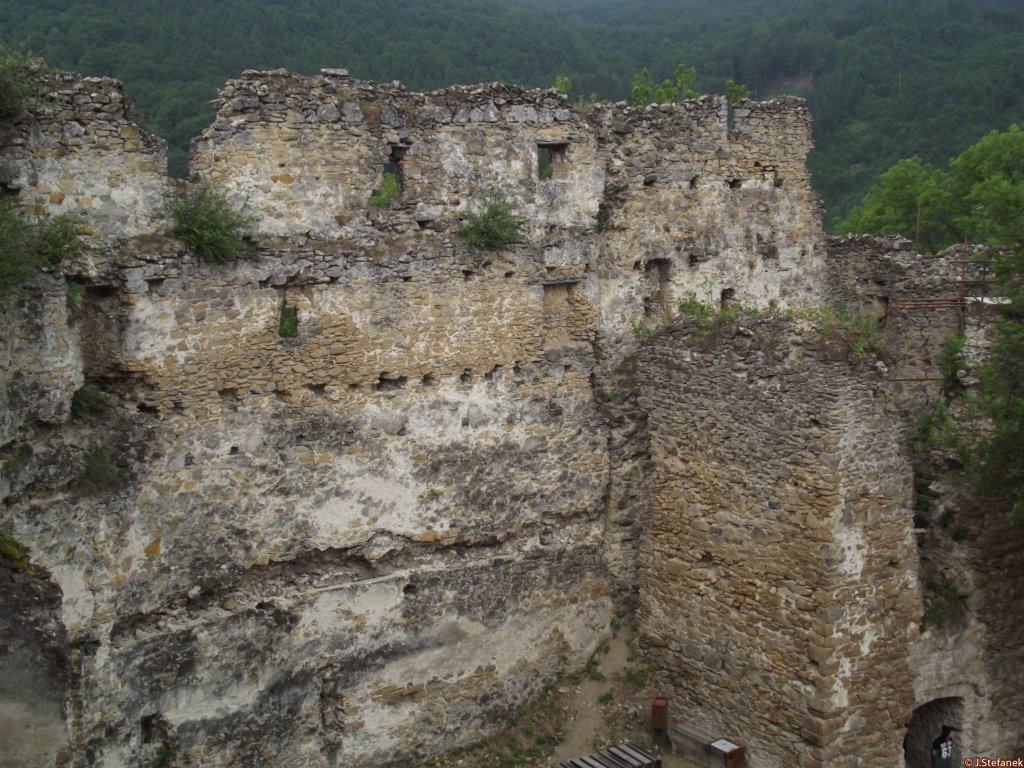
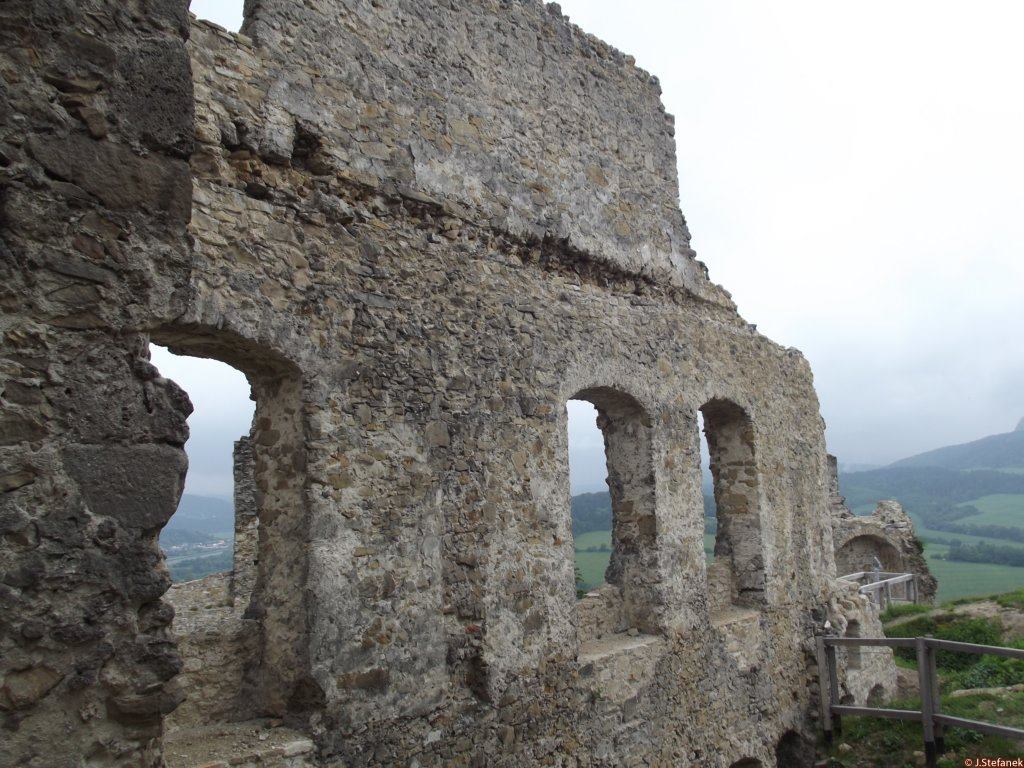
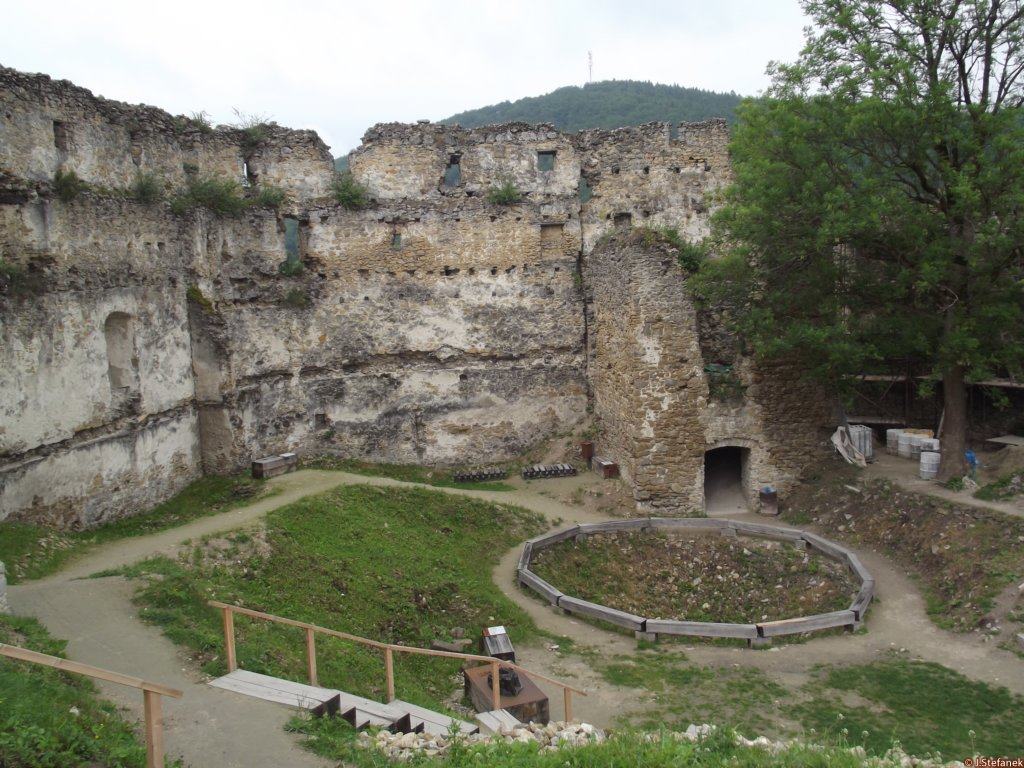
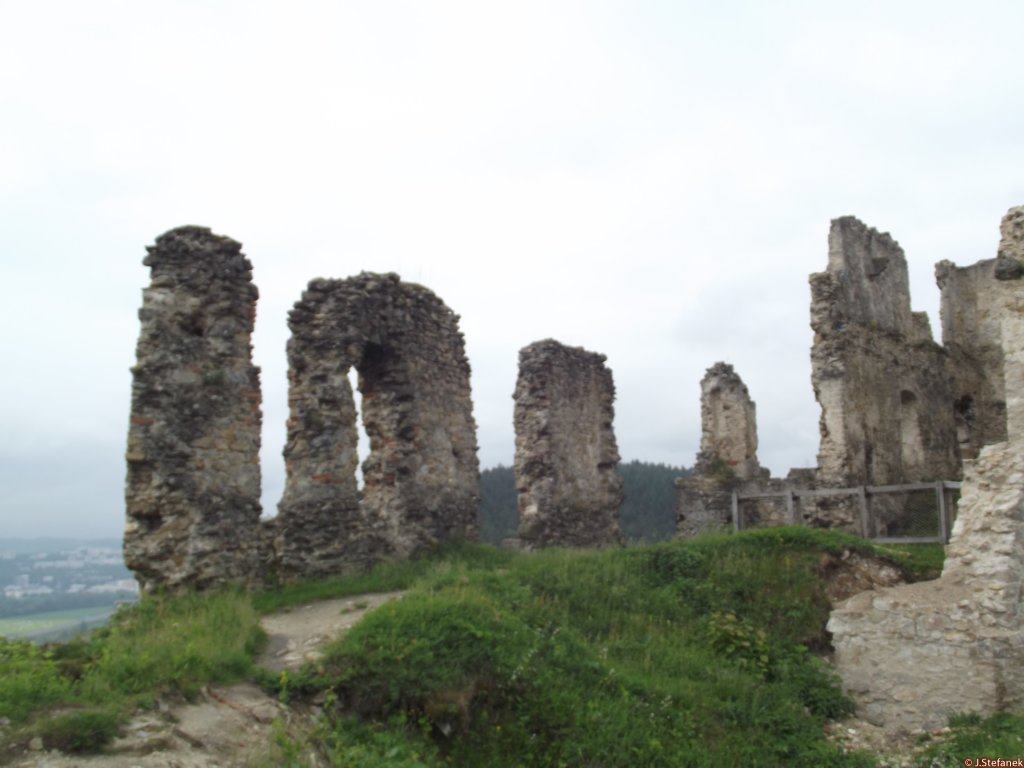
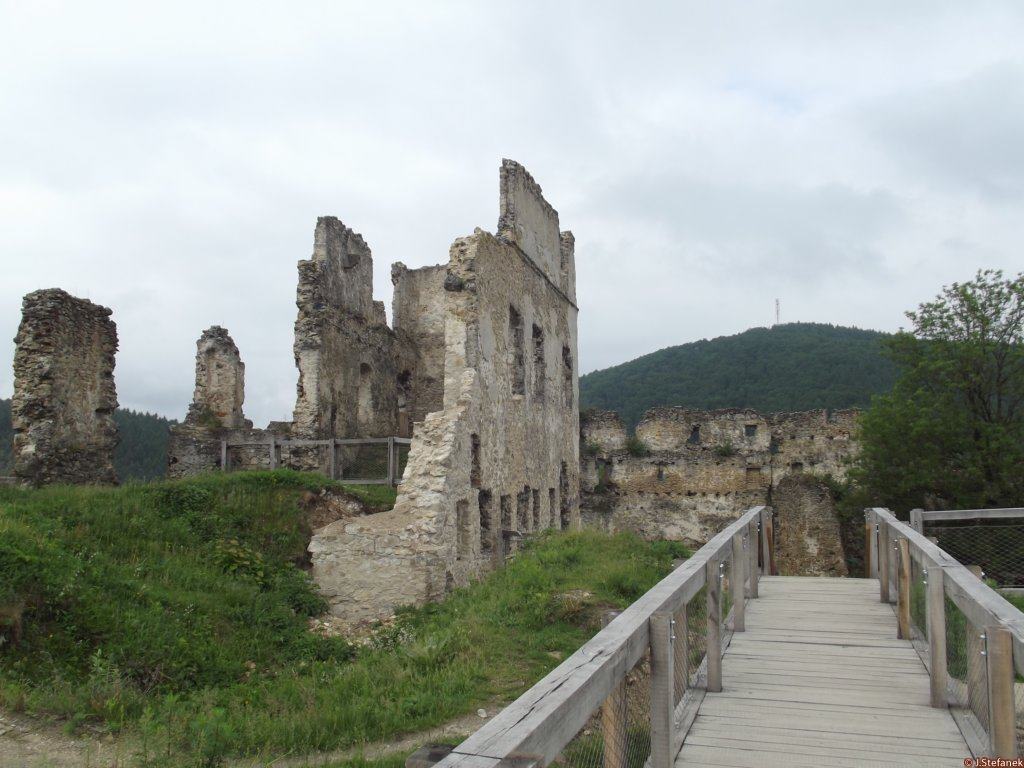
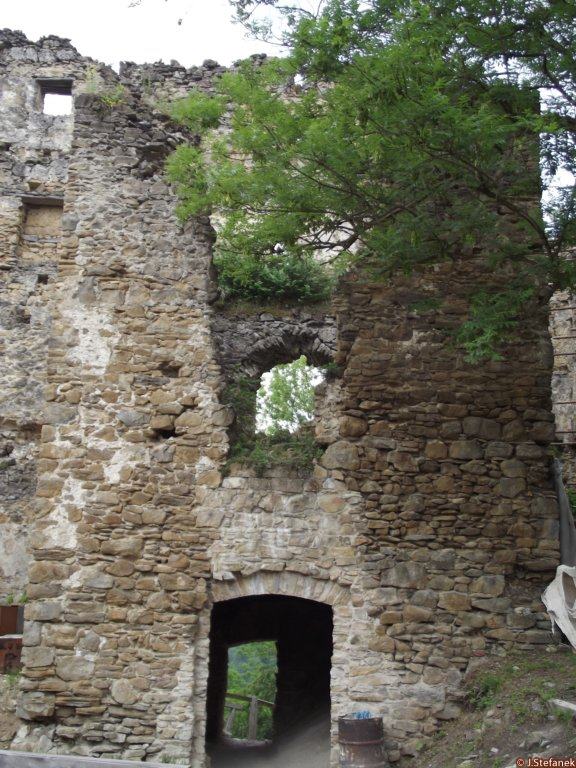
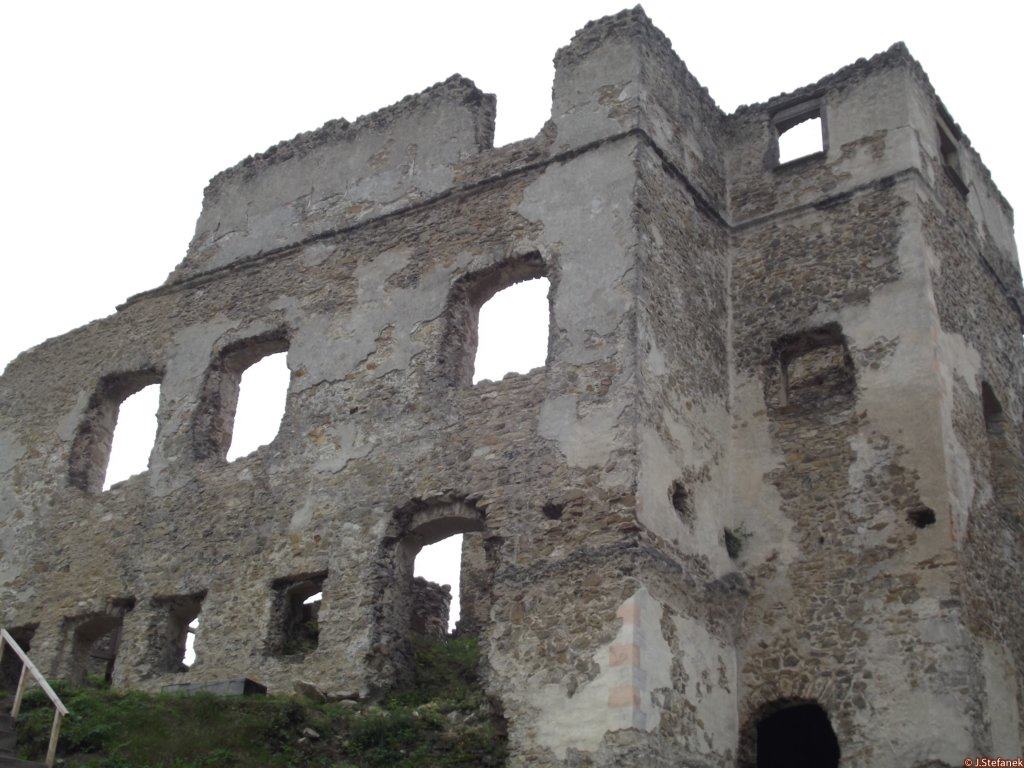
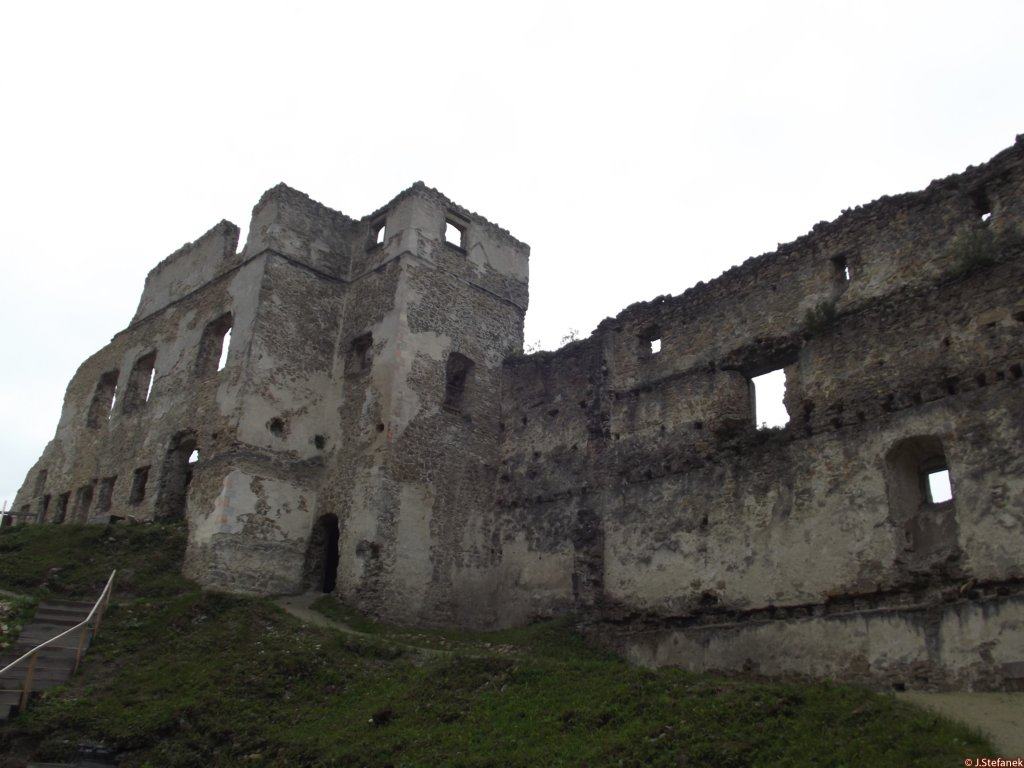
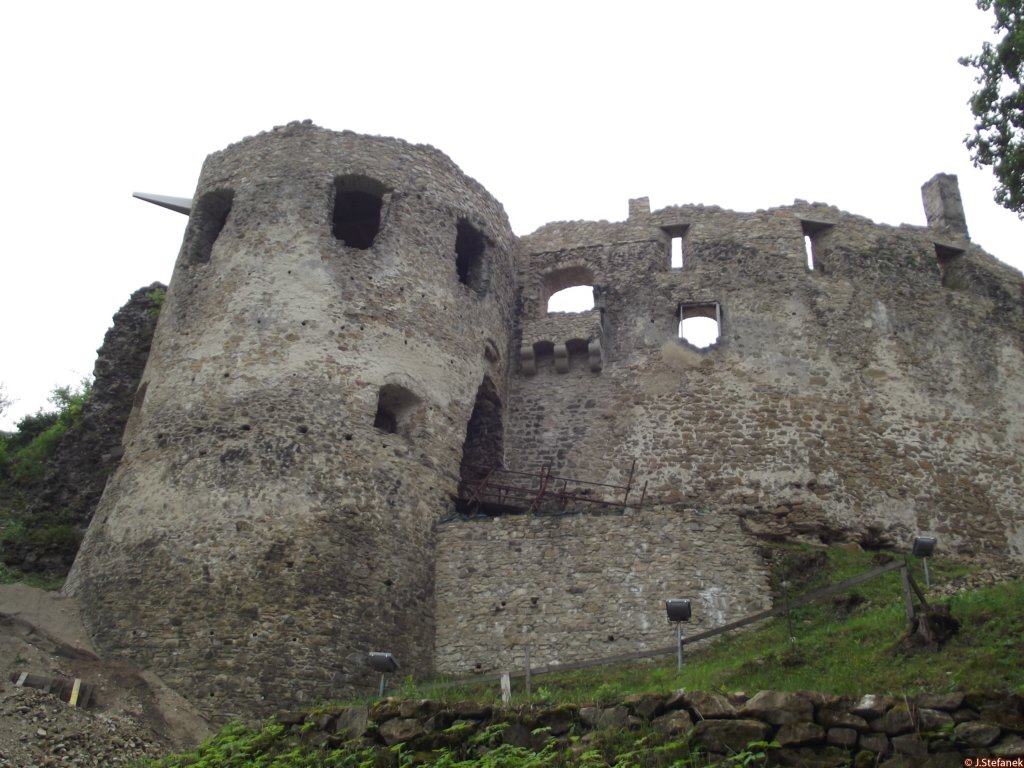
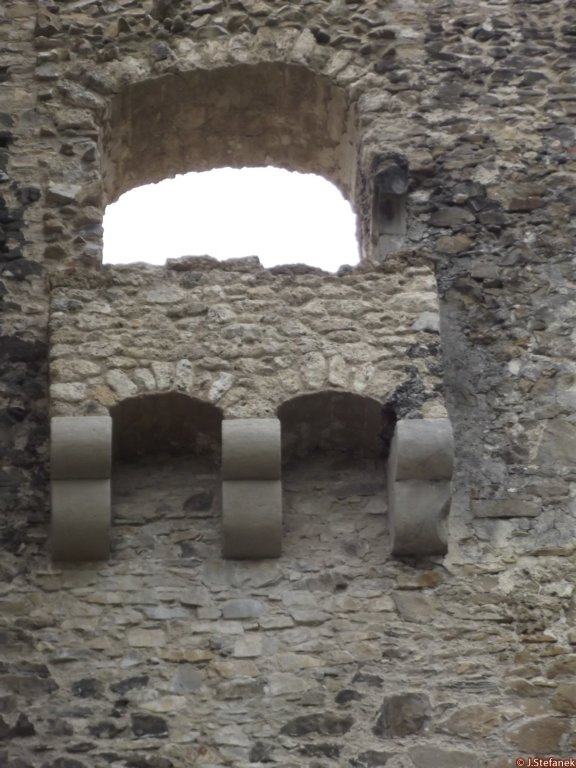
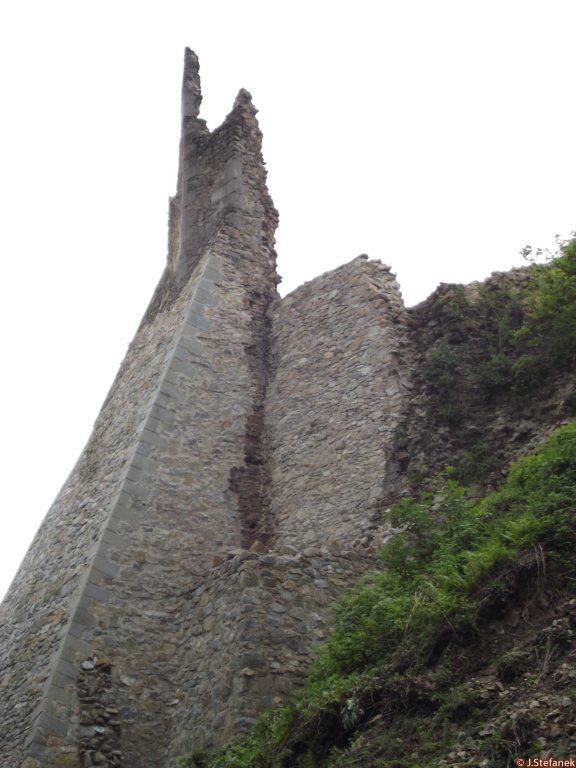
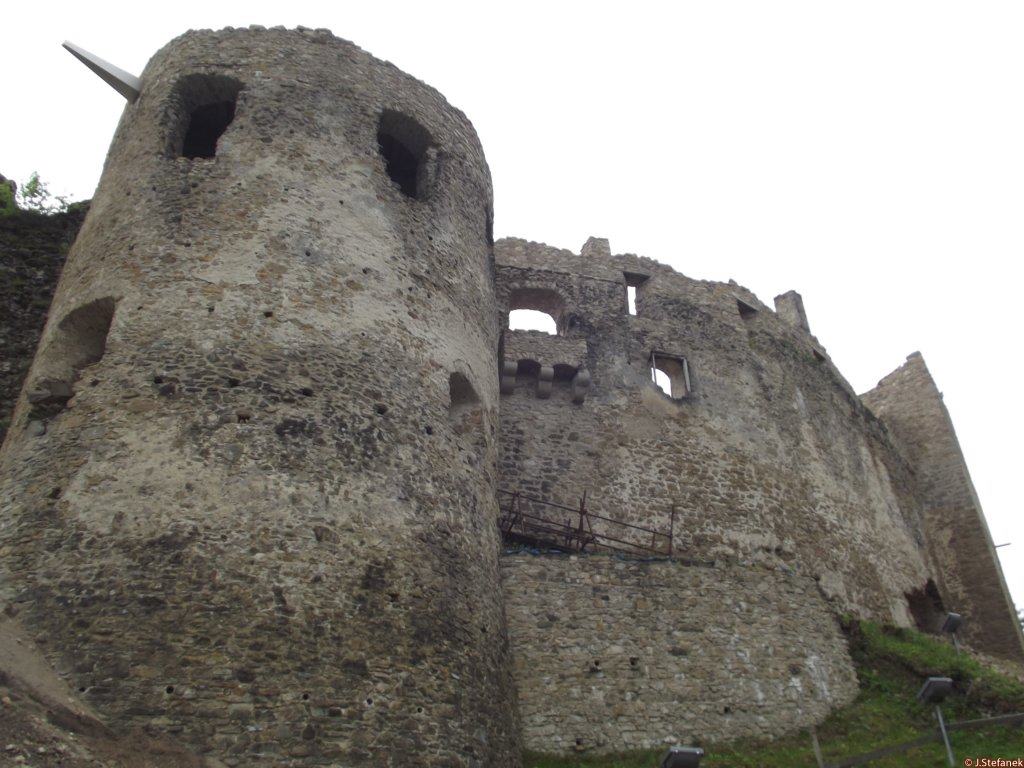
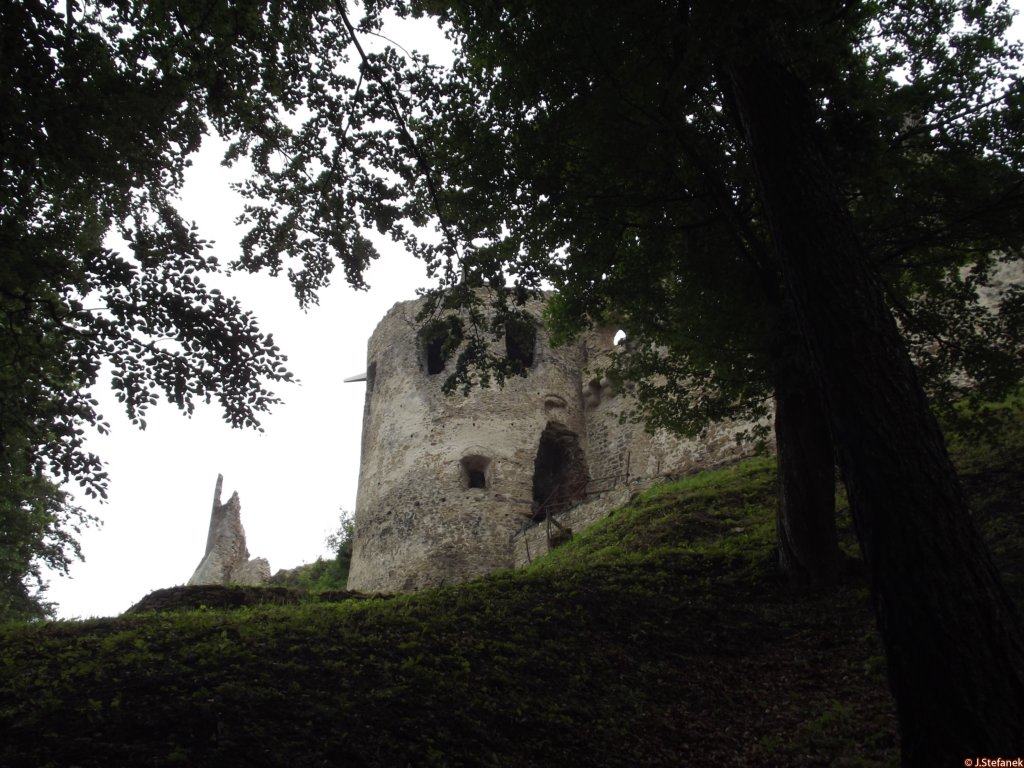
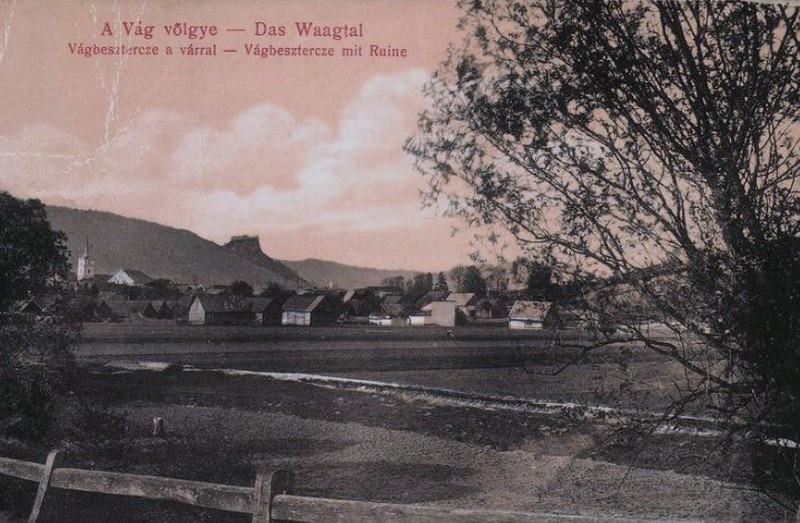
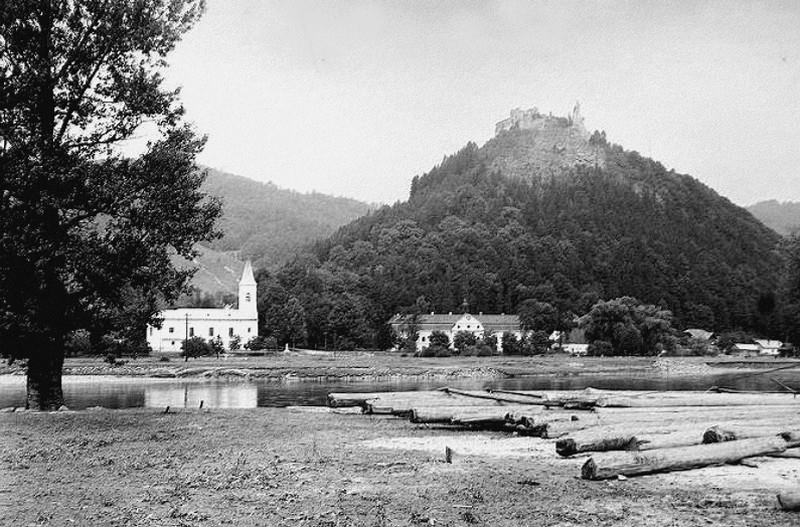
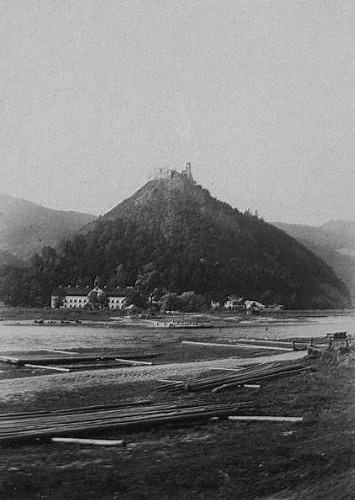
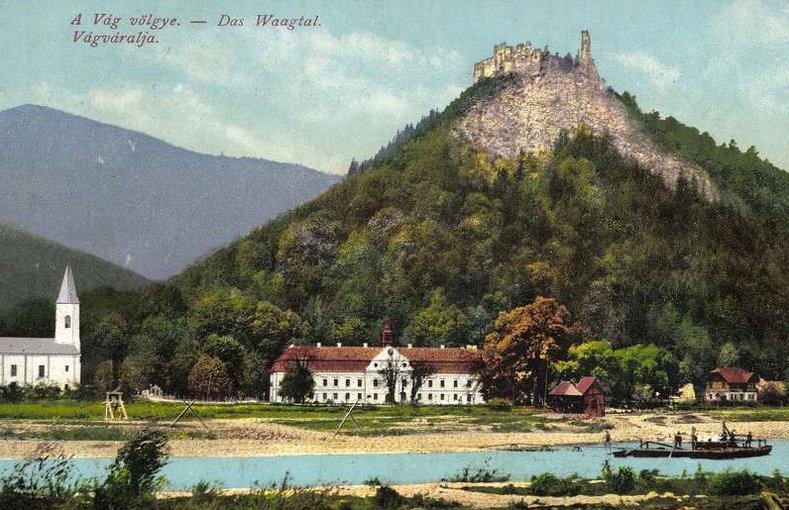
The ruins of the castle on the rocky limestone hill of the Javorníky foothills, above the river Váh in Povazske Podhradie, about 3km north of Povazska Bystrica
Zrúcanina hradu na skalnatom vápencovom vrchu predhoria Javorníkov, nad tokom rieky Váh v Považskom Podhradí, asi 3km severne od Považskej Bystrice
Previous names
hrad Bystrica, castrum Bestruche, castrum Bystriciensis, castrum Bistricz, castrum Bystricza, Beszterce, Vágbeszterce, Vágvár
Roads
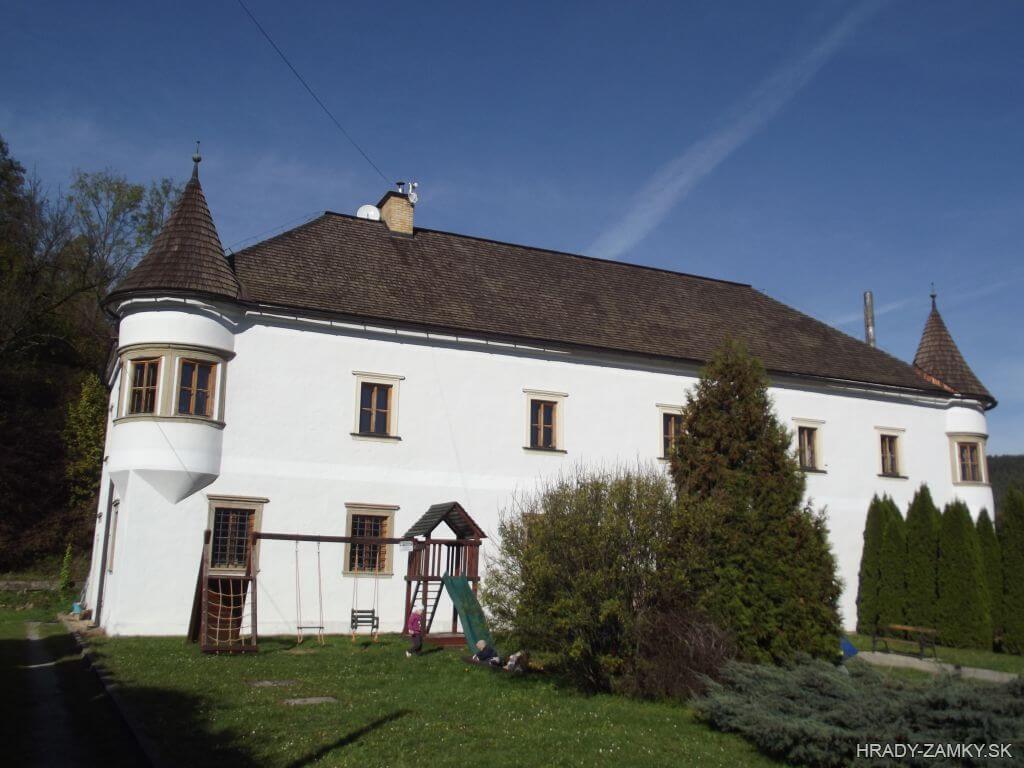
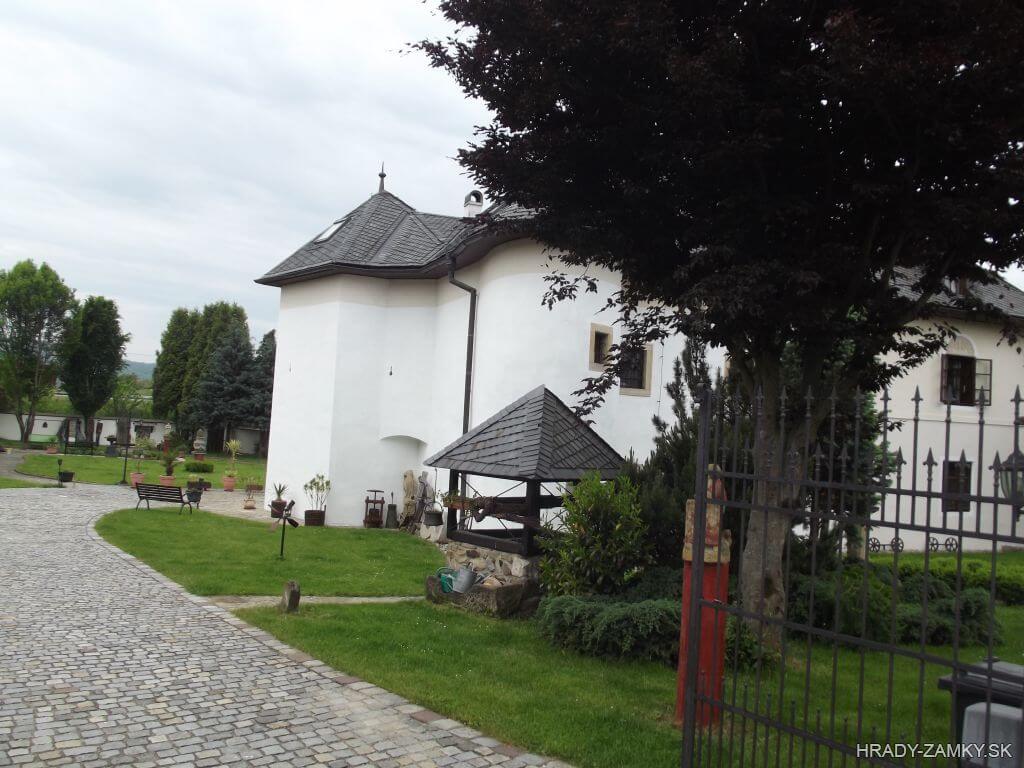
The main road No. 507 passes through Považské Podhradie, whether we come from Podvažie or Považská Bystrica, it is necessary to turn to a narrow alley near the church of st. Ladislav, which is near the older Rococo mansion. Then right next to the church turn right and after a few meters we arrive to the smaller mansion Burg. In front of it is a relatively large parking lot.From there we continue on foot to the right along a stony path (yellow hiking trail), where the first information board is located. Soon we will reach the next board with a slight ascent, from where we continue on to Považský castle.
Cez Považské Podhradie prechádza hlavná cesta č.507, či už prichádzame z Podvažia alebo z Považskej Bystrice, je potrebné odbočiť na úzku uličku pri kostole sv. Ladislava, ktorý je blízko staršieho rokokového kaštieľa. Potom hneď popri kostole odbočíme vpravo a o pár metrov prídeme k menšiemu kaštieľu Burg. Pred ním je pomerne veľké parkovisko.Odtiaľ pokračujeme peši vpravo po kamenistej cestičke (žltá turistická trasa), kde je umiestnená aj prvá infotabuľa. Onedlho sa miernym stúpaním dostaneme k ďalšej tabuli, odkiaľ pokračujeme ďalej až k Považskému hradu.
Description
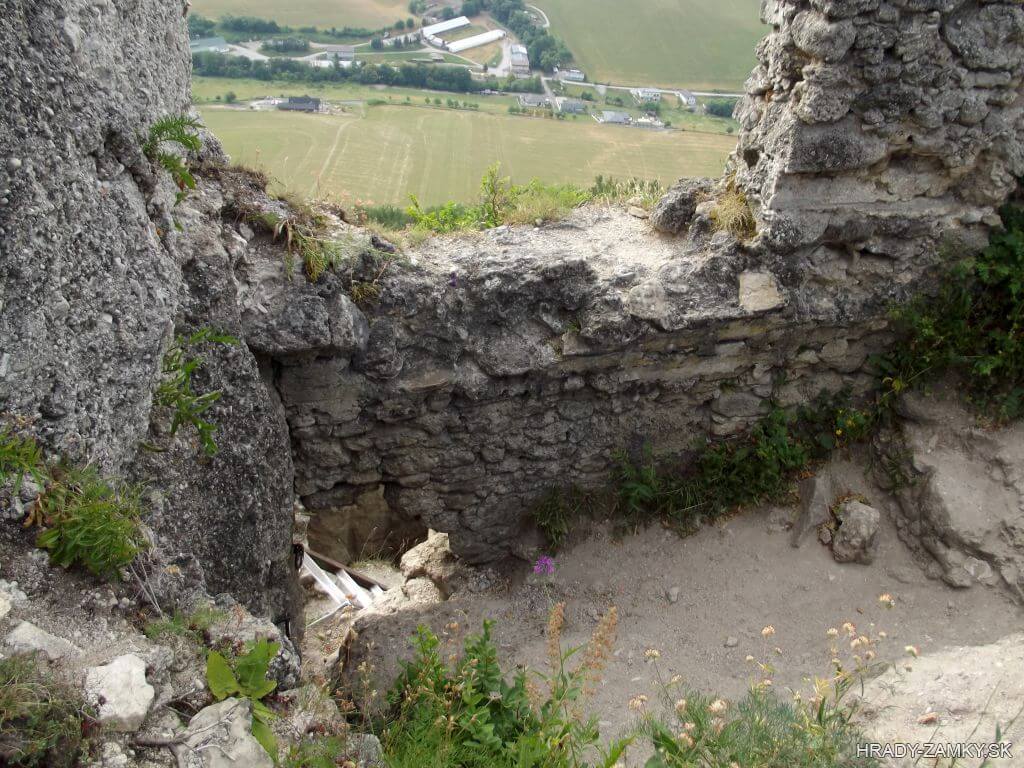
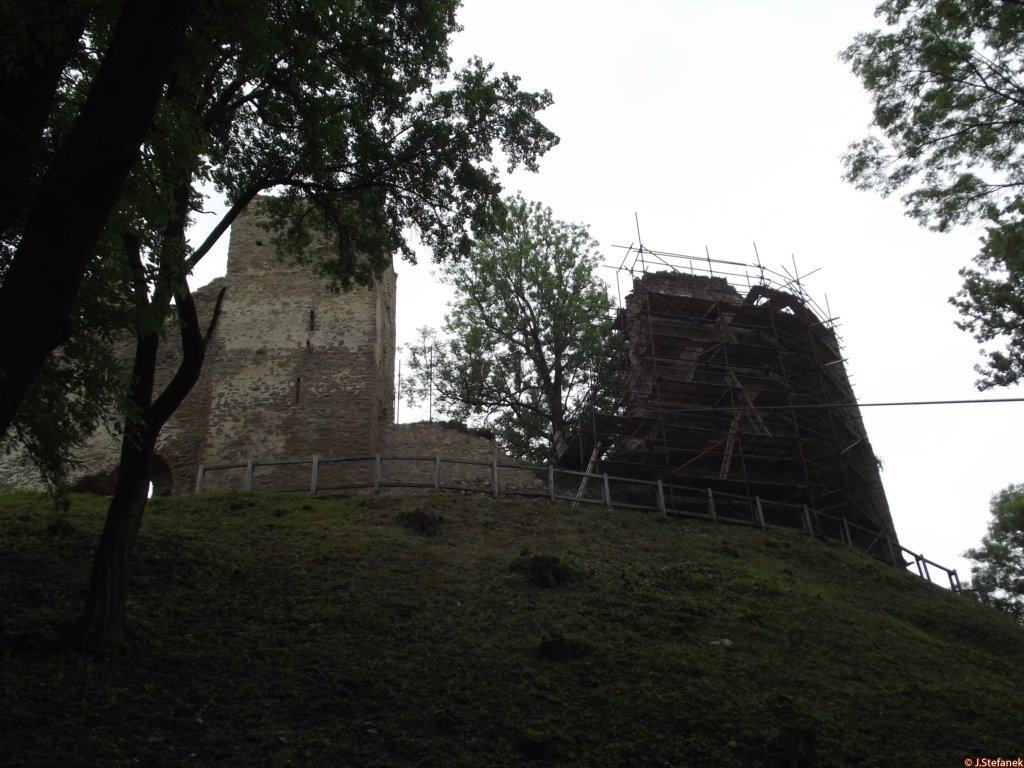
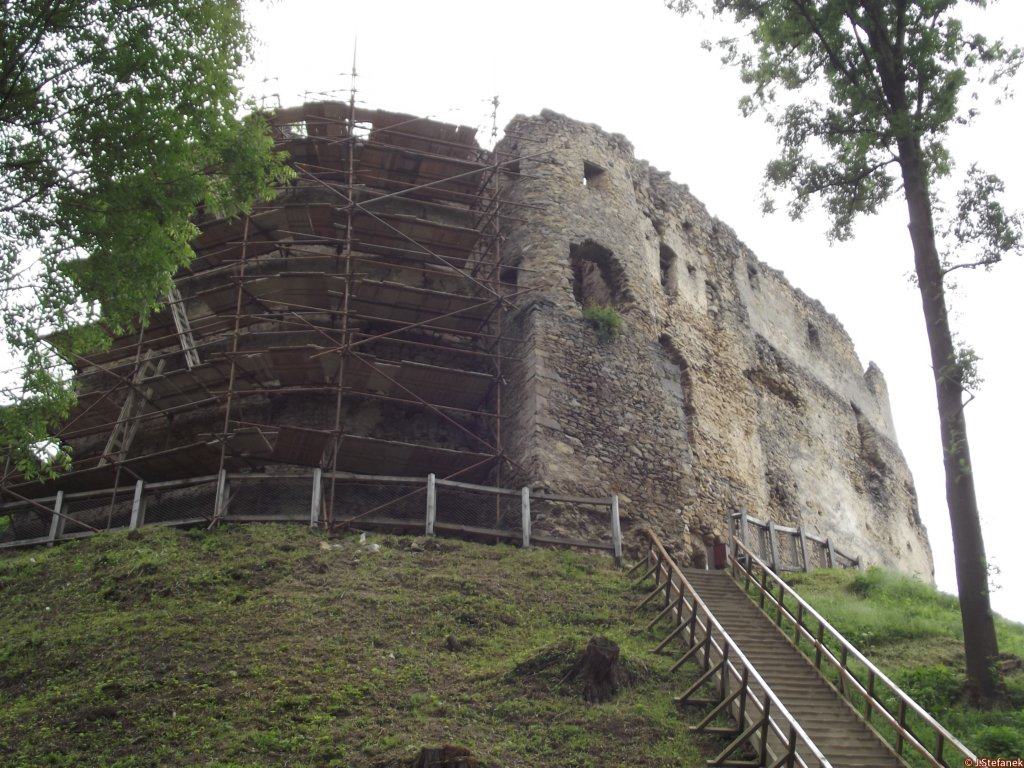
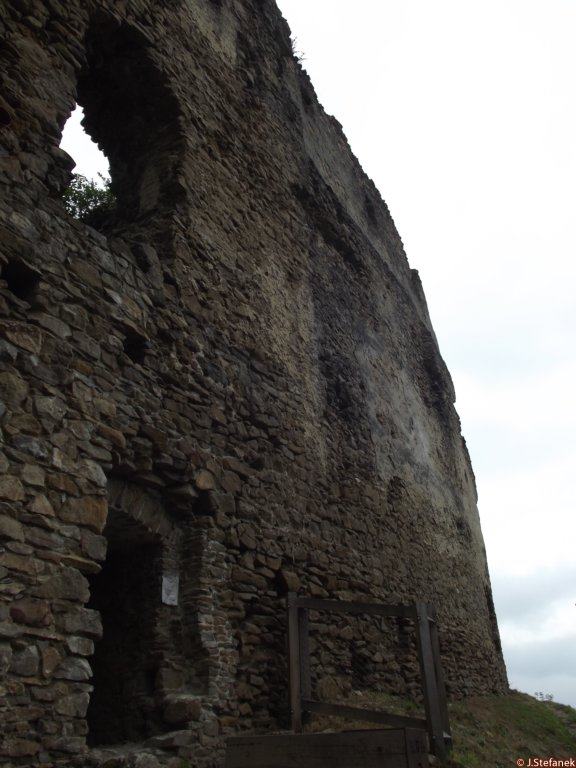
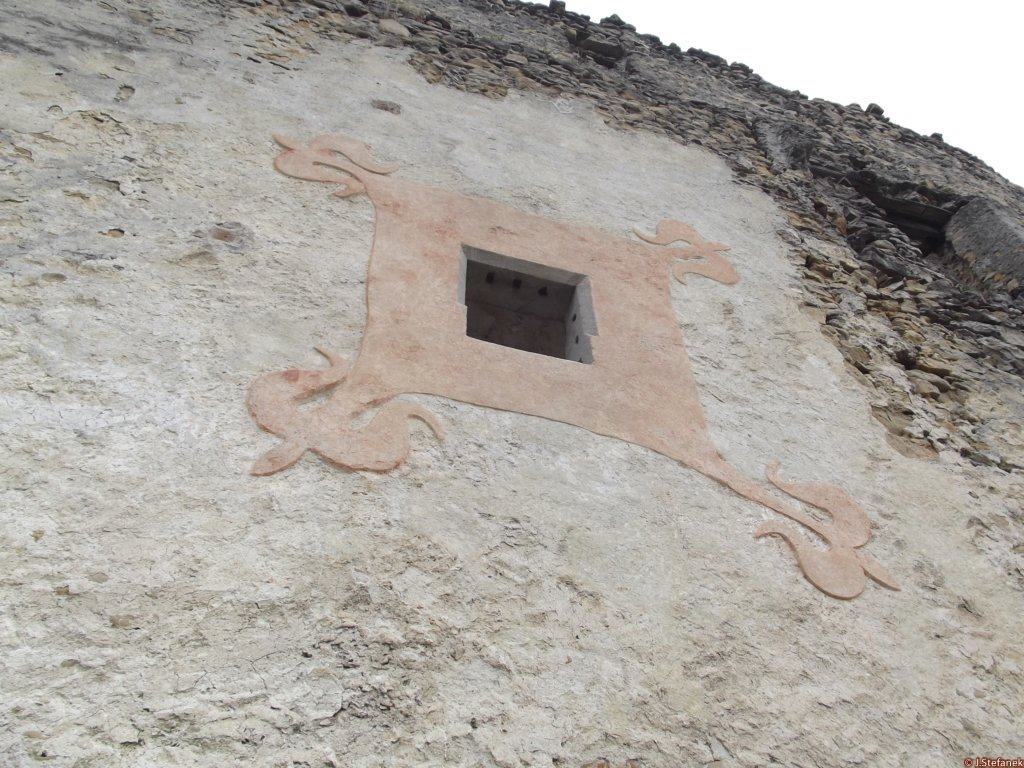
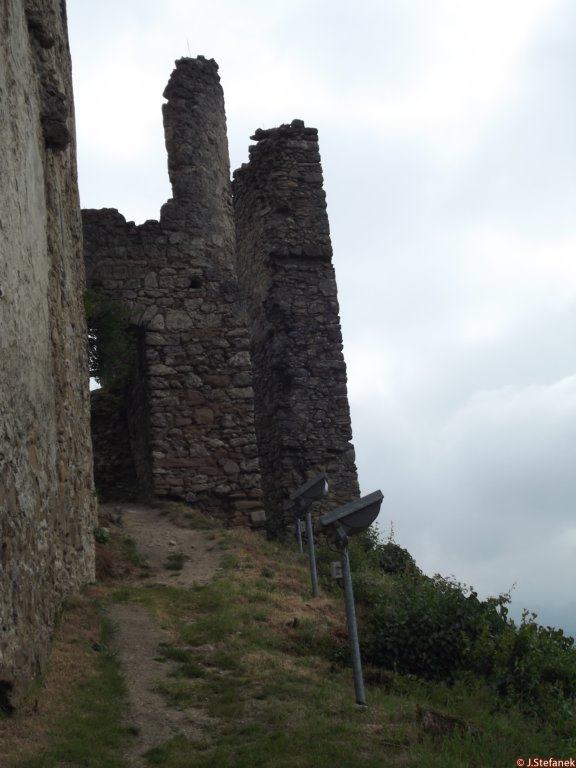
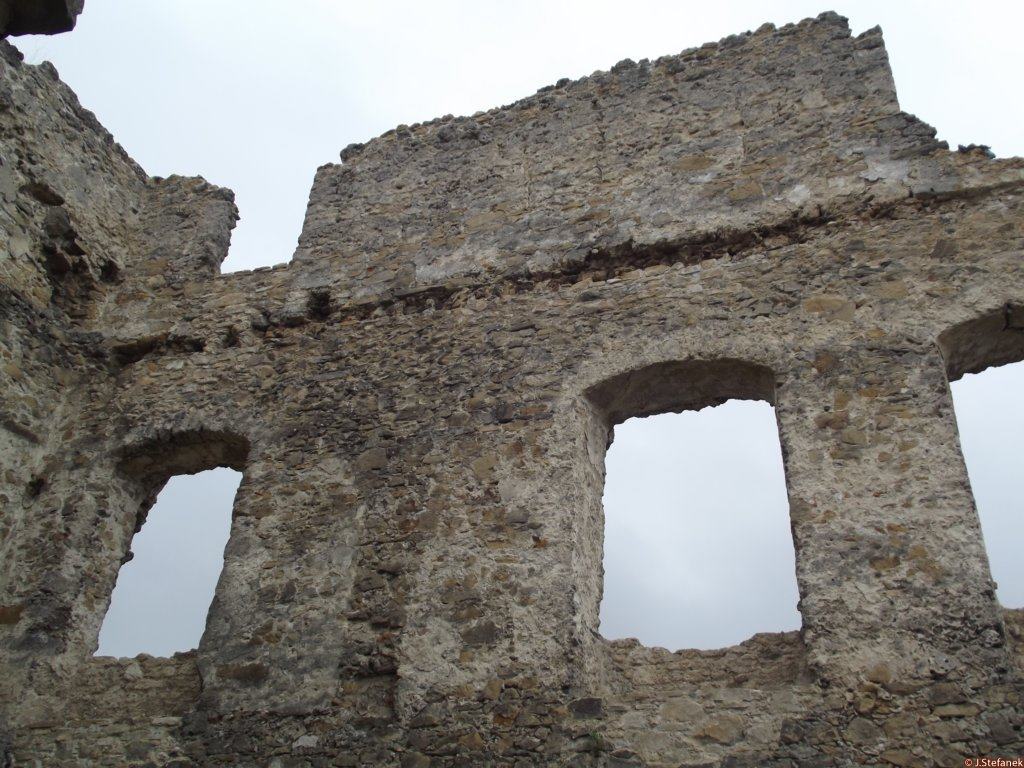
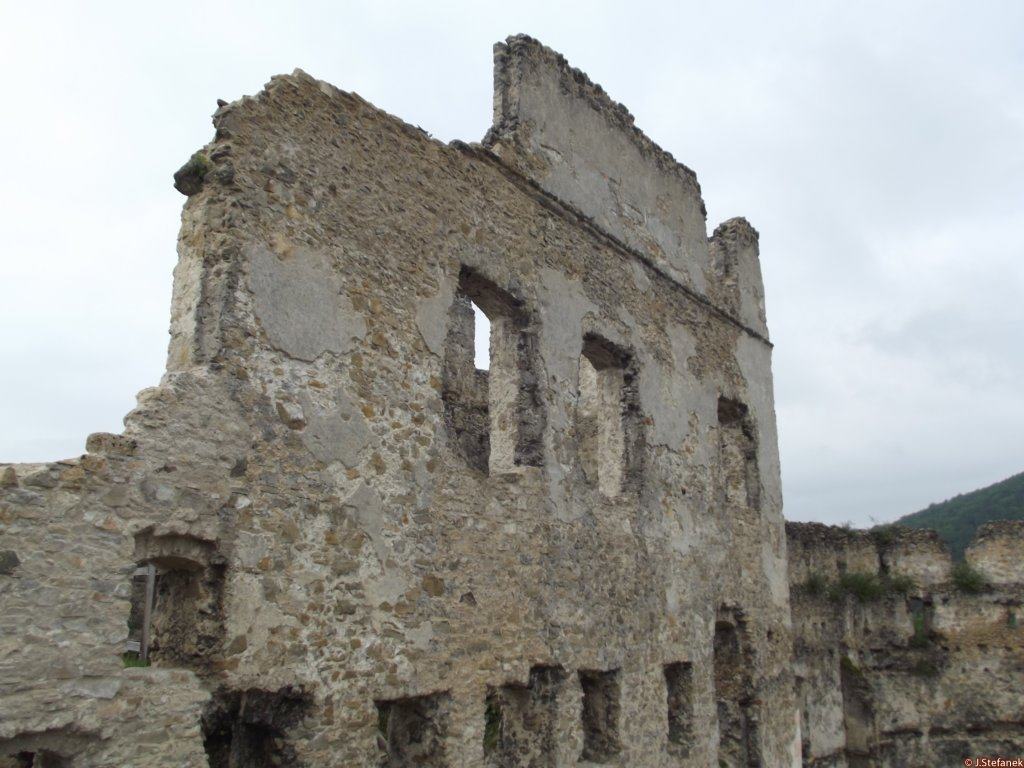
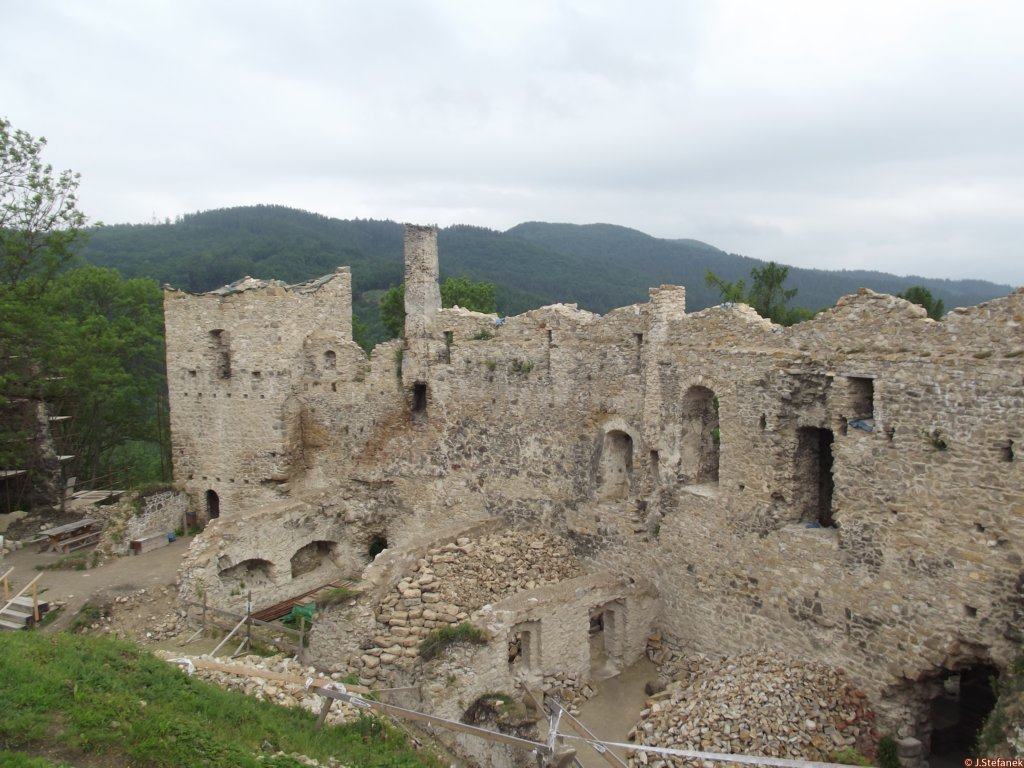
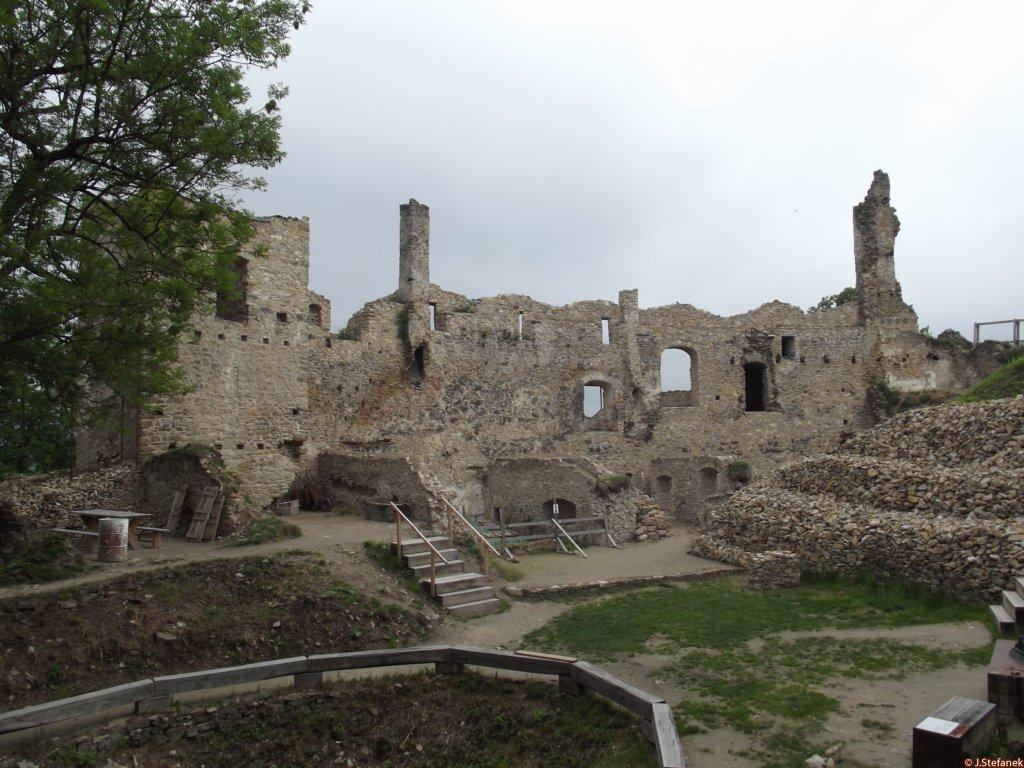
The outline of the original castle has the shape of a wedge or a ship. Two prismatic towers reinforced the high wall on the western and northern sides, while the northern one was extended to protect the original gate. After moving the gate to the east, the opening of the original gate was walled up and the place was built by a Renaissance building. The oldest part of the castle was the tower, standing on the highest point took, and the Gothic palace.The lower part of the building dates back to the Gothic period and they were connected to the southern Renaissance palace, whose wall stood at a great height. However, the frequent increase of walls and buildings led to a static overload, which at that time was being solved by the builders.The inner courtyard contained farm buildings and a water tank. On the ground floor of the castle was in the past a bakery, kitchen, spacious storage, laundry, wash room and four bathrooms. In the interior of the castle there were even curtains above the windows of the manor rooms, over the beds paintings or fur of hunted animals, around the walls of the common rooms were wooden benches, and on the walls were hangings of Hungarian kings and coat of arms of the lords of the castle.The castle is undergoing reconstruction work, financed from the Financial Mechanism of the European Economic Area, the Norwegian Financial Mechanism and funds from the state budget of the Slovak Republic. Thanks to the grant funding, the most vulnerable part of the castle was saved. It was the construction of a palace, a former chapel and a cliff just below it. All this parts were in a very bad condition and thanks to the project it was finally stabilized.
Obrys pôvodného hradu má tvar klina alebo lode. Vysokú hradbu na západnej i severnej strane zosilňovali dve hranolové veže, pričom severná bola vysunutá a chránila pôvodnú bránu. Po presunutí brány východnejšie, bol otvor pôvodnej brány zamurovaný a miesto zastavané renesančnou budovou. Najstaršou časťou hradu bola veža, stojaca na najvyššom bode brala, a gotický palác.Z gotického obdobia pochádza aj spodná časť stavby, ktorú zapojili do južného renesančného paláca, ktorého múr stál do veľkej výšky. Časté zvyšovanie hradieb a budov však viedlo k statickému preťaženiu, čo v tej dobe stavitelia riešili opornými piliermi.Vnútorné nádvorie obsahovalo hospodárske budovy a cisternu na vodu. Na prízemí hradu bola v minulosti pekáreň, kuchyňa, priestranné zásobárne, práčovňa, umyváreň a štyri kúpeľne. V interiéri hradu boli dokonca závesy nad oknami panských izieb, nad posteľami obrazy alebo kožušiny ulovených zvierat, okolo múrov spoločenských miestností boli drevené lavice a na stenách viseli obrazy uhorských kráľov a erby pánov hradu.Na hrade prebiehajú rekonštrukčné práce, financované z Finančného mechanizmu Európskeho hospodárskeho priestoru, Nórskeho finančného mechanizmu a prostriedkov zo štátneho rozpočtu Slovenskej republiky. Vďaka financiám z grantu sa na hrade podarilo zachrániť jeho najohrozenejšiu časť. Išlo o stavbu paláca, bývalú kaplnku a skalné bralo, ktoré je tesne pod ňou. Celá táto časť bola vo veľmi zlom stave a vďaka projektu sa ju podarilo definitívne zastabilizovať.
Plan
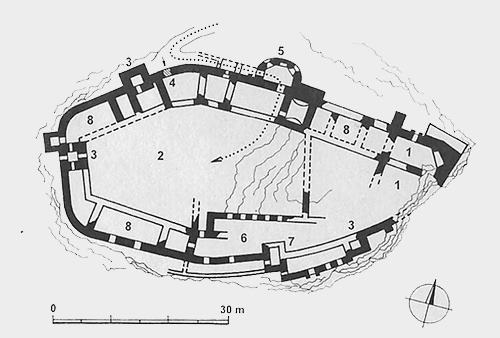
Legend to the ground plan
- 1 - the original Gothic fortress
- 2 - the fort
- 3 - the defensive prismatic towers
- 4 - the abolished Gothic gate
- 5 - the entrance Renaissance barbican
- 6 - the palace
- 7 - the building with a gate
- 8 - the outbuildings and operating buildings
Legenda k pôdorysu
- 1 - pôvodná gotická pevnôstka
- 2 - predhradie
- 3 - obranné hranolové veže
- 4 - zrušená gotická brána
- 5 - vstupný renesančný barbakan
- 6 - palác
- 7 - objekt s výpadovou bránkou
- 8 - hospodárske a prevádzkové budovy
History
Exact information about the origin of Bystrica Castle has not been preserved. According to unverified reports, the castle was built in 1128 to protect an important Považská road. However, the first written mention dates from 1316 as the Bystrice Castle held by Matúš Čák.
After Matúš's death, the castle was acquired by the new monarch Karol Róbert of Anjou, who soon donated it to the faithful vassal Alexander Hedervari for his faithful services. Alexander Hedervári and his son Mikuláš lived in the Bystrice Castle from 1324 to 1354. Over the next few years, the castle belonged to Pavel Ugali, later to the Galician palatine of Polish origin, Sudivoy of Ostrorog, then to Stibor of Beckov and his son.
In 1424, Sigismund of Luxembourg donated the castle to Queen Barbora Celjská. King Albrecht II also remained faithful to this tradition. He donated Habsburg and the castle to his wife - Queen Elizabeth. However, in 1439, due to financial problems, Queen Elizabeth gave castles Bystrica, Trenčín, Suča, Vršatec, Lednice, Ilava, Strečno, and Starhrad in advance for 15,000 gold to her relative, the Slovenian ban Ulrich Celjský, for the services and protection of her son Ladislav Pohrobek. Seven years later, the castle was acquired by the Governor of Hungary, Ján Hunyady. After his death, it passed into the hands of his son Matej Korvín, who donated it to Ladislav Podmanický in 1458 for his services. The period of ownership of the castle by the Podmanický family for a whole century is one of the most important and most famous periods in the history of Považský Castle. The castle belonged to the Podmanicks family until its extinction in 1558. The new owners repaired all the buildings and expanded the castle. A great fire in 1543 severely damaged individual buildings. During the repair, they changed some architectural elements and the castle will be extended by a fort. Brothers Rafael and Ján played an important role here. However, due to the conflicts, the Hungarian Parliament ordered the brothers to take the property, but after Ján's death, his brother Rafael returned the property only for a very long time. He married Jana of Lomnice, to whom he bequeathed all his property. However, after his death in 1558, a year later, the monarch and the royal chamber wrongfully confiscated her property and gradually sold it off without claiming compensation.
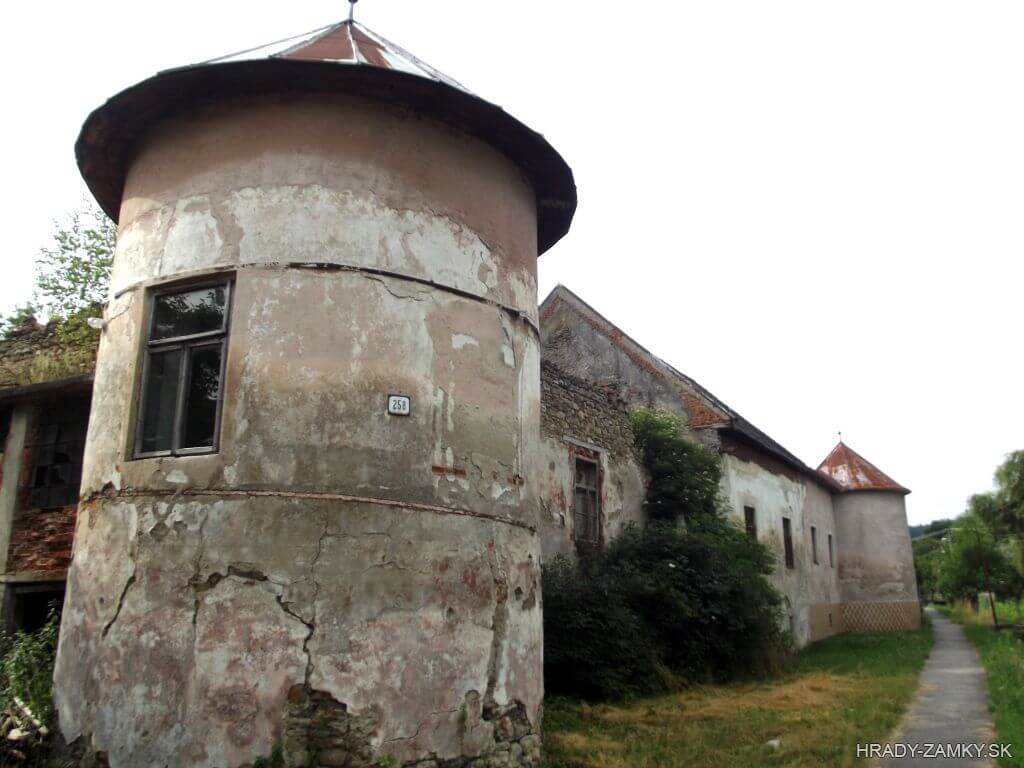
In 1559, the royal chamber sold the Bystrice castle and manor to Gašpar Serédy and his wife Anne Mérey. Gašpar Serédy died in 1563, without descendants. His widow Anna Méry married Andrej Balassa, the chief mayor of the Novohradská seat, for the second time in 1571. With this marriage, Bystrica was acquired by the Balassovs, who adapted the old palace and carried out further repairs to other buildings. Andrej Balassa's son, Sigismund, had a large and magnificent manor house built in Orlov after 1612. At the time of Sigismund's imprisonment at the Bratislava Castle on suspicion of high treason, Bystrice's property was managed by his brother Imrich and his wife Judita. Imrich had the Renaissance manor house Burg under the castle and later the baroque manor house in Považský Podhradie built on the southern slope of the castle hill in 1631. But Imrich became involved in the anti-Habsburg uprising. Vienna's military action against the participants in the Vesselényi uprising was also aimed at acquiring their castles and property. During this action, the troops damaged the main palace of the three-storey Bystrice Castle and part of the lower castle on the north side in 1671.
Although the Balassa's property was confiscated, the castle and manor remained in the hands of the family, as Gabriel Balassa and his wife, Countess Perényi, remained loyal to the monarch. They did not change their position even during the uprising of Francis Rákóczi II., When the castle became a refuge for the family from the insurgent army, which surrounded it but did not conquer it.
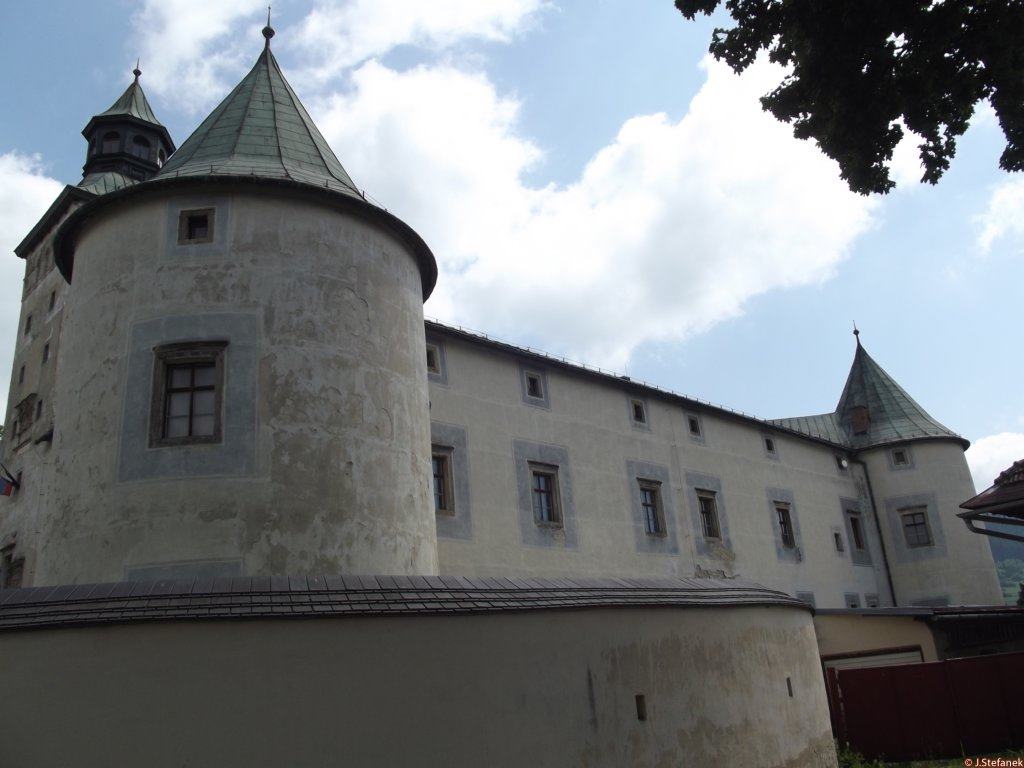
After the Rákóczi uprising, Bystrice Castle and the manor changed owners. The Szapáry family appeared here, who owned Bystrica until 1830. They came from the Veszprém capital. Peter, who fought against the Turks, excelled against the Thököly insurgents and thus gained the baronial rank, stood out from them in particular. Peter Szapáry acquired the ownership share of the Balassovs. His son Peter married Terezia Balassa, and so he acquired the second part of the castle and manor. Peter Szapáry took over the castle and both manor houses below it. He chose the larger manor house, located below the castle hill on the southeast side, as the main residence. Peter Szapary contributed to its renovation and partial reconstruction. This building is erroneously referred to by several authors as the "Szapáry manor house from the 18th century." The castle has remained uninhabited and abandoned since then. During the 18th and 19th centuries more and more, until today.
Presné informácie o vzniku hradu Bystrica sa nezachovali. Podľa neoverených správ bol hrad postavený už v roku 1128 na ochranu dôležitej považskej cesty. Prvá písomná zmienka je však z roku 1316 ako Bystrický hrad v držbe Matúša Čáka.
Po Matúšovej smrti získal hrad nový panovník Karol Róbert z Anjou, ktorý ho v zápätí daroval vernému vazalovi Alexandrovi Hedervárimu za verné služby. Alexander Hedervári a jeho syn Mikuláš sídlili na bystrickom hrade v rokoch 1324 – 1354. V priebehu ďalších rokov hrad patril Pavlovi Ugalimu, neskôr haličskému palatínovi poľského pôvodu Sudivojovi z Ostrorogu, potom Stiborovi z Beckova a jeho synovi.
V r.1424 Žigmund Luxemburký daroval hrad kráľovnej Barbore Celjskej. Tejto tradícii zostal verný aj panovník Albrecht II. Habsburský a hrad daroval manželke - kráľovnej Alžbete. V roku 1439 však dala kráľovná Alžbeta kvôli finančným problémom hrady Bystrica, Trenčín, Suča, Vršatec, Lednica, Ilava, Strečno, a Starhrad do zálohy za 15 tisíc zlatých svojmu príbuznému, slovinskému bánovi Ulrichovi Celjskému za zásluhy a ochranu jej syna Ladislava Pohrobka. O sedem rokov neskôr hrad získal gubernátor Uhorska Ján Hunyady. Po jeho smrti prešiel do rúk jeho syna Mateja Korvína, ktorý ho v r.1458 daroval za zásluhy Ladislavovi Podmanickému. Obdobie vlastníctva hradu rodom Podmanických po celé jedno storočie, patrí k najvýznamnejším a najslávnejším obdobiam v dejinách Považského hradu. Podmanickovcom patril hrad do vymretia roku 1558. Noví majitelia opravili všetky objekty a hrad rozšírili. Veľký požiar v roku 1543 ťažko poškodil jednotlivé stavby. Pri oprave zmenili niektoré architektonické prvky a hrad rozšíri o predhradie. Významnú rolu tu zohrali bratia Rafael a Ján. Kvôli konfliktom však Uhorský snem prikázal bratom majetky brátiť, no po Jánovej smrti jeho brat Rafael vracal majetky len veľmi zdĺhavo. Oženil sa s Janou z Lomnice, ktorej odkázal celé svoje vlastníctvo. Po jeho smrti v roku 1558 jej však po roku panovník a kráľovská komora neprávom majetok odobrali a postupne rozpredali bez nároku na odškodné.
Bystrický hrad a panstvo kráľovská komora predala v roku 1559 Gašparovi Serédymu a jeho manželke Anne Mérey. Gašpar Serédy zomrel v roku 1563, a to bez potomkov. Jeho vdova Anna Méry sa druhý krát vydala v roku 1571 za Andreja Balassu, hlavného župana Novohradskej stolice. Týmto manželstvom Bystricu získali Balassovci, ktorí adaptovali starý palác a vykonali ďalšie opravy ostatných budov. Syn Andreja Balassu, Žigmund, dal po roku 1612 vystaviť veľký a honosný kaštieľ v Orlovom. V čase väznenia Žigmunda na Bratislavskom hrade pre podozrenie z velezrady, Bystrický majetok spravoval jeho brat Imrich s manželkou Juditou. Imrich dal na južnom úbočí hradného vrchu v roku 1631 postaviť renesančný kaštieľ Burg pod hradom a neskôr barokový kaštieľ v Považskom Podhradí. Imrich sa ale zaplietol do protihabsburgského povstania. Vojenská akcia Viedne proti účastníkom Vesselényiovského povstania bola zameraná aj na získanie ich hradov a majetkov. Pri tejto akcii vojská v roku 1671 poškodili hlavný palác trojposchodového Bystrického hradu a časť dolného hradu zo severnej strany.
Hoci majetkový podiel Balassovcov skonfiškovali, hrad i panstvo zostali ešte v rukách rodiny, pretože Gabriel Balassa a jeho manželka grófka Perényi zostali panovníkovi verní. Svoj postoj nezmenili ani počas povstania Františka Rákócziho II., kedy sa hrad stal útočiskom rodiny pred povstaleckým vojskom, ktoré ho síce obkľúčilo, ale nedobylo.
Po rákócziovskom povstaní Bystrický hrad a panstvo zmenilo vlastníka. Objavili sa tu Szapáryovci, ktorí vlastnili Bystricu až do roku 1830. Pochádzali z Vesprémskej stolice. Vynikol z nich najmä Peter, ktorý bojoval proti Turkom, vyznamenal sa proti thökölyovským povstalcom a získal tak barónsku hodnosť. Peter Szapáry získal majetkový podiel Balassovcov. Jeho syn Peter sa oženil s Teréziou Balassa, a tak získal aj druhú časť hradu a panstva. Peter Szapáry sa ujal hradu i oboch kaštieľov pod ním. Väčší kaštieľ, nachádzajúci sa pod hradným vrchom z juhovýchodnej strany, si zvolil za hlavnú rezidenciu. Peter Szapary sa pričinil o jeho renováciu a čiastočnú prestavbu. Tento objekt je viacerými autormi mylne označovaný ako “Szapáryovský kaštieľ z 18.storočia.“ Medirytina G. Bouttatsa však dokazuje existenciu tohto kaštieľa už v roku 1676. Museli ho teda postaviť Balassovci. Hrad odvtedy zostal neobývaný a opustený. V priebehu 18. a 19. storočia čoraz viac, až do dnešných čias.
Myths and legends
About the beautiful Hedwig
In the turbulent and lawless times of Ferdinand I of Habsburg's struggle with Ján Zápoľský for the Hungarian throne, the mighty Podmanický brothers took advantage of the confusing situation in the country. Ján and Rafael did not lag behind the reputation of their grandfather Ladislav in anything. They also undertook numerous robberies. They abandoned and plundered abbeys, castles and aristocratic residences. They controlled the entire upper Považie and on their expeditions they also penetrated to Moravia and Silesia. No one knew how to deal with them, nor did the curse into which the church threw them in 1542. Finally, coincidence contributed to the fact that in 1545 they had to submit to the king. One late autumn day, when the weather was getting dark for the winter, the brothers were arguing on the last expedition of the year, because in winter it is difficult to make raids. Ján was to go to Moravia and Rafael to Žilina, across the Kysuce valley and Jablunkovský pass to Sliezko. And so it happened, they divided the armourers and went. Rafael's scouts going in advance reported to their master that 6 cars were going against them across the Jablunkov Pass. It was the procession of the esteemed Silesian Knight Girzick von Lassinkowitz, who went to Hungary together with his daughter Hedviga and the protective procession. The company of the robber knight attacked the cats and defeated them after a short fight, the sword was also drawn by Mr. Girzick von Lassinkowitz himself, even though he was old. Read more...
However, he was seriously injured in the fight and fell unconscious to the ground. The bandits took what they could and dragged Hedwig out of the carriage. She fainted when she noticed her father lying on the ground, thinking he was dead. Here the knight tried his best to take her over, and when he succeeded after a long time, Hedwig cried out in fear. However, Rafael ignored the tears, took her on a horse and raced with her to the fort. He arrived that night. He locked the girl in the best room and ordered her to guard her. Only one old woman was allowed to wear her food and drink. Then the room was locked properly, but the knight entered it even more freely, he, in love with a beautiful deva at first sight, could not take his eyes off her, kept catching her up, begging, threatening, but she did not submit to him. He even thought of marrying her, but most of all he feared what his brother and company would say. He was afraid they would laugh at him, that he was a powerful man. Meanwhile, the poor wounded master had read, and with difficulty he came to the nearest house, where they had not been opened until a while later, fearing that they were knights. After pleading, they let him in, clothed, watered, and treated the wounds. In this way the lord could return home and tell everything to his son. This brave young man immediately began organizing an expedition to free his sister. When John finally returned from the campaign, he found his brother thoughtful and worried. He finally learned from the gunsmith what was going on, and with a loud laugh he ran to his brother and wanted to tighten his heartfelt heart. However, Rafael begged for laughter and threatened to forget his fraternal unity if he could still catch up. Then John, surprised by his brother's speech, fell silent, but still wanted to see the creature that changed his brother so much. Rafael refused and the brothers grabbed, even drew their swords, fortunately their gunmen separated them in time. Even the full jugs could not calm John's fury, but when the wine began to work, he went to see his brother. He was sneaking into Hedwig's room again. Shortly after he entered, John rushed into the room. When he saw Hedwig, he began to demand his half magnifying glass. At Hedwig's cry, people ran, noticing their brothers on the ground, it was difficult for them to separate them from each other, and they brought each of them to their room in the half-frozen. Before dawn, John sent a glove to Rafael according to the custom at the time, so that they could meet in a fight in three days, but he replied that they would meet immediately. But the gunmen also found out, worried about their future. After all, only under the auspices of both brothers, they could plunder with impunity and live in prosperity at the expense of others. They considered everything and agreed that they had to compare the brothers.
After much persuasion, they managed to convince the brothers that only if they were united would they be strong. They suggested that a draw be drawn for the girl, they both landed on it and brought the dice. Luck was good to John, and his brother struggled to hide his anger at taking his prey. After several days of preparations for the wedding, the witnesses brought the news that both the lords Ján and Juraj Szunyoghovci of Budatín had been called to the imperial court and that a large retinue had also gone with them. The brothers had been preparing for Budatín for a long time, and now that he was guarded by only a handful of men, they had an excellent chance. It was the only fixed point on the upper Považie that did not yet belong to them. So they did not hesitate and immediately organized an expedition, but Rafael also took advantage of this situation, after a few hours of travel he began to pretend that he was getting more and more sick. At his brother's insistence, he seemed reluctantly backwards. And that's exactly what he wanted, as soon as he came to the castle, he immediately went to Hedwig and again tried to persuade her in every possible way, when she refused to give in. Then the passion turned to hatred, and Rafael told himself that if he didn't have it, no one would. He agreed with the old man that they would give her poison, he would close her mouth and her brother would not know what had happened here. Starena should also have convinced herself that she had often heard the deva say that she would rather die than marry John. They put poison in wine. Rafael invited the girl to dinner forgiveness. Deceived, she was almost drunk, already holding the cup to her mouth, when suddenly a guard rushed into the room, that an unknown enemy was attacking the castle with terrible force. As the team was weakened by the brotherly expedition, they did not resist for long. Rafael managed to escape through the back gate only at the last moment. Hedwig was rescued by a brother who crept to the castle with lightly armed men in the dark and conquered it from the west. The men carried away what they could and set the castle on fire as they left. However, Budatín was also charged that night, and the celebrating Ján was interrupted only by a brother with bad news. So they both had to go with the party to save their headquarters quickly. Apart from the heap of ashes, they found nothing, not even treasure treasures, nor a beautiful captive. They decided to repair the castle and there would be only the two of them together. However, not only trust but also power remained, so they surrendered to the king, giving them mercy and lifting the curse.
About King Matthew
In the second half of the 15th century, King Matej allegedly took part in a wedding at the Bystrice castle. The daughter of Ladislav Podmanický Blanek's mistress pretended to be Imrich Súľovský. The wedding lasted several days and, in addition to the king, the nobility from a wide area also took part in it. In addition to various entertainment and banquets, hunting was also organized on the slopes of the opposite hills Malý and Veľký Manín. On the lowest slopes were massive boulders, among which the beasts hid. However, bears were also cut for game there. It so happened that the king also came across a bear when he was startled by roaring dogs. The king was frightened and forgot to use his weapon for self-defense. When the bear was near, the king wanted to - he didn't want to have to call for help. However, this did not deter the bear and he set out for the king. Fortunately, he managed to run through the grove accompanying the king and dealt a fatal blow to his cat's ax. The king gave him rich gifts to save his life and accepted him into his retinue.
O krásnej Hedvige
V nepokojných a bezprávnych časoch bojov Ferdinanda I. Habsburského s Jánom Zápoľským o Uhorský trón, využívali zmätočnú situáciu v krajine mocný bratia Podmanický. Ján a Rafael v ničom nezaostávali za povesťou svojho starého otca Ladislava. Aj oni podnikali početné lúpežné výpravy. Prepadávali a plienili opátstva, hrady a šľachtické sídla. Ovládali celé horné Považie a na svojich výpravách prenikali aj na Moravu a Sliezko. Nik si s nimi nevedel dať rady, nepomohla ani kliatba, do ktorej ich v roku 1542 uvrhla cirkev. Až napokon náhoda prispela k tomu, že sa kráľovi v roku 1545 museli podvoliť. Jeden neskorý jesenný deň, keď sa už počasie na zimu chmúrilo, dohadovali sa bratia na poslednej výprave toho roku, pretože v zime sa výpady robia už ťažko. Ján sa mal vybrať na Moravu a Rafael smerom na Žilinu, cez údolie Kysuce a Jablunkovský priesmyk na Sliezko. Tak sa aj stalo, rozdelili si zbrojnošov a šli. Rafaelovi zvedovia idúci predom hlásili svojmu pánovi, že proti nim cez Jablunkovský priesmyk ide 6 vozov. Bol to sprievod váženého sliezkeho rytiera Girzicka von Lassinkowitz, ktorý sa spolu so svojou dcérou Hedvigou a ochranným sprievodom vybrali do Uhorska. Rota lúpežného rytiera na koče zaútočila a po krátkom boji ich premohla, meč tasil aj samotný pán Girzick von Lassinkowitz, hoc bol už starý. Čítaj ďalej...
V boji bol však ťažko poranený a v bezvedomí klesol na zem. Lúpežníci pobrali čo sa dalo a Hedvigu vyvliekli z koča. Tá keď zbadala otca ležať na zemi, mysliac si že zomrel, zamdlela. Tu sa ju rytier všemožne snažil prebrať a keď sa mu to po dlhom čase podarilo, Hedviga od strachu vykríkla. Rafael však nedbal na slzy, vzal ju na koňa a uháňal s ňou do pevnosti. Dorazil ešte v tú noc. Dievča zamkol v najlepšej komnate a prikázal ju strážiť. Len jedna starena smela jej jedlo a pitie nosiť. Nato hneď izbu riadne zamkli, no o to slobodnejšie do nej vstupoval rytier, ten zaľúbený do krásnej devy na prvý pohľad, nevedel od nej odtrhnúť svoj zrak, neustále ju dobiedzal, prosil, vyhrážal sa, no ona sa mu nepodvolila. Rozmýšľal dokonca, že si ju vezme za ženu, no najväčšmi sa toho obával, čo na to povie brat a družina. Bál sa, že ho vysmejú, že on mocný chlap sa zaľúbil. Zatiaľ úbohý ranený pán precitol a s námahou prišiel k najbližšiemu domcu, kde mu až po hodnej chvíli otvorili, obávajúc sa, že sú to rytieri. Po úpenlivých prosbách ho vpustili dnu, ošatili, napojili a rany ošetrili. Takto sa mohol pán vrátiť domov a všetko oznámiť synovi. Tento udatný mladík hneď začal organizovať výpravu na vyslobodenie sestry. Keď sa napokon aj Ján vrátil z ťaženia, našiel brata zadumaného a ustarosteného. Až napokon od jedného zbrojnoša sa dozvedel, čo je vo veci a s hlasným smiechom bežal k bratovi a chcel si z roznežneného srdca utiahnuť. Rafael si však vyprosil smiech a vyhrážal sa, že zabudne na bratskú svornosť, ak len bude ešte doň dobiedzať. Nato Ján prekvapený z bratovej reči zmĺkol, ale predsa chcel vidieť to stvorenie, čo brata tak zmenilo. Rafael odmietol a bratia sa pochytili, ba aj meč na seba tasili, našťastie ich zbrojnoši včas od seba oddelili. Jánovu zúrivosť nevedeli utíšiť ani plné džbány, no keď víno začalo účinkovať, pobral sa za bratom. Ten sa zatiaľ opäť vkrádal do Hedviginej izby. Chvíľu potom čo ta vošiel, vrútil sa do izby aj Ján. Keď ten uvidel Hedvigu, začal sa dožadovať svojej polovice lupu.. Obaja bratia sa začali klbčiť a jeden druhého sa snažili premôcť. Na Hedvigin krik pribehli ľudia, tí zbadajúc bratov v sebe na zemi, len horko ťažko ich od seba oddelili, polozamdletých ich každého doviedli do svojej izby. Skôr než svitlo ráno, poslal Ján Rafaelovi podľa vtedajšej zvyklosti rukavicu, aby sa o tri dni stretli v súboji, ten mu však odpovedal, aby sa stretli hneď. Dozvedeli sa to však aj zbrojnoši, obávajúc sa o svoju budúcnosť. Veď len pod záštitou oboch bratov si mohli beztrestne rabovať a žiť v blahobyte na úkor iných. Všetko si poriadne uvážili a zhodli sa, že musia bratov pomeriť.
Po dlhom presviedčaní sa im podarilo bratov presvedčiť, že len keď budú jednotný, budú silný. Navrhli, aby sa o dievča losovalo, obaja na to pristali a tak doniesli kocky. Šťastie žičilo Jánovi a brat len s námahou skrýval zlosť z toho, že mu berú jeho korisť. Po niekoľkých dňoch príprav na svadbu priniesli zvedovia správu o tom, že obaja budatínsky páni Ján a Juraj Szunyoghovci boli povolaný na cisársky dvor a že sa s nimi vypravila aj početná družina. Bratia sa už dlho chystali na Budatín, a teraz keď ho strážila len hŕstka mužov mali vynikajúcu šancu. Bol to jediný pevný bod na hornom Považí, ktorý im ešte nepatril. Neváhali teda a hneď zorganizovali výpravu, túto situáciu však využil aj Rafael, po niekoľkých hodinách cesty začal predstierať, že mu je čím ďalej tým väčšmi zle. Na bratovo naliehanie sa naoko s nevôľou pobral nazad. A presne to chcel, len čo prišiel na hrad, hneď šiel za Hedvigou a opäť sa ju snažil všemožne presviedčať, keď sa odmietala podvoliť, aj ona z prosieb prešla na vyhrážky, že si po ňu príde milý a kruto ju pomstí. Nato sa vášeň zmenila na nenávisť a Rafael si povedal, že ak ju nebude mať on, nebude ju mať nik. Zo starenou sa dohodol, že jej podajú jed, ten jej zatvorí ústa a brat sa nedozvie, čo sa tu stalo. Starena mala tiež prisvedčiť, že často počula devu hovoriť ako radšej zomrie, než by sa mala za Jána vydať. Jed dali do vína. Rafael pozval dievčinu k večeri s prosbou o odpustenie. Ona oklamaná sa už skoro napila, už držala pohár pri ústach, keď tu zrazu sa do izby vrútil strážca, že neznámi nepriateľ strašnou silou útočí na hrad. Keďže mužstvo bolo bratovou výpravou oslabené, ani dlho nekládlo odpor. Rafael len na poslednú chvíľku stačil utiecť zadnou bránou. Hedvigu zachránil brat, ktorý sa s ľahko vyzbrojenými mužmi za tmy prikradol k hradu a zo západnej strany ho dobil. Muži poodnášali čo sa dalo a pri odchode hrad zapálili. V tej noci dobili však aj Budatín, oslavujúceho Jána vyrušil až brat so zlou správou. Obaja teda s družinou museli ísť rýchlo zachraňovať svoje hlavné sídlo. Okrem hŕby popola nenašli nič, ani nazbíjané poklady, ani krásnu zajatkyňu. Rozhodli sa, že hrad opravia a budú už len sami dvaja spolu. Ostala však nielen naštrbená dôvera, ale aj moc, preto sa poddali kráľovi krorý im udelil milosť a zrušil aj kliatbu.
O kráľovi Matejovi
V druhej polovici 15. storočia sa údajne kráľ Matej zúčastnil svadby na bystrickom hrade. Dcéra milenky Ladislava Podmanického Blanka sa vydávala za Imricha Súľovského. Svadba trvala viac dní a okrem kráľa sa jej zúčastnila aj šľachta zo širokého okolia. Okrem rôznej zábavy a hostín sa organizovala aj poľovačka na svahoch protiľahlých vrchov Malý a Veľký Manín. Na najnižších stráňach sa nachádzali mohutné balvany, medzi ktorými sa zver schovávala. Na zver tam však striehli aj medvede. Stalo sa, že na jedného medveďa natrafil aj kráľ, keď ho vyplašili brechajúce psy. Kráľ sa vyľakal a zabudol použiť zbraň na sebaobranu. Keď už bol medveď blízko, kráľ chcel - nechcel musel volať o pomoc. Medveďa to však neodradilo a pustil sa do kráľa. Našťastie stihol pribehnúť hájnik doprevádzajúci kráľa a sekerou zasadil macovi smrteľnú ranu. Kráľ mu za záchranu života dal bohaté dary a prijal ho do svojej družiny.
Useful information
The ruins are freely accessible
Zrúcanina je voľne prístupná
Nearby castles