Podhradie Bašta
Podhradie Žilina county Slovakia
castle ruin
Podhradie Bašta
Podhradie Žilinský kraj Slovakia
zrúcanina hradu
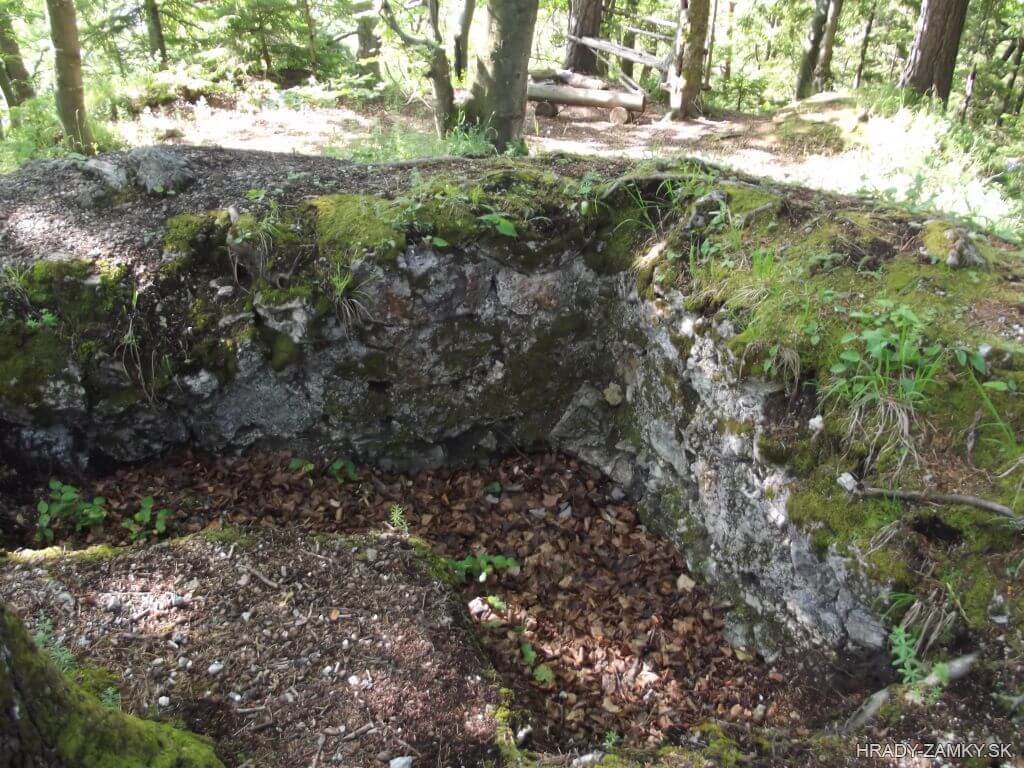
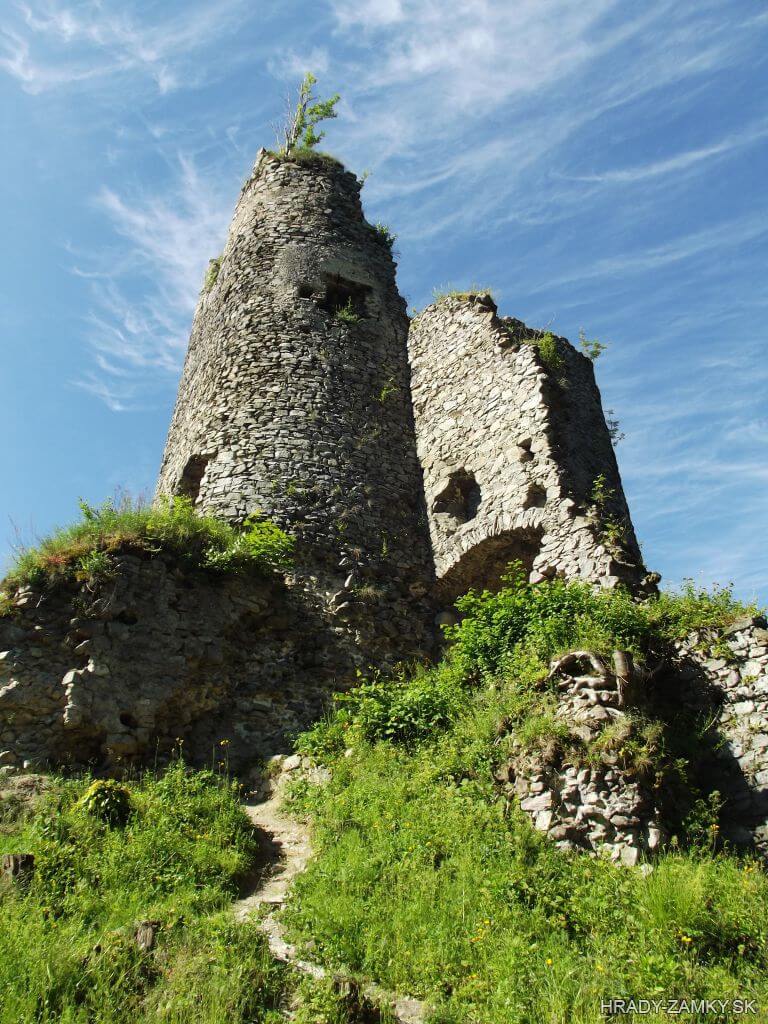
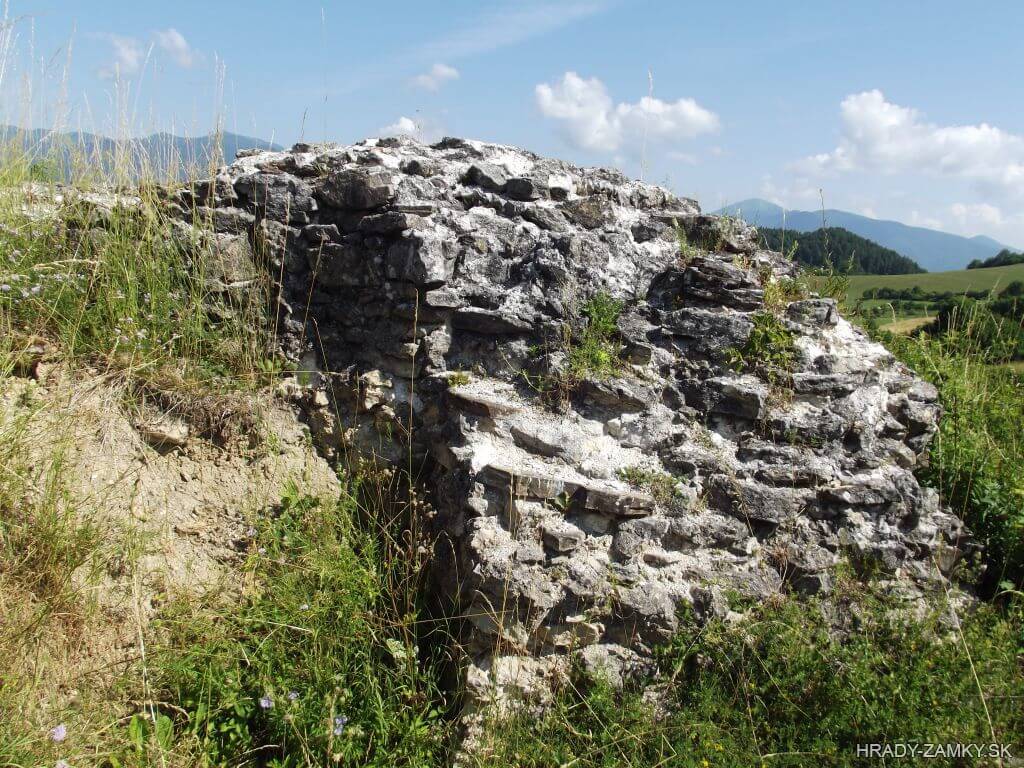
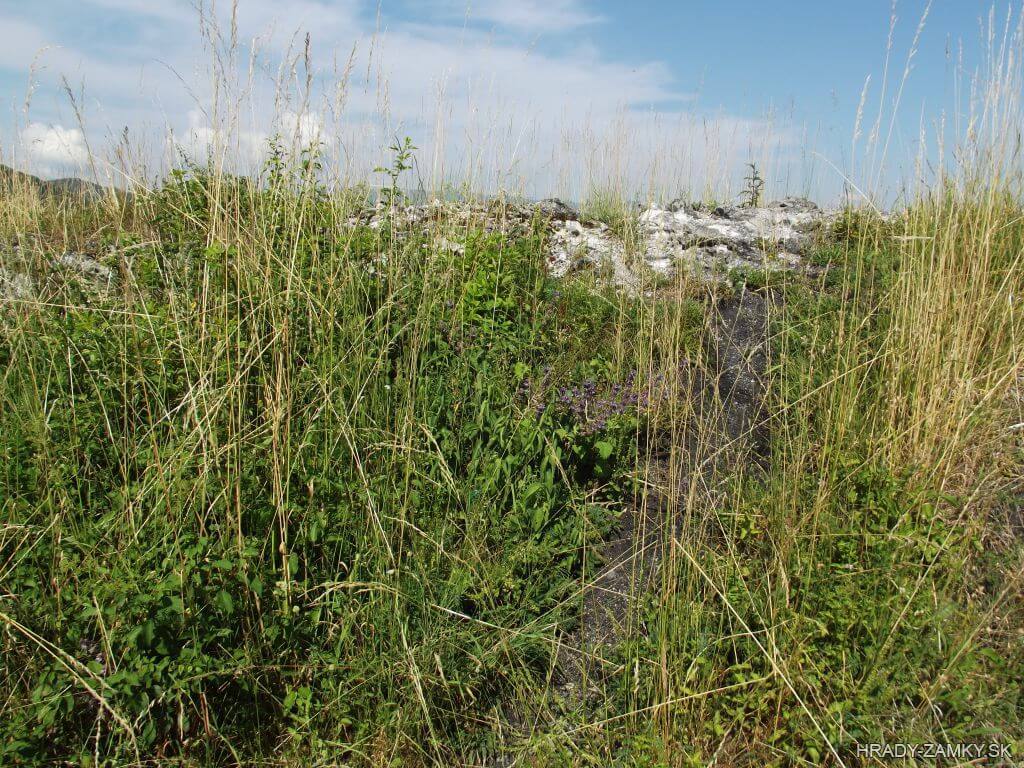
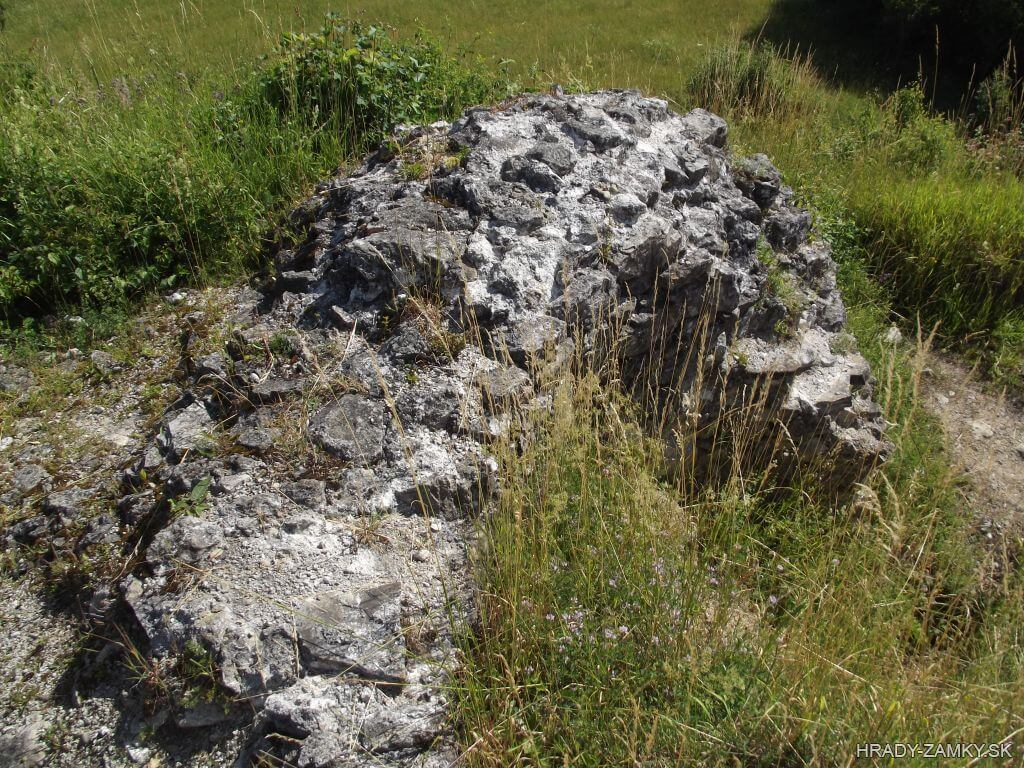
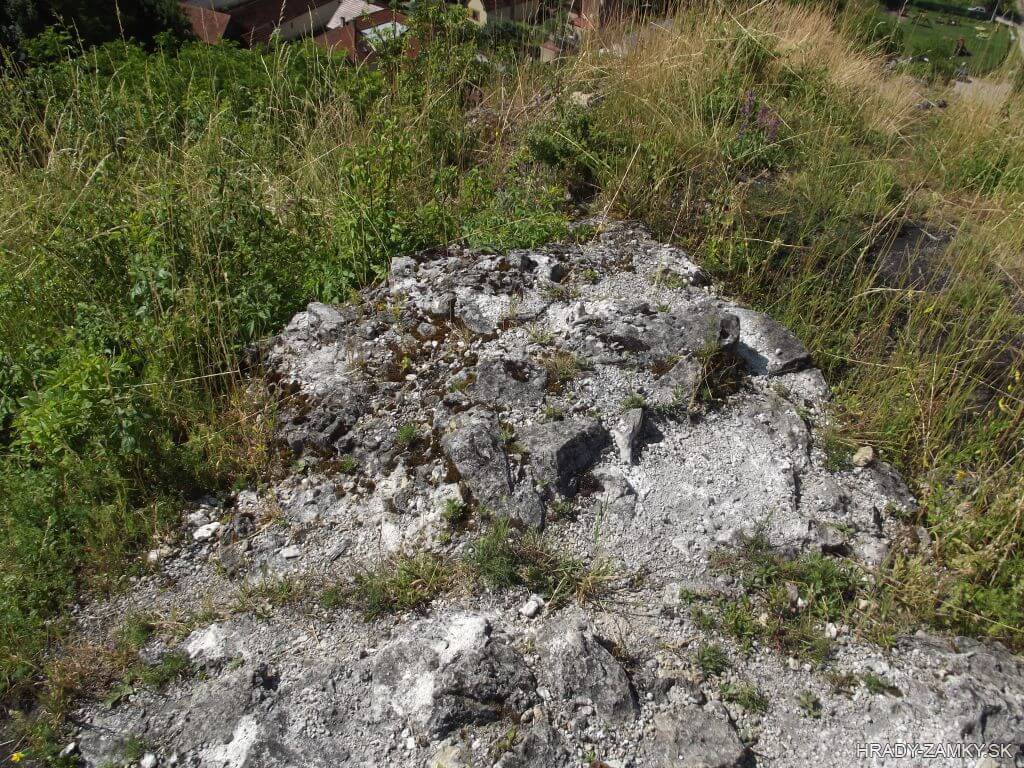
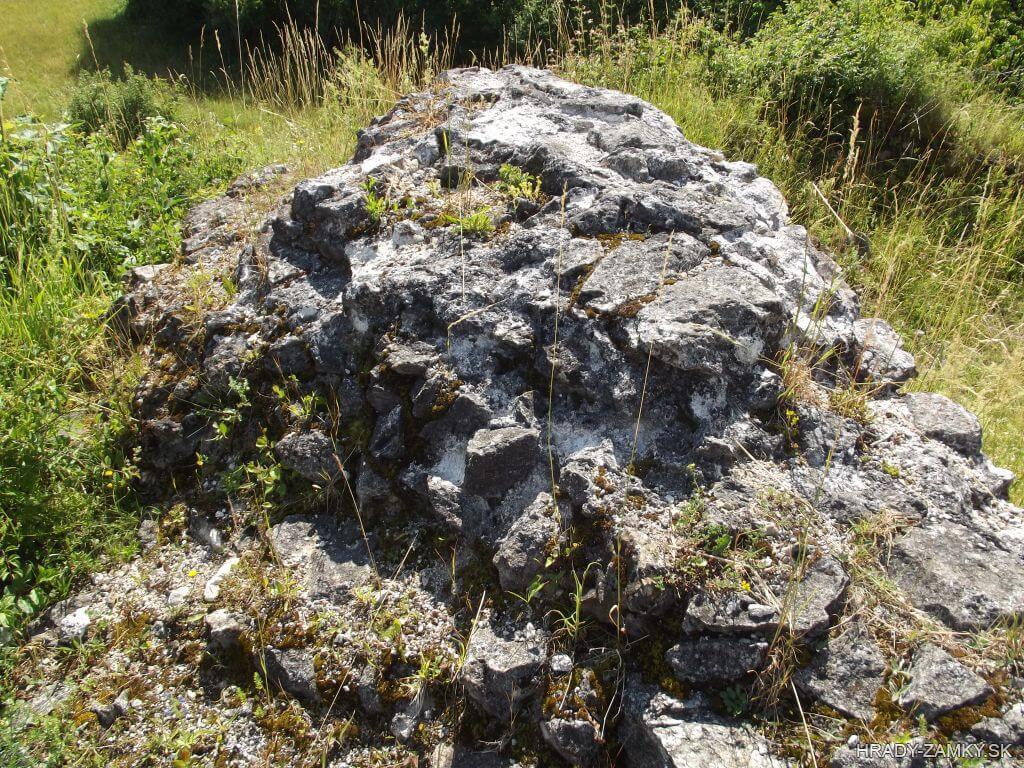
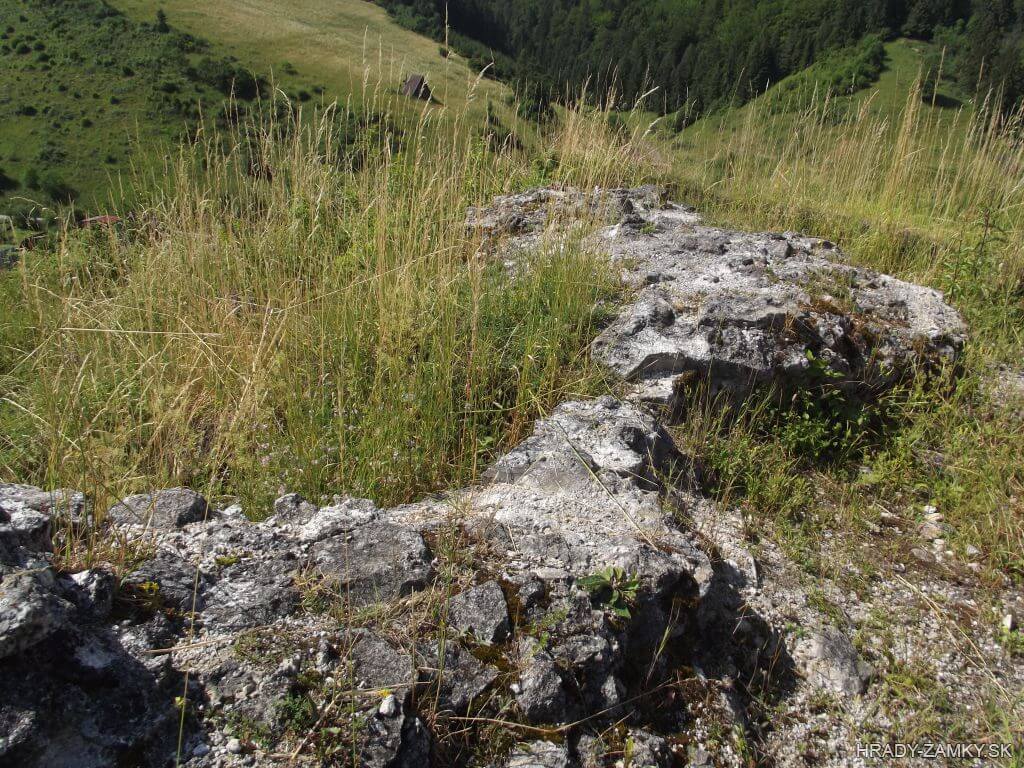
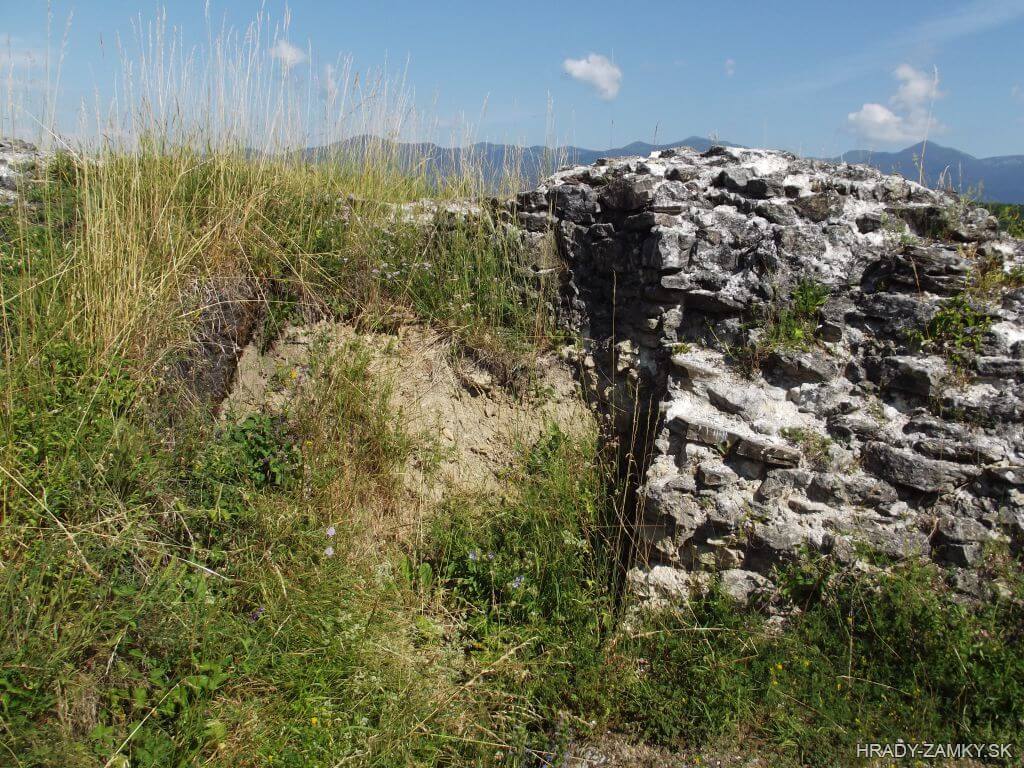
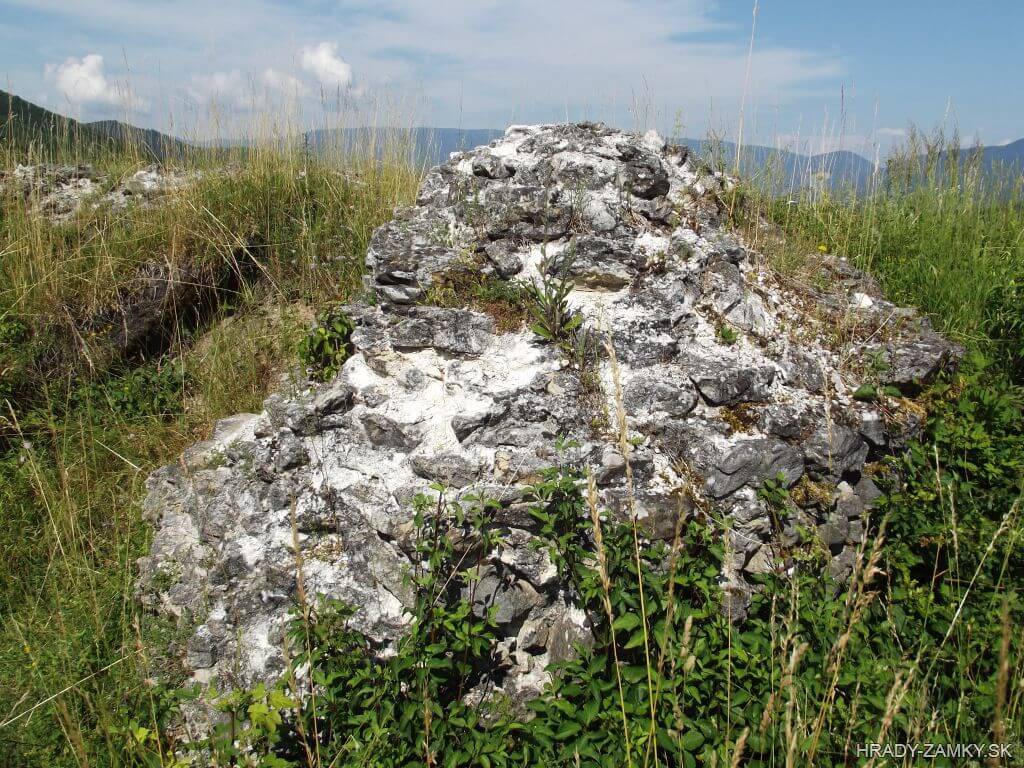
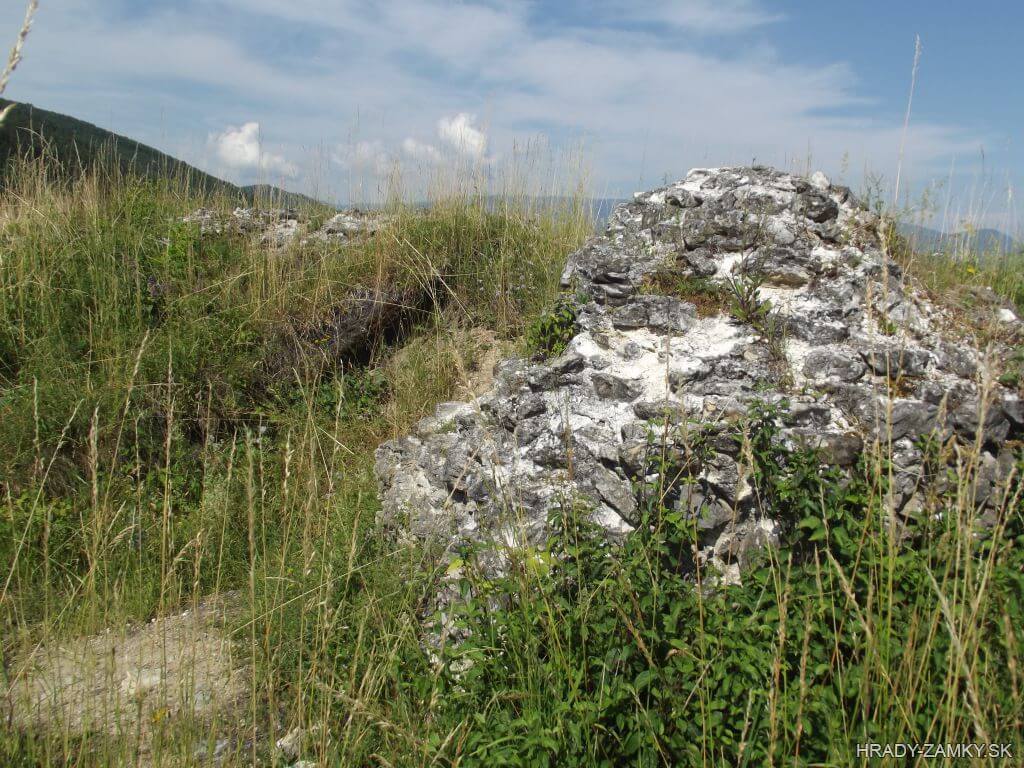
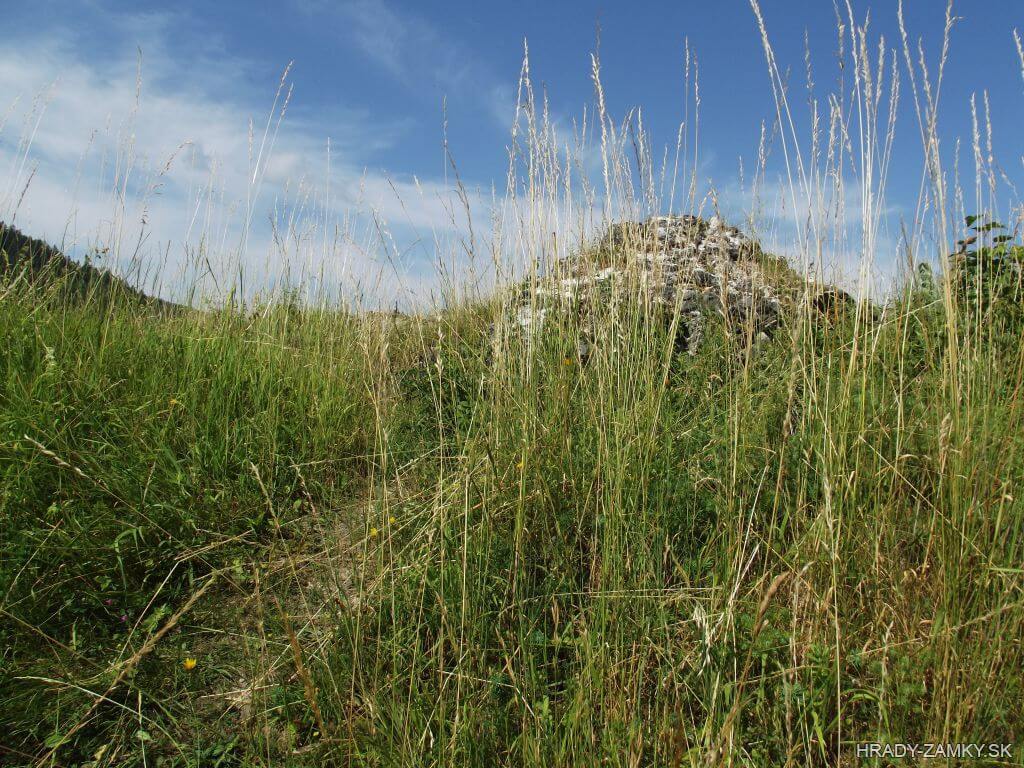
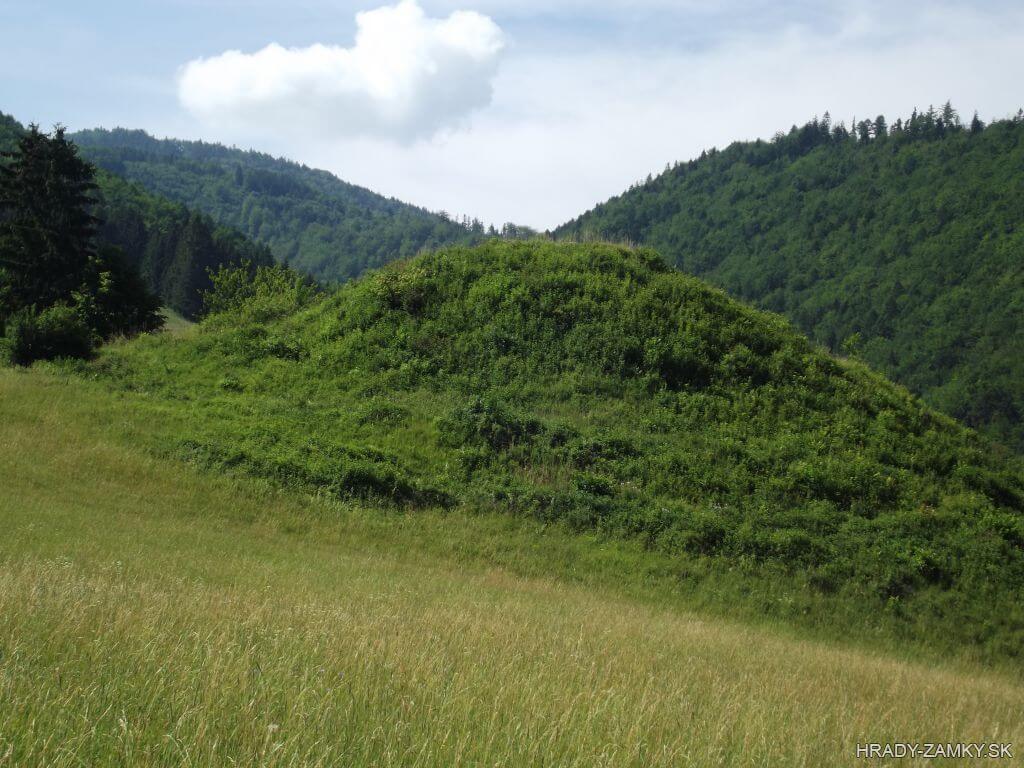
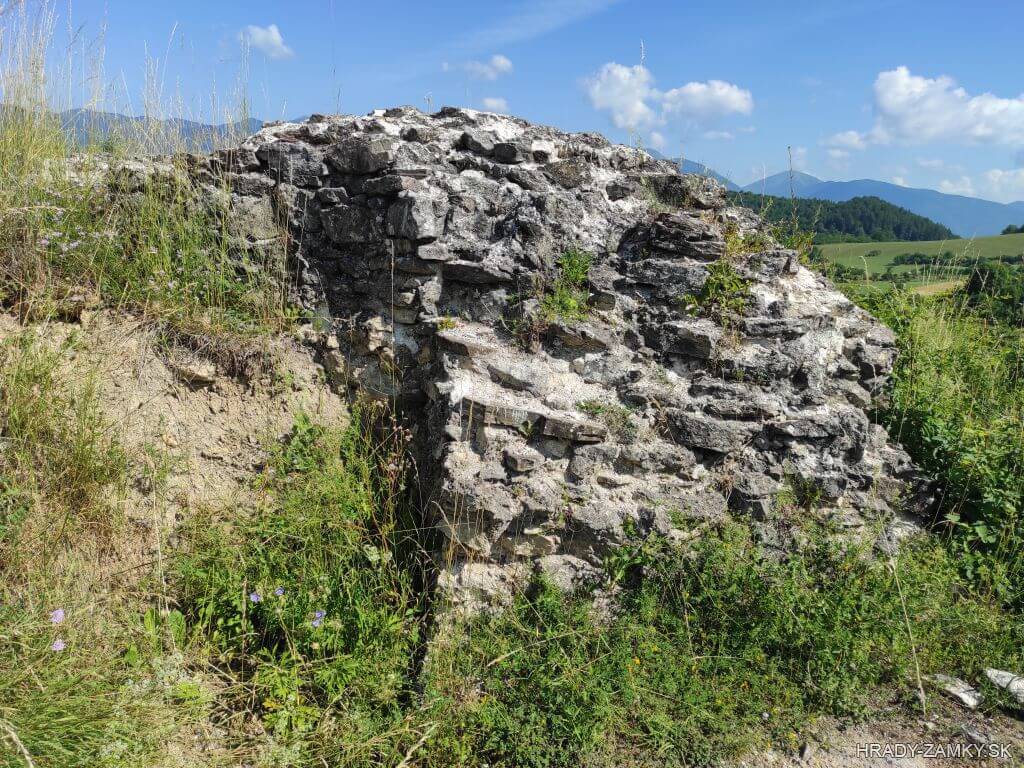
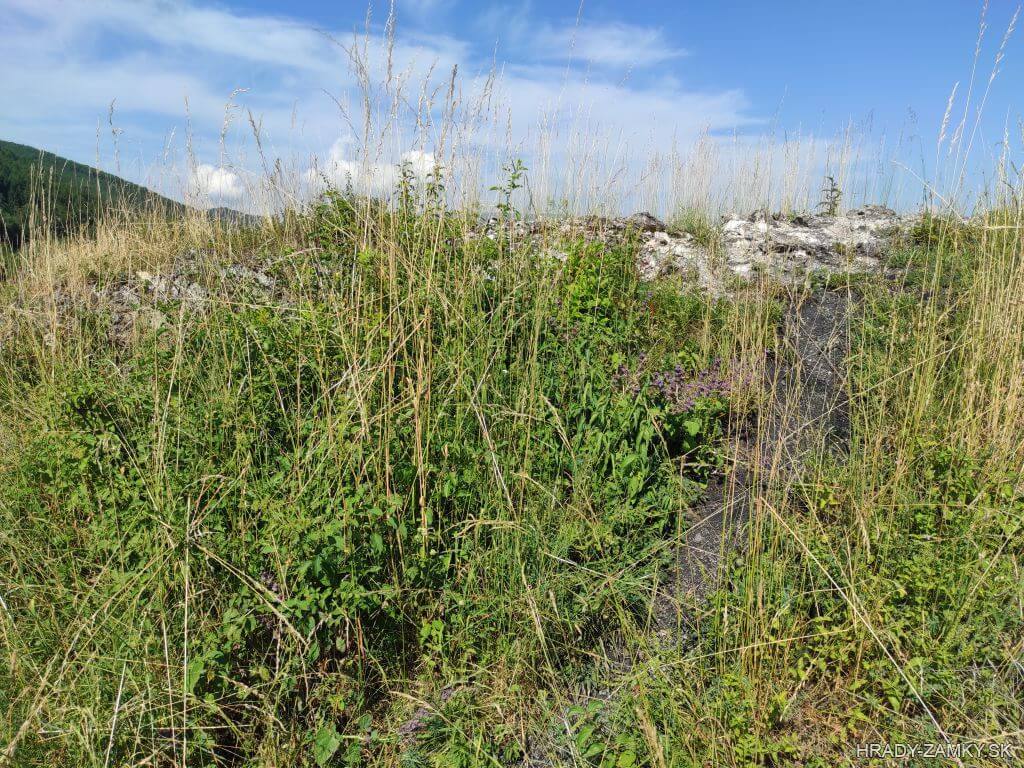
Remains of the walls of extinct castle's tower on the rocky hill Hrádok (Bašta), directly in the village Podhradie, east of Martin
Zvyšky múrov veže zaniknutého hrádku na skalnatej vyvýšenine Hrádok (Bašta), priamo v obci Podhradie, východne od Martina
Previous names
Podhrady, Podhragya, Zyuchan, Scudchan, Szucsány
Roads
Remains of the walls of castle Bašta are located on a small hill directly in the village Podhradie near Martin. 1.mája street passes through the village, after which we get to the local grocery, approximately at the place where the mentioned street is crossed by Partizánska street. Just opposite the store is a smaller area next to the road where we can park. From there we have the castle hill in sight. We continue a few meters along the road and then turn right onto the dirt road. We continue on it until it begins to branch. From that place we turn right and a few meters across the meadow we get to the hill, where the remains of the castle are visible.
Zvyšky múrov hrádku Bašta sa nachádzajú na malej vyvýšenine priamo v obci Podhradie pri Martine. Obcou prechádza ulica 1.mája, po ktorej sa dostaneme až k miestnym potravinám, približne v mieste, kde spomínanú ulicu križuje ulica Partizánska. Hneď oproti obchodu je menšia plocha vedľa cesty, kde môžeme zaparkovať. Odtiaľ máme už hradný kopec na dohľad. Pokračujeme pár metrov po ceste a vzápätí odbočíme na poľnú cestu vpravo. Pokračujeme po nej, až kým sa nezačne rozvetvovať. Z toho miesta odbočíme vpravo a cez lúku sa o pár metrov dostaneme na kopec, kde sú viditeľné zvyšky hrádku.
Description
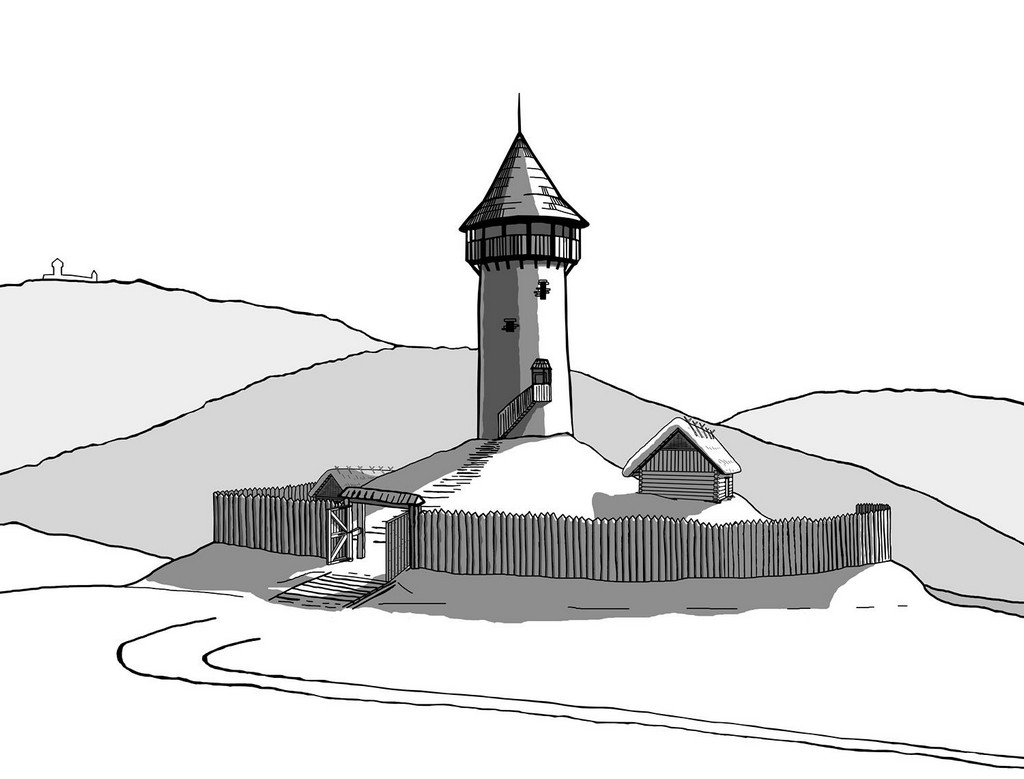
On a distinctive conical hill above the village, there used to be a small castle measuring approximately 50m x 50m with a round brick tower, typologically similar to the Živánska Tower in Jedľové Kostoľany. At present, an impressive foundation with a diameter of approximately 6 m and a width of walls up to 1 m has been preserved from this tower. The castle probably had another smaller building and an adjoining courtyard. It was probably surrounded by a palisade and fortified with a moat and rampart.Archaeological research from 2013 pointed to the absence of rubble. It is therefore likely that the tower, after it ceased to serve its purpose, was dismantled into building material.
Na výraznom kužeľovitom kopci nad obcou stál kedysi hrádok s rozmermi približne 50m x 50m s okrúhlou murovanou vežou, typologicky podobnou so Živánskouu vežou v Jedľových Kostolanoch. V súčasnosti sa z tejto veže zachoval impozantný základ s priemerom približne 6 m a šírkou múrov do 1 m. Hrádok mal zrejme ešte ďalšiu menšiu zástavbu a priľahlý dvor. Bol obklopený pravdepodobne palisádou a opevnený priekopou a valom.Archeologický výskum z roku 2013 poukázal na absenciu sutín. Je preto pravdepodobné, že vežu, potom čo prestala slúžiť svojmu účelu, rozobrali na stavebný materiál.
Plan
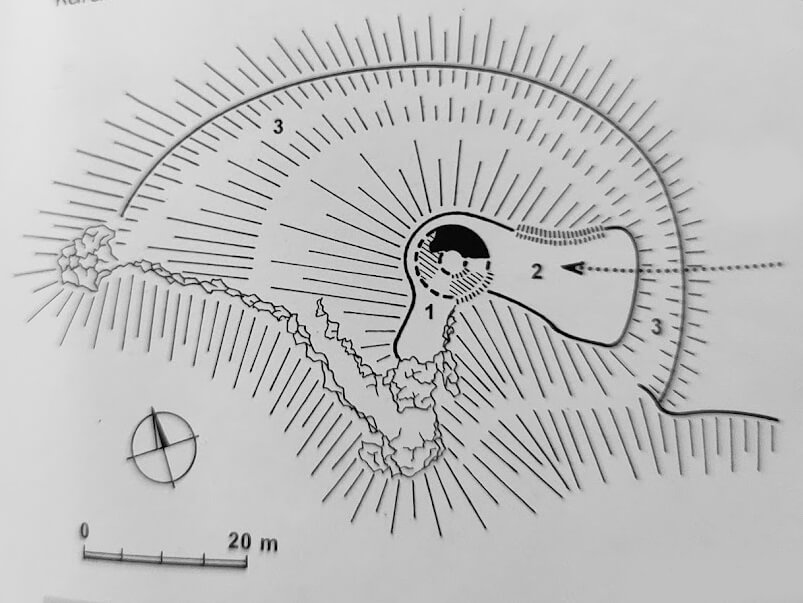
Legend to the ground plan
- 1 - round stone tower
- 2 - courtyard
- 3 - moat with rampartSource: NEŠPOR J. Za tajomstvami zrúcanín II. Zrúcaniny Stredného Slovenska
Legenda k pôdorysu
- 1 - kruhová kamenná veža
- 2 - nádvorie
- 3 - priekopa s valomZdroj: NEŠPOR J. Za tajomstvami zrúcanín II. Zrúcaniny Stredného Slovenska
History
Based on archaeological finds, it is possible to assume that the castle was probably built in the 15th century, at the time of the struggles with the brothers, with the owner of Sučiansky Castle, nobleman Pongrácz of Sv. Nicholas, who gained a significant position in Turiec after the death of King Albrecht.
In 1442 he owned Sučany and the surrounding property and before 1446 he arbitrarily built a castle here. Its main function was to guard the MAGNA VIA trade route, which passed in its immediate vicinity.
Despite the disagreement of the rightful owners, Pongrácz, in agreement with the governor Ján Hunyadi, obtained additional permission to build the fortress and consent for the castle to remain the property of his family. This agreement was also confirmed by King Ladislav Pohrobok.
The mentioned castle is often located in the Skala location in the literature, but there are no building remains. Therefore, it is more likely that the mentioned Pongrácz fortification stood on a rocky ridge in the village of Podhradie.
However, it is also possible that the castle was built by one of the less wealthy owners after the start or demolition of the older castle in the 14th century.
The castle probably disappeared in 1526, when it was occupied and damaged by the army of Ján Zápoľský. In the complaints of Marta Nyári about the injustices of the Révay family from 1554, the castle is no longer mentioned.
Archaeological research took place here in 2013, which pointed to the absence of rubble, which shows that the castle was dismantled and the material was probably used for the construction of other buildings.
Na základe archeologických nálezov je možné predpokladať, že hrádok vznikol v 15. storočí, v čase bojov s bratríkmi, vtedajším vlastníkom Sučianskeho hradu, liptovským šľachticom Pongráczom zo Sv. Mikuláša.
Pongrácz po smrti kráľa Albrechta získal v Turci významné postavenie a v roku 1442 mu patrili Sučany i okolité majetky. Pred rokom 1446 si tu svojvoľne postavil hrádok. Jeho hlavnou funkciou bolo strážiť obchodnú cestu MAGNA VIA, ktorá prechádzala v jeho tesnej blízkosti.
Napriek nesúhlasu právoplatných vlastníkov, si Pongrácz na základe dohody s gubernátorom Jánom Hunyadim, vymohol dodatočné povolenie na stavbu pevnôstky i súhlas, aby hrádok zostal vo vlastníctve jeho rodu. Túto dohodu potvrdil v roku 1454 aj panovník Ladislav Pohrobok.
Spomínaný hrádok býva v literatúre lokalizovaný na sučiansku Skalu, avšak tam absentujú stavebné zvyšky. Preto je viac pravdepodobné, že spomínaná pongráczovská fortifikácia stála na skalnatej vyvýšenine v obci Podhradie.
Je však možná i verzia, že hrádok dal vystavať niektorý z menej majetných vlastníkov po spustnutí alebo zbúraní staršieho hradu ešte v 14. storočí.
Hrádok zanikol pravdepodobne v roku 1526, keď ho obsadilo a poškodilo vojsko Jána Zápoľského. V sťažnostiach Marty Nyári na neprávosti Révayovcov z roku 1554 sa hrádok už nespomína.
V roku 2013 tu prebehol archeologický výskum, ktorý poukázal na absenciu sutín, z čoho vyplýva, že hrádok bol rozobratý a materiál zrejme použitý na stavbu iných objektov.
Myths and legends
There are no myths available.
K tomuto objektu nie sú dostupné žiadne povesti
Useful information
The remains of the walls are freely accessible
Zvyšky múrov sú voľne prístupné
Nearby castles