Blatnica
Blatnica Žilina county Slovakia
castle ruin
Blatnica
Blatnica Žilinský kraj Slovakia
zrúcanina hradu
The ruins of the castle are located on the low limestone back of Plešovice, which separates the Gaderská valley from the Turčianska kotlina basin, about 2 km from the village of Blatnica
Zrúcanina hradu sa nachádza na nízkom vápencovom chrbte Plešovice, ktorý oddeľuje Gaderskú dolinu od Turčianskej kotliny, zhruba 2 km od obce Blatnica
Previous names
Blatnitha, castrum Balathnica, Balathnice
Roads
Trasa 1: At the end of the village Blatnica, towards the Gader Valley, there is a paid parking lot. However, if you want to save about 10 minutes walk, you can also park at the cottage settlement Gader. From the mentioned parking lot we continue by car, we pass through a wooden gate to the Gader valley, along a narrow asphalt road we come to the parking lot on the left side. However, in the season it is usually full.From there we continue on a leisurely walk along the asphalt road (yellow TZT). After about 10 minutes, we come to a turn to the left, which enters the forest. This is followed by a slight ascent, more or less along the roots of the trees, which in about 20 minutes will lead us to Blatnica ruins.
Trasa 1: Na konci obce Blatnica, smerom na Gaderskú Dolinu, sa nachádza platené parkovisko. Ak si však chceme ušetriť asi 10 minút chôdze, zaparkovať sa dá aj pri chatovej osade Gader. Od spomínaného parkoviska pokračujeme autom ďalej, prejdeme cez drevenú bránu do Gaderskej doliny, po úzkej asfaltovej ceste prídeme k parkovisku na ľavej strane. V sezóne však býva plné.Odtiaľ pokračujeme pohodovou prechádzkou po asfaltovej ceste (žltá TZT). Asi po 10 minútach prídeme k odbočke vľavo, ktorá vstupuje do lesa. Tu nasleduje mierne stúpanie viacmenej po koreňoch stromov, ktoré nás zhruba za 20 minút dovedie k hradu Blatnica.
Trasa 2: The alternative route is also suitable for families with a stroller. From the parking lot in Gaderská dolina we continue on foot along the yellow TZT, similar to route no. 1, but we miss the turn to the castle and we still follow the asphalt road. We come to the mountain hut, then after a few meters we turn left. After about 450 m we continue to the cottage Pod hradom and from there up to the castle.
Trasa 2: Alternatívna trasa je vhodná aj pre rodiny s kočiarom. Od parkoviska v Gaderskej doline pokračujeme peši ďalej po žltej TZT, podobne ako v trase č.1, avšak nevšímame si odbočku na hrad a ideme stále po asfaltke. Prídeme k horárni, ďalej po pár metroch zabočíme doľava. Po asi 450 m pokračujeme k chate Pod hradom a odtiaľ hore na hrad.
Description
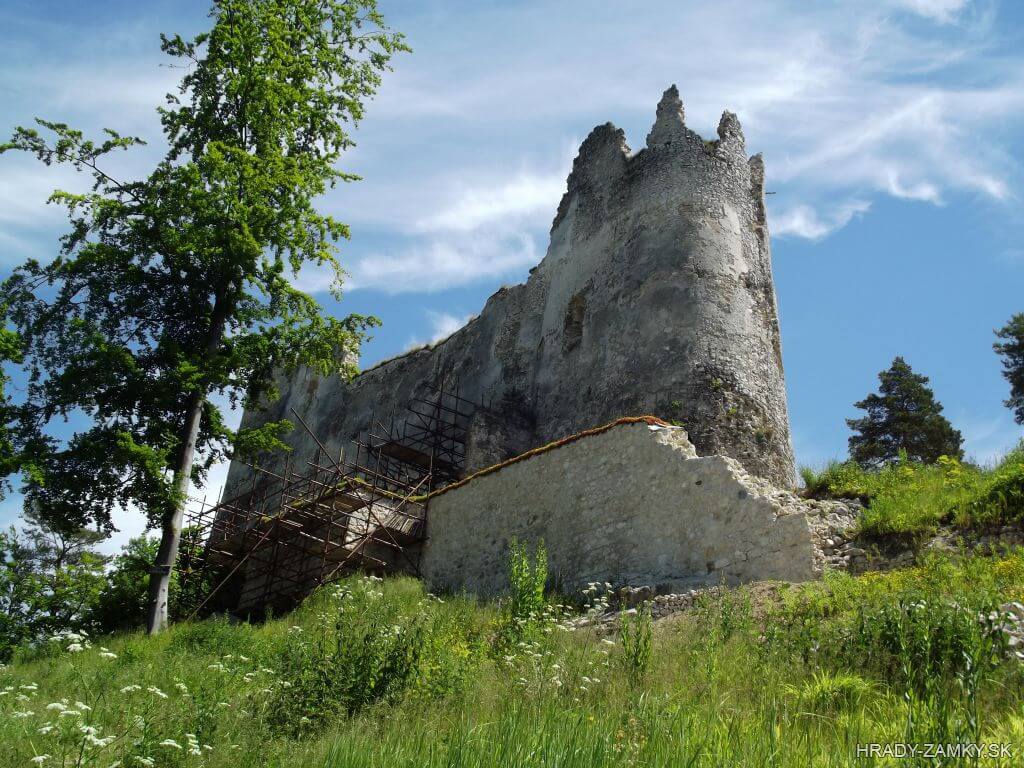
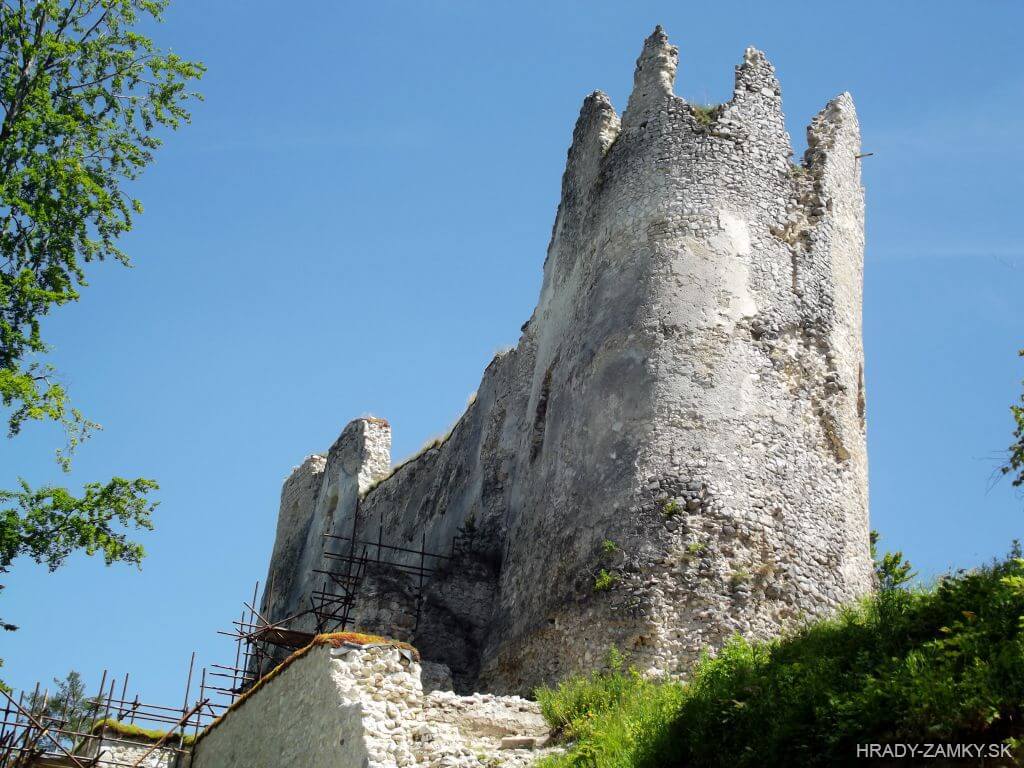
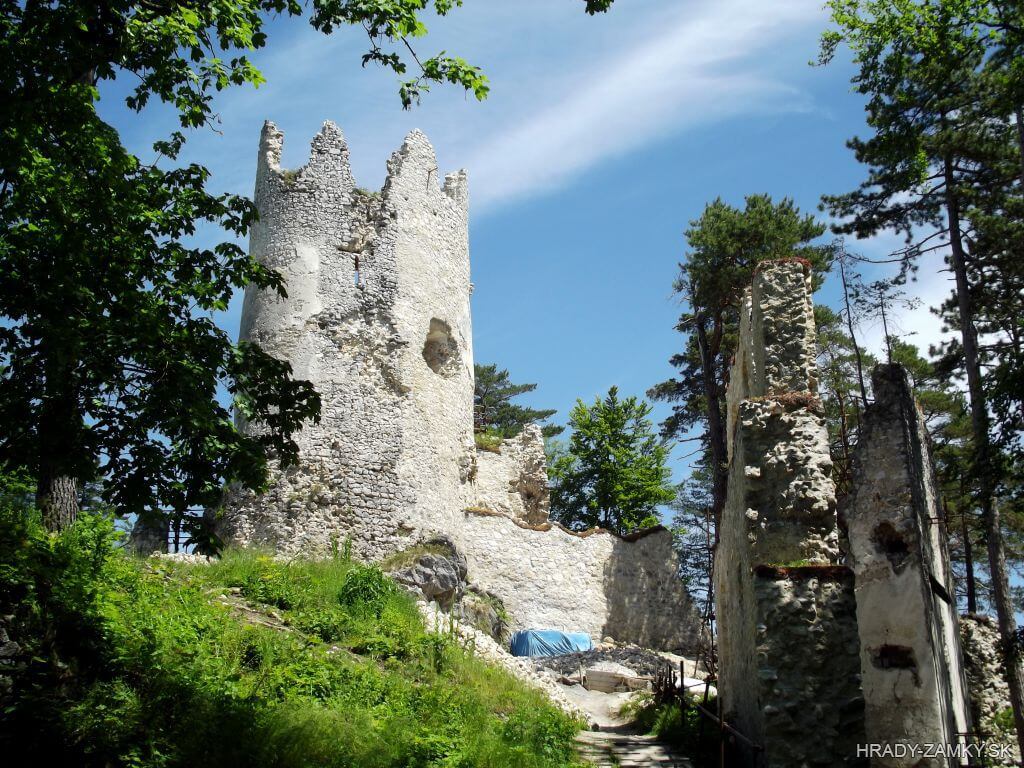
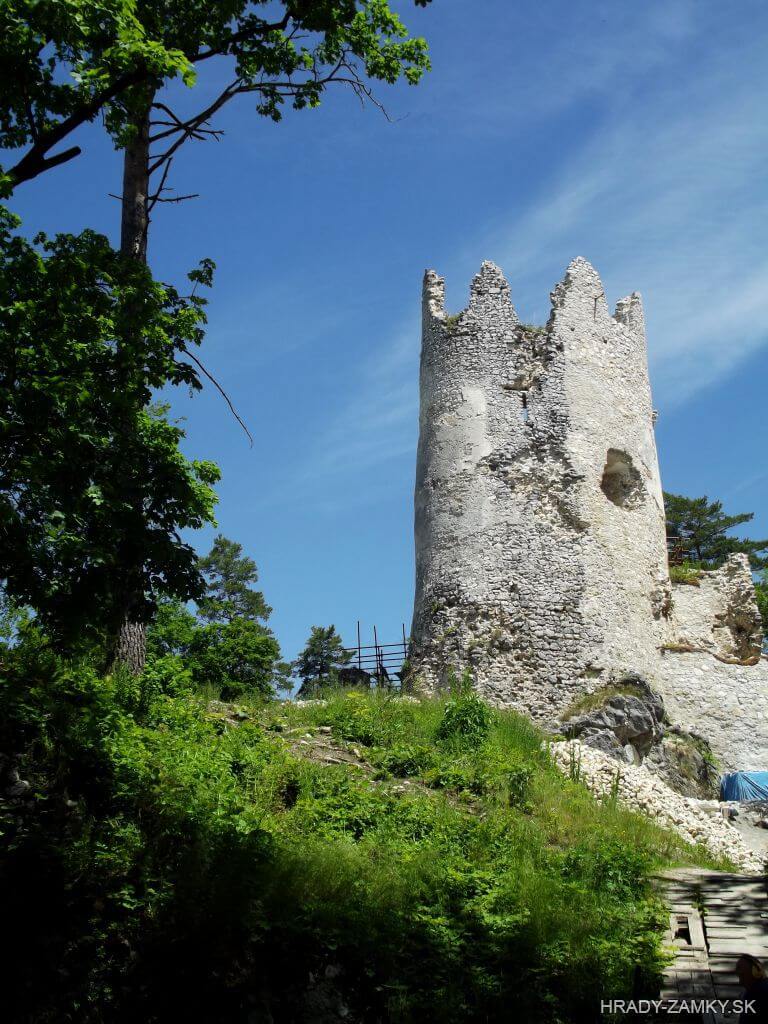
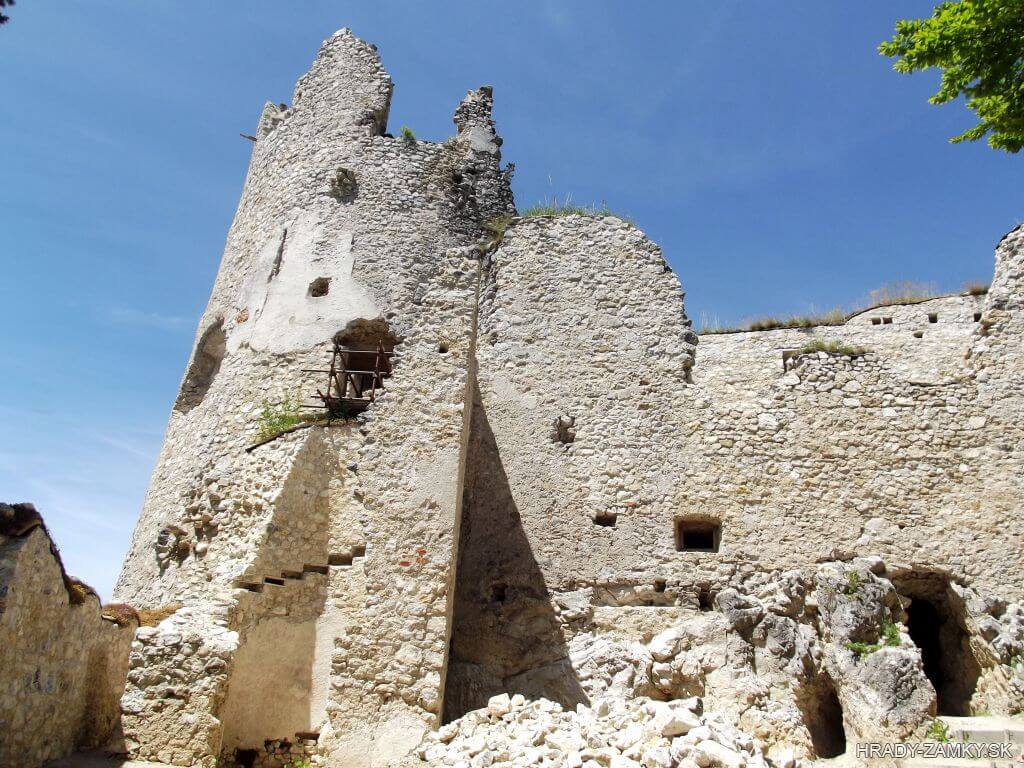
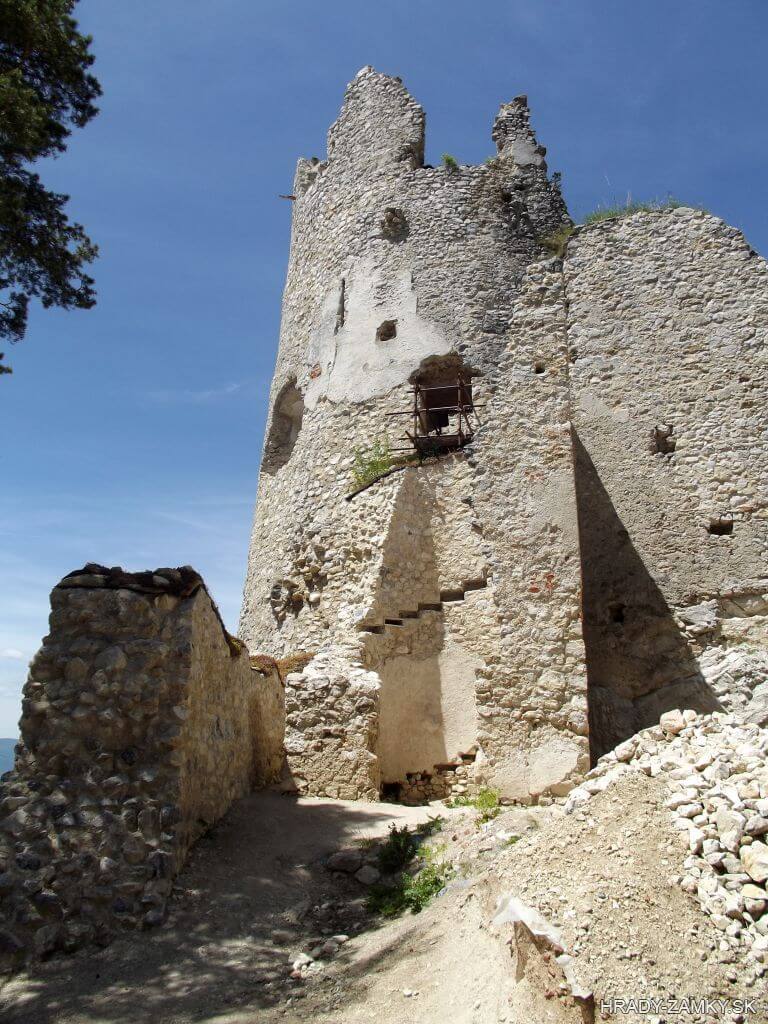
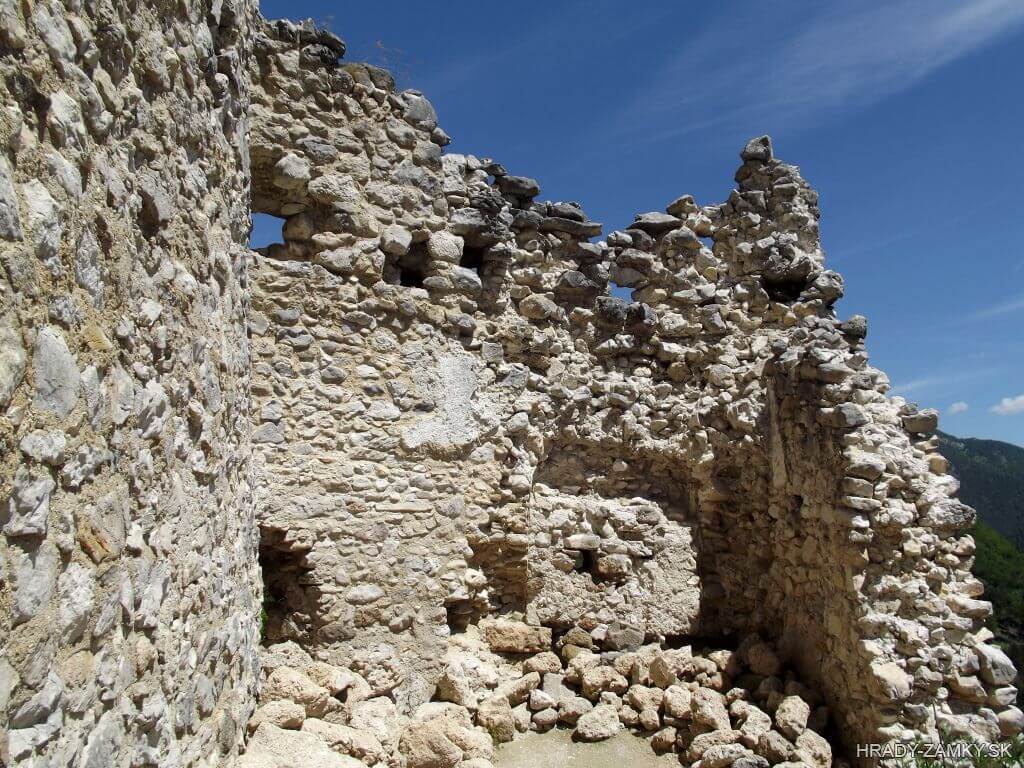
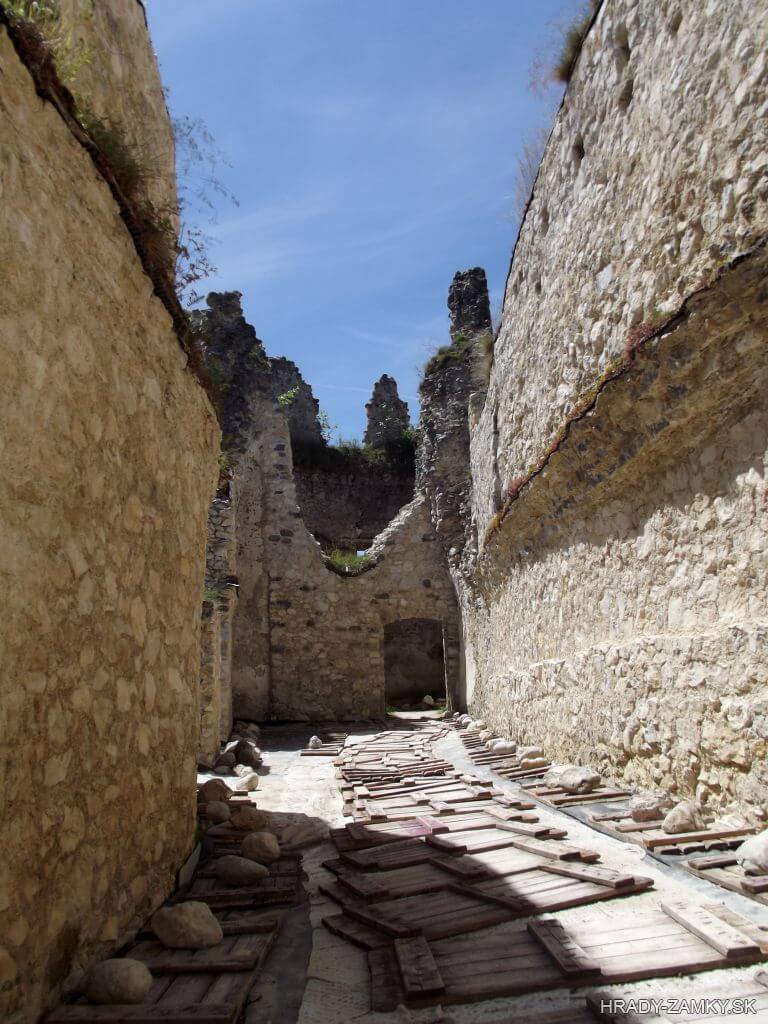
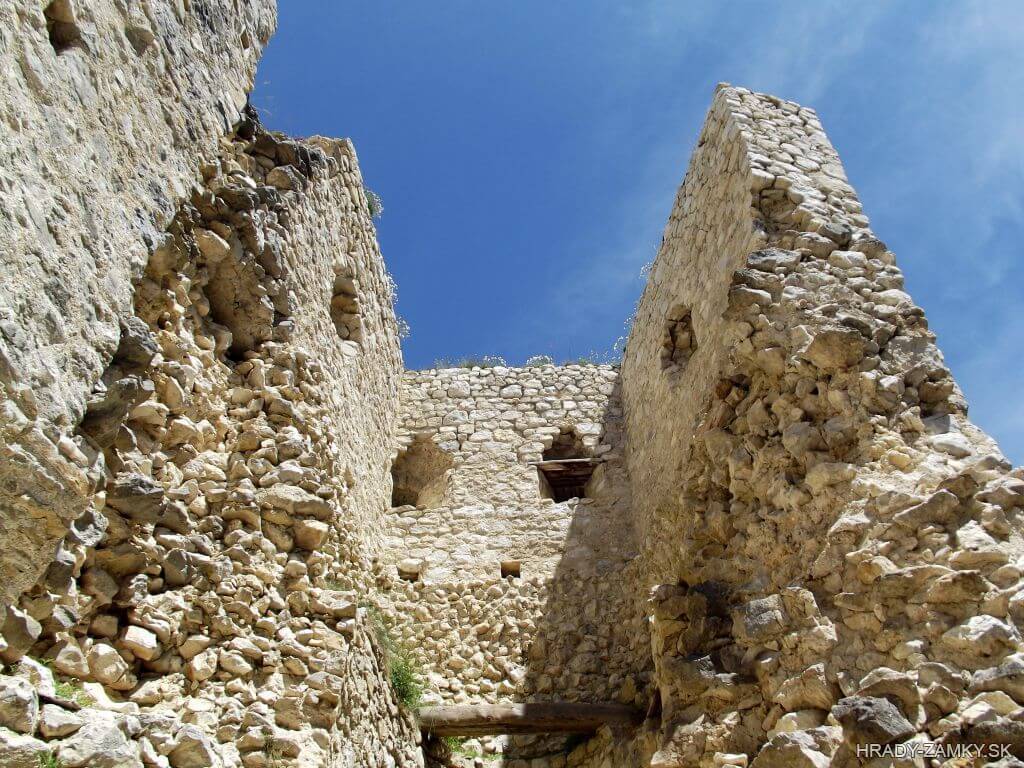
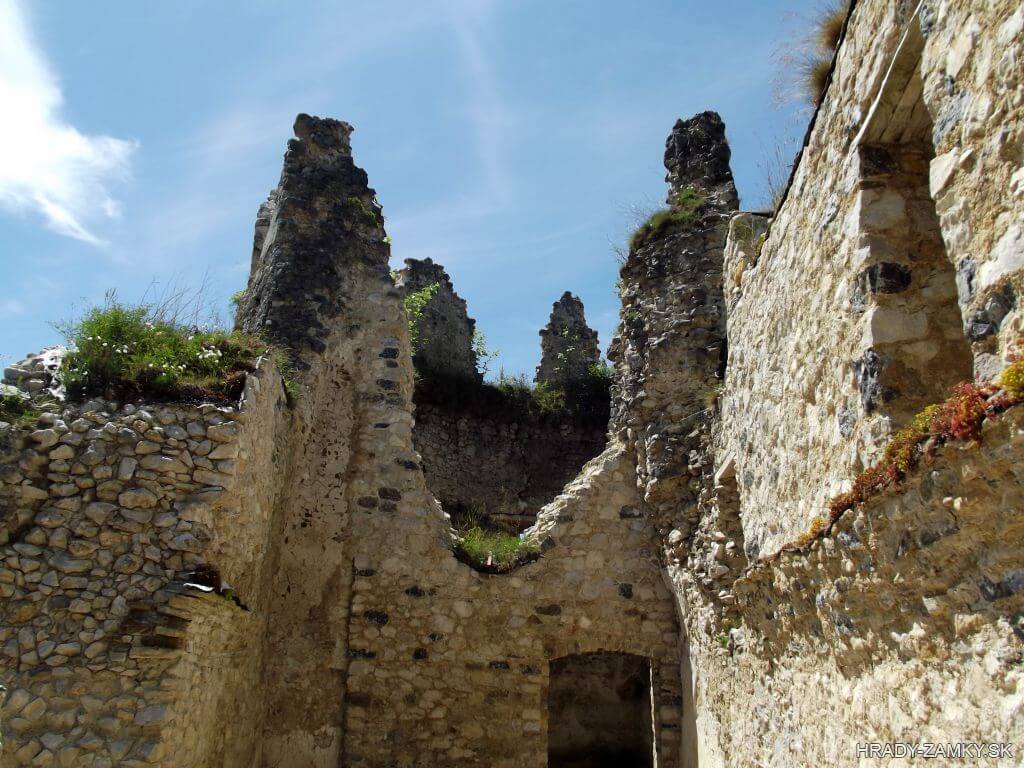
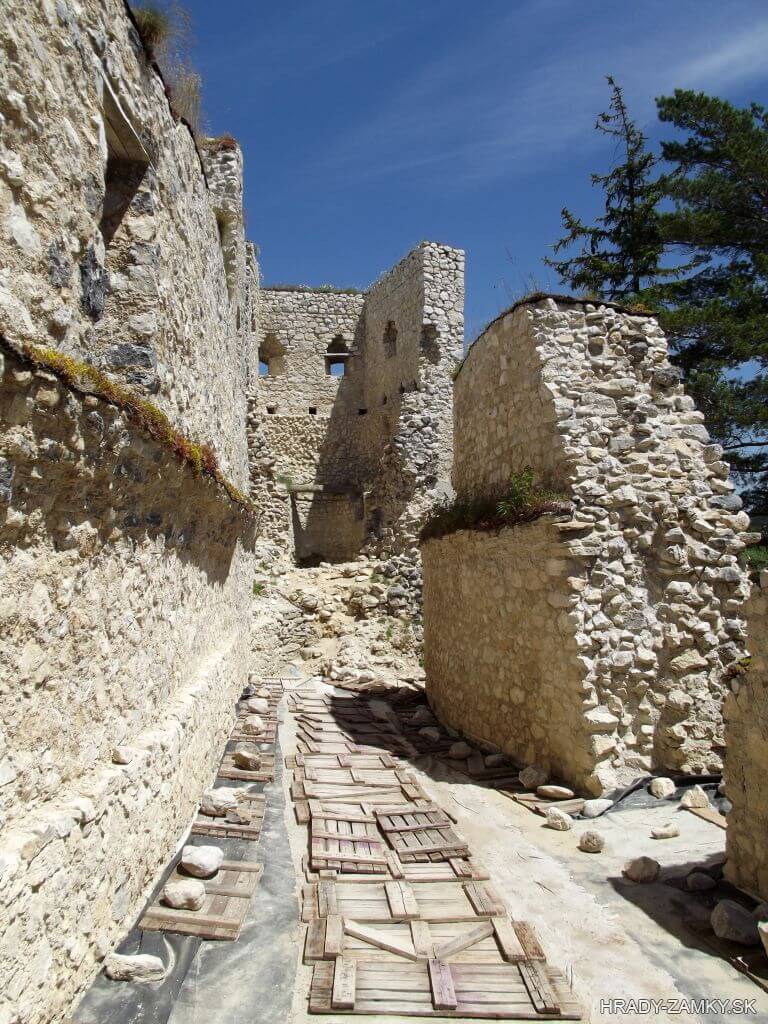
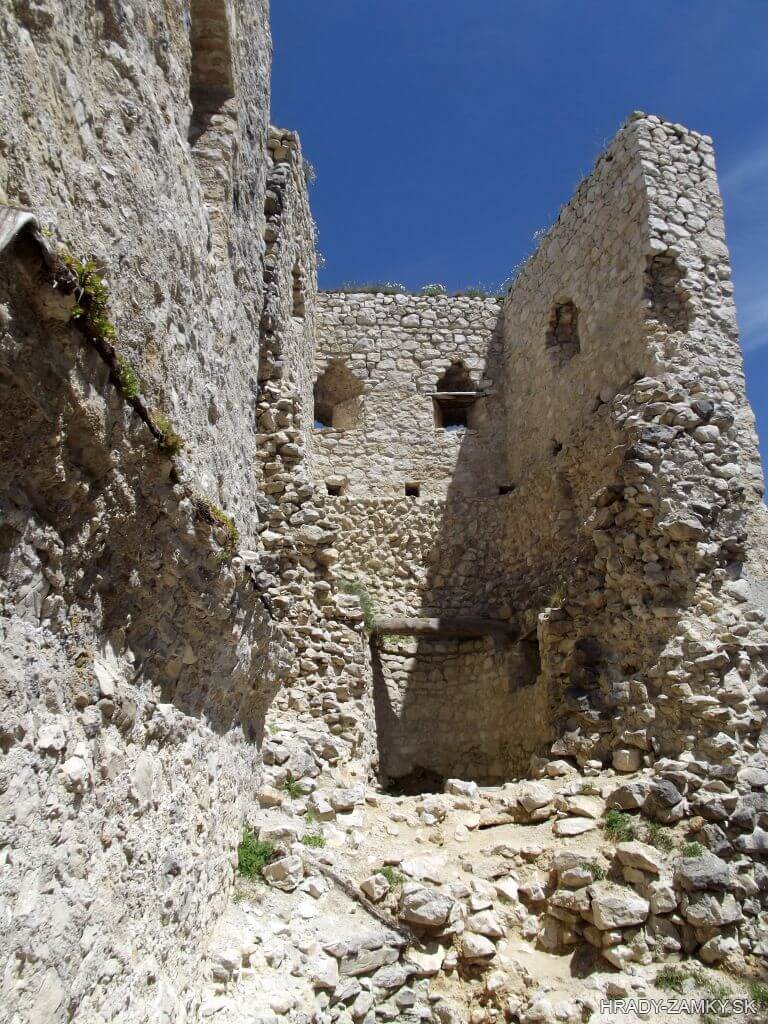
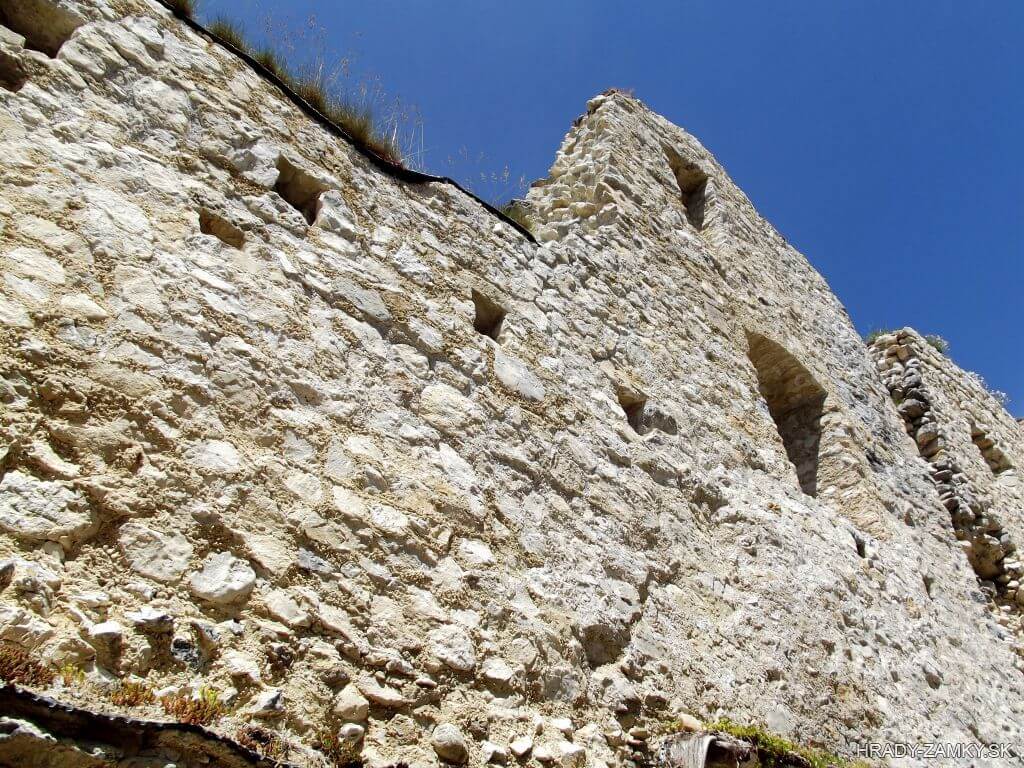
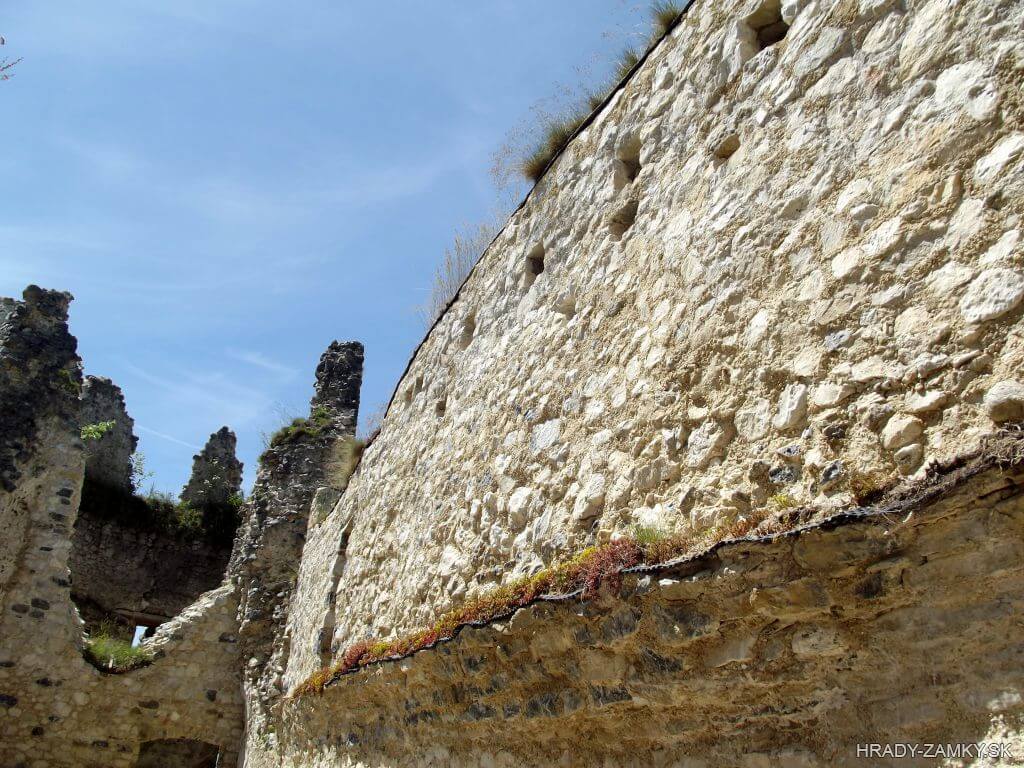
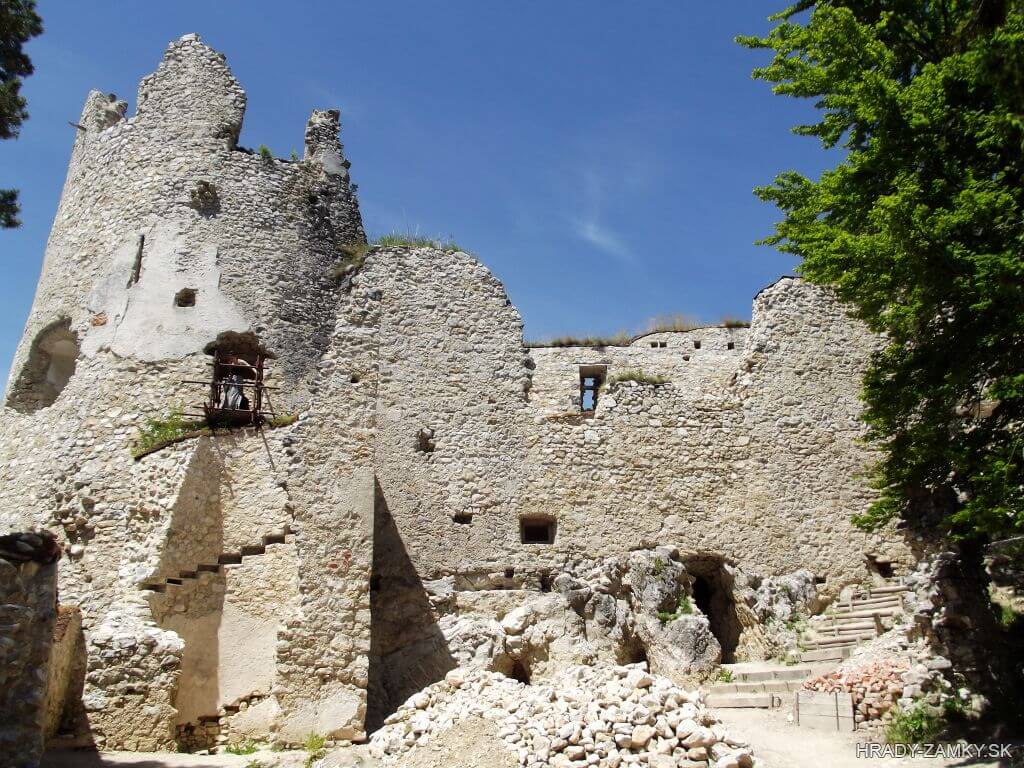
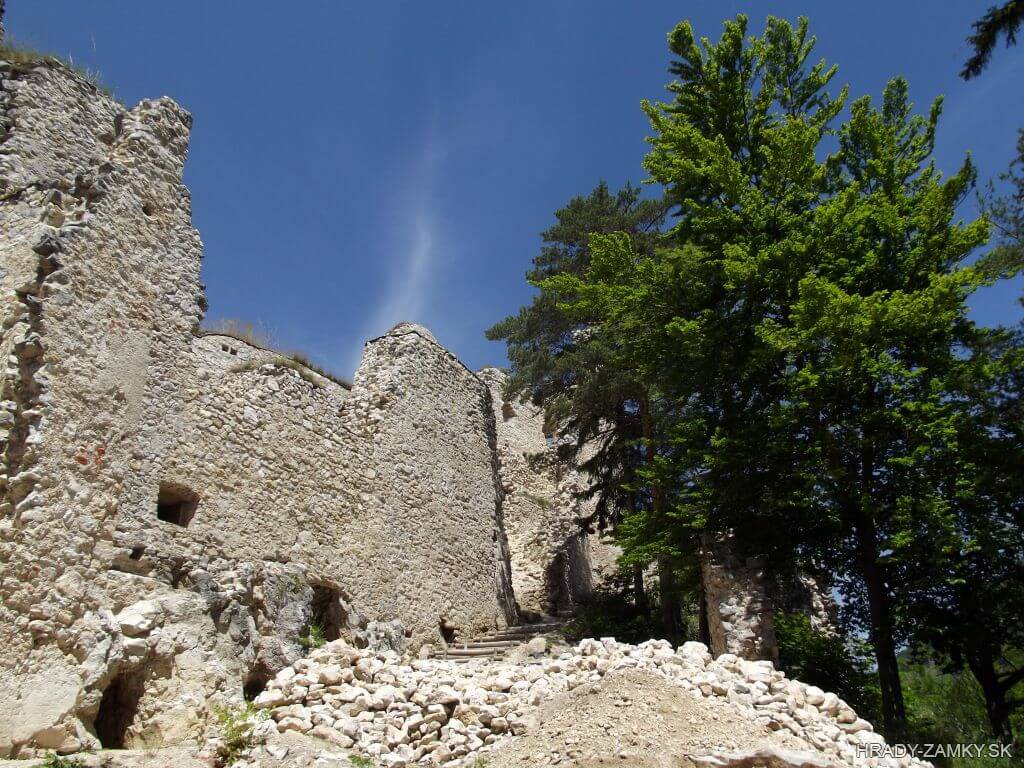
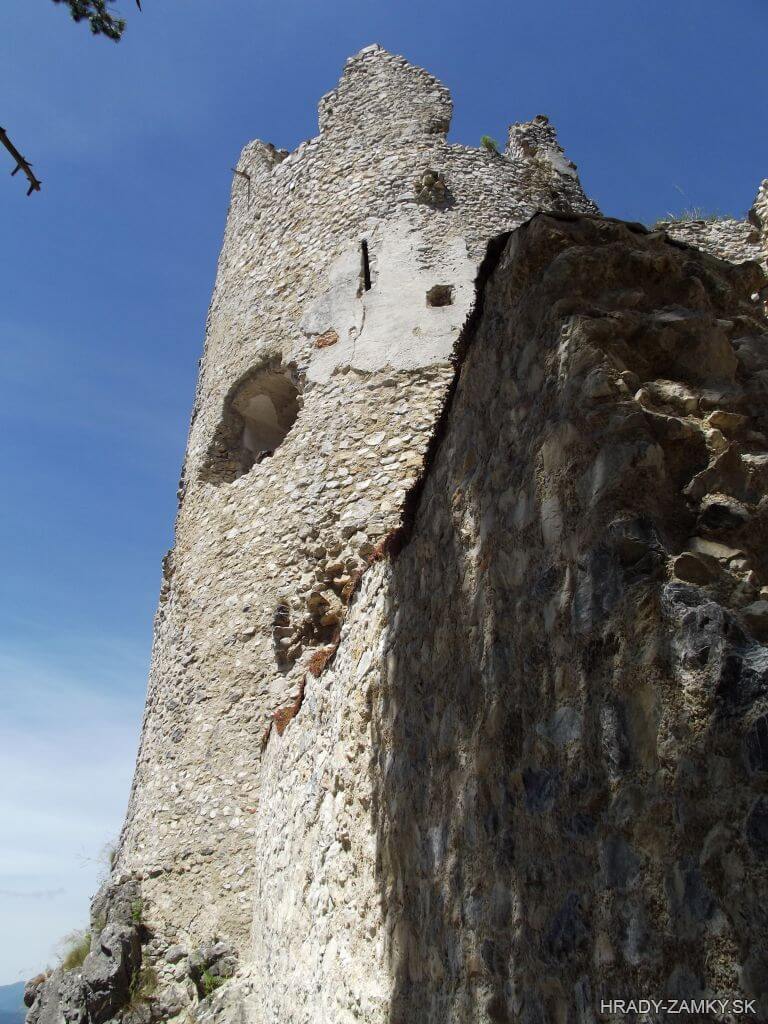
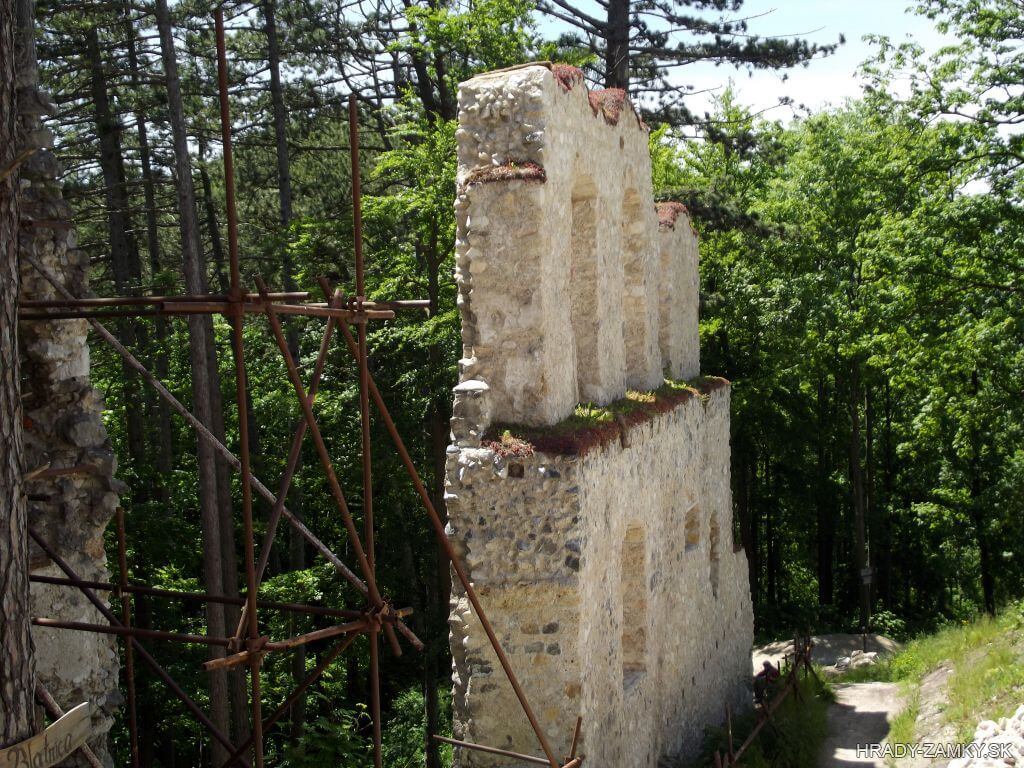
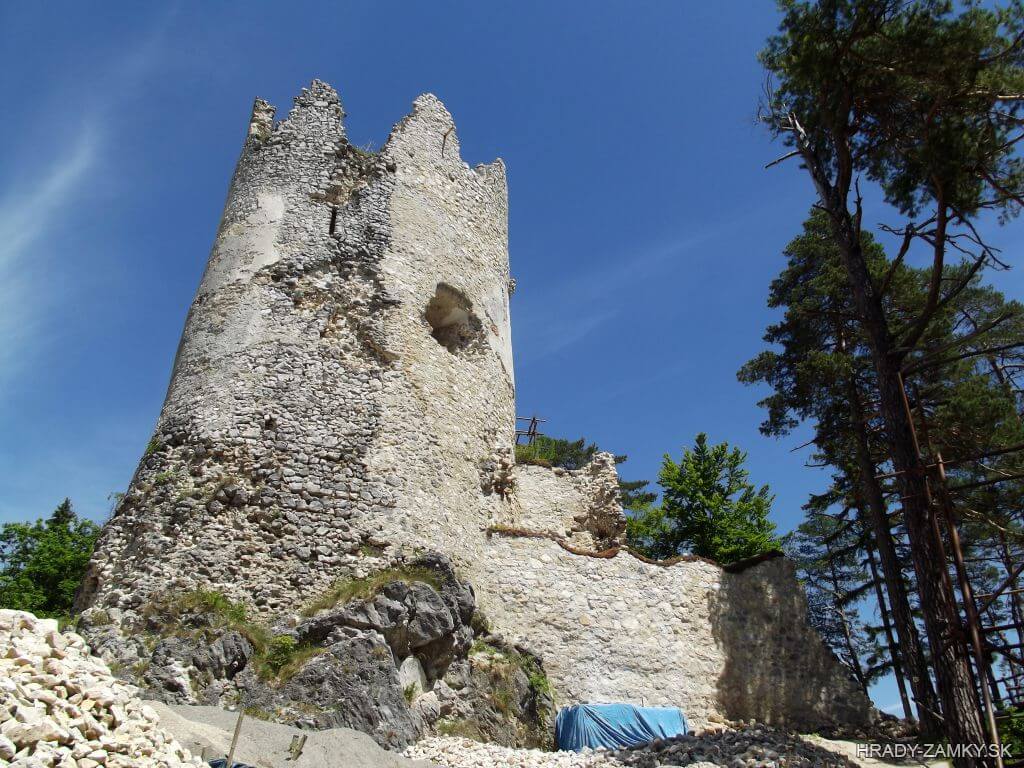
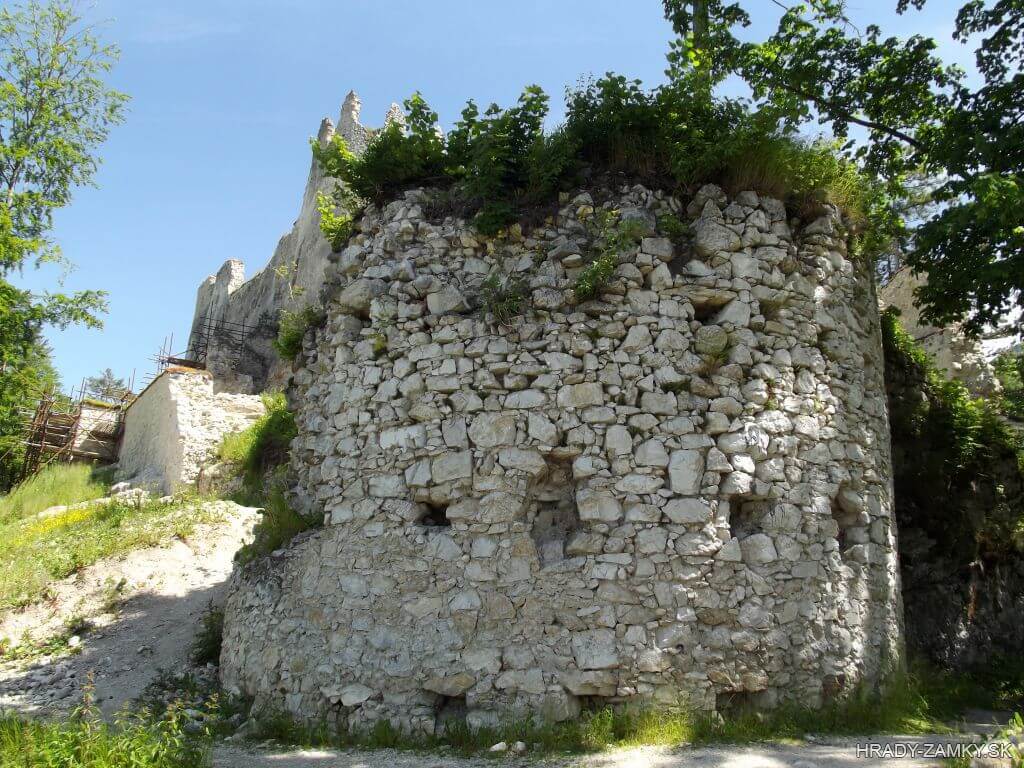
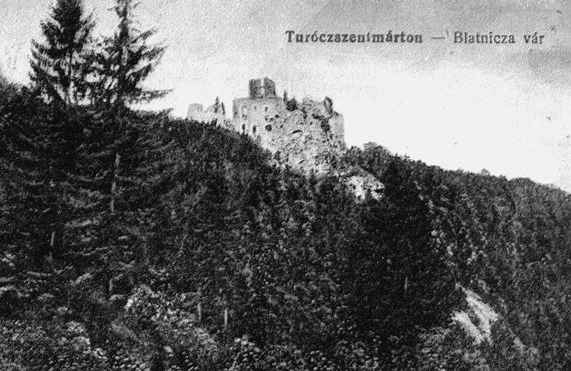
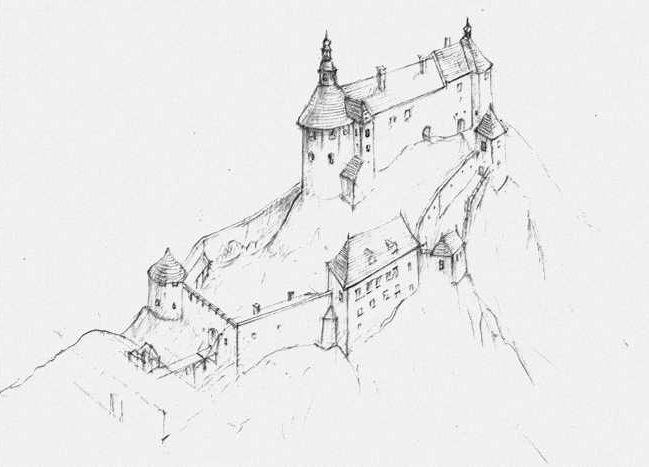
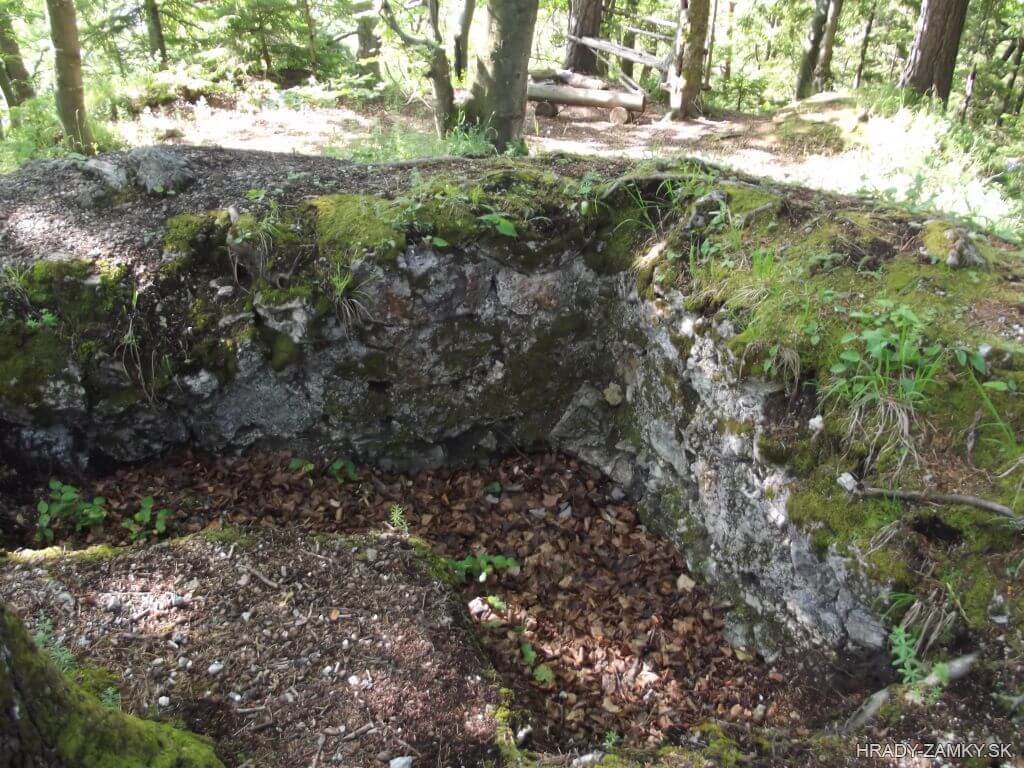
The masonry of the western tower has been preserved, which still rises to a great height even today and has slotted loopholes. The upper castle is clamped between two towers. On the farm buildings in the lower castle, the challenging blocking is completely preserved and the remnants of the walls of these buildings provide a truly spectacular view.The castle consisted of a long, relatively narrow palace, strengthened on the north and south sides by semicircular towers, protected on the northeast side by a steep abyss. The western tower, built in a more vulnerable place, is much more massive and larger than the eastern one. It was made accessible by a separate spiral staircase, built on its southern side. On the southeast, more accessible side, a small courtyard was enclosed by walls with a quadrilateral tower. The wall of fortifications that surrounded the first courtyard had an entrance over a ditch cut into the rock in the west. It was protected by an open round bastion.
Zachované je murivo západnej veže, ktorá sa ešte aj dnes týči do veľkej výšky a badať v nej štrbinové strieľne. Horný hrad je zovretý medzi dve veže. Na hospodárskych budovách v dolnom hrade je celkom zachované nárožné kvádrovanie a zvyšky stien týchto budov poskytujú naozaj veľkolepý pohľad.Hrad sa skladal z dlhého, pomerne úzkeho paláca, zosilneného na severnej a južnej strane polkruhovitými vežami, chráneného na severovýchodnej strane strmou priepasťou. Západná veža, postavená na zraniteľnejšom mieste, je oveľa mohutnejšia a väčšia ako východná. Sprístupňovalo ju samostatné točité schodište, postavené na jej južnej strane. Na juhovýchodnej, prístupnejšej strane bolo malé nádvorie uzavreté hradbami so štvorbokou vežou. Múr opevnenia, ktorý obklopoval prvé nádvorie, mal na západe vstup ponad priekopu vysekanú do skaly. Chránila ho otvorená oblá bašta.
Plan
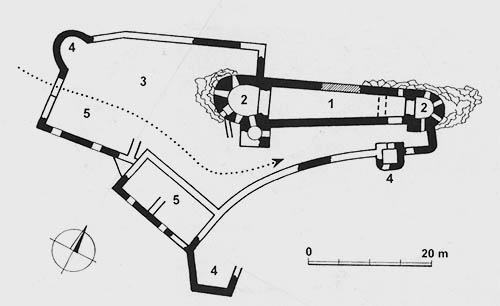
Legend to the ground plan
- 1-palace
- 2-Gothic tower rebuilt into a cannon bastion
- 3-fortification
- 4-fortification
- 5-residential and farm buildings fortification
Legenda k pôdorysu
- 1-palác
- 2-gotická veža prestavaná na delovú baštu
- 3-predhradie
- 4-bašta
- 5-obytné a hospodárske budovy predhradia
History
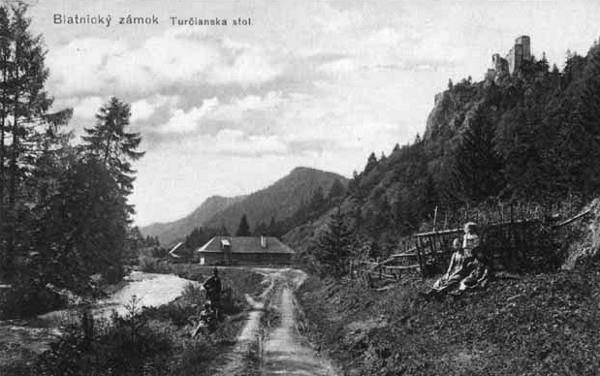
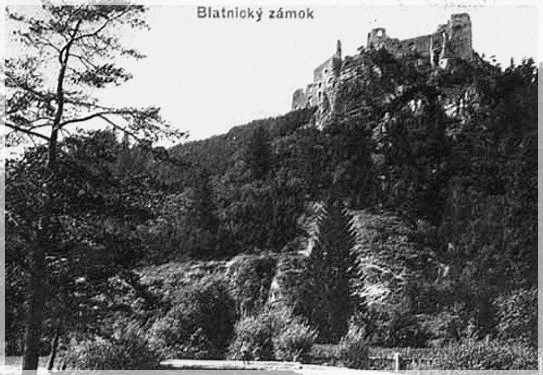
Blatnica Castle on a steep hill behind the village of the same name was built in the second half of the 13th century and we have the first report about it from 1300, when it was owned by Peter of Brezovice. The castle was built mainly to protect the road called magna via, leading from Nitra to the north. When the more comfortable road from Nitra via Mošovce to Martin and further north began to be used, the old road under the name antiqua via lost its original meaning and the importance of the castle declined. Therefore, the rulers were not more interested in it. They often put it in advance, but the holders often only managed and used it rather than maintained it. In 1321 the castle was occupied by the royal troops of Karol Robert. At that time, Master Donč, who was one of the important nobles, also played an important role in the history of Blatnica. In addition to Blatnica, he participated, for example, in the construction of Liptovský Hrádok and Likava. He owned many other castles in our territory. After 1389, King Sigismund donated the castle to the nobleman Pogány Domonkos. Soon, however, he took the castle back and put it in deposit with Ladislav Oppelni. In 1415, after Ladislav's death, the castle belonged to his grandchildren, the princes of Glogau. From 1421 until his death (1433) the owner of the castle was Peter Berzeviczy. From 1434, Queen Borbála Cillei (Barbora Celjská) became the owner of the castle, but she soon gave the castle in advance to Pongrác of Liptovský Mikuláš for 2,300 gold coins. Pongrác handed over the castle to Ladislav Necpalský for 9,000 gold coins, and later the castle fell into the hands of Štefan Pongrácz.
The darkest period of history for Blatnica Castle meant the years 1450-1470, when Peter Komorowsky ruled the castle. He was of Polish origin and came to our territory thanks to the Hussites. In 1462 he received pardon from the king, but in 1471 he joined the dissatisfied, conspiratorial Hungarian nobility, who longed for the throne, called the Polish prince Casimir to the country. However, their plan did not work out, as in 1474 Matej Korvín's royal troops intervened and occupied all his fortresses. Komorowsky then retreated to Orava, where he again received mercy from the noble king. Ferdinand of Habsburg and in 1540 the Révay family became the owners of the castle. In the second half of the 16th and at the beginning of the 17th century, they built a large fortification with new buildings. However, they did not emphasize cannon bastions, so in 1606 the castle was simply seized without a fight by the insurgents Štefan Bocskaya and later by the army of Gabriel Bethlen. In 1678 a fire broke out and several castle buildings burned down. This was probably caused by raids by chickens led by Imrich Thököly. Shortly afterwards, the Révay family reached the castle again and restored the castle. At the end of 1703, the Kuruk rebel troops of František Rákóczi occupied the castle without any problems. A few years later, however, in 1708, after the defeated battle of Trenčín, they were forced to leave the castle. The castle returned to the hands of the Révay family.
After the uprising subsided, the importance of Blatnica Castle declined. As the Révay proved their allegiance to the Habsburgs during the Kuruk fighting, Blatnica Castle was spared an order to destroy it, which concerned excess, unused fortresses. They could still live in the castle after 1711, although many members of the family had already moved to more comfortable mansions. In 1744, Jozef Révay had the castle walls repaired, but in 1790 the last of the Révay family moved out. Since then, the castle was no longer inhabited and was slowly abandoned.
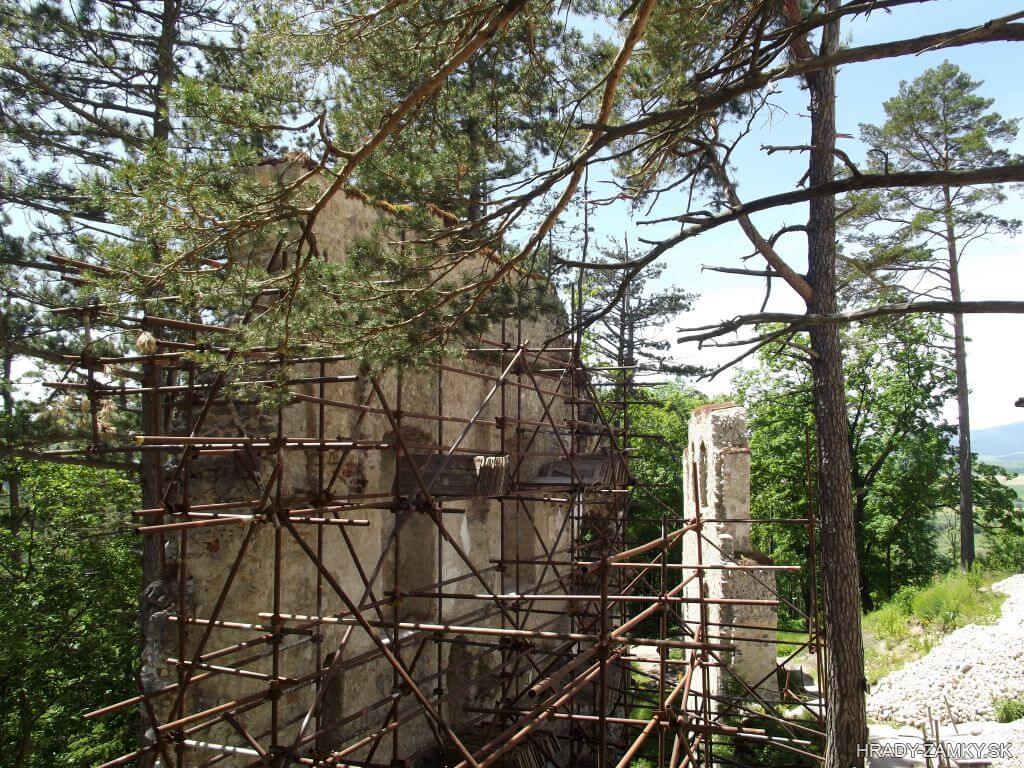
Since 2008, the Diadem - Blatnica Castle Rescue Association has been operating at the castle, performing cleaning and reconstruction work.
Blatnický hrad na strmom kopci za obcou rovnakého mena vznikol v druhej polovici 13.storočia a prvú správu o ňom máme z roku 1300, keď bol jeho majiteľom Peter z Brezovice. Hrad bol postavený hlavne na ochranu cesty zvanej magna via, vedúcej z Nitry na sever. Keď sa začala používať západnejšie situovaná pohodlnejšia komunikácia z Nitry cez Mošovce do Martina a ďalej na sever, stará cesta pod menom antiqua via stratila svoj pôvodný význam a dôležitosť hradu upadla. Preto panovníci nemali oň väčší záujem. Dávali ho často do zálohu, ale držitelia ho často skôr iba spravovali a využívali, než udržiavali. V r.1321 hrad obsadili kráľovské vojská Karla Roberta. V tých časoch dôležitú rolu v histórii Blatnice zohral aj majster Donč, ktorý patril medzi významných šľachticov. Okrem Blatnice sa podieľal napríklad na výstavbe Liptovského Hrádku a Likavy. Na našom území vlastnil veľa ostatných hradov. Po roku 1389 daroval kráľ Žigmund Luxemburský hrad šľachticovi Pogány Domonkosovi. Onedlho si však hrad vzal späť a dal ho do zálohu Ladislavovi Oppelnimu. V roku 1415, už po smrti Ladislava pripadol hrad jeho vnukom, glogauským kniežatám. Od roku 1421 bol až do smrti (1433) majiteľom hradu Peter Berzeviczy. Od roku 1434 sa stala majiteľkou hradu kráľovná Borbála Cillei (Barbora Celjská), ktorá však onedlho hrad dala do zálohu Pongrácovi z Liptovského Mikuláša za 2300 zlatých. Pongrác odovzdal hrad za 9000 zlatých Ladislavovi Necpalskému a neskôr sa hrad dostáva do rúk Štefanovi Pongráczovi.
Najtemnejšie obdobie histórie pre Blatnický hrad znamenali roky 1450-1470, keď hrad ovládal Peter Komorowsky. Bol poľského pôvodu a na naše územie sa dostal vďaka husitom. V roku 1462 dostal od kráľa milosť, avšak v roku 1471 sa pridal k nespokojnej, sprisahaneckej maďarskej šľachte, ktorí túžiaci po tróne zavolali do krajiny poľské knieža Kazimíra. Ich plán však nevyšiel, keďže v roku 1474 zasiahli kráľovské vojská Mateja Korvína a obsadili všetky jeho pevnosti. Komorowsky sa potom utiahol na Oravu, kde od šľachetného kráľa dostal opäť milosť. Majiteľom hradu sa potom stal Ferdinand Habsburský a v roku 1540 rodina Révayovcov. V druhej polovici 16. a na začiatku 17.storočia vybudovali veľké predhradie s novými budovami. Nekládli však dôraz na delové bašty, takže v roku 1606 sa hradu jednoducho bez boja zmocnili povstalci Štefana Bocskaya a neskôr vojská Gabriela Bethlena. V roku 1678 došlo k požiaru a zhorelo niekoľko hradných budov. Pravdepodobne to spôsobili nájazdy kurucov pod vedením Imricha Thökölyho. Krátko na to sa k hradu dostali opäť Révayovci a hrad obnovili. Koncom roku 1703 kurucké povstalecké vojská Františka Rákócziho bez problémov obsadili hrad. O pár rokov neskôr, v roku 1708 však po prehratej bitke pri Trenčíne boli nútení hrad opustiť. Opäť sa hrad vrátil do rúk Révayovcom.
Po utíchnutí povstaní význam Blatnického hradu upadol. Keďže Révayovci dokázali svoju vernosť Habsburgovcom počas kuruckých bojov, blatnický hrad bol ušetrený príkazu na jeho zničenie, ktorý sa týkal prebytočných, nevyužitých pevností. Naďalej tak mohli hrad obývať aj po roku 1711, hoci mnohí členovia rodiny sa už presťahovali do pohodlnejších kaštieľov. V roku 1744 ešte dal Jozef Révay opraviť hradné múry, ale v roku 1790 sa odsťahovali aj poslední z rodu Révayovcov. Odvtedy už hrad nebol obývaný a pomaly pustol.
Od roku 2008 na hrade pôsobí združenie záchrany hradu Blatnica - Diadém, ktoré vykonáva na hrade čistiace i rekonštrukčné práce.
Myths and legends
The legend of the castle
The cruel lord of the castle seized the bride of another, and she took off his clothes, did not hesitate to kill her and had his son walled up. He also poisoned his second wife. To this day, hear a child crying in the walls of the castle and you may meet the ghosts of murdered women.
The rumour says
Only ruins remain from Blatnica Castle. The historian Michael Bombardius also wrote in 1718 about the fact that the lords of the castle were lords of the castle in the 13th century. As the castle was rebuilt several times, nothing was preserved after the powerful Templars. Except that according to one legend, they walled up a monk in the castle. They walled him alive and locked his mouth with a lock. And the fact? Treasure hunters accidentally found a masonry male skeleton with a padlock on the left jaw in the castle ruins...
Blatoň - savior of Pribina and Mojmír
The legends about the famous Blatnický castle mention the brave young man Blatoň, who saved two lives at once, and not one of them. These were the famous princes of Nitra, Pribina and Mojmír. The gentlemen went hunting and since they also lived under the Plešovice ridge, they longed for their trophy. The female tour, who had a cub, was hit with a spear, but inaccurately. Seriously injured and enraged animals rushed at both celebrities. The bold Blatoň did not hesitate and killed him with a dagger. He took care not only of the safety of prominent hunters, but also of his future. Although he rejected Pribin's lucrative offer to be the head of his guards, he accepted a gift - a beautiful sword and building land for the future castle. Apparently according to him, the castle was named Blatnica and the area was named Turiec in honor of the memorable hunting on the Turs. Thanks to King Matej Korvín, the Kráľovská studňa locality was also given its name. It is said that the king got rid of the desperate whip of the bear that ate his sheep. Thanks to Bača, Bača invited the king to lunch in the pit, the opening for the future well, because a strong wind was blowing outside. Matej Korvín liked the picnic in the pit, he liked the Bačov specialties. Since then, it's called the Royal Well there.
Povesť o hrade
Krutý hradný pán sa zmocnil nevesty iného, a tá sa mu zunovala, neváhal ju zabiť a syna dal zamurovať. Otrávil aj svoju druhú ženu. Dodnes počuť v múroch hradu plač dieťaťa a možno stretnúť duchov zavraždených žien.
Povesť o hrade
Z hradu Blatnica zostali len zrúcaniny. O tom, že pánmi hradu v 13.storočí boli templári, písal v roku 1718 aj historik Michael Bombardius. Kedže hrad viackrát prestavali, po mocných templároch sa nič nezachovalo. Až na to, že podľa jednej povesti zamurovali jedného mnícha na hrade. Zamurovali ho za živa a ústa mu uzamkli zámkom. A skutočnosť? Hľadači pokladov našli náhodou v zrúcaninách hradu zamurovanú mužskú kostru s visiacim zámkom na ľavej čelusti...
Blatoň - záchranca Pribinu a Mojmíra
V legendách o slávnom Blatnickom hrade sa spomína odvážny mládenec Blatoň, ktorý zachránil hneď dva životy, a to nie hocijaké. Išlo o slávne nitrianske kniežatá Pribinu a Mojmíra. Páni sa vybrali na poľovačku a keďže i pod Plešovickým hrebeňom žili tury, zatúžili po ich trofeji. Samicu tura, ktorá mala mláďa, zasiahli kopijou, ale nepresne. Vážne zranené a rozzúrené zviera sa rútilo na oboch prominentov. Smelý Blatoň nezaváhal a dýkou ho zabil. Postaral sa tak nielen o bezpečnosť prominentných lovcov, ale aj o svoju budúcnosť. Odmietol síce lukratívnu Pribinovu ponuku, aby bol šéfom jeho strážcov, prijal však dar - krásny meč a stavebný pozemok na budúci hrad. Zrejme podľa neho dostal hrad názov Blatnica a územie na počesť pamätnej poľovačky na turov nazvali Turiec. Vďaka kráľovi Matejovi Korvínovi dostala meno aj lokalita Kráľovská studňa. Tu vraj kráľ zbavil zúfalého baču medveďa, ktorý žral jeho ovce. Bača z vďaky pozval kráľa na obed do jamy, otvoru pre budúcu studňu, pretože vonku fúkal silný vietor. Matejovi Korvínovi sa piknik v jame páčil, bačovské špeciality mu chutili. Odvtedy to tam volajú Kráľovská studňa.
Useful information
The ruins are freely accessible
Hrad je voľne prístupný
Nearby castles
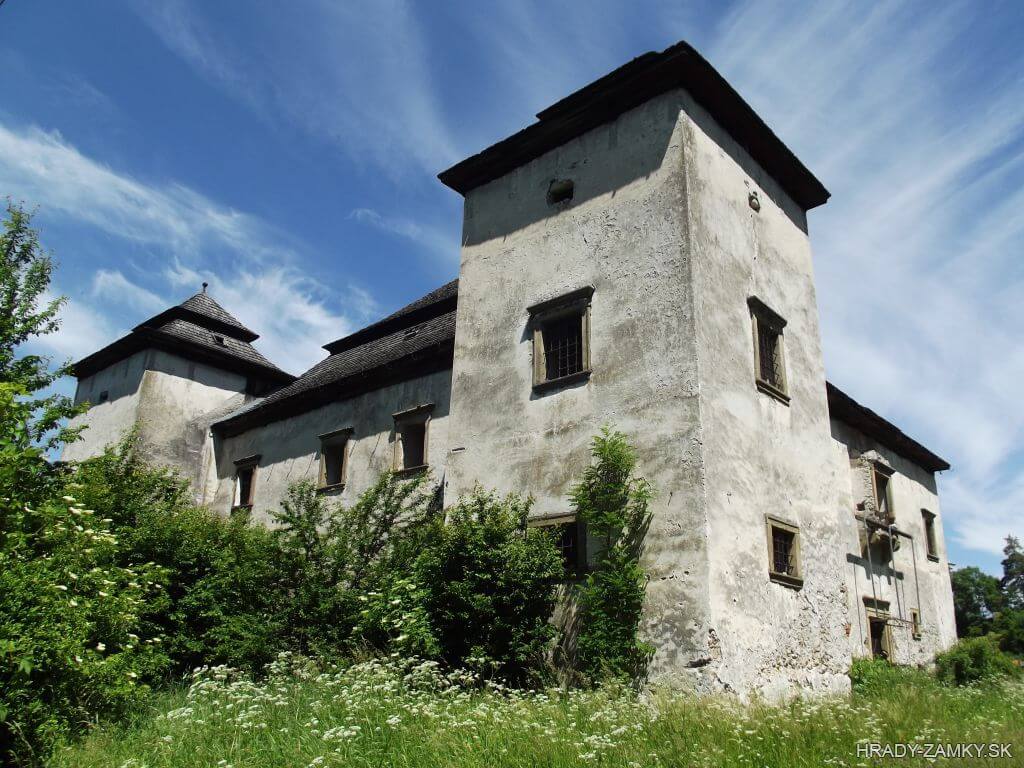
Necpaly
Necpaly
4.6km
manor, mansion
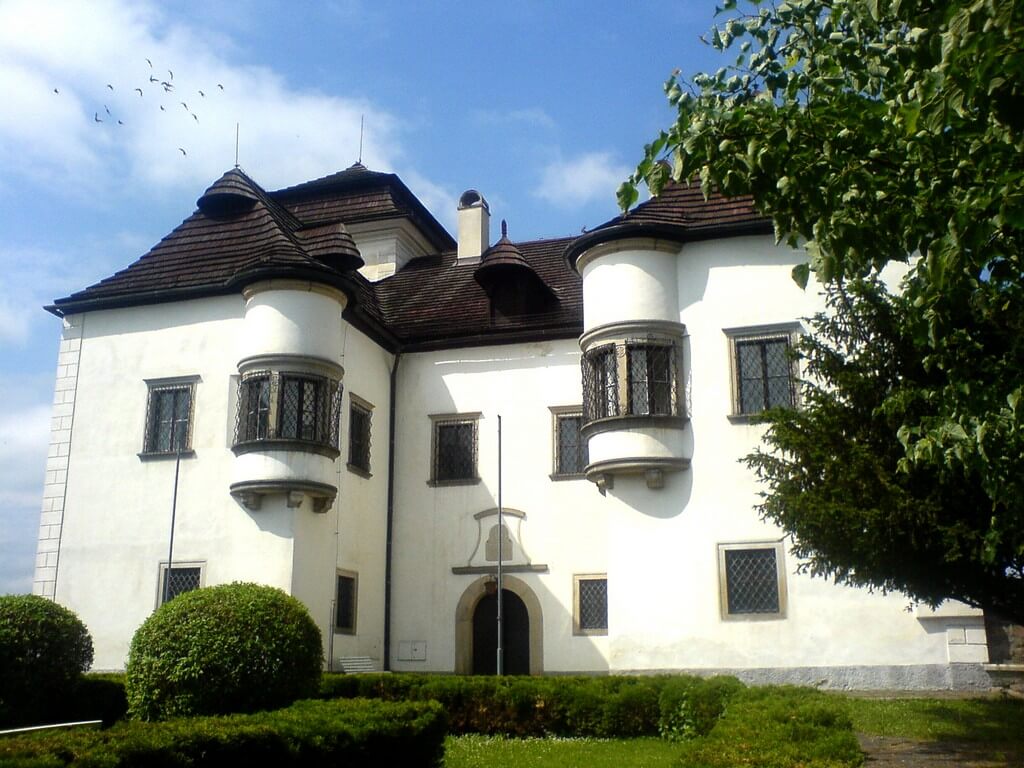
Diviaky
Turčianske Teplice
10.2km
manor, mansion
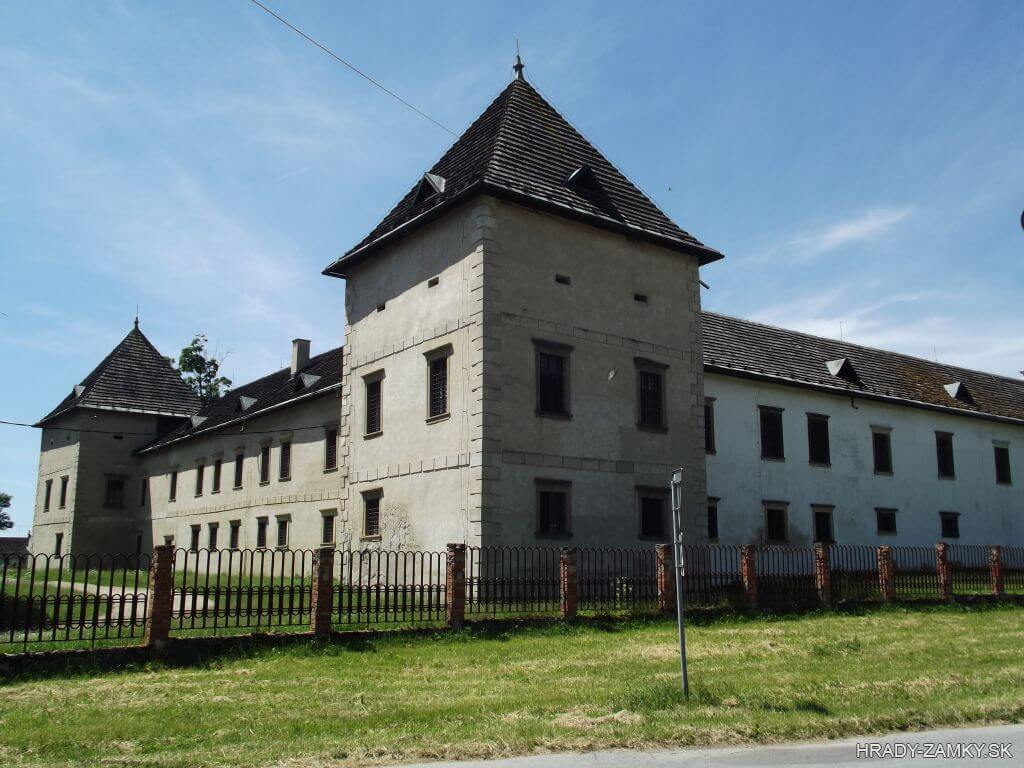
Trebostovo
Trebostovo
10.5km
manor, mansion
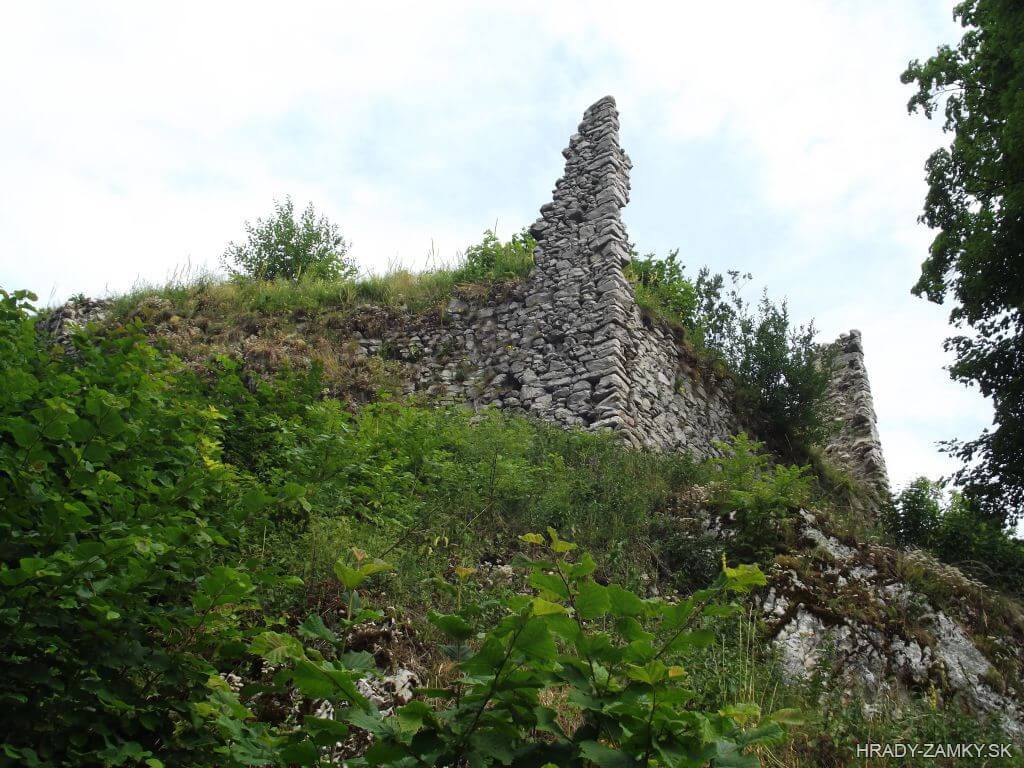
Zniev
Kláštor pod Znievom
12.9km
castle ruin
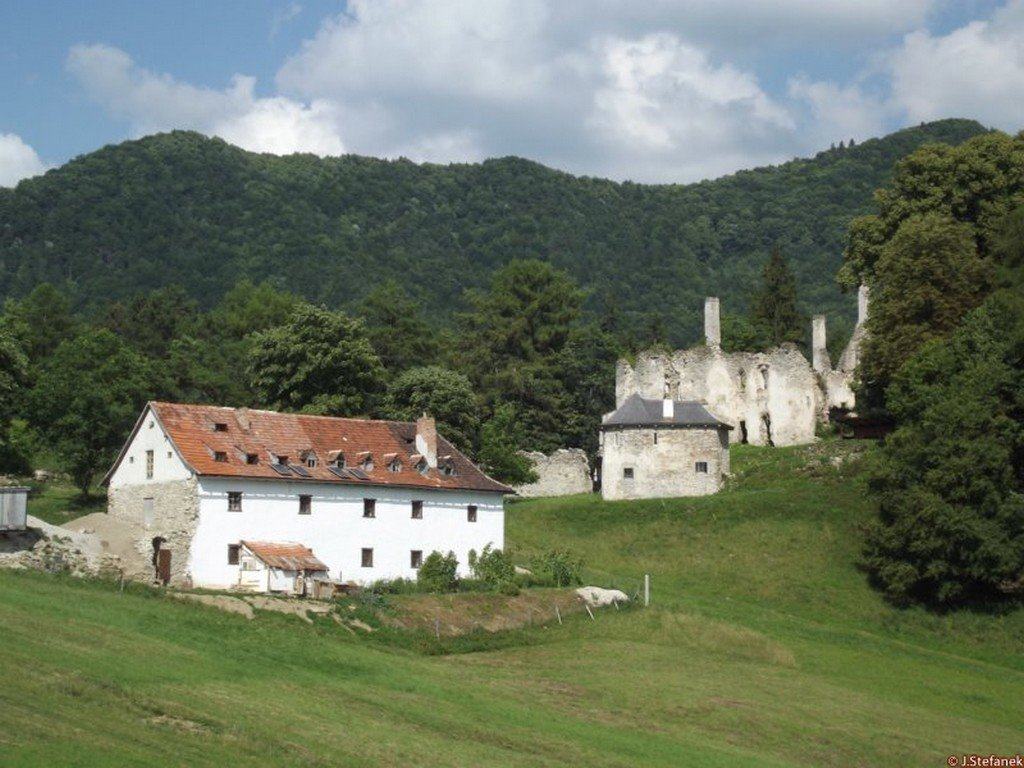
Sklabiňa castle
Sklabinský Podzámok
13.0km
castle ruin
Slovenské Pravno
Slovenské Pravno
13.8km
castle ruin
Sučany castle
Podhradie
16.5km
castle ruin