Likava
Likavka Žilina county Slovakia
castle ruin
Likava
Likavka Žilinský kraj Slovakia
zrúcanina hradu
The ruin is located on the hill Chočské foothills of the Liptov basin about 1 km north of the village Likavka in the district of Ružomberok
Zrúcanina sa nachádza na návrší Chočského podhoria Liptovskej kotliny asi 1 km na sever od obce Likavka v okrese Ružomberok
Previous names
Likova, Likavka, Lichwa
Roads
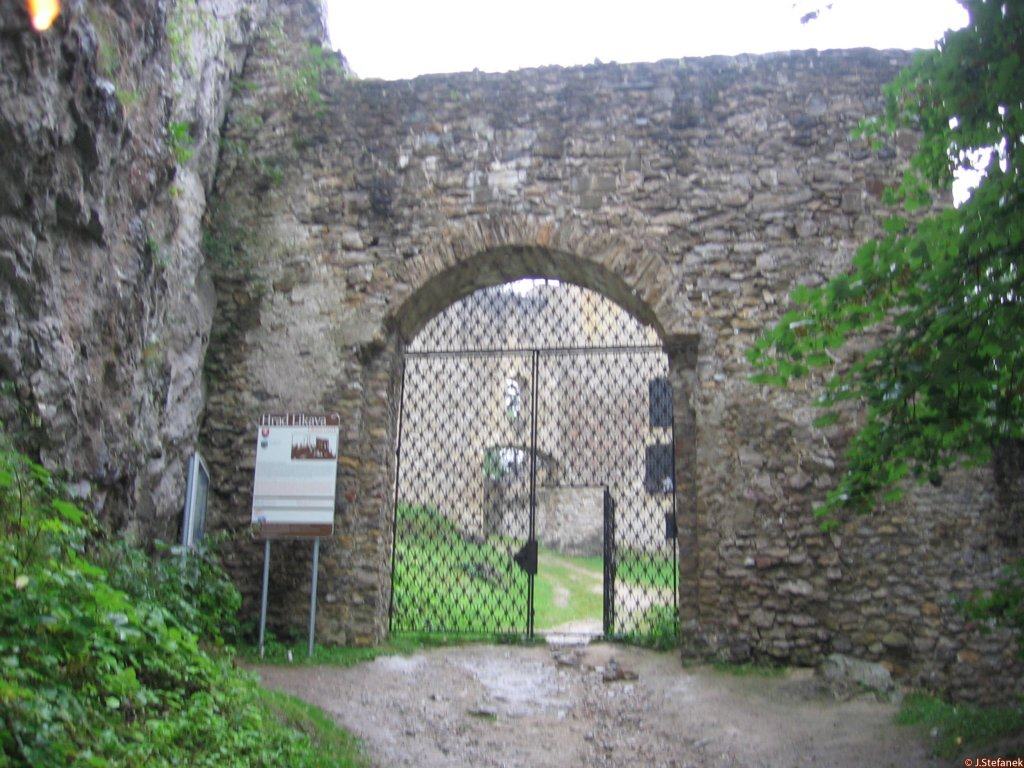
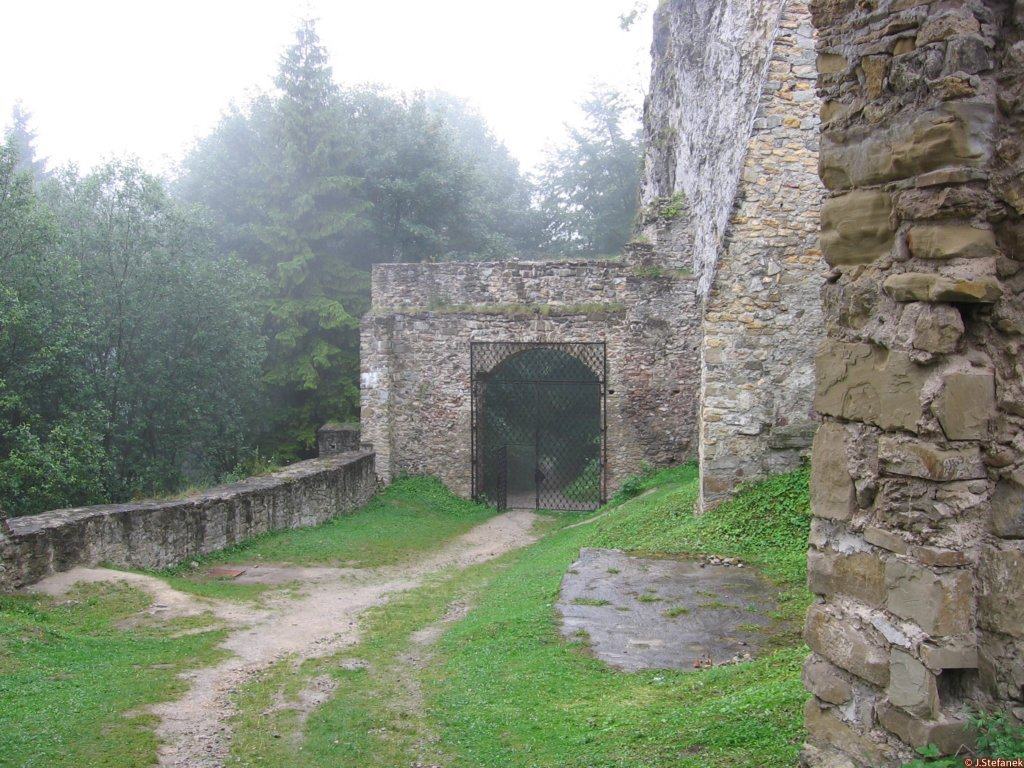
In the direction out of the village Likavka to Dolný Kubín we turn right to the street Pod hradom, we go next to the information center to a smaller parking lot. On foot, a slight climb along the red route will take you across the meadow to the crossroads. From there we continue on the way to the right, which will take us directly to the castle gate of Likava castle in a moment.
V smere von z obce Likavka na Dolný Kubín odbočíme vpravo na ulicu Pod hradom, prejdeme popri informačnom centre až na menšie parkovisko. Peši sa miernym stúpaním po červenej TZT dostaneme cez lúku až k rázcestiu. Odtiaľ pokračujeme cestou vpravo, ktorá nás za chvíľu dovedie priamo k bráne hradu Likava.
Description
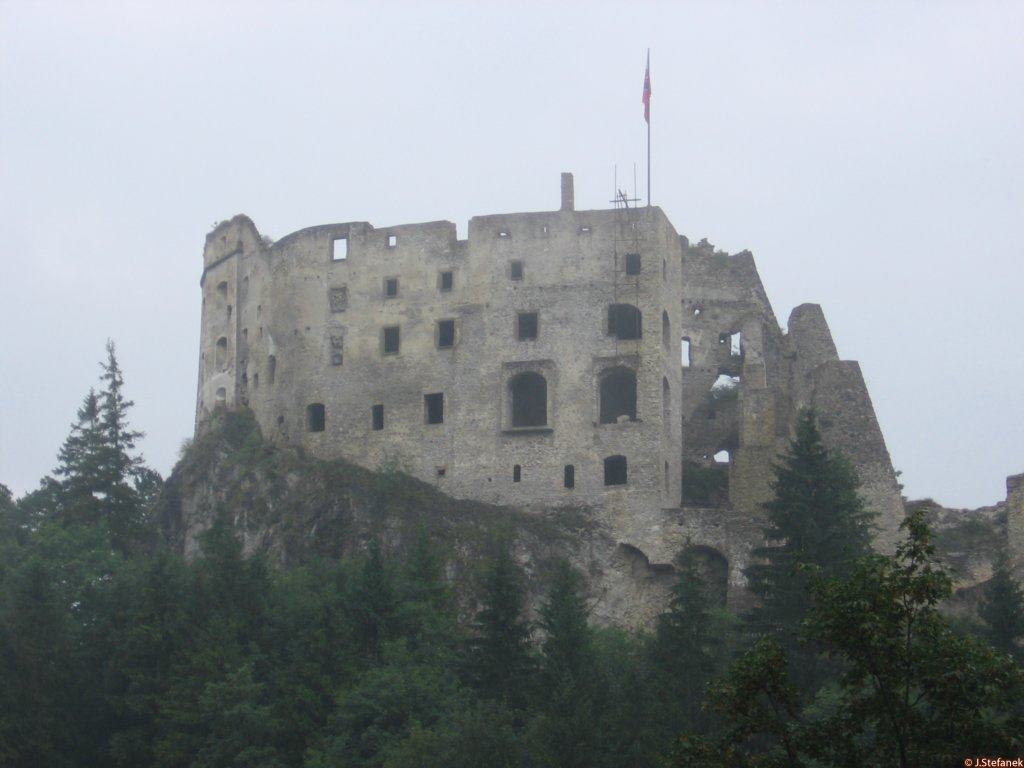
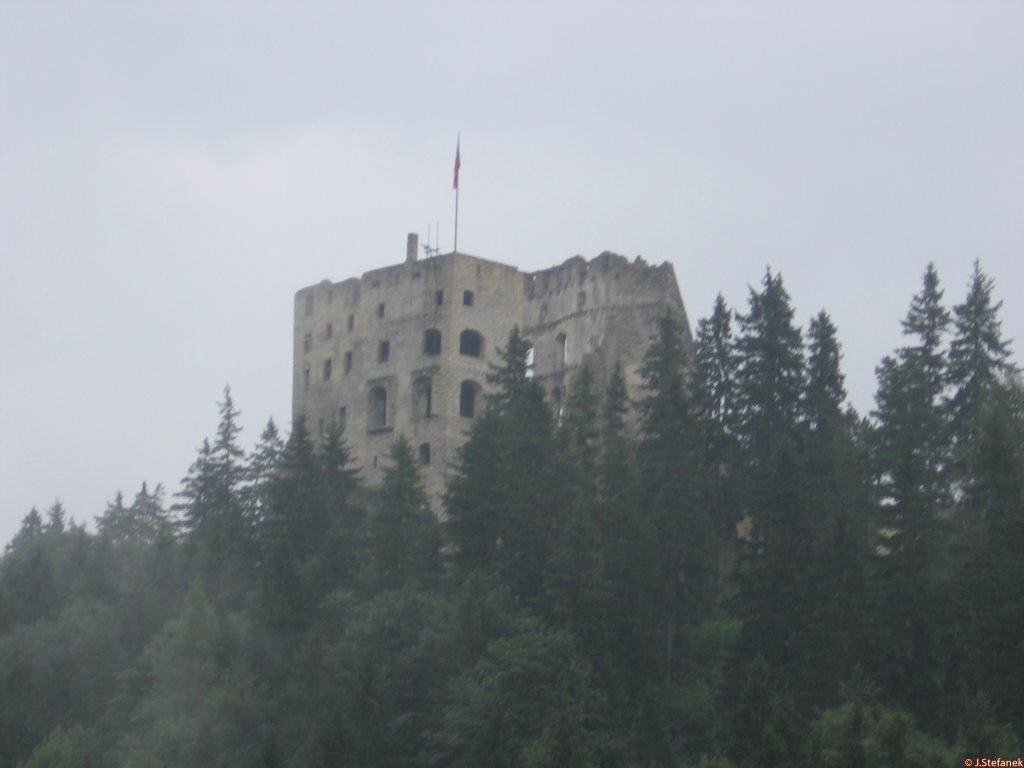
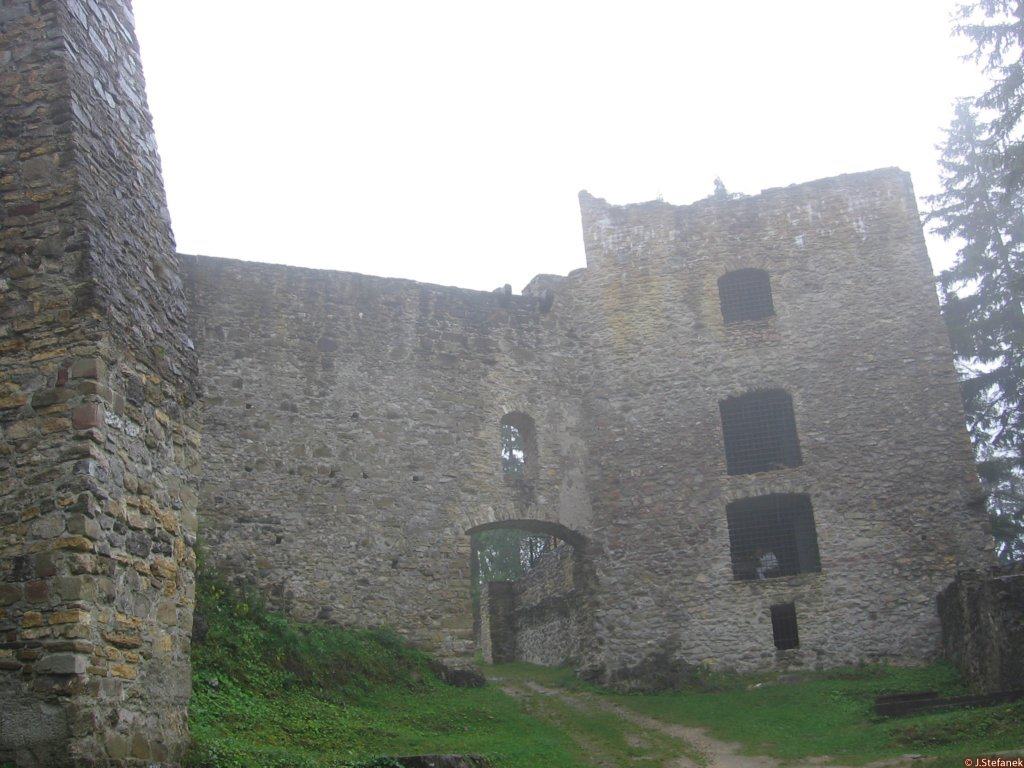
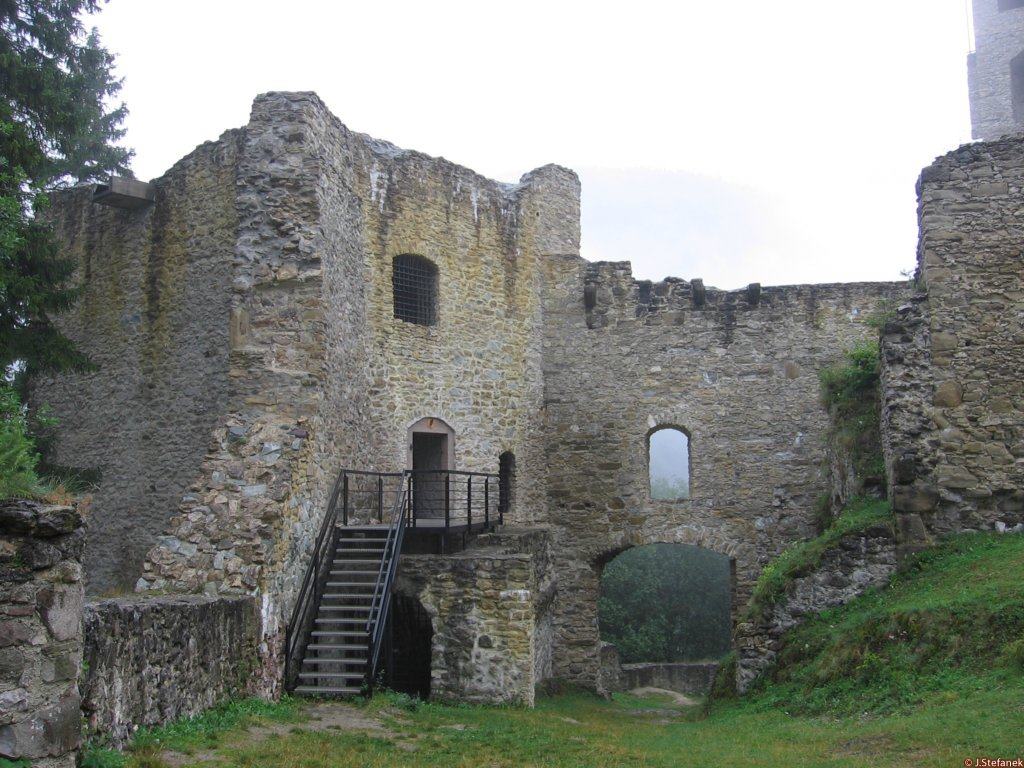
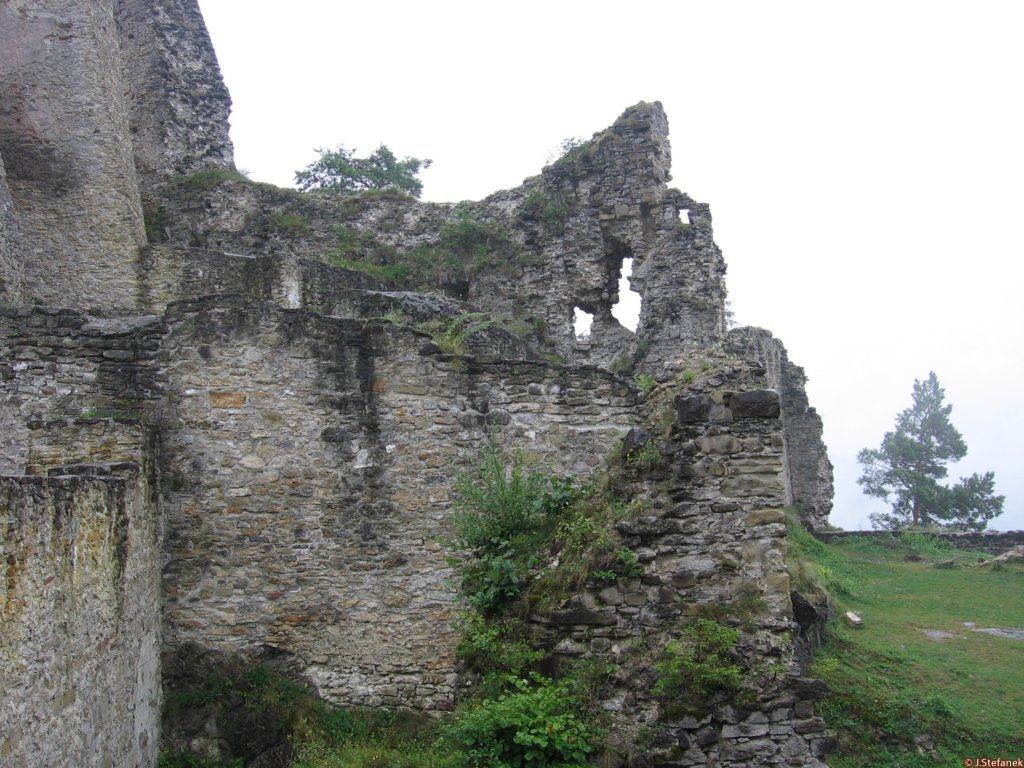
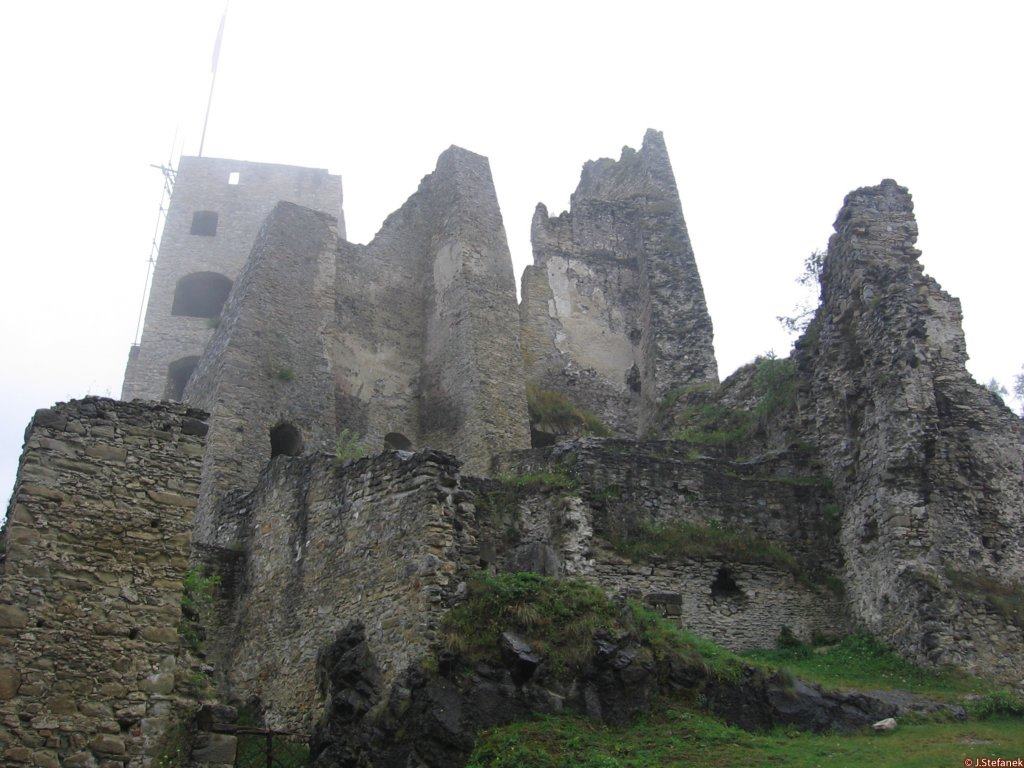
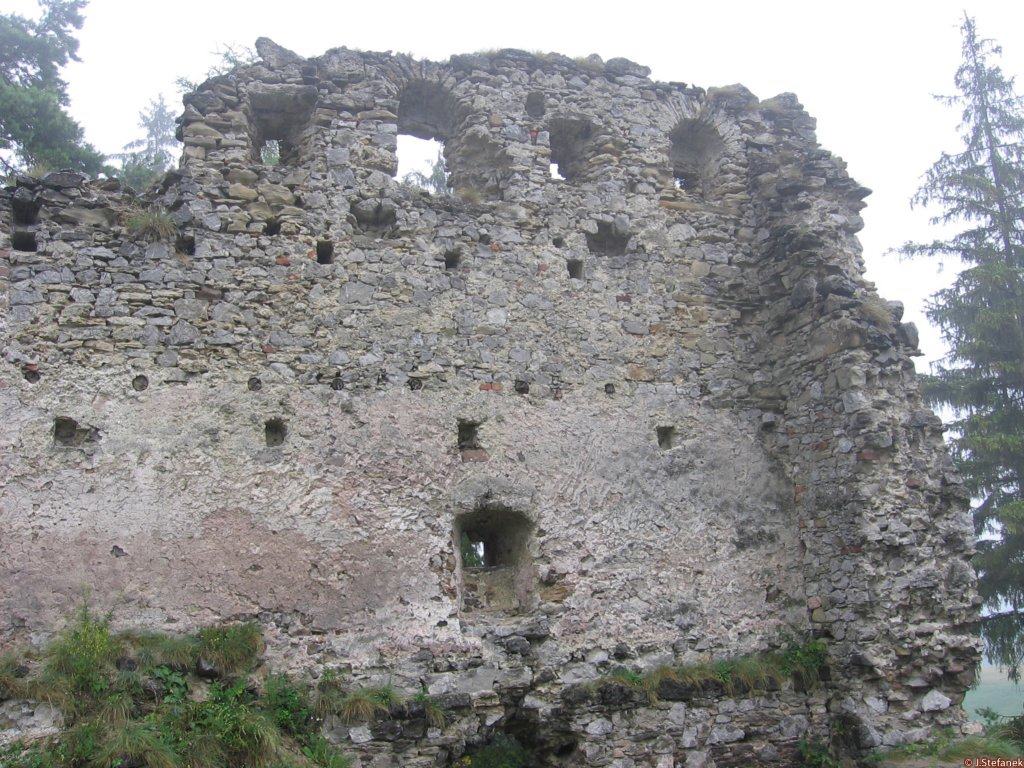
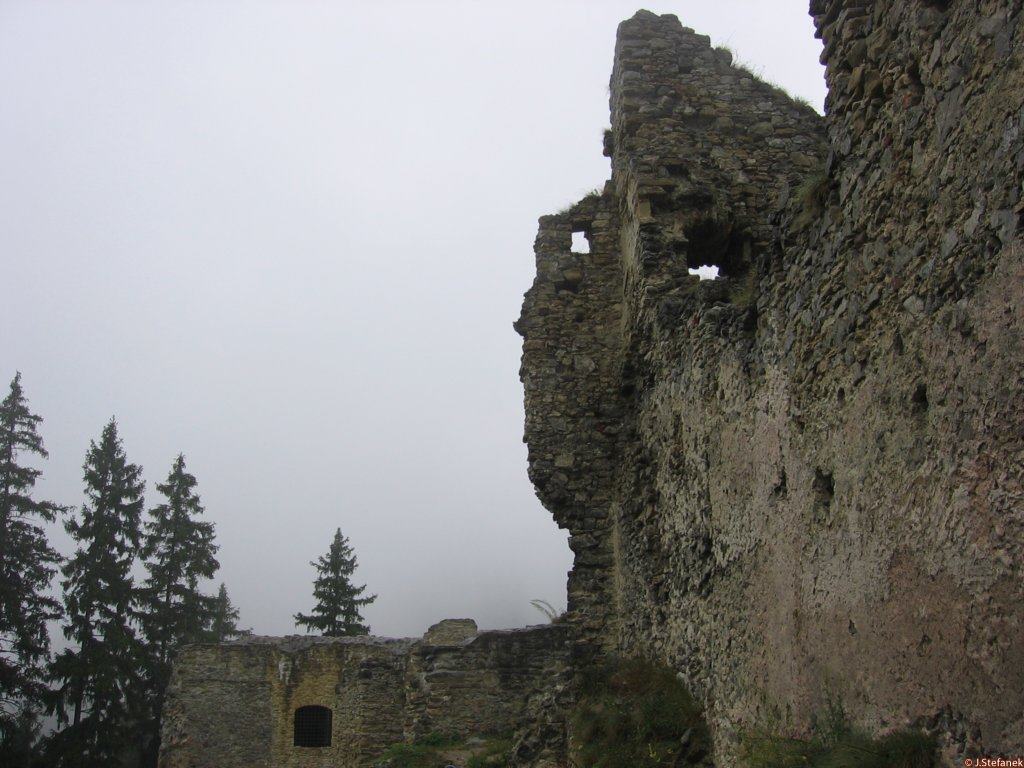
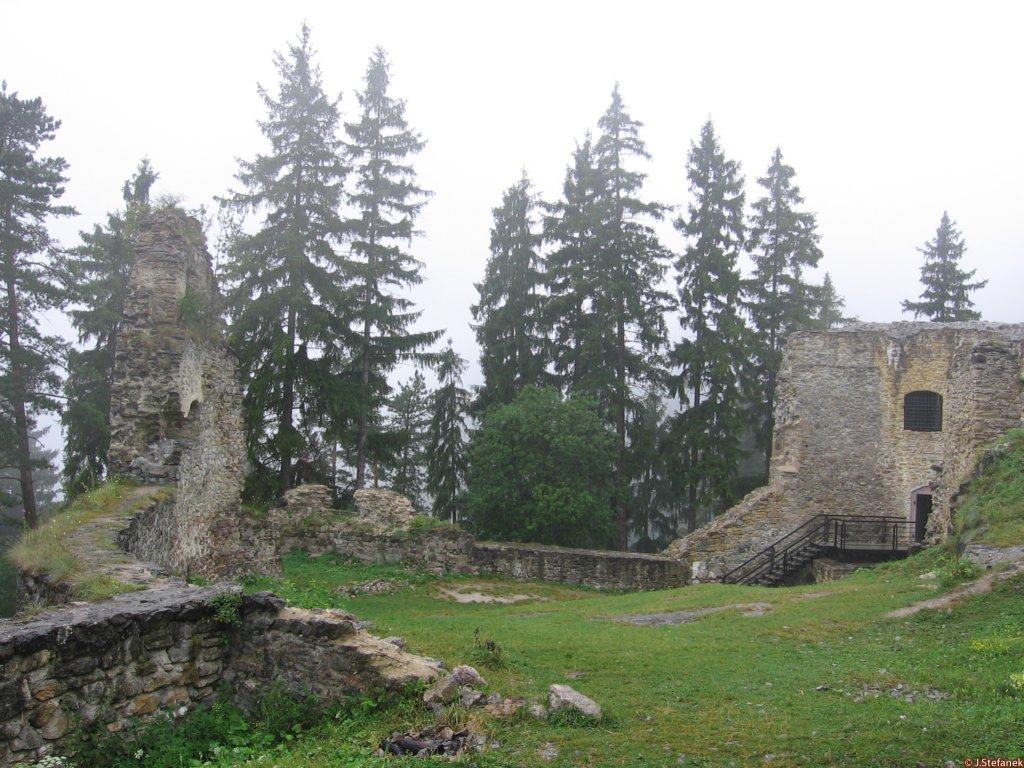
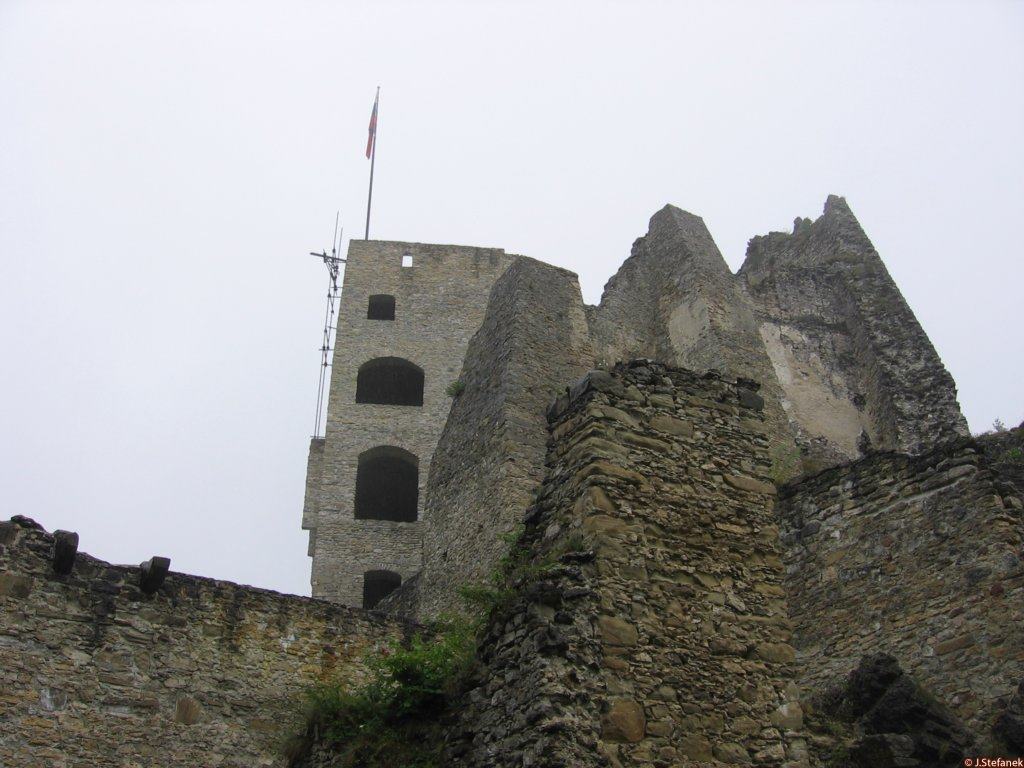
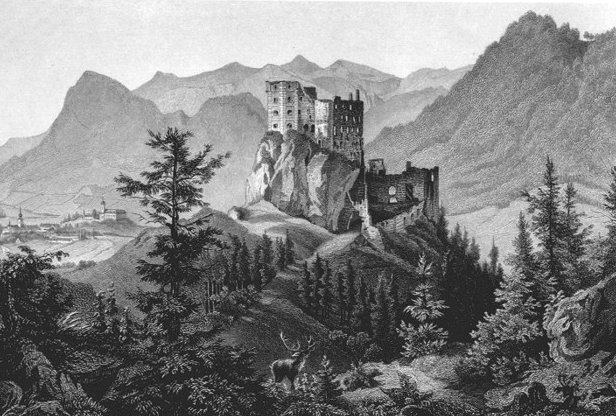
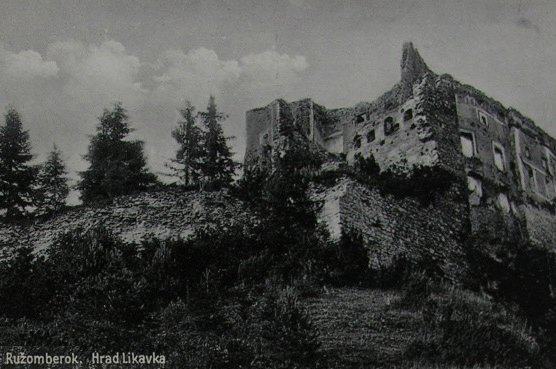
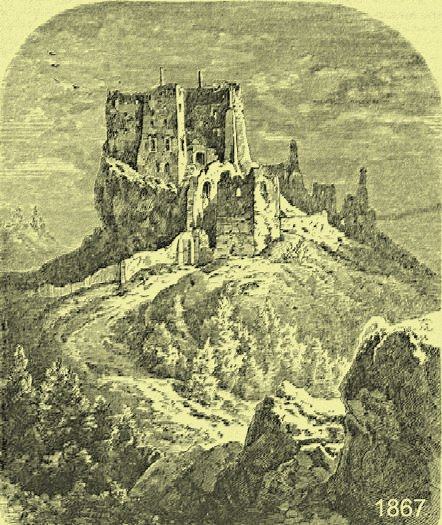
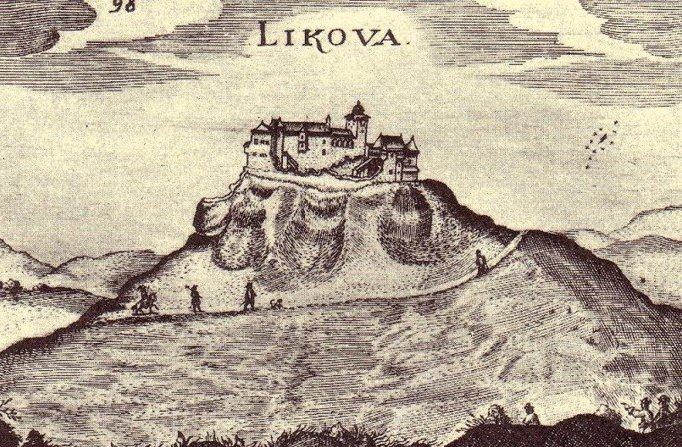
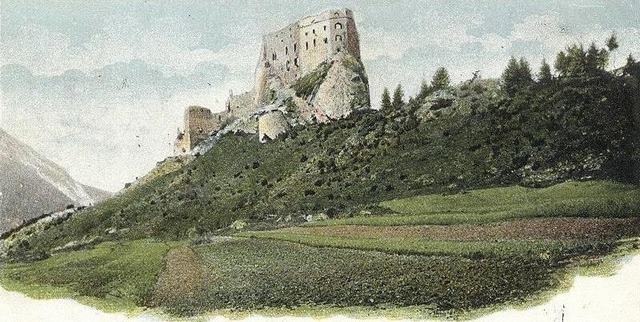
At the highest point of the castle hill there is a Renaissance Gothic upper castle. Between the ruins of the palaces has a small courtyard. From the archaeological point of view, the most important are the preserved Gothic and Renaissance architectural elements, window frames, portals, consoles, gunshots, Renaissance attic and pitch noses to defend the castle access road. Massive fortifications with entrance and bastions boasts the lower castle. The castle has recently been reconstructed and refurbished, so at present there are traces of several interventions.The castle was statically secured. It was mainly reinforced upper castle, where the floors are concreted and connected by perimeter walls. A part of the castle above the entrance gate is reconstructed. The lower castle was also reconstructed, resulting in aerated concrete blocks and ceramics. However, in addition to these disproportionate interventions, the ruin still impresses.
Na najvyššom mieste hradného návršia sa nachádza renesančne upravený gotický horný hrad. Medzi zrúcaninami palácov má malé nádvorie. Z archeologického hľadiska sú významné hlavne zachované gotické a renesančné architektonické články, obruby okien, portály, konzoly, strieľne, renesančná atika a smolné nosy na obranu hradnej prístupovej cesty. Mohutným opevnením so vstupom a baštami sa pýši dolný hrad. Hrad bol v poslednej dobe rekonštruovaný a upravovaný, takže v súčasnosti badať stopy po viacerých zásahoch.Hrad bol staticky zabezpečený. Bol spevnený hlavne horný hrad, kde sú vybetónované podlažia a tiahlami spojené obvodové múry. Dosť nepekne je zrekonštruovaná aj časť hradu nad vstupnou bránou. V dolnom hrade prebehla tiež rekonštrukcia, ktorej výsledkom sú pórobetónové tvárnice a keramika. Okrem týchto neprimeraných zásahov však stále pôsobí zrúcanina impozantne.
Plan
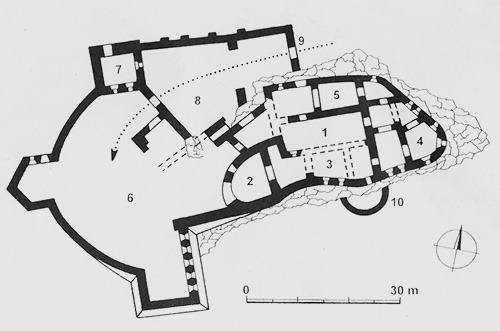
Legend to the ground plan
- 1 - courtyard of the upper castle
- 2 - main tower
- 3 - south palace
- 4 - east palace
- 5 - north palace
- 6 - lower castle
- 7 - entrance tower
- 8 - forecourt
- 9 - entrance gate
- 10 - water source fortification
Legenda k pôdorysu
- 1 - nádvorie horného hradu
- 2 - hlavná veža
- 3 - južný palác
- 4 - východný palác
- 5 - severný palác
- 6 - dolný hrad
- 7 - vstupná veža
- 8 - predhradie
- 9 - vstupná brána
- 10 - opevnenie vodného zdroja
History
Likava belongs to the Slovak castles without the Hungarian equivalent of the name, which testifies to the ethnicity of the inhabitants of Liptov and the use of the local name. The guard castle on the way from Liptov to Orava was probably built by Master Donč around 1335. After his death, the castle belonged to the royal chamber and in 1397 it was touched by the march of the Moravian margrave Prokop and the Opole prince Ladislav, during which the castle was conquered and briefly occupied. In the years 1410 to 1415, there was a royal construction smelter in the castle, which made many modifications to the castle. In the twenties of the same century, the castle was the castellan John of Messenpek, whose later work is well known in Moravia. When Queen Barbora Cejlská received Likava around 1430, the Hussites seized the castle, whose crew left it only in 1434.
Later, the castle belonged to Ján Hunyadi, who restored it and built a new western gate. Later, the Pongrácz family from St. Nicholas and Peter Komorovský alternated in temporary ownership. Matej Korvín regained the manor from him in 1474 and after his death it fell to his illegitimate son Ján. In 1496, Štefan Zápoľský seized the castle by force, but in a dispute between his son Ján and Ferdinand I of Habsburg over the Hungarian throne, Likava was conquered in 1528 by Imperial General Katzianer. Ľudovít Pekry received the damaged seat and, according to the coat of arms inscriptions from 1533 to 1535, it generously restored and rebuilt it.
In the middle of the 16th century, however, it was already owned by the Báthory family and in 1566 the castle was bought by Duke Ján Krušič of Lupoglava. He took care of the thorough fortifications during the Turkish threat. He also sacrificed living quarters and a chapel in the eastern front of the castle, which he significantly strengthened and placed cannon chambers in it, thus transforming it into a polygonal cannon bastion. Štefan Illésházy married the Likava estate with his widow Krušič, who probably completed the reconstruction. Under Gašpar Illésházy, the first eastern gate was built in 1642, but in the middle of the 17th century the castle was acquired by the Thököly princely family.
Štefan Thököly finally provided the castle with a water source - a well - for a high price. In addition, the palaces and their facades were again adjusted, height-adjusted. In addition, since 1651, Štefan has built a huge western fortification, today almost lost in the forest. The three round bastions (there were supposedly five of them) were connected by a wall stretching along the edge of the terrain terrace, in front of which a moat was partially excavated. Even this did not help during the siege by the imperial army in 1670, and after a week General Heister conquered the castle. The re-occupation by the Thököly rebel divisions and the imperial troops also took place in 1678, and therefore the conversion of the castle into a penitentiary began. But after the uprising of Francis II. Rákóczi's treasury decided in 1707 to demolish the castle. Since then, the condition of the castle has been deteriorating.
When the area around the corner of the most endangered northern palace collapsed in 1975, efforts to save it finally prevailed. Since In 1980, archaeological research and conservation work took place at the castle.
Likava patrí k slovenským hradom bez maďarského ekvivalentu názvu, čo svedčí o etnicite obyvateľov Liptova a využití miestneho mena. Strážny hrad pri ceste z Liptova na Oravu dal pravdepodobne postaviť magister Donč okolo roku 1335. Po jeho smrti hrad pripadol kráľovskej komore a v roku 1397 sa ho dotklo ťaženie moravského markgrófa Prokopa a opolského kniežaťa Ladislava, pri ktorom hrad dobyli a nakrátko obsadili. V rokoch 1410 až 1415 pôsobila na hrade kráľovská stavebná huta, ktorá vykonala na hrade mnohé úpravy. V dvadsiatych rokoch toho istého storočia bol na hrade kastelánom Ján z Messenpeku, ktorého neskoršie pôsobenie je dobre známe aj na Morave. Keď okolo roku 1430 dostala Likavu kráľovná Barbora Cejlská, Jánovým pričinením sa hradu zmocnili husiti, ktorých posádka ho opustila až v roku 1434.
Neskôr patril hrad Jánovi Hunyadimu, ktorý ho obnovil a vystaval novú západnú bránu. Neskôr sa v dočasnom vlastníctve striedali Pongráczovci zo Svätého Mikuláša a Peter Komorovský. Od neho získal Matej Korvín panstvo naspäť v roku 1474 a po jeho smrti pripadlo jeho nemanželskému synovi Jánovi. V roku 1496 sa hradu násilím zmocnil Štefan Zápoľský, ale v spore jeho syna Jána s Ferdinandom I. Habsburským o uhorský trón dobyl Likavu v roku 1528 cisársky generál Katzianer. Poškodené sídlo dostal Ľudovít Pekry a podľa erbových nápisov z rokov 1533 až 1535 ho veľkoryso obnovil a prestaval.
V polovici 16. storočia ho už však vlastnili Báthoryovci a v roku 1566 hrad zakúpil vojvodca Ján Krušič z Lupoglavy. Ten sa v období tureckého ohrozenia postaral o dôkladné opevnenie. Obetoval tomu i obytné priestory a kaplnku vo východnom čele hradu, ktoré výrazne posilnil a umiestnil doň delové komory, čím ho premenil na polygonálnu delovú baštu. S vdovou po Krušičovi vyženil likavské panstvo Štefan Illésházy, ktorý pravdepodobne prestavbu ukončil. Za Gašpara Illésházyho bola ešte roku 1642 postavená prvá východná brána, ale v polovici 17. storočia získal hrad kniežací rod Thökölyovcov.
Štefan Thököly za vysokú cenu konečne zabezpečil hradu vodný zdroj - studňu. Okrem toho boli opäť upravené, výškovo vyrovnané paláce a ich fasády. Štefan navyše od roku 1651 budoval obrovské západné predhradie, dnes takmer stratené v lesnom poraste. Tri okrúhle bašty (bolo ich vraj päť) spájala hradba tiahnuca sa po hrane terénnej terasy, pred ktorou bola čiastočne vyhĺbená priekopa. Ani to pri obliehaní cisárskym vojskom v roku 1670 nepomohlo a po týždni generál Heister hrad dobyl. K opätovnému obsadeniu povstaleckými oddielmi Thökölyovcov a cisárskymi vojskami došlo aj v roku 1678, a preto sa začalo s úpravou hradu na trestnicu. Ale po povstaní Františka II. Rákócziho erár došiel už v roku 1707 k rozhodnutiu hrad demolovať. Odvtedy sa stav hradu stále zhoršoval.
Keď sa v roku 1975 zrútilo okolie nárožia najviac ohrozeného severného paláca, konečne sa presadila snaha o záchranu. Od r. 1980 sa uskutočnil na hrade archeologický výskum a konzervačné práce.
Myths and legends
Legend of the castle
On the besieged Likava, the castle lord, with the help of a servant, buried the treasure at night. He beheaded a single witness and lost his life in the coming fight. Hidden valuables are guarded by an executed iceberg, who walks through the castle at midnight with his head under his armpit.
Povesť o hrade
Na obľahnutej Likave hradný pán s pomocou sluhu zakopal v noci poklad. Jediného svedka sťal a v nastávajúcom boji sám prišiel o život. Skryté cennosti stráži popravený čeľadník, ktorý o polnoci chodieva hradom s hlavou pod pazuchou.
Useful information
Opening hours and admission
Otváracia doba a vstupné
External links
Nearby castles
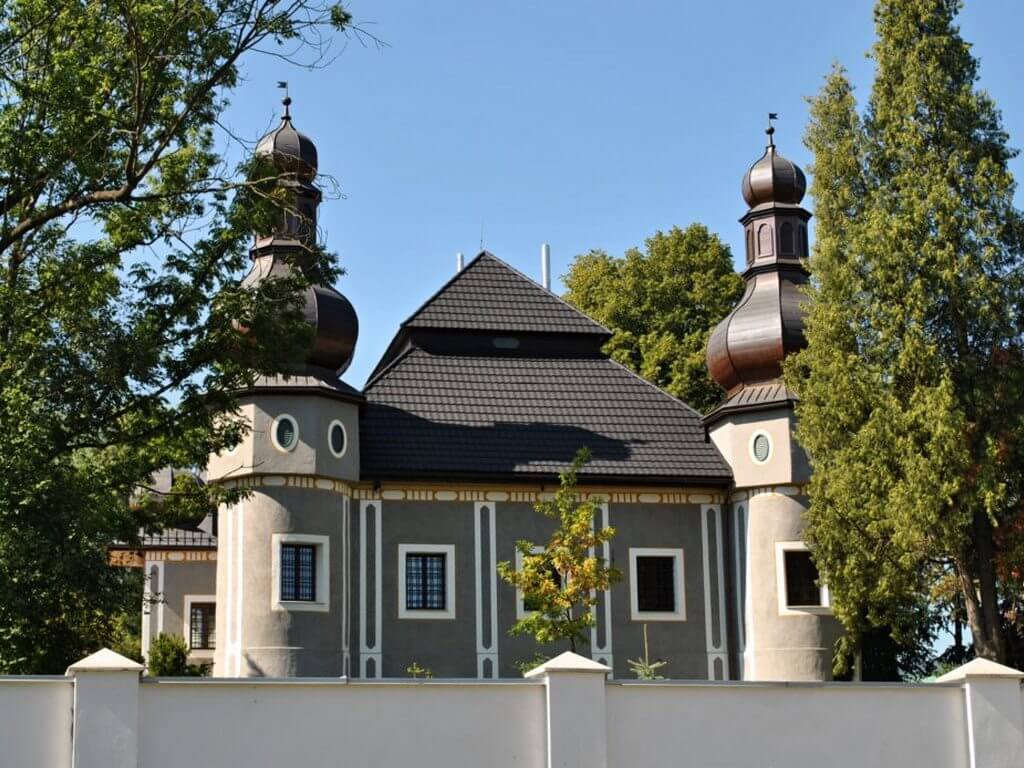
Liptovská Štiavnica
Liptovská Štiavnica
6.8km
manor, mansion
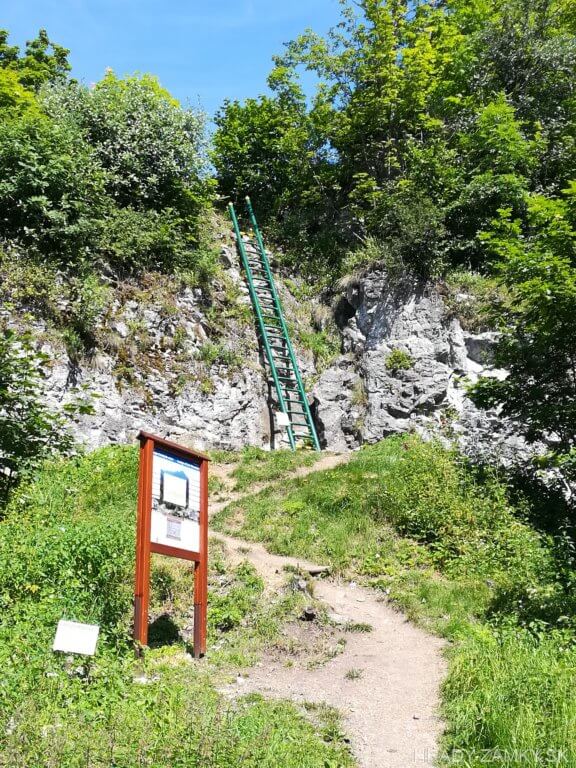
Liptov castle
Liptovská Sielnica
9.8km
castle ruin
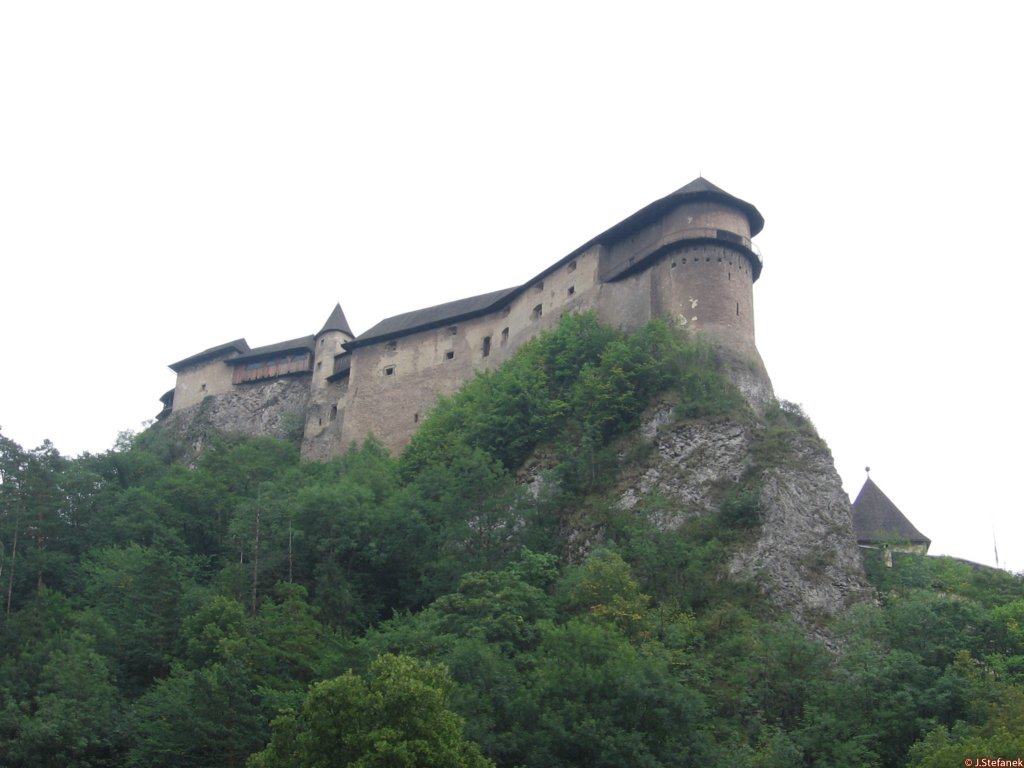
Orava castle
Oravský Podzámok
17.7km
castle, chateau
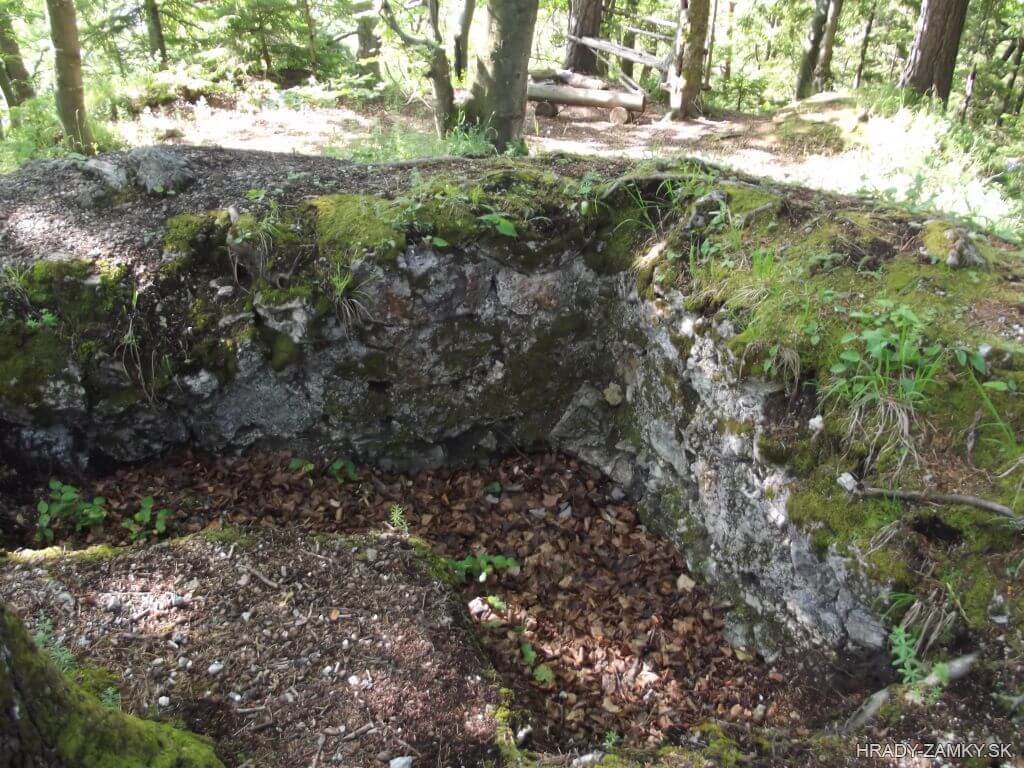
Sučany castle
Podhradie
18.1km
castle ruin
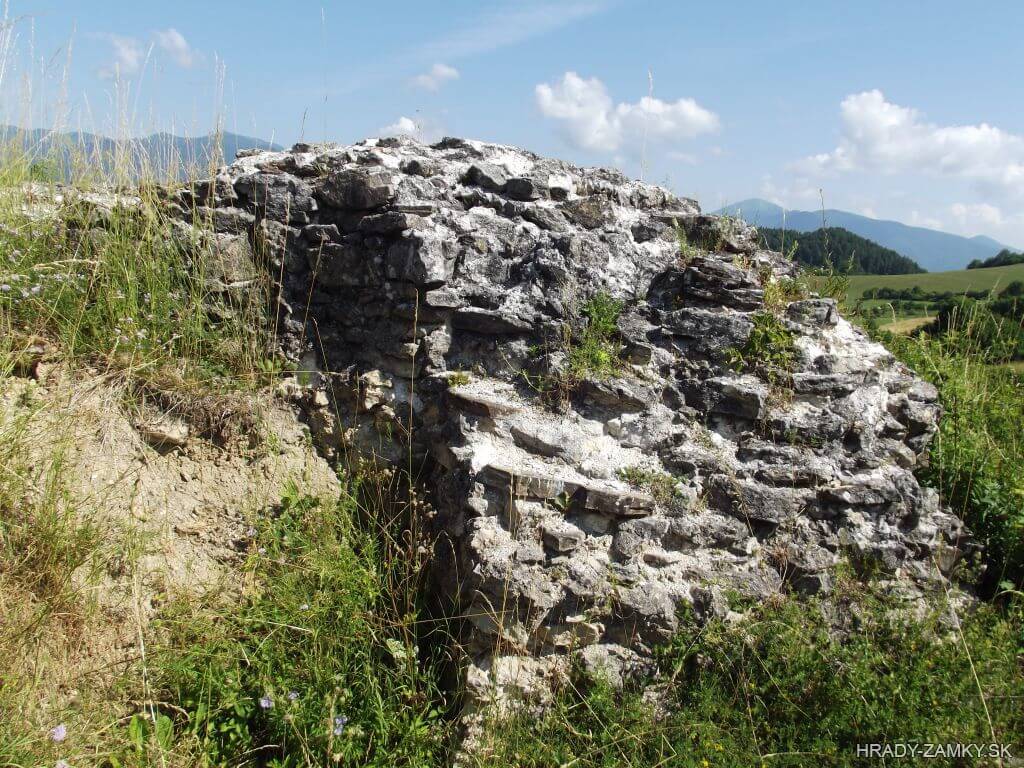
Podhradie Bašta
Podhradie
18.6km
castle ruin
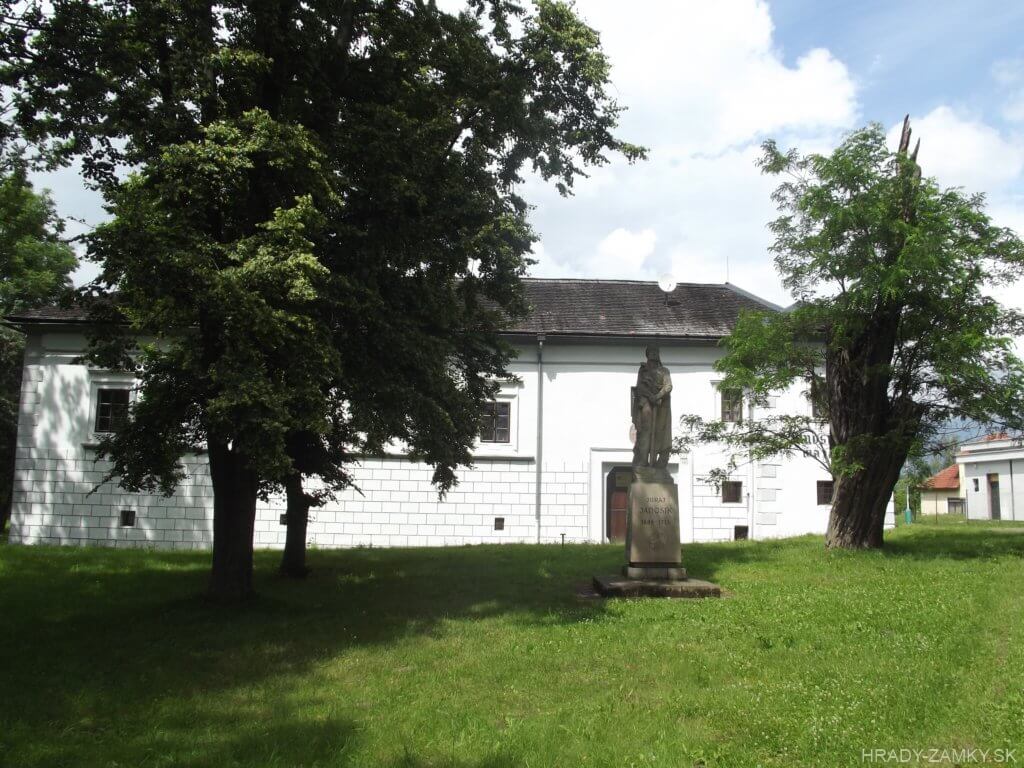
Vranovo
Palúdzka - Liptovský Mikuláš
20.6km
manor, mansion
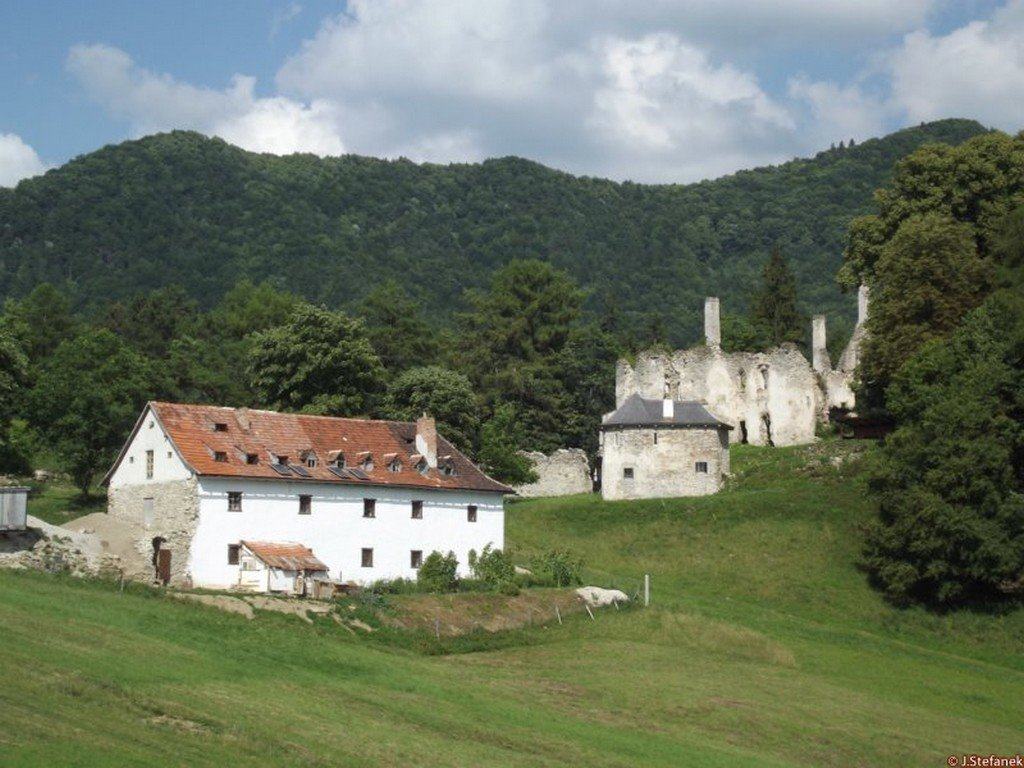
Sklabiňa castle
Sklabinský Podzámok
22.1km
castle ruin