Orava castle
Oravský Podzámok Žilina county Slovakia
castle, chateau
Oravský hrad
Oravský Podzámok Žilinský kraj Slovakia
hrad, zámok
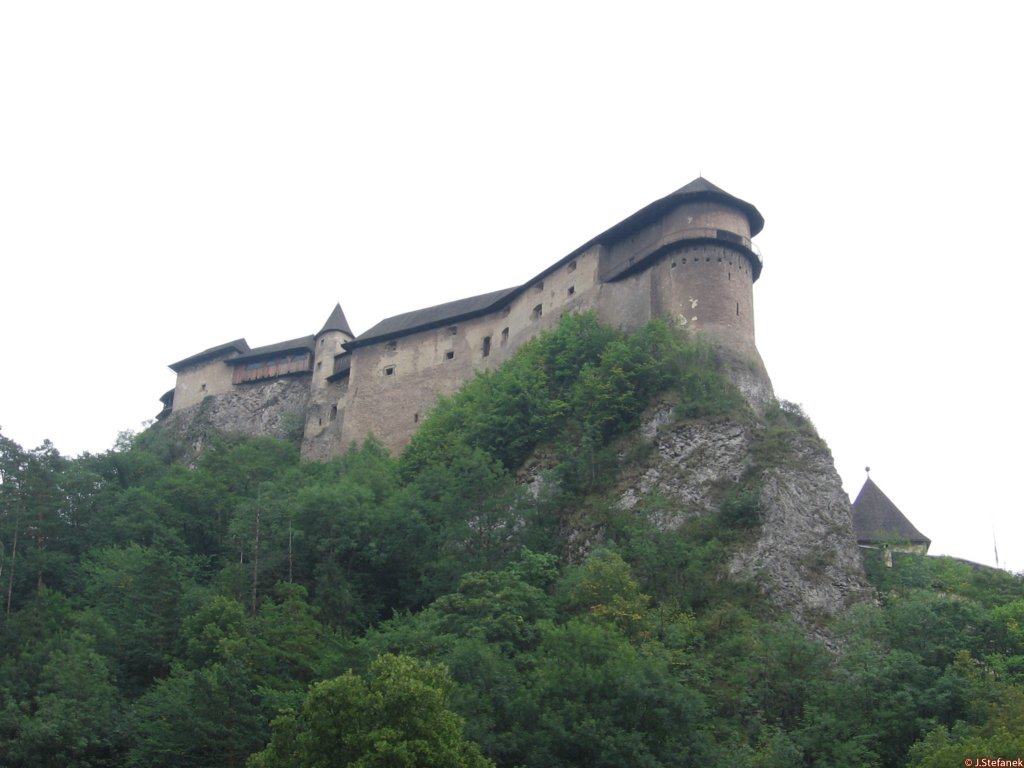
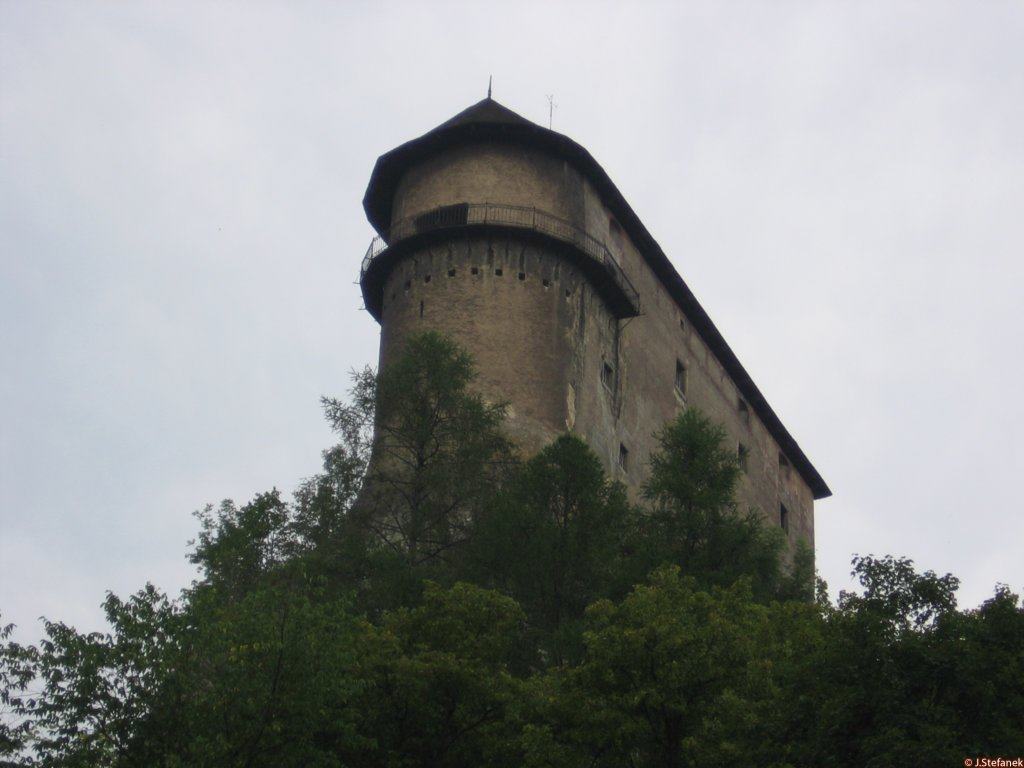
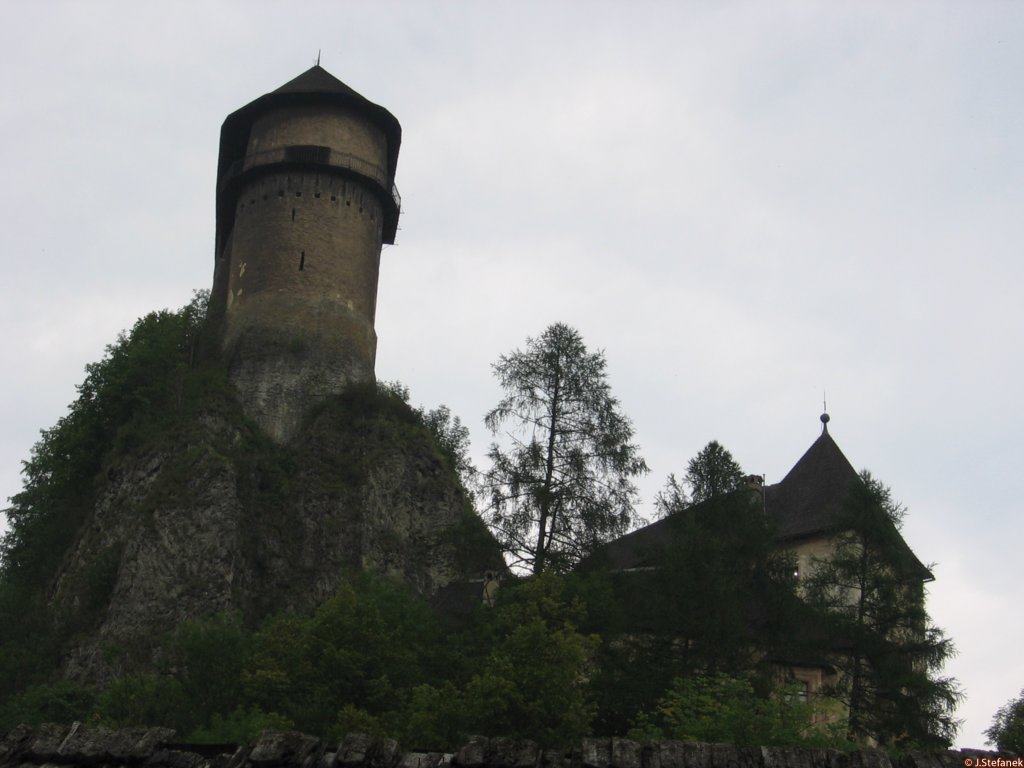
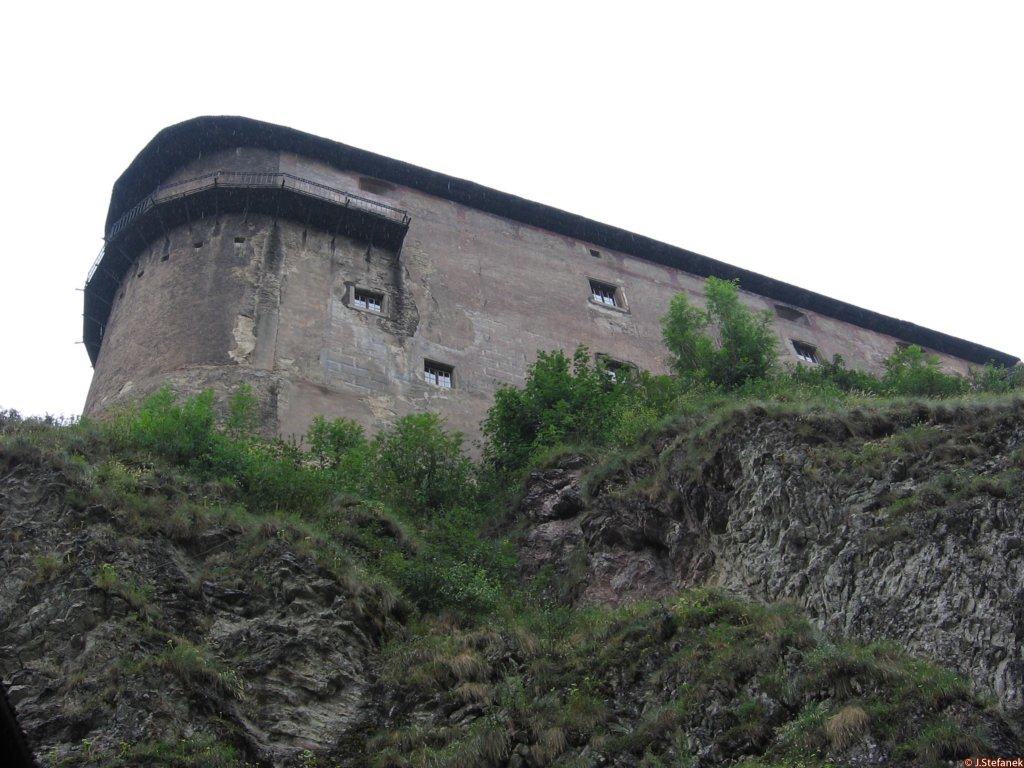
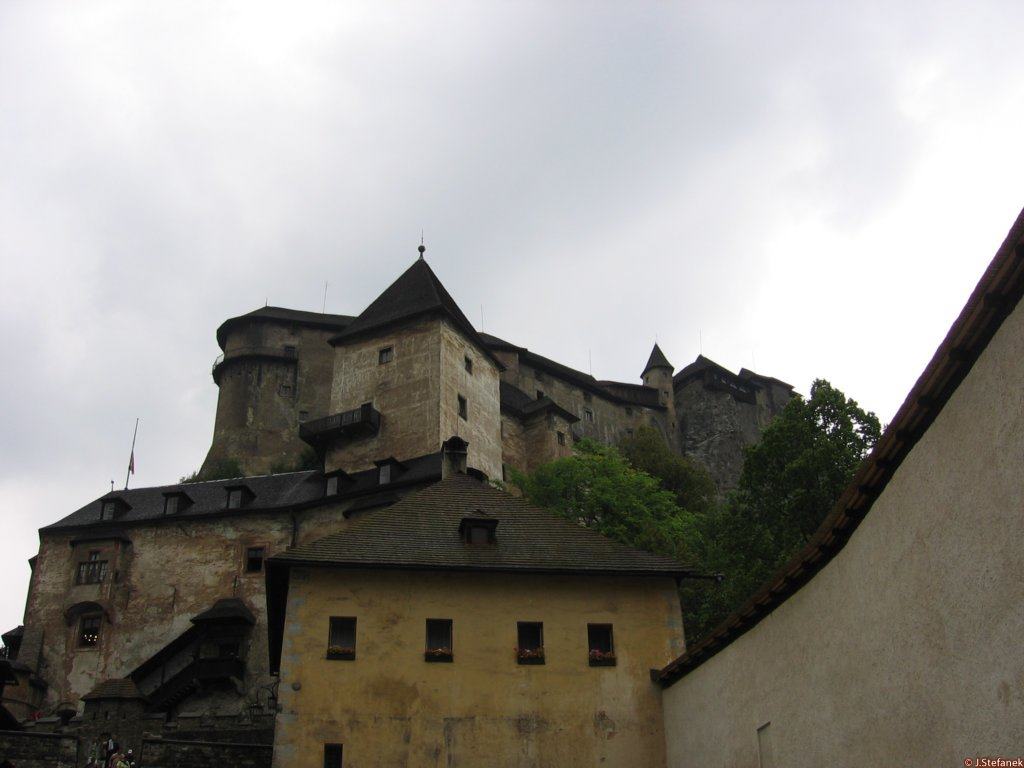
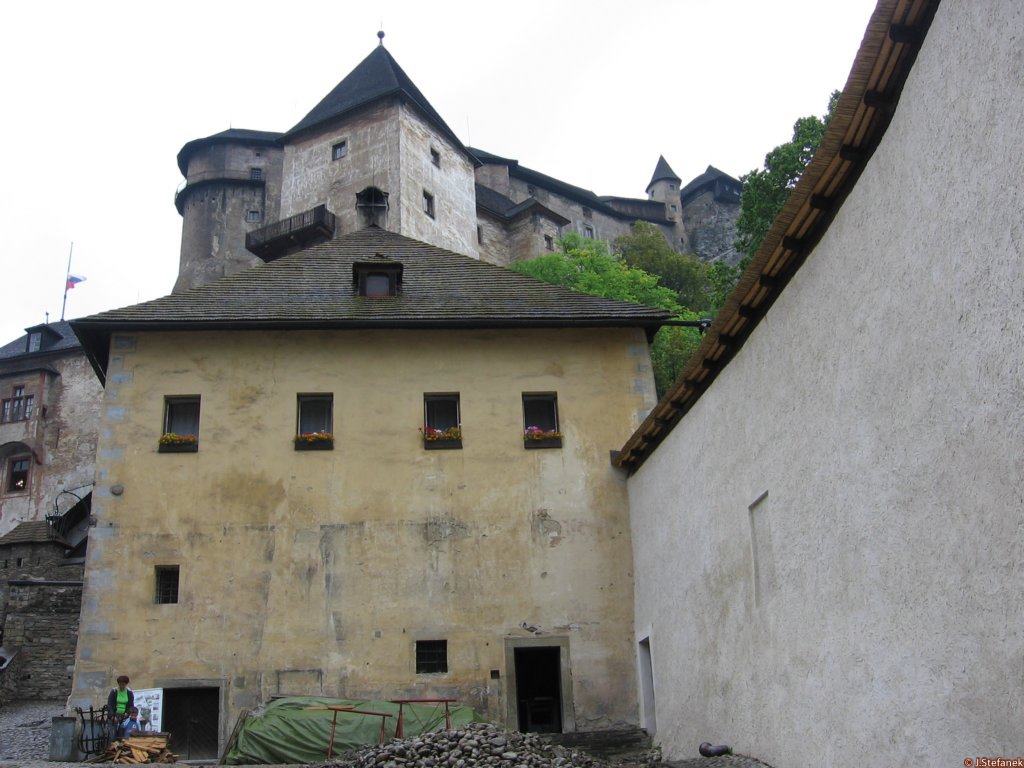
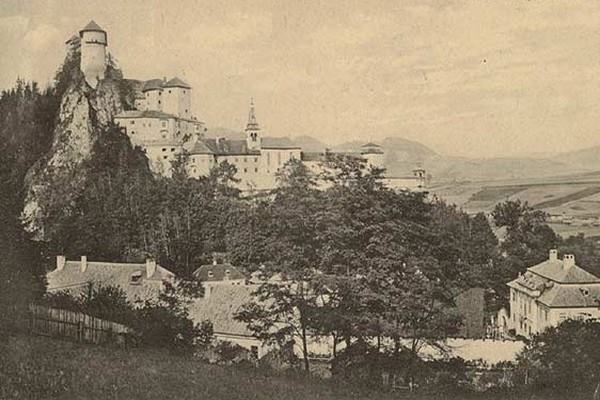
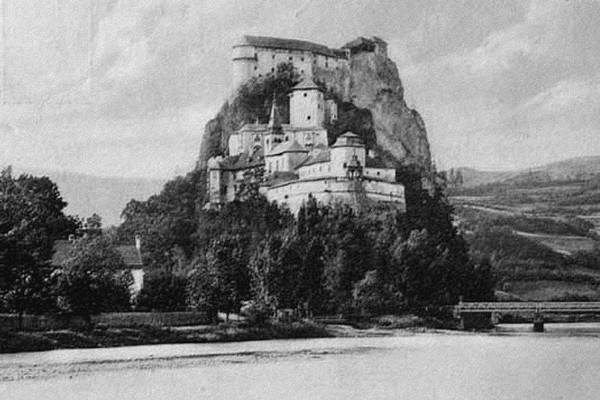
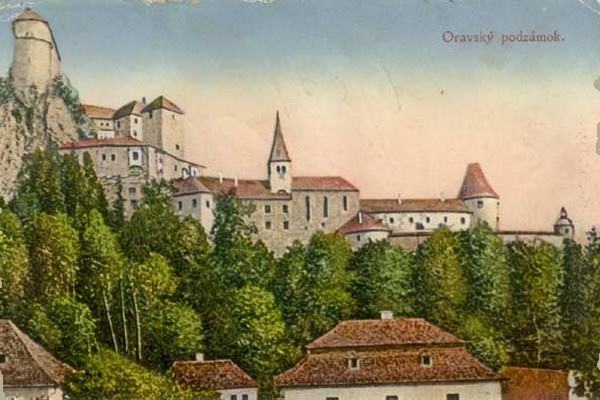
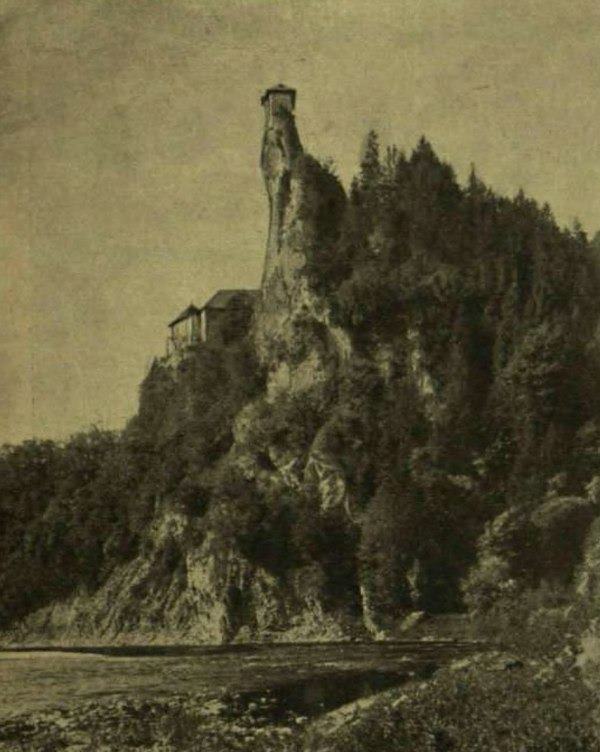
Preserved castle on the top of limestone parallel bars overlooking the river Orava in the Orava Highlands - dominating the village Oravský Podzámok
Zachovaný hrad na vrchole vápencového bradla, čnejúceho nad riekou Orava v Oravskej vrchovine - dominanta obce Oravský Podzámok
Previous names
Arwa, Arua, Aryva, Arawa, Oravia, Aravia
Roads
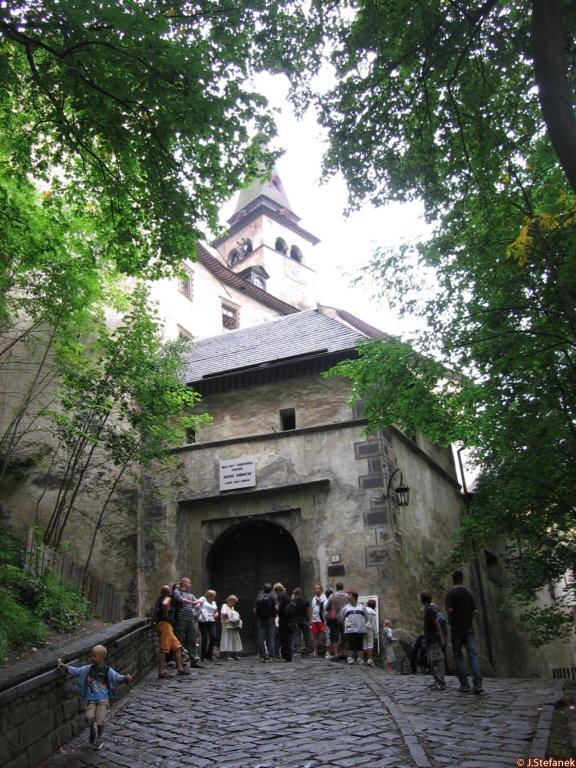
Orava castle is located directly in the village Oravský Podzámok (district Dolný Kubín). It is a landmark of the village and can not be missed. There is a paid parking lot right under the castle, also to the south of the castle there is another larger one. Access to the castle via a steep alley-shaped castle road is short and undemanding. A rich tour of the castle is also associated with climbing over 800 steps.
Oravský hrad sa nachádza priamo v obci Oravský Podzámok (okres Dolný Kubín). Je dominantou obce a nie je možné si ho nevšimnúť. Hneď pod hradom je platené parkovisko, tiež na juh od hradu je ďalšie rozsiahlejšie. Prístup k hradu po strmšej alejovitej hradnej ceste je krátky a nenáročný. Bohatá prehliadka hradu je spojená aj so zdolaním vyše 800 schodov.
Description
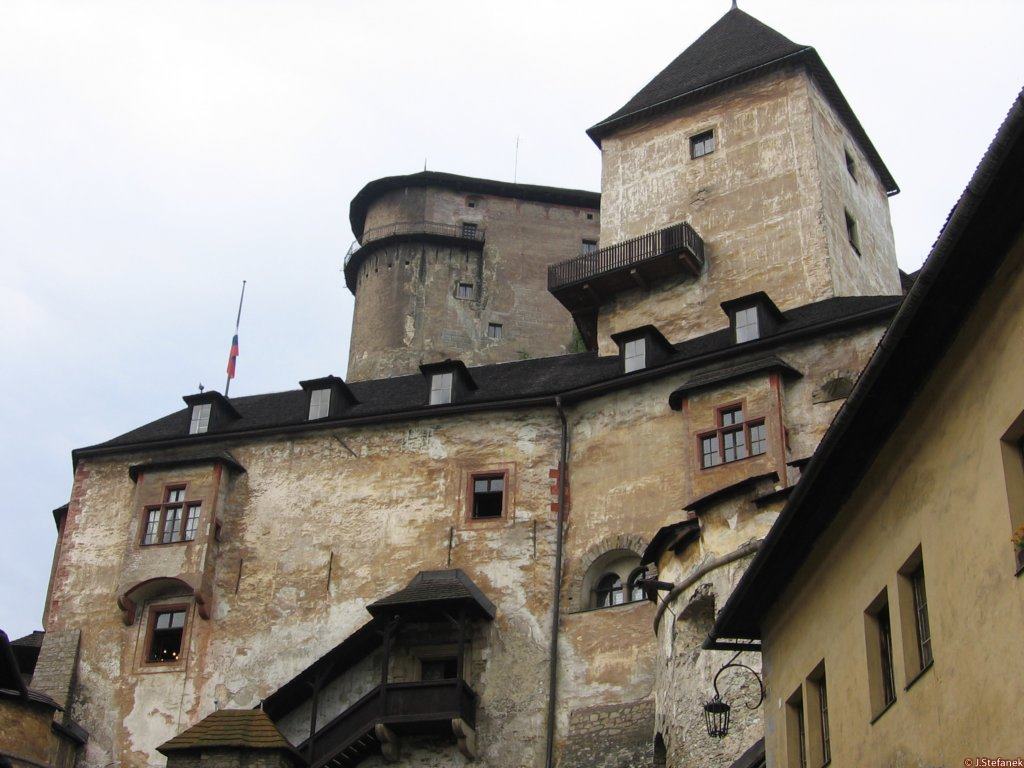
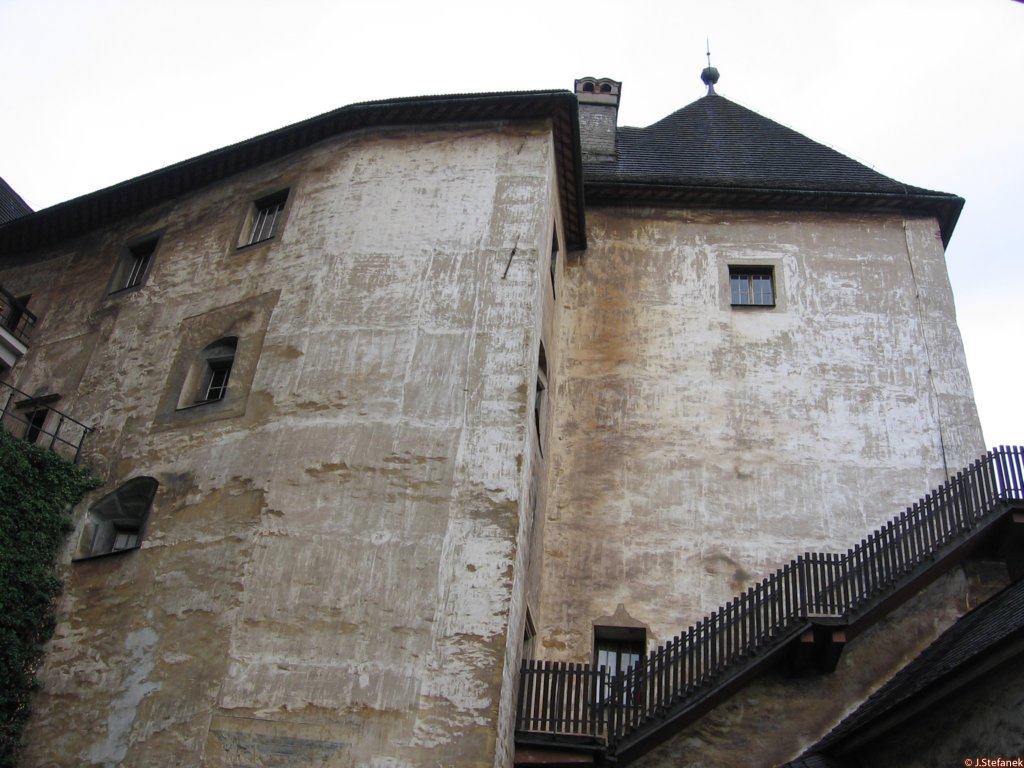
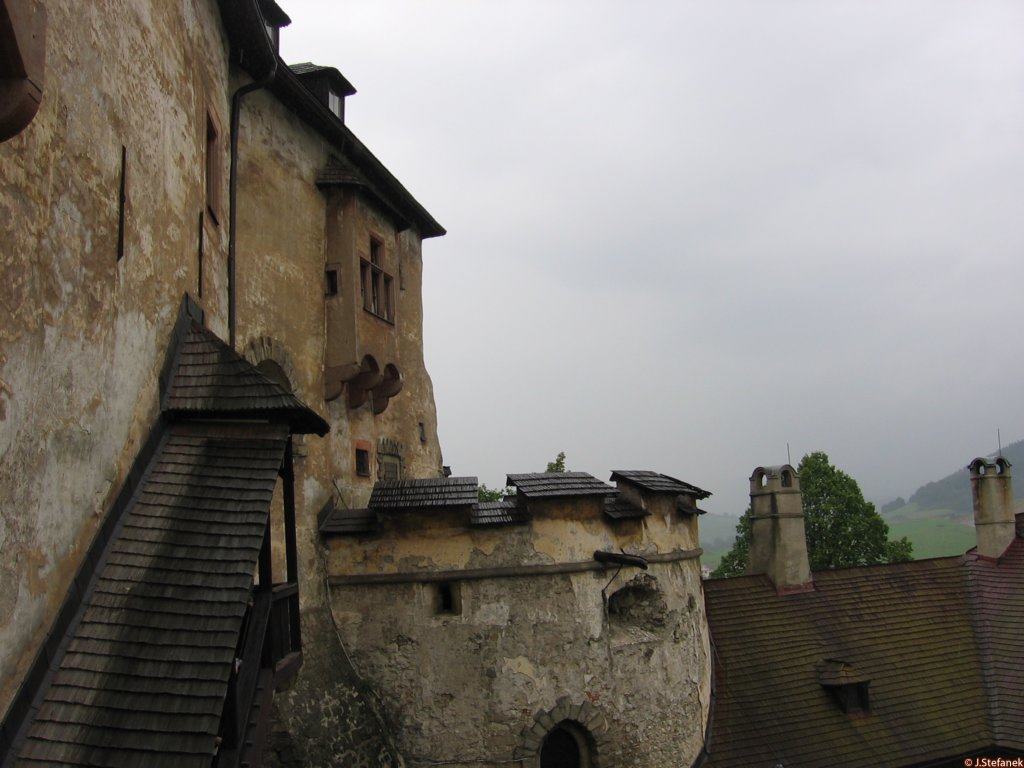
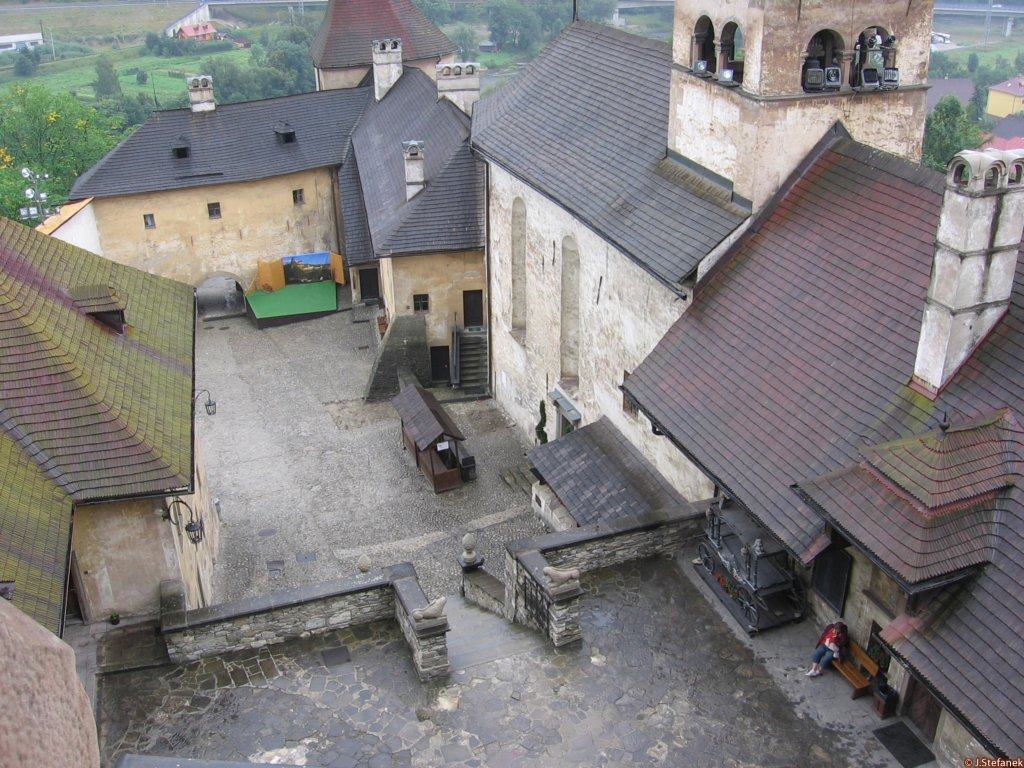
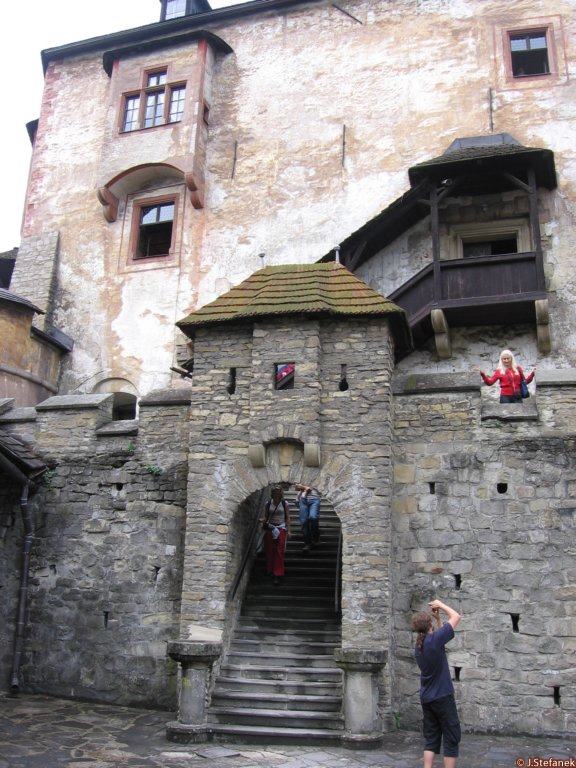
In the 16th century were built brick floors of the palace, whose northern walls were reinforced. From the original buildings remained the lower masonry, two windows and two portals. The basement of the narrow eastern part of the palace was additionally barrel vaulted and the cistern was modified. There is only a staircase leading from the central castle, but the main element of the central castle was a prismatic tower, while other buildings were originally wooden. The walls led in straight sections, which broke and the entrance was probably where it is today.The interior is from the Gothic, Renaissance and Romantic times. 1752, with the exception of the exhibition headstone of Juraj Thurza from 1616. In the Thurzo Palace in the lower castle, the room is vaulted on the middle pillar, historical kitchen and sacristy with wall paintings from the Renaissance period. The romantic castle and dining room in the middle castle are connected with patterns from the Gothic period of the castle. The interiors of the donjon have remnants of wall paintings from the 15th and 16th centuries, and the Palace of John from Dubovec is periodly furnished.Today's appearance of the buildings is characterized by sgraffito facades, illusive indicating beams or stone buildings with bossed corners and blocking on the facades. The castle buildings are concentrated in the complexes of the lower, middle and upper castle with palaces, fortifications, towers, bastions, entrance gates and chapel.
V 16.storočí boli postavené murované poschodia paláca, ktorého severné múry boli spevnené. Z pôvodnej zástavby zostalo spodné murivo, dve okná a dva portáliky. Suterén úzkej východnej časti paláca bol dodatočne valene zaklenutý a bola upravená aj cisterna. Zo stredného hradu vedie nahor len schodište, ale hlavným prvkom stredného hradu bola hranolová veža, zatiaľ čo ďalšie budovy boli pôvodne pravdepodobne drevené. Hradby viedli v rovných úsekoch, ktoré sa zalamovali a vstup sa pravdepodobne nachádzal tam, kde dnešný.Interiér je z čias gotiky, renesancie a romantizmu, najzachovalejší je interiér kaplnky z r. 1752, výnimku tvorí výstavný náhrobok Juraja Thurzu z 1616. V Thurzovskom paláci na dolnom hrade je miestnosť zaklenutá na stredný stĺp, historická kuchyňa a sakristia s nástennou maľbou z obdobia renesancie. Na strednom hrade romanticky upravená knižnica a jedáleň nadväzuje na vzory z čias gotických úpravy hradu. Interiéry donjonu majú zvyšky nástenných malieb z 15. a 16. storočia a palác Jána z Dubovca je dobovo zariadený.Dnešný vzhľad budov charakterizujú sgrafitové fasády, iluzívne naznačujúce trámové alebo kamenné stavby s bosovanými nárožiami a kvádrovaním na priečeliach. Hradné budovy sa sústreďujú do komplexov dolného, stredného a horného hradu s palácmi, opevnením, vežami, baštami, vstupnými bránami, kazematmi a kaplnkou.
Plan
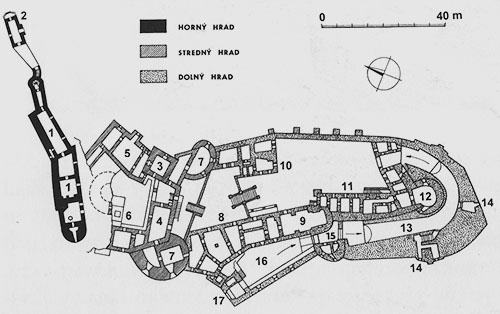
Legend to the ground plan
- 1-palace
- 2-chapel
- 3-tower
- 4-Corvinus / after reconstruction of pálfy palace /
- 5-palace of John of Dubovec
- 6-well
- 7-part bastions
- 8-Turzov palace
- 9-chapel
- 10-parish
- 11-farm buildings
- 12-Archive tower
- 13-entrance tunnel
- 14-artillery casemates
- 15-gate with drawbridge
- 16-gate
- 17-entrance tower
Legenda k pôdorysu
- 1-palác
- 2-kaplnka
- 3-veža
- 4-Korvínov /po prestavbe pálfyho palác/
- 5-palác Jána z Dubovca
- 6-studňa
- 7-delové bašty
- 8-Turzov palác
- 9-kaplnka
- 10-fara
- 11-hospodárske objekty
- 12-Archívna veža
- 13-vstupný tunel
- 14-delostrelecké kazematy
- 15-brána s padacím mostom
- 16-predbránie
- 17-vstupná veža
History
The castle is first mentioned in 1267 as a guard castle of the north-south road of European importance (via magna) in the Kingdom of Hungary. King Belo IV took over the castle from Mike (Mikuláš) from the Balassov family. and made it the center of local government. From 1298 to 1321, Matúš Čák Trenčiansky ruled the castle. After his death, it was first administered by Master Donč, but already in 1331 King Karol Róbert appointed the Orava mayor and later also the castellan Leopold, administrator (comes) of the Kremnica Chamber. We know the names of numerous castellans and bathrobes until 1420, when Stibor II received the castle from King Sigismund of Luxembourg. However, the period from 1393 to 1401 was interesting, when the castle was occupied and owned by Prince Ladislav Opolský. After the death of Stibor II. acquired the castle of Mikuláš Balický, a mayor of Turc, who had it before the advance from Štibor. However, Peter Komorovský played a decisive role here for a long time. He first joined Ján Hunyady, and therefore the castle was occupied by Ján Jiskra of Brandýs after 1444 in the interest of Ladislav Pohrobek. When Komorovský regained the castle after the Kremnica peace, he gave it in advance to Peter Aksamit in 1455, and after his death (1458) Komorovský received both the castle from Matej Korvín and his appointment as mayor of Orava and Liptov. Nevertheless, he surprisingly joined the rebellion against the king and had to go into exile in 1474.
From the beginning of Vladislav Jagelovsky's reign, the Zápoľský family ruled at Orava Castle, and when Ján Zápoľský stood as a defiant king to Ferdinand I, his Orava captains Mikuláš and Peter Kostkovci defended the castle from General Katzianer's attacks. Nicholas died in 1535 as captain of Upper Hungary and the castle was given to his companion Ján of Dubovec, who remained until his death (1546). It was not until ten years later that the castle was acquired by František Thurzo. The castle became the seat of the Thurz family for 70 years. The Thurz family contributed to the current appearance of the buildings, which, starting with František Thurz, contributed to its restoration, making the castle one of the significant buildings of the Renaissance period. From 1626, the couple of Juraj Thurz's seven daughters owned the property, and the manor was managed by an appointed director. One of them was Štefan Thőkőly, who joined Wesselényi's conspiracy. Therefore, in 1670, the castle was surrounded by the army of General Heister, but surrendered only after Stefan committed suicide. Surprisingly, however, it was conquered by peasant rebels under the leadership of Gašpar Pik as early as 1672.
The castle passed through the last dramatic war events during the uprising of Francis II. Rákóczi. It was first conquered by insurgents under Alexander Károly in 1703, and then resisted the imperial army for several months, until in 1709 his garrison surrendered. During the administration of Juraj Erdődy (from 1714), the greatest damage was repaired, but the fact that the co-owners did not live in the castle led to its bankruptcy. In addition, in 1800 the castle burned down and threatened with complete devastation. Only thanks to temporary repairs under František Zichy was he able to overcome the worst of the castle, and it was not until 1861 that it received a permanent roof and was repaired. Therefore, a museum could be established in the castle in 1868. Jozef Pálffy, who has been taking care of the castle since 1896, was credited with the monumental alterations. The last, most important complex restoration of the castle since the burnout took place in the years 1953-1968. Minor alterations and repairs are still taking place at the castle.
Hrad sa prvýkrát spomína v roku 1267, ako strážny hrad severojužnej cesty európskeho významu (via magna) na území Uhorského kráľovstva. Od Mika (Mikuláša) z rodu Balassovcov hrad vtedy prevzal kráľ Belo IV. a urobil ho centrom miestnej správy. V rokoch 1298 až 1321 ovládal hrad Matúš Čák Trenčiansky. Po jeho smrti ho najprv spravoval magister Donč, ale už v roku 1331 kráľ Karol Róbert vymenoval za oravského župana a neskôr i za kastelána Leopolda, správcu (comes) kremnickej komory. Mená početných kastelánov a županov poznáme až do roku 1420, keď od kráľa Žigmunda Luxemburského dostal hrad Stibor II. Zaujímavé však bolo obdobie 1393 až 1401, keď hrad obsadil a vlastnil knieža Ladislav Opolský. Po smrti Stibora II. získal hrad Mikuláš Balický, župan Turca, ktorý ho mal už predtým ako záloh od Štibora. Rozhodujúcu úlohu tu však nadlho hral Peter Komorovský. Najprv sa pridal k Jánovi Hunyadymu, a preto hrad po roku 1444 v záujme Ladislava Pohrobka obsadil Ján Jiskra z Brandýsa. Keď hrad po kremnickom mieri Komorovský získal naspäť, dal ho v roku 1455 do zálohu Petrovi Aksamitoví a po jeho smrti (1458) dostal Komorovský od Mateja Korvína tak hrad, ako aj vymenovanie za župana Oravy a Liptova. Aj napriek tomu sa prekvapujúco pridal k vzbure proti kráľovi a v roku 1474 musel odísť do vyhnanstva.
Od začiatku kraľovania Vladislava Jagelovského vládol na Oravskom hrade rod Zápoľských, a keď sa Ján Zápoľský postavil ako vzdorokráľ Ferdinandovi I., jeho oravskí kapitáni Mikuláš a Peter Kostkovci ubránili hrad pred útokmi generála Katzianera. Mikuláš roku 1535 zomrel vo funkcii kapitána Horného Uhorska a hrad dostal jeho spoločník Ján z Dubovca, ktorému zostal až do smrti (1546). Až o desať rokov neskôr hrad získal František Thurzo. Hrad sa stal na 70 rokov sídlom thurzovského rodu. Thurzovci sa pričinili o dnešný vzhľad budov ktorí, počnúc Františkom Thurzom, prispeli k jeho stavebnej obnove, čím sa hrad zaradil medzi výrazné stavby renesančného obdobia. Od roku 1626 na ňom mali majetkový podiel manželia siedmich dcér Juraja Thurzu a panstvo spravoval menovaný direktor. Jedným z nich bol Štefan Thőkőly, ktorý sa pridal k Wesselényiho sprisahaniu. Preto bol v roku 1670 hrad obkľúčený vojskom generála Heistera, ale vzdal sa až potom, čo Štefan spáchal samovraždu. Prekvapujúco ho však už v roku 1672 dobyli sedliacki vzbúrenci pod vedením Gašpara Piku.
Poslednými dramatickými vojnovými udalosťami hrad prešiel za povstania Františka II. Rákócziho. Najskôr ho dobyli povstalci pod vedením Alexandra Károlyho v roku 1703 a potom niekolko mesiacov odolával cisárskemu vojsku, kým sa v roku 1709 jeho posádka nevzdala. Za správcovania Juraja Erdődyho (od 1714) boli napravené najväčšie škody, ale to, že spolumajitelia na hrade nebývali, viedlo k jeho úpadku. Navyše v roku 1800 hrad vyhorel a hrozila mu úplná devastácia. Iba vďaka provizórnym opravám za Františka Zichyho dokázal hrad prekonať najhoršie, a až po roku 1861 dostal trvalé zastrešenie a bol opravený. Preto mohlo byť na hrade v roku 1868 zriadené múzeum. Zásluhy na pamiatkových úpravách mal Jozef Pálffy, ktorý sa o hrad staral od roku 1896. Nešlo síce o úpravy s charakterom tvrdých pseudoslohových novotvarov, ale výrazne zmenili najmä interiéry. Posledná, najvýznamnejšia komplexná obnova hradu od vyhorenia sa uskutočnila až v rokoch 1953-1968. Drobné úpravy a opravy prebiehajú na hrade aj v súčasnosti.
Myths and legends
The legend of the castle
At night, the figure of a woman with a lantern in her hand walks silently through construction sites and through courtyards. It is Alžbeta Coborová who oversees the castle, as she promised during her lifetime to her husband, the palatine Juraj Thurzo.
Who built Orava Castle
It probably happened a long time ago, when a kind of Marek came to Orava up to the bar, where Orava Castle stands today.
He looked at the steep cliff and decided that, as if the hellhound himself had helped him from the hot hell, he would build a castle on this high rock. As soon as he spoke these words out loud, a voice spoke beside him, offering to help him fulfill his dream. But help shouldn't be free, because every devil wants a fair reward for his service, a subscription to the human soul.
Marek was a little afraid, but he gathered his courage and agreed on the condition that if a hellhound builds a castle with beautiful rooms at the highest point in seven days and seven nights, he can lose seventy-seven years for his soul.
The devil landed on Mark's suggestion and started working vigorously on the robots. He worked, dragging the rocks all day and night, but he had to be careful not to let the structure slip into the water. The castle gate was high and sloping to one side, and the rocks needed for construction had to be brought in by far.
Marek frowned as he watched the devil's work, and with the increasing walls of the castle, he became more and more apprehensive, he didn't want to go to hell. He also turned to the Lord God and begged him to save him from hell by any action.
The devil continued to build and was already looking forward to bringing another unfortunate soul to hell. By the end of the seventh night, the castle was almost finished, with only a few details still to be completed. The devil wanted to bring another big rock to the castle, but it was difficult for him. He approached the castle slowly, carrying a heavy rock with all his might. In that reflection, he heard the roar of a rooster announcing the arrival of the morning of the eighth day. In anger at the failed contract, the devil dropped the rock into the water, where it remained. People called it Mark's Rock.
The massive stone Orava Castle still stands on the castle wall.
Povesť o hrade
Nocou nehlučne chodieva staviskami a po nádvoriach postava ženy s lampášom v ruke. Je to Alžbeta Coborová, ktorá dohliada na hrad, ako to sľúbila ešte za života svojmu mužovi, palatínovi Jurajovi Thurzovi.
Kto staval Oravský hrad
Stalo sa to vraj už veľmi dávno, keď akýsi Marek prišiel na Oravu až po bralo, kde dnes stojí Oravský hrad.
Pozeral na strmé bralo a zaumienil si, že čoby mu mal sám pekelník z horúceho pekla pomáhať, na tejto vysokej skale postaví hrad. Sotva tieto slová vyriekol nahlas, ozval sa vedľa neho hlas, ktorý mu ponúkol pomoc pri splnení jeho sna. Pomoc však nemala byť zadarmo, veď každý čert chce za svoju službu primeranú odmenu, a to úpis na ľudskú dušu.
Marek sa čerta aj trochu bál, ale pozbieral odvahu a súhlasil pod podmienkou, že ak pekelník postaví hrad s nádhernými izbami na najvyššom mieste brala za sedem dní a sedem nocí, môže si pre jeho dušu prísť o sedemdesiatsedem rokov.
Čert pristal na Markov návrh a s vervou sa pustil do roboty. Pracoval, vláčil skaly nepretržite celé dni a noci, ale musel dávať pozor, aby sa mu stavba nezošmykla do vody. Hradné bralo bolo vysokánske a naklonené na jednu stranu a aj skaly, potrebné ku stavbe, musel prinášať zďaleka.
Marek zamračeným pohľadom pozoroval prácu čerta a s pribúdajúcimi stenami hradu ho čím ďalej tým viac chytali obavy, do pekla sa mu neveľmi chcelo ísť. Aj sa obrátil na Pána Boha a prosil ho, aby ho dajakým činom od pekla zachránil.
Čert staval ďalej a už sa tešil, že do pekla prinesie ďalšiu dušu nešťastníka. Keď sa končila siedma noc, bol hrad už skoro hotový, len zopár maličkostí ešte zostávalo dokončiť. Čert chcel ešte jednu veľkú skalu doniesť na hrad, ale bola mu priťažká. Pomaly sa približoval k hradu a z posledných síl niesol ťažkú skalu. V tom odrazu začul kikiríkanie kohúta, ktorý oznamoval príchod rána ôsmeho dňa. V hneve nad zmarenou zmluvou čert pustil skalu do vody, kde aj zostala. Ľudia ju nazvali Markovou skalou.
Na hradnom brale tak dodnes stojí mohutný kamenný Oravský hrad.
Useful information
Opening hours and admission
Otváracia doba a vstupné
External links
Nearby castles