Diviaky
Turčianske Teplice Žilina county Slovakia
manor, mansion
Diviaky
Turčianske Teplice Žilinský kraj Slovakia
kaštieľ
Originally a renaissance manor house, rebuilt into a renaissance-baroque complex with a defensive function, is located in the town part of Turčianske Teplice, in Diviaky
Pôvodne renesančný kaštieľ, prestavaný na renesančno-barokový komplex s obrannou funkciou, sa nachádza v mestskej časti Turčianskych Teplíc, v Diviakoch
Previous names
Dyvak, Divék, Dyweck, Dyuek, Diwek, Gyuuek
Roads
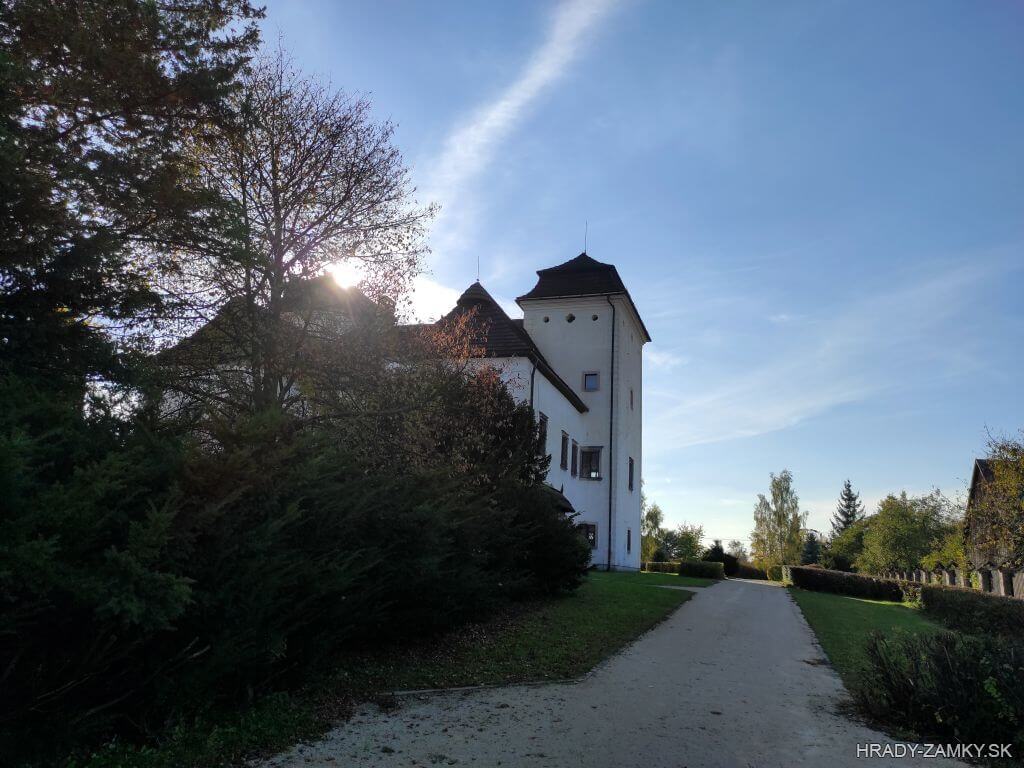
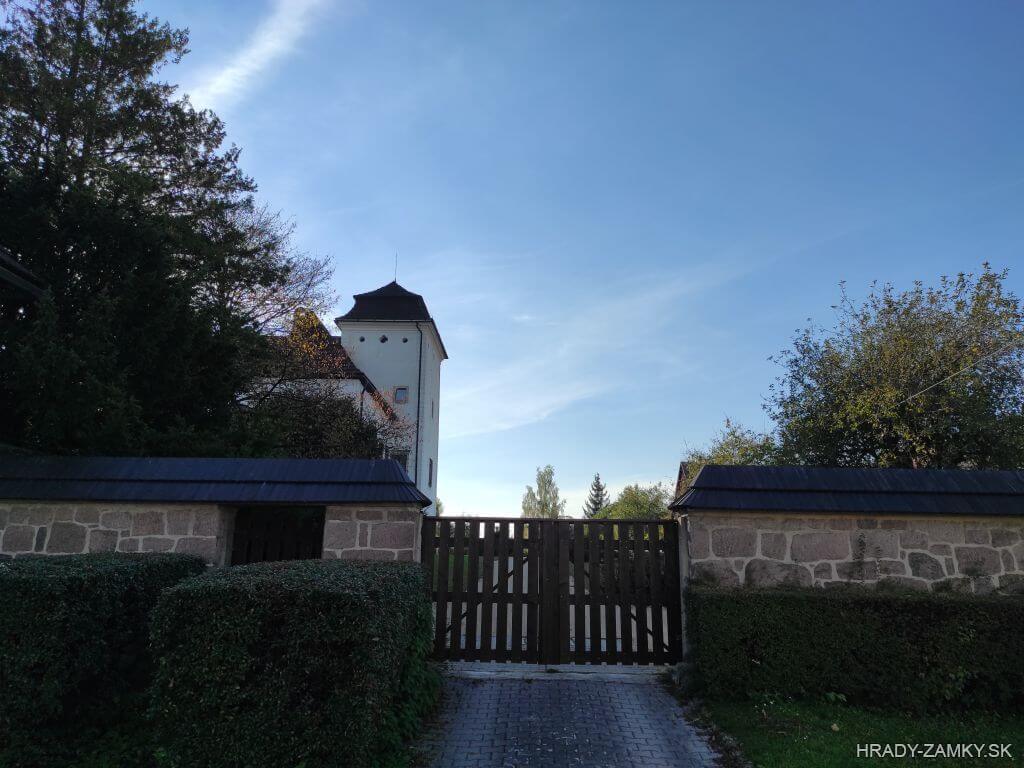
We will get to the town part of Turčianske Teplice called Diviaky shortly after we leave Turčianske Teplice in the direction of Martin. In Diviaky, we turn left from the main road to Prievidzská and then to Matičná Street, on which we reach the manor house. There is a parking lot in front of the entrance gate at the bell tower, but the manor is inaccessible to the public.
Do mestskej časti Turčianskych Teplíc zvanej Diviaky sa dostaneme krátko potom, ako opustíme Turčianske Teplice v smere na Martin. V Diviakoch potom z hlavnej cesty odbočíme vľavo na Prievidzskú a následne na Matičnú ulicu, po ktorej sa dostaneme priamo pred kaštieľ. Pred vstupnou bránou pri zvonici je parkovisko, kaštieľ je však pre verejnosť neprístupný.
Description
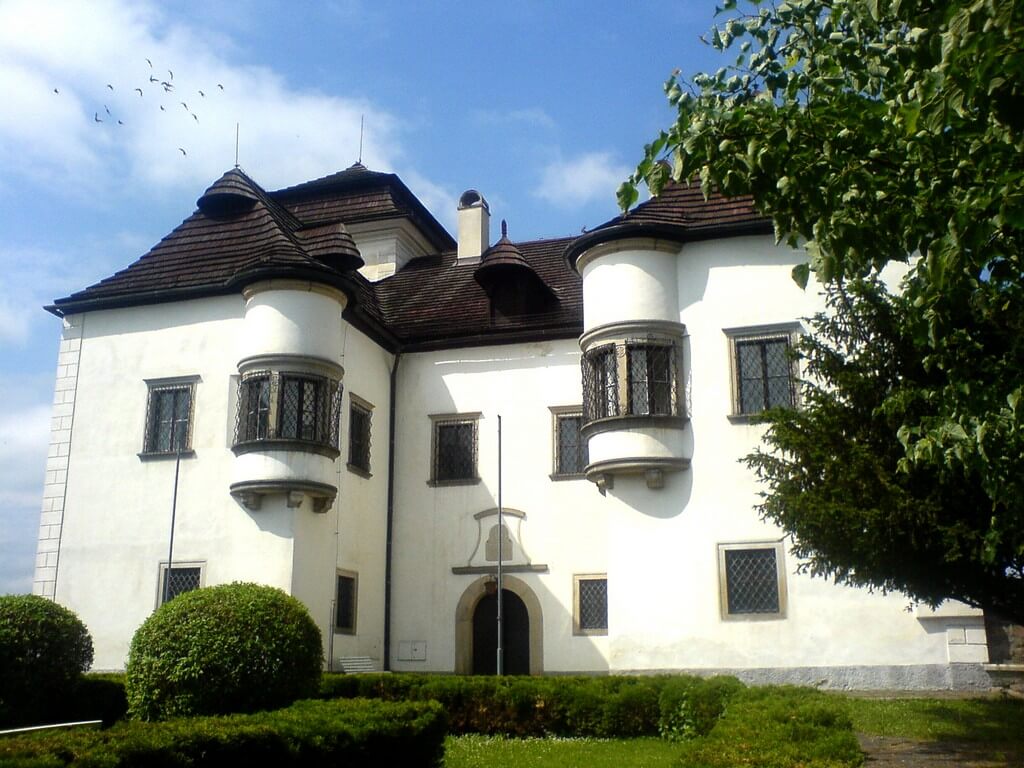
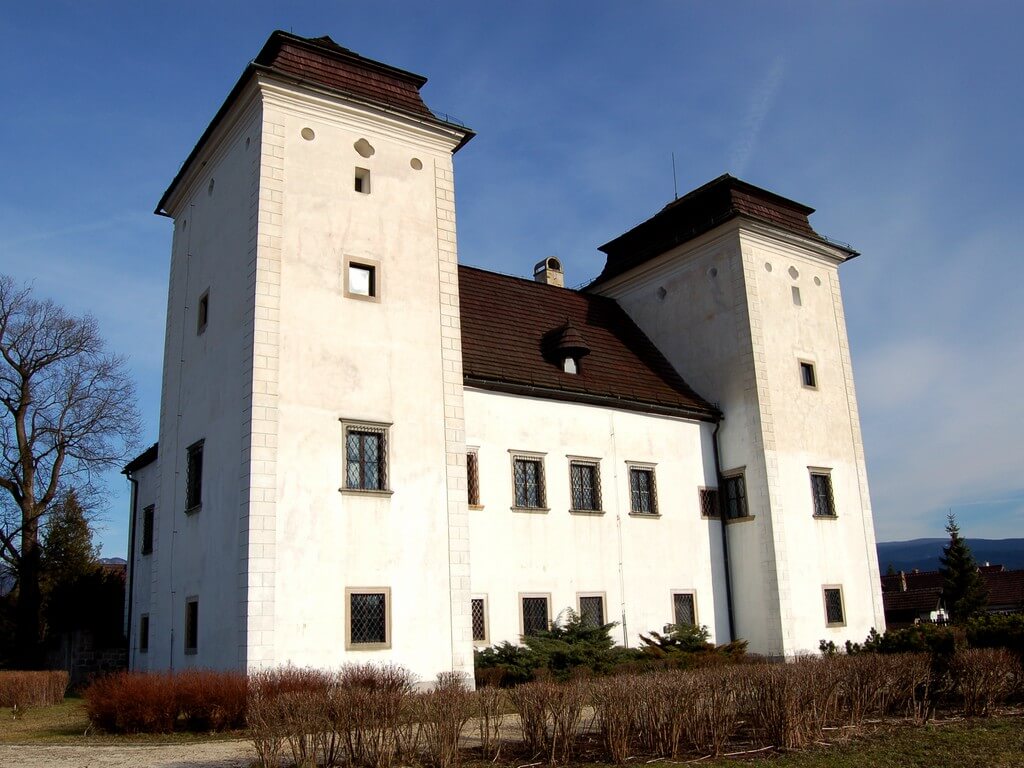
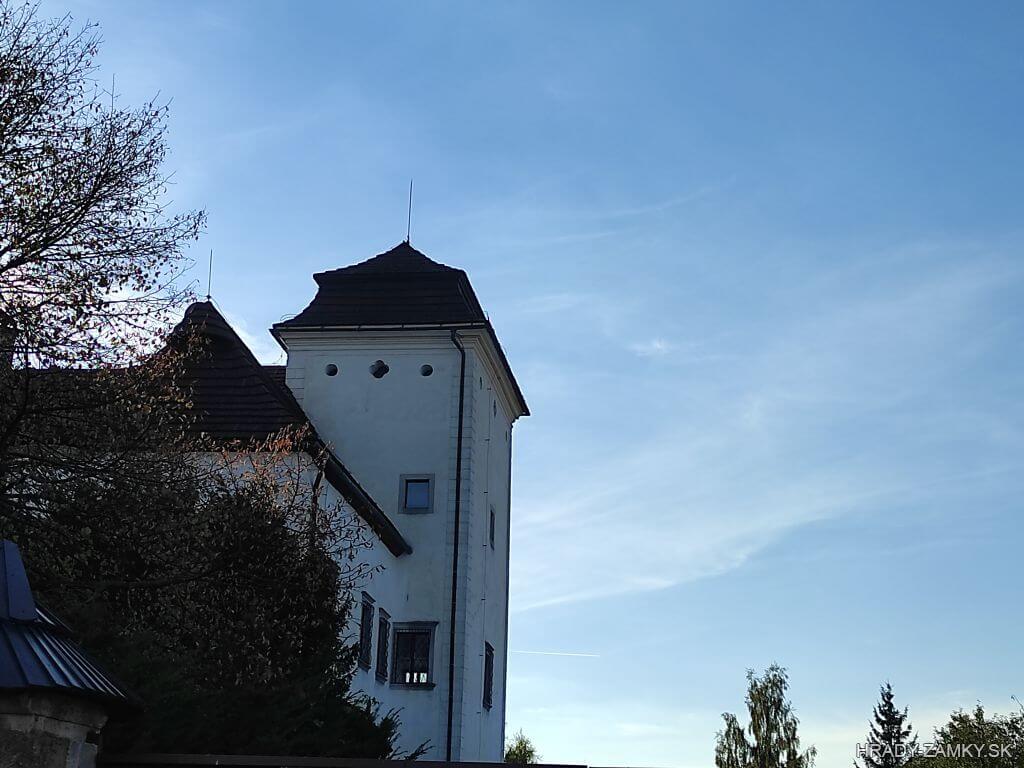
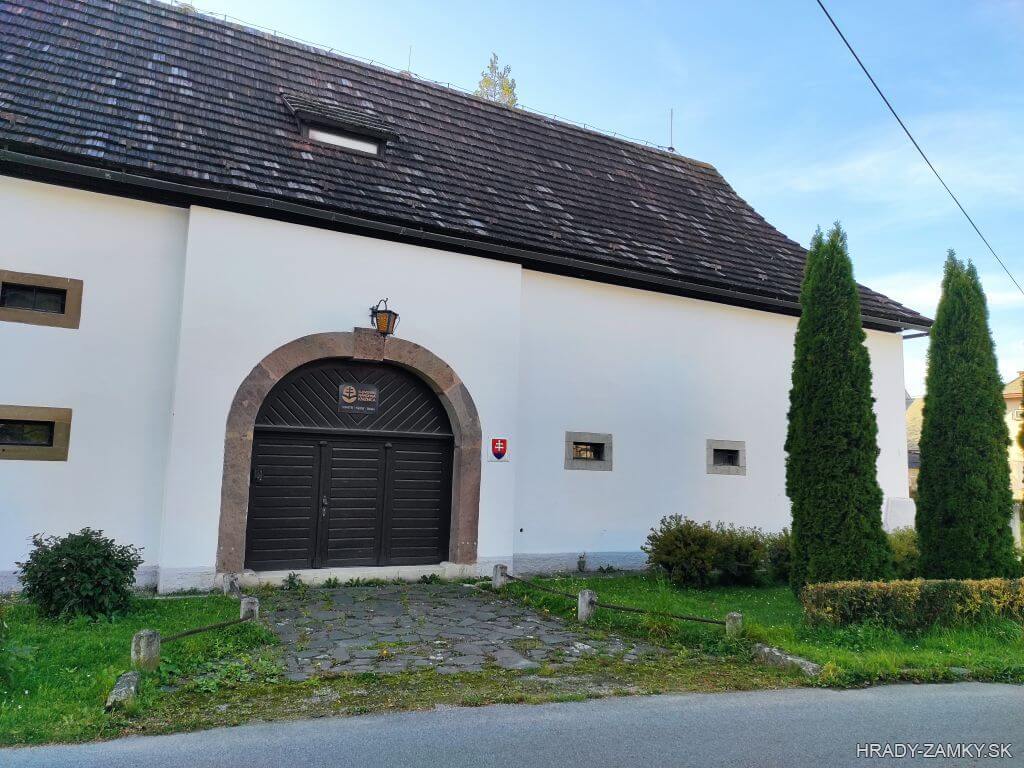
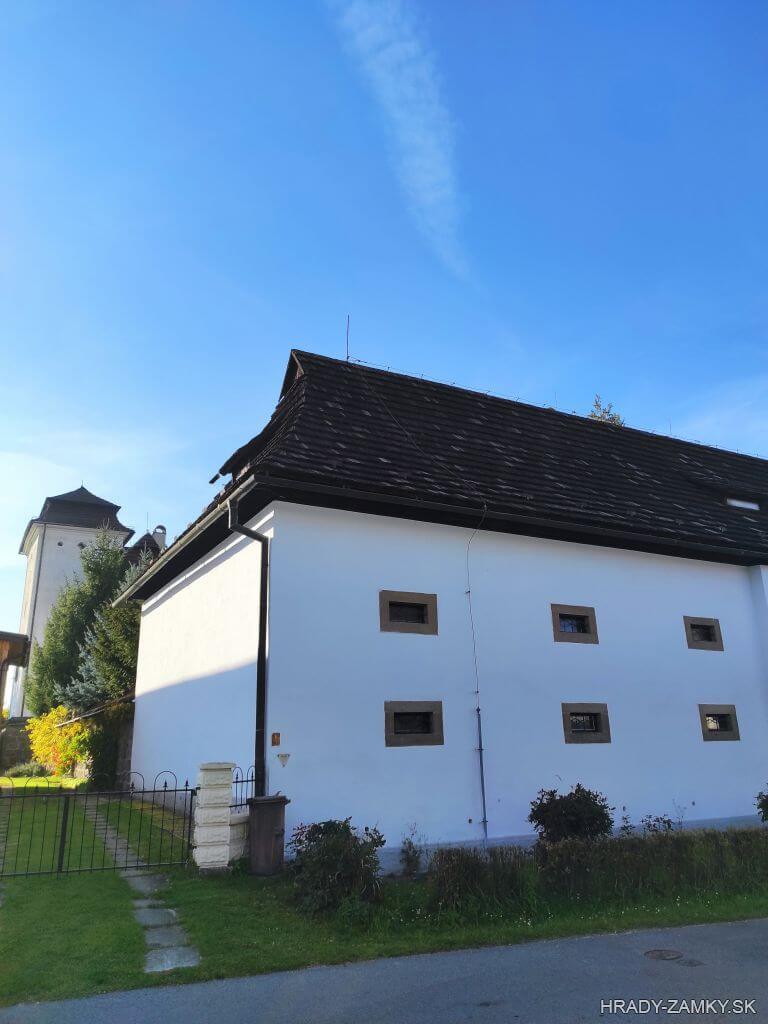
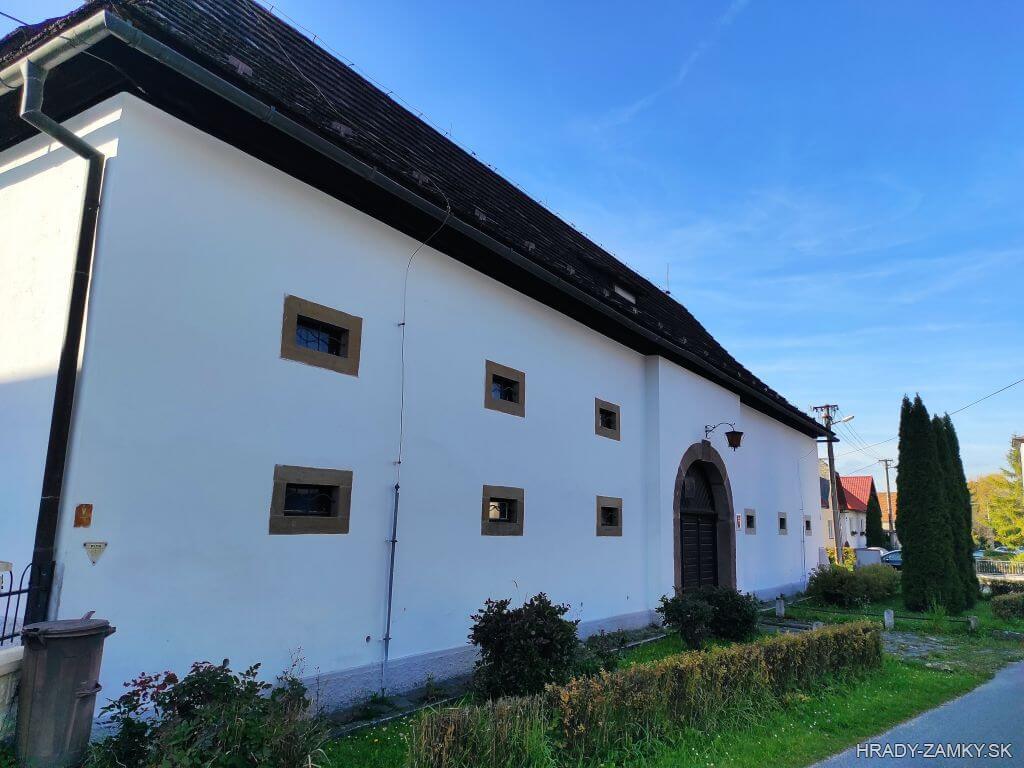
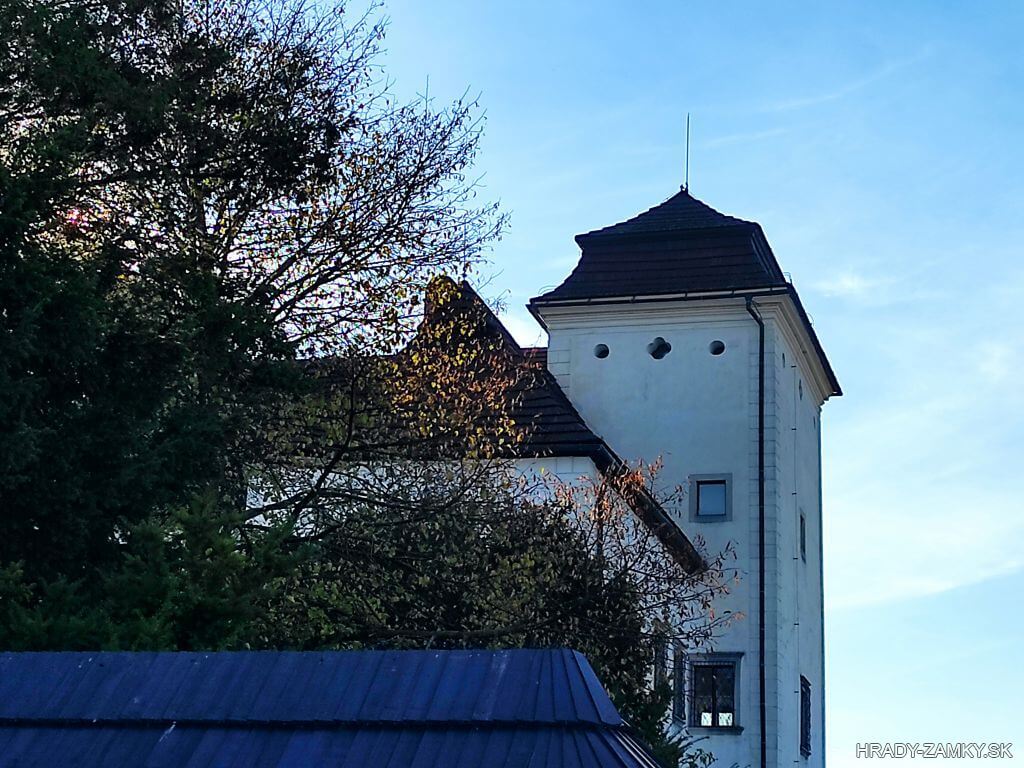
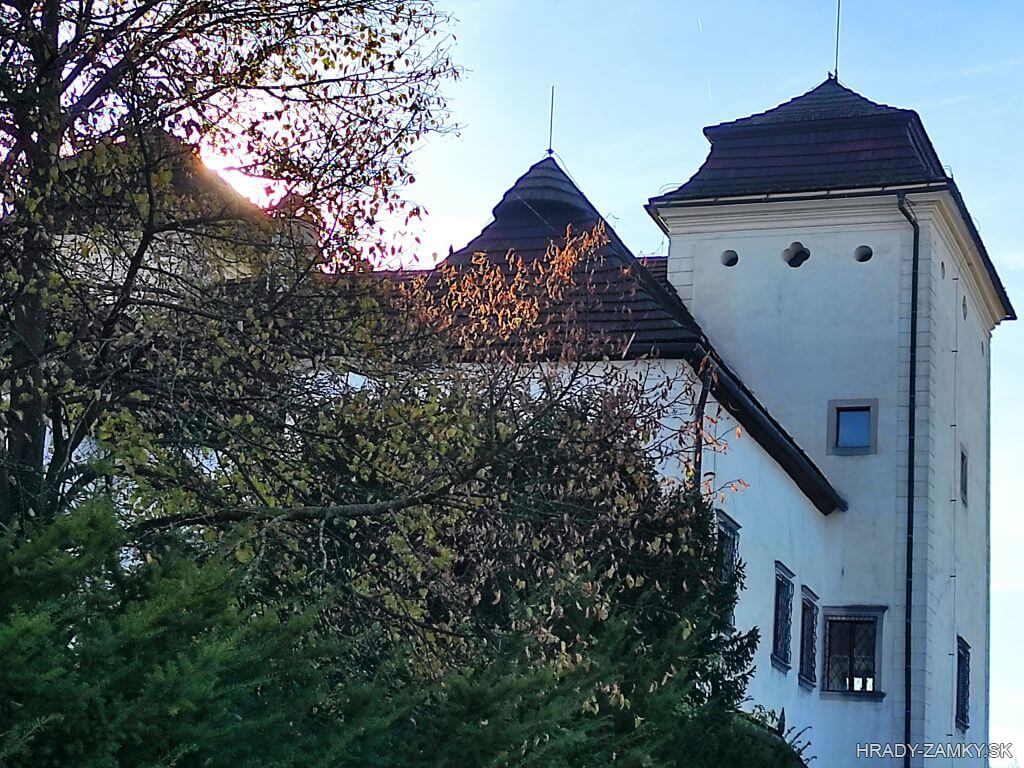
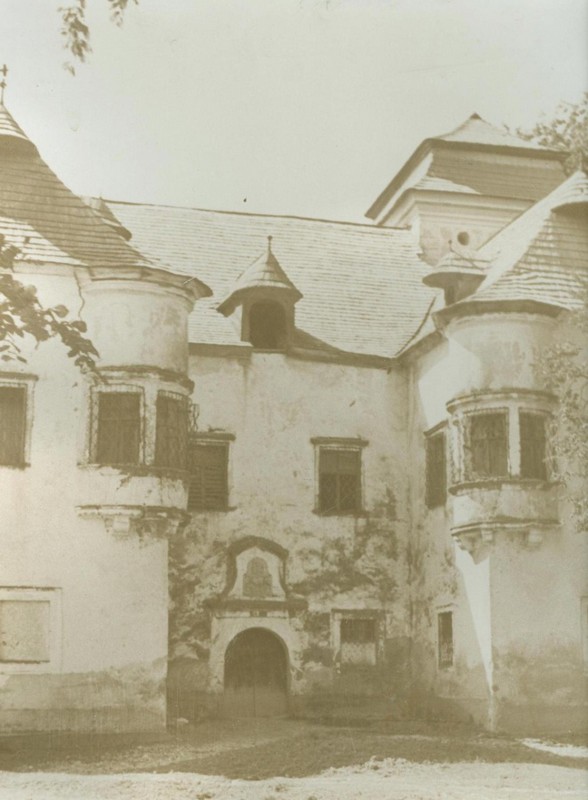
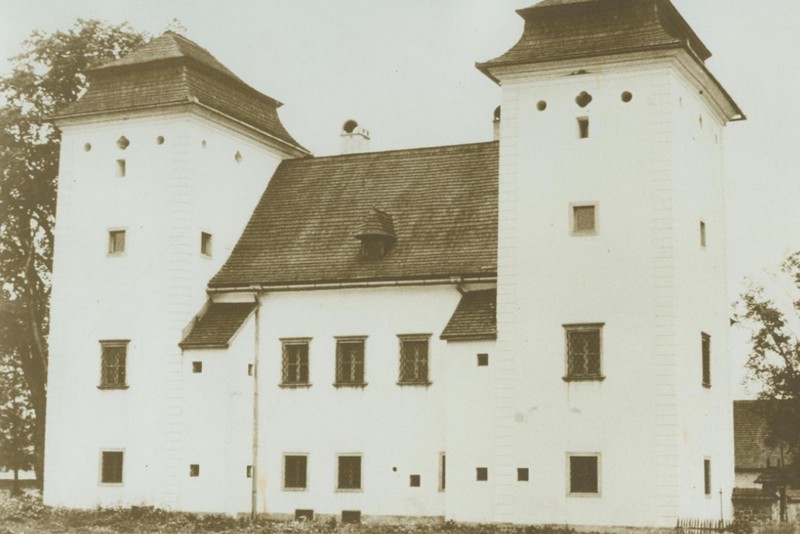
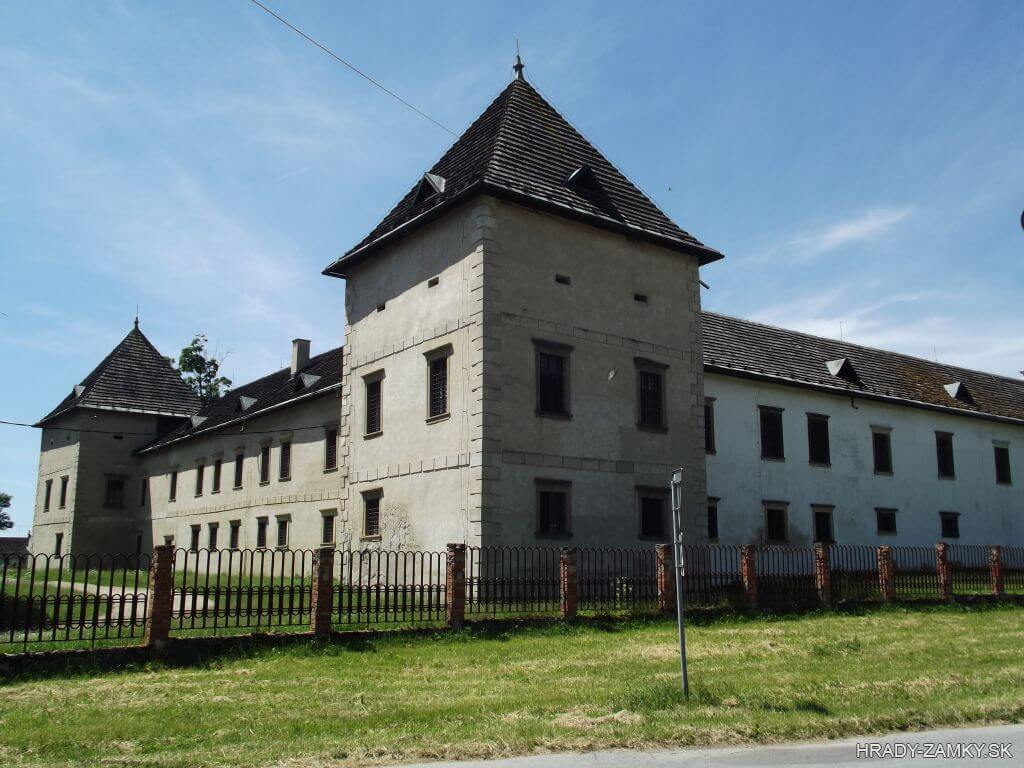
The two-storey manor house has a U-type floor plan. The two wings on the east side enclose the courtyard and on the west side there are two square towers with round arches. There is a well in the courtyard and the granary building ends it from the outside. An arched underpass leads to the courtyard, ending in a risalit with three arches. In the years 1745-1747, the manor house was rebuilt into a Renaissance-Baroque complex with a defensive function.Renaissance architectural details and mansard roofs on the corners and saddle roofs on the remaining parts of the building have been preserved. Rectangular windows have stone shutters and cornices. The interior is dominated by rooms with rolled lunette vaults.
Dvojpodlažný kaštieľ má pôdorys typu U. Dve krídla na východnej strane uzatvárajú nádvorie a na západnej strane sú dve štvorcové veže s okrúhlymi arkiermi. Na nádvorí sa nachádza studňa a z vonkajšej strany ho ukončuje budova sýpky. Do nádvoria vedie klenutý podjazd ukončený rizalitom s tromi oblúkmi. V rokoch 1745-1747 bol kaštieľ prestavaný na renesančno-barokový komplex s obrannou funkciou.Zachovali sa renesančné architektonické detaily a manzardové strechy na nárožiach a sedlové s valbou na zvyšných častiach objektu. Obdĺžnikové okná majú kamenné šambrány a rímsy. V interiéri prevažujú miestnosti s valenými lunetovými klenbami.
History
The manor house was built in the Renaissance style around 1630, probably by order of František Platthy, who was the administrator of the property at the court of Michal Thurzo. However, he died without descendants, so his brother Abraham inherited the mansion with his son Louis.
Later, in the years 1745 to 1747, there was a significant modification and reconstruction into a Renaissance-Baroque complex with a defensive function. The reconstruction was initiated by Abraham Platthy, who, however, deprived the family of finances.
In 1754, stone walls, barns and a granary were completed. In 1839 the manor house was abandoned. At the end of the 19th century, Count Karol Pongracz became the owner of the manor, and remained the last owner until the end of World War II, except for a short period when the manor was in the hands of the Batthyányi family.
In 1946, the manor house was taken by state and records at the time show, that the manor house was already in a desolate condition.
The restoration in the style of purism took place in the years 1952 to 1958, when the building was taken over by Matica Slovenská.
Today, the manor serves as the workplace of the Slovak National Library and the former barn houses a depository of historical book collections.
Kaštieľ bol postavený v renesančnom slohu okolo roku 1630, pravdepodobne na príkaz Františka Platthyho, ktorý bol správcom majetkov na dvore Michala Thurzu. Zomrel však bez potomkov a kaštieľ preto zdedil jeho brat Abrahám so synom Ľudovítom.
Neskôr, v rokoch 1745 až 1747 došlo k jeho výraznej úprave a rekonštrukcii na renesančno-barokový komplex s obrannou funkciou. Rekonštrukciu inicializoval Abrahám Platthy, ktorý však týmto počinom pripravil rodinu o financie.
V roku 1754 boli dostavané kamenné steny, maštale a sýpka. V roku 1839 už bol kaštieľ opustený. Koncom 19. storočia sa majiteľom kaštieľa stal gróf Karol Pongrácz, a zostal ním ako posledný majiteľ až do konca 2. svetovej vojny s výnimkou krátkeho obdobia, keď bol kaštieľ v rukách Batthyányiovcov.
V roku 1946 bol kaštieľ zoštátnený a z vtedajších záznamov vyplýva, že bol vtedy už v dezolátnom stave.
K obnove v štýle purizmu došlo v rokoch 1952 až 1958, keď objekt prevzala Matica Slovenská.
Kaštieľ dnes slúži ako pracovisko Slovenskej národnej knižnice a v bývalej maštali je umiestnený depozitár historických knižných fondov.
Myths and legends
There are no myths available.
K tomuto objektu nie sú dostupné žiadne povesti
Useful information
The manor serves as a depository of the Slovak National Library and is not open to the public
Kaštieľ slúži ako depozitné pracovisko Slovenskej národnej knižnice a nie je prístupný verejnosti
Nearby castles
Slovenské Pravno
Slovenské Pravno
7.7km
castle ruin
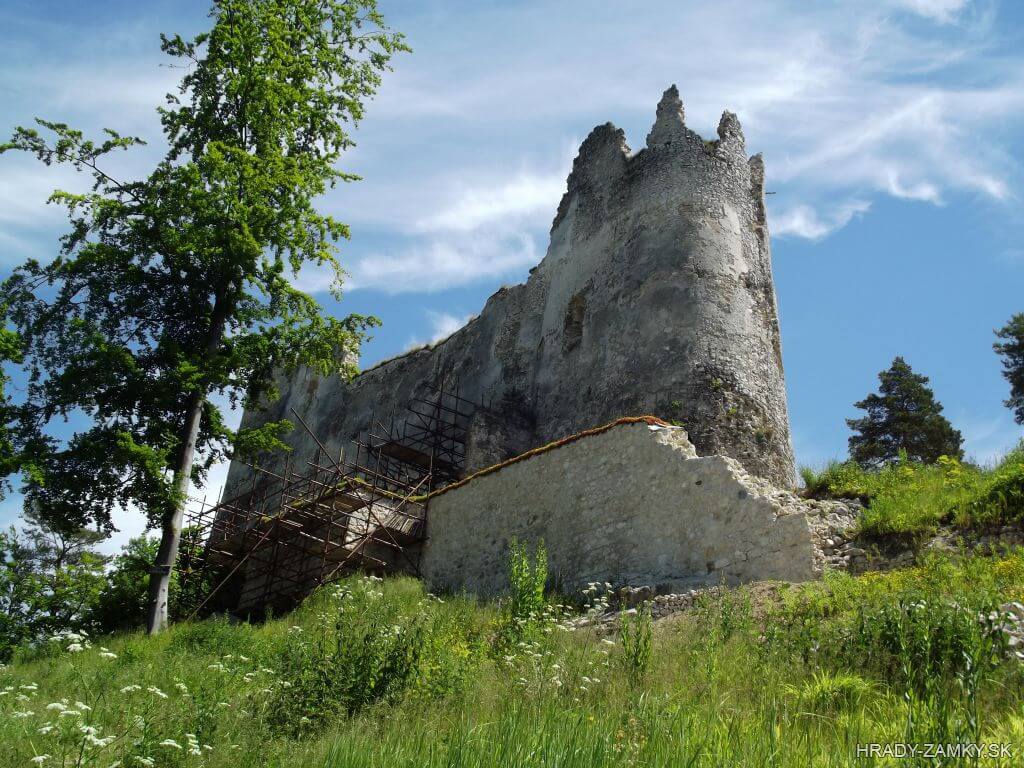
Blatnica
Blatnica
10.2km
castle ruin
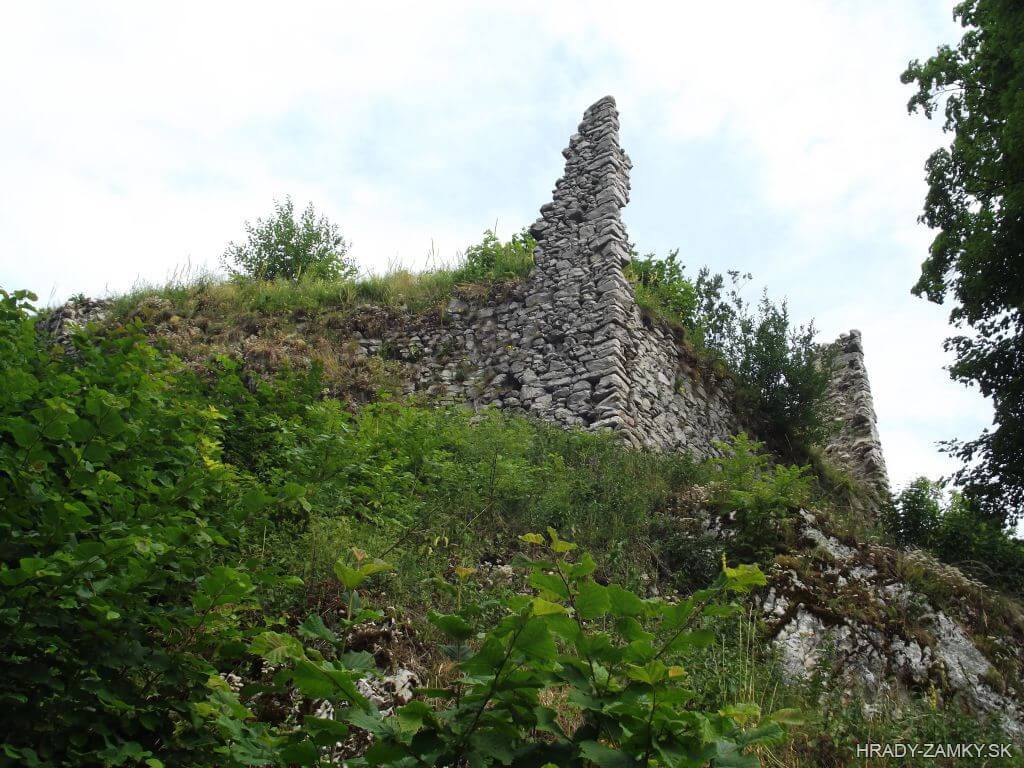
Zniev
Kláštor pod Znievom
11.4km
castle ruin
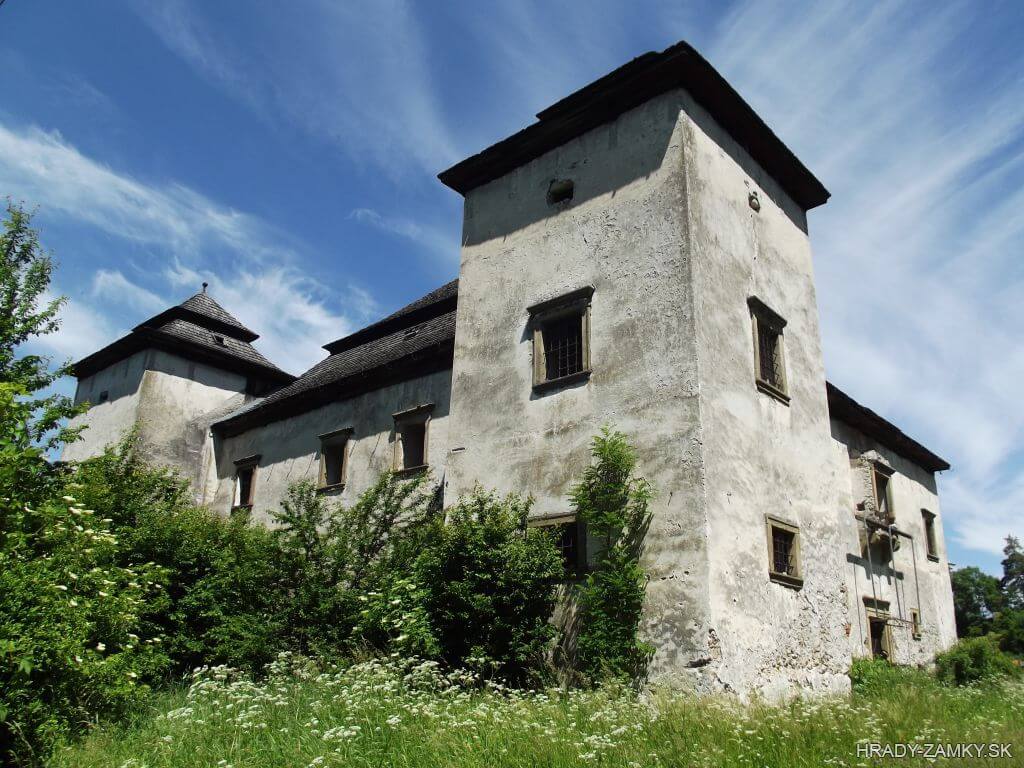
Necpaly
Necpaly
14.6km
manor, mansion
Trebostovo
Trebostovo
16.2km
manor, mansion
Kremnica
Kremnica
19.9km
castle, chateau
Bojnice castle
Bojnice
22.9km
castle, chateau