Bran Castle
Comuna Bran Județul Brașov Romania
castle, chateau
Castelul Bran
Comuna Bran Județul Brașov Romania
castle, chateau
Törcsvár
Comuna Bran Județul Brașov Romania
castle, chateau
Bran Castle is a castle in Bran, 25 kilometres (16 mi) southwest of Brașov
Castelul Bran este un monument istoric și arhitectonic situat în Pasul Bran-Rucăr, la 30 de kilometri de Brașov
A törcsvári kastély Romániában, Erdélyben, Brassótól 30 km-re délnyugatra, a Törcsvári-szoros előtt álló Törcsvár falu mellett helyezkedik el
Previous names
Bran Castle, Castelul Bran, Törcsvár
Description
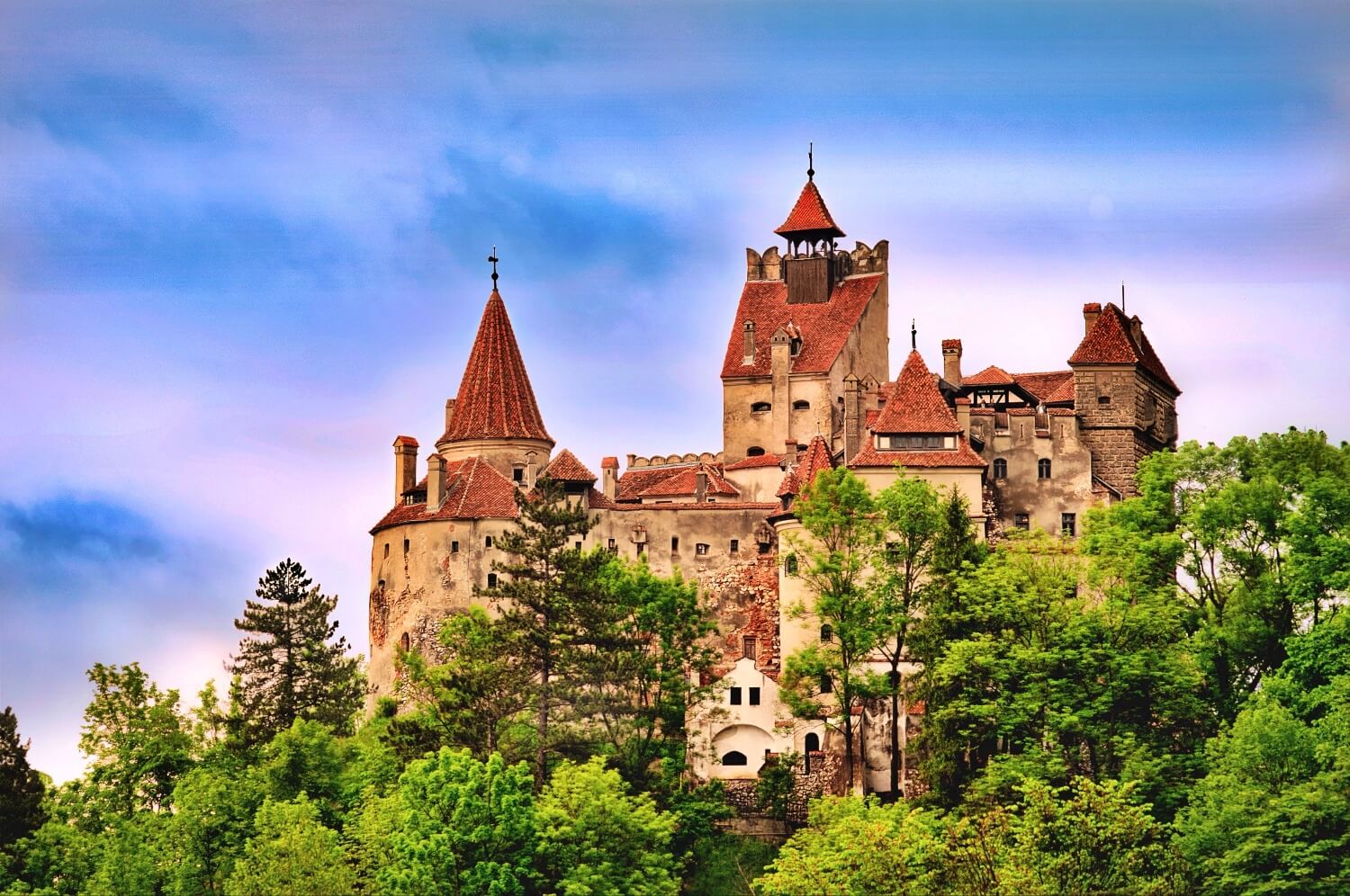
Bran Castle is a castle in Bran, 25 kilometres (16 mi) southwest of Brașov. It is a national monument and landmark in Transylvania. The fortress is on the Transylvanian side of the historical border with Wallachia, on road DN73.
Commonly known outside Transylvania as Dracula's Castle, it is often referred to as the home of the title character in Bram Stoker's Dracula. There is no evidence that Stoker knew anything about this castle, which has only tangential associations with Vlad the Impaler, voivode of Wallachia, the putative inspiration for Dracula. Stoker's description of Dracula's crumbling fictional castle also bears no resemblance to Bran Castle.
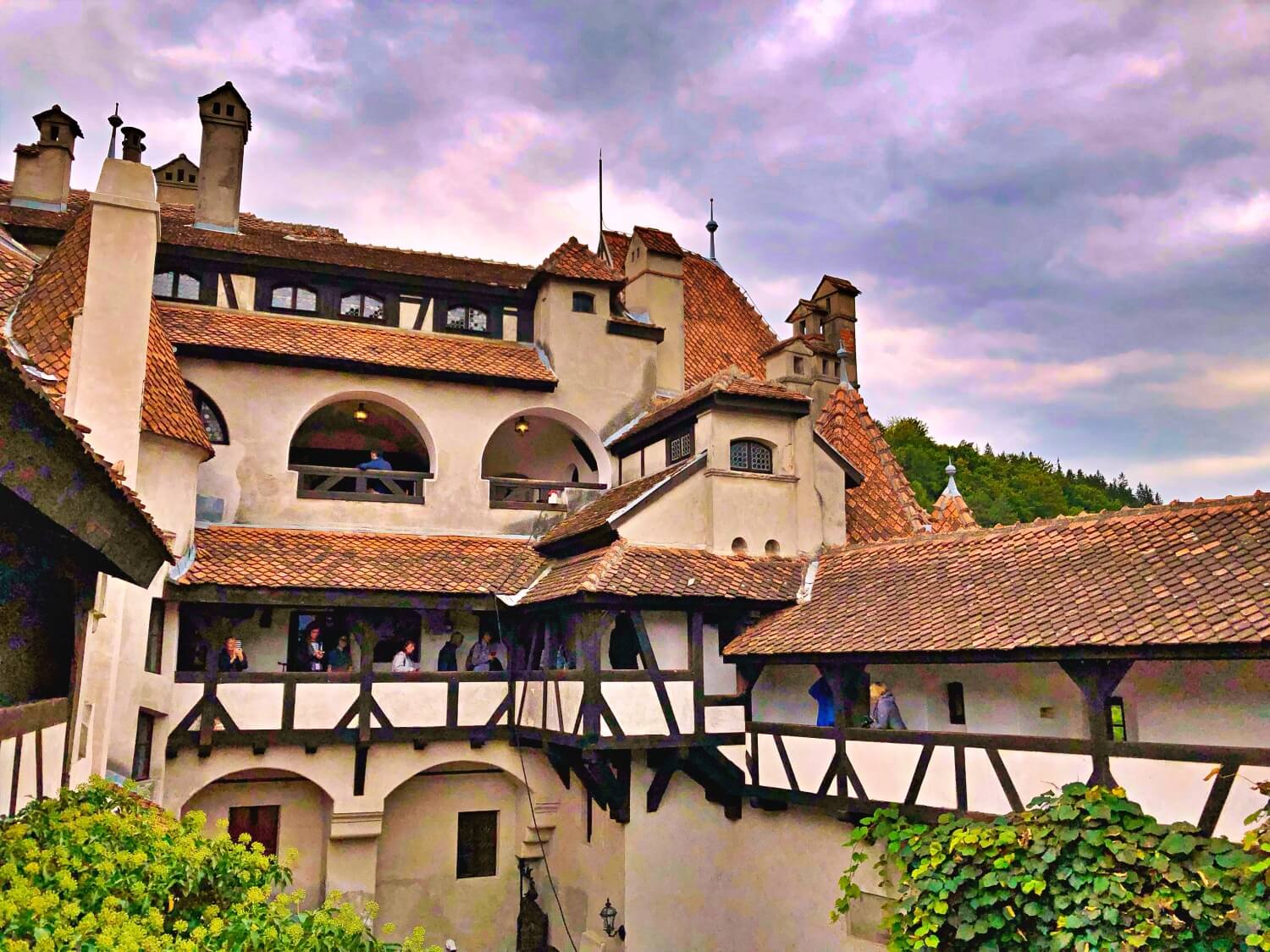
The castle is now a museum dedicated to displaying art and furniture collected by Queen Marie. Tourists can see the interior on their own or by a guided tour. At the bottom of the hill is a small open-air museum exhibiting traditional Romanian peasant structures (cottages, barns, water-driven machinery, etc.) from the Bran region.
History
Wooden castle of the German Order
In 1212, the Teutonic Order built the wooden castle of Dietrichstein as a fortified position in the Burzenland at the entrance to a mountain pass through which traders had travelled for more than a millennium. This castle was destroyed by the Mongols in 1242.
The original name of the castle, Dietrichstein or lapis Theoderici in Latin, lit. "Dietrich's Stone", seems to have been derived from the Comthur (Commander) and regional Preceptor, frater Theodericus, mentioned in a 1212 document. This Dietrich is the probable builder of the castle. A 1509 document confirms that the Törzburg county had once belonged to Commander Dietrich of the Teutonic Order.
Stone castle of the Kronstadt Saxons
The first documented mention of Bran Castle is the act issued by Louis I of Hungary on 19 November, 1377, giving the Saxons of Kronstadt (modern Brașov) the privilege to build the stone castle at their own expense and labour force; the settlement of Bran began to develop nearby. In 1438–1442, the castle was used in defense against the Ottoman Empire, and later became a customs post on the mountain pass between Transylvania and Wallachia. Although many castles of the time belonged to members of nobility, it has been established that Bran Castle was built almost exclusively for fortification and protection of German colonists in Transylvania. It is believed the castle was briefly held by Mircea the Elder of Wallachia (r. 1386–95, 1397–1418) during whose period the customs point was established. The Wallachian ruler Vlad Țepeș (Vlad the Impaler; 1448–1476) does not seem to have had a significant role in the history of the fortress, although he passed several times through the Bran Gorge. At some point Bran Castle belonged to the Hungarian kings, but due to the failure of King Vladislas II (r. 1471–1516) to repay loans, the city of Brașov regained possession of the fortress in 1533. Bran played a militarily strategic role up to the mid-18th century.
Royal residence and aftermath
With the 1920 Treaty of Trianon, Hungary lost Transylvania, and the castle became a royal residence within the Kingdom of Romania after being given to the royal house by the Saxons of Kronstadt-Braşov, who had no more use for it and no interest in financing the time-damaged property. It became the favorite home and retreat of Marie of Romania, who ordered its extensive renovation conducted by the Czech architect Karel Zdeněk Líman [cs]. The castle was inherited by her daughter Princess Ileana who ran a hospital there in World War II. It was later seized by the communist regime with the expulsion of the royal family in 1948.
In 2005 the Romanian government passed a law allowing restitution claims on properties illegally expropriated, such as Bran, and thus a year later ownership of the castle was awarded to American Dominic von Habsburg, the son and heir of Princess Ileana.
On 18 May 2006, after a period of legal proceedings, the castle was legally returned to heirs of the Habsburg family. However, the Romanian state, through the Ministry of Culture, was also to administer it for the next three years.
In September 2007 an investigation committee of the Romanian Parliament stated that the retrocession of the castle to Archduke Dominic was illegal, as it broke the Romanian law on property and succession. However, in October 2007 the Constitutional Court of Romania rejected the parliament's petition on the matter. In addition, an investigation commission of the Romanian government issued a decision in December 2007 reaffirming the validity and legality of the restitution procedures used and confirming that the restitution was made in full compliance with the law.
On 18 May 2009 administration of Bran Castle was transferred from the government to Archduke Dominic and his sisters, Baroness Maria Magdalena of Holzhausen and Elisabeth Sandhofer. On 1 June 2009 the Habsburgs opened the refurbished castle to the public as the first private museum in the country and presented in collaboration with Bran village a joint strategic concept to maintain their prominent role in the Romanian tourist circuit and to safeguard the economic base in the region.
"Dracula's Castle"
Vlad the Impaler
Vlad III Dracula, better known as Vlad The Impaler, was ruler of Wallachia on and off from 1448 to 1476. Other than being colloquially known as the inspiration for Bram Stoker's titular character in the novel Dracula, Vlad III is known for committing brutal acts of war. In his reign he was under constant threat of attack from both Ottoman and Hungarian forces. During an infamous retreat from Ottoman forces, Vlad III had the bodies of his enemies and his citizens alike impaled on large spikes in the field surrounding his country. Not only did his fondness for impaling his victims earn him the nickname "Vlad the Impaler", it also ensured his survival during the retreat, as the Ottoman forces returned home after seeing the grotesque scene Vlad III had prepared for them.
Vlad the Impaler and Castle Bran
Though many myths have been connected to Vlad III in connection with the Dracula myth, most historians agree that Vlad III Dracula never set foot in Castle Bran. Castle Bran was neither a friendly place for Vlad III to visit, nor was it under his rule.
The castle was linked to Vlad III for various reasons. The castle had long been one linked to his imprisonment after he was captured by the Hungarians in 1462. It was believed that he was imprisoned in Castle Bran, but historians now conclude that Vlad III was actually imprisoned in a fortress in Budapest. It is said by historians that Castle Bran was chosen to be the colloquial location of Vlad III's imprisonment as it is a more haunting and dramatic looking structure than other castles of the region. Historians and scholars alike have concluded that Vlad III likely never set foot in the castle. However, as there is a lack of written historical accounts from the region at that time, the idea cannot be completely discredited.
Connection to Bram Stoker's Dracula
During Stoker's research on the region of Transylvania, he came across the brutal accounts of the atrocities committed by Vlad III. It is said he directly used the name Dracula after reading on the subject, but that his inspiration for Dracula was not solely based upon the historical figure. It is said instead that it was largely due to American cinema that Vlad III is considered the primary source of inspiration for the character Count Dracula. Despite there being a connection between Stoker and Vlad III, there is still no known direct connection between Stoker's fictional castle and Bran Castle.
The description of the castle in the novel Dracula does not match Bran Castle. The current connection between Castle Bran and the Dracula legend (in both the sense of Vlad III Dracula and Bram Stoker's novel) is tourism-driven. In the 1970s the Communist Party of Romania was developing a closer relationship to the West. Romania decided to put a wider focus on marketing for tourism to the country and because of the location of Bran Castle, its dramatic architecture, and its supposed connection to Vlad III Dracula and his connection to Bram Stoker's Dracula, the Romanian government decided to market the castle as the "real Dracula Castle".
Castelul Bran este un monument istoric și arhitectonic situat în Pasul Bran-Rucăr, la 30 de kilometri de Brașov.
Istorie
Un document emis de regele Ludovic I al Ungariei (1342-1382) la 17 noiembrie 1377 în Zvolen le confirmă sașilor din Scaunul Brașovului (totaque communitas Saxonum sedis Brassouiensis) dreptul de a ridica, conform promisiunii, pe cheltuiala și cu meșterii lor, o nouă cetate de piatră la Bran (promiserunt novum castrum in lapide Tydrici edificare). Cu această ocazie, regele le promite brașovenilor că, dacă Țara Românească va ajunge "în mâinile noastre", atunci vama va fi mutată de la Rucăr (Ruffa Arbor) la Bran. Referința din textul documentului din 1377 cu privire la o "nouă cetate de piatră" permite deducția că fortificația de piatră, ce urma să fie edificată pe acest loc, a fost precedată de o întăritură de graniță mai veche. Această cetate, probabil din lemn, a fost ridicată de cavalerii teutoni între 1211-1225. Ea îi este atribuită magistrului Theodorikus. În secolul al XIII-lea, teritoriul cetății Bran a fost supus jurisdicției comitatului regal de Alba Iulia.
În anul 1395, Sigismund de Luxemburg, împărat german și rege al Ungariei, a folosit castelul Bran ca bază strategică pentru o incursiune în Țara Românească, în urma căreia l-a îndepărtat pe voievodul Vlad Uzurpatorul, rivalul lui Mircea cel Bătrân, vasalul său.
În 1407, Sigismund îi acordă lui Mircea stăpânirea castelelor Bran (fără domeniul aferent) și Bologa. Branul rămâne sub autoritatea Țării Românești până în 1419.
În anul 1427 castelul Bran a trecut din proprietatea scaunului Brașovului în cea a Coroanei Ungariei, care a finanțat lucrările de fortificare și de extindere. În 1498 cetatea Branului a fost închiriată de regalitatea maghiară către Scaunul Brașovului.
La 1 decembrie 1920, din inițiativa primarului Karl Ernst Schnell, Consiliul Orășenesc Brașov a donat castelul reginei Maria a României, în semn de recunoștință față de contribuția sa la înfăptuirea Marii Uniri. La moartea reginei, în 1938, castelul a fost moștenit de către fiica sa preferată, principesa Ileana, căsătorită cu arhiducele Anton, membru al fostei familii imperiale de Habsburg. În timpul celui de-al Doilea Război Mondial, Ileana s-a întors cu familia în țară și a locuit la Bran. A înființat un spital pentru victimele războiului.
După 1948 Castelul Bran a fost naționalizat și a intrat în proprietatea statului român. Castelul a fost deschis vizitelor publice începând cu 1956, fiind amenajat ca muzeu de istorie și artă feudală. În 1987 a intrat în restaurare, lucrare finalizată în linii mari în 1993. Castelul se redeschide ca muzeu și reintră în circuitul turistic.
La 18 mai 2006, după o perioadă de proceduri juridice, castelul este retrocedat legal moștenitorilor din familia de Habsburg. Cu toate acestea, statul român, prin Ministerul Culturii, îl va administra tranzitoriu și în următorii trei ani.
La data de 1 iunie 2009, castelul intră pe deplin în posesia moștenitorilor Principesei Ileana: arhiducele Dominic de Habsburg, arhiducesa Maria Magdalena Holzhausen și arhiducesa Elisabeta Sandhofer.
Arhitectură
Inițial, Castelul Bran a fost o construcție militară de apărare având la bază forma unui patrulater neregulat. În timp, cetatea a suferit numeroase modificări, printre care: adăugarea turnului de sud (în 1622, după planurile principelui Gabriel Bethlen), construirea unui turn dreptunghiular la est, iar între 1883 și 1886, acoperișul a fost îmbrăcat cu țiglă.
Cetatea a fost transformată în reședință regală în anul 1920, odată cu intrarea în proprietatea reginei Maria, iar în perioada 1920 - 1929 s-au realizat cele mai importante lucrări de restaurare.
Prezent
Castelul Bran se situează la mai puțin de 30 km de Brașov, pe șoseaua ce pornește din vechiul cartier Bartolomeu și leagă Brașovul de Câmpulung. Castelul Bran este construit pe o stâncă, într-un punct cheie din punct de vedere strategic.
În prezent, în muzeul de patru etaje sunt expuse colecții de mobilier, costume, arme și armuri, iar Domeniul Bran cuprinde, de asemenea, Parcul Regal cu cele două lacuri, Casa de ceai, Casa administratorului și Casa Principesa Ileana.
În anul 2000, Castelul Bran a fost revendicat de arhiducele Dominic de Habsburg și de surorile sale, Maria Magdalena Holzhausen și Elisabeth Sandhofer, moștenitorii principesei Ileana, de la care castelul fusese în 1948 trecut în proprietatea statului.
În luna mai a anului 2006, aceștia au devenit proprietarii castelului și ai domeniului aferent, în urma unei decizii guvernamentale de retrocedare.
Statul român a păstrat administrarea castelului pentru încă 3 ani, până în 18 mai 2009. Înaintea retrocedării, Ministerul Culturii a dispus mutarea colecțiilor aparținând statului român de la Castelul Bran la Vama Medievală. Pentru a putea redeschide muzeul, familia de Habsburg a remobilat castelul cu obiecte din colecția personală. Redeschiderea oficială a muzeului s-a realizat la 1 iunie 2009.
Din 1 iunie 2018, noul sediu al Muzeului Național Bran este găzduit de imobilul din str. Aurel Stoian nr. 14, din Bran.
A törcsvári kastély Romániában, Erdélyben, Brassótól 30 km-re délnyugatra, a Törcsvári-szoros előtt álló Törcsvár falu mellett helyezkedik el. A kastély ma múzeumként működik, mellette pedig egy kis falumúzeum található. A romániai műemlékek jegyzékében a BV-II-m-A-11610.01 sorszámon szerepel.
Története
A vár I. Lajos magyar király engedélyével, 1377-ben épült a mellette elhaladó, fontos kereskedelmi út ellenőrzésére és a havasalföldi román vajdák betörései ellen. Fekvéséből adódóan a nehezen bevehető várak közé tartozott. Feltehető, hogy korábban is volt itt valamilyen erősség ez azonban a havasalföldi vajdaság megszilárdulása után már nem láthatta el kielégítően feladatát. Egyes szakírók szerint e korai várat a II. Endre király által 1211–1215 között betelepített német lovagok építették, a legújabb kutatások azonban ezt nem tartják valószínűnek.
Az uralkodó fenntartotta magának a törcsvári várnagyok kinevezésének jogát, és a későbbiekben is rendelkezett bizonyos birtokokkal a várban és a hozzá tartozó falvakban. Törcsvár neve Hunyadi János 1448-ban kelt oklevelében tűnik fel ismét, melyben parancsot ad ottani várnagyainak. 1498-ban Ulászló király Brassónak adta zálogba a várat, de kikötötte, hogy várnagya mindenkor magyar legyen. Brassó a vár megerősítésével nem sokat törődött, bár 1512-ben 100 forintot fizetett ki Zeller Mátyás építőmesternek a javításokért.
1512-ben a várat Brassó város 100 forint értékben felújíttatta, Zeller Mátyás építőmester vezetésével. 1530-ban Mózes vajda küldött sereget a vár elfoglalására, de a székelyek nagy vérveszteségek árán megvédték. Az ostrom után a brassóiak azonnal megkezdték a sérült falak kijavítását, a munkálatok 1535-ig tartottak. A brassóiak 1568-ban elérték, hogy Törcsvár véglegesen az övék legyen. Ezért János Zsigmond fejedelem évi 200 forint adót vetett ki rájuk.
Miután a vár Brassó kezére került, határvédő szerepe csökkent. Amikor Báthory Gábor a vele ellenséges brassóiak ellen fordult, a rozsnyói vár elfoglalása után, 1612. április 5-én Törcsvár alá vonult, mire a szász Henklischer János várnagy azonnal átadta a vár kulcsait a fejedelemnek. Brassó még ugyanebben az évben hűséget fogadott a fejedelemnek, mire a várat is visszakapta. II. Rákóczi György 1660-ban, amikor harmadszorra is Erdély fejedelme lett, tábornoka, Mikes Mihály seregével az éj leple alatt váratlanul megjelent a vár alatt. Székely katonái létrákon megmászták a falakat, és Törcsvárt elfoglalták.
1690-ben Thököly Imre akarta bevenni az erősséget, de Brassóból érkezett segítséggel a császáriak megvédték. A 18. század végén már csak egy porkoláb és 12 városi darabont tartózkodott benne. 1916. december 30-án IV. Károly és felesége Zita királyné került az osztrák-magyar trónra, ekkor Brassó szabad királyi város tanácsa a törcsvári kastélyt koronázási ajándékként Zita királynénak adományozta. 1918-ban román fennhatóság alá került, majd 1920-ban Karl Ernst Schnell brassói polgármester Mária román királynénak ajándékozta. A királyné átépítette és romantikus kiegészítésekkel restauráltatta, majd leányának, Ilona hercegnőnek hagyta örökségül, aki 1931. július 26-án ment férjhez Habsburg Antalhoz.
1948-ban – a királyi család száműzetése után – a törcsvári kastély a román állam tulajdonává vált. Az államosítás után kifosztották és sorsára hagyták a kastélyt, restaurálása csak 1987-ben kezdődött, a munka legnagyobb része 1993-ra készült el. A román visszaszolgáltatási törvény alapján, a már 50 éve múzeumként működő romantikus várkastélyt Ilona hercegnő gyermekei – a Bécsben élő Mária Magdolna és az amerikai építészként is ismert Domonkos – vették át a román kulturális minisztériumtól 2009-ben.
Jelenleg múzeum működik benne. A popkultúra Drakula gróf lakhelyeként tartja számon, bár sem a könyvbeli Drakula gróf, sem a vele azonosított Vlad Țepeș nem köthető ehhez a helyhez.
A kastély leírása
A kastély 100 m magas hegyen épült, trapéz alaprajzú, É–D-i irányú belsőtornyos vár. A vár egyetlen bejárata a déli várfalból kiugró, négyszög alaprajzú, ágyúlőréses, vastag falú kaputorony emeleti részén nyílik, melyhez eredetileg elmozdítható falépcső, ma kőlépcső vezet. A kaputornyon keresztül a vár udvarára tehát kocsival vagy lóval bejutni nem lehetett.
A legkeskenyebb és egyben a leginkább védelemre szoruló oldala a széles árokkal megerősített keleti, melyet 4 m vastag kőkockákkal borított, tömör pajzsfal zár le. Ennek tetején a védők számára védőfolyosó készült. A pajzsfal mögött álló palota kétemeletes, benne egykor tizenegy lakóhelyiség volt található, melyek közül a legnagyobb a lovagterem lehetett.
Az északi oldalon, a szikla tetején négyszög alakú, meredek félfedéllel borított torony épült, mely kívülről magasnak látszik, de belülről csak kétemeletnyi. Mellette egy hét emeletes, befelé keskenyedő, négyszögű bástya épült, melynek tetőrészéből kis figyelőtornyocska nyúlik ki. A nyugati, kerek torony aljában volt az ablaktalan börtön, ahová csak térden csúszva lehetett bejutni. Földszintjén a darabontok szobája volt, a torony közelében pedig a kb. 70 m mélységű kút.
Törcsvárnak egy elővára is volt a völgyben, mely a szorost zárta le. A hágó útja keresztülhaladt rajta, így itt ellenőrizték, vámolták az országba érkezőket. Gazdasági-, és lakóépületek is álltak benne, mivel a felsővár túl kicsi volt ezek elhelyezésére. Az elővár lőréses falaiból még napjainkban is jelentős részek állnak, melyek jól érzékeltetik egykori kiterjedését.
Erdély egyik legépebben megmaradt, középkori jellegét is megőrző kastélyának falai teljes épségükben, többször kijavítva ma is állnak. A közelmúltban teljes mértékben restaurálták, a belső helyiségekben a román királyi család emléktárgyaiból állandó kiállítás tekinthető meg.
Useful information
5.00 RON
45.00 RON
Seniors: 35.00 RON
Students: 25.00 RON
Children: 10.00 RON
0 - 7 years: free
- WC
- Lift
- WiFi
office@bran-castle.com
- Pets are not allowed
- Accessible for wheelchairs
- The Castle houses a museum
- Gift shop
-
-
External links
Nearby castles
Râșnov Fortress
Orașul Râșnov
11.5km
fortress
Cristian Fortified Church
Comuna Cristian
15.1km
fortress
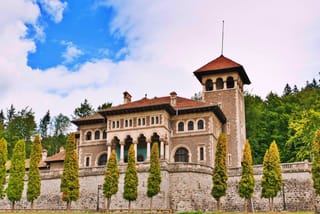
Cantacuzino Castle
Orașul Bușteni
17.7km
castle, chateau
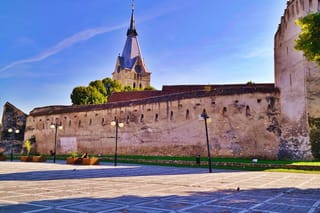
Evangelical Fortified Church
Municipiul Codlea
21.5km
fortress
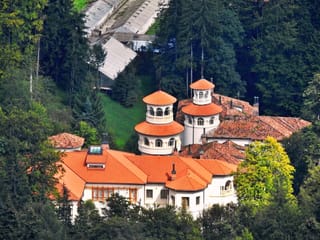
Sinaia Foisor Hunting House
Sinaia
21.6km
castle, chateau

Pelișor Castle
Orașul Sinaia
21.8km
castle, chateau
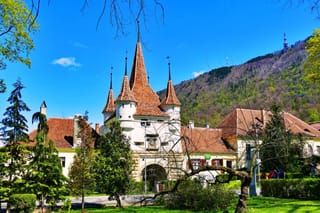
Catherine's Gate
Municipiul Brașov
22.0km
castle, chateau