Curciu fortified church
Comuna Dârlos Județul Sibiu Romania
fortress
Biserica fortificată din Curciu
Comuna Dârlos Județul Sibiu Romania
fortress
Küküllőkőrösi erődtemplom
Comuna Dârlos Județul Sibiu Romania
fortress
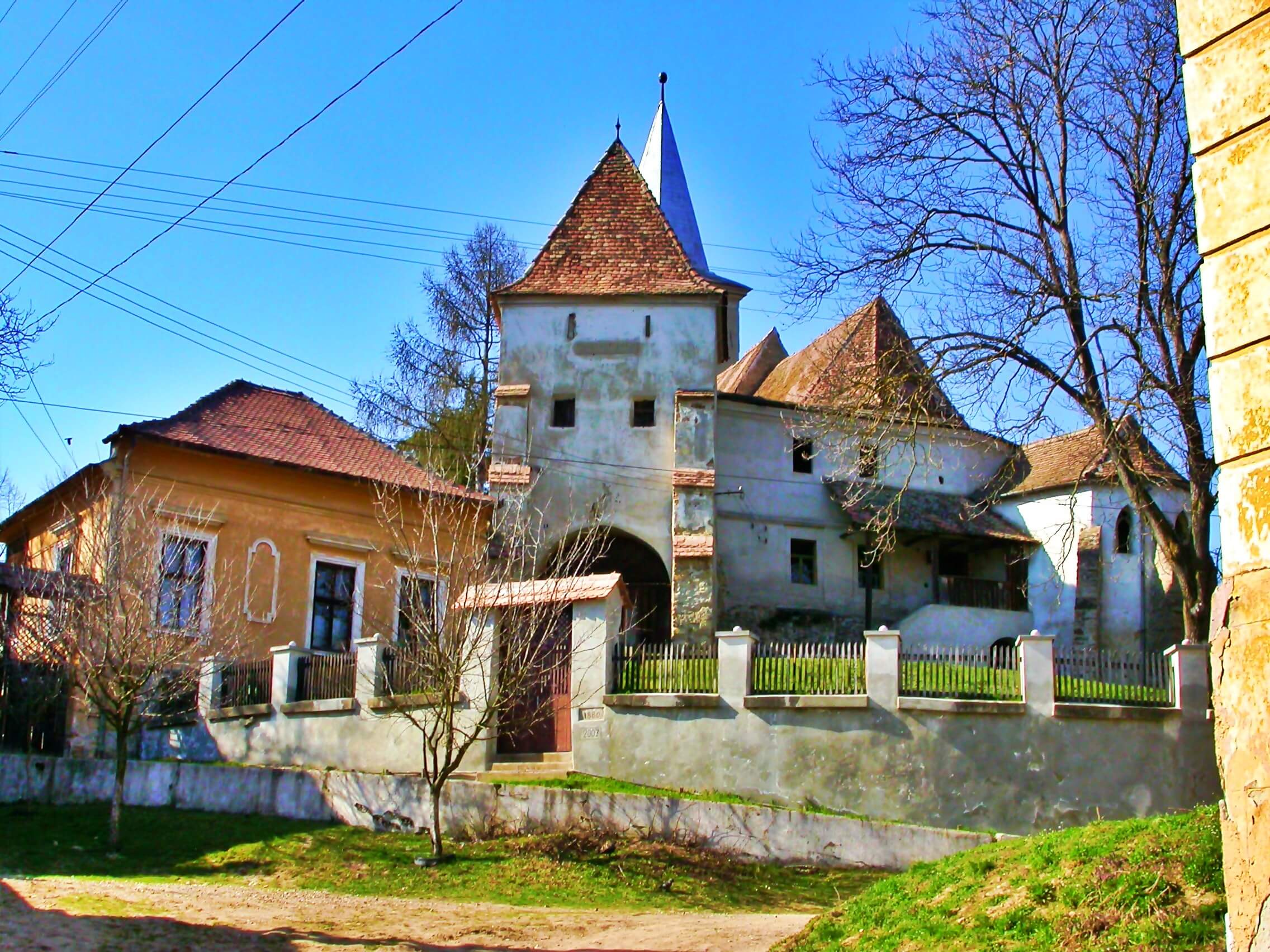
The church in Curciu has remained almost unchanged since its construction in the beginning of the 14th century
Biserica evanghelică fortificată din Curciu, comuna Dârlos, județul Sibiu, a fost ridicată în prima jumătate a secolului al XV-lea; biserica figurează pe lista monumentelor istorice 2010, cod LMI SB-II-a-A-12371
Küküllőkőrös gótikus temploma a XIV
Previous names
Curciu fortified church, Biserica fortificată din Curciu, Küküllőkőrösi erődtemplom
Description
The church in Curciu has remained almost unchanged since its construction in the beginning of the 14th century. The remarkable value of the three-aisle basilica with polygonal chancel lies in its outstanding stone masonry. In the chancel the well preserved mullioned windows with tracery can be admired as well as the typical Gothic windows in the tower. The sculptures ornamenting the portals, tower, windows, buttresses, as well as the capitals, keystones, sedilia and the door of the sacristy date back to around 1427. At the beginning of the 19th century the side aisles were heightened, thus obtaining a cross section of a hall church. At the same time both the main nave and the side aisles were covered with a flat, stuccoed ceiling. The tower’s defence level was demolished and replaced in 1913 by the present, with zinc sheet covered spire. Today the ring wall with the gate tower initially used as entrance, as well as a Gothic chapel integrated in this wall still stands as part of the fortified ensemble.
Place and surroundings
A special treasure among the Transylvanian villages is Curciu. This romantic place is situated in the wine-growing region northeast of Mediaş, between hills and forests. The place owes its lush green vegetation to the location between the two rivers Târnava Mare and Târnava Mică and has been nicknamed “Mesopotamia”.
The fortified church of Curciu was built on a hill in the centre of the village. The entrance leads through the gate tower. The chapel inside the fortification has an ossuary, a room in which the bones of the deceased were kept in the past.
The church of Curciu contains many typical for the Mediaş region beautiful architectural sculptures from the 15th Century. The richly decorated western façade shows a bird, a mask and a monster with a human head between the paws.
https://kirchenburgen.org/
Biserica evanghelică fortificată din Curciu, comuna Dârlos, județul Sibiu, a fost ridicată în prima jumătate a secolului al XV-lea; biserica figurează pe lista monumentelor istorice 2010, cod LMI SB-II-a-A-12371.
Localitatea
Curciu era în antichitate o așezare dacică, un simplu sat, care ocupa un hectar din locul numit astăzi „La Fântâni". Ea se suprapunea unor așezări din epoca bronzului și din cea a fierului timpuriu.
În 1337, un sas pe nume „Petro de Keuruz" este pomenit într-un document ca martor într-un proces, localitatea sa de obârșie fiind desemnată ca „senioribus sediuin de Medies", adică parte din Scaunul Mediașului.
Biserica și fortificația
În prima jumătate a secolului al XV-lea a fost ridicată biserica-sală. Biserica Evanghelică-Luterană, frumos exemplar de arhitectură gotică târzie, cu o singură navă și cu un cor cu două travee sprijinite de contraforți, a fost construită în stil gotic și este lipsită de turn. În interiorul corului au fost degajate în 1975 picturi în benzi ornamentale și figurile a doi sfinți, pictate la începutul secolului al XVI-lea. Remarcabile sunt ancadramentele ferestrelor, bogat dantelate si fragmentele de pictura murală de pe fațadele corului: scene din patimirile lui Isus și Sf. Cristofor, de mari dimensiuni (sec. XVI, înainte de 1544). Relicte ale unor stele funerare romane zidite în pereți, una dintre acestea, reprezentând taurul lui Poseidon a fost la originea unei confuzii cu o posibilă prezență a stemei Moldovei pe pereții bisericii.
Altarul, orga, amvonul și stranele datează din sec al XIX-lea. Orga bisericii, care a fost construită în 1844 de Wilhelm Maetz și restaurată în 1906 de Andreas Scherer, este murdară, neîngrijită, dar nedeteriorată și în stare de funcționare.
Dispărută în zilele noastre, fortificația poate fi doar dedusă din topologia locului. O gravură din secolul al XIX-lea înfățișa biserica înconjurată de o curtină și se pare că la începutul secolului al XX-lea se păstra încă o parte a incintei, cu cămări de provizii.
Între 1969-1971 sunt realizate lucrări de consolidare la incintă, capelă și acoperișul bisericii, iar între 1995-1996, este reparat acoperișul turnului. În prezent (2013) au loc lucrări complexe de consolidare și renovare.
Küküllőkőrös gótikus temploma a XIV. század első feléből származik. Háromhajós csarnokrendszerben épült templom.
A mellékhajók egyenlő magasságúak a főhajóval, mennyezetük egyenes, bár egykor boltozatos volt. A főhajótól csúcsíves árkádok választják el őket. A bordák szépen faragott zárókövekre futnak. A szentély két ablakát gótikus kőrácsok töltik ki.
A nyugati kapu, csúcsíves öt pár oszlopainak fejezetein majmok, emberi maszk, szőlőfürtök, disznófej, kutya bibliai jelképek láthatóak. A kőfaragások 1425-1530 között készültek. A déli kapu később készült, de ugyancsak szépen díszített. A vastag falú torony beépül a főhajóba, a mellékhajók ugyanis közre veszik a tornyot. Eredeti ovális kőkerítése nem maradt meg, de keleti oldalán még áll a boltíves bejáratnál látható kaputorony.
https://www.welcometoromania.eu/
Useful information
Free
5.00 RON
Information tables
-
-
Nearby castles
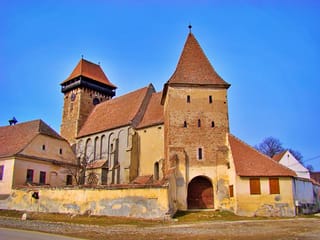
Băgaciu fortified church
Bagaciu
3.9km
fortress
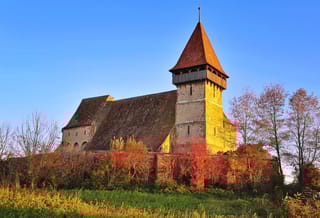
Brateiu Evangelical fortified church
Comuna Brăteiu
7.8km
fortress
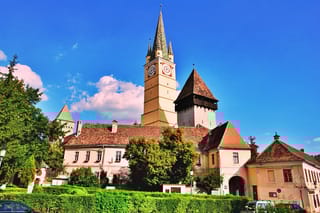
St. Margaret's Church (Mediaș)
Municipiul Mediaș
9.6km
castle, chateau
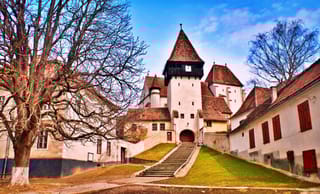
The fortified church from Bazna
Comuna Bazna
10.5km
fortress
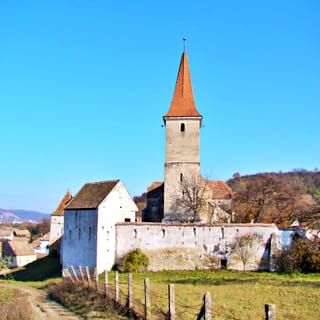
Şaroş pe Târnave Fortified Church
Orașul Dumbrăveni
11.5km
fortress
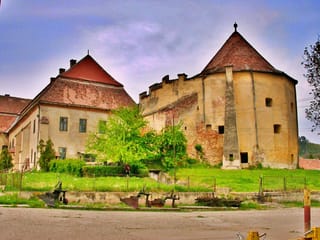
Apafi castle
Orașul Dumbrăveni
13.5km
castle, chateau
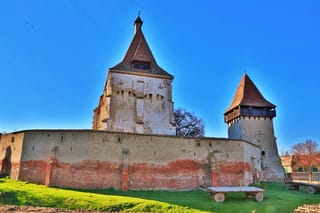
Boian fortified church
Bazna
14.2km
fortress