Tower of Penegate
Carreiras Braga Portugal
castle, chateau
Torre de Penegate
Carreiras Braga Portugal
castle, chateau
The Tower of Penegate (Portuguese: Torre de Penegate), is a 3-storey quadrilateral tower, located in the civil parish of São Miguel de Carreiras in municipality of Vila Verde, in the northern region of Portugal
A Torre de Penegate localiza-se na freguesia de São Miguel de Carreiras, no concelho de Vila Verde, distrito de Braga, em Portugal
Previous names
Tower of Penegate, Torre de Penegate
Description
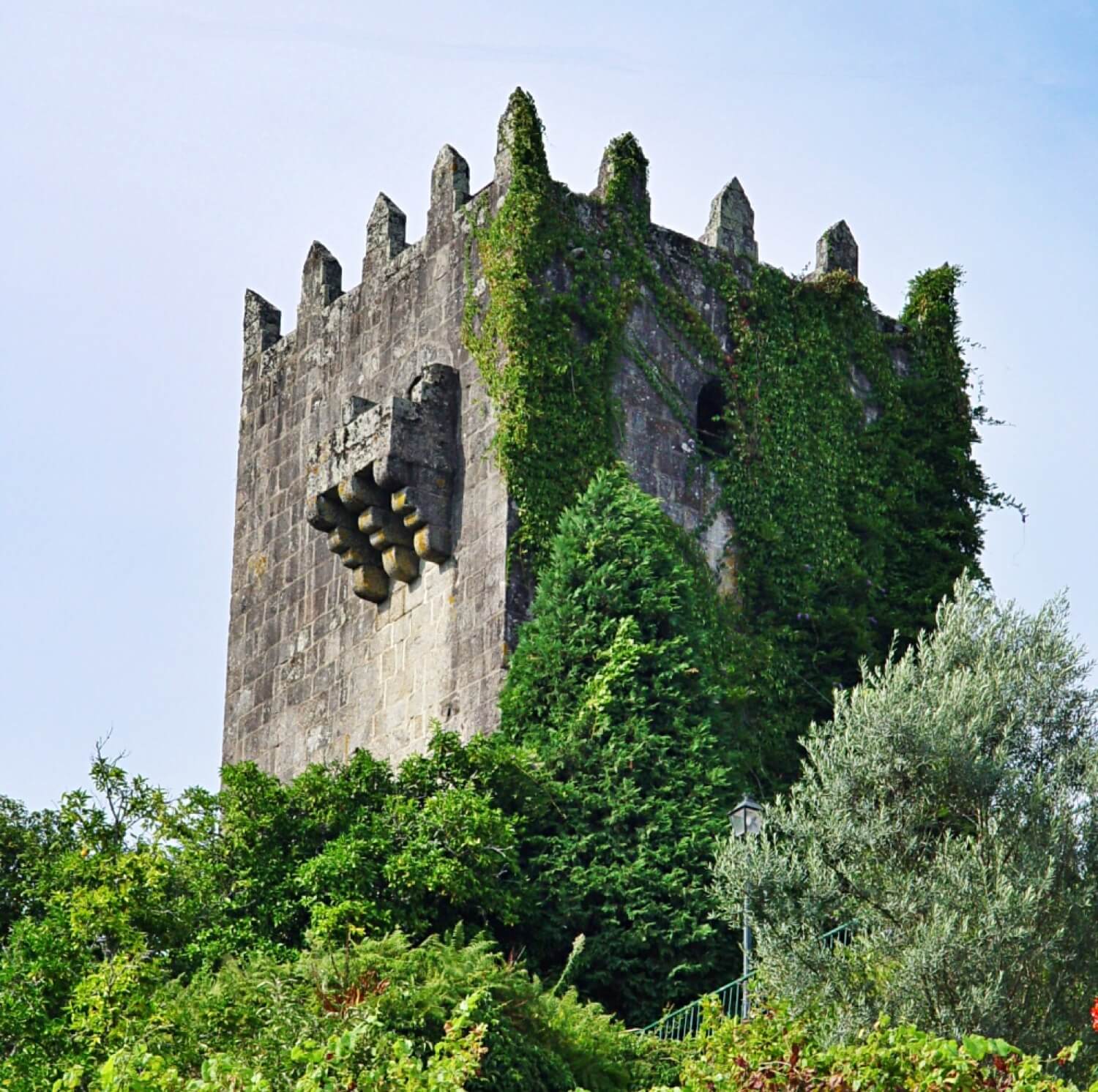
The Tower of Penegate (Portuguese: Torre de Penegate), is a 3-storey quadrilateral tower, located in the civil parish of São Miguel de Carreiras in municipality of Vila Verde, in the northern region of Portugal.
History
The first reference to the toponymy of Penegate came in 1064, substituting the former name of Penela. Regardless, the area continued to pertain to a dominant hilltop, where, later, the Gothic tower known as Penegate was founded. There are still some concerns about whether this structure had a Roman, or proto-Roman, foundation, normally attributed to D. Egas Pais de Penegate, a trusted man of Count Henry of Burgundy, as defended by some authors.
The tower was begun in 1322, by Mem Rodrigues de Vasconcelos, alcalde-mor of the Castle of Guimarães, after receiving a royal licence (for a domus fortis) from King Denis on 5 October 1322. Mem Rodrigues requested the dispatch, owing to problems found in occupying his title in the region of Entre-Homem-e-Cávado, the zone where royal judiciary had difficulties in imposing is authority owing to his uncle, Pedro Anes de Vasconcelos.
By 1668, Miguel Valadares, who was then the proprietor of the tower, died. The Chapel of Nossa Senhora da Penha was constructed in the 17th century, under his initiative (from the inscription along the principal facade). This nobleman, deacon of Guimarães and judge in Braga, was the descendant and heir of the building, and incorporated the chapel as a burial site.
In 1907, the tower was acquired by the father of the current property-owner.
In 1939, a house was constructed along the lateral wall of the tower.
The tower's age meant that local authorities were interested in classifying the tower, as a form of attracting local activity to the region. On 20 August 1986, municipal authorities deliberated a motion to propose to the IPPC, that the tower be listed as a National Monument. This was followed on 15 November 1988, with a proposal by the Câmara Municipal of Vila Verde to classify the structure. The process was opened by the president of the IPPC on 20 June 1990. But, many of these initiatives met with success, and Penegate remained unclassified by the beginning of the 20th century.
On 27 December 2011, the DRCNorte (Direcção Regional de Cultura do Norte) re-proposed classifying the structure as an MIP, or Monumento de Interesse Público (Monument of Public Interest). The proposal was met with a favorable response from the National Council for Culture SPAA on 23 January 2012. On 28 September 2012, an announcement (13494/2012), was published in the Diário da República (Série II, 189), relative to the decision on classifying the monument as MIP, and established a special zone of protection for the keep.
Architecture
The tower is located in a rural context, alongside a house that was recently constructed, in addition to the Chapel of Penha. It is a Baroque temple, of small dimension, conserving a modern triptych altarpiece, with the image of the Virgin Mary in the centre, flanked by Saint John and Saint Anthony, in painted panels.
The tower is located over a clifftop, over a hilltop escarpment that dominates the valley of Febros. Access to the site is made along a very steep pedestrian trail. Along the valley, there once existed a medieval road, based on a former Roman via, which connected Braga and Valença.
A rectangular tower, consisting of a three-story facade, with rooftop terrace. The entrance-way, consisting of a Roman arch, is situated in the level ground, although it is likely that access was made by a movable staircase. The first floors has several high and long cracks. In the western facade is a balcony with machicolations and, along the other facades are tall rectangular windows. Along the eastern wall is a window with rounded frame.
Within the interior of the tower are several inscriptions, likely Gothic in nature, but of complex lettering.
A Torre de Penegate localiza-se na freguesia de São Miguel de Carreiras, no concelho de Vila Verde, distrito de Braga, em Portugal.
História
Antecedentes
A primitiva toponímia do lugar foi "Penela", sendo o de "Penegate" utilizado desde 1064. Por essas razões, os estudiosos acreditam que o topónimo esteve associado, em suas origens, à ocupação deste afloramento rochoso elevado, de difícil acesso ("penha" ou "pena"), embora não haja informações ou vestígios sobre a sua primitiva defesa, em posição dominante sobre o território envolvente, possivelmente uma torre em estilo românico erguida por D. Egas Pais de Penegate, valido do Conde D. Henrique de Borgonha.
A torre medieval
A atual estrutura foi erguida por Mem Rodrigues de Vasconcelos, cavaleiro de D. Dinis na guerra que opôs este monarca ao seu filho, o futuro rei D. Afonso IV. D. Dinis autorizou a construção de uma "domus fortis", em documento datado de 5 de Outubro de 1322, onde se refere que ele "havia proibido a construção destas casas fortificadas a não ser com sua expressa autorização".Esta fortificação tinha a função de proteger Mem Rodrigues no cargo que então ocupava, o de Meirinho-mor do soberano na região de Entre-Homem-e-Cávado, onde a autoridade real era contestada por Pedro Anes de Vasconcelos, tio de Mem Rodrigues.
Do século XVII aos nossos dias
Em princípios do século XVII o então proprietário Miguel Valadares, cónego de Guimarães e desembargador em Braga, fez erguer a Capela de Nossa Senhora da Pena para sua sepultura, conforme inscrição epigráfica na fachada principal.
No início do século XX, em 1907, a torre passou para a família dos actuais proprietários, tendo tido lugar, em décadas posteriores, obras de consolidação e restauro. Entre elas, foram colocadas ameias em 1939, o que lhe descaracterizou a feição original, sendo edificado um segundo corpo, de carácter residencial.
O conjunto encontrou-se em Vias de Classificação por Despacho de 24 de Setembro de 1990.
Em 5 de Abril de 2013 foi classificada como monumento de interesse público.
Características
A torre apresenta planta retangular, em aparelho de granito. É dividida internamente em três pavimentos.
A portada, em arco apontado, rasga-se na face Leste, acima do nível do solo. Era primitivamente acedida por uma escada de madeira amovível, da qual ainda restam os apoios. Acredita-se que essa entrada tenha sido guarnecida por um alpendre, de que seriam testemunhos as duas mísulas que enquadram a portada. Na face Oeste, ao nível da janela do último pavimento, um balcão de matacães permitia o tiro vertical sobre o único acesso que leva à torre. O seu topo é coroado por ameias.
A Capela de Nossa Senhora da Pena, de pequenas dimensões, em estilo barroco, conserva o retábulo-mor contemporâneo, em estrutura tripartida, com a imagem de Nossa Senhora ao centro, e as de São João e Santo António, em painéis pintados, de ambos os lados.
Useful information
Free
Free
Great view
-
Nearby castles
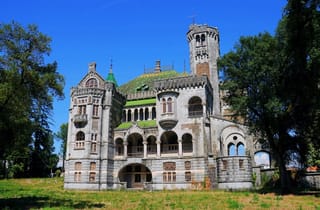
Castle of Dona Chica
Palmeira
9.4km
castle, chateau
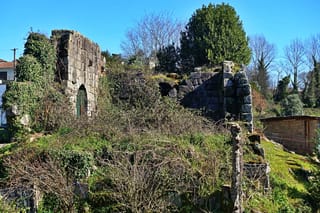
Torre de Vasconcelos
Ferreiros
12.0km
castle, chateau
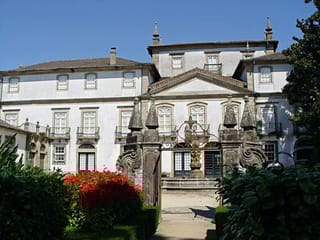
The Residence of Biscainhos
Braga
13.0km
castle, chateau
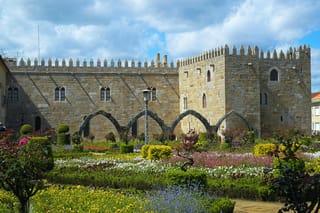
Episcopal Palace
Braga
13.1km
manor, mansion
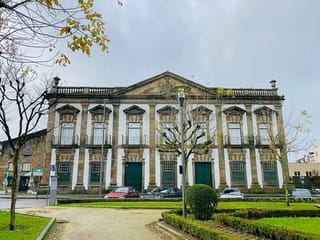
Casa Grande
Braga
13.2km
castle, chateau
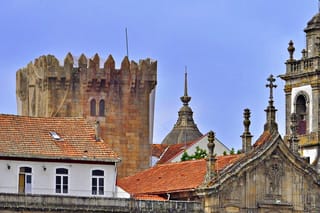
Castle of Braga
Braga
13.2km
castle, chateau
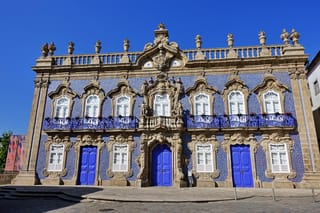
Raio Palace
Braga
13.6km
manor, mansion