Castelo dos Mouros (Sintra)
Sintra Lisboa Portugal
castle, chateau
Castelo dos Mouros (Sintra)
Sintra Lisboa Portugal
castle, chateau
The Castle of the Moors (Portuguese: Castelo dos Mouros) is a hilltop medieval castle located in the central Portuguese civil parish of Santa Maria e São Miguel, in the municipality of Sintra, about 25km northwest of Lisbon
O Castelo de Sintra, popularmente conhecido como Castelo dos Mouros, localiza-se na vila de Sintra, freguesia de São Pedro de Penaferrim, concelho de Sintra, no distrito de Lisboa, em Portugal
Previous names
Castelo dos Mouros (Sintra), Castelo dos Mouros (Sintra)
Description
The Castle of the Moors (Portuguese: Castelo dos Mouros) is a hilltop medieval castle located in the central Portuguese civil parish of Santa Maria e São Miguel, in the municipality of Sintra, about 25km northwest of Lisbon. Built by the Moors in the 8th and 9th centuries, it was an important strategic point during the Reconquista, and was taken by Christian forces after the fall of Lisbon in 1147. It is classified as a National Monument, part of the Sintra Cultural Landscape, a UNESCO World Heritage Site.
History
The castle was constructed during the 8th and 9th centuries, during the period of Muslim Iberia, as the central place in a territory that was primarily agricultural, and which was necessary to protect its population.
In 1031, after the loss of Córdoba to the Almoravid dynasty, the king of Badajoz opted to transfer to Alfonso VI of León and Castile a few territories on the Iberian peninsula (among them Sintra) in order to gain an alliance with the Christian king. This transfer did not result in any security, and the castle was lost to the invading Almoravid.
After the conquest of Lisbon (1147) by forces loyal to Afonso Henriques, the castle surrendered voluntarily to Christian forces. Afonso Henriques entrusted the castle's security to 30 inhabitants, granting them privileges in the foral (charter) signed by the monarch in 1154. The charter suggested that settlers should occupy and inhabit the castle, as a mechanism for guaranteeing the region's security and development.
During the second half of the 12th century, the chapel constructed within the walls of the castle became the parish seat. This was followed by the remodelling and construction under the initiative of King Sancho I of Portugal.
In 1375 King Ferdinand I of Portugal, under the counsel of João Annes de Almada, ordered the rebuilding of the castle. While the structure was well fortified by 1383, its military importance was progressively diminishing as, more and more, the inhabitants were abandoning the castle for the old village of Sintra.
While the chapel was still being used a centre of religious activities at the beginning of the 15th century, by 1493 this chapel was abandoned and later only used by the small Jewish community of the parish. This was followed in the 16th century by the transfer of the ecclesiastical parish of São Pedro from the castle to the new parochial church in the village. The Jews occupying and using the structures in the castle were expelled by Manuel I of Portugal, and the castle was completely abandoned.
The 1755 Lisbon earthquake caused considerable damage to the chapel and affected the stability of the castle. Visiting the chapel, Francisco de Almeida Jordão described the chapel (in 1768) as having a "principal door in the east, and in the south another smaller door, and a window...An addition to a painted image on the altar, there was another of rock which, already exists in the hermitage of Santa Eufémia, where they took it". An 1830 lithograph by Burnett immortalized the chapel's place in the Castle.
By 1838 the towers were already in ruins, when in 1840 Ferdinand II of Portugal took up the task of conserving and improving the condition of the castle, in which he committed 240 réis annually. He consolidated the walls, reforested the spaces, created nooks and manicured spaces and conserved the chapel. Along the south flank of the chapel he built a monument to collect the bones discovered during the public works, planting a tree in the central nave of the chapel. These reforms in the enclosure were overseen by Baron von Eschewege, but likely made the archaeological exploration of the territory considerably difficult.
At the end of the 19th century the administrator of the Forestry Service, Carlos de Nogueira, authorized several projects in the castle and chapel.
In 1939 the DGEMN became involved in the reconstruction of the castle walls, in addition to the lateral door of the chapel.
With an eye towards a fledgling tourist market, in 1954 a few of the cliffs were cleared to establish a picnic area near the castle, and in 1965 a transformer was installed to provide illumination.
In 1979 archaeological excavations in the Chapel of São Pedro were begun by the cultural services of Portugal, which discovered the existence of medieval funerary tombs, dating to the turn of the 13th century.
A dispatch by the Ministry of Culture, on 26 June 1996, declared the area of the Castle as a zone of special interest (Portuguese: Zona Especial de Protecção do imóvel).
During the summer of 1986, scouts were involved in projects to consolidate the walls with cement and clean the grounds, supported by the CMS.
In 2001 there were various interventions associated with cleaning the property, clearing undergrowth and forest overgrowth, and the installation of an electrical box along one of the walls.
Architecture
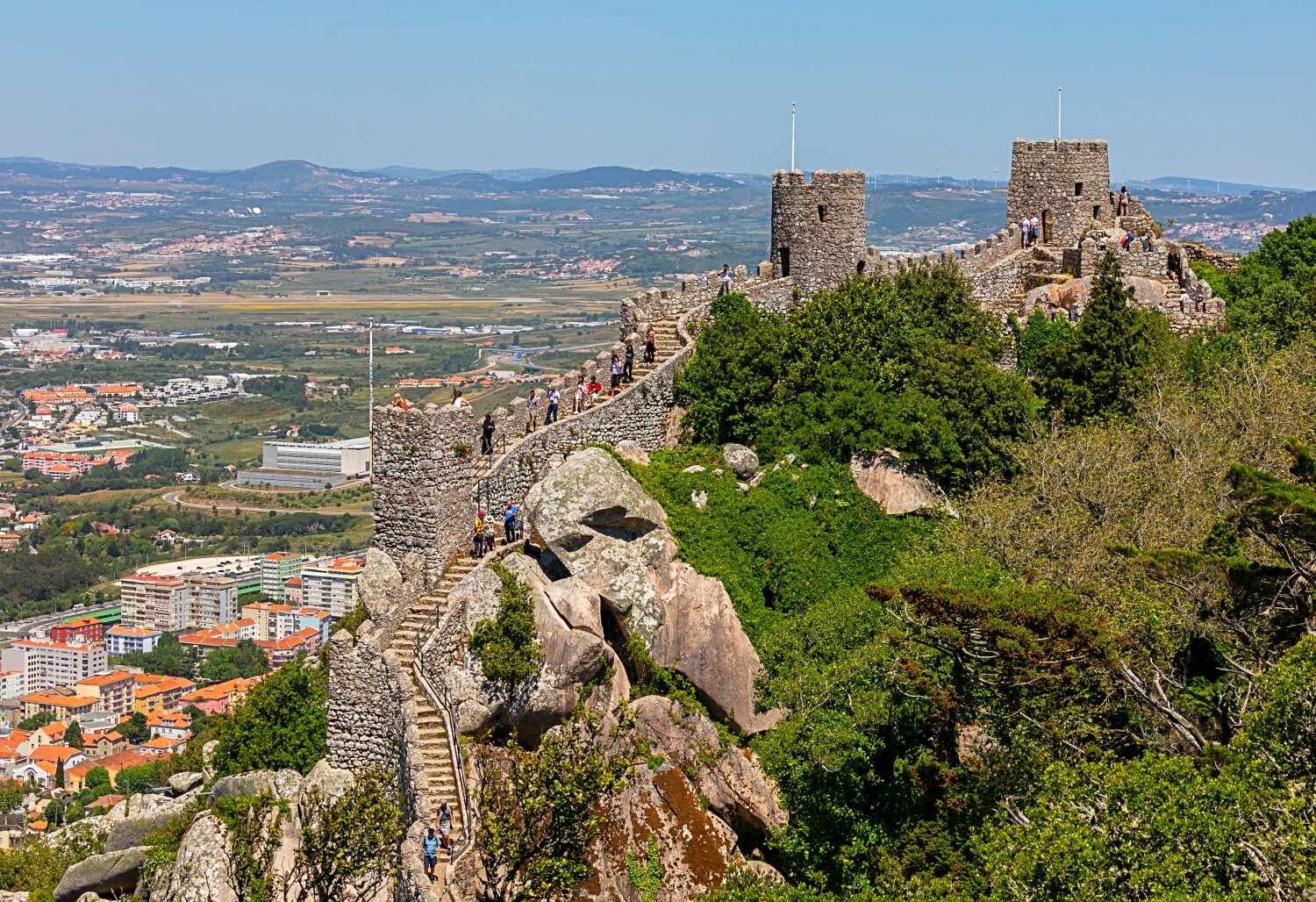
It is situated on the top of the Sintra Mountains, where it has a panoramic view of the municipality of Sintra, and on a clear day Mafra and Ericeira. It is accessible from Santa Maria e São Miguel by a protected gate and turnstile, or across a road accessway to the Palace of Pena. The castle is located in the limits of the Sintra-Cascais Natural Park, in the north flank of the Sintra Mountains, where the slopes are at most 40% gradients, with accented or moderate variation. The Serra da Sintra, known locally, consists of an eruptive massif with an abundance of granite, sienitos, gabros and dioritos rock formations, with soils consisting of litólicos, húmicos, câmbicos, normais, de granito (Mng).
The climate is characterized by low temperatures and elevated precipitation, due to its proximity to the sea, its relief and dense vegetation. The local vegetation is dense and diverse, with a large percentage exotics introduced during the 16th century by D. João de Castro, and in the 19th century by Ferdinand II and Francis Cook. Further, the fauna is characterized by a similar diversity, and was integrated into the royal estates and hunting grounds, including the Tapada dos Bichos, Tapada do Inhaca, Tapada do Borges, Pinhal do Prior and Tapada do Forjaz, Pinhal do Sereno, Pinhal do Tomado and Pinhal do Vale dos Anjos.
Within the proximity of the castle are many other sites, including the Garden of Pena (Portuguese: Parque da Pena), the Estate of Penha Verde (Portuguese: Quinta da Penha Verde), the Estate of Regaleira (Portuguese: Quinta da Regaleira), the Estate of Relógio (Portuguese: Quinta do Relógio) and the Park of Monserrate (Portuguese: Parque de Monserrate), among others. The Moorish Castle and other properties in the region act as a principal focus of tourism, the principal activity in this region.
Castle
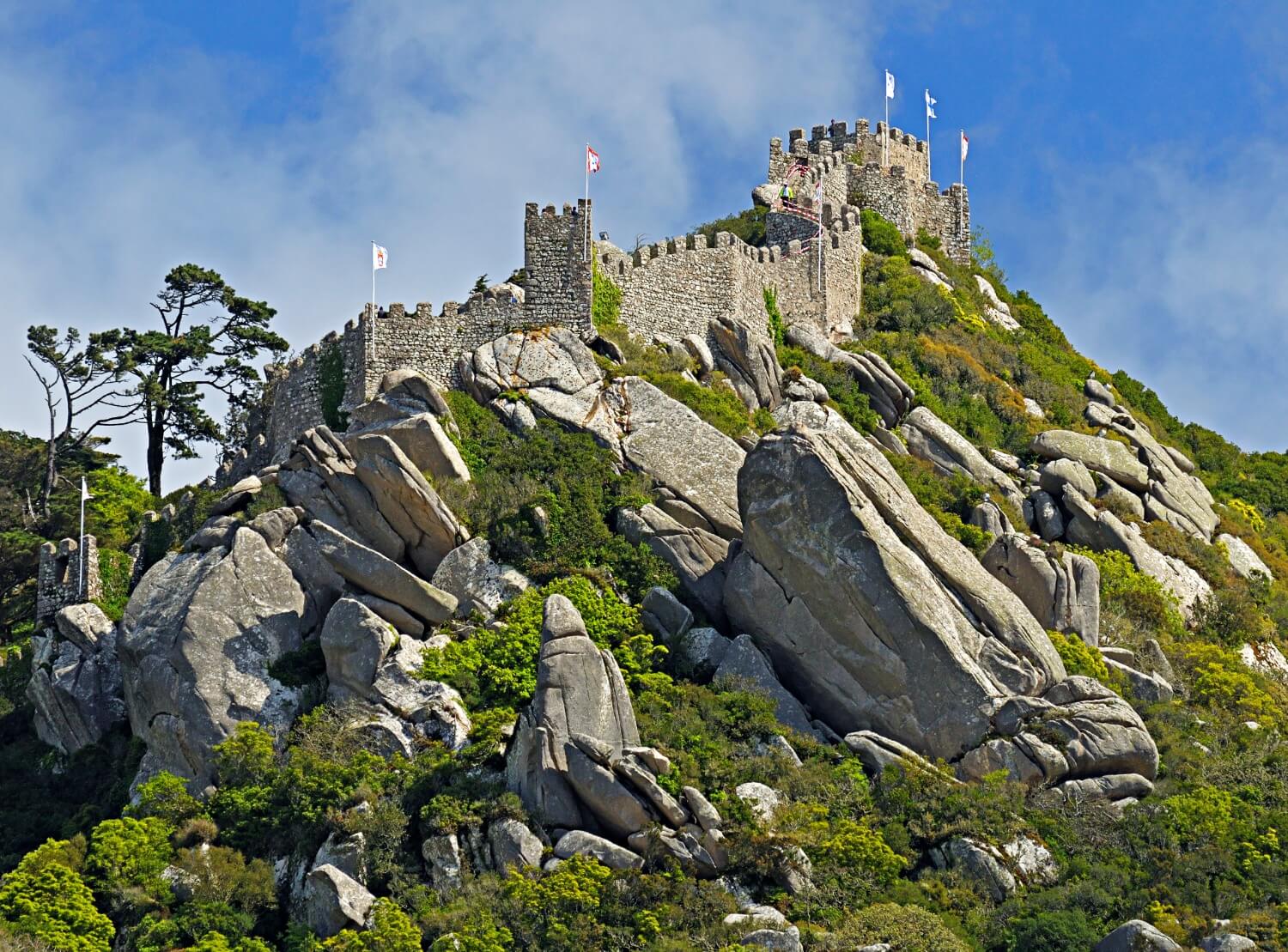
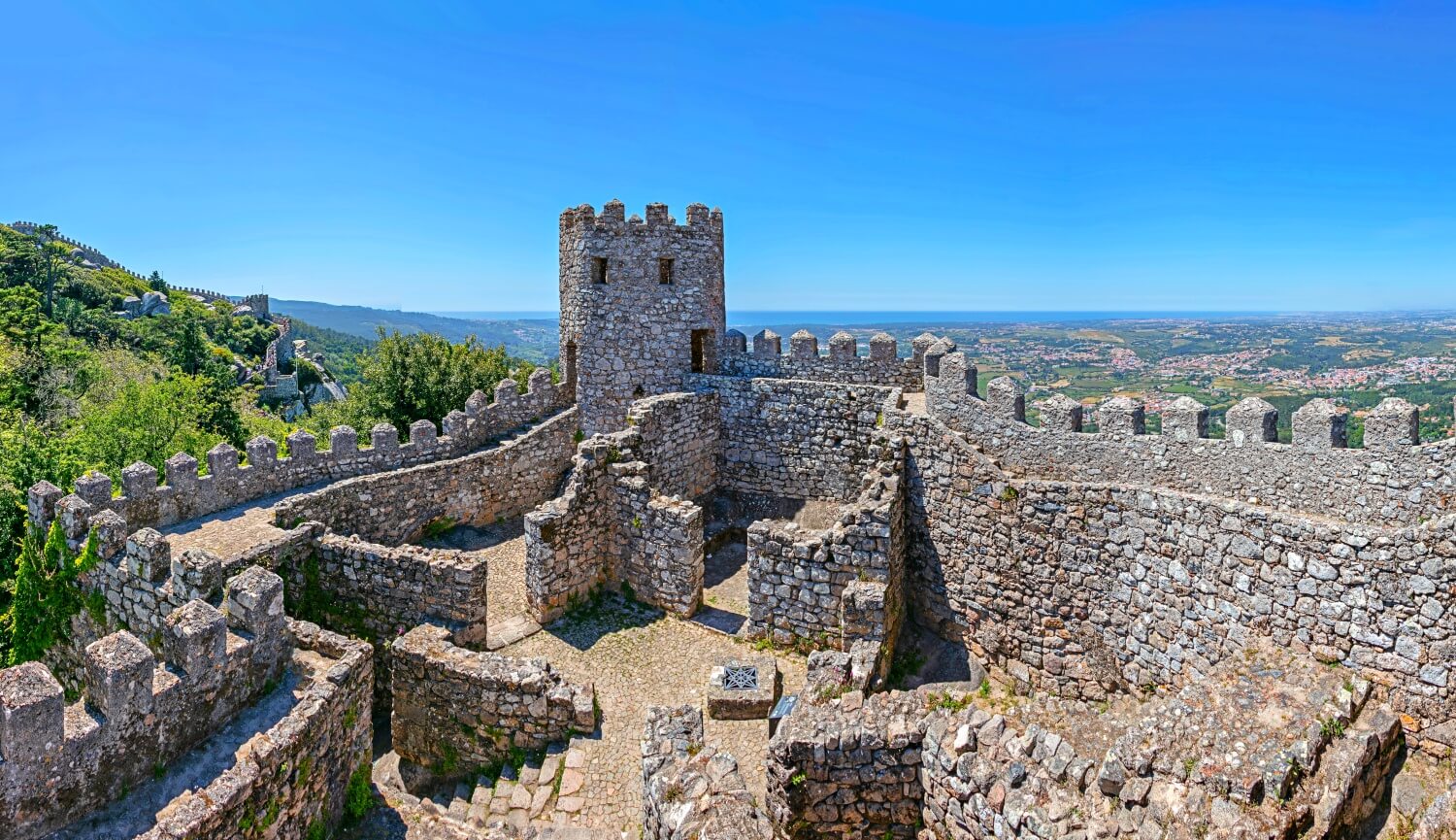
The castle is an irregularly planned military outpost that follows a 450-metre perimeter on top of a mountainous cliff, oriented southwest to northwest. It consists of a double line of military walls that meanders over the granite terrain of the promontory. Its place on the hilltop, surrounded by and including the natural and exotic vegetation, accentuates the Romantic character of the place. The Moorish Castle, due to its geographic place and design, was considered, along with Santarém, one of the principal points of the military plan of Belata (the Muslim province which corresponds to the Ribatejo and Estremadura). The property was remodelled and expanded over time, resulting in a Romantic-era ruins, that included damage caused over time and the public works of Ferdinand II. The towers, which initially included two floors, has a modified appearance, without many of the internal divisions or roofing typical of the period. However, the location of the turrets seem to coincide with the design represented in the engravings of Duarte de Armas.
The outer walls open near Abelheira (west of Tapada dos Bichos), from a main access door, where several paths wind around the hilltop of the castle. A second ring of walls reinforces the castle with both circular and square turrets, thick wall battlements and railings, and crowned with pyramid-shaped merlons. At this second wall is the main entrance to the castle, protected by two turrets and battlements. Near these secondary walls and entrance are the main ruins of the old buildings, corresponding to the cellars, animal pens and cistern. The subterranean cistern, accessible from a three-metre accessway, is 18 metres long by 6 metres wide, and 6 metres in height, where water was collected from openings on its "roof". The interior walls are punctuated by five rectangular towers and one circular tower, surmounted by pyramidal merlons, while surrounding these structures are remnants of older constructions. A small door, normally covered in underbrush, opens to the northern façade of the castle, corresponding to the Traitors Gate, accessing the main "military square" with the structure. In the southwest corner is the highest tower, known as the royal tower.
Along the perimeter of the castle exist various bins or silos, originating from the Arab occupation, many of which are plant covered.
Chapel
A chapel with rectangular nave and narrow, lower presbytery lies outside the secondary wall, not too far from the entrance. These ruins were constructed of limestone and masonry, and the interior is accessible from the western or southern façades. The southern wall is highlighted by an arched doorway, supported by colonnades and decorative capitals, with vegetation or fantastical animal motifs (gryphons and basilisks). The northern façade, with a 1.5 metre opening, corresponds to a primitive door, elevated owing to the accentuated terrain. A triumphal arch based on double columns, based on the similar portal in the south, includes carved capitals with phytomorphic bezels and vestiges of a door. The main chapel has a cradle vault with remains of frescoes, representing a halo in the sky with a figure corresponding to the patron saint, surrounded by floral and geometric motifs, all surrounded by a frieze with geometric designs. Alongside the area designated for the oratory, is a small rectangular niche for religious equipment. The fact that the chapel was located within the walls of the castle led to the tradition that the structure served as mosque prior to the Reconquista. Although it is likely that there may have existed a place of worship for the Muslim population, there is no specific association with this building.
O Castelo de Sintra, popularmente conhecido como Castelo dos Mouros, localiza-se na vila de Sintra, freguesia de São Pedro de Penaferrim, concelho de Sintra, no distrito de Lisboa, em Portugal.
Erguido sobre um maciço rochoso, isolado num dos cumes da serra de Sintra, na Estremadura, do alto das suas muralhas descortina-se uma vista privilegiada de toda a sua envolvência rural que se estende até ao oceano Atlântico.
História
Antecedentes
A pesquisa arqueológica contemporânea, entretanto, revela que a primitiva ocupação da região de Sintra data dos séculos X a VIII a.C..
Quando da Invasão muçulmana da Península Ibérica, a partir do século VIII a região foi ocupada, tendo a sua povoação recebido o nome de "as-Shantara". Os estudiosos são acordes em afirmar que foram eles os responsáveis pela primitiva fortificação da penedia, entre o século VIII e IX, com a finalidade de controlar estrategicamente as vias terrestres que ligavam Sintra a Mafra, Cascais e Lisboa.
Integrante dos domínios da taifa de Badajoz, no alvorecer do século XII, diante da ameaça representada pelas forças de Ali ibne Iúçufe, que oriundas do Norte de África, haviam passado à península visando a conquista e reunificação dos domínios Almorávidas, o governante de Badajoz, Mutavaquil, entregou Sintra, juntamente com Santarém e Lisboa, na Primavera de 1093, ao rei Afonso VI de Leão e Castela, visando uma aliança defensiva, que não se sustentou. Envolvido com a defesa de seus próprios territórios, o soberano cristão não foi capaz de assistir o governante mouro, cujos territórios vieram a cair, no ano seguinte, em 1094, diante dos invasores. Desse modo, Lisboa, Santarém e Sintra voltaram ao domínio muçulmano, agora sob os Almorávidas.
O castelo medieval
O destino de Sintra manteve-se associado ao de Lisboa, que viria a ser reconquistada pelas forças de Afonso VI de Leão e Castela, para voltar ao domínio muçulmano em 1095, até se entregar voluntária e definitivamente, a D. Afonso I Henriques (1112-1185) em 1147. Visando o seu repovoamento e defesa, o soberano outorgou Carta de Foral a Sintra em 1154, quando terá determinado reparos nas suas defesas, dotando-a de um templo, a Igreja de São Pedro de Penaferrim.
O seu filho e sucessor, D. Sancho I (1185-1211) também não dispensou cuidados ao castelo, remodelando-lhe e reforçando-lhe as defesas. Assim também procedeu, séculos mais tarde, D. Fernando I (1367-1383), tendo o castelo sido assediado por tropas de Castela no contexto das chamadas Guerras fernandinas. À época da crise de 1383-1385, era seu Alcaide-Mor D. Henrique Manuel de Vilhena, que tomou o partido por D. Beatriz, somente entregando este castelo "forte e muito alto e fragoso" que lhe fora confiado após a vitória de D. João I na batalha de Aljubarrota (LOPES, Fernão. Crónica de D. João I).
Posteriormente, diversos soberanos portugueses elegeram Sintra para sua estadia, demorando-se no "Paço Régio", construído para esse fim e sucessivamente ampliado e melhorado ao longo dos séculos, o Palácio Nacional de Sintra, tendo a povoação se desenvolvido em torno deste novo núcleo. O castelo manteve-se, por essa razão em segundo plano, entrando em decadência, principalmente após o século XV, face à expulsão dos judeus do país, então os seus únicos habitantes. No século XVI encontrava-se desabitado. A queda de um raio causou-lhe danos à Torre de Menagem em 1636, danos grandemente aumentados pelo terramoto de 1755.
Do século XIX aos nossos dias
No século XIX, sob o segundo reinado de D. Maria II (1834-1853), o seu consorte, D. Fernando II, sob o impulso de redescoberta da Idade Média proporcionado pelo Romantismo, tomou, em 1839, o antigo castelo por aforamento à Câmara Municipal de Sintra pela quantia anual de $210 réis, promovendo-lhe amplas obras de reconstrução que, embora de caráter amador, tiveram o mérito de sustar o avançado estado de degradação em que a estrutura se encontrava. Ao gosto imaginativo da época foram adicionados locais de contemplação, caminhos de acesso e vegetação abundante, transformando-o em uma atração turística.
O Castelo dos Mouros e a cisterna encontram-se classificados como Monumento Nacional por Decreto publicado em 23 de Junho de 1910, no reinado de D. Manuel II. A intervenção do poder público português no monumento iniciou-se com o Estado Novo em 1939, com a reconstrução de troços das muralhas. Após intervenções menores (1954, 1965), em 1986 procederam-se trabalhos de limpeza e reconstrução de alvenarias, degraus e ameias em várias zonas do castelo, repetindo-se os trabalhos de limpeza das muralhas em nova campanha, em 1992.
O conjunto de Sintra foi classificado como Património Cultural da Humanidade pela UNESCO em 1995.
Desde Setembro de 2000 o monumento vem sendo gerido pela empresa Parques de Sintra - Monte da Lua, S.A..
Características
O monumento apresenta planta orgânica (adaptada ao terreno) com cerca de 450 metros de perímetro e 12.000 m² de área.
Muralhas
As suas muralhas são constituídas por uma cintura dupla, exterior e interior. A Leste ainda são visíveis troços da muralha exterior, onde se localiza a porta em rodízio de acesso ao recinto. O topo da muralha interna, ameada, é percorrido por adarve, sendo reforçada por diversas torres.
As muralhas foram executadas segundo a técnica da soga e tissão que se pode ainda observar no seu lanço melhor conservado. Faixas silhares com aproximadamente 30–40 cm de altura, estão colocadas alternadamente em largura e comprimento. Estas são intervaladas por curtas e estreitas faixas de pedras inseridas em argamassa. Esta técnica altera-se acima dos 4–5 m de altura, onde se passa a registar uma menor qualidade, fruto de uma segunda fase de construção. Num outro trecho das muralhas é visível a área de união entre as diferentes técnicas utilizadas, herança das diferentes fases de intervenção.
Além das muralhas ameadas, torres e adarves, o conjunto é completado por diversas rampas e escadarias de acesso.
Um outro elemento digno de nota é a porta árabe em arco em ferradura.
Torres
A muralha apresenta cinco torres: quatro de planta rectangular e uma de planta circular encimadas por merlões piramidais, já sem vestígio dos dois pisos e do sistema de cobertura primitivos.
A torre na cota mais elevada do terreno, conhecida também por Torre Real, é acedida através de uma escadaria de 500 degraus. No período islâmico constituíu-se na alcáçova. No período cristão consta que lá terá vivido Bernardim Ribeiro, escritor português do século XVI.
Capela
No interior do castelo, próximo ao Portão de Armas, ergue-se uma igreja devotada a São Pedro, a Igreja de São Pedro de Canaferrim. Remonta ao século XII, erguida após a conquista do castelo por D. Afonso Henriques, tendo se constituído na primeira igreja paroquial de Sintra. Em estilo românico, de pequenas dimensões, apresenta planta longitudinal e nave única, sem cobertura. A capela-mor com abóbada de berço é de planta rectangular e apresenta vestígios de frescos. A igreja tem dois portais, um de arco pleno de dupla volta assente em colunelos de capitéis decorados e outro com arco duplo apoiado em colunas semelhantes às referidas anteriormente com capitéis com motivos fitomórficos. A sua prospecção arqueológica revelou a presença de diversos túmulos, pertencentes a uma antiga necrópole medieval.
Cisterna
Contígua à Igreja de São Pedro de Penaferim, destaca-se uma cisterna de grande capacidade, que remonta ao período islâmico. Com as dimensões de 18 metros de comprimento por 6 de largura e 9 de altura, em seu interior abobadado brota a nascente que abastecia o Palácio Nacional de Sintra. O seu reservatório foi reconstruído após o grande terramoto de 1755. É percebida pelo visitante através de duas grandes aberturas cónicas de ventilação.
Acesso
Acede-se ao monumento, visível já da vila de Sintra, subindo a Rampa da Pena, um caminho sinuoso que corre pelo interior da serra. Este espaço foi sendo, ao longo dos séculos, não só ocupado por obras de valor artístico e histórico como também pelos mais variados espécimes botânicos, muitos deles de carácter raro e exótico.
Useful information
Free
8.00 EUR
6 - 17 years: 6.50 EUR
65+ years: 6.50 EUR
Family: 26.00 EUR
- Information tables
- WC
info@parquesdesintra.pt
Accessible for wheelchairs
-
External links
Nearby castles
Pena Palace
Sintra
0.5km
manor, mansion
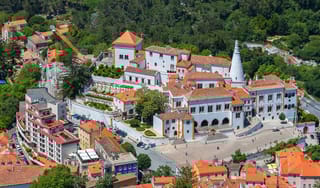
Sintra National Palace
Sintra
0.6km
manor, mansion
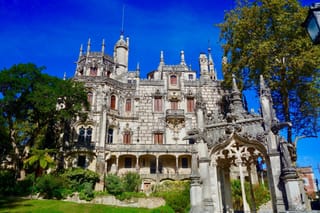
Quinta da Regaleira
Sintra
0.7km
castle, chateau
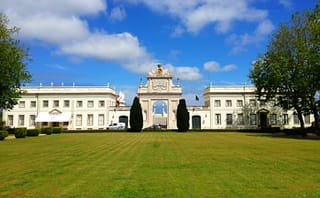
Seteais Palace
Sintra
0.9km
manor, mansion
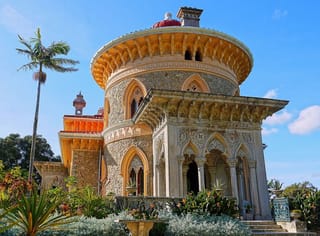
Monserrate Palace
Sintra
2.7km
manor, mansion
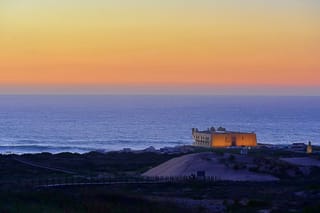
Forte do Guincho
Alcabideche
9.3km
fortress
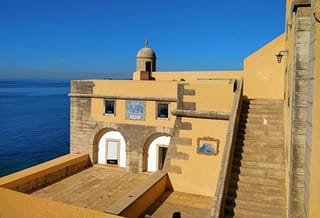
Fort of Santo António da Barra
Estoril
10.4km
fortress