Episcopal Palace
Porto Porto Portugal
manor, mansion
Paço Episcopal do Porto
Porto Porto Portugal
manor, mansion
The Episcopal Palace (Portuguese: Paço Episcopal) is the former residence of the bishops of Porto, in Portugal
O Paço Episcopal do Porto é a antiga residência dos bispos do Porto
Previous names
Episcopal Palace, Paço Episcopal do Porto
Description
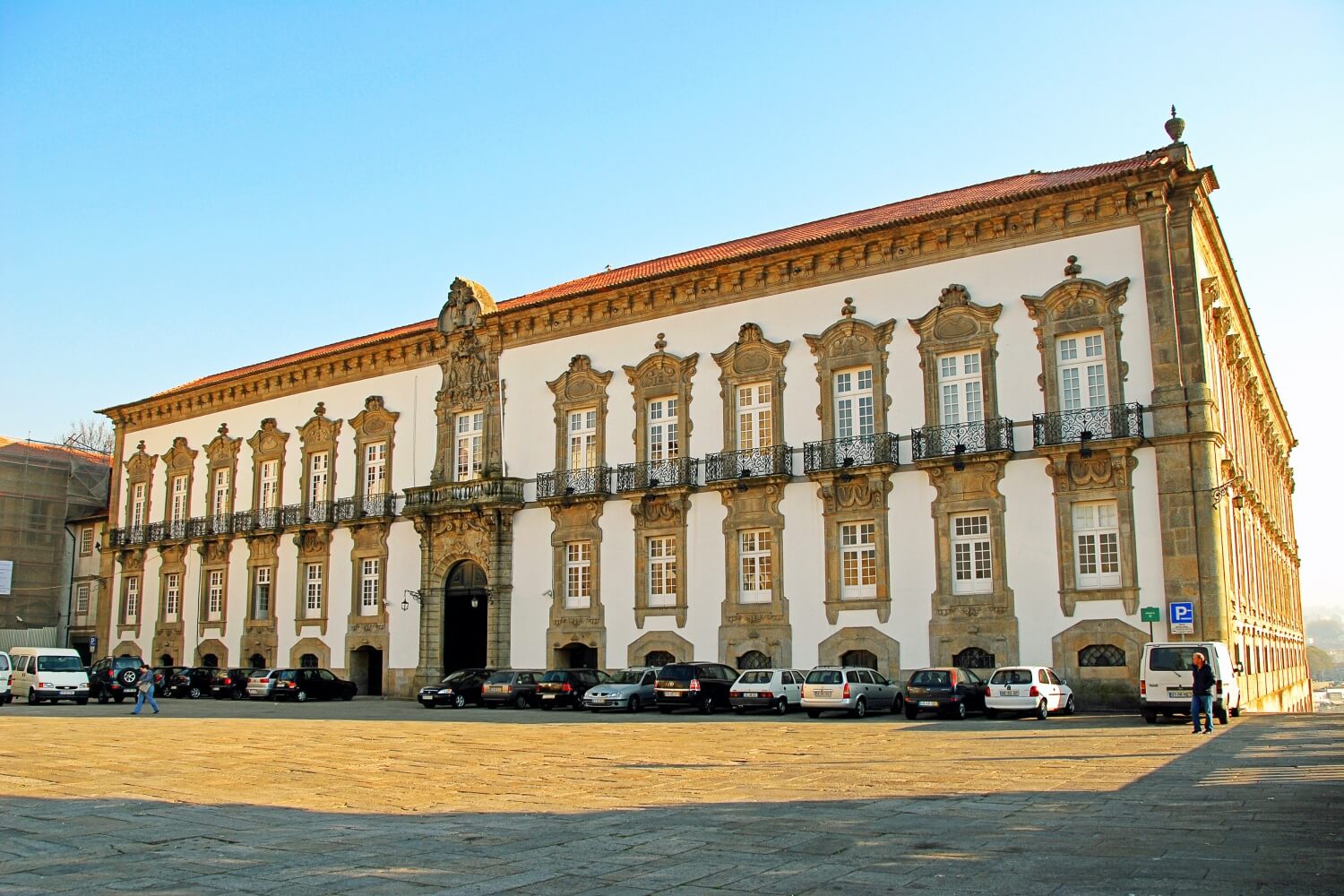
The Episcopal Palace (Portuguese: Paço Episcopal) is the former residence of the bishops of Porto, in Portugal. The palace is located on a high elevation, near Porto Cathedral, and dominates the skyline of the city. It is part of the historical centre of Porto, designated World Heritage Site by UNESCO.
The palace is an important example of late Baroque and Rococo civil architecture in the city.
History
The original Episcopal Palace of Porto was built in the 12th or 13th century, as attested by some architectural vestiges like romanesque-style windows that exist inside the present building. In 1387, this mediaeval palace witnessed the marriage of John I of Portugal and Philippa of Lancaster.
During the 16th and 17th centuries the palace was greatly enlarged, and an old drawing shows it to be composed of a series of buildings with towers, as was typical for the architecture of Portuguese manor houses of the period. The present palace, however, is the result of a radical rebuilding campaign carried out in the 18th century, which turned it into a baroque work.
It is believed that the project for the Bishop's Palace was drawn in 1734 by the Italian Nicolau Nasoni, an architect with an extense work in Porto and surroundings. Building work started in 1737, under the direction of architect Miguel Francisco da Silva, and proceeded slowly. The bishopric of Porto was vacant from 1716 to 1741, as the Pope failed to confirm the nominee. Due to financial constraints, the original project could never be completed and had to be reduced in scale. The works were only finished in the last decades of the 18th century, under the rule of Bishop Rafael de Mendonça, whose coat-of-arms is located on the main portal and the inner monumental staircase of the palace.
The building was used as residence for the bishops of the city until the 19th century. During the Siege of Porto of 1832, the bishop fled the city and the palace was used by Peter IV's troops as stronghold in the battle against Miguel I. Much later, between 1916 and 1956, when the bishops no longer inhabited the palace, the palace served as seat of the Municipality of Porto.
Architecture
The Episcopal Palace is of rectangular shape with a courtyard in the middle. The main façade is painted white with three rows of windows and a central portal in dark granite. The frames of the higher row of windows come in different Rococo frames. The main portal has a balcony topped by the coat-of-arms of Bishop Rafael de Mendonça, who saw the completion of the building.
Upon entering the palace, the visitor goes through a long vestibule that leads to the stairway, which is the highlight of the interior. The monumental stairway, attributed to Nasoni, is composed of a first flight of steps followed by a U-shaped stair. The stairway leads to a baroque portal again with the coat-of-arms of Bishop Mendonça. The whole room is harmoniously decorated with wall paintings and stucco executed between the 18th and the 19th centuries in neoclassical style. In the same century a glass dome was added that provides abundant light to the interior. Other rooms of the palace have less artistic relevance.
O Paço Episcopal do Porto é a antiga residência dos bispos do Porto. Situa-se adjacente à Sé do Porto e, pela sua posição elevada, domina a paisagem do centro histórico do Porto.
História
Atribui-se com frequência a iniciativa da construção do Paço Episcopal do Porto ao bispo D. Fr. João Rafael de Mendonça, que implicou a demolição total do antigo Paço e a encomenda deste novo projecto. No entanto, a construção da obra ir-se-ia prolongar durante vários anos e o bispo não chegaria a vê-la completa. Ainda assim, muitos trechos do traçado original foram alterados e outros terminados à pressa em prejuízo do conjunto global, estrutura, clareza e unidade arquitectónica.
Porém, é consensual a influência de Nicolau Nasoni no alçado da frontaria, projectando-se em duas fachadas facilmente reconhecidas, a de ocidente e a de sul. Deste bloco, de digna imponência, majestosa e elegante mas não pesada, rasgam-se dezenas de janelas barrocas. Perto da Sé Catedral, sobre penhascos colossais, a fachada principal ficou a mais baixa.
Forem feitas várias obras de reconstrução do paço, tendo sido uma das mais importantes aquela efectuada pelo bispo D. Luís Pires, ao qual se deve o mérito de aumentar e organizar a importante biblioteca. A mais profunda remodelação seria durante a idade barroca, da iniciativa do Cabido da Sé.
Entre 1916 e 1956, sediou a Câmara Municipal do Porto, enquanto a remodelação da Praça da Liberdade e construção dos novos Paços do Concelho ocorreram.
Actualmente este paço pertence ao Estado e foi recentemente recuperado.
Descrição
No eixo da composição ergue-se o conjunto portão-janela de honra. O brasão de armas, em pedra, sobrepõe-se ligeiramente ao friso do entablamente que decora a frontaria e acima do beirado eleva-se um frontão curvo e ornamentando, como coroamento do monumental eixo. O brasão é flanqueado de larga decoração. Sobre as lojas, para as quais se abrem cinco portas almofadadas e sete janelas baixas e gradeadas, avistam-se as 24 janelas do andar nobre, 12 de cada lado, unidas verticalmente duas a duas, alternando-se os ornamentos: uns festivos e outros menos ornamentados; cada uma destas janelas abre para varandins guarnecidos de ferro forjado e desenho delicado.
O interior é composto por amplos salões, alguns exuberando excelentes peças de mobiliário, muitas salas, muitos quartos característicos da época anterior à sofrida expropriação. No fundo do vestíbulo desenvolve-se a escadaria nobre, com decoração mural bem posterior à do início do projecto, embora surpreendentemente concordantes no seu conjunto, tectos, lanternim, patamares, corrimões, a entrada do andar nobre, um verdadeiro portal palaciano.
Useful information
Free
5.00 EUR
Nice view
visitaspacoepiscopal@diocese-porto.pt
Closed on Sundays
-
External links
Nearby castles
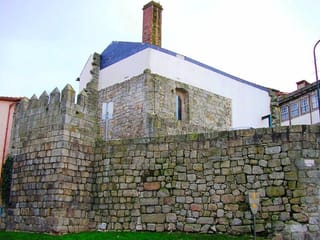
Muralha Primitiva
Porto
0.1km
castle, chateau
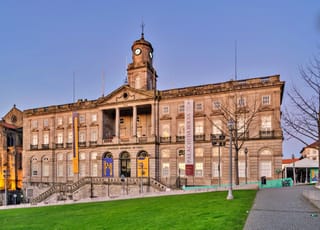
The Stock Exchange Palace
Porto
0.4km
manor, mansion
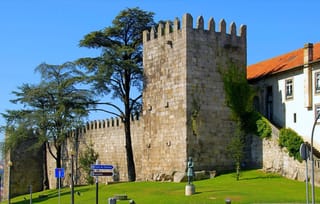
Muralha Fernandina do Porto
Porto
0.6km
castle, chateau
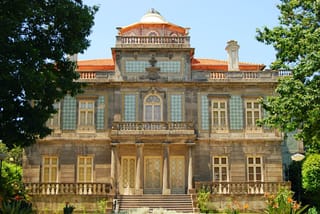
Pinto Leite Palace
Porto
1.4km
manor, mansion
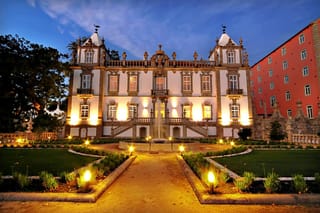
The Palace of Freixo
Porto
3.1km
manor, mansion
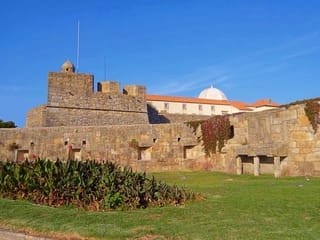
Forte de São João Baptista da Foz
Porto
5.3km
fortress
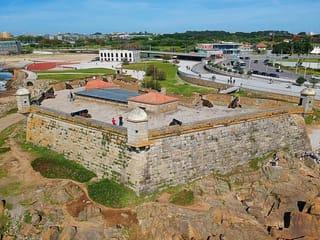
Fort of São Francisco do Queijo
Porto
7.2km
fortress