Fort of São Francisco do Queijo
Porto Porto Portugal
fortress
Forte de São Francisco Xavier do Queijo
Porto Porto Portugal
fortress
Fort of São Francisco do Queijo (Portuguese: Forte de São Francisco do Queijo), frequently shortened to Castle of the Cheese (Portuguese: Castelo do Queijo) is a fortification situated along the coast of the civil parish of Nevogilde in the northern Portuguese municipality of Porto
O Forte de São Francisco Xavier situa-se na freguesia de Nevogilde, no concelho e distrito do Porto, em Portugal
Previous names
Fort of São Francisco do Queijo, Forte de São Francisco Xavier do Queijo
Description
Fort of São Francisco do Queijo (Portuguese: Forte de São Francisco do Queijo), frequently shortened to Castle of the Cheese (Portuguese: Castelo do Queijo) is a fortification situated along the coast of the civil parish of Nevogilde in the northern Portuguese municipality of Porto.
History
In early era of settlement, the rocky area of Queijo was sacred to the Draganes, a Celtic tribe that arrived in the 6th century.
The fortification was likely constructed sometime in the 15th century, over the primitive structure that already existed. King John IV of Portugal ordered the construction of a new fort in 1643, designed by French military engineer Miguel de l'Ècole, and directed by Fernando César de Carvalhais Negreiros, then Captain of the Royal Armada (Portuguese: Capitão da Armada Real).
No one knows when the Castle of São Francisco Xavier was founded; it is presumed to be between 1661 and 1662, when the coast was under threat of the armada of Galicia.
Judges and municipal aldermen for the city of Porto, captain António Pires Picão and various other carrack and caravel captains arrived at the conclusion in 1643 that the fort was badly located, owing to a lack of safe area for disembarking. This as the area was rocky and influenced by strong waters. Friar João Turriano, engineer of the Kingdom, was asked to give his opinion and he determined that that fortification should be constructed away from the site, in the locality of Pedra do Queijo (using the existing materials).
During the Restoration Wars, the fort was rebuilt (at the expense of the city), at a time when citizenry feared attacks from squadrons of Spanish fleets.
By 1717, the city of Porto was responsible for the maintenance of the fort, a heavy burden for municipal coffers, and forcing the town council to petition King John V of Portugal to decommission the fort, owing to its superfluous need. As they mentioned, the fort:
was a great expense in the Coffers of the City, in the payment of officials that were created to assist the said Castle, where they don't reside, taking advantage of the convenience of the land.
Yet, the King's Council of War, indifferent to the suggest, maintained the fortress active. In 1751, a private chapel was constructed to assist military officers serving at the site.
On 11 April 1758, abbey Manoel da Silva Pereira, referred to a lieutenant (as captain/commander), a constable, Sargent, 11 artillerymen stationed at the fort, including unspecified soldiers that were sent to the fort time-to-time, which pertained to the regiment in Porto. But, by 1804 its usefulness had waned, and could not fulfill its function, given military tactics of the time. Between 1807 and 1811, during the French invasion, the fort was not used in a defensive role.
During the siege of Porto (1832-1833), Miguelist forces occupied the fort until Lordelo, even as they were confronted by batteries and the Liberal navy. By the end of the civil war the fort was destroyed. In August 1860, a plan of the fort included drawbridge, residence of the Governor, chapel in ruins, housing for military officers also in ruins, a ramp to the esplanade, moat, areas inundated by the sea, four quarters for soldiers, kitchen, powder magazine and a vaulted house for quarters. It was assigned for the Veterans Company (1839), during the revolt of Maria da Fonte (1846), and occupied by troops from the Junta of Porto, and was bombarded by the frigate Íris, supporting the government of Maria II.
Between 1890 and 1910 it was in the possession of the Guarda Fiscal (Fiscal Guard).
In 1934 it was classified as a Property of Public Interest.
The Municipal Commission for Art and Archaeology (Portuguese: Comissão Municipal de Arte e Arqueologia) proposed that the fort be adapted for the use as a museum in 1938. Following restoration work in 1942, the fort was once again abandoned, and the spaces were reactivated in 1943 during the course of the World War, when anti-aircraft batteries were installed, fearing German attacks. In order to collect funds to assist the paying for a permanent guard, the fort's doors were opened to the public: the fort was used as overlook, for a charge one escudo.
The Junta Freguesia of Nevogilde installed some services in the fort in April 1944. Immediately, within the year, the junta received orders to remove the equipment from the site by the Direcção Geral da Fazenda Pública (General Directorate for Public Finances), which provoked indignation by the city council. But, by 1949 the Junta de Freguesia continued to have their installations in the fort. They shared the spaces with a naval brigade from the Portuguese Legion, remaining there until 25 April 1974. Between 1977 and 1978, the post was held by northern commandos.
On 26 April 1961, the site was included in the Special Protection Zone. On 24 September 2008, the DRCNorte proposed that the fort be included in the maritime promenade and Avenida de Montevideu designation which, by 7 January 2009, was accepted by the consultative council of IGESPAR.
Architecture
The fort is situated on a dominant position over the ocean, a short distance from the mouth of the Douro and Leça Rivers. To the northeast is the city park connected directly to the sea.
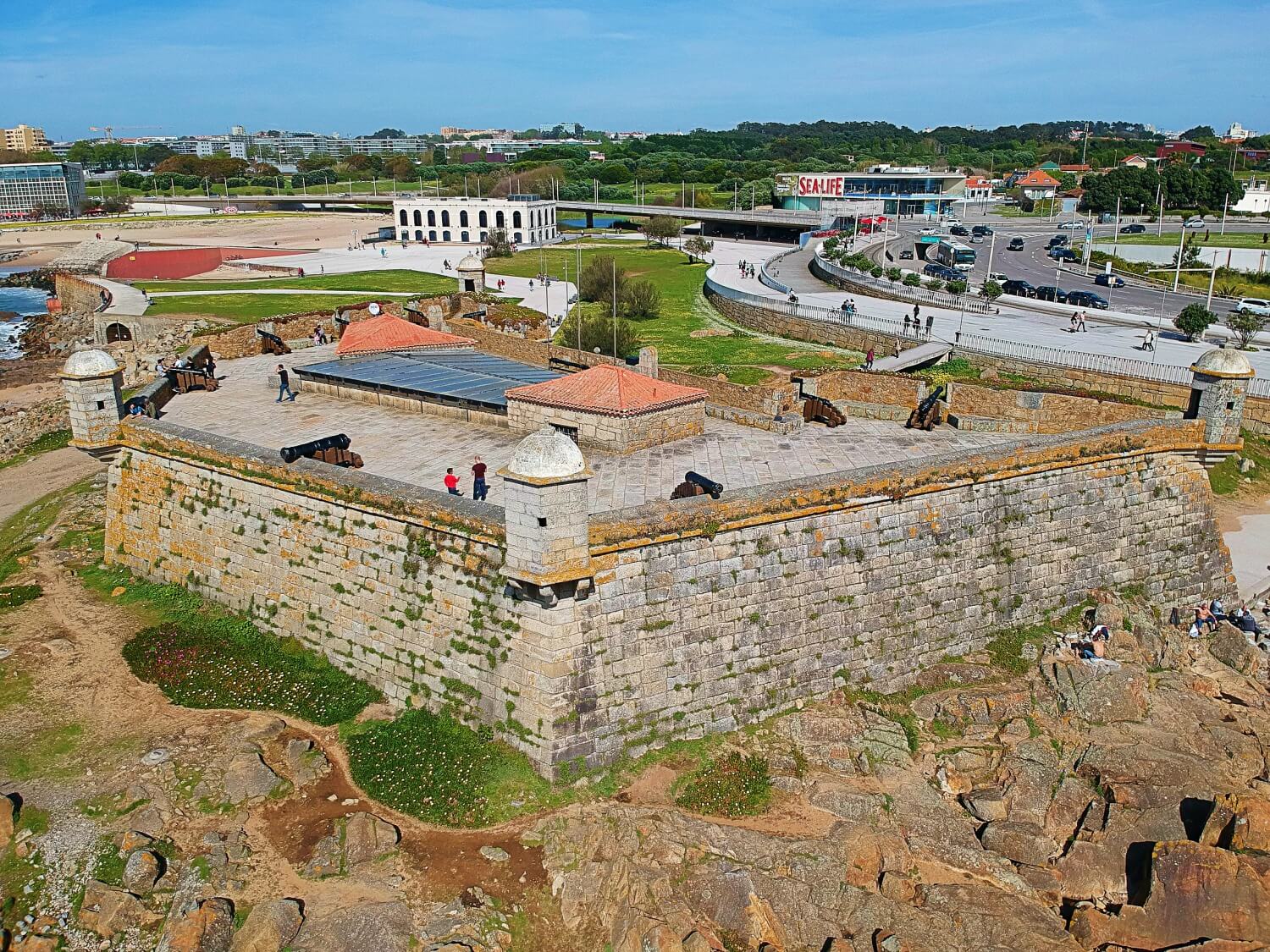
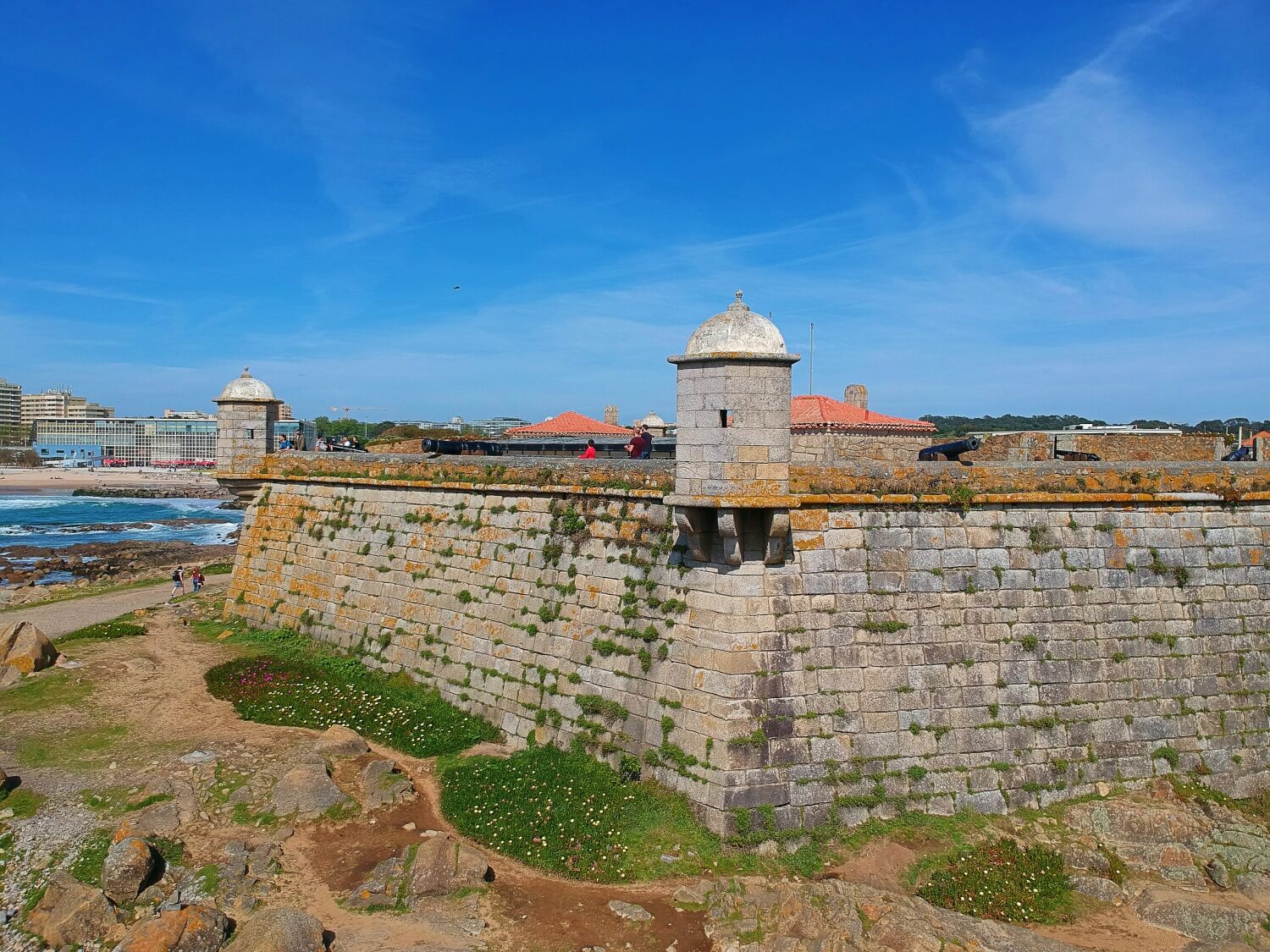
The trapezoidal fortress is situated over a cliff, circled by a dry moat and areas that become inundated during high tide. The high walls are constructed with granite masonry in regular sloping rows, surmounted by a rounded frieze and topped by irregular battlements. Along the pentagonal facades are watchtowers resting on triangular corbels of stepped logs. The watchtowers are supported on cornices and formed into molded, round domes addorsed to the corners. The main facade (oriented towards the southeast) includes wall broken by main gate with rounded arch accessed by wooden drawbridge, over corbels. Over the portal, and interrupting the cornice, is the coat-of-arms of Portugal, surmounted by royal crown, under a granite sphere. Flanking the relief stone are vertical grooves reinforced by iron frame, from which hang the supporting chains of the drawbridge.
A rounded niche on the left, in granite masonry, shelters a representation in stone of the St. Francis Xavier, and to the right a similar niche houses an image of the Virgin Mary. The tunnel connects to the courtyard, covered with metal grids and glass plates, that provide access to bar, powder magazine covered in barrel vault, stairs, balconies and gateways to the remaining dependencies. From the lobby there is an access ramp to the upper deck.
An oratory, to the invocation of St. Francis Xavier was located within the hall of the former-residence of commander of the fort.
O Forte de São Francisco Xavier situa-se na freguesia de Nevogilde, no concelho e distrito do Porto, em Portugal.
Em posição dominante sobre o oceano Atlântico e a pouca distância da foz do rio Douro, é também conhecido como Castelo do Queijo por, segundo a tradição, ter sido edificado sobre uma rocha de granito arredondada, e com um formato similar ao de um queijo (penedo do Queijo).
História
O Castelo do Queijo
Em ruínas em meados do século XVII, serviu como alicerce para esta pequena fortificação marítima, erguida às custas da Câmara Municipal da cidade do Porto durante a Guerra da Restauração da independência portuguesa (1640-1668), com traça do engenheiro militar francês Miguel de l'Ècole, tendo a obra sido dirigida por Fernando César de Carvalhais Negreiros (capitão da Armada Real). Sobre a sua periodização e as razões para a sua construção.
Essas datas constam, a primeira, de um auto onde se define o local escolhido para a construção do forte, e, a segunda, de um ofício cujo texto permite depreender que, por essa altura, já as suas obras iam adiantadas.
No início do século XVIII, entretanto, em 1717, a Câmara do Porto requereu a sua desactivação a D. João V (1706-1750), justificando que o castelo chamado do Queijo era inútil e supérfluo e que apenas servia para fazer uma grande despesa ao Cofre desta Cidade, no pagamento dos oficiais que se criaram para a assistência do dito Castelo, onde nunca residem, aproveitando-se da conveniência do soldo. O parecer do Conselho de Guerra do soberano, entretanto, indeferiu este requerimento em 1720.
No contexto das Guerras Liberais, durante o cerco do Porto esteve ocupado pelas forças conservadoras de D. Miguel (1828-1834), apesar do bombardeio combinado da artilharia das baterias da Luz e dos navios da esquadra liberal de D. Pedro (1826), que bastante castigaram a sua estrutura. Depois da jornada do Lordelo foi abandonado e saqueado pela população.
Entregue à guarda da Companhia de Veteranos (1839), durante a revolta da Maria da Fonte (1846), tendo sido ocupado pelas tropas da Junta do Porto, foi alvejado pela fragata Íris, fiel ao governo de Maria II de Portugal (1826-1828, 1834-1853). Em 1890, ficou entregue à Guarda Fiscal que a conservou até 1910.
Do século XX aos nossos dias
Foi classificado como Imóvel de Interesse Público pelo Decreto nº 23.684, de 20 de março de 1934. Em 1949 foi cedido ao Núcleo da Brigada Naval da Legião Portuguesa do Porto que ali esteve instalado até ao 25 de Abril de 1974. A sua Zona Especial de Protecção (ZEP) foi definida pela Portaria DG nº 99, de 26 de abril de 1961.
Actualmente restaurado e em perfeitas condições, encontra-se sob a guarda da Associação de Comandos (Delegação do Norte) que ali mantém um museu histórico-militar e uma programação de eventos culturais e de animação, aberta ao grande público.
Características
O forte apresenta planta no formato de um polígono triangular com sólidas muralhas de cantaria de pedra, arrematadas por guaritas pentagonais nos vértices cobertas por cúpulas. No terrapleno, amplas plataformas de tiro, ornamentadas com canhões históricos, e os edifícios de serviço (Casa do Comando, quartéis da tropa, paiol e cisterna).
As defesas são completadas por fossos, ponte levadiça e portão monumental de acesso em plano reentrante, pelo lado de terra (Norte), com formato de arco, encimado por um escudo com as armas de Portugal.
Um oratório, sob a invocação de São Francisco Xavier, encontrava-se primitivamente colocado na sala da Casa do Comando do forte.
Useful information
1.00 EUR\hour
0.50 EUR
Free
- WC
- Panoramic view
- It has a historical museum
- Closed on Mondays
-
External links
Nearby castles
Forte de Nossa Senhora das Neves
Leça da Palmeira
2.4km
fortress
Forte de São João Baptista da Foz
Porto
2.5km
fortress
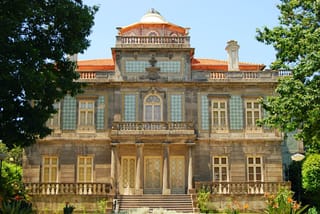
Pinto Leite Palace
Porto
5.9km
manor, mansion
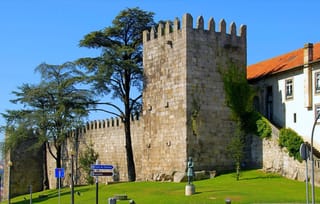
Muralha Fernandina do Porto
Porto
6.7km
castle, chateau
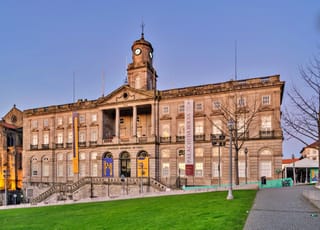
The Stock Exchange Palace
Porto
6.9km
manor, mansion
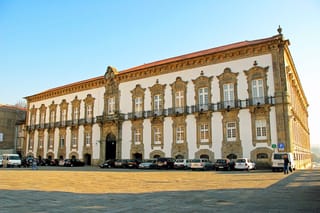
Episcopal Palace
Porto
7.2km
manor, mansion
Mosteiro de Leça do Balio
Leça do Balio
7.2km
castle, chateau