The Palace of Freixo
Porto Porto Portugal
manor, mansion
Palácio do Freixo
Porto Porto Portugal
manor, mansion
The Palace of Freixo (Portuguese: Palácio do Freixo) is a former-residence in the civil parish of Campanhã, in the northern Portuguese city of Porto
O Palácio do Freixo localiza-se na freguesia de Campanhã, cidade, concelho e distrito do Porto, em Portugal
Previous names
The Palace of Freixo, Palácio do Freixo
Description
The Palace of Freixo (Portuguese: Palácio do Freixo) is a former-residence in the civil parish of Campanhã, in the northern Portuguese city of Porto.
History
The residence was order constructed in the middle of the 18th century, by Nicolau Nasoni, by orders of the Canon Jerónimo de Távora, a man of great wealth, from a noble family of Cernaches.
At the end of the 18th century, the Viscounts of Azurara purchased the residence, after its original sale to the merchant António Afonso, who had constructed alongside the building a soap factory.
In 1850, the palace and estate was sold to António Afonso Velado, who by 1866 had received the title of Baron of Freixo. By 1870, his success had put him in line for the title of Viscount of Freixo, resulting in his need to substitute the Tavira coat-of-arms on the old building and complete renovations. Part of the changes included large murals on mortar within the structure, and attributable to this period. The coat-of-arms of the Tavora decorated many parts of the building, but were later destroyed by the Marquis of Pombal, following the attempted Regicide of King D. Joseph. The gardens, a Nasonian inspiration, were divided by architectonic alleys of with balustrades and small villages of allegorical sculptures, while along the river there ran a balcony.
In the 20th century, an industrial purchased the building, installing in the gardens a milling factory, and later a 45 metres (148 ft) silo. Within the palace this entrepreneur established his administration in building. By 1870, tile and ceramics were installed in the building, ostensibly as a provisional solution to hide damage to the building.
Following a 1909 flood, the varanda was destroyed.
But, it was only in 1947 that recuperation of the building was undertaken, under the leadership of its occupant Companhia de Moagens Harmonia (Harmony Milling Company), of the União Fabril. A new silo was also constructed within the next few years to increase production at site.
In 1983, by decree (344-A/83), it was determined that the SEOP would begin the acquisition of the property: the process was completed on 30 November 1984, by the Ministério do Trabalho (Ministry of Work). A limited public tender was executed in 1985 to complete emergency repairs, but on 6 June 1985 there was a fire. As a consequence, the remain slate floors were removed from the site, and emergency public works were begun. Recuperation of the tile, facades and frameworks, cleaning of the gardens and enclosures.
The palace was recuperated under terms of project Metropólis, where the government contributed 10 million contos. The project, under the direction of architect Fernando Távora, was polemic, since it envisioned the transfer of the old installations of the Fábrica Harmonia below the palace, where they would be reconstructed. The project was denied by the local council in January 1998, when the architect was instructed to reformulate the plan. Other parts of the project, that included the creation of a small marina, the re-routing of a marginal roadway next to Freixo and the construction of a new building (to commemorate Vasco da Gama's trip to Brazil and provide a venue for the celebrations marking the Age of Discoveries), to shelter the Press Museum and other tenants, remained.In November 2005, approval was provided by the municipality to begin the installation of a hostel in the palace and milling buildings. This development fell under the operation of Grupo Pestana, under the concession of Pousadas de Portugal. The protocol between Pestana and the municipal council of Porto was signed in March 2006 to establish a Pousasda Histórica model, under the projection of David Sinclair, which included the connection of the palace to the historic milling factory. The resulting project transformed the palace spaces into common areas and the milling factory into bedrooms.
In December 2006, the IPPAR approved the conversion project of ENATUR, but only in October 2009, was an official inauguration held for the Freixo Palace Hotel, championed by architect David Sinclair and interior designer Jaime Morais.
Architecture
The palace and company factory are located in an isolate location along the riverway, built over an accentuated slope separated by gardens.
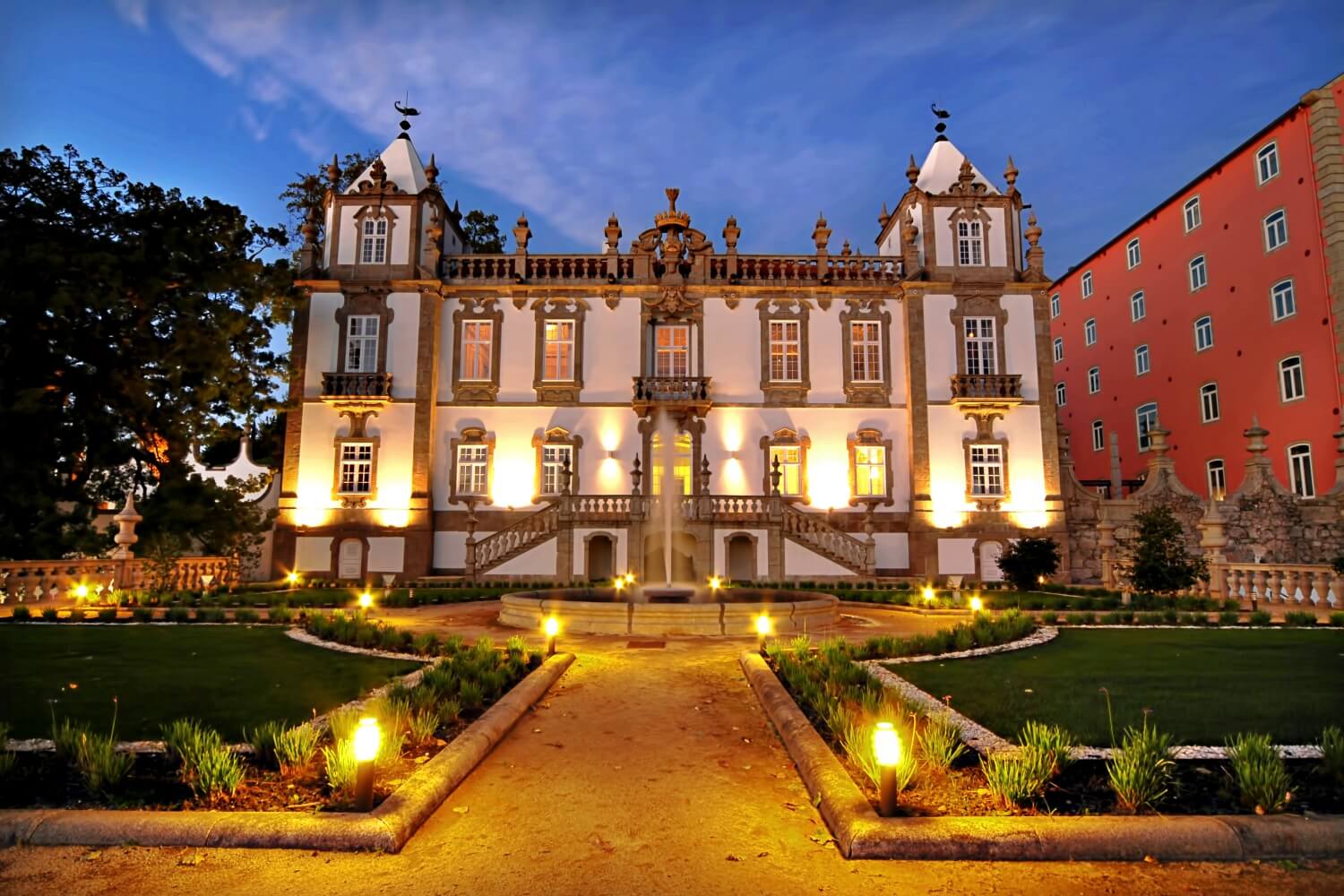
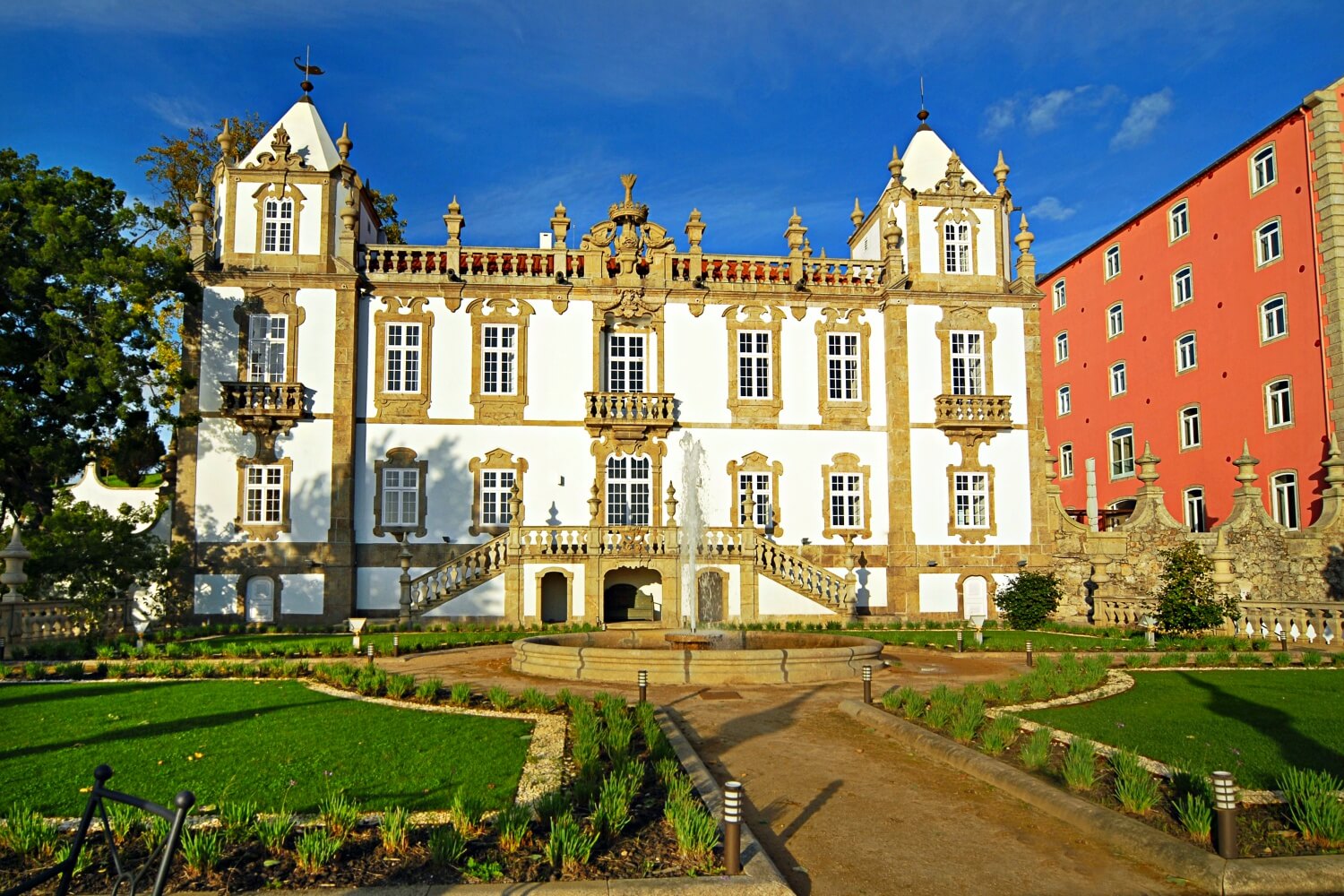
The rectangular palace includes towers subtly taller than the main building, and covered by pyramidal merlons and encircled by smaller pinnacles. Uniting the towers, with decorative flourishes, is a cornice.
Each facade of the palace have unique traits, constructed on three-floors. In the south, the building has two-and-a-half registers; the western facade has two floors; and the east appears to include three-stories. In the western facade is a chamfered niche, with windows above it, with the central surmounted by garlands and scrolls, similar to those over the palace portico. Along the southern facade, overlooking the river, is a state room consisting of three balconies with balustrades, recessed central window and projected staircase. The imponent eastern facade includes a grande staircase, but with recessed central zone girded by the towers, and decorated by balustrades and ornamented platforms (festooned by wrapped garlands and dolphins). The doors in the central corp are decorated with cornerstones that terminate in an interrupted frontispiece, surmounted by the coat-of-arms of the Baron of Freixo.
In the interior, as mural paintings in blues, browns, ochres, reds and rose, framed by rectangular moulding. Most of the interior has been changed and reformulated, and do not retain the original interior design of the period of construction.
In the western garden is a belvedere, typical of the Italianate gardens of the period, which is accessible from the eastern terrain. In the east is a hemicycle, flanked by two small pavilions and decorated with sculpted drums, helms, shields and flags, cannons and balls.
O Palácio do Freixo localiza-se na freguesia de Campanhã, cidade, concelho e distrito do Porto, em Portugal. É um dos exemplares mais representativos do barroco civil no país.
História
A Quinta do Freixo, num terreno em declive junto ao rio Douro, perto da desembocadura do rio Tinto, existe desde o século XVII.
O palácio foi erguido pelo cónego D. Jerónimo de Távora e Noronha, senhor abastado de Entre Douro e Minho, herdeiro do deão da Sé do Porto, D. João Freire. Responsável pela vinda do arquitecto italiano Nicolau Nasoni para a cidade do Porto em 1725, escolheu-o para o projeto, executado em meados do século XVIII.
A propriedade foi legada a seu irmão mais novo, Vicente Távora e Noronha, cavaleiro da Ordem de Malta. Um dos seus descendentes, Jorge António Salter de Mendonça (1804-1872), 2º Visconde de Azurara vendeu-a em 1850 a António Afonso Velado, rico comerciante do Porto, enriquecido no Brasil e que seria nobilitado em 1865 por Luís I de Portugal como Barão e Visconde do Freixo. Velado aqui estabeleceu residência, redecorando o palácio a seu gosto e estabelecendo-lhe uma fábrica de sabão em anexo. Fez substituir as antigas pedras de armas dos Távora pelo escudo partido de Afonso e Cunha.
Ainda no século XIX o palácio passou para a posse do alemão Gustavo Nicolau Alexandre Petres, que converteu a fábrica de sabão em uma destilaria de cereais, que viria a ser destruída por um violento incêndio.
Em meados da década de 1850, a propriedade foi retalhada em lotes, sendo a habitação e os jardins envolventes adquiridos pela Companhia de Moagens Harmonia, que fez erguer uma fábrica de moagem a escassos metros do palácio, agora transformado em sede da empresa, assim como um silo com cerca de quarenta e cinco metros de altura.
O palácio foi classificado como Monumento Nacional em 1910, embora, à época, na prática, sem qualquer zona de proteção. Caiu desde então em abandono.
Em 1986 o palácio e a envolvente foram adquiridos pela Câmara Municipal do Porto, à Moagens Harmonia, para aí instalar um Centro de Formação Profissional.
No âmbito do projecto "Metropólis" foi objeto de um minucioso projeto de restauro assinado pelo arquiteto Fernando Távora (1923-2005) e seu filho José Bernardo, descendentes dos primitivos proprietários. Os trabalhos de consolidação e restauro tiveram lugar de 2000 a 2003.
A partir de então o conjunto foi palco de inúmeros eventos.
Posteriormente, o palácio foi cedido pela Câmara Municipal ao Grupo Pestana para a instalação da maior das Pousadas de Portugal, a Pousada do Freixo, requalificada em 2009.
Características
O palácio foi erguido em estilo barroco, com influências portuguesas e traços pessoais de Nasoni. O acentuado declive do terreno não impediu Nasoni de tirar partido da riqueza cenográfica envolvente. Além de ter aproveitado este fator, também rodeou a casa com terraços dispostos em planos diferentes, constelados de jardins recheados de esculturas e fontanários.
O edifício apresenta planta retangular, enquadrada por quatro torreões salientes em cada ângulo, recobertos por telhados em pirâmide. Muros ondulantes e escadarias interiores e exteriores completam uma descrição genérica do edifício. O maior desafio residiu na disposição do palácio em quatro fachadas diferentes. Cada uma tem desenho distinto, sendo a que está voltada a leste a mais movimentada. Os frontões são decorados com grinaldas de flores, medalhões, máscaras, cachos de frutos e por uma pedra de armas. A balaustrada que corre sobre o andar nobre é ornamentada. São ainda vários os pináculos que se encontram ao longo da balaustrada das fachadas e nos torreões. Nasoni inspirou-se na escultura de elementos aquáticos típica do barroco, como algas, peixes, vieiras, líquenes e golfinhos (símbolo da família Távora e Noronha).
O interior do palácio é extremamente rico. Grande parte dos compartimentos têm frescos, assim como bem executados tectos de estuque, alguns de matriz oriental. A pintura ilusória com temas alegóricos é comum no interior do palácio, grande parte executada pelo próprio Nasoni.
O jardim foi claramente desenhado segundo a tradição italiana, com esculturas e com uma vista magnífica sobre o rio.
Useful information
Free
WiFi
Private property (hotel)
-
Nearby castles
Muralha Primitiva
Porto
3.0km
castle, chateau
Episcopal Palace
Porto
3.1km
manor, mansion
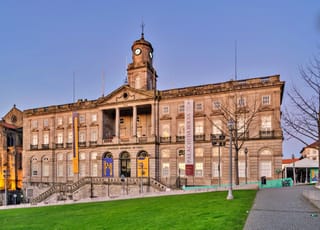
The Stock Exchange Palace
Porto
3.4km
manor, mansion
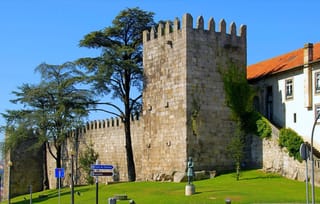
Muralha Fernandina do Porto
Porto
3.6km
castle, chateau
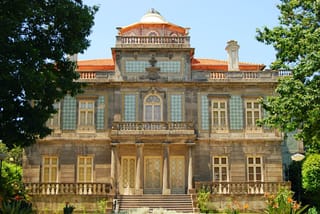
Pinto Leite Palace
Porto
4.2km
manor, mansion
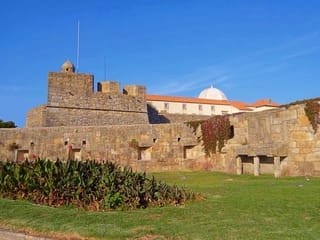
Forte de São João Baptista da Foz
Porto
8.4km
fortress
Mosteiro de Leça do Balio
Leça do Balio
8.5km
castle, chateau