Belém Palace
Lisboa Lisboa Portugal
manor, mansion
Palácio Nacional de Belém
Lisboa Lisboa Portugal
manor, mansion
The Belém Palace (Portuguese: Palácio de Belém), formally the National Palace of Belém, (Portuguese: Palácio Nacional de Belém), is the current official residence of the President of the Portuguese Republic, the head of state of Portugal
O Palácio Nacional de Belém, simplesmente conhecido por Palácio de Belém, fica situado em Belém (Praça Afonso de Albuquerque), Lisboa, sendo a residência oficial do Presidente da República Portuguesa
Previous names
Belém Palace, Palácio Nacional de Belém
Description
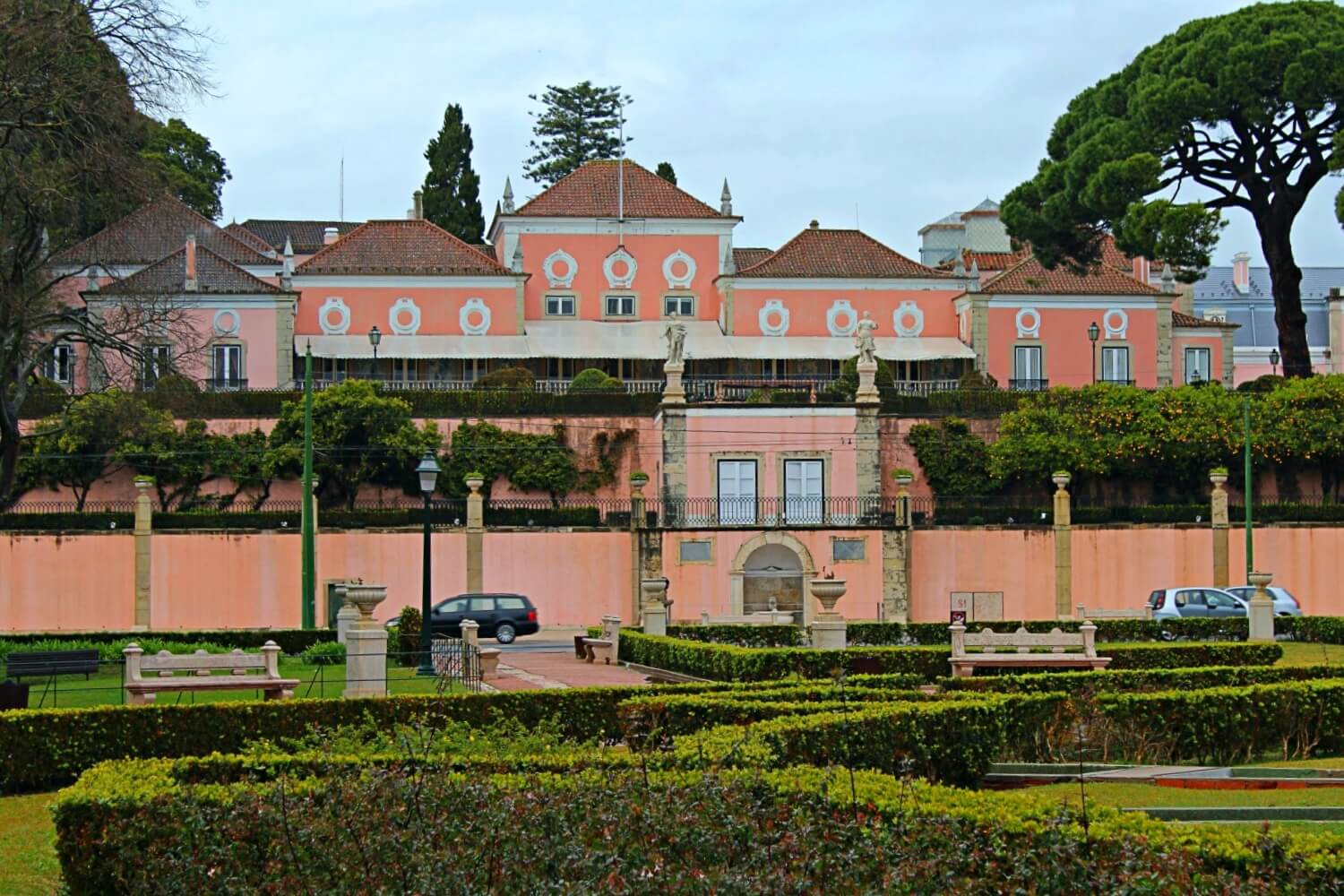
The Belém Palace (Portuguese: Palácio de Belém), formally the National Palace of Belém, (Portuguese: Palácio Nacional de Belém), is the current official residence of the President of the Portuguese Republic, the head of state of Portugal. Located in the Belém District of Lisbon, the palace's main façade fronts the Praça Afonso de Albuquerque, facing the Tagus River. A former residence of the Portuguese Royal Family, the Belém Palace complex is made up of various buildings, wings, courtyards, and gardens, built variously from the 18th to 21st centuries.
History
The site was originally part of the Outeiro das Vinhas, a property that fronted the beach of the Tagus River. D. Manuel of Portugal, a diplomat and poet who was the son of the 1st Count of Vimioso, acquired the land in 1559, naming it Quinta de Belém and constructing a building with three salons and two atria. By the mid-17th century the property was linked to a scion of the Royal Court, then transferred to the possession of the Counts of Aveiras and occupied by a convent.
The land was later acquired by King John V, who ordered its reconstruction in 1726. It encompassed two parcels, the Quinta de Baixo and Quinta do Meio, which the monarch purchased from João da Silva Telo, 3rd Count of Aveiros for 200,000 cruzados, in addition to the contiguous farmlands of the Counts of São Lourenço, with the objective of constructing a summer home. Although it is unclear when the first building was completed, by 1754 Queen Maria Anna of Austria had already died in the residence.
During the aftermath of the 1755 Lisbon earthquake, it was determined that there was superficial damage and no fear of collapse, but a number of repairs were completed between 1755 and 1756. Under supervision of the architect João Pedro Ludovice, the Casa Real de Campo de Belém (Belém Royal Country House) or Palácio das Leoneiras also received attention. Work included replacing tile and repairs to the greenhouses and stables. Similarly, around 1770, architect Mateus Vicente de Oliveira undertook reconstruction of the total estate. This was the beginning of several small projects within the residence that included the painting of the Sala das Bicas, the replacement of azulejo tiles along the southern veranda (1778), and construction of the birdhouses (1780). Initial construction of the Neoclassical horse training arena, designed by the Italian Giacomo Azzolini, began in 1828. The space is now occupied by the National Coach Museum.
After 1807, with the departure of the royal family for Brazil, the furniture and artwork were removed from the palace, and the building was abandoned until the end of the Liberal Wars.
By 1839, the palace was once again used to hold royal balls, and served as the temporary residence for visiting royal dignitaries. In 1840, during extensive renovations of the Palace of Necessidades, the royal family returned to Belém and resided in the palace during that decade. The Infanta Antónia was born there in 1845. By 1850, renovation of the grand ballroom was complete, permitting Queen Maria II to receive Portuguese society, and in September 1861, the Infanta was married there to Prince Leopold of Hohenzollern. In November 1861, the Infante Augusto died, followed by the Infante João on Christmas. A succession of deaths forced the Royal Family to abandon the palace, and it once again became a residence for visiting dignitaries. This change in purpose was accompanied by small repairs to the building, as well as the installation of gas lines and new lighting.
In 1886, after his marriage to Princess Amélie of Orléans, King Carlos ordered renovations of the palace to prepare it as the royal residence. These were completed under the direction of architect Rafael de Silva Castro; the interior was decorated by Leandro Braga, Columbano and João Vaz. The palace was the birthplace of the Prince Royal Luís Filipe in 1887 and Manuel in 1889.
Between 1902 and 1903, remodelling of the interior spaces was undertaken by Rosendo Carvalheira, with the additional construction of a visitors' house on the north walk of the Pátio das Damas to receive delegations of foreign dignitaries. This addition was inaugurated with the official visit of the King of Spain, Alfonso XIII, to Portugal at the end of 1903. The following year, the training stables were separated from the palace and destined to shelter the National Coach Museum.
By a royal decree published in the Diário do Governo (4 September), the palace ceased to operate as a royal residence, and passed to the Treasury for the "accommodation of heads of state, princes and foreign missions that come on an official visit to Lisbon, leaving for that purpose by the Ministry of Foreign Affairs".
Republic
Following the 5 October 1910 Revolution, the Secretaria-Geral da Presidência da República (Secretary-General of the Presidency) moved into the palace on 24 August 1911, as article 45 of the Constitution prohibited the Chief of State from occupying a residence on properties held by the State. A loophole in the document allowed the authorization on 28 June 1912 of a government edict to rent an annex alongside the Palace for 100,000 réis per month to house the first President Manuel de Arriaga, who eventually preferred to live in his local residence and work at the palace. This policy of renting the space continued throughout the period of the First Republic.
After the assassination of President Sidónio Pais in 1918 at the Rossio railway station, the ex-President's body lay in state in the Sala Luís XV (Luís XV Hall) until his burial.
The official residency law for the President of the Republic was promulgated on 24 March 1928. It specified that the President and his family would be permitted to reside in one of the national palaces. At the time of the promulgation, General Óscar Carmona decided to reside in the Citadel of Cascais, leaving the Palace of Belém for ceremonial affairs, official meetings, receptions and other formal occasions. In anticipation of the projected visit of the King of Spain, the Palace underwent several renovations, although the visit did not materialize. In 1936, the main staircase was expanded by António Lino and finished by Cristino da Silva.
During the term of General Francisco Craveiro Lopes (1951–1952) the Arrábida wing was remodelled to serve as the residence of the President of the Republic.
In 1967, the property was finally classified as an IIP - Imóvel de Interesse Público (Property of Public Interest), by decree 47-508, published in the Diário do Governo on 24 January 1967. The Palace was closed in 1969 to repair damage from the earthquake of that year.
After the Carnation Revolution, the palace was made the headquarters of the Junta de Salvação Nacional (National Salvation Junta). It also experienced the traumas of the new democracy with the counter-revolutionary attempts by António Spínola and Francisco da Costa Gomes. As in previous administrations, Belém Palace underwent new renovations in the Arrábida wing in order to accommodate the demands of the President and his family. While some Presidents resided in Belém, others such as Mário Soares, Jorge Sampaio, Aníbal Cavaco Silva and the current President Marcelo Rebelo de Sousa used it merely as a workplace, living in their private residences during their terms.
Between 1980 and 1985, the main dining hall was used to exhibit gifts received by the Chief of State. In 1998, the construction of the Centro de Documentação e Informação (Documentation and Information Centre), was begun by architect João Luís Carrilho da Graça, the winner of a public competition promoted by the Secretary-General of the Presidency.
President Jorge Sampaio commissioned painter Paula Rego for a series of paintings to decorate the walls of the Palace chapel in 2002. The painter eventually gave her works entitled "Ciclo da Vida da Virgem Maria e da Paixão de Jesus Cristo" (Cycle of Life of the Virgin Mary and the Passion of Jesus Christ". The early exhibitions and Presidential initiatives would lead to the inauguration on 5 October 2004 of the Presidential Museum (Portuguese: Museu da Presidência da República). Similarly, the King D. Luís I Painting Gallery was the setting for the 2005 exposition, Do Palácio de Belém, which presented the history of the palace and its architecture, as well as an overview of artistic works that have been displayed there.
On 10 March 2006, a Ministry of Culture dispatch reclassified the Palace as a National Monument to include the palace, gardens, Museum of the Presidency and other annexes.
Architecture
Exterior
Belém Palace is a "L" shape building, with the main space located in a rectangular three-volume space in the south façade. This front, which faces the formal gardens, presents a space of five bodies, flanked by wedges surmounted by pinnacles. A combination of Mannerist and Baroque styles, has a central body with floor level arcades, over a colonnade gallery surmounted by a triangular pediment decorated in stucco.
The two outside blocks are farther in front then the main building, forming a terrace delimited by balusters and accessible by lateral staircases. The top of these lateral walls are topped by twelve panels of monochromatic azulejo tile. On the veranda are 14 azulejo panels representing figures from mythology, with many showing the "Labours of Hercules", including "Plutão e Cérbero" (Pluto and Cerberus), "Vénus" (Venus), "Neptuno" (Neptune), "Hércules" (Hercules), "Hércules e a égua de Diómedes" (Hercules and the Mares of Diomedes), "Figura masculina" (Masculine figure), "Figura masculina com arco e flechas" (Masculine figure with bow and arrow), two panels of "Figura feminina" (Female figure), "Hércules e a ave de Estinfália" (Hercules and the Stymphalian birds), "Figura masculina com machado" (Masculine figure with hoe), "Hércules e a serpente de Ládon" (Hercules and the serpent Ladon), "Hércules e o touro de Creta" (Hercules and the Cretan Bull), "Hércules e a Hidra de Lerna" (Hercules and the Lernaean Hydra). There are also two rows of tiles with geometric patterns and acanthus leaves.
The eastern façade, which fronts the Pátio das Damas (Lady's Patio), features two levels of windows and portal. The western wing is served from the Pátio dos Bichos (Animals' Patio), where a gated entrance and ramp provides access to the principal staircase via an elevated space that overlooks the Jardim da Cascata (Falls Garden). The space was resurfaced and re-paved with stone at the beginning of the 21st century.
Immediately in front of the palace, fronting the Rua de Belém, are the formal gardens. Of an 18th-century design, they consist of a terrace enclosed by a balustrade adorned with statues and intersecting pattern of hedges around three circular ponds. In the Jardim da Cascata (in the northwest corner of the grounds) there are three pavilions (greenhouses) of capstone topped by a decorative railing, with vases and statues. Inserted within a rounded-arch is a waterfall featuring a statue of Hercules.
In the central pavilion are six azulejo panels forming a figurative composition, completed in the 19th century. The central composition is in black and white, while the trim is polychromatic: yellow, green and manganese plant ornamentation. These panels include: an "Outdoor Scene", "Two female figures and a male figure in the park, with fruit basket", "Standing female figure gives an apple to a male figure", a "Backgammon game", "Music in the Garden" and "Music in the Garden, with harpsichord and violin".
Interior
The main space is highlighted by a linear sequence of rooms along the south elevation, dominated by the Sala das Bicas, a grand vestibule paved in marble. The ceiling is panelled with an allegorical composition of carved flora and 18th-century polychromatic azulejo ashlars, completed in the last quarter of that century. In the space one can observe along one wall two round marble fountains with lion heads, which give the space its name. In addition, the space is surrounded by eight jasper busts on plinths, representing Roman emperors.
In the Sala Dourada or Salão de Baile (Golden Room or Ballroom, respectively) the ceiling is panelled with a central allegory of the Roman Empire, with murals and crown moulding medallions in a neo-Pompeian motif.
The Sala Luís XV (Louis Quinze Room), also panelled, is highlighted by a series of paintings surmounted two shields of the House of Braganza and Orléans.
The narrow rectangular chapel, with smooth walls and wood panelling, is occupied by a Neoclassical retable in gold-leafed wood, with a painting by André Reinoso representing the "A Adoração dos Pastores" (The Adoration of the Shepherds). The vaulted ceiling is decorated with a profusion of decorative motifs in a "ferronneire" similar to those found in the Sala Dourada. On the walls are paintings by the artist Paula Rego, representing the "Ciclo da Vida da Virgem Maria e da Paixão de Jesus Cristo" (Circle of Life of the Virgin Mary and the Passion of Christ).
O Palácio Nacional de Belém, simplesmente conhecido por Palácio de Belém, fica situado em Belém (Praça Afonso de Albuquerque), Lisboa, sendo a residência oficial do Presidente da República Portuguesa.
História
As origens: Palácio de D. Manuel de Portugal
O Palácio foi construído em 1559 pelo fidalgo D. Manuel de Portugal, filho de D. Francisco de Portugal, 1.º Conde de Vimioso. Situa-se na zona sudoeste da cidade de Lisboa, em Belém. O palácio tinha jardins à beira do Tejo, quando o rio tinha a margem mais próxima do que na actualidade.
No século XVIII, D. João V comprou-o ao conde de Aveiras, tendo-o alterado radicalmente. Acrescentou-lhe uma escola de equitação (as cavalariças fazem hoje parte do Museu Nacional dos Coches) e adaptou o interior para poder fazer as suas conquistas amorosas com discrição.
Na posse da Casa Real
Aquando do Terramoto de 1755, o monarca D. José I e a família encontravam-se a passar o dia feriado na zona de Belém e sobreviveram à devastação. Receando outro sismo, a família real instalou-se em tendas nos terrenos do palácio, cujo interior foi usado como hospital. O Palácio entrou assim no património da Casa Real, que construiu nos seus anexos o seu Picadeiro Régio, que veio mais tarde a ser o Museu Nacional dos Coches.
Alojamento de convidados estrangeiros
D. Maria II habitou alguns anos o Palácio de Belém (quando o Palácio das Necessidades estava em obras), aqui ocorrendo uma tentativa de golpe a que se chamou a Belenzada. A partir do reinado de D. Luís I, o Palácio de Belém foi destinado a receber os convidados oficiais que visitavam Lisboa. Assim, aqui estiveram, entre outros, a Rainha Isabel II de Espanha e seu sucessor, o efémero Rei Amadeu de Sabóia.
Residência do Príncipe D. Carlos
Em 22 de Maio de 1886 foi dada nova missão ao Palácio de Belém, a de residência oficial dos Príncipes Reais D. Carlos, Duque de Bragança e sua jovem esposa D. Amélia de Orleães. Aqui nasceram os seus filhos, D. Luís Filipe e D. Manuel II, que foram baptizados na capela palatina. Após a subida de D. Carlos ao trono, em 1889, não tendo Belém as dimensões de residência oficial da coroa, D. Carlos e D. Amélia mudaram-se para o Palácio das Necessidades, voltando Belém à sua condição de residência dos convidados estrangeiros (albergando, então, entre outros, Afonso XIII de Espanha, Guilherme II da Alemanha e o Presidente francês Émile Loubet. Em 1905, por iniciativa do espírito culto da Rainha D. Amélia, o elegante Picadeiro Real foi transformado em Museu dos Coches Reais (hoje Museu Nacional dos Coches), preservando-se assim a valiosa colecção de coches e viaturas da Casa Real. Ainda sob a égide da Monarquia, o Palácio de Belém albergou o Presidente eleito da República Brasileira, Marechal Hermes da Fonseca, em 2 de Outubro de 1910. Foi neste palácio, durante a recepção ao presidente do Brasil, que o Rei D.Manuel II teve conhecimento da revolução que dias depois lhe roubou a coroa.
Residência oficial do Presidente da República
Na I República
Em 1912, já depois da proclamação da república, o Palácio de Belém foi designado residência oficial do Presidente da República. Os presidentes da I República tinham porém que pagar renda ao Estado para residirem no Palácio (para não serem acusados de gozarem de privilégios atribuídos ao anterior regime). Aqui foi velado o corpo do Presidente Sidónio Pais, em 1918 e daqui saiu Bernardino Machado, após ter renunciado ao cargo de Presidente da República, em 1926.
No Estado Novo
Durante o Estado Novo o Palácio de Belém não foi palco de relevantes acontecimentos políticos, devido ao reduzido papel atribuído ao Presidente da República pela Constituição de 1933. Neste período, apenas o Presidente Craveiro Lopes, habitou permanentemente o Palácio (entre 1951 e 1958). O Presidente Américo Tomás (1958-1974) raramente ia a Belém, exceptuando algumas recepções oficiais (às quintas-feiras). Devido a este reduzido papel político na Ditadura, Belém não foi um alvo dos revolucionários, em 25 de Abril de 1974.
O Palácio na actualidade
Só após a Revolução dos Cravos, em 25 de Abril de 1974, o Palácio de Belém recuperou o seu papel de relevo, nele se instalando a Junta de Salvação Nacional. Aqui viveram os momentos conturbados de 1974 e do Verão quente de 1975 os Presidentes Spínola e Costa Gomes. Com a vigência da actual constituição (aprovada em 1976), o Palácio regressou à sua condição de residência oficial do Chefe de Estado. Desde então, apenas o Presidente Ramalho Eanes habitou permanentemente no Palácio. Os Presidentes Soares, Sampaio e Cavaco Silva utilizaram Belém apenas para trabalhar, bem como o incumbente Marcelo Rebelo de Sousa.
Hoje, o elegante edifício de cor rosada é a residência oficial do Presidente da República Portuguesa. Nessa qualidade é visita obrigatória para os chefes de estado e delegações estrangeiras que visitam os presidentes. Semanalmente, à quinta-feira, o Presidente da República recebe o Primeiro-Ministro, para uma reunião de trabalho onde este o põe ao corrente do governo do país. No terceiro domingo de cada mês acontece na Praça Afonso de Albuquerque (em frente do Palácio), o solene render da Guarda que serve o Presidente da República.
Para o público em geral foi aberto no edifício o Museu da Presidência da República, por iniciativa do Presidente Jorge Sampaio, em 2004, onde estão expostos os espólios dos Presidentes da República que antecederam o actual Presidente. Todos os Sábados o Museu organiza visitas guiadas ao Palácio de Belém.
Em 29 de Março de 2007 foi classificado como Património.
Useful information
Charge
5.00 EUR
Museum: 2.50 EUR
WC/WC for the disabled
- Accessible for wheelchairs
- Can be visited at certain time
- Guided tours are available
-
External links
Nearby castles
Calheta Palace
Lisboa
0.4km
manor, mansion
Palace of Ajuda
Lisboa
1.1km
manor, mansion
Burnay Palace
Lisboa
1.4km
manor, mansion
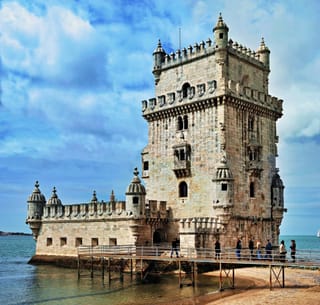
Belém Tower
Lisboa
1.5km
castle, chateau

Forte do Bom Sucesso
Lisboa
1.5km
fortress
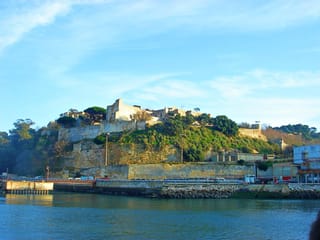
Forte de São Sebastião da Caparica
Caparica
2.6km
fortress
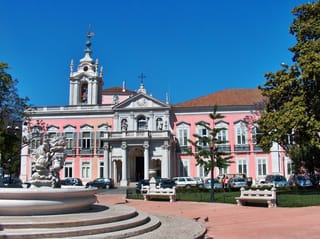
Necessidades Palace
Lisboa
2.8km
manor, mansion