Forte do Bom Sucesso
Lisboa Lisboa Portugal
fortress
Forte do Bom Sucesso
Lisboa Lisboa Portugal
fortress
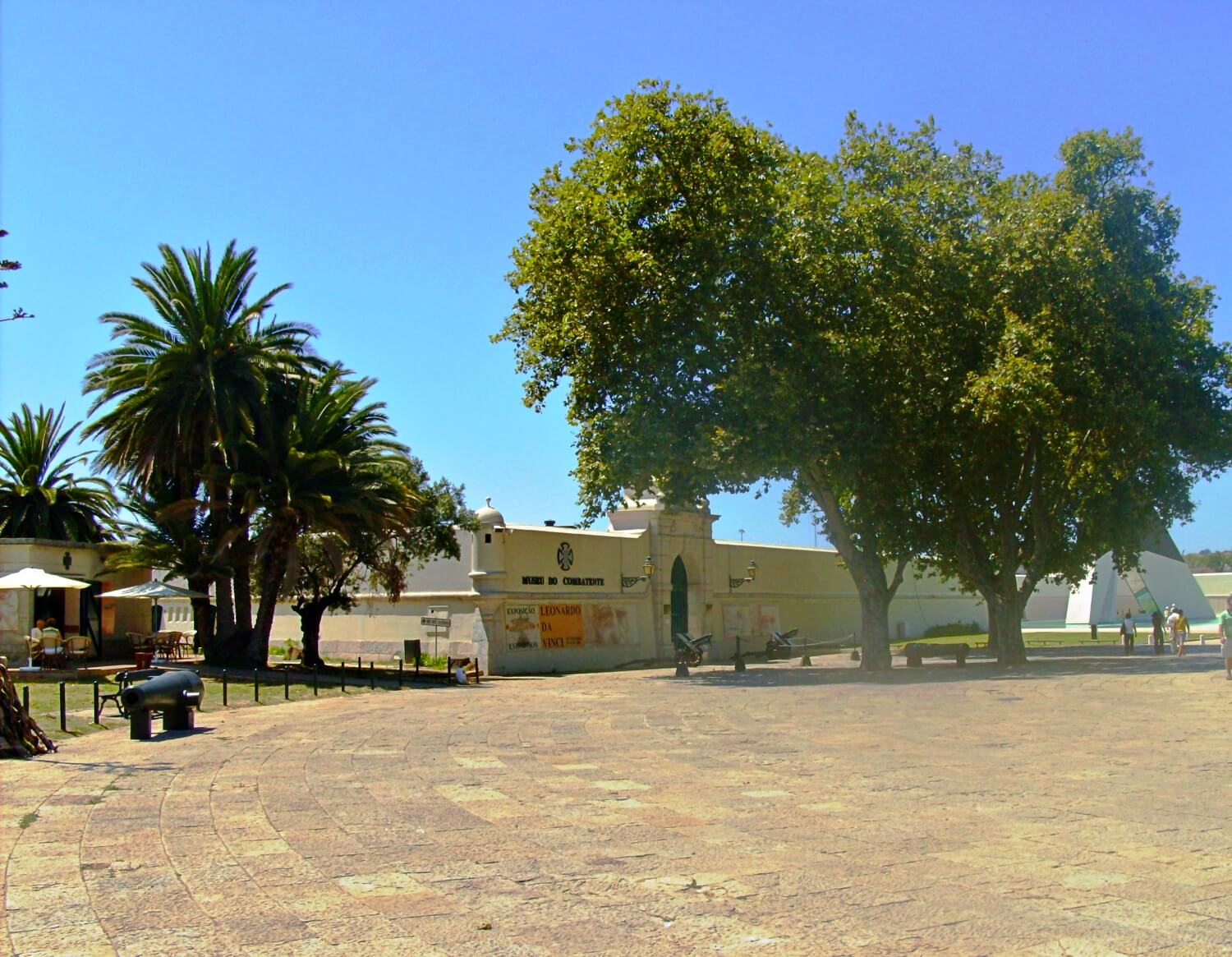
The Fort of Bom Sucesso (Portuguese: Forte do Bom Sucesso) is located slightly to the west of the Belém Tower in Belém in the municipality of Lisbon, in Portugal
O Forte do Bom Sucesso, também referido como Bateria do Bom Sucesso, localiza-se na atual Praça do Império, junto à Torre de Belém, freguesia de Santa Maria de Belém, concelho e Distrito de Lisboa, em Portugal
Previous names
Forte do Bom Sucesso, Forte do Bom Sucesso
Description
The Fort of Bom Sucesso (Portuguese: Forte do Bom Sucesso) is located slightly to the west of the Belém Tower in Belém in the municipality of Lisbon, in Portugal. It now houses the Museu do Combatente (Combatant’s museum) and the Monument to Overseas Combatants.
History
Construction of the fort, which follows a polygonal outline on the right bank of the River Tagus, was started in 1780 under the direction of General Guilherme de Vallerée. A residence for the governor of the fort was added soon after, within the perimeter. On the basis of an inscription over the main entrance, it appears that the fort was completed in 1802.
In 1808, during the occupation of Lisbon by French forces commanded by Marshal Junot, the fort was connected to the Belém Tower by an artillery battery, known as the left flank battery. In 1815, after the French had been defeated, a right flank was added.
By 1836 the fort was in ruins and it was effectively abandoned until 1870. It underwent extensive modernization between 1870 and 1874, after which it received two Krupp 28 cm Haubitze L/12 howitzers, and became one of a number of forts, known as the Campo Entrincheirado (Entrenched Field) of Lisbon, that formed a defensive perimeter that followed the boundaries of Lisbon at the time. Later, its defence consisted of five 120mm Schneider pieces. During the failed coup attempt of 18 May, 1925, an attempt was made to attack the fort.
During the Portuguese Colonial War (1961 – 1975) the Fort of Bom Sucesso served as the headquarters of the Military Postal Service. After the Carnation Revolution on 25 April 1974, which overthrew the authoritarian Estado Novo regime, it hosted the Command of the Military Intervention Group, a body set up by the Revolutionary Council to maintain law and order. Later it was the headquarters of the Association of 25th of April, an organization that brought together the members of the military who initiated the Carnation Revolution.
The Combatant’s Museum
On January 13, 1999, the fort was officially handed over to the Portuguese League of Combatants, which manages the museum. It offers a permanent exhibition indoors, as well as three external areas with equipment related to the various branches of the Armed Forces. The permanent exhibition covers World War I, the colonial campaigns (known in Portugal as the overseas campaigns), and peace missions. The museum also has social areas, conference and projection rooms, and a bar.
O Forte do Bom Sucesso, também referido como Bateria do Bom Sucesso, localiza-se na atual Praça do Império, junto à Torre de Belém, freguesia de Santa Maria de Belém, concelho e Distrito de Lisboa, em Portugal.
História
Foi iniciado em 1780, entre as praias do Bom Sucesso e Pedrouços, na margem direita do rio Tejo, para complemento da linha defensiva de Belém, sob a direção do general Guilherme de Vallerée, tendo sido concluído em 1782.
O forte sofreu extensas obras de modernização entre 1870 e 1874, quando recebeu duas peças de artilharia Krupp L/12 de 280mm, em torre, passando a integrar a defesa constituída pelo Campo Entrincheirado de Lisboa. Posteriormente a sua defesa foi reforçada com mais duas peças Schneider de 120mm.
Na primeira década do século XX, as peças Krupp foram substituídas por mais três peças Schneider de 120mm.
Quando da revolta de 18 de Abril de 1925, decretado o estado de sítio, Jaime Baptista, evadido da Fortaleza de São Julião da Barra, assaltou o Forte do Bom Sucesso.
Na década de 1950 encontrava-se guarnecido pela 4.ª Bateria do Regimento de Artilharia de Costa do Exército Português.
Na atualidade, a partir de 1994, as dependências do antigo forte passaram a integrar o Monumento aos Combatentes do Ultramar.
Requalificado como espaço museológico, administrado pela Liga dos Combatentes, apresenta como exposição permanente a mostra "O Combatente Português". Ao ar livre encontram-se três espaços com equipamento relativo aos diversos ramos das Forças Armadas. O museu conta ainda com zonas de convívio, salas de conferência e de projecções, e bar.
Características
O forte apresenta planta poligonal. A sua bateria ligava-se à parede oeste do baluarte da Torre de Belém através de um corredor muralhado.
A residência do governador apresenta planta retangular. A sua fachada principal é dividida em três panos, marcados por duas pilastras adossadas, dois registos e águas furtadas. Ao centro, no piso inferior, abre-se um grande arco que, através de um túnel, permitia a passagem para a praia do Bom Sucesso, passagem atualmente entaipada. Do seu lado esquerdo foram rasgadas duas janelas de peito; do direito, duas portas. No piso superior abrem-se seis janelas de sacada, duas em cada pano, com varandim de ferro. Ao nível das águas furtadas, existem seis mezzaninos. A fachada posterior é, em tudo, semelhante à principal.
Useful information
1.00 EUR\hour
4.00 EUR
0 - 5 years: free
Children: 3.00 EUR
Senior: 3.00 EUR
geral@ligacombatentes.org.pt
The fortress houses a military museum
-
External links
Nearby castles
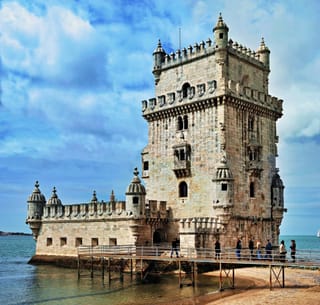
Belém Tower
Lisboa
0.0km
castle, chateau
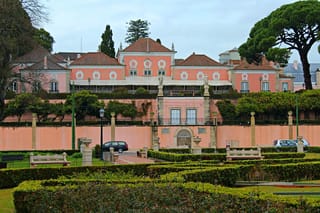
Belém Palace
Lisboa
1.5km
manor, mansion
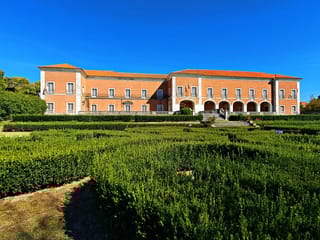
Calheta Palace
Lisboa
1.6km
manor, mansion
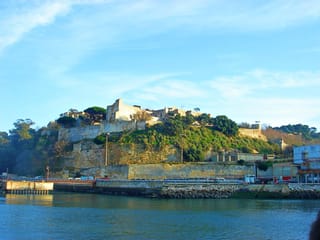
Forte de São Sebastião da Caparica
Caparica
1.8km
fortress

Palace of Ajuda
Lisboa
2.4km
manor, mansion
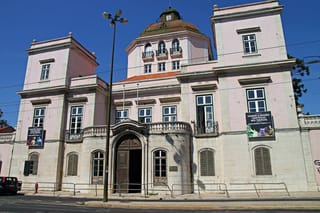
Burnay Palace
Lisboa
2.9km
manor, mansion
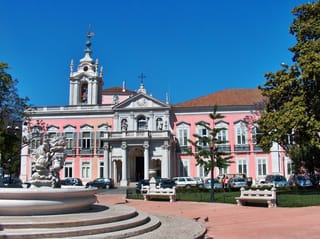
Necessidades Palace
Lisboa
4.2km
manor, mansion