Fortress of Saint James of Sesimbra
Sesimbra Setúbal Portugal
fortress
Forte de Santiago de Sesimbra
Sesimbra Setúbal Portugal
fortress
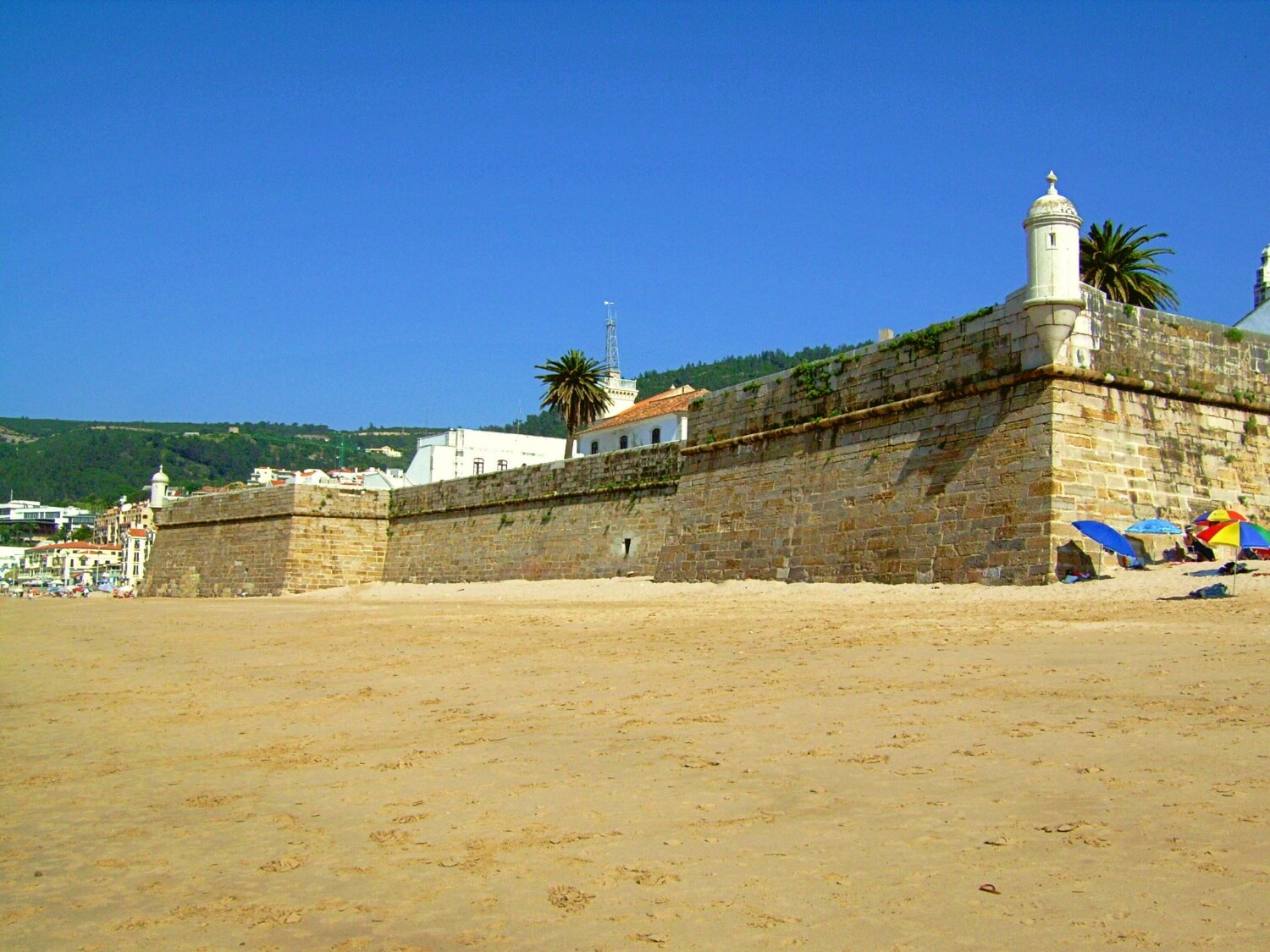
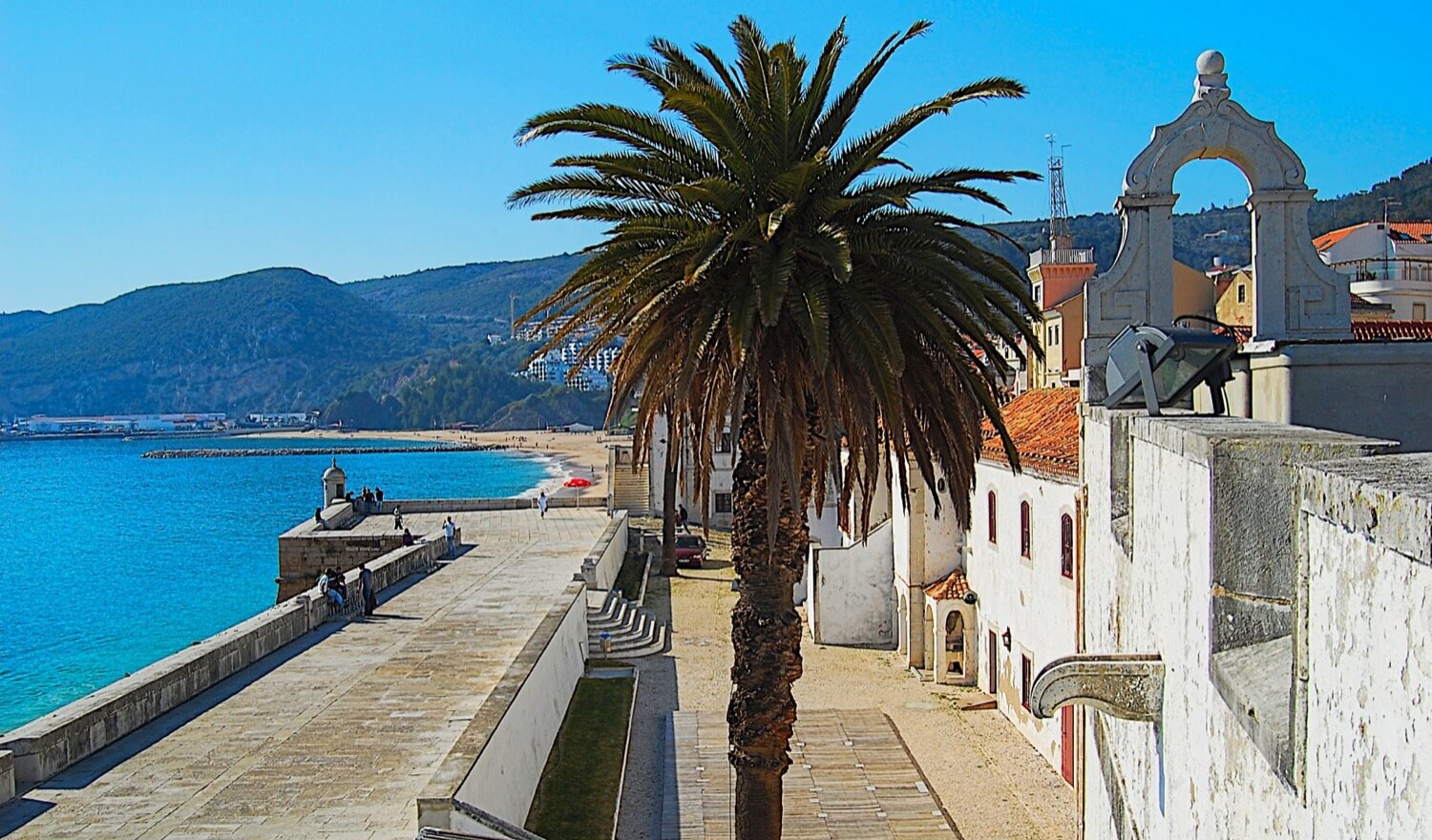
The Fortress of Saint James of Sesimbra (also known as the Fortress of Santiago) is a fortress located in the parish of Santiago in the coastal town and municipality of Sesimbra, in the Setúbal District of Portugal
O Forte de Santiago da Vila de Sesimbra, também conhecido como Forte da Marinha, Forte da Praia e Fortaleza de Santiago, localiza-se na vila litorânea do mesmo nome, no Distrito de Setúbal, em Portugal
Previous names
Fortress of Saint James of Sesimbra, Forte de Santiago de Sesimbra
Description
The Fortress of Saint James of Sesimbra (also known as the Fortress of Santiago) is a fortress located in the parish of Santiago in the coastal town and municipality of Sesimbra, in the Setúbal District of Portugal. It was built between 1642 and 1648 on the site of an earlier 16th-century Manueline fort.
History
During the Anglo-Spanish War (1585-1604), the Battle of Sesimbra Bay between two English naval forces and a Spanish fleet took place on June 3, 1602. The English managed to sink two Spanish vessels, forcing the Spaniards to withdraw to the fishing village of Sesimbra, where they attacked the existing fort and caused heavy damage.
The present fort was constructed when King John IV ordered the strengthening of Portugal’s Atlantic defences in the face of attacks by the Spanish navy during the Restoration War (1640-68). In many cases this involved restructuring earlier forts and increasing their firepower. The king appointed João de Cosmander, a Dutch Jesuit military engineer, to supervise construction of the new fortress on the site of the earlier fort built by King Manuel I, with the intention that it would be capable of protecting the fishing harbour of Sesimbra from piracy and from Spanish attacks. Cosmander also worked on the Castle of Campo Maior, the Castle of Belver, and the Castle of Elvas, all major forts in Portugal.
The fort, which is oriented east-west along the beach, has a very solid structure with an austere appearance. It was developed with a polygonal star-shaped plan, with a rectangular central body and bastions, with cylindrical bartizans. The interior area was divided to make space for the residence of the Governor, the garrison barracks, cisterns, a warehouse and a chapel dedicated to Saint James. The north side of the fortress, facing the village, presents a less military appearance. The round arch gate is topped with a coat of arms with the national shield and inscription indicating the date of inauguration, 1648.
In 1712, King John V decided to install the Military Government of the region in the fortress. At that time the fort also served as a summer residence for the "Boys of Palhavã", the infant bastard sons of the king. The structure suffered damage as a result of the earthquake on 1 November 1755 that struck much of Portugal, after which it underwent reconstruction work on the north wall, the Door of Arms and the barracks of the Captain. In 1781 the north wall was replaced. In 1815 the fortification was in a state of ruin and further repairs were carried out. In 1832 the garrison left the fort, but it was subsequently re-occupied, with the last record of military occupation being 1846. In 1879 it was ceded to the Guarda Fiscal (Fiscal Guard) and passed on to the Customs Department in 1889.
Some restoration work was carried out in 1930 and again in 1934-35. From 1938 it served as a summer camp for children of members of the Fiscal Guard. In the 1960s it was proposed for conversion into a hotel but no action was taken. Further repairs were carried out in 1976 and on several occasions after that, but the main restoration and conservation work began in 2011 after the fort had been handed over to the municipality. This work was funded by the European Regional Development Fund (ERDF), for about €1.5 million. The fort, which was re-opened to the public in July 2014, now houses the Museum of the Sea of Sesimbra (2015), a museum devoted to the local fishing industry, as well as a restaurant, a souvenir shop and a tourist information kiosk.
O Forte de Santiago da Vila de Sesimbra, também conhecido como Forte da Marinha, Forte da Praia e Fortaleza de Santiago, localiza-se na vila litorânea do mesmo nome, no Distrito de Setúbal, em Portugal.
Localizado sobre a praia em Sesimbra, povoação tradicionalmente dedicada à pesca, tinha a função de proteger a vila e o seu ancoradouro.
História
Antecedentes: o Forte quinhentista.
A primeira estrutura defensiva neste local remonta muito provavelmente a um forte quinhentista, erguido durante o reinado de D. Manuel I (1495-1521). Esta fortificação foi atacada à época da Dinastia Filipina por navios da armada inglesa (Junho de 1602), tendo sofrido pesados danos, a par do episódio de represamento de uma nau (a São Valentim) provinda das Índias Orientais carregada de mercadoria valiosa.
O actual Forte de Santiago
A actual estrutura remonta à época da Restauração da independência, quando no reinado de D. João IV (1640-1656) se determinou a sua edificação. O seu projecto ficou a cargo de João Cosmander, jesuíta holandês ao serviço daquele soberano, estando concluída em 1648.
Utilizada como balneário ou colónia de férias para os filhos bastardos de D. João V (1706-50) (os Meninos de Palhavã), a partir de 1712 foi utilizada como sede do Governo das Armas da região, a que se subordinavam as restantes defesas costeiras, a saber: o Forte de Santiago do Outão, o Forte de Santa Maria da Arrábida, o Forte de São Teodósio da Ponta do Cavalo, o Forte de São Domingos da Baralha e o Forte de Nossa Senhora do Cabo, no Espichel. O Forte de São Pedro das Areias Brancas (ou da Foz), já se encontrava bastante deteriorado nesta época.
No século XIX, tendo perdido a função defensiva diante da evolução dos meios bélicos, foi desguarnecido e desartilhado em 1832. Posteriormente as suas instalações foram cedidas para uso da Alfândega (1886) até que, desde 1879, passou a abrigar o quartel da Guarda Fiscal.
Considerado como Monumento Nacional por Decreto de 29 de Setembro de 1977, actualmente encontra-se em bom estado de conservação, aberto à visitação turística.
Useful information
Charge
Free
It has art exhibitions
-
Nearby castles
Castelo de Sesimbra
Setúbal
1.2km
castle, chateau
Fort of São Teodósio da Ponta do Cavalo
Sesimbra
1.6km
fortress

Forte de Santa Maria da Arrábida
Setúbal
10.9km
fortress
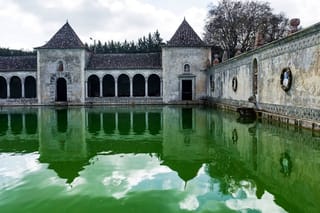
Bacalhôa Palace
Setúbal
13.2km
manor, mansion
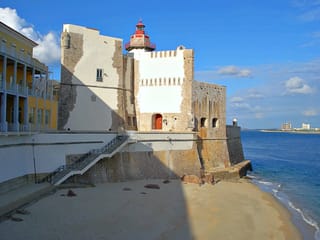
Fort of Santiago do Outão
Setúbal
15.4km
fortress
Fort of São Filipe de Setúbal
Setúbal
18.7km
fortress
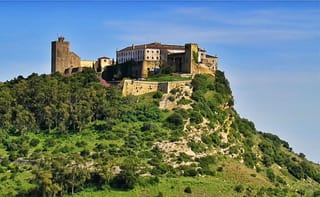
Castelo de Palmela
Palmela
22.2km
castle, chateau